Chapter 2 Visioning and Foresight for Setting
Description: Chapter 2 Visioning and Foresight for Setting Breeding Goals Nasser Yao, Appolinaire Djikeng and Jonathan Shoham The Business of Plant Breeding: Market-led approaches to new variety design in Africa Chapter 2 Visioning and Foresight for
Related Topics
Download Presentation
"Chapter 2 Visioning and Foresight for Setting" is the property of its rightful owner. Permission is granted to download and print the materials on this website for personal, non-commercial use only, and to display it on your personal computer provided you do not modify the materials and that you retain all copyright notices contained in the materials. By downloading content from our website, you accept the terms of this agreement.
Presentation Transcript
slide1. Chapter 2
Visioning and Foresight for Setting Breeding Goals
Nasser Yao, Appolinaire Djikeng and Jonathan Shoham The Business of Plant Breeding:
Market-led approaches to new variety design in Africa<br>

slide2. Chapter 2 Visioning and Foresight for Setting Breeding Goals Nasser Yao*, Appolinaire Djikeng* and
Jonathan Shoham**
*Biosciences for Eastern and Central Africa (BecA) - International Livestock Research Institute
** Syngenta Foundation for Sustainable Agriculture,
WRO-1002.11.54, P.O. Box 4002, Basel, Switzerland.<br>
slide3. Chapter 2 Objectives To empower plant breeders and R&D leaders to consider future agricultural landscapes in Africa.
2. To equip breeders with methodologies to design new varieties that will remain relevant and satisfy market demands over time.
3. To identify drivers that may affect whether farmers adopt new varieties in the future.<br>
slide4. Chapter 2 Contents Introduction
2. African Agricultural Outlook, Challenges and Policy
3. Visioning and Foresight, using STEEP Analysis and Scenario Creation
4. Integrating Foresight into New Variety Design
5. Risk Management<br>
slide5. 1. Introduction Group Discussion
What is your time frame to create and release a new variety?
How do you forecast the future demand of your varieties?<br>
slide6. 2. African Agricultural Outlook, Challenges and Policy<br>
slide7. Africa at a Glance:Agricultural landscape Demand growth is fastest in the world
SSA population c. 800 million
220 million undernourished
Mean population growth in SSA is c. 3% (-ve Europe, 0.5% Rest of the World)
Population size expected to double in 35 years
Population growth is double in urban vs. rural areas Food supply vs. demand Demand<br>
slide8. Africa at a Glance: Highest Rate of Population Growth Source: UNFPA Total population billion (2010) 4.2 1.0 0.7 0.3 0.6<br>
slide9. Africa at a Glance: High GDP per Capita Growth: 2004 – 13 Source: World Development Indicators (World Bank); SFSA analysis 4% 5% 9% 3% 4% 5% 7% 4% 5% 5% 3% 6% 3% 4% 5% 8% 3% 6% 1% 2% 3% 5% 7% 6% 2% 3% 10% 2% 2% 0% 6%<br>
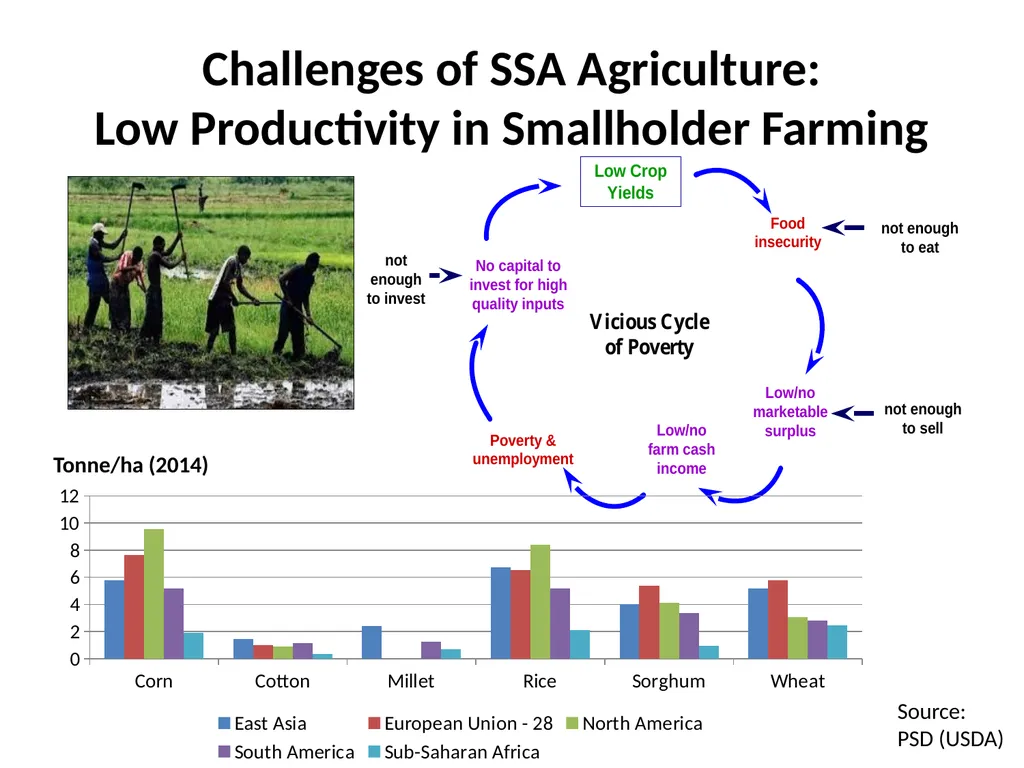
slide10. Challenges of SSA Agriculture:Low Productivity in Smallholder Farming Tonne/ha (2014) Source:
PSD (USDA)<br>
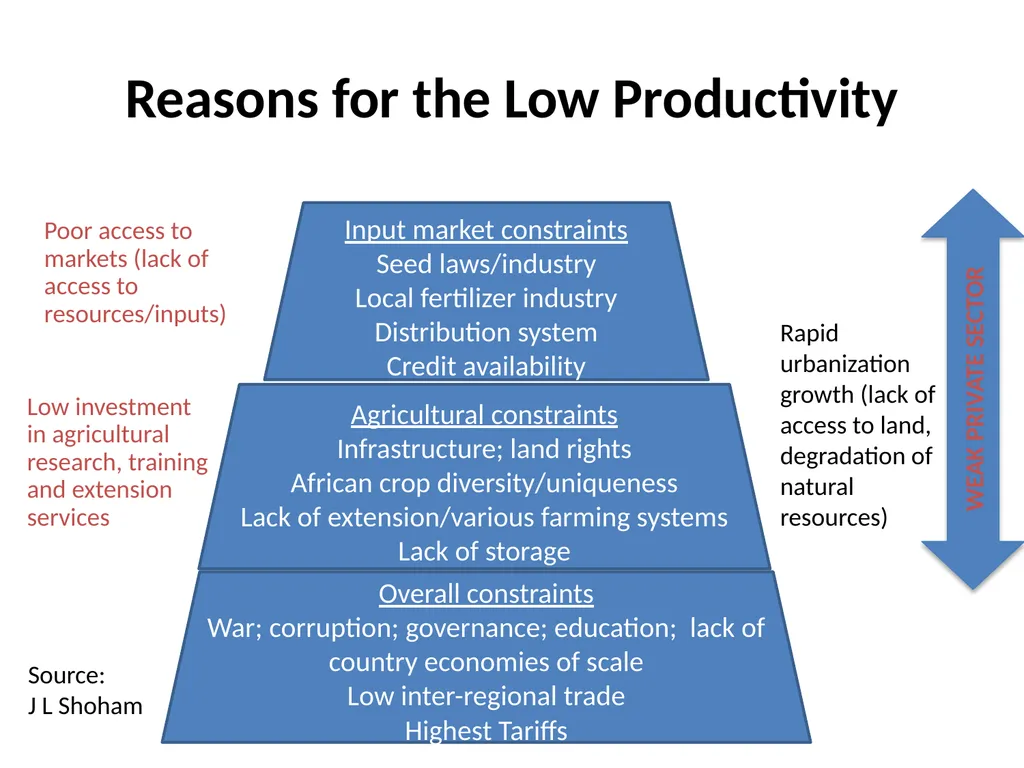
slide11. Reasons for the Low Productivity Overall constraints
War; corruption; governance; education; lack of country economies of scale
Low inter-regional trade
Highest Tariffs Agricultural constraints
Infrastructure; land rights
African crop diversity/uniqueness
Lack of extension/various farming systems
Lack of storage Input market constraints
Seed laws/industry
Local fertilizer industry
Distribution system
Credit availability Source:
J L Shoham Rapid urbanization growth (lack of access to land, degradation of natural resources) Poor access to markets (lack of access to resources/inputs) Low investment in agricultural research, training and extension services WEAK PRIVATE SECTOR<br>
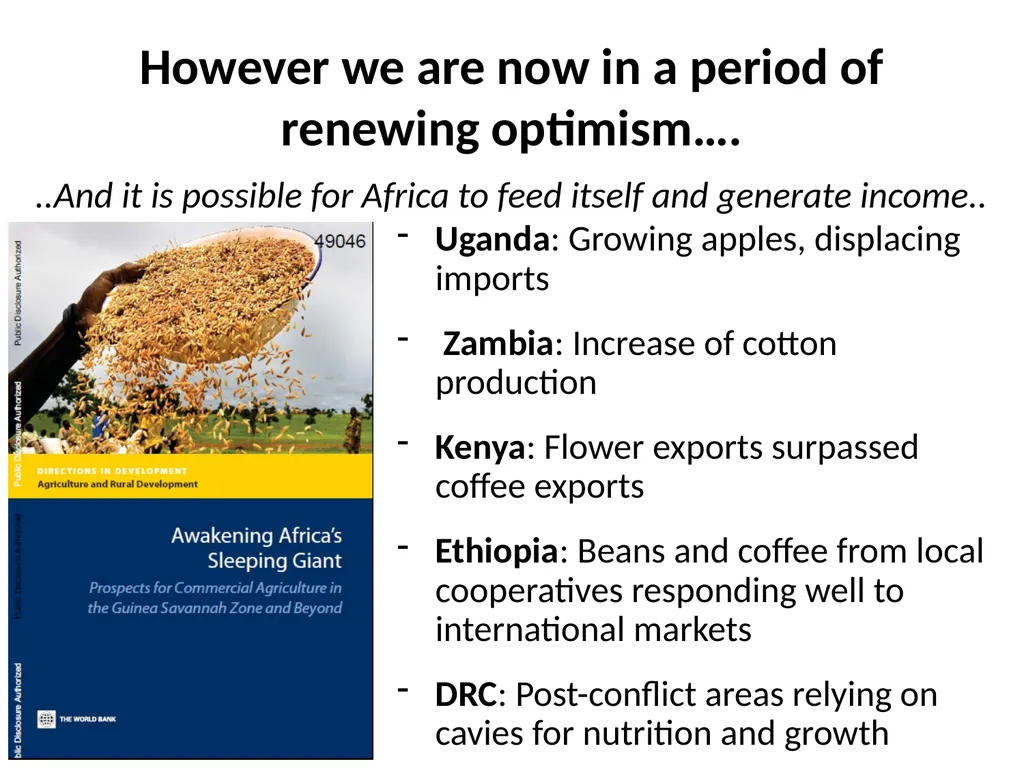
slide12. However we are now in a period of renewing optimism…. Uganda: Growing apples, displacing imports
Zambia: Increase of cotton production
Kenya: Flower exports surpassed coffee exports
Ethiopia: Beans and coffee from local cooperatives responding well to international markets
DRC: Post-conflict areas relying on cavies for nutrition and growth ..And it is possible for Africa to feed itself and generate income..<br>
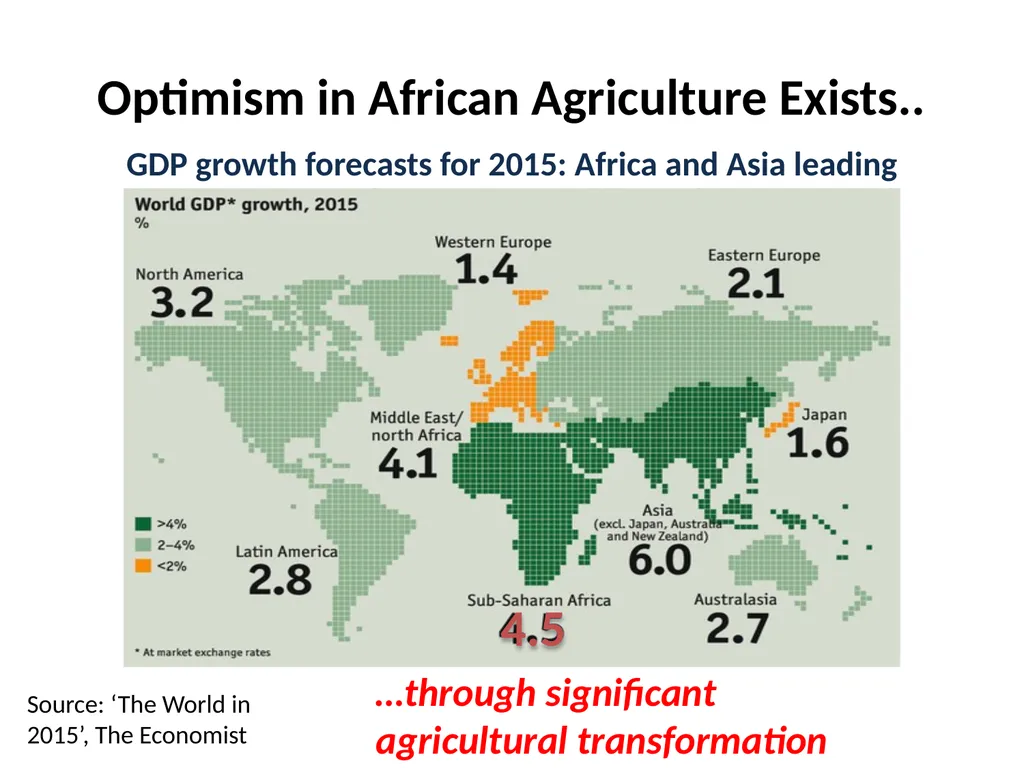
slide13. Optimism in African Agriculture Exists.. Source: ‘The World in 2015’, The Economist GDP growth forecasts for 2015: Africa and Asia leading …through significant agricultural transformation 4.5<br>
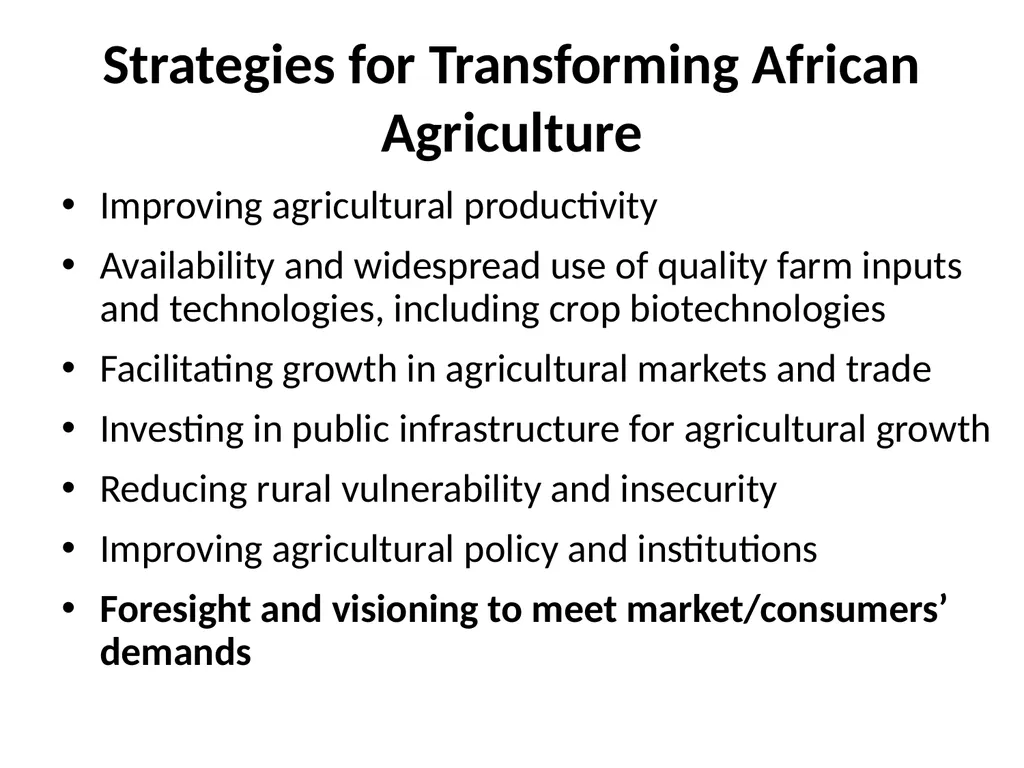
slide14. Strategies for Transforming African Agriculture Improving agricultural productivity
Availability and widespread use of quality farm inputs and technologies, including crop biotechnologies
Facilitating growth in agricultural markets and trade
Investing in public infrastructure for agricultural growth
Reducing rural vulnerability and insecurity
Improving agricultural policy and institutions
Foresight and visioning to meet market/consumers’ demands<br>
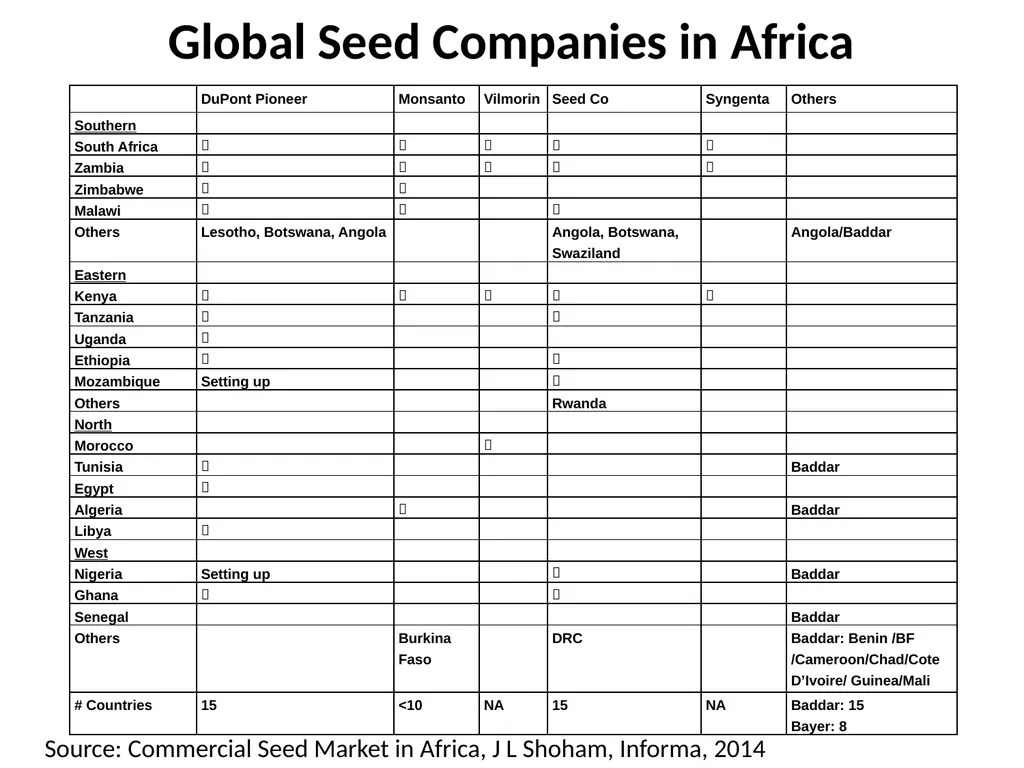
slide15. Global Seed Companies in Africa Source: Commercial Seed Market in Africa, J L Shoham, Informa, 2014<br>
slide16. African seed companies and crops portfolio Source: Commercial Seed Market in Africa, J L Shoham, Informa, 2014<br>
slide17. 3. Visioning and foresight using STEEP analysis and scenario creation<br>
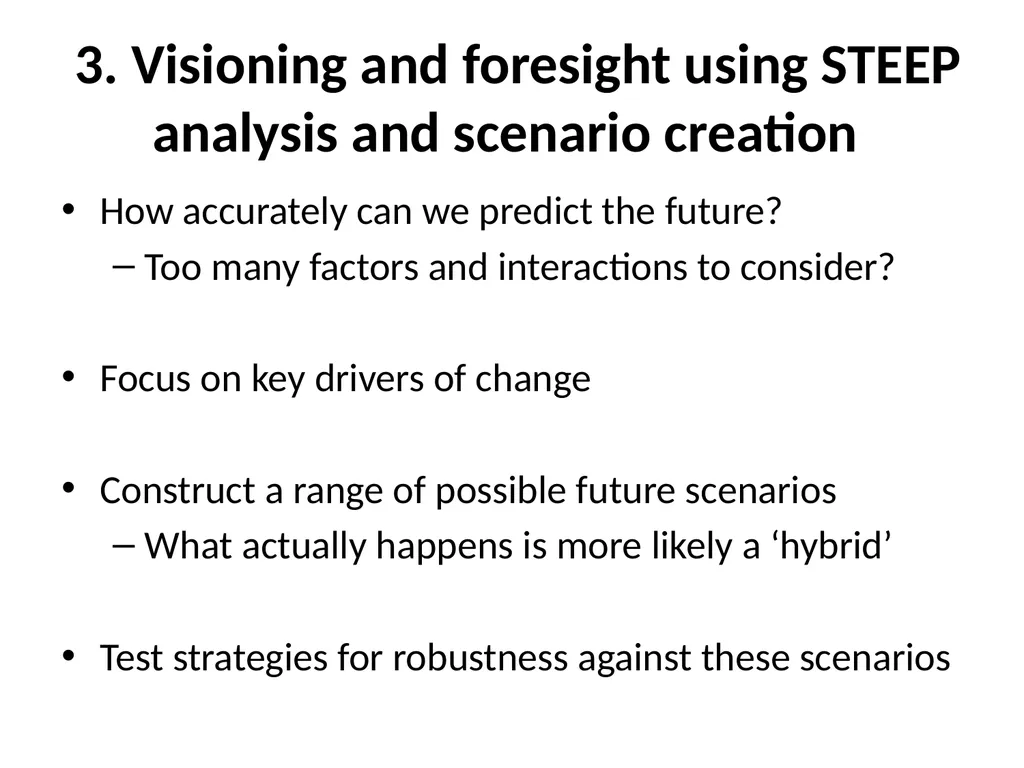
slide18. 3. Visioning and foresight using STEEP analysis and scenario creation How accurately can we predict the future?
Too many factors and interactions to consider?
Focus on key drivers of change
Construct a range of possible future scenarios
What actually happens is more likely a ‘hybrid’
Test strategies for robustness against these scenarios<br>
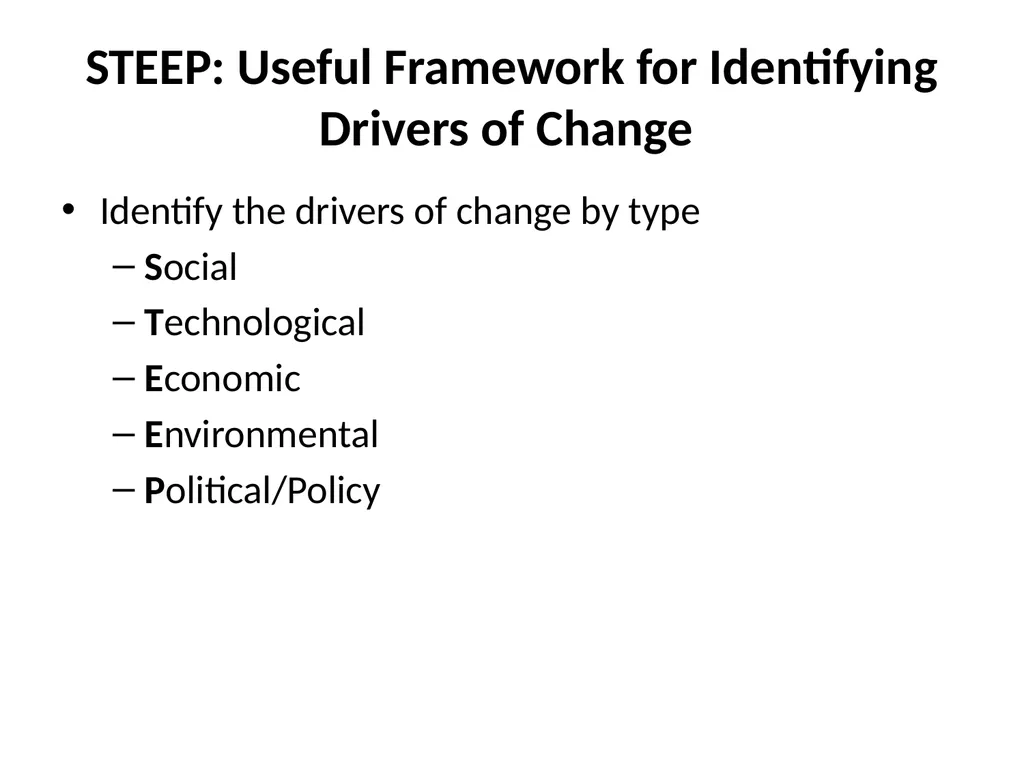
slide19. STEEP: Useful Framework for Identifying Drivers of Change Identify the drivers of change by type
Social
Technological
Economic
Environmental
Political/Policy<br>
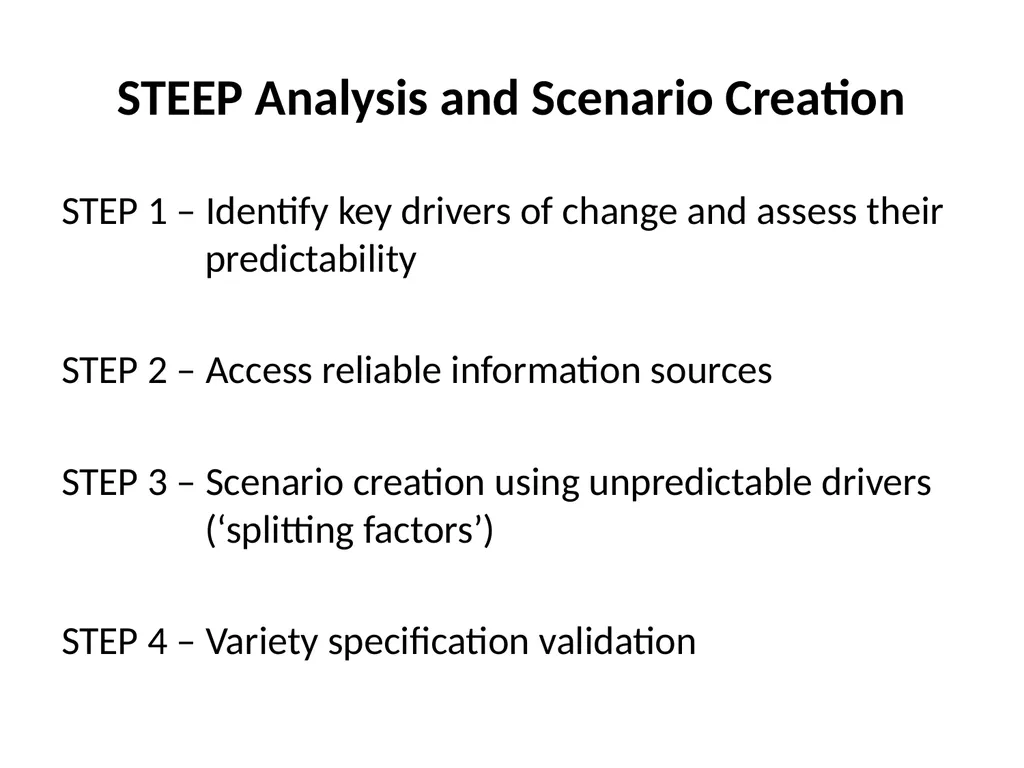
slide20. STEEP Analysis and Scenario Creation STEP 1 – Identify key drivers of change and assess their predictability
STEP 2 – Access reliable information sources
STEP 3 – Scenario creation using unpredictable drivers (‘splitting factors’)
STEP 4 – Variety specification validation<br>
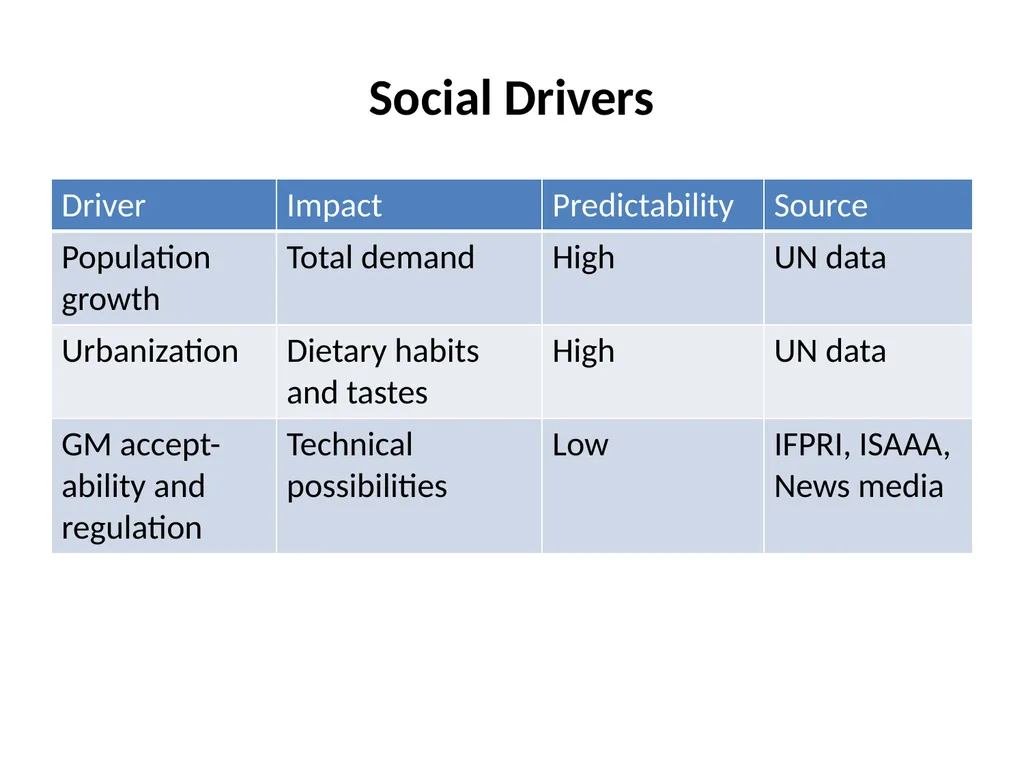
slide21. Social Drivers<br>
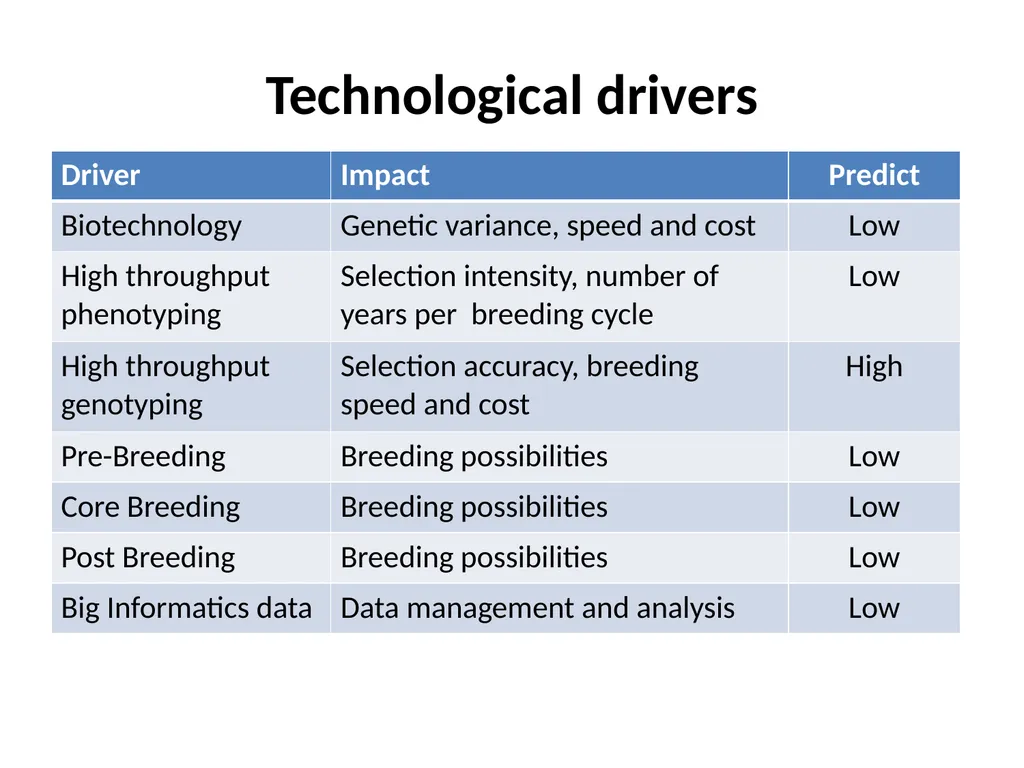
slide22. Technological drivers<br>
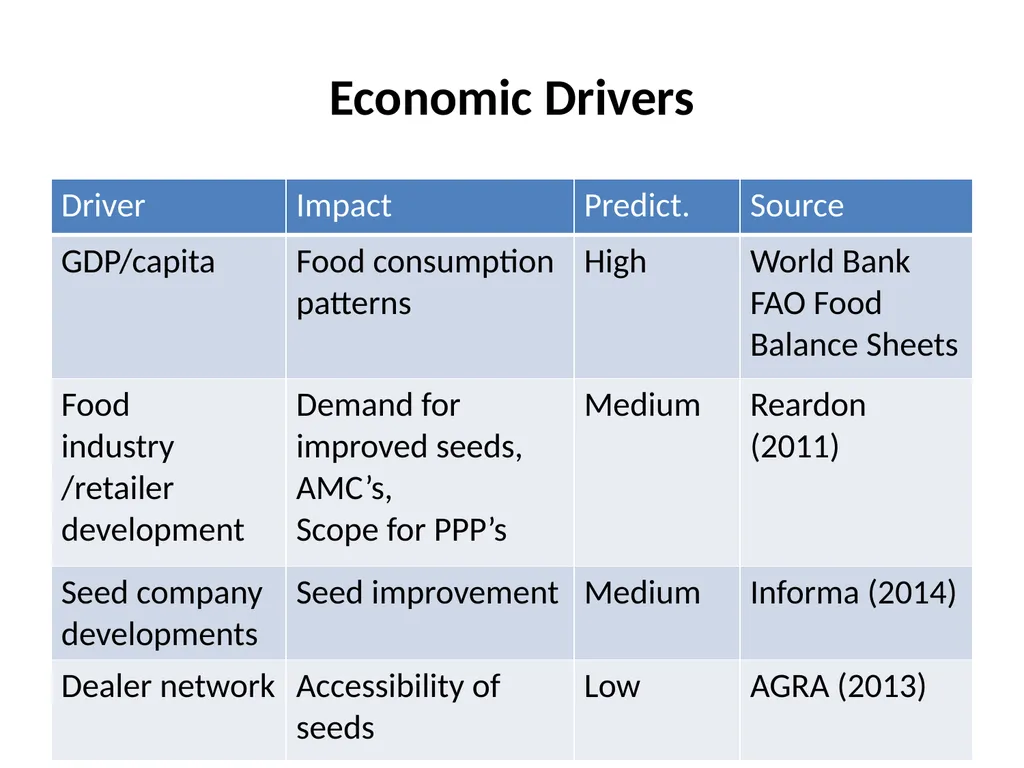
slide23. Economic Drivers<br>
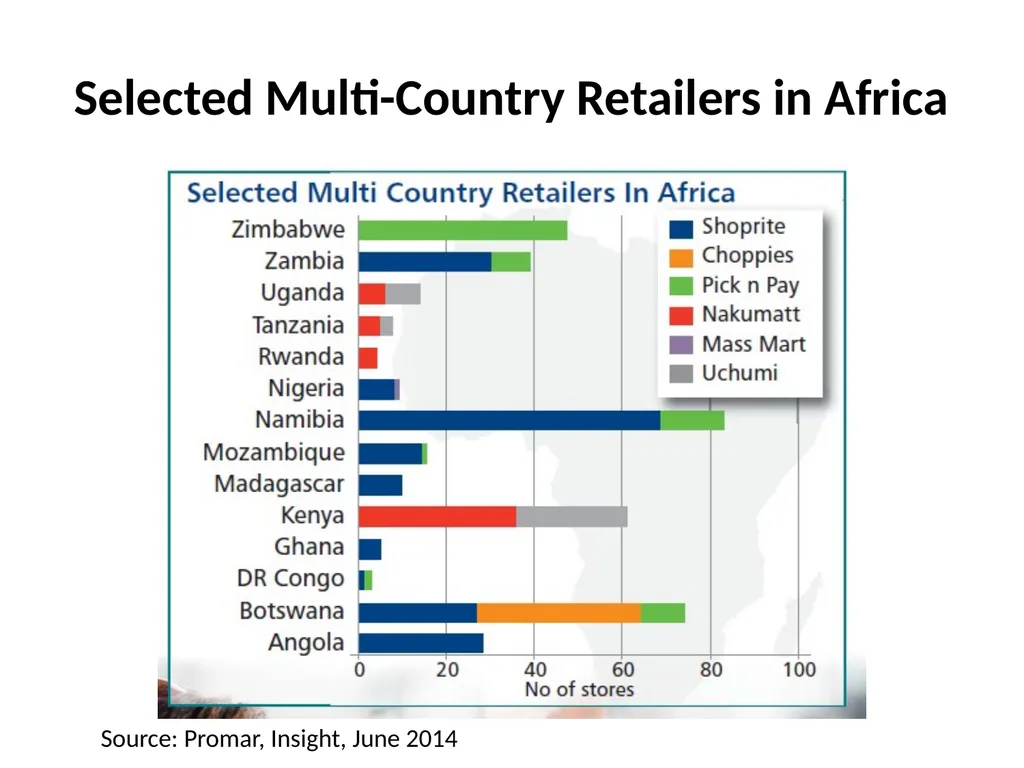
slide24. Selected Multi-Country Retailers in Africa Source: Promar, Insight, June 2014<br>
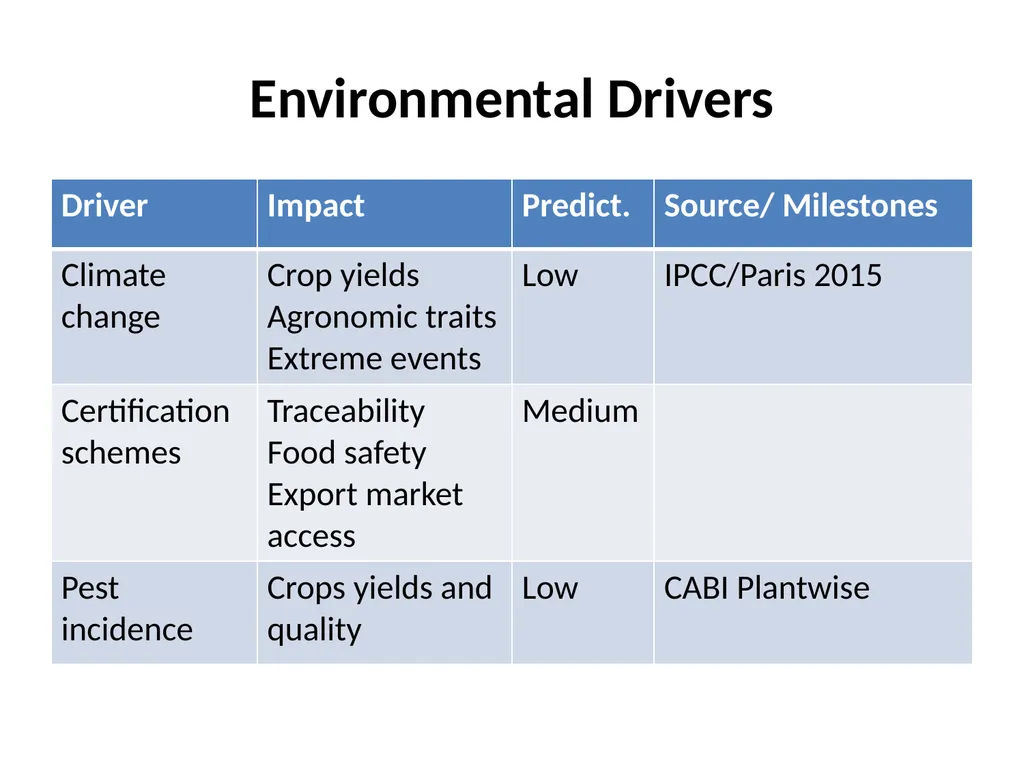
slide25. Environmental Drivers<br>
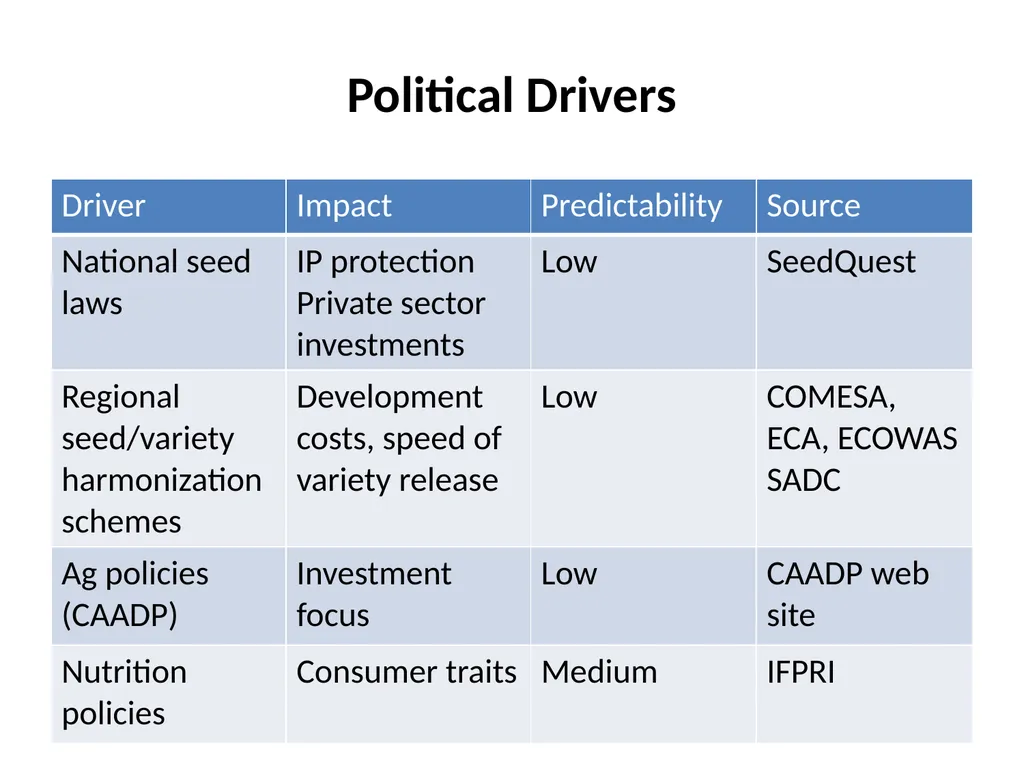
slide26. Political Drivers<br>
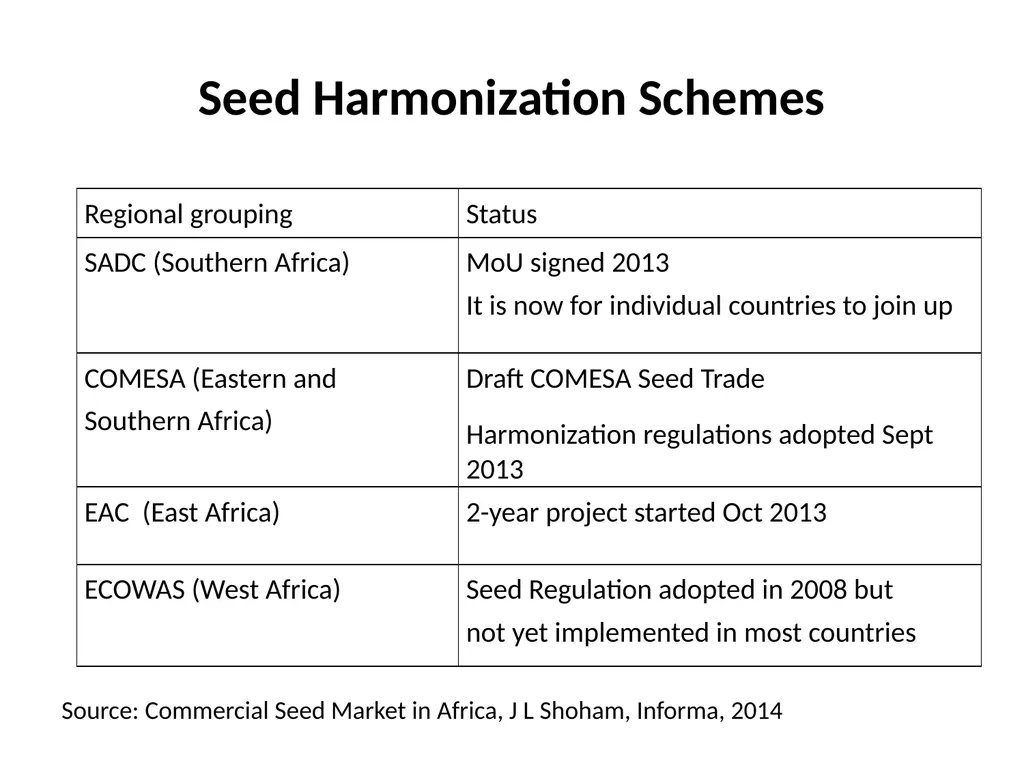
slide27. Seed Harmonization Schemes Source: Commercial Seed Market in Africa, J L Shoham, Informa, 2014<br>
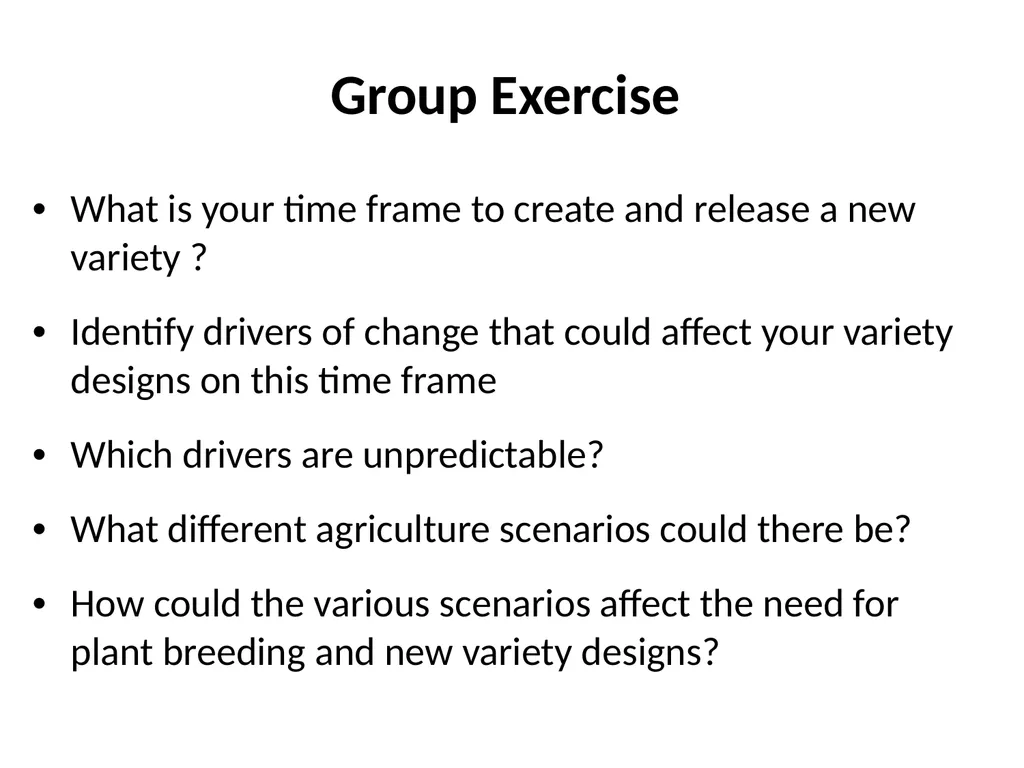
slide28. Group Exercise What is your time frame to create and release a new variety ?
Identify drivers of change that could affect your variety designs on this time frame
Which drivers are unpredictable?
What different agriculture scenarios could there be?
How could the various scenarios affect the need for plant breeding and new variety designs?<br>
slide29. 4. Integrating Foresight into Variety Design<br>
slide30. Integrating foresight into new variety design Foresight methods are used to review existing variety designs or as a starting point to create new designs.
Every trait characteristic in each product profile should be analysed and a decision taken if the trait and benchmark is likely to remain relevant over the time required for variety development.<br>
slide31. Risk management Risk analysis and mitigation is essential for testing long-term viability of demand-led designs
Decision points are required in the stage plan and risk spreading considered
e.g. benefits and costs of maintaining many biologically diverse germplasm lines<br>
slide32. What Next? Having analysed the drivers and identified the ‘splitting factors’:
Construct 2—4 scenarios around ‘splitting factors’
Test your breeding strategies against these scenarios
Identify signposts and put in place indicators
Review and amend variety designs and plant breeding targets<br>
slide33. Chapter 2
Visioning and Foresight for Setting Breeding Goals
Nasser Yao, Appolinaire Djikeng and Jonathan Shoham The Business of Plant Breeding:
Market-led approaches to new variety design in Africa<br>
Visioning and Foresight for Setting Breeding Goals
Nasser Yao, Appolinaire Djikeng and Jonathan Shoham The Business of Plant Breeding:
Market-led approaches to new variety design in Africa<br>
slide2. Chapter 2 Visioning and Foresight for Setting Breeding Goals Nasser Yao*, Appolinaire Djikeng* and
Jonathan Shoham**
*Biosciences for Eastern and Central Africa (BecA) - International Livestock Research Institute
** Syngenta Foundation for Sustainable Agriculture,
WRO-1002.11.54, P.O. Box 4002, Basel, Switzerland.<br>
slide3. Chapter 2 Objectives To empower plant breeders and R&D leaders to consider future agricultural landscapes in Africa.
2. To equip breeders with methodologies to design new varieties that will remain relevant and satisfy market demands over time.
3. To identify drivers that may affect whether farmers adopt new varieties in the future.<br>
slide4. Chapter 2 Contents Introduction
2. African Agricultural Outlook, Challenges and Policy
3. Visioning and Foresight, using STEEP Analysis and Scenario Creation
4. Integrating Foresight into New Variety Design
5. Risk Management<br>
slide5. 1. Introduction Group Discussion
What is your time frame to create and release a new variety?
How do you forecast the future demand of your varieties?<br>
slide6. 2. African Agricultural Outlook, Challenges and Policy<br>
slide7. Africa at a Glance:Agricultural landscape Demand growth is fastest in the world
SSA population c. 800 million
220 million undernourished
Mean population growth in SSA is c. 3% (-ve Europe, 0.5% Rest of the World)
Population size expected to double in 35 years
Population growth is double in urban vs. rural areas Food supply vs. demand Demand<br>
slide8. Africa at a Glance: Highest Rate of Population Growth Source: UNFPA Total population billion (2010) 4.2 1.0 0.7 0.3 0.6<br>
slide9. Africa at a Glance: High GDP per Capita Growth: 2004 – 13 Source: World Development Indicators (World Bank); SFSA analysis 4% 5% 9% 3% 4% 5% 7% 4% 5% 5% 3% 6% 3% 4% 5% 8% 3% 6% 1% 2% 3% 5% 7% 6% 2% 3% 10% 2% 2% 0% 6%<br>
slide10. Challenges of SSA Agriculture:Low Productivity in Smallholder Farming Tonne/ha (2014) Source:
PSD (USDA)<br>
slide11. Reasons for the Low Productivity Overall constraints
War; corruption; governance; education; lack of country economies of scale
Low inter-regional trade
Highest Tariffs Agricultural constraints
Infrastructure; land rights
African crop diversity/uniqueness
Lack of extension/various farming systems
Lack of storage Input market constraints
Seed laws/industry
Local fertilizer industry
Distribution system
Credit availability Source:
J L Shoham Rapid urbanization growth (lack of access to land, degradation of natural resources) Poor access to markets (lack of access to resources/inputs) Low investment in agricultural research, training and extension services WEAK PRIVATE SECTOR<br>
slide12. However we are now in a period of renewing optimism…. Uganda: Growing apples, displacing imports
Zambia: Increase of cotton production
Kenya: Flower exports surpassed coffee exports
Ethiopia: Beans and coffee from local cooperatives responding well to international markets
DRC: Post-conflict areas relying on cavies for nutrition and growth ..And it is possible for Africa to feed itself and generate income..<br>
slide13. Optimism in African Agriculture Exists.. Source: ‘The World in 2015’, The Economist GDP growth forecasts for 2015: Africa and Asia leading …through significant agricultural transformation 4.5<br>
slide14. Strategies for Transforming African Agriculture Improving agricultural productivity
Availability and widespread use of quality farm inputs and technologies, including crop biotechnologies
Facilitating growth in agricultural markets and trade
Investing in public infrastructure for agricultural growth
Reducing rural vulnerability and insecurity
Improving agricultural policy and institutions
Foresight and visioning to meet market/consumers’ demands<br>
slide15. Global Seed Companies in Africa Source: Commercial Seed Market in Africa, J L Shoham, Informa, 2014<br>
slide16. African seed companies and crops portfolio Source: Commercial Seed Market in Africa, J L Shoham, Informa, 2014<br>
slide17. 3. Visioning and foresight using STEEP analysis and scenario creation<br>
slide18. 3. Visioning and foresight using STEEP analysis and scenario creation How accurately can we predict the future?
Too many factors and interactions to consider?
Focus on key drivers of change
Construct a range of possible future scenarios
What actually happens is more likely a ‘hybrid’
Test strategies for robustness against these scenarios<br>
slide19. STEEP: Useful Framework for Identifying Drivers of Change Identify the drivers of change by type
Social
Technological
Economic
Environmental
Political/Policy<br>
slide20. STEEP Analysis and Scenario Creation STEP 1 – Identify key drivers of change and assess their predictability
STEP 2 – Access reliable information sources
STEP 3 – Scenario creation using unpredictable drivers (‘splitting factors’)
STEP 4 – Variety specification validation<br>
slide21. Social Drivers<br>
slide22. Technological drivers<br>
slide23. Economic Drivers<br>
slide24. Selected Multi-Country Retailers in Africa Source: Promar, Insight, June 2014<br>
slide25. Environmental Drivers<br>
slide26. Political Drivers<br>
slide27. Seed Harmonization Schemes Source: Commercial Seed Market in Africa, J L Shoham, Informa, 2014<br>
slide28. Group Exercise What is your time frame to create and release a new variety ?
Identify drivers of change that could affect your variety designs on this time frame
Which drivers are unpredictable?
What different agriculture scenarios could there be?
How could the various scenarios affect the need for plant breeding and new variety designs?<br>
slide29. 4. Integrating Foresight into Variety Design<br>
slide30. Integrating foresight into new variety design Foresight methods are used to review existing variety designs or as a starting point to create new designs.
Every trait characteristic in each product profile should be analysed and a decision taken if the trait and benchmark is likely to remain relevant over the time required for variety development.<br>
slide31. Risk management Risk analysis and mitigation is essential for testing long-term viability of demand-led designs
Decision points are required in the stage plan and risk spreading considered
e.g. benefits and costs of maintaining many biologically diverse germplasm lines<br>
slide32. What Next? Having analysed the drivers and identified the ‘splitting factors’:
Construct 2—4 scenarios around ‘splitting factors’
Test your breeding strategies against these scenarios
Identify signposts and put in place indicators
Review and amend variety designs and plant breeding targets<br>
slide33. Chapter 2
Visioning and Foresight for Setting Breeding Goals
Nasser Yao, Appolinaire Djikeng and Jonathan Shoham The Business of Plant Breeding:
Market-led approaches to new variety design in Africa<br>