
CHAPTER 4 Basic Concepts in Industrial Toxicology
Description: CHAPTER 4 Basic Concepts in Industrial Toxicology Learning Objectives Define the study of toxicology and explain why it is important to the practice of industrial hygiene. List different mechanisms and modes of toxic chemical action and the
Related Topics
Download Presentation
"CHAPTER 4 Basic Concepts in Industrial Toxicology" is the property of its rightful owner. Permission is granted to download and print the materials on this website for personal, non-commercial use only, and to display it on your personal computer provided you do not modify the materials and that you retain all copyright notices contained in the materials. By downloading content from our website, you accept the terms of this agreement.
Presentation Transcript
slide1. CHAPTER 4 Basic Concepts in
Industrial Toxicology<br>
slide2. Learning Objectives Define the study of toxicology and explain why it is important to the practice of industrial hygiene.
List different mechanisms and modes of toxic chemical action and the various methods used to measure and document toxicity.
Explain various criteria for causation of toxic effects.
Describe toxicokinetics.
Identify and list routes of toxic agent exposure in the human body.
Understand toxic chemical absorption, distribution, metabolism, and elimination.
Explain the concept of dose response.
Describe the toxic effects typical in the major organ systems.<br>
slide3. Toxicology A broad field that studies the effects of chemical, biological, and physical agents on the health of an organism.
Includes studies at the molecular basis of the biological response up to and including evaluations at the cellular, tissue, organ, organ system, and whole body levels.
Integrates several areas of science, including chemistry, biology, physiology, and pathology.<br>
slide4. Mechanisms of Action Detailed descriptions of the process involved in an agent’s toxic effects, from initial exposure to the development of adverse reactions<br>
slide5. Key Events in a Mode of Action An empirically observable step that is a necessary element of the mode of action or is a biologically based marker for such an element<br>
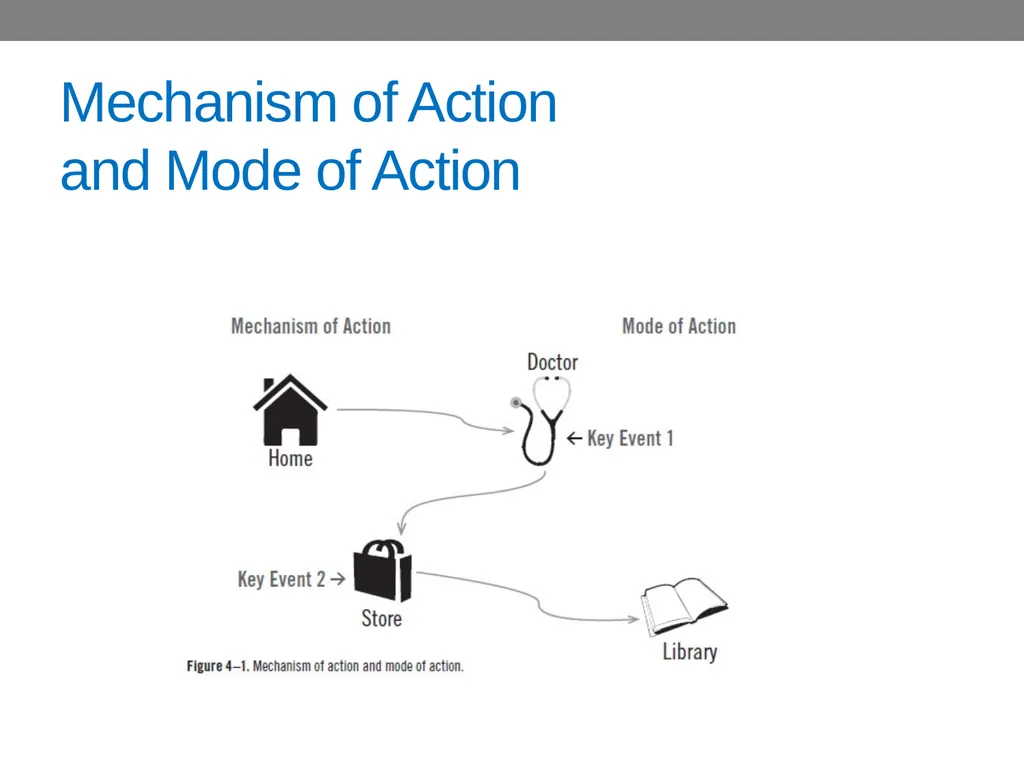
slide6. Mechanism of Action and Mode of Action<br>
slide7. Establishing Mechanisms of Action Epidemiological studies
Laboratory studies
Animal studies<br>
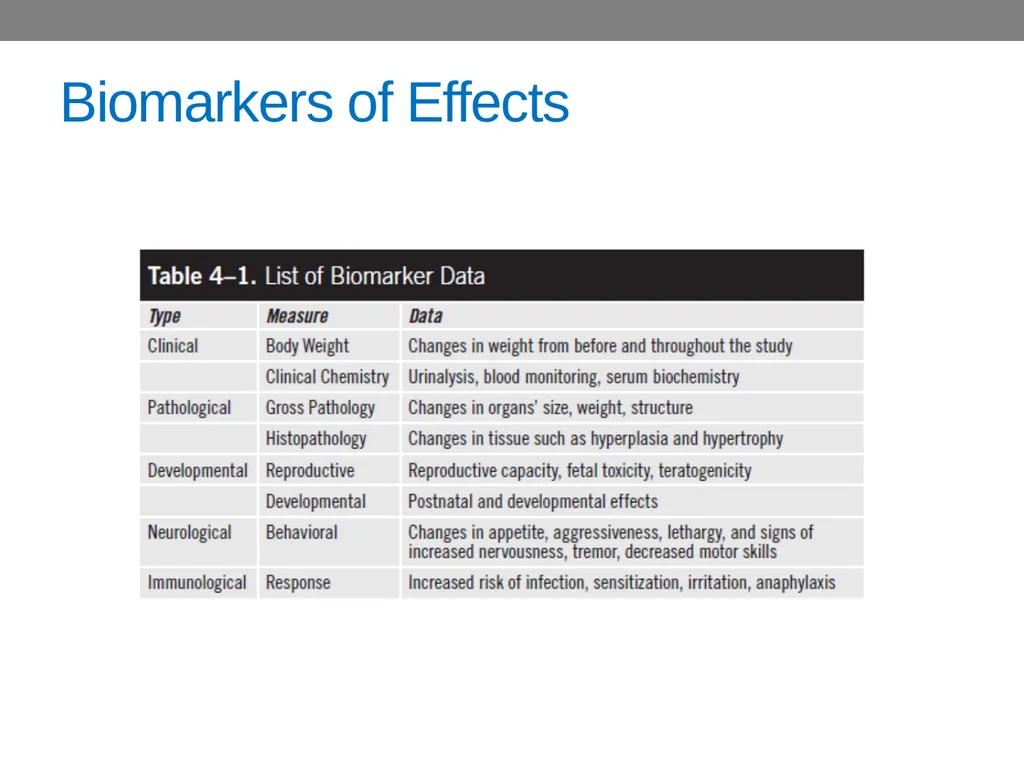
slide8. Biomarkers of Effects<br>
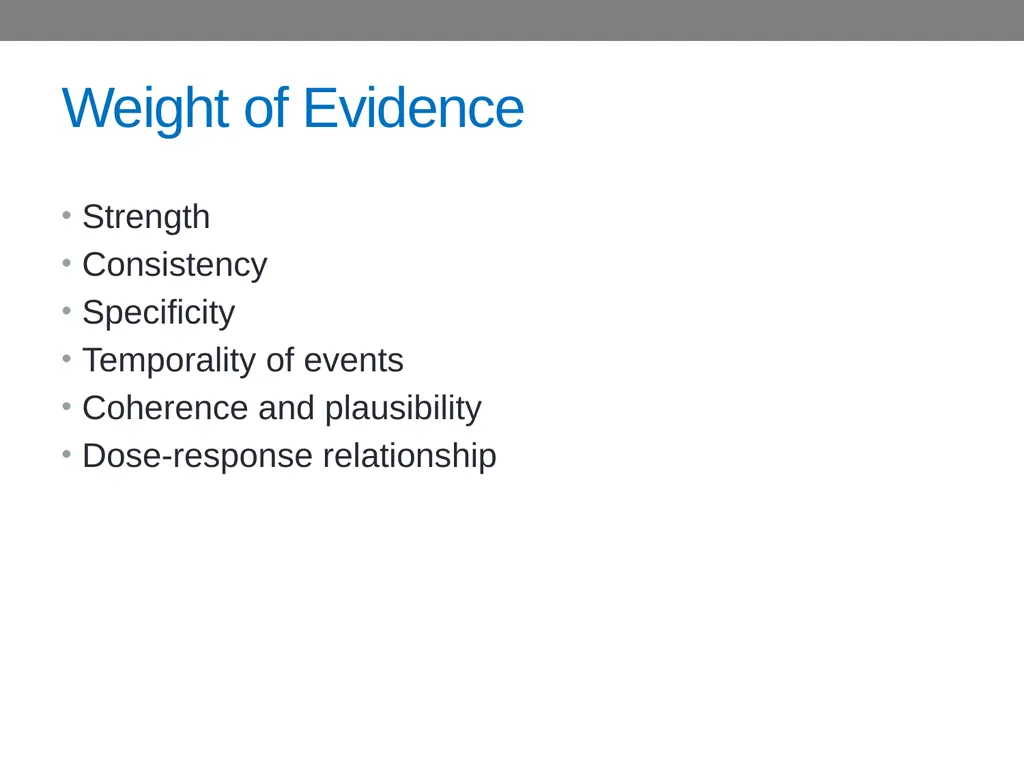
slide9. Weight of Evidence Strength
Consistency
Specificity
Temporality of events
Coherence and plausibility
Dose-response relationship<br>
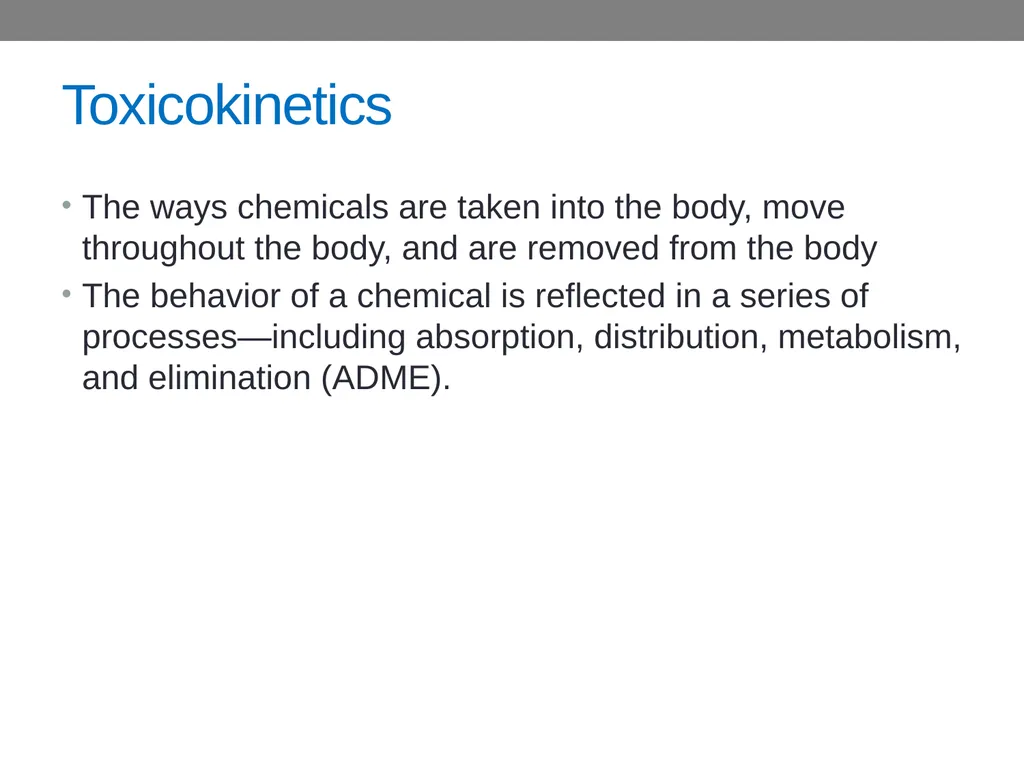
slide10. Toxicokinetics The ways chemicals are taken into the body, move throughout the body, and are removed from the body
The behavior of a chemical is reflected in a series of processes—including absorption, distribution, metabolism, and elimination (ADME).<br>
slide11. Routes of Exposure Ingestion
Inhalation
Dermal
Percutaneous<br>
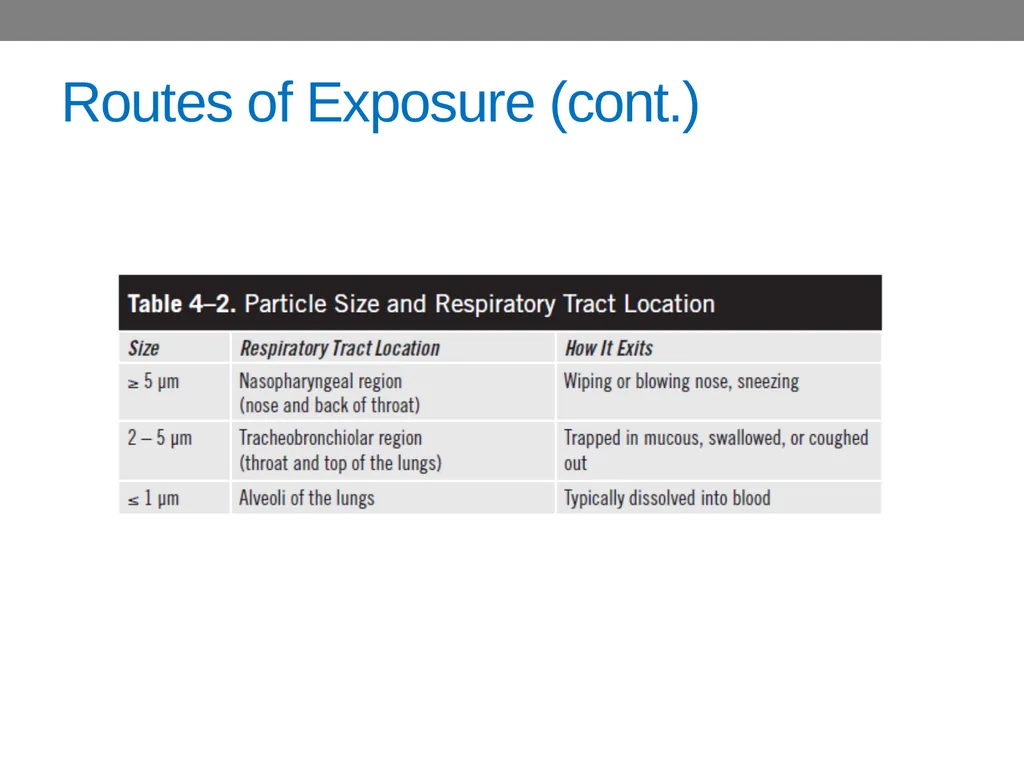
slide12. Routes of Exposure (cont.)<br>
slide13. Absorption Internal dose: the amount of an agent absorbed into the body
Dependent on the properties of the chemical such as lipid solubility, molecular size, and concentration gradients<br>
slide14. Rate of Chemical Absorption, Tmax Indicated by the time it takes for the chemical to reach peak blood concentrations after exposure<br>
slide15. Percent Bioavailability The amount of an agent recovered from excreta divided by the total dose
The amount left behind in the body to cause damage
Useful when extrapolating toxicity data from one route of exposure to another<br>
slide16. Distribution How a chemical moves through the body once it is absorbed
Partition coefficients: ratios at equilibrium between the blood and varying tissues of the body
describe agent’s affinity for a particular tissue or organ<br>
slide17. Metabolism The process by which the body transforms a molecule, be it a toxicant, nutrient, or normal physiological (i.e., endogenous) chemical or molecule
For toxicants, metabolism often serves to transform the agent into a form that is more easily removed from the body = biotransformation<br>
slide18. Elimination How the body removes agents from the body
urine
feces
respiration
sweat<br>
slide19. Biological Half-Life The time it takes for the concentration of a chemical in the body to decrease by half<br>
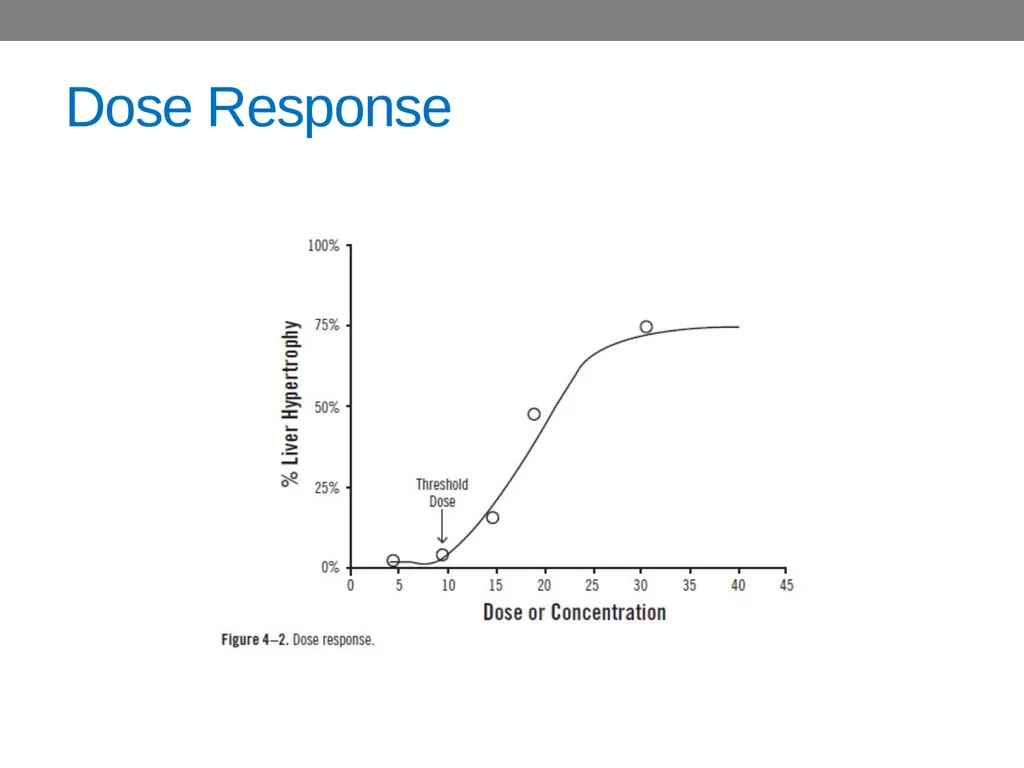
slide20. Dose Response<br>
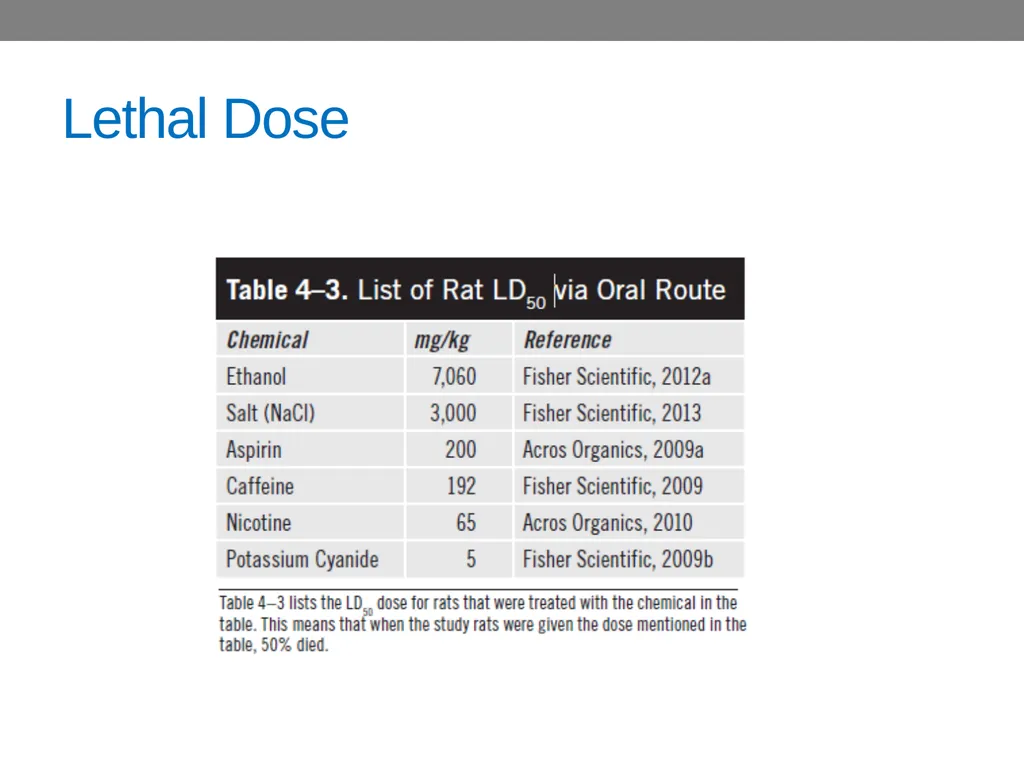
slide21. Lethal Dose<br>
slide22. Liver Toxicity First-pass metabolism
One of the most common sites of toxicity because it processes many chemicals, including those whose metabolic products are toxic<br>
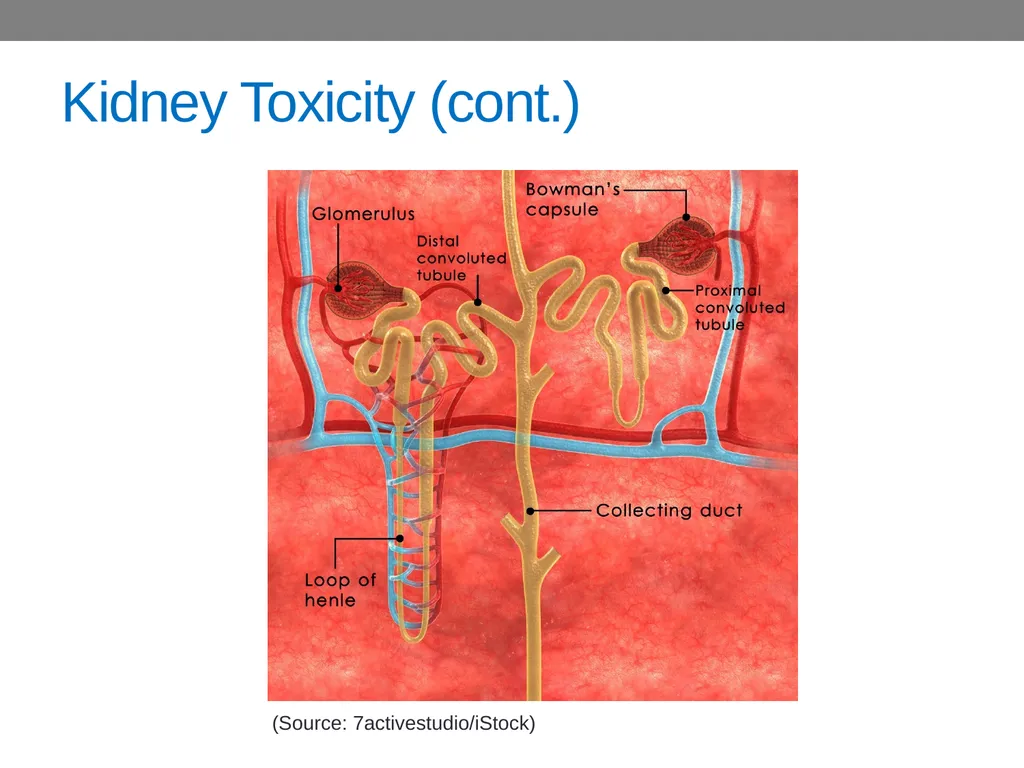
slide23. Kidney Toxicity The kidney plays vital roles in removing metabolic waste, regulating body fluid volumes, maintaining electrolyte balance, and ensuring proper body pH<br>
slide24. Kidney Toxicity (cont.) (Source: 7activestudio/iStock)<br>
slide25. Lung Anatomy Upper respiratory tract
Trachea
Bronchi
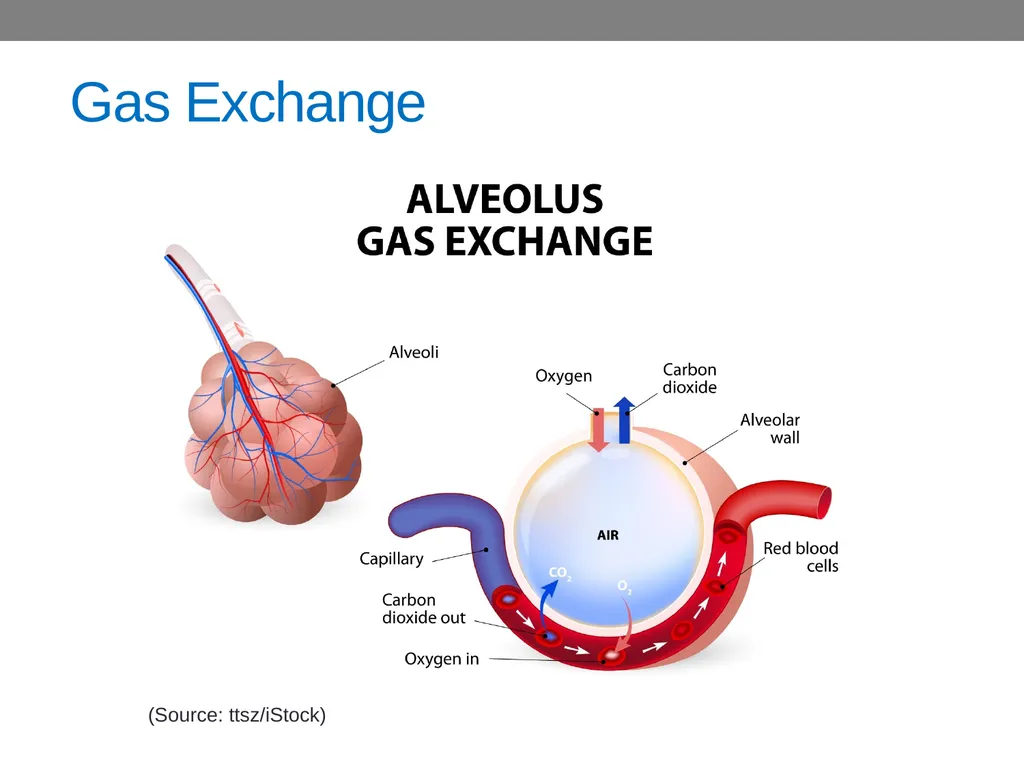
Alveoli<br>
slide26. Lung Function Measures Total Lung Volume (TLV) – the total volume of air the lung can hold
Vital Capacity (VC) – the amount of air moved into and out of the lungs when taking the largest possible breath
Tidal Volume (TV) – the amount of air moved into and out of the lungs into a typical resting breath<br>
slide27. Health Effects Edema – an accumulation of fluids in the pulmonary tissues
Fibrosis – lung tissue scarring decreases the surface area available for gas exchange and causes the lungs to become less compliant (stiffer), making it harder to draw air into the pulmonary region of the lungs
Emphysema – destruction of the gas exchange surfaces of the alveoli, causes inefficient exchange of gases and results in larger pockets filled with air
Cancer<br>
slide28. Gas Exchange (Source: ttsz/iStock)<br>
slide29. Neurotoxicity Toxic chemicals interfere with the transmission of numerous signals in the body that control motion as well as autonomous body functions.<br>
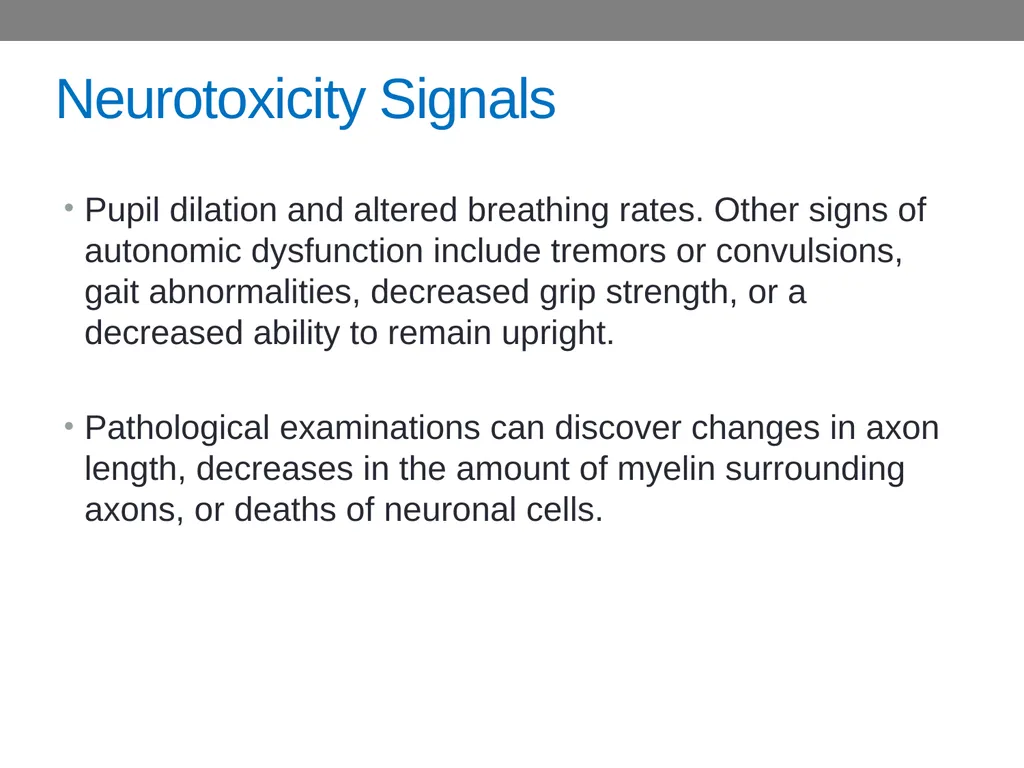
slide30. Neurotoxicity Signals Pupil dilation and altered breathing rates. Other signs of autonomic dysfunction include tremors or convulsions, gait abnormalities, decreased grip strength, or a decreased ability to remain upright.
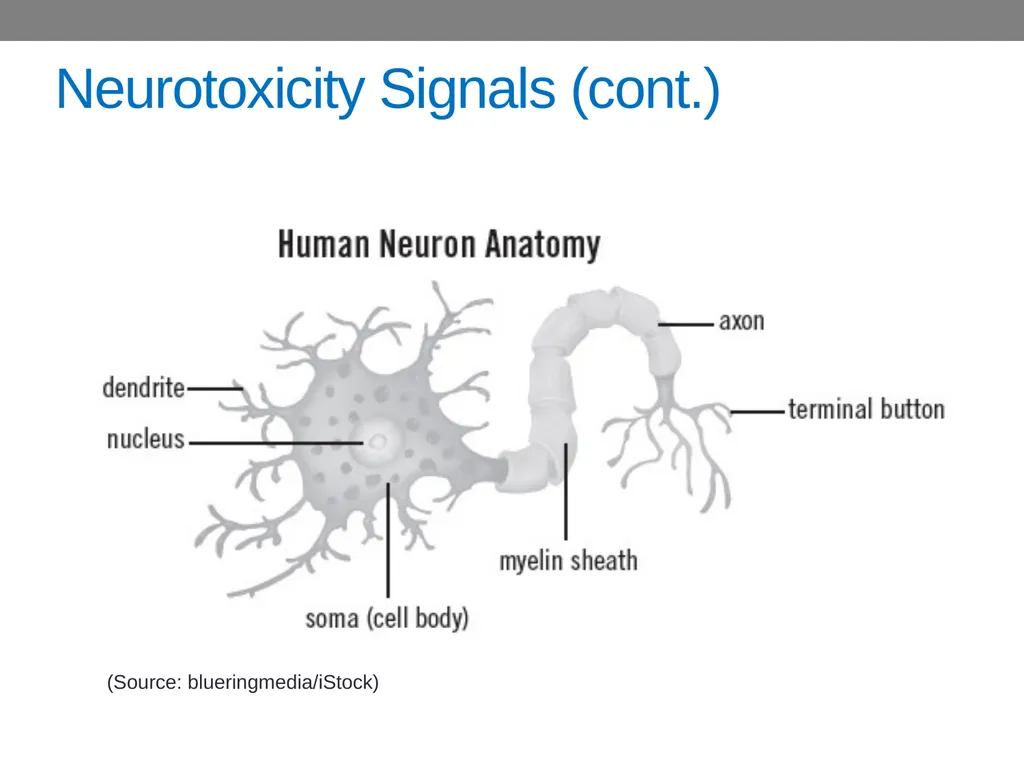
Pathological examinations can discover changes in axon length, decreases in the amount of myelin surrounding axons, or deaths of neuronal cells.<br>
slide31. Neurotoxicity Signals (cont.) (Source: blueringmedia/iStock)<br>
slide32. Reproductive and Developmental Toxicity Reduced ability to reproduce
Damage to offspring
Disruption of germ development
Impacts on the embryo and fetus<br>
slide33. Immunotoxicity Toxic agents that affect the immune system through functional immunosuppression, which prevents the immune system from protecting the body<br>
slide34. Skin Toxicity Nonallergic irritation
Allergic contact dermatitis
Corrosive chemical burns
Chemical-induced photosensitivity<br>
slide35. Carcinogenesis and Genotoxicity Neoplasia – originates from inheritable changes in cell growth that lead to the loss of normal control processes. Classified as begin or malignant
Metastasis – the movement of neoplastic cells to locations beyond the primary site of origin
The term cancer refers to malignant neoplasms<br>
slide2. Learning Objectives Define the study of toxicology and explain why it is important to the practice of industrial hygiene.
List different mechanisms and modes of toxic chemical action and the various methods used to measure and document toxicity.
Explain various criteria for causation of toxic effects.
Describe toxicokinetics.
Identify and list routes of toxic agent exposure in the human body.
Understand toxic chemical absorption, distribution, metabolism, and elimination.
Explain the concept of dose response.
Describe the toxic effects typical in the major organ systems.<br>
slide3. Toxicology A broad field that studies the effects of chemical, biological, and physical agents on the health of an organism.
Includes studies at the molecular basis of the biological response up to and including evaluations at the cellular, tissue, organ, organ system, and whole body levels.
Integrates several areas of science, including chemistry, biology, physiology, and pathology.<br>
slide4. Mechanisms of Action Detailed descriptions of the process involved in an agent’s toxic effects, from initial exposure to the development of adverse reactions<br>
slide5. Key Events in a Mode of Action An empirically observable step that is a necessary element of the mode of action or is a biologically based marker for such an element<br>
slide6. Mechanism of Action and Mode of Action<br>
slide7. Establishing Mechanisms of Action Epidemiological studies
Laboratory studies
Animal studies<br>
slide8. Biomarkers of Effects<br>
slide9. Weight of Evidence Strength
Consistency
Specificity
Temporality of events
Coherence and plausibility
Dose-response relationship<br>
slide10. Toxicokinetics The ways chemicals are taken into the body, move throughout the body, and are removed from the body
The behavior of a chemical is reflected in a series of processes—including absorption, distribution, metabolism, and elimination (ADME).<br>
slide11. Routes of Exposure Ingestion
Inhalation
Dermal
Percutaneous<br>
slide12. Routes of Exposure (cont.)<br>
slide13. Absorption Internal dose: the amount of an agent absorbed into the body
Dependent on the properties of the chemical such as lipid solubility, molecular size, and concentration gradients<br>
slide14. Rate of Chemical Absorption, Tmax Indicated by the time it takes for the chemical to reach peak blood concentrations after exposure<br>
slide15. Percent Bioavailability The amount of an agent recovered from excreta divided by the total dose
The amount left behind in the body to cause damage
Useful when extrapolating toxicity data from one route of exposure to another<br>
slide16. Distribution How a chemical moves through the body once it is absorbed
Partition coefficients: ratios at equilibrium between the blood and varying tissues of the body
describe agent’s affinity for a particular tissue or organ<br>
slide17. Metabolism The process by which the body transforms a molecule, be it a toxicant, nutrient, or normal physiological (i.e., endogenous) chemical or molecule
For toxicants, metabolism often serves to transform the agent into a form that is more easily removed from the body = biotransformation<br>
slide18. Elimination How the body removes agents from the body
urine
feces
respiration
sweat<br>
slide19. Biological Half-Life The time it takes for the concentration of a chemical in the body to decrease by half<br>
slide20. Dose Response<br>
slide21. Lethal Dose<br>
slide22. Liver Toxicity First-pass metabolism
One of the most common sites of toxicity because it processes many chemicals, including those whose metabolic products are toxic<br>
slide23. Kidney Toxicity The kidney plays vital roles in removing metabolic waste, regulating body fluid volumes, maintaining electrolyte balance, and ensuring proper body pH<br>
slide24. Kidney Toxicity (cont.) (Source: 7activestudio/iStock)<br>
slide25. Lung Anatomy Upper respiratory tract
Trachea
Bronchi
Alveoli<br>
slide26. Lung Function Measures Total Lung Volume (TLV) – the total volume of air the lung can hold
Vital Capacity (VC) – the amount of air moved into and out of the lungs when taking the largest possible breath
Tidal Volume (TV) – the amount of air moved into and out of the lungs into a typical resting breath<br>
slide27. Health Effects Edema – an accumulation of fluids in the pulmonary tissues
Fibrosis – lung tissue scarring decreases the surface area available for gas exchange and causes the lungs to become less compliant (stiffer), making it harder to draw air into the pulmonary region of the lungs
Emphysema – destruction of the gas exchange surfaces of the alveoli, causes inefficient exchange of gases and results in larger pockets filled with air
Cancer<br>
slide28. Gas Exchange (Source: ttsz/iStock)<br>
slide29. Neurotoxicity Toxic chemicals interfere with the transmission of numerous signals in the body that control motion as well as autonomous body functions.<br>
slide30. Neurotoxicity Signals Pupil dilation and altered breathing rates. Other signs of autonomic dysfunction include tremors or convulsions, gait abnormalities, decreased grip strength, or a decreased ability to remain upright.
Pathological examinations can discover changes in axon length, decreases in the amount of myelin surrounding axons, or deaths of neuronal cells.<br>
slide31. Neurotoxicity Signals (cont.) (Source: blueringmedia/iStock)<br>
slide32. Reproductive and Developmental Toxicity Reduced ability to reproduce
Damage to offspring
Disruption of germ development
Impacts on the embryo and fetus<br>
slide33. Immunotoxicity Toxic agents that affect the immune system through functional immunosuppression, which prevents the immune system from protecting the body<br>
slide34. Skin Toxicity Nonallergic irritation
Allergic contact dermatitis
Corrosive chemical burns
Chemical-induced photosensitivity<br>
slide35. Carcinogenesis and Genotoxicity Neoplasia – originates from inheritable changes in cell growth that lead to the loss of normal control processes. Classified as begin or malignant
Metastasis – the movement of neoplastic cells to locations beyond the primary site of origin
The term cancer refers to malignant neoplasms<br>