Chapter 8 Strategy Formulation and Execution Strategy Every company is concerned with strategy It determines which organizations succeed and which ones struggle Strategic blunders can hurt a company Strategic management is a specific type
"Chapter 8 Strategy Formulation and Execution" is the property of its rightful owner. Permission is granted to
download and print the materials on this website for personal, non-commercial use only, and to display it
on your personal computer provided you do not modify the materials and that you retain all copyright
notices contained in the materials. By downloading content from our website, you accept the terms of this
agreement.
Presentation Transcript
01
Chapter 8 Strategy Formulation and Execution<br>
02
Strategy Every company is concerned with strategy
It determines which organizations succeed and which ones struggle
Strategic blunders can hurt a company
Strategic management is a specific type of planning 2<br>
03
Thinking Strategically The long-term view of the organization and competition
Thinking strategically impacts performance and financial success
Today’s environment requires everyone to think strategically 3<br>
04
Strategic Management 4 Decisions and actions used to formulate and execute strategies that will provide competitively superior fit between the organization and its environment to achieve organizational goals<br>
05
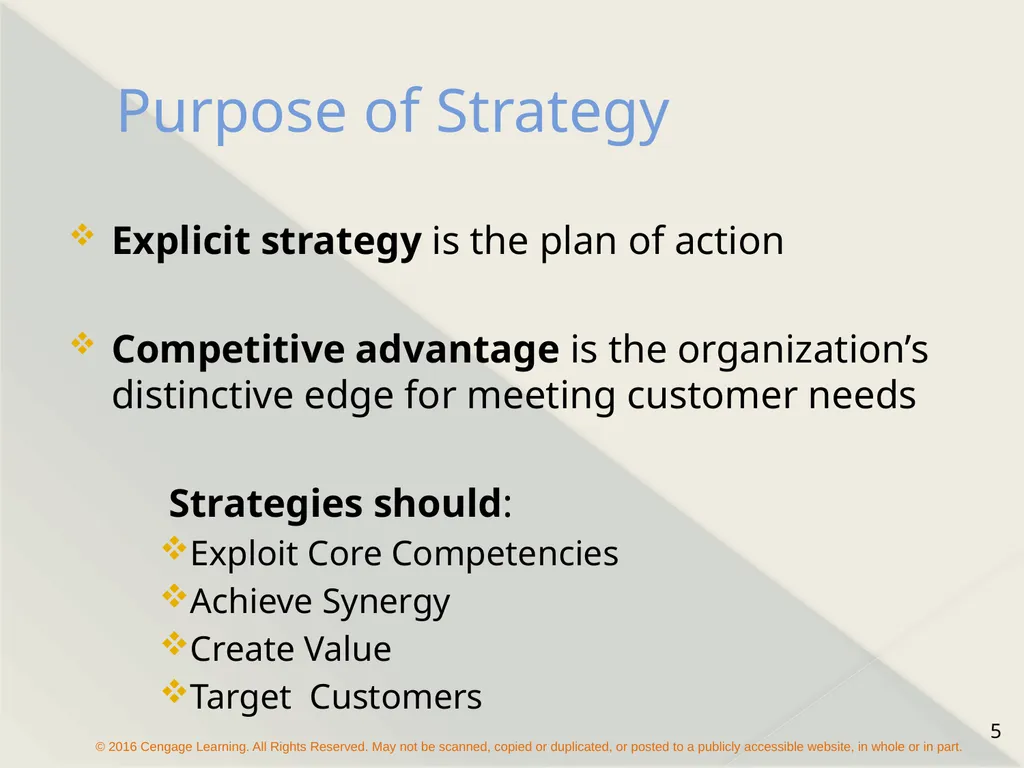
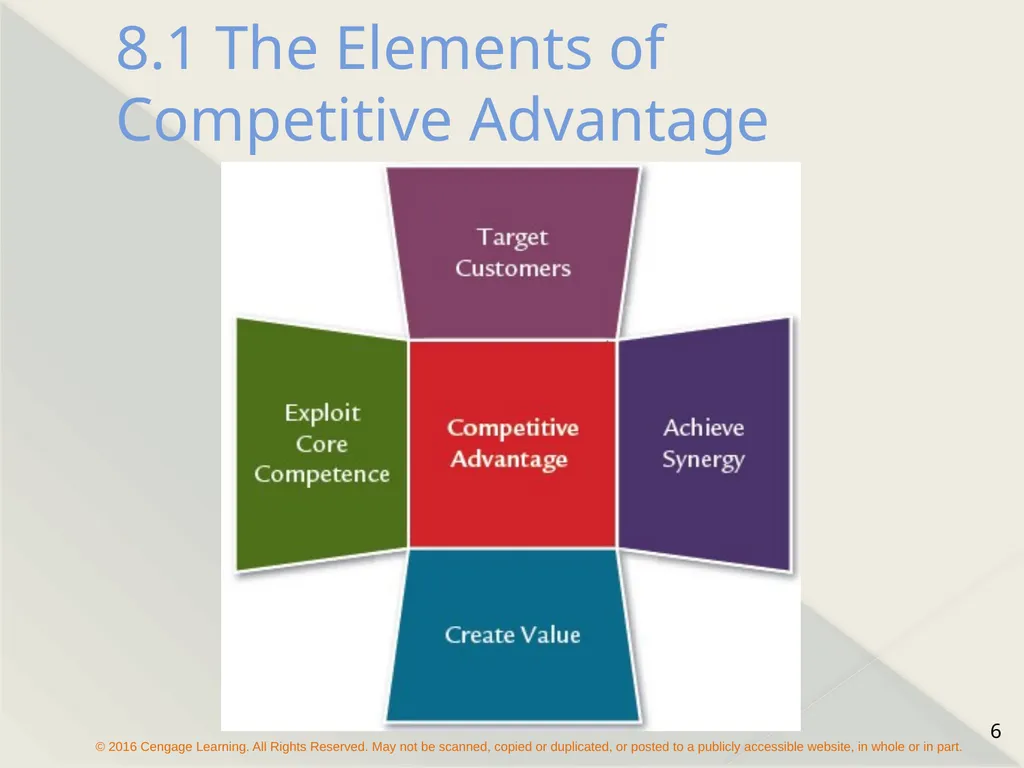
Purpose of Strategy Explicit strategy is the plan of action
Competitive advantage is the organization’s distinctive edge for meeting customer needs
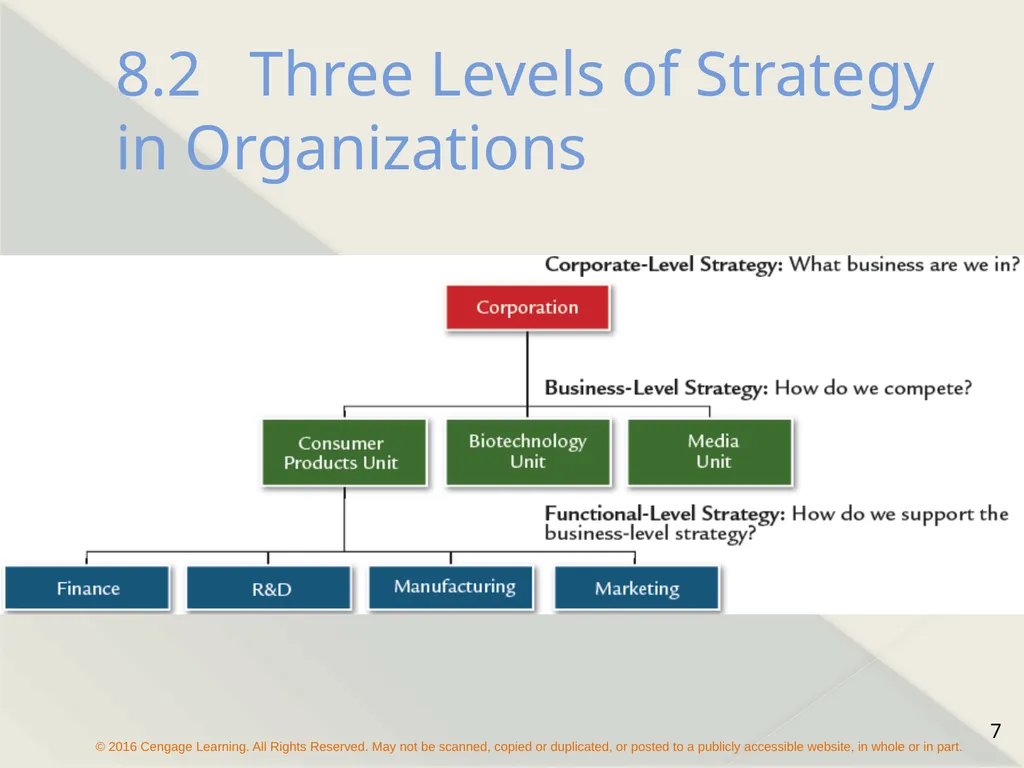
8.2 Three Levels of Strategy in Organizations 7<br>
08
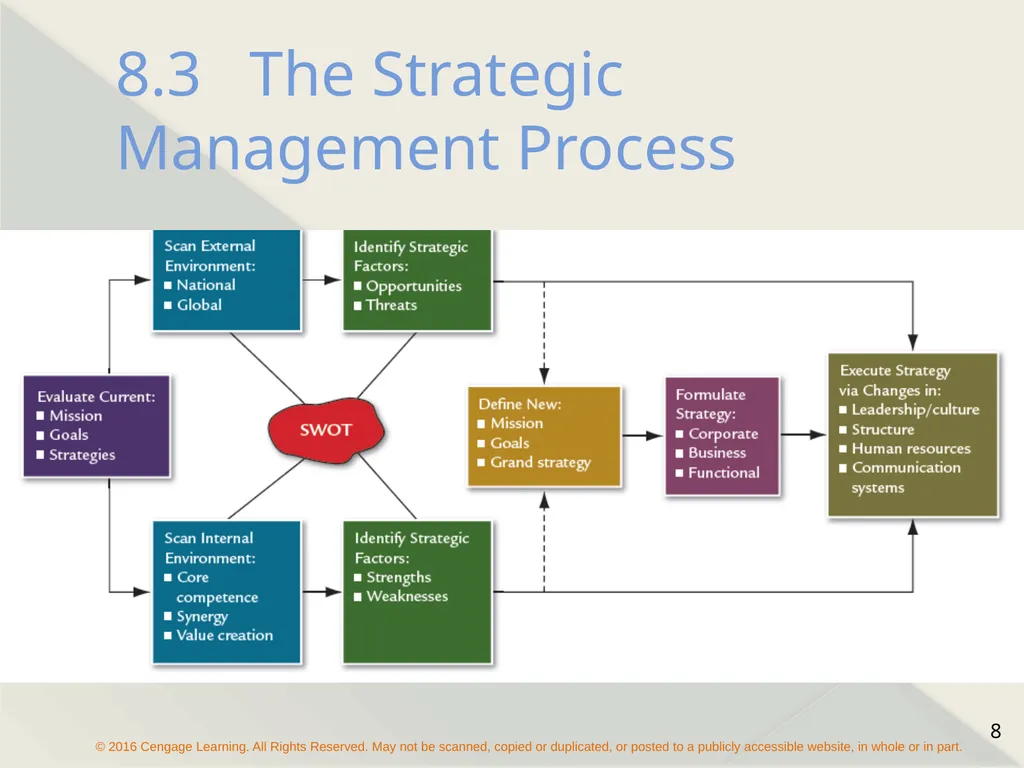
8.3 The Strategic Management Process 8<br>
09
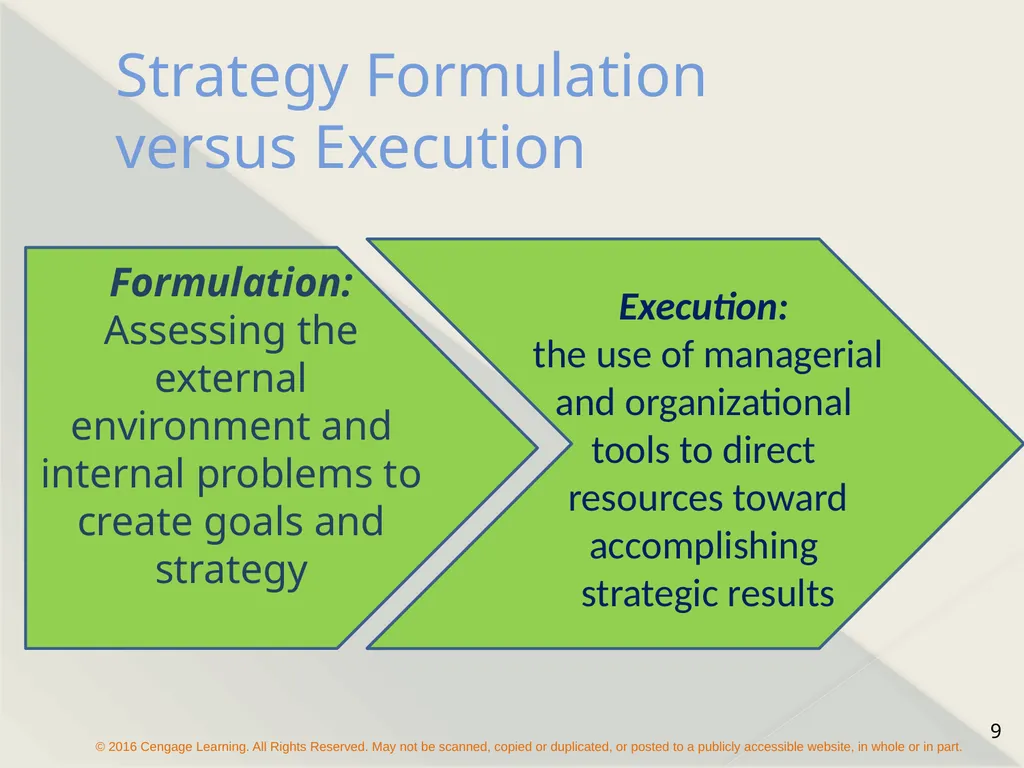
Strategy Formulation versus Execution 9 Formulation:
Assessing the external environment and internal problems to create goals and strategy Execution:
the use of managerial and organizational
tools to direct
resources toward accomplishing
strategic results<br>
10
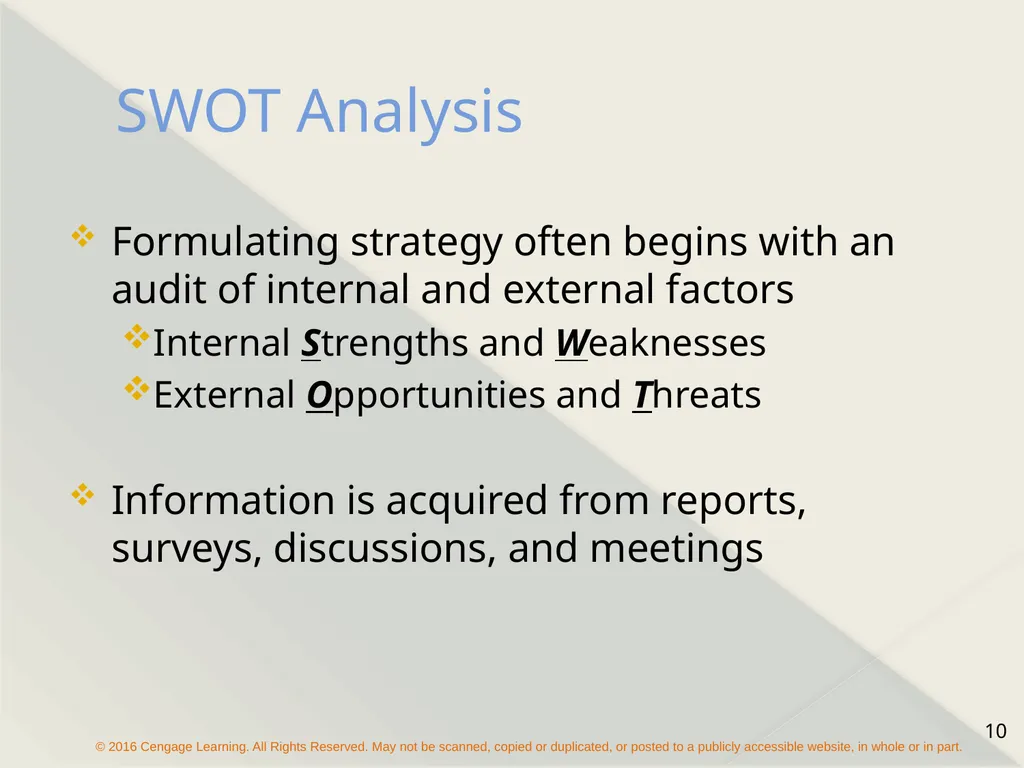
SWOT Analysis Formulating strategy often begins with an audit of internal and external factors
Internal Strengths and Weaknesses
External Opportunities and Threats
Information is acquired from reports, surveys, discussions, and meetings 10<br>
11
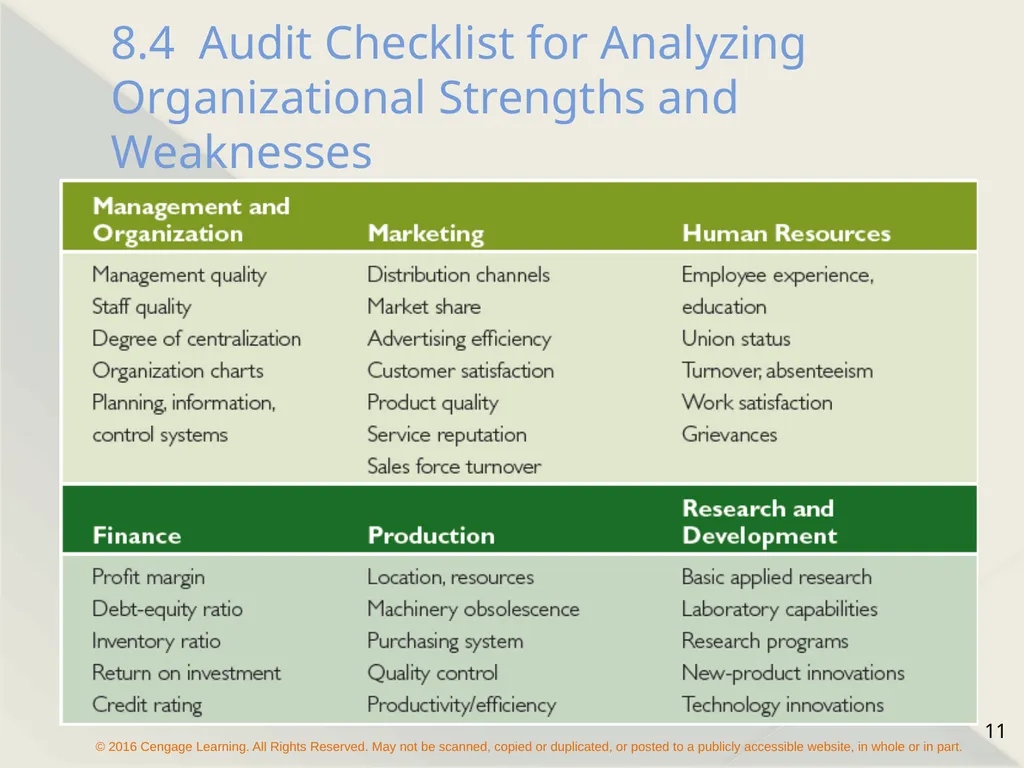
8.4 Audit Checklist for Analyzing Organizational Strengths and Weaknesses 11<br>
12
Formulating Corporate-Level Strategy: Portfolio Strategy Strategic Business Units (SBUs) have a unique mission, products, and competitors
Portfolio strategy pertains to the mix of SBUs and product lines to provide synergy and competitive advantage
Organizations should not become too dependent on one business 12<br>
13
Formulating Corporate-Level Strategy: The BCG Matrix Organizes business along two dimensions
Business growth rate
Market share
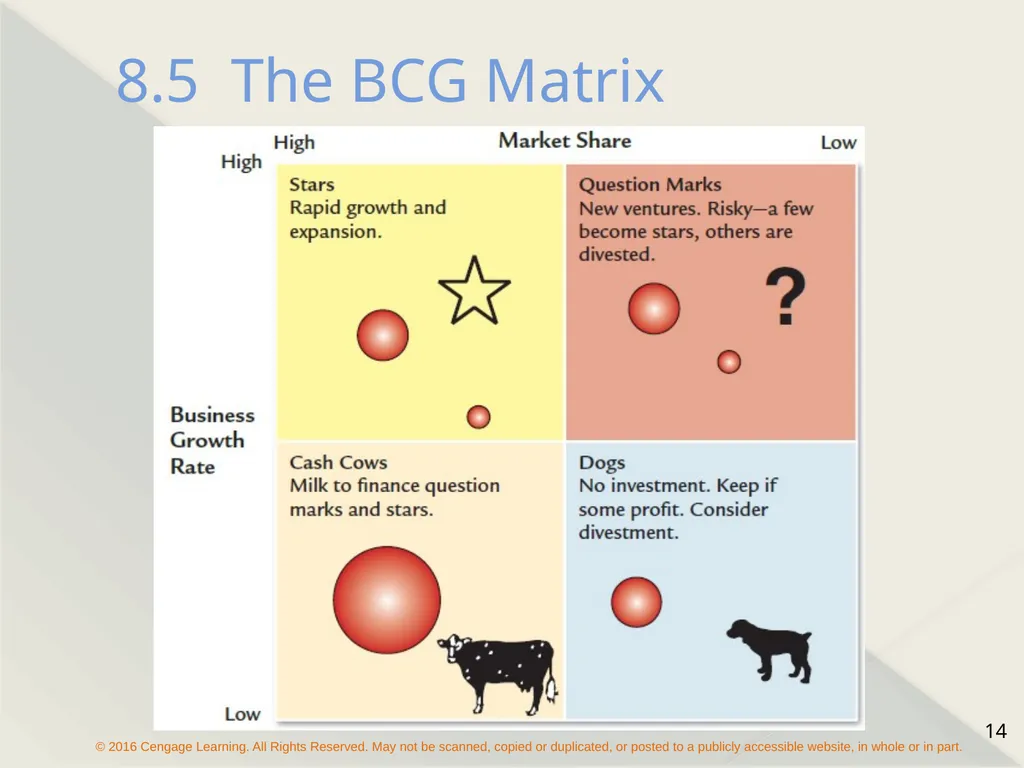
Four categories for corporate portfolio
The combination of high/low market share and high/low business growth 13<br>
14
8.5 The BCG Matrix 14<br>
15
Formulating Corporate-Level Strategy: Diversification Strategy Related diversification: expansion into new business related to existing business activities
Unrelated diversification: expansion into new lines of business
Vertical integration: expansion into businesses that supply to the business or are distributors 15<br>
16
Formulating Business-Level Strategy Strategy within the business units: How do we compete?
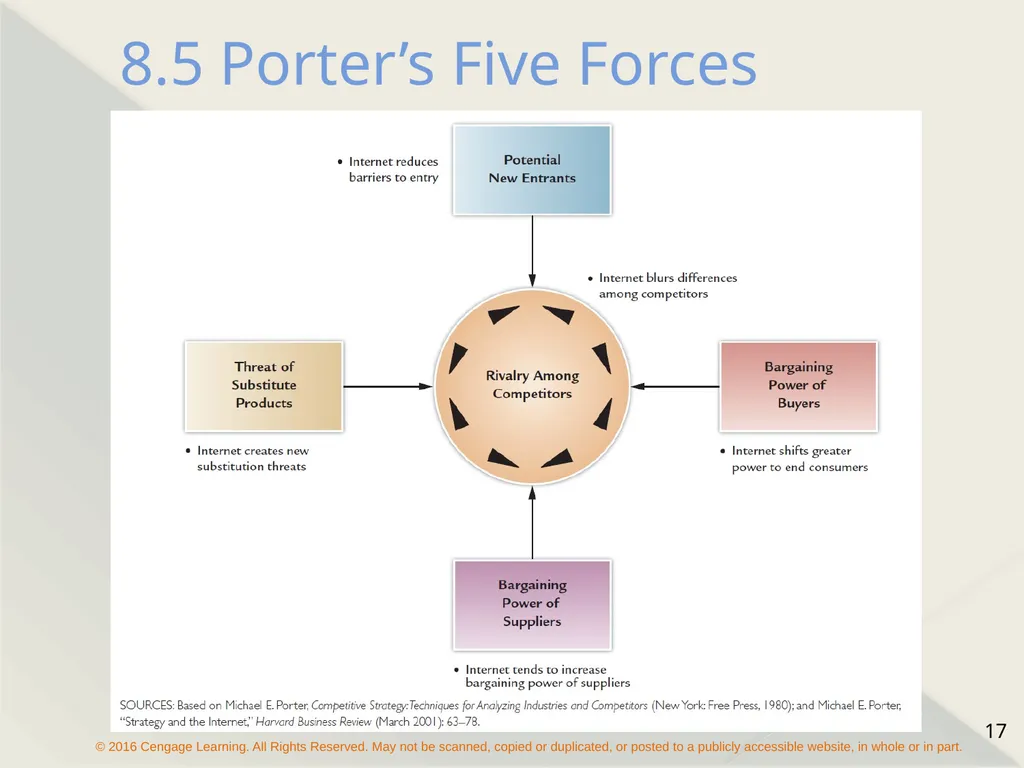
Business-level strategies are developed by Porter’s Five Forces
Web technology is impacting all industries in positive and negative ways 16<br>
17
8.5 Porter’s Five Forces 17<br>
18
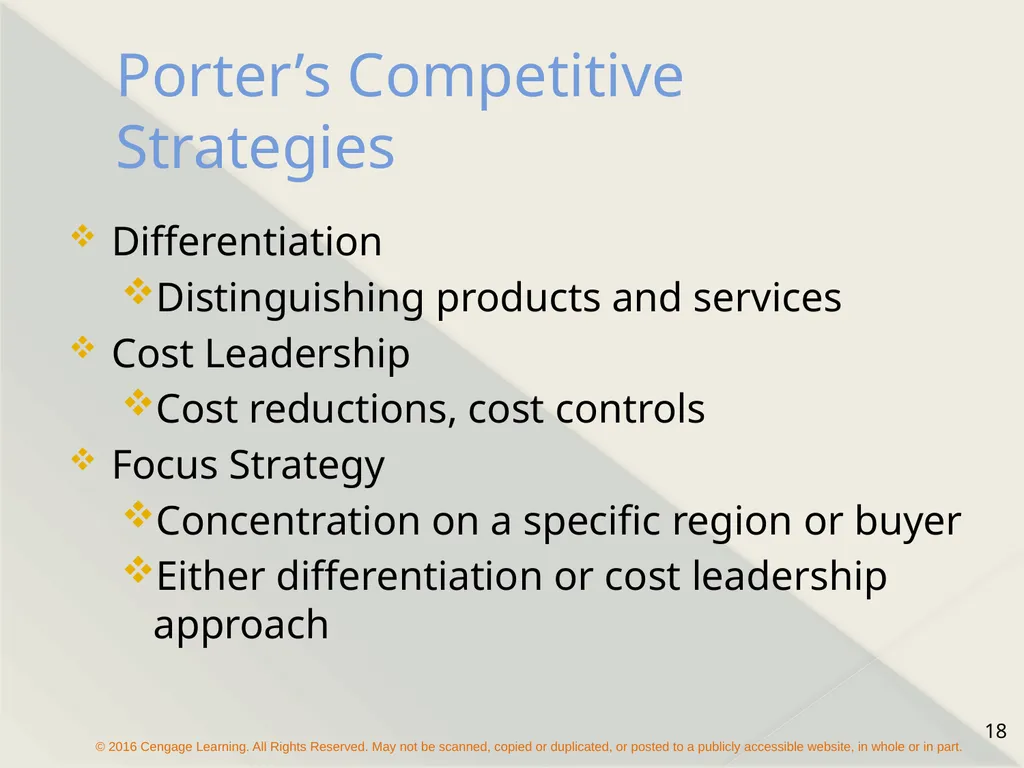
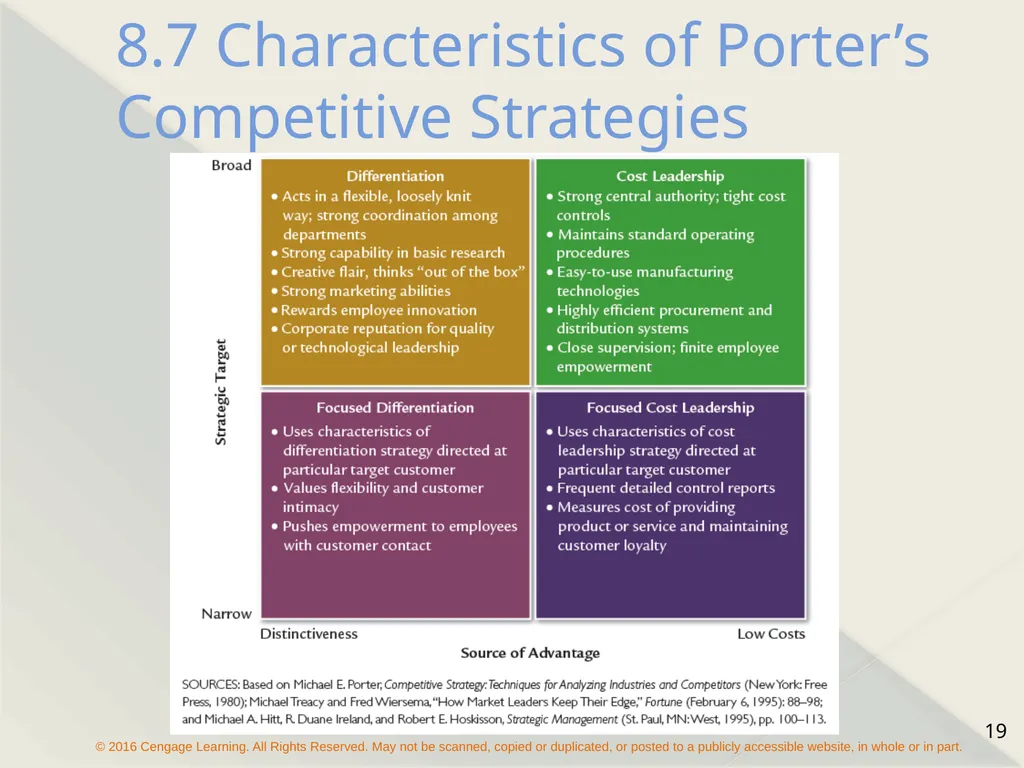
Porter’s Competitive Strategies Differentiation
Distinguishing products and services
Cost Leadership
Cost reductions, cost controls
Focus Strategy
Concentration on a specific region or buyer
Either differentiation or cost leadership approach 18<br>
19
8.7 Characteristics of Porter’s Competitive Strategies 19<br>
20
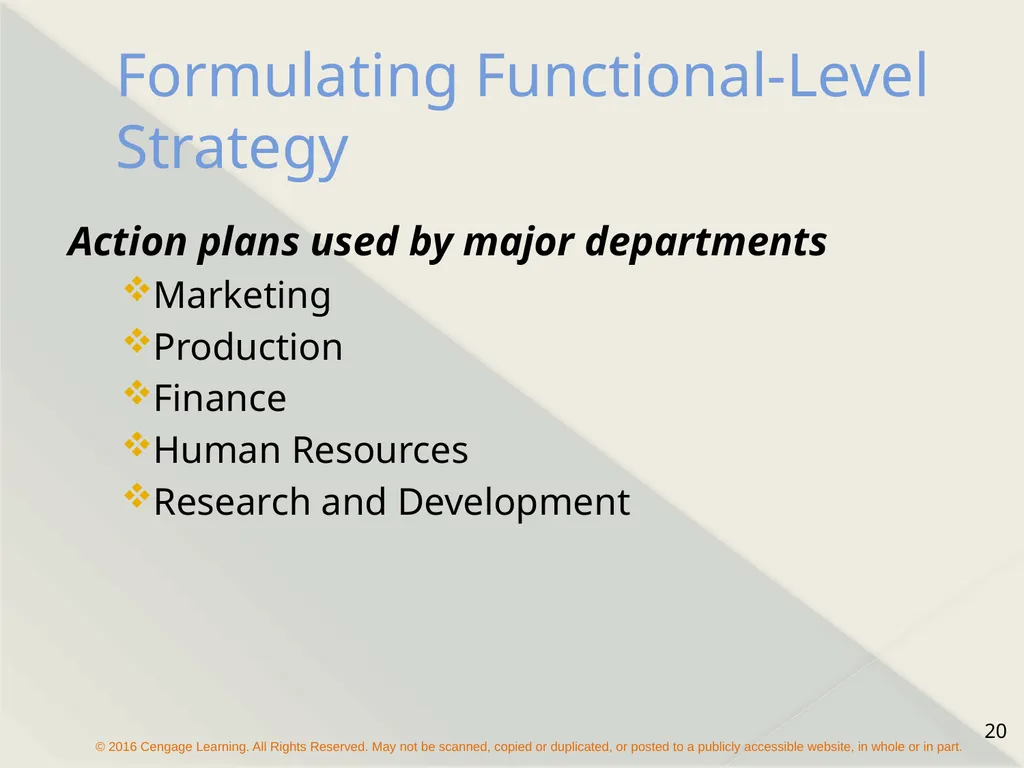
Formulating Functional-Level Strategy Action plans used by major departments
Marketing
Production
Finance
Human Resources
Research and Development 20<br>
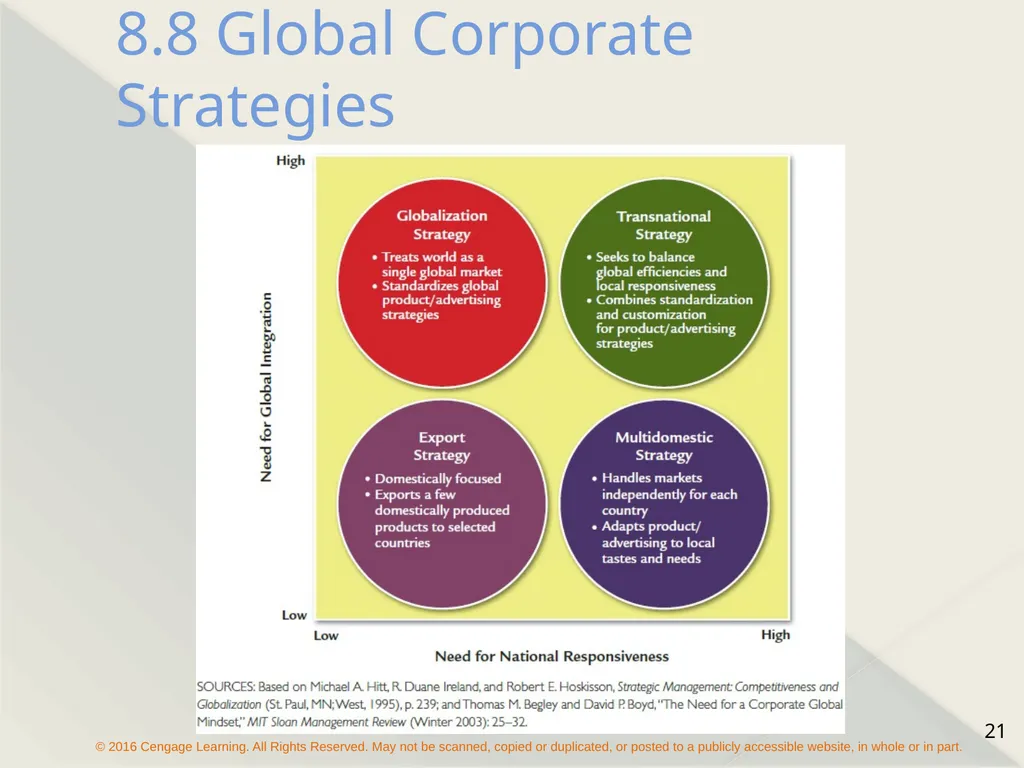
21
8.8 Global Corporate Strategies 21<br>
22
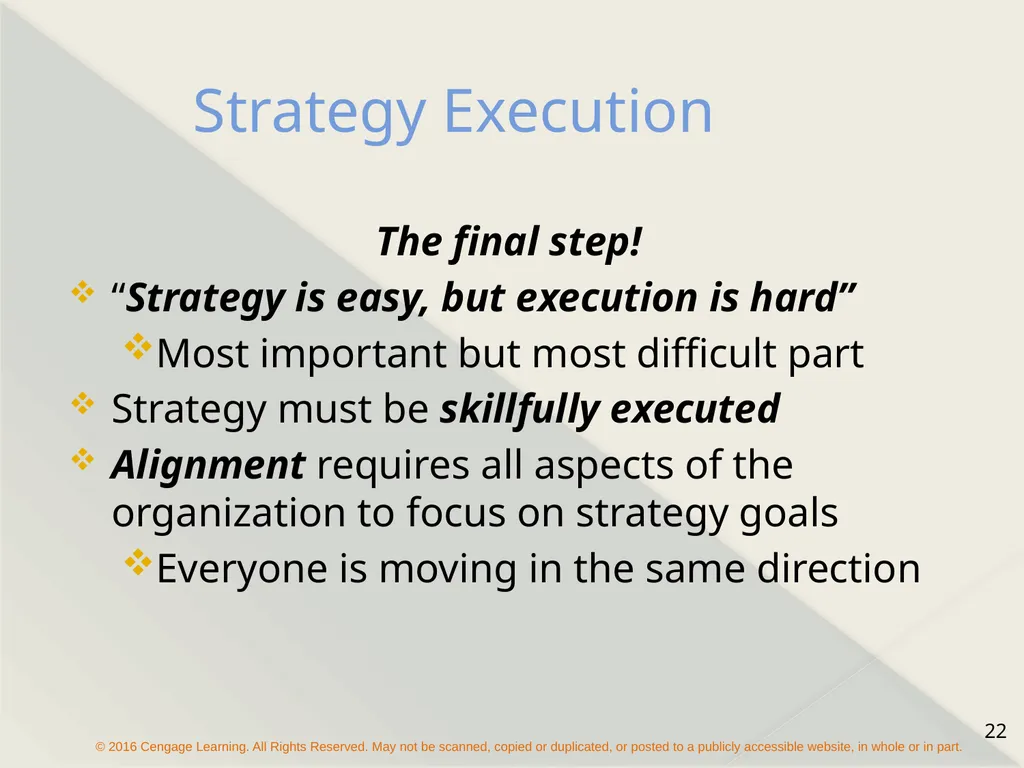
Strategy Execution The final step!
“Strategy is easy, but execution is hard”
Most important but most difficult part
Strategy must be skillfully executed
Alignment requires all aspects of the organization to focus on strategy goals
Everyone is moving in the same direction 22<br>
23
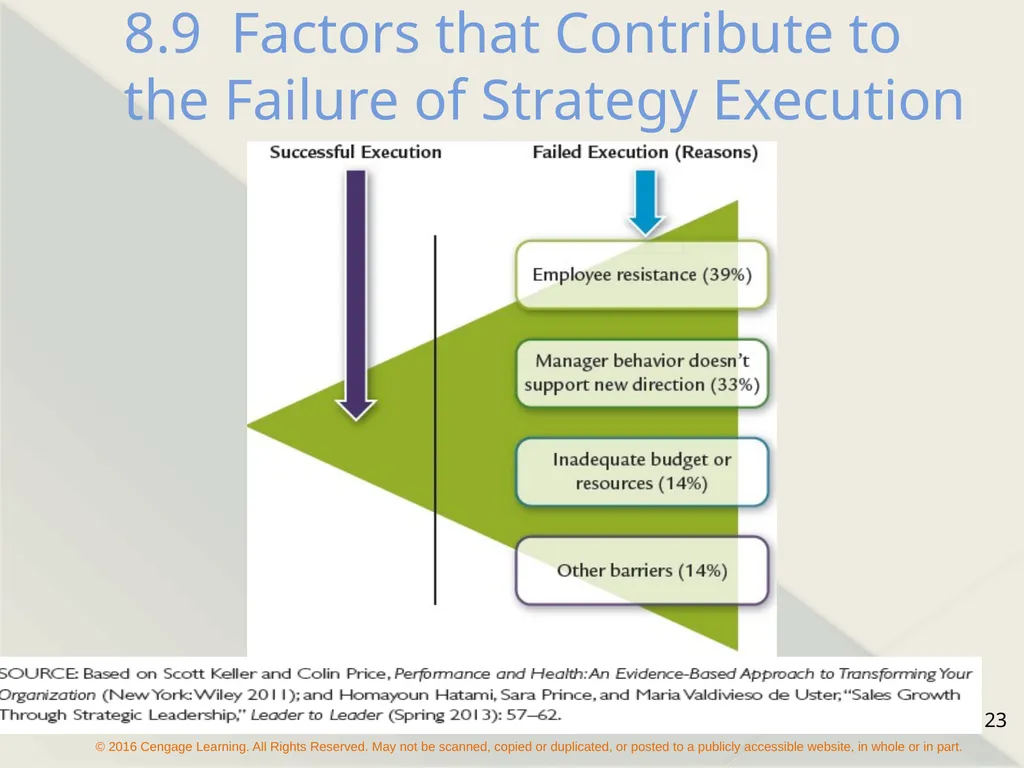
8.9 Factors that Contribute to the Failure of Strategy Execution 23<br>
24
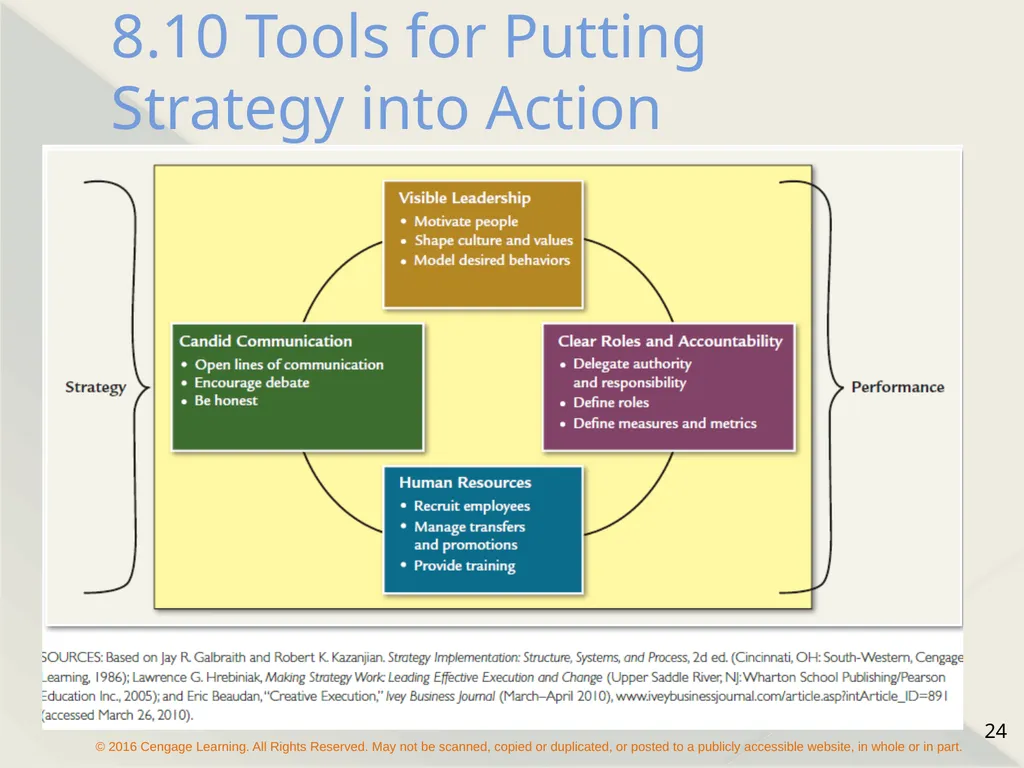
8.10 Tools for Putting Strategy into Action 24<br>