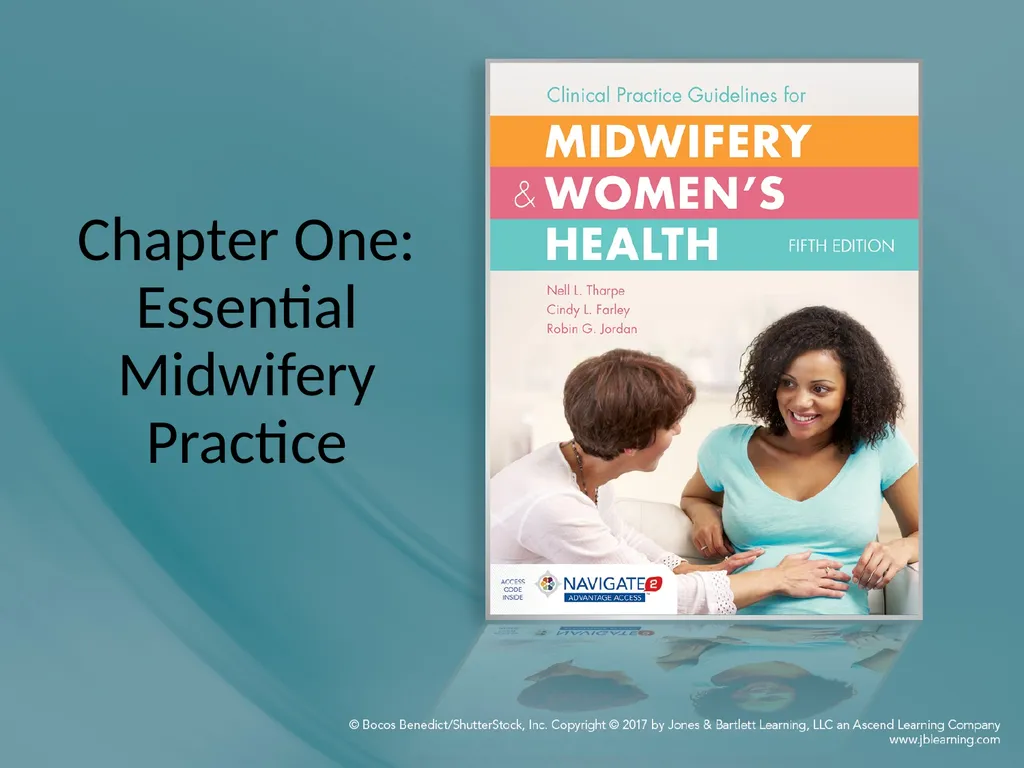
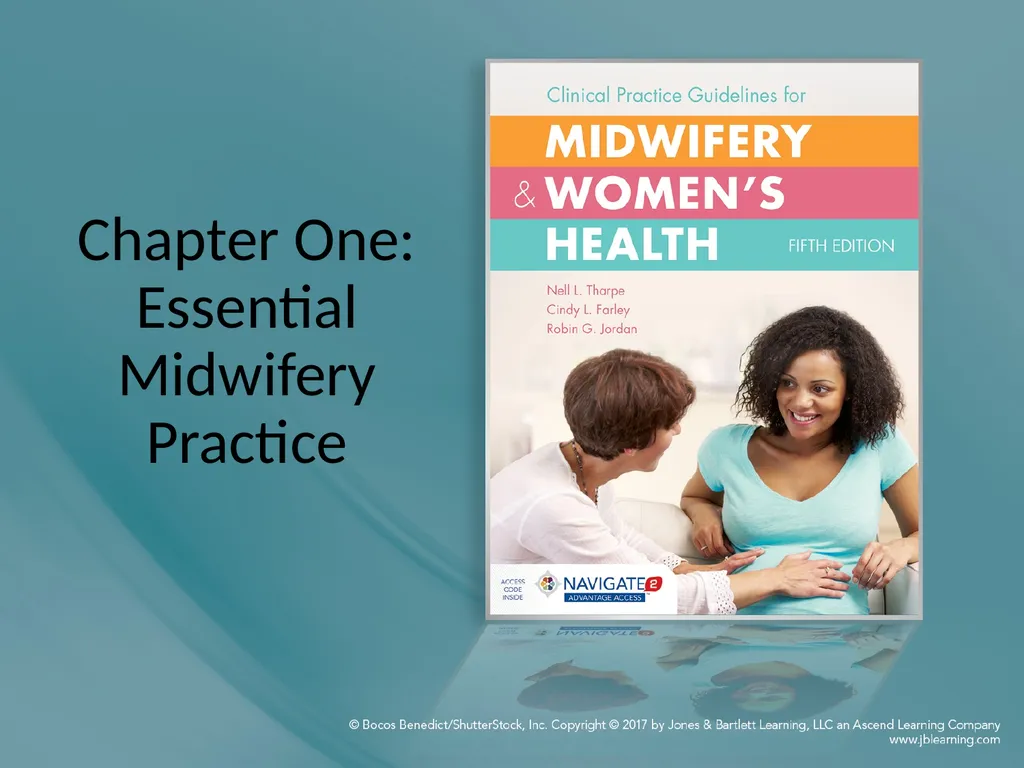
Chapter One: Essential Midwifery Practice Theoretical Basis for Midwifery Practice (slide 1 of 3) Women First Midwifery fosters womens health and related physiologic processes, including pregnancy, labor, and birth Noninterventionist
"Chapter One: Essential Midwifery Practice" is the property of its rightful owner. Permission is granted to
download and print the materials on this website for personal, non-commercial use only, and to display it
on your personal computer provided you do not modify the materials and that you retain all copyright
notices contained in the materials. By downloading content from our website, you accept the terms of this
agreement.
Presentation Transcript
01
Chapter One: Essential Midwifery Practice<br>
02
Theoretical Basis for Midwifery Practice (slide 1 of 3) Women First
Midwifery fosters women’s health and related physiologic processes, including pregnancy, labor, and birth
Noninterventionist
Ethical Midwifery Practice
Seeks to improve the standard of care provided to women, children, and families
Four foundational ethical principles: Autonomy, Justice, Beneficence, and Non-malfeasance<br>
03
Theoretical Basis for Midwifery Practice (slide 2 of 3) Exemplary Midwifery Practice
Respectful care
Interdisciplinary care and collaboration
Environments of Care
Physical location
Sociocultural milieu
Prevailing attitudes<br>
04
Theoretical Basis for Midwifery Practice (slide 3 of 3) The Effects of Health Policy on Midwifery and Women’s Health
Translation of health policies
Quality Improvement in Health Care
Improving midwifery practice
Incremental change allows for evaluation of effects
Plan-Do-Check (or Study)-Act (PDCA Model)<br>
05
Midwifery Praxis (slide 1 of 2) Possibilities and Probabilities
Assessment and analysis of risk for the woman receiving care
Risk assessment for the unborn and the newborn
Accountability in midwifery practice
Developing and implementing a midwifery risk management plan<br>
06
Midwifery Praxis (slide 2 of 2) Possibilities and Probabilities
Adverse outcomes in midwifery practice
A word about evidence-based care
“The explicit, judicious and conscientious use of current best evidence from healthcare research in decisions about the care of individuals and populations” (Sackett, Straus, Richardson, Rosenberg, & Haynes, 2000)<br>
07
Midwifery Practice (slide 1 of 4) Documentation of Midwifery Care
Midwifery management plan
Documentation of the Midwifery Model of Care
Standards for documentation: transition to EHRs
Documentation as communication: skills and techniques
Documentation as risk management<br>
08
Midwifery Practice (slide 2 of 4) Documenting Culturally Competent Care
Cultural differences
Developmental considerations
Adolescent women
Adult women
Women living with intellectual and physical challenges
Immigrant and refugee women
Socioeconomic challenges<br>
09
Midwifery Practice (slide 3 of 4) Informed Decision Making
Components of Common Healthcare Notes
Office visit or progress note
Procedure note
Interdisciplinary consultation or referral
Admission history and physical examination
Labor progress note
Birth note
Discharge summary<br>
10
Midwifery Practice (slide 4 of 4) Billing for Midwifery Services
Evaluation and management (E/M) criteria
CPT coding for midwifery services
ICD-10 coding for midwifery services
Influence of health policies on clinical midwifery practice<br>
11
Using Clinical Practice Guidelines (slide 1 of 3) Purposes of Clinical Practice Guidelines
Humanistic approach
How to Use This Text
Use of Symbols
Cultural awareness
Risk management
Resources for clinicians
Interdisciplinary care
Documentation
Midwifery leadership<br>
12
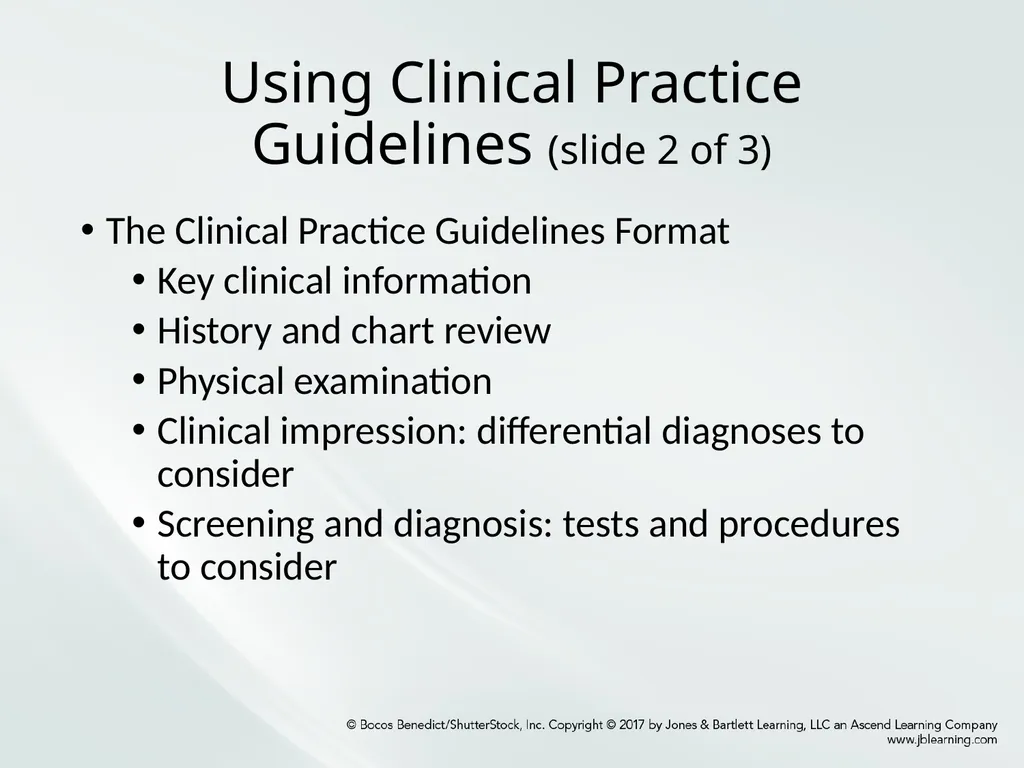
Using Clinical Practice Guidelines (slide 2 of 3) The Clinical Practice Guidelines Format
Key clinical information
History and chart review
Physical examination
Clinical impression: differential diagnoses to consider
Screening and diagnosis: tests and procedures to consider<br>
13
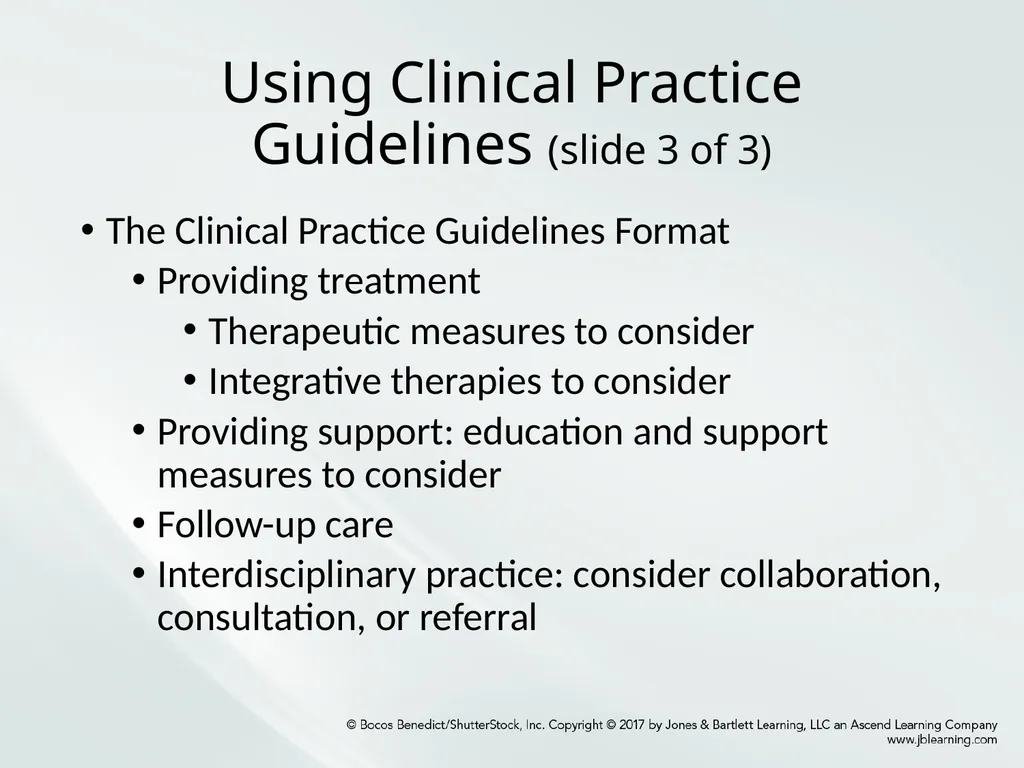
Using Clinical Practice Guidelines (slide 3 of 3) The Clinical Practice Guidelines Format
Providing treatment
Therapeutic measures to consider
Integrative therapies to consider
Providing support: education and support measures to consider
Follow-up care
Interdisciplinary practice: consider collaboration, consultation, or referral<br>