
Chemistry Chapter 2: Matter and Change 2.1
Description: Chemistry Chapter 2: Matter and Change 2.1 Properties of Matter Properties used to describe matter can be extensive or intensive: Extensive Depends on the amount of matter in a sample. Examples: mass and volume Intensive Depends on the
Related Topics
Download Presentation
"Chemistry Chapter 2: Matter and Change 2.1" is the property of its rightful owner. Permission is granted to download and print the materials on this website for personal, non-commercial use only, and to display it on your personal computer provided you do not modify the materials and that you retain all copyright notices contained in the materials. By downloading content from our website, you accept the terms of this agreement.
Presentation Transcript
slide1. Chemistry Chapter 2:
Matter and Change<br>
slide2. 2.1 Properties of Matter Properties used to describe matter can be extensive or intensive:
Extensive – Depends on the amount of matter in a sample. Examples: mass and volume
Intensive – Depends on the type of matter in a sample, not the amount of matter. Examples: Hardness or texture.<br>
slide3. Identifying Substances Substance – matter that has a uniform and definite composition
Every sample of a given substance has identical intensive properties because every sample will have same composition
Physical property – quality or condition of a substance that can be observed or measured without changing the substance’s composition<br>
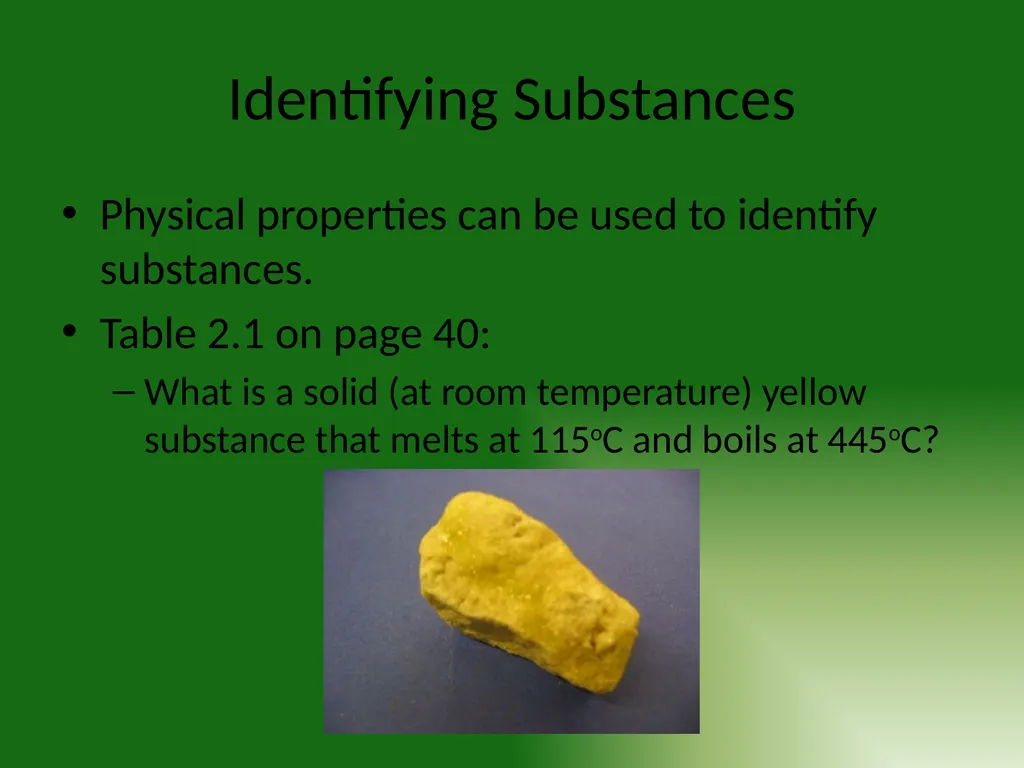
slide4. Identifying Substances Physical properties can be used to identify substances.
Table 2.1 on page 40:
What is a solid (at room temperature) yellow substance that melts at 115oC and boils at 445oC?<br>
slide5. States of Matter Solid
Definite shape and volume, almost incompressible
Liquid
Indefinite shape, flows, definite volume, almost incompressible, expand slightly when heated
Gas
takes shape and volume of container. Vapor term used to describe gaseous state of substance that is generally a liquid or solid at room temp (water vapor)<br>
slide6. Physical Changes During physical change, some properties of a material change, but the composition does not. Examples: Melting, freezing, boiling, condensing.
Can be reversible (melting or boiling) or irreversible (cutting hair, cracking an egg)<br>
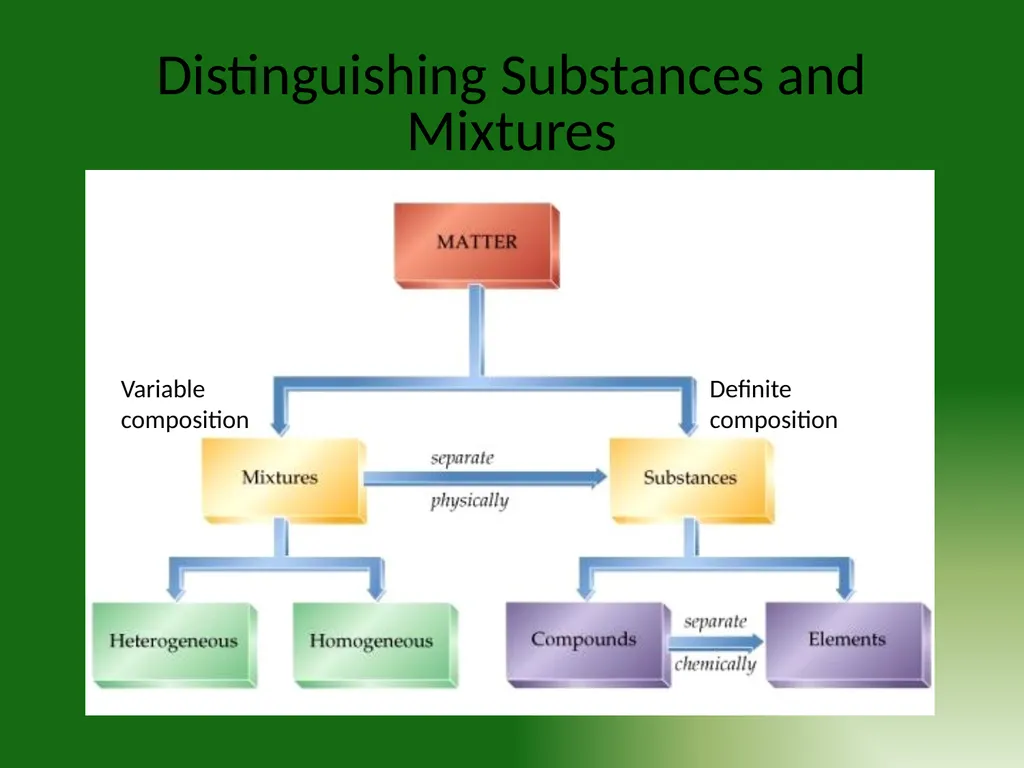
slide7. 2.2 Mixtures Mixture – physical blend of two or more components
Heterogeneous – composition not uniform throughout chicken noodle soup, pizza
Homogeneous – composition is uniform. Another name is solution. Many are liquids, some gases (air) and some solids (steel – mixture of iron, chromium, and nickel)<br>
slide8. Separating Mixtures Differences in physical properties can be used to separate mixtures
Olive oil and vinegar – could decant, or freeze until oil turns to solid
Filtration – separate solid from liquid
Distillation – liquid boiled to produce vapor which is condensed back to liquid<br>
slide9. 2.3 Elements and Compounds Element – simplest form of matter that has a unique set of properties
Compound – substance that contains two or more elements in a fixed proportion C3H8 is propane and CH4 is methane
Compounds can be broken down into simpler substances by chemical means, but elements cannot.<br>
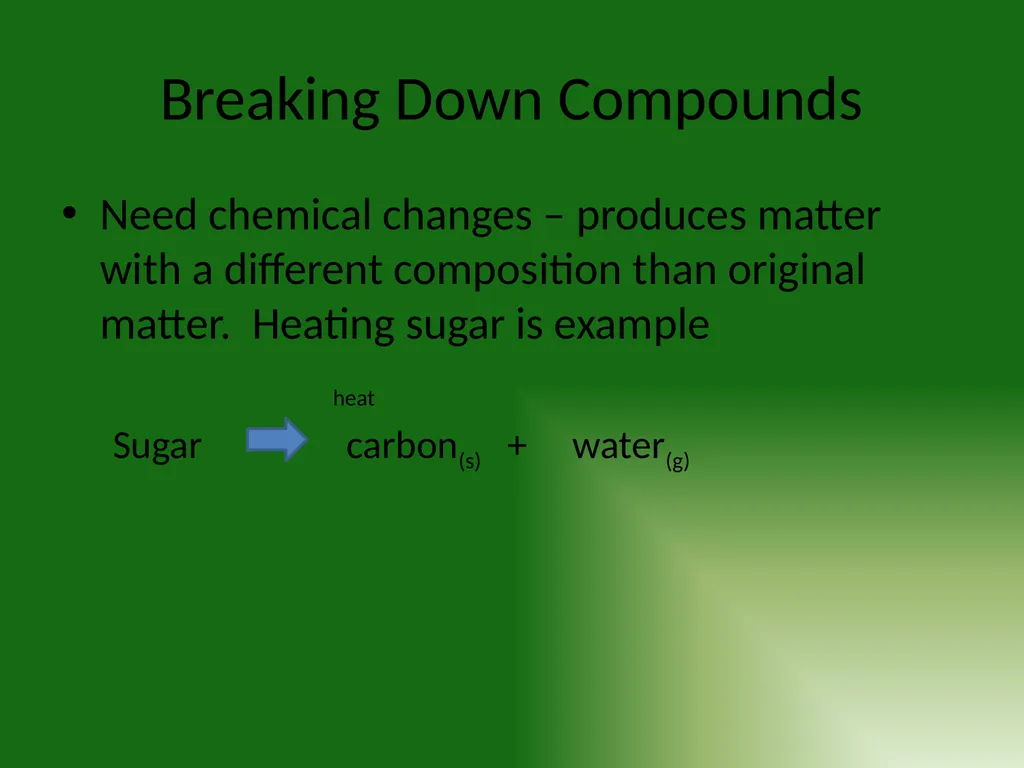
slide10. Breaking Down Compounds Need chemical changes – produces matter with a different composition than original matter. Heating sugar is example
heat
Sugar carbon(s) + water(g)<br>
slide11. Properties of Compounds Generally, properties of compounds are different than those of their component elements.
Water is an example: H and O are gases at room temp while H2O is a liquid<br>
slide12. Distinguishing Substances and Mixtures Definite composition Variable composition<br>
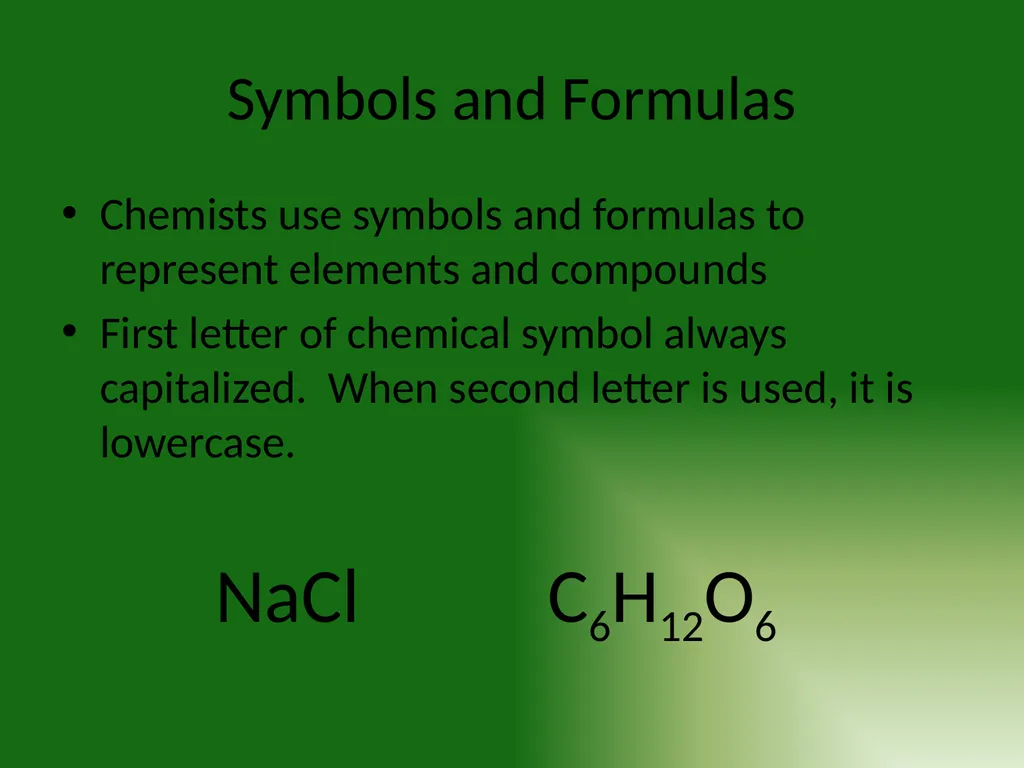
slide13. Symbols and Formulas Chemists use symbols and formulas to represent elements and compounds
First letter of chemical symbol always capitalized. When second letter is used, it is lowercase.
NaCl C6H12O6<br>
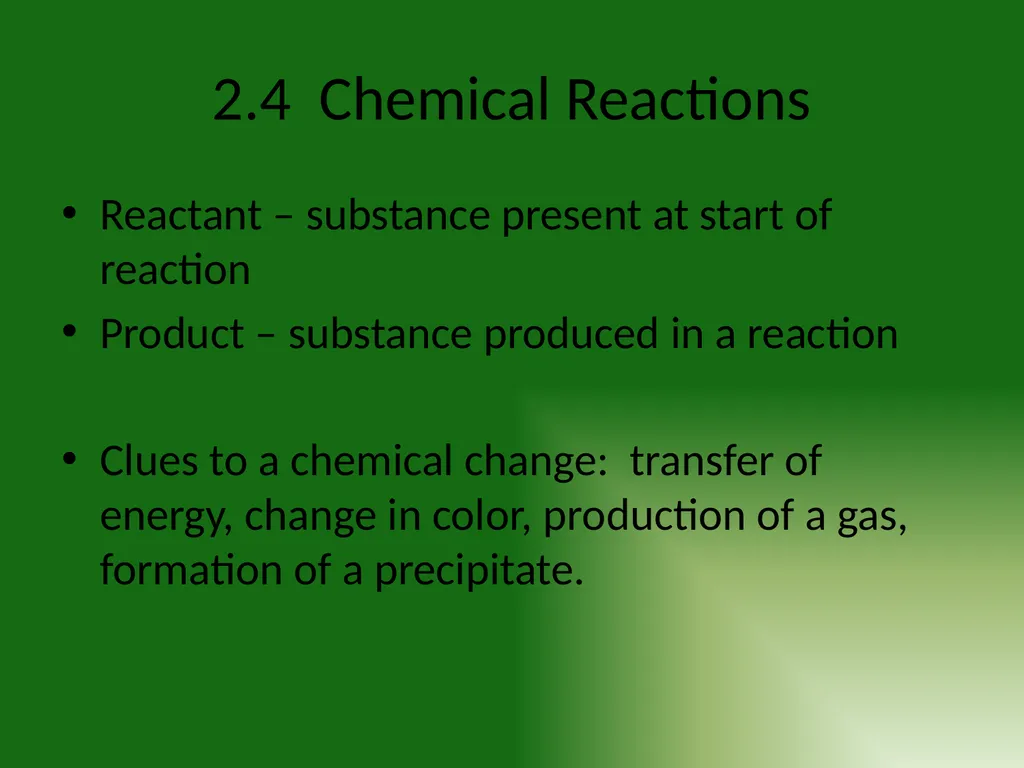
slide14. 2.4 Chemical Reactions Reactant – substance present at start of reaction
Product – substance produced in a reaction
Clues to a chemical change: transfer of energy, change in color, production of a gas, formation of a precipitate.<br>
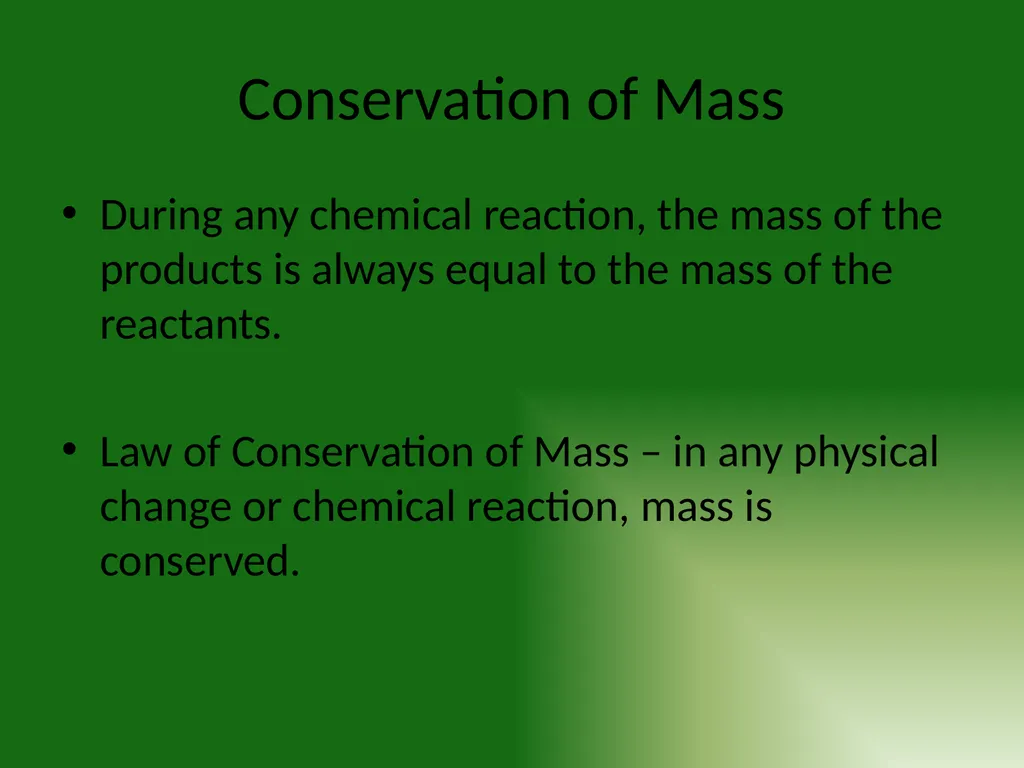
slide15. Conservation of Mass During any chemical reaction, the mass of the products is always equal to the mass of the reactants.
Law of Conservation of Mass – in any physical change or chemical reaction, mass is conserved.<br>
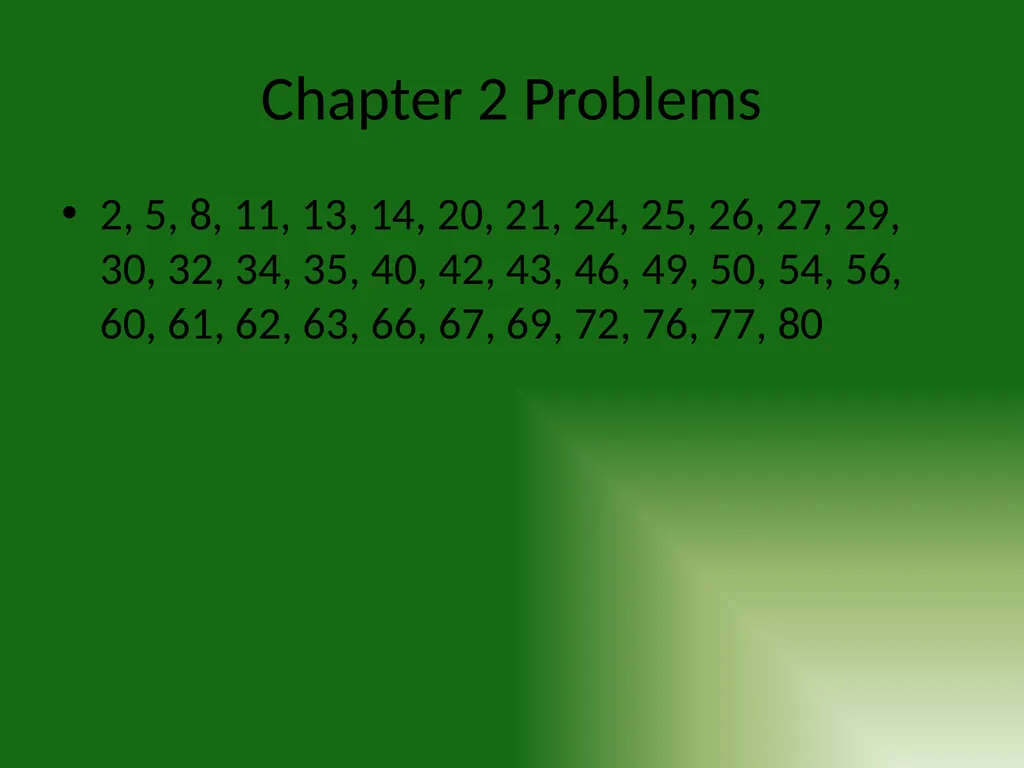
slide16. Chapter 2 Problems 2, 5, 8, 11, 13, 14, 20, 21, 24, 25, 26, 27, 29, 30, 32, 34, 35, 40, 42, 43, 46, 49, 50, 54, 56, 60, 61, 62, 63, 66, 67, 69, 72, 76, 77, 80<br>
slide2. 2.1 Properties of Matter Properties used to describe matter can be extensive or intensive:
Extensive – Depends on the amount of matter in a sample. Examples: mass and volume
Intensive – Depends on the type of matter in a sample, not the amount of matter. Examples: Hardness or texture.<br>
slide3. Identifying Substances Substance – matter that has a uniform and definite composition
Every sample of a given substance has identical intensive properties because every sample will have same composition
Physical property – quality or condition of a substance that can be observed or measured without changing the substance’s composition<br>
slide4. Identifying Substances Physical properties can be used to identify substances.
Table 2.1 on page 40:
What is a solid (at room temperature) yellow substance that melts at 115oC and boils at 445oC?<br>
slide5. States of Matter Solid
Definite shape and volume, almost incompressible
Liquid
Indefinite shape, flows, definite volume, almost incompressible, expand slightly when heated
Gas
takes shape and volume of container. Vapor term used to describe gaseous state of substance that is generally a liquid or solid at room temp (water vapor)<br>
slide6. Physical Changes During physical change, some properties of a material change, but the composition does not. Examples: Melting, freezing, boiling, condensing.
Can be reversible (melting or boiling) or irreversible (cutting hair, cracking an egg)<br>
slide7. 2.2 Mixtures Mixture – physical blend of two or more components
Heterogeneous – composition not uniform throughout chicken noodle soup, pizza
Homogeneous – composition is uniform. Another name is solution. Many are liquids, some gases (air) and some solids (steel – mixture of iron, chromium, and nickel)<br>
slide8. Separating Mixtures Differences in physical properties can be used to separate mixtures
Olive oil and vinegar – could decant, or freeze until oil turns to solid
Filtration – separate solid from liquid
Distillation – liquid boiled to produce vapor which is condensed back to liquid<br>
slide9. 2.3 Elements and Compounds Element – simplest form of matter that has a unique set of properties
Compound – substance that contains two or more elements in a fixed proportion C3H8 is propane and CH4 is methane
Compounds can be broken down into simpler substances by chemical means, but elements cannot.<br>
slide10. Breaking Down Compounds Need chemical changes – produces matter with a different composition than original matter. Heating sugar is example
heat
Sugar carbon(s) + water(g)<br>
slide11. Properties of Compounds Generally, properties of compounds are different than those of their component elements.
Water is an example: H and O are gases at room temp while H2O is a liquid<br>
slide12. Distinguishing Substances and Mixtures Definite composition Variable composition<br>
slide13. Symbols and Formulas Chemists use symbols and formulas to represent elements and compounds
First letter of chemical symbol always capitalized. When second letter is used, it is lowercase.
NaCl C6H12O6<br>
slide14. 2.4 Chemical Reactions Reactant – substance present at start of reaction
Product – substance produced in a reaction
Clues to a chemical change: transfer of energy, change in color, production of a gas, formation of a precipitate.<br>
slide15. Conservation of Mass During any chemical reaction, the mass of the products is always equal to the mass of the reactants.
Law of Conservation of Mass – in any physical change or chemical reaction, mass is conserved.<br>
slide16. Chapter 2 Problems 2, 5, 8, 11, 13, 14, 20, 21, 24, 25, 26, 27, 29, 30, 32, 34, 35, 40, 42, 43, 46, 49, 50, 54, 56, 60, 61, 62, 63, 66, 67, 69, 72, 76, 77, 80<br>