
Chumash: A Changing People, A Changing Land

Description: Chumash: A Changing People, A Changing Land Language and Name Tag Information Rancho Sierra Vista Satwiwa Home of the Satwiwa Native American Indian Culture Center Land Acknowledgment We, the Santa Monica Mountains National Recreation
Related Topics
Download Presentation
"Chumash: A Changing People, A Changing Land" is the property of its rightful owner. Permission is granted to download and print the materials on this website for personal, non-commercial use only, and to display it on your personal computer provided you do not modify the materials and that you retain all copyright notices contained in the materials. By downloading content from our website, you accept the terms of this agreement.
Presentation Transcript
slide1. Chumash: A Changing People, A Changing Land
Language and Name Tag Information Rancho Sierra Vista/ Satwiwa
Home of the Satwiwa Native American Indian Culture Center<br>
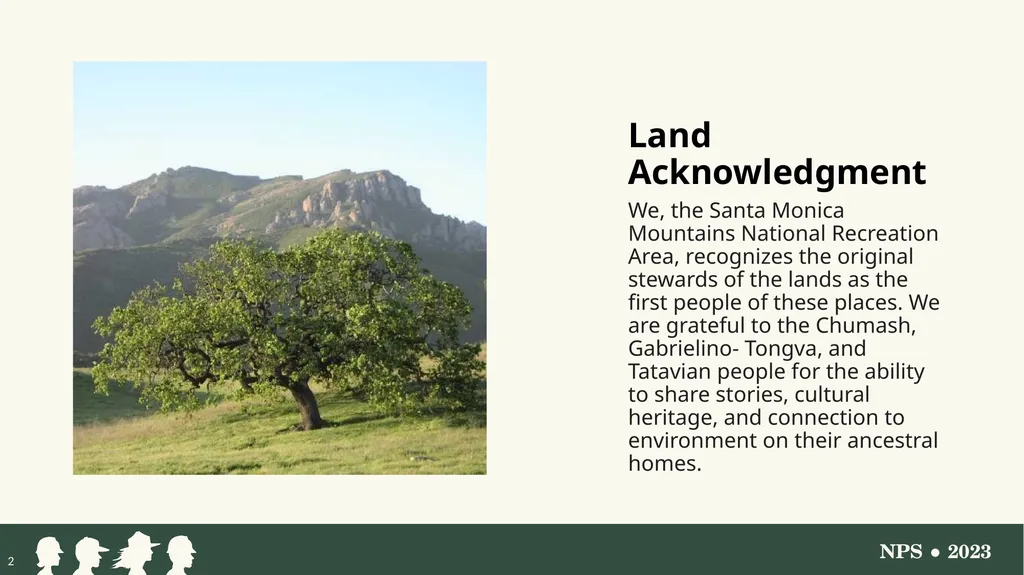
slide2. Land Acknowledgment We, the Santa Monica Mountains National Recreation Area, recognizes the original stewards of the lands as the first people of these places. We are grateful to the Chumash, Gabrielino- Tongva, and Tatavian people for the ability to share stories, cultural heritage, and connection to environment on their ancestral homes. 2<br>
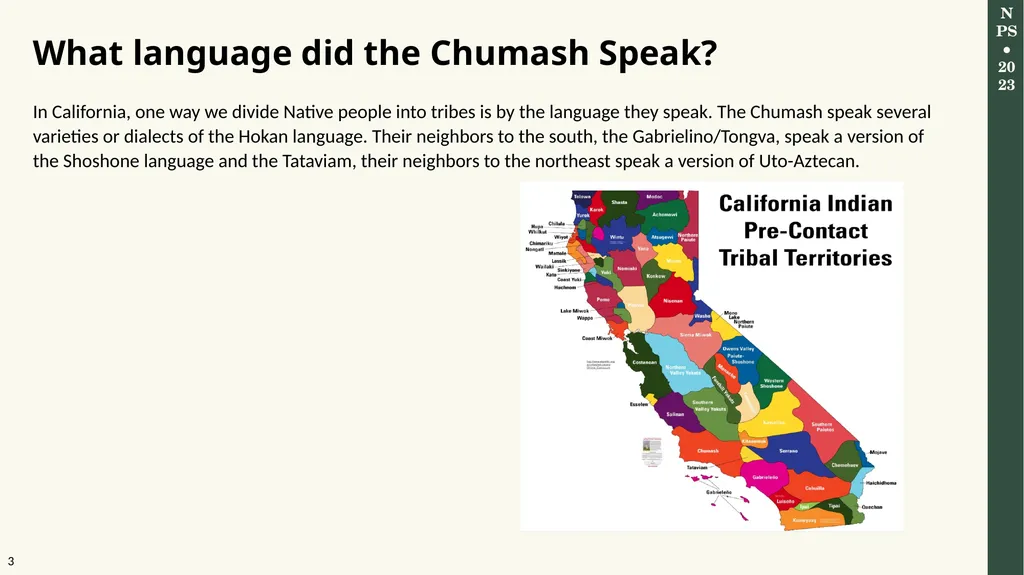
slide3. What language did the Chumash Speak? In California, one way we divide Native people into tribes is by the language they speak. The Chumash speak several varieties or dialects of the Hokan language. Their neighbors to the south, the Gabrielino/Tongva, speak a version of the Shoshone language and the Tataviam, their neighbors to the northeast speak a version of Uto-Aztecan. 3<br>
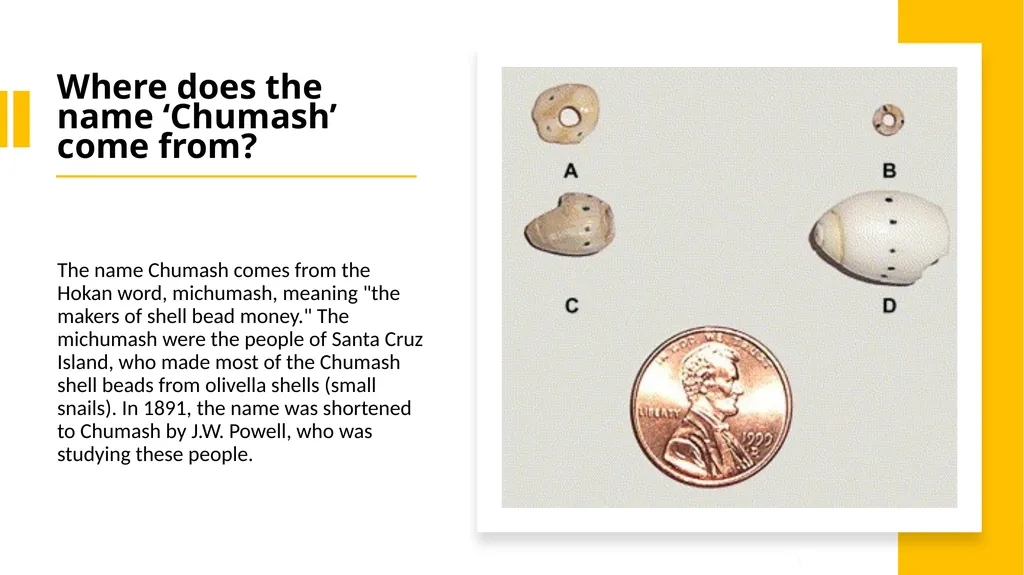
slide4. Where does the name ‘Chumash’ come from? The name Chumash comes from the Hokan word, michumash, meaning "the makers of shell bead money." The michumash were the people of Santa Cruz Island, who made most of the Chumash shell beads from olivella shells (small snails). In 1891, the name was shortened to Chumash by J.W. Powell, who was studying these people. 4<br>
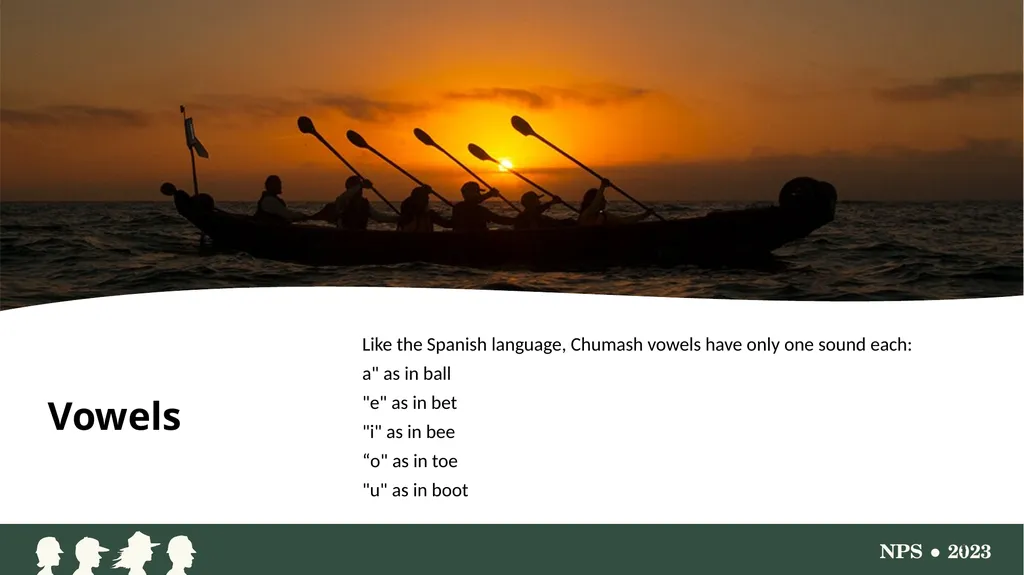
slide5. Vowels Like the Spanish language, Chumash vowels have only one sound each:
a" as in ball
"e" as in bet
"i" as in bee
“o" as in toe
"u" as in boot 5<br>
slide6. 6<br>
slide7. 7<br>
Home of the Satwiwa Native American Indian Culture Center<br>
slide2. Land Acknowledgment We, the Santa Monica Mountains National Recreation Area, recognizes the original stewards of the lands as the first people of these places. We are grateful to the Chumash, Gabrielino- Tongva, and Tatavian people for the ability to share stories, cultural heritage, and connection to environment on their ancestral homes. 2<br>
slide3. What language did the Chumash Speak? In California, one way we divide Native people into tribes is by the language they speak. The Chumash speak several varieties or dialects of the Hokan language. Their neighbors to the south, the Gabrielino/Tongva, speak a version of the Shoshone language and the Tataviam, their neighbors to the northeast speak a version of Uto-Aztecan. 3<br>
slide4. Where does the name ‘Chumash’ come from? The name Chumash comes from the Hokan word, michumash, meaning "the makers of shell bead money." The michumash were the people of Santa Cruz Island, who made most of the Chumash shell beads from olivella shells (small snails). In 1891, the name was shortened to Chumash by J.W. Powell, who was studying these people. 4<br>
slide5. Vowels Like the Spanish language, Chumash vowels have only one sound each:
a" as in ball
"e" as in bet
"i" as in bee
“o" as in toe
"u" as in boot 5<br>
slide6. 6<br>
slide7. 7<br>