
Class –XI Subject: History Topic: An Empire Across
PC
Published · 34 slides · 0 views

1 / 1



Description
Class XI Subject: History Topic: An Empire Across Three Continents Made By: Anupam Handa PGT-History Air Force School, Ambala Cantt handa.anupamgmail.com Introduction By the sixth century BCE, Iranians had established control over major
Related Topics
Share
Embed code
Download this presentation From Below
"Class –XI Subject: History Topic: An Empire Across" is the property of its rightful owner. Permission is granted to download and print the materials on this website for personal, non-commercial use only, and to display it on your personal computer provided you do not modify the materials and that you retain all copyright notices contained in the materials. By downloading content from our website, you accept the terms of this agreement.
Presentation Transcript
01
Class –XI
Subject: History
Topic: An Empire Across Three Continents Made By: Anupam Handa
PGT-History
Air Force School, Ambala Cantt
handa.anupam@gmail.com<br>
PGT-History
Air Force School, Ambala Cantt
handa.anupam@gmail.com<br>
02
Introduction By the sixth century BCE, Iranians had established control over major parts of the Assyrian empire. Networks of trade developed overland, as well as along the coasts of the Mediterranean Sea. In the eastern Mediterranean, Greek cities and their colonies benefited from improvements in trade that were the result of these changes. They also benefited from close trade with nomadic people to the north of the Black Sea.<br>
03
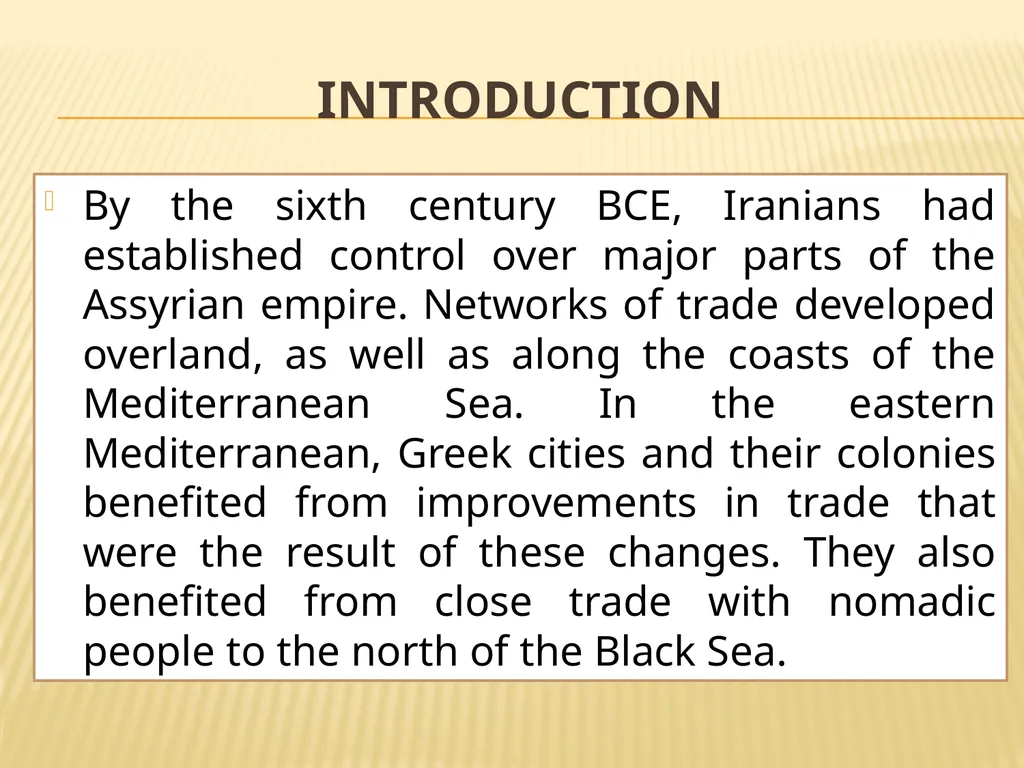
Ruins at Greek City of Corinth<br>
04
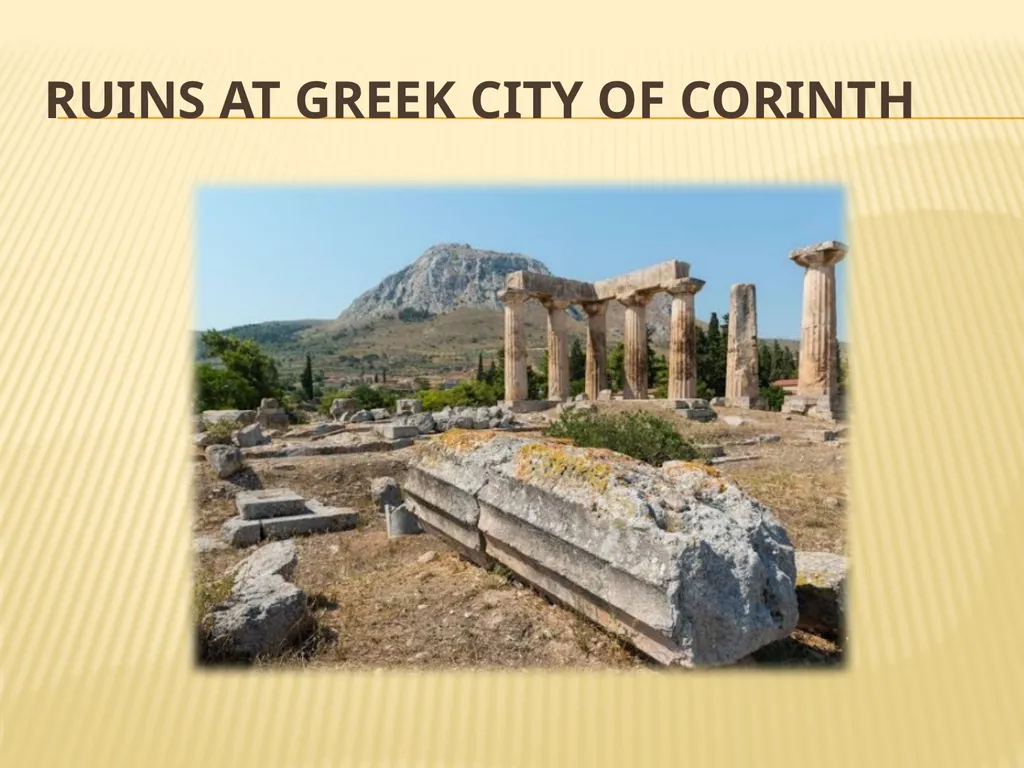
Alexandra the Great<br>
05
From among the Greek states, in the late fourth century BCE, the ruler of the kingdom of Macedon, Alexander, undertook a series of military campaigns and conquered parts of North Africa, West Asia and Iran, reaching up to the Beas. Here, his soldiers refused to proceed further east. Alexander’s troops retreated, though many Greeks stayed behind. Throughout the area under Alexander’s control, ideals and cultural traditions were shared amongst the Greeks and the local population. The region on the whole became ‘Hellenised’ (the Greeks were called Hellenes), and Greek became a well-known language throughout.<br>
06
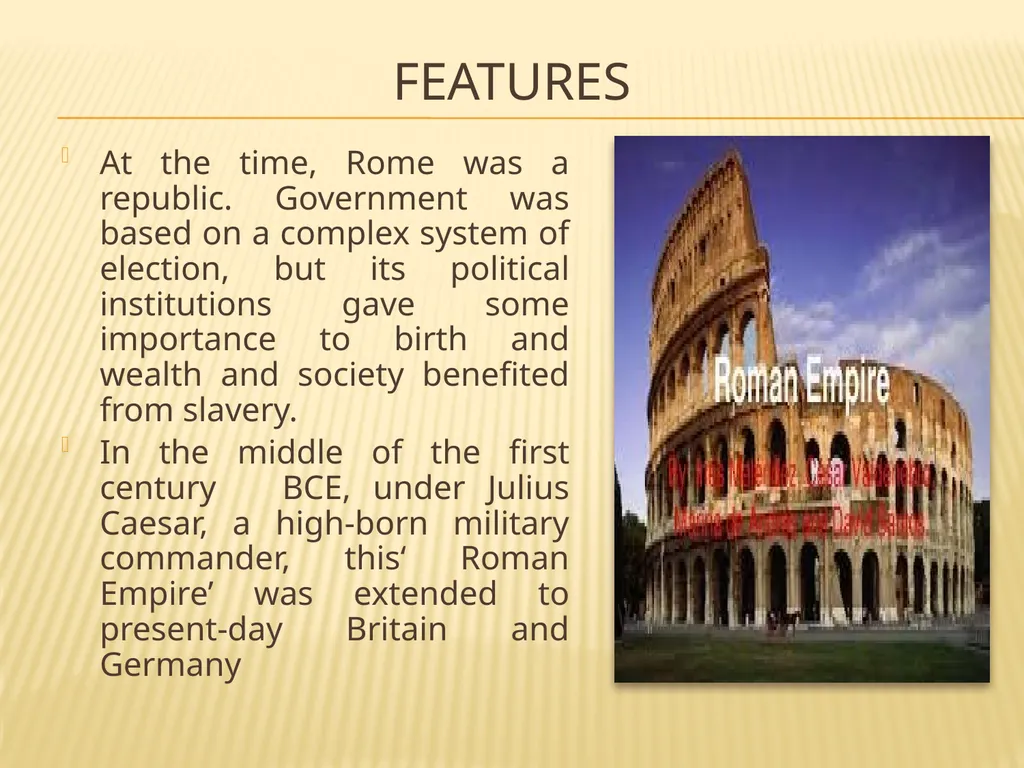
Features At the time, Rome was a republic. Government was based on a complex system of election, but its political institutions gave some importance to birth and wealth and society benefited from slavery.
In the middle of the first century BCE, under Julius Caesar, a high-born military commander, this‘ Roman Empire’ was extended to present-day Britain and Germany<br>
In the middle of the first century BCE, under Julius Caesar, a high-born military commander, this‘ Roman Empire’ was extended to present-day Britain and Germany<br>
07
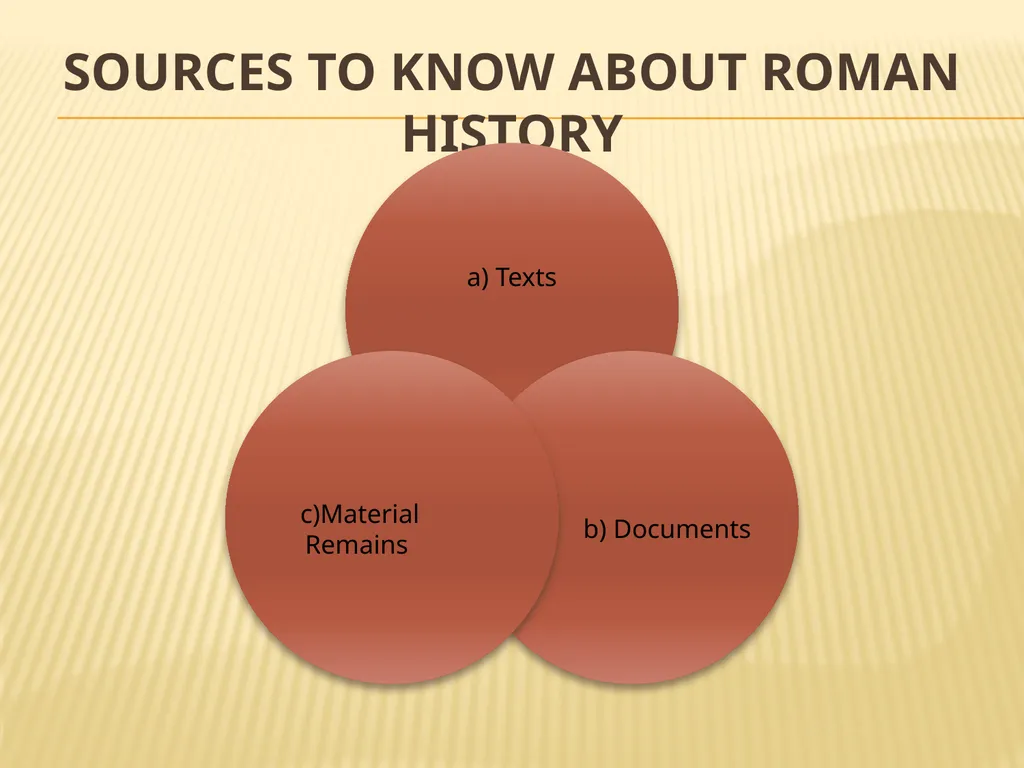
Sources to Know about Roman History<br>
08
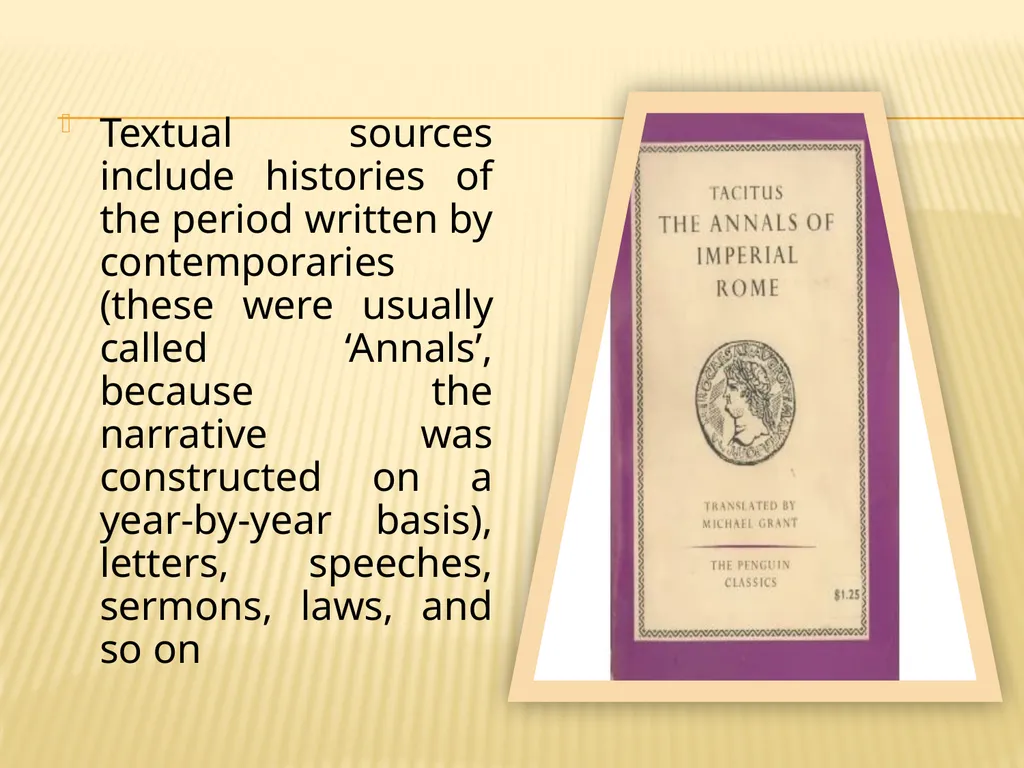
Textual sources include histories of the period written by contemporaries (these were usually called ‘Annals’, because the narrative was constructed on a year-by-year basis), letters, speeches, sermons, laws, and so on<br>
09
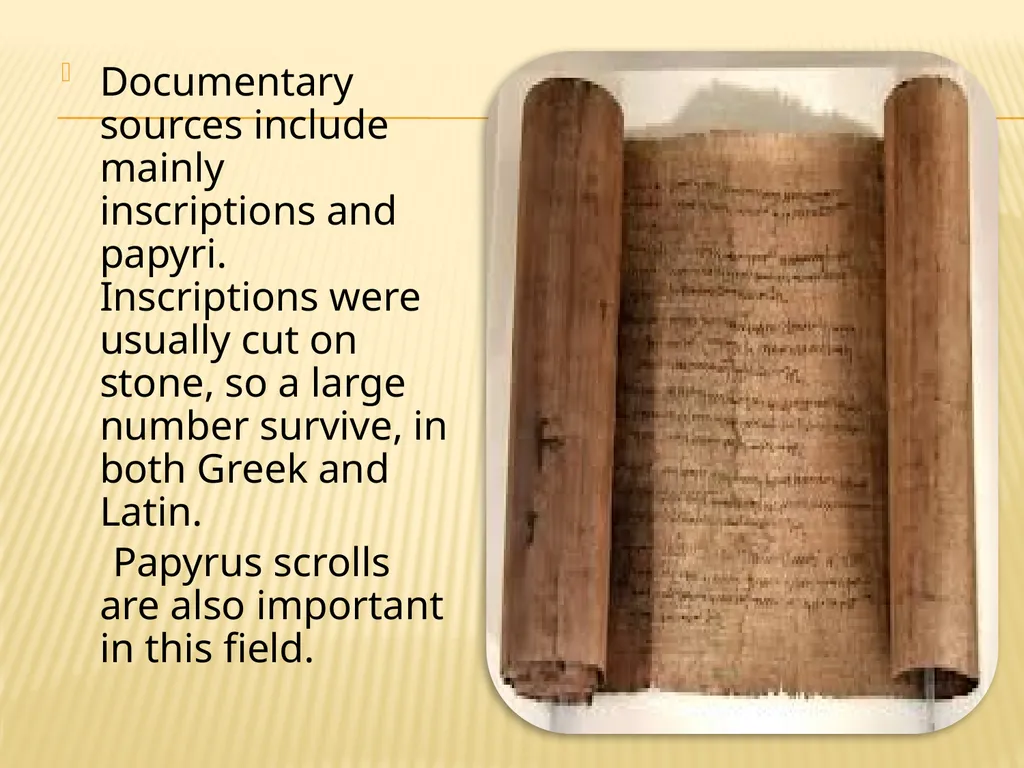
Documentary sources include mainly inscriptions and papyri. Inscriptions were usually cut on stone, so a large number survive, in both Greek and Latin.
Papyrus scrolls are also important in this field.<br>
Papyrus scrolls are also important in this field.<br>
10
What is Papyrus? The ‘papyrus’ was a reed-like plant that grew along the banks of the Nile in Egypt and was processed to produce a writing material that was very widely used in everyday life. Thousands of contracts, accounts, letters and official documents survive ‘on papyrus’ and have been published by scholars who are called ‘Papyrologists’.<br>
11
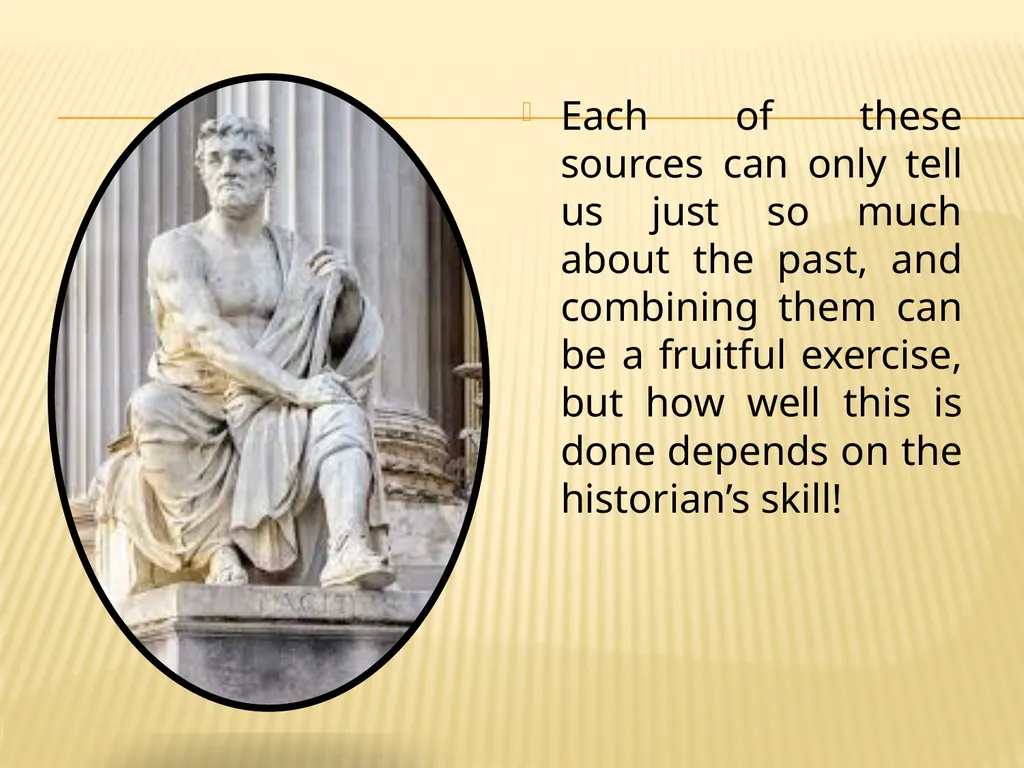
Each of these sources can only tell us just so much about the past, and combining them can be a fruitful exercise, but how well this is done depends on the historian’s skill!<br>
12
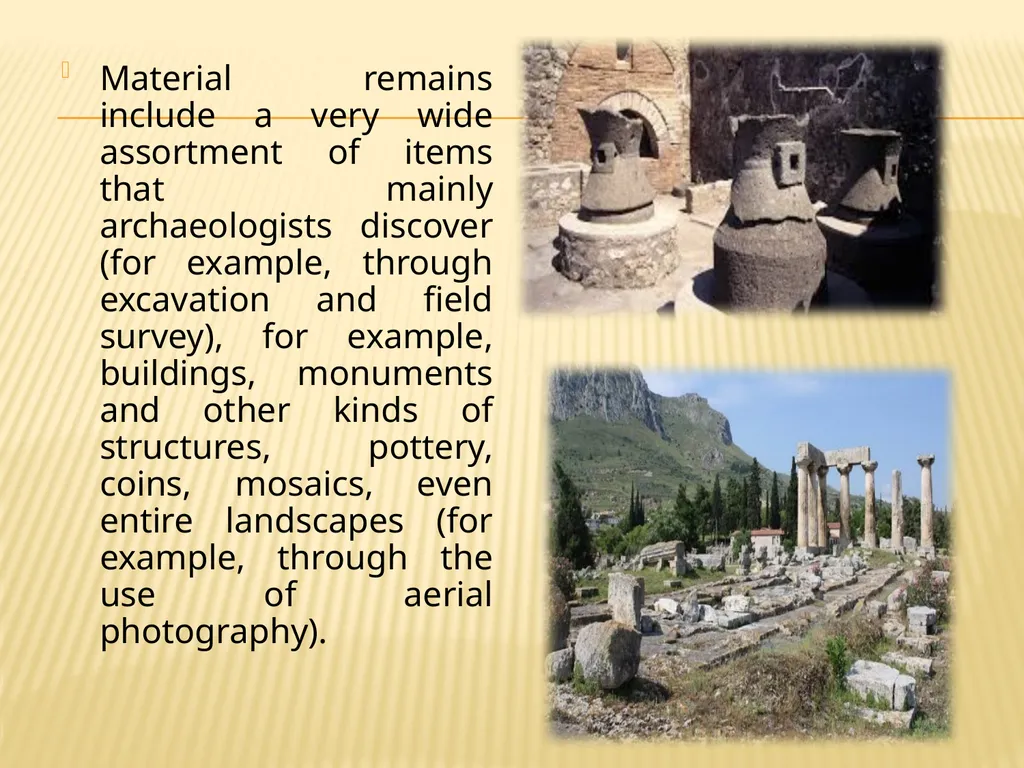
Material remains include a very wide assortment of items that mainly archaeologists discover (for example, through excavation and field survey), for example, buildings, monuments and other kinds of structures, pottery, coins, mosaics, even entire landscapes (for example, through the use of aerial photography).<br>
13
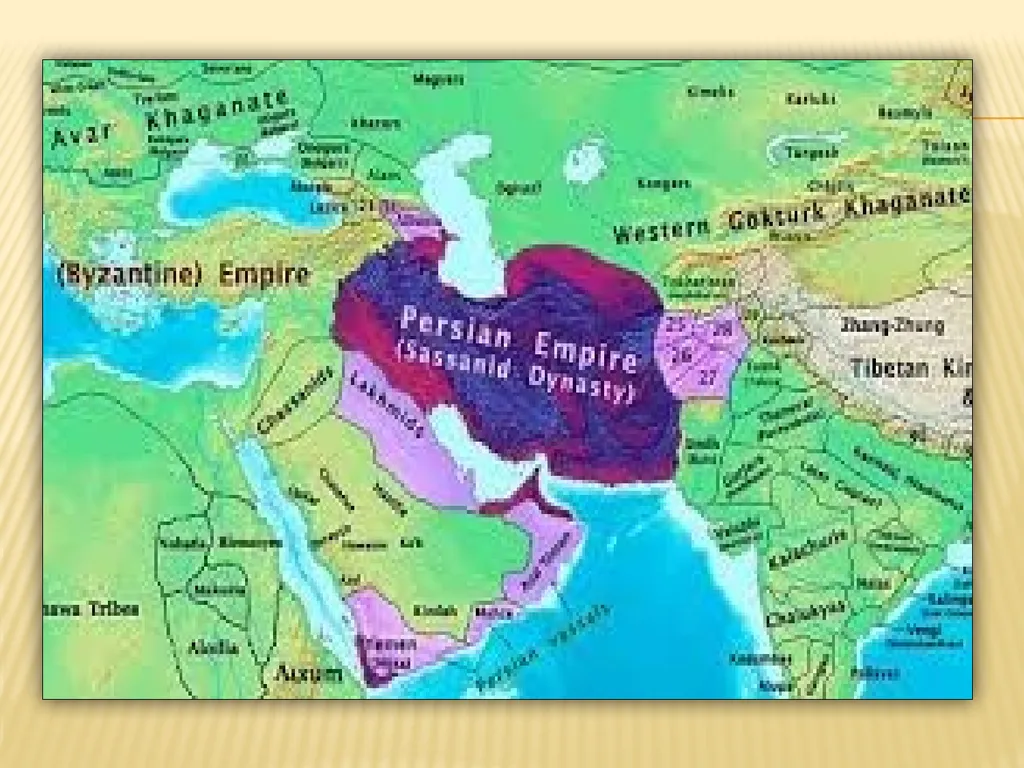
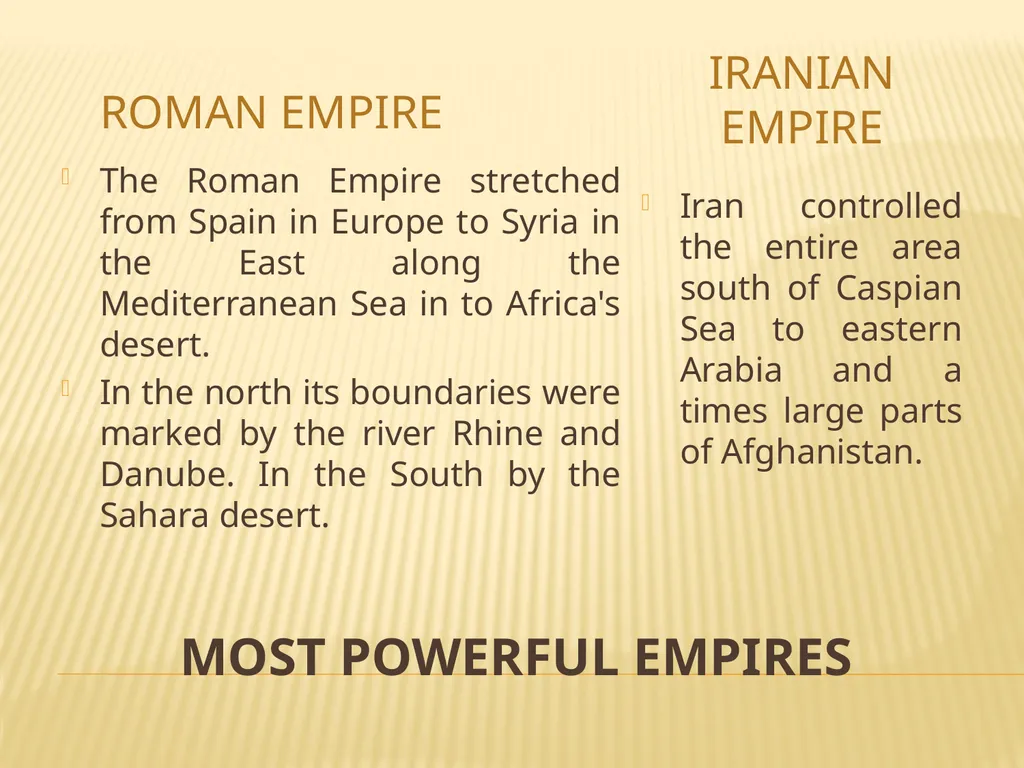
Most Powerful Empires ROMAN EMPIRE IRANIAN EMPIRE The Roman Empire stretched from Spain in Europe to Syria in the East along the Mediterranean Sea in to Africa's desert.
In the north its boundaries were marked by the river Rhine and Danube. In the South by the Sahara desert. Iran controlled the entire area south of Caspian Sea to eastern Arabia and a times large parts of Afghanistan.<br>
In the north its boundaries were marked by the river Rhine and Danube. In the South by the Sahara desert. Iran controlled the entire area south of Caspian Sea to eastern Arabia and a times large parts of Afghanistan.<br>
14
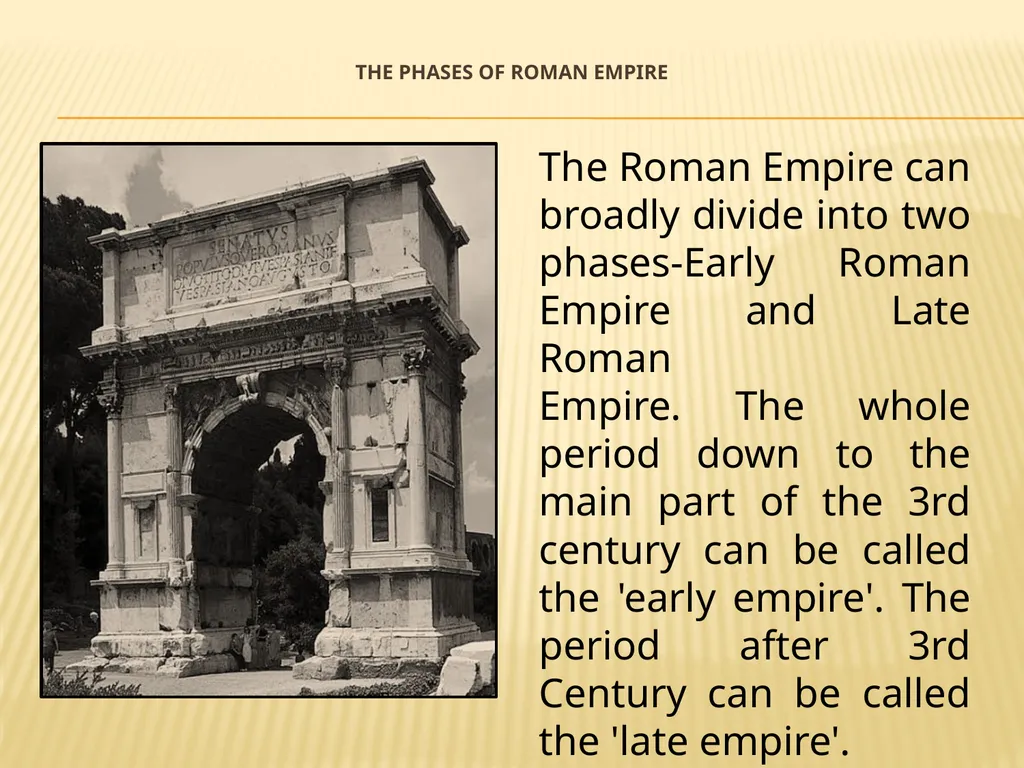
The Phases of Roman Empire The Roman Empire can broadly divide into two phases-Early Roman Empire and Late Roman
Empire. The whole period down to the main part of the 3rd century can be called the 'early empire'. The period after 3rd Century can be called the 'late empire'.<br>
Empire. The whole period down to the main part of the 3rd century can be called the 'early empire'. The period after 3rd Century can be called the 'late empire'.<br>
15
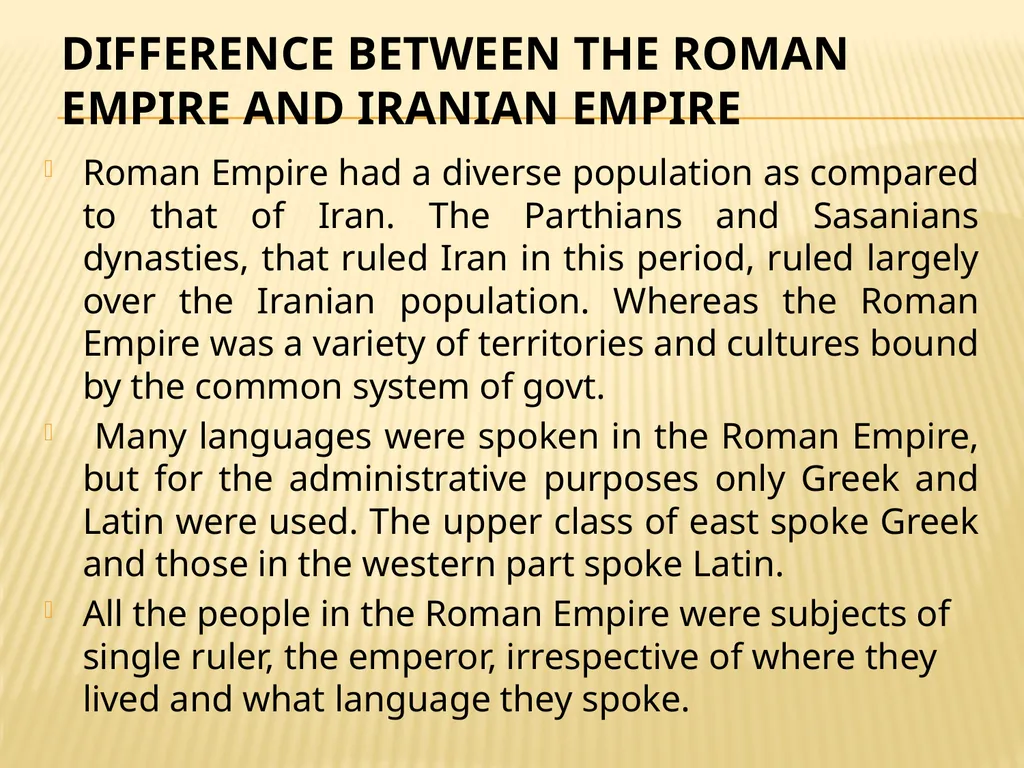
Difference between the Roman Empire and Iranian Empire Roman Empire had a diverse population as compared to that of Iran. The Parthians and Sasanians dynasties, that ruled Iran in this period, ruled largely over the Iranian population. Whereas the Roman Empire was a variety of territories and cultures bound by the common system of govt.
Many languages were spoken in the Roman Empire, but for the administrative purposes only Greek and Latin were used. The upper class of east spoke Greek and those in the western part spoke Latin.
All the people in the Roman Empire were subjects of single ruler, the emperor, irrespective of where they lived and what language they spoke.<br>
16
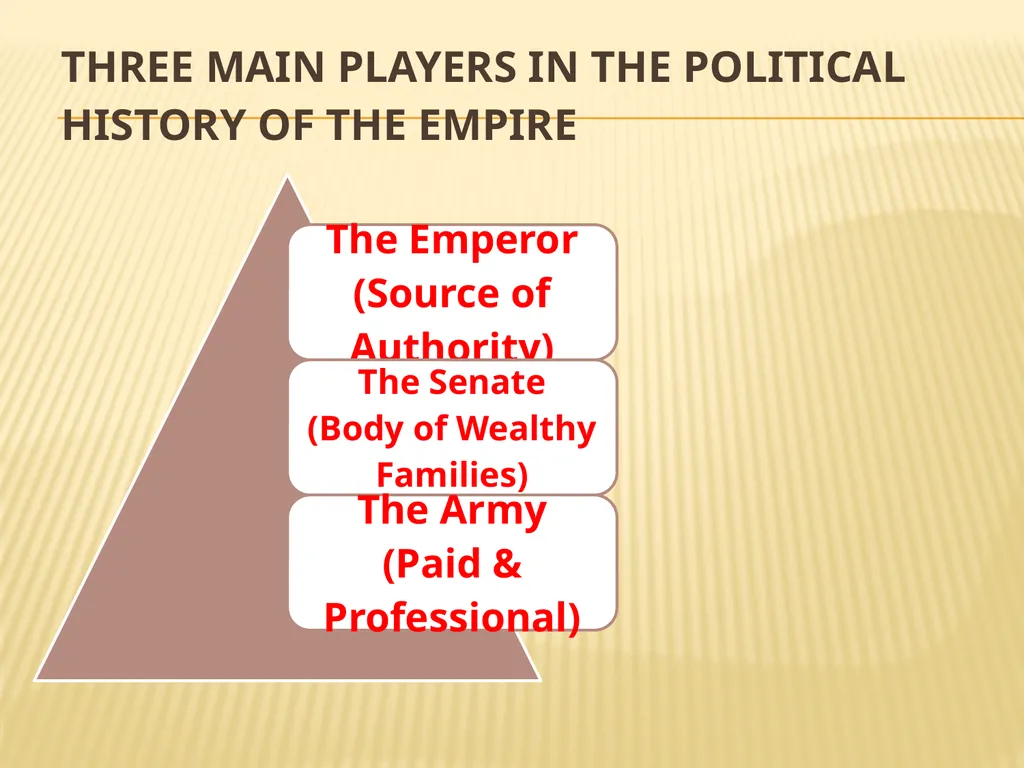
Three main Players in the Political History of the Empire<br>
17
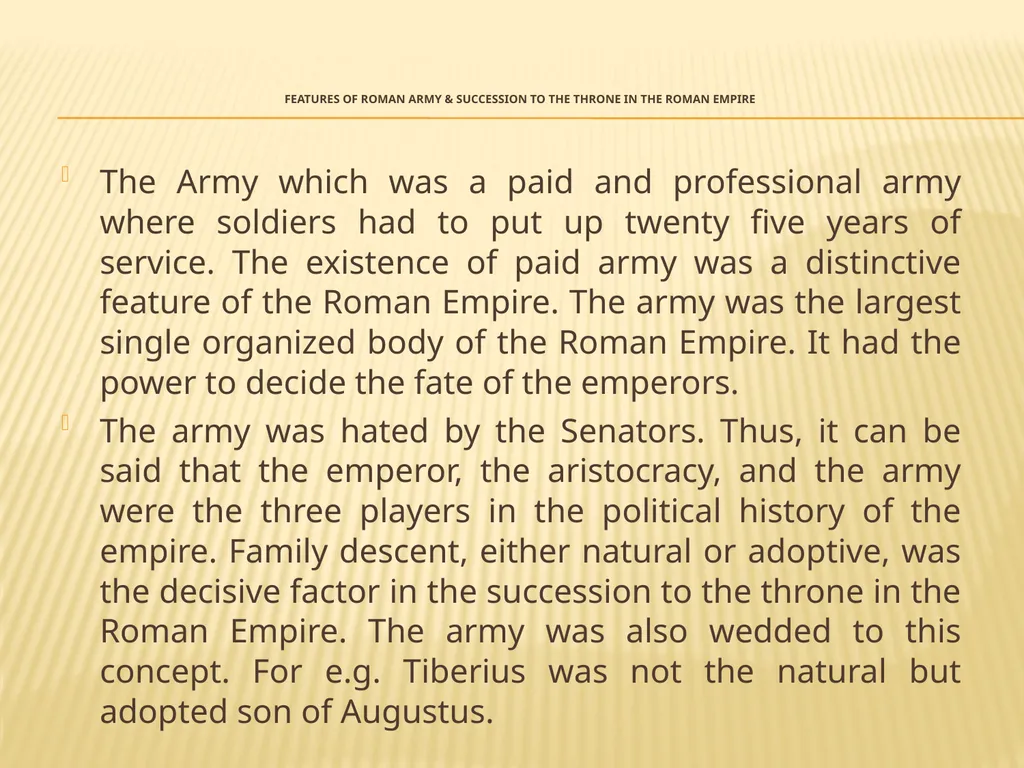
Features of Roman Army & Succession to the throne in the Roman Empire The Army which was a paid and professional army where soldiers had to put up twenty five years of service. The existence of paid army was a distinctive feature of the Roman Empire. The army was the largest single organized body of the Roman Empire. It had the power to decide the fate of the emperors.
The army was hated by the Senators. Thus, it can be said that the emperor, the aristocracy, and the army were the three players in the political history of the empire. Family descent, either natural or adoptive, was the decisive factor in the succession to the throne in the Roman Empire. The army was also wedded to this concept. For e.g. Tiberius was not the natural but adopted son of Augustus.<br>
The army was hated by the Senators. Thus, it can be said that the emperor, the aristocracy, and the army were the three players in the political history of the empire. Family descent, either natural or adoptive, was the decisive factor in the succession to the throne in the Roman Empire. The army was also wedded to this concept. For e.g. Tiberius was not the natural but adopted son of Augustus.<br>
18
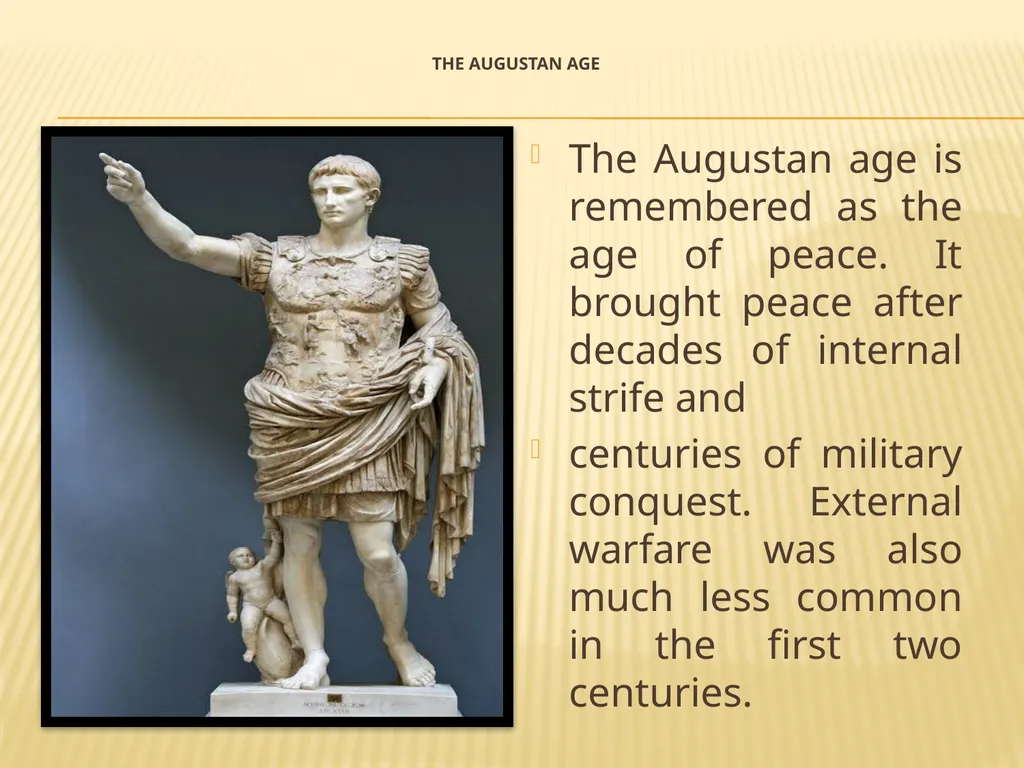
The Augustan age The Augustan age is remembered as the age of peace. It brought peace after decades of internal strife and
centuries of military conquest. External warfare was also much less common in the first two centuries.<br>
centuries of military conquest. External warfare was also much less common in the first two centuries.<br>
19
Administration of the vast Roman Empire The vast Roman Empire was controlled and administered wit h the help of urbanisation.All the territories of the empire were organized in to provinces and were subject to taxation.
Carthage, Alexandria, Antioch that lined the shores of Mediterranean were the foundations of the imperial system.
It was through these cities that the government was able to collect tax from the provincial countryside which generated much of the wealth.
This shows that the local upper class was actively involved with the Roman state in administering their own territories and collecting taxes from them.<br>
20
Throughout the second and third century the provincial upper classes provided experienced officers that administered the provinces and commanded the army.
Thus, they became the new elite of the Roman Empire. They controlled the army and looked after the provincial administration. They became much more powerful than the senatorial class because they had the backing of the Emperors.
Emperor Gallienus consolidated their rise to power by excluding senators from military command. He did this in order to prevent control of the empire from falling in to their hands.<br>
21
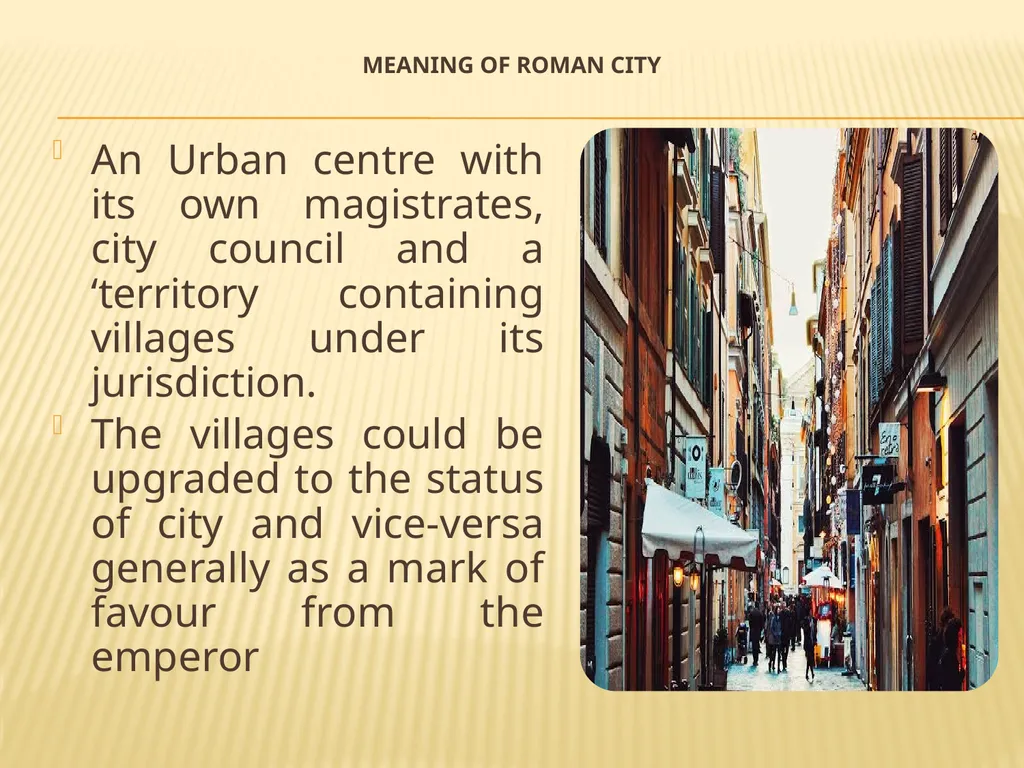
Meaning of Roman city An Urban centre with its own magistrates, city council and a ‘territory containing villages under its jurisdiction.
The villages could be upgraded to the status of city and vice-versa generally as a mark of favour from the emperor<br>
The villages could be upgraded to the status of city and vice-versa generally as a mark of favour from the emperor<br>
22
The Third Century Crisis The first and second centuries were a period of peace, prosperity and economic expansion. But the third century was a period of crisis.
In 225, new dynasty called Sasanians emerged in Iran. They were more aggressive and expanding rapidly in the direction of the Euphrates.
The Germanic tribes (barbarians) began to move against the Rhine and Danube frontiers. From 233 to 280 saw repeated invasions. The Romans were forced to abandon much of the territory beyond the Danube.
The quick succession of emperors (25 emperors in 47 years) is a sign of strain faced by the empire in the 3 rd century.<br>
23
Other aspects Status of women
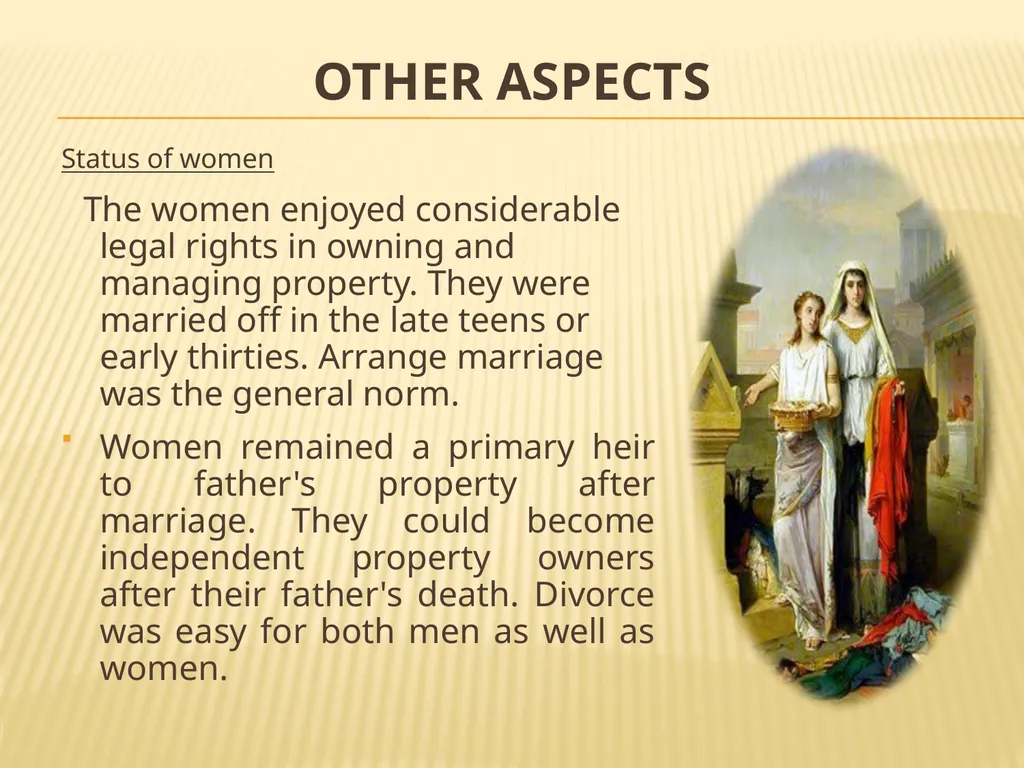
The women enjoyed considerable legal rights in owning and managing property. They were married off in the late teens or early thirties. Arrange marriage was the general norm.
Women remained a primary heir to father's property after marriage. They could become independent property owners after their father's death. Divorce was easy for both men as well as women.<br>
24
women were often subject to domination by their husbands Wives were even beaten up by their husbands. The typical form of marriage was one where the wife did not transfer to her husband's authority but retained full rights in the property of her natal family.<br>
25
Rate of literacy:
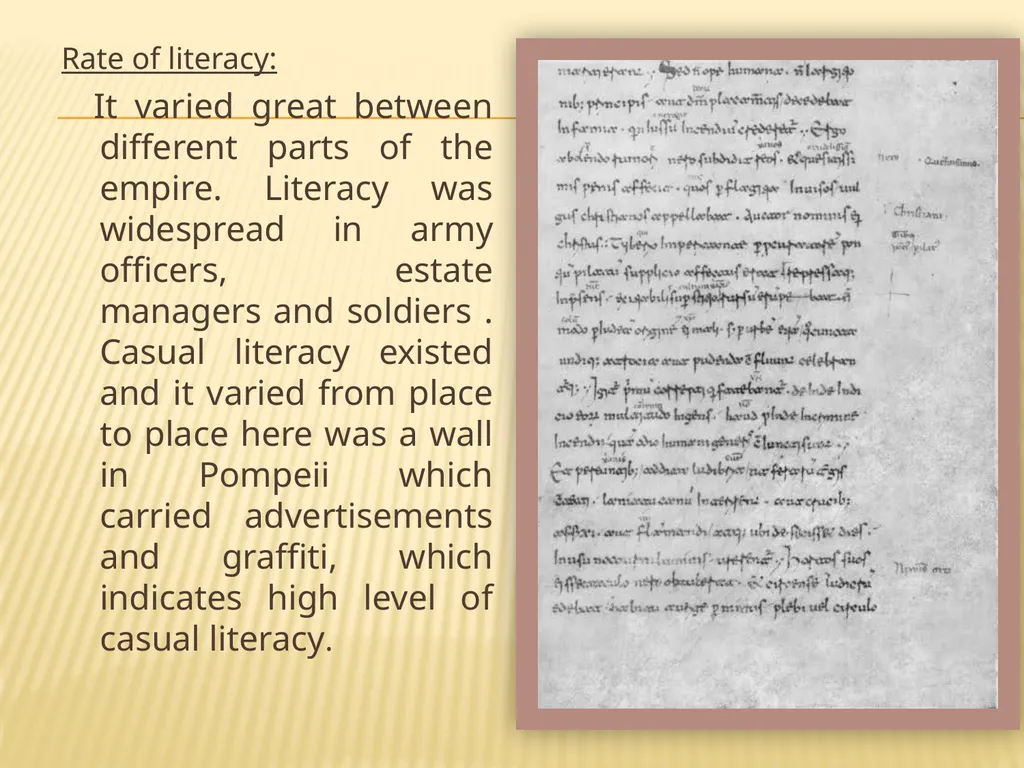
It varied great between different parts of the empire. Literacy was widespread in army officers, estate managers and soldiers . Casual literacy existed and it varied from place to place here was a wall in Pompeii which carried advertisements and graffiti, which indicates high level of casual literacy.<br>
It varied great between different parts of the empire. Literacy was widespread in army officers, estate managers and soldiers . Casual literacy existed and it varied from place to place here was a wall in Pompeii which carried advertisements and graffiti, which indicates high level of casual literacy.<br>
26
Controlling of workers Slavery was an institution deeply rooted in Ancient Roman world.
Though slavery was institutionalized and was greatly used as labour but it was not always slaves that performed labour in the Roman economy.
As peace was established in the first century, the supply of slaves declined and users of slave labour had to turn to slave breeding or cheaper substitutes such as wage labour which were easily dispensable.<br>
27
Late Antiquity Late antiquity is the term used to describe the final, fascinating period in the evolution and break-up of the Roman Empire and refers from the fourth to seventh centuries. The period saw considerable changes in cultural, economic, and administrative levels.<br>
28
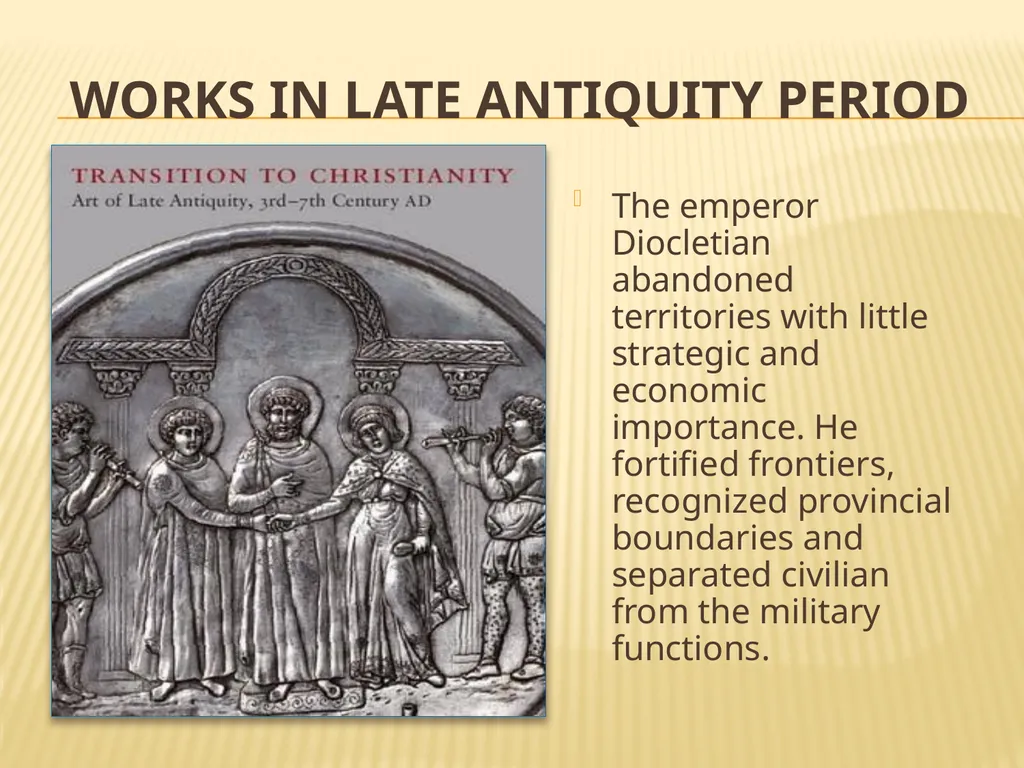
Works in Late Antiquity Period The emperor Diocletian abandoned territories with little strategic and economic importance. He fortified frontiers, recognized provincial boundaries and separated civilian from the military functions.<br>
29
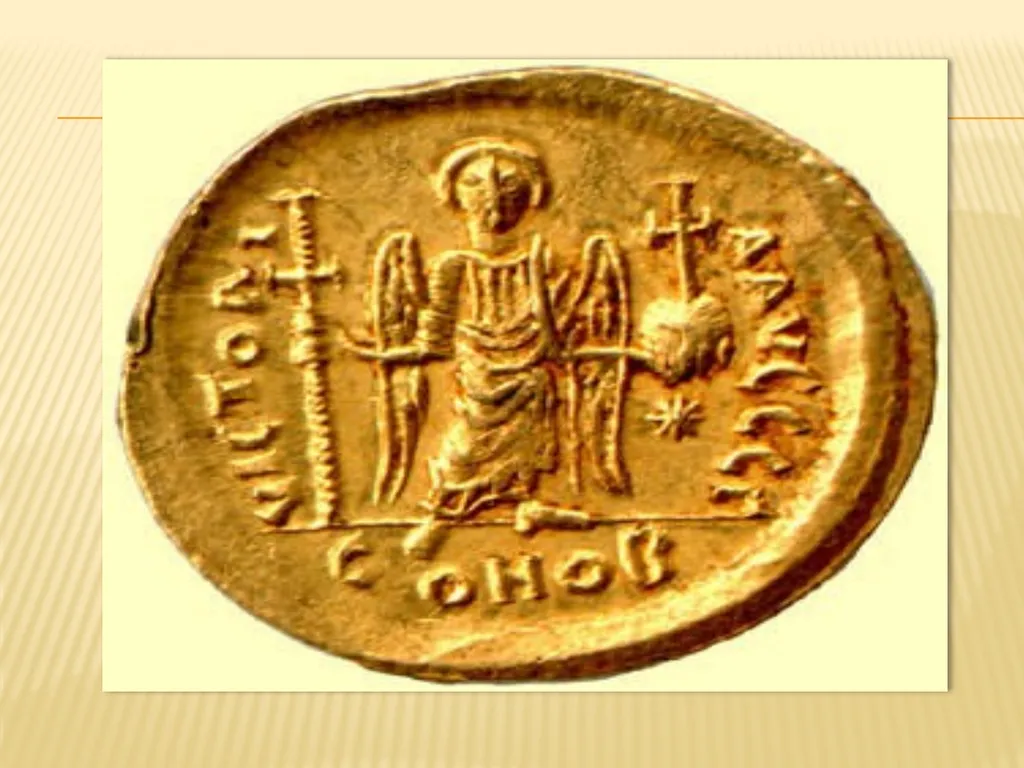
The most important innovations of Constantine were in the monetary sphere. He introduced Solidus, a coin weighing 4 ½ gm of pure gold. These coins were minted in millions.
The other innovation was the creation of a second capital at Constantinople. The late Antiquity period witnessed considerable change in economic life. Emperor Constantine declared Christianity as official religion of the Roman empire.(4th century)<br>
The other innovation was the creation of a second capital at Constantinople. The late Antiquity period witnessed considerable change in economic life. Emperor Constantine declared Christianity as official religion of the Roman empire.(4th century)<br>
30
Decline of the Roman Empire Large parts of the Roman and Iranian Empires had fallen into the hands of the Arabs.
Nomadic tribes in frontier areas such as Goths, Visigoths, Vandals and others attacked the Roman Empire in the west by the 5th century C.E.
The Germanic groups established their own kingdoms within the empire. With the prompting of the Christian Church, a Holy Roman Empire was formed from some of these kingdoms from the 9th century CE.
The Roman Empire was divided in to eastern and western halves in the fourth century C.E.<br>
31
Sources www.ncert.nic.in
www.mycbseguide.com
https://studytution.com
www. cbseocean.weebly.com
http://edurev.in
http://extramarks.com
http://learncbse.in<br>
www.mycbseguide.com
https://studytution.com
www. cbseocean.weebly.com
http://edurev.in
http://extramarks.com
http://learncbse.in<br>
32
THANKS<br>