Classifying Numbers 8th grade Math Numeration Unit 7 π -36 ¾ 0 2.12122. Number Types Whole Integers Rational Numbers Irrational Numbers Which is which? How can you tell them apart? Whole Numbers The Counting Numbers including 0. Ex:
"Classifying Numbers 8th grade Math – Numeration" is the property of its rightful owner. Permission is granted to
download and print the materials on this website for personal, non-commercial use only, and to display it
on your personal computer provided you do not modify the materials and that you retain all copyright
notices contained in the materials. By downloading content from our website, you accept the terms of this
agreement.
Presentation Transcript
01
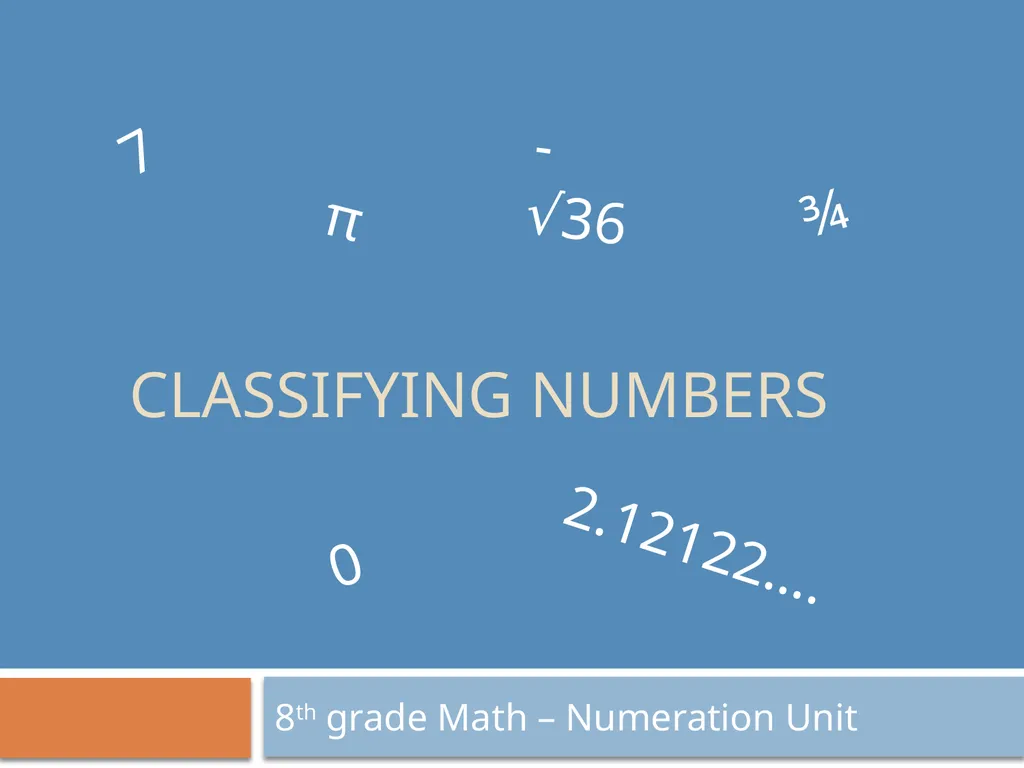
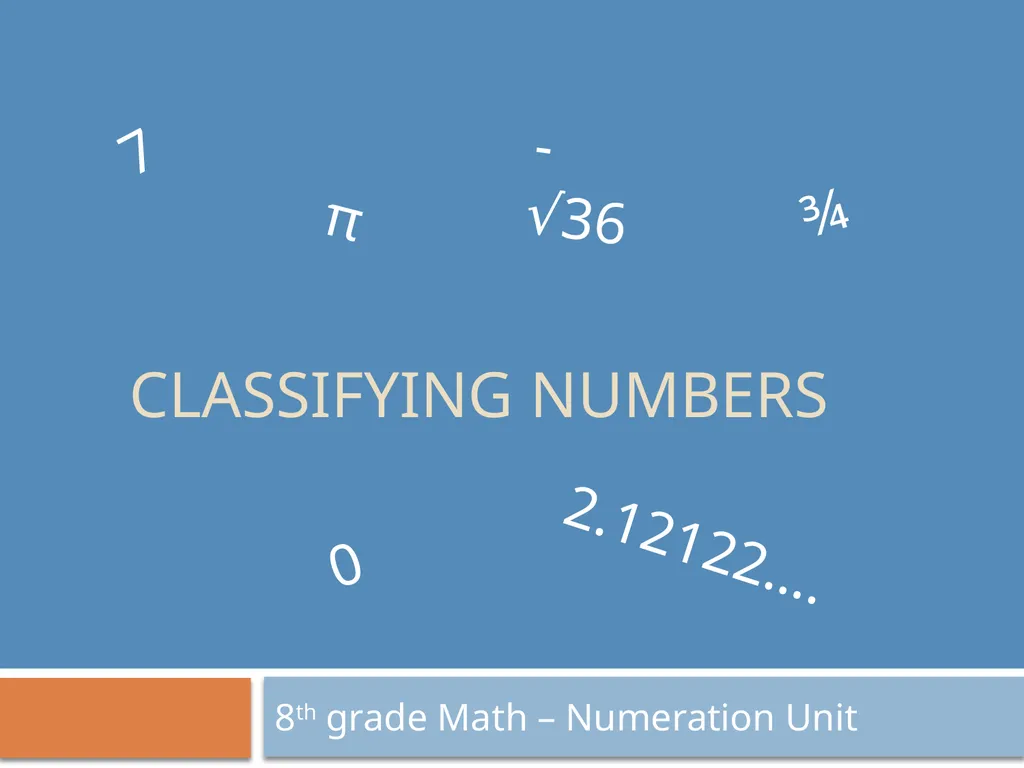
Classifying Numbers 8th grade Math – Numeration Unit 7 π -√36 ¾ 0 2.12122….<br>
02
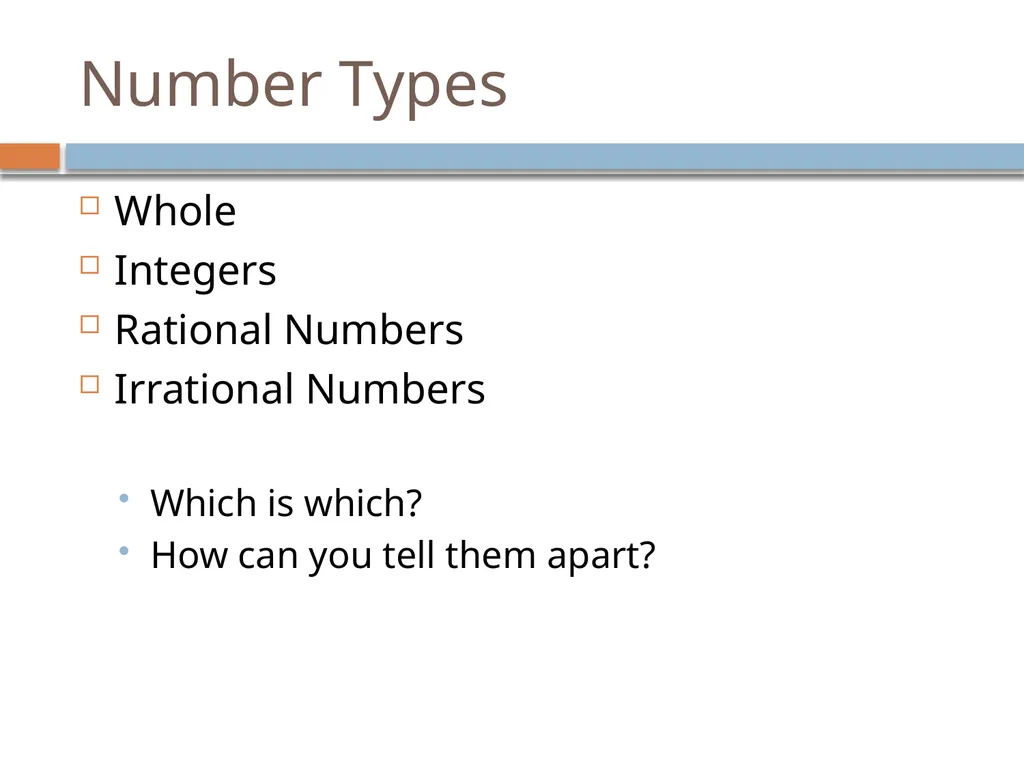
Number Types Whole
Integers
Rational Numbers
Irrational Numbers
Which is which?
How can you tell them apart?<br>
03
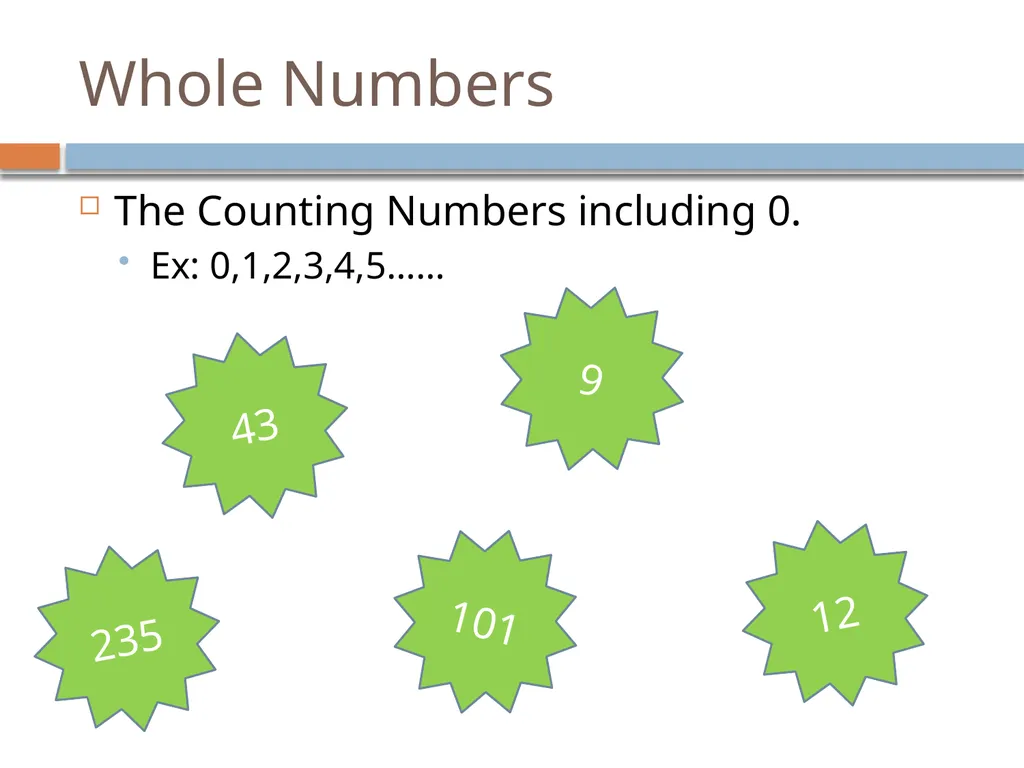
Whole Numbers The Counting Numbers including 0.
Ex: 0,1,2,3,4,5…… 235 9 12 101 43<br>
04
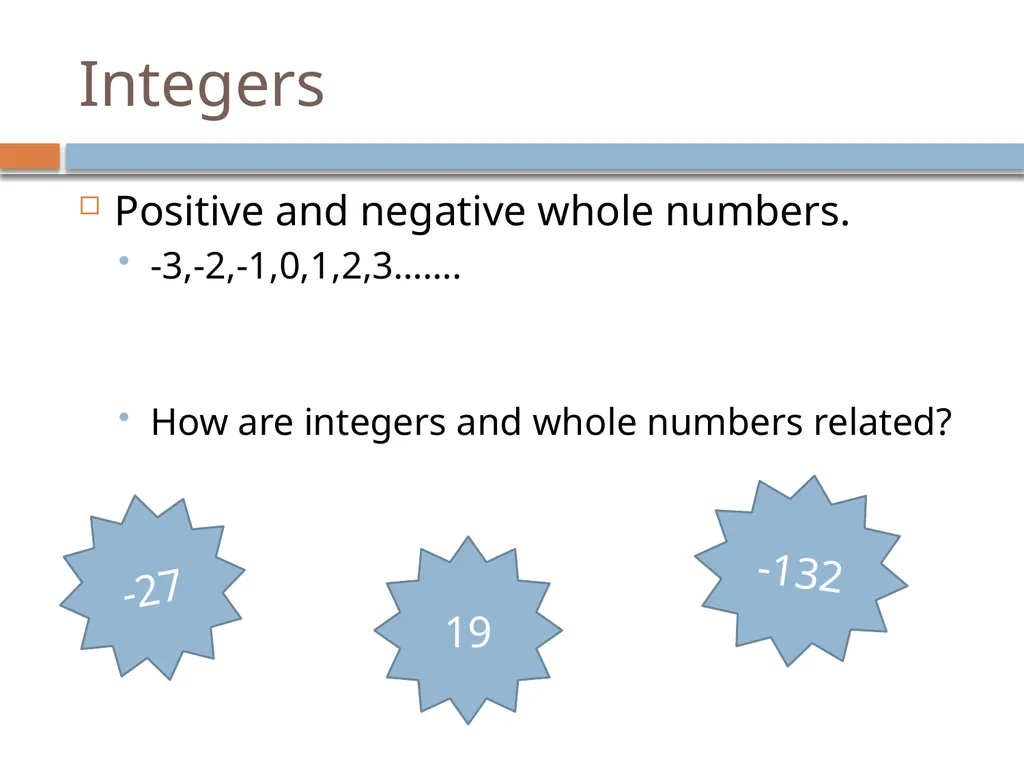
Integers Positive and negative whole numbers.
-3,-2,-1,0,1,2,3…….
How are integers and whole numbers related? -27 19 -132<br>
05
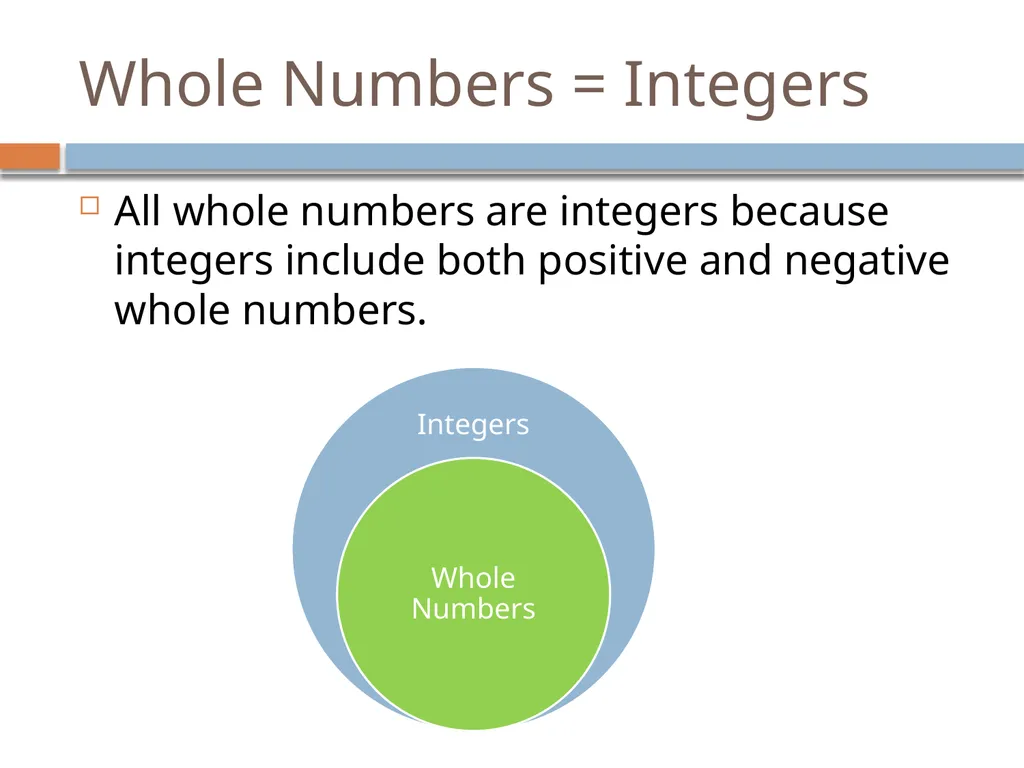
Whole Numbers = Integers All whole numbers are integers because integers include both positive and negative whole numbers.<br>
06
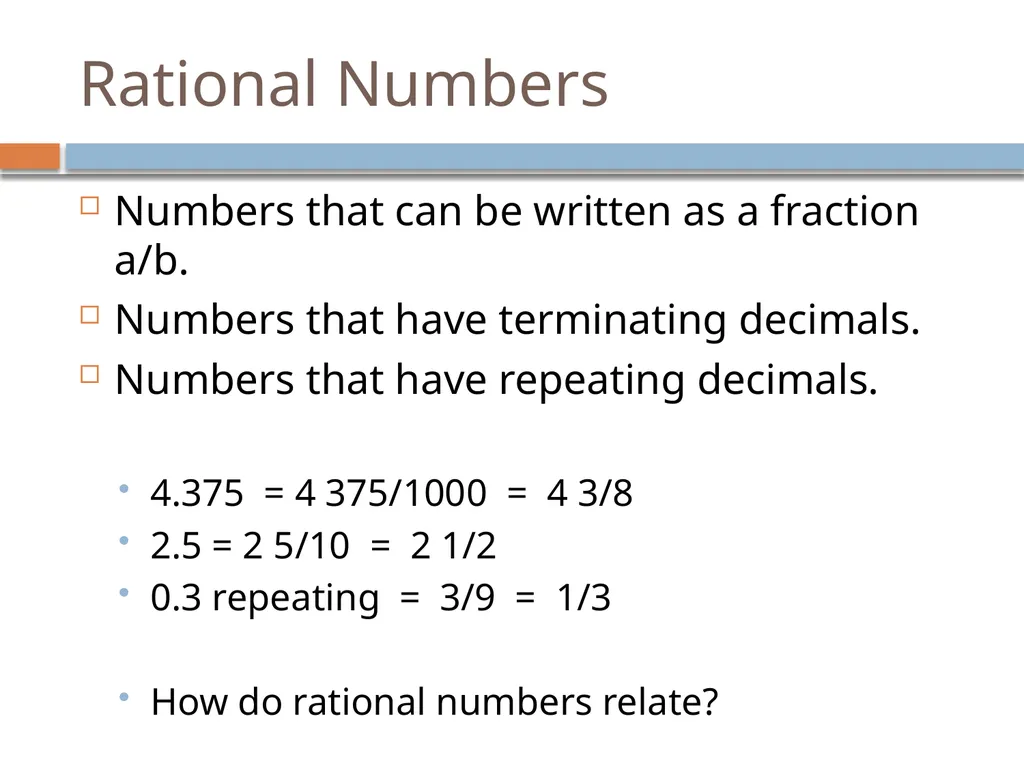
Rational Numbers Numbers that can be written as a fraction a/b.
Numbers that have terminating decimals.
Numbers that have repeating decimals.
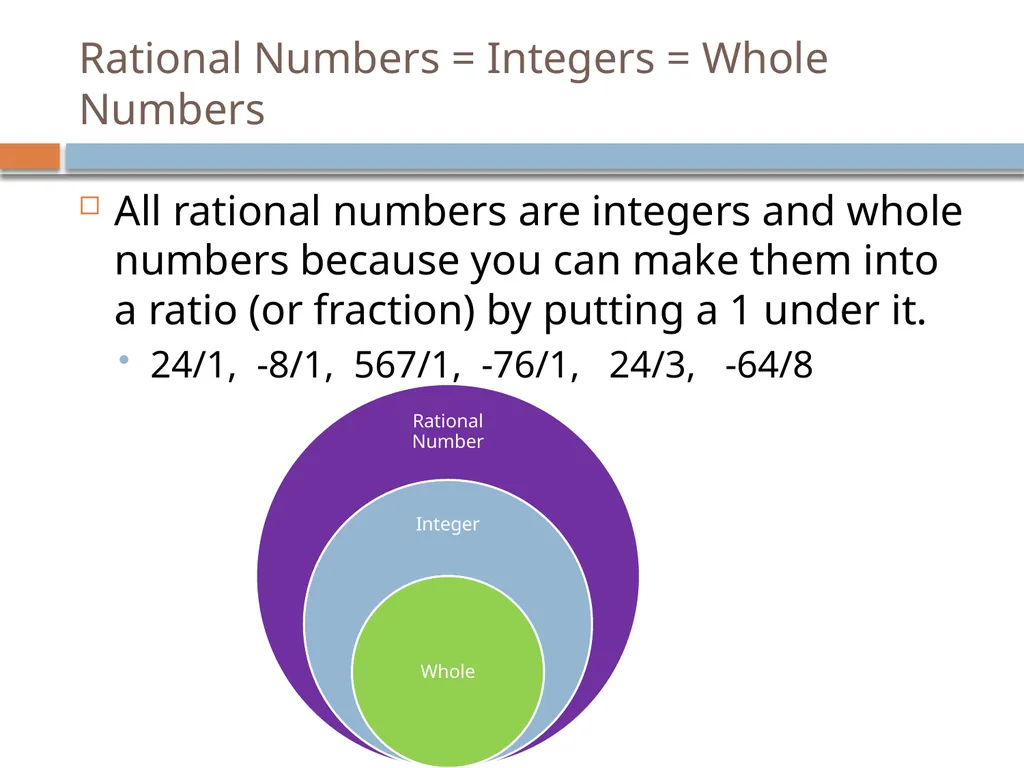
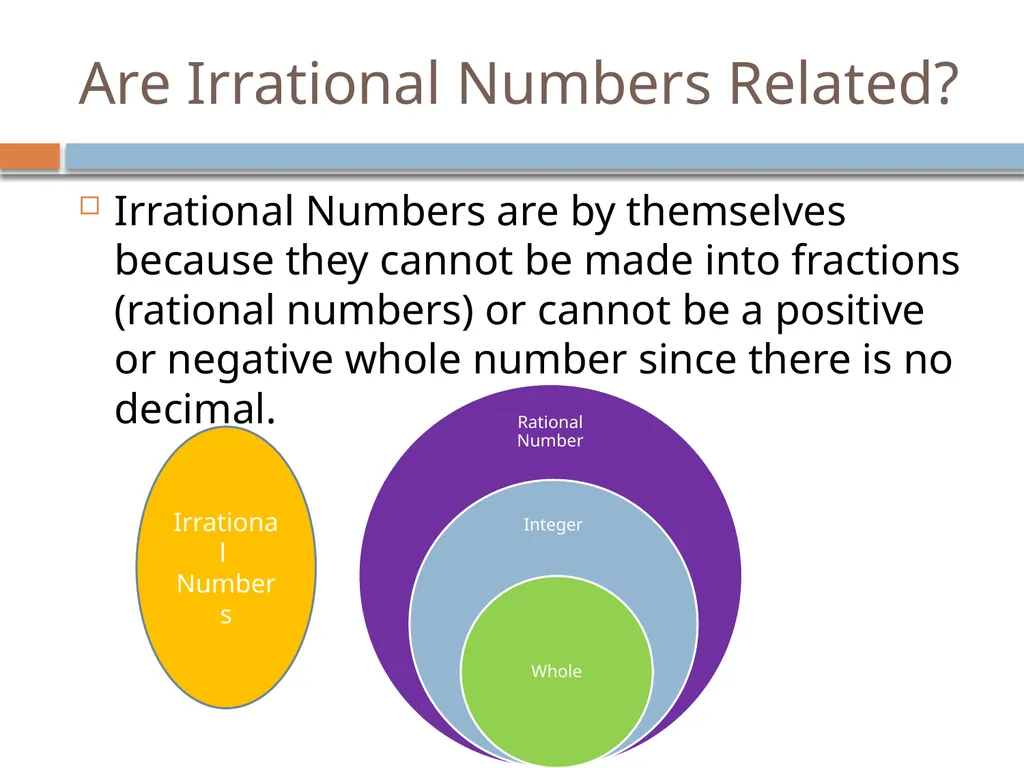
Rational Numbers = Integers = Whole Numbers All rational numbers are integers and whole numbers because you can make them into a ratio (or fraction) by putting a 1 under it.
24/1, -8/1, 567/1, -76/1, 24/3, -64/8<br>
08
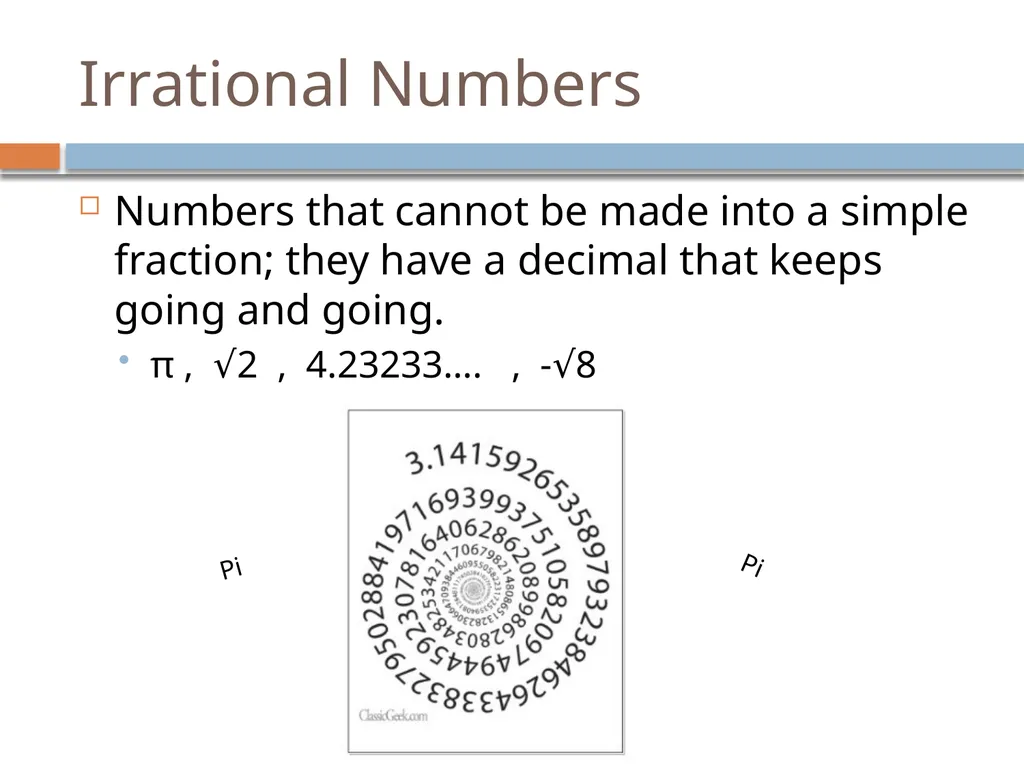
Irrational Numbers Numbers that cannot be made into a simple fraction; they have a decimal that keeps going and going.
π , √2 , 4.23233…. , -√8 Pi Pi<br>
09
Are Irrational Numbers Related? Irrational Numbers are by themselves because they cannot be made into fractions (rational numbers) or cannot be a positive or negative whole number since there is no decimal. Irrational Numbers<br>
10
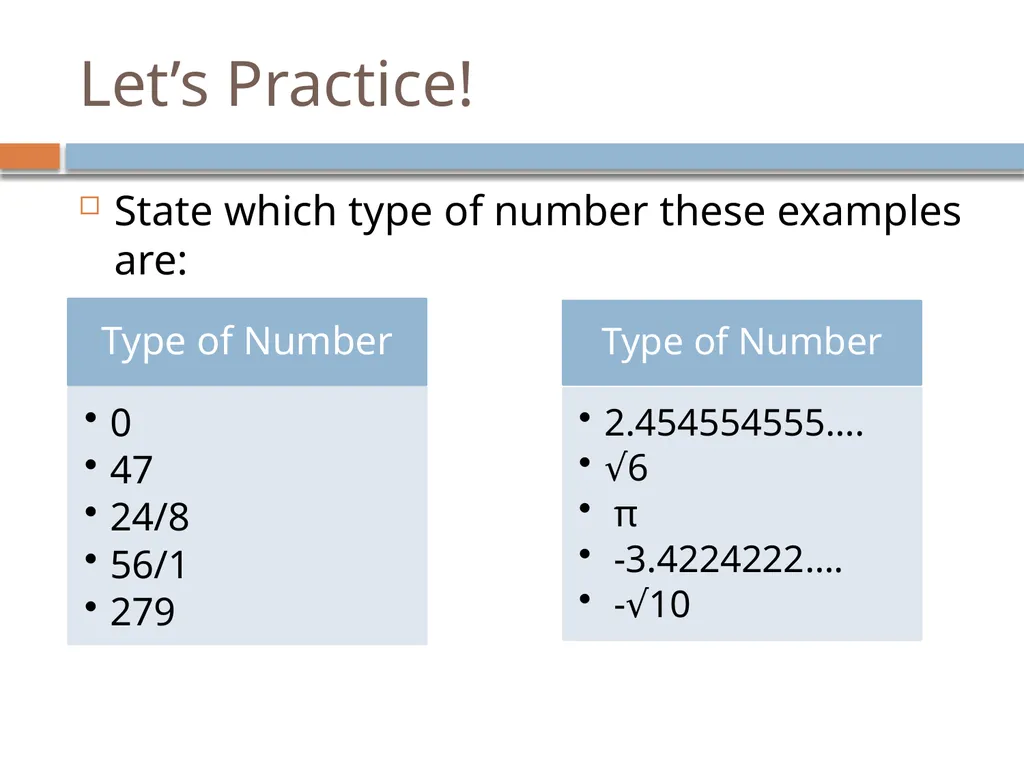
Let’s Practice! State which type of number these examples are:<br>
11
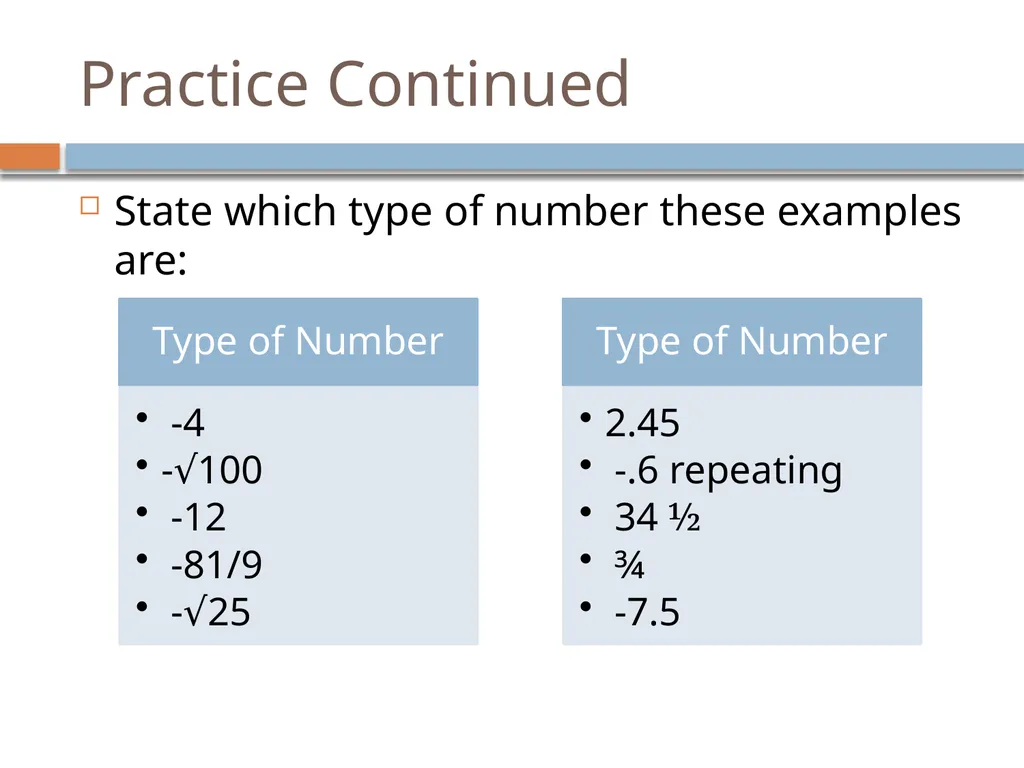
Practice Continued State which type of number these examples are:<br>
12
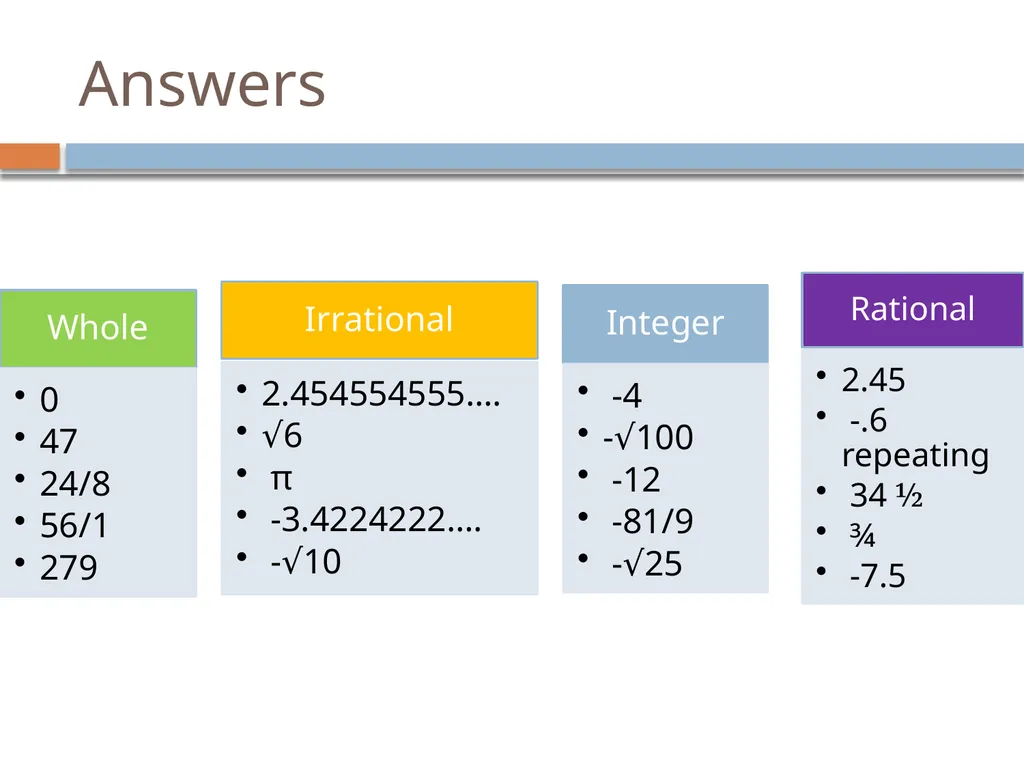
Answers<br>
13
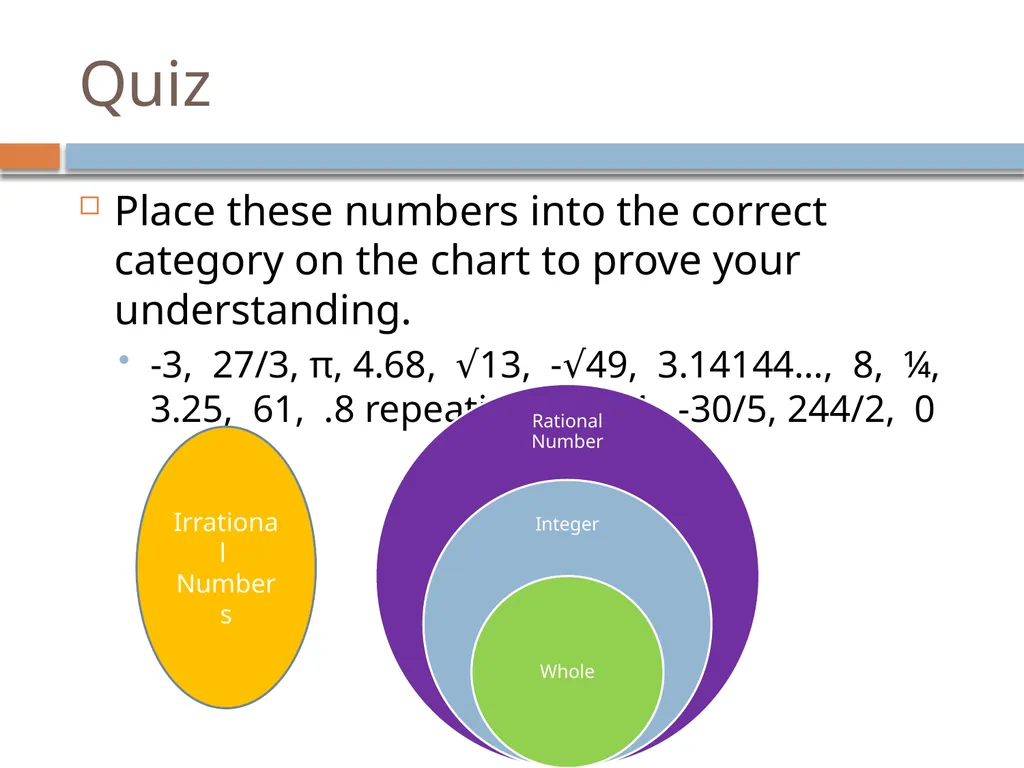
Quiz Place these numbers into the correct category on the chart to prove your understanding.
-3, 27/3, π, 4.68, √13, -√49, 3.14144…, 8, ¼, 3.25, 61, .8 repeating, √144, -30/5, 244/2, 0 Irrational Numbers<br>
14
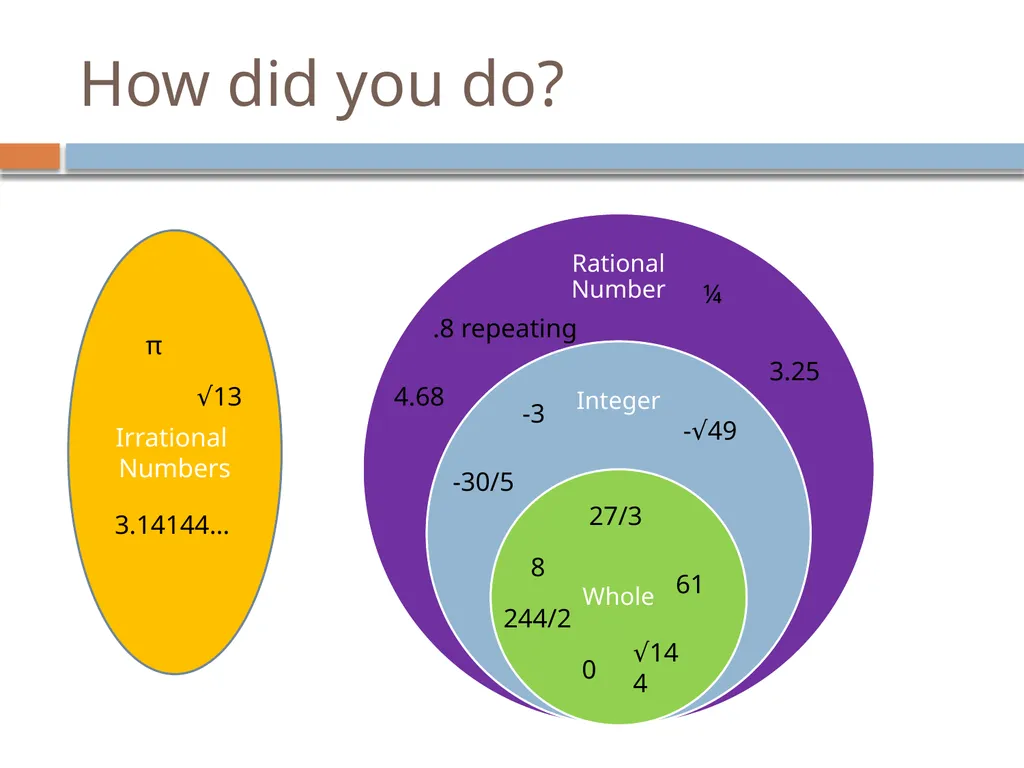
How did you do? Irrational Numbers -3 27/3 π 4.68 √13 -√49 3.14144… 8 ¼ 3.25 61 .8 repeating √144 -30/5 244/2 0<br>
15
Explanation Time! Explain with a chart how these types of numbers are related and give examples of each:
Whole numbers
Integers
Rational Numbers
Irrational Numbers
Which is which?
How can you tell them apart?<br>
16
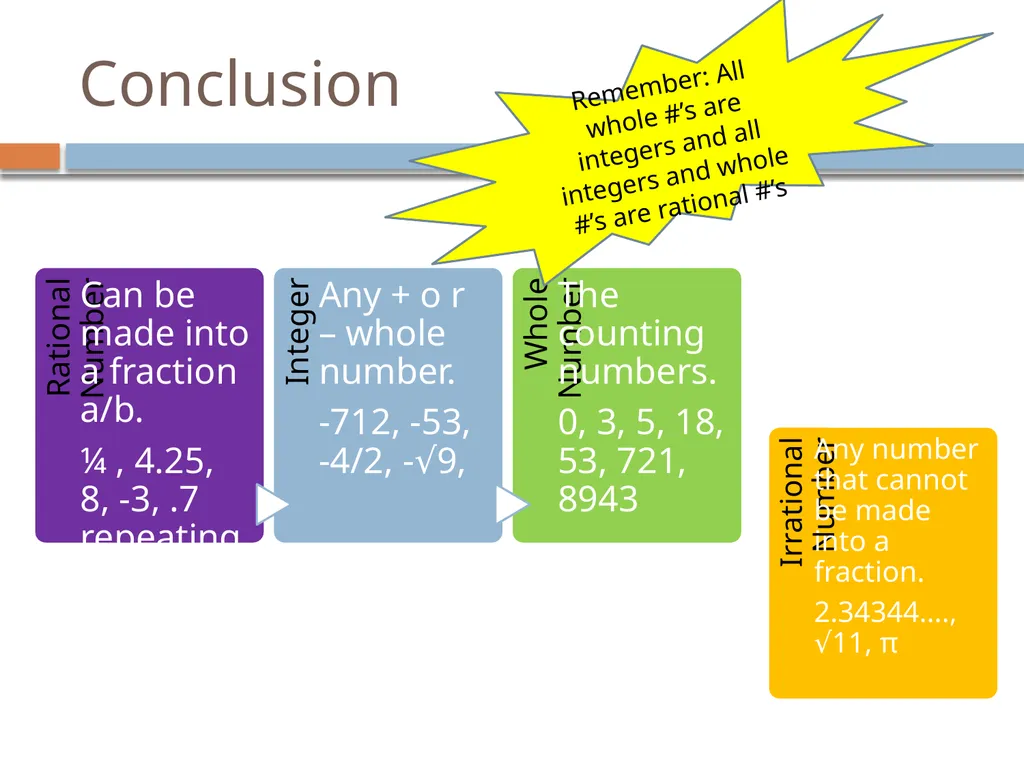
Conclusion Remember: All whole #’s are integers and all integers and whole #’s are rational #’s<br>
17
References http://www.examiner.com/math-education-in-dallas/history-of-pi
Pi picture
Microsoft PowerPoint SmartArt
Graphic organizers<br>