
Classroom-Based Assessment (CBA) What Works and
TD
Published · 30 slides · 0 views

1 / 1
Description
Classroom-Based Assessment (CBA) What Works and What Doesnt Peggy Garza BILC Secretary Chair, English Language Programs Dept. Partner Language Training Center Europe George C. Marshall European Center for Security Studies Definitions of
Related Topics
Share
Embed code
Download this presentation From Below
"Classroom-Based Assessment (CBA) What Works and" is the property of its rightful owner. Permission is granted to download and print the materials on this website for personal, non-commercial use only, and to display it on your personal computer provided you do not modify the materials and that you retain all copyright notices contained in the materials. By downloading content from our website, you accept the terms of this agreement.
Presentation Transcript
01
Classroom-Based Assessment (CBA)
What Works and What Doesn’t Peggy Garza
BILC Secretary
Chair, English Language Programs Dept.
Partner Language Training Center Europe
George C. Marshall European Center for Security Studies<br>
BILC Secretary
Chair, English Language Programs Dept.
Partner Language Training Center Europe
George C. Marshall European Center for Security Studies<br>
02
Definitions of
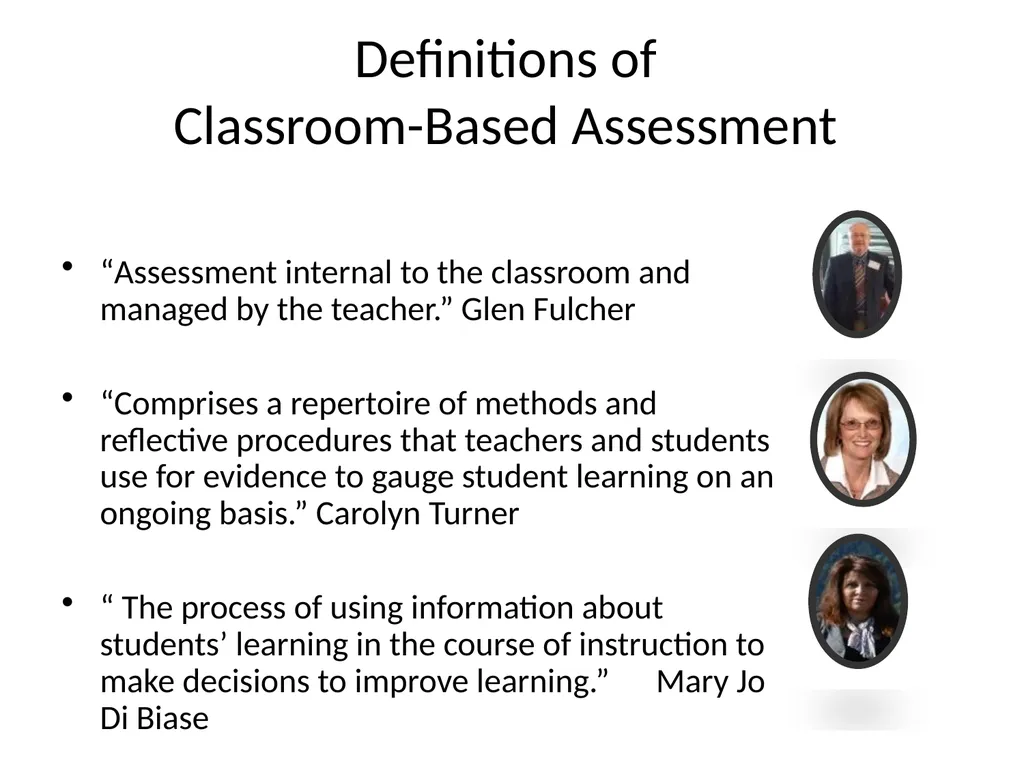
Classroom-Based Assessment “Assessment internal to the classroom and managed by the teacher.” Glen Fulcher
“Comprises a repertoire of methods and reflective procedures that teachers and students use for evidence to gauge student learning on an ongoing basis.” Carolyn Turner
“ The process of using information about students’ learning in the course of instruction to make decisions to improve learning.” Mary Jo Di Biase<br>
“Comprises a repertoire of methods and reflective procedures that teachers and students use for evidence to gauge student learning on an ongoing basis.” Carolyn Turner
“ The process of using information about students’ learning in the course of instruction to make decisions to improve learning.” Mary Jo Di Biase<br>
03
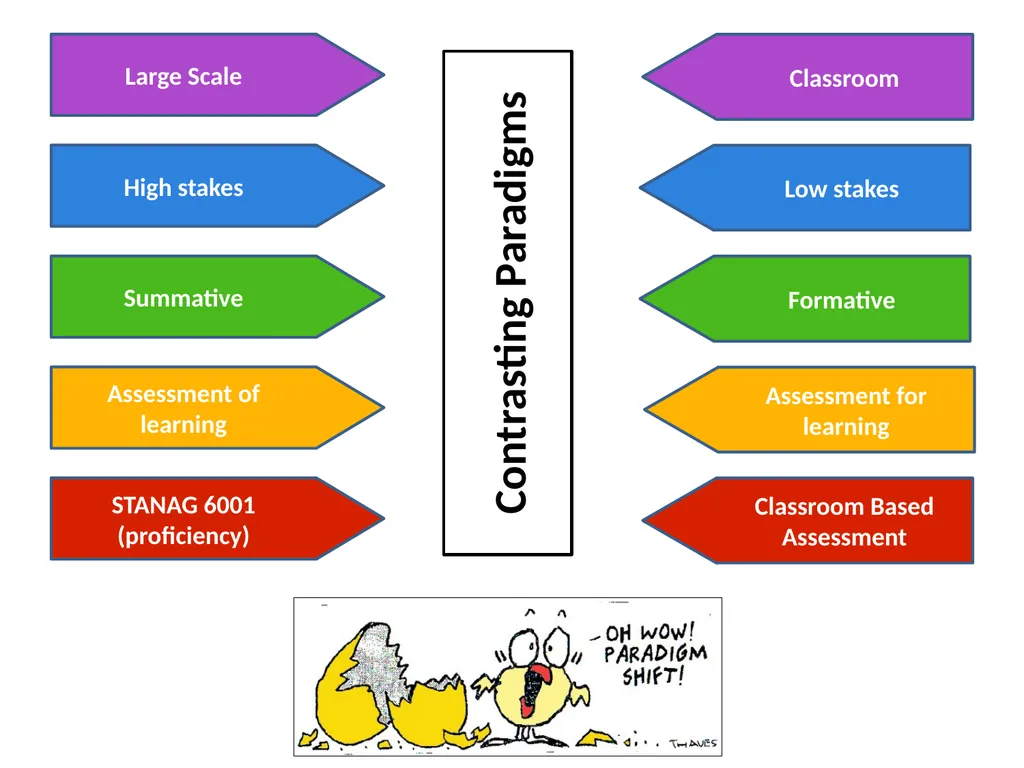
Contrasting Paradigms Large Scale Classroom High stakes Low stakes Formative Assessment for learning Classroom Based Assessment Summative Assessment of learning STANAG 6001 (proficiency)<br>
04
Main Principles
of CBA Include a variety of methods to build learner profiles to support language learning in the classroom
Information from CBA should be used as the basis for interaction between the teacher and the student
Teachers need to become aware of assessment methods and procedures<br>
Information from CBA should be used as the basis for interaction between the teacher and the student
Teachers need to become aware of assessment methods and procedures<br>
05
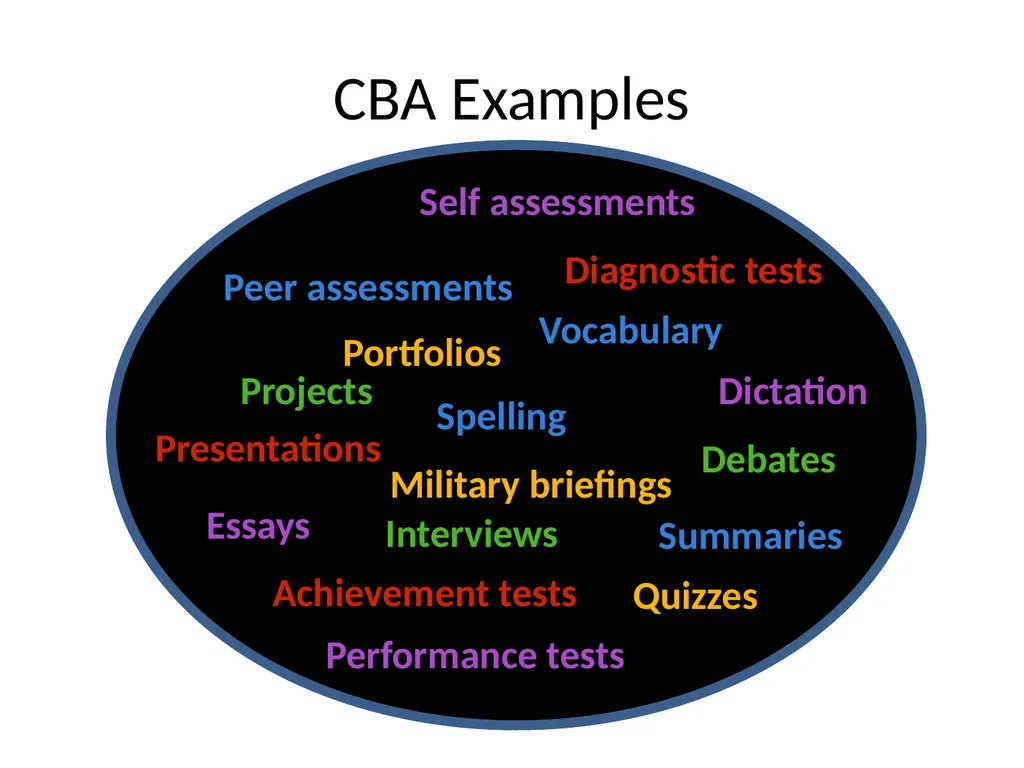
CBA Examples Self assessments Peer assessments Projects Portfolios Diagnostic tests Dictation Spelling Presentations Debates Military briefings Essays Summaries Interviews Achievement tests Quizzes Performance tests Vocabulary<br>
06
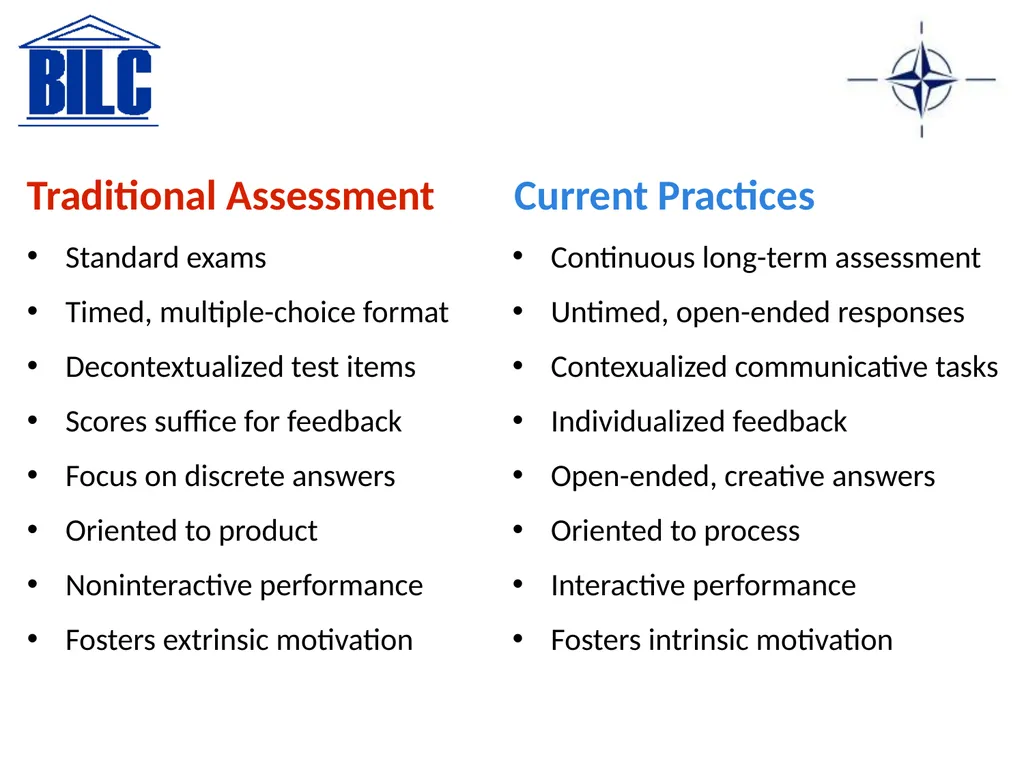
Traditional Assessment Standard exams
Timed, multiple-choice format
Decontextualized test items
Scores suffice for feedback
Focus on discrete answers
Oriented to product
Noninteractive performance
Fosters extrinsic motivation Current Practices Continuous long-term assessment
Untimed, open-ended responses
Contexualized communicative tasks
Individualized feedback
Open-ended, creative answers
Oriented to process
Interactive performance
Fosters intrinsic motivation<br>
Timed, multiple-choice format
Decontextualized test items
Scores suffice for feedback
Focus on discrete answers
Oriented to product
Noninteractive performance
Fosters extrinsic motivation Current Practices Continuous long-term assessment
Untimed, open-ended responses
Contexualized communicative tasks
Individualized feedback
Open-ended, creative answers
Oriented to process
Interactive performance
Fosters intrinsic motivation<br>
07
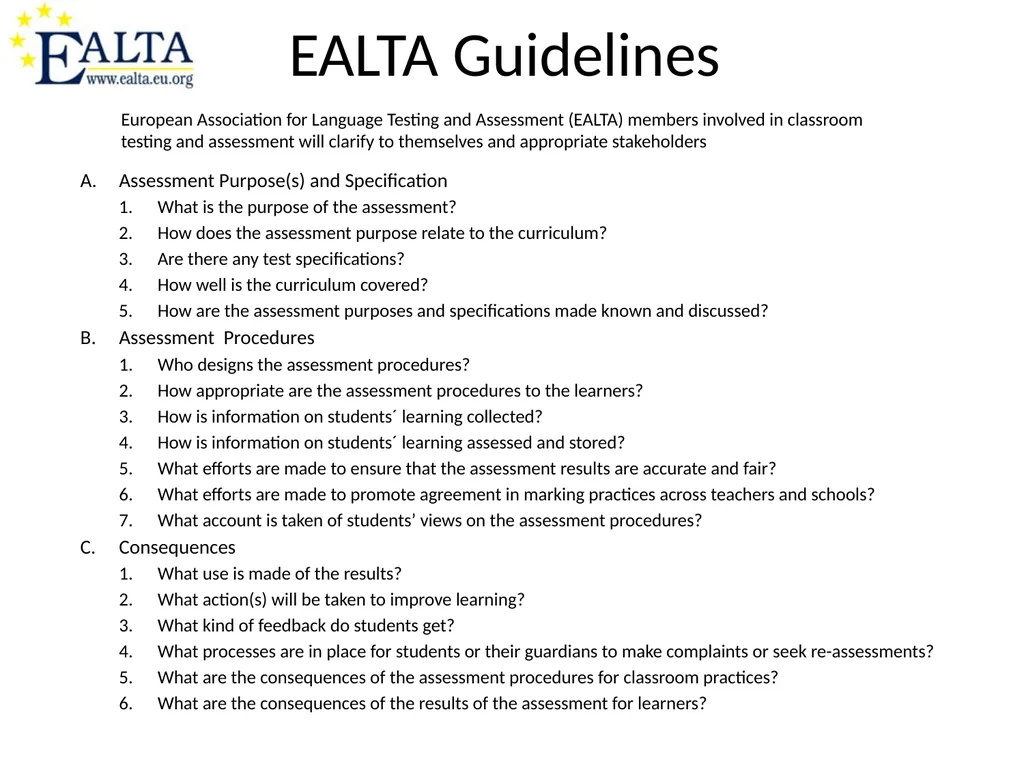
EALTA Guidelines Assessment Purpose(s) and Specification
What is the purpose of the assessment?
How does the assessment purpose relate to the curriculum?
Are there any test specifications?
How well is the curriculum covered?
How are the assessment purposes and specifications made known and discussed?
Assessment Procedures
Who designs the assessment procedures?
How appropriate are the assessment procedures to the learners?
How is information on students´ learning collected?
How is information on students´ learning assessed and stored?
What efforts are made to ensure that the assessment results are accurate and fair?
What efforts are made to promote agreement in marking practices across teachers and schools?
What account is taken of students’ views on the assessment procedures?
Consequences
What use is made of the results?
What action(s) will be taken to improve learning?
What kind of feedback do students get?
What processes are in place for students or their guardians to make complaints or seek re-assessments?
What are the consequences of the assessment procedures for classroom practices?
What are the consequences of the results of the assessment for learners? European Association for Language Testing and Assessment (EALTA) members involved in classroom testing and assessment will clarify to themselves and appropriate stakeholders<br>
What is the purpose of the assessment?
How does the assessment purpose relate to the curriculum?
Are there any test specifications?
How well is the curriculum covered?
How are the assessment purposes and specifications made known and discussed?
Assessment Procedures
Who designs the assessment procedures?
How appropriate are the assessment procedures to the learners?
How is information on students´ learning collected?
How is information on students´ learning assessed and stored?
What efforts are made to ensure that the assessment results are accurate and fair?
What efforts are made to promote agreement in marking practices across teachers and schools?
What account is taken of students’ views on the assessment procedures?
Consequences
What use is made of the results?
What action(s) will be taken to improve learning?
What kind of feedback do students get?
What processes are in place for students or their guardians to make complaints or seek re-assessments?
What are the consequences of the assessment procedures for classroom practices?
What are the consequences of the results of the assessment for learners? European Association for Language Testing and Assessment (EALTA) members involved in classroom testing and assessment will clarify to themselves and appropriate stakeholders<br>
08
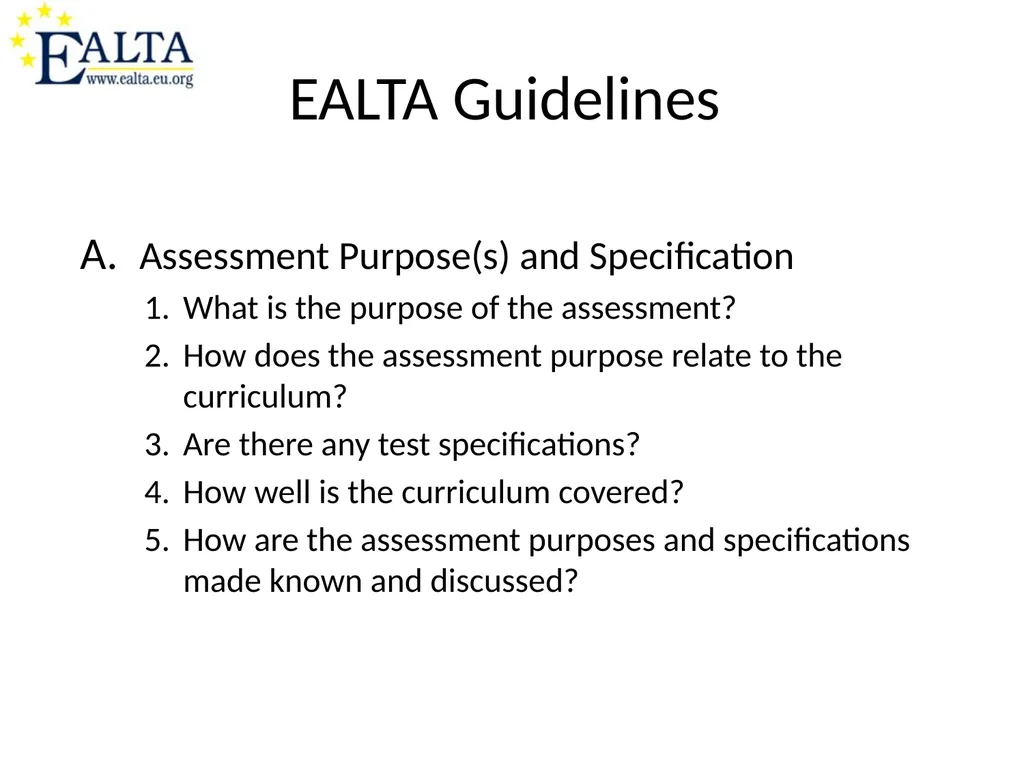
EALTA Guidelines Assessment Purpose(s) and Specification
What is the purpose of the assessment?
How does the assessment purpose relate to the curriculum?
Are there any test specifications?
How well is the curriculum covered?
How are the assessment purposes and specifications made known and discussed?<br>
What is the purpose of the assessment?
How does the assessment purpose relate to the curriculum?
Are there any test specifications?
How well is the curriculum covered?
How are the assessment purposes and specifications made known and discussed?<br>
09
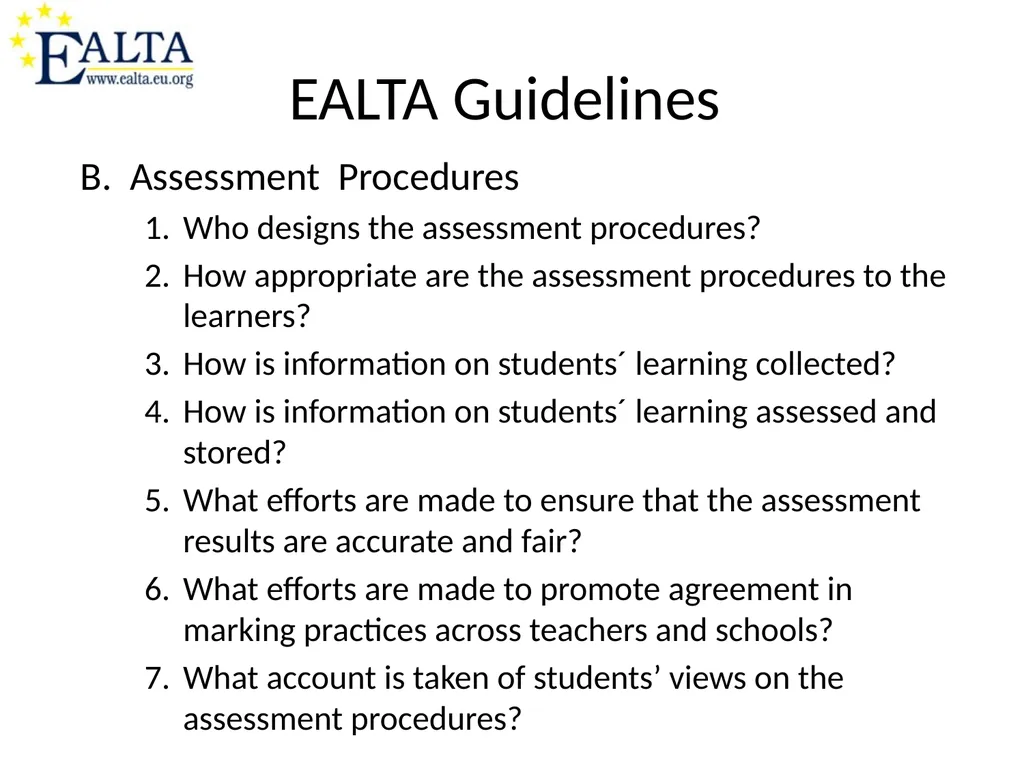
EALTA Guidelines B. Assessment Procedures
Who designs the assessment procedures?
How appropriate are the assessment procedures to the learners?
How is information on students´ learning collected?
How is information on students´ learning assessed and stored?
What efforts are made to ensure that the assessment results are accurate and fair?
What efforts are made to promote agreement in marking practices across teachers and schools?
What account is taken of students’ views on the assessment procedures?<br>
Who designs the assessment procedures?
How appropriate are the assessment procedures to the learners?
How is information on students´ learning collected?
How is information on students´ learning assessed and stored?
What efforts are made to ensure that the assessment results are accurate and fair?
What efforts are made to promote agreement in marking practices across teachers and schools?
What account is taken of students’ views on the assessment procedures?<br>
10
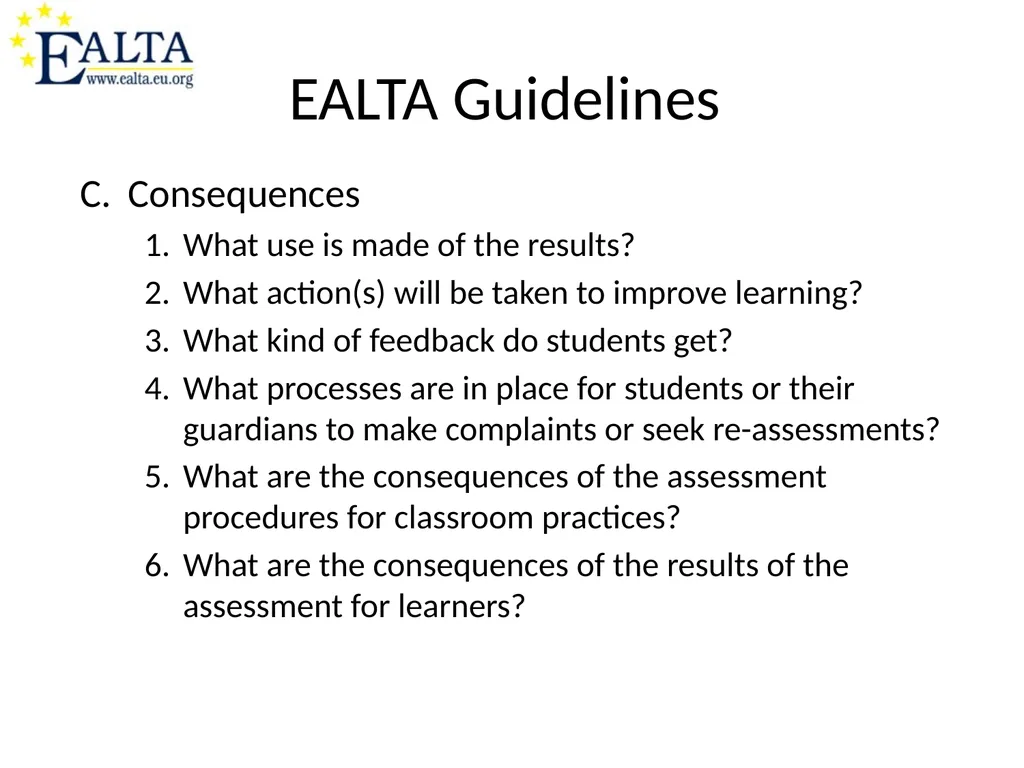
EALTA Guidelines Consequences
What use is made of the results?
What action(s) will be taken to improve learning?
What kind of feedback do students get?
What processes are in place for students or their guardians to make complaints or seek re-assessments?
What are the consequences of the assessment procedures for classroom practices?
What are the consequences of the results of the assessment for learners?<br>
What use is made of the results?
What action(s) will be taken to improve learning?
What kind of feedback do students get?
What processes are in place for students or their guardians to make complaints or seek re-assessments?
What are the consequences of the assessment procedures for classroom practices?
What are the consequences of the results of the assessment for learners?<br>
11
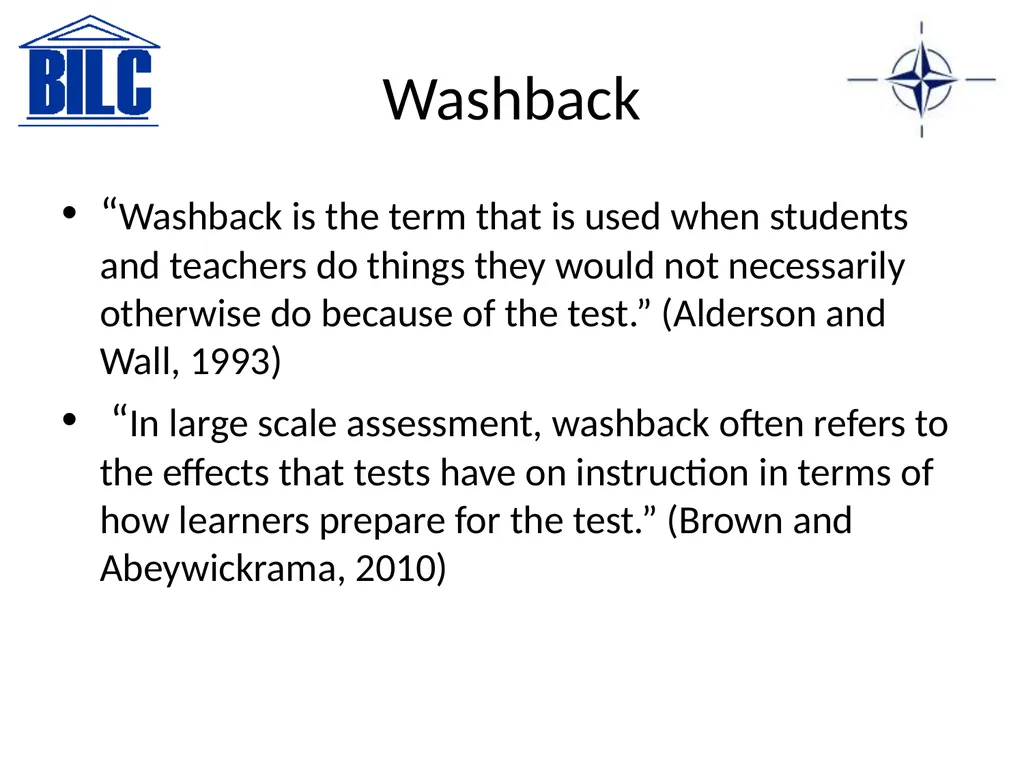
Washback “Washback is the term that is used when students and teachers do things they would not necessarily otherwise do because of the test.” (Alderson and Wall, 1993)
“In large scale assessment, washback often refers to the effects that tests have on instruction in terms of how learners prepare for the test.” (Brown and Abeywickrama, 2010)<br>
“In large scale assessment, washback often refers to the effects that tests have on instruction in terms of how learners prepare for the test.” (Brown and Abeywickrama, 2010)<br>
12
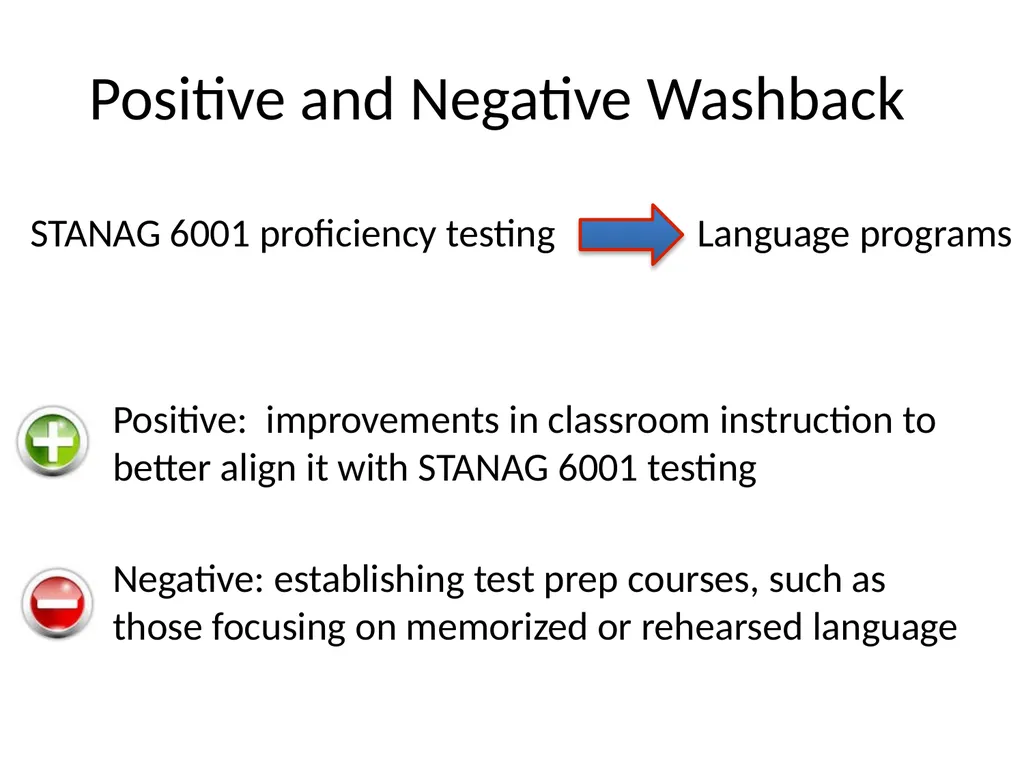
Positive and Negative Washback Positive: improvements in classroom instruction to better align it with STANAG 6001 testing
Negative: establishing test prep courses, such as those focusing on memorized or rehearsed language STANAG 6001 proficiency testing Language programs<br>
Negative: establishing test prep courses, such as those focusing on memorized or rehearsed language STANAG 6001 proficiency testing Language programs<br>
13
CBA Positive Washback Positively influences what and how teachers teach
Positively influences what and how learners learn
Gives learners feedback that enhances their language development
Is more formative in nature than summative
Provides conditions for peak performance by the learner (Brown and Abeywickrama, 2010)<br>
Positively influences what and how learners learn
Gives learners feedback that enhances their language development
Is more formative in nature than summative
Provides conditions for peak performance by the learner (Brown and Abeywickrama, 2010)<br>
14
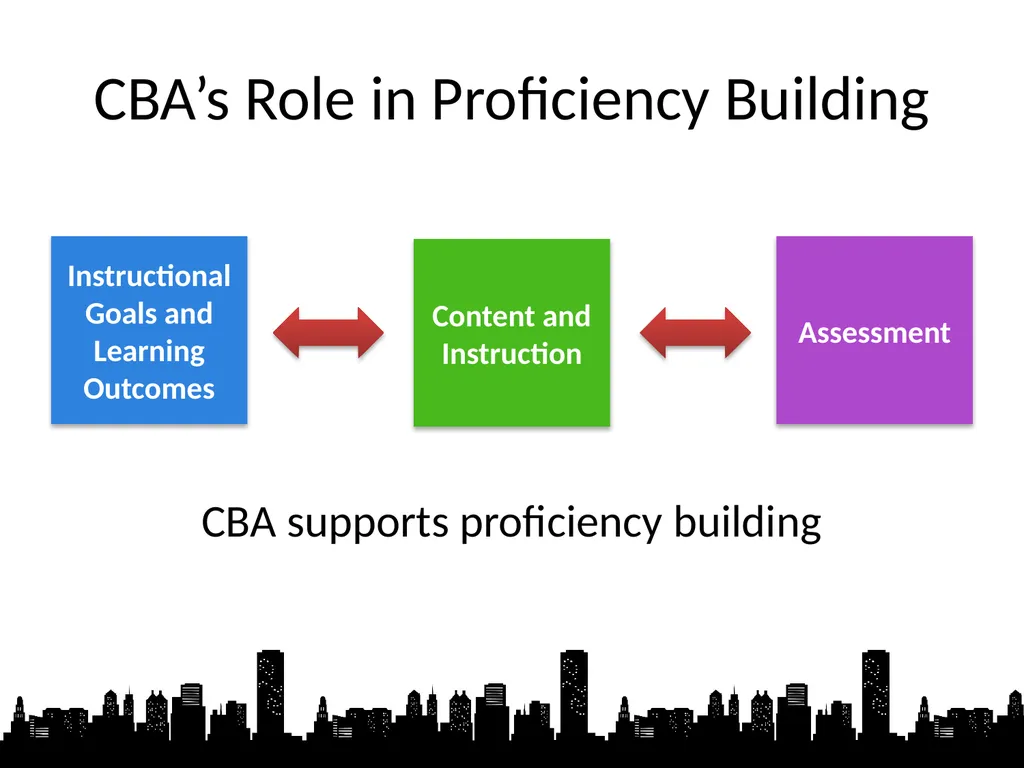
CBA’s Role in Proficiency Building CBA supports proficiency building Instructional Goals and Learning Outcomes Content and Instruction Assessment<br>
15
Importance of Alignment “When learning and testing are not aligned, bad things happen.”(Dr Clifford, Madrid, May 2015) Possible reactions to lack of alignment
Learners, who have mastered the content, fail the test
Learners become frustrated and lose motivation
Teachers change their instruction to prepare learners for the test, not the learning outcomes<br>
Learners, who have mastered the content, fail the test
Learners become frustrated and lose motivation
Teachers change their instruction to prepare learners for the test, not the learning outcomes<br>
16
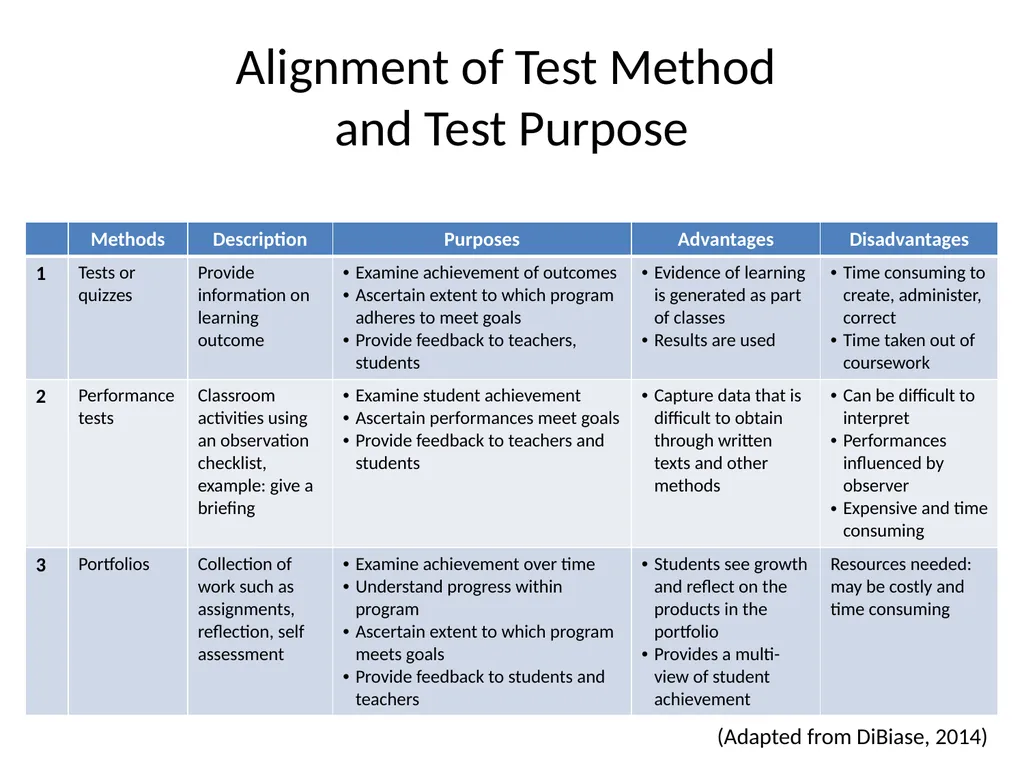
More on Alignment Test method and purpose
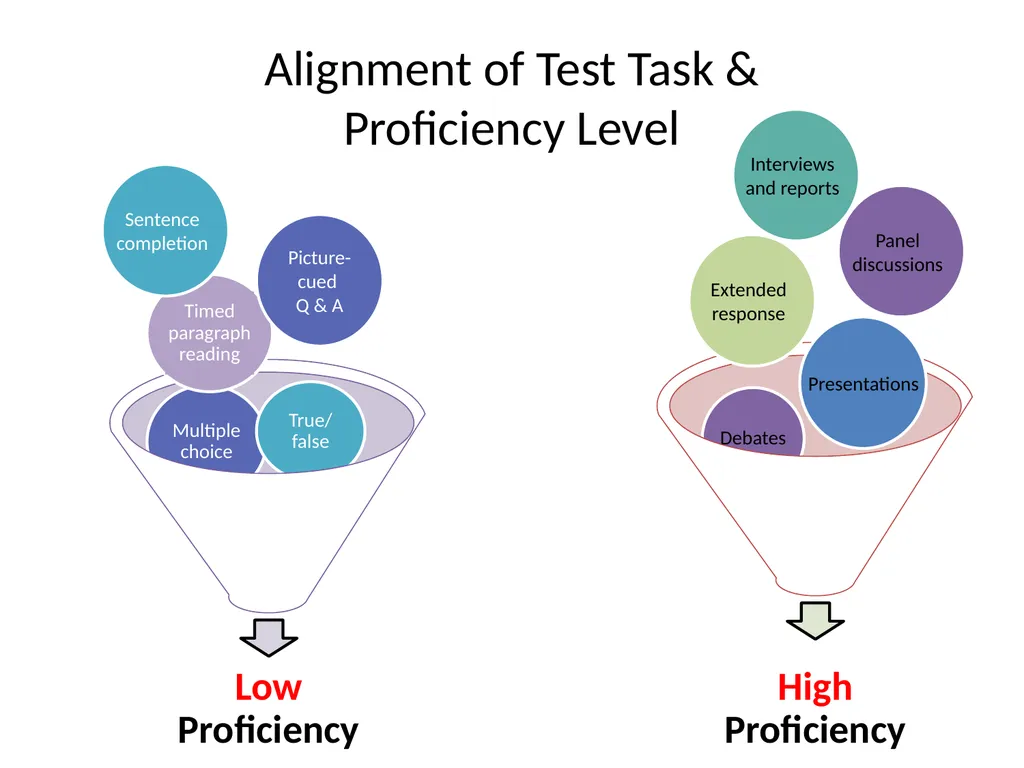
Test task and proficiency level<br>
Test task and proficiency level<br>
17
Alignment of Test Method
and Test Purpose (Adapted from DiBiase, 2014)<br>
18
Alignment of Test Task &
Proficiency Level<br>
19
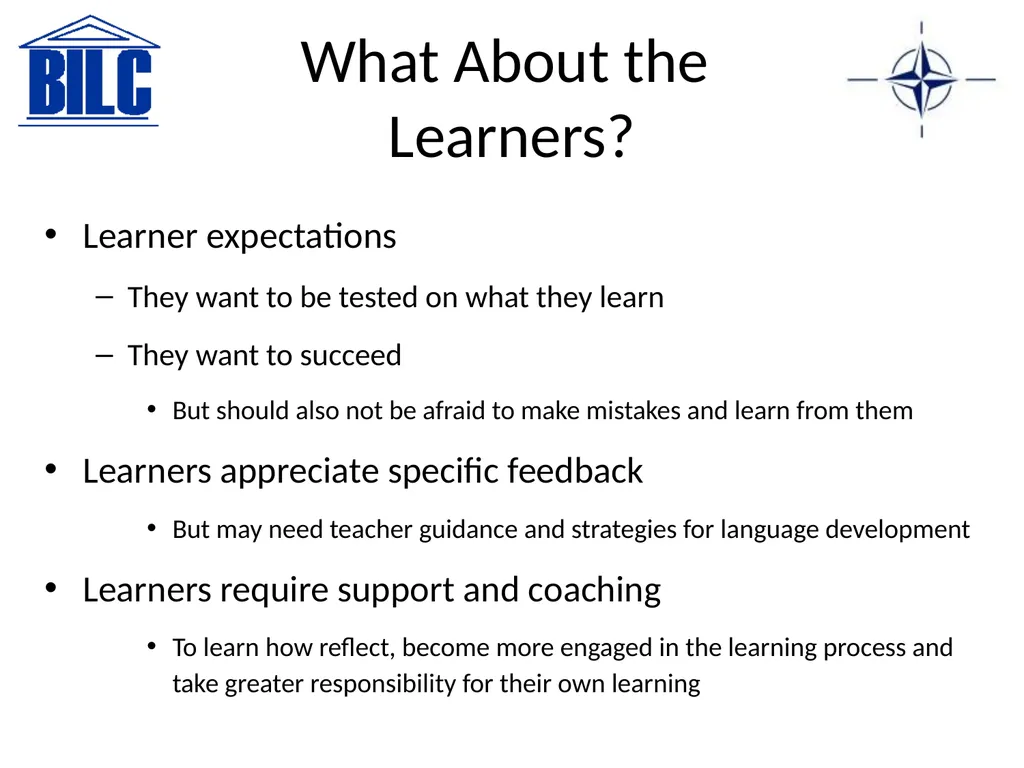
What About the
Learners? Learner expectations
They want to be tested on what they learn
They want to succeed
But should also not be afraid to make mistakes and learn from them
Learners appreciate specific feedback
But may need teacher guidance and strategies for language development
Learners require support and coaching
To learn how reflect, become more engaged in the learning process and take greater responsibility for their own learning<br>
They want to be tested on what they learn
They want to succeed
But should also not be afraid to make mistakes and learn from them
Learners appreciate specific feedback
But may need teacher guidance and strategies for language development
Learners require support and coaching
To learn how reflect, become more engaged in the learning process and take greater responsibility for their own learning<br>
20
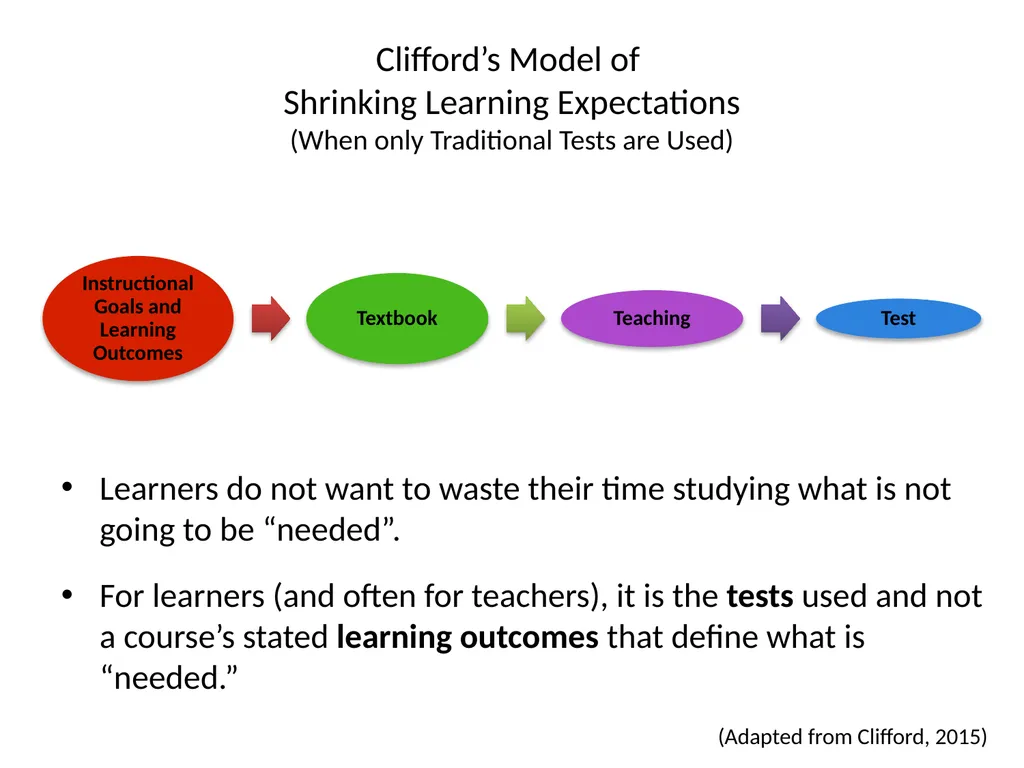
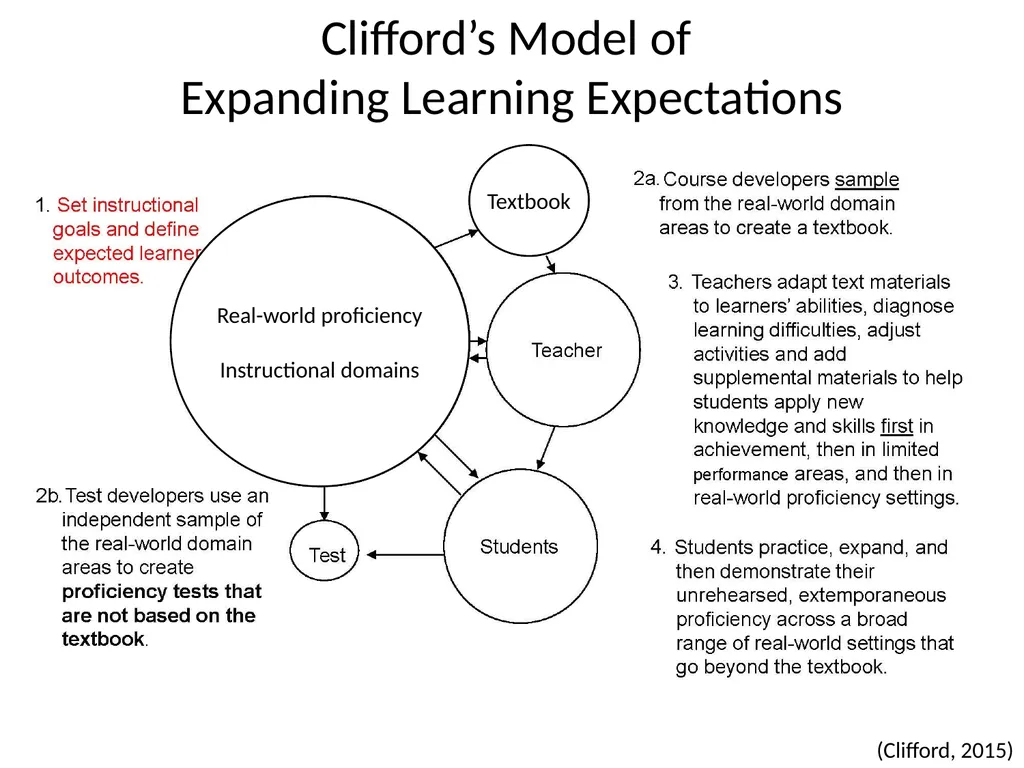
Clifford’s Model of
Shrinking Learning Expectations
(When only Traditional Tests are Used) Learners do not want to waste their time studying what is not going to be “needed”.
For learners (and often for teachers), it is the tests used and not a course’s stated learning outcomes that define what is “needed.” (Adapted from Clifford, 2015)<br>
For learners (and often for teachers), it is the tests used and not a course’s stated learning outcomes that define what is “needed.” (Adapted from Clifford, 2015)<br>
21
(Clifford, 2015) Textbook Real-world proficiency
Instructional domains Clifford’s Model of Expanding Learning Expectations<br>
Instructional domains Clifford’s Model of Expanding Learning Expectations<br>
22
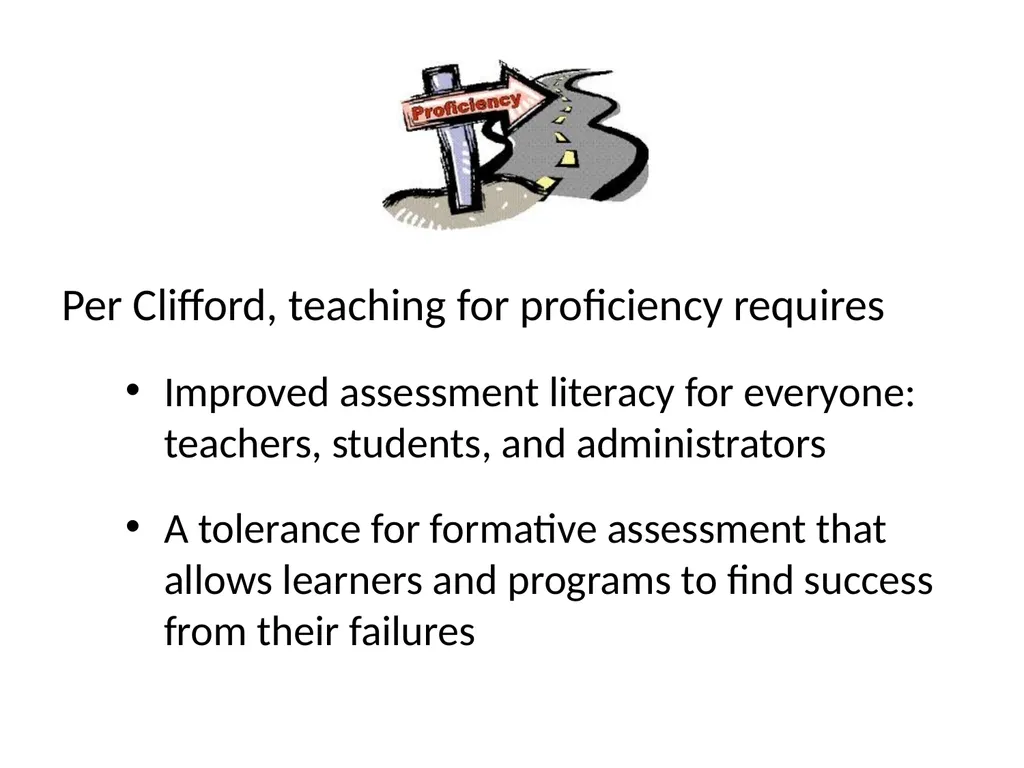
Per Clifford, teaching for proficiency requires
Improved assessment literacy for everyone: teachers, students, and administrators
A tolerance for formative assessment that allows learners and programs to find success from their failures<br>
Improved assessment literacy for everyone: teachers, students, and administrators
A tolerance for formative assessment that allows learners and programs to find success from their failures<br>
23
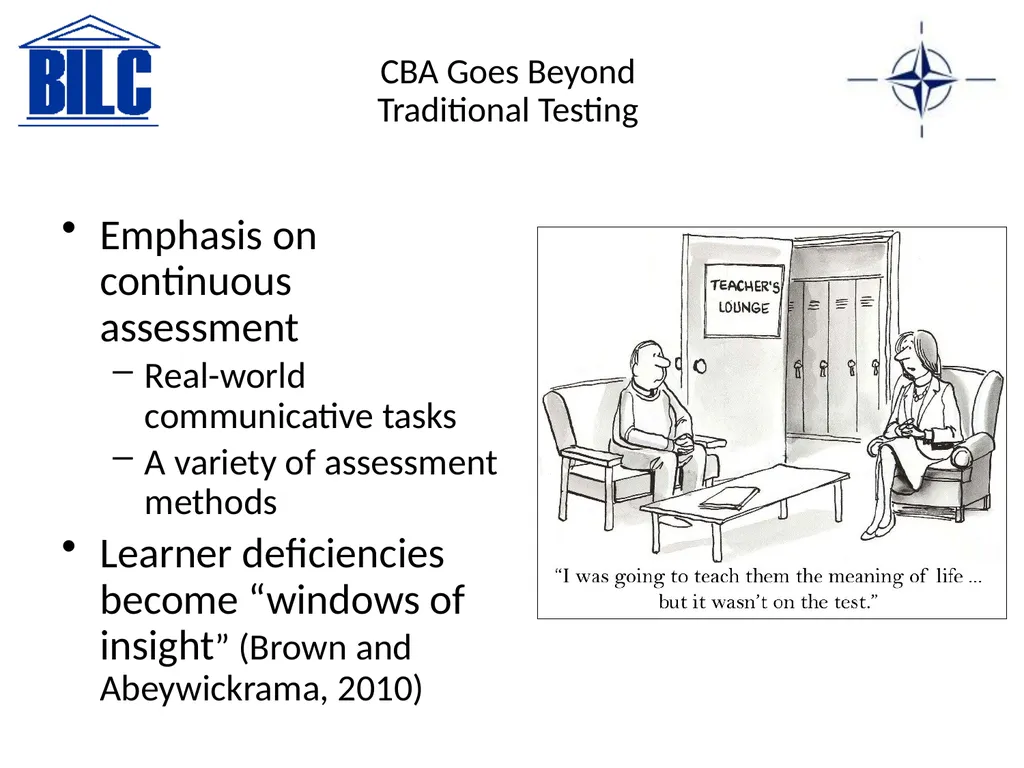
CBA Goes Beyond
Traditional Testing Emphasis on continuous assessment
Real-world communicative tasks
A variety of assessment methods
Learner deficiencies become “windows of insight” (Brown and Abeywickrama, 2010)<br>
Real-world communicative tasks
A variety of assessment methods
Learner deficiencies become “windows of insight” (Brown and Abeywickrama, 2010)<br>
24
CBA can be described as the assessment bridge or the place where assessment, teaching and learning interweave in the classroom (Turner, 2012)<br>
25
What Doesn’t Work Misalignment
Testing learners to find out what they don’t know
Excessive testing
No feedback and untimely feedback
Using poorly designed or rapidly constructed tests, rubrics or scoring criteria<br>
Testing learners to find out what they don’t know
Excessive testing
No feedback and untimely feedback
Using poorly designed or rapidly constructed tests, rubrics or scoring criteria<br>
26
What Works Providing feedback for improved learning and classroom instruction
Positive washback
Alignment of learning outcomes, content and assessment
Providing a multi-view assessment of a learner’s competence in different domains of language learning
Building responsibility for own learning<br>
Positive washback
Alignment of learning outcomes, content and assessment
Providing a multi-view assessment of a learner’s competence in different domains of language learning
Building responsibility for own learning<br>
27
Importance of
Assessment Literacy “When teachers and program managers do not have assessment literacy, bad things happen.” (Garza, Helsinki, October 2015)
Possible reactions
They do not understand STANAG 6001 standards and proficiency testing and therefore make bad program design decisions
They blame the STANAG 6001 test, believe it is too difficult, or should test specific grammar, vocabulary or military terms<br>
Possible reactions
They do not understand STANAG 6001 standards and proficiency testing and therefore make bad program design decisions
They blame the STANAG 6001 test, believe it is too difficult, or should test specific grammar, vocabulary or military terms<br>
28
What Is
Assessment Literacy? “Knowledge, skills, and understanding of assessment principles and practice” (Taylor, 2009)<br>
29
Why Is
Assessment Literacy Important ? So teachers can provide fair and accurate assessments of their students
To improve alignment between classroom instruction and desired final learning outcomes
To support increasing accountability for classroom instruction
To create coherence across different assessments in a language program and confirm consistency with STANAG 6001 standards<br>
To improve alignment between classroom instruction and desired final learning outcomes
To support increasing accountability for classroom instruction
To create coherence across different assessments in a language program and confirm consistency with STANAG 6001 standards<br>
30
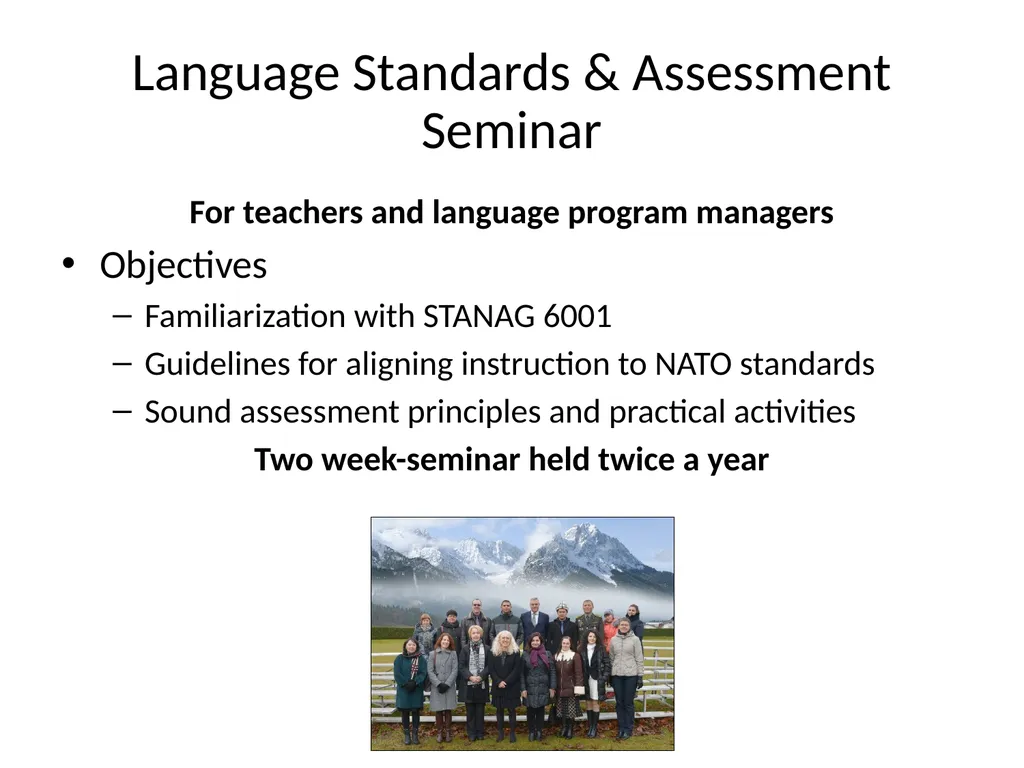
Language Standards & Assessment Seminar For teachers and language program managers
Objectives
Familiarization with STANAG 6001
Guidelines for aligning instruction to NATO standards
Sound assessment principles and practical activities
Two week-seminar held twice a year<br>
Objectives
Familiarization with STANAG 6001
Guidelines for aligning instruction to NATO standards
Sound assessment principles and practical activities
Two week-seminar held twice a year<br>