Click anywhere to get started Powered Platforms Make sure you have written assurance from building owner that the installation has been inspected, tested and maintained in according with OSHA regulation. Hazards Dangers Workers have
"Click anywhere to get started… Powered Platforms" is the property of its rightful owner. Permission is granted to
download and print the materials on this website for personal, non-commercial use only, and to display it
on your personal computer provided you do not modify the materials and that you retain all copyright
notices contained in the materials. By downloading content from our website, you accept the terms of this
agreement.
Presentation Transcript
01
Click anywhere to get started…<br>
02
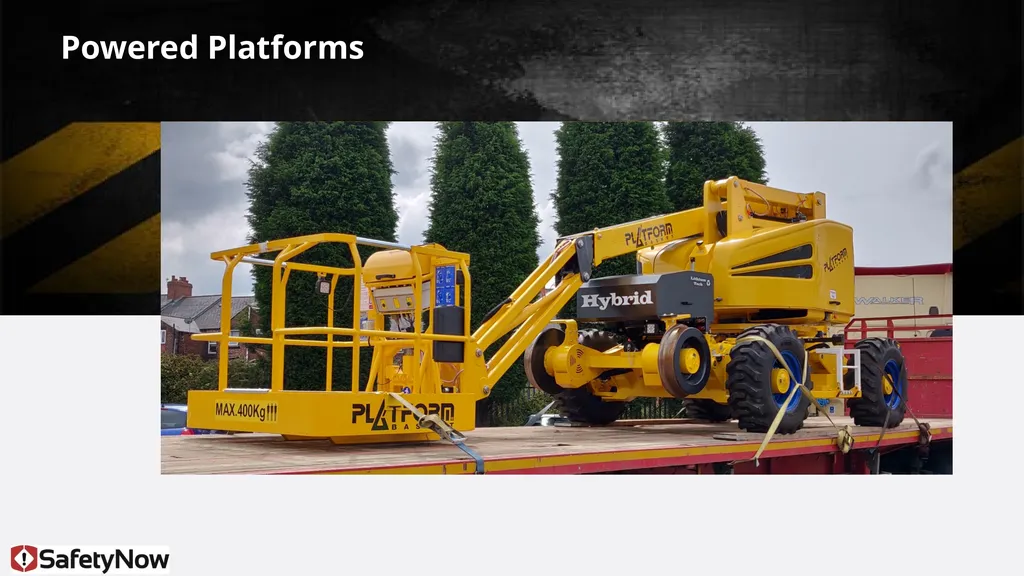
Powered Platforms<br>
03
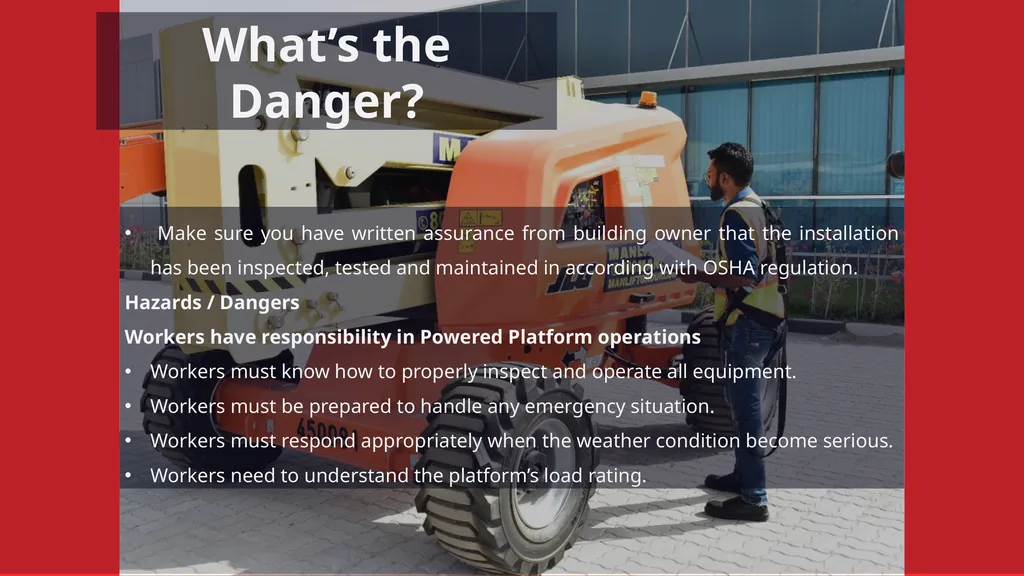
Make sure you have written assurance from building owner that the installation has been inspected, tested and maintained in according with OSHA regulation.
Hazards / Dangers
Workers have responsibility in Powered Platform operations
Workers must know how to properly inspect and operate all equipment.
Workers must be prepared to handle any emergency situation.
Workers must respond appropriately when the weather condition become serious.
Workers need to understand the platform’s load rating. What’s the Danger?<br>
04
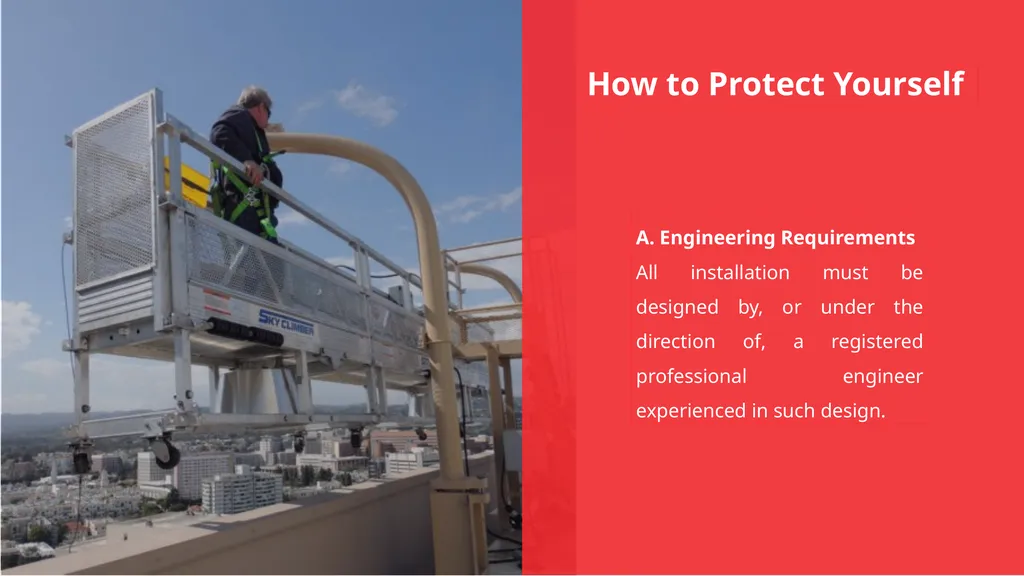
How to Protect Yourself A. Engineering Requirements
All installation must be designed by, or under the direction of, a registered professional engineer experienced in such design.<br>
05
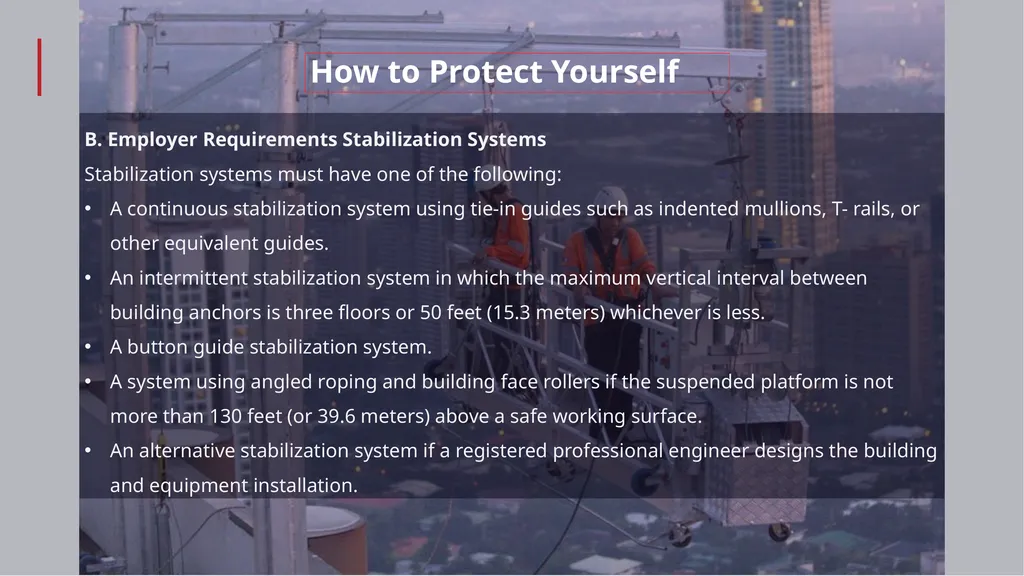
B. Employer Requirements Stabilization Systems
Stabilization systems must have one of the following:
A continuous stabilization system using tie-in guides such as indented mullions, T- rails, or other equivalent guides.
An intermittent stabilization system in which the maximum vertical interval between building anchors is three floors or 50 feet (15.3 meters) whichever is less.
A button guide stabilization system.
A system using angled roping and building face rollers if the suspended platform is not more than 130 feet (or 39.6 meters) above a safe working surface.
An alternative stabilization system if a registered professional engineer designs the building and equipment installation. How to Protect Yourself<br>
06
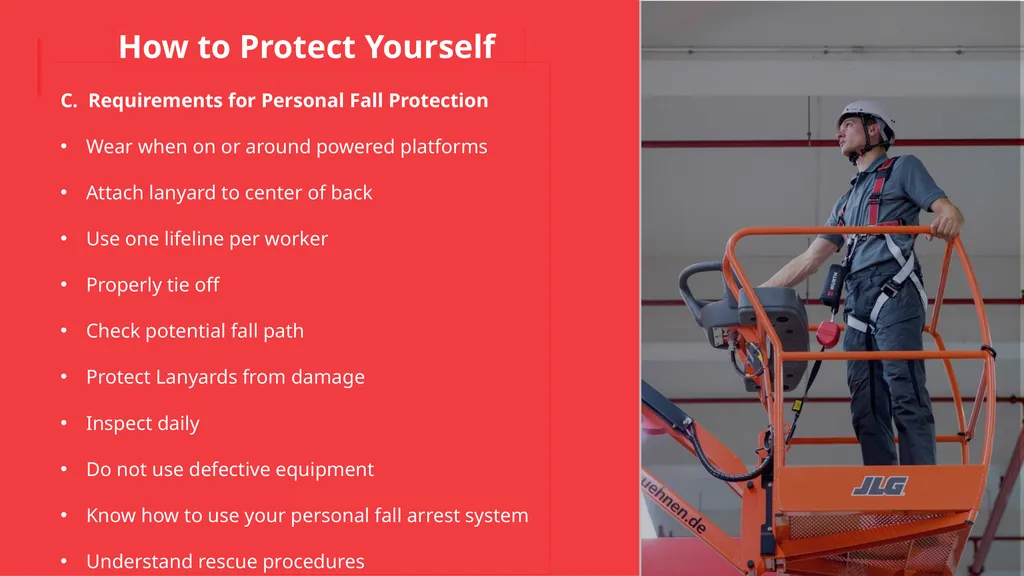
How to Protect Yourself C. Requirements for Personal Fall Protection
Wear when on or around powered platforms
Attach lanyard to center of back
Use one lifeline per worker
Properly tie off
Check potential fall path
Protect Lanyards from damage
Inspect daily
Do not use defective equipment
Know how to use your personal fall arrest system
Understand rescue procedures<br>
07
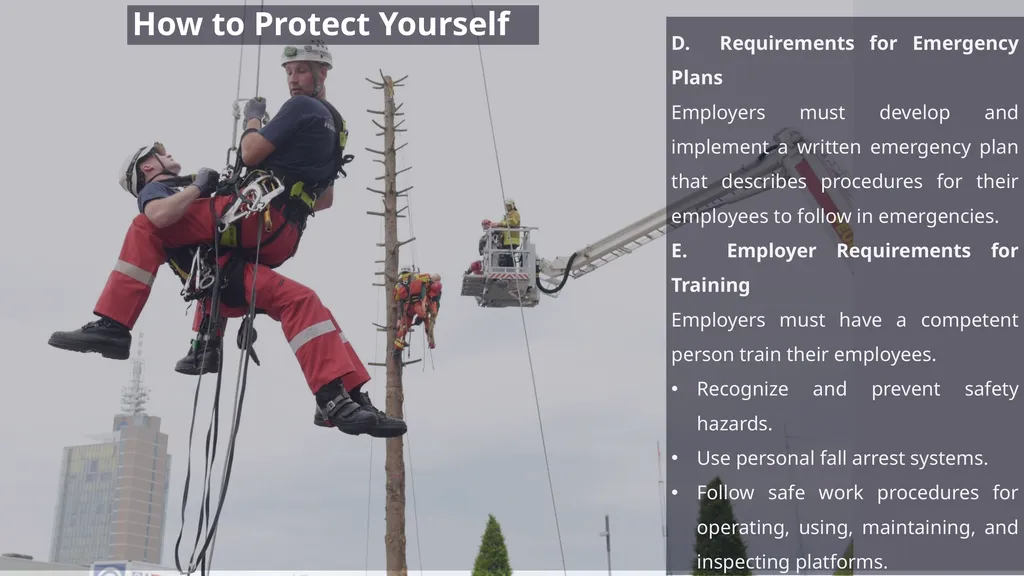
D. Requirements for Emergency Plans
Employers must develop and implement a written emergency plan that describes procedures for their employees to follow in emergencies.
E. Employer Requirements for Training
Employers must have a competent person train their employees.
Recognize and prevent safety hazards.
Use personal fall arrest systems.
Follow safe work procedures for operating, using, maintaining, and inspecting platforms. How to Protect Yourself<br>
08
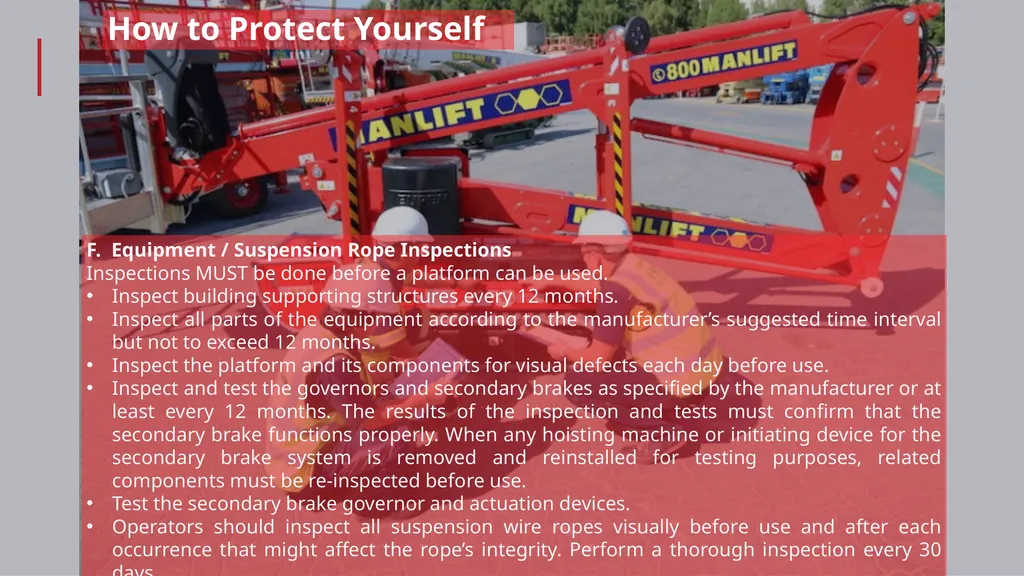
How to Protect Yourself F. Equipment / Suspension Rope Inspections
Inspections MUST be done before a platform can be used.
Inspect building supporting structures every 12 months.
Inspect all parts of the equipment according to the manufacturer’s suggested time interval but not to exceed 12 months.
Inspect the platform and its components for visual defects each day before use.
Inspect and test the governors and secondary brakes as specified by the manufacturer or at least every 12 months. The results of the inspection and tests must confirm that the secondary brake functions properly. When any hoisting machine or initiating device for the secondary brake system is removed and reinstalled for testing purposes, related components must be re-inspected before use.
Test the secondary brake governor and actuation devices.
Operators should inspect all suspension wire ropes visually before use and after each occurrence that might affect the rope’s integrity. Perform a thorough inspection every 30 days.<br>
09
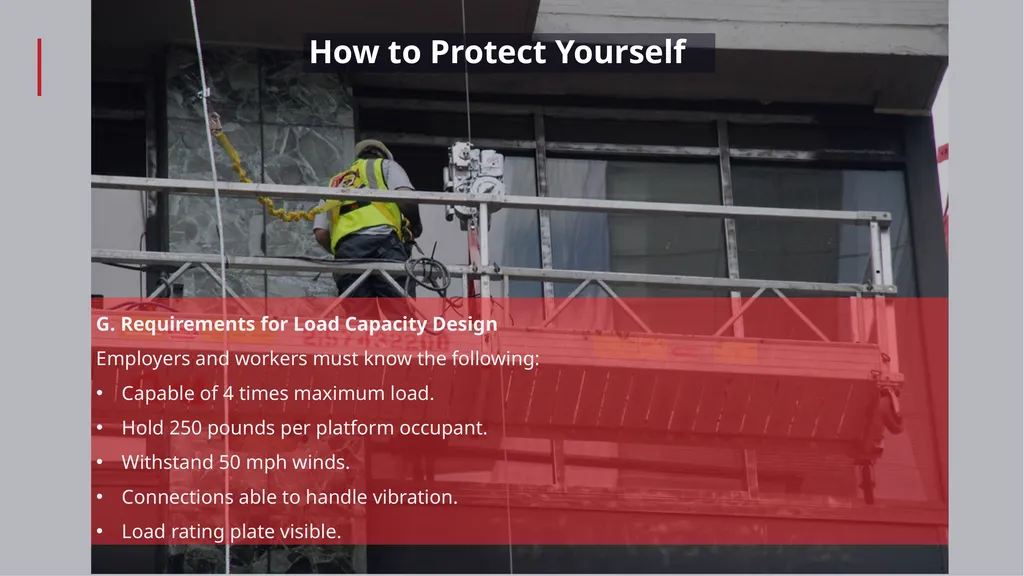
How to Protect Yourself G. Requirements for Load Capacity Design
Employers and workers must know the following:
Capable of 4 times maximum load.
Hold 250 pounds per platform occupant.
Withstand 50 mph winds.
Connections able to handle vibration.
Load rating plate visible.<br>
10
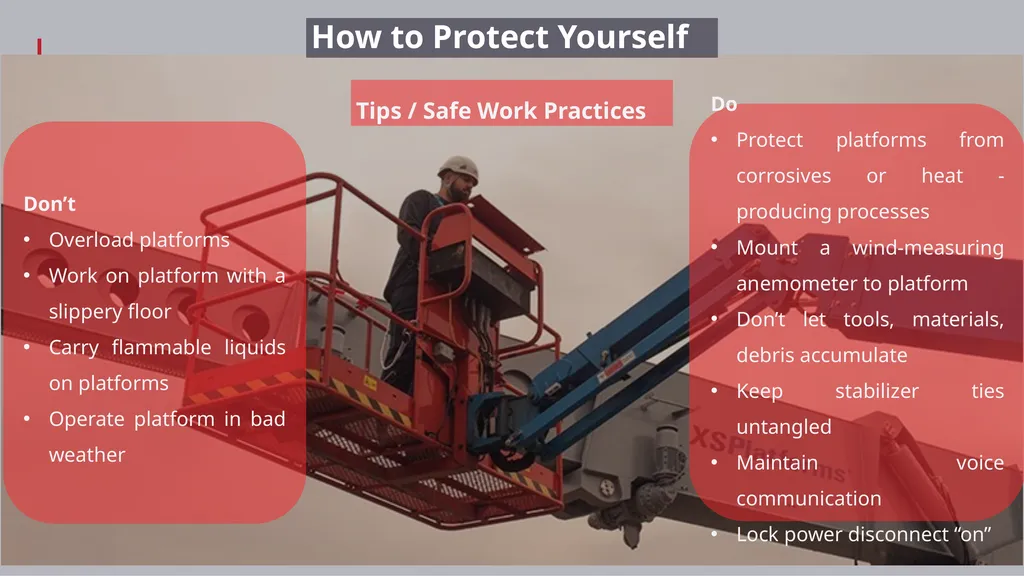
How to Protect Yourself Tips / Safe Work Practices Don’t
Overload platforms
Work on platform with a slippery floor
Carry flammable liquids on platforms
Operate platform in bad weather Do
Protect platforms from corrosives or heat - producing processes
Mount a wind-measuring anemometer to platform
Don’t let tools, materials, debris accumulate
Keep stabilizer ties untangled
Maintain voice communication
Lock power disconnect “on”<br>
11
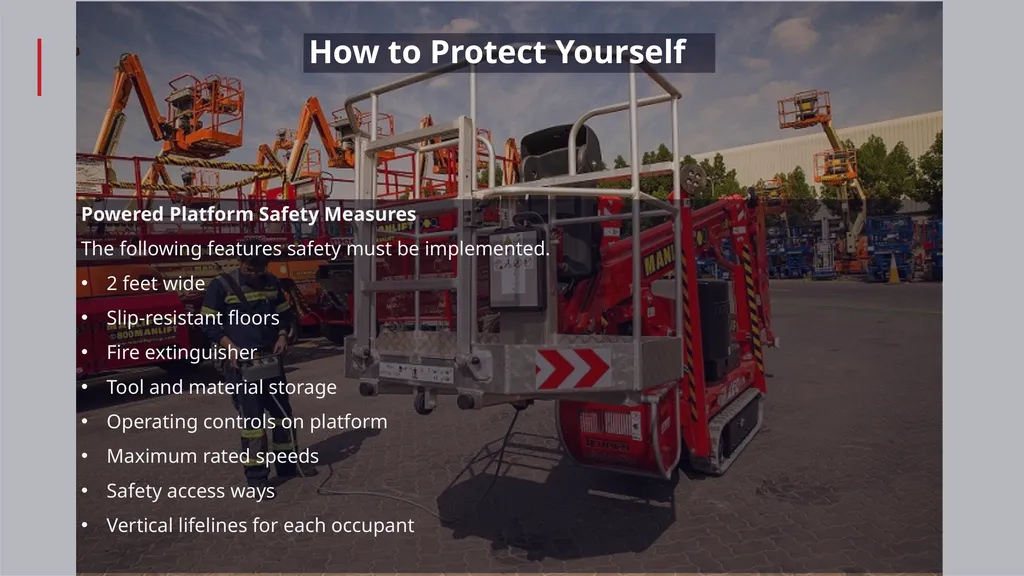
How to Protect Yourself Powered Platform Safety Measures
The following features safety must be implemented.
2 feet wide
Slip-resistant floors
Fire extinguisher
Tool and material storage
Operating controls on platform
Maximum rated speeds
Safety access ways
Vertical lifelines for each occupant<br>
12
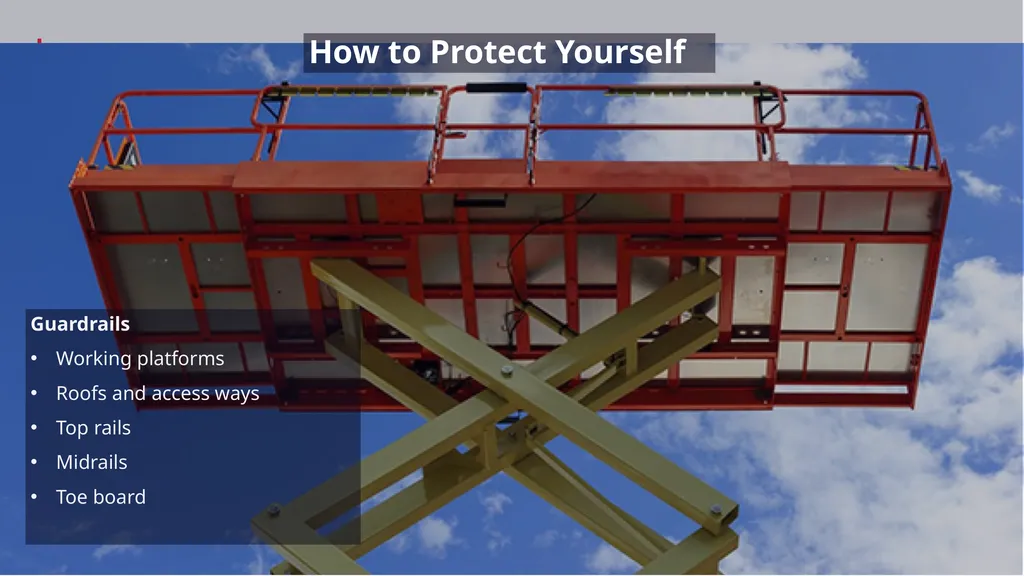
How to Protect Yourself Guardrails
Working platforms
Roofs and access ways
Top rails
Midrails
Toe board<br>