Click anywhere to get started WORK ZONE TRAFFIC CONTROL Whats the Danger? How to Protect Yourself TRAFFIC CONTROL PLAN The Temporary Traffic Control Activity Area is the section of the highway where the work activity takes place. It
"Click anywhere to get started… WORK ZONE / TRAFFIC" is the property of its rightful owner. Permission is granted to
download and print the materials on this website for personal, non-commercial use only, and to display it
on your personal computer provided you do not modify the materials and that you retain all copyright
notices contained in the materials. By downloading content from our website, you accept the terms of this
agreement.
Presentation Transcript
01
Click anywhere to get started…<br>
02
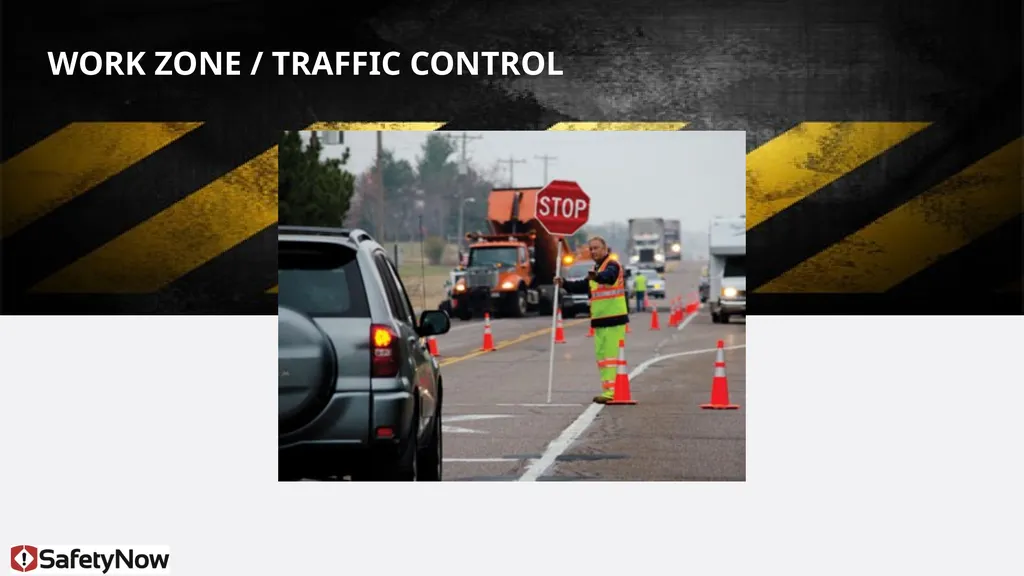
WORK ZONE / TRAFFIC CONTROL<br>
03
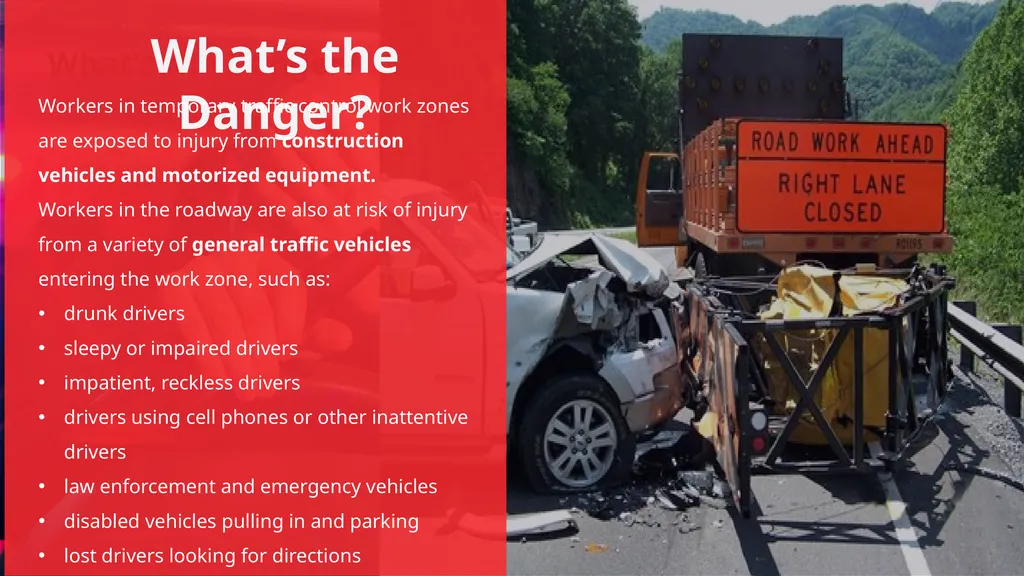
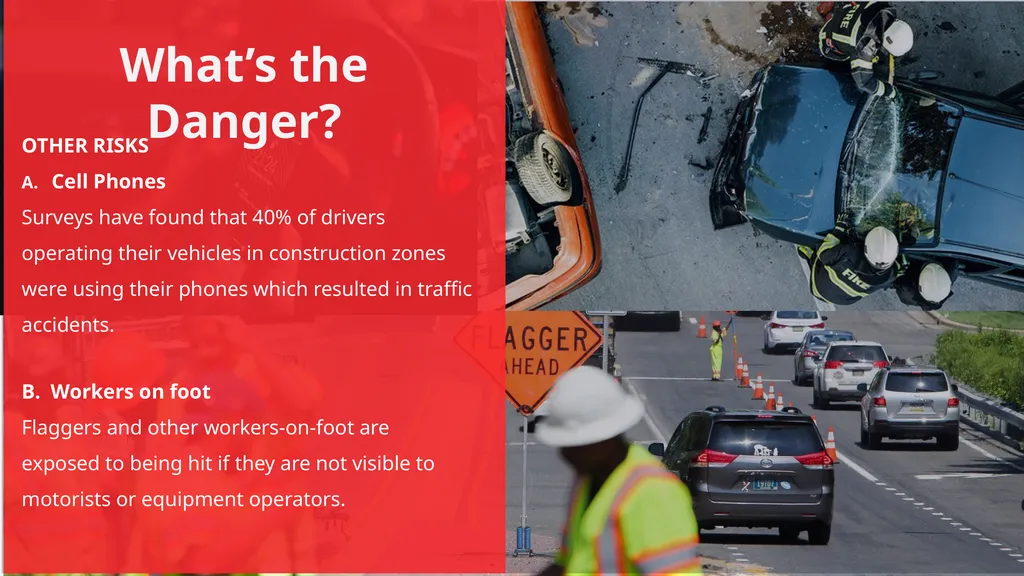
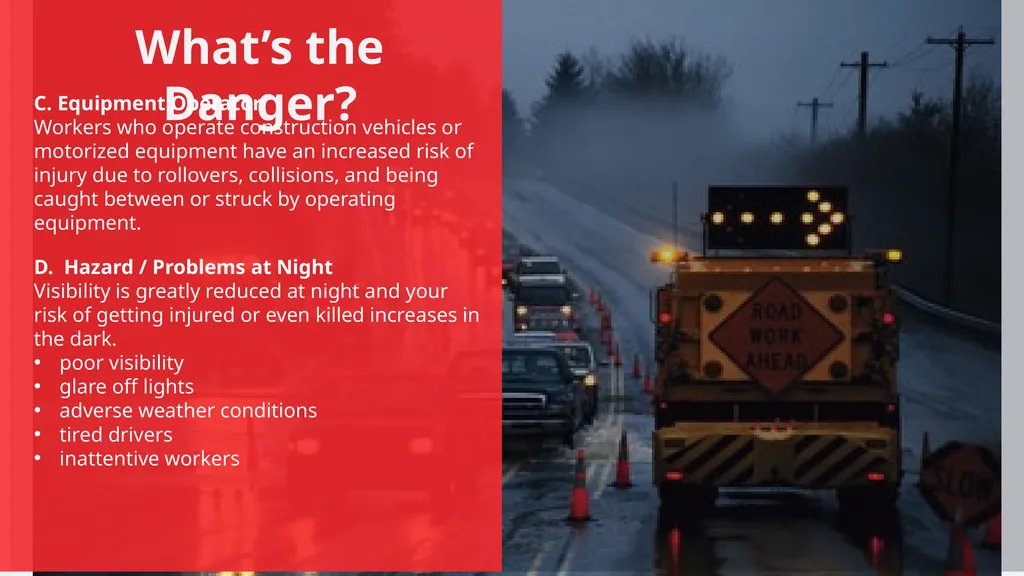
What’s the Danger?<br>
04
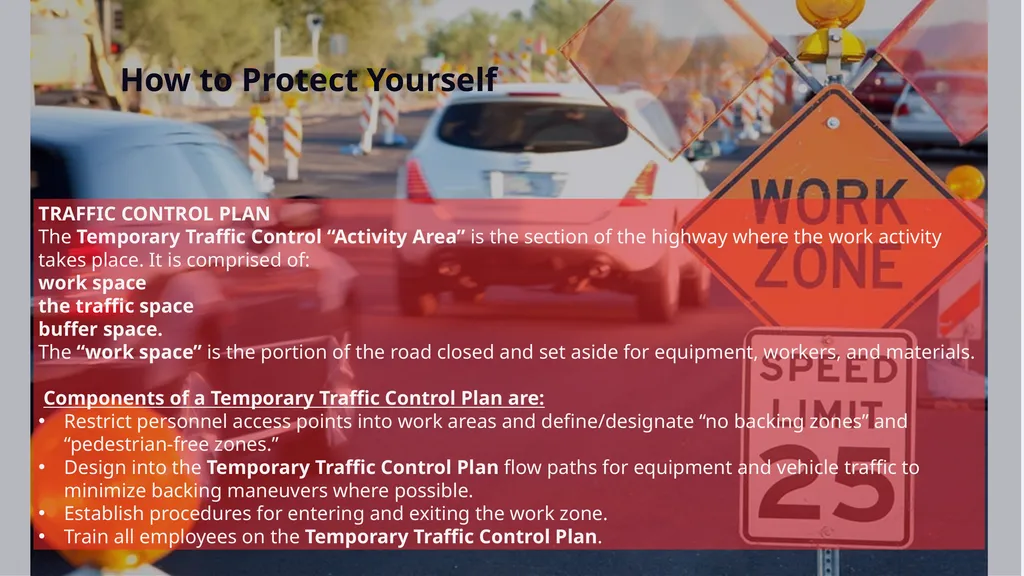
How to Protect Yourself TRAFFIC CONTROL PLAN
The Temporary Traffic Control “Activity Area” is the section of the highway where the work activity takes place. It is comprised of:
work space
the traffic space
buffer space.
The “work space” is the portion of the road closed and set aside for equipment, workers, and materials.
Components of a Temporary Traffic Control Plan are:
Restrict personnel access points into work areas and define/designate “no backing zones” and “pedestrian-free zones.”
Design into the Temporary Traffic Control Plan flow paths for equipment and vehicle traffic to minimize backing maneuvers where possible.
Establish procedures for entering and exiting the work zone.
Train all employees on the Temporary Traffic Control Plan.<br>
05
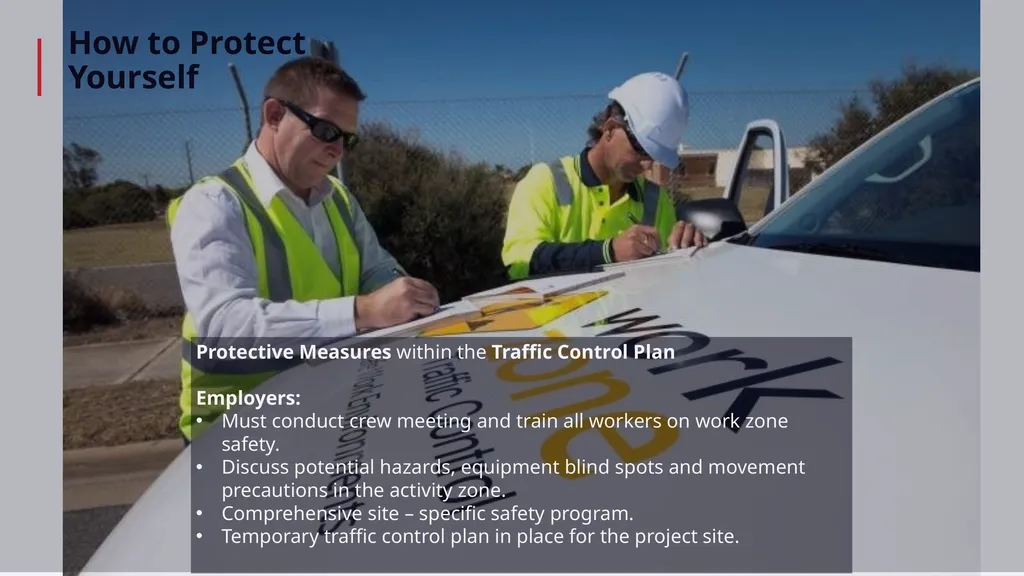
How to Protect Yourself Protective Measures within the Traffic Control Plan
Employers:
Must conduct crew meeting and train all workers on work zone safety.
Discuss potential hazards, equipment blind spots and movement precautions in the activity zone.
Comprehensive site – specific safety program.
Temporary traffic control plan in place for the project site.<br>
06
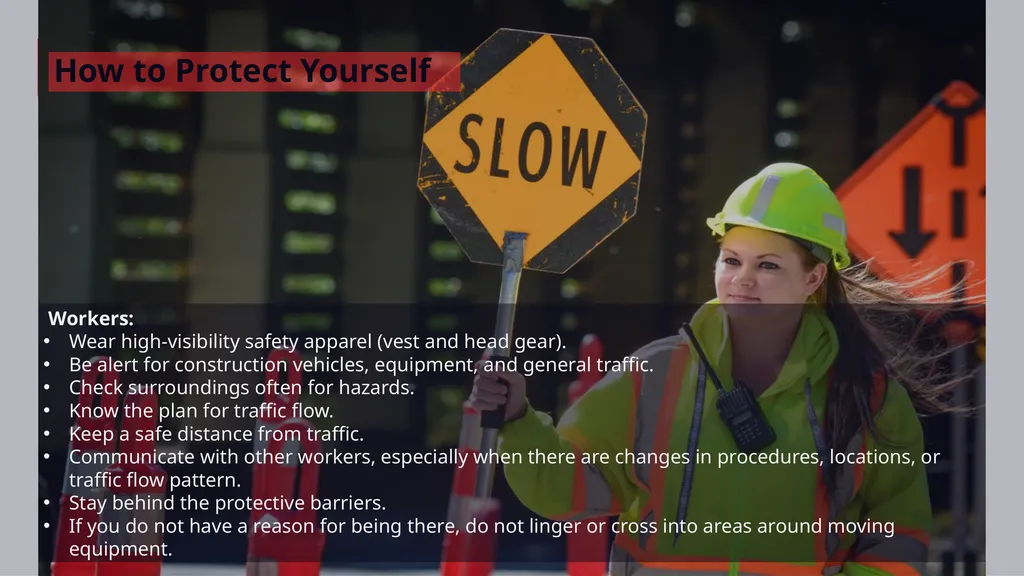
How to Protect Yourself Workers:
Wear high-visibility safety apparel (vest and head gear).
Be alert for construction vehicles, equipment, and general traffic.
Check surroundings often for hazards.
Know the plan for traffic flow.
Keep a safe distance from traffic.
Communicate with other workers, especially when there are changes in procedures, locations, or traffic flow pattern.
Stay behind the protective barriers.
If you do not have a reason for being there, do not linger or cross into areas around moving equipment.<br>
07
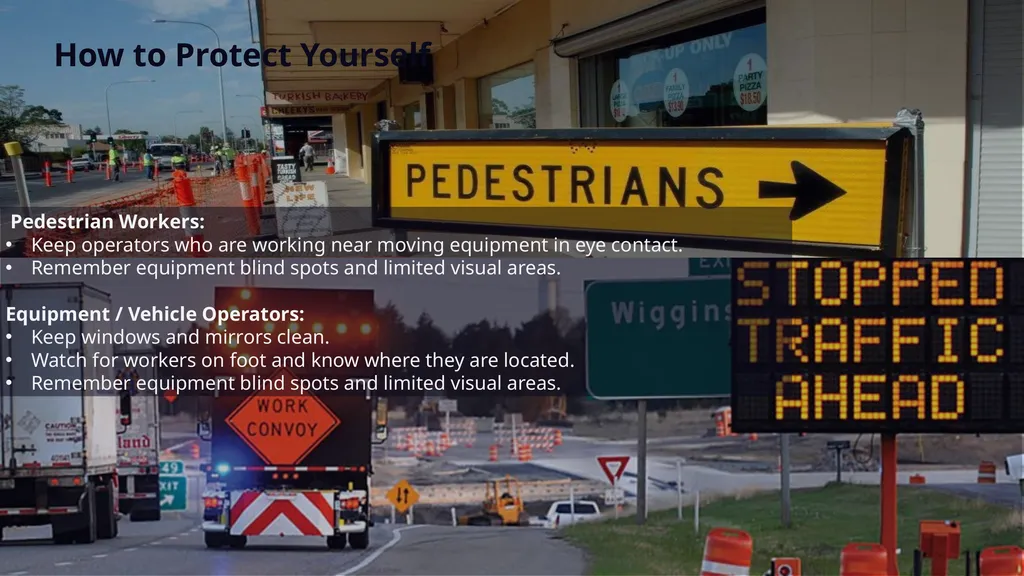
How to Protect Yourself Pedestrian Workers:
Keep operators who are working near moving equipment in eye contact.
Remember equipment blind spots and limited visual areas.
Equipment / Vehicle Operators:
Keep windows and mirrors clean.
Watch for workers on foot and know where they are located.
Remember equipment blind spots and limited visual areas.<br>