Click anywhere to get started Lead Construction Industry According to OSHA, overexposure to lead is most common in the construction industry among trades such as plumbing, iron work, welding, lead-based paint removal, electrical work and
"Click anywhere to get started… Lead Construction" is the property of its rightful owner. Permission is granted to
download and print the materials on this website for personal, non-commercial use only, and to display it
on your personal computer provided you do not modify the materials and that you retain all copyright
notices contained in the materials. By downloading content from our website, you accept the terms of this
agreement.
Presentation Transcript
01
Click anywhere to get started…<br>
02
Lead<br>
03
Construction Industry
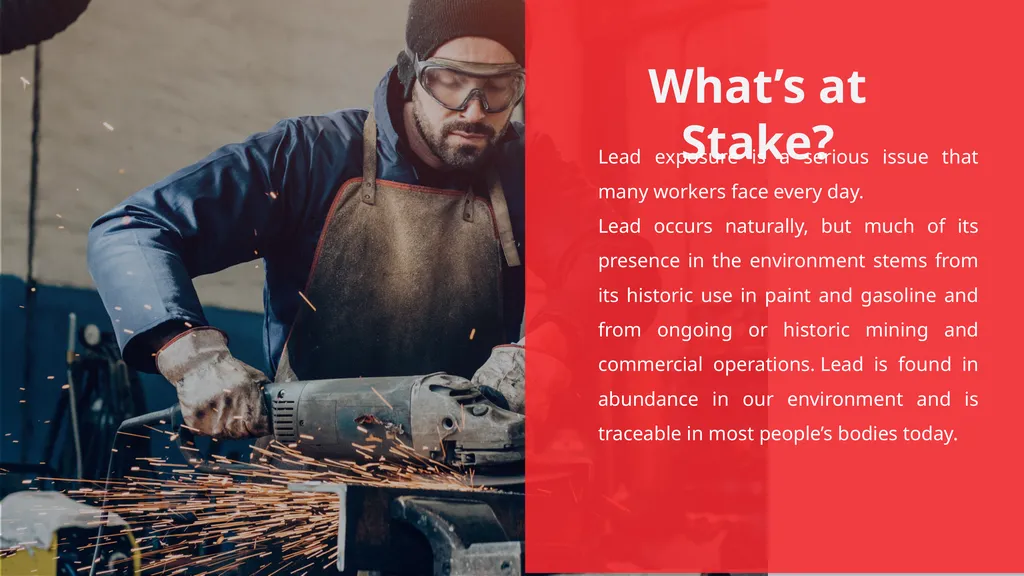
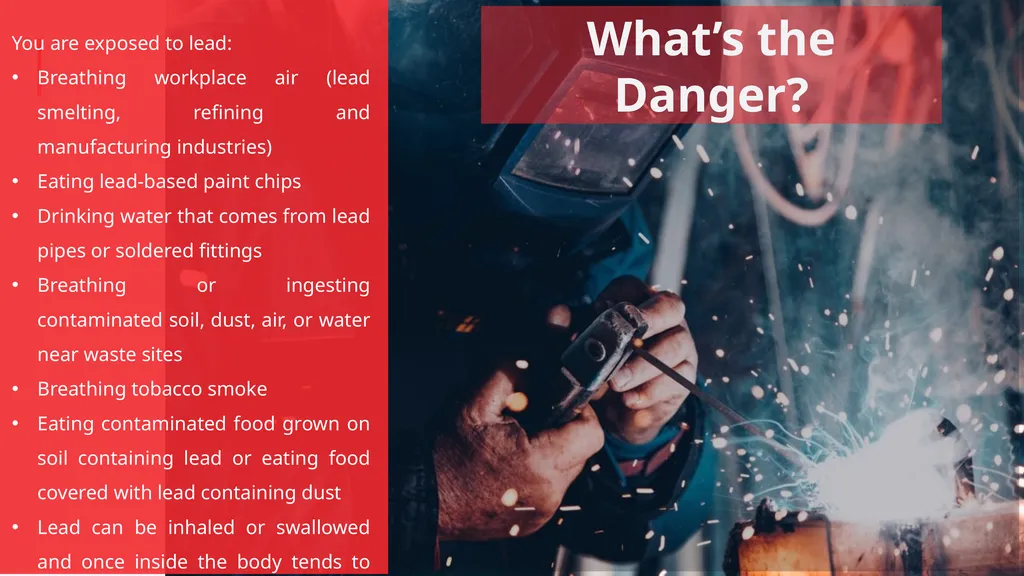
According to OSHA, overexposure to lead is most common in the construction industry among trades such as plumbing, iron work, welding, lead-based paint removal, electrical work and others. What’s the Danger?<br>
04
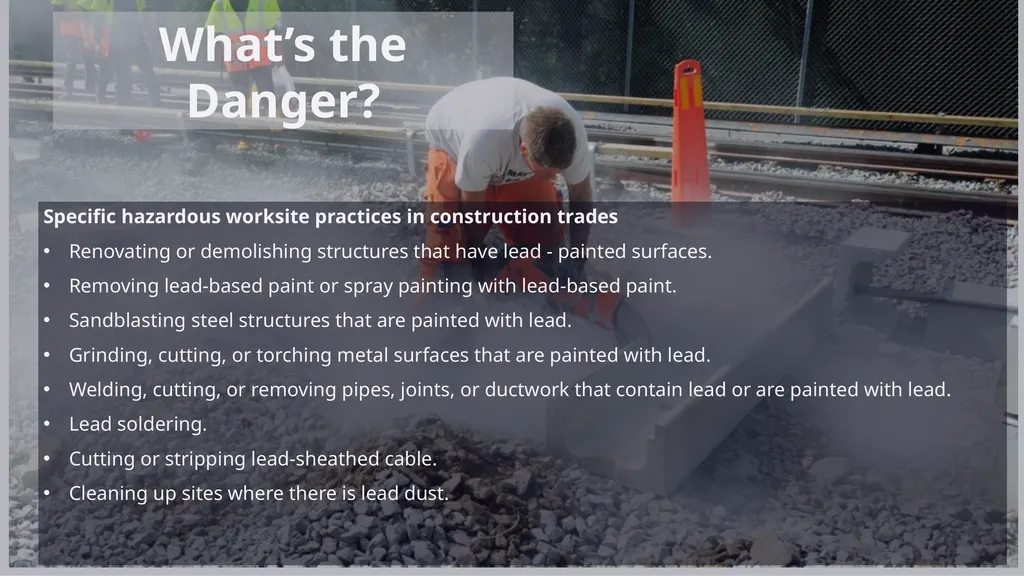
Specific hazardous worksite practices in construction trades
Renovating or demolishing structures that have lead - painted surfaces.
Removing lead-based paint or spray painting with lead-based paint.
Sandblasting steel structures that are painted with lead.
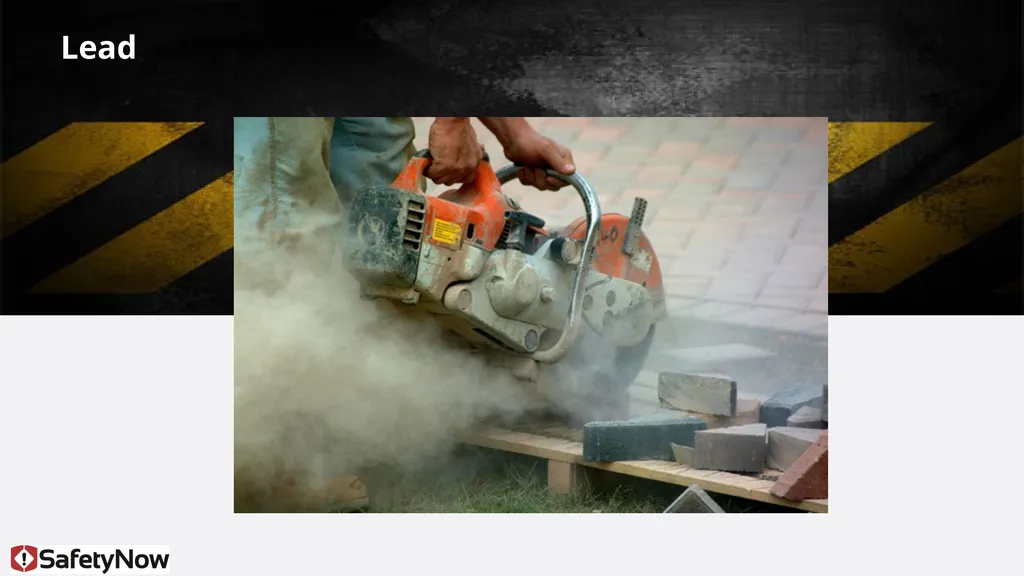
Grinding, cutting, or torching metal surfaces that are painted with lead.
Welding, cutting, or removing pipes, joints, or ductwork that contain lead or are painted with lead.
Lead soldering.
Cutting or stripping lead-sheathed cable.
Cleaning up sites where there is lead dust. What’s the Danger?<br>
05
What’s the Danger?<br>
06
How to Protect Yourself A. Employers
AIR Sampling
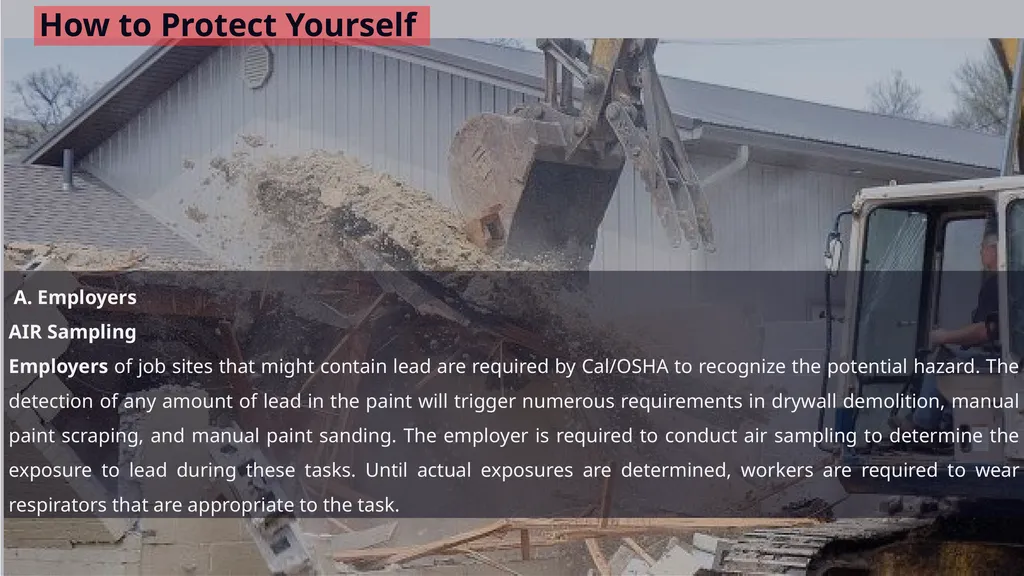
Employers of job sites that might contain lead are required by Cal/OSHA to recognize the potential hazard. The detection of any amount of lead in the paint will trigger numerous requirements in drywall demolition, manual paint scraping, and manual paint sanding. The employer is required to conduct air sampling to determine the exposure to lead during these tasks. Until actual exposures are determined, workers are required to wear respirators that are appropriate to the task.<br>
07
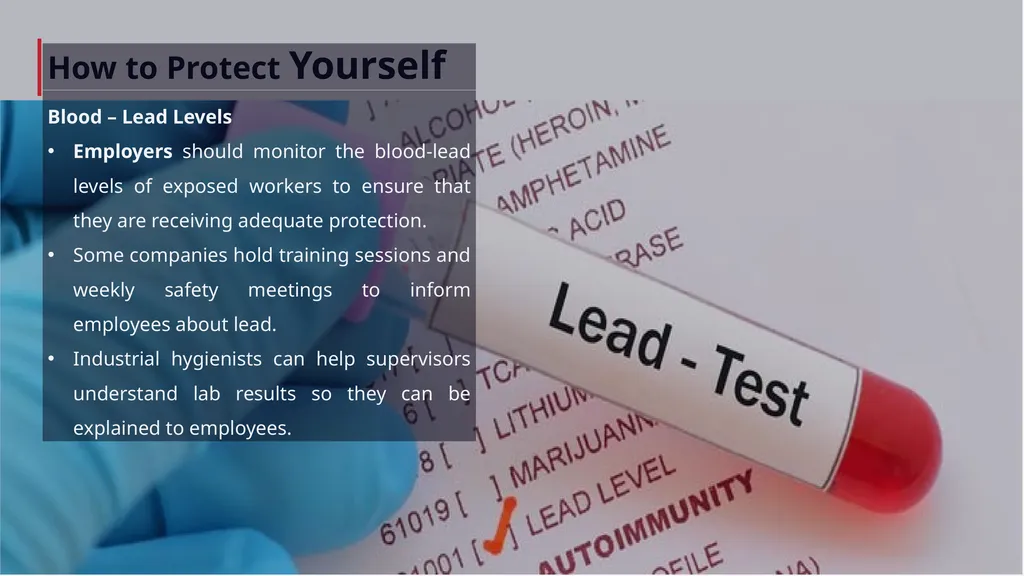
Blood – Lead Levels
Employers should monitor the blood-lead levels of exposed workers to ensure that they are receiving adequate protection.
Some companies hold training sessions and weekly safety meetings to inform employees about lead.
Industrial hygienists can help supervisors understand lab results so they can be explained to employees. How to Protect Yourself<br>
08
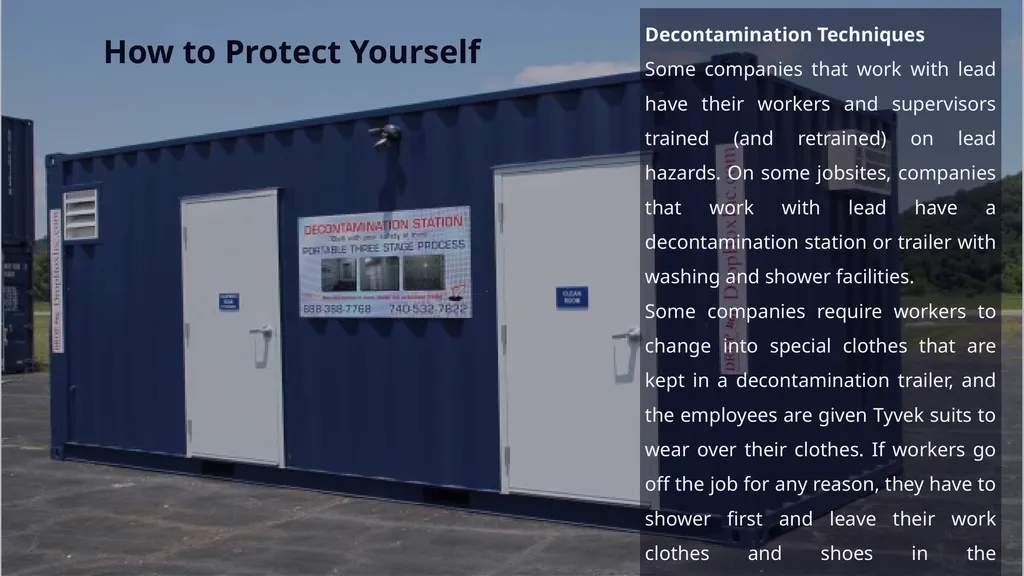
How to Protect Yourself Decontamination Techniques
Some companies that work with lead have their workers and supervisors trained (and retrained) on lead hazards. On some jobsites, companies that work with lead have a decontamination station or trailer with washing and shower facilities.
Some companies require workers to change into special clothes that are kept in a decontamination trailer, and the employees are given Tyvek suits to wear over their clothes. If workers go off the job for any reason, they have to shower first and leave their work clothes and shoes in the decontamination trailer.<br>
09
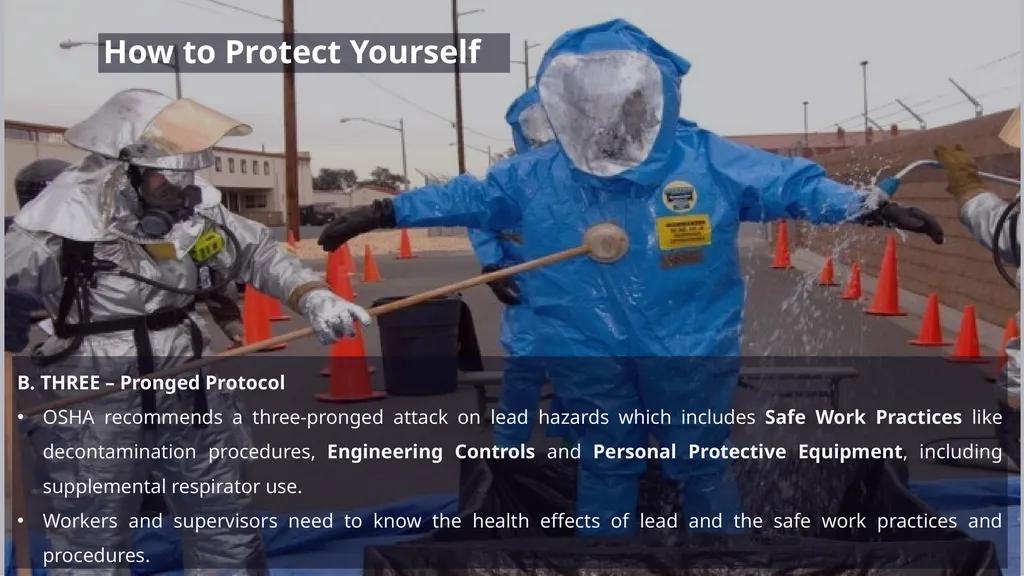
How to Protect Yourself B. THREE – Pronged Protocol
OSHA recommends a three-pronged attack on lead hazards which includes Safe Work Practices like decontamination procedures, Engineering Controls and Personal Protective Equipment, including supplemental respirator use.
Workers and supervisors need to know the health effects of lead and the safe work practices and procedures.<br>
10
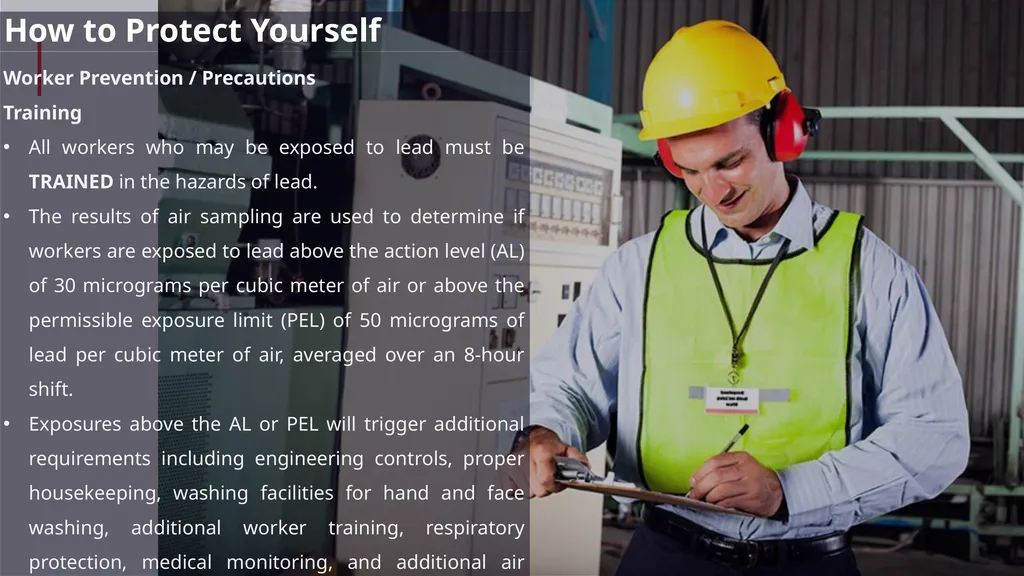
How to Protect Yourself Worker Prevention / Precautions
Training
All workers who may be exposed to lead must be TRAINED in the hazards of lead.
The results of air sampling are used to determine if workers are exposed to lead above the action level (AL) of 30 micrograms per cubic meter of air or above the permissible exposure limit (PEL) of 50 micrograms of lead per cubic meter of air, averaged over an 8-hour shift.
Exposures above the AL or PEL will trigger additional requirements including engineering controls, proper housekeeping, washing facilities for hand and face washing, additional worker training, respiratory protection, medical monitoring, and additional air sampling.
The employer must have a written compliance plan.<br>
11
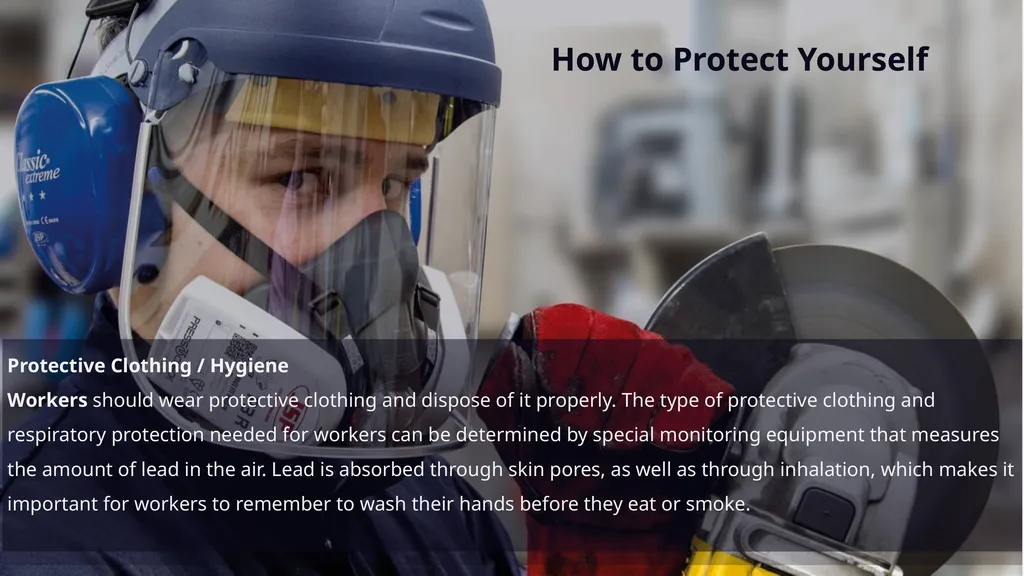
How to Protect Yourself Protective Clothing / Hygiene
Workers should wear protective clothing and dispose of it properly. The type of protective clothing and respiratory protection needed for workers can be determined by special monitoring equipment that measures the amount of lead in the air. Lead is absorbed through skin pores, as well as through inhalation, which makes it important for workers to remember to wash their hands before they eat or smoke.<br>
12
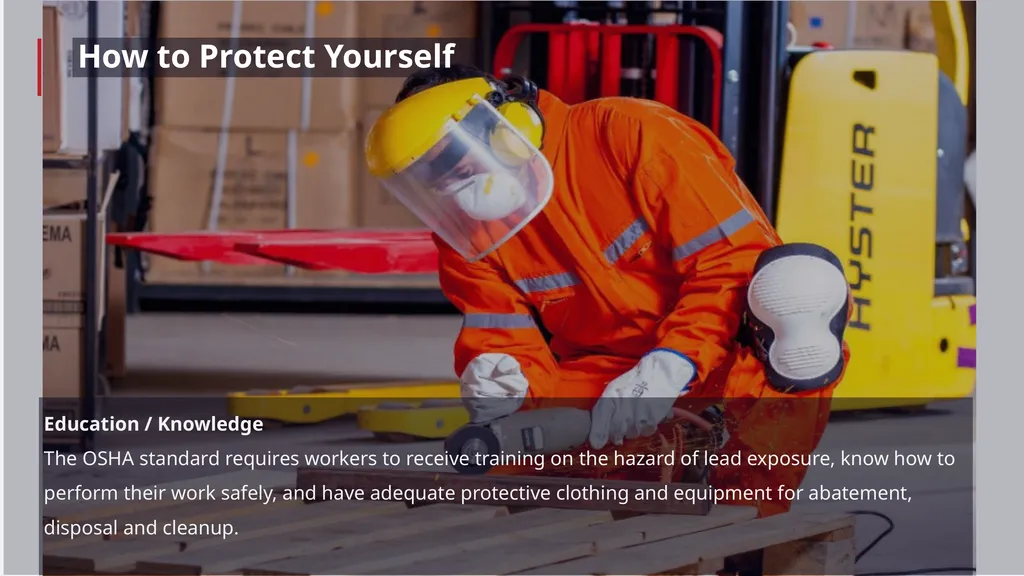
How to Protect Yourself Education / Knowledge
The OSHA standard requires workers to receive training on the hazard of lead exposure, know how to perform their work safely, and have adequate protective clothing and equipment for abatement, disposal and cleanup.<br>