
Climate and the Cryosphere The Climate and the

Description: Climate and the Cryosphere The Climate and the Cryosphere curriculum module is part of a larger set of Earth science modules in the growing EarthLabs collection. All modules are freely available for use. All designed for use in High
Related Topics
Download Presentation
"Climate and the Cryosphere The Climate and the" is the property of its rightful owner. Permission is granted to download and print the materials on this website for personal, non-commercial use only, and to display it on your personal computer provided you do not modify the materials and that you retain all copyright notices contained in the materials. By downloading content from our website, you accept the terms of this agreement.
Presentation Transcript
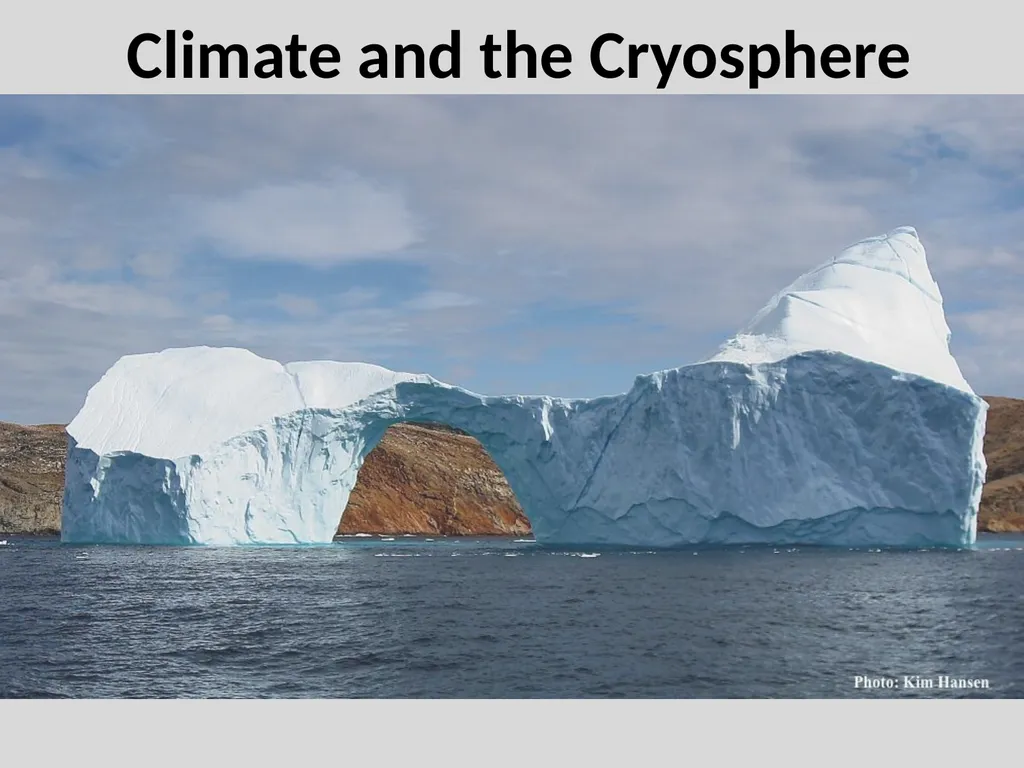
slide1. Climate and the Cryosphere<br>
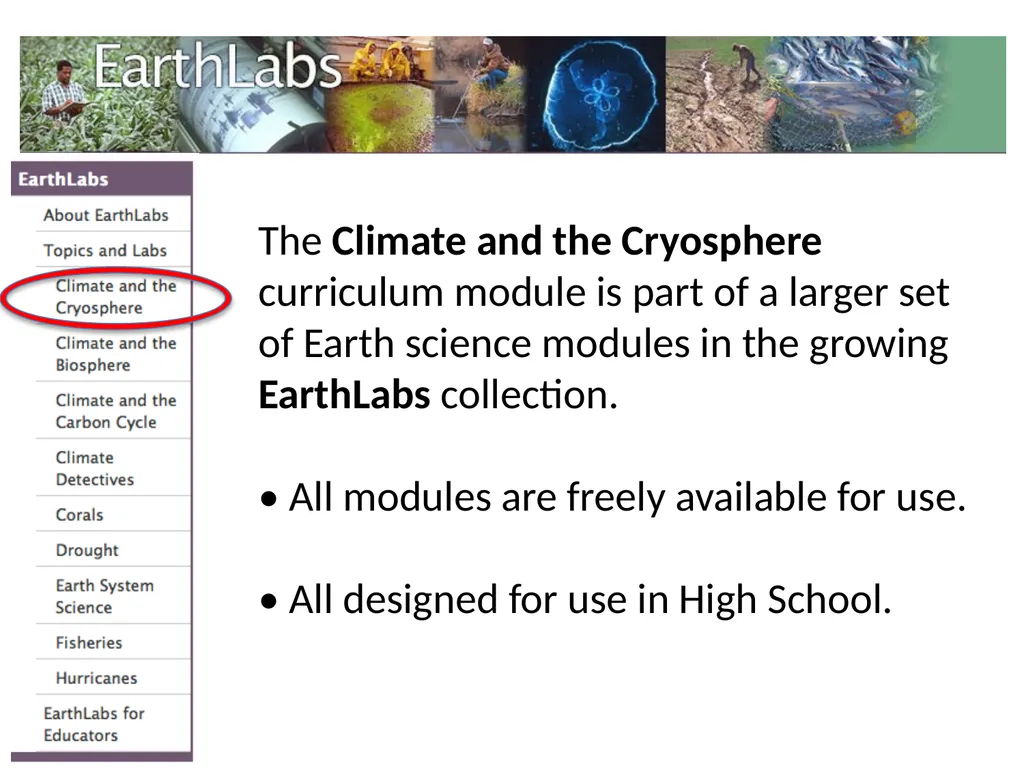
slide2. The Climate and the Cryosphere curriculum module is part of a larger set of Earth science modules in the growing EarthLabs collection.
• All modules are freely available for use.
• All designed for use in High School.<br>
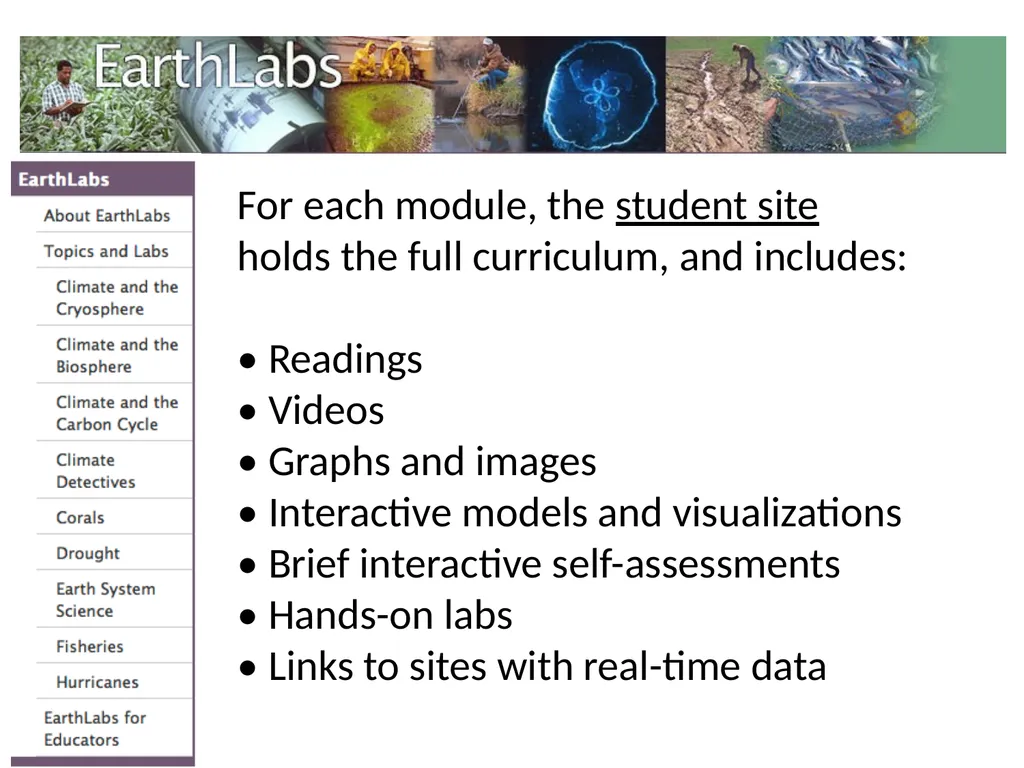
slide4. For each module, the student site holds the full curriculum, and includes:
• Readings
• Videos
• Graphs and images
• Interactive models and visualizations
• Brief interactive self-assessments
• Hands-on labs
• Links to sites with real-time data<br>
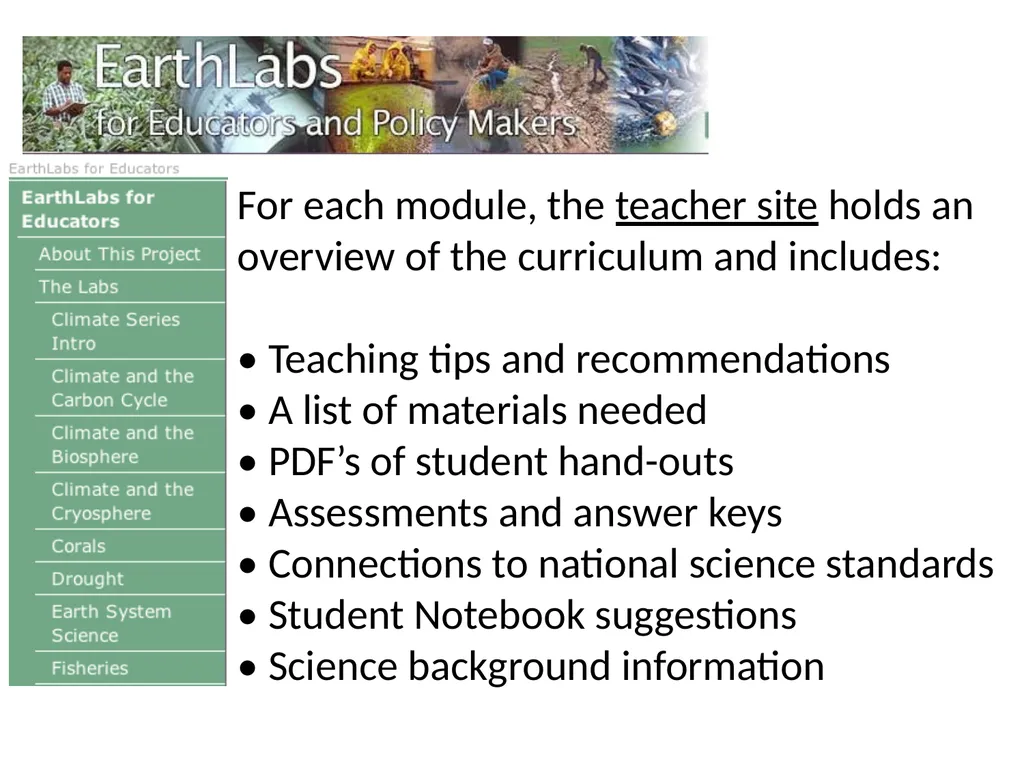
slide5. For each module, the teacher site holds an overview of the curriculum and includes:
• Teaching tips and recommendations
• A list of materials needed
• PDF’s of student hand-outs
• Assessments and answer keys
• Connections to national science standards
• Student Notebook suggestions
• Science background information<br>
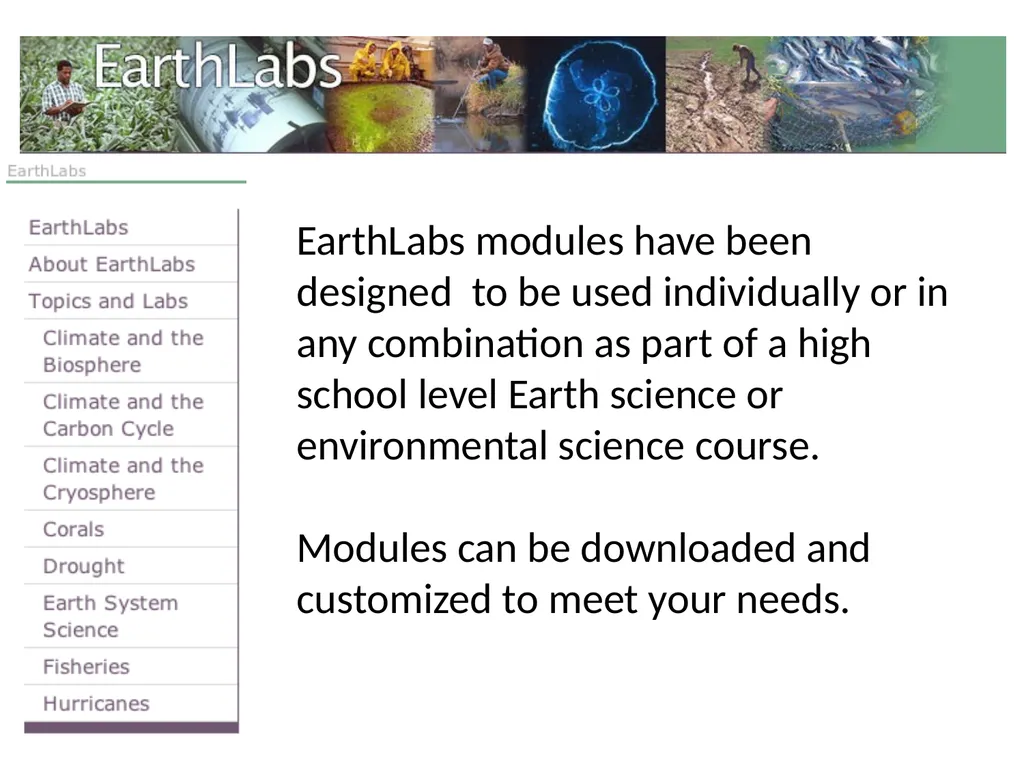
slide6. EarthLabs modules have been designed to be used individually or in any combination as part of a high school level Earth science or environmental science course.
Modules can be downloaded and customized to meet your needs.<br>
slide7. EarthLabs is a project of TERC, an independent, non-profit research and development group in Cambridge, MA.
Founded in 1965, TERC’s mission is to help improve math and science education for all through research, teacher professional development, and curriculum development. www.terc.edu<br>
slide8. Funding to develop the EarthLabs curriculum modules has come from:
• National Oceanographic and Atmospheric
Administration
• National Aeronautics and Space Administration
• National Science Foundation<br>
slide9. Goals for Today’s Workshop
Introduce you to the Climate and the Cryosphere module.
Build your understanding of some key climate concepts.
Inspire you to use the module with your students.
It is not a goal to work through all elements of the curriculum module today. We will skip some parts.<br>
slide10. Overview of the
Climate and the Cryosphere Module
Students learn:
• What the Cryosphere is
• How and why it changes over time and space
• The range of time scales associated with those changes
• Ways in which climate and the Cryosphere influence each
other.<br>
slide11. Overview of the
Climate and the Cryosphere Module
The module is divided into six sections or Labs:
• Getting to Know the Cryosphere
• Earth’s Frozen Oceans
• Land Ice
• Climate History and the Cryosphere
• Evidence of Recent Change
•Future of the Cryosphere<br>
slide12. Teacher Site: serc.carleton.edu/earthlabs
Student site: serc.carleton.edu/eslabs
Sites are separate but connected by links.<br>
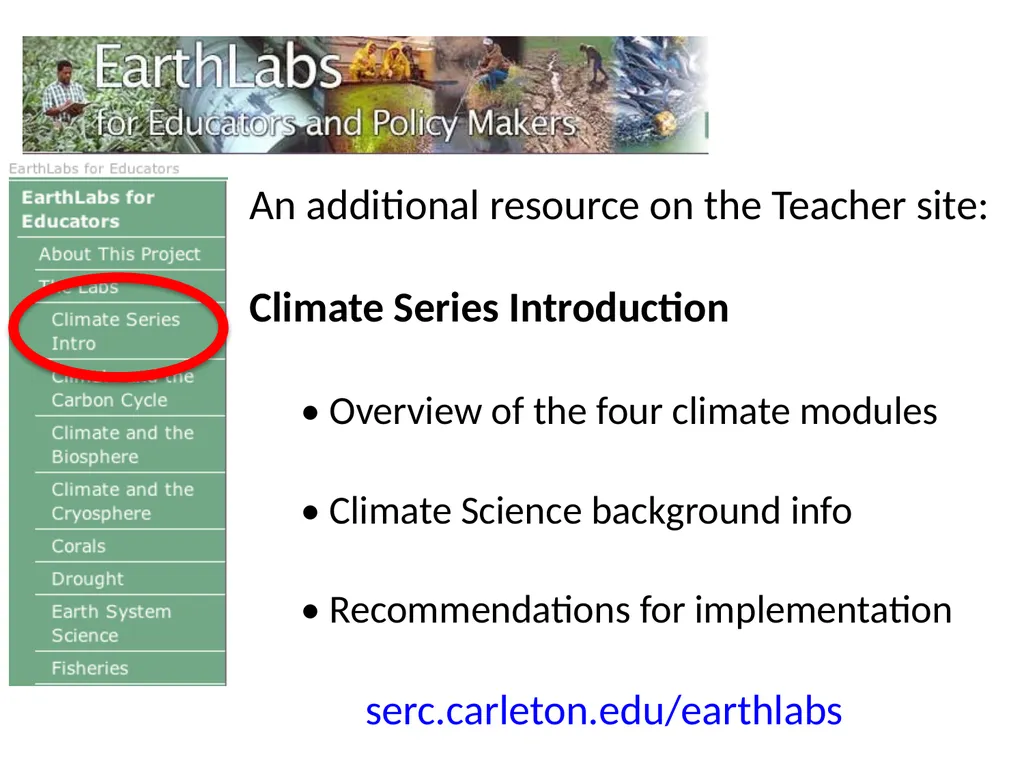
slide13. An additional resource on the Teacher site:
Climate Series Introduction
• Overview of the four climate modules
• Climate Science background info
• Recommendations for implementation
serc.carleton.edu/earthlabs<br>
slide2. The Climate and the Cryosphere curriculum module is part of a larger set of Earth science modules in the growing EarthLabs collection.
• All modules are freely available for use.
• All designed for use in High School.<br>
slide4. For each module, the student site holds the full curriculum, and includes:
• Readings
• Videos
• Graphs and images
• Interactive models and visualizations
• Brief interactive self-assessments
• Hands-on labs
• Links to sites with real-time data<br>
slide5. For each module, the teacher site holds an overview of the curriculum and includes:
• Teaching tips and recommendations
• A list of materials needed
• PDF’s of student hand-outs
• Assessments and answer keys
• Connections to national science standards
• Student Notebook suggestions
• Science background information<br>
slide6. EarthLabs modules have been designed to be used individually or in any combination as part of a high school level Earth science or environmental science course.
Modules can be downloaded and customized to meet your needs.<br>
slide7. EarthLabs is a project of TERC, an independent, non-profit research and development group in Cambridge, MA.
Founded in 1965, TERC’s mission is to help improve math and science education for all through research, teacher professional development, and curriculum development. www.terc.edu<br>
slide8. Funding to develop the EarthLabs curriculum modules has come from:
• National Oceanographic and Atmospheric
Administration
• National Aeronautics and Space Administration
• National Science Foundation<br>
slide9. Goals for Today’s Workshop
Introduce you to the Climate and the Cryosphere module.
Build your understanding of some key climate concepts.
Inspire you to use the module with your students.
It is not a goal to work through all elements of the curriculum module today. We will skip some parts.<br>
slide10. Overview of the
Climate and the Cryosphere Module
Students learn:
• What the Cryosphere is
• How and why it changes over time and space
• The range of time scales associated with those changes
• Ways in which climate and the Cryosphere influence each
other.<br>
slide11. Overview of the
Climate and the Cryosphere Module
The module is divided into six sections or Labs:
• Getting to Know the Cryosphere
• Earth’s Frozen Oceans
• Land Ice
• Climate History and the Cryosphere
• Evidence of Recent Change
•Future of the Cryosphere<br>
slide12. Teacher Site: serc.carleton.edu/earthlabs
Student site: serc.carleton.edu/eslabs
Sites are separate but connected by links.<br>
slide13. An additional resource on the Teacher site:
Climate Series Introduction
• Overview of the four climate modules
• Climate Science background info
• Recommendations for implementation
serc.carleton.edu/earthlabs<br>