03
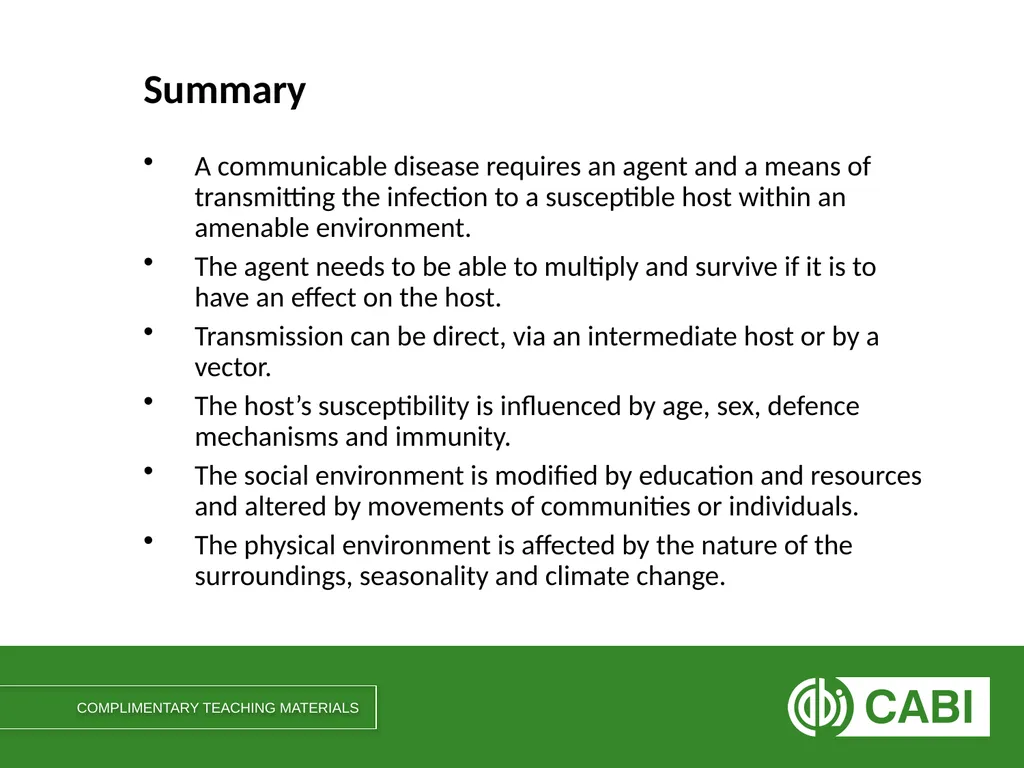
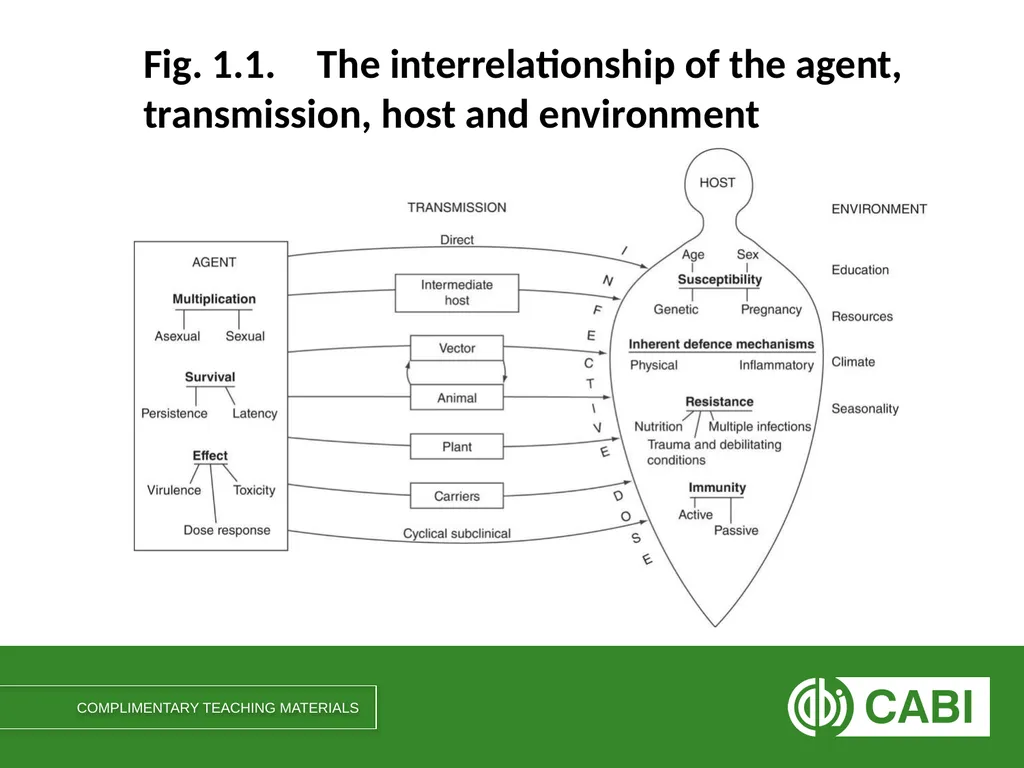
A communicable disease requires an agent and a means of transmitting the infection to a susceptible host within an amenable environment.
The agent needs to be able to multiply and survive if it is to have an effect on the host.
Transmission can be direct, via an intermediate host or by a vector.
The host’s susceptibility is influenced by age, sex, defence mechanisms and immunity.
The social environment is modified by education and resources and altered by movements of communities or individuals.
The physical environment is affected by the nature of the surroundings, seasonality and climate change. Summary<br>
04
Fig. 1.1. The interrelationship of the agent, transmission, host and environment<br>
05
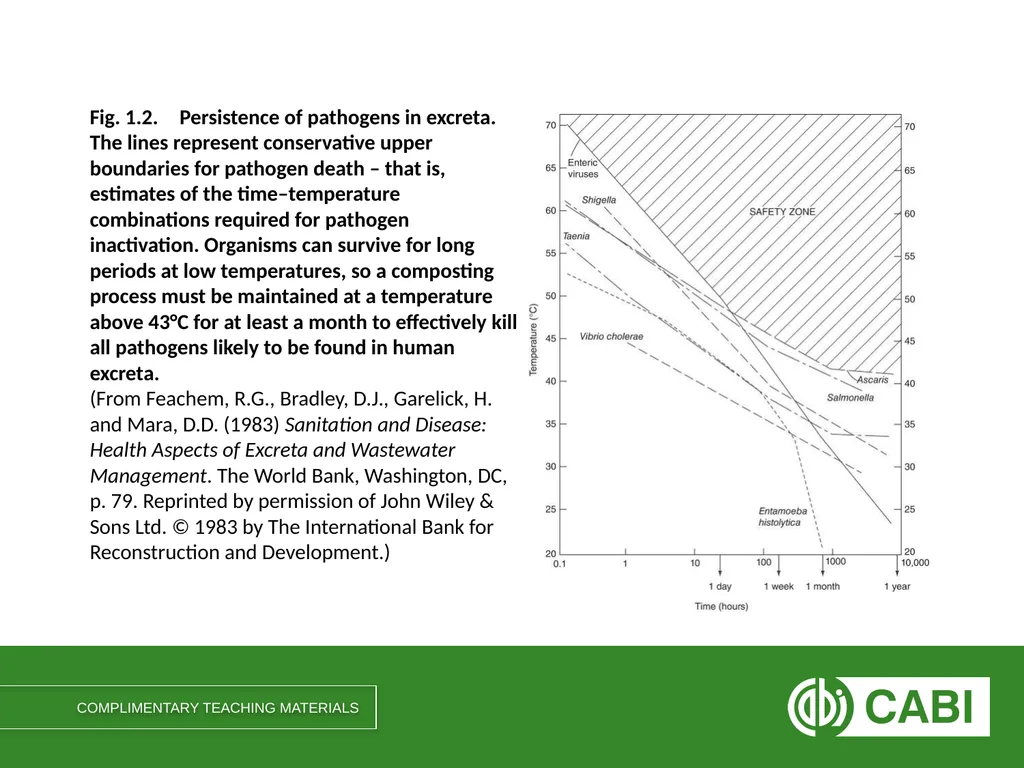
Fig. 1.2. Persistence of pathogens in excreta. The lines represent conservative upper boundaries for pathogen death – that is, estimates of the time–temperature combinations required for pathogen inactivation. Organisms can survive for long periods at low temperatures, so a composting process must be maintained at a temperature above 43°C for at least a month to effectively kill all pathogens likely to be found in human excreta. �(From Feachem, R.G., Bradley, D.J., Garelick, H. and Mara, D.D. (1983) Sanitation and Disease: Health Aspects of Excreta and Wastewater Management. The World Bank, Washington, DC, p. 79. Reprinted by permission of John Wiley & Sons Ltd. © 1983 by The International Bank for Reconstruction and Development.)<br>
06
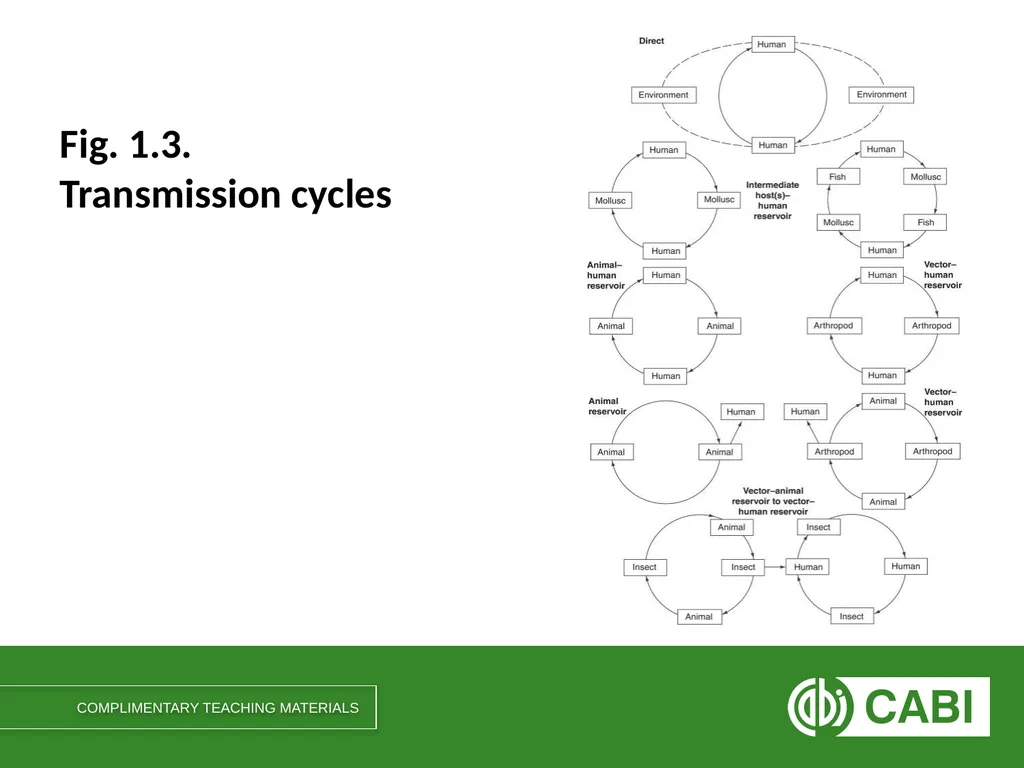
Fig. 1.3. Transmission cycles<br>
07
Fig 1.4. (A) The relative costs of alternative methods of dengue control. (B) The optimum mix of methods.<br>
08
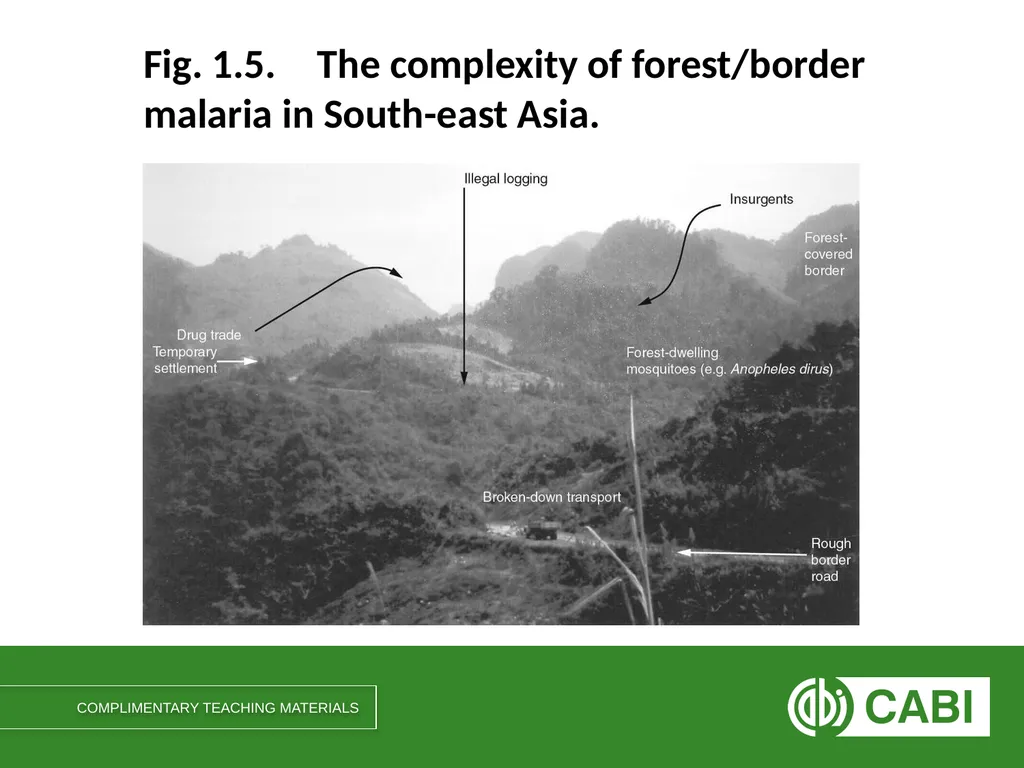
Fig. 1.5. The complexity of forest/border malaria in South-east Asia.<br>
09
Fig. 1.6. The tropics, rainfall and seasonality. _ _ _, The tropics, Cancer to Capricorn; –, developing country zone. Seasonality within the tropical region: , rainfall in every season; , heavy seasonal rainfall; , variable seasonal rainfall; , arid.<br>
10
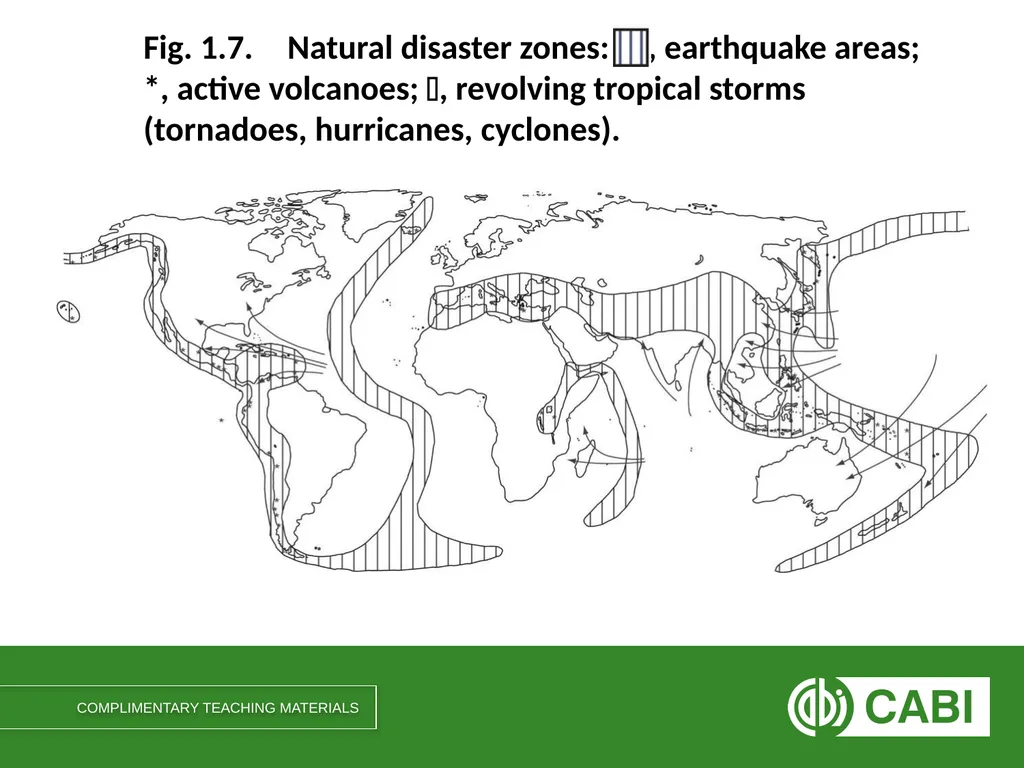
Fig. 1.7. Natural disaster zones: , earthquake areas; *, active volcanoes; , revolving tropical storms (tornadoes, hurricanes, cyclones).<br>
11
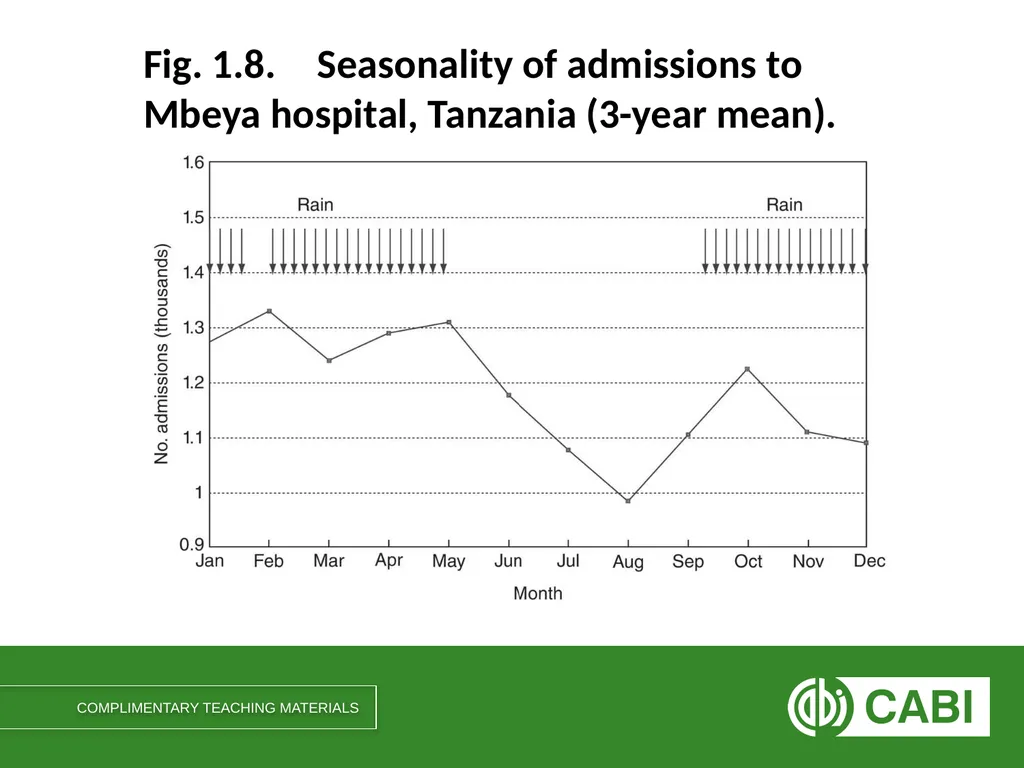
Fig. 1.8. Seasonality of admissions to Mbeya hospital, Tanzania (3-year mean).<br>
12
Fig. 1.9. Mean monthly measles cases over a 5-year period, Mbeya region, Tanzania.<br>
13
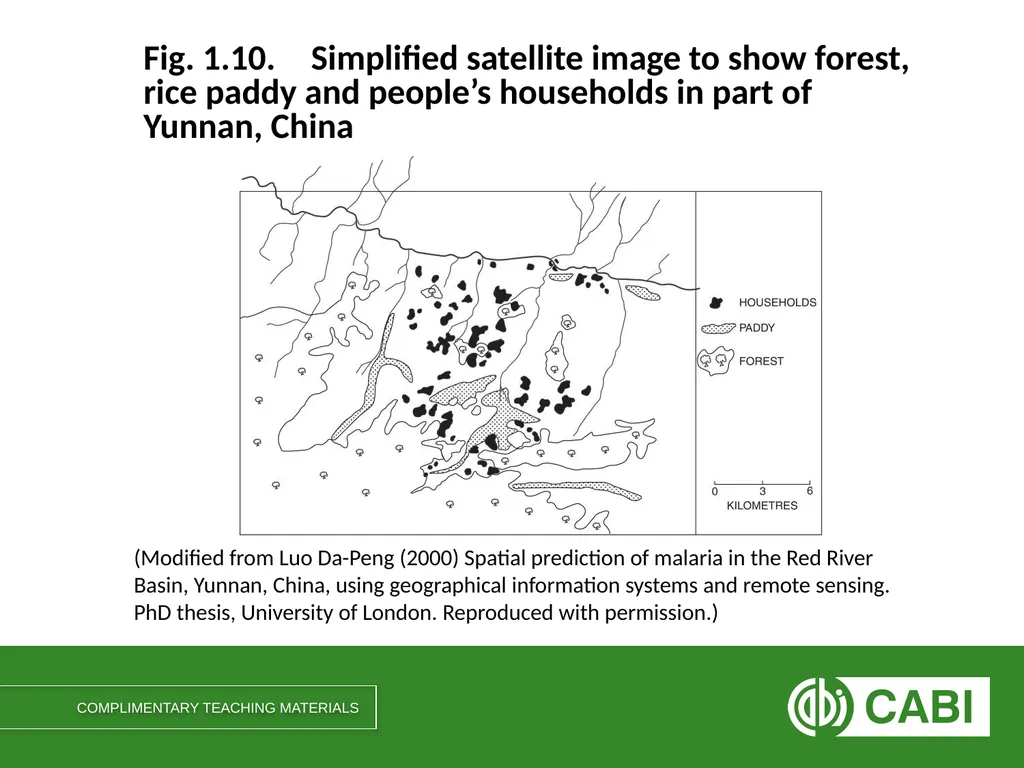
Fig. 1.10. Simplified satellite image to show forest, rice paddy and people’s households in part of Yunnan, China (Modified from Luo Da-Peng (2000) Spatial prediction of malaria in the Red River Basin, Yunnan, China, using geographical information systems and remote sensing. PhD thesis, University of London. Reproduced with permission.)<br>
14
Abramson, J.H. and Abramson, Z.H. (2008) Research Methods in Community Public Health: Surveys, Epidemiological Research, Programme Evaluation, Clinical Trials, 6th edn. John Wiley and Sons, Chichester, UK.
de-Graft Aikins, A. and Agyemang, C. (eds) (2015) Non-communicable Diseases in Low and Middle-income Countries. CAB International, Wallingford, UK.
Githeko, A.K., Lindsay, S.W., Confalonieri, U.E. and Patz, J.A. (2000) Climate change and vector-borne diseases: a regional analysis. Bulletin of the World Health Organization 78, 1136–1147. Available at: http://www.who.int/bulletin/archives/78(9)1136.pdf (accessed 22 February 2012).
Shetty, P. (2010) Nutrition, Immunity and Infection. CAB International, Wallingford, UK.
Thompson, R., Jowett, M., Witter, S. and Ensor, T. (2000) Health Economics in Developing Countries: A Practical Guide. Macmillan, Basingstoke, UK.
Vaughan, J.P. and Morrow, R.H. (2011) Manual of Epidemiology for District Health Management, 2nd edn. World Health Organization, Geneva, Switzerland.
Walley, J., Wright, J. and Hubley, J. (2009) Public Health, 2nd edn. Oxford University Press, Oxford, UK. (New edition planned.)
Webber, R. (2015) Disease Selection: The Way Disease Changed the World. CAB International, Wallingford, UK.
World Health Organization (2003) The World Health Report 2002: Reducing Risks, Promoting Healthy Life. WHO, Geneva, Switzerland. Available at: http://www.who.int/whr/2002/en/index.html (accessed 22 February 2012).
Wright, J. (1998) Health Needs Assessment in Practice. BMJ Books, London. Further reading<br>