Communication (or Not) Using Your Communication Style Effectively Hollis Day, MD, MS Objectives Identify your preferred communication style Review the four communication styles Strategize for communicating with others whose preferred style
"Communication (or Not) Using Your Communication" is the property of its rightful owner. Permission is granted to
download and print the materials on this website for personal, non-commercial use only, and to display it
on your personal computer provided you do not modify the materials and that you retain all copyright
notices contained in the materials. By downloading content from our website, you accept the terms of this
agreement.
Presentation Transcript
01
Communication (or Not) Using Your Communication Style Effectively
Hollis Day, MD, MS<br>
02
Objectives Identify your preferred communication style
Review the four communication styles
Strategize for communicating with others whose preferred style is different from yours
Highlight unique features of women communicating in the workplace<br>
03
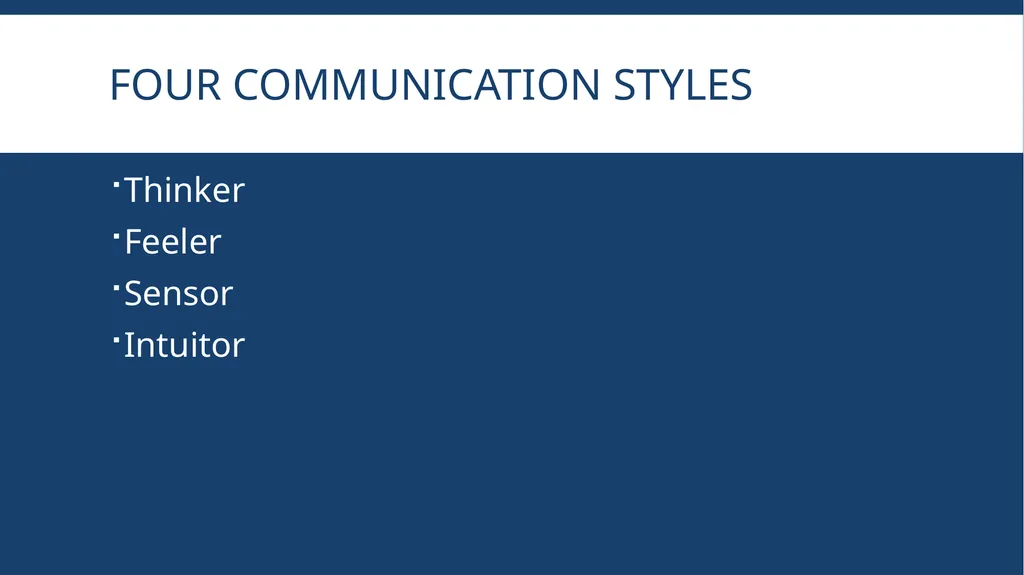
Four Communication Styles Thinker
Feeler
Sensor
Intuitor<br>
04
What’s YOUR Style?<br>
05
Primary Style Your go-to, preferred method of communication
Has most likely gotten you where you are today<br>
06
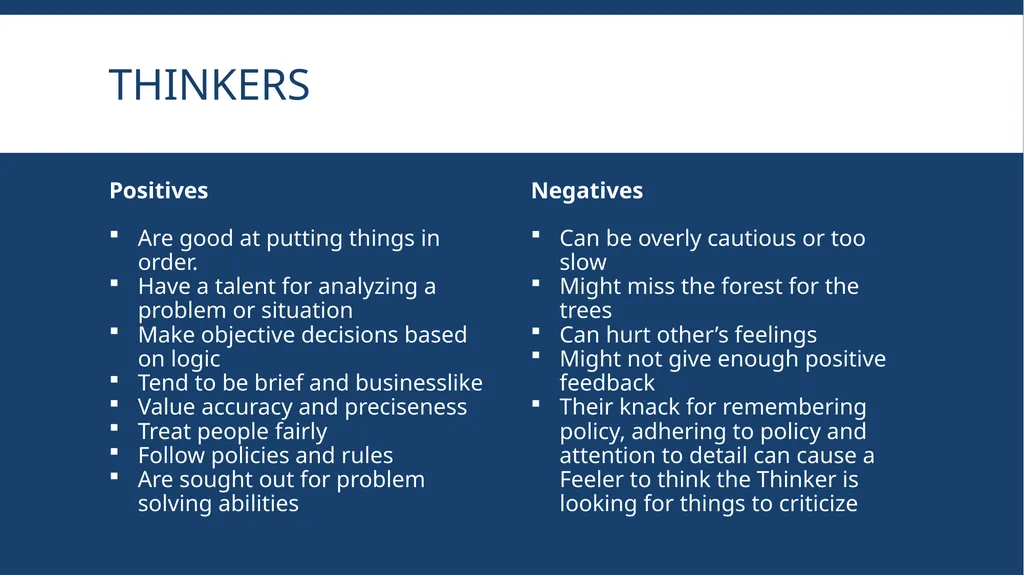
Thinkers Positives Are good at putting things in order.
Have a talent for analyzing a problem or situation
Make objective decisions based on logic
Tend to be brief and businesslike
Value accuracy and preciseness
Treat people fairly
Follow policies and rules
Are sought out for problem solving abilities Negatives Can be overly cautious or too slow
Might miss the forest for the trees
Can hurt other’s feelings
Might not give enough positive feedback
Their knack for remembering policy, adhering to policy and attention to detail can cause a Feeler to think the Thinker is looking for things to criticize<br>
07
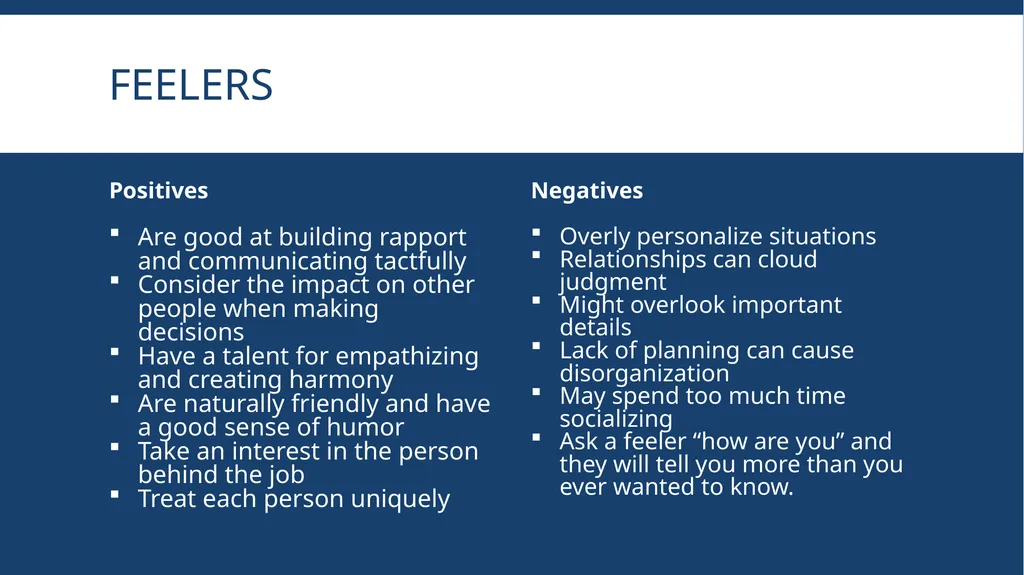
Feelers Positives Are good at building rapport and communicating tactfully
Consider the impact on other people when making decisions
Have a talent for empathizing and creating harmony
Are naturally friendly and have a good sense of humor
Take an interest in the person behind the job
Treat each person uniquely Negatives Overly personalize situations
Relationships can cloud judgment
Might overlook important details
Lack of planning can cause disorganization
May spend too much time socializing
Ask a feeler “how are you” and they will tell you more than you ever wanted to know.<br>
08
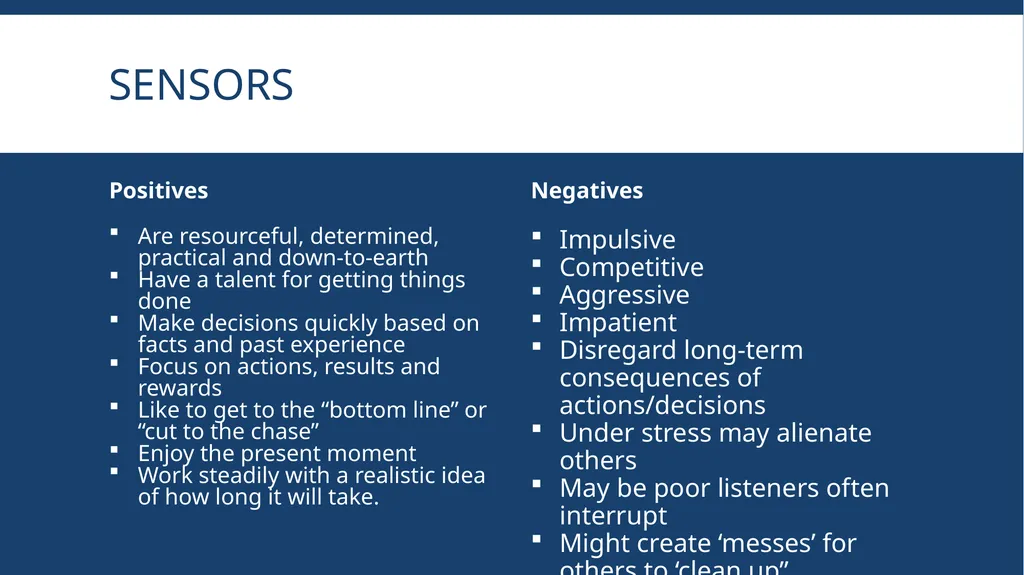
Sensors Positives Are resourceful, determined, practical and down-to-earth
Have a talent for getting things done
Make decisions quickly based on facts and past experience
Focus on actions, results and rewards
Like to get to the “bottom line” or “cut to the chase”
Enjoy the present moment
Work steadily with a realistic idea of how long it will take. Negatives Impulsive
Competitive
Aggressive
Impatient
Disregard long-term consequences of actions/decisions
Under stress may alienate others
May be poor listeners often interrupt
Might create ‘messes’ for others to ‘clean up”<br>
09
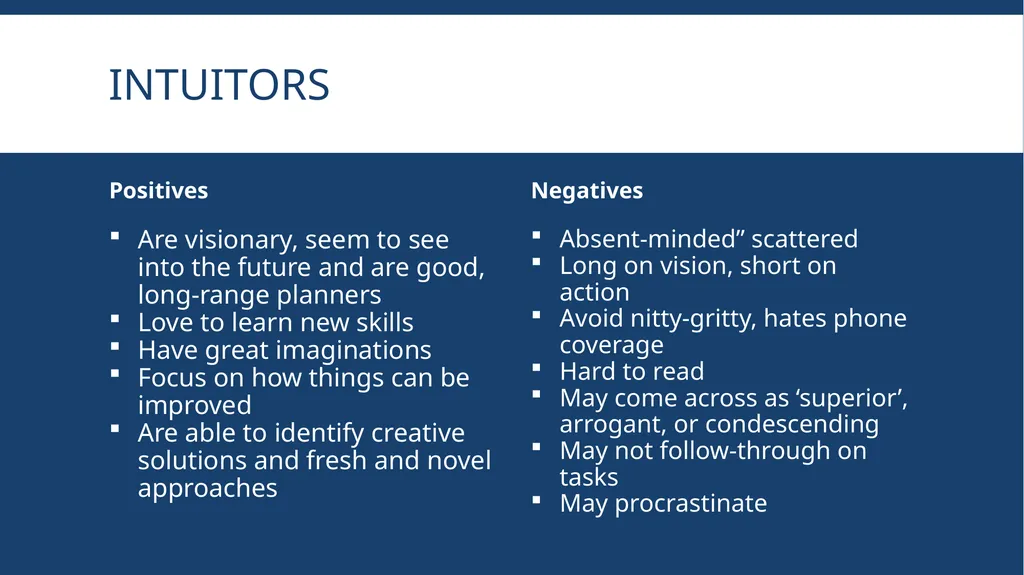
Intuitors Positives Are visionary, seem to see into the future and are good, long-range planners
Love to learn new skills
Have great imaginations
Focus on how things can be improved
Are able to identify creative solutions and fresh and novel approaches Negatives Absent-minded” scattered
Long on vision, short on action
Avoid nitty-gritty, hates phone coverage
Hard to read
May come across as ‘superior’, arrogant, or condescending
May not follow-through on tasks
May procrastinate<br>
10
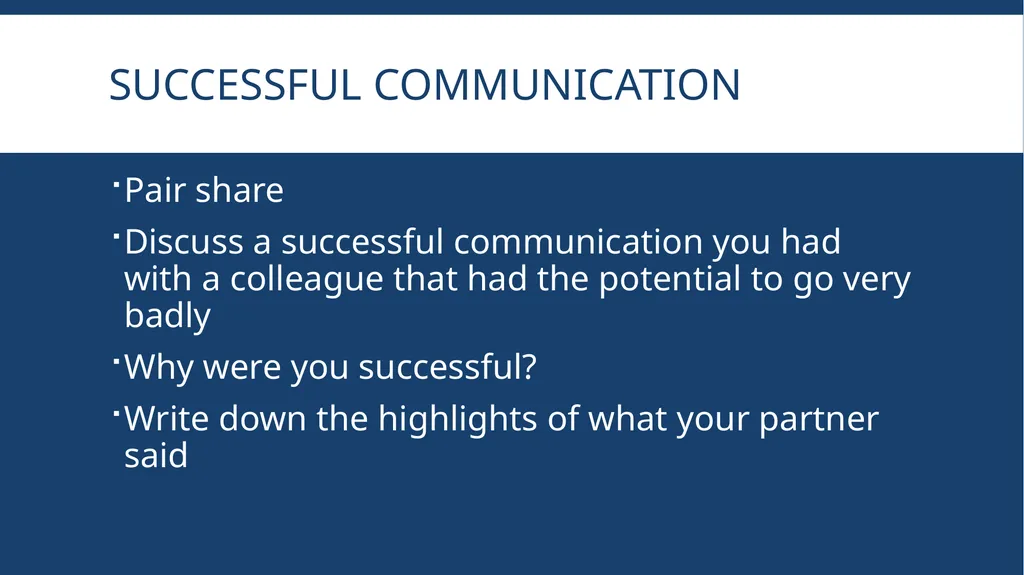
Successful communication Pair share
Discuss a successful communication you had with a colleague that had the potential to go very badly
Why were you successful?
Write down the highlights of what your partner said<br>
11
Share highlights<br>
12
Miscommunication?<br>
13
What do YOU do under stress? Do you maintain your preferred style?
If not what style do you use?<br>
14
Secondary Styles Use non-preferred styles
Often one style more than the other
Need to learn to adapt and flex<br>
15
Exercise<br>
16
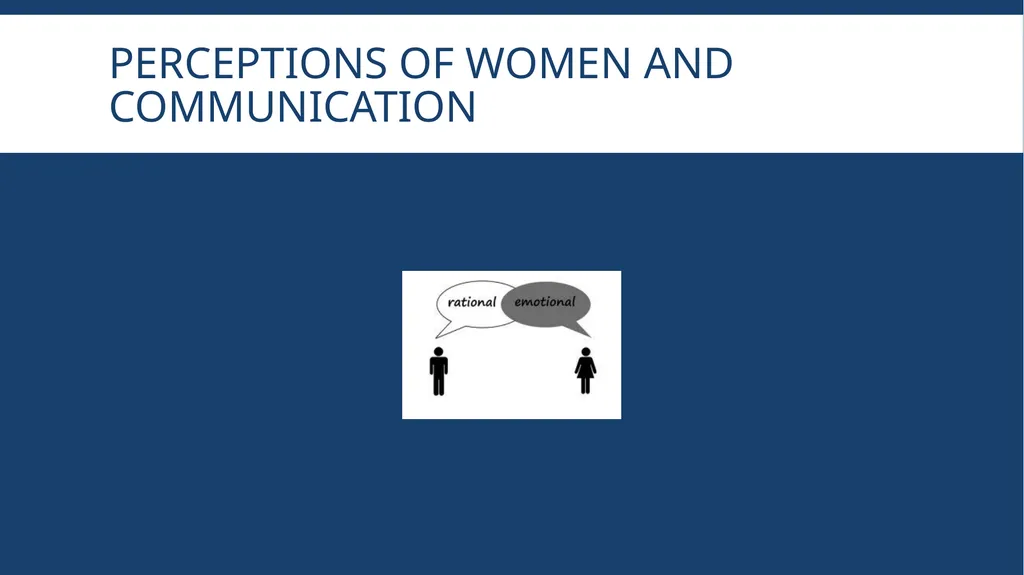
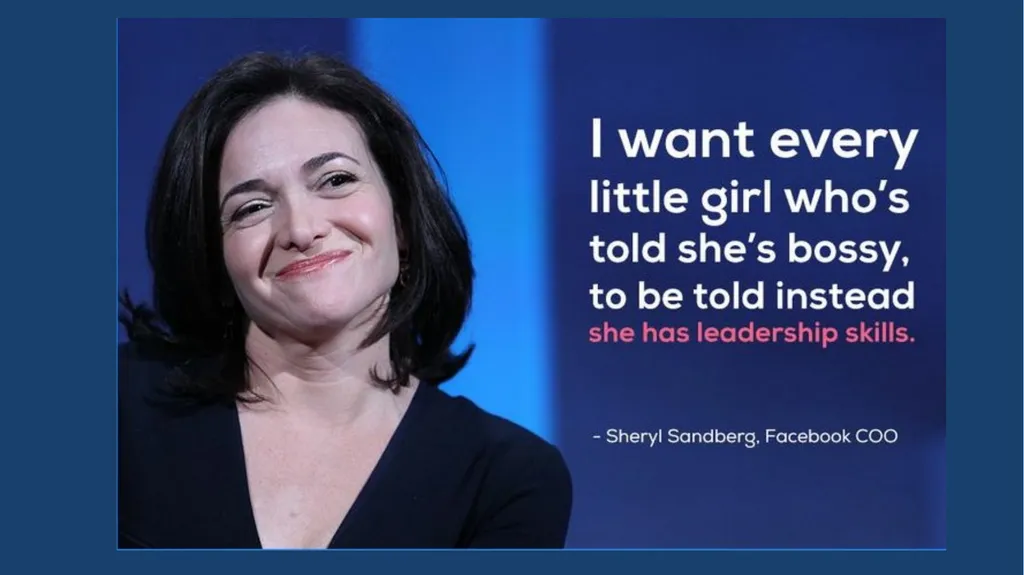
Perceptions of women and communication<br>
17
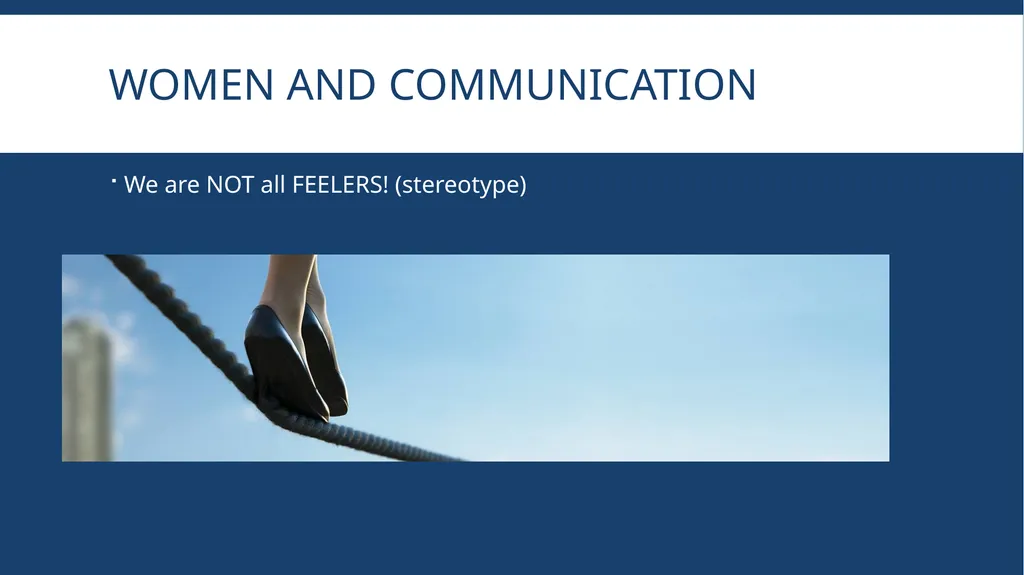
Women and communication We are NOT all FEELERS! (stereotype)<br>
18
Non-verbals say a lot Do you sit at the table?
How do you sit?
Do you tilt your head to one side?
Voice inflection (do you make everything sound like a question)?<br>
19
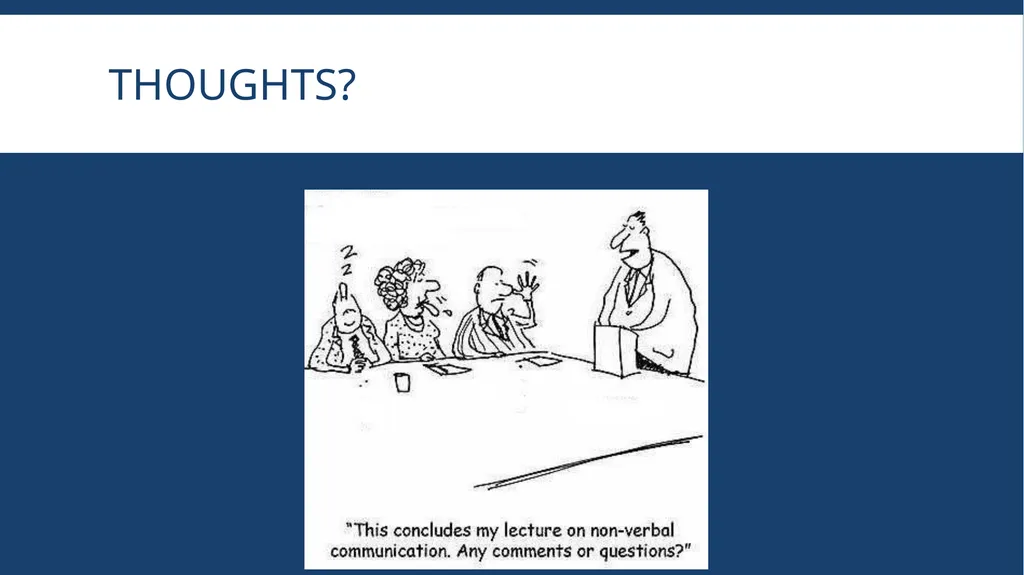
Thoughts?<br>
20
Summary Know your preferred communication style
Consider the communication style of colleagues particularly when having challenging conversations
Be self aware of verbal and non-verbals
Not everyone will like what you have to say. That’s ok.<br>