Compassion Fatigue Burnout Self Care Its all about You! Compassion Fatigue Role Overload Burnout What is Role Overload? Too many competing demands What is Compassion Fatigue? Profound emotional and physical exhaustion Slow erosion of
"Compassion Fatigue Burnout Self Care It’s all" is the property of its rightful owner. Permission is granted to
download and print the materials on this website for personal, non-commercial use only, and to display it
on your personal computer provided you do not modify the materials and that you retain all copyright
notices contained in the materials. By downloading content from our website, you accept the terms of this
agreement.
Presentation Transcript
01
Compassion Fatigue Burnout Self Care It’s all about
You!<br>
02
Compassion Fatigue…
Role Overload…
Burnout…<br>
03
What is Role Overload? Too many competing demands<br>
04
What is Compassion Fatigue? Profound emotional and physical exhaustion
Slow erosion of connections with others
Is not constant<br>
05
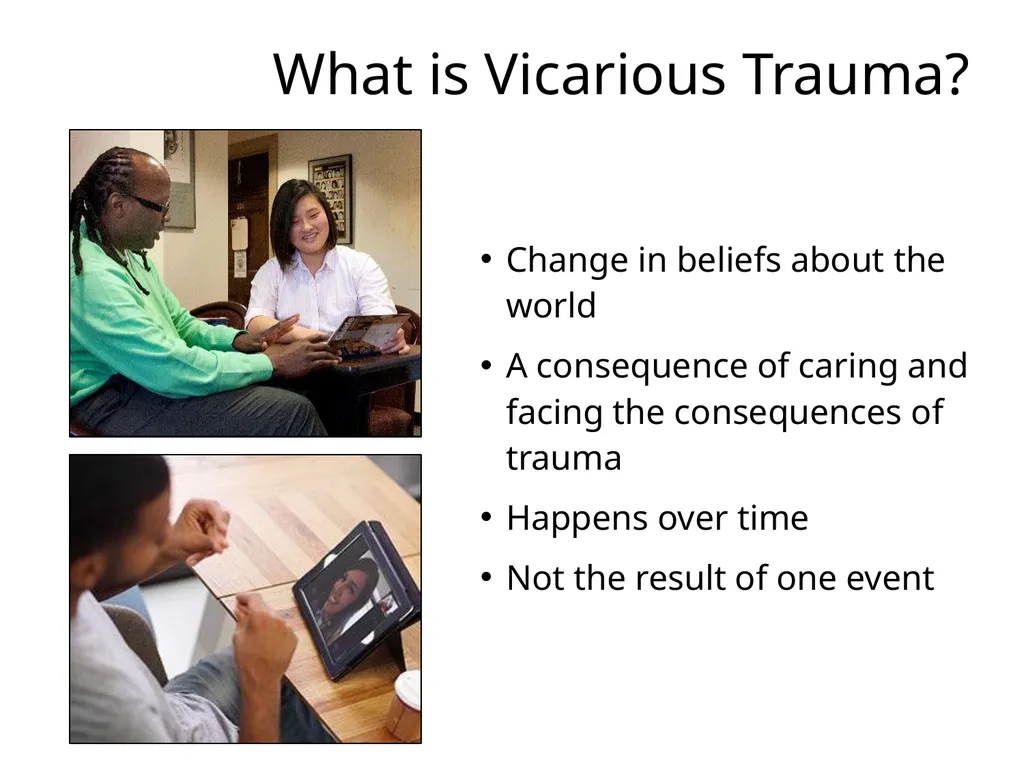
What is Vicarious Trauma? Change in beliefs about the world
A consequence of caring and facing the consequences of trauma
Happens over time
Not the result of one event<br>
06
Isn’t it all just “burnout”?<br>
07
Warning Signs: Physical Physical exhaustion
Sleep disturbances
Headaches or Migraines
Increased illness
Emotional stress shows through physical symptoms (e.g., back ache, headache)
Being anxious and over aware of potential illnesses<br>
08
Warning Signs: Behavioral Increased use of alcohol or drugs
Other addictions
Missing work
Anger and irritability
Exaggerated sense of responsibility
Avoidance of clients
Trouble making decisions
Forgetfulness
Compromised care for clients
Silencing response<br>
09
Warning Signs: Psychological Emotional exhaustion
Distancing
Negative self-image
Depression
Reduced ability to feel sympathy and empathy
Cynicism and embitterment
Resentment
Dread of working with specific clients
Feeling of professional helplessness
Reduced sense of enjoyment in career
Disruption of world view – heightened anxiety or irrational fears<br>
10
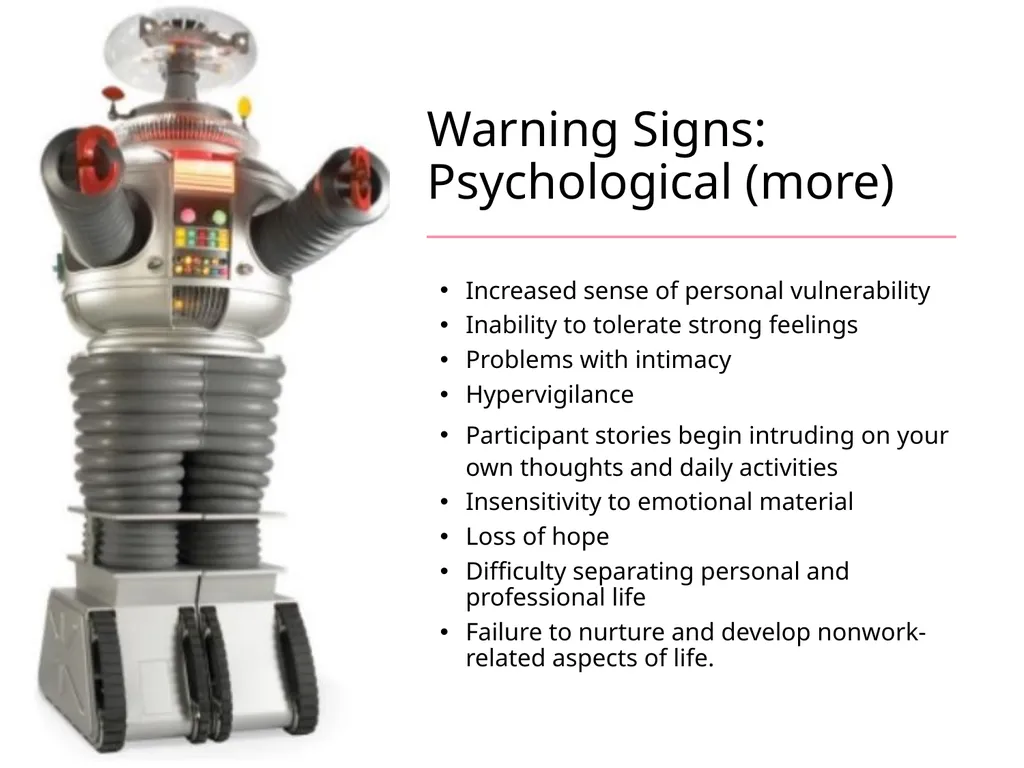
Warning Signs: Psychological (more) Increased sense of personal vulnerability
Inability to tolerate strong feelings
Problems with intimacy
Hypervigilance
Participant stories begin intruding on your own thoughts and daily activities
Insensitivity to emotional material
Loss of hope
Difficulty separating personal and professional life
Failure to nurture and develop nonwork-related aspects of life.<br>
11
What to do? By developing the deep sense of awareness needed to care for ourselves while caring for others and the world around us, we can greatly enhance our potential to work for change, ethically and with integrity for generations to come.
Laura van Dernoot Lipsky Trauma Stewardship<br>
12
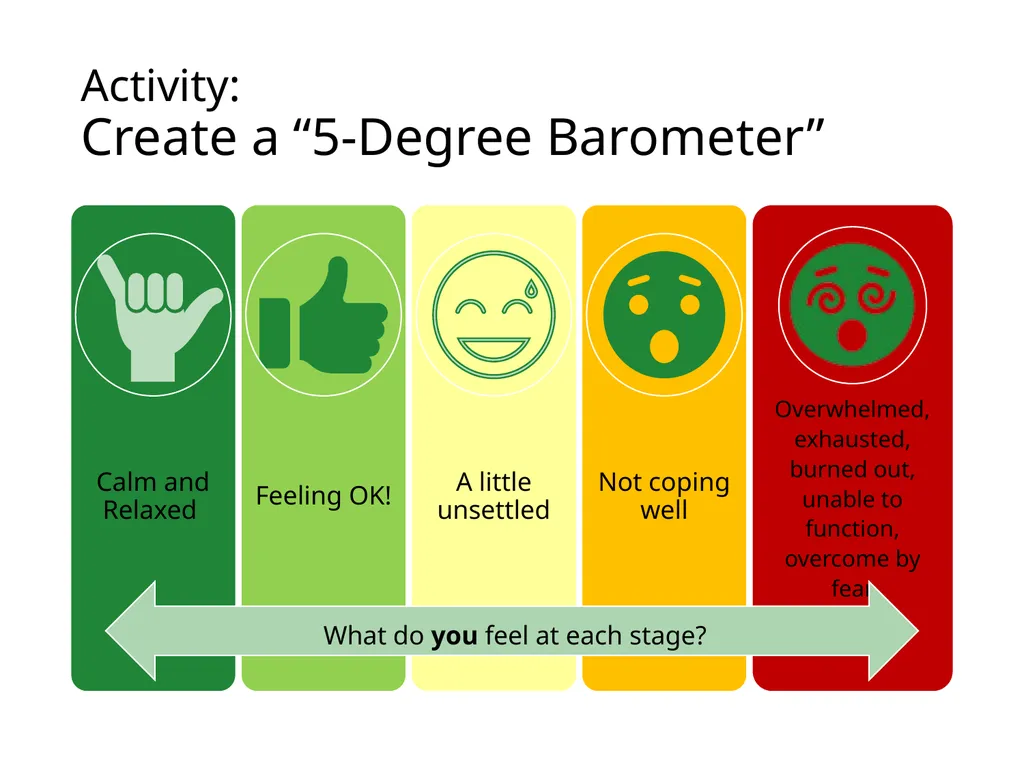
Activity: Create a “5-Degree Barometer” What do you feel at each stage?<br>
13
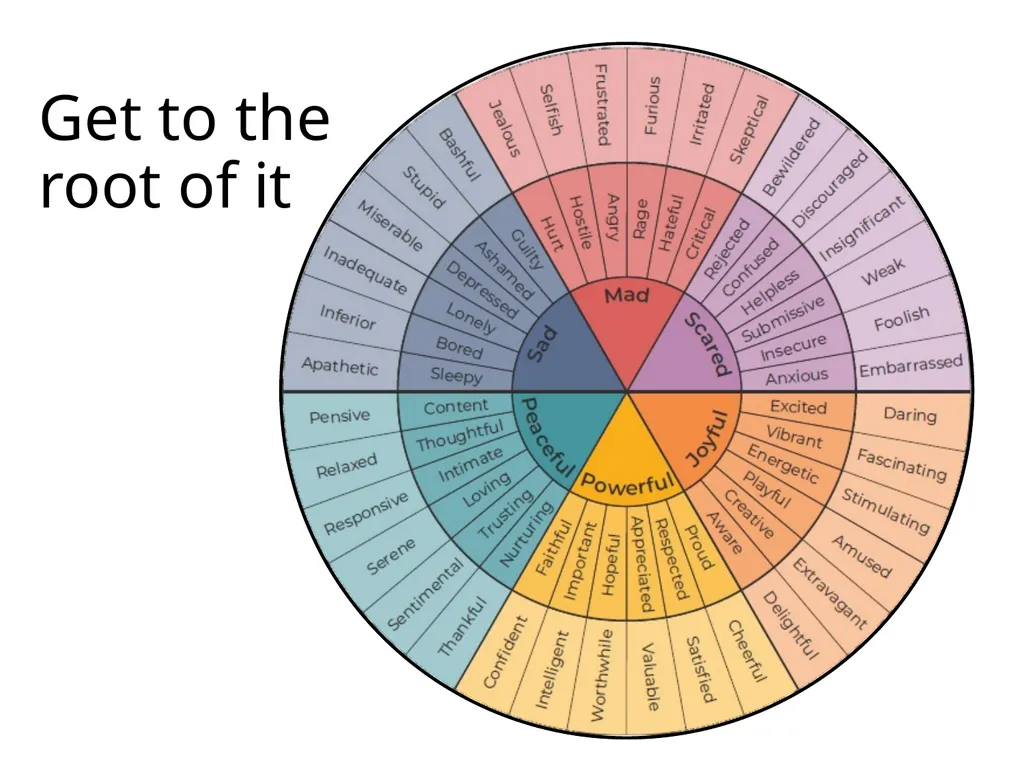
Get to the root of it<br>
14
Create a plan that is…
Uniquely You!<br>
15
Resources List the contact information for your agency EAP and other resources on this slide<br>