04
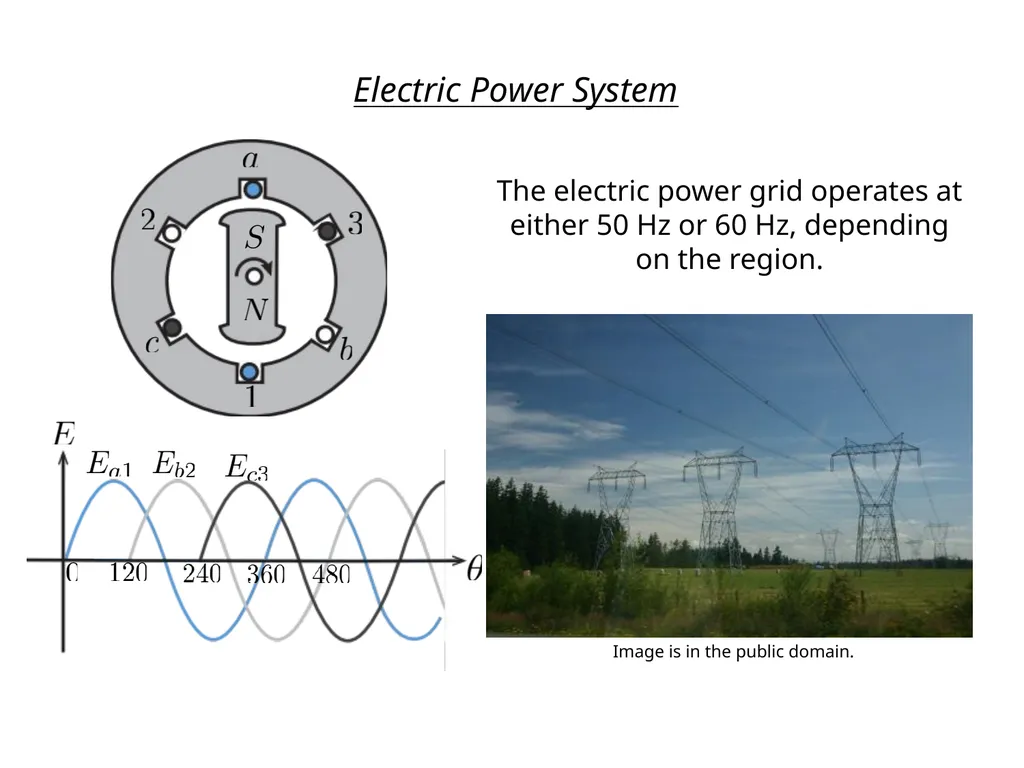
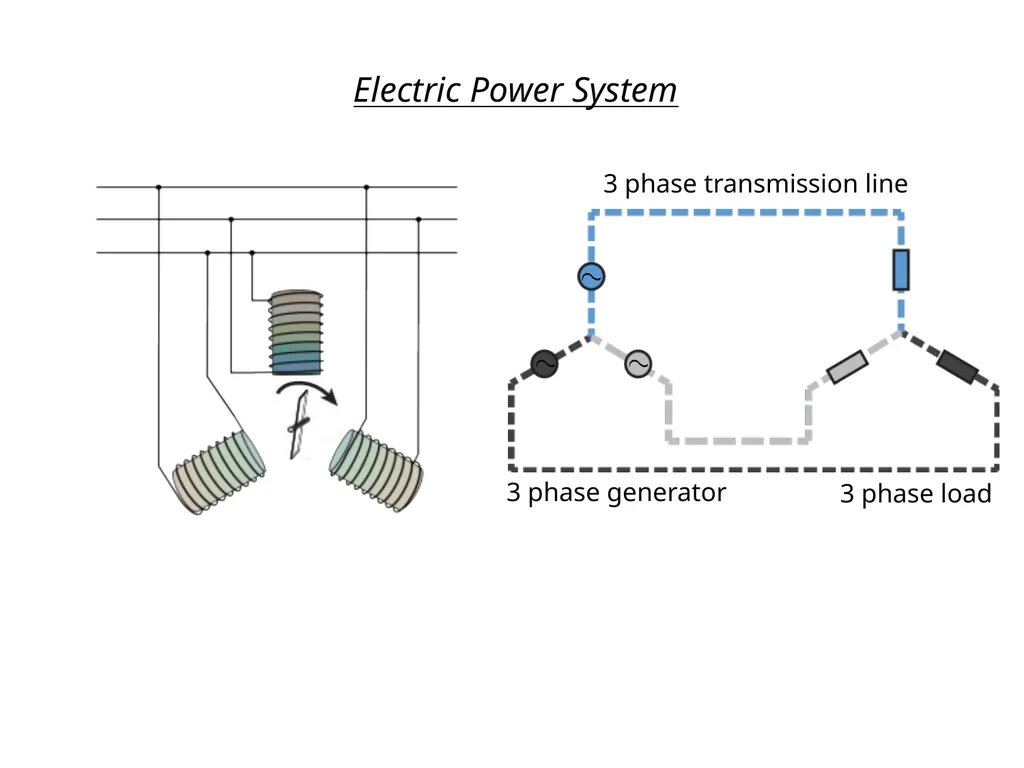
Electric Power System 3 phase transmission line 3 phase generator 3 phase load<br>
05
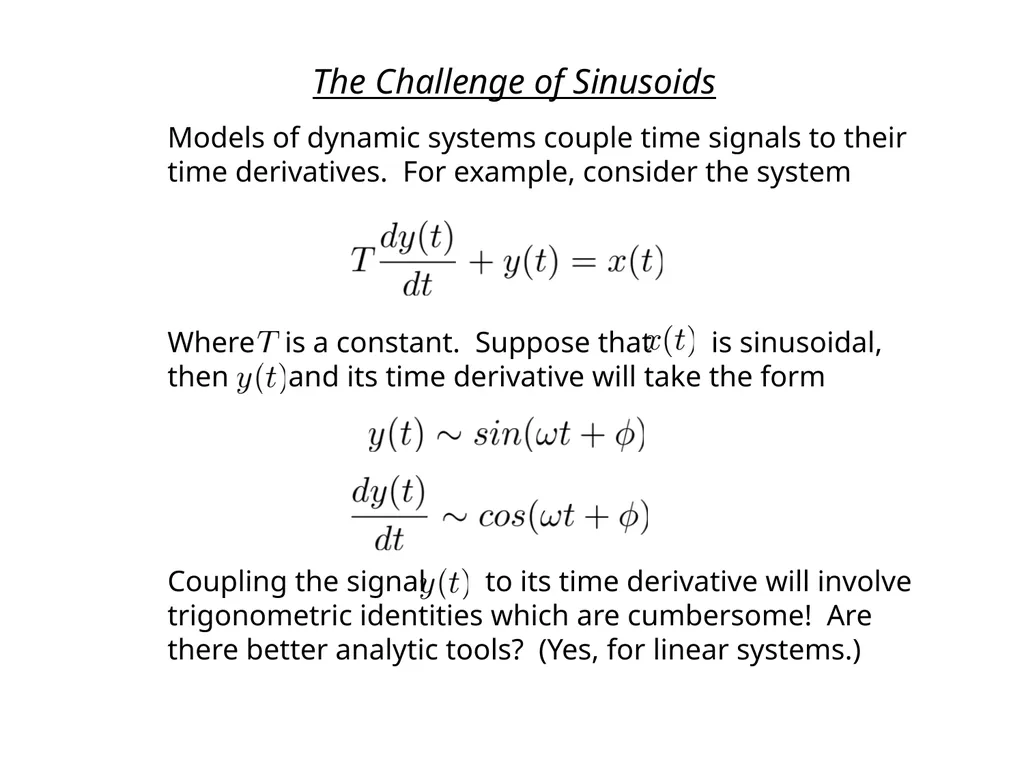
The Challenge of Sinusoids Models of dynamic systems couple time signals to their time derivatives. For example, consider the system
Where is a constant. Suppose that is sinusoidal, then and its time derivative will take the form
Coupling the signal to its time derivative will involve trigonometric identities which are cumbersome! Are there better analytic tools? (Yes, for linear systems.)<br>
06
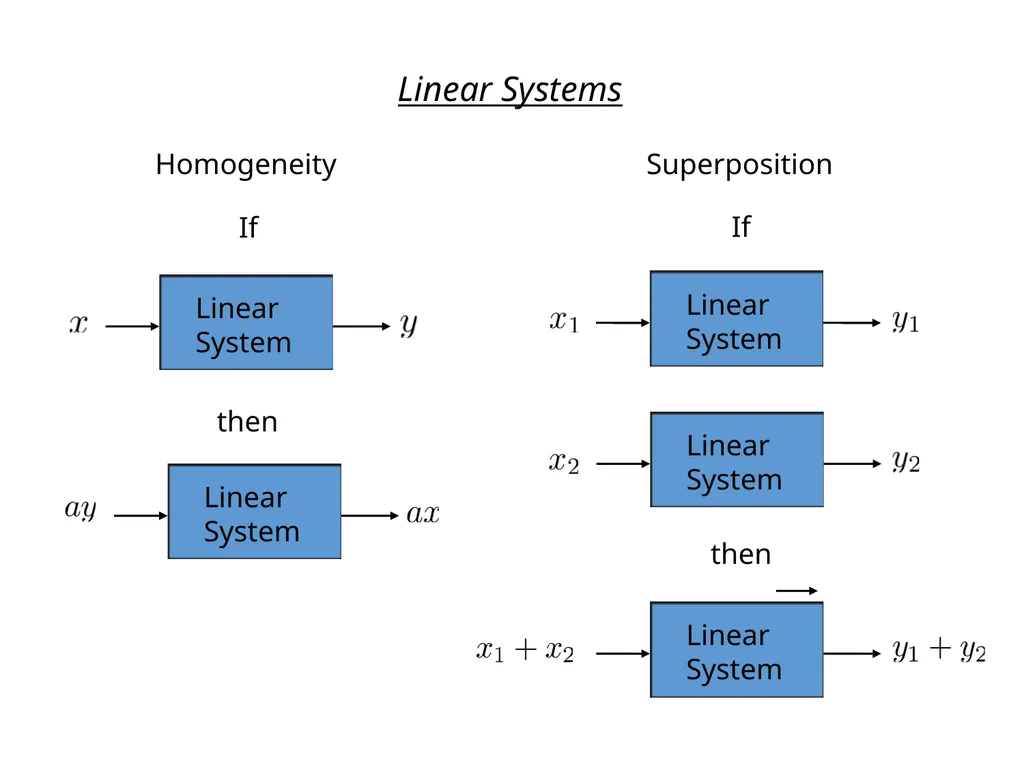
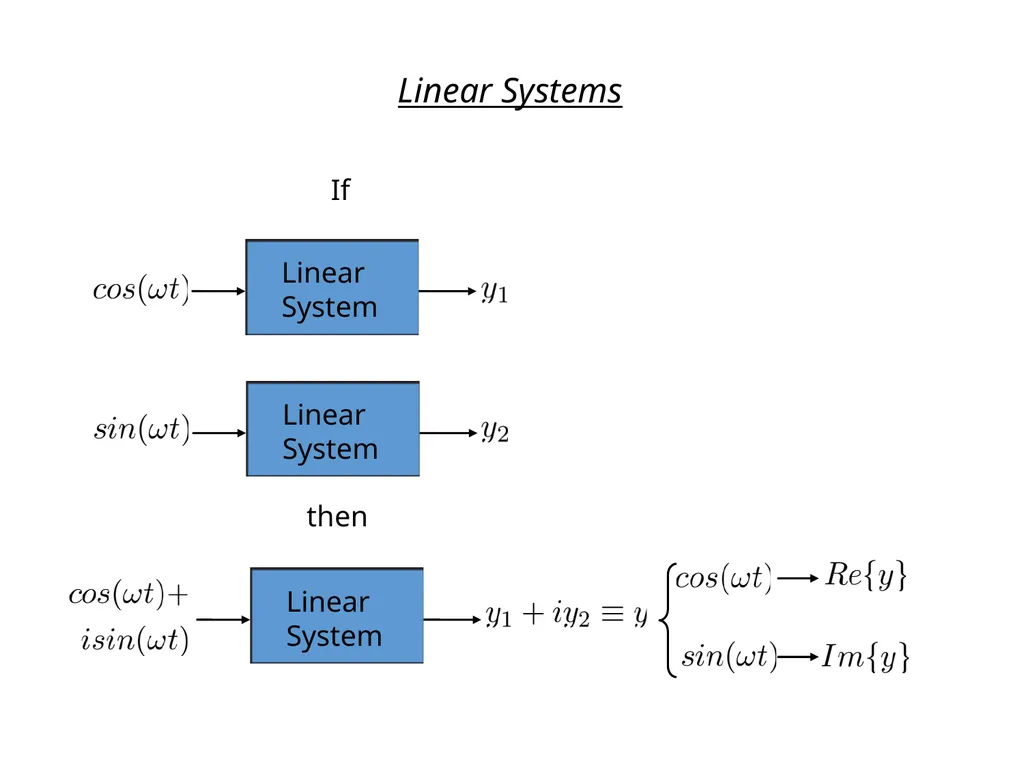
Linear Systems Homogeneity If then Superposition If then<br>
08
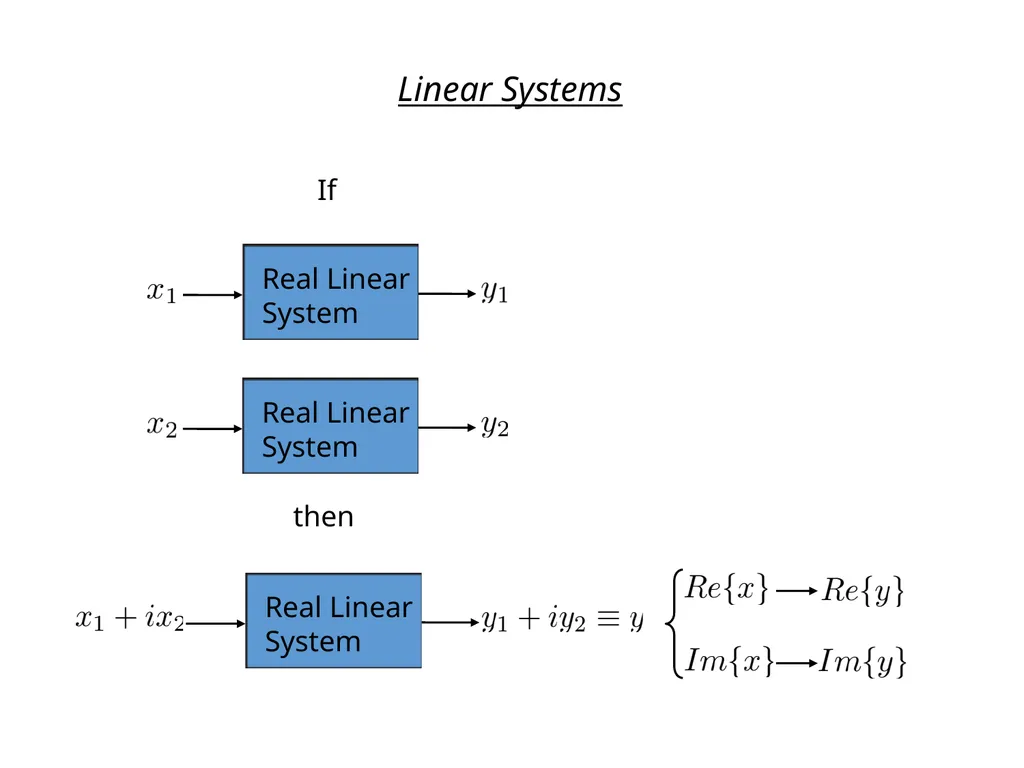
Linear Systems If then<br>
09
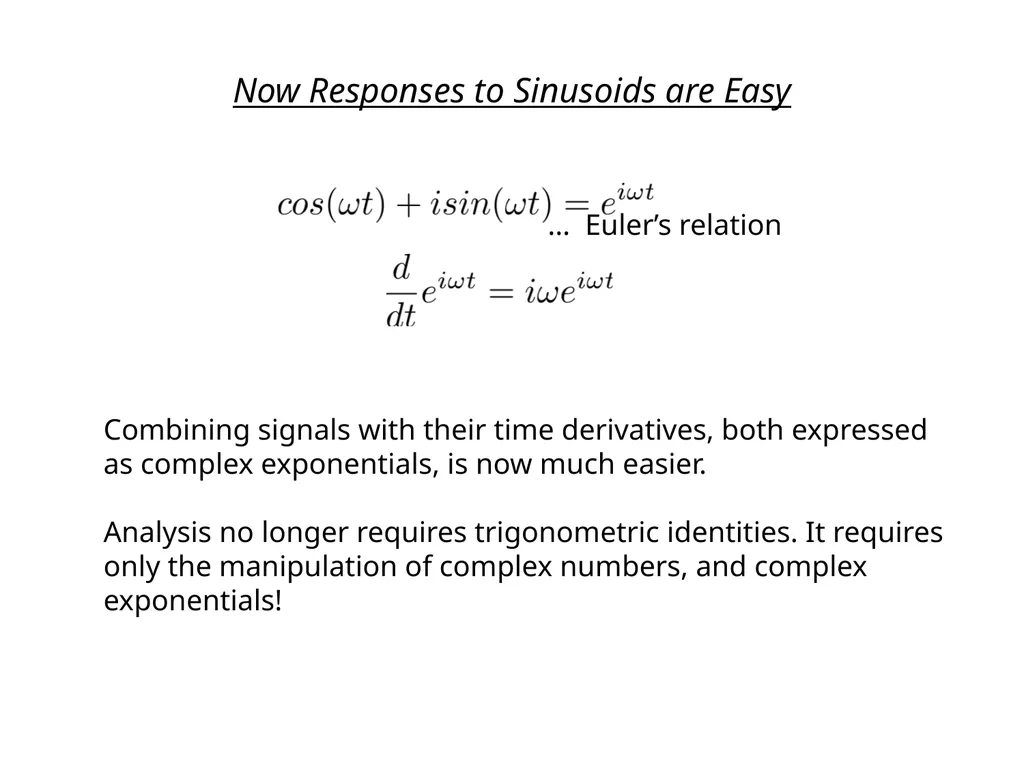
Now Responses to Sinusoids are Easy … Euler’s relation
Combining signals with their time derivatives, both expressed as complex exponentials, is now much easier.
Analysis no longer requires trigonometric identities. It requires only the manipulation of complex numbers, and complex exponentials!<br>
10
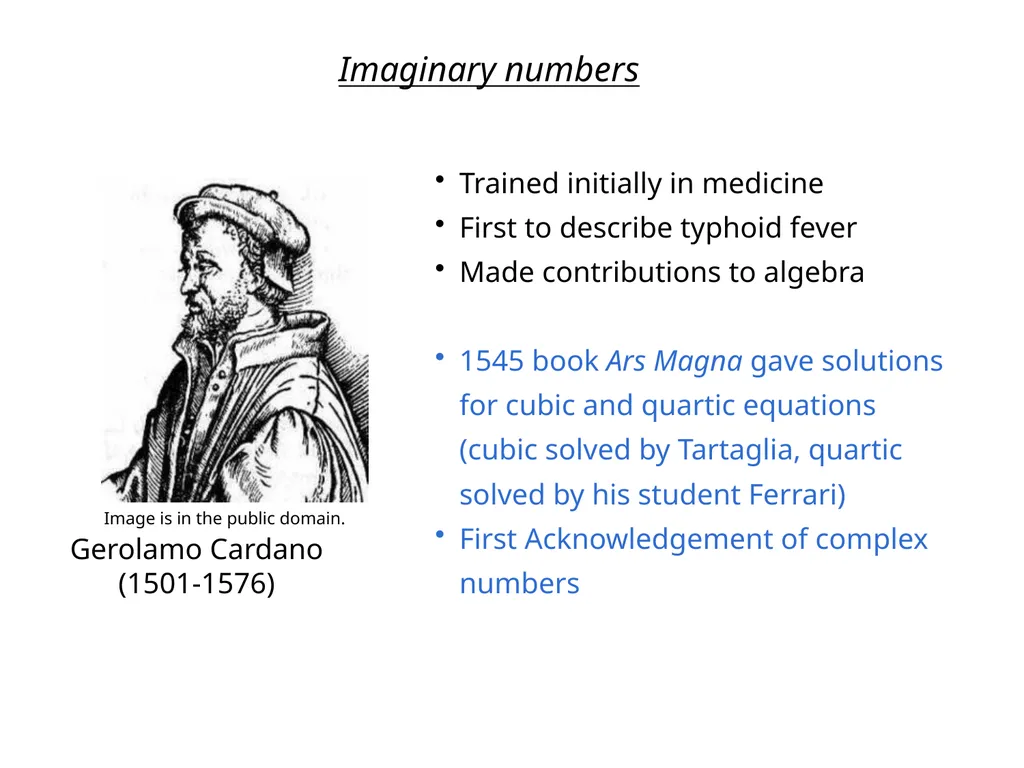
Gerolamo Cardano
(1501-1576) Trained initially in medicine
First to describe typhoid fever
Made contributions to algebra
1545 book Ars Magna gave solutions for cubic and quartic equations (cubic solved by Tartaglia, quartic solved by his student Ferrari)
First Acknowledgement of complex numbers Imaginary numbers Image is in the public domain.<br>
11
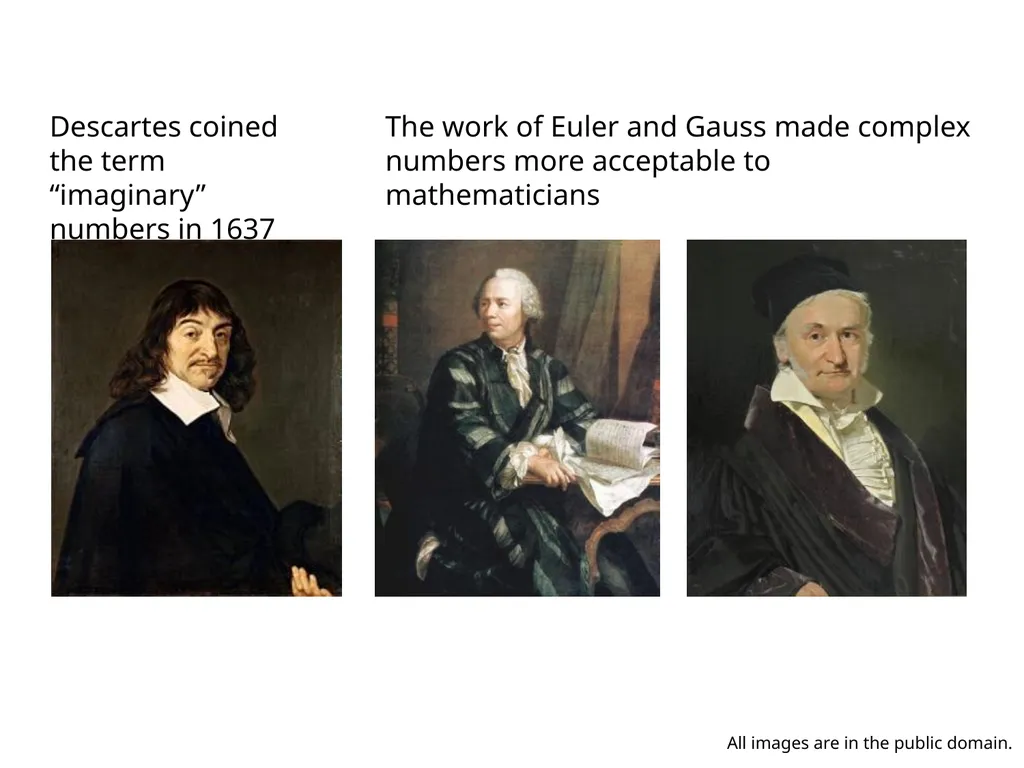
Descartes coined the term “imaginary” numbers in 1637 The work of Euler and Gauss made complex numbers more acceptable to mathematicians All images are in the public domain.<br>
12
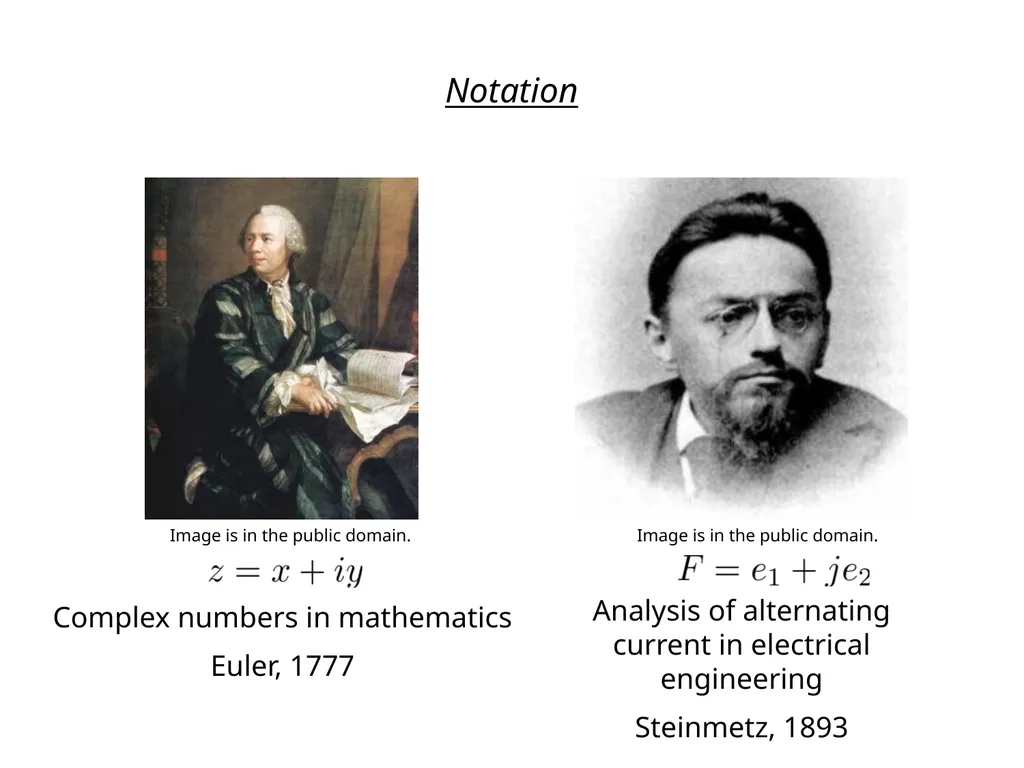
Complex numbers in mathematics
Euler, 1777 Analysis of alternating current in electrical engineering
Steinmetz, 1893 Notation Image is in the public domain. Image is in the public domain.<br>
13
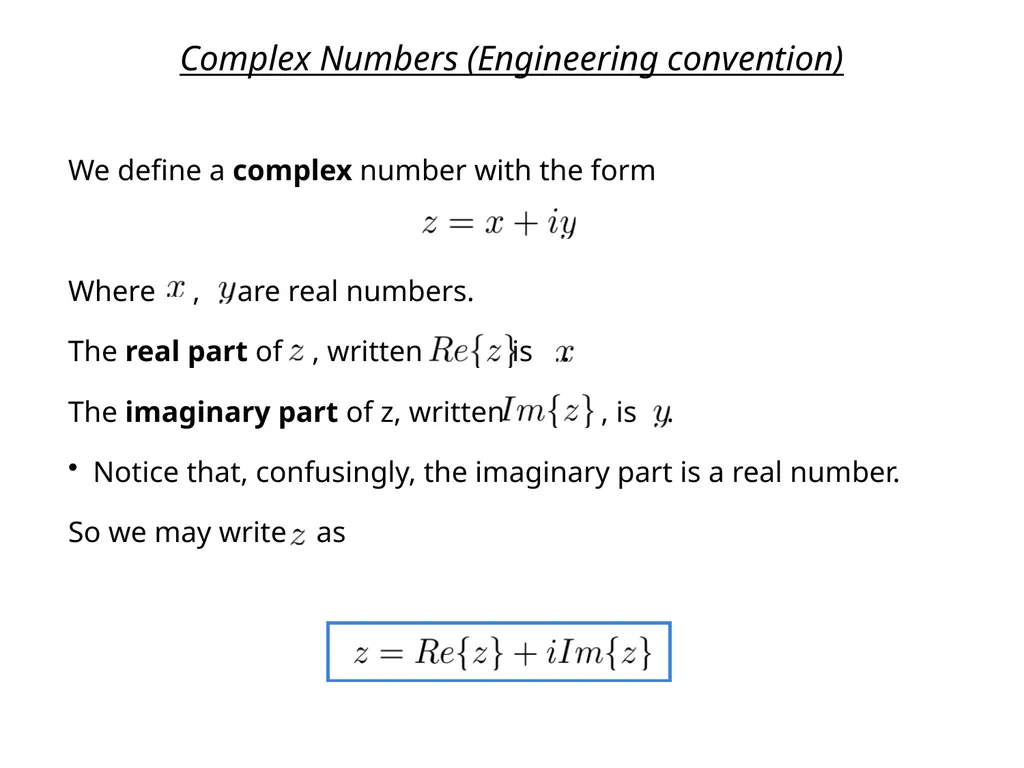
Complex Numbers (Engineering convention) We define a complex number with the form
Where , are real numbers.
The real part of , written is .
The imaginary part of z, written , is .
Notice that, confusingly, the imaginary part is a real number.
So we may write as<br>
15
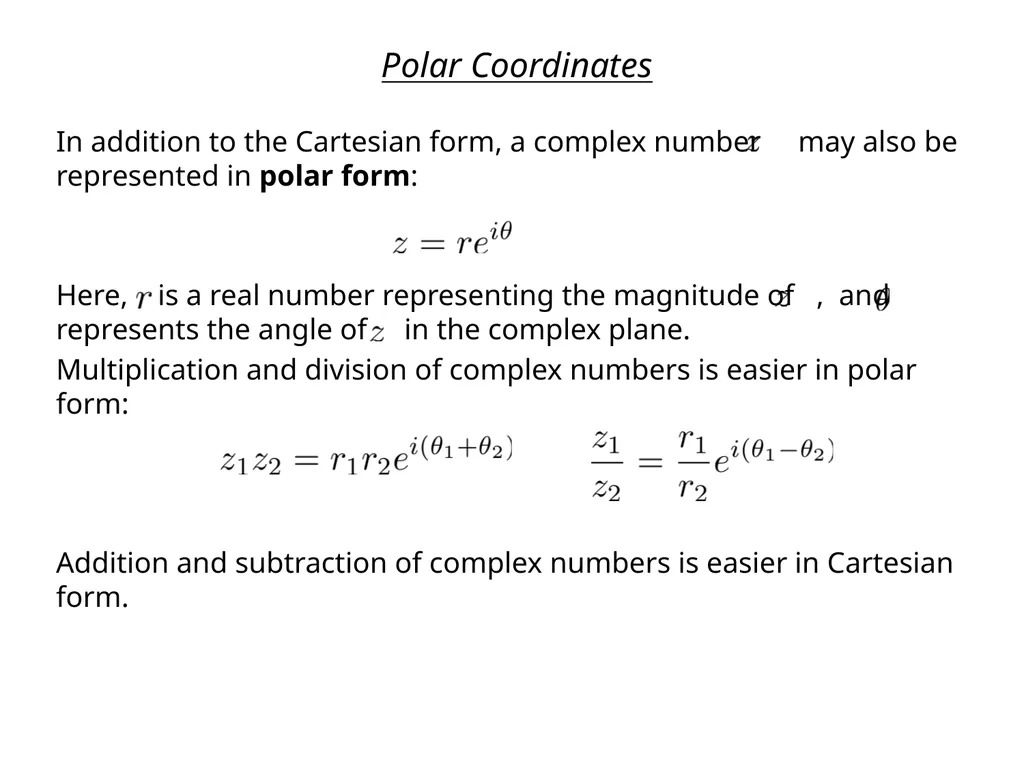
Polar Coordinates In addition to the Cartesian form, a complex number may also be represented in polar form:
Here, is a real number representing the magnitude of , and represents the angle of in the complex plane.
Multiplication and division of complex numbers is easier in polar form:
Addition and subtraction of complex numbers is easier in Cartesian form.<br>
16
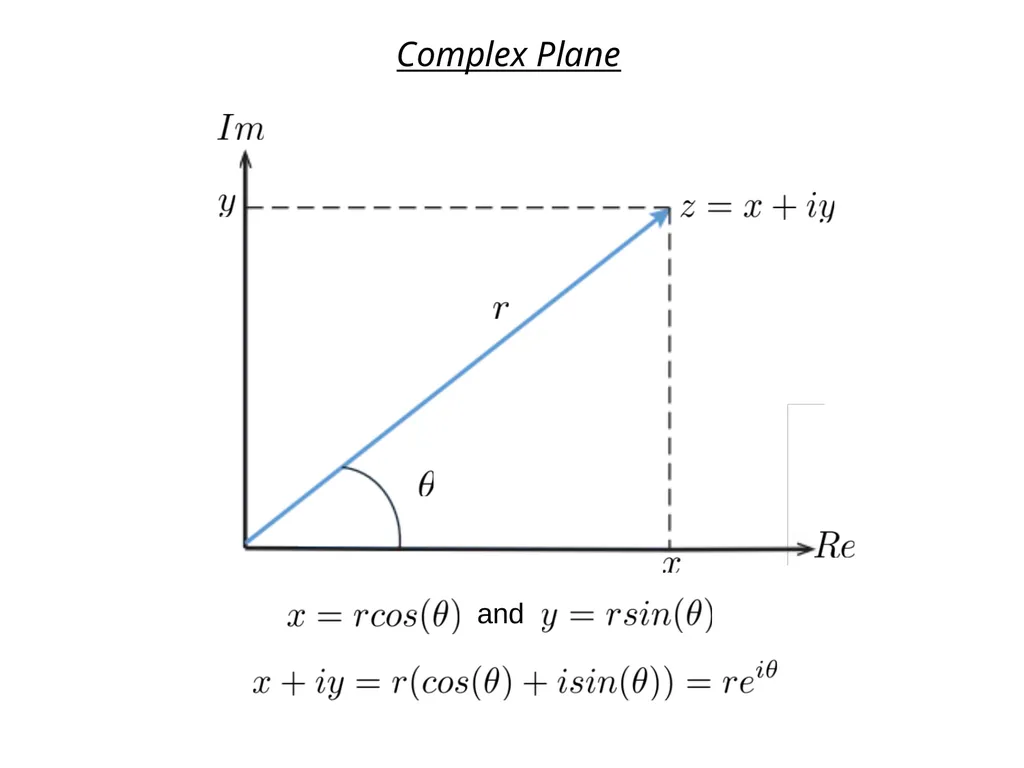
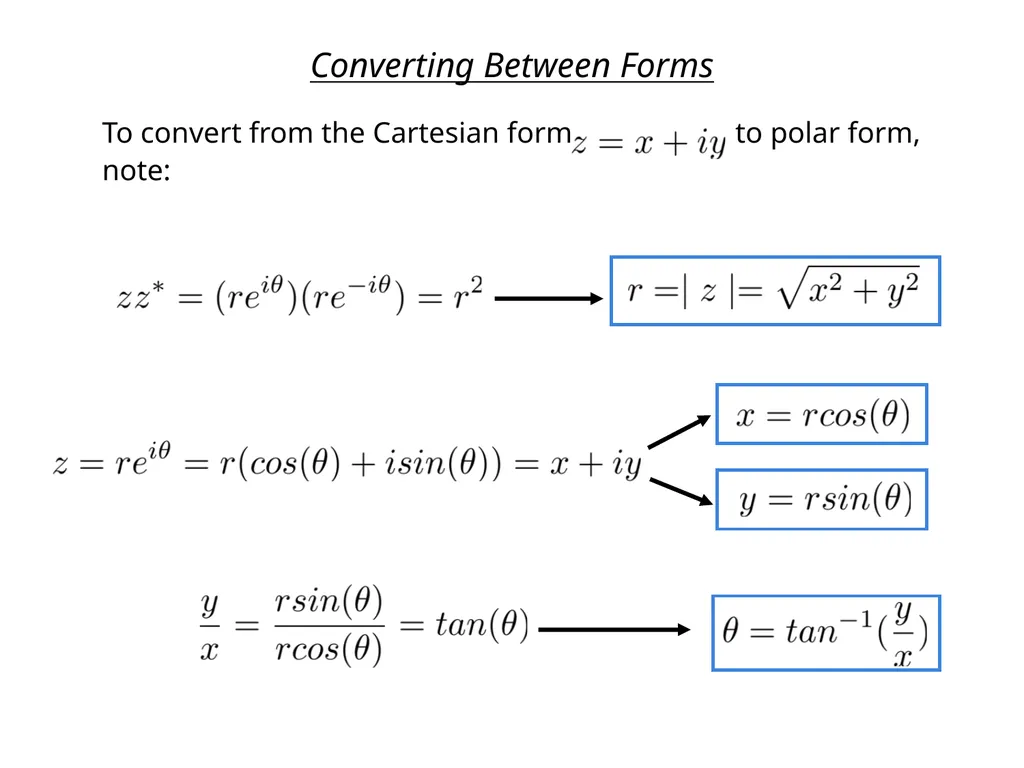
Converting Between Forms To convert from the Cartesian form to polar form, note:<br>
17
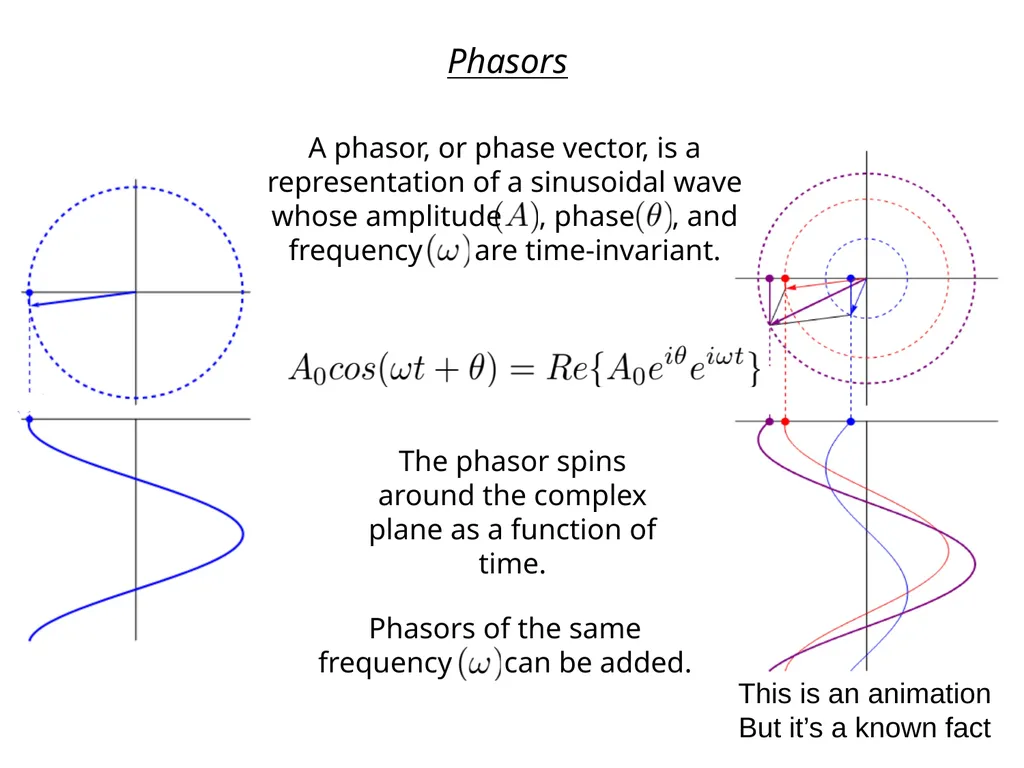
Phasors The phasor spins around the complex plane as a function of time. Phasors of the same frequency can be added. A phasor, or phase vector, is a representation of a sinusoidal wave whose amplitude , phase , and frequency are time-invariant. This is an animation
But it’s a known fact<br>
18
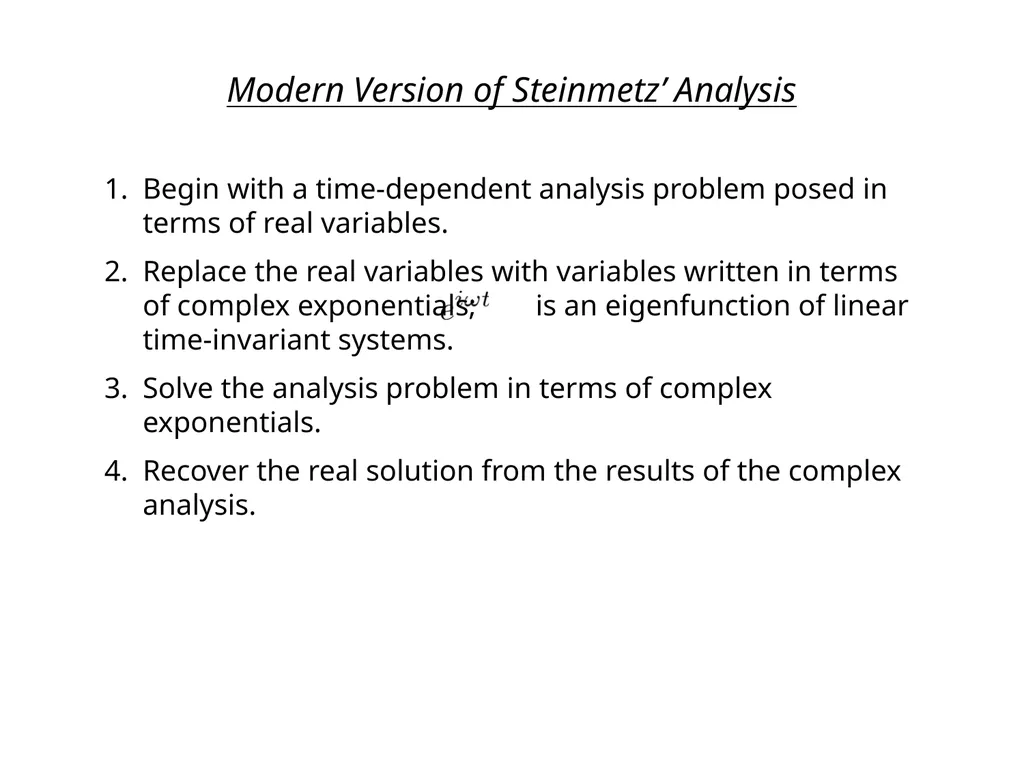
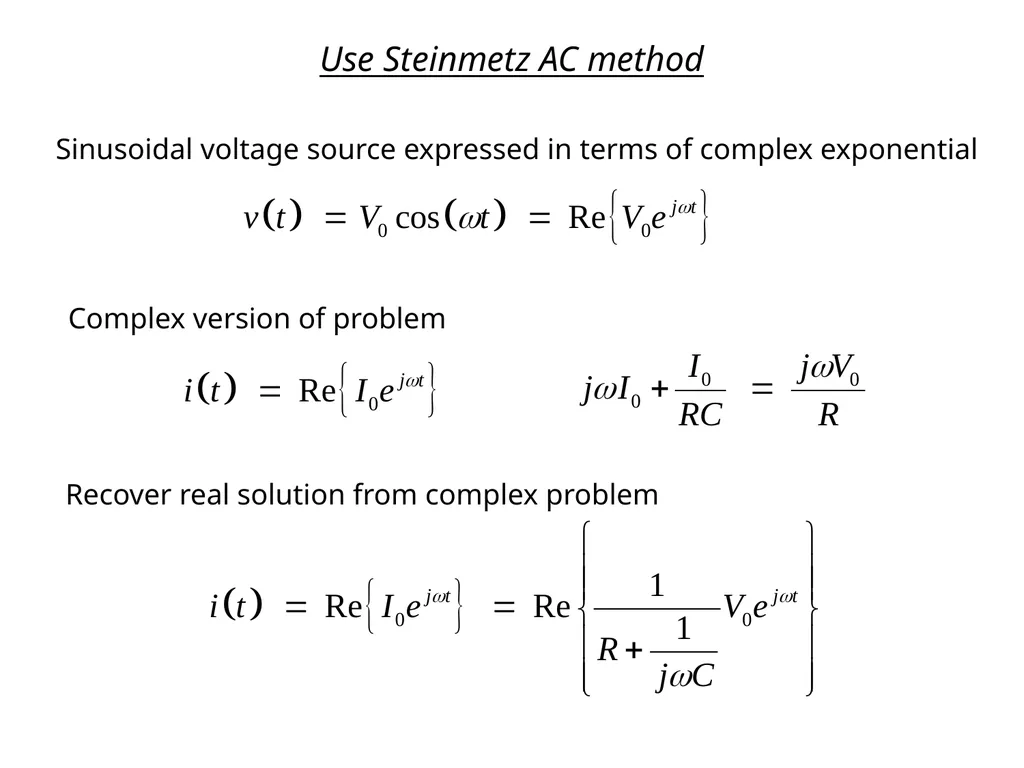
Modern Version of Steinmetz’ Analysis Begin with a time-dependent analysis problem posed in terms of real variables.
Replace the real variables with variables written in terms of complex exponentials; is an eigenfunction of linear time-invariant systems.
Solve the analysis problem in terms of complex exponentials.
Recover the real solution from the results of the complex analysis.<br>
19
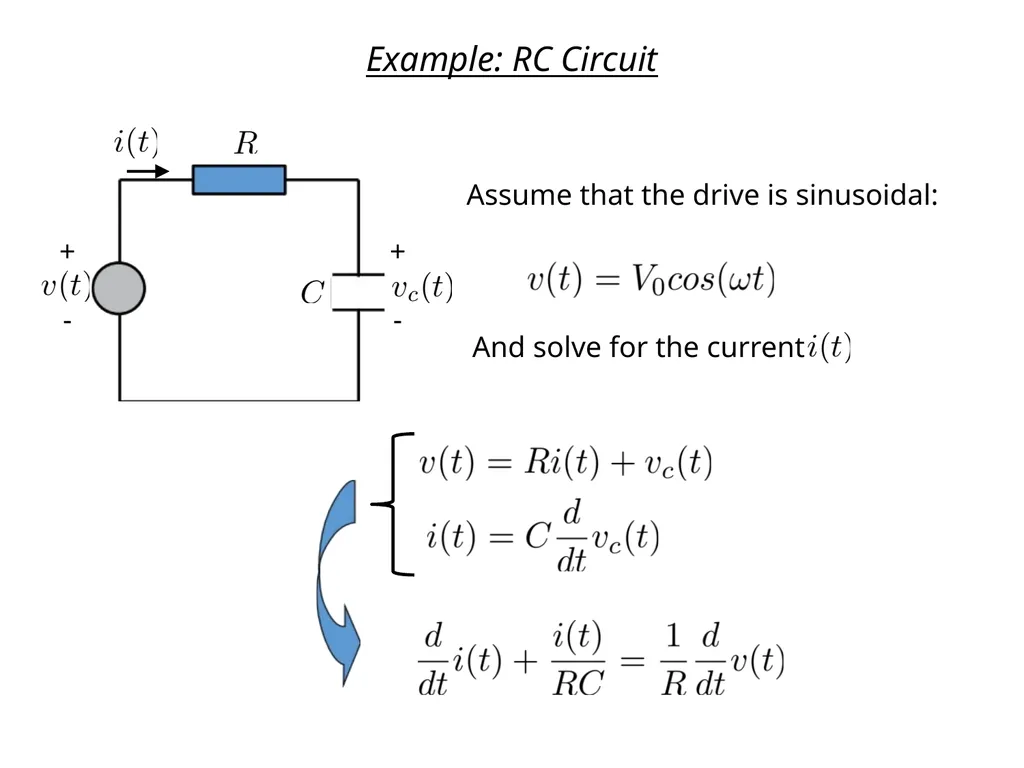
Example: RC Circuit +
- Assume that the drive is sinusoidal: And solve for the current +
-<br>
20
Use Steinmetz AC method Sinusoidal voltage source expressed in terms of complex exponential Complex version of problem Recover real solution from complex problem<br>
21
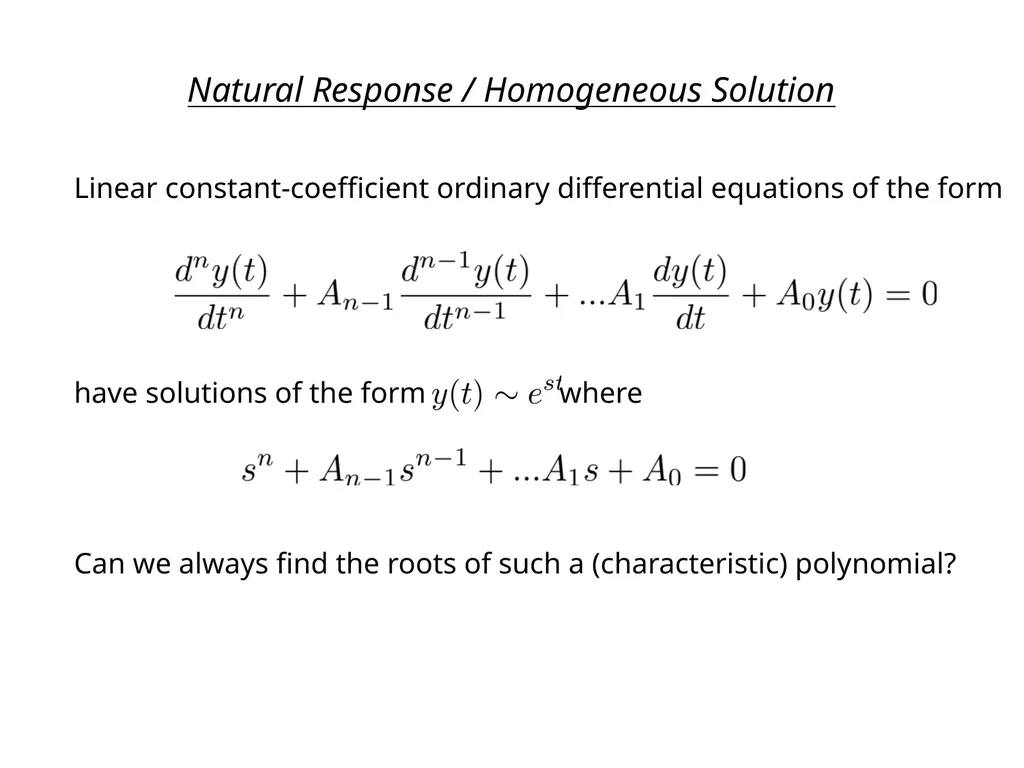
Linear constant-coefficient ordinary differential equations of the form
have solutions of the form where
Can we always find the roots of such a (characteristic) polynomial? Natural Response / Homogeneous Solution<br>
22
Can we always find roots of a polynomial? The equation
has no solution for in the set of real numbers. If we define, and then use, a number that satisfies the equation
that is,
or
then we can always find the n roots of a polynomial of degree n.
Complex roots of a characteristic polynomial are associated with an oscillatory (sinusoidal) natural response. Polynomial Roots<br>
23
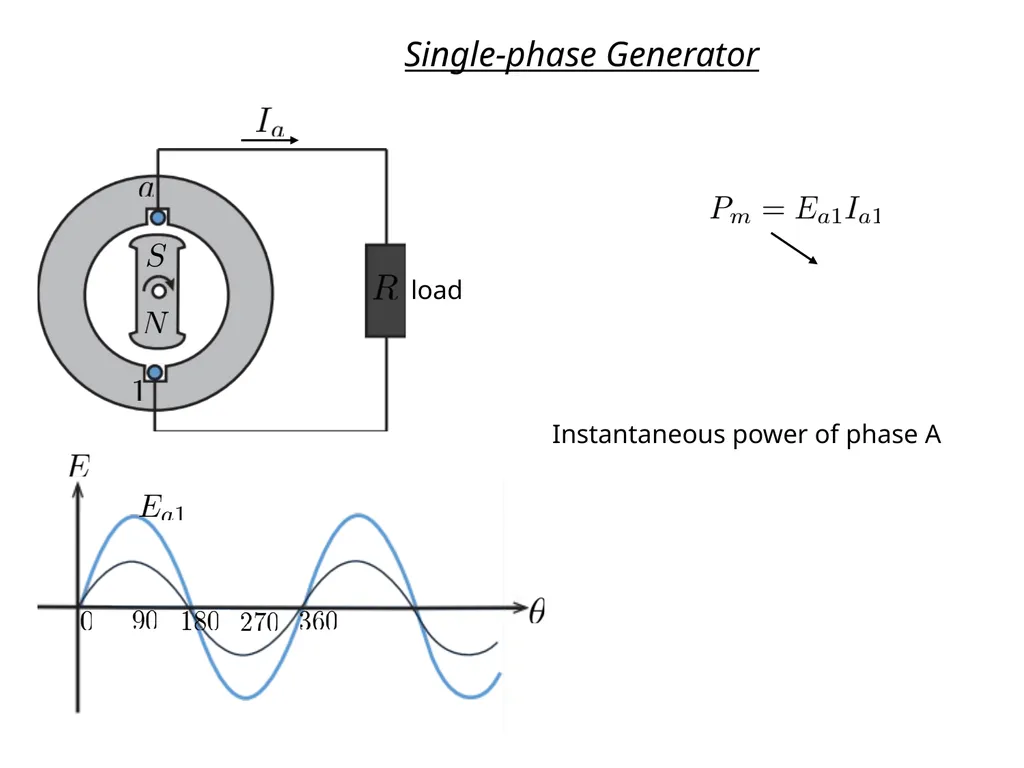
Single-phase Generator load Instantaneous power of phase A<br>
24
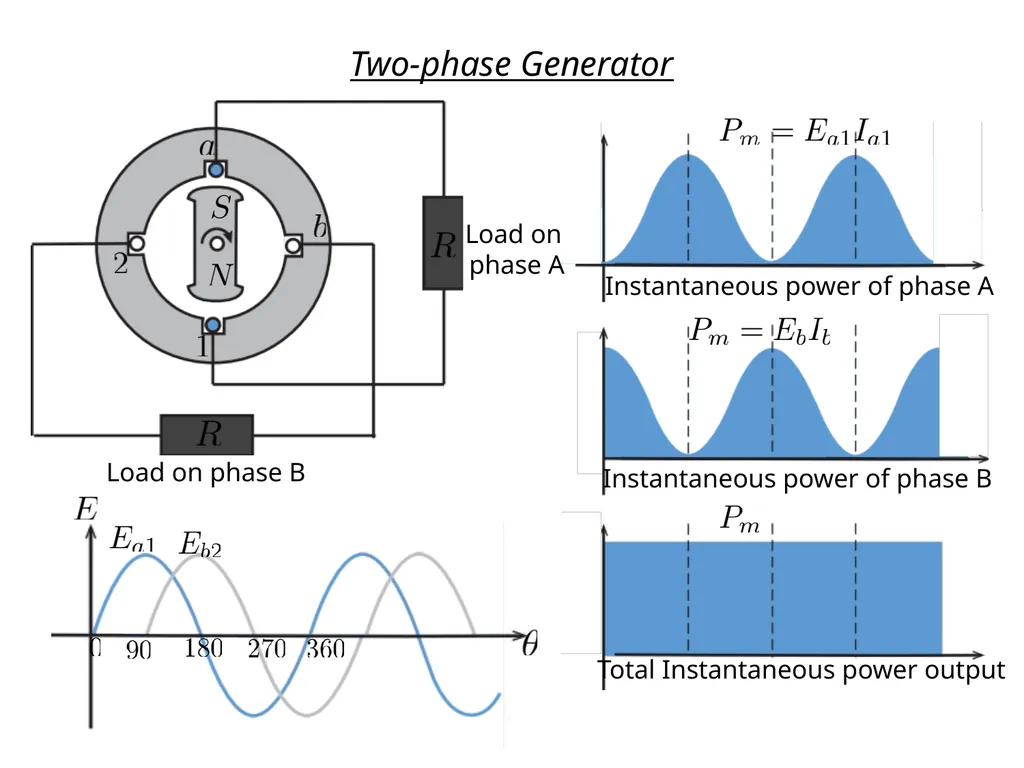
Two-phase Generator Load on
phase A Load on phase B Instantaneous power of phase A Instantaneous power of phase B Total Instantaneous power output<br>
25
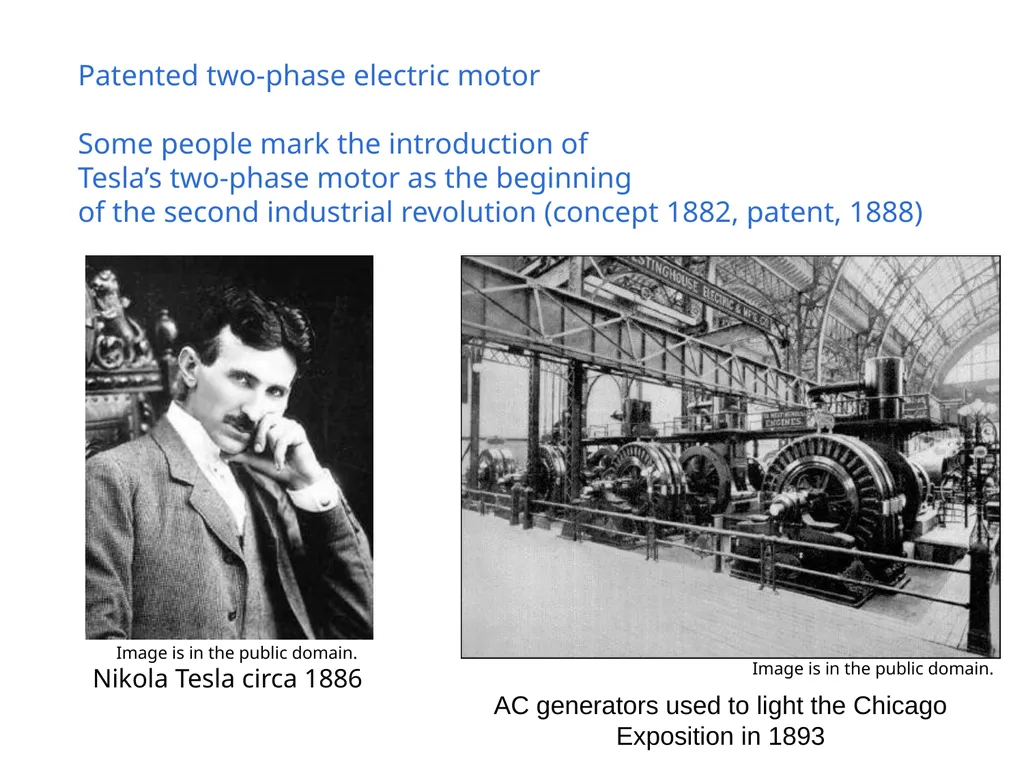
Nikola Tesla circa 1886 Patented two-phase electric motor
Some people mark the introduction of
Tesla’s two-phase motor as the beginning
of the second industrial revolution (concept 1882, patent, 1888) AC generators used to light the Chicago Exposition in 1893 Image is in the public domain. Image is in the public domain.<br>
26
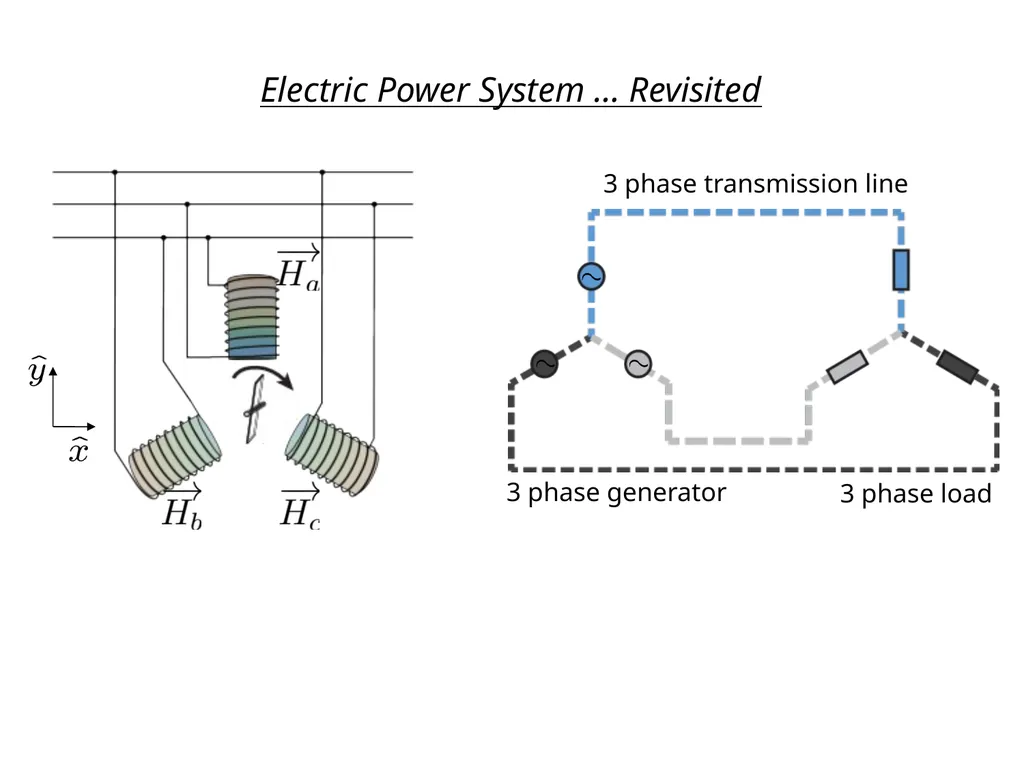
Electric Power System … Revisited 3 phase transmission line 3 phase generator 3 phase load<br>
27
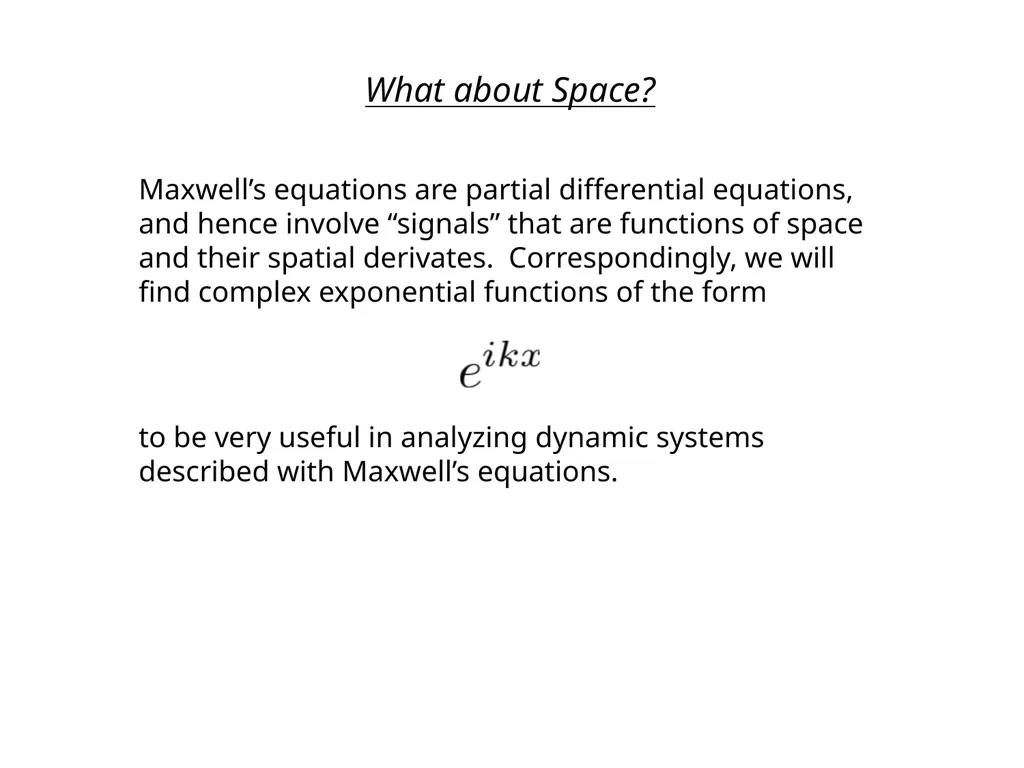
What about Space? Maxwell’s equations are partial differential equations, and hence involve “signals” that are functions of space and their spatial derivates. Correspondingly, we will find complex exponential functions of the form
to be very useful in analyzing dynamic systems described with Maxwell’s equations.<br>
28
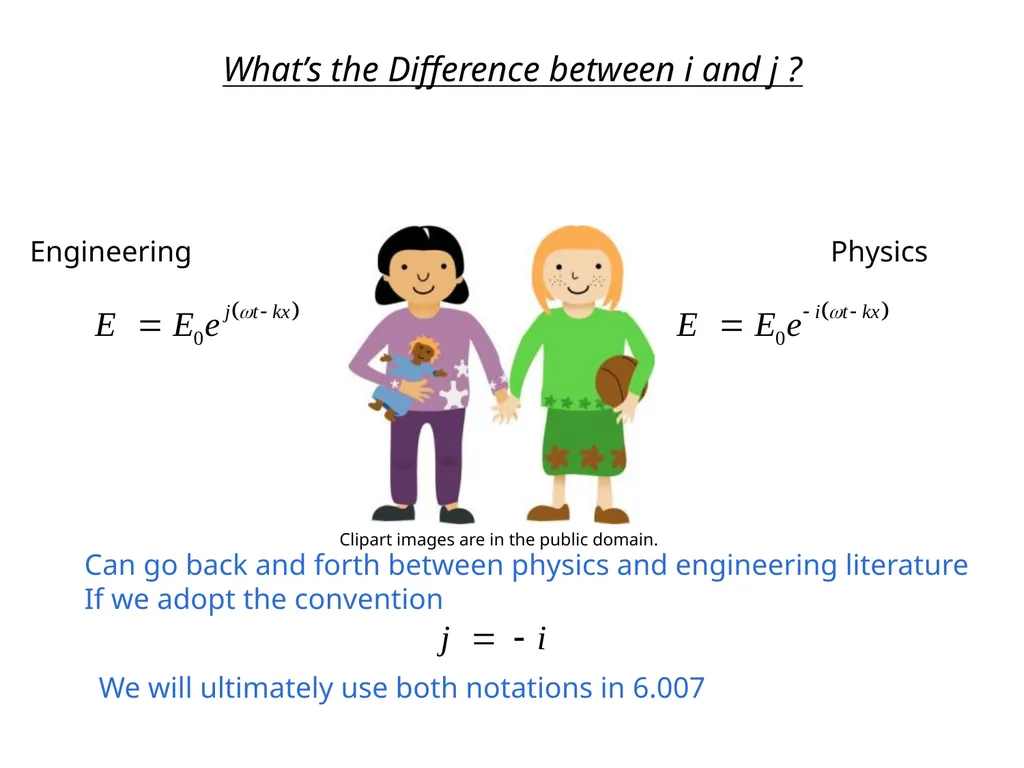
What’s the Difference between i and j ? Engineering Physics We will ultimately use both notations in 6.007 Can go back and forth between physics and engineering literature
If we adopt the convention Clipart images are in the public domain.<br>
29
MIT OpenCourseWare http://ocw.mit.edu 6.007 Electromagnetic Energy: From Motors to Lasers Spring 2011 For information about citing these materials or our Terms of Use, visit: http://ocw.mit.edu/terms.<br>