
COMPLIANCE CALENDER Introduction Government first
YM
Published · 63 slides · 0 views

1 / 1



Description
COMPLIANCE CALENDER Introduction Government first struck-off 2.26 lakh shell companies in FY18 that had failed to file their financial statements or annual returns over two or more successive years After that more than 3 lakh directors were
Related Topics
Share
Embed code
Download this presentation From Below
"COMPLIANCE CALENDER Introduction Government first" is the property of its rightful owner. Permission is granted to download and print the materials on this website for personal, non-commercial use only, and to display it on your personal computer provided you do not modify the materials and that you retain all copyright notices contained in the materials. By downloading content from our website, you accept the terms of this agreement.
Presentation Transcript
01
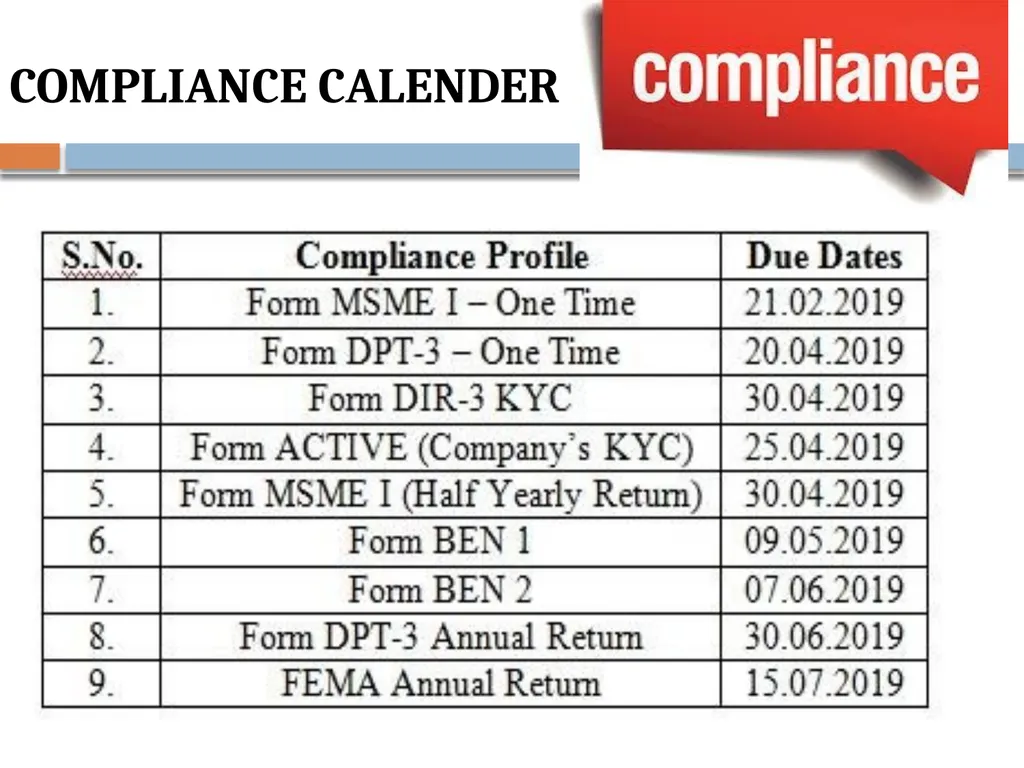
COMPLIANCE CALENDER<br>
02
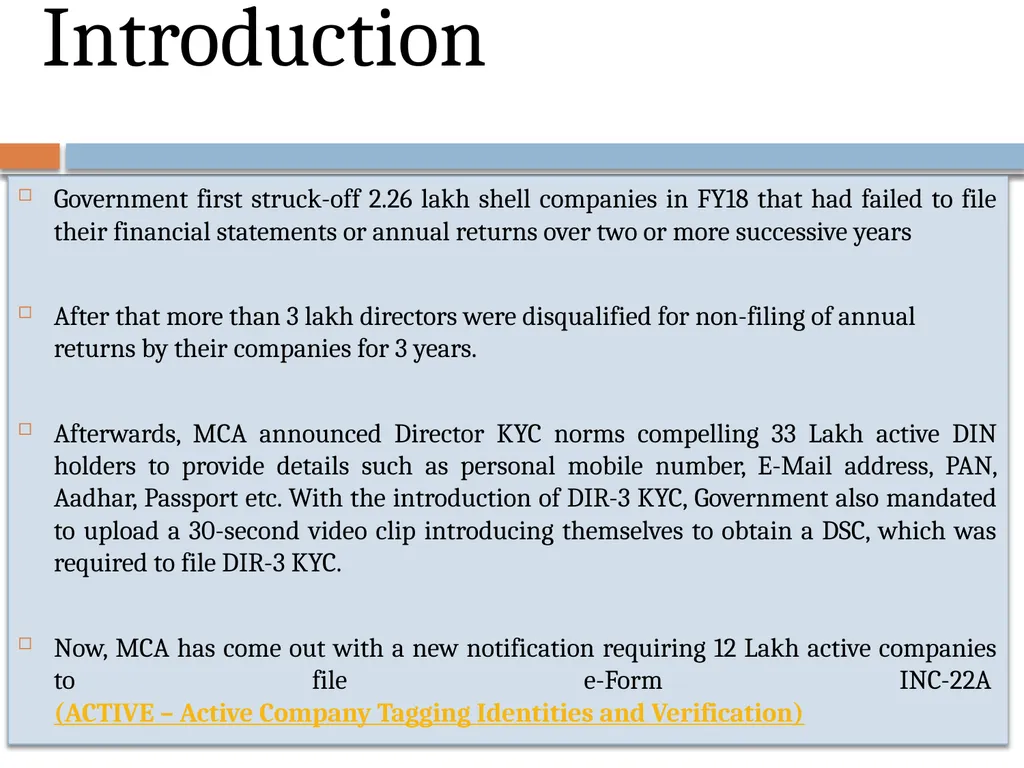
Introduction Government first struck-off 2.26 lakh shell companies in FY18 that had failed to file their financial statements or annual returns over two or more successive years
After that more than 3 lakh directors were disqualified for non-filing of annual returns by their companies for 3 years.
Afterwards, MCA announced Director KYC norms compelling 33 Lakh active DIN holders to provide details such as personal mobile number, E-Mail address, PAN, Aadhar, Passport etc. With the introduction of DIR-3 KYC, Government also mandated to upload a 30-second video clip introducing themselves to obtain a DSC, which was required to file DIR-3 KYC.
Now, MCA has come out with a new notification requiring 12 Lakh active companies to file e-Form INC-22A (ACTIVE – Active Company Tagging Identities and Verification)<br>
After that more than 3 lakh directors were disqualified for non-filing of annual returns by their companies for 3 years.
Afterwards, MCA announced Director KYC norms compelling 33 Lakh active DIN holders to provide details such as personal mobile number, E-Mail address, PAN, Aadhar, Passport etc. With the introduction of DIR-3 KYC, Government also mandated to upload a 30-second video clip introducing themselves to obtain a DSC, which was required to file DIR-3 KYC.
Now, MCA has come out with a new notification requiring 12 Lakh active companies to file e-Form INC-22A (ACTIVE – Active Company Tagging Identities and Verification)<br>
03
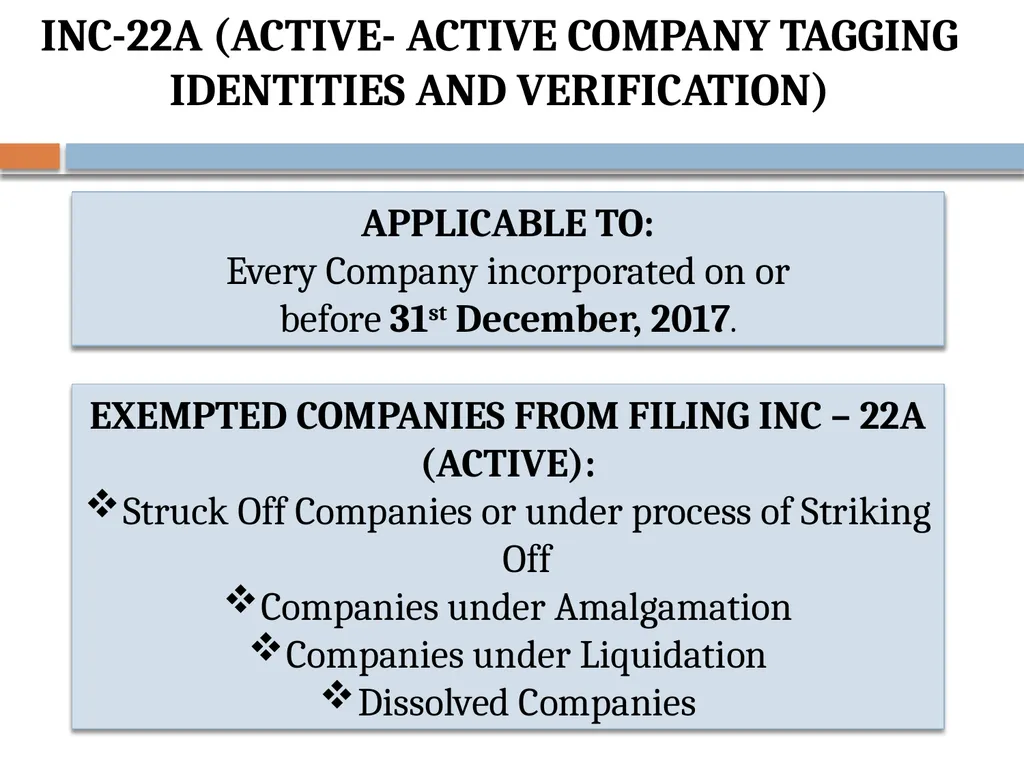
INC-22A (ACTIVE- ACTIVE COMPANY TAGGING IDENTITIES AND VERIFICATION) APPLICABLE TO:
Every Company incorporated on or before 31st December, 2017. EXEMPTED COMPANIES FROM FILING INC – 22A (ACTIVE):
Struck Off Companies or under process of Striking Off
Companies under Amalgamation
Companies under Liquidation
Dissolved Companies<br>
Every Company incorporated on or before 31st December, 2017. EXEMPTED COMPANIES FROM FILING INC – 22A (ACTIVE):
Struck Off Companies or under process of Striking Off
Companies under Amalgamation
Companies under Liquidation
Dissolved Companies<br>
04
CONSEQUENCES OF LATE / NON FILING:
Marking of status of Company as “Active – Non Compliant” in MCA Master Data.
Late filing Fee of 10,000/- from 26th April, 2019.
Filing of following e-forms will be barred for “Active – Non Compliant Companies”:
SH-7
PAS-3
DIR-12 (except cessation)
INC-22
INC-28 (for amalgamation /demerger)<br>
Marking of status of Company as “Active – Non Compliant” in MCA Master Data.
Late filing Fee of 10,000/- from 26th April, 2019.
Filing of following e-forms will be barred for “Active – Non Compliant Companies”:
SH-7
PAS-3
DIR-12 (except cessation)
INC-22
INC-28 (for amalgamation /demerger)<br>
05
DETAILS TO BE FILED IN e-FORM INC-22A (ACTIVE)
Longitude & Latitude of address of Registered Office
Photograph of Registered office showing external building and inside office showing at least One Director/KMP who is signing this form.
E-Mail address of the Company (which will be verified by an OTP)
List of all Directors with the requirement of active Status on MCA Portal
Number of Auditors with the details of PAN, Membership Number and period of Appointment
Number of Cost Auditors with the details of PAN, Membership Number and period of Appointment
Details of MD, CEO, Manager or WTD
Details of CS and CFO
SRN of AOC-4/XBRL and MGT-7 of FY-2017-18<br>
Longitude & Latitude of address of Registered Office
Photograph of Registered office showing external building and inside office showing at least One Director/KMP who is signing this form.
E-Mail address of the Company (which will be verified by an OTP)
List of all Directors with the requirement of active Status on MCA Portal
Number of Auditors with the details of PAN, Membership Number and period of Appointment
Number of Cost Auditors with the details of PAN, Membership Number and period of Appointment
Details of MD, CEO, Manager or WTD
Details of CS and CFO
SRN of AOC-4/XBRL and MGT-7 of FY-2017-18<br>
06
ORDINANCE An ordinance is an executive order issued by the President of India that holds the same force and effect as an Act passed by the Parliament. The President has the power to issue ordinances under Article 123 of the Constitution. In reality, it is the Union cabinet that forwards proposals for issuing ordinances to the President who merely gives his assent.<br>
07
NEED FOR ORDINANCE Ordinance is issued only on pressing issues or issues that require immediate consideration that cannot wait for Parliament to assemble and consider the bill.
If there is a possibility of a bill not being passed in the current session of Parliament, government can take the ordinance route pending its approval by the Parliament during a later session
An ordinance can be issued only when both Houses of Parliament, Lok Sabha and Rajya Sabha, are not in session. It is meant as a last resort and not a tool to replace the power or functioning of Parliament<br>
If there is a possibility of a bill not being passed in the current session of Parliament, government can take the ordinance route pending its approval by the Parliament during a later session
An ordinance can be issued only when both Houses of Parliament, Lok Sabha and Rajya Sabha, are not in session. It is meant as a last resort and not a tool to replace the power or functioning of Parliament<br>
08
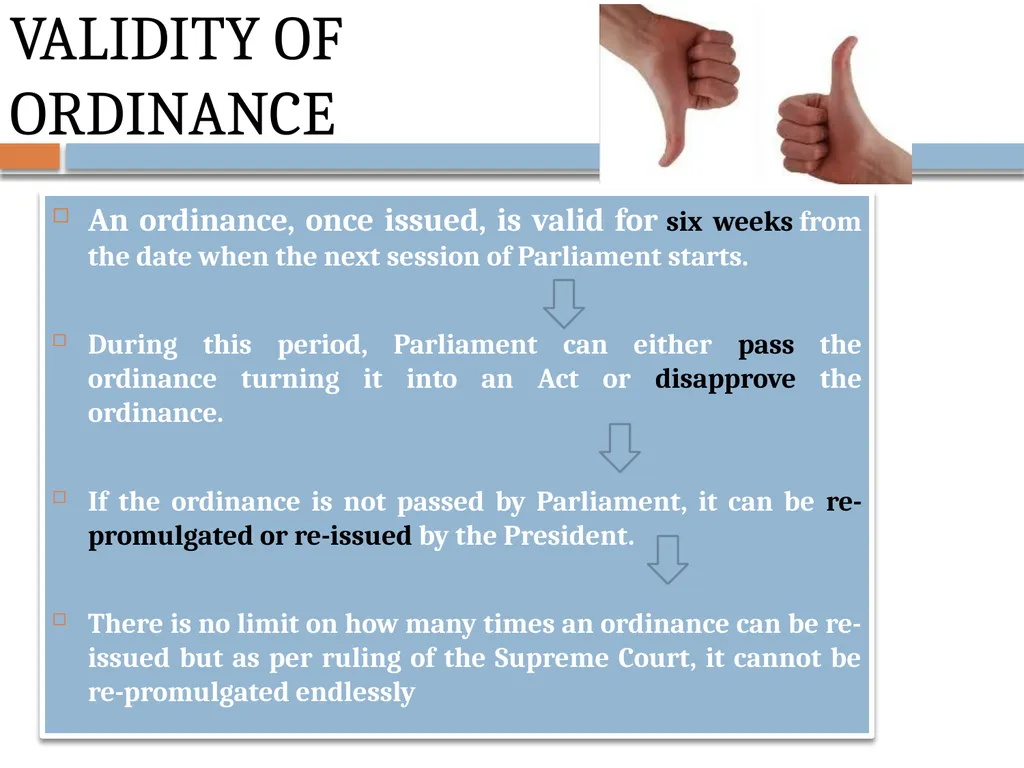
VALIDITY OF ORDINANCE An ordinance, once issued, is valid for six weeks from the date when the next session of Parliament starts.
During this period, Parliament can either pass the ordinance turning it into an Act or disapprove the ordinance.
If the ordinance is not passed by Parliament, it can be re-promulgated or re-issued by the President.
There is no limit on how many times an ordinance can be re-issued but as per ruling of the Supreme Court, it cannot be re-promulgated endlessly<br>
During this period, Parliament can either pass the ordinance turning it into an Act or disapprove the ordinance.
If the ordinance is not passed by Parliament, it can be re-promulgated or re-issued by the President.
There is no limit on how many times an ordinance can be re-issued but as per ruling of the Supreme Court, it cannot be re-promulgated endlessly<br>
09
Circular & Notification A circular is a internal memo or note of the Ministry/Department, which may clarify certain aspect of law and explanation. It may be superseded by yet another circular or legislative amendment .
A notification is a public notification in the Official Gazette on the Existing provision of the Act and is issued in exercise of certain power derived from a legislative enactment or provision<br>
A notification is a public notification in the Official Gazette on the Existing provision of the Act and is issued in exercise of certain power derived from a legislative enactment or provision<br>
10
Difference Between Fine and Penalty
Company Ordinance 2018- In General words, Fine imposed when any application/ petition filed with any court (like: Hon’ble NCLT, Hon’ble High Court)
And :
penalty imposed when company made any non compliance and authority directly can impose penalty on them.<br>
And :
penalty imposed when company made any non compliance and authority directly can impose penalty on them.<br>
11
OXFORD DICTIONARY Fine and Penalty : Fine is “a sum of money exacted (demand, impose) as a penalty by a court of law or other authority.”
Penalty is “a punishment imposed for breaking a law, rule, or contract.”<br>
Penalty is “a punishment imposed for breaking a law, rule, or contract.”<br>
12
Condonation and Compounding of Offences Section 460-
Condonation of delay is done in case where any application required to be made to the CG or any document required to be filed to ROC is not filed within time specified for the same.
Section 441-
Application for compounding of offence could be made when any offence is done, by Company or any officer, which is punishable only with fine or with fine or imprisonment, to the Tribunal or RD or Special Court as the case may be. 13<br>
Condonation of delay is done in case where any application required to be made to the CG or any document required to be filed to ROC is not filed within time specified for the same.
Section 441-
Application for compounding of offence could be made when any offence is done, by Company or any officer, which is punishable only with fine or with fine or imprisonment, to the Tribunal or RD or Special Court as the case may be. 13<br>
13
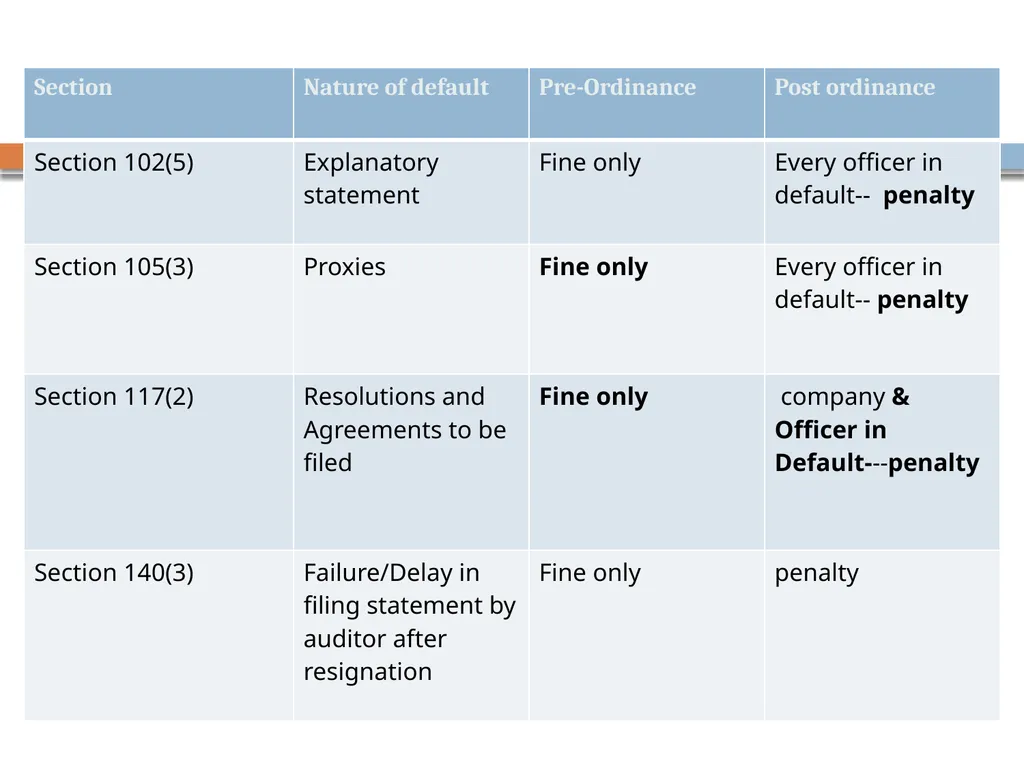
SECTION 117(2) Thus, before ordinance section 117(2) states about Fine
And
after ordinance section states about Penalty.
Therefore, before ordinance default can be make good by petition in NCLT byfiling compounding application Suo Moto or after receipt of notice form ROC/ MCA. And, After Ordinance ROC may start levying penalty by issuing ‘Show Cause Notice’ without any petition to NCLT or any other authorities.
It will reduce the burden of NCLT as after this re-categorisation, 24 offenses will not be looked after by NCLT.<br>
And
after ordinance section states about Penalty.
Therefore, before ordinance default can be make good by petition in NCLT byfiling compounding application Suo Moto or after receipt of notice form ROC/ MCA. And, After Ordinance ROC may start levying penalty by issuing ‘Show Cause Notice’ without any petition to NCLT or any other authorities.
It will reduce the burden of NCLT as after this re-categorisation, 24 offenses will not be looked after by NCLT.<br>
14
NOTIFICATIONS NOTIFYING APPLICABILITY OF SECTIONS OF COMPANIES AMENDMENT ACT, 2017
MCA vide notification dated 05th July, 2018 notified 4 Section of Companies Amendment Act, 2017. These 4 sections shall be come into effect w.e.f. 15th August, 2018. (LIST A).
MCA vide notification dated 05th July, 2018 notified 1 Section of Companies Amendment Act, 2017. (LIST B).
MCA vide notification dated: 13th June, 2018 has notified 5 Section of Companies Amendment Act, 2017 (LIST C).
Earlier MCA has notified vide notification dated: 07thMay, 2018, 28 Section (Partly or Fully) of Companies Amendment Act, 2017 (LIST D),
43 sections (Partly or Fully) of Companies Amendment Act, 2017 w.e.f. 9th February, 2018 (LIST E) and 2 Sections of Companies Amendment Act, 2017 w.e.f. 26.01.2018 (LIST F).<br>
MCA vide notification dated 05th July, 2018 notified 4 Section of Companies Amendment Act, 2017. These 4 sections shall be come into effect w.e.f. 15th August, 2018. (LIST A).
MCA vide notification dated 05th July, 2018 notified 1 Section of Companies Amendment Act, 2017. (LIST B).
MCA vide notification dated: 13th June, 2018 has notified 5 Section of Companies Amendment Act, 2017 (LIST C).
Earlier MCA has notified vide notification dated: 07thMay, 2018, 28 Section (Partly or Fully) of Companies Amendment Act, 2017 (LIST D),
43 sections (Partly or Fully) of Companies Amendment Act, 2017 w.e.f. 9th February, 2018 (LIST E) and 2 Sections of Companies Amendment Act, 2017 w.e.f. 26.01.2018 (LIST F).<br>
15
COMPANIES (AMENDMENT) ORDINANCE 2018<br>
16
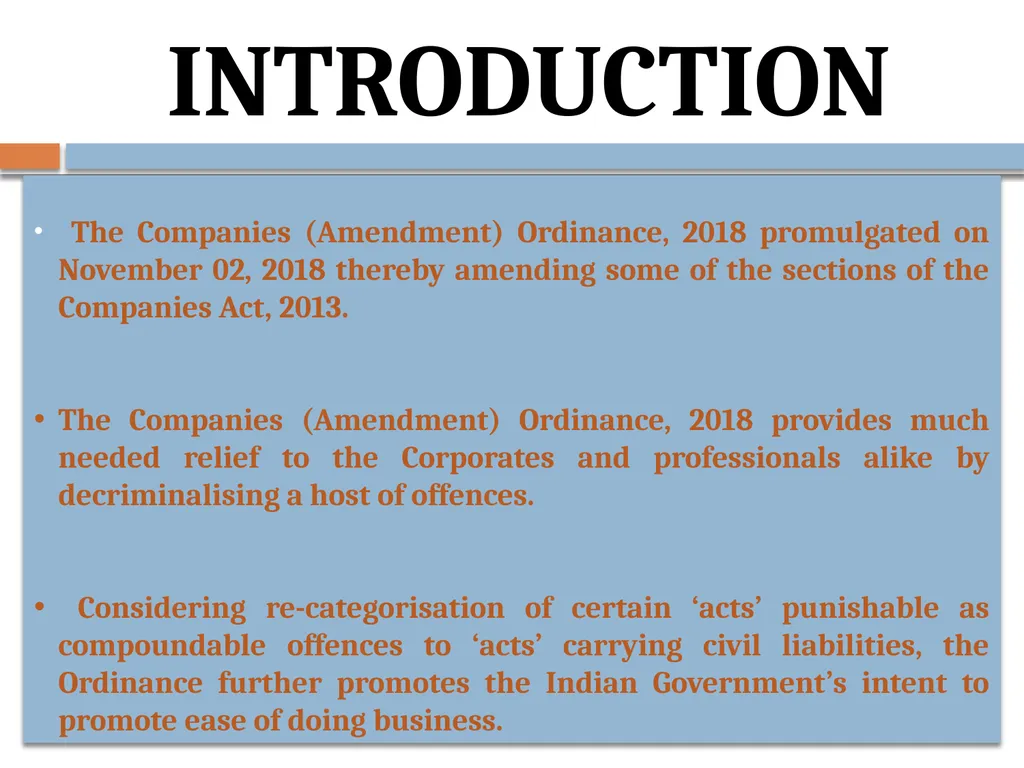
The Companies (Amendment) Ordinance, 2018 promulgated on November 02, 2018 thereby amending some of the sections of the Companies Act, 2013.
The Companies (Amendment) Ordinance, 2018 provides much needed relief to the Corporates and professionals alike by decriminalising a host of offences.
Considering re-categorisation of certain ‘acts’ punishable as compoundable offences to ‘acts’ carrying civil liabilities, the Ordinance further promotes the Indian Government’s intent to promote ease of doing business. INTRODUCTION<br>
The Companies (Amendment) Ordinance, 2018 provides much needed relief to the Corporates and professionals alike by decriminalising a host of offences.
Considering re-categorisation of certain ‘acts’ punishable as compoundable offences to ‘acts’ carrying civil liabilities, the Ordinance further promotes the Indian Government’s intent to promote ease of doing business. INTRODUCTION<br>
17
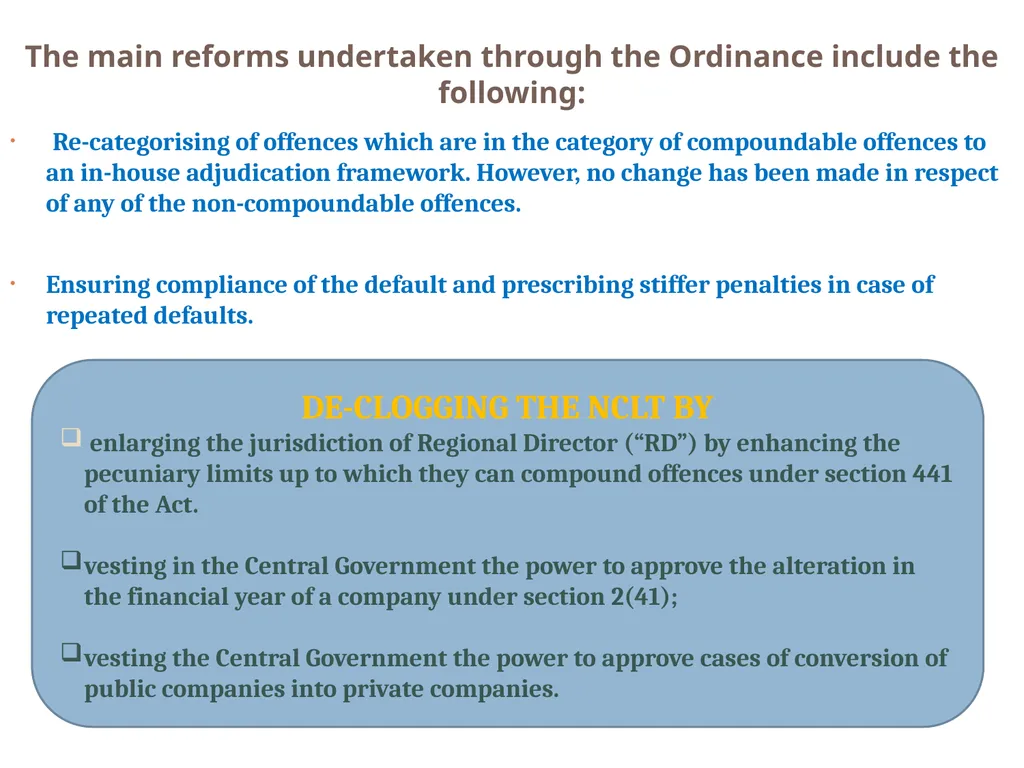
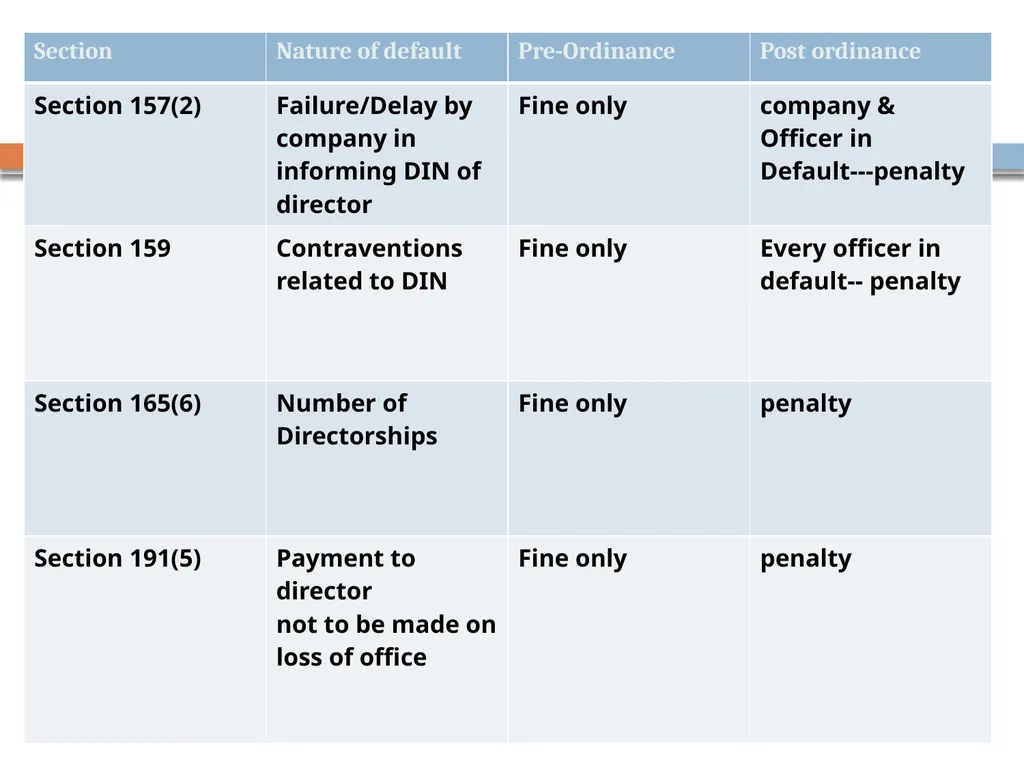
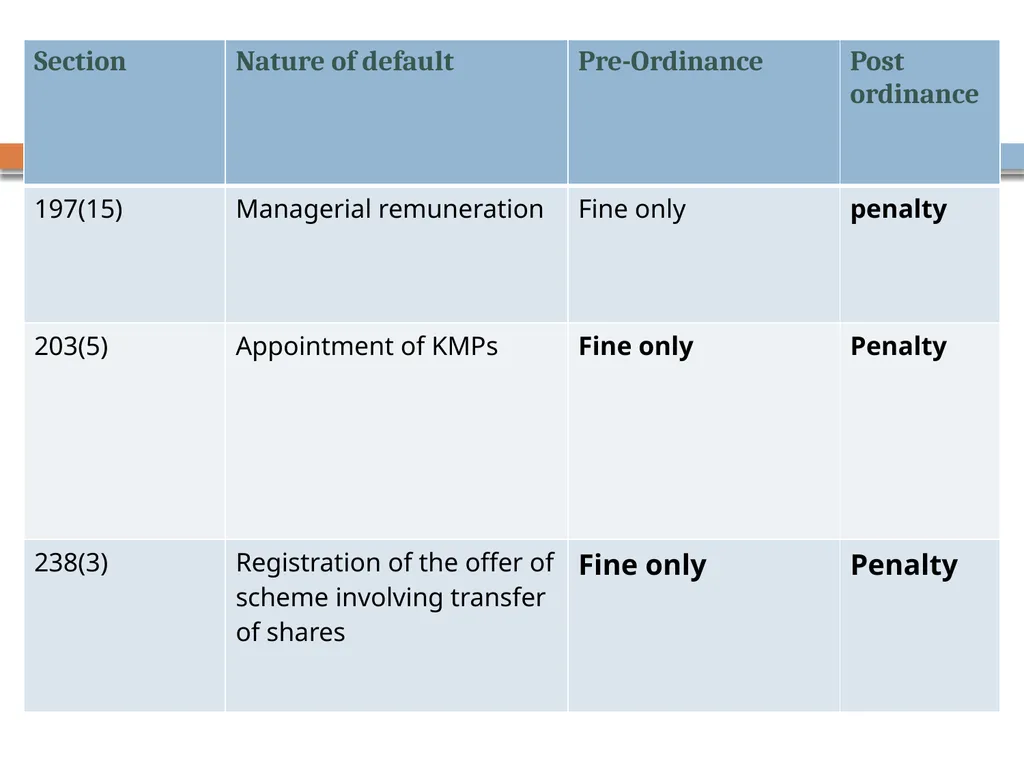
The main reforms undertaken through the Ordinance include the following: Re-categorising of offences which are in the category of compoundable offences to an in-house adjudication framework. However, no change has been made in respect of any of the non-compoundable offences.
Ensuring compliance of the default and prescribing stiffer penalties in case of repeated defaults. DE-CLOGGING THE NCLT BY
enlarging the jurisdiction of Regional Director (“RD”) by enhancing the pecuniary limits up to which they can compound offences under section 441 of the Act.
vesting in the Central Government the power to approve the alteration in the financial year of a company under section 2(41);
vesting the Central Government the power to approve cases of conversion of public companies into private companies.<br>
Ensuring compliance of the default and prescribing stiffer penalties in case of repeated defaults. DE-CLOGGING THE NCLT BY
enlarging the jurisdiction of Regional Director (“RD”) by enhancing the pecuniary limits up to which they can compound offences under section 441 of the Act.
vesting in the Central Government the power to approve the alteration in the financial year of a company under section 2(41);
vesting the Central Government the power to approve cases of conversion of public companies into private companies.<br>
18
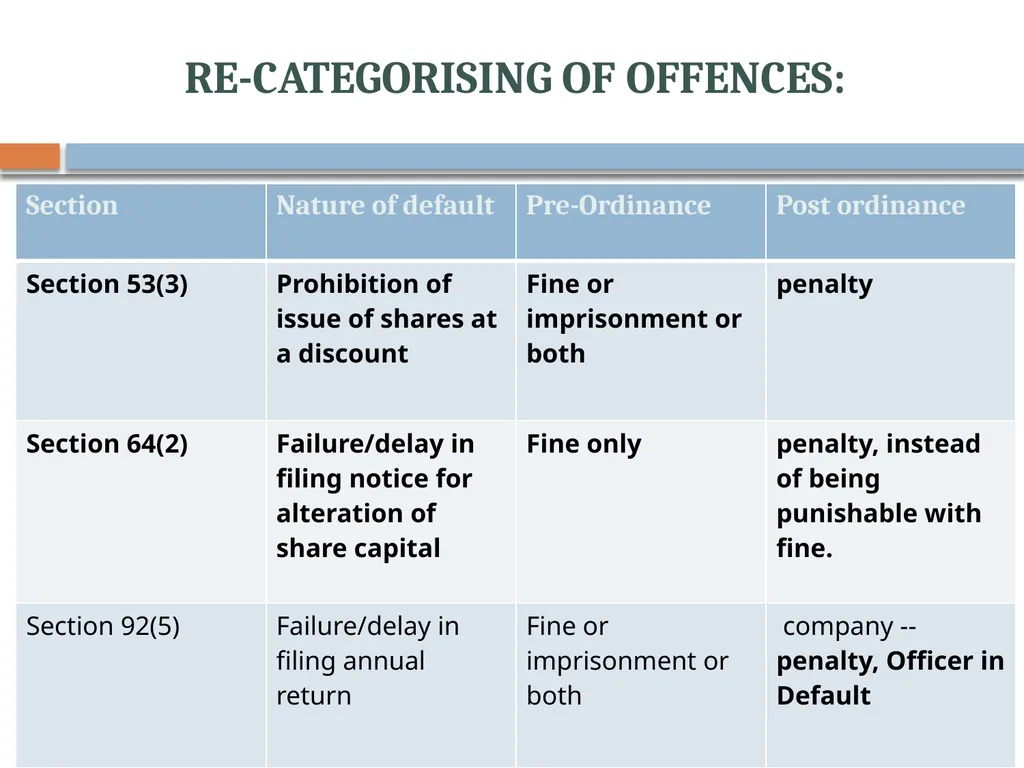
RE-CATEGORISING OF OFFENCES:<br>
19
VESTING IN THE CENTRAL GOVERNMENT THE POWER TO APPROVE THE ALTERATION IN THE FINANCIAL YEAR OF A COMPANY UNDER SECTION 2(41)
As per Companies Act, in case of Indian company having Holding/ subsidiary/ Associate Company situated outside India, it is allowed the change the financial year as per such company with the approval of TRIBUNAL.
Through this Ordinance, Power of Tribunal has been transferred from Tribunal to Central Government, therefore, financial year of Company can be changed with approval of Central Government.<br>
As per Companies Act, in case of Indian company having Holding/ subsidiary/ Associate Company situated outside India, it is allowed the change the financial year as per such company with the approval of TRIBUNAL.
Through this Ordinance, Power of Tribunal has been transferred from Tribunal to Central Government, therefore, financial year of Company can be changed with approval of Central Government.<br>
20
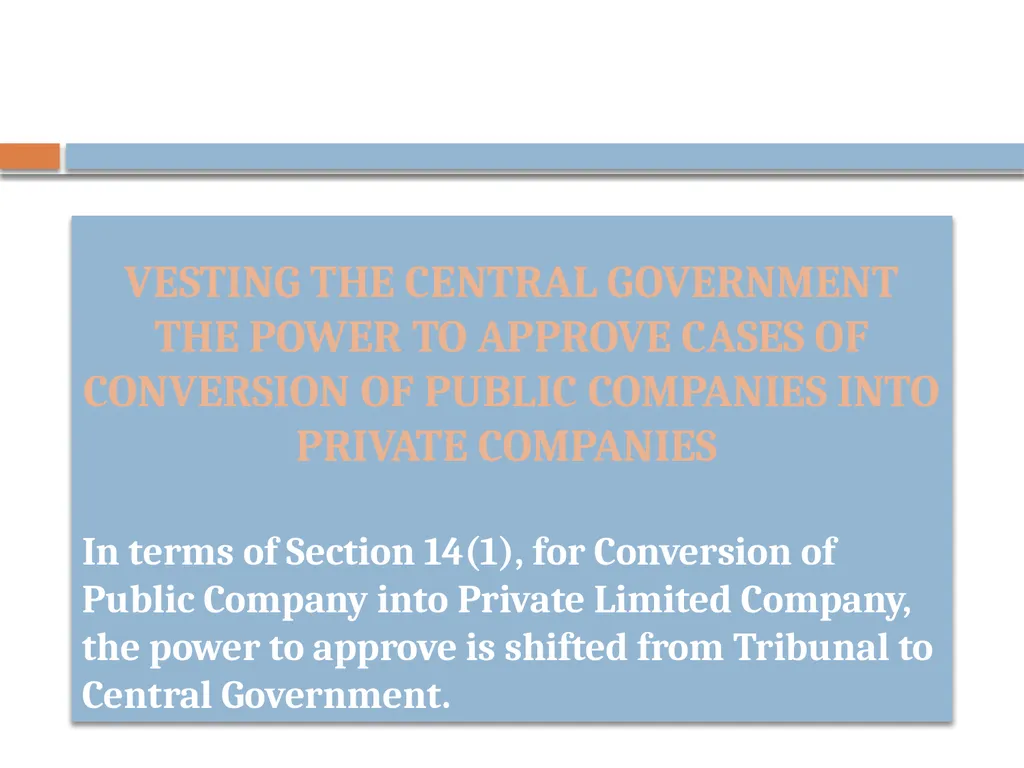
VESTING THE CENTRAL GOVERNMENT THE POWER TO APPROVE CASES OF CONVERSION OF PUBLIC COMPANIES INTO PRIVATE COMPANIES
In terms of Section 14(1), for Conversion of Public Company into Private Limited Company, the power to approve is shifted from Tribunal to Central Government.<br>
In terms of Section 14(1), for Conversion of Public Company into Private Limited Company, the power to approve is shifted from Tribunal to Central Government.<br>
21
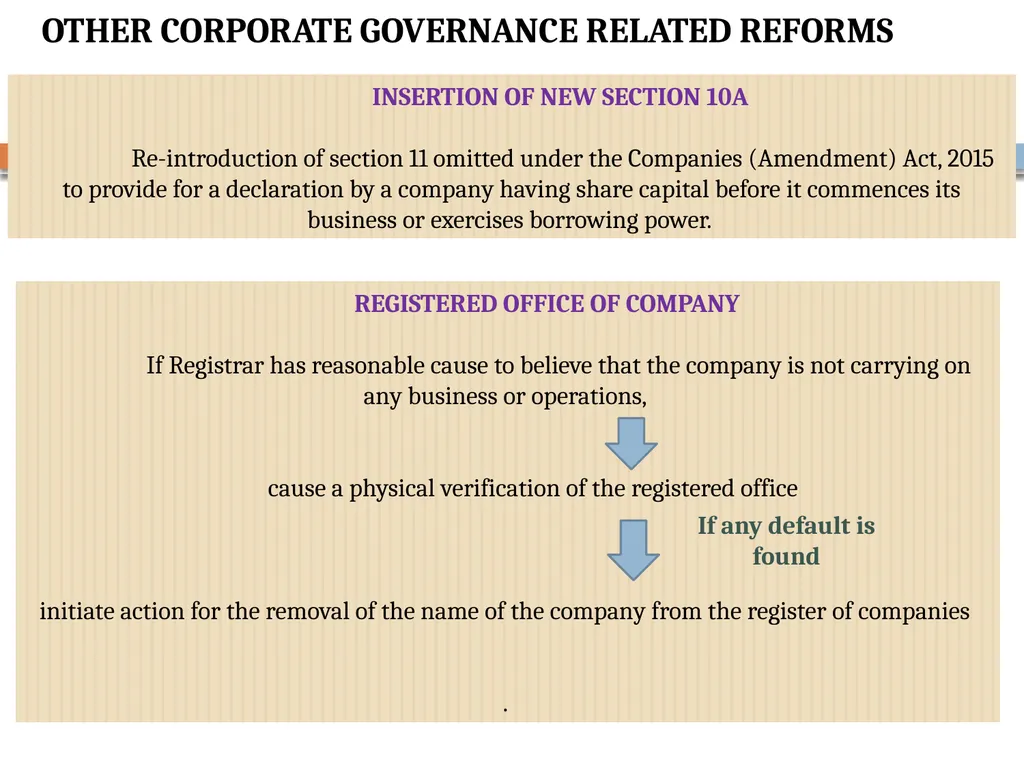
OTHER CORPORATE GOVERNANCE RELATED REFORMS INSERTION OF NEW SECTION 10A
Re-introduction of section 11 omitted under the Companies (Amendment) Act, 2015 to provide for a declaration by a company having share capital before it commences its business or exercises borrowing power. REGISTERED OFFICE OF COMPANY
If Registrar has reasonable cause to believe that the company is not carrying on any business or operations,
cause a physical verification of the registered office
initiate action for the removal of the name of the company from the register of companies
. If any default is found<br>
Re-introduction of section 11 omitted under the Companies (Amendment) Act, 2015 to provide for a declaration by a company having share capital before it commences its business or exercises borrowing power. REGISTERED OFFICE OF COMPANY
If Registrar has reasonable cause to believe that the company is not carrying on any business or operations,
cause a physical verification of the registered office
initiate action for the removal of the name of the company from the register of companies
. If any default is found<br>
22
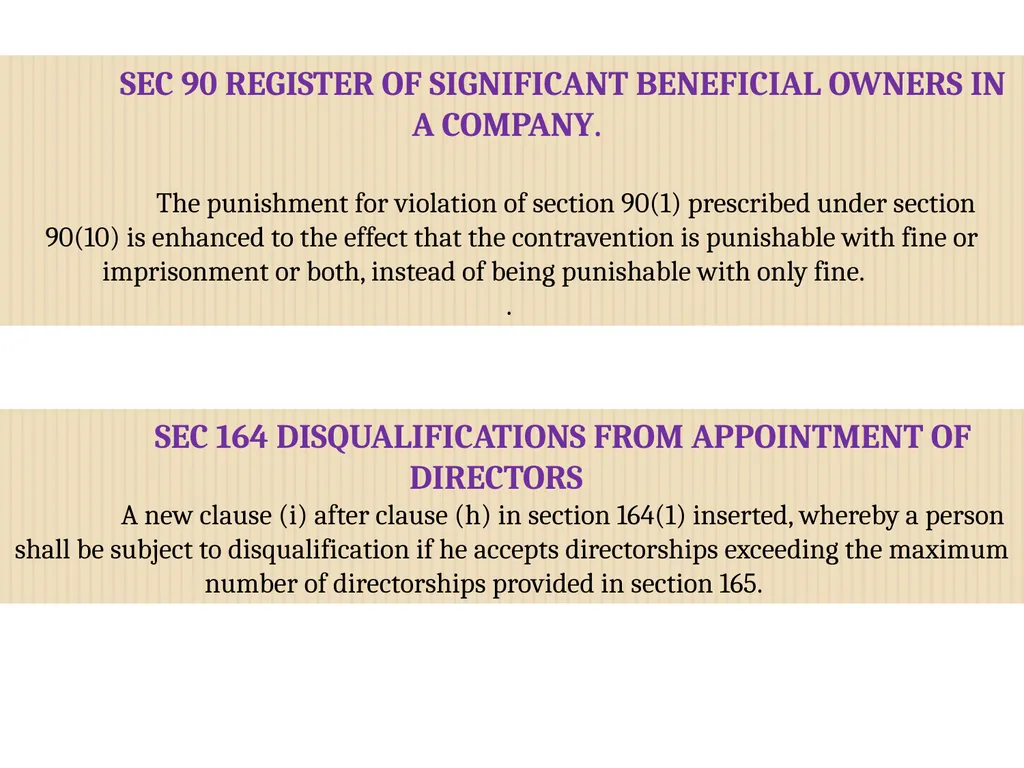
SEC 90 REGISTER OF SIGNIFICANT BENEFICIAL OWNERS IN A COMPANY.
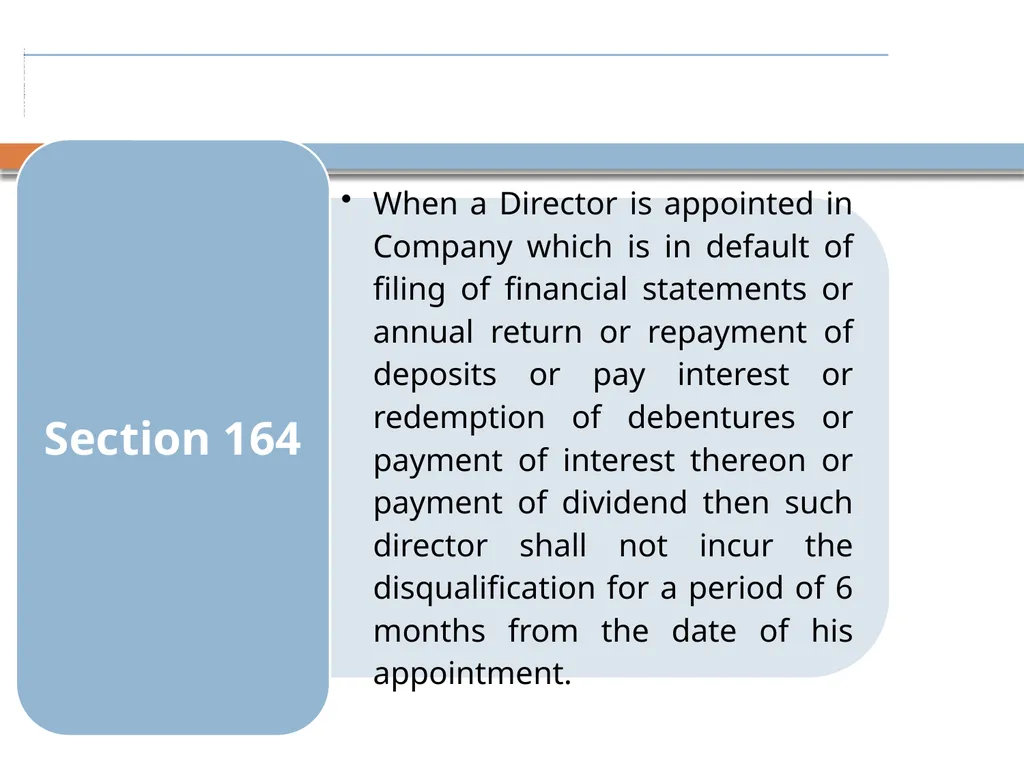
The punishment for violation of section 90(1) prescribed under section 90(10) is enhanced to the effect that the contravention is punishable with fine or imprisonment or both, instead of being punishable with only fine.
. SEC 164 DISQUALIFICATIONS FROM APPOINTMENT OF DIRECTORS
A new clause (i) after clause (h) in section 164(1) inserted, whereby a person shall be subject to disqualification if he accepts directorships exceeding the maximum number of directorships provided in section 165.<br>
The punishment for violation of section 90(1) prescribed under section 90(10) is enhanced to the effect that the contravention is punishable with fine or imprisonment or both, instead of being punishable with only fine.
. SEC 164 DISQUALIFICATIONS FROM APPOINTMENT OF DIRECTORS
A new clause (i) after clause (h) in section 164(1) inserted, whereby a person shall be subject to disqualification if he accepts directorships exceeding the maximum number of directorships provided in section 165.<br>
23
COMPANIES (AMMENDMENT) ORDINANCE 2019<br>
24
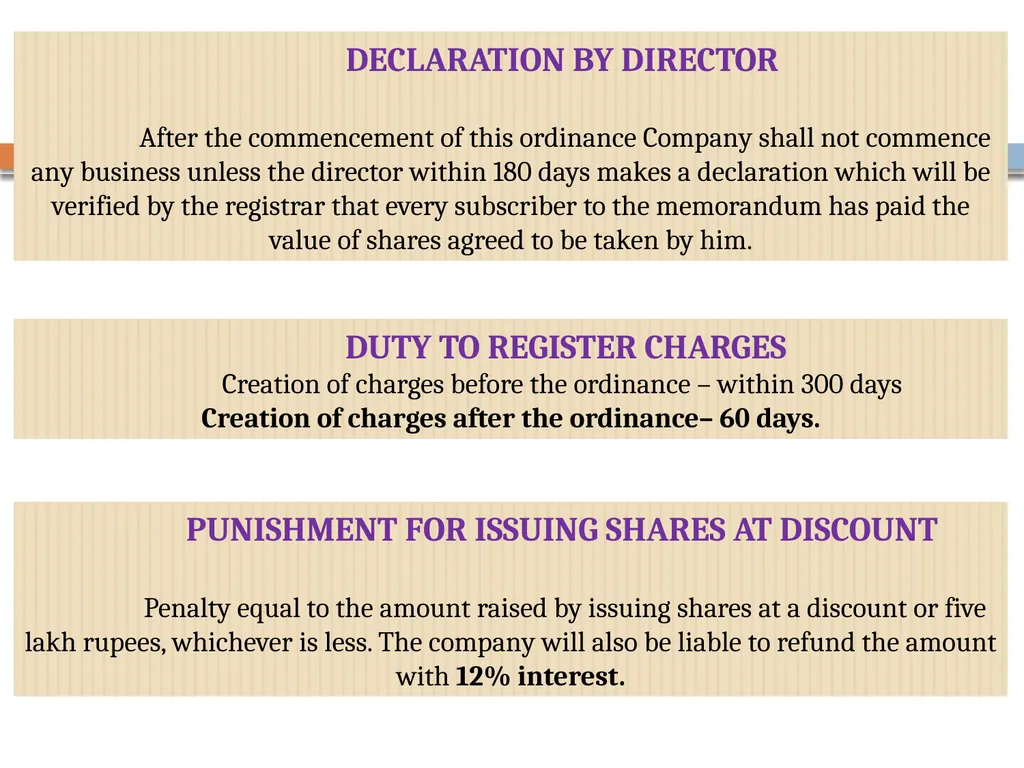
DECLARATION BY DIRECTOR
After the commencement of this ordinance Company shall not commence any business unless the director within 180 days makes a declaration which will be verified by the registrar that every subscriber to the memorandum has paid the value of shares agreed to be taken by him. PUNISHMENT FOR ISSUING SHARES AT DISCOUNT
Penalty equal to the amount raised by issuing shares at a discount or five lakh rupees, whichever is less. The company will also be liable to refund the amount with 12% interest. DUTY TO REGISTER CHARGES
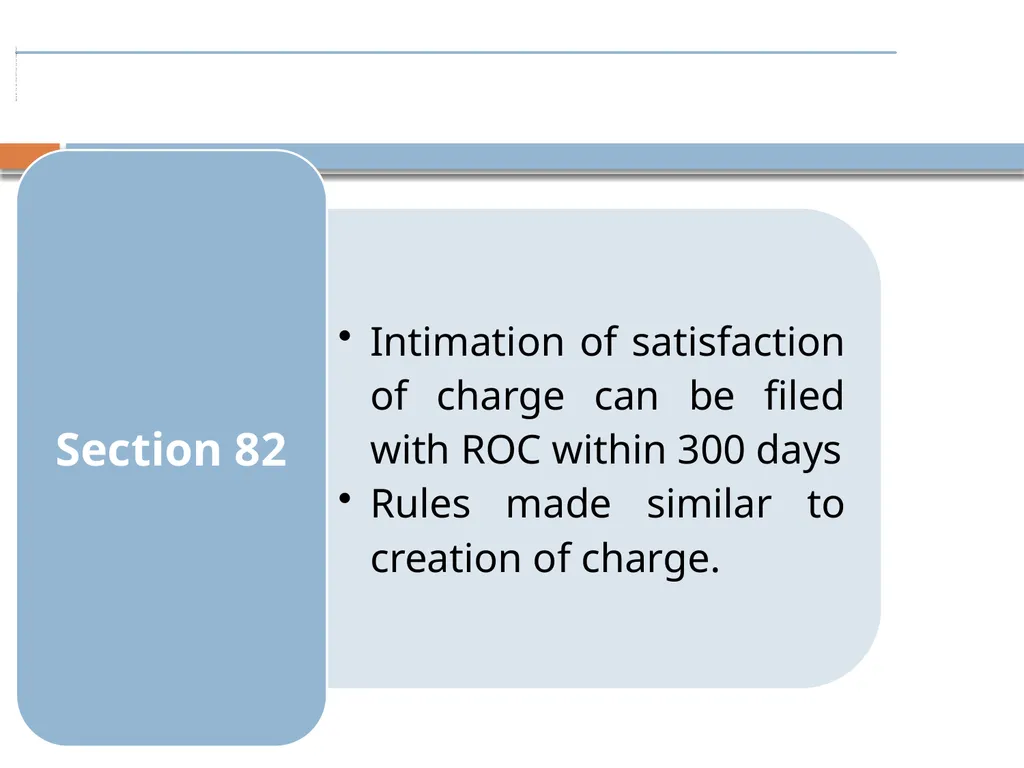
Creation of charges before the ordinance – within 300 days
Creation of charges after the ordinance– 60 days.<br>
After the commencement of this ordinance Company shall not commence any business unless the director within 180 days makes a declaration which will be verified by the registrar that every subscriber to the memorandum has paid the value of shares agreed to be taken by him. PUNISHMENT FOR ISSUING SHARES AT DISCOUNT
Penalty equal to the amount raised by issuing shares at a discount or five lakh rupees, whichever is less. The company will also be liable to refund the amount with 12% interest. DUTY TO REGISTER CHARGES
Creation of charges before the ordinance – within 300 days
Creation of charges after the ordinance– 60 days.<br>
25
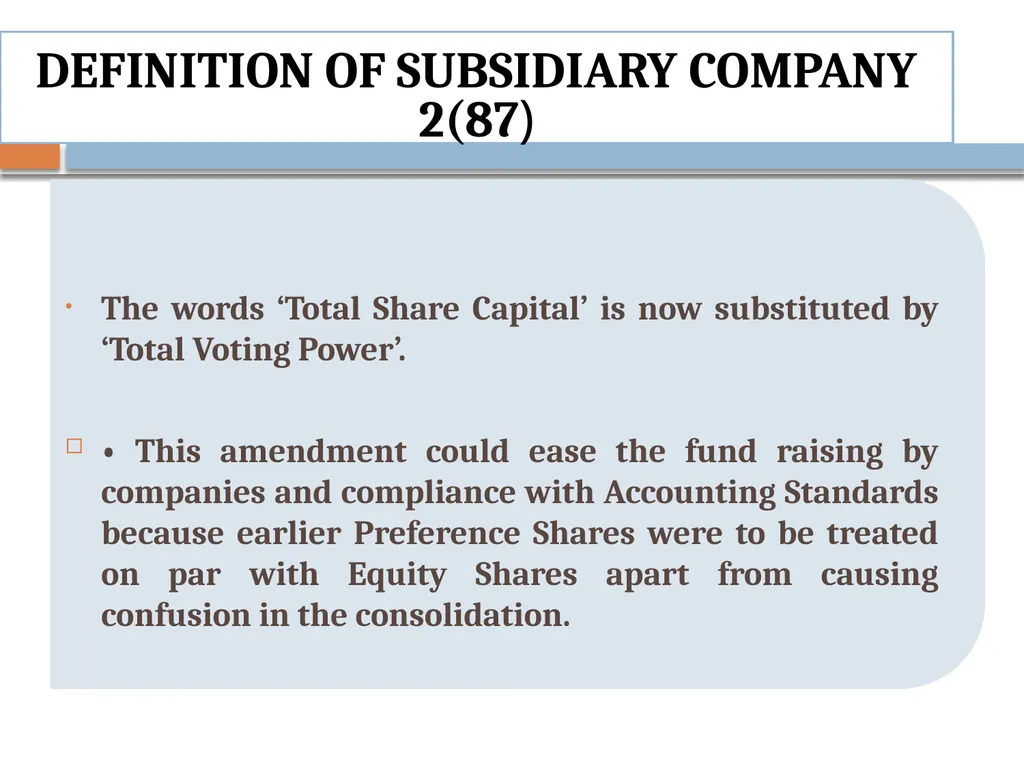
DEFINITION OF SUBSIDIARY COMPANY 2(87)<br>
26
Condonation and Compounding of Offences 54 Section 460-
Condonation of delay is done in case where any application required to be made to the CG or any document required to be filed to ROC is not filed within time specified for the same.
Section 441-
Application for compounding of offence could be made when any offence is done, by Company or any officer, which is punishable only with fine or with fine or imprisonment, to the Tribunal or RD or Special Court as the case may be.<br>
Condonation of delay is done in case where any application required to be made to the CG or any document required to be filed to ROC is not filed within time specified for the same.
Section 441-
Application for compounding of offence could be made when any offence is done, by Company or any officer, which is punishable only with fine or with fine or imprisonment, to the Tribunal or RD or Special Court as the case may be.<br>
27
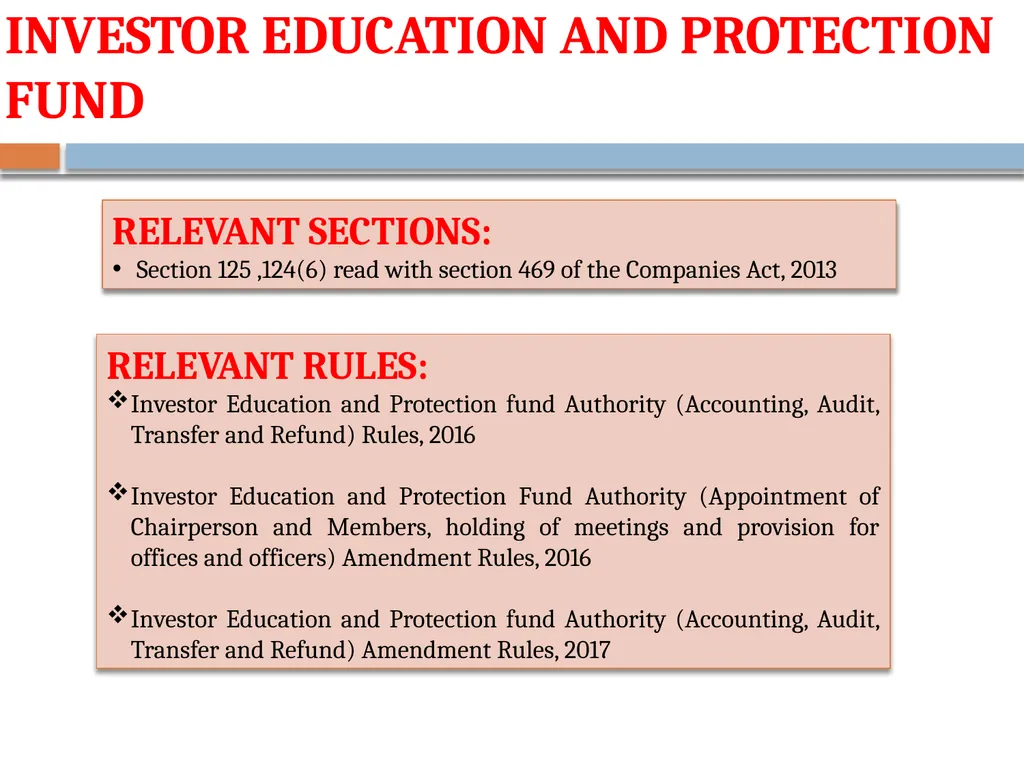
INVESTOR EDUCATION AND PROTECTION FUND RELEVANT SECTIONS:
Section 125 ,124(6) read with section 469 of the Companies Act, 2013 RELEVANT RULES:
Investor Education and Protection fund Authority (Accounting, Audit, Transfer and Refund) Rules, 2016
Investor Education and Protection Fund Authority (Appointment of Chairperson and Members, holding of meetings and provision for offices and officers) Amendment Rules, 2016
Investor Education and Protection fund Authority (Accounting, Audit, Transfer and Refund) Amendment Rules, 2017<br>
Section 125 ,124(6) read with section 469 of the Companies Act, 2013 RELEVANT RULES:
Investor Education and Protection fund Authority (Accounting, Audit, Transfer and Refund) Rules, 2016
Investor Education and Protection Fund Authority (Appointment of Chairperson and Members, holding of meetings and provision for offices and officers) Amendment Rules, 2016
Investor Education and Protection fund Authority (Accounting, Audit, Transfer and Refund) Amendment Rules, 2017<br>
28
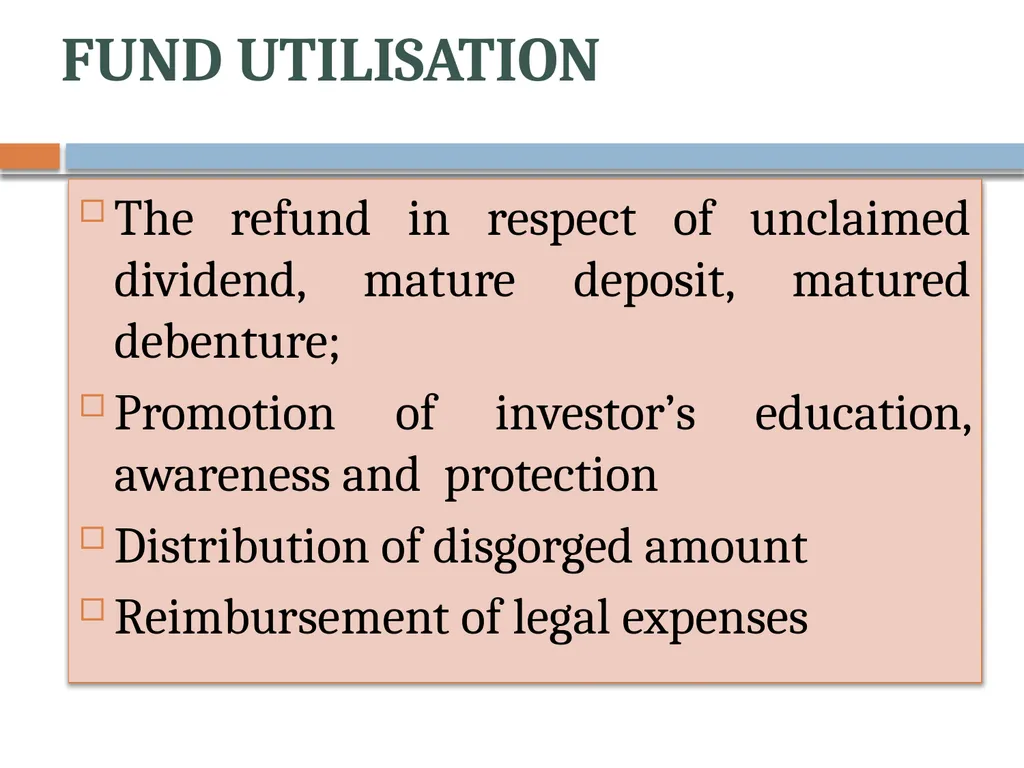
FUND UTILISATION The refund in respect of unclaimed dividend, mature deposit, matured debenture;
Promotion of investor’s education, awareness and protection
Distribution of disgorged amount
Reimbursement of legal expenses<br>
Promotion of investor’s education, awareness and protection
Distribution of disgorged amount
Reimbursement of legal expenses<br>
29
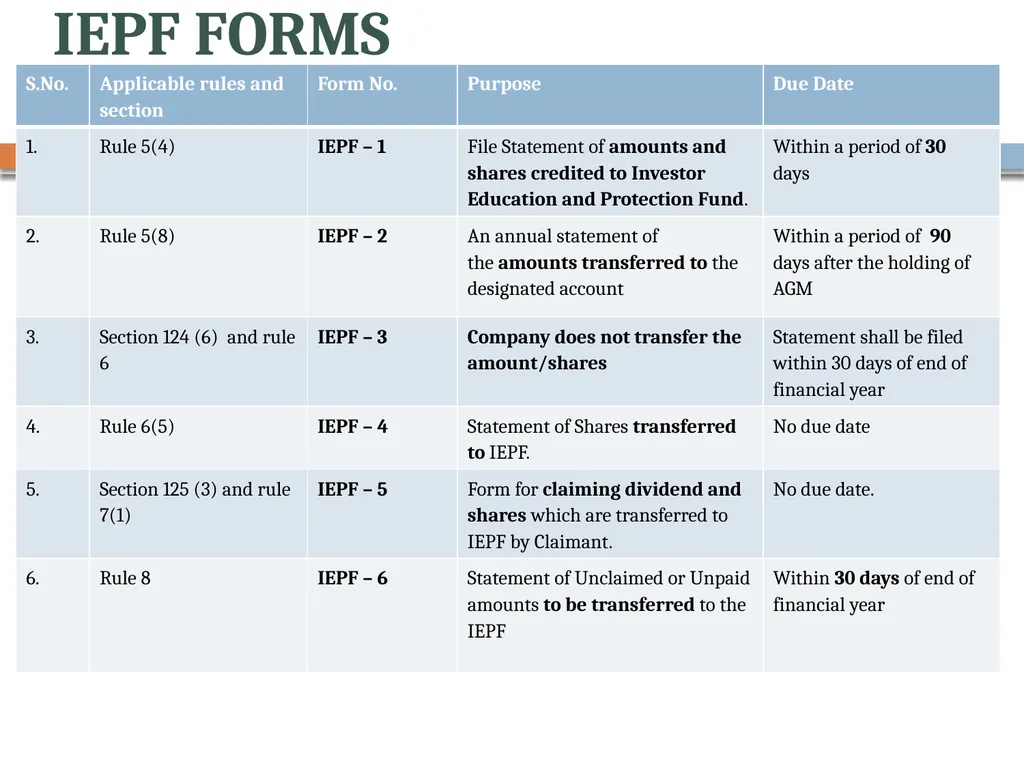
IEPF FORMS<br>
30
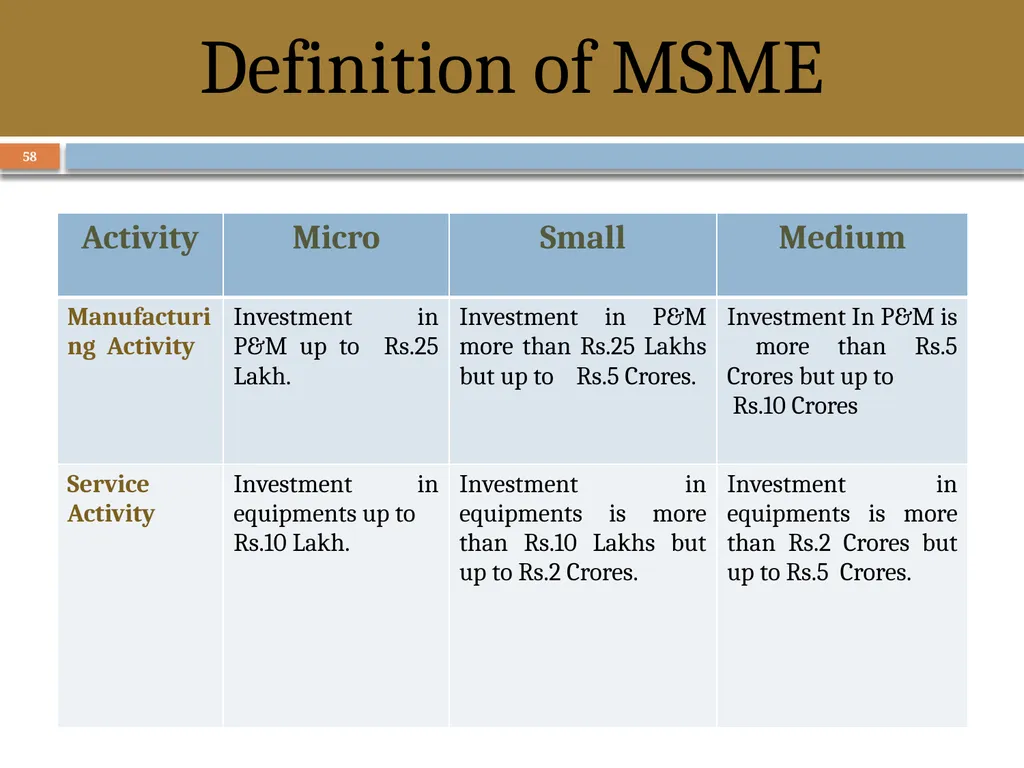
Definition of MSME 58<br>
31
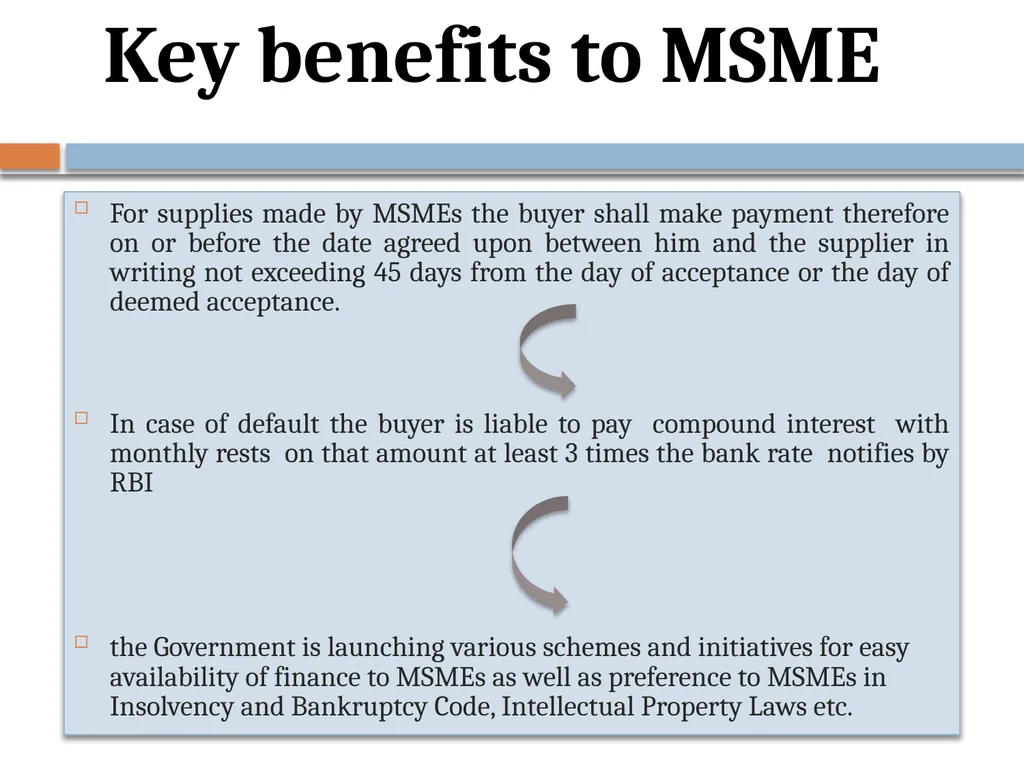
Key benefits to MSME For supplies made by MSMEs the buyer shall make payment therefore on or before the date agreed upon between him and the supplier in writing not exceeding 45 days from the day of acceptance or the day of deemed acceptance.
In case of default the buyer is liable to pay compound interest with monthly rests on that amount at least 3 times the bank rate notifies by RBI
the Government is launching various schemes and initiatives for easy availability of finance to MSMEs as well as preference to MSMEs in Insolvency and Bankruptcy Code, Intellectual Property Laws etc.<br>
In case of default the buyer is liable to pay compound interest with monthly rests on that amount at least 3 times the bank rate notifies by RBI
the Government is launching various schemes and initiatives for easy availability of finance to MSMEs as well as preference to MSMEs in Insolvency and Bankruptcy Code, Intellectual Property Laws etc.<br>
32
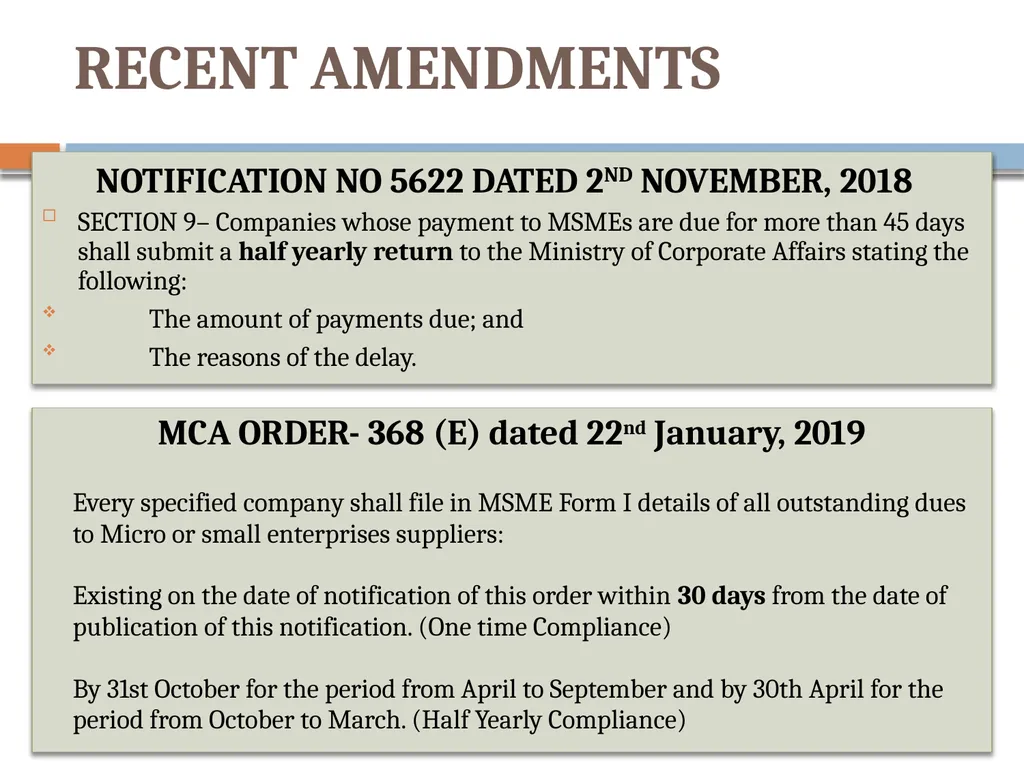
RECENT AMENDMENTS NOTIFICATION NO 5622 DATED 2ND NOVEMBER, 2018
SECTION 9– Companies whose payment to MSMEs are due for more than 45 days shall submit a half yearly return to the Ministry of Corporate Affairs stating the following:
The amount of payments due; and
The reasons of the delay. MCA ORDER- 368 (E) dated 22nd January, 2019
Every specified company shall file in MSME Form I details of all outstanding dues to Micro or small enterprises suppliers:
Existing on the date of notification of this order within 30 days from the date of publication of this notification. (One time Compliance)
By 31st October for the period from April to September and by 30th April for the period from October to March. (Half Yearly Compliance)<br>
SECTION 9– Companies whose payment to MSMEs are due for more than 45 days shall submit a half yearly return to the Ministry of Corporate Affairs stating the following:
The amount of payments due; and
The reasons of the delay. MCA ORDER- 368 (E) dated 22nd January, 2019
Every specified company shall file in MSME Form I details of all outstanding dues to Micro or small enterprises suppliers:
Existing on the date of notification of this order within 30 days from the date of publication of this notification. (One time Compliance)
By 31st October for the period from April to September and by 30th April for the period from October to March. (Half Yearly Compliance)<br>
33
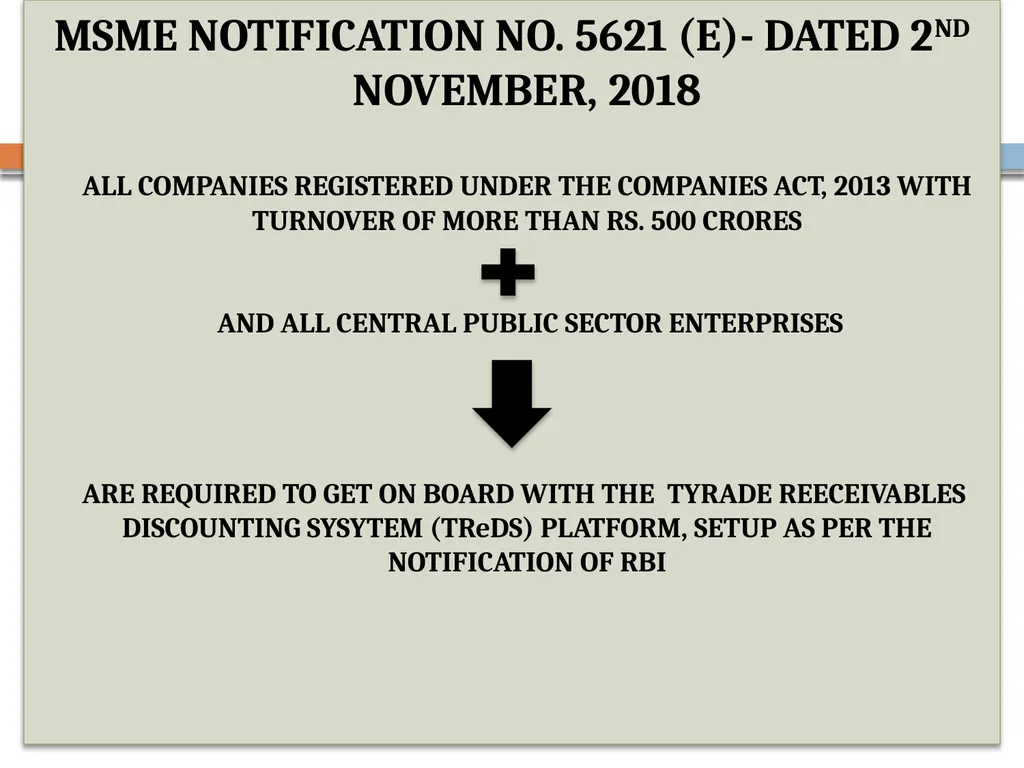
MSME NOTIFICATION NO. 5621 (E)- DATED 2ND NOVEMBER, 2018
ALL COMPANIES REGISTERED UNDER THE COMPANIES ACT, 2013 WITH TURNOVER OF MORE THAN RS. 500 CRORES
AND ALL CENTRAL PUBLIC SECTOR ENTERPRISES
ARE REQUIRED TO GET ON BOARD WITH THE TYRADE REECEIVABLES DISCOUNTING SYSYTEM (TReDS) PLATFORM, SETUP AS PER THE NOTIFICATION OF RBI<br>
ALL COMPANIES REGISTERED UNDER THE COMPANIES ACT, 2013 WITH TURNOVER OF MORE THAN RS. 500 CRORES
AND ALL CENTRAL PUBLIC SECTOR ENTERPRISES
ARE REQUIRED TO GET ON BOARD WITH THE TYRADE REECEIVABLES DISCOUNTING SYSYTEM (TReDS) PLATFORM, SETUP AS PER THE NOTIFICATION OF RBI<br>
34
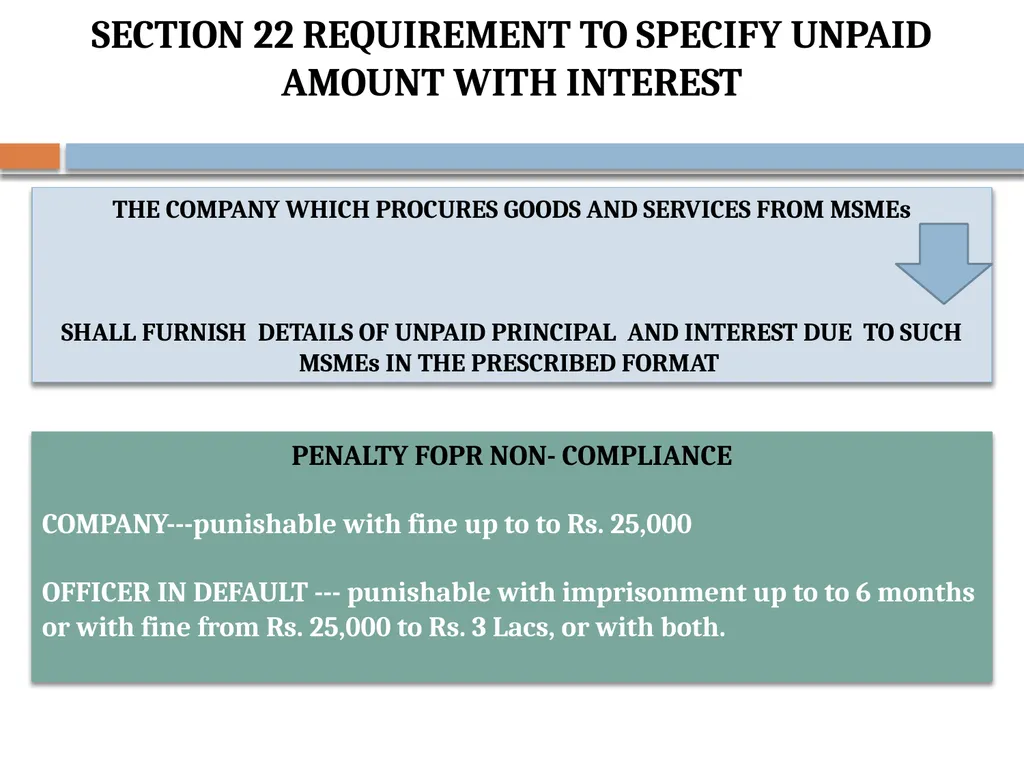
SECTION 22 REQUIREMENT TO SPECIFY UNPAID AMOUNT WITH INTEREST THE COMPANY WHICH PROCURES GOODS AND SERVICES FROM MSMEs
SHALL FURNISH DETAILS OF UNPAID PRINCIPAL AND INTEREST DUE TO SUCH MSMEs IN THE PRESCRIBED FORMAT PENALTY FOPR NON- COMPLIANCE
COMPANY---punishable with fine up to to Rs. 25,000
OFFICER IN DEFAULT --- punishable with imprisonment up to to 6 months or with fine from Rs. 25,000 to Rs. 3 Lacs, or with both.<br>
SHALL FURNISH DETAILS OF UNPAID PRINCIPAL AND INTEREST DUE TO SUCH MSMEs IN THE PRESCRIBED FORMAT PENALTY FOPR NON- COMPLIANCE
COMPANY---punishable with fine up to to Rs. 25,000
OFFICER IN DEFAULT --- punishable with imprisonment up to to 6 months or with fine from Rs. 25,000 to Rs. 3 Lacs, or with both.<br>
35
THANK YOU<br>