04
INTRODUCTION Approximately 3000 people die on the roads daily worldwide
90% of casualties from Road Deaths occur in the developing nations
Most deaths are preventable<br>
05
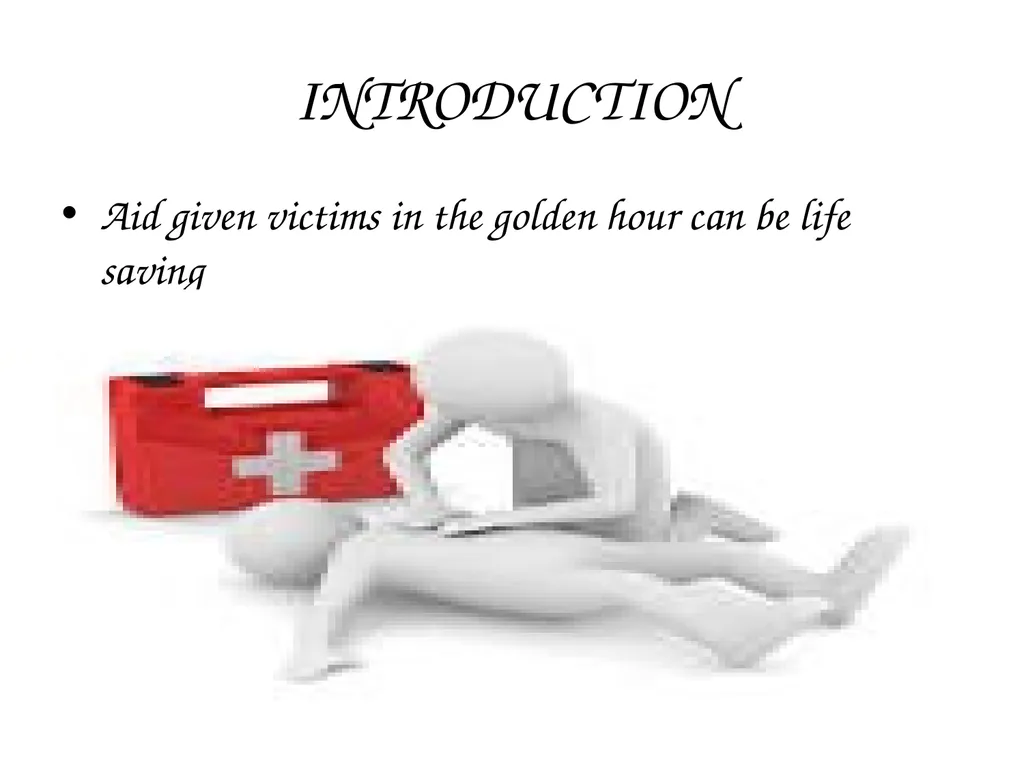
INTRODUCTION Aid given victims in the golden hour can be life saving<br>
06
AIM To enable participants understand the management of crash scenes and casualty evacuation<br>
07
OBJECTIVES Participants at the end of the lecture should be able to
Differentiate rescue from first aid
State objectives of first aid
List items in the first aid box<br>
08
OBJECTIVES 5. Classify victims using triage
6. Describe handling of various casualties<br>
09
RESCUE Act of getting a person or group of persons out of a seemingly dangerous situation.<br>
10
Rescue Procedure Understand the environment
Confirm crash location
Mobilize personnel for onward movement
Ensure equipment and transport readiness
Alert relevant agencies eg fire service
Proceed to crash scene using authority devices<br>
11
Rescue Procedure At the crash scene
Park in a safe conspicuous place with bar and flash on
Park in a fend off position
Display caution and cordon area
Place reflective warning signs at least 100m away
Ensure your own safety
Wear high visibility clothing(reflective jacket)
Carry gloves/eye protection/ear defenders<br>
12
Rescue Procedure Do not approach fire or chemical hazard in absence of fire service
Ensure proper traffic control
Divert traffic away from crash scene
Send for specialized help if necessary
Do not allow crowding of accident scene by onlookers
Extricate victims where necessary<br>
13
Rescue Procedure Identify victims by priority/severity of injuries
Transfer more critical victims to nearest hospital immediately
Provide first aid to victims with less severe injuries
The deceased are moved last
Retrieve intact items, enter in the format and report at the base for further identification of ownersand relatives<br>
14
Rescue Procedure In RTC involving >1 vehicle leading to loss of life involve traffic police from nearest station to speed up rescue<br>
15
PRINCIPLES OF EXTRICATION Extrication – process of removing a vehicle from around a person who has been involved in a crash when conventional means of exit are impossible or inadvisable.<br>
16
PRINCIPLES OF EXTRICATION Stabilize the vehicle where it lies as movement may exacerbate injury
Make the vehicle safe:
switch off the ignition, immobilize the battery, swill away any petrol.<br>
17
PRINCIPLES OF EXTRICATION Identify the time critical victims
Read the wreckage
Try the easiest way into the vehicle first<br>
18
PRINCIPLES OF EXTRICATION Remove the wreckage from the casualty and not the casualty from the wreckage
Do not move from one entrapment situation into another<br>
19
TRIAGE Fr; to sift or sort
Process of sorting casualties into priorities for treatment<br>
20
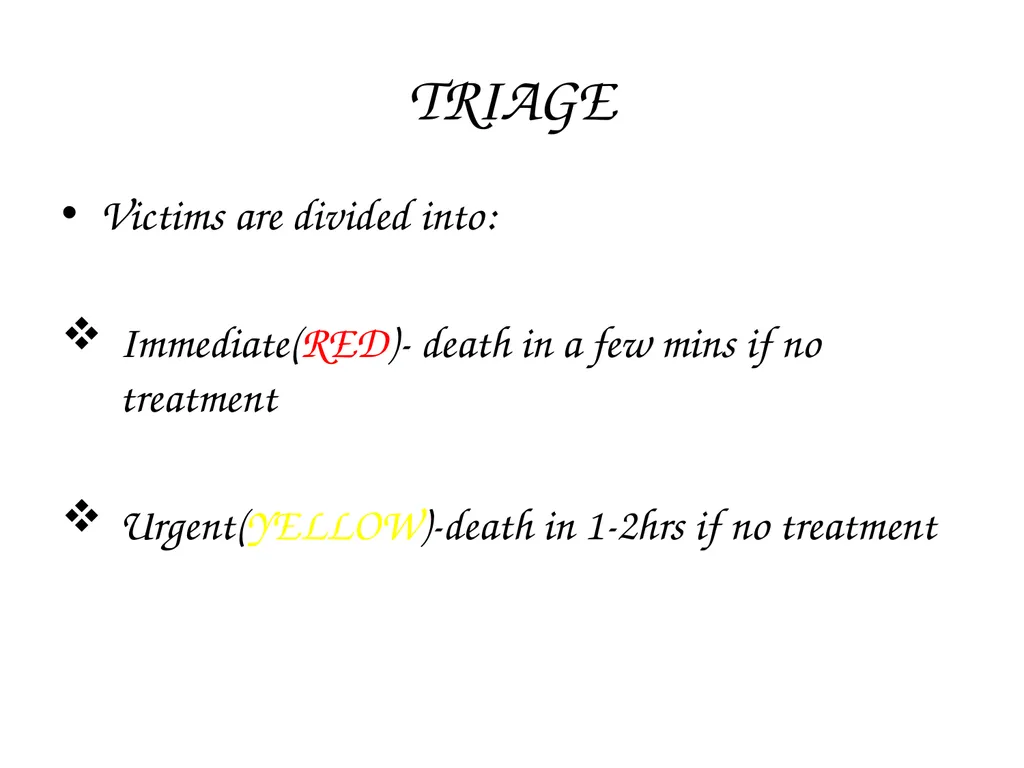
TRIAGE Victims are divided into:
Immediate(RED)- death in a few mins if no treatment
Urgent(YELLOW)-death in 1-2hrs if no treatment<br>
21
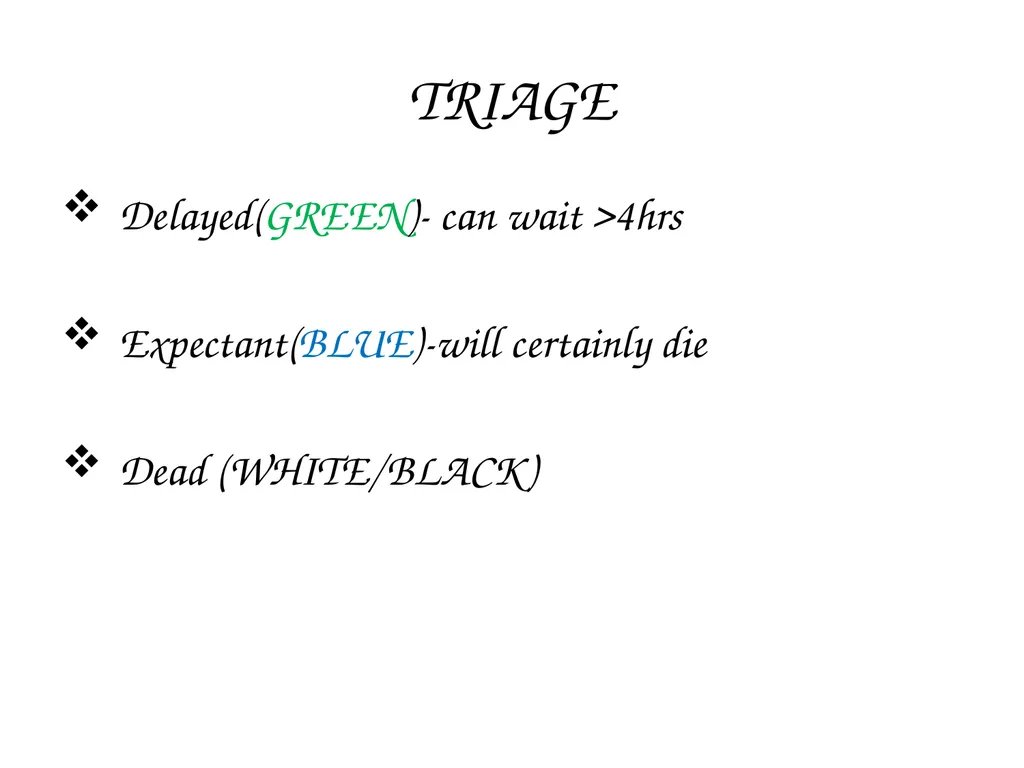
TRIAGE Delayed(GREEN)- can wait >4hrs
Expectant(BLUE)-will certainly die
Dead (WHITE/BLACK)<br>
22
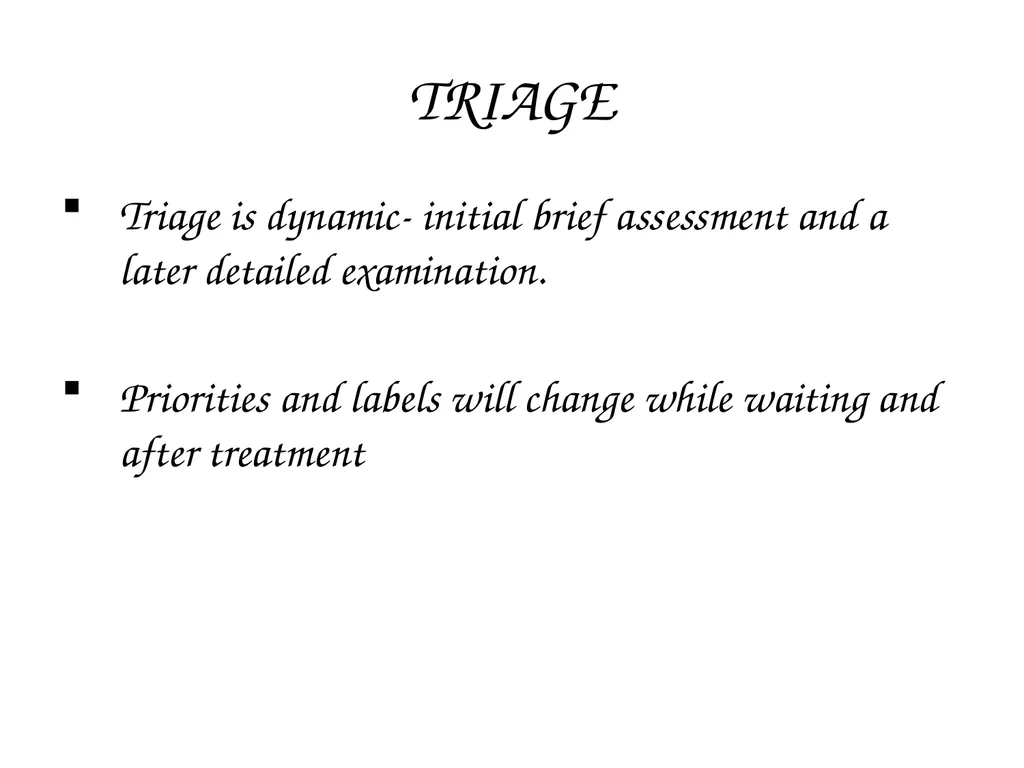
TRIAGE Triage is dynamic- initial brief assessment and a later detailed examination.
Priorities and labels will change while waiting and after treatment<br>
23
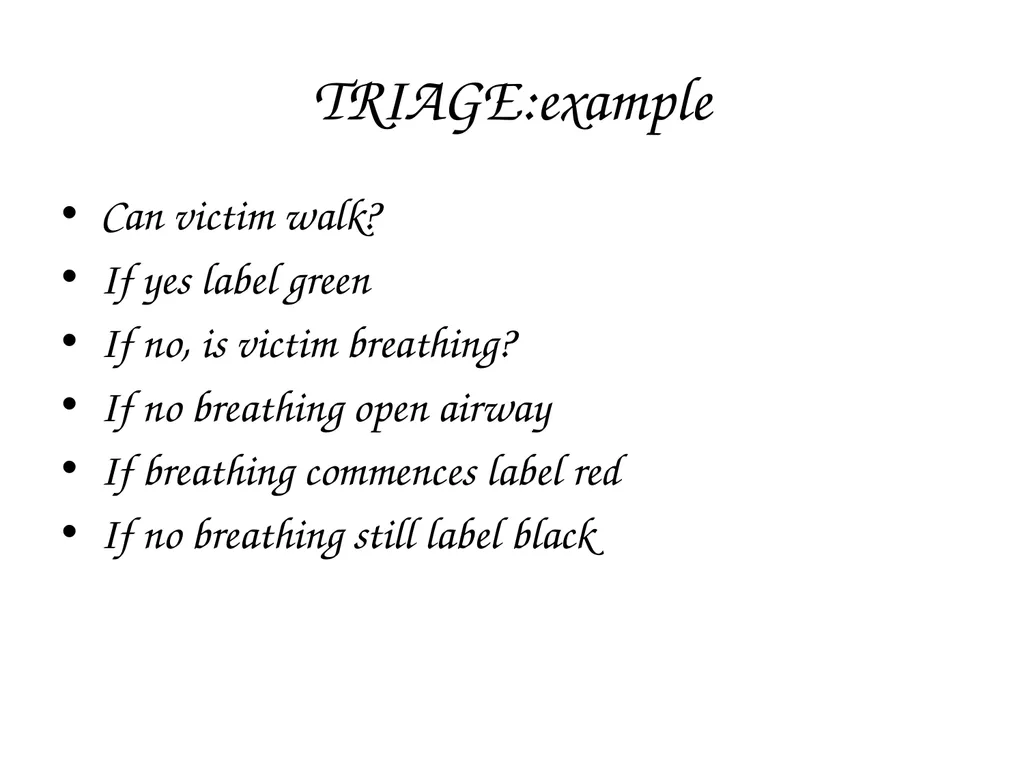
TRIAGE:example Can victim walk?
If yes label green
If no, is victim breathing?
If no breathing open airway
If breathing commences label red
If no breathing still label black<br>
24
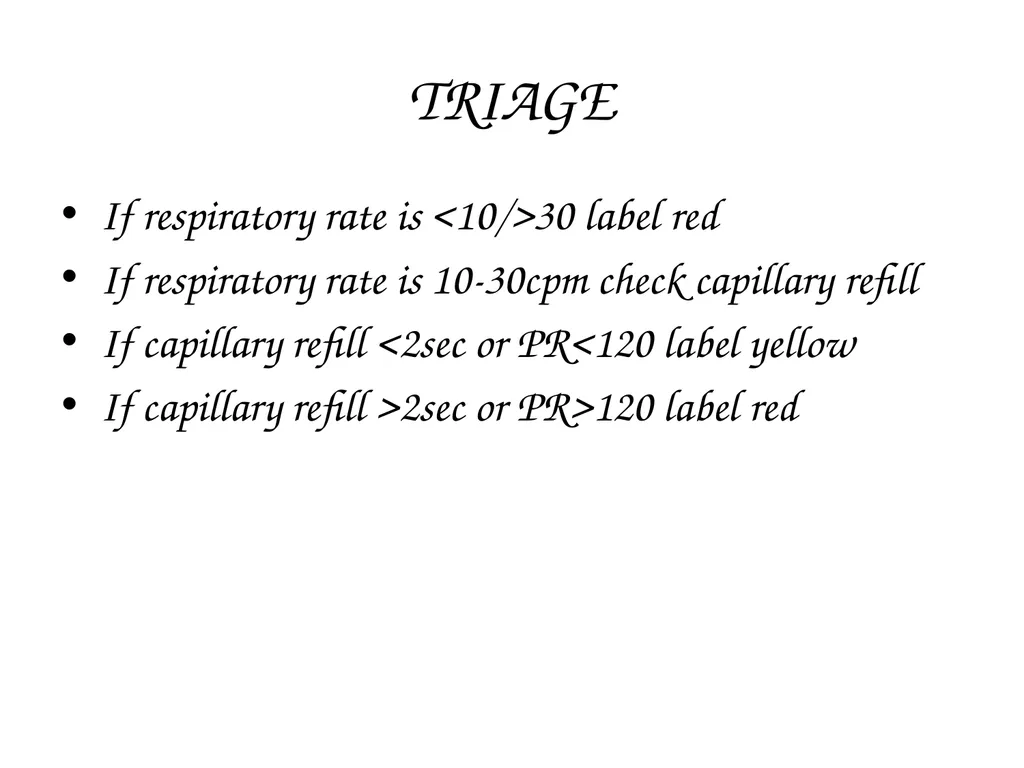
TRIAGE If respiratory rate is <10/>30 label red
If respiratory rate is 10-30cpm check capillary refill
If capillary refill <2sec or PR<120 label yellow
If capillary refill >2sec or PR>120 label red<br>
25
FIRST AID Immediate medical treatment given to a victim with available material before transport to the nearest health facility<br>
26
FIRST AID Objectives
To preserve life
To promote recovery
To prevent worsening of victims condition<br>
27
FIRST AID Scope-
Immediate assessment
immediate treatment
transport<br>
28
FIRST AID(BASIC PRINCIPLES) DR ABC
Danger
Response
Airway Management
Breathing
Chest compression/circulation<br>
29
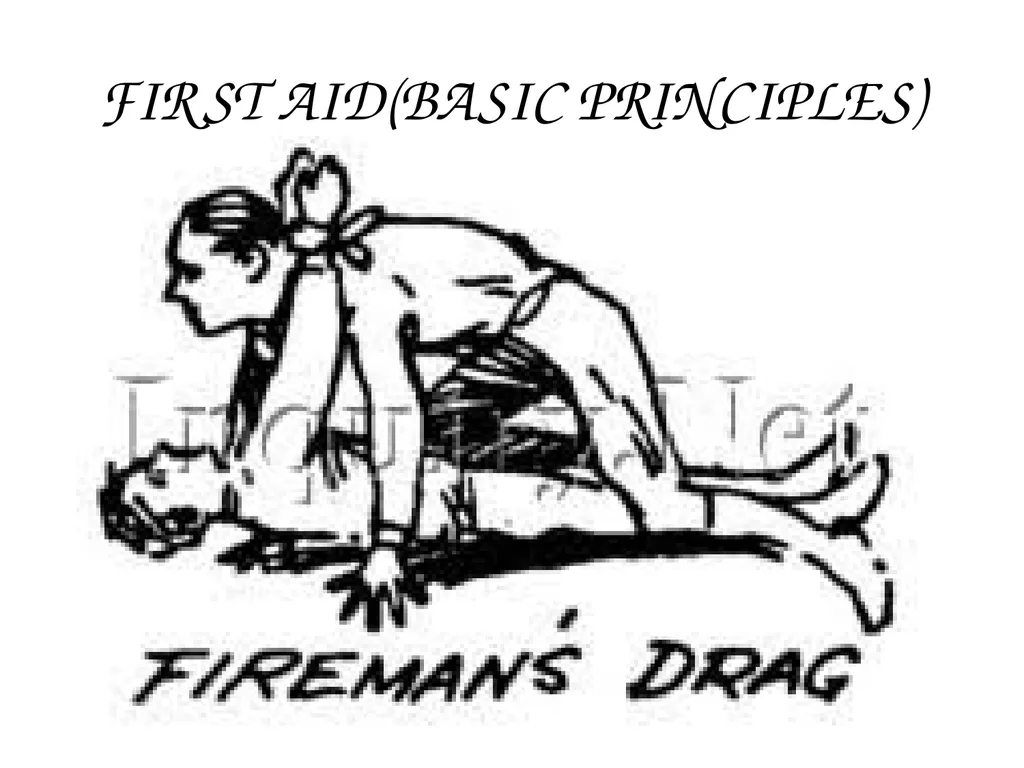
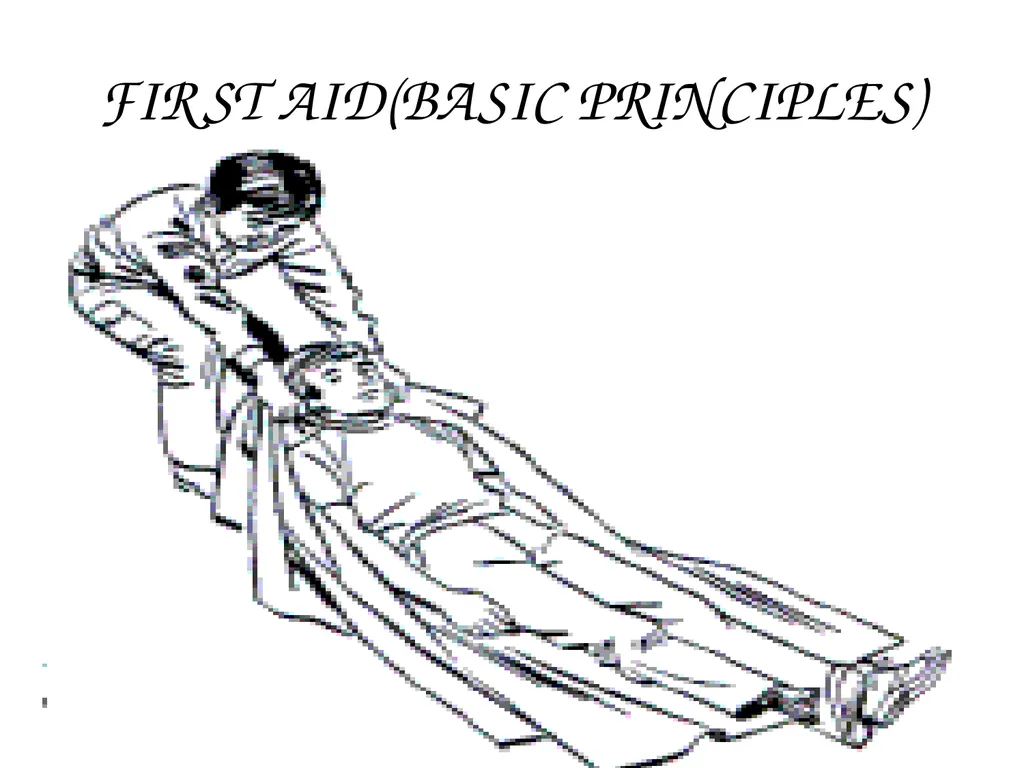
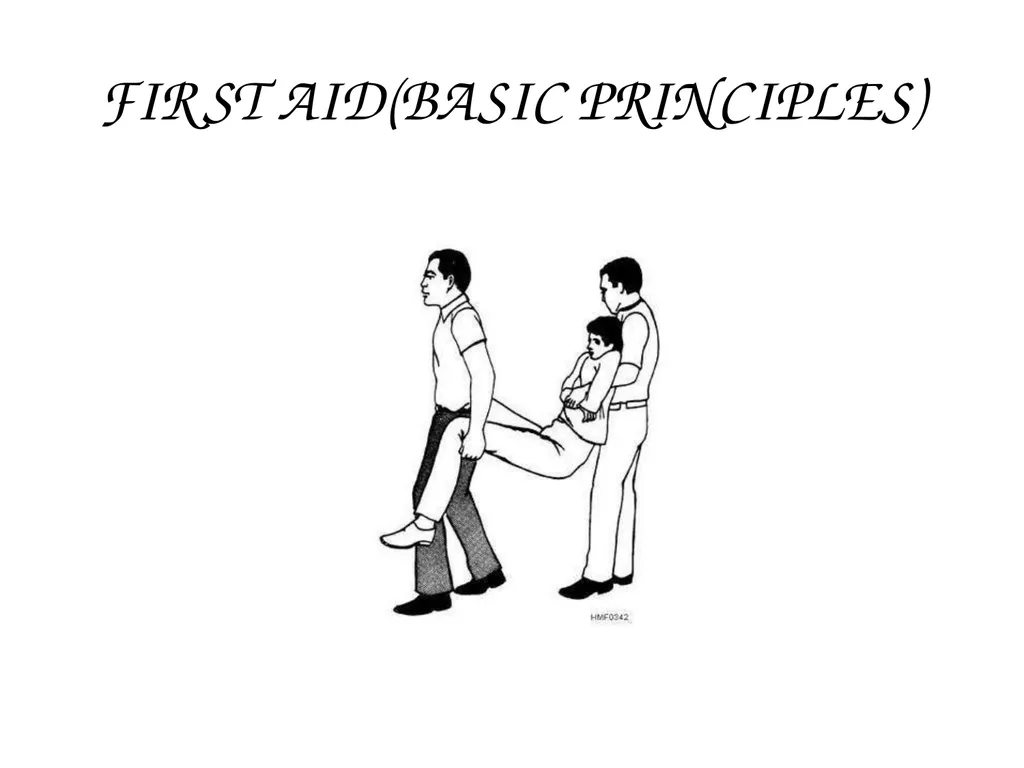
FIRST AID(BASIC PRINCIPLES) DANGER
Approach with care
Ensure your safety and that of the victim
Free victim from immediate danger
Move victim from an unsafe area
Remove items that may worsen victims condition<br>
30
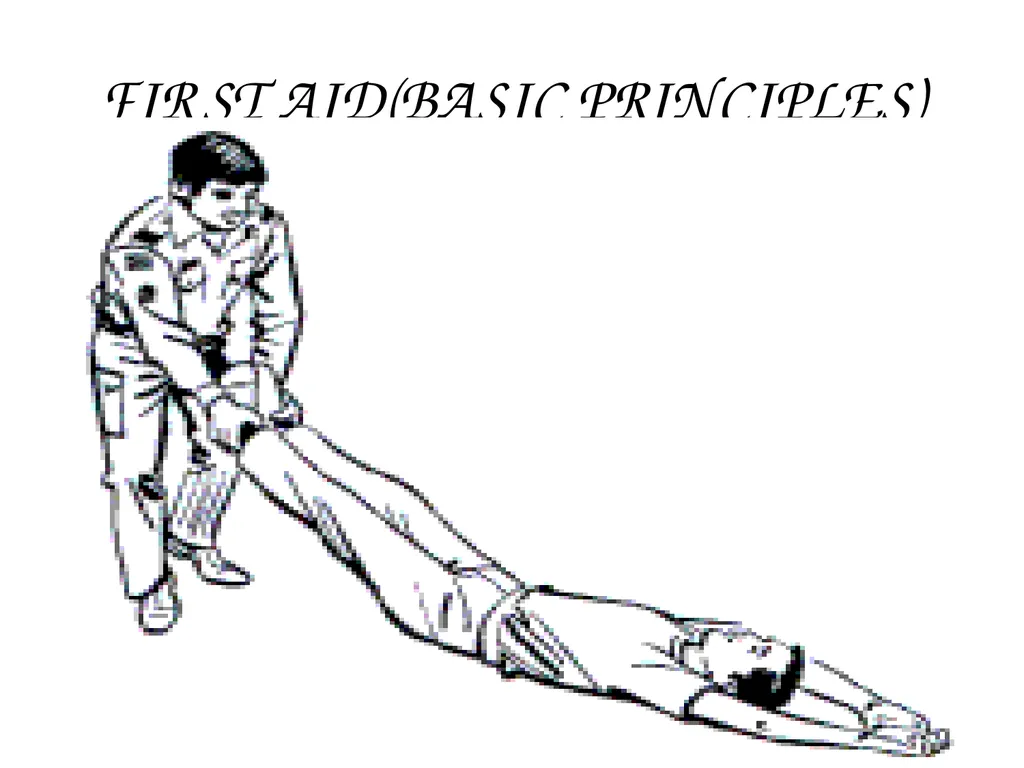
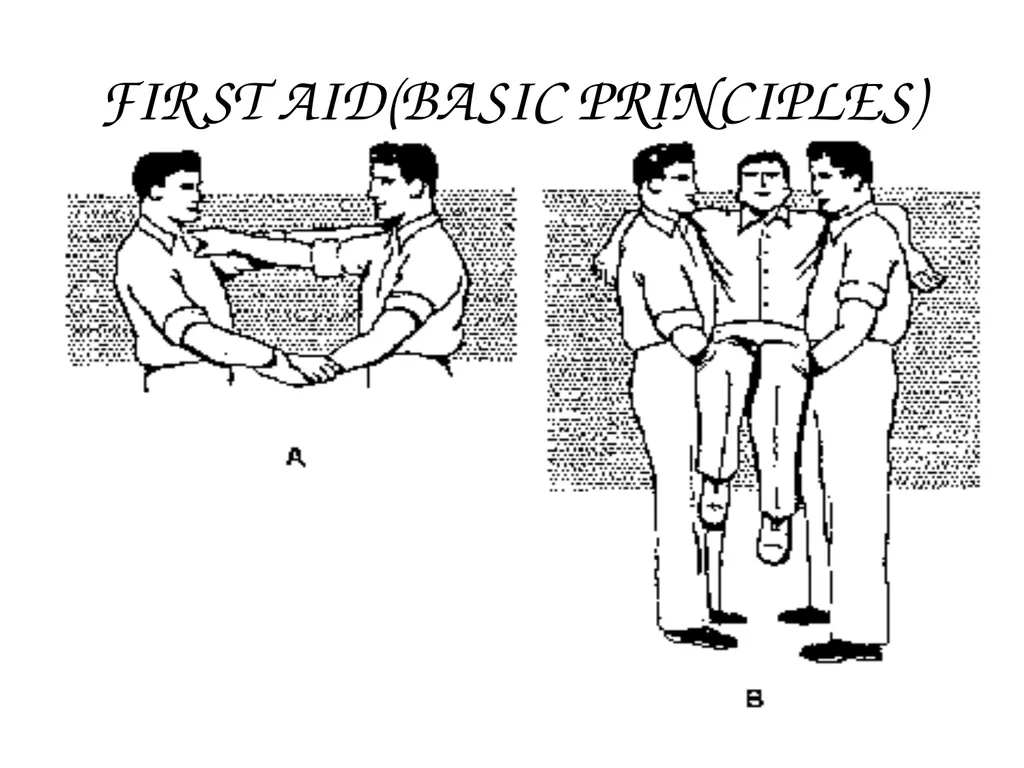
FIRST AID(BASIC PRINCIPLES) Avoid moving the unconscious unless victim is in an unsafe place or in presence of skilled personnel<br>
31
FIRST AID(BASIC PRINCIPLES)<br>
32
FIRST AID(BASIC PRINCIPLES)<br>
33
FIRST AID(BASIC PRINCIPLES)<br>
34
FIRST AID(BASIC PRINCIPLES)<br>
35
FIRST AID(BASIC PRINCIPLES)<br>
36
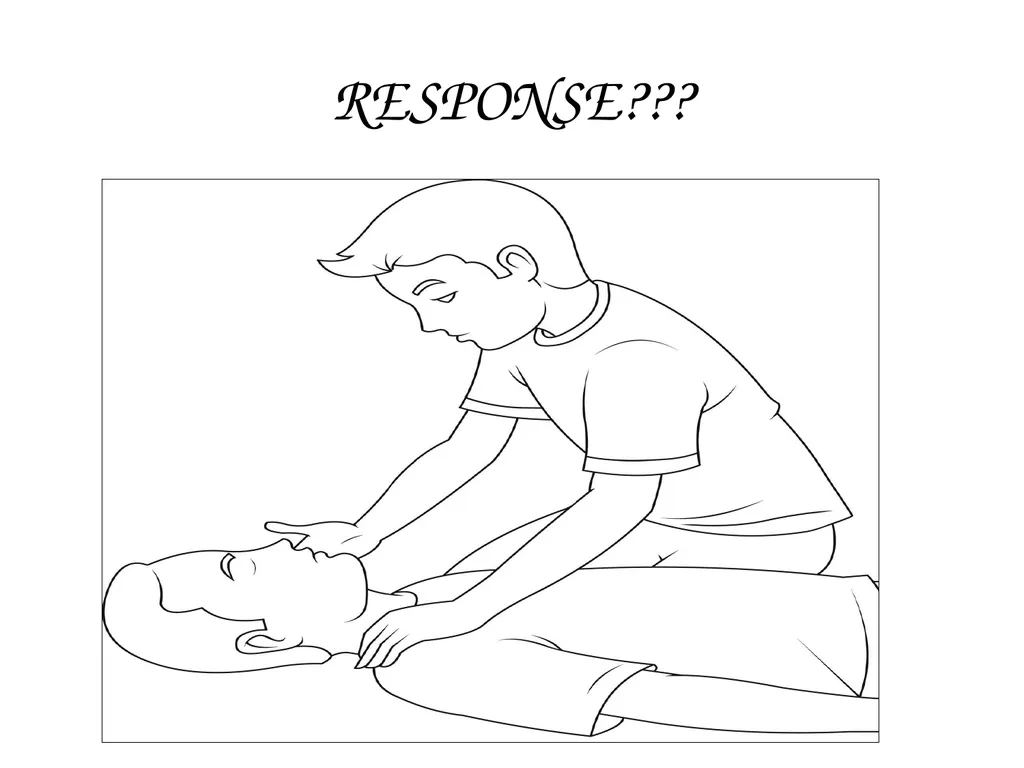
FIRST AID(BASIC PRINCIPLES) RESPONSE
Establish responsiveness/unresponsiveness
Shake gently by the shoulder while stabilizing the forehead
If victim responds place in recovery position
If victim fails to respond call for help and check for breathing<br>
38
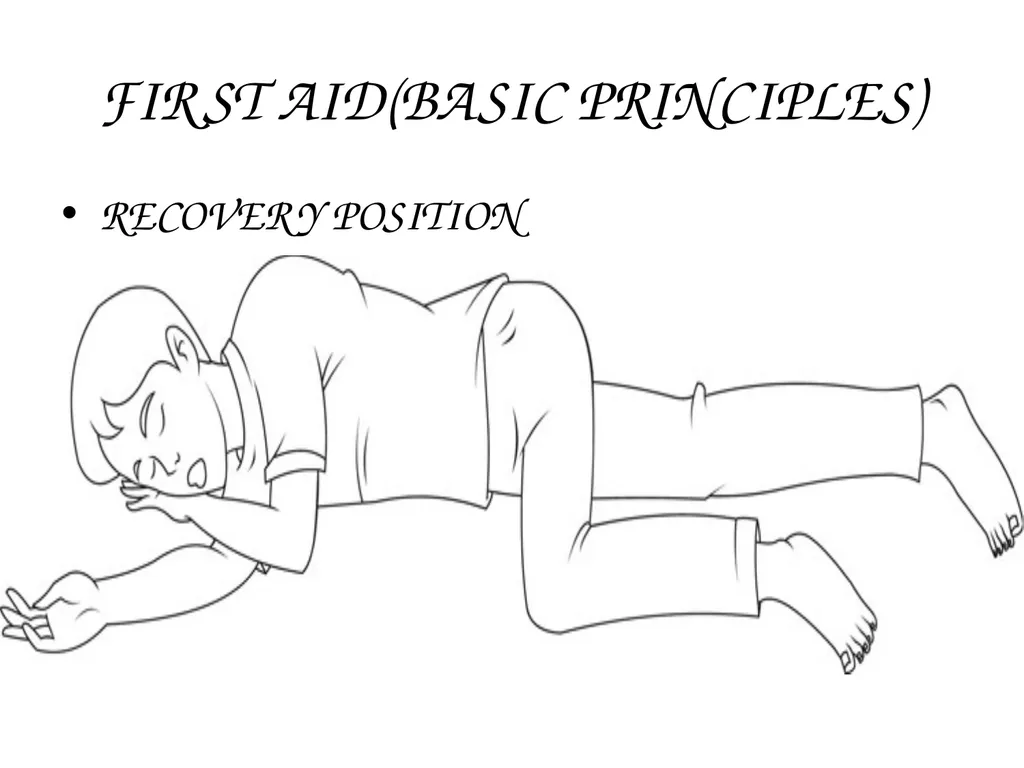
FIRST AID(BASIC PRINCIPLES) RECOVERY POSITION
Log roll victim to a side/lateral position
One leg folded
One hand folded underneath head<br>
39
FIRST AID(BASIC PRINCIPLES) RECOVERY POSITION<br>
40
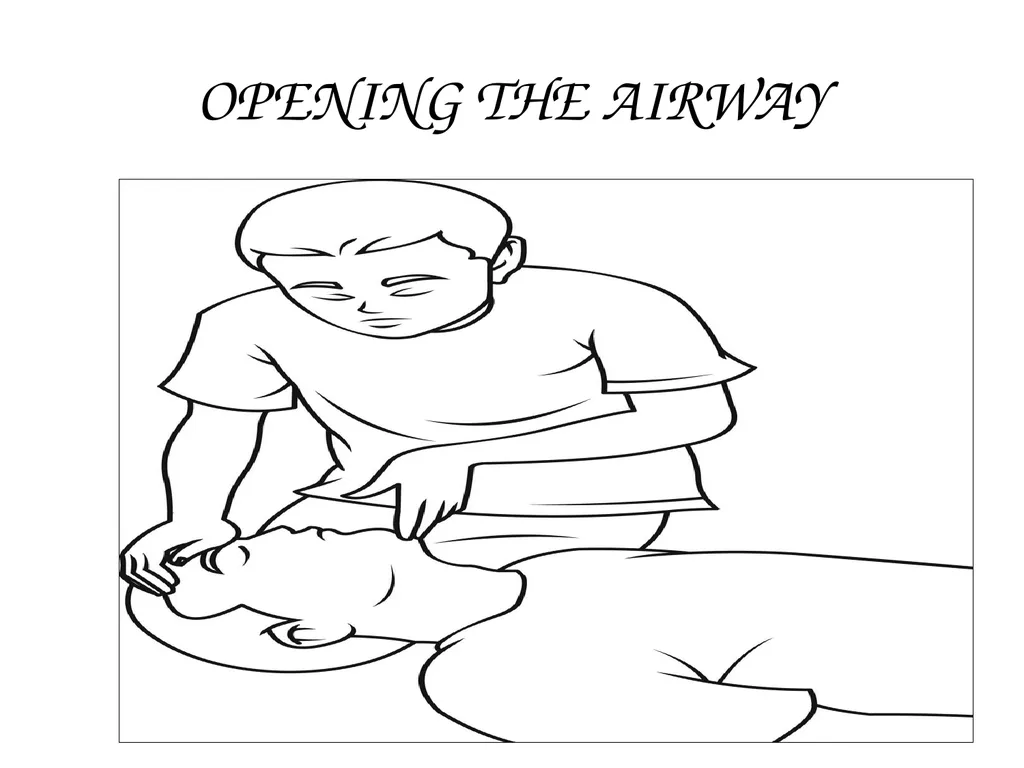
FIRST AID(BASIC PRINCIPLES) AIRWAY AND BREATHING
Roll victim to his/her side
Open airway; head tilt and chin lift(if no risk of cord injury)
Sweep airway with spatula or gloved hand
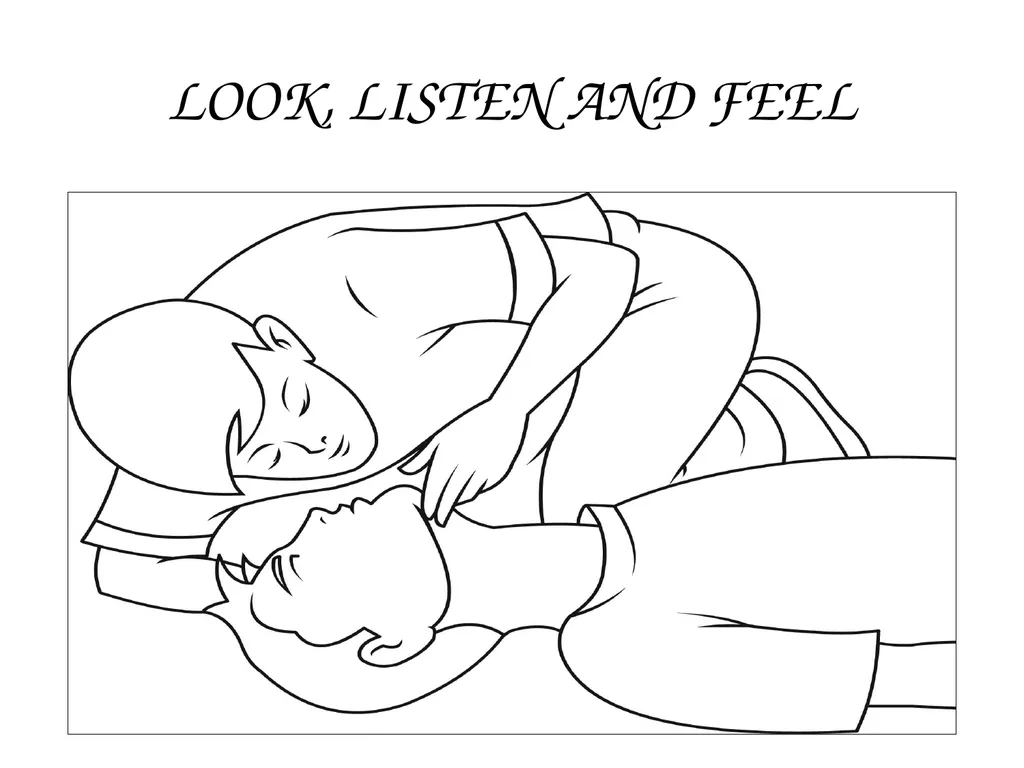
Is victim breathing?
If not breathing commence chest compressions<br>
41
OPENING THE AIRWAY<br>
42
LOOK, LISTEN AND FEEL<br>
43
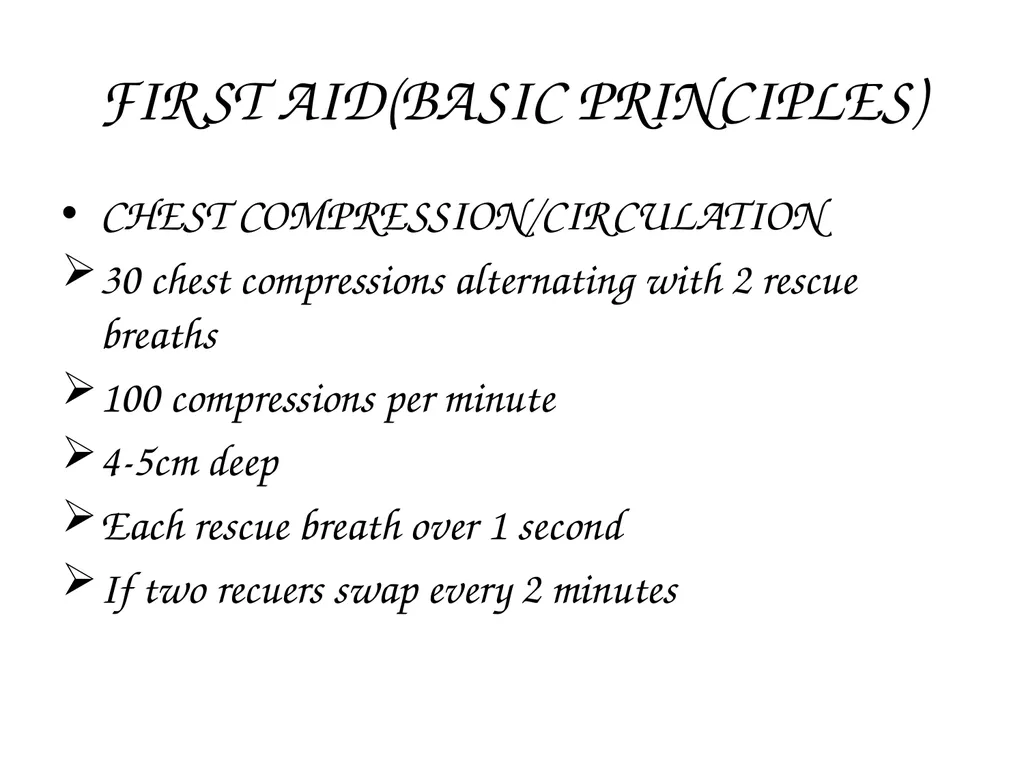
FIRST AID(BASIC PRINCIPLES) CHEST COMPRESSION/CIRCULATION
30 chest compressions alternating with 2 rescue breaths
100 compressions per minute
4-5cm deep
Each rescue breath over 1 second
If two recuers swap every 2 minutes<br>
44
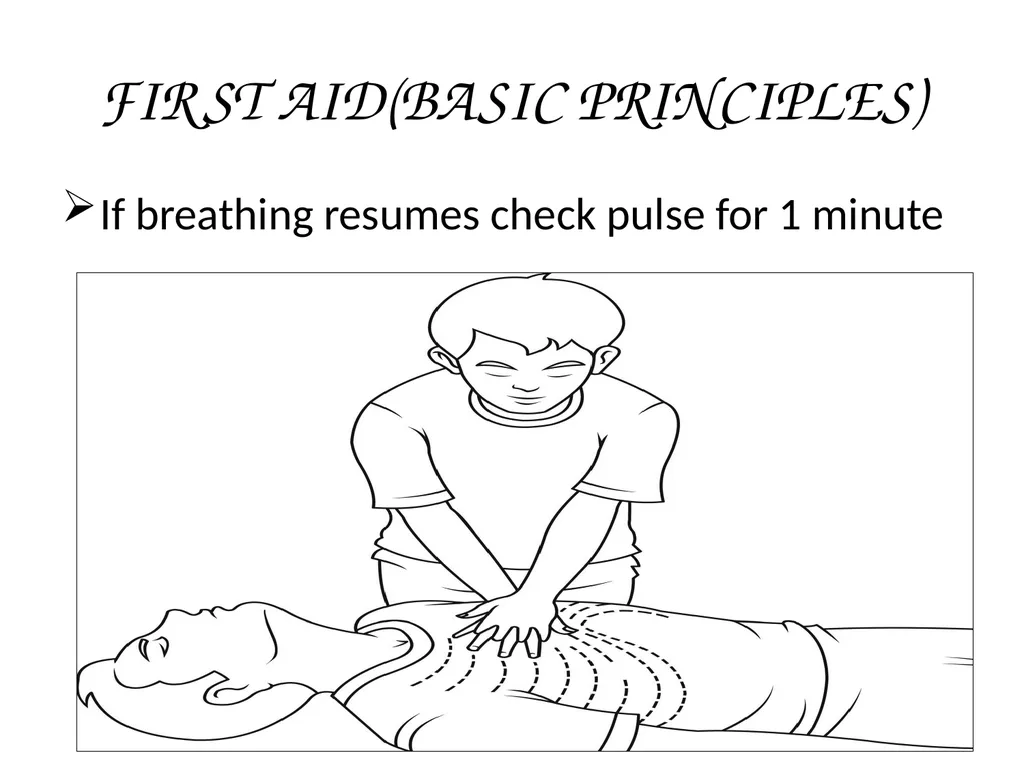
FIRST AID(BASIC PRINCIPLES) If breathing resumes check pulse for 1 minute<br>
45
FIRST AID(BASIC PRINCIPLES) KISS OF LIFE
Occlude nose
Maintain chin lift
Take good breath
Achieve good mouth to mouth seal
Blow steadily for 1 second
Watch for chest rise
Maintain chin lift<br>
46
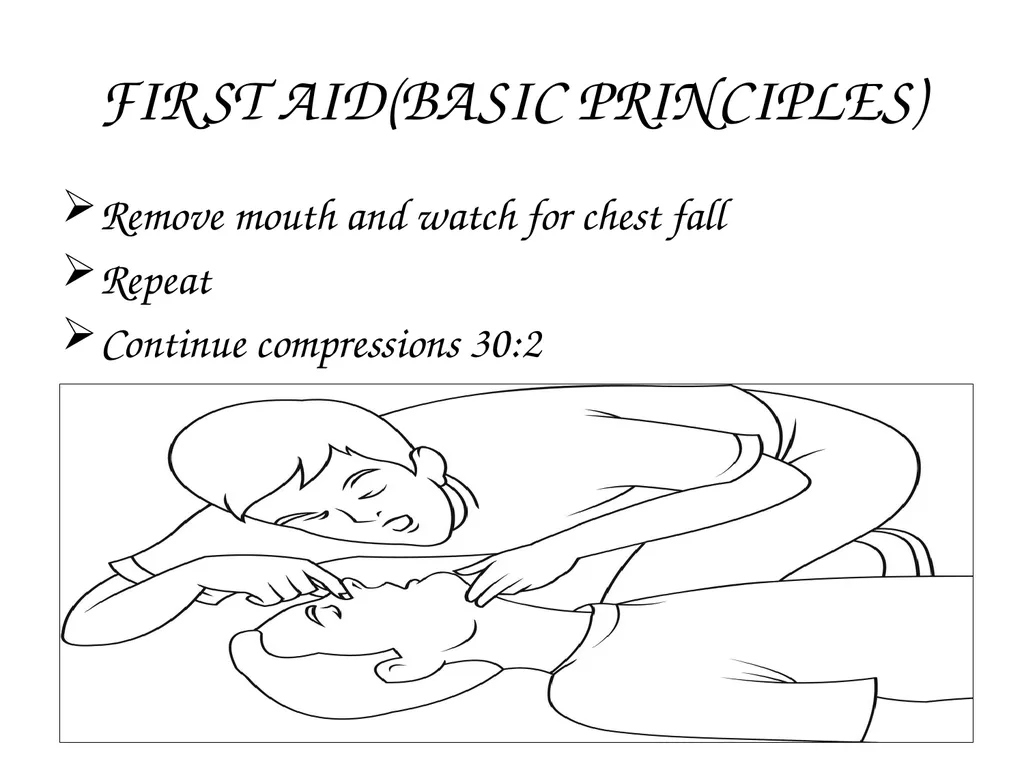
FIRST AID(BASIC PRINCIPLES) Remove mouth and watch for chest fall
Repeat
Continue compressions 30:2<br>
47
FIRST AID(BASIC PRINCIPLES) WHEN DO WE STOP?
First aider exhaustion
Victim begins to breath normally
Arrival of qualified help
Heart not restarted in 1hr<br>
48
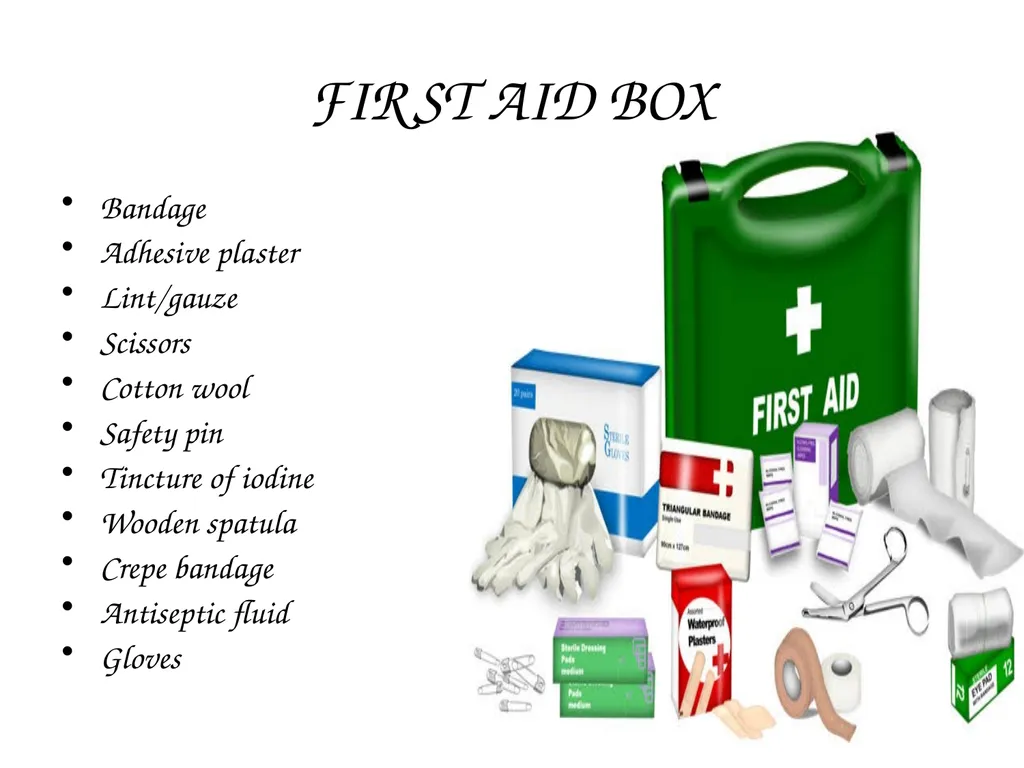
FIRST AID BOX Bandage
Adhesive plaster
Lint/gauze
Scissors
Cotton wool
Safety pin
Tincture of iodine
Wooden spatula
Crepe bandage
Antiseptic fluid
Gloves<br>
49
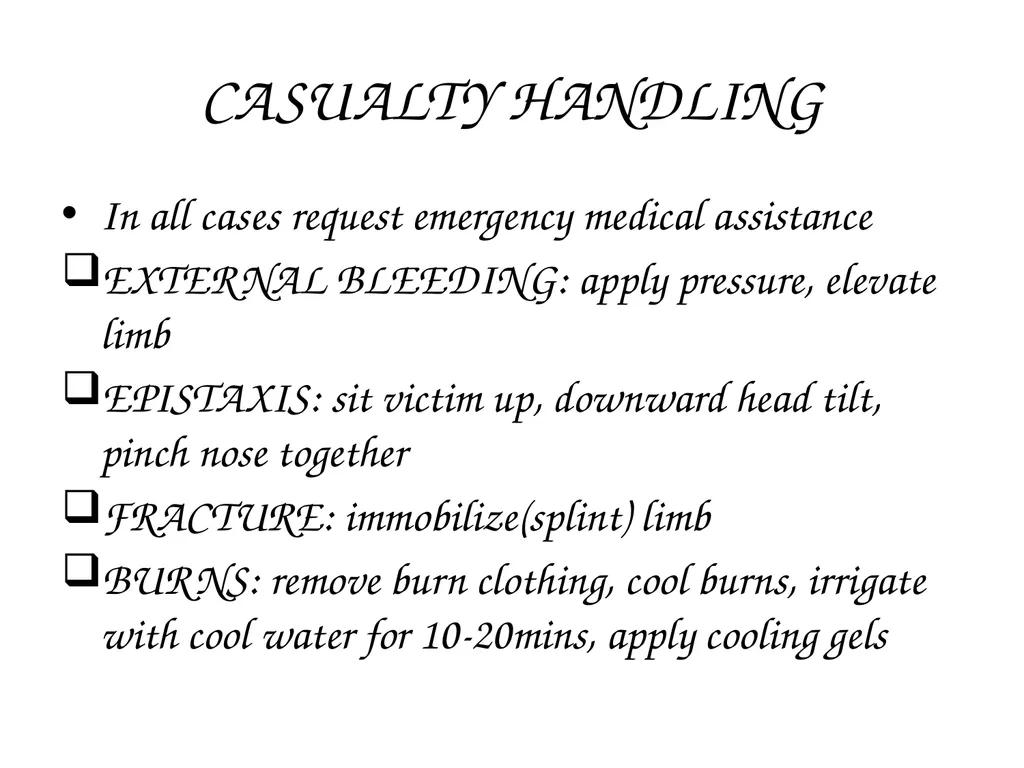
CASUALTY HANDLING In all cases request emergency medical assistance
EXTERNAL BLEEDING: apply pressure, elevate limb
EPISTAXIS: sit victim up, downward head tilt, pinch nose together
FRACTURE: immobilize(splint) limb
BURNS: remove burn clothing, cool burns, irrigate with cool water for 10-20mins, apply cooling gels<br>
50
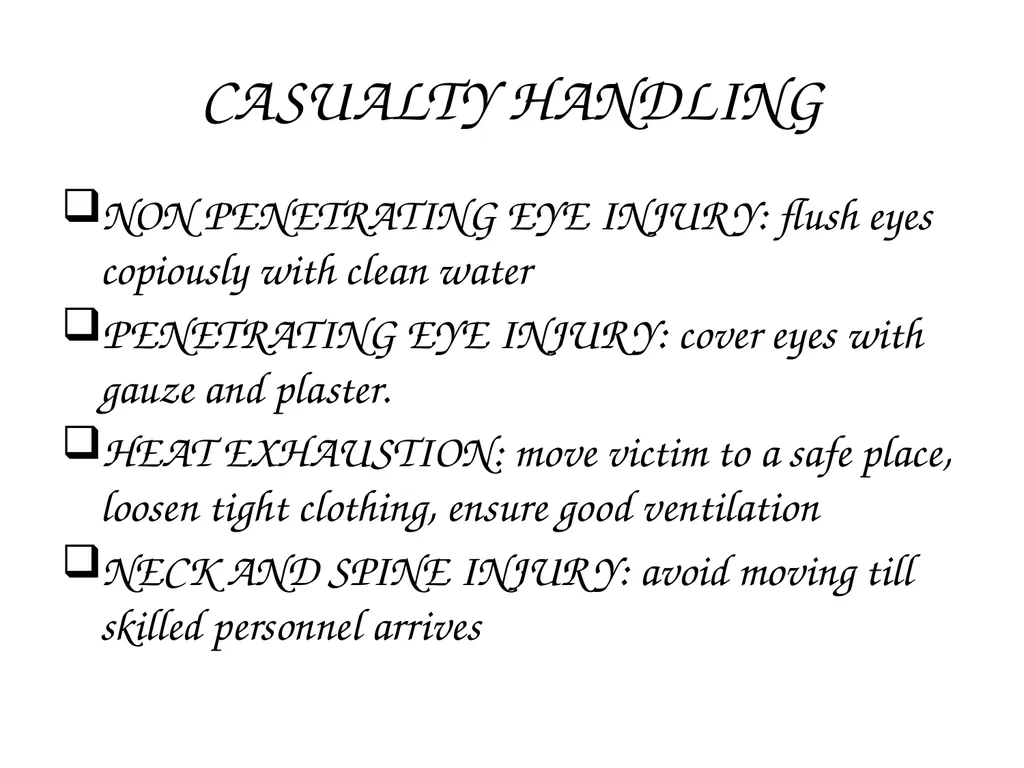
CASUALTY HANDLING NON PENETRATING EYE INJURY: flush eyes copiously with clean water
PENETRATING EYE INJURY: cover eyes with gauze and plaster.
HEAT EXHAUSTION: move victim to a safe place, loosen tight clothing, ensure good ventilation
NECK AND SPINE INJURY: avoid moving till skilled personnel arrives<br>
51
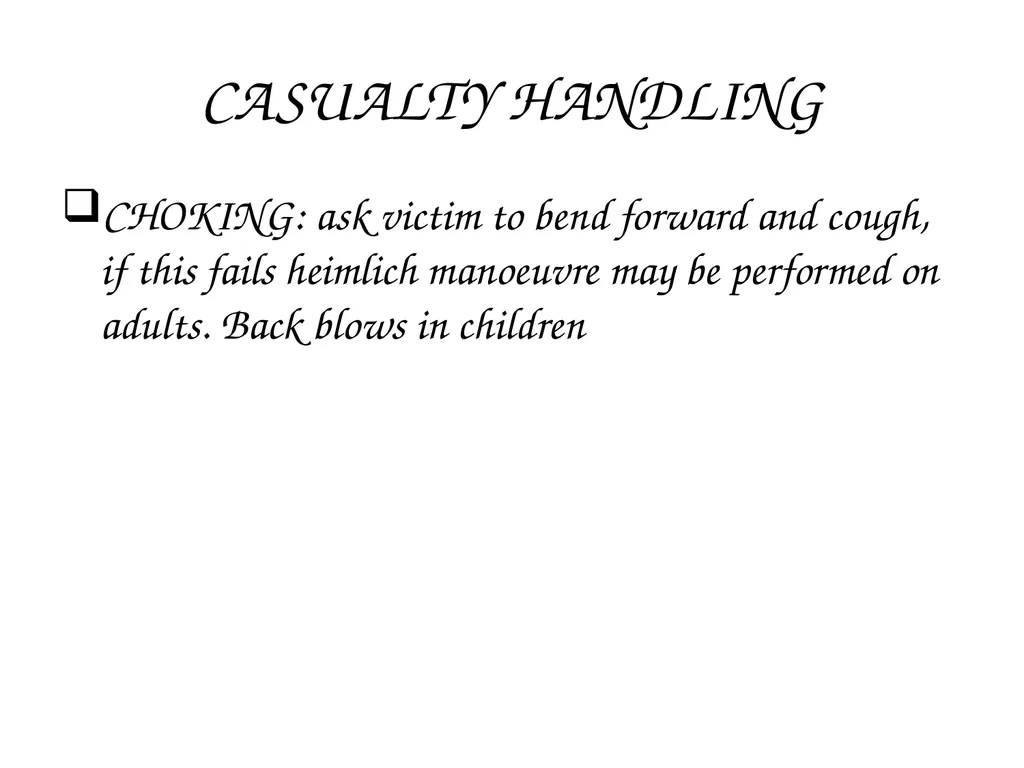
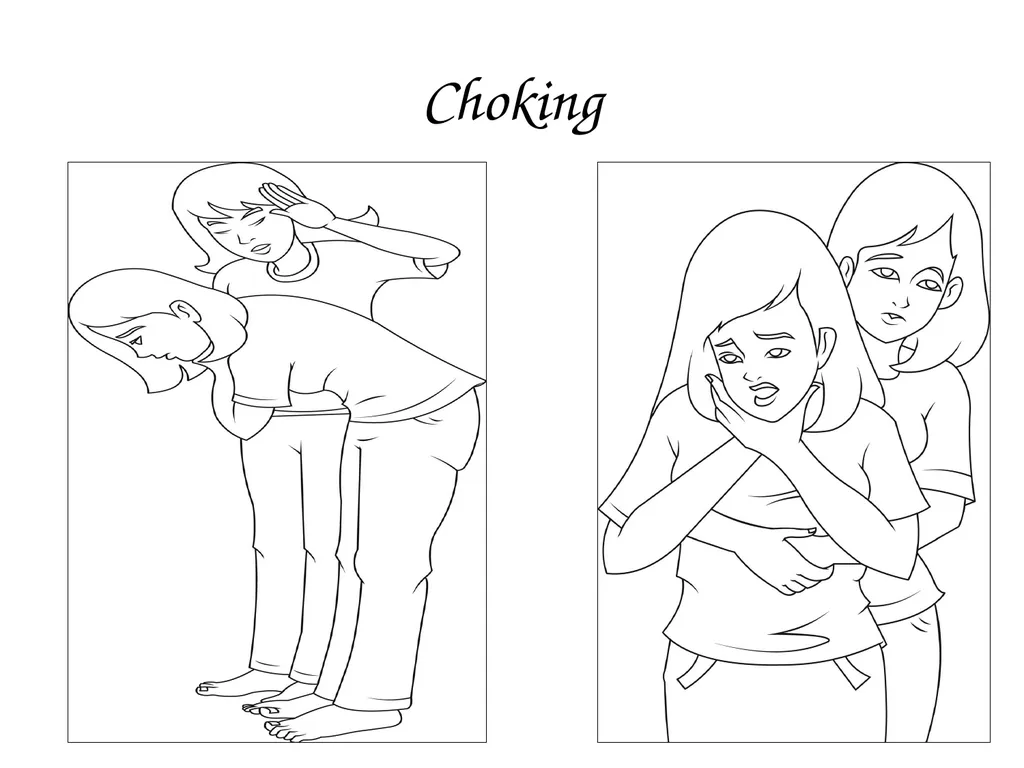
CASUALTY HANDLING CHOKING: ask victim to bend forward and cough, if this fails heimlich manoeuvre may be performed on adults. Back blows in children<br>
53
CONCLUSION The effectiveness of crash scene management depends to a large extent on the dexterity of the rescue team.
Their ability to maximize the “GOLDEN HOUR”, prioritize victims according to severity of injury and their knowledge of first aid will in no small measure make the management of the crash scene a success.<br>
54
GRACIAS Best wishes<br>