CSE390 Advanced Computer Networks Lecture 5: Physical Layer (The layer for EE majors) Based on slides from D. Choffnes Northeastern U. Revised Fall 2014 by P. Gill Physical Layer 2 Function: Get bits across a physical medium Key challenge:
"CSE390 Advanced Computer Networks Lecture 5:" is the property of its rightful owner. Permission is granted to
download and print the materials on this website for personal, non-commercial use only, and to display it
on your personal computer provided you do not modify the materials and that you retain all copyright
notices contained in the materials. By downloading content from our website, you accept the terms of this
agreement.
Presentation Transcript
01
CSE390 Advanced Computer Networks Lecture 5: Physical Layer
(The layer for EE majors…) Based on slides from D. Choffnes Northeastern U. Revised Fall 2014 by P. Gill<br>
02
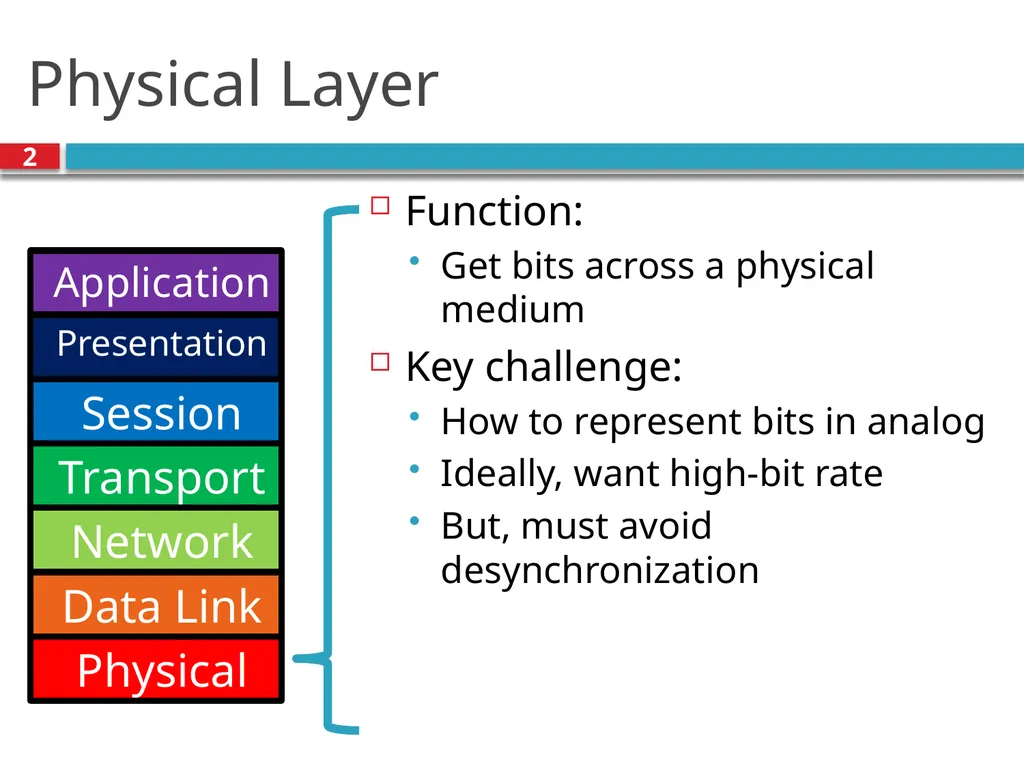
Physical Layer 2 Function:
Get bits across a physical medium
Key challenge:
How to represent bits in analog
Ideally, want high-bit rate
But, must avoid desynchronization Application Presentation Session Transport Network Data Link Physical<br>
03
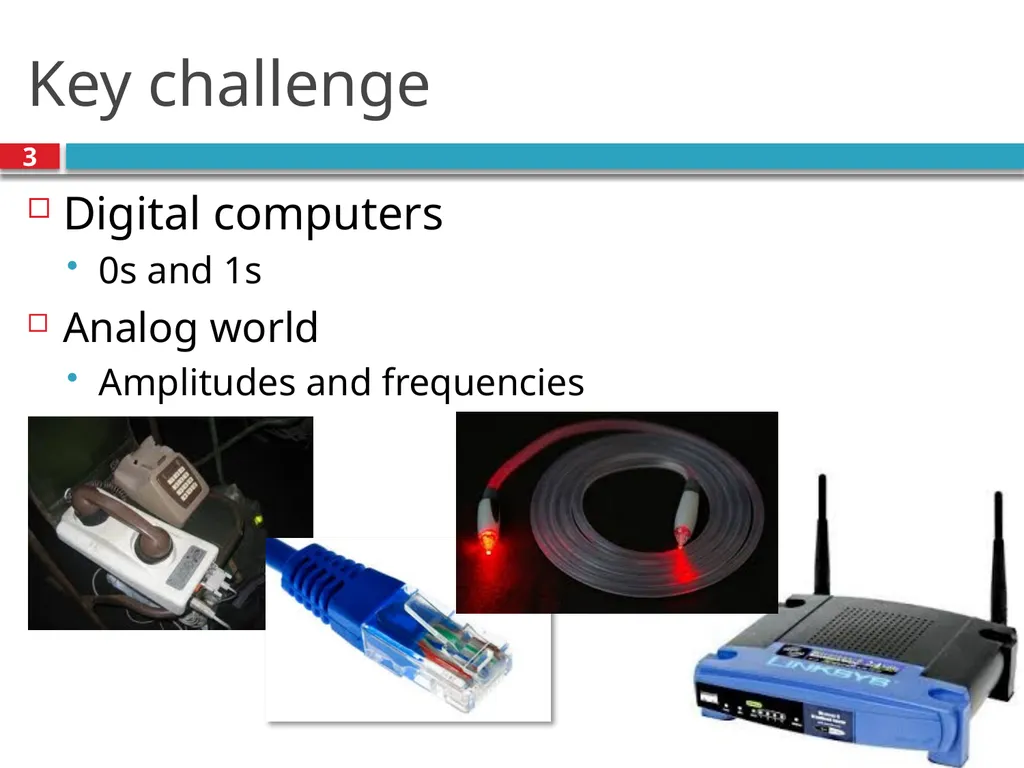
Key challenge 3 Digital computers
0s and 1s
Analog world
Amplitudes and frequencies<br>
04
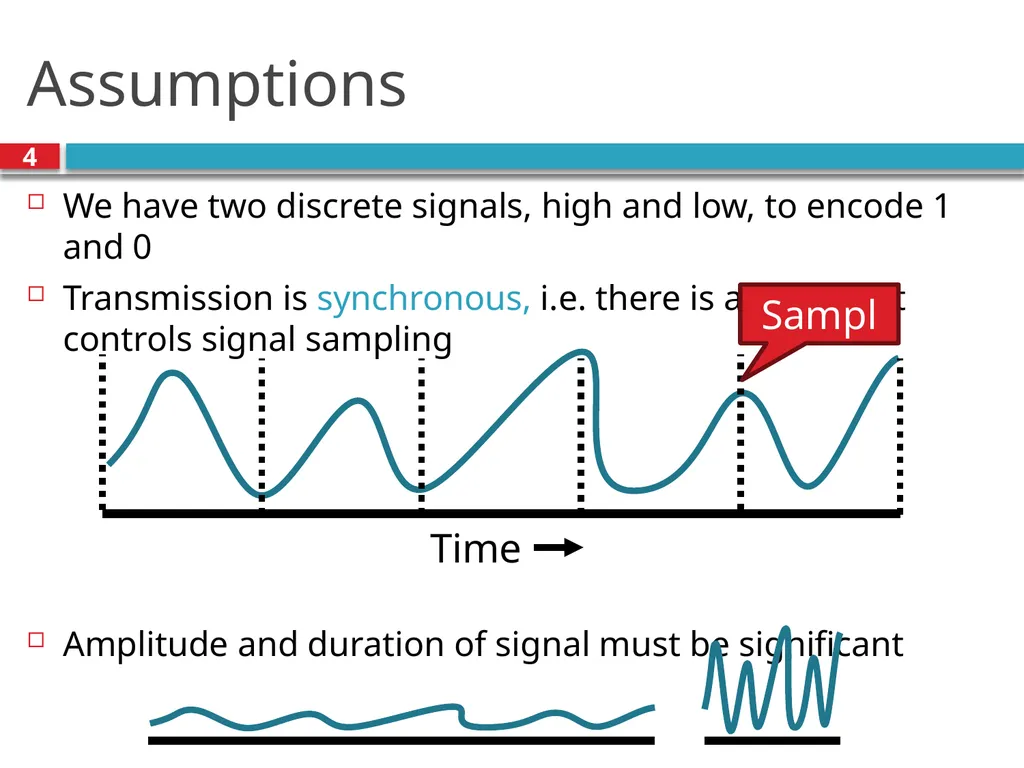
Assumptions 4 We have two discrete signals, high and low, to encode 1 and 0
Transmission is synchronous, i.e. there is a clock that controls signal sampling
Amplitude and duration of signal must be significant Time<br>
05
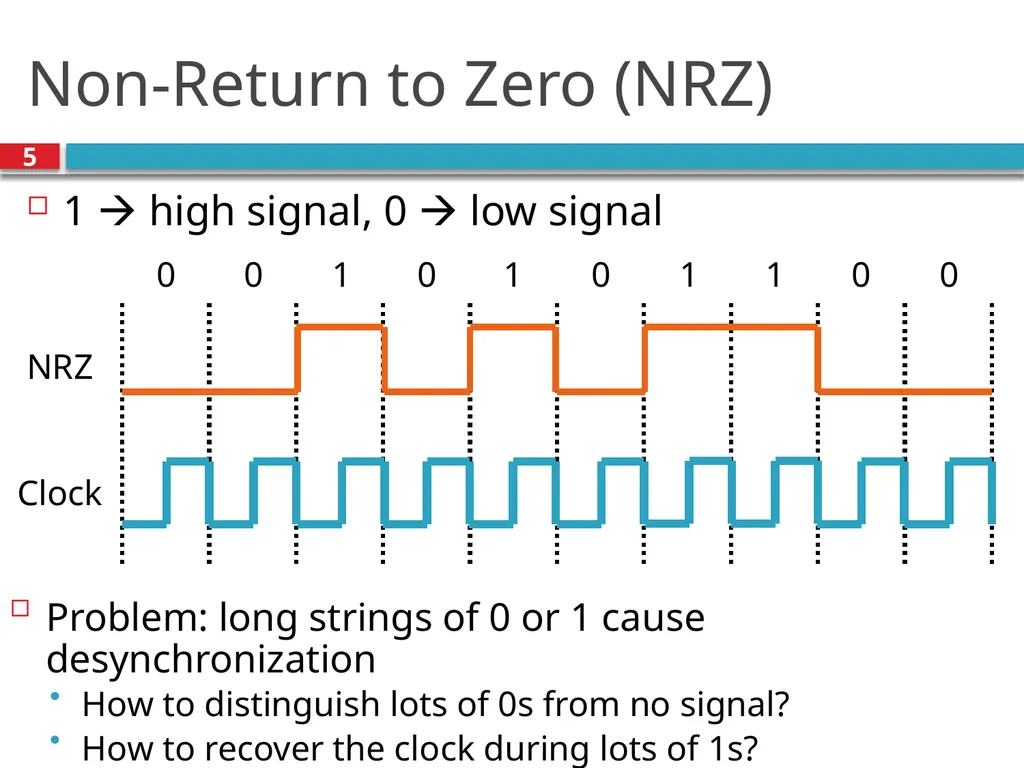
Non-Return to Zero (NRZ) 5 1 high signal, 0 low signal Clock NRZ 0 0 0 0 0 0 1 1 1 1 Problem: long strings of 0 or 1 cause desynchronization
How to distinguish lots of 0s from no signal?
How to recover the clock during lots of 1s?<br>
06
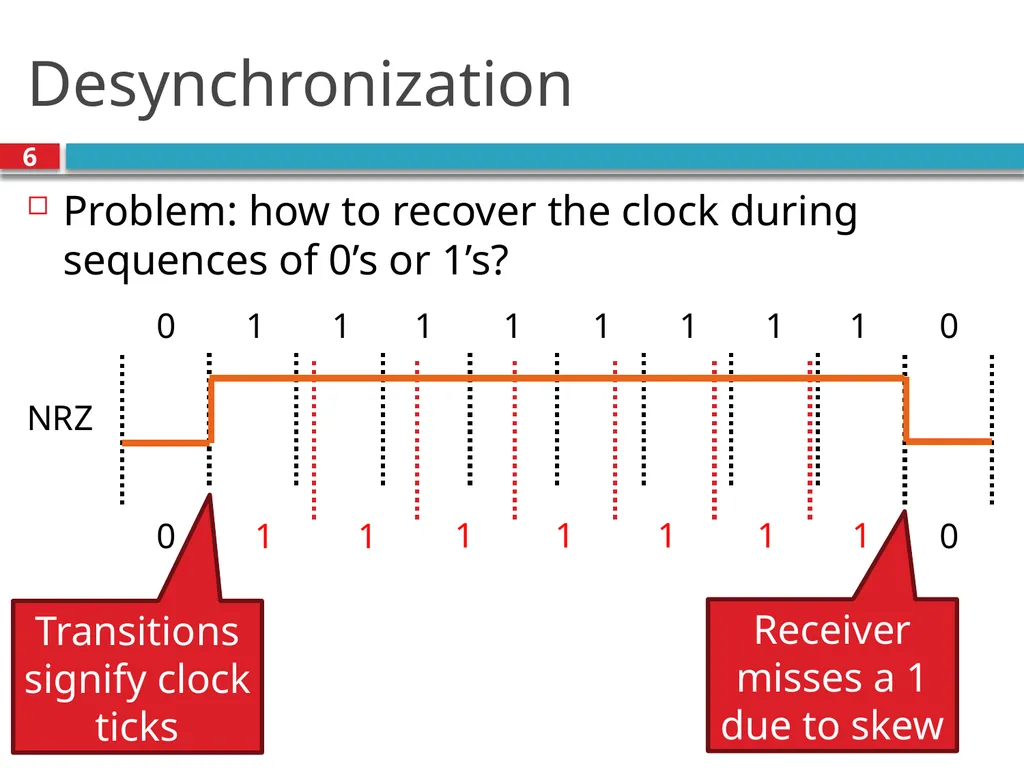
Desynchronization 6 Problem: how to recover the clock during sequences of 0’s or 1’s? NRZ 0 0 1 1 1 1 1 1 1 1 0 0 1 1 1 1 1 1 1<br>
07
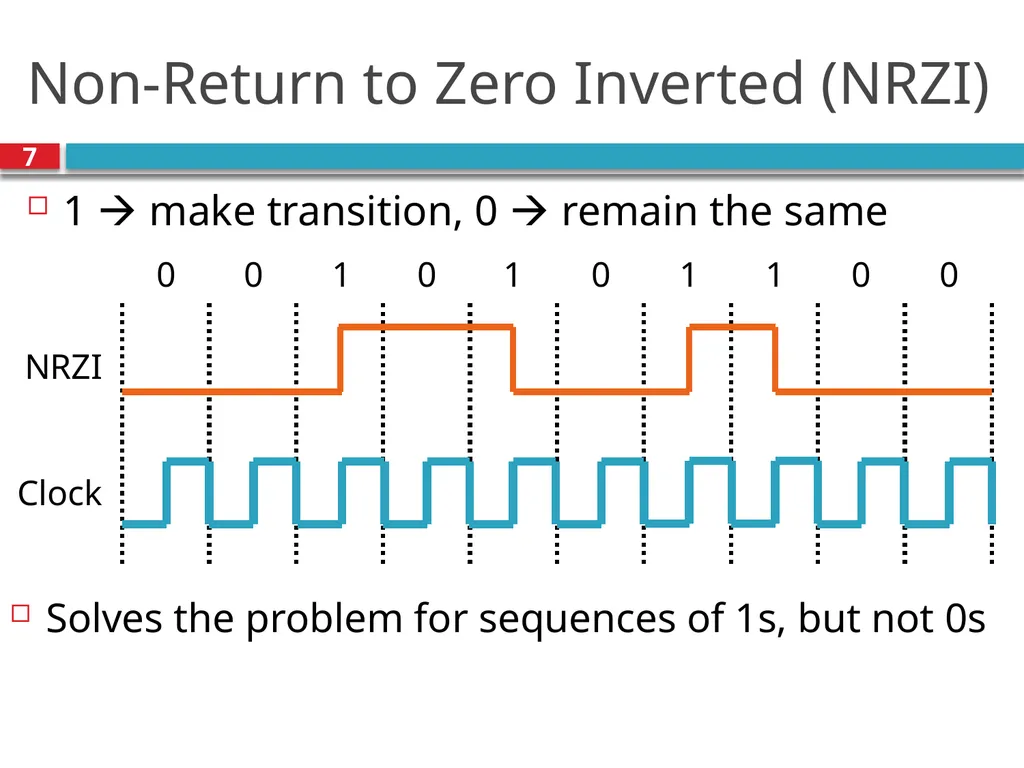
Non-Return to Zero Inverted (NRZI) 7 1 make transition, 0 remain the same Clock NRZI 0 0 0 0 0 0 1 1 1 1 Solves the problem for sequences of 1s, but not 0s<br>
08
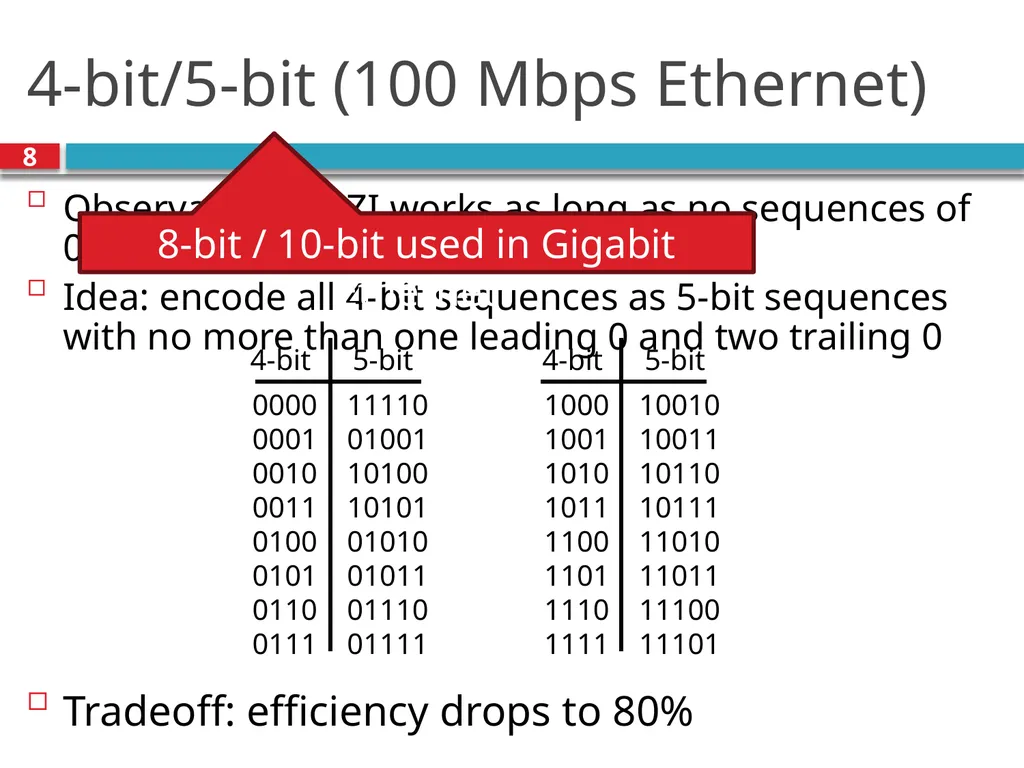
4-bit/5-bit (100 Mbps Ethernet) 8 Observation: NRZI works as long as no sequences of 0
Idea: encode all 4-bit sequences as 5-bit sequences with no more than one leading 0 and two trailing 0
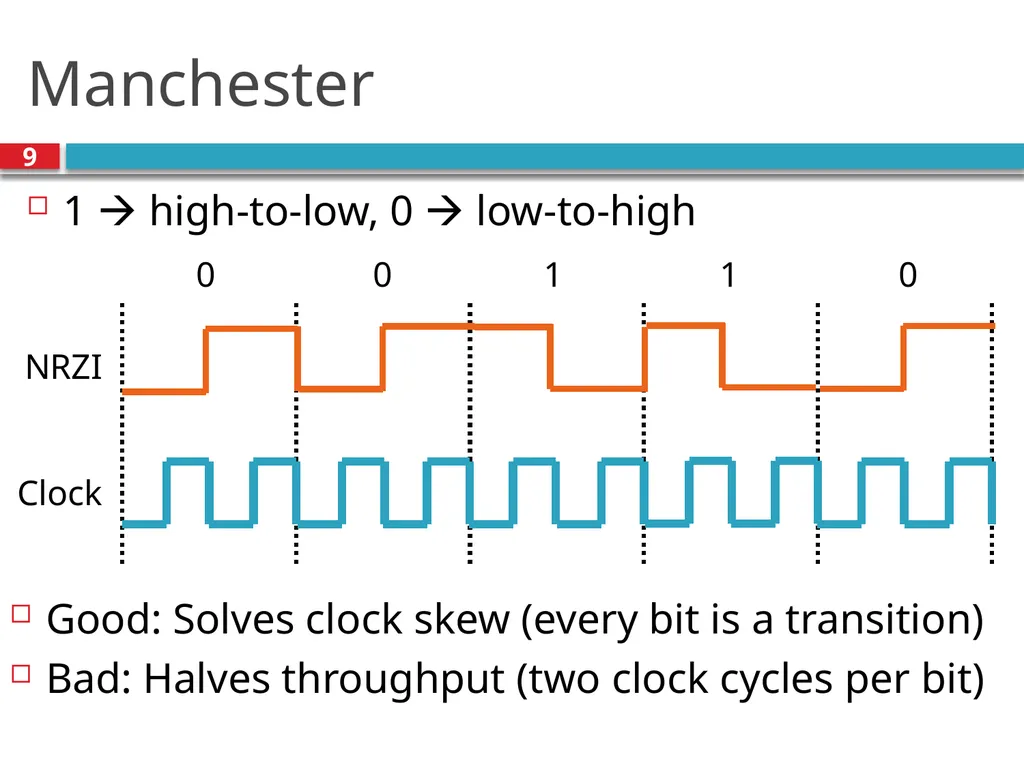
Manchester 9 1 high-to-low, 0 low-to-high Clock NRZI 0 0 0 1 1 Good: Solves clock skew (every bit is a transition)
Bad: Halves throughput (two clock cycles per bit)<br>
10
General comment 10 Physical layer is the lowest, so…
We tend not to worry about where to place functionality
There aren’t other layers that could interfere
We tend to care about it only when things go wrong
http://blog.level3.com/level-3-network/the-10-most-bizarre-and-annoying-causes-of-fiber-cuts/
Physical layer characteristics are still fundamentally important to building reliable Internet systems
Insulated media vs wireless
Packet vs. circuit switched media<br>