Cultural Humility in Practice: Digital Resource Toolkit Name: Date: University: Instructor Name: Introduction Brief overview of the toolkits purpose and importance. Culture from a Behavioral Perspective Include a detailed description of
"Cultural Humility in Practice: Digital Resource" is the property of its rightful owner. Permission is granted to
download and print the materials on this website for personal, non-commercial use only, and to display it
on your personal computer provided you do not modify the materials and that you retain all copyright
notices contained in the materials. By downloading content from our website, you accept the terms of this
agreement.
Presentation Transcript
01
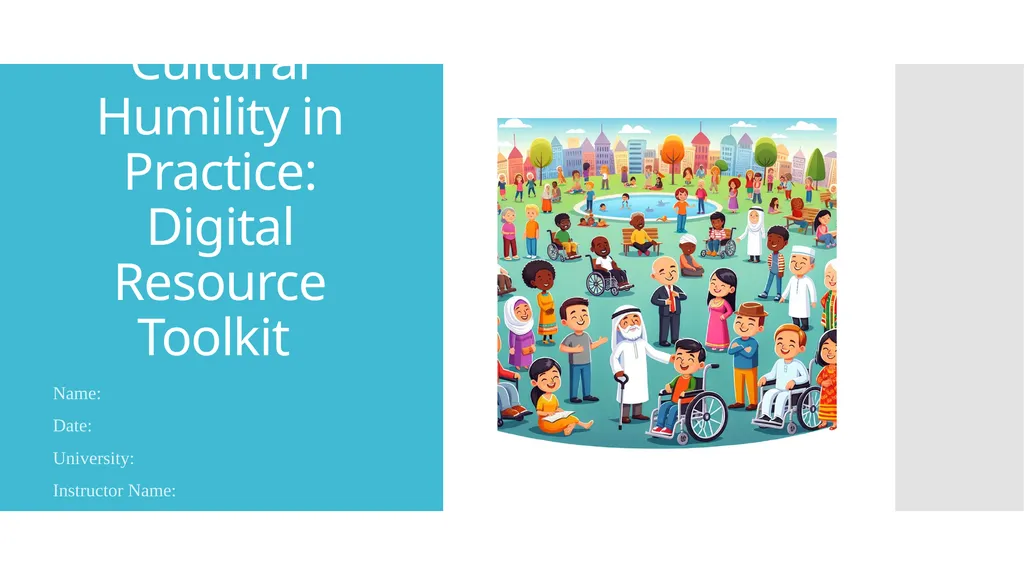
Cultural Humility in Practice: Digital Resource Toolkit Name:
Date:
University:
Instructor Name:<br>
02
Introduction Brief overview of the toolkit's purpose and importance.<br>
03
Culture from a Behavioral Perspective Include a detailed description of culture from a behavioral perspective, with more than one example and support your description with a recent behavior-analytic scholarly source using APA-style in-text citations.
Note: Culture is different from cultural humility. Make sure to focus on the definition of culture in this section.
Consider how behavior analysis would explain culture and the behavior of those group members.
Consider the ADDRESSING model (Conners & Capell, 2021) for examples of cultural groups.
Provide one behavior analytic resource in addition to the scholarly source related to culture from a behavior analytic perspective (e.g., blog, website, YouTube video, another article).<br>
04
Importance of Incorporating Culture Discuss the importance of incorporating culture as part of a client’s/participant’s context in applied practice and support your discussion with a recent behavior-analytic scholarly source using APA-style in-text citations.
Provide three specific examples of how analysts can incorporate culture in their practices.
Consider intake, assessment, intervention/treatment, materials, and trainings
Provide one behavior analytic resource in addition to the scholarly source related to incorporating culture into practice (e.g., blog, website, YouTube video, article).<br>
05
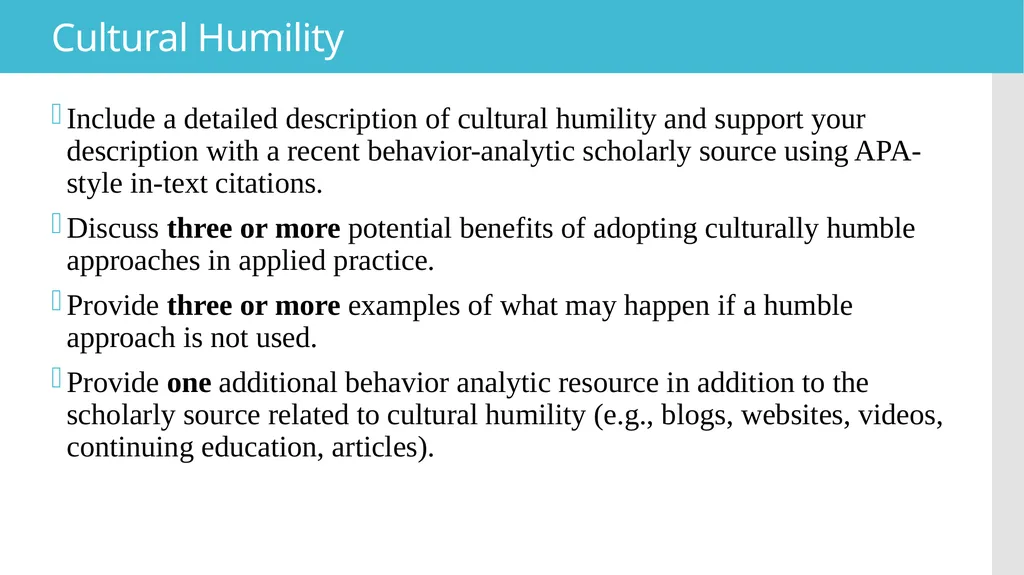
Cultural Humility Include a detailed description of cultural humility and support your description with a recent behavior-analytic scholarly source using APA-style in-text citations.
Discuss three or more potential benefits of adopting culturally humble approaches in applied practice.
Provide three or more examples of what may happen if a humble approach is not used.
Provide one additional behavior analytic resource in addition to the scholarly source related to cultural humility (e.g., blogs, websites, videos, continuing education, articles).<br>
06
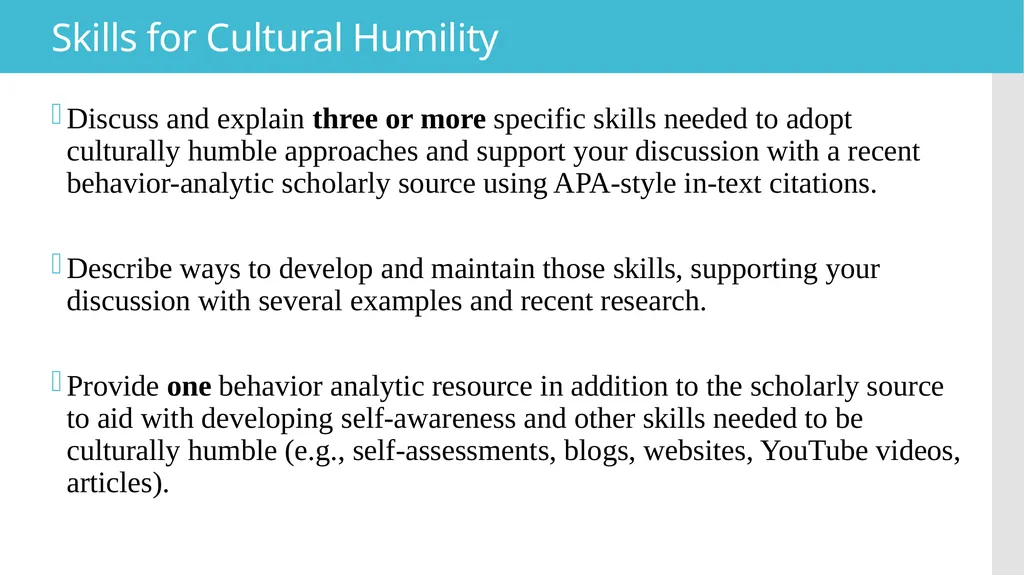
Skills for Cultural Humility Discuss and explain three or more specific skills needed to adopt culturally humble approaches and support your discussion with a recent behavior-analytic scholarly source using APA-style in-text citations.
Describe ways to develop and maintain those skills, supporting your discussion with several examples and recent research.
Provide one behavior analytic resource in addition to the scholarly source to aid with developing self-awareness and other skills needed to be culturally humble (e.g., self-assessments, blogs, websites, YouTube videos, articles).<br>
07
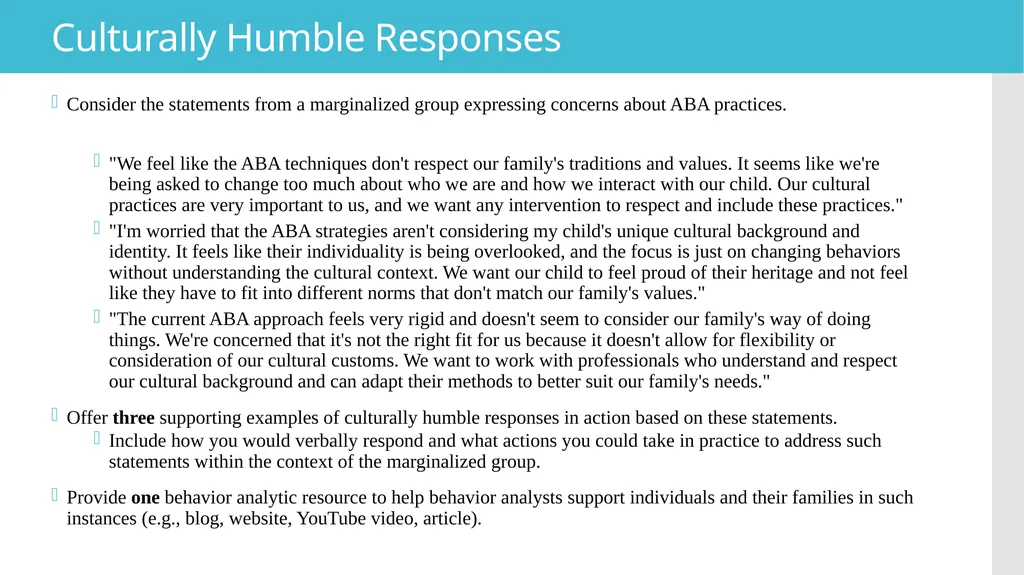
Culturally Humble Responses Consider the statements from a marginalized group expressing concerns about ABA practices.
"We feel like the ABA techniques don't respect our family's traditions and values. It seems like we're being asked to change too much about who we are and how we interact with our child. Our cultural practices are very important to us, and we want any intervention to respect and include these practices."
"I'm worried that the ABA strategies aren't considering my child's unique cultural background and identity. It feels like their individuality is being overlooked, and the focus is just on changing behaviors without understanding the cultural context. We want our child to feel proud of their heritage and not feel like they have to fit into different norms that don't match our family's values."
"The current ABA approach feels very rigid and doesn't seem to consider our family's way of doing things. We're concerned that it's not the right fit for us because it doesn't allow for flexibility or consideration of our cultural customs. We want to work with professionals who understand and respect our cultural background and can adapt their methods to better suit our family's needs."
Offer three supporting examples of culturally humble responses in action based on these statements.
Include how you would verbally respond and what actions you could take in practice to address such statements within the context of the marginalized group.
Provide one behavior analytic resource to help behavior analysts support individuals and their families in such instances (e.g., blog, website, YouTube video, article).<br>
08
Conclusion Summarize the key points of the toolkit.
Emphasize the importance of cultural humility in behavior analysis.<br>
09
References List all the scholarly resources used in the presentation in APA formatting.
For each reference, provide a 2-3 sentence summary explaining the main point of the source and its relevance to the toolkit
You do not need to include the additional resources on the references page since they are just for extra guidance and not directly used as supporting research.<br>