
Data collection and use Goal and learning outcomes
OM
Published · 42 slides · 0 views
1 / 1


Description
Data collection and use Goal and learning outcomes The situation Why data is important Using data Summary Clinical practice Quality improvement References and additional resources Content Goal and learning outcomes Data collection and use
Related Topics
Share
Embed code
Download this presentation From Below
"Data collection and use Goal and learning outcomes" is the property of its rightful owner. Permission is granted to download and print the materials on this website for personal, non-commercial use only, and to display it on your personal computer provided you do not modify the materials and that you retain all copyright notices contained in the materials. By downloading content from our website, you accept the terms of this agreement.
Presentation Transcript
01
Data collection and use<br>
02
Goal and learning outcomes
The situation
Why data is important
Using data
Summary
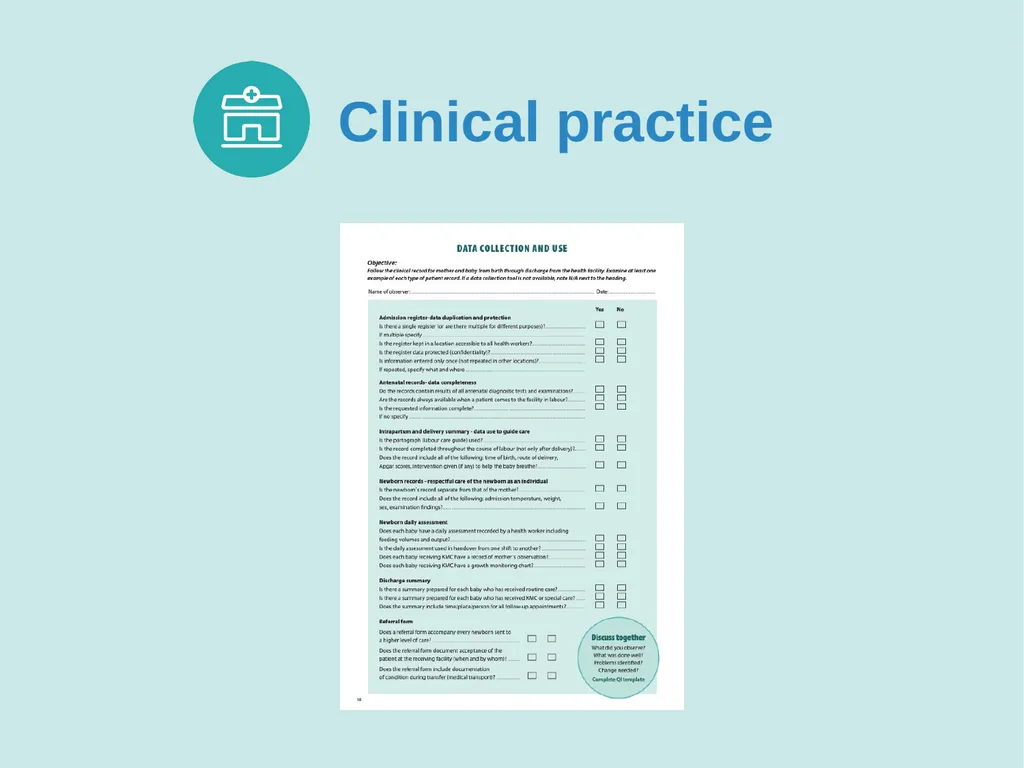
Clinical practice
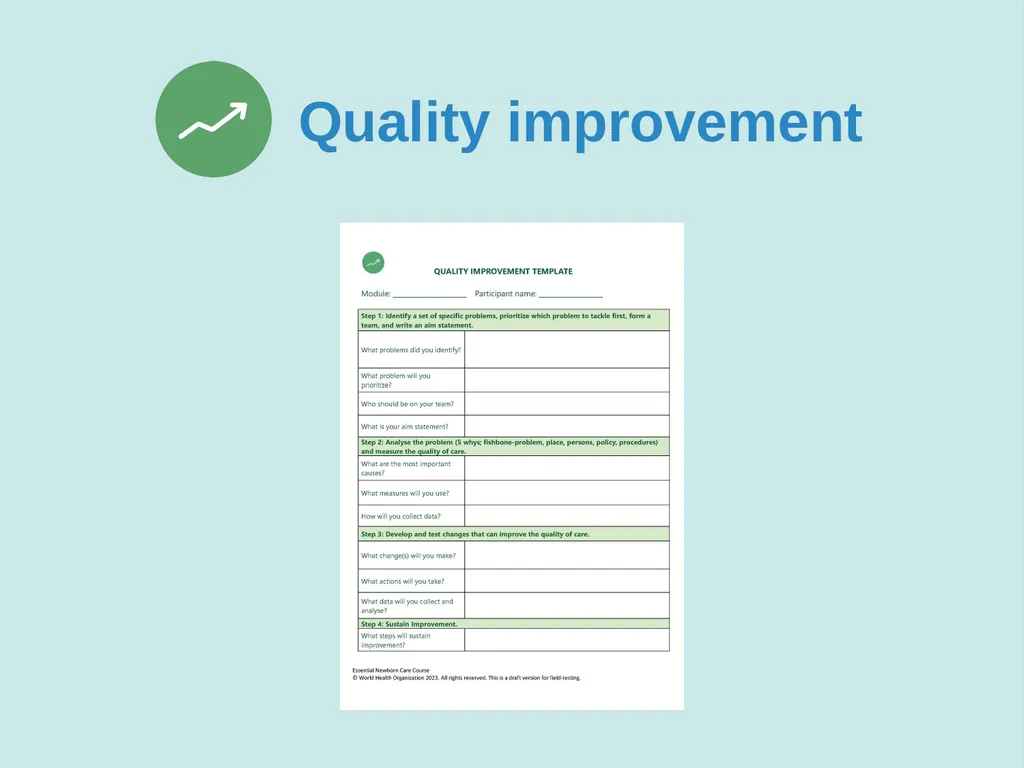
Quality improvement
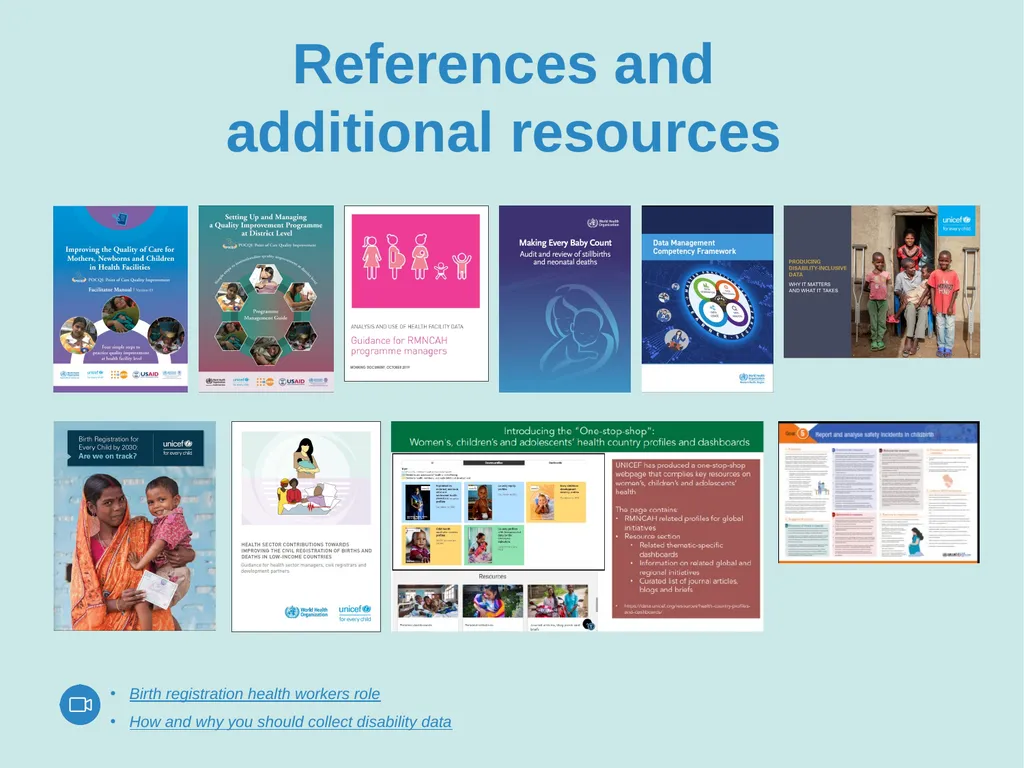
References and additional resources Content<br>
The situation
Why data is important
Using data
Summary
Clinical practice
Quality improvement
References and additional resources Content<br>
03
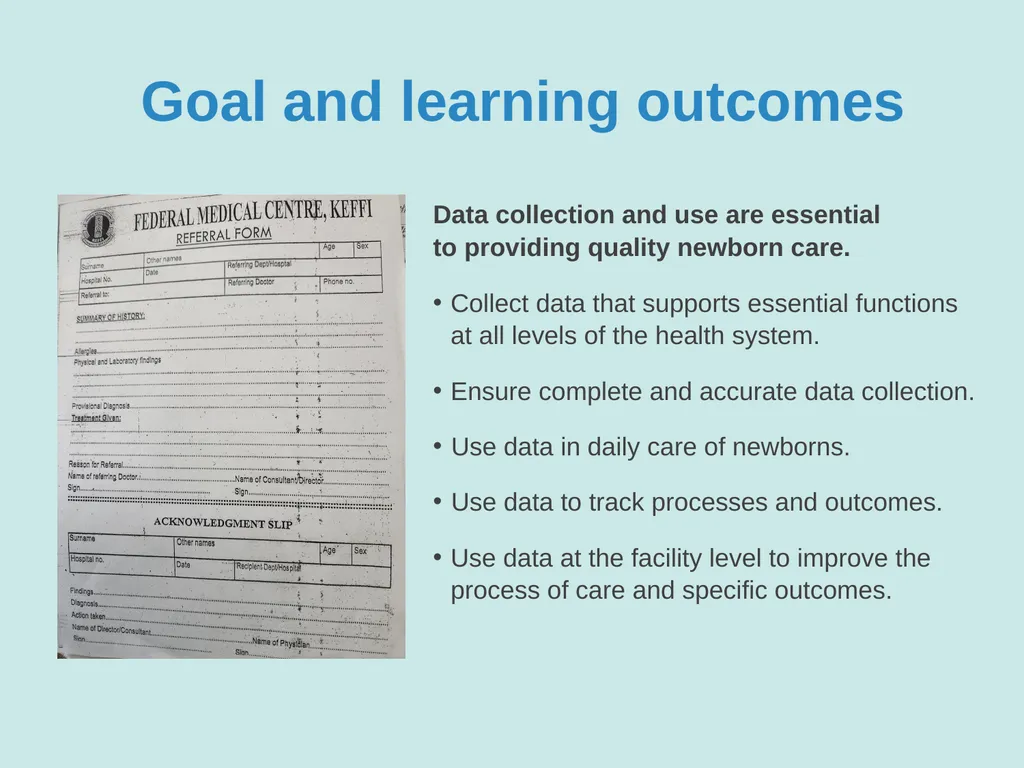
Goal and learning outcomes Data collection and use are essential
to providing quality newborn care.
Collect data that supports essential functions at all levels of the health system.
Ensure complete and accurate data collection.
Use data in daily care of newborns.
Use data to track processes and outcomes.
Use data at the facility level to improve the process of care and specific outcomes.<br>
Collect data that supports essential functions at all levels of the health system.
Ensure complete and accurate data collection.
Use data in daily care of newborns.
Use data to track processes and outcomes.
Use data at the facility level to improve the process of care and specific outcomes.<br>
04
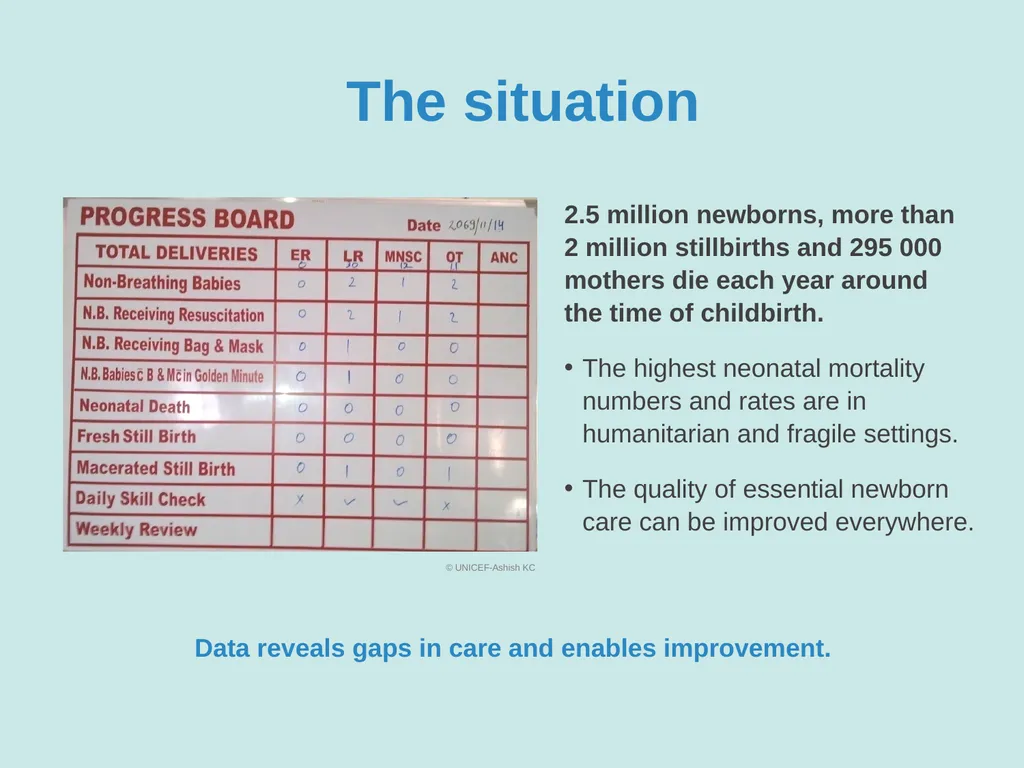
The situation 2.5 million newborns, more than
2 million stillbirths and 295 000
mothers die each year around
the time of childbirth.
The highest neonatal mortality numbers and rates are in humanitarian and fragile settings.
The quality of essential newborn care can be improved everywhere. Data reveals gaps in care and enables improvement.<br>
The highest neonatal mortality numbers and rates are in humanitarian and fragile settings.
The quality of essential newborn care can be improved everywhere. Data reveals gaps in care and enables improvement.<br>
05
Form groups (midwife, mother, husband).
Help the parents register the stillbirth.
Debrief with your team and facilitator. Stillbirth registration Julie gave birth at 32 weeks gestation in the health facility.
Her son was stillborn.<br>
Help the parents register the stillbirth.
Debrief with your team and facilitator. Stillbirth registration Julie gave birth at 32 weeks gestation in the health facility.
Her son was stillborn.<br>
06
Why data is important<br>
07
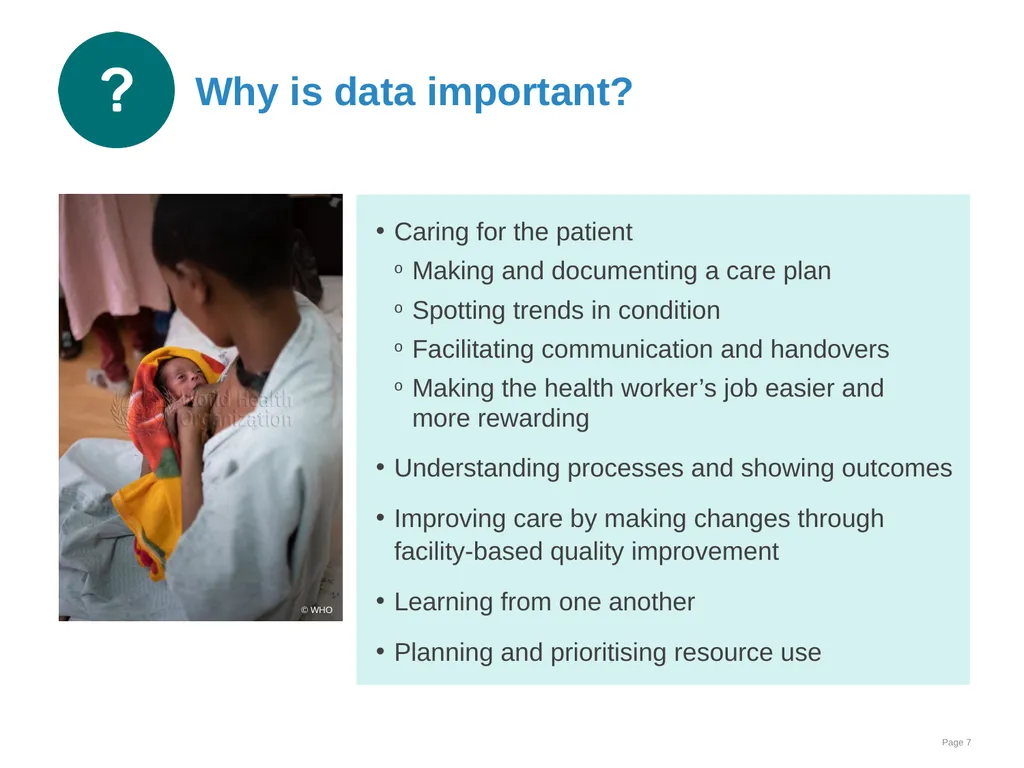
Caring for the patient
Making and documenting a care plan
Spotting trends in condition
Facilitating communication and handovers
Making the health worker’s job easier and more rewarding
Understanding processes and showing outcomes
Improving care by making changes through facility-based quality improvement
Learning from one another
Planning and prioritising resource use Why is data important? © WHO<br>
Making and documenting a care plan
Spotting trends in condition
Facilitating communication and handovers
Making the health worker’s job easier and more rewarding
Understanding processes and showing outcomes
Improving care by making changes through facility-based quality improvement
Learning from one another
Planning and prioritising resource use Why is data important? © WHO<br>
08
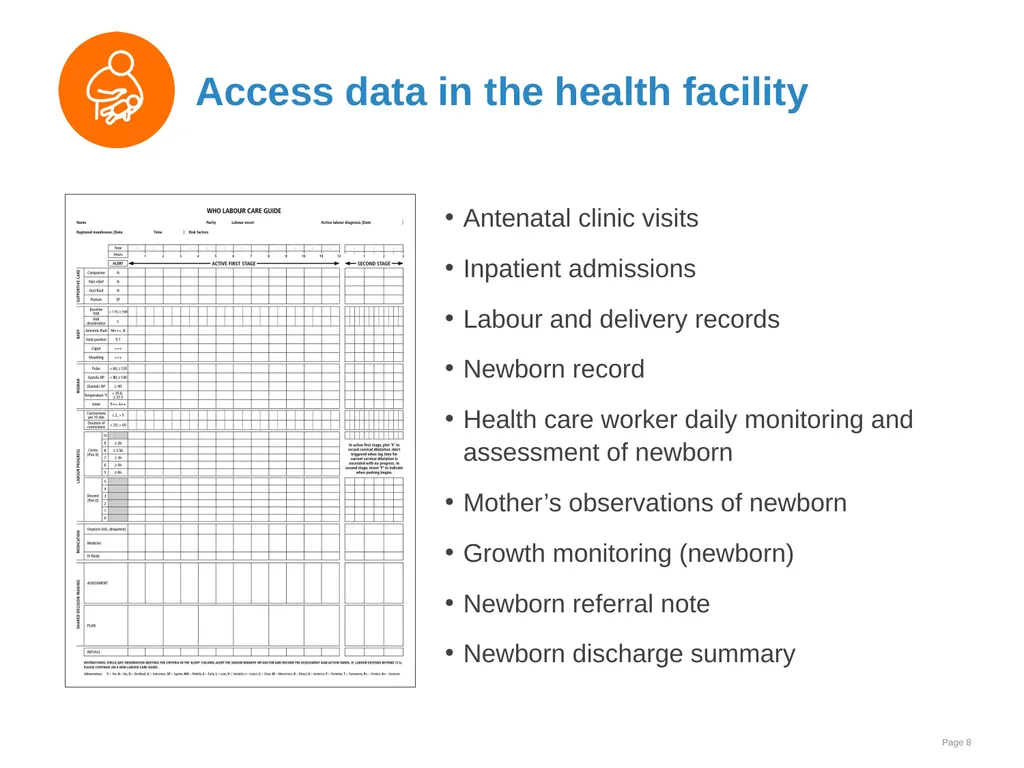
Antenatal clinic visits
Inpatient admissions
Labour and delivery records
Newborn record
Health care worker daily monitoring and assessment of newborn
Mother’s observations of newborn
Growth monitoring (newborn)
Newborn referral note
Newborn discharge summary Access data in the health facility<br>
Inpatient admissions
Labour and delivery records
Newborn record
Health care worker daily monitoring and assessment of newborn
Mother’s observations of newborn
Growth monitoring (newborn)
Newborn referral note
Newborn discharge summary Access data in the health facility<br>
09
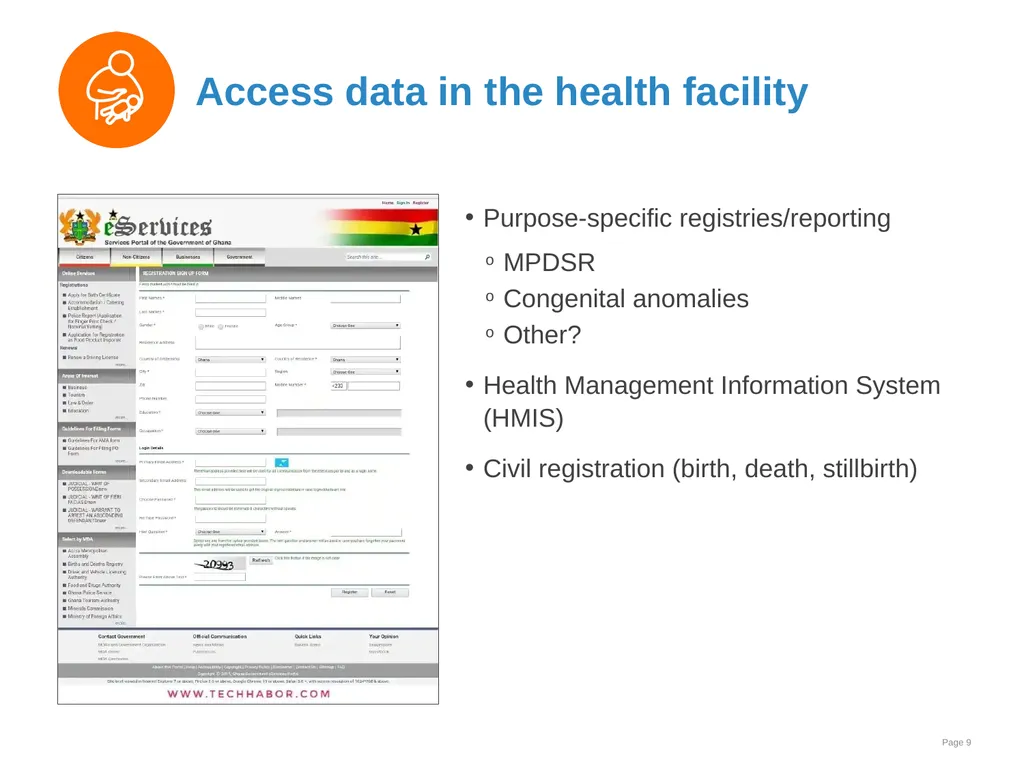
Access data in the health facility Purpose-specific registries/reporting
MPDSR
Congenital anomalies
Other?
Health Management Information System (HMIS)
Civil registration (birth, death, stillbirth)<br>
MPDSR
Congenital anomalies
Other?
Health Management Information System (HMIS)
Civil registration (birth, death, stillbirth)<br>
10
Form groups (nurse, mother, companion)
Review Salina’s records to answer these questions:
Results of antenatal testing for HIV and syphilis
Hemoglobin
Tetanus immunization status
Estimated gestational age
Could you find all the information? Collect and use complete, accurate data Salina comes to your health facility in labour. This is her first pregnancy. She had 4 antenatal visits at her local health center.
She is uncertain of her expected date of delivery.<br>
Review Salina’s records to answer these questions:
Results of antenatal testing for HIV and syphilis
Hemoglobin
Tetanus immunization status
Estimated gestational age
Could you find all the information? Collect and use complete, accurate data Salina comes to your health facility in labour. This is her first pregnancy. She had 4 antenatal visits at her local health center.
She is uncertain of her expected date of delivery.<br>
11
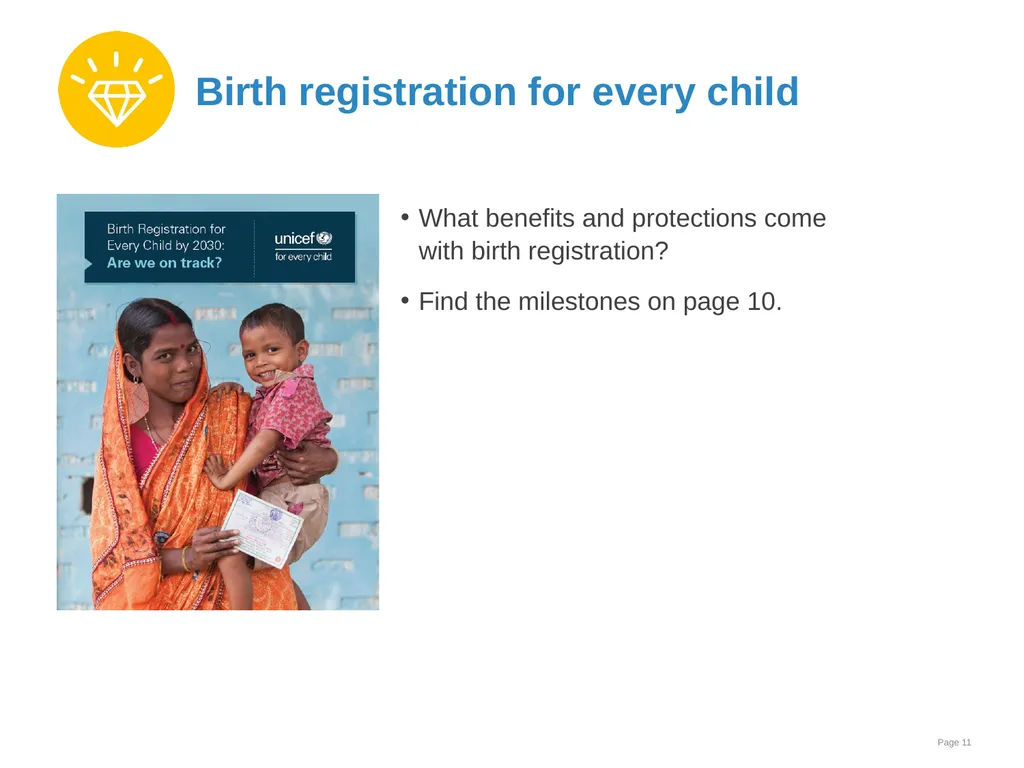
What benefits and protections come with birth registration?
Find the milestones on page 10. Birth registration for every child<br>
Find the milestones on page 10. Birth registration for every child<br>
12
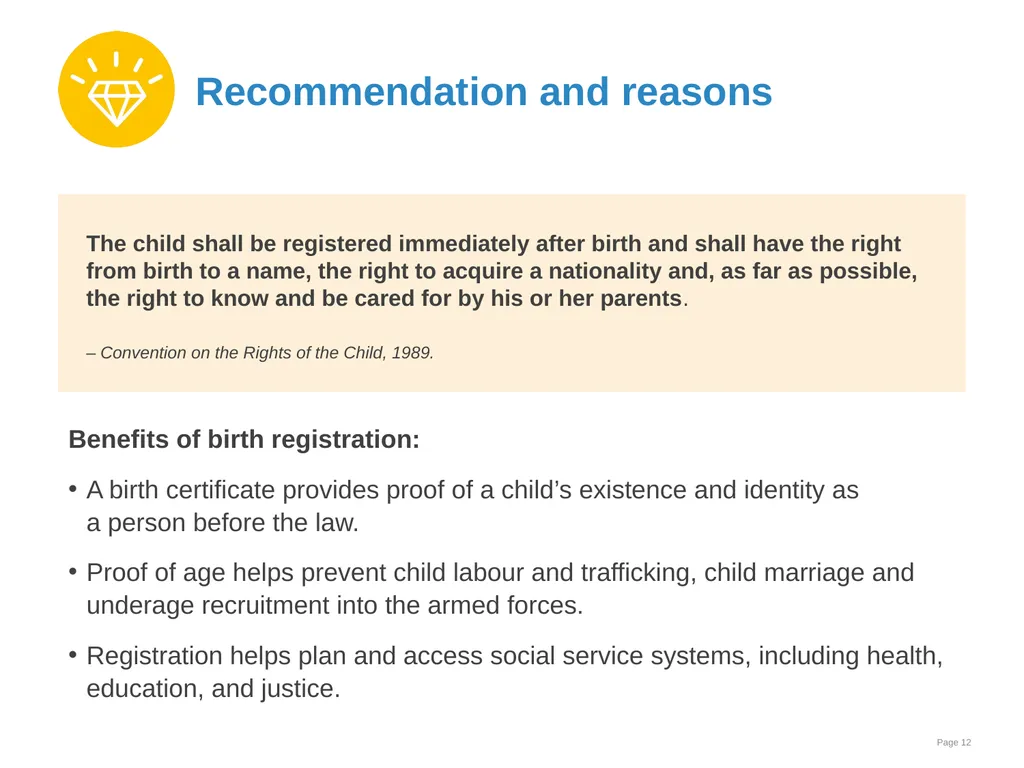
The child shall be registered immediately after birth and shall have the right from birth to a name, the right to acquire a nationality and, as far as possible, the right to know and be cared for by his or her parents.
– Convention on the Rights of the Child, 1989. Benefits of birth registration:
A birth certificate provides proof of a child’s existence and identity as a person before the law.
Proof of age helps prevent child labour and trafficking, child marriage and underage recruitment into the armed forces.
Registration helps plan and access social service systems, including health, education, and justice. Recommendation and reasons<br>
– Convention on the Rights of the Child, 1989. Benefits of birth registration:
A birth certificate provides proof of a child’s existence and identity as a person before the law.
Proof of age helps prevent child labour and trafficking, child marriage and underage recruitment into the armed forces.
Registration helps plan and access social service systems, including health, education, and justice. Recommendation and reasons<br>
13
Using data<br>
14
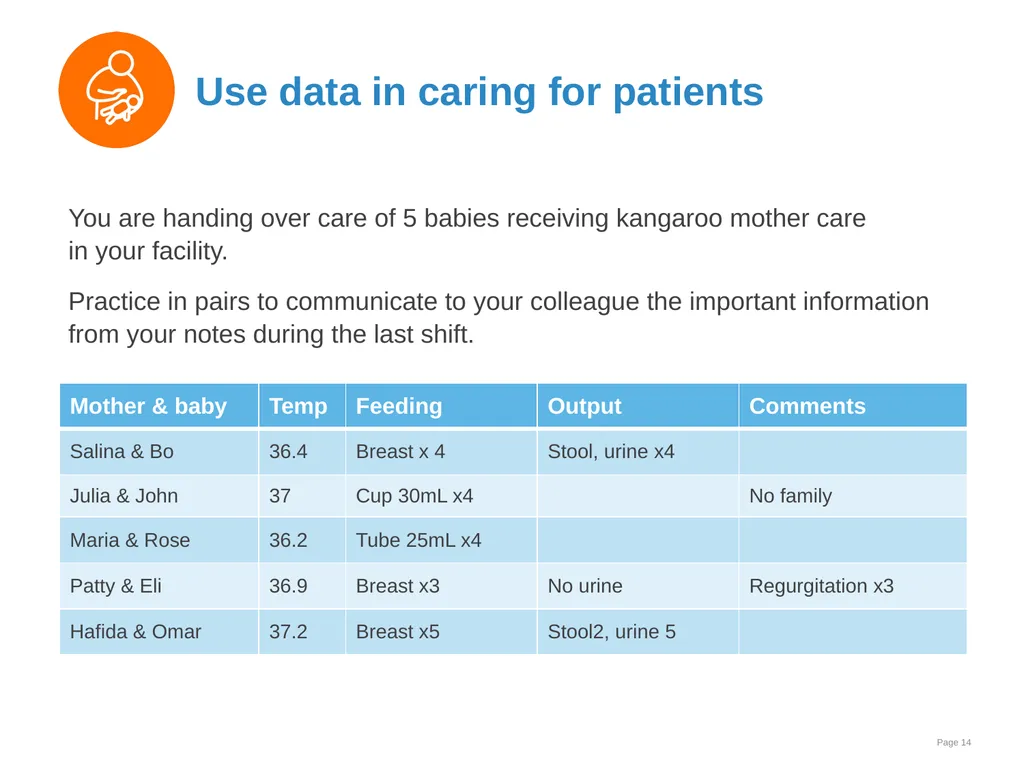
You are handing over care of 5 babies receiving kangaroo mother care
in your facility.
Practice in pairs to communicate to your colleague the important information from your notes during the last shift. Use data in caring for patients<br>
Practice in pairs to communicate to your colleague the important information from your notes during the last shift. Use data in caring for patients<br>
15
You are attending the birth of Salina’s baby.
Where will you record the following information? (List all if multiple places) Use data to track processes and outcomes<br>
Where will you record the following information? (List all if multiple places) Use data to track processes and outcomes<br>
16
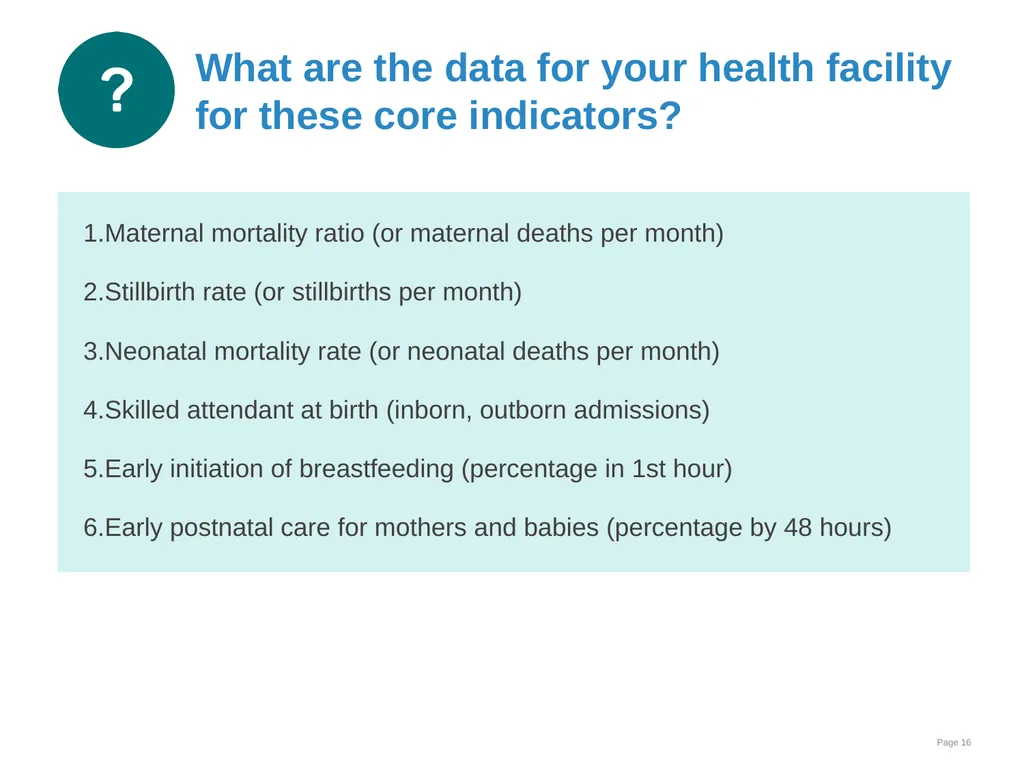
Maternal mortality ratio (or maternal deaths per month)
Stillbirth rate (or stillbirths per month)
Neonatal mortality rate (or neonatal deaths per month)
Skilled attendant at birth (inborn, outborn admissions)
Early initiation of breastfeeding (percentage in 1st hour)
Early postnatal care for mothers and babies (percentage by 48 hours) What are the data for your health facility for these core indicators?<br>
Stillbirth rate (or stillbirths per month)
Neonatal mortality rate (or neonatal deaths per month)
Skilled attendant at birth (inborn, outborn admissions)
Early initiation of breastfeeding (percentage in 1st hour)
Early postnatal care for mothers and babies (percentage by 48 hours) What are the data for your health facility for these core indicators?<br>
17
Clinical observations or knowledge and experience
Evidence from already collected process and outcome data (for example, core indicators)
National or sub-national priorities and targets How can you identify problems or gaps in quality? What problems can you identify already based on your observations or the core indicators for your facility?<br>
Evidence from already collected process and outcome data (for example, core indicators)
National or sub-national priorities and targets How can you identify problems or gaps in quality? What problems can you identify already based on your observations or the core indicators for your facility?<br>
18
Importance of the outcome or process to the health of mothers and babies
Expected result of the improvement (big or little)
Impact of the improvement (how many mothers or babies will be affected)
Resources required (simple and easy to change)
Turn-around time How do you prioritize the problem to improve?<br>
Expected result of the improvement (big or little)
Impact of the improvement (how many mothers or babies will be affected)
Resources required (simple and easy to change)
Turn-around time How do you prioritize the problem to improve?<br>
19
A health facility nearby identified several
problems (gaps in care) around infection
prevention during ENCC.
No alcohol hand rub at bedside
No way to dry hands after washing
Dirty handwashing stations
Poor waste segregation
Poor waste handling/disposal
Discuss why you prioritized the problem chosen. Choose which problem to improve<br>
No alcohol hand rub at bedside
No way to dry hands after washing
Dirty handwashing stations
Poor waste segregation
Poor waste handling/disposal
Discuss why you prioritized the problem chosen. Choose which problem to improve<br>
20
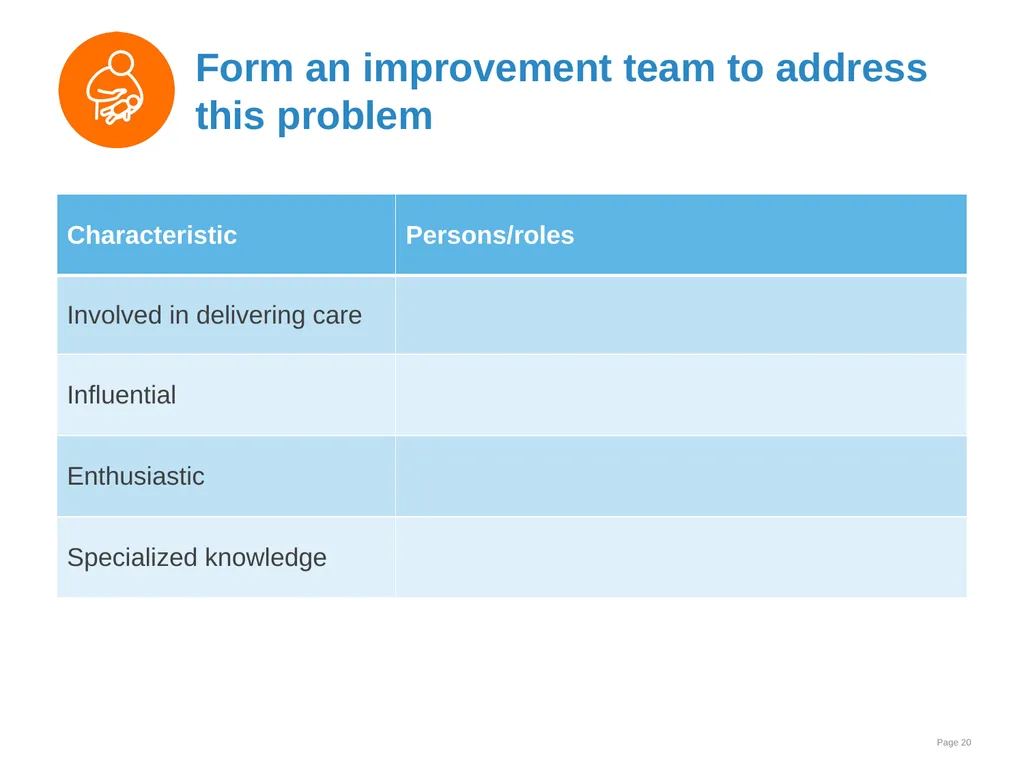
Form an improvement team to address this problem<br>
21
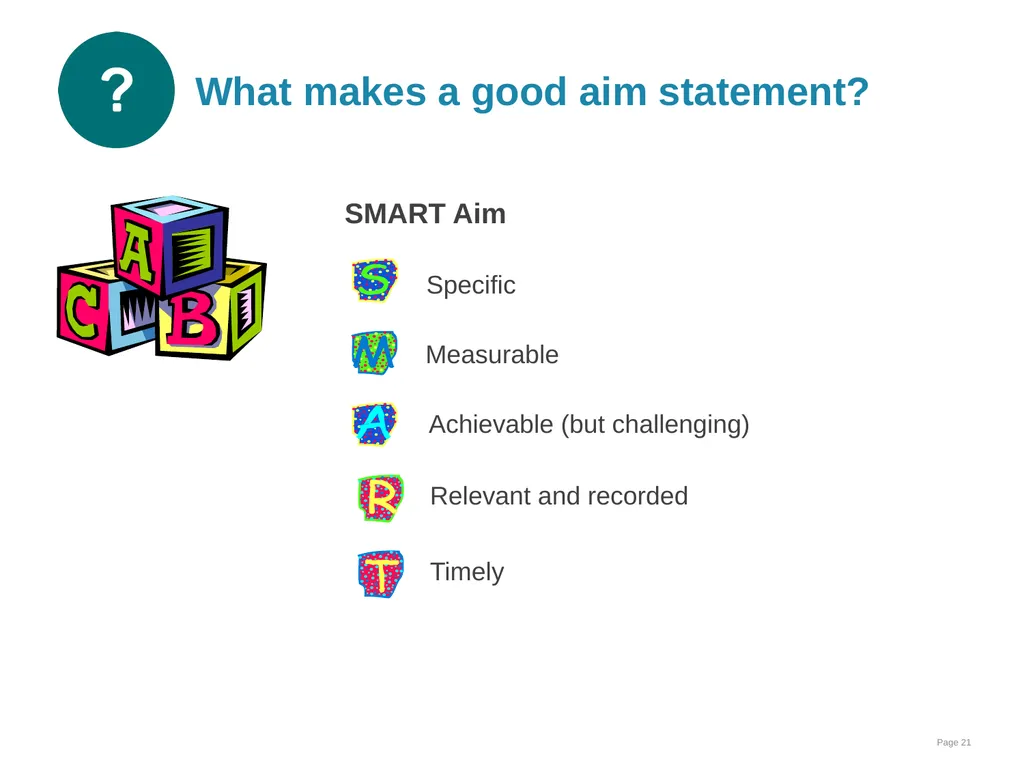
What makes a good aim statement? SMART Aim Specific Measurable Achievable (but challenging) Relevant and recorded Timely<br>
22
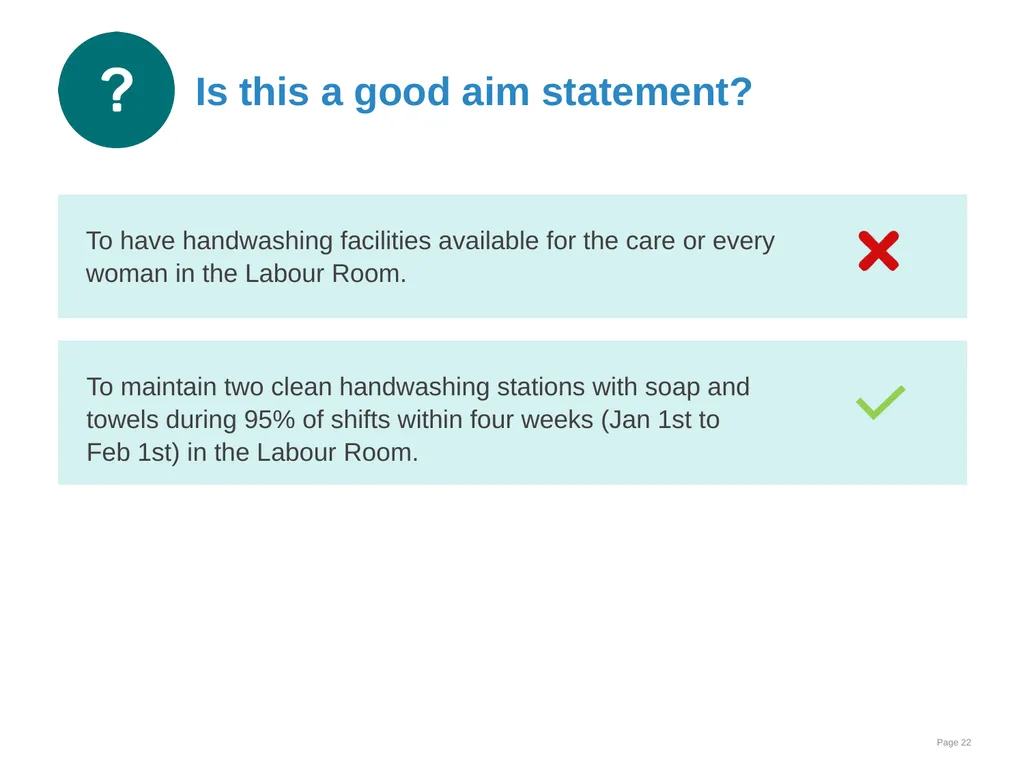
To have handwashing facilities available for the care or every woman in the Labour Room. Is this a good aim statement? To maintain two clean handwashing stations with soap and
towels during 95% of shifts within four weeks (Jan 1st to
Feb 1st) in the Labour Room.<br>
23
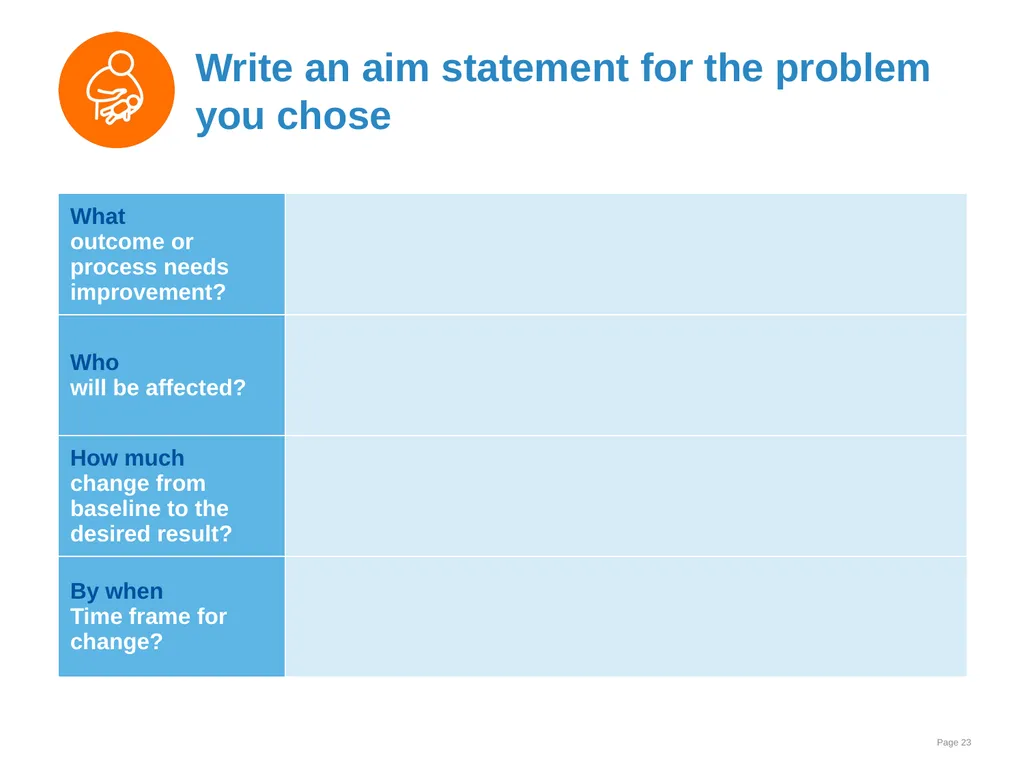
Write an aim statement for the problem you chose<br>
24
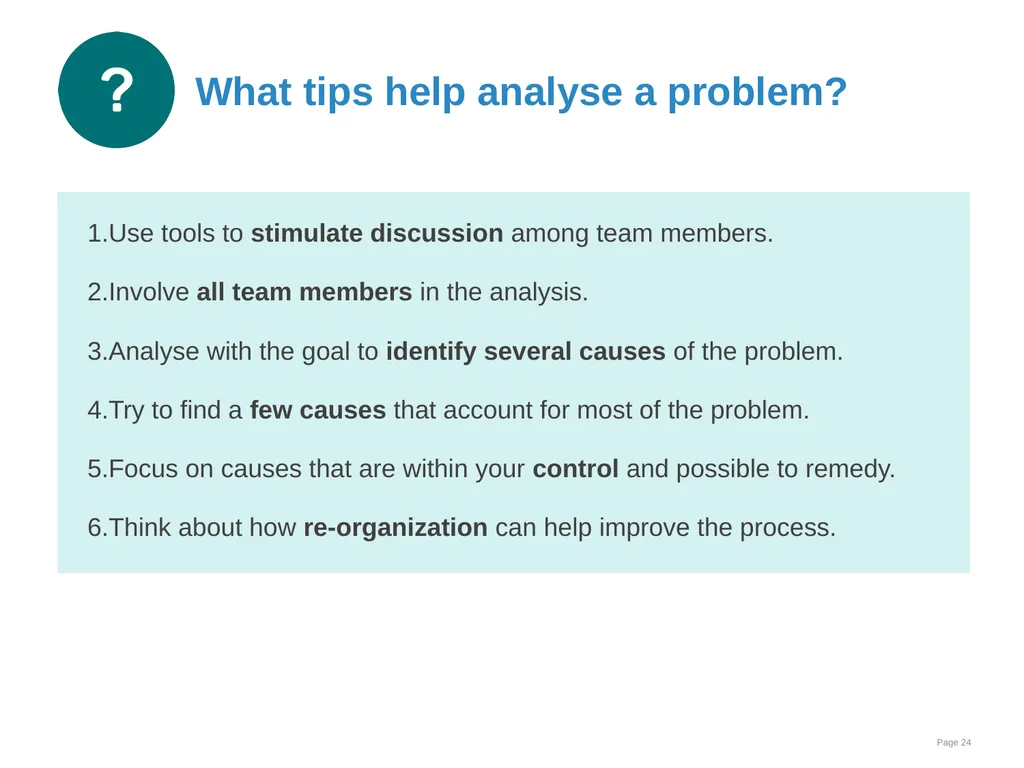
What tips help analyse a problem? Use tools to stimulate discussion among team members.
Involve all team members in the analysis.
Analyse with the goal to identify several causes of the problem.
Try to find a few causes that account for most of the problem.
Focus on causes that are within your control and possible to remedy.
Think about how re-organization can help improve the process.<br>
Involve all team members in the analysis.
Analyse with the goal to identify several causes of the problem.
Try to find a few causes that account for most of the problem.
Focus on causes that are within your control and possible to remedy.
Think about how re-organization can help improve the process.<br>
25
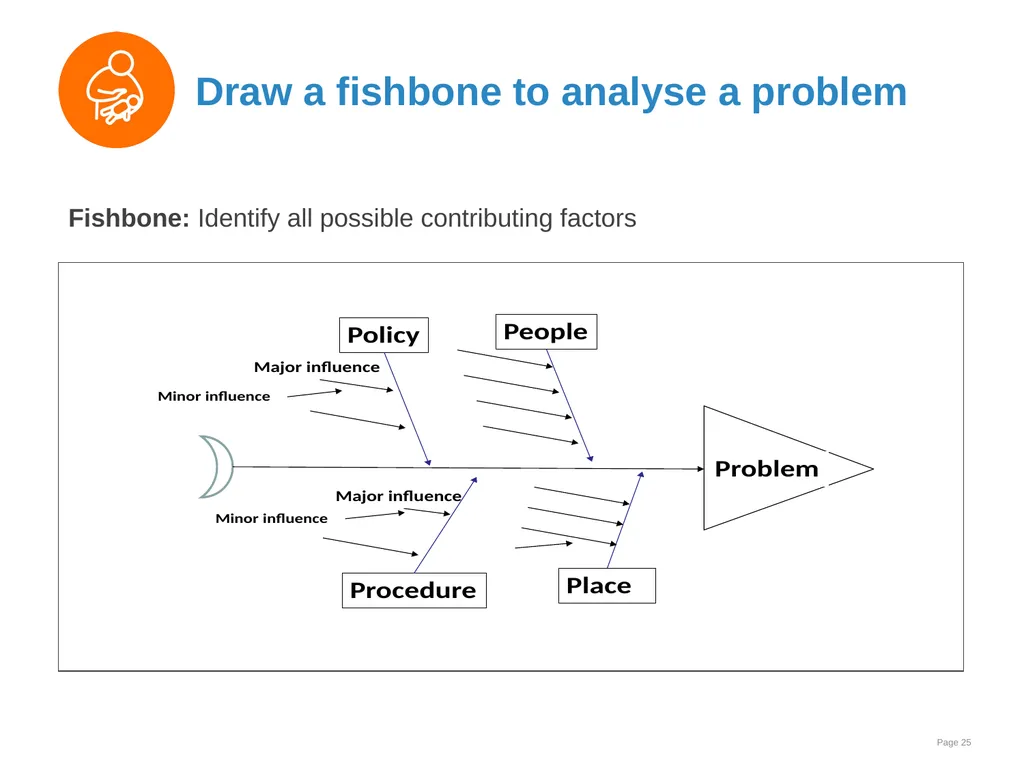
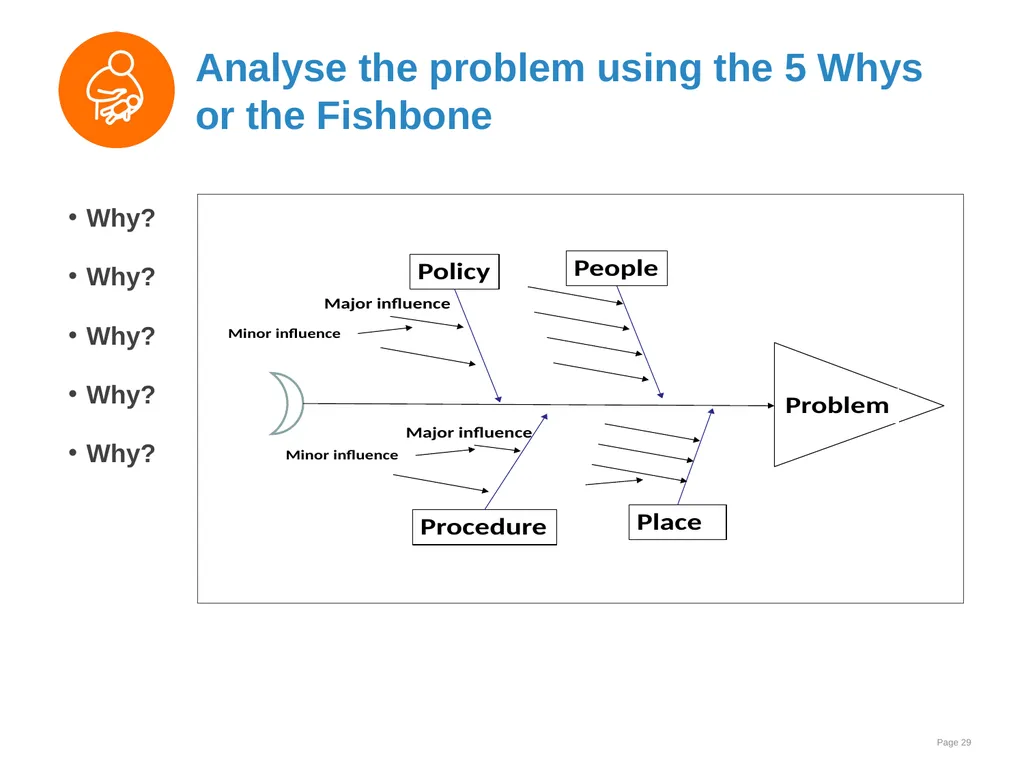
Fishbone: Identify all possible contributing factors Draw a fishbone to analyse a problem<br>
26
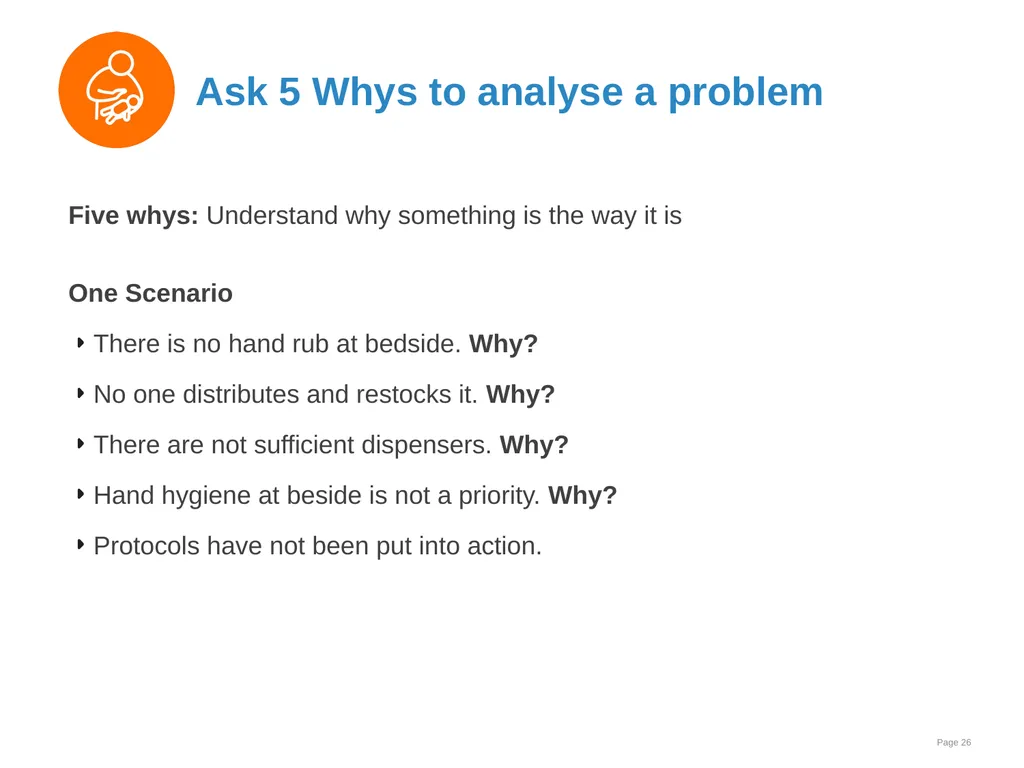
One Scenario
There is no hand rub at bedside. Why?
No one distributes and restocks it. Why?
There are not sufficient dispensers. Why?
Hand hygiene at beside is not a priority. Why?
Protocols have not been put into action. Ask 5 Whys to analyse a problem Five whys: Understand why something is the way it is<br>
There is no hand rub at bedside. Why?
No one distributes and restocks it. Why?
There are not sufficient dispensers. Why?
Hand hygiene at beside is not a priority. Why?
Protocols have not been put into action. Ask 5 Whys to analyse a problem Five whys: Understand why something is the way it is<br>
27
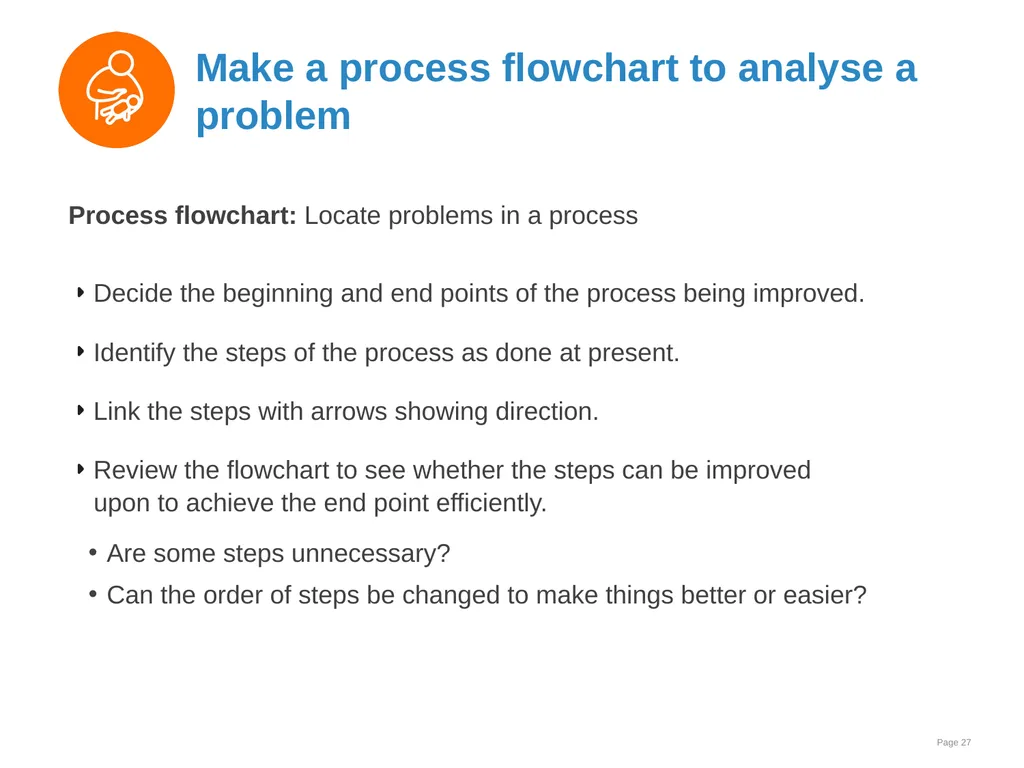
Decide the beginning and end points of the process being improved.
Identify the steps of the process as done at present.
Link the steps with arrows showing direction.
Review the flowchart to see whether the steps can be improved upon to achieve the end point efficiently.
Are some steps unnecessary?
Can the order of steps be changed to make things better or easier? Make a process flowchart to analyse a problem Process flowchart: Locate problems in a process<br>
Identify the steps of the process as done at present.
Link the steps with arrows showing direction.
Review the flowchart to see whether the steps can be improved upon to achieve the end point efficiently.
Are some steps unnecessary?
Can the order of steps be changed to make things better or easier? Make a process flowchart to analyse a problem Process flowchart: Locate problems in a process<br>
28
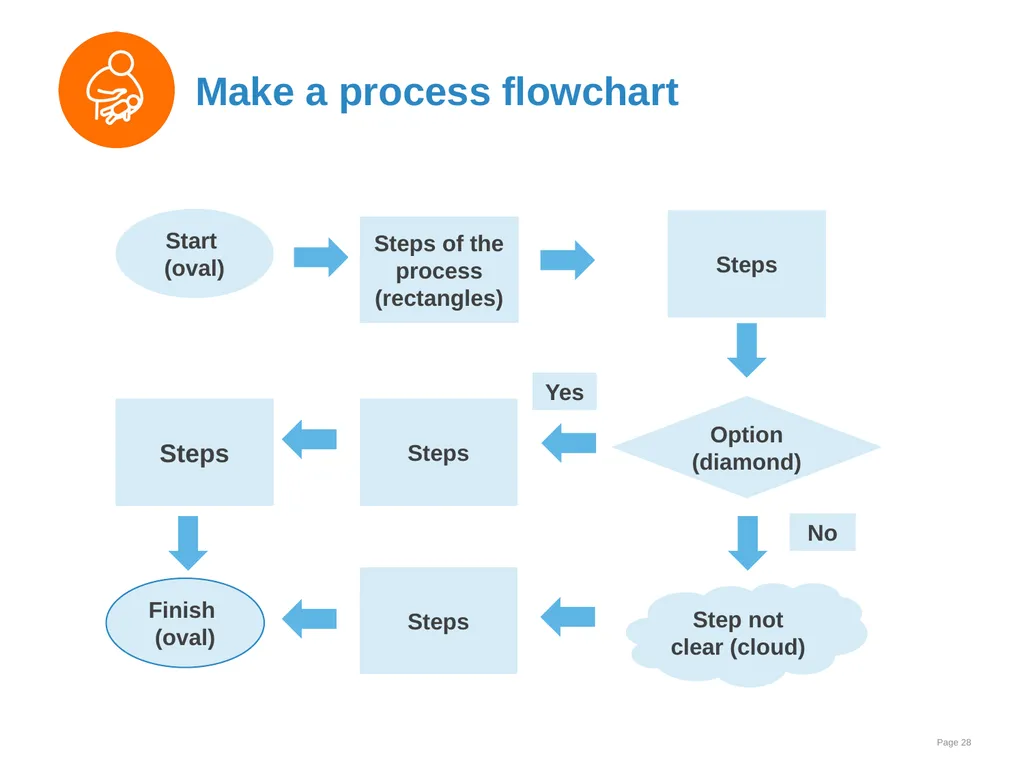
Make a process flowchart Steps Option
(diamond) Yes No Step not clear (cloud) Start
(oval) Steps of the process (rectangles) Finish
(oval) Steps Steps Steps<br>
(diamond) Yes No Step not clear (cloud) Start
(oval) Steps of the process (rectangles) Finish
(oval) Steps Steps Steps<br>
29
Why?
Why?
Why?
Why?
Why? Analyse the problem using the 5 Whys or the Fishbone<br>
Why?
Why?
Why?
Why? Analyse the problem using the 5 Whys or the Fishbone<br>
30
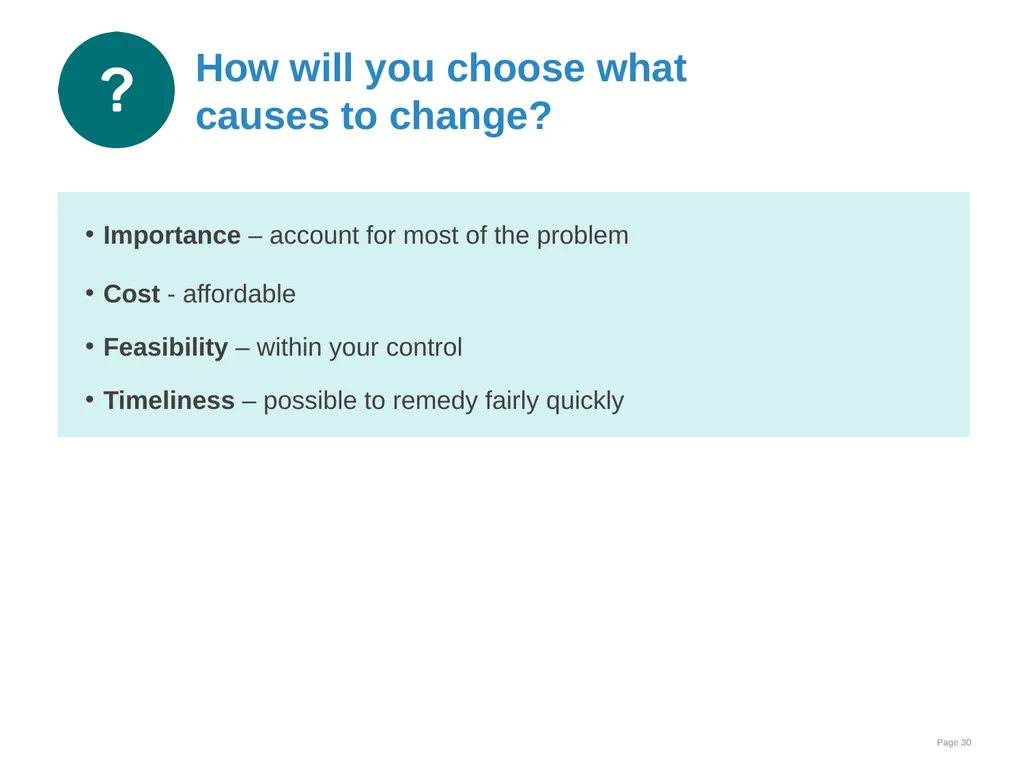
How will you choose what
causes to change? Importance – account for most of the problem
Cost - affordable
Feasibility – within your control
Timeliness – possible to remedy fairly quickly<br>
Cost - affordable
Feasibility – within your control
Timeliness – possible to remedy fairly quickly<br>
31
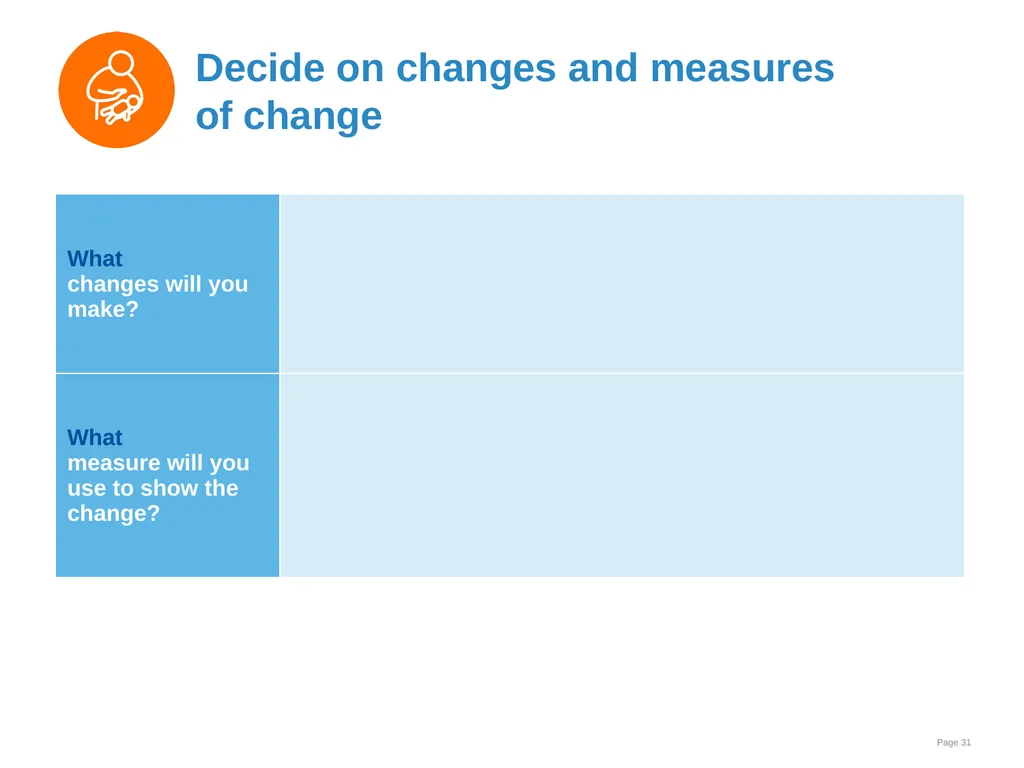
Decide on changes and measures
of change<br>
32
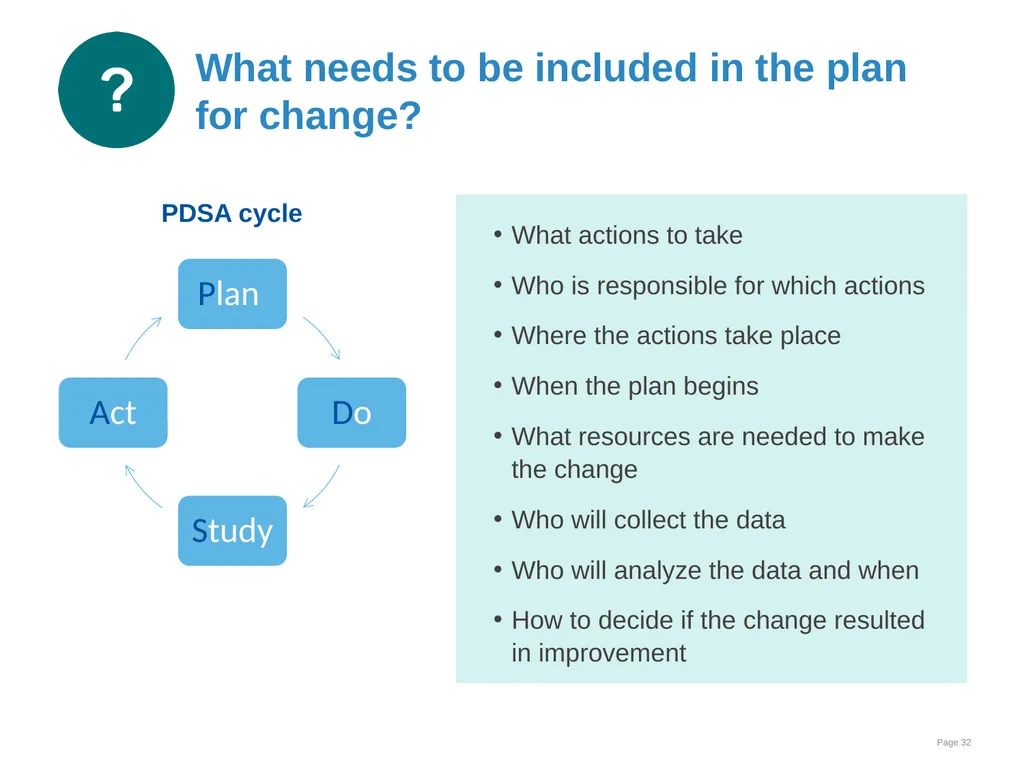
What actions to take
Who is responsible for which actions
Where the actions take place
When the plan begins
What resources are needed to make the change
Who will collect the data
Who will analyze the data and when
How to decide if the change resulted in improvement What needs to be included in the plan for change? PDSA cycle<br>
Who is responsible for which actions
Where the actions take place
When the plan begins
What resources are needed to make the change
Who will collect the data
Who will analyze the data and when
How to decide if the change resulted in improvement What needs to be included in the plan for change? PDSA cycle<br>
33
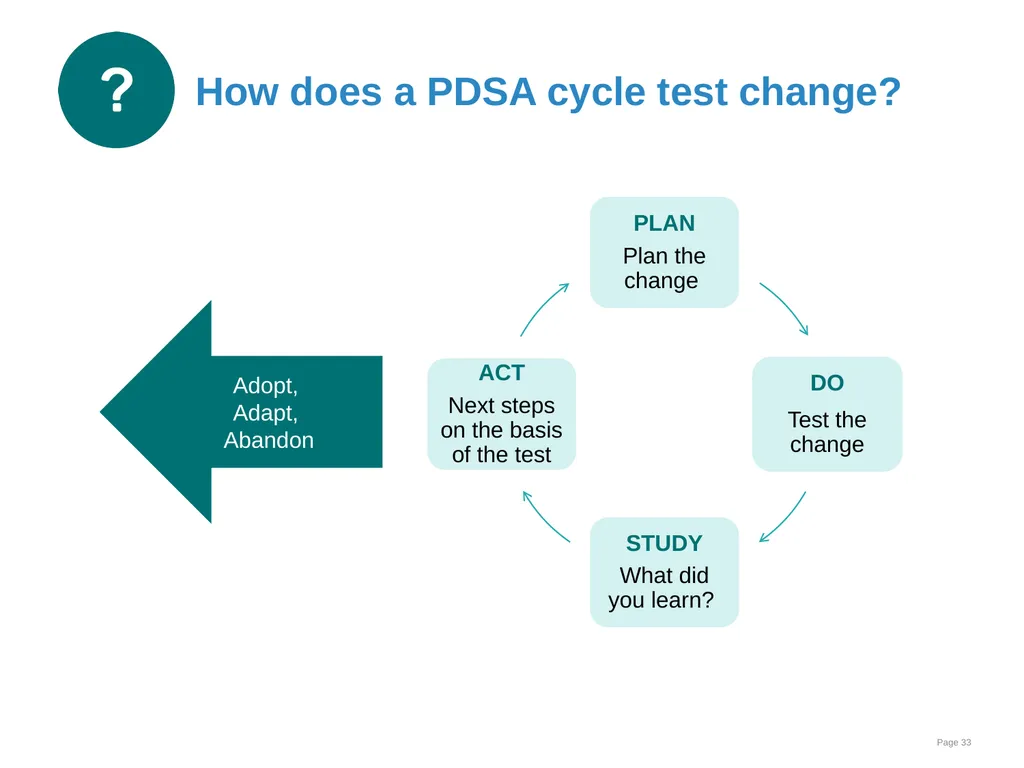
How does a PDSA cycle test change? Adopt,
Adapt,
Abandon<br>
Adapt,
Abandon<br>
34
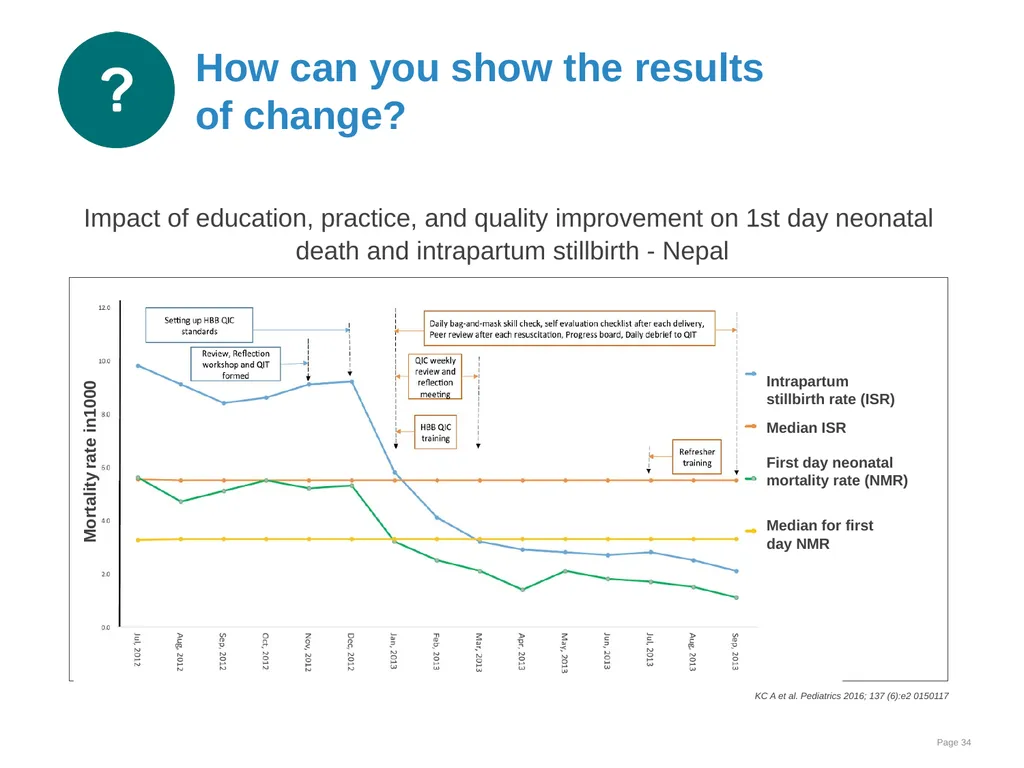
Impact of education, practice, and quality improvement on 1st day neonatal
death and intrapartum stillbirth - Nepal How can you show the results
of change? KC A et al. Pediatrics 2016; 137 (6):e2 0150117 Intrapartum stillbirth rate (ISR) Median ISR First day neonatal mortality rate (NMR) Median for first day NMR Mortality rate in1000<br>
35
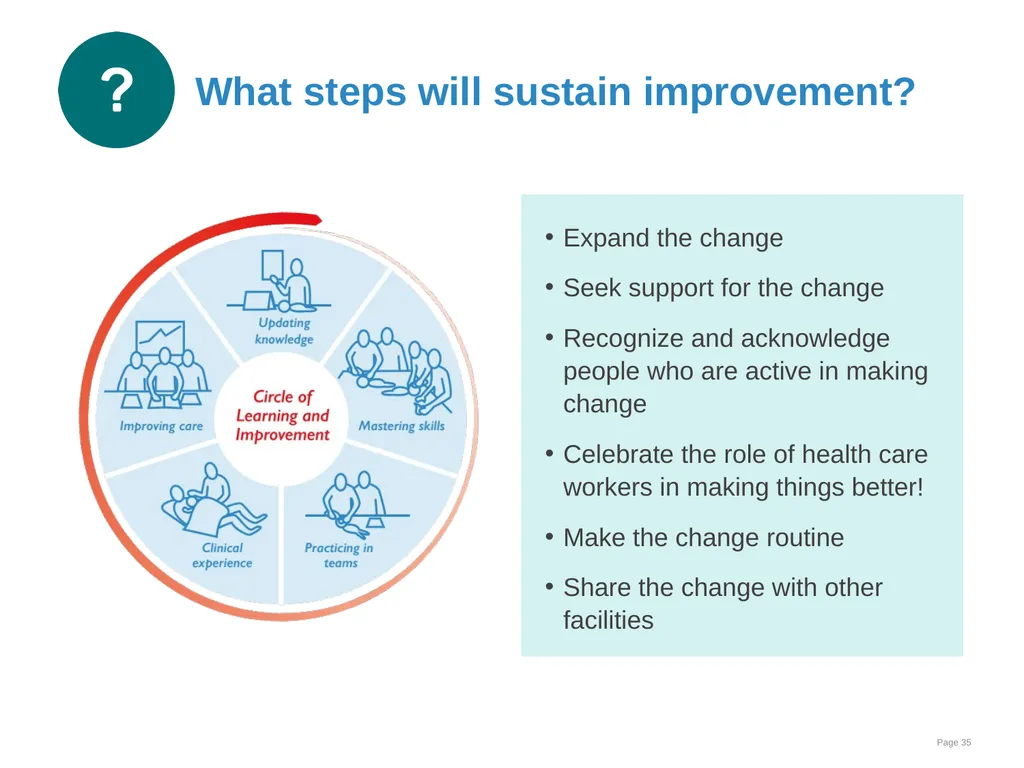
Expand the change
Seek support for the change
Recognize and acknowledge people who are active in making change
Celebrate the role of health care workers in making things better!
Make the change routine
Share the change with other facilities What steps will sustain improvement?<br>
Seek support for the change
Recognize and acknowledge people who are active in making change
Celebrate the role of health care workers in making things better!
Make the change routine
Share the change with other facilities What steps will sustain improvement?<br>
36
Summary:
Data collection and use Data collection and use are essential to providing quality care.
Health care systems depend on the routine recording and use of data.
Complete and accurate data collection is equally important for care of an individual patient and management of an entire health system.
Data must be used for making improvements at all levels – from local to regional and national.
Collecting and using data within facilities can improve quality in processes of care and specific outcomes.<br>
Health care systems depend on the routine recording and use of data.
Complete and accurate data collection is equally important for care of an individual patient and management of an entire health system.
Data must be used for making improvements at all levels – from local to regional and national.
Collecting and using data within facilities can improve quality in processes of care and specific outcomes.<br>
37
Birth registration Form groups (nurse, mother, husband).
Help the parents register the birth.
Debrief with your team and facilitator. Sara gave birth to her son Yann at 32 weeks gestation in the health facility.
Sara and her husband are providing kangaroo care.<br>
Help the parents register the birth.
Debrief with your team and facilitator. Sara gave birth to her son Yann at 32 weeks gestation in the health facility.
Sara and her husband are providing kangaroo care.<br>
38
References and
additional resources<br>
39
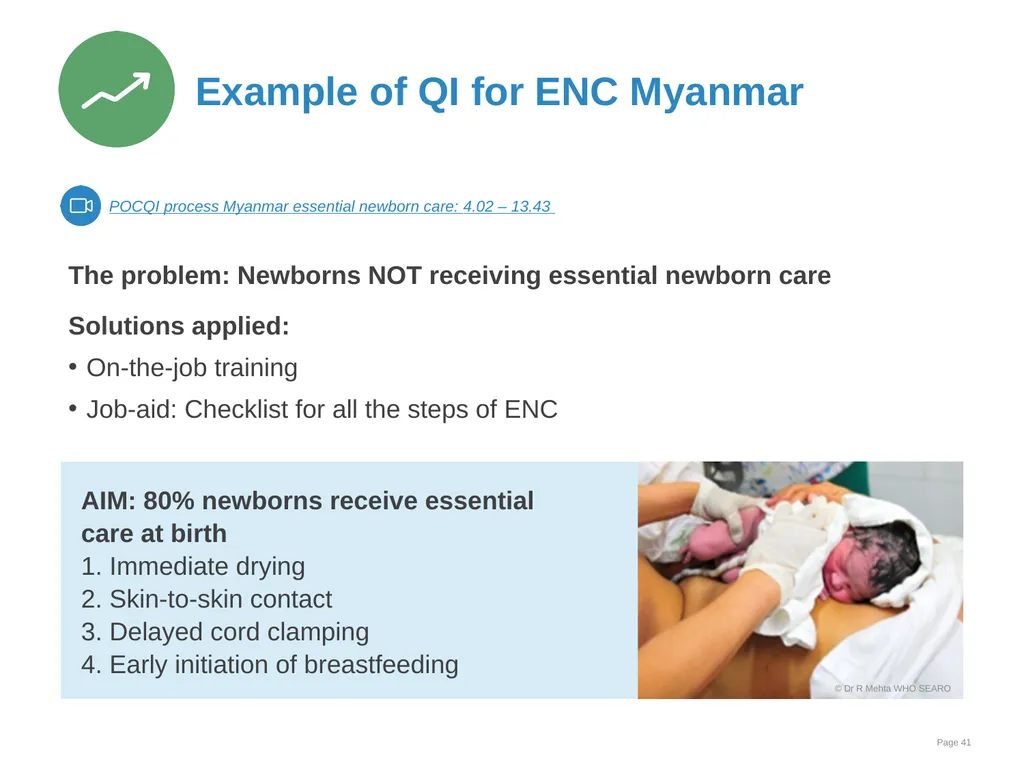
The problem: Newborns NOT receiving essential newborn care
Solutions applied:
On-the-job training
Job-aid: Checklist for all the steps of ENC Example of QI for ENC Myanmar AIM: 80% newborns receive essential care at birth 1. Immediate drying 2. Skin-to-skin contact 3. Delayed cord clamping 4. Early initiation of breastfeeding © Dr R Mehta WHO SEARO<br>
Solutions applied:
On-the-job training
Job-aid: Checklist for all the steps of ENC Example of QI for ENC Myanmar AIM: 80% newborns receive essential care at birth 1. Immediate drying 2. Skin-to-skin contact 3. Delayed cord clamping 4. Early initiation of breastfeeding © Dr R Mehta WHO SEARO<br>
40
Registration of a birth in the community Form groups of 3 (midwife, mother, grandmother)
Register the birth and communicate with the family.
Debrief with your team and facilitator. Lucy (16 years) delivers a son at term at home.
She came to the facility with her mother.<br>
Register the birth and communicate with the family.
Debrief with your team and facilitator. Lucy (16 years) delivers a son at term at home.
She came to the facility with her mother.<br>