
Delegation Your role The Changing Landscape of
TA
Published · 43 slides · 0 views

1 / 1





Description
Delegation Your role The Changing Landscape of Care New Roles within NHS (AN, Nurse Apprenticeships, ACP, Nurse Consultant) New roles in the community Personal Assistants (PAs) Community Volunteers (Marie Curie) Informal volunteer known
Related Topics
Share
Embed code
Download this presentation From Below
"Delegation Your role The Changing Landscape of" is the property of its rightful owner. Permission is granted to download and print the materials on this website for personal, non-commercial use only, and to display it on your personal computer provided you do not modify the materials and that you retain all copyright notices contained in the materials. By downloading content from our website, you accept the terms of this agreement.
Presentation Transcript
01
Delegation Your role<br>
02
The Changing Landscape of Care New Roles within NHS (AN, Nurse Apprenticeships, ACP, Nurse Consultant)
New roles in the community –Personal Assistants (PA’s)
Community Volunteers (Marie Curie)
Informal volunteer ‘known’ networks
Longer Term NHS Plan<br>
New roles in the community –Personal Assistants (PA’s)
Community Volunteers (Marie Curie)
Informal volunteer ‘known’ networks
Longer Term NHS Plan<br>
03
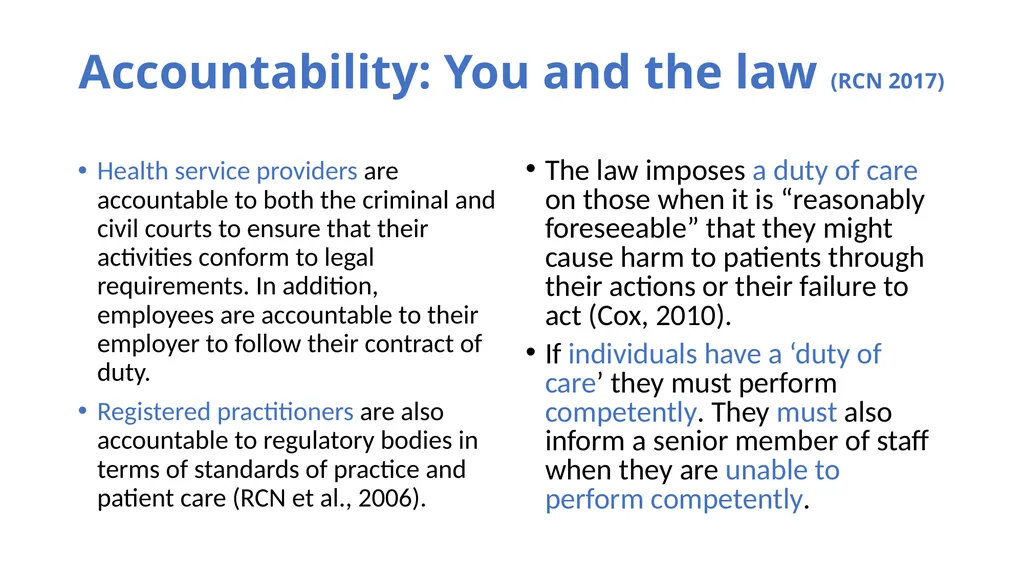
Accountability: You and the law (RCN 2017) Health service providers are accountable to both the criminal and civil courts to ensure that their activities conform to legal requirements. In addition, employees are accountable to their employer to follow their contract of duty.
Registered practitioners are also accountable to regulatory bodies in terms of standards of practice and patient care (RCN et al., 2006). The law imposes a duty of care on those when it is “reasonably foreseeable” that they might cause harm to patients through their actions or their failure to act (Cox, 2010).
If individuals have a ‘duty of care’ they must perform competently. They must also inform a senior member of staff when they are unable to perform competently.<br>
Registered practitioners are also accountable to regulatory bodies in terms of standards of practice and patient care (RCN et al., 2006). The law imposes a duty of care on those when it is “reasonably foreseeable” that they might cause harm to patients through their actions or their failure to act (Cox, 2010).
If individuals have a ‘duty of care’ they must perform competently. They must also inform a senior member of staff when they are unable to perform competently.<br>
04
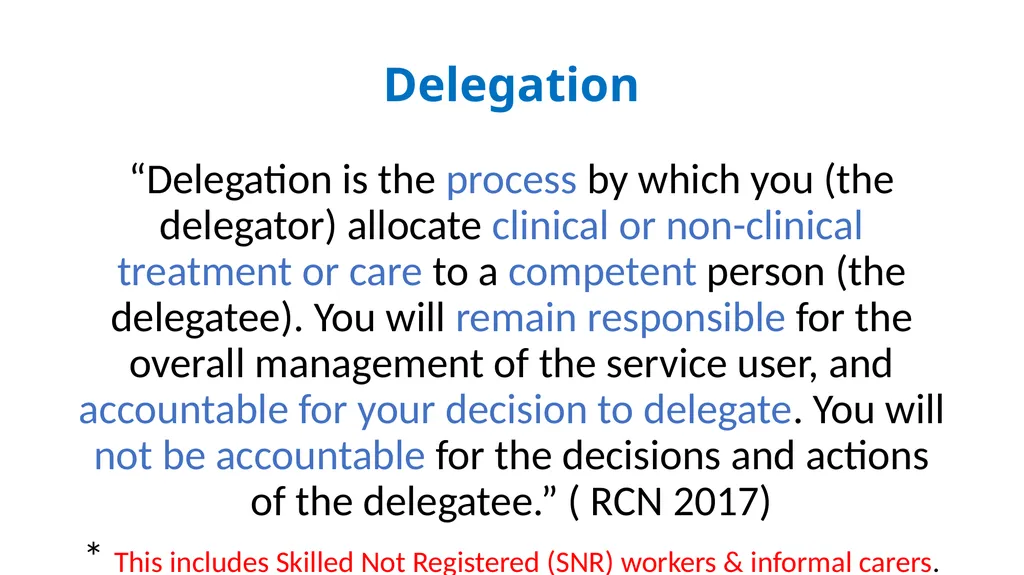
Delegation “Delegation is the process by which you (the delegator) allocate clinical or non-clinical treatment or care to a competent person (the delegatee). You will remain responsible for the overall management of the service user, and accountable for your decision to delegate. You will not be accountable for the decisions and actions of the delegatee.” ( RCN 2017)
* This includes Skilled Not Registered (SNR) workers & informal carers.<br>
* This includes Skilled Not Registered (SNR) workers & informal carers.<br>
05
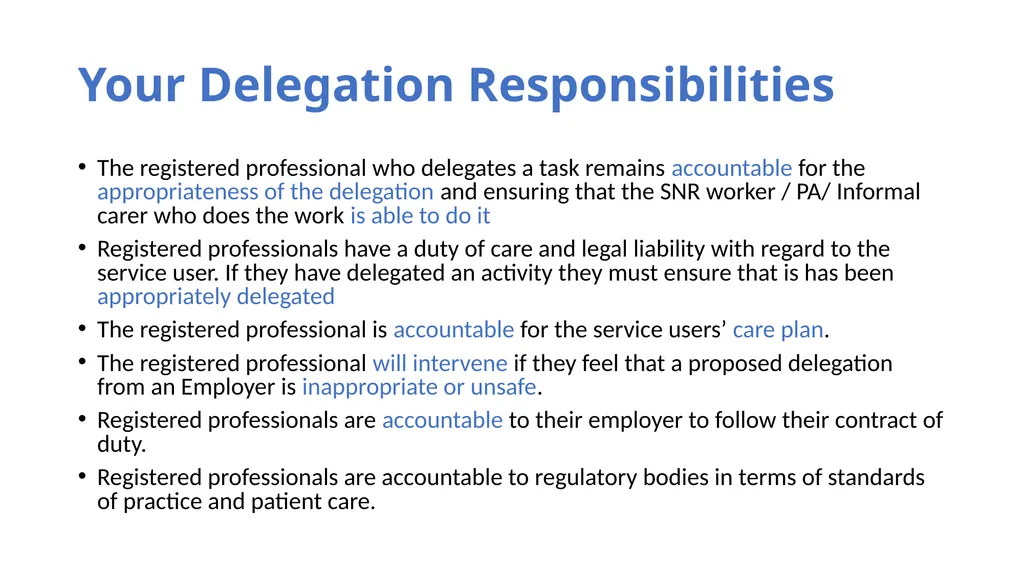
Your Delegation Responsibilities The registered professional who delegates a task remains accountable for the appropriateness of the delegation and ensuring that the SNR worker / PA/ Informal carer who does the work is able to do it
Registered professionals have a duty of care and legal liability with regard to the service user. If they have delegated an activity they must ensure that is has been appropriately delegated
The registered professional is accountable for the service users’ care plan.
The registered professional will intervene if they feel that a proposed delegation from an Employer is inappropriate or unsafe.
Registered professionals are accountable to their employer to follow their contract of duty.
Registered professionals are accountable to regulatory bodies in terms of standards of practice and patient care.<br>
Registered professionals have a duty of care and legal liability with regard to the service user. If they have delegated an activity they must ensure that is has been appropriately delegated
The registered professional is accountable for the service users’ care plan.
The registered professional will intervene if they feel that a proposed delegation from an Employer is inappropriate or unsafe.
Registered professionals are accountable to their employer to follow their contract of duty.
Registered professionals are accountable to regulatory bodies in terms of standards of practice and patient care.<br>
06
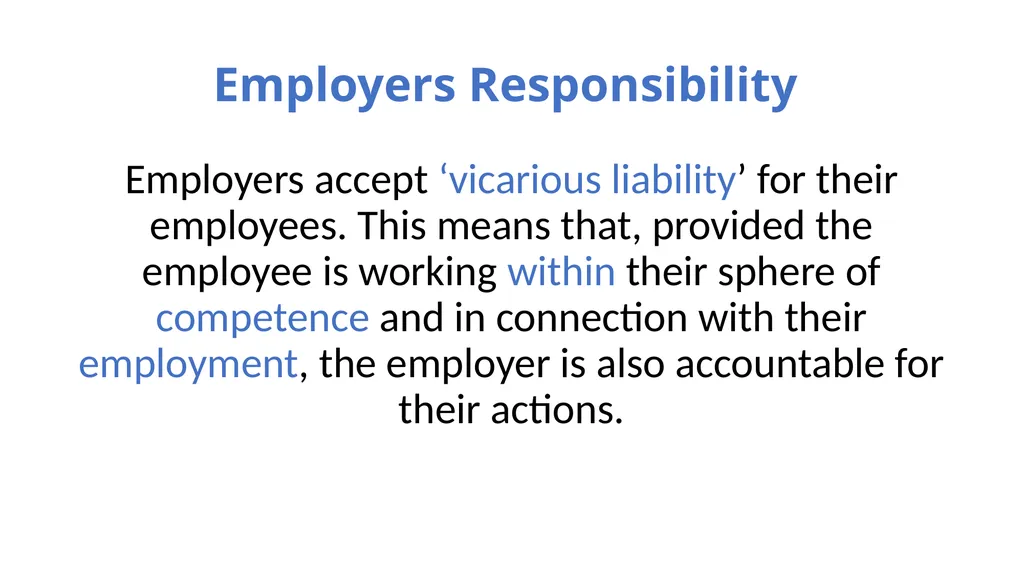
Employers Responsibility Employers accept ‘vicarious liability’ for their employees. This means that, provided the employee is working within their sphere of competence and in connection with their employment, the employer is also accountable for their actions.<br>
07
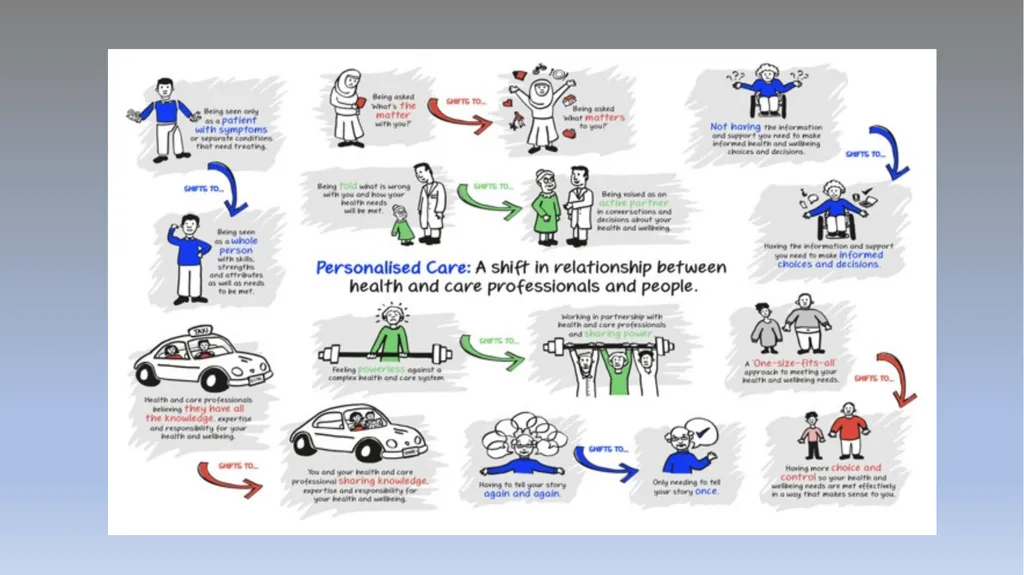
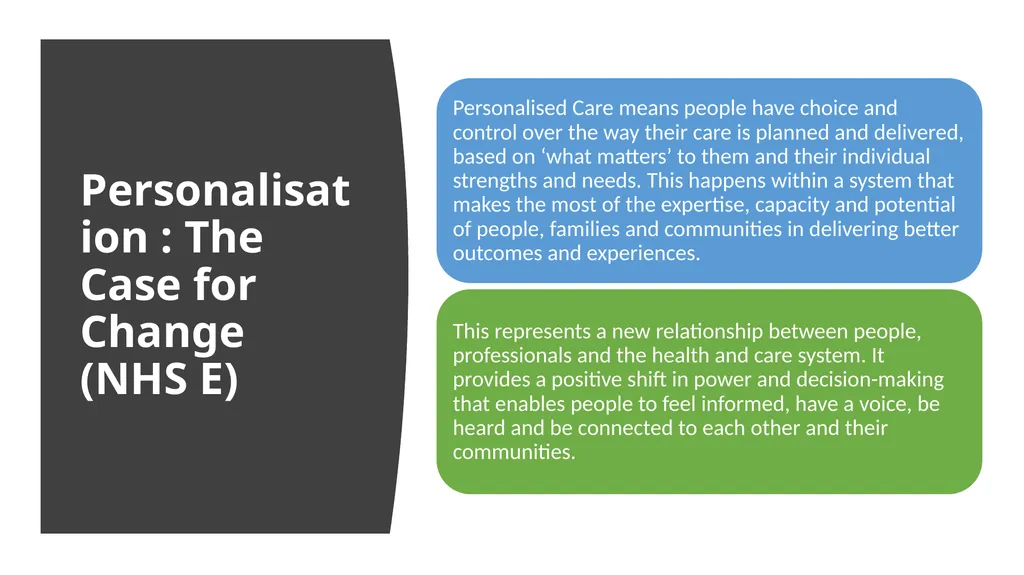
Personalisation : The Case for Change (NHS E)<br>
08
What do you think about this ? This Photo by Unknown Author is licensed under CC BY-SA<br>
09
EOL At end of life when you are ‘ at the mercy of medicine, you can feel extremely disempowered and out of control.
you can feel that everything is happening to you and around you.
having genuine choice about how you are cared for and where you spend the last days and hours of your life can help address this.
It can also have a lasting and meaningful impact on friends and family left behind.
(Macmillan Dec 2017) 10<br>
you can feel that everything is happening to you and around you.
having genuine choice about how you are cared for and where you spend the last days and hours of your life can help address this.
It can also have a lasting and meaningful impact on friends and family left behind.
(Macmillan Dec 2017) 10<br>
10
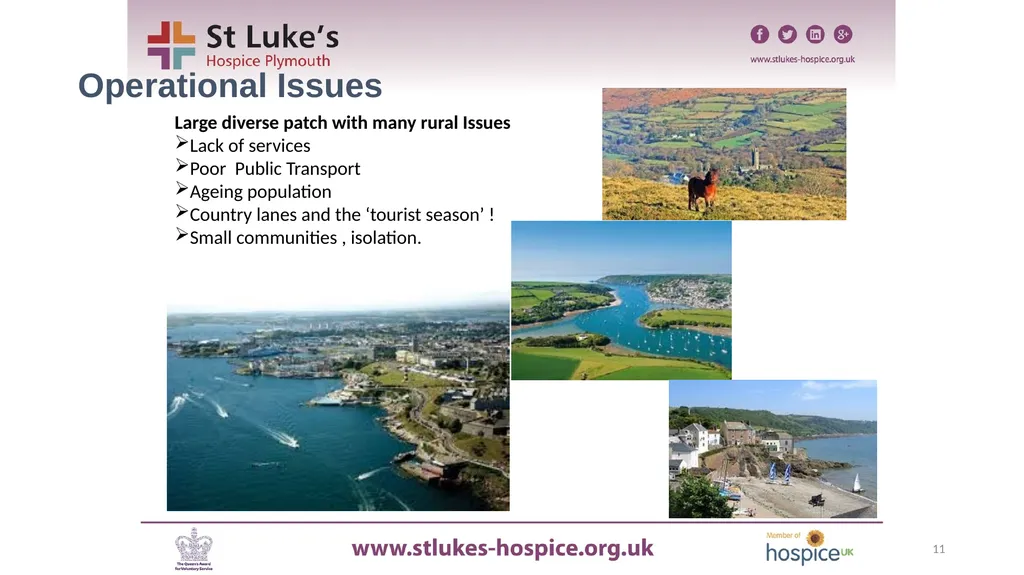
Operational Issues Large diverse patch with many rural Issues
Lack of services
Poor Public Transport
Ageing population
Country lanes and the ‘tourist season’ !
Small communities , isolation. 11<br>
Lack of services
Poor Public Transport
Ageing population
Country lanes and the ‘tourist season’ !
Small communities , isolation. 11<br>
11
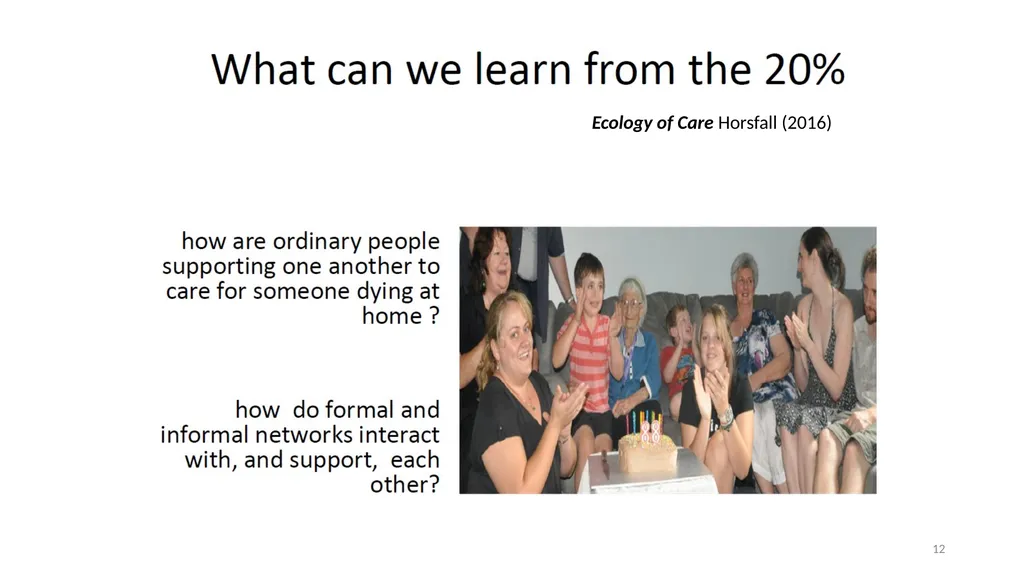
Ecology of Care Horsfall (2016) 12<br>
12
SLH small study – using a phenomenological approach 6 case studies, personal stories and reflections were used to explore what factors were helpful to patients and staff in developing supportive community networks.
In addition the project has sought to understand and share any ‘new learning’ needs which will enable nursing practice to change from “I do to you” to “we can help you to do” to increase that staff awareness of co-participation, patient autonomy, advocacy and risk issues. 13<br>
In addition the project has sought to understand and share any ‘new learning’ needs which will enable nursing practice to change from “I do to you” to “we can help you to do” to increase that staff awareness of co-participation, patient autonomy, advocacy and risk issues. 13<br>
13
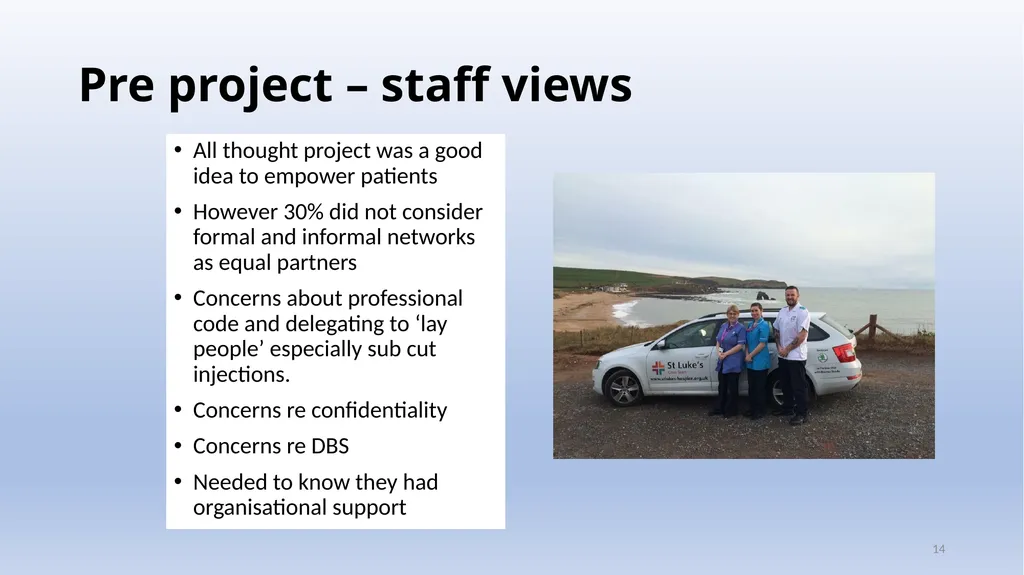
Pre project – staff views All thought project was a good idea to empower patients
However 30% did not consider formal and informal networks as equal partners
Concerns about professional code and delegating to ‘lay people’ especially sub cut injections.
Concerns re confidentiality
Concerns re DBS
Needed to know they had organisational support 14<br>
However 30% did not consider formal and informal networks as equal partners
Concerns about professional code and delegating to ‘lay people’ especially sub cut injections.
Concerns re confidentiality
Concerns re DBS
Needed to know they had organisational support 14<br>
14
29 patient referred into the team 17<br>
15
Results All 6 died at home
2 networks were friends/ Neighbours
4 family and friends
None had re admissions
Positive experience. 18<br>
2 networks were friends/ Neighbours
4 family and friends
None had re admissions
Positive experience. 18<br>
16
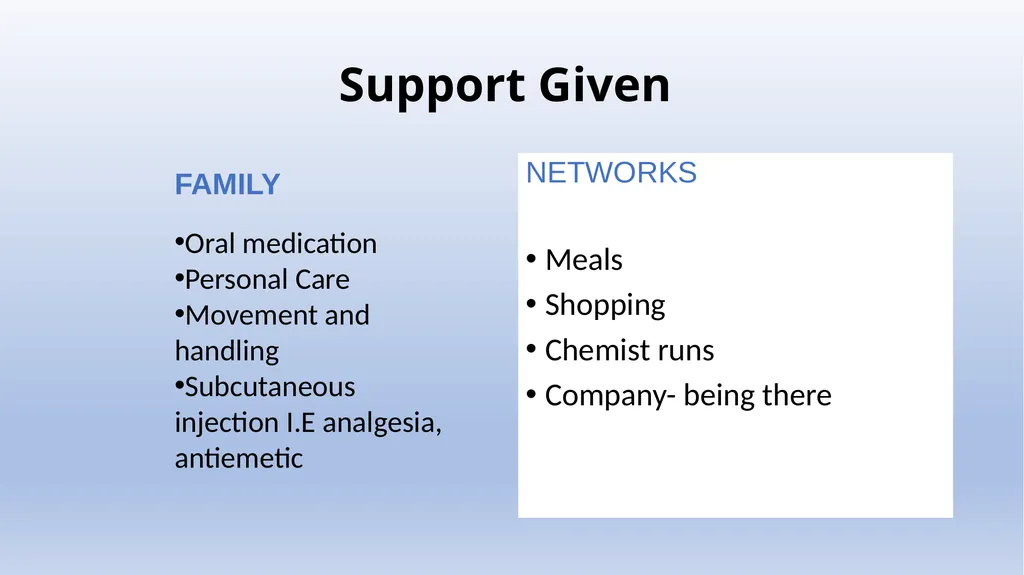
Support Given FAMILY
Oral medication
Personal Care
Movement and handling
Subcutaneous injection I.E analgesia, antiemetic NETWORKS
Meals
Shopping
Chemist runs
Company- being there<br>
Oral medication
Personal Care
Movement and handling
Subcutaneous injection I.E analgesia, antiemetic NETWORKS
Meals
Shopping
Chemist runs
Company- being there<br>
17
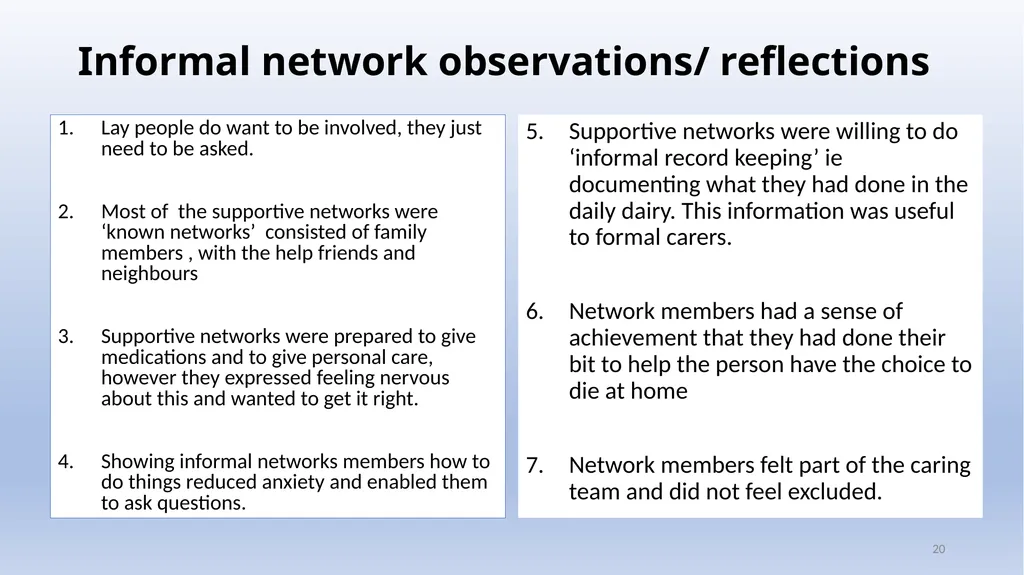
Informal network observations/ reflections Lay people do want to be involved, they just need to be asked.
Most of the supportive networks were ‘known networks’ consisted of family members , with the help friends and neighbours
Supportive networks were prepared to give medications and to give personal care, however they expressed feeling nervous about this and wanted to get it right.
Showing informal networks members how to do things reduced anxiety and enabled them to ask questions. Supportive networks were willing to do ‘informal record keeping’ ie documenting what they had done in the daily dairy. This information was useful to formal carers.
Network members had a sense of achievement that they had done their bit to help the person have the choice to die at home
Network members felt part of the caring team and did not feel excluded. 20<br>
Most of the supportive networks were ‘known networks’ consisted of family members , with the help friends and neighbours
Supportive networks were prepared to give medications and to give personal care, however they expressed feeling nervous about this and wanted to get it right.
Showing informal networks members how to do things reduced anxiety and enabled them to ask questions. Supportive networks were willing to do ‘informal record keeping’ ie documenting what they had done in the daily dairy. This information was useful to formal carers.
Network members had a sense of achievement that they had done their bit to help the person have the choice to die at home
Network members felt part of the caring team and did not feel excluded. 20<br>
18
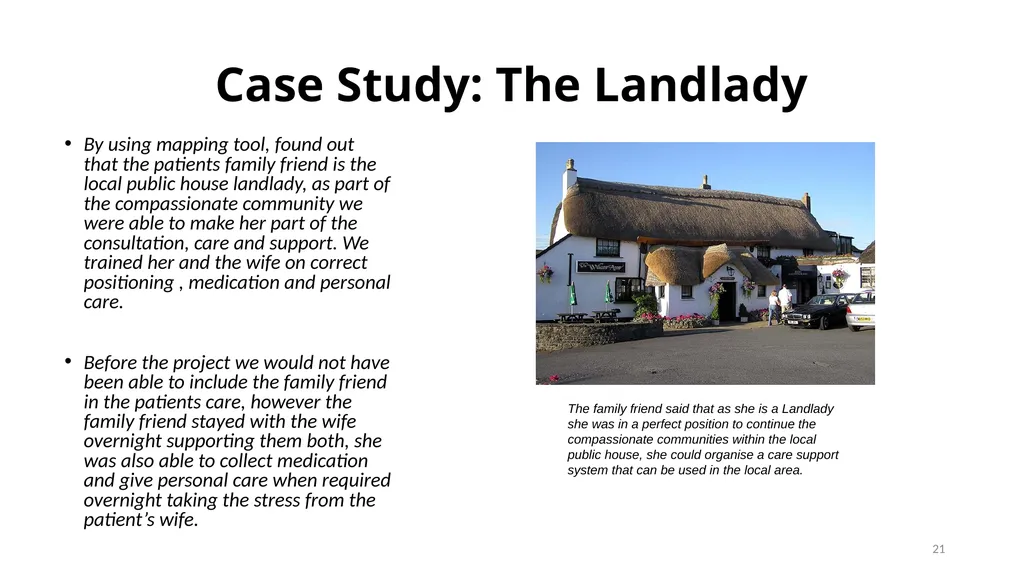
Case Study: The Landlady By using mapping tool, found out that the patients family friend is the local public house landlady, as part of the compassionate community we were able to make her part of the consultation, care and support. We trained her and the wife on correct positioning , medication and personal care.
Before the project we would not have been able to include the family friend in the patients care, however the family friend stayed with the wife overnight supporting them both, she was also able to collect medication and give personal care when required overnight taking the stress from the patient’s wife. The family friend said that as she is a Landlady she was in a perfect position to continue the compassionate communities within the local public house, she could organise a care support system that can be used in the local area. 21<br>
Before the project we would not have been able to include the family friend in the patients care, however the family friend stayed with the wife overnight supporting them both, she was also able to collect medication and give personal care when required overnight taking the stress from the patient’s wife. The family friend said that as she is a Landlady she was in a perfect position to continue the compassionate communities within the local public house, she could organise a care support system that can be used in the local area. 21<br>
19
Nurses Reflections The thought of co production was at first scary – what would happen if something went wrong?, Staff needed to know the organization would support them.
Concerns about should lay people perform what have been seen as ‘nursing tasks’. What are then lay roles and nursing roles ?
Staff were not used to teaching lay people to give medication and whilst fine about oral medication and personal care they were more nervous about injections Staff could see the value of working with informal networks especially when capacity in the team to respond in a timely way limited eg if they were at the other end of the geographical patch
There has been a mindset shift as staff have commented that nurses often view patients as ‘their patient’ and that now they see them as individuals who want to be in control of their own choices , even if those choices and decisions are not always shared with the nurse e.g. compromising on pain relief in order to stay alert. 22<br>
Concerns about should lay people perform what have been seen as ‘nursing tasks’. What are then lay roles and nursing roles ?
Staff were not used to teaching lay people to give medication and whilst fine about oral medication and personal care they were more nervous about injections Staff could see the value of working with informal networks especially when capacity in the team to respond in a timely way limited eg if they were at the other end of the geographical patch
There has been a mindset shift as staff have commented that nurses often view patients as ‘their patient’ and that now they see them as individuals who want to be in control of their own choices , even if those choices and decisions are not always shared with the nurse e.g. compromising on pain relief in order to stay alert. 22<br>
20
Livewell Southwest
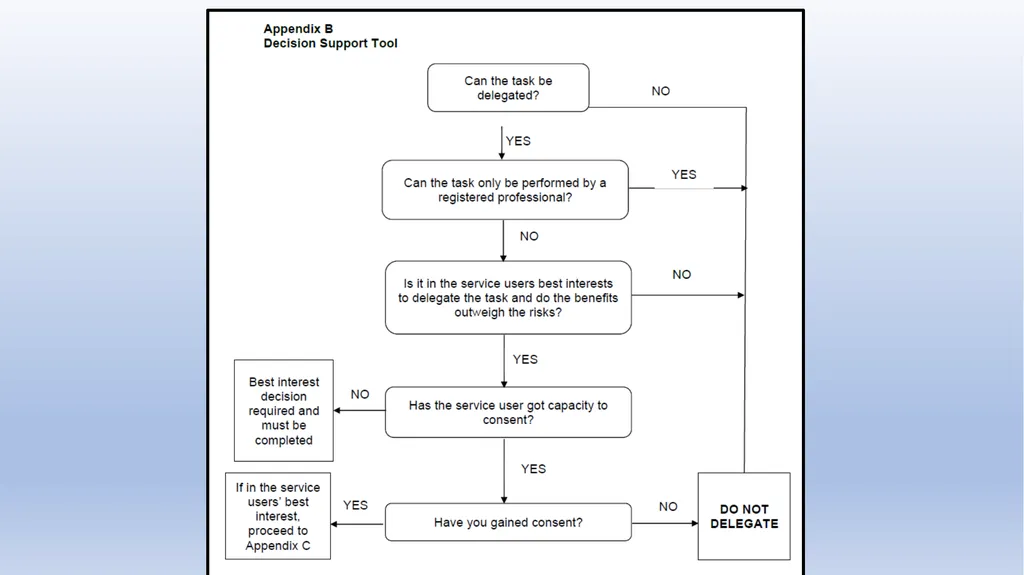
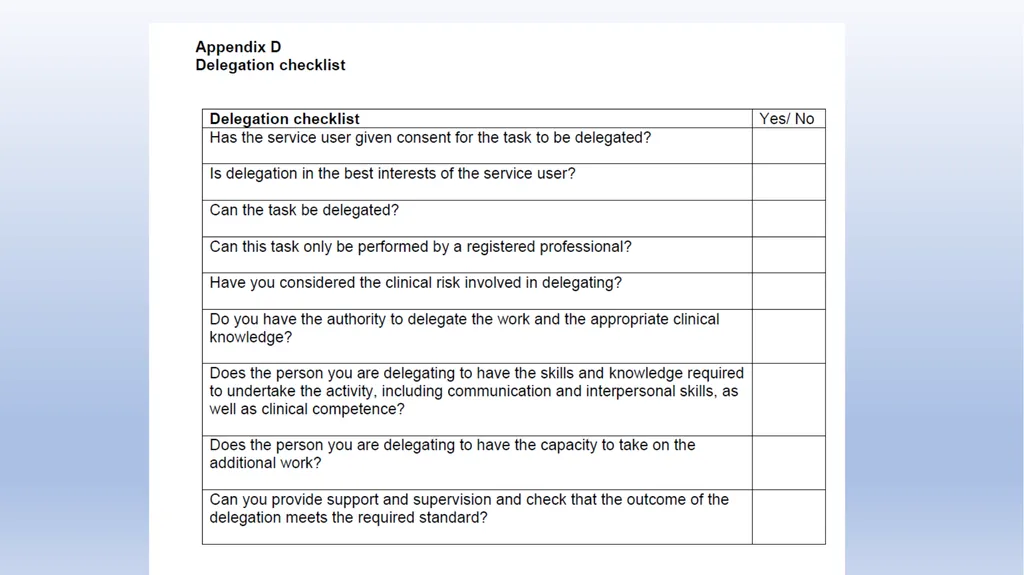
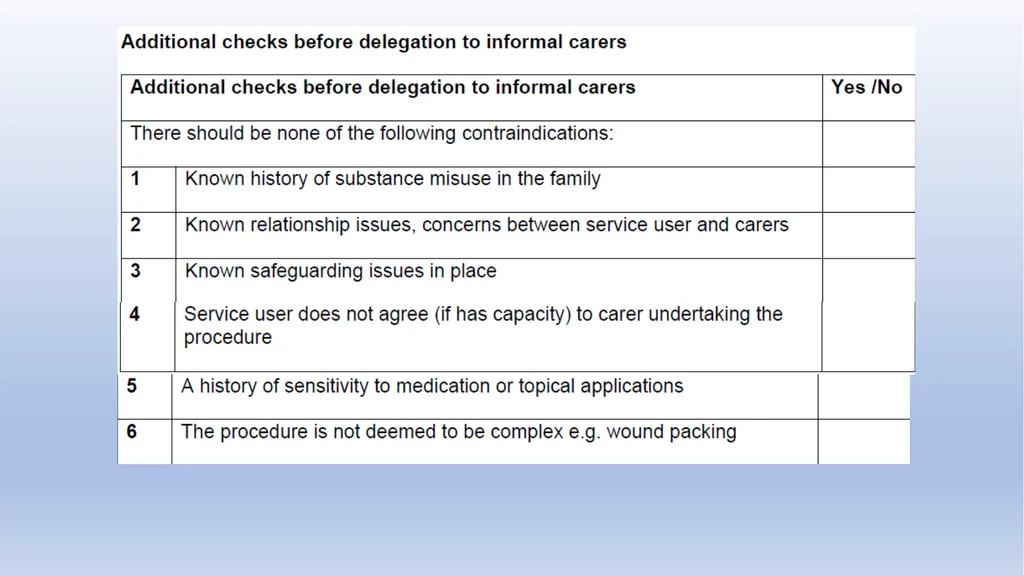
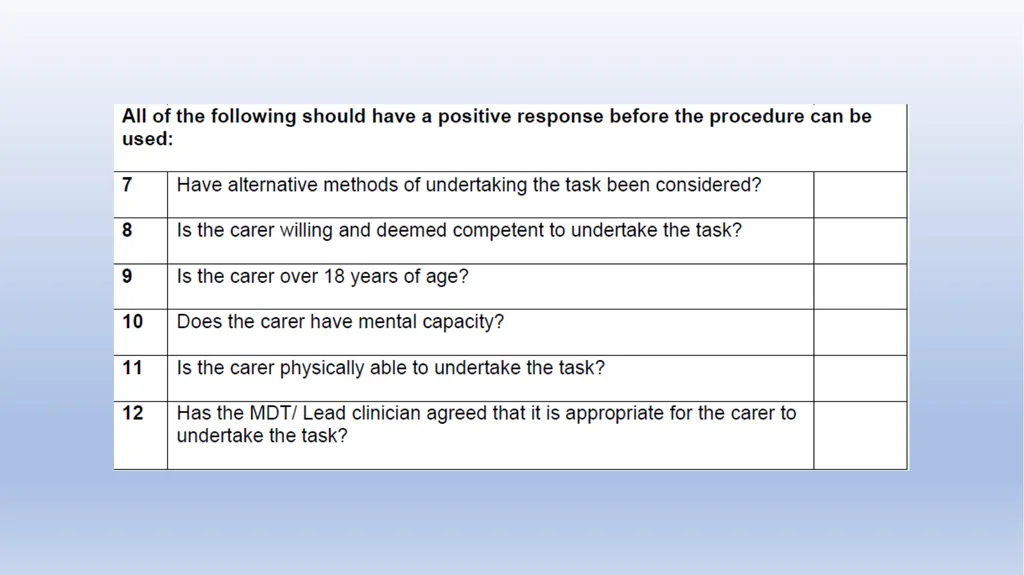
Third party delegation
Version No.1.2
Review: December 2021
Expires: May 2022<br>
Third party delegation
Version No.1.2
Review: December 2021
Expires: May 2022<br>
21
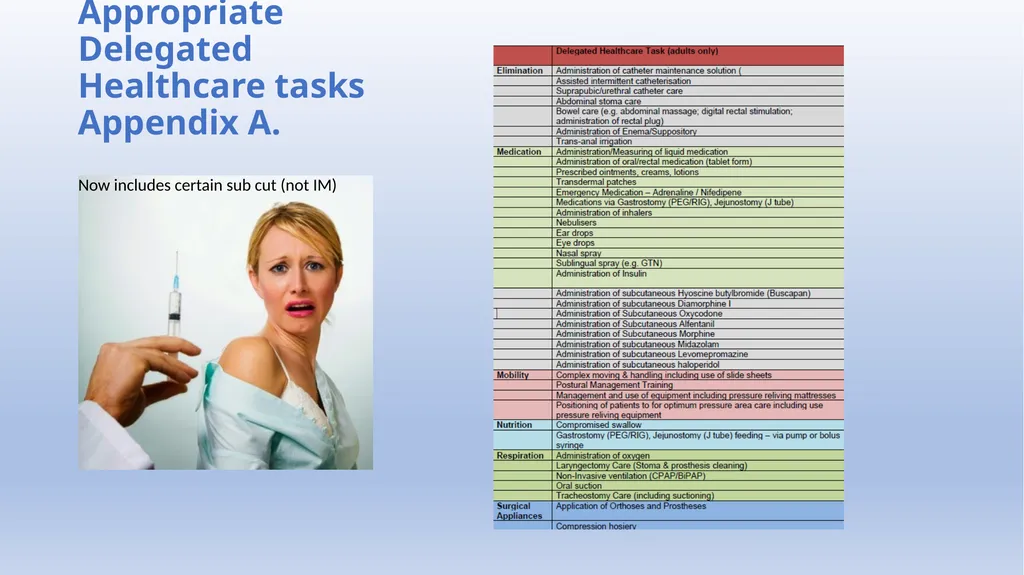
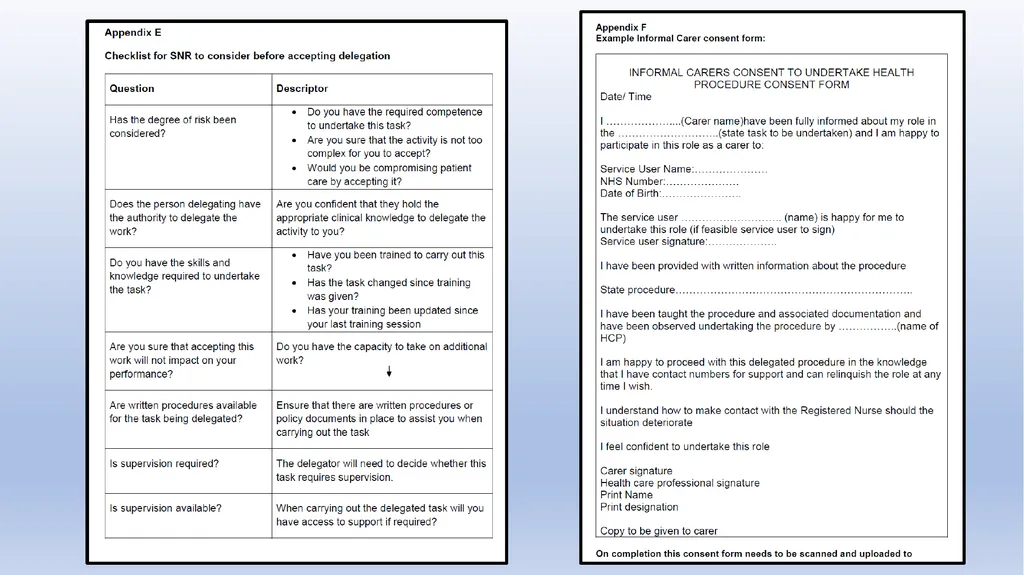
Appropriate Delegated Healthcare tasks Appendix A. Now includes certain sub cut (not IM)<br>
22
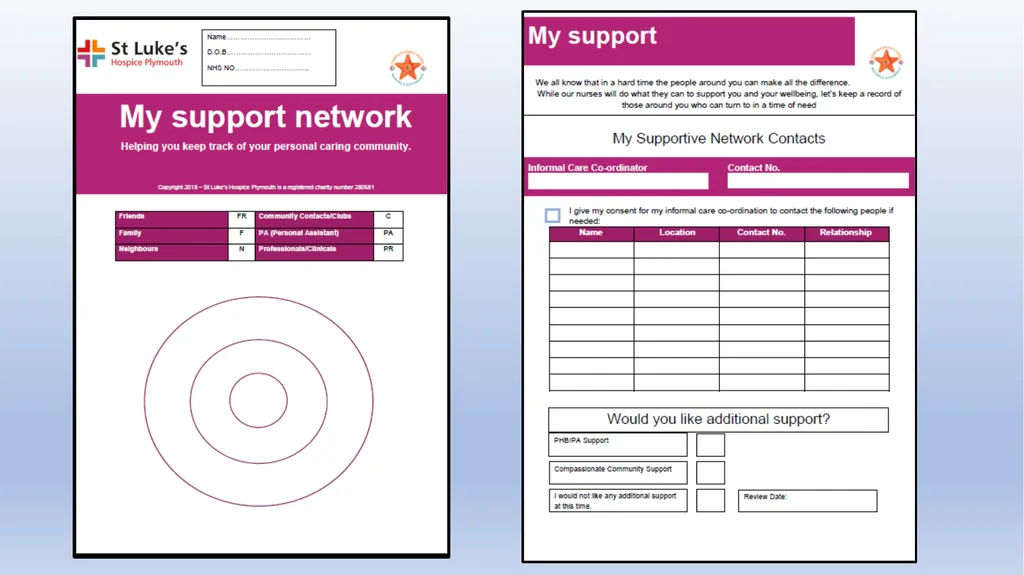
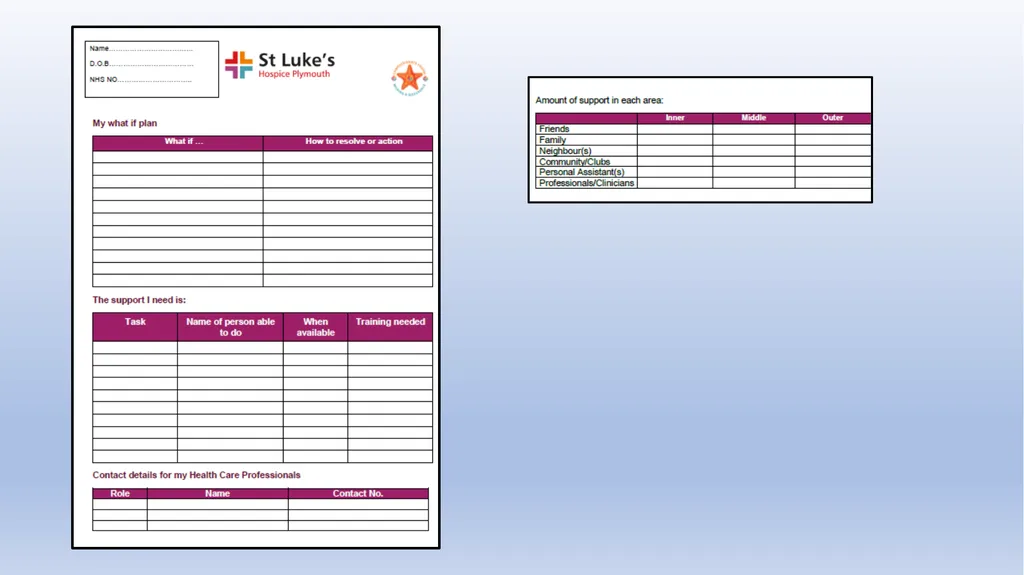
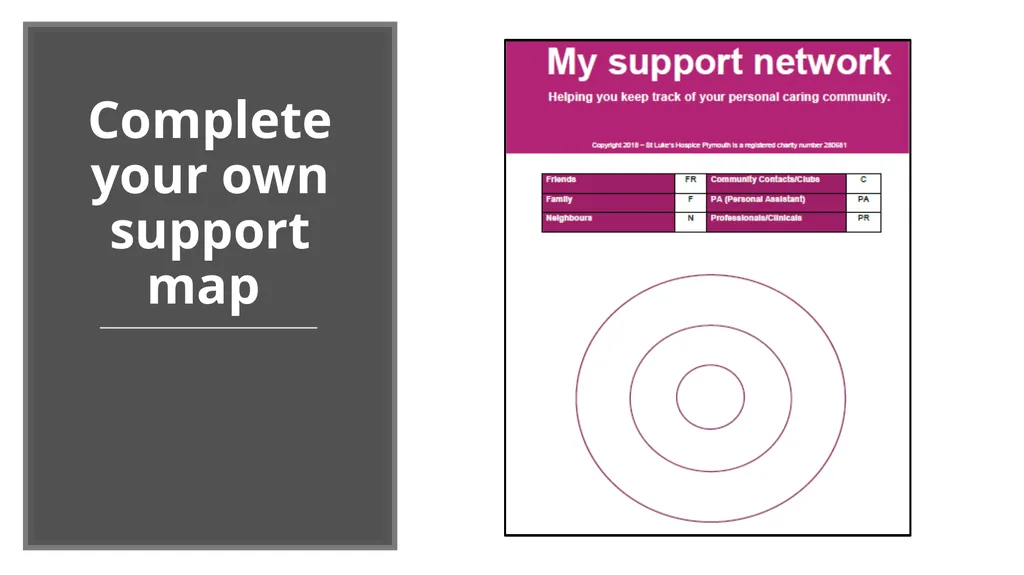
Complete your own support map<br>
23
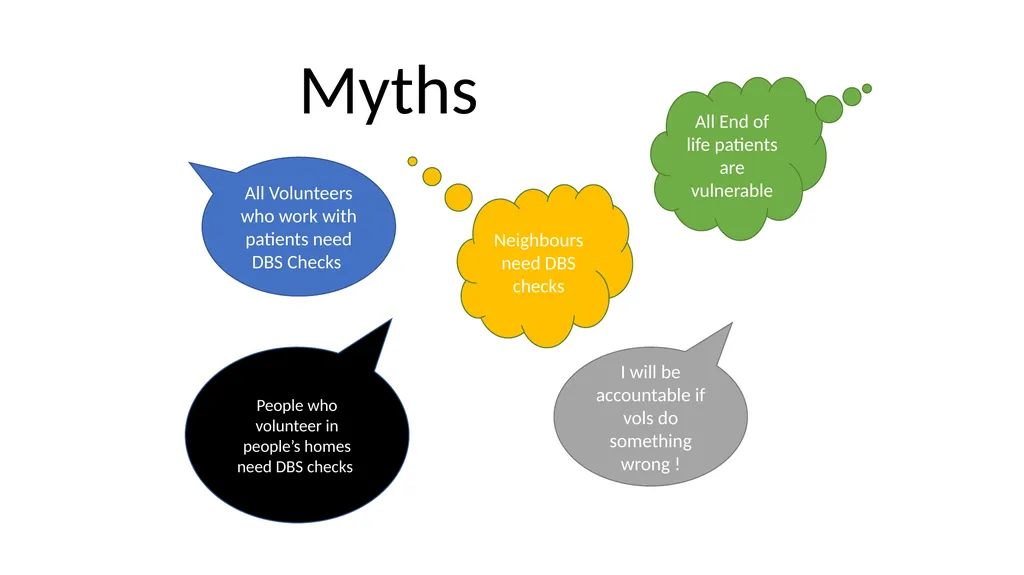
I will be accountable if vols do something wrong ! Neighbours need DBS checks People who volunteer in people’s homes need DBS checks All End of life patients are vulnerable All Volunteers who work with patients need DBS Checks Myths<br>
24
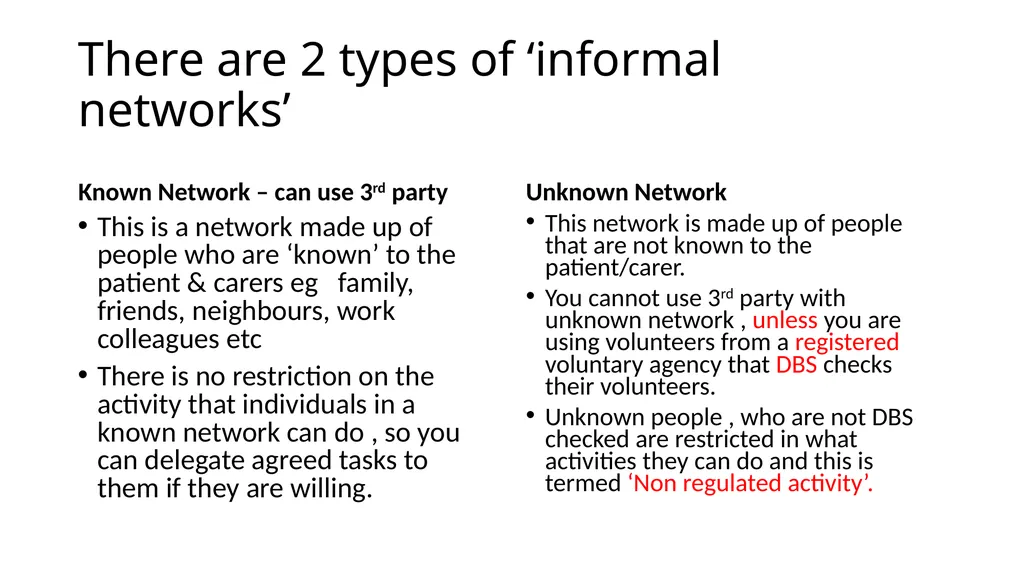
There are 2 types of ‘informal networks’ Known Network – can use 3rd party This is a network made up of people who are ‘known’ to the patient & carers eg family, friends, neighbours, work colleagues etc
There is no restriction on the activity that individuals in a known network can do , so you can delegate agreed tasks to them if they are willing. Unknown Network This network is made up of people that are not known to the patient/carer.
You cannot use 3rd party with unknown network , unless you are using volunteers from a registered voluntary agency that DBS checks their volunteers.
Unknown people , who are not DBS checked are restricted in what activities they can do and this is termed ‘Non regulated activity’.<br>
There is no restriction on the activity that individuals in a known network can do , so you can delegate agreed tasks to them if they are willing. Unknown Network This network is made up of people that are not known to the patient/carer.
You cannot use 3rd party with unknown network , unless you are using volunteers from a registered voluntary agency that DBS checks their volunteers.
Unknown people , who are not DBS checked are restricted in what activities they can do and this is termed ‘Non regulated activity’.<br>
25
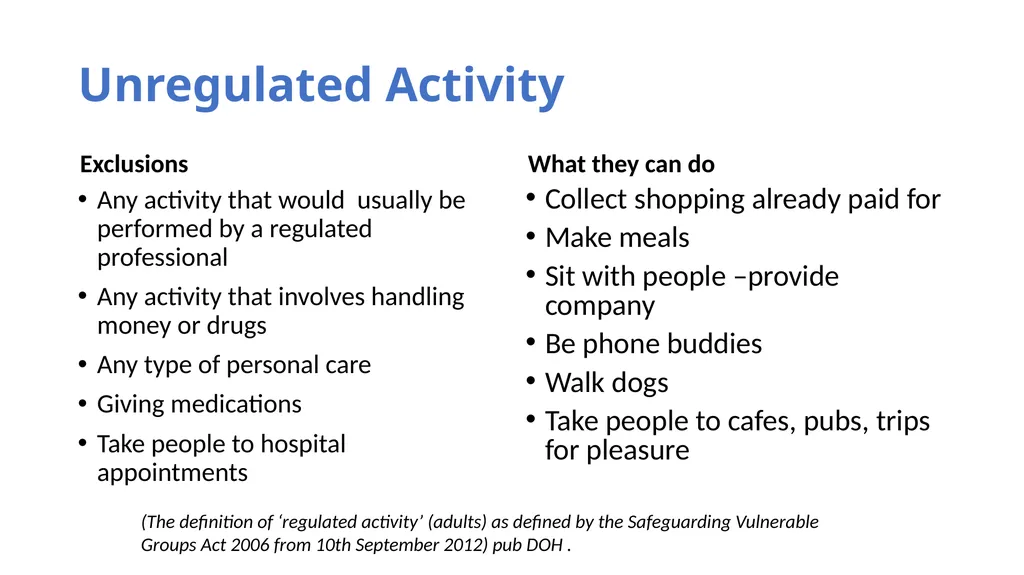
Unregulated Activity Exclusions Any activity that would usually be performed by a regulated professional
Any activity that involves handling money or drugs
Any type of personal care
Giving medications
Take people to hospital appointments What they can do Collect shopping already paid for
Make meals
Sit with people –provide company
Be phone buddies
Walk dogs
Take people to cafes, pubs, trips for pleasure (The definition of ‘regulated activity’ (adults) as defined by the Safeguarding Vulnerable Groups Act 2006 from 10th September 2012) pub DOH .<br>
Any activity that involves handling money or drugs
Any type of personal care
Giving medications
Take people to hospital appointments What they can do Collect shopping already paid for
Make meals
Sit with people –provide company
Be phone buddies
Walk dogs
Take people to cafes, pubs, trips for pleasure (The definition of ‘regulated activity’ (adults) as defined by the Safeguarding Vulnerable Groups Act 2006 from 10th September 2012) pub DOH .<br>
26
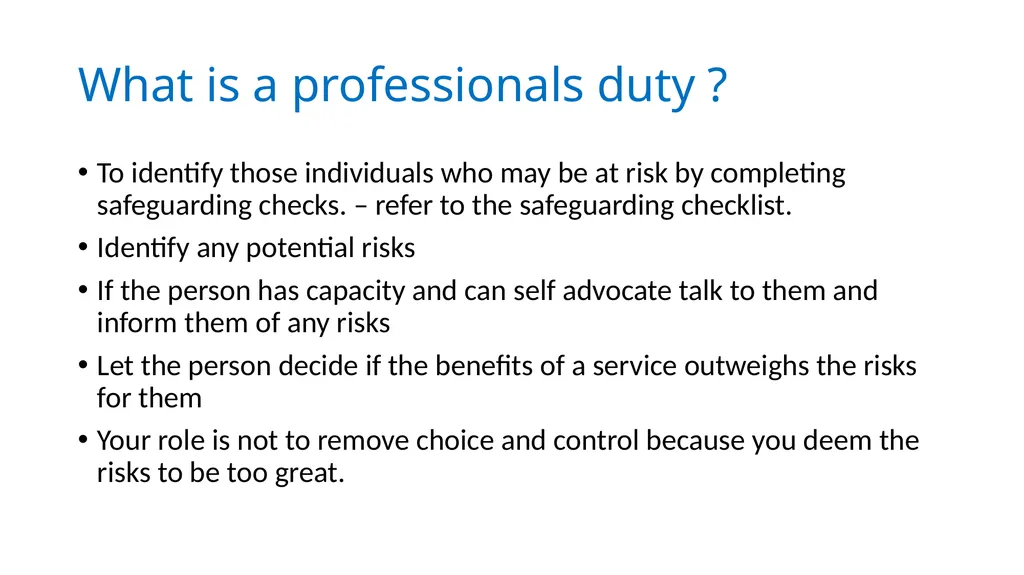
What is a professionals duty ? To identify those individuals who may be at risk by completing safeguarding checks. – refer to the safeguarding checklist.
Identify any potential risks
If the person has capacity and can self advocate talk to them and inform them of any risks
Let the person decide if the benefits of a service outweighs the risks for them
Your role is not to remove choice and control because you deem the risks to be too great.<br>
Identify any potential risks
If the person has capacity and can self advocate talk to them and inform them of any risks
Let the person decide if the benefits of a service outweighs the risks for them
Your role is not to remove choice and control because you deem the risks to be too great.<br>
27
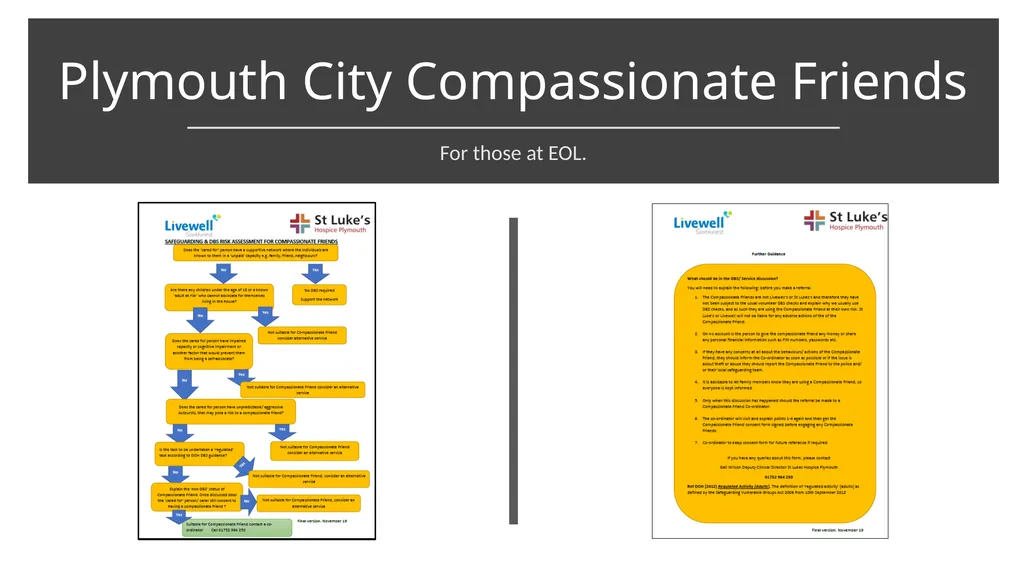
Plymouth City Compassionate Friends For those at EOL.<br>
28
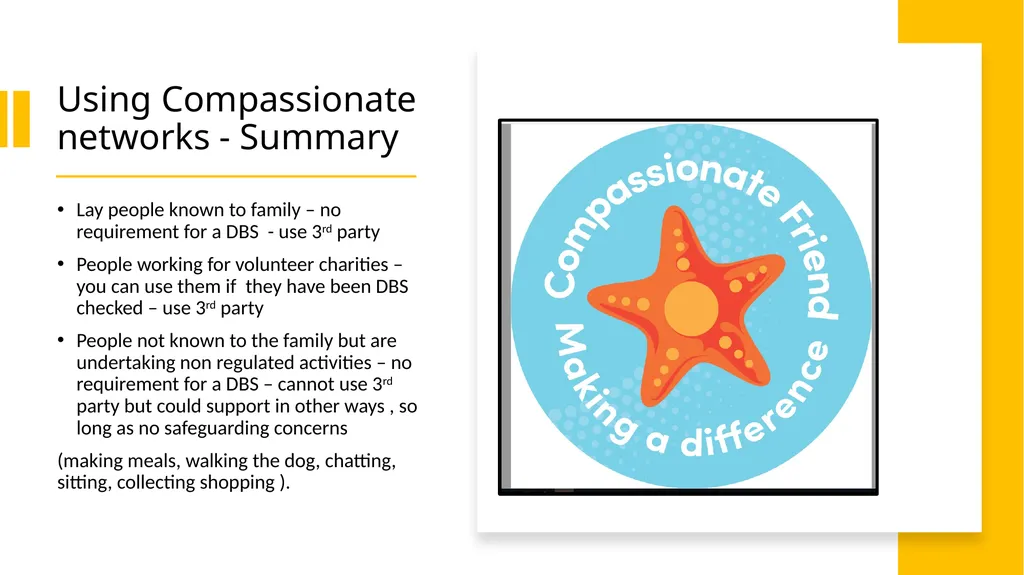
Using Compassionate networks - Summary Lay people known to family – no requirement for a DBS - use 3rd party
People working for volunteer charities – you can use them if they have been DBS checked – use 3rd party
People not known to the family but are undertaking non regulated activities – no requirement for a DBS – cannot use 3rd party but could support in other ways , so long as no safeguarding concerns
(making meals, walking the dog, chatting, sitting, collecting shopping ).<br>
People working for volunteer charities – you can use them if they have been DBS checked – use 3rd party
People not known to the family but are undertaking non regulated activities – no requirement for a DBS – cannot use 3rd party but could support in other ways , so long as no safeguarding concerns
(making meals, walking the dog, chatting, sitting, collecting shopping ).<br>
29
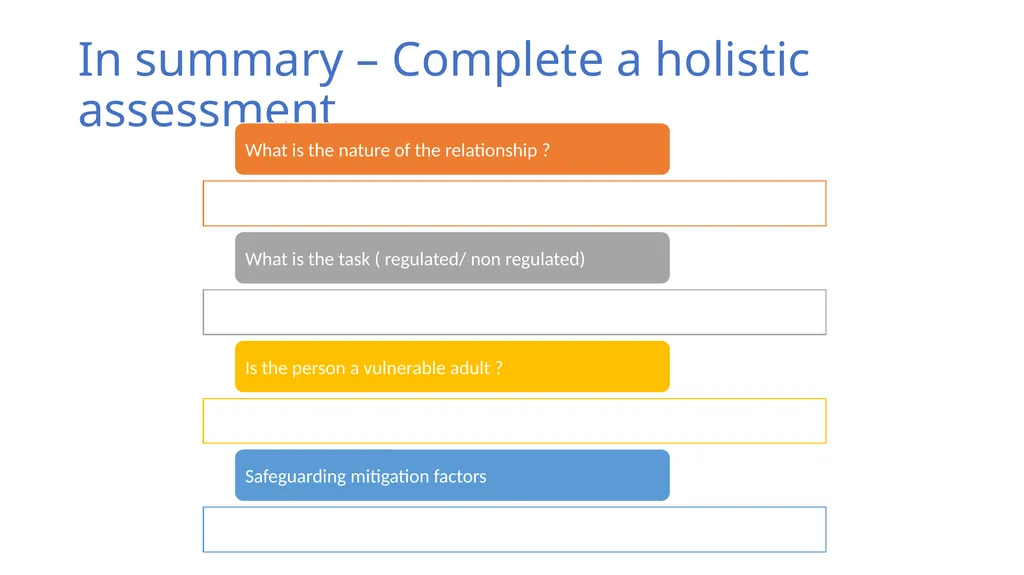
In summary – Complete a holistic assessment<br>
30
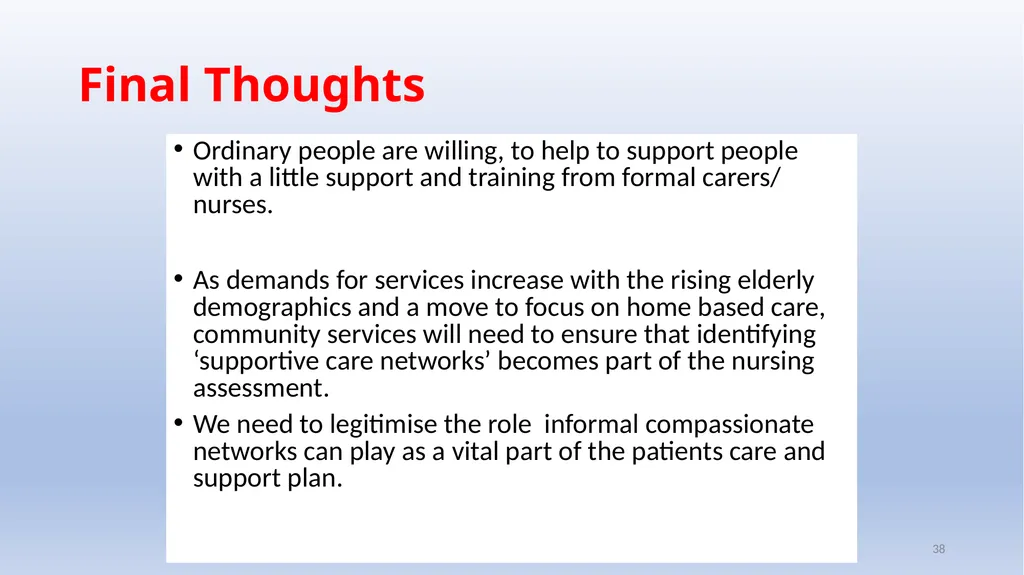
Final Thoughts Ordinary people are willing, to help to support people with a little support and training from formal carers/ nurses.
As demands for services increase with the rising elderly demographics and a move to focus on home based care, community services will need to ensure that identifying ‘supportive care networks’ becomes part of the nursing assessment.
We need to legitimise the role informal compassionate networks can play as a vital part of the patients care and support plan. 38<br>
As demands for services increase with the rising elderly demographics and a move to focus on home based care, community services will need to ensure that identifying ‘supportive care networks’ becomes part of the nursing assessment.
We need to legitimise the role informal compassionate networks can play as a vital part of the patients care and support plan. 38<br>
31
Coffee break 10 minutes<br>
32
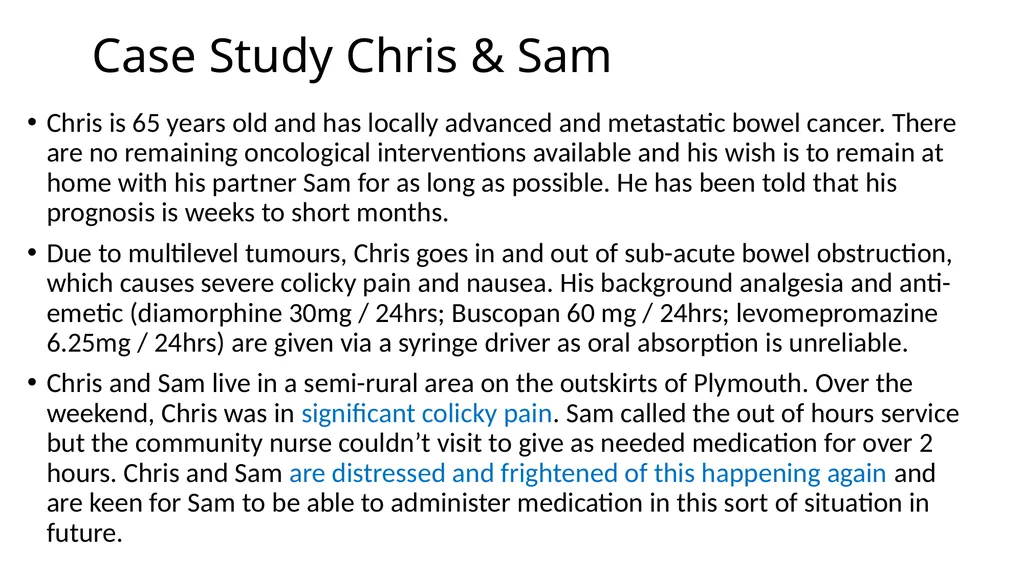
Case Study Chris & Sam Chris is 65 years old and has locally advanced and metastatic bowel cancer. There are no remaining oncological interventions available and his wish is to remain at home with his partner Sam for as long as possible. He has been told that his prognosis is weeks to short months.
Due to multilevel tumours, Chris goes in and out of sub-acute bowel obstruction, which causes severe colicky pain and nausea. His background analgesia and anti-emetic (diamorphine 30mg / 24hrs; Buscopan 60 mg / 24hrs; levomepromazine 6.25mg / 24hrs) are given via a syringe driver as oral absorption is unreliable.
Chris and Sam live in a semi-rural area on the outskirts of Plymouth. Over the weekend, Chris was in significant colicky pain. Sam called the out of hours service but the community nurse couldn’t visit to give as needed medication for over 2 hours. Chris and Sam are distressed and frightened of this happening again and are keen for Sam to be able to administer medication in this sort of situation in future.<br>
Due to multilevel tumours, Chris goes in and out of sub-acute bowel obstruction, which causes severe colicky pain and nausea. His background analgesia and anti-emetic (diamorphine 30mg / 24hrs; Buscopan 60 mg / 24hrs; levomepromazine 6.25mg / 24hrs) are given via a syringe driver as oral absorption is unreliable.
Chris and Sam live in a semi-rural area on the outskirts of Plymouth. Over the weekend, Chris was in significant colicky pain. Sam called the out of hours service but the community nurse couldn’t visit to give as needed medication for over 2 hours. Chris and Sam are distressed and frightened of this happening again and are keen for Sam to be able to administer medication in this sort of situation in future.<br>
33
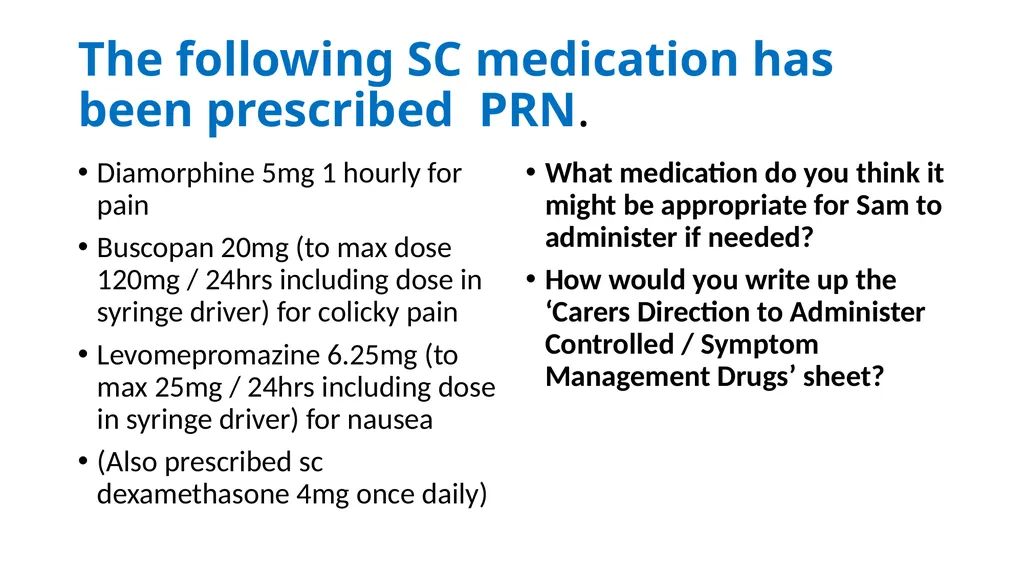
The following SC medication has been prescribed PRN. Diamorphine 5mg 1 hourly for pain
Buscopan 20mg (to max dose 120mg / 24hrs including dose in syringe driver) for colicky pain
Levomepromazine 6.25mg (to max 25mg / 24hrs including dose in syringe driver) for nausea
(Also prescribed sc dexamethasone 4mg once daily) What medication do you think it might be appropriate for Sam to administer if needed?
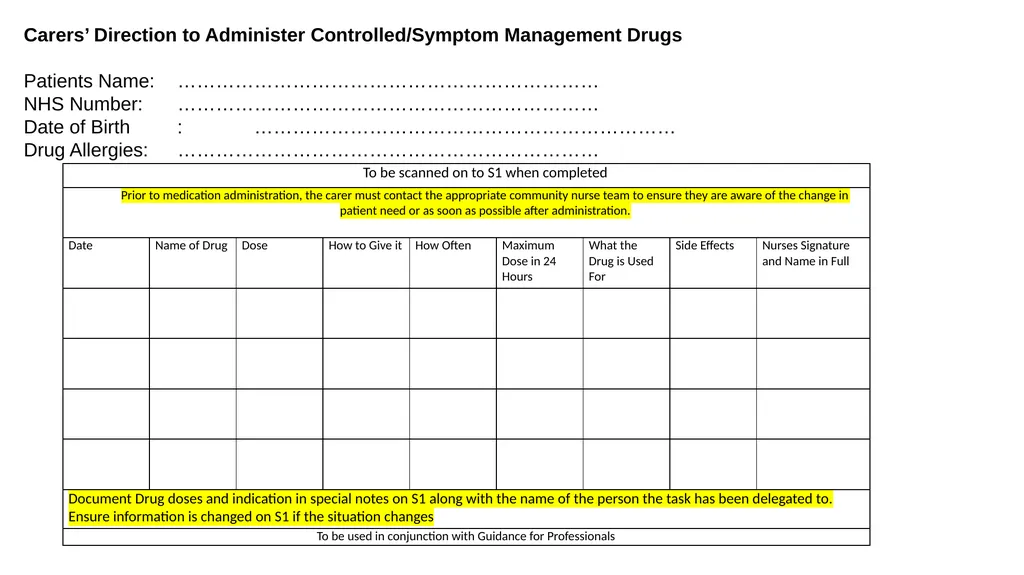
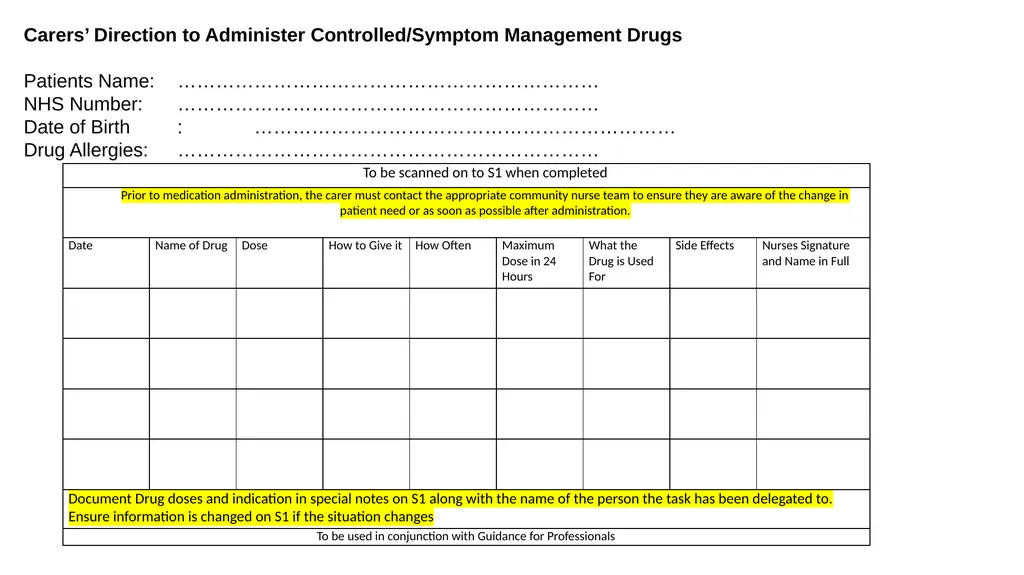
How would you write up the ‘Carers Direction to Administer Controlled / Symptom Management Drugs’ sheet?<br>
Buscopan 20mg (to max dose 120mg / 24hrs including dose in syringe driver) for colicky pain
Levomepromazine 6.25mg (to max 25mg / 24hrs including dose in syringe driver) for nausea
(Also prescribed sc dexamethasone 4mg once daily) What medication do you think it might be appropriate for Sam to administer if needed?
How would you write up the ‘Carers Direction to Administer Controlled / Symptom Management Drugs’ sheet?<br>
34
Carers’ Direction to Administer Controlled/Symptom Management Drugs
Patients Name: …………………………………………………………
NHS Number: …………………………………………………………
Date of Birth : …………………………………………………………
Drug Allergies: …………………………………………………………<br>
Patients Name: …………………………………………………………
NHS Number: …………………………………………………………
Date of Birth : …………………………………………………………
Drug Allergies: …………………………………………………………<br>
35
Carers’ Direction to Administer Controlled/Symptom Management Drugs
Patients Name: …………………………………………………………
NHS Number: …………………………………………………………
Date of Birth : …………………………………………………………
Drug Allergies: …………………………………………………………<br>
Patients Name: …………………………………………………………
NHS Number: …………………………………………………………
Date of Birth : …………………………………………………………
Drug Allergies: …………………………………………………………<br>