Disruptive and Predatory Behavior na.orglocalresources resources from local service bodies na.orgsps Disruptive Violent Behavior Service Pamphlet written in 2007 Guided by Fellowship input and response to the CAR survey, the 2023 World
"Disruptive and Predatory Behavior" is the property of its rightful owner. Permission is granted to
download and print the materials on this website for personal, non-commercial use only, and to display it
on your personal computer provided you do not modify the materials and that you retain all copyright
notices contained in the materials. By downloading content from our website, you accept the terms of this
agreement.
Presentation Transcript
01
Disruptive and Predatory Behavior<br>
02
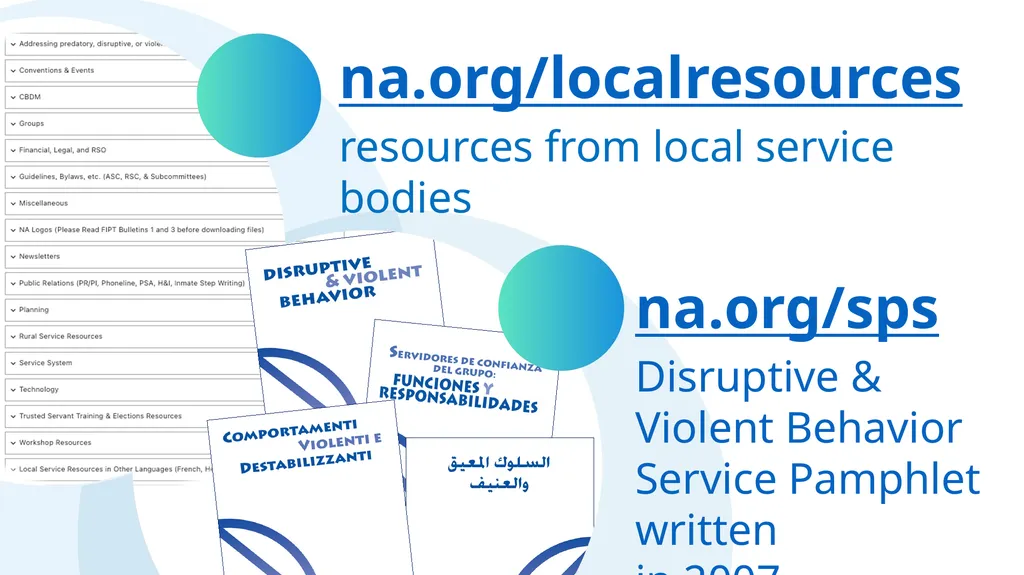
na.org/localresources
resources from local service bodies na.org/sps
Disruptive & Violent Behavior Service Pamphlet written in 2007<br>
03
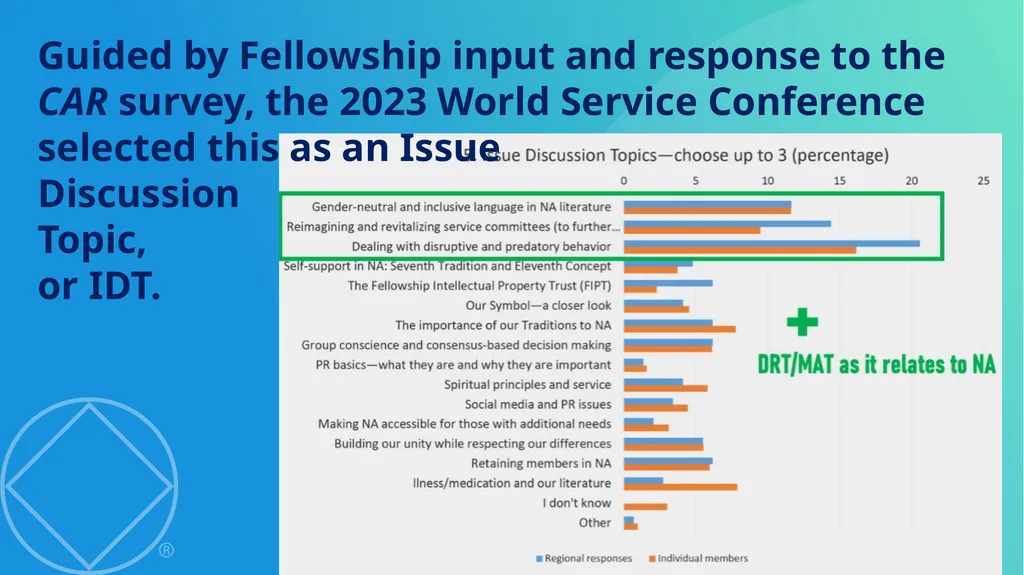
Guided by Fellowship input and response to the CAR survey, the 2023 World Service Conference selected this as an Issue Discussion Topic, or IDT.<br>
04
This topic, at its heart, is about our ability as a Fellowship to carry the message — if new members do not feel safe, they won’t stay if professionals hear negative things about NA, they will stop referring clients to us and addicts who need us may never find us.<br>
05
From Living Clean … “All our lives we had looked for the peace and safety we experience in recovery.” Addressing predatory and disruptive behavior is part of how we give it away.<br>
06
Atmosphere of Recovery An atmosphere of recovery is about making sure everyone who needs NA feels safe and welcome.
Anonymity, sharing, listening, respect, no judgment, and safety.
What else characterizes an atmosphere of recovery?<br>
07
Ideas to increase the atmosphere of recovery
leading by example
welcoming and paying attention to newcomers
creating a safe meeting environment
sharing in a way that members can identify
mentoring trusted servants
group unity What else contributes to an atmosphere of recovery?
How do I contribute?<br>
08
Negative Behaviors We need to come to a common understanding of the problem before we can seek a solution.
One way to think about disruptive behavior generally is behavior that interferes with the peace, security, and integrity of a meeting and its members<br>
09
Negative Behaviors Predatory behavior happens when a member knowingly or unknowingly takes advantage of another member's vulnerability.
Sometimes blatant, sometimes subtle
Characterized by manipulation
Sexual connotation or targets sexuality<br>
10
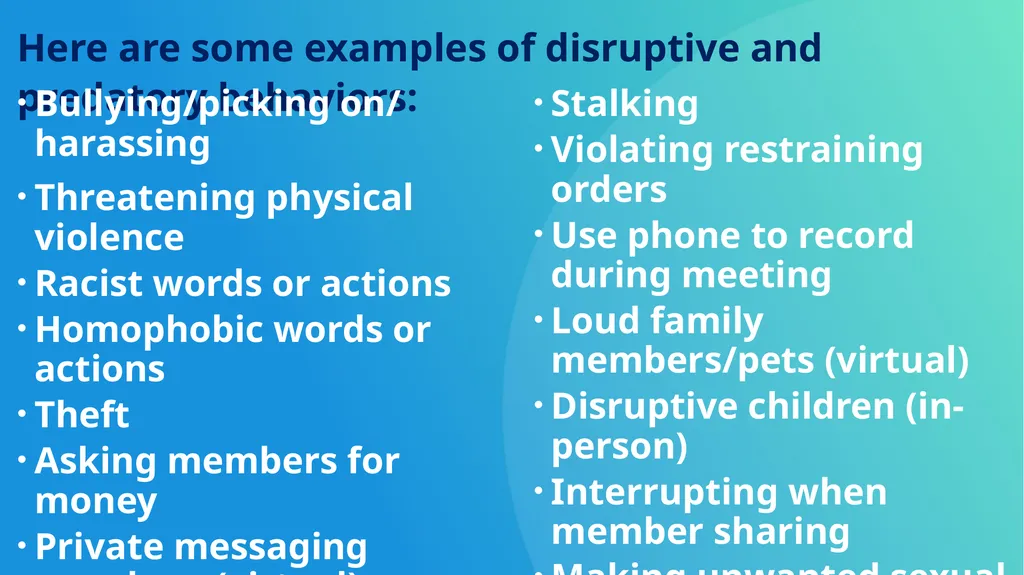
Here are some examples of disruptive and predatory behaviors: Bullying/picking on/ harassing
Threatening physical violence
Racist words or actions
Homophobic words or actions
Theft
Asking members for money
Private messaging members (virtual)
Distribution of non-approved literature Stalking
Violating restraining orders
Use phone to record during meeting
Loud family members/pets (virtual)
Disruptive children (in-person)
Interrupting when member sharing
Making unwanted sexual advances<br>
11
What are some other examples of disruptive and predatory behaviors?<br>
12
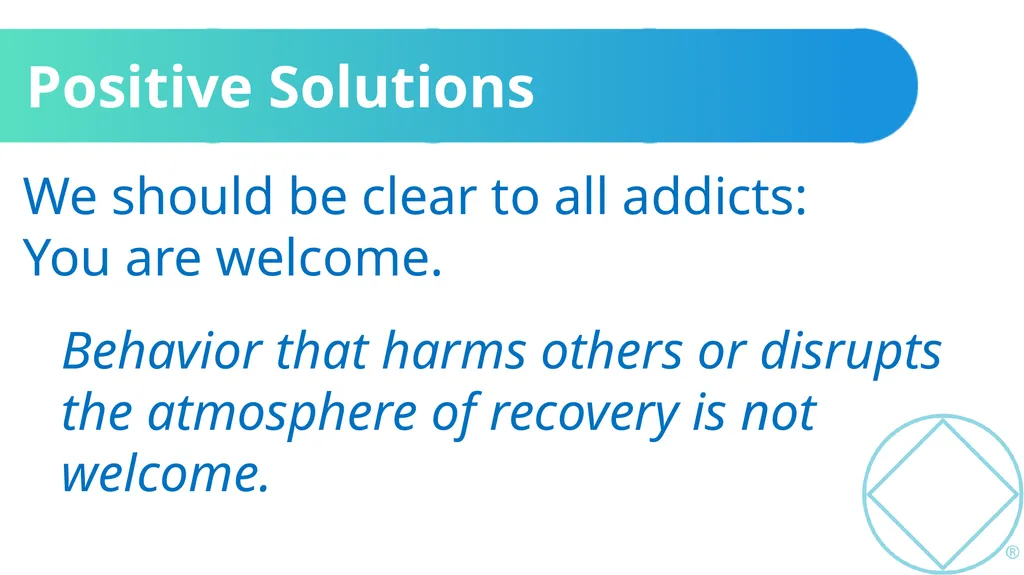
Positive Solutions We should be clear to all addicts: You are welcome.
Behavior that harms others or disrupts the atmosphere of recovery is not welcome.<br>
13
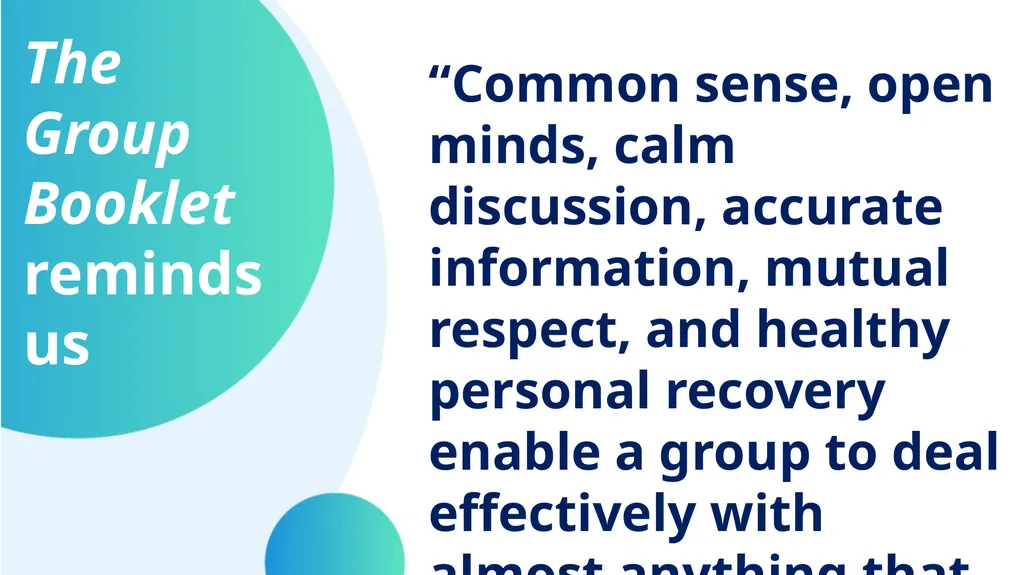
The Group Booklet reminds us “Common sense, open minds, calm discussion, accurate information, mutual respect, and healthy personal recovery enable a group to deal effectively with almost anything that comes its way.”<br>
14
Positive Solutions The worst thing we can do for a newcomer is make NA feel like where they came from.
We need to do our best to protect our members, while respecting their right to make their own decisions.
It can be a fine line between being protective and overbearing
Am I the right person to offer help?<br>
15
Disruptions in Virtual Meetings Sometimes an attendee’s bad behavior might be a sign that they really need a meeting!
There are steps we can take to protect the meeting:
mute or turn off a camera
restrict screen sharing
close down the chat feature
There are tools and suggestions in Virtual Meeting Basics: na.org/basics<br>
16
Below is a list of possible solutions: Add a paragraph to the group format
Approach new members and make sure they feel welcome
Join another member(s) and pull aside the member exhibiting the behavior and try to talk to them
If someone is violating a protective order, have a couple of people offer to go to another meeting with them
Turn off camera/put a member in the waiting room (virtual)
Discuss behavior in a group business meeting Chairperson/leader/group secretary can request a short break or ask group to join in a prayer or moment of silence
Hold a recovery meeting focused on a discussion about atmosphere of recovery
Discuss with other groups at a local service body meeting
Approach member in a loving and caring way
Temporarily suspend meeting
Call law enforcement<br>
17
What is our responsibility as members? Small Group Discussion 1 2 3 What is our responsibility as groups and service bodies? Given that, how do we address the behavior?
How do we ground our approach in spiritual principles?<br>
18
Let’s hear back from your discussions.
Tell us what example(s) you discussed and some of the solutions you talked about in your group.<br>
19
Are there tools you can create locally that will help?
What kind of resources would be useful for NAWS to create?
If NAWS were to create or update a resource or resources, what would you want it to include/say?<br>
20
Don’t forget to fill out the form at na.org/survey
This is one of four IDTs this cycle. The other three are:
Gender Neutral and Inclusive Language in NA Literature
Reimagining and revitalizing service committees (to further the reach of the NA message, improve communication, provide mentorship and training, and make service more attractive and accessible, learning from our experience the past few years)
DRT/MAT as it relates to NA
As workshop material is available, it will be posted to na.org/idt<br>