04
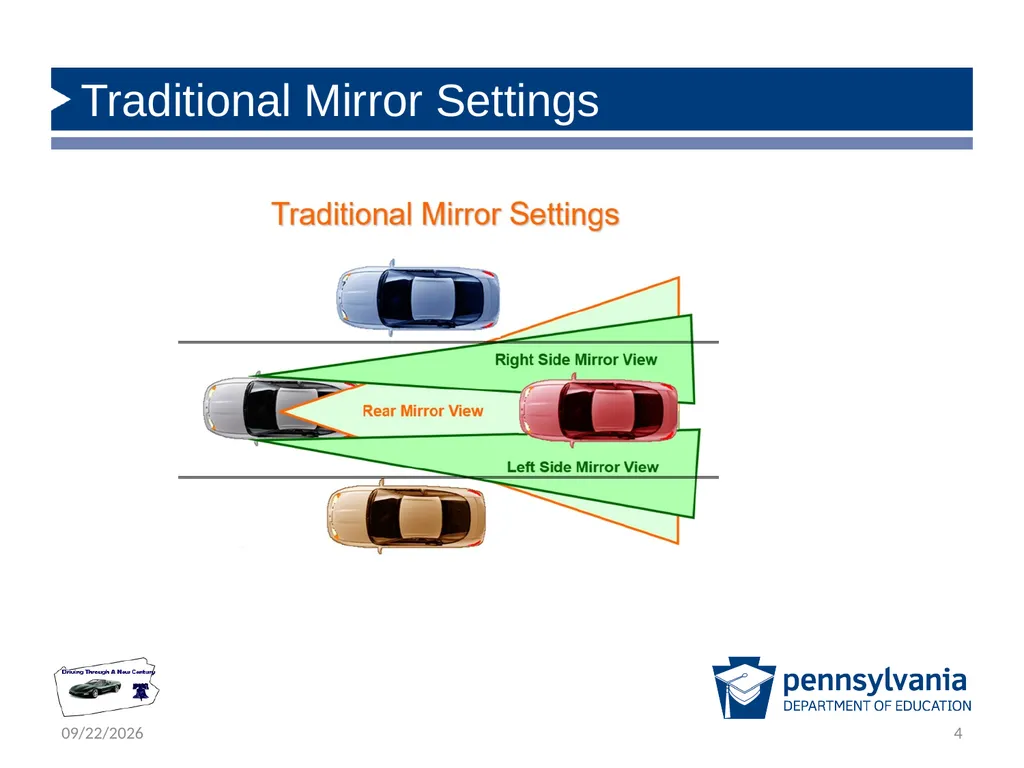
Traditional Mirror Settings 12/4/2018 4<br>
05
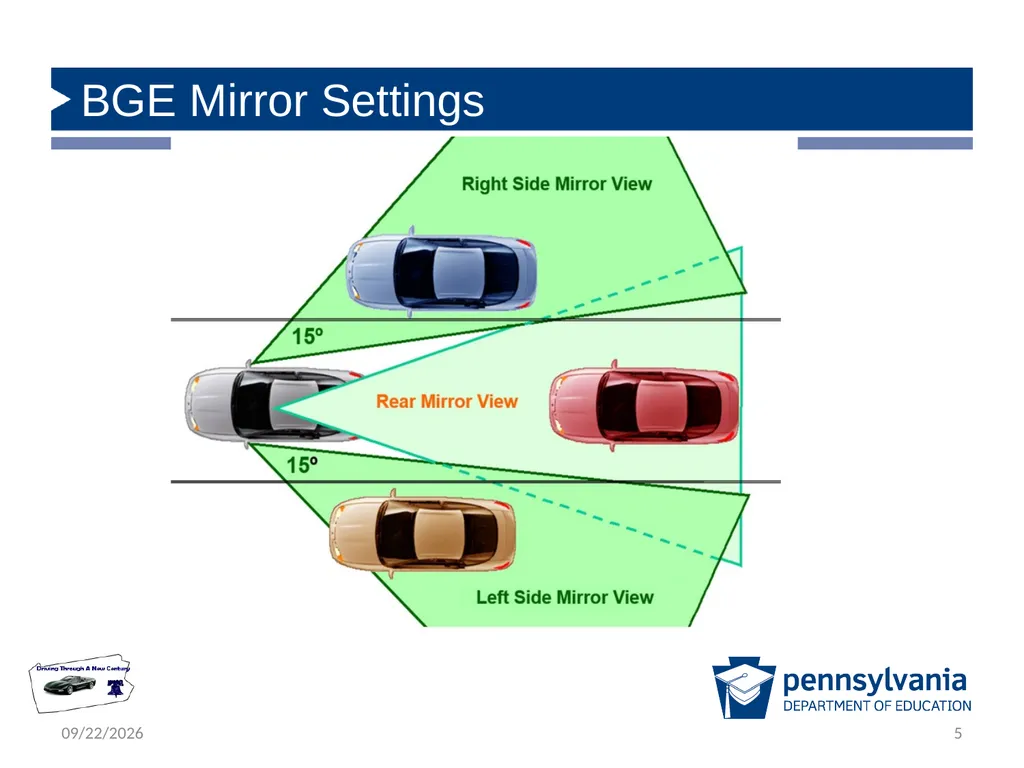
BGE Mirror Settings 12/4/2018 5<br>
06
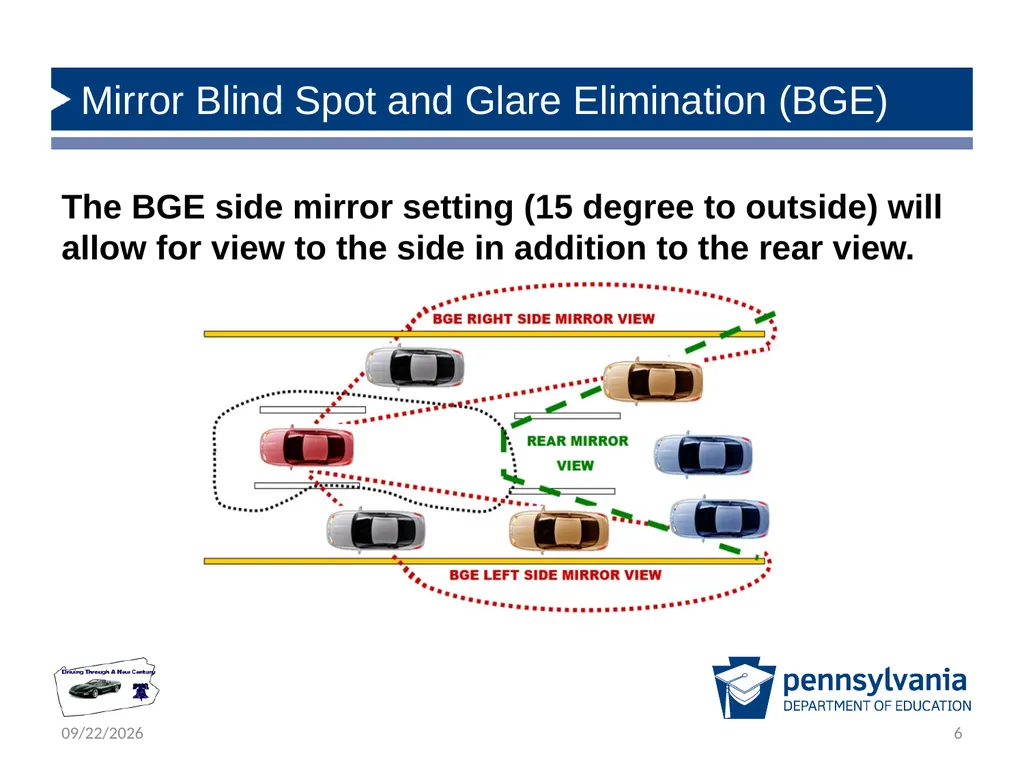
The BGE side mirror setting (15 degree to outside) will allow for view to the side in addition to the rear view. 12/4/2018 6 Mirror Blind Spot and Glare Elimination (BGE)<br>
07
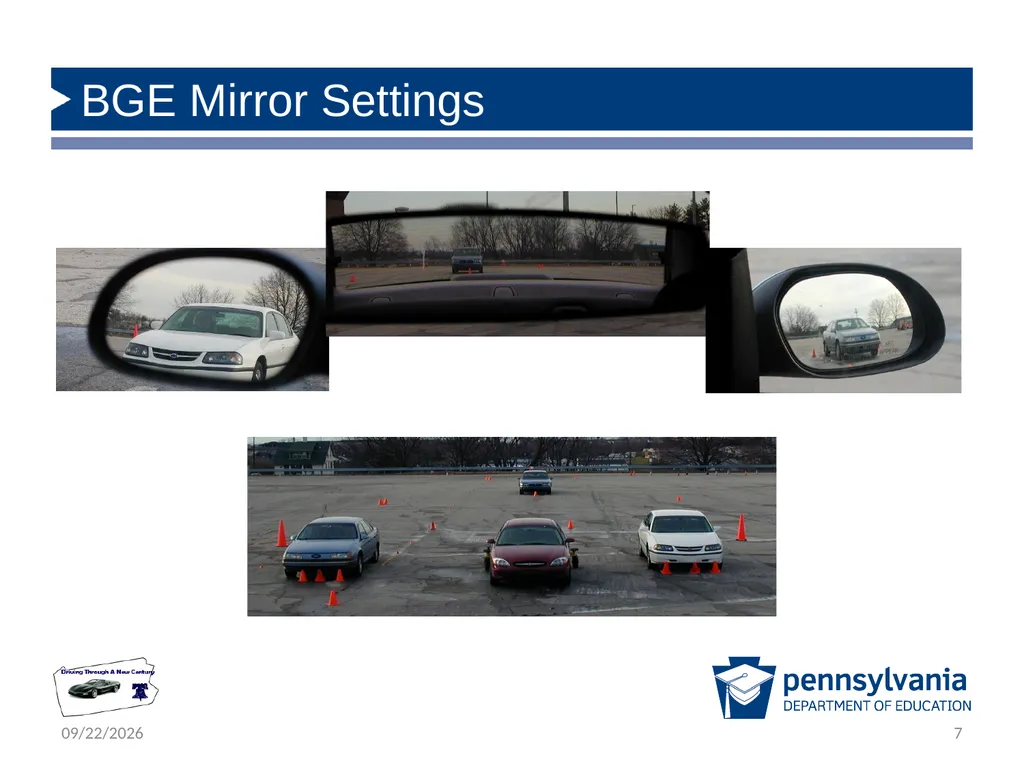
BGE Mirror Settings 12/4/2018 7<br>
08
Purpose of Reference Points Relate part of the vehicle to some part of the roadway
Helpful visual relationship of your vehicle within operating space
Will know your vehicle placement within a lane at all times
Will allow for reduced-risk lane placements 12/4/2018 8<br>
09
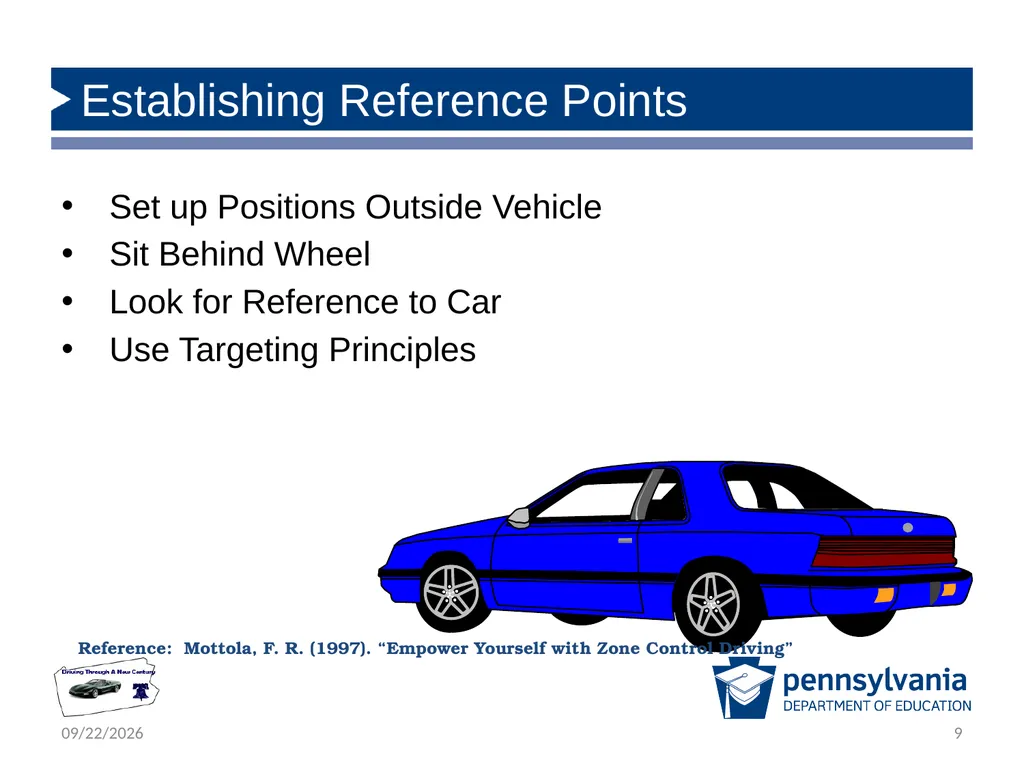
Establishing Reference Points Set up Positions Outside Vehicle
Sit Behind Wheel
Look for Reference to Car
Use Targeting Principles 12/4/2018 9 Reference: Mottola, F. R. (1997). “Empower Yourself with Zone Control Driving”<br>
10
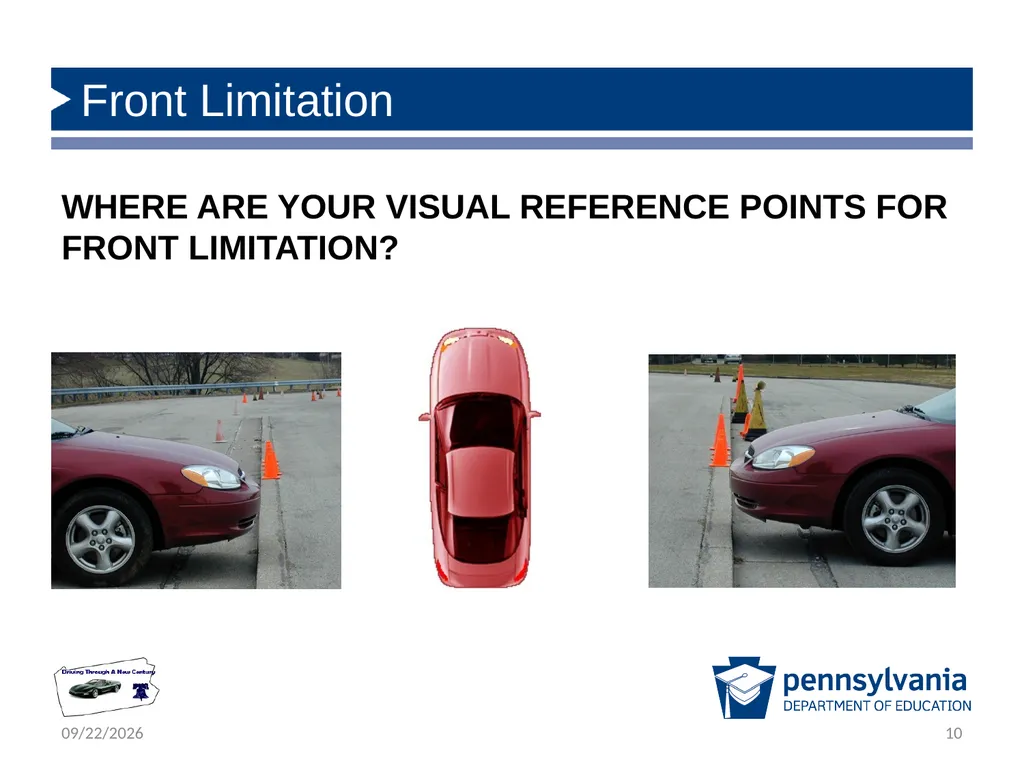
Front Limitation 12/4/2018 10 WHERE ARE YOUR VISUAL REFERENCE POINTS FOR FRONT LIMITATION?<br>
11
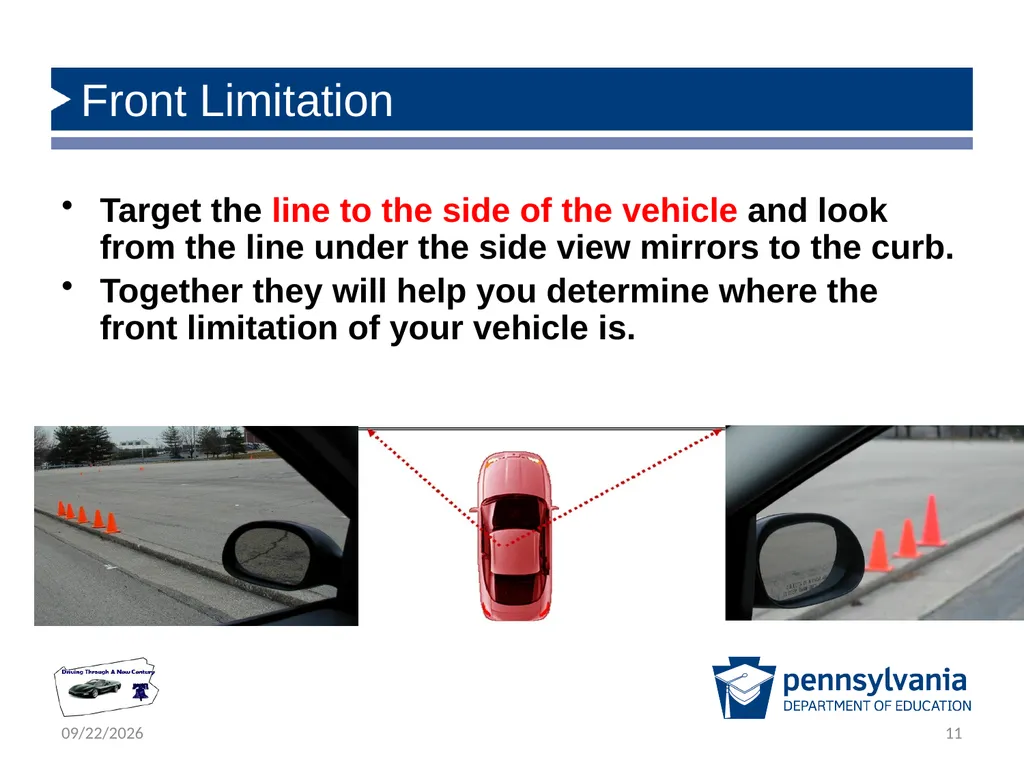
Front Limitation Target the line to the side of the vehicle and look from the line under the side view mirrors to the curb.
Together they will help you determine where the front limitation of your vehicle is. 12/4/2018 11<br>
12
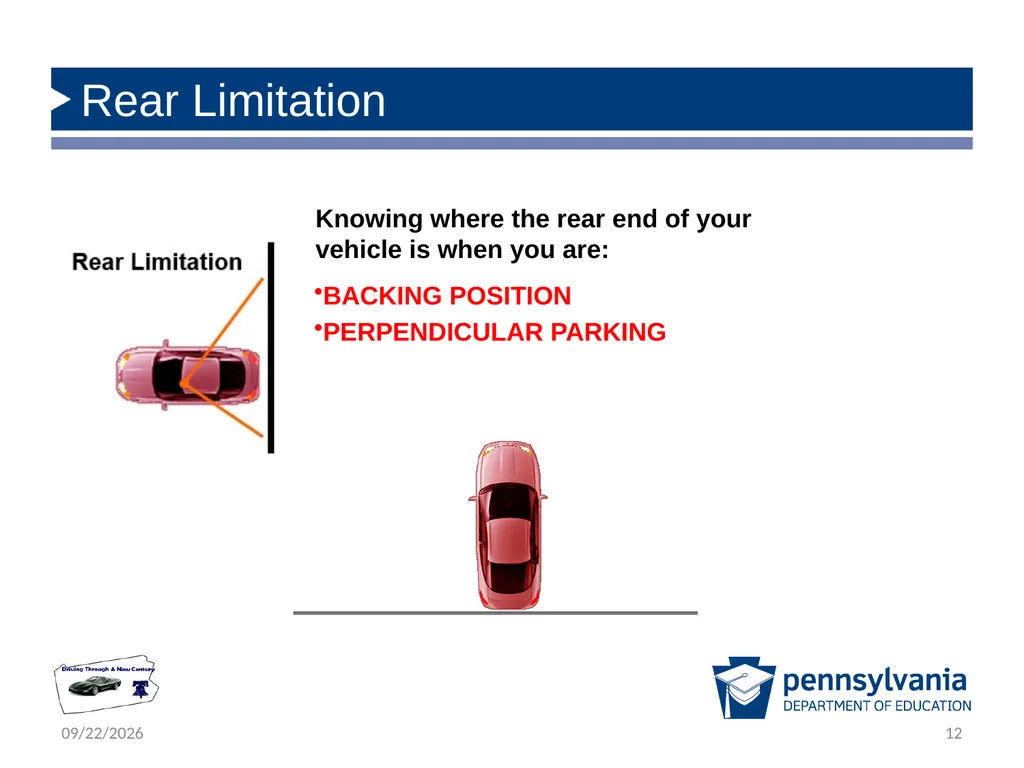
Rear Limitation 12/4/2018 12 Knowing where the rear end of your vehicle is when you are: BACKING POSITION
PERPENDICULAR PARKING<br>
13
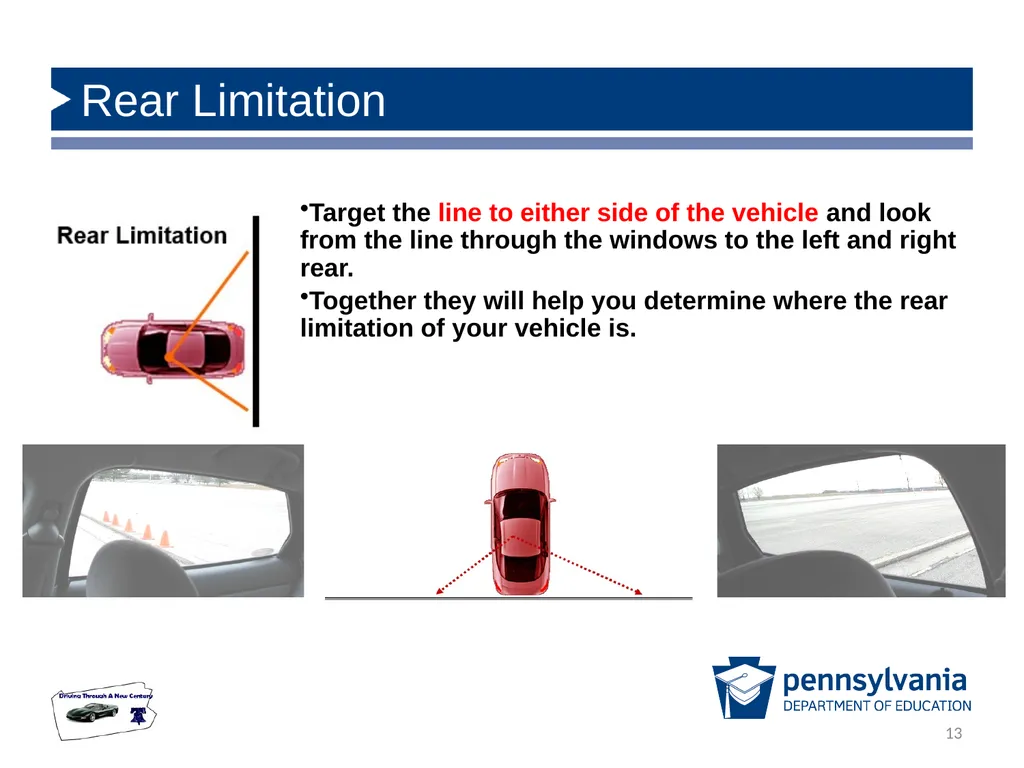
12/4/2018 13 Rear Limitation Target the line to either side of the vehicle and look from the line through the windows to the left and right rear.
Together they will help you determine where the rear limitation of your vehicle is.<br>
14
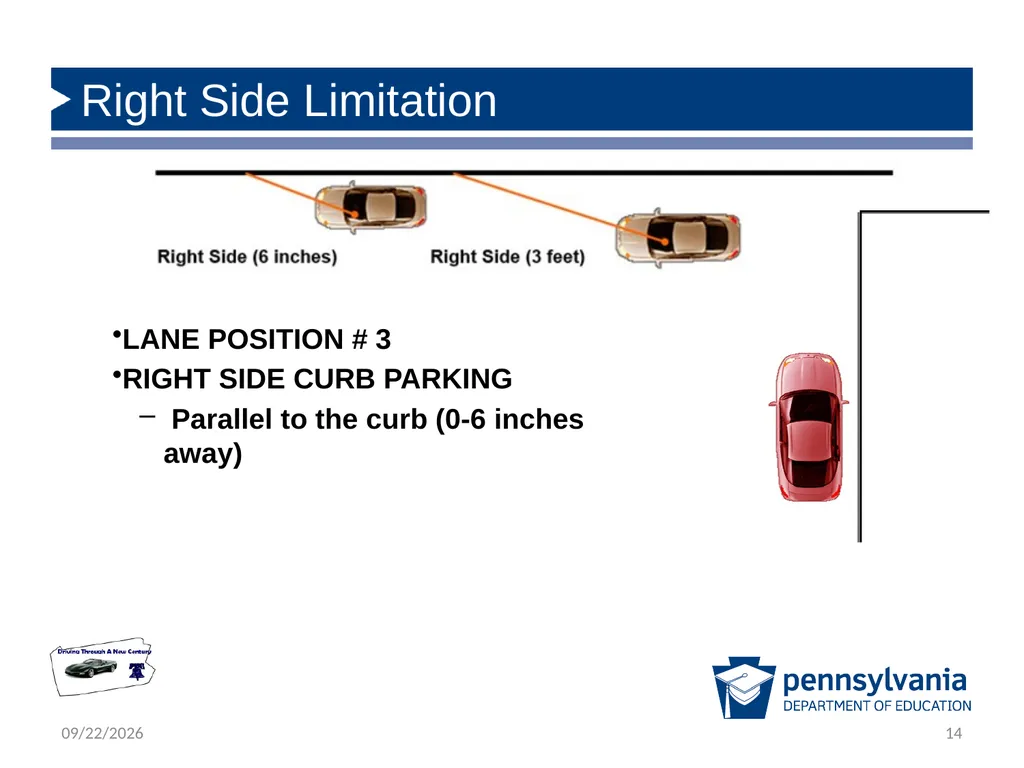
Right Side Limitation 12/4/2018 14 LANE POSITION # 3
RIGHT SIDE CURB PARKING
Parallel to the curb (0-6 inches away)<br>
15
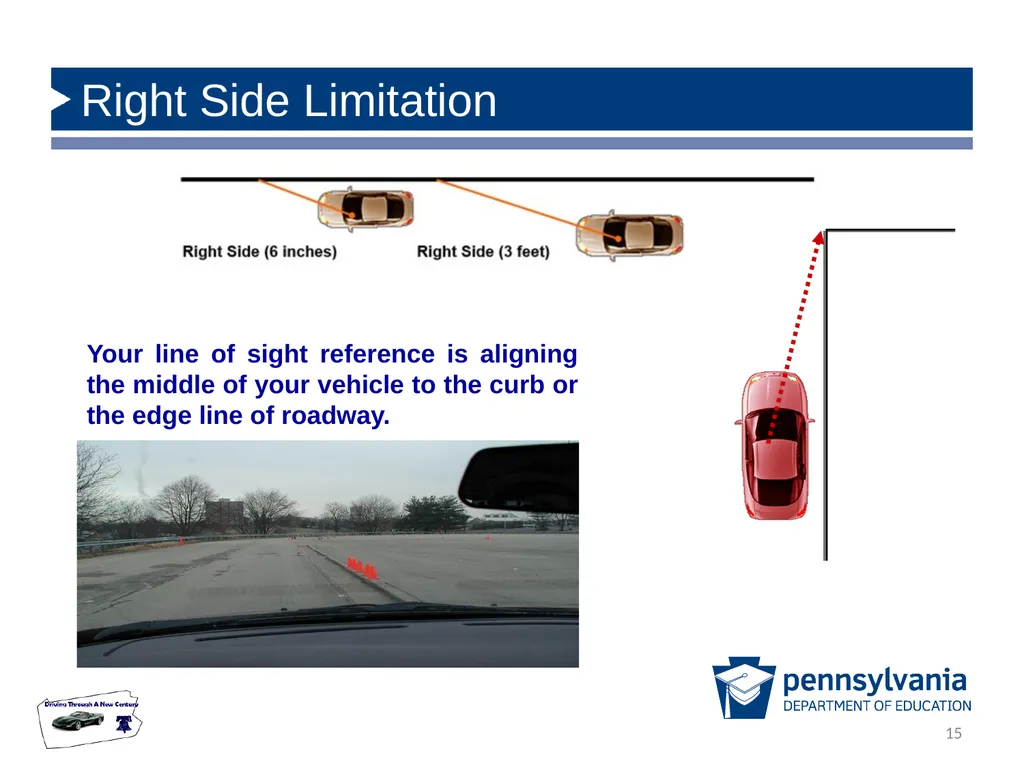
Right Side Limitation 12/4/2018 15 Your line of sight reference is aligning the middle of your vehicle to the curb or the edge line of roadway.<br>
16
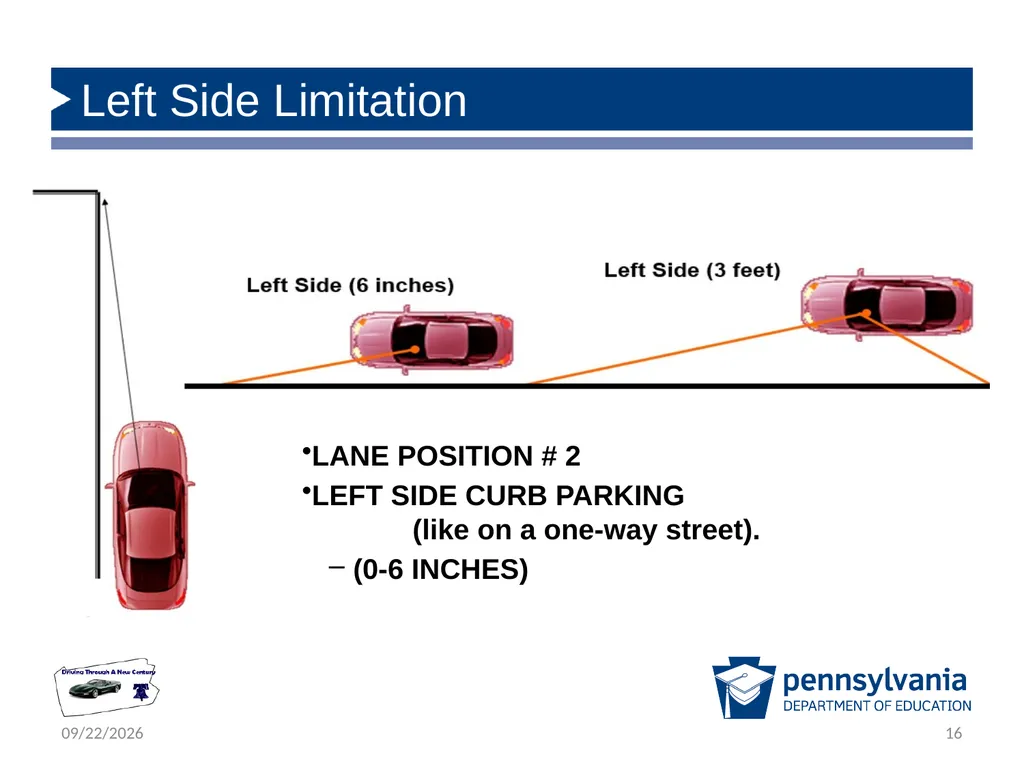
Left Side Limitation 12/4/2018 16 LANE POSITION # 2
LEFT SIDE CURB PARKING (like on a one-way street).
(0-6 INCHES)<br>
17
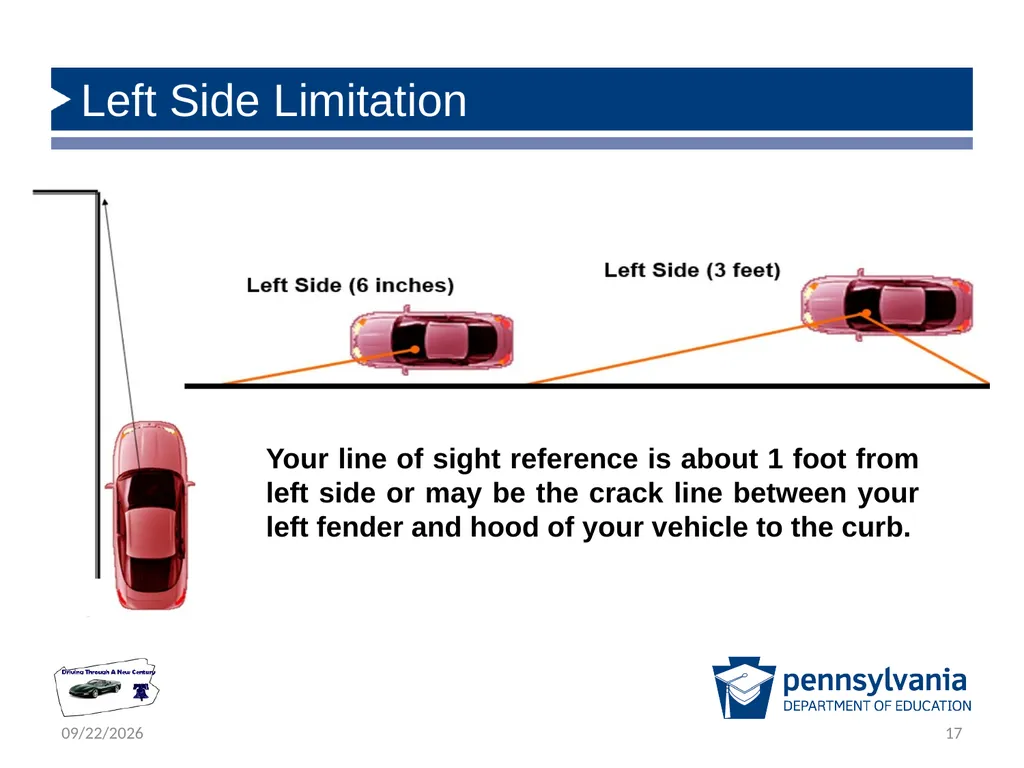
Left Side Limitation 12/4/2018 17 Your line of sight reference is about 1 foot from left side or may be the crack line between your left fender and hood of your vehicle to the curb.<br>
18
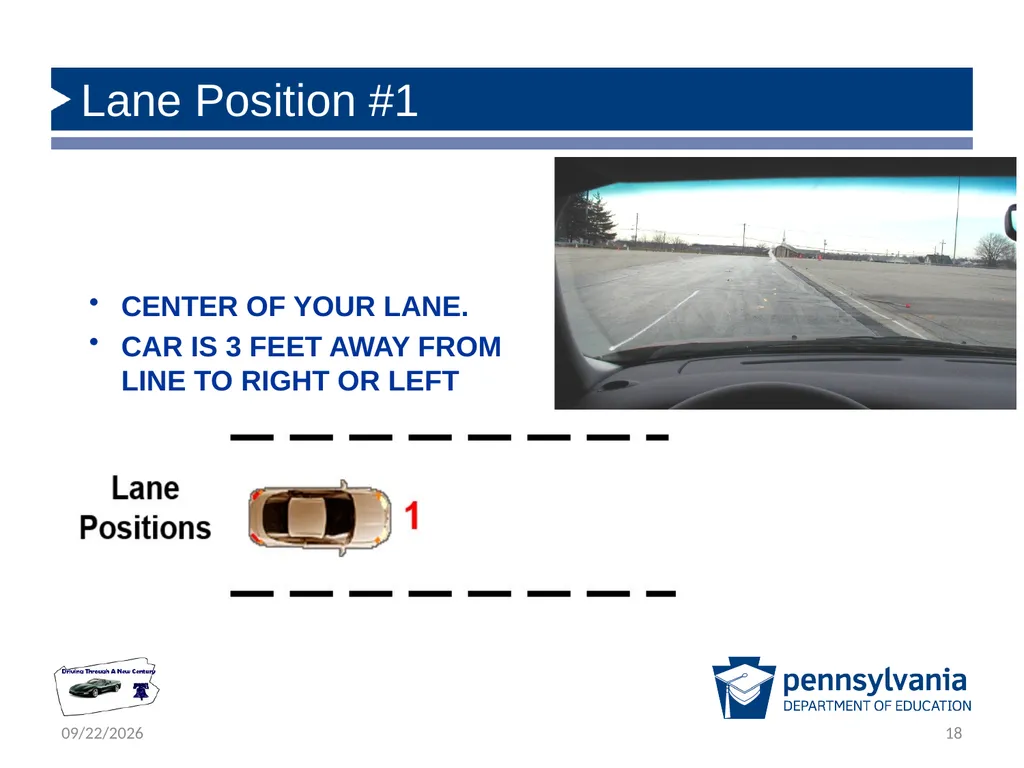
Lane Position #1 12/4/2018 18 CENTER OF YOUR LANE.
CAR IS 3 FEET AWAY FROM LINE TO RIGHT OR LEFT<br>
19
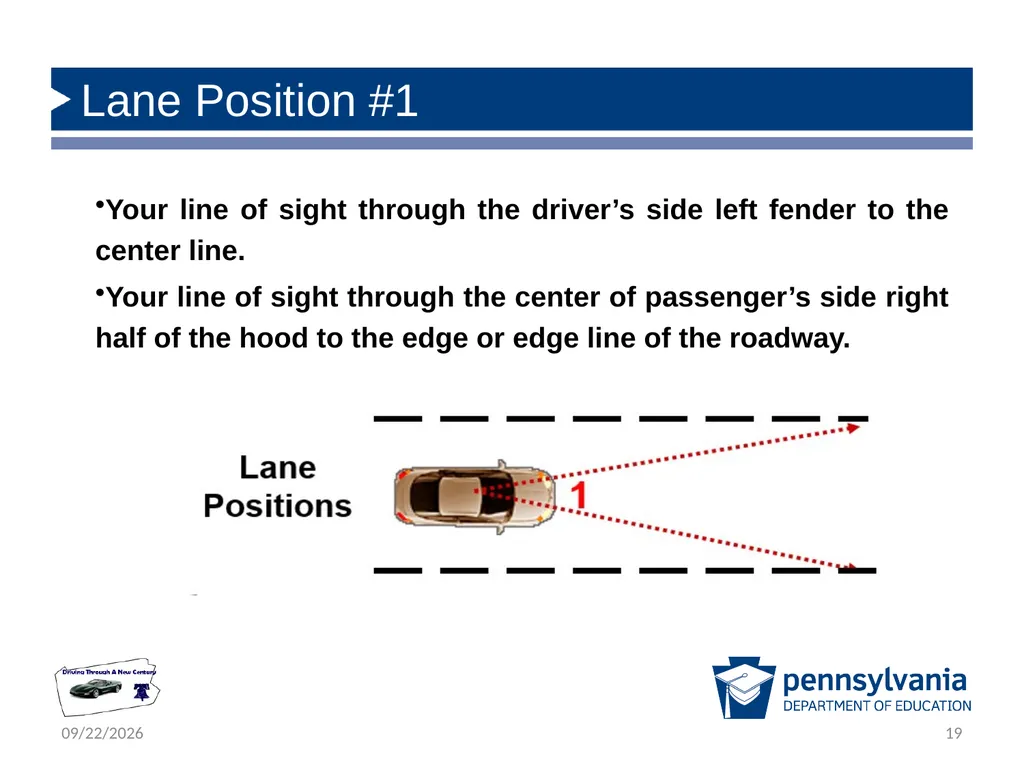
Lane Position #1 12/4/2018 19 Your line of sight through the driver’s side left fender to the center line.
Your line of sight through the center of passenger’s side right half of the hood to the edge or edge line of the roadway.<br>
20
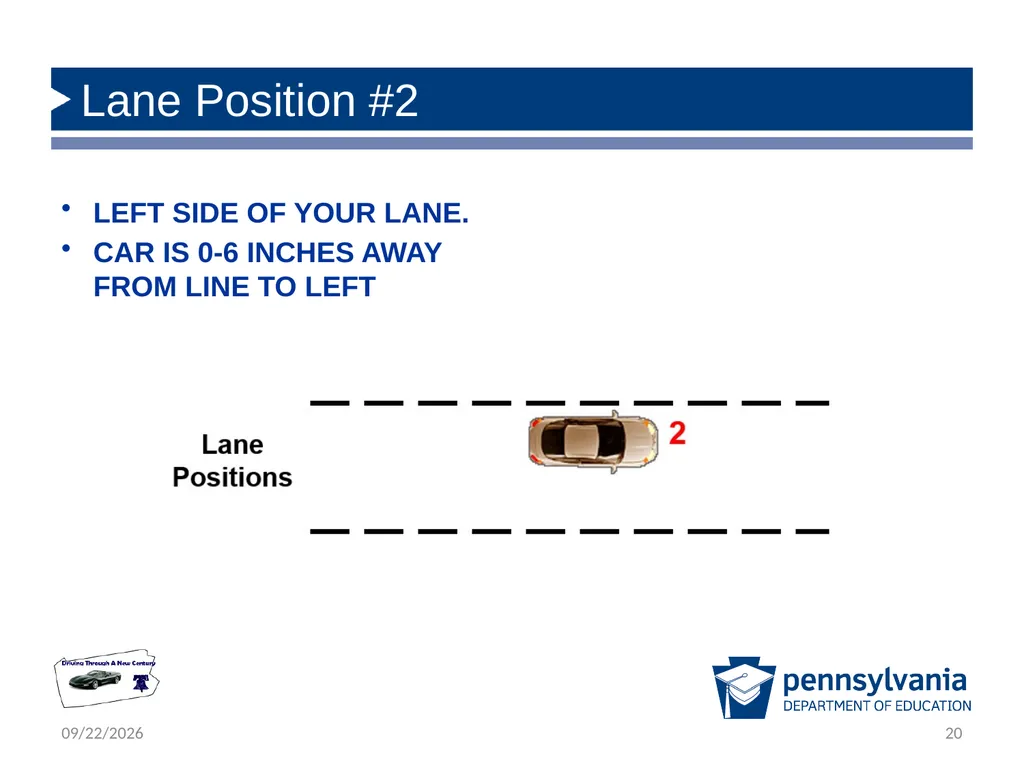
Lane Position #2 12/4/2018 20 LEFT SIDE OF YOUR LANE.
CAR IS 0-6 INCHES AWAY FROM LINE TO LEFT<br>
21
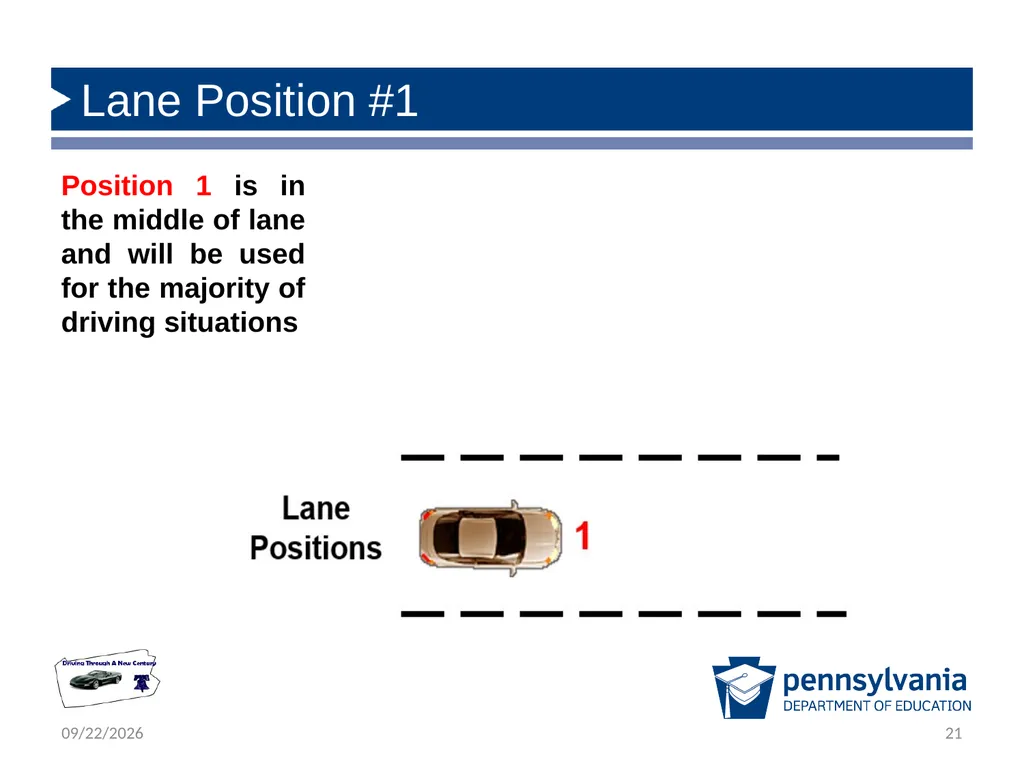
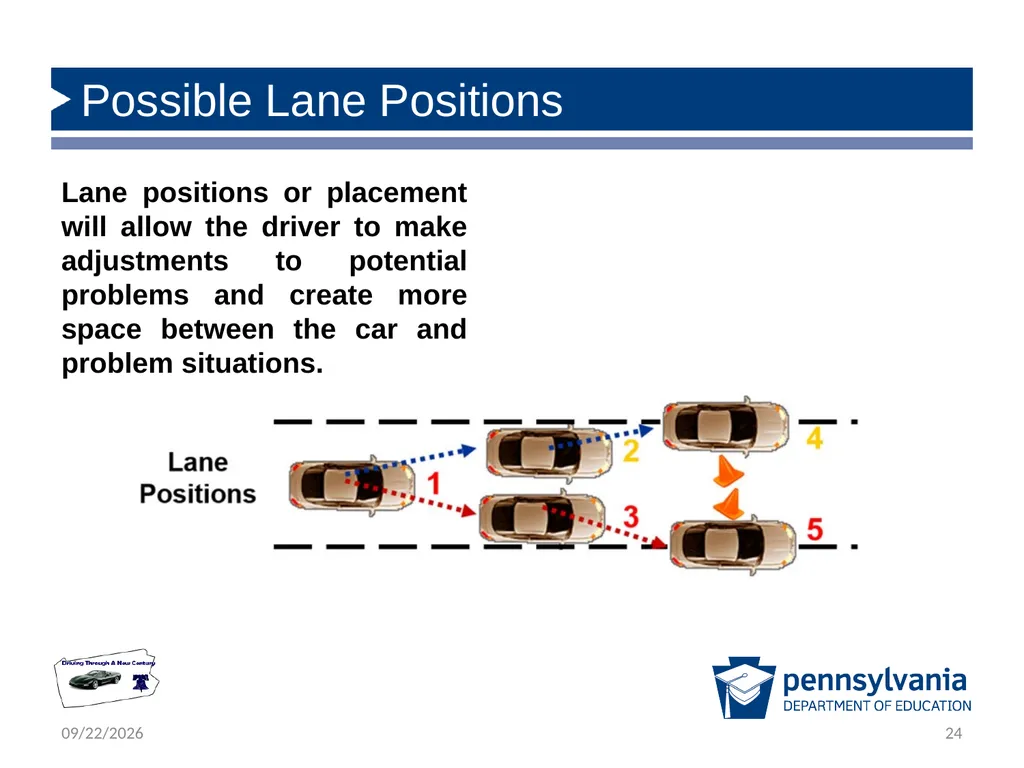
Lane Position #1 12/4/2018 21 Position 1 is in the middle of lane and will be used for the majority of driving situations<br>
22
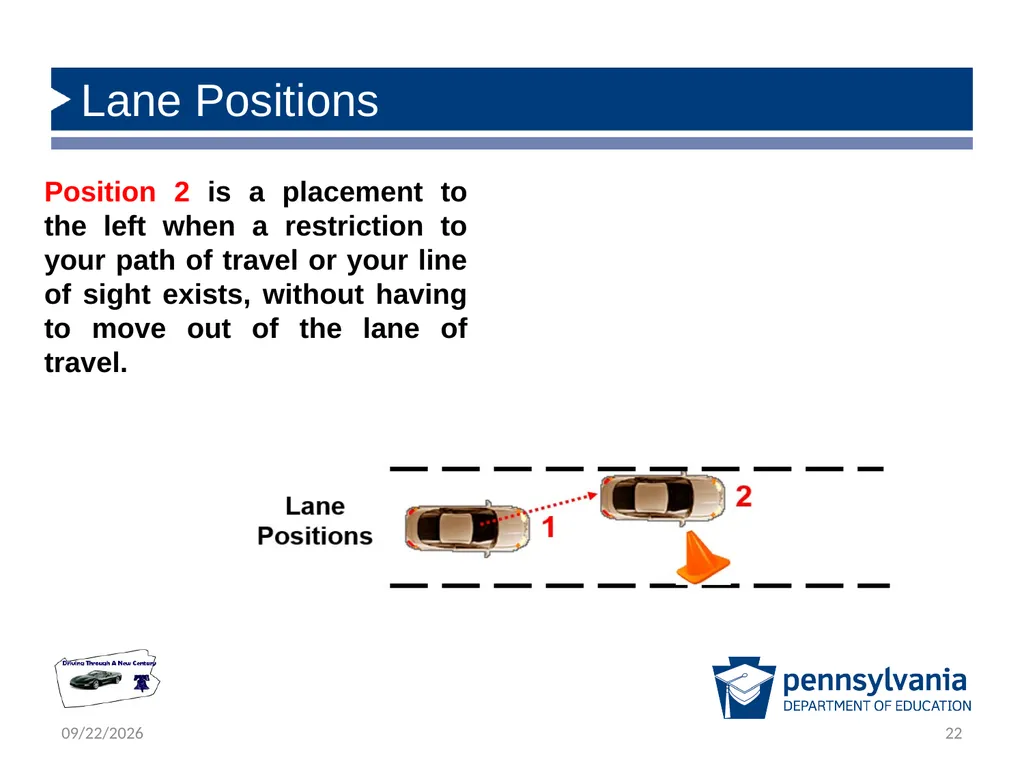
Lane Positions 12/4/2018 22 Position 2 is a placement to the left when a restriction to your path of travel or your line of sight exists, without having to move out of the lane of travel.<br>
23
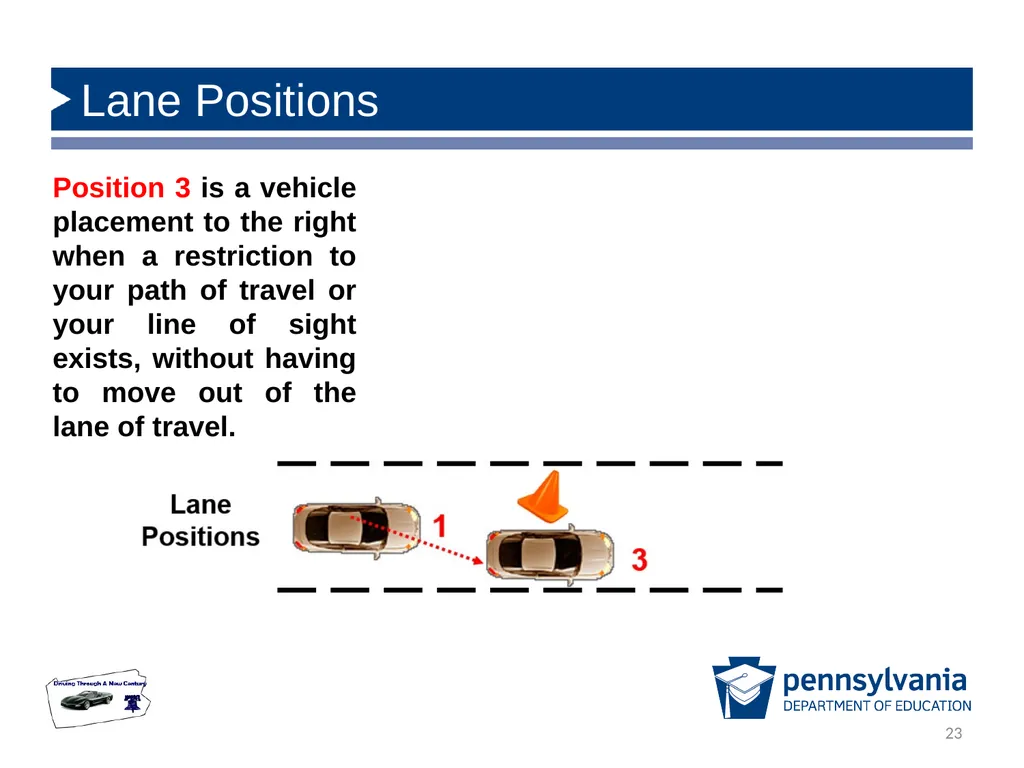
Lane Positions 23 Position 3 is a vehicle placement to the right when a restriction to your path of travel or your line of sight exists, without having to move out of the lane of travel.<br>
24
Possible Lane Positions 12/4/2018 24 Lane positions or placement will allow the driver to make adjustments to potential problems and create more space between the car and problem situations.<br>
25
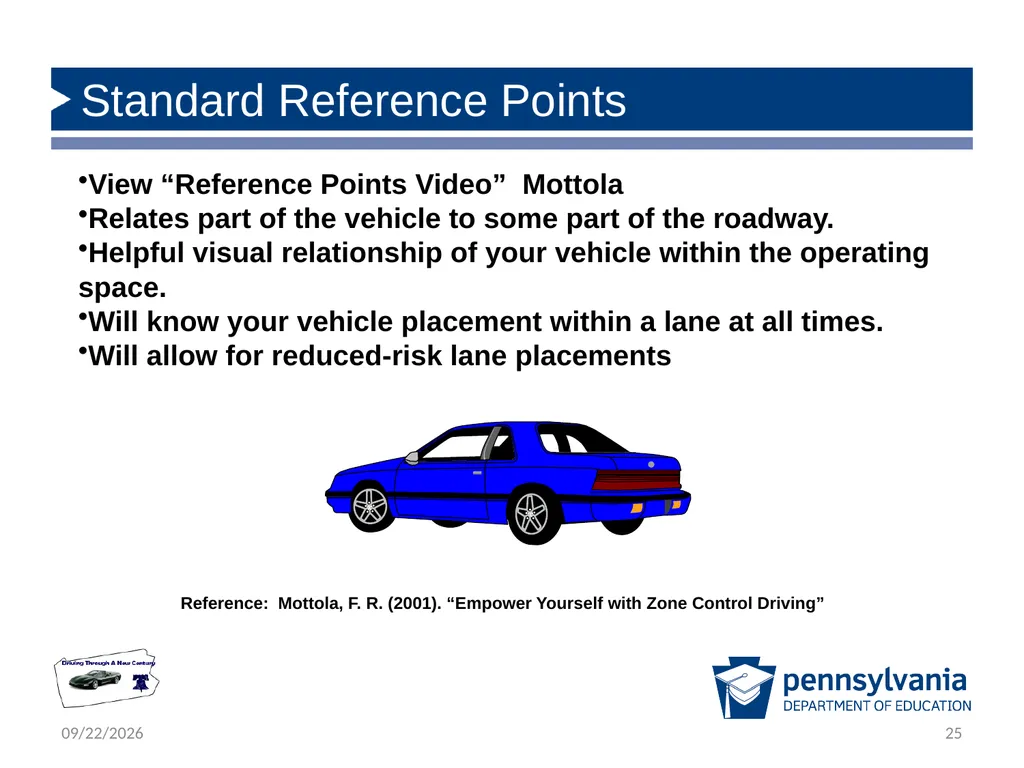
Standard Reference Points 12/4/2018 25 View “Reference Points Video” Mottola
Relates part of the vehicle to some part of the roadway.
Helpful visual relationship of your vehicle within the operating space.
Will know your vehicle placement within a lane at all times.
Will allow for reduced-risk lane placements Reference: Mottola, F. R. (2001). “Empower Yourself with Zone Control Driving”<br>
26
Session Assessment… 1 12/4/2018 26 Explain the difference between seeing an object and perceiving an object
List the three parts of vision used in driving. Give one use for each part.
List four different driving systems used in driver education
Explain how the BGE Mirror Method provides an advantage.
Explain what a Central Space Area is in relation to driving.
List three purposes for Standard Visual Reference Points.
How does a driver determine where the front bumper is located?
How does a driver determine Lane Position One while driving?
Explain the difference between an alert symbol light and a warning
symbol light on the dashboard.
10. List and explain two driver readiness tasks.<br>
27
12/4/2018 27 Explain the difference between seeing an object and perceiving an object..
Seeing is a visual skill that is controlled by eye functions.. What is in the visual fields of focus, central space (UFOV), and peripheral.
Perceiving is a mental skill that is controlled by the brain.. What you think you see
List the three parts of vision used in driving. Give one use for each part.
Fovial vision allows the driver to focus, read signs, and use the targeting principles
Central (UFOV) vision allows the driver to judge speed, distance, reference points, and lane placement
Peripheral vision allows the driver to view motion and color changes around the central vision area
List four different driving systems used in driver education
Smith, Perceptual (IPDE,SIPDE), Mottola Zone Control, and SEE Session Assessment…1<br>
28
Session Assessment…1 12/4/2018 28 Explain how the BGE Mirror Method provides an advantage.
The Blindzone Glare Elimination Method allows the driver to see traffic flow to the sides that is not visible in the traditional setting. Checking areas to the right or left may still be used, but often are not needed when familiar with the system.
Explain what a Central Space Area is in relation to driving.
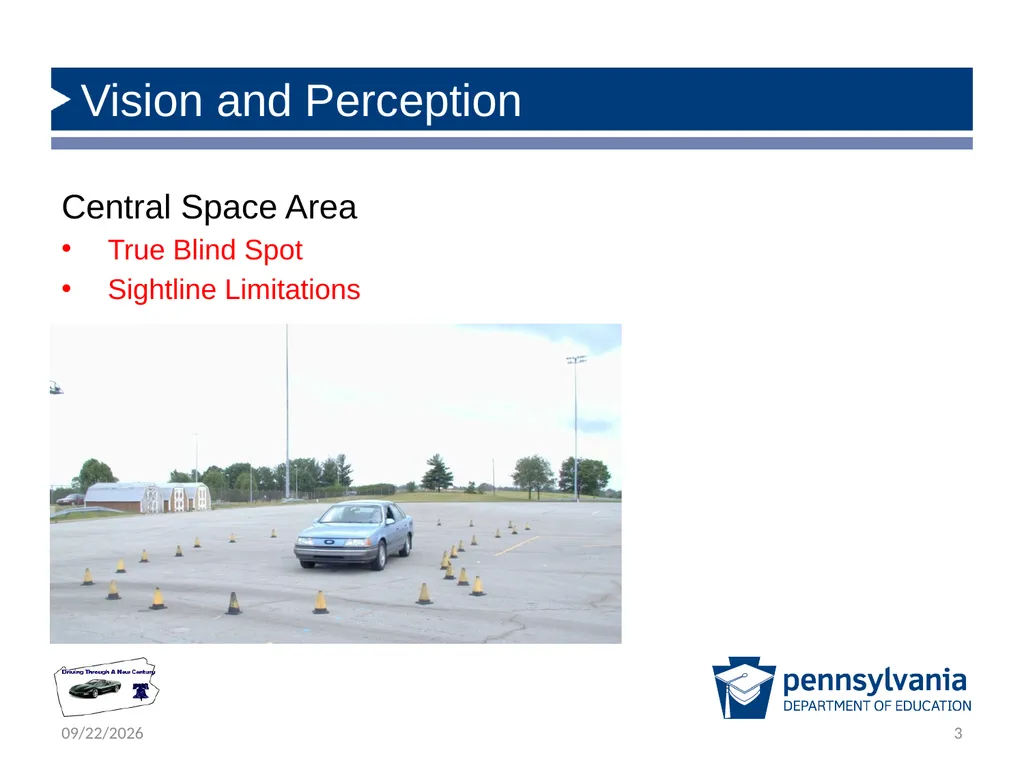
The space not visible to the driver when seated behind the wheel due to sightline limitations
List three purposes for Standard Visual Reference Points.
Relate part of the vehicle to some part of the roadway
Helpful visual relationship of your vehicle within operating space
Will know your vehicle placement within a lane at all times
Will allow for reduced-risk lane placements<br>
29
Session Assessment…1 12/4/2018 29 How does a driver determine where the front bumper is located?
By using the mirrors as a standard vehicle reference point.
How does a driver determine Lane Position One while driving?
Reference Points of 2-3 feet from left and 2-3 feet from right.
Explain the difference between an alert symbol light and a warning symbol light on the dashboard.
Alert symbols tell the driver the system is working properly.
Warning symbols tell the driver of a system malfunction.
List and explain two driver readiness tasks.
Security, Seating Position, Restraints, and Mirrors<br>
30
For more information on Driver’s Education and Safety please visit PDE’s website at www.education.pa.gov The mission of the Department of Education is to ensure that every learner has access to a world-class education system that academically prepares children and adults to succeed as productive citizens. Further, the Department seeks to establish a culture that is committed to improving opportunities throughout the commonwealth by ensuring that technical support, resources, and optimal learning environments are available for all students, whether children or adults. 30 12/4/2018 Contact/Mission<br>