DURGA MAHAVIDYALAYA, RAIPUR (C.G.) Session 2022-23 Subject : - Pedagogy of Biological Sciences Concept Mapping in Biology Teaching Dr. Pragati Dubey Assistant Professor Dept. Of Education Contents :- Introduction Meaning of Concept
"DURGA MAHAVIDYALAYA, RAIPUR (C.G.) Session –" is the property of its rightful owner. Permission is granted to
download and print the materials on this website for personal, non-commercial use only, and to display it
on your personal computer provided you do not modify the materials and that you retain all copyright
notices contained in the materials. By downloading content from our website, you accept the terms of this
agreement.
Presentation Transcript
01
DURGA MAHAVIDYALAYA, RAIPUR (C.G.) Session – 2022-23 Subject : - Pedagogy of Biological Sciences Concept Mapping in Biology Teaching Dr. Pragati Dubey
Assistant Professor
Dept. Of Education<br>
02
Contents :- Introduction
Meaning of Concept Mapping
Definition of Concept Mapping
Why Concept Maps should be Developed
Components of Concept Map
Significance of Concept Mapping
Concept and Proposition
Levels of Concept
Kinds of Concept Maps
Some Organisational patterns in a Concept Map
Phases of the Concept Mapping
Uses of Concept Map
Examples of Concept Mapping
Conclusion
References<br>
03
Introduction :- A teacher has to perform four important function of teaching.
These are Planning, Organizing, Reading, and Controlling.
Concept Mapping is such a task in which a teacher performs all these activities to make teaching effective so that learners can understand the concept properly.<br>
04
Meaning of Concept Mapping :- Concept maps are graphical tools for organising and representing knowledge about certain concepts.
A concept map represents an understanding of the relationship and hierarchy between important set of concept.<br>
05
Definition of Concept Mapping :- According to Ault Charles R. (1985) –
concept mapping is a study strategy which leads learners away from rote learning and move them towards true understanding of concepts and their interrelationships.<br>
06
Why Concept Maps should be Developed :- To develop innovative ideas.
To design complex stuctures .
To communicate complex ideas.
To aid comprehension, to learn clearly by integrating new and prior knowledge.
To diagnose delusions.<br>
07
Components of Concept Map :- 1) Concept : Concept may be thought of as a mental framework of an event or an object .
Any event or object is a concept because it has some identifiable properties or ideas associated with it.
In addition, a concept also has a label (name).
For ex. – A ‘ball – point pen’.<br>
08
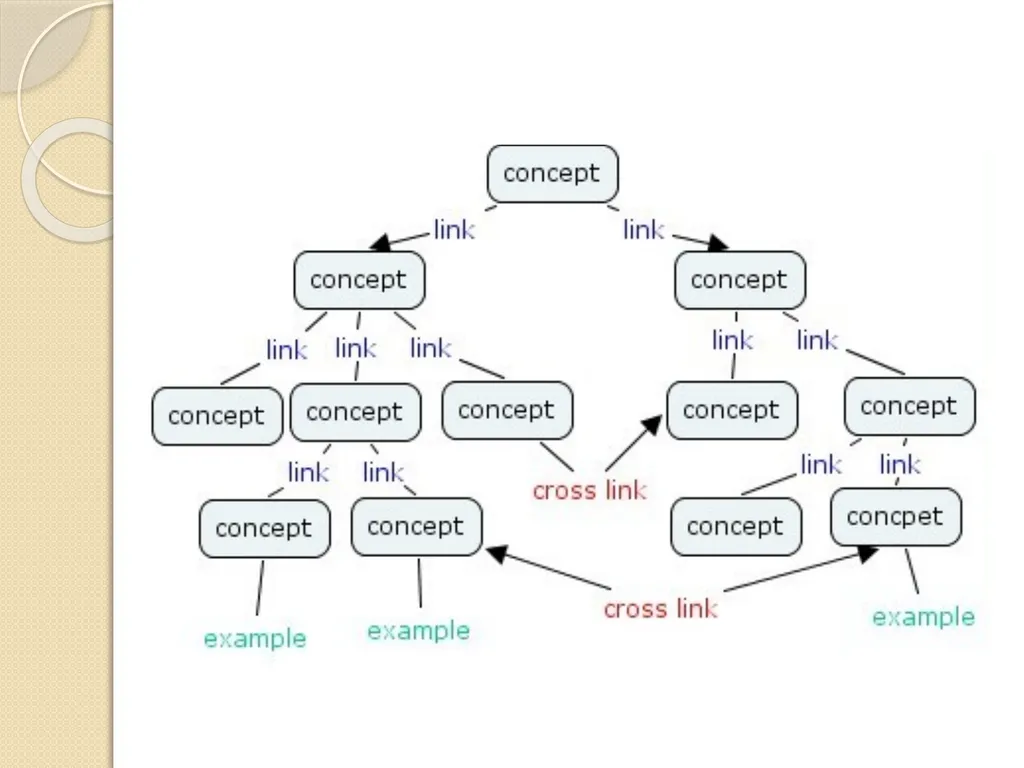
2) Linkage : They are usually represented by arrows or lines.
They link two concept appropriately.
3) Labels for linkages : The label for most linkages is a word/s or a phrase – althought sometimes we use symbols such as +, -, , or ÷ for linkages in mathematics.<br>
09
Significance of Concept Mapping :- It helps to organize and represent knowledge in a meaningful way.
It represents the hierarchy of concepts and their relationship in which they can be understood and learnt.
It facilitates infromation processing.
It facilitates deep thinking by the learners.
Concept mapping makes thinking process explicit.
It facilitates meaningful learning.<br>
10
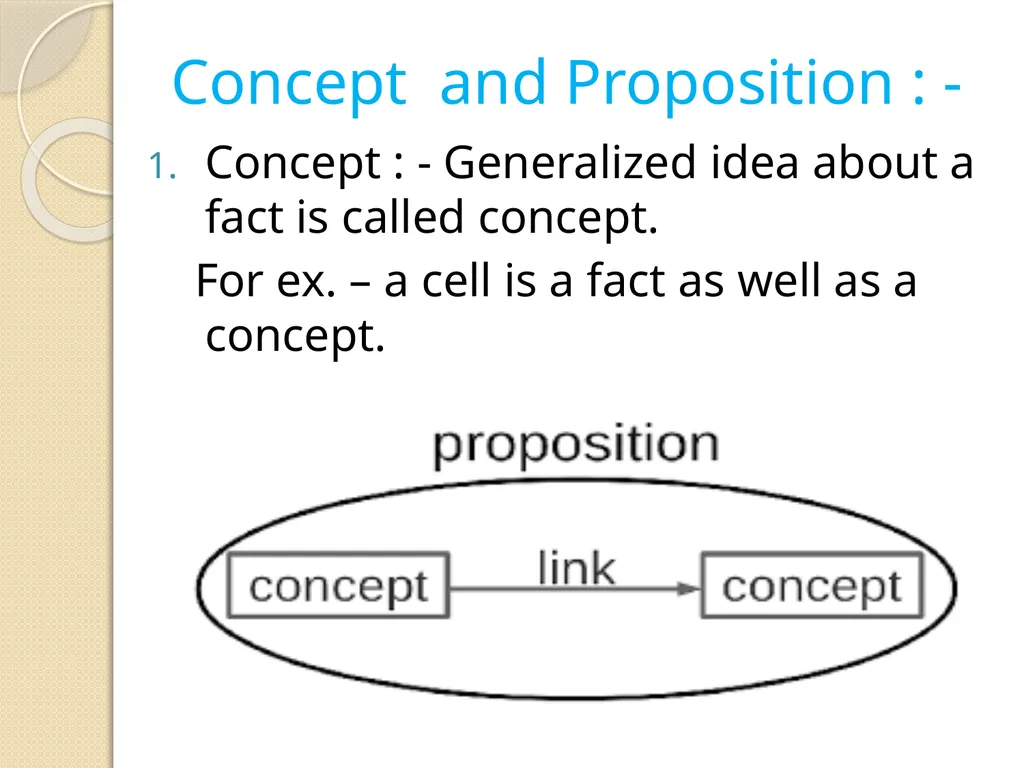
Concept and Proposition : - Concept : - Generalized idea about a fact is called concept.
For ex. – a cell is a fact as well as a concept.<br>
11
2. ) Proposition : - Proposition is a statement about some objects or events in te universe, either naturally occuring or constructed.
They contain two or more concepts connected with orhter words to form a meaningful statement.
Ex.- a) the earth revolves around the sun.
b) Green leaves prepare food by photosynthesis.<br>
12
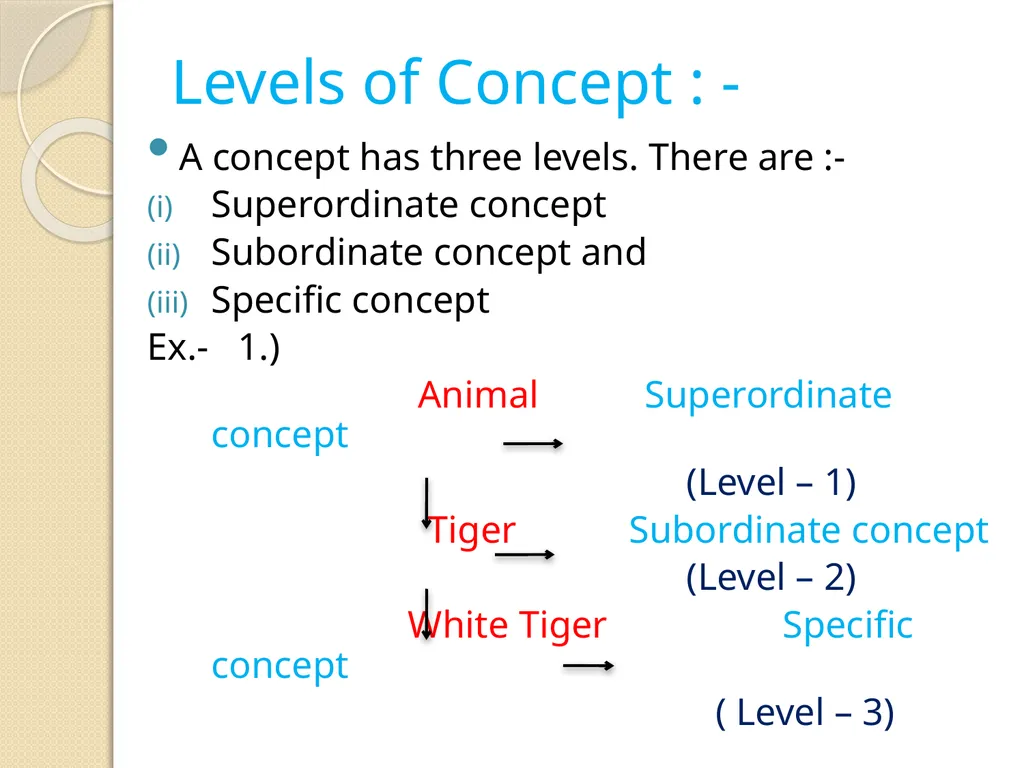
Levels of Concept : - A concept has three levels. There are :-
Superordinate concept
Subordinate concept and
Specific concept
Ex.- 1.)
Animal Superordinate concept
(Level – 1)
Tiger Subordinate concept
(Level – 2)
White Tiger Specific concept
( Level – 3)<br>
13
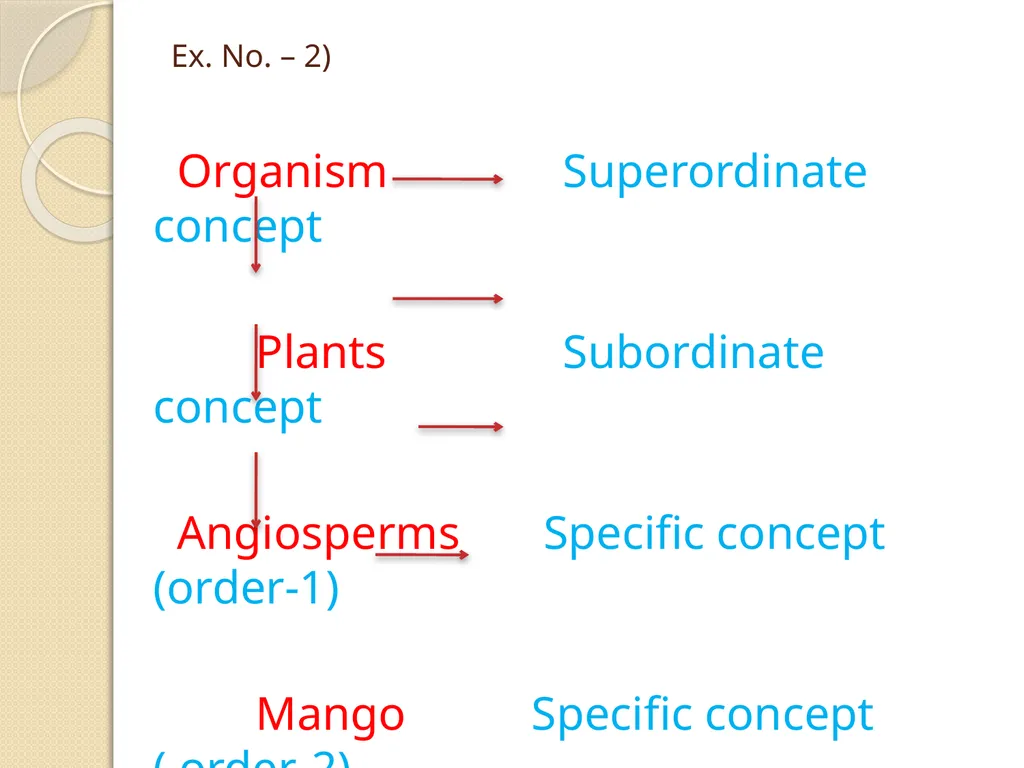
Ex. No. – 2) Organism Superordinate concept
Plants Subordinate concept
Angiosperms Specific concept (order-1)
Mango Specific concept ( order-2)<br>
14
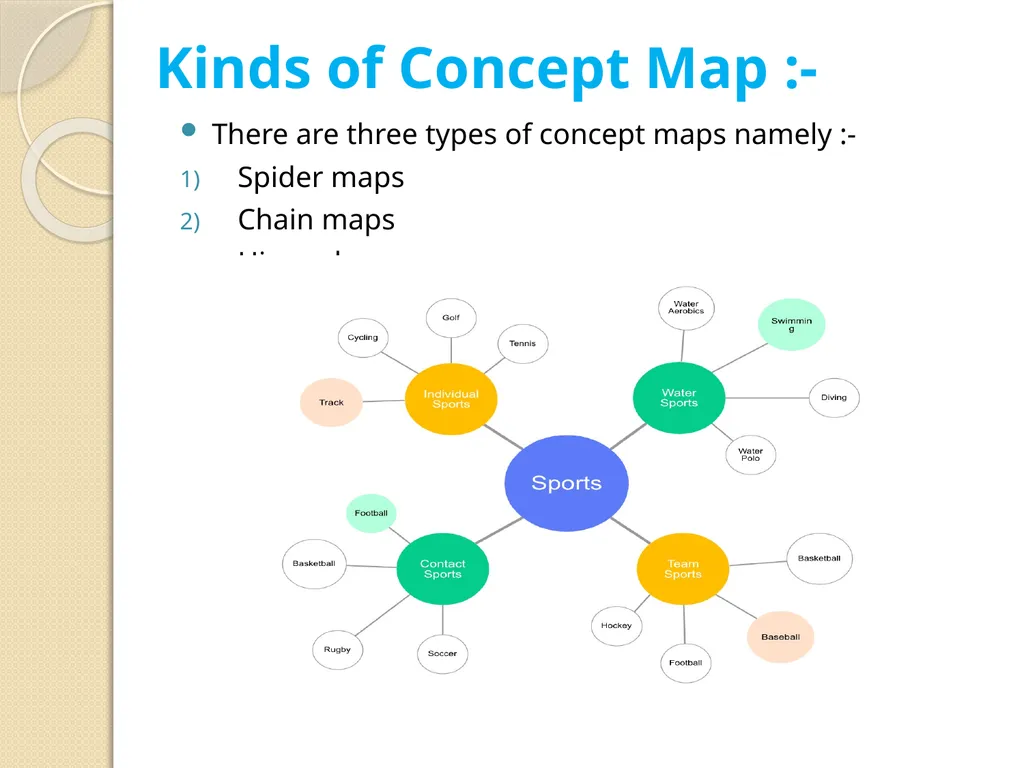
Kinds of Concept Map :- There are three types of concept maps namely :-
Spider maps
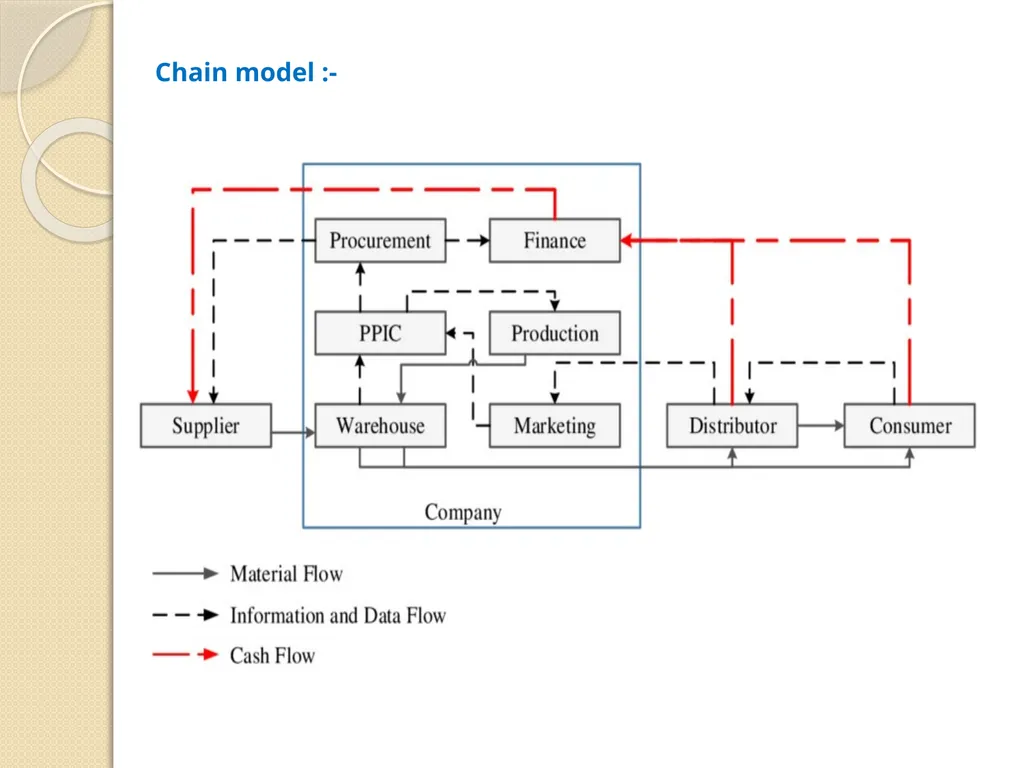
Chain maps
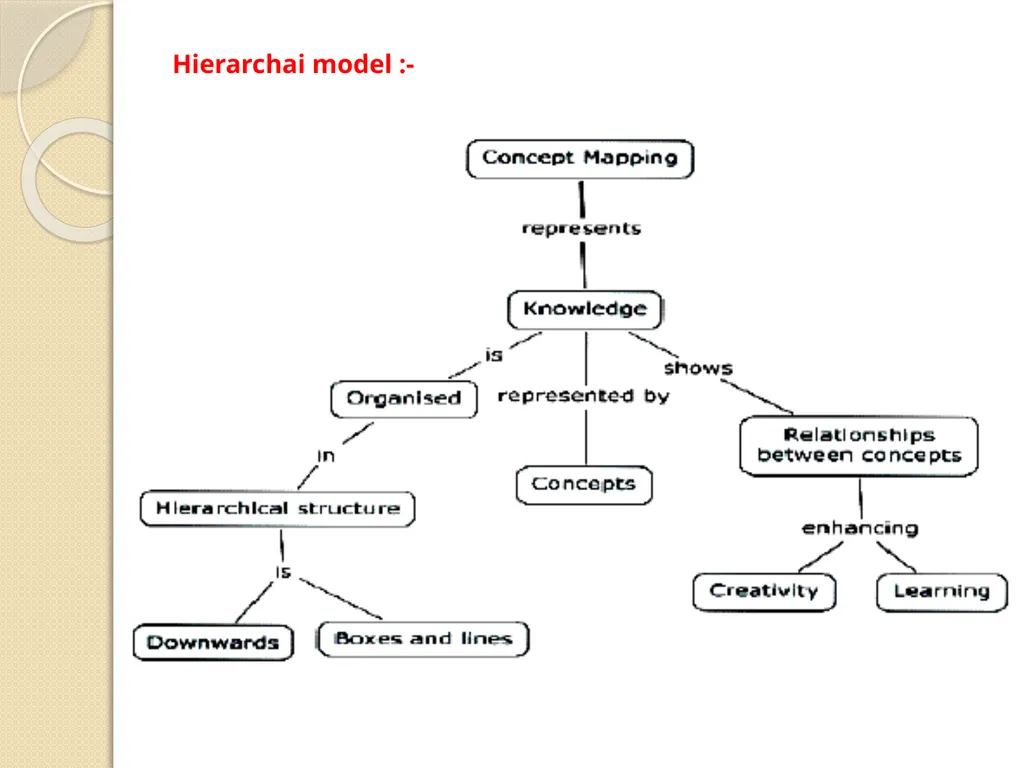
Hierarchy maps<br>
15
Chain model :-<br>
16
Hierarchai model :-<br>
17
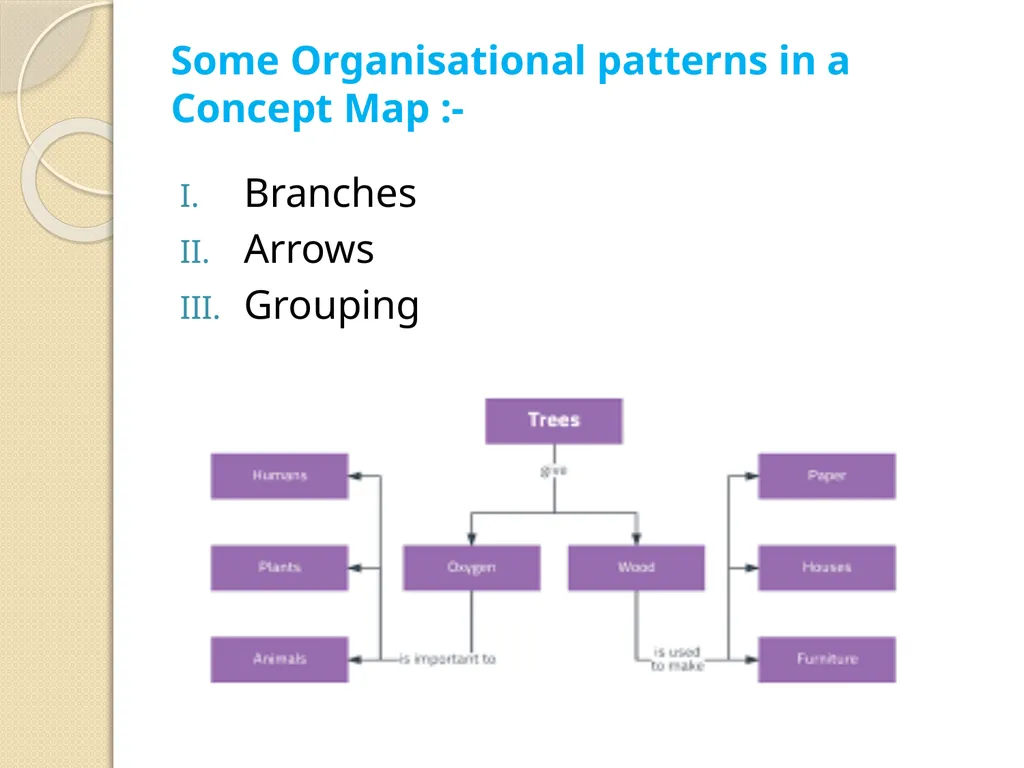
Some Organisational patterns in a Concept Map :- Branches
Arrows
Grouping<br>
18
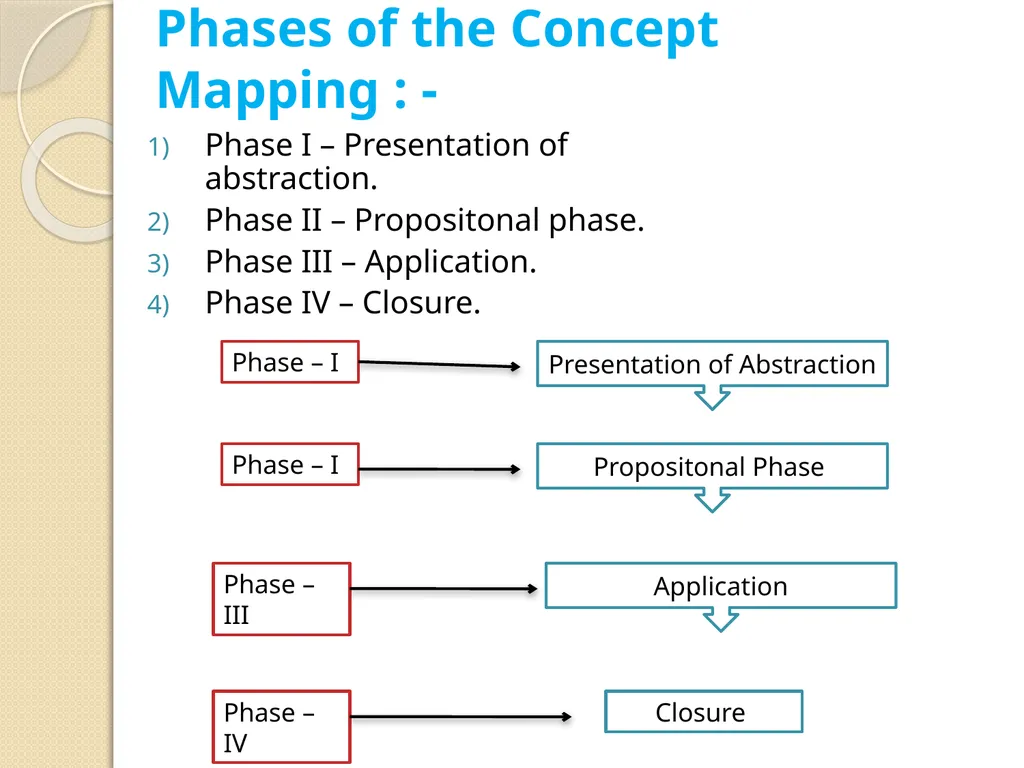
Phases of the Concept Mapping : - Phase I – Presentation of abstraction.
Phase II – Propositonal phase.
Phase III – Application.
Phase IV – Closure. Phase – I Phase – I Phase – III Phase – IV Presentation of Abstraction Propositonal Phase Application Closure<br>
19
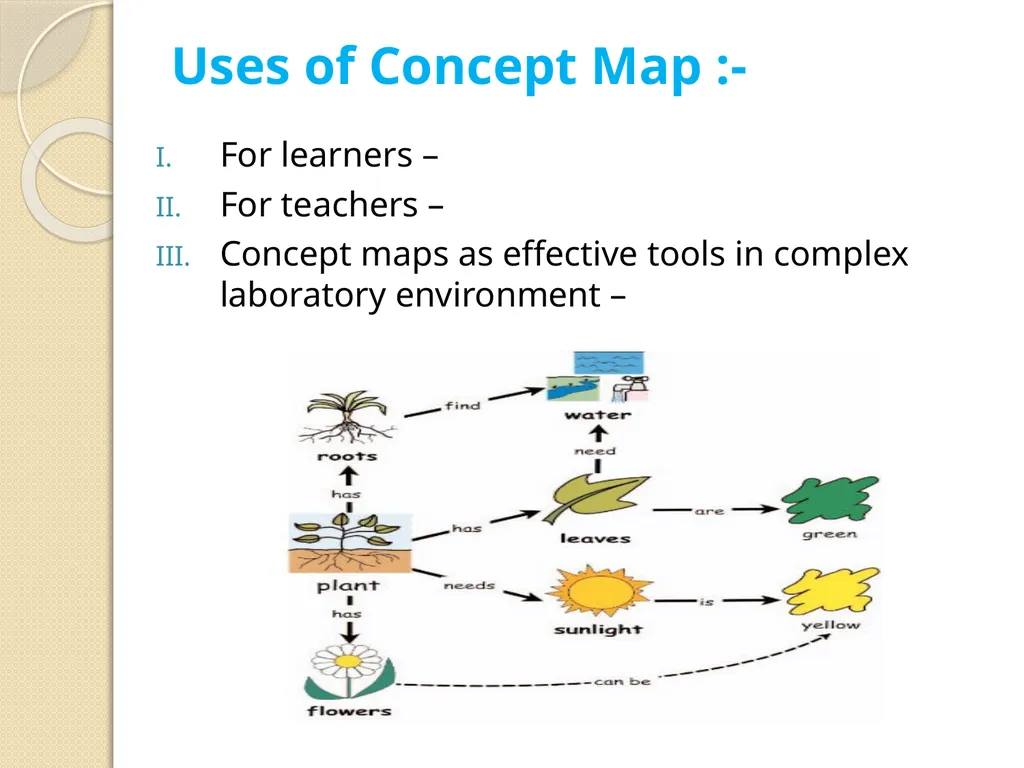
Uses of Concept Map :- For learners –
For teachers –
Concept maps as effective tools in complex laboratory environment –<br>
20
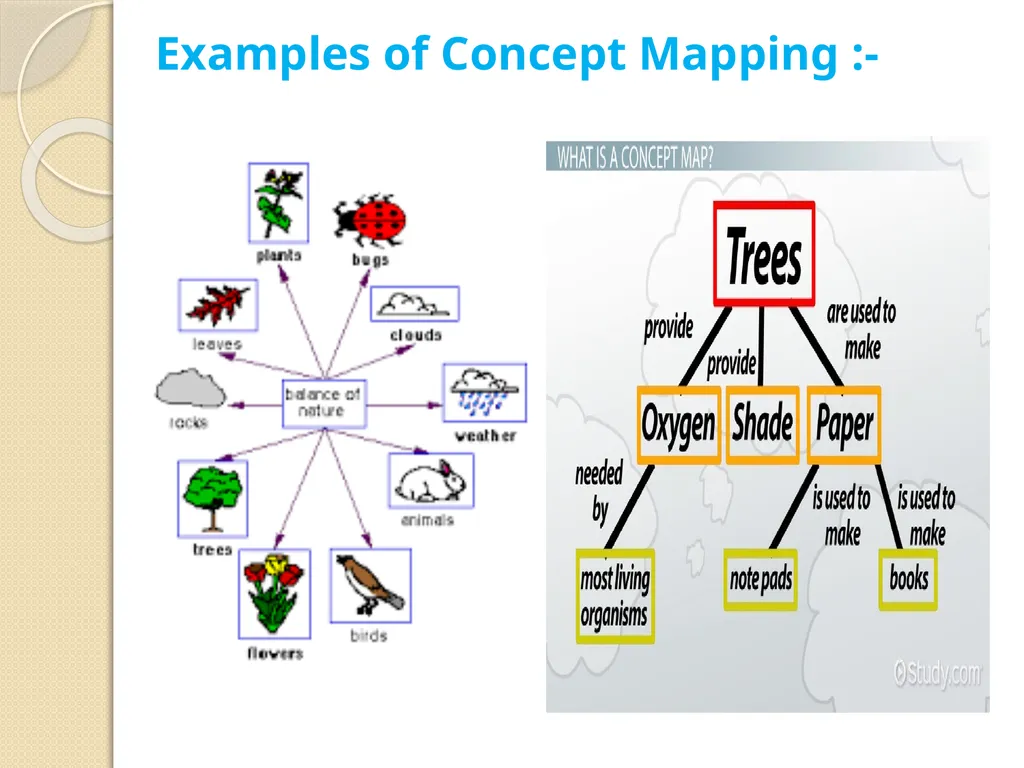
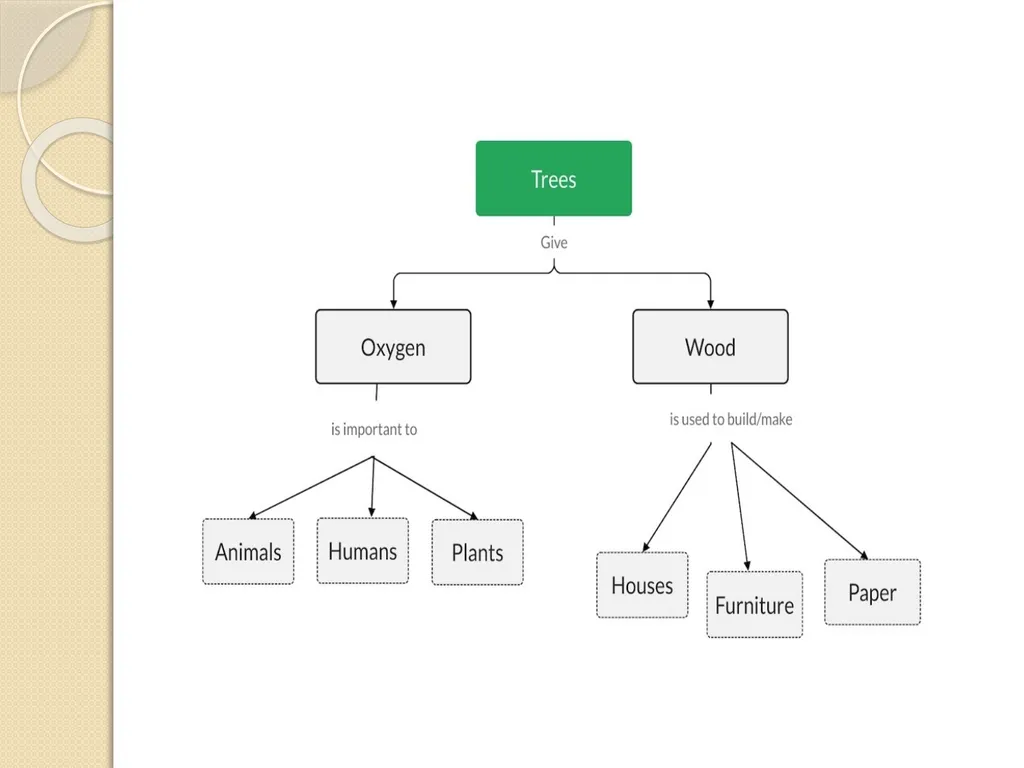
Examples of Concept Mapping :-<br>
21
Conclusion :- Biology
Concept mapping has become a valuable approach to learning biology. One study conducted in 2006, reveals that concept mapping can motivate students to become competent self-regulated learners. Moreover, it helps them to improve their skills in establishing relations between complex biology topics.<br>
22
References : - Teaching of Biological Science – Jasim Ahmad.
Biological Science – Prof. J.K. Shud.
Biological Sciecnce – Prof. & head Hukum singh.
Internet etc.<br>