Early Stage 1 One unit of work sample A All K-6 key learning areas How to use this resource Each key learning area has sequential activities linked to outcomes. Choose the activities you wish to use and cut and paste them into your weekly
"Early Stage 1 One unit of work – sample A" is the property of its rightful owner. Permission is granted to
download and print the materials on this website for personal, non-commercial use only, and to display it
on your personal computer provided you do not modify the materials and that you retain all copyright
notices contained in the materials. By downloading content from our website, you accept the terms of this
agreement.
Presentation Transcript
01
Early Stage 1 One unit of work – sample A All K-6 key learning areas<br>
02
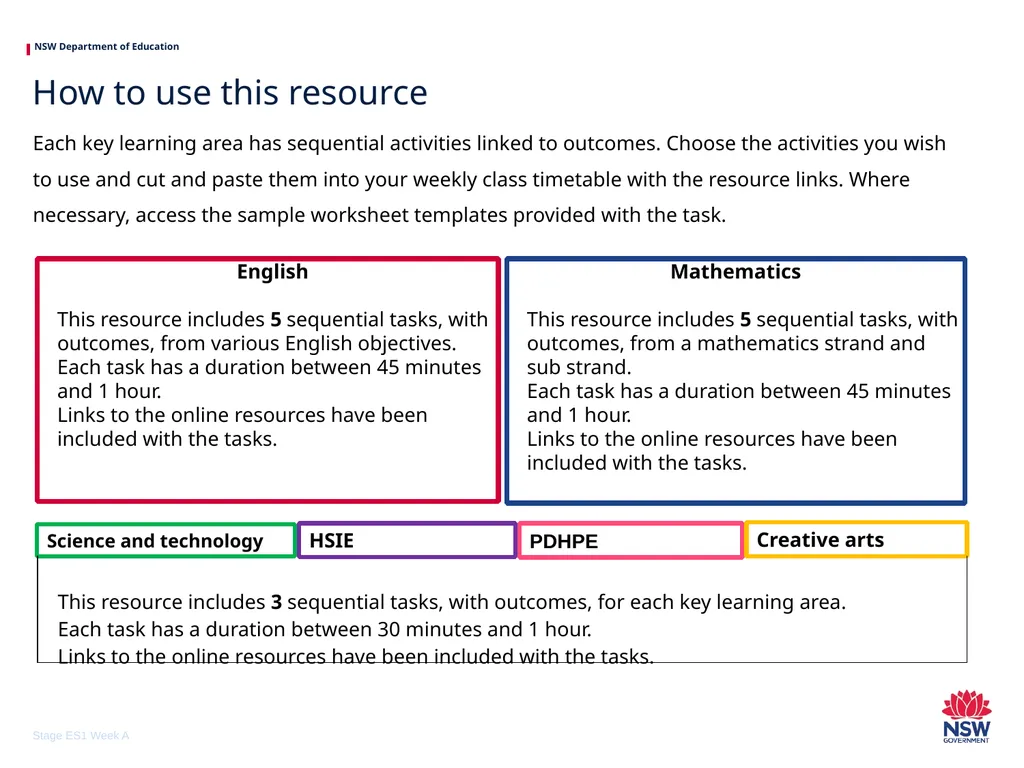
How to use this resource Each key learning area has sequential activities linked to outcomes. Choose the activities you wish to use and cut and paste them into your weekly class timetable with the resource links. Where necessary, access the sample worksheet templates provided with the task. English
This resource includes 5 sequential tasks, with outcomes, from various English objectives.
Each task has a duration between 45 minutes and 1 hour.
Links to the online resources have been included with the tasks. Mathematics
This resource includes 5 sequential tasks, with outcomes, from a mathematics strand and sub strand.
Each task has a duration between 45 minutes and 1 hour.
Links to the online resources have been included with the tasks. Science and technology HSIE PDHPE Creative arts Stage ES1 Week A<br>
03
Support for assessment and feedback The strategies for assessment and feedback for K-6 professional learning provides a guide for K-6 teachers about how to assess and provide feedback online to students. It also provides advice to support parents and carers of K-6 students with assessment and feedback. Access the MyPL link to this professional learning under the primary curriculum section of the website. Professional learning Advice and resources The department’s Curriculum planning and programming, assessing and reporting to parents K-12 policy informs school-based decisions about assessment and reporting processes.
A collection of ready-to-use assessment tasks, assessment activity templates and tools have been developed to support assessment and feedback. These resources could be used in both face-to-face and online classroom settings.<br>
04
English – overview of tasks Objectives A
Speaking and listening – What’s cooking in the kitchen?
Reading and viewing – ‘Big Rain Coming’
Writing and representing – Waiting is hard!
Handwriting – the letter I i
Spelling – Beginning and ending sounds, plurals (worksheet sample provided) Stage ES1 Week A<br>
05
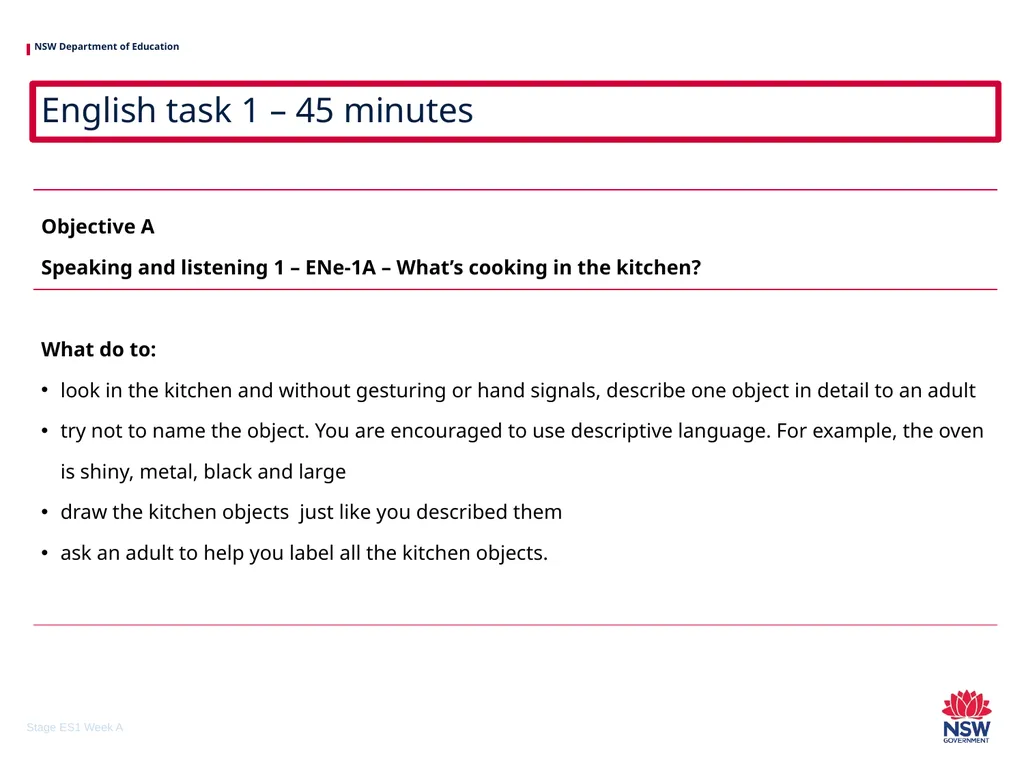
English task 1 – 45 minutes Stage ES1 Week A<br>
06
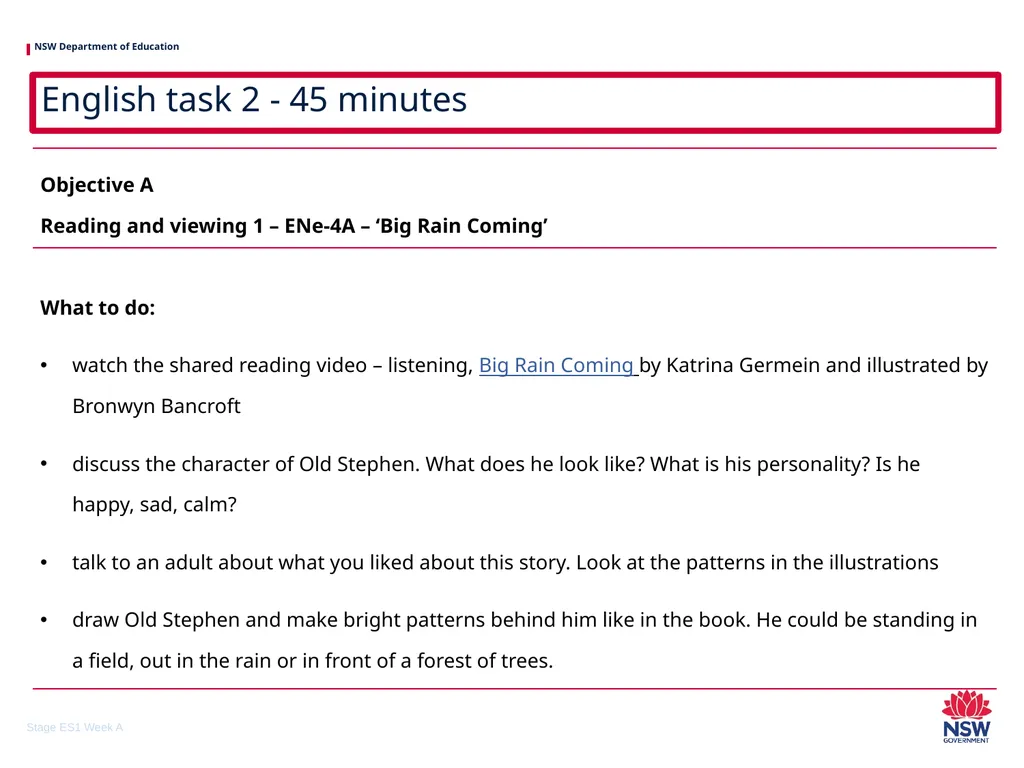
English task 2 - 45 minutes Stage ES1 Week A<br>
07
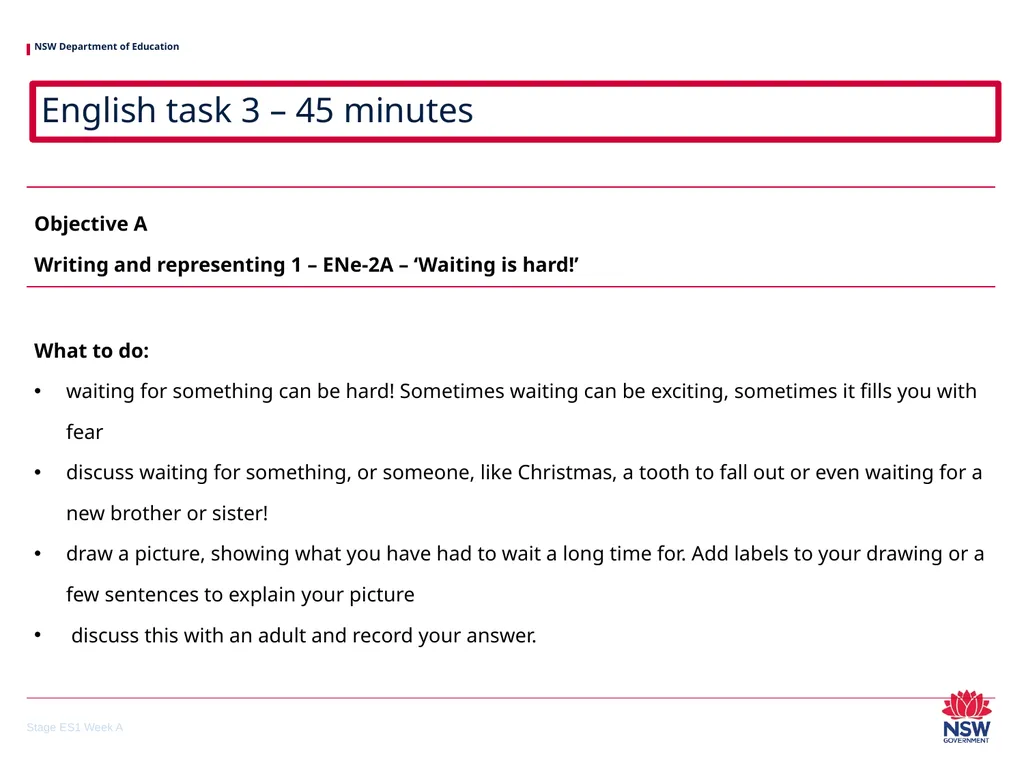
English task 3 – 45 minutes Stage ES1 Week A<br>
08
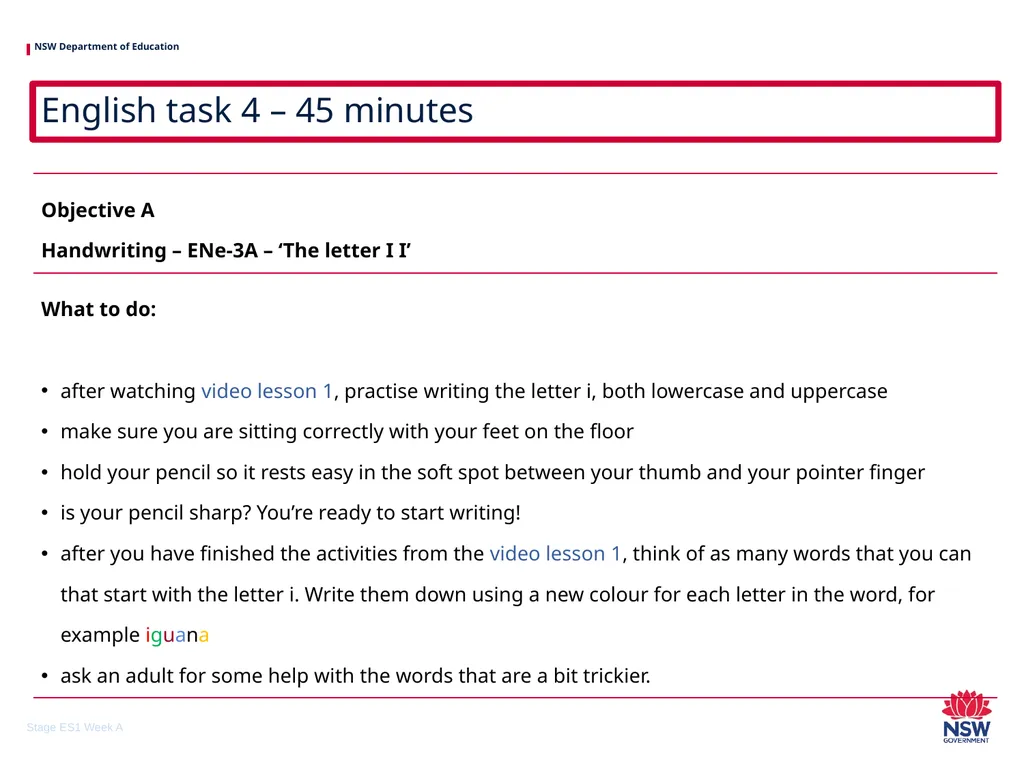
English task 4 – 45 minutes Stage ES1 Week A<br>
09
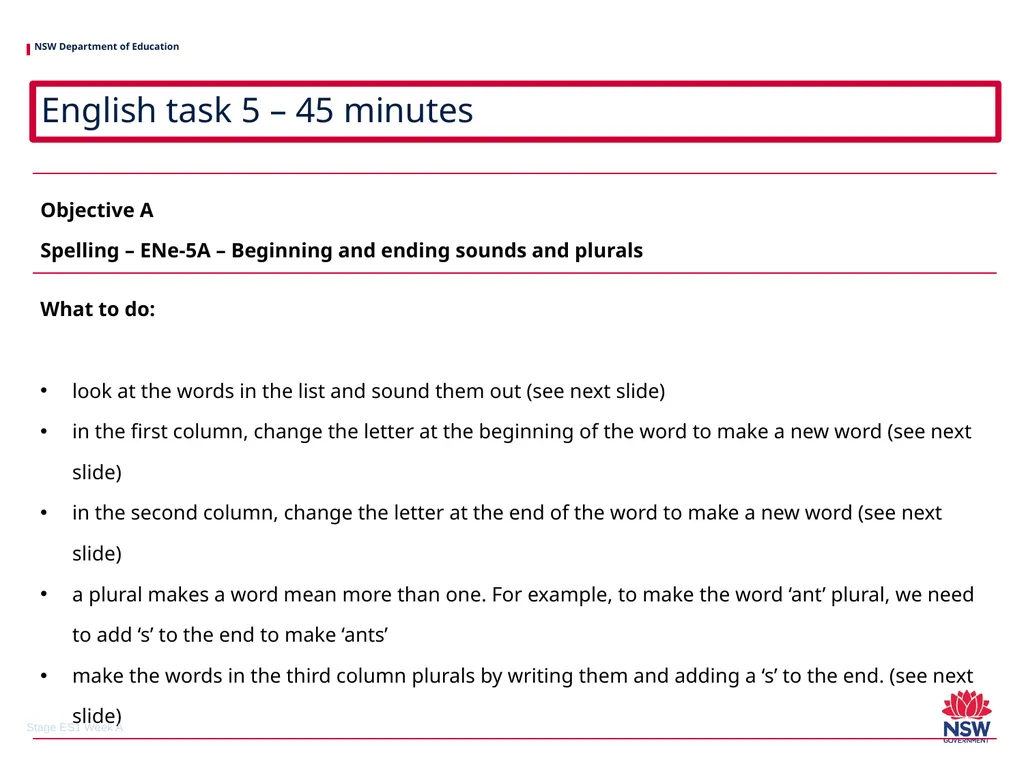
English task 5 – 45 minutes Stage ES1 Week A<br>
10
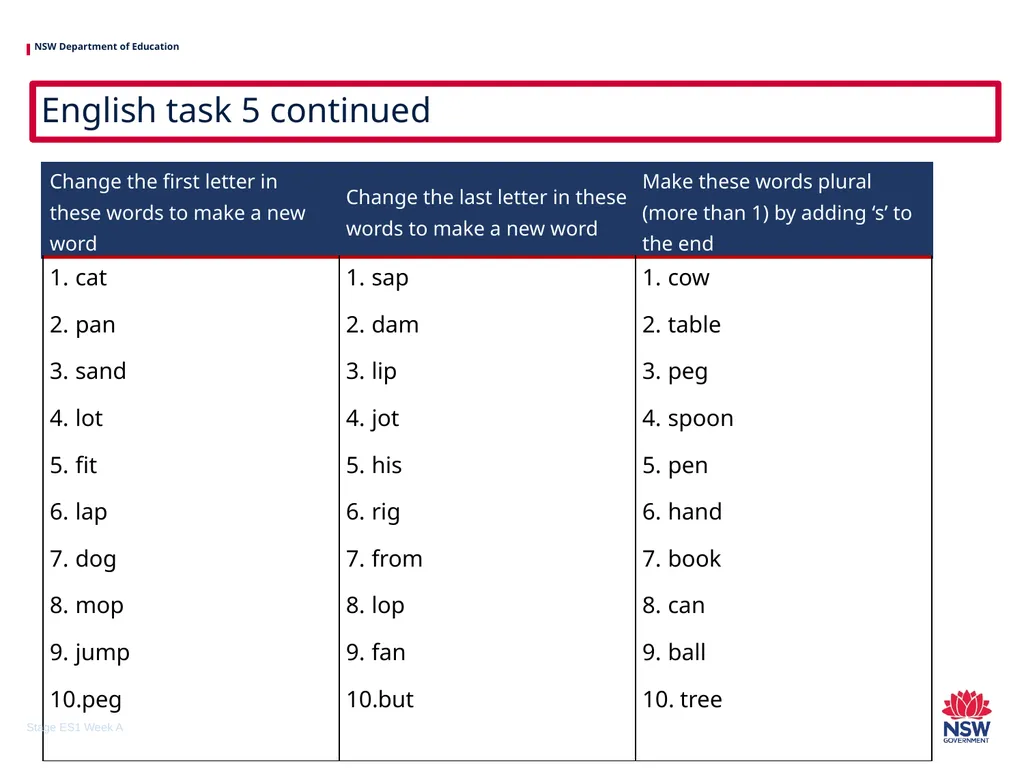
English task 5 continued Stage ES1 Week A<br>
11
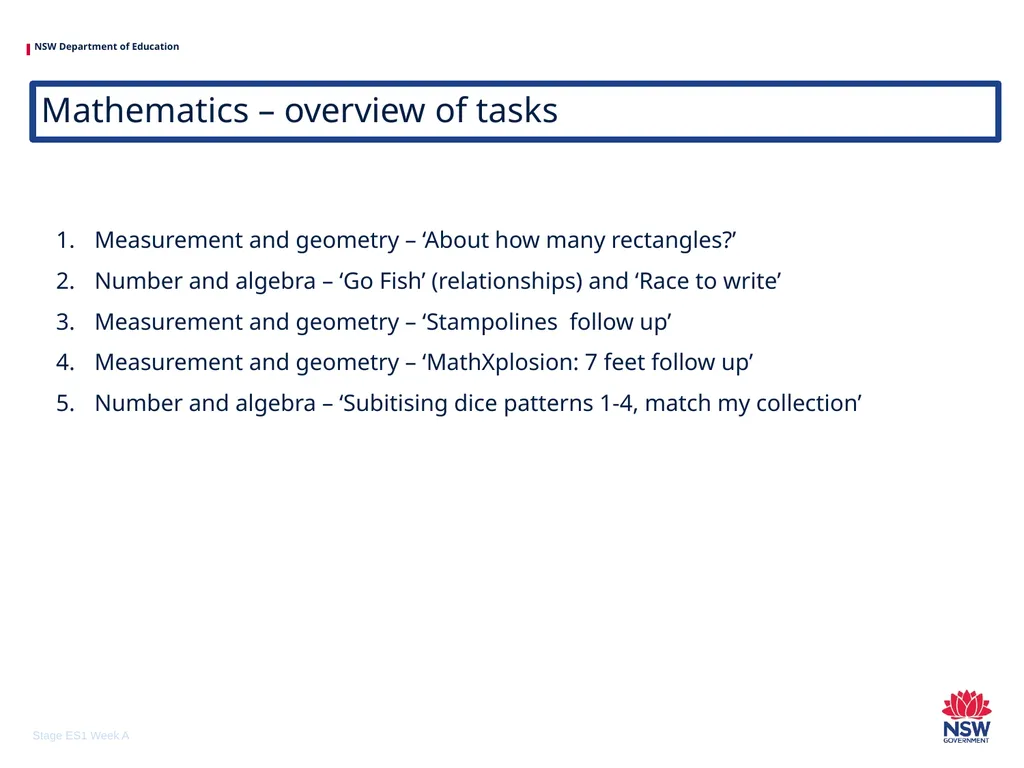
Mathematics – overview of tasks Measurement and geometry – ‘About how many rectangles?’
Number and algebra – ‘Go Fish’ (relationships) and ‘Race to write’
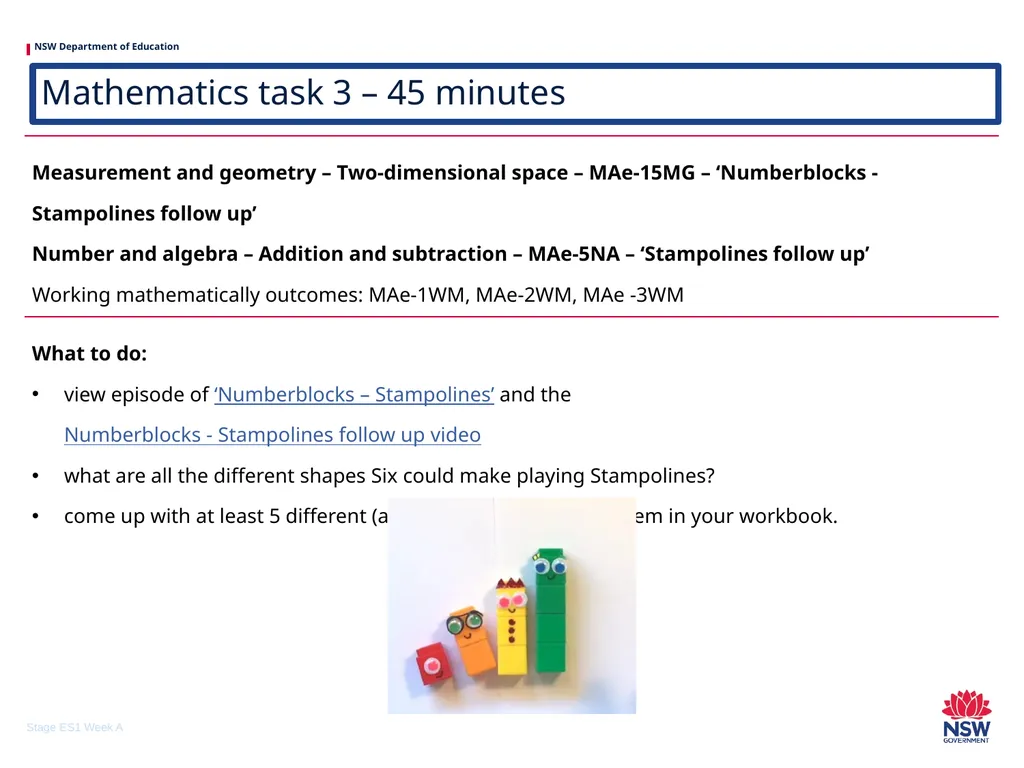
Measurement and geometry – ‘Stampolines follow up’
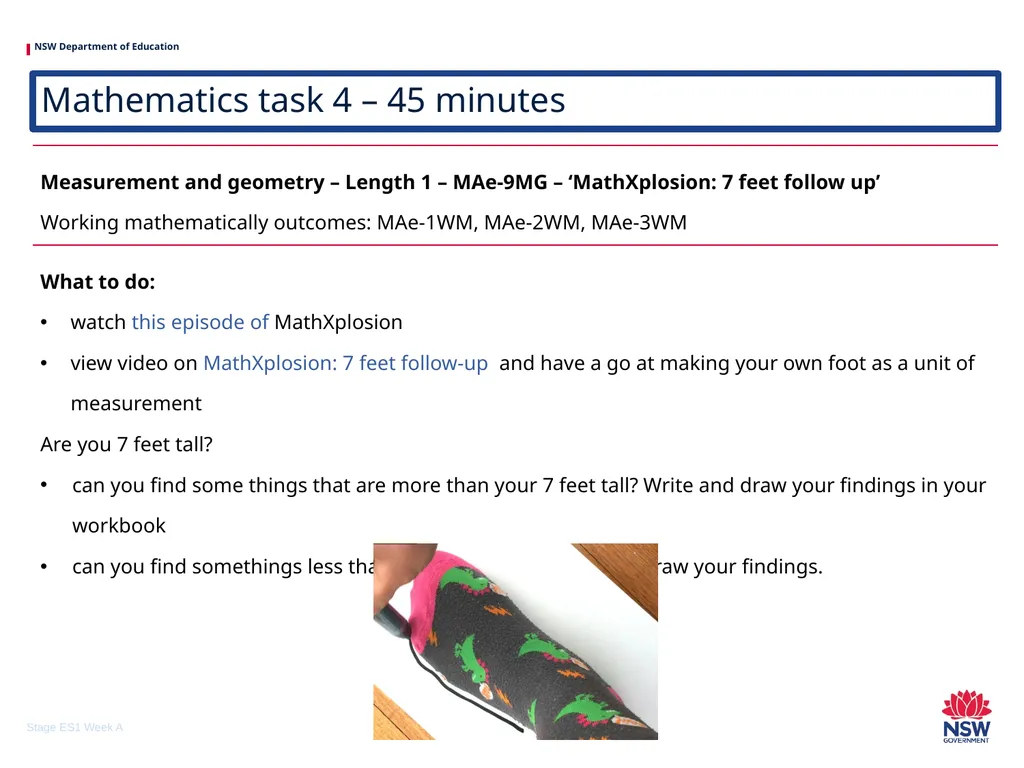
Measurement and geometry – ‘MathXplosion: 7 feet follow up’
Number and algebra – ‘Subitising dice patterns 1-4, match my collection’ Stage ES1 Week A<br>
12
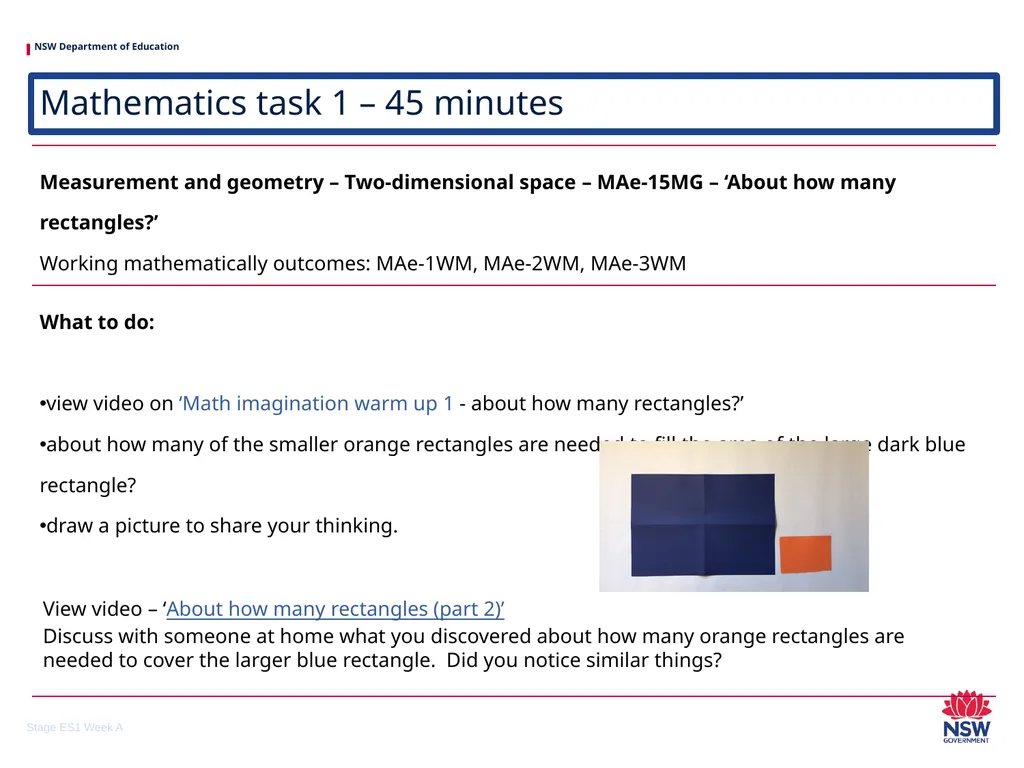
Mathematics task 1 – 45 minutes View video – ‘About how many rectangles (part 2)’
Discuss with someone at home what you discovered about how many orange rectangles are needed to cover the larger blue rectangle. Did you notice similar things? Stage ES1 Week A<br>
Science and technology – overview of tasks Living world
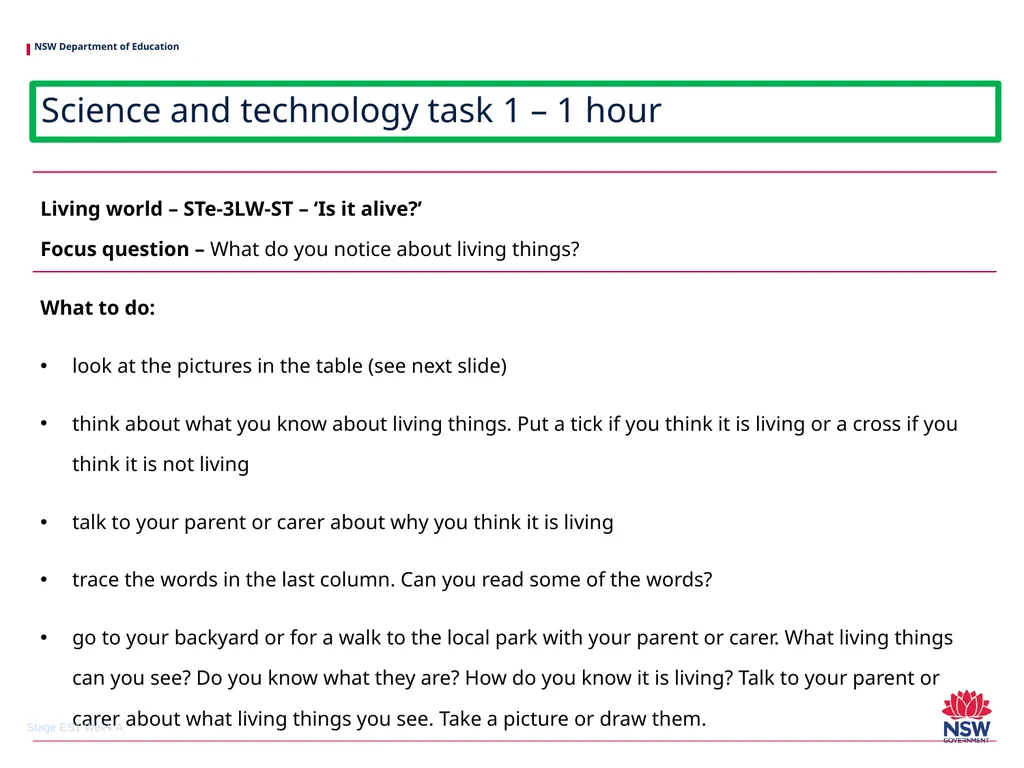
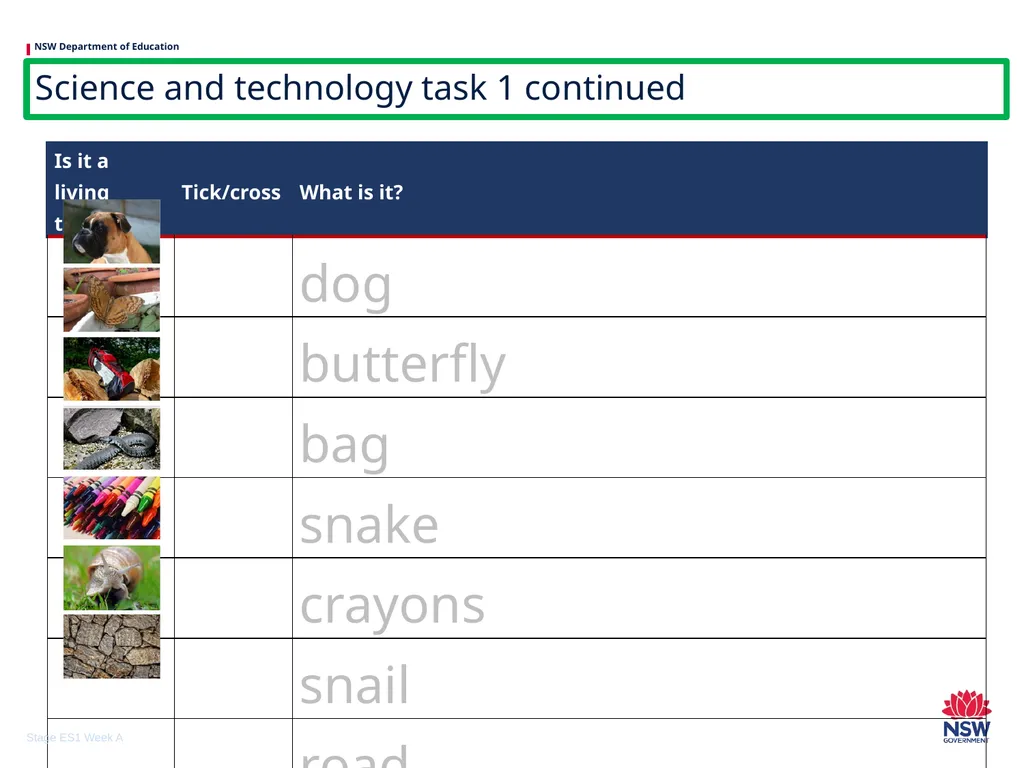
‘Is it alive?’ (worksheet sample provided)
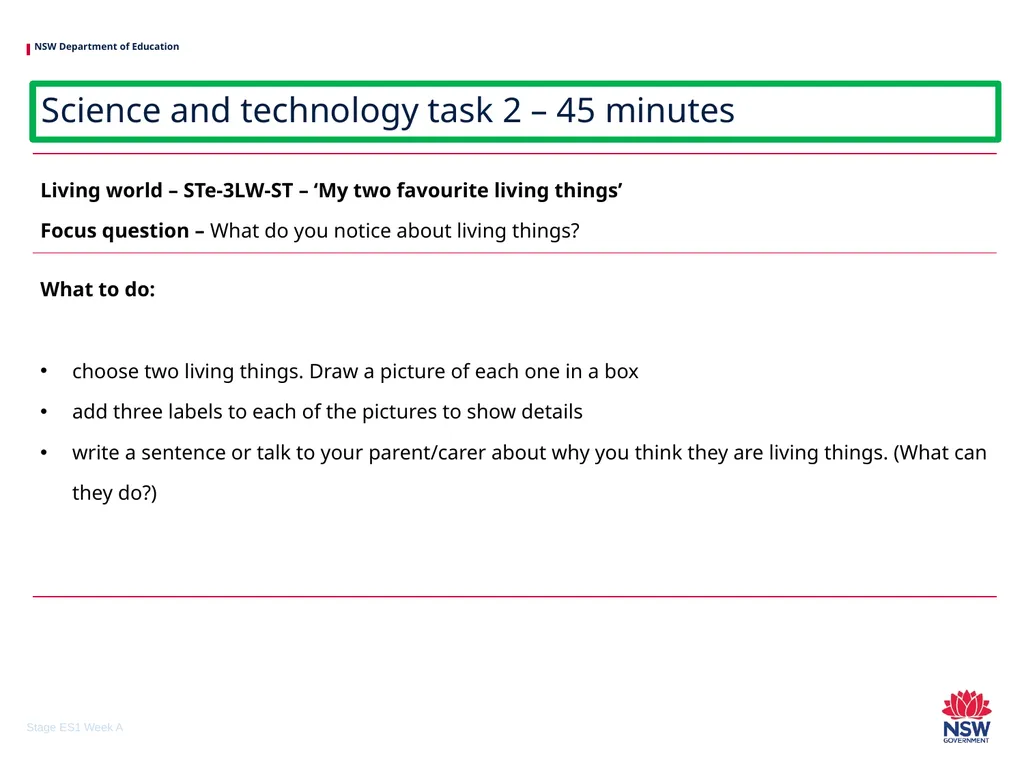
‘My two favourite living things’
‘I’m hungry!’ (worksheet sample provided) Stage ES1 Week A<br>
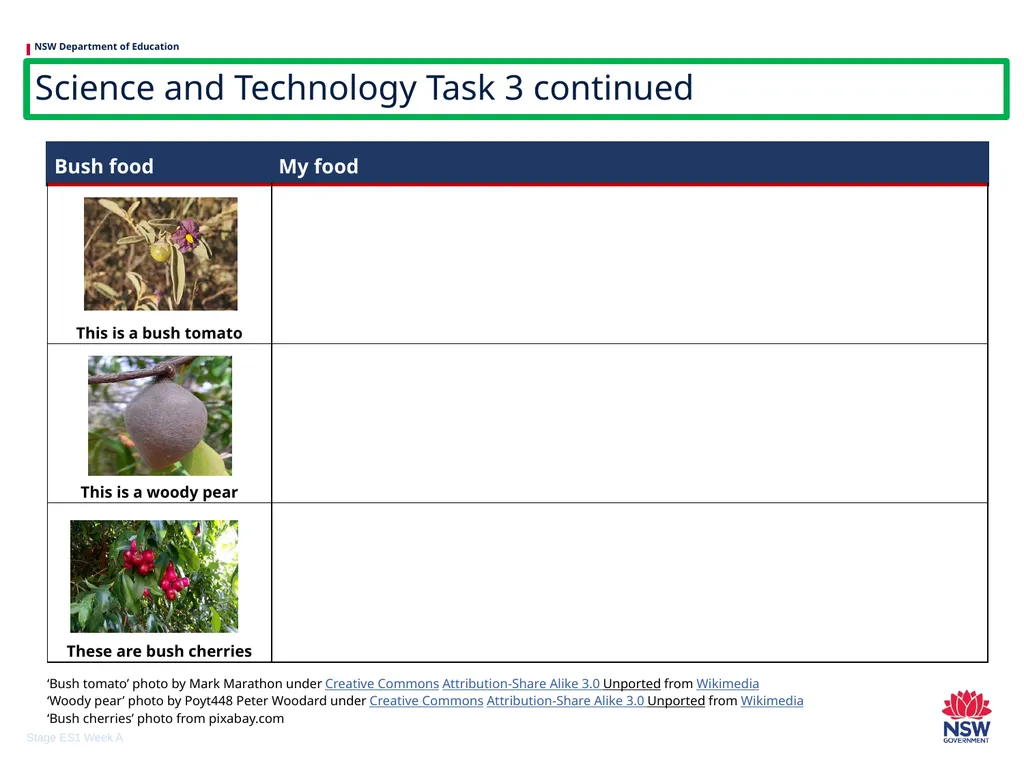
Science and Technology Task 3 continued ‘Bush tomato’ photo by Mark Marathon under Creative Commons Attribution-Share Alike 3.0 Unported from Wikimedia
‘Woody pear’ photo by Poyt448 Peter Woodard under Creative Commons Attribution-Share Alike 3.0 Unported from Wikimedia
‘Bush cherries’ photo from pixabay.com Stage ES1 Week A<br>
23
HSIE geography – overview of tasks People live in places
‘My place’
‘What makes a place special to people?’
‘Making maps’ Stage ES1 Week A<br>
PDHPE – overview of tasks Health, wellbeing and relationships
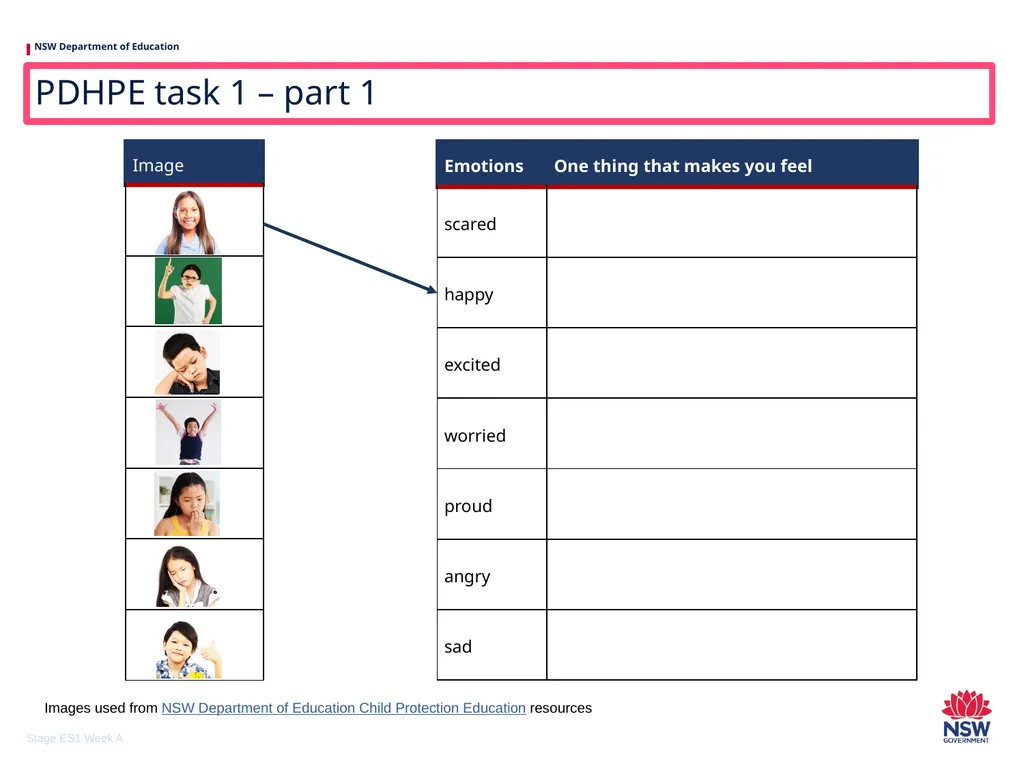
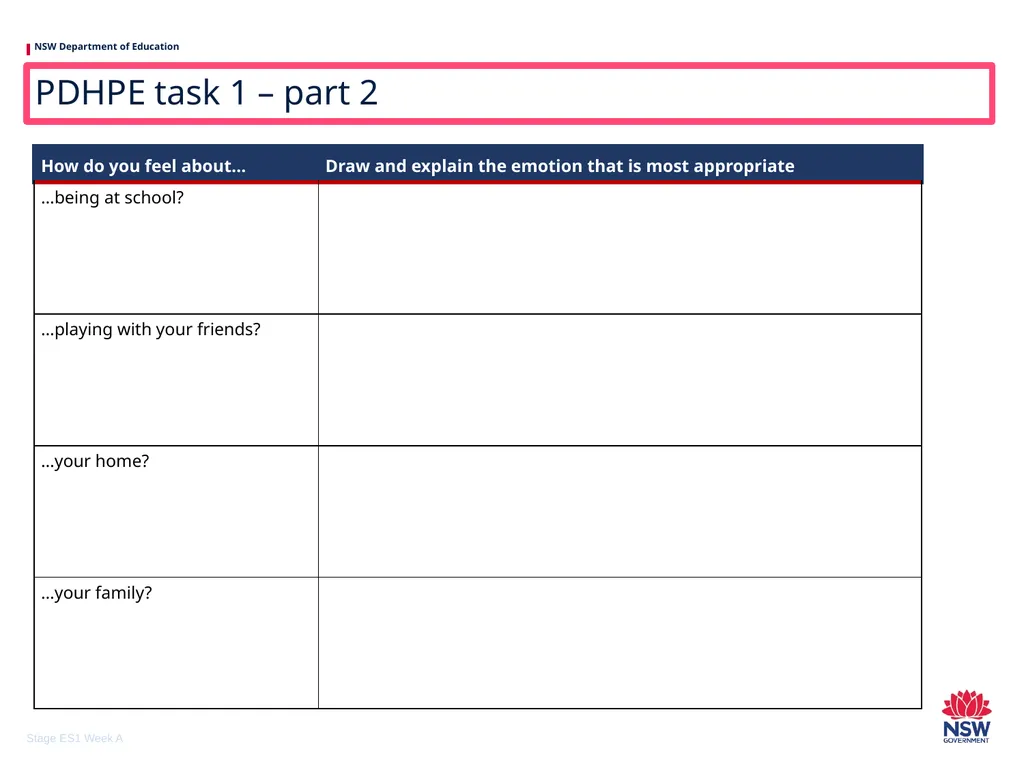
Feelings and emotions (worksheet sample provided)
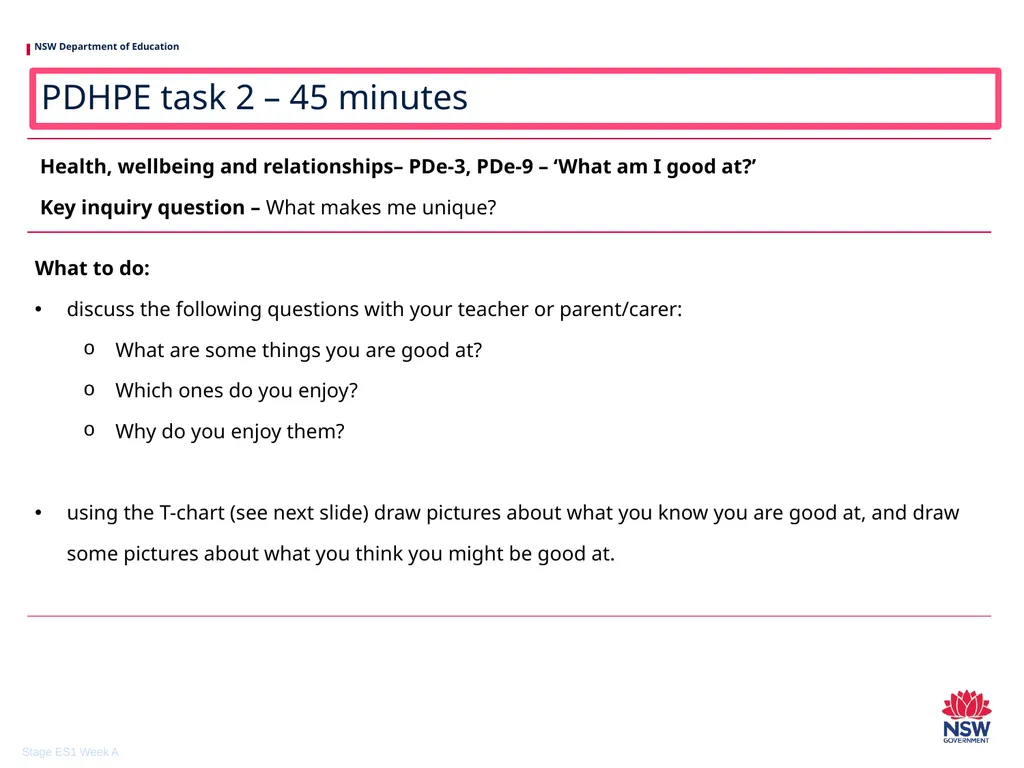
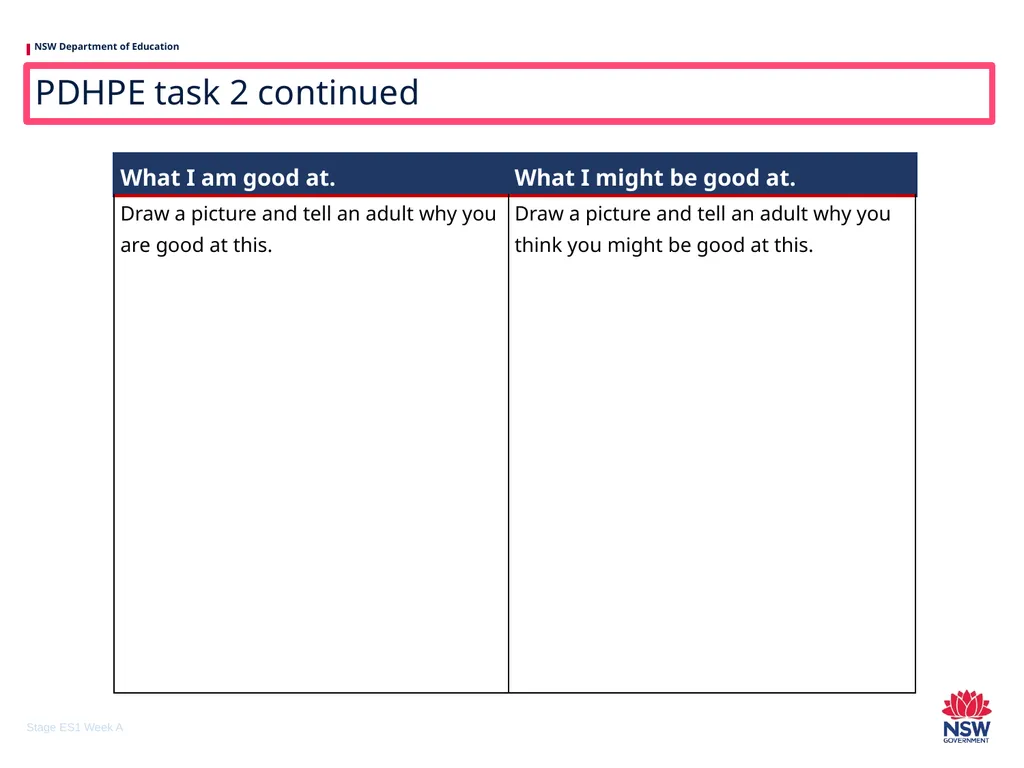
What am I good at? (worksheet sample provided)
Movement skill and performance
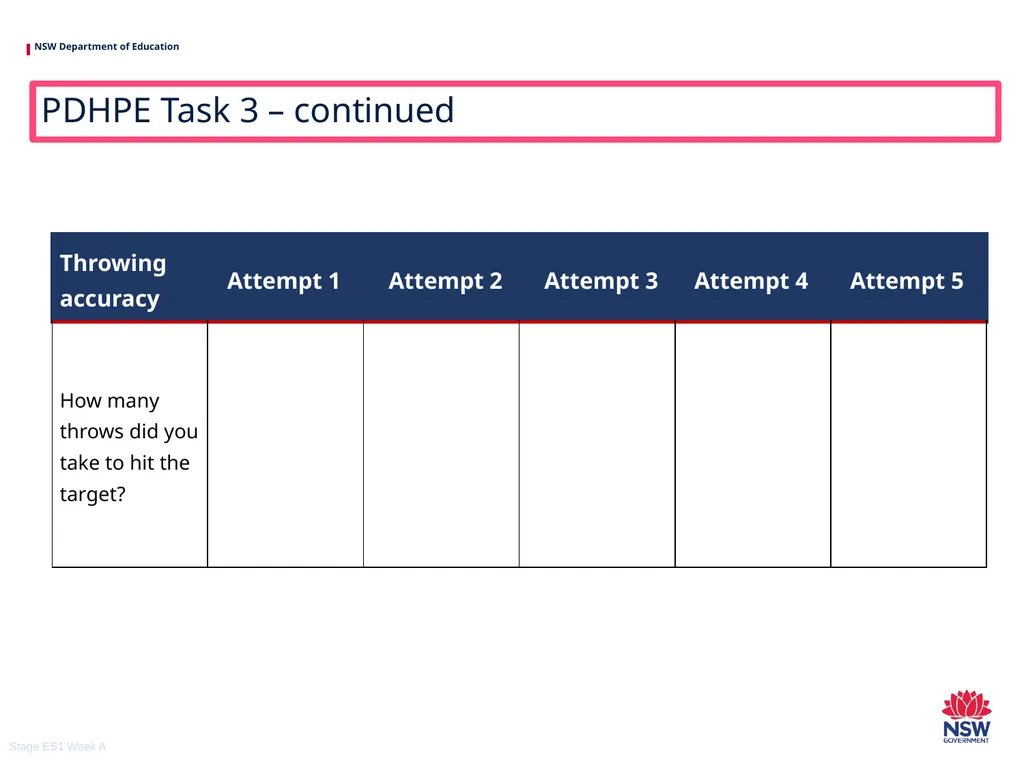
Let’s get moving (worksheet sample provided) Stage ES1 Week A<br>
28
PDHPE task 1 – 45 minutes Stage ES1 Week A<br>
29
PDHPE task 1 – part 1 Images used from NSW Department of Education Child Protection Education resources Stage ES1 Week A<br>
30
PDHPE task 1 – part 2 Stage ES1 Week A<br>
31
PDHPE task 2 – 45 minutes Stage ES1 Week A<br>
32
PDHPE task 2 continued Stage ES1 Week A<br>
33
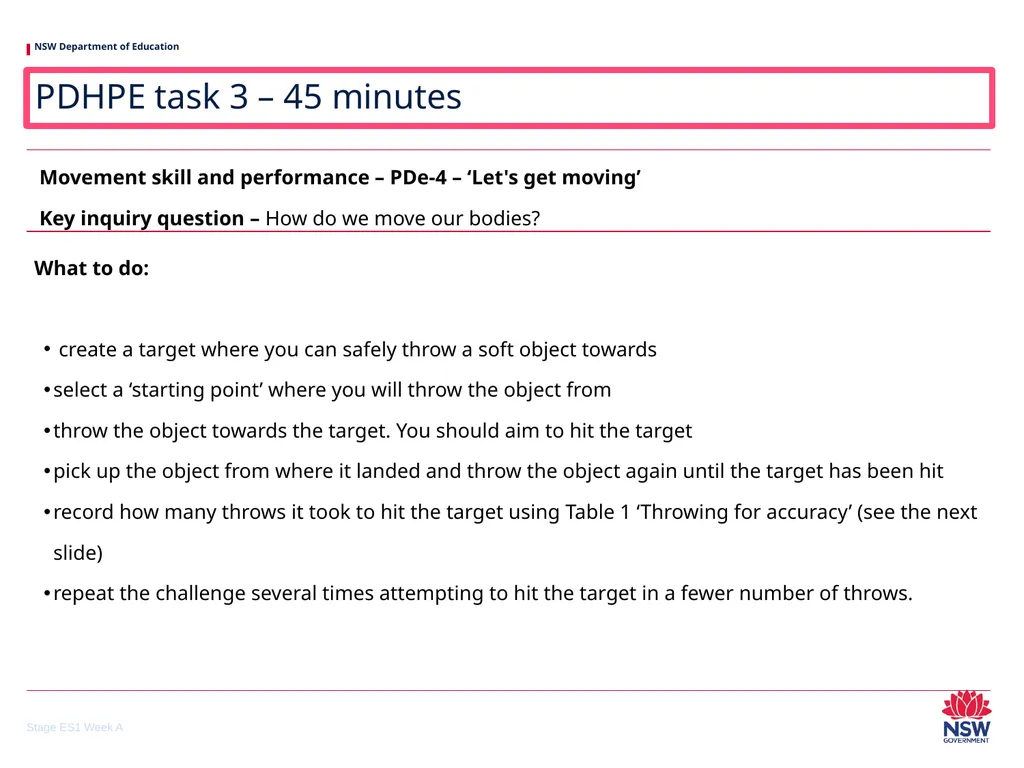
PDHPE task 3 – 45 minutes Stage ES1 Week A<br>
34
PDHPE Task 3 – continued Stage ES1 Week A<br>
35
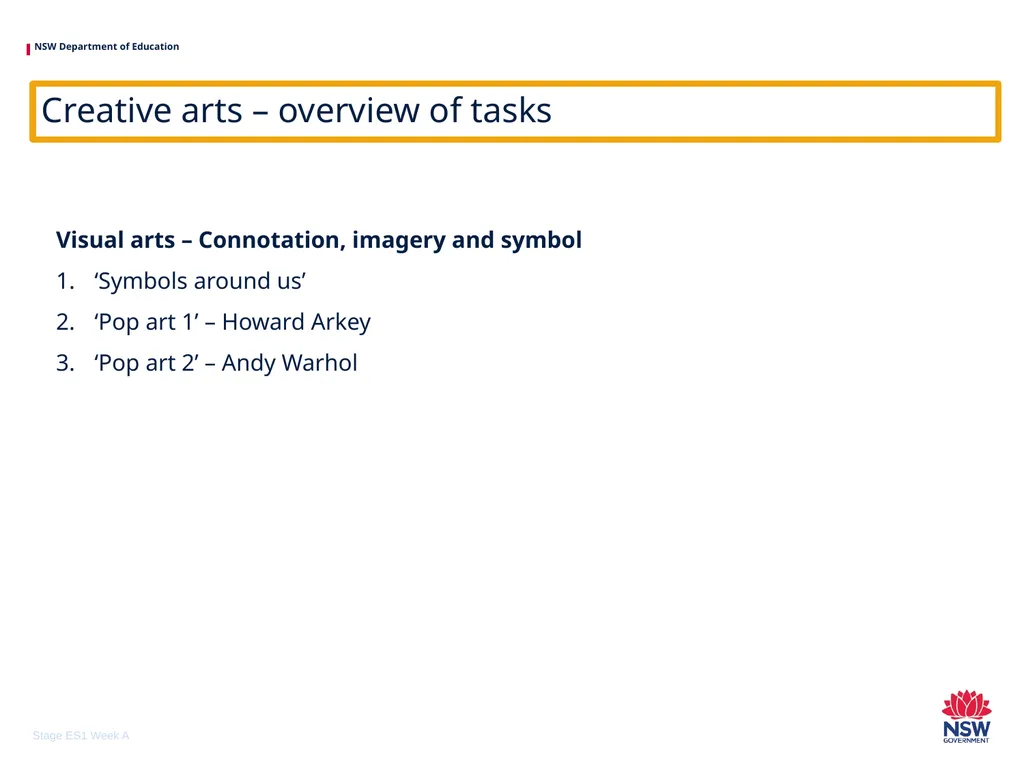
Creative arts – overview of tasks Visual arts – Connotation, imagery and symbol
‘Symbols around us’
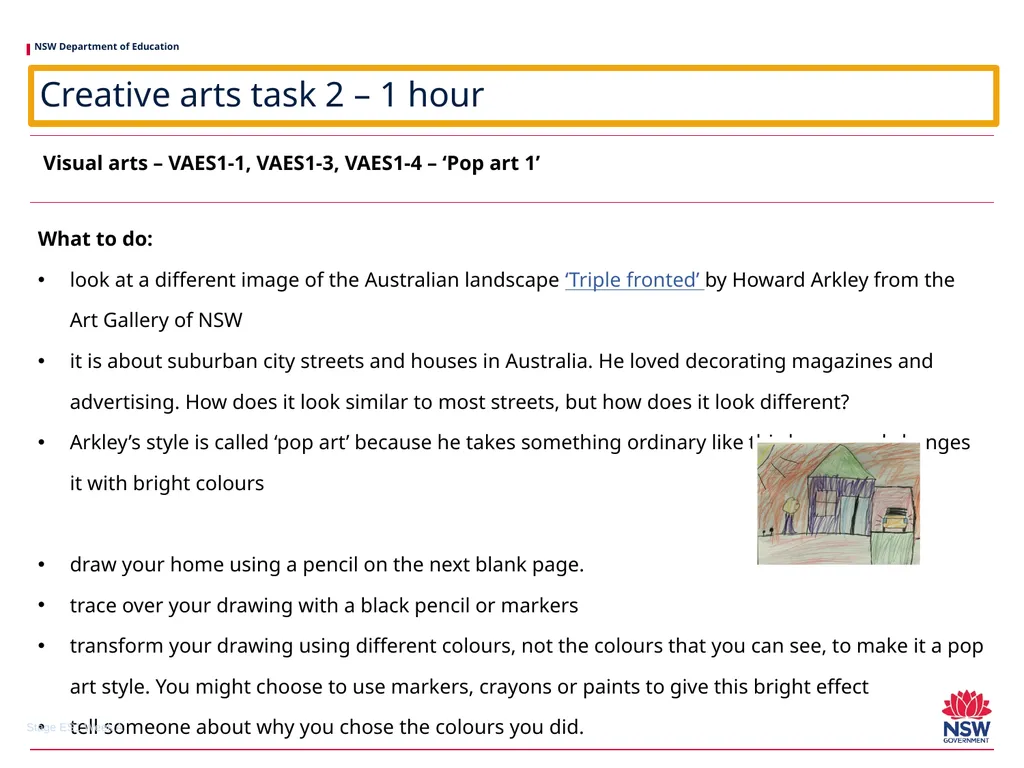
‘Pop art 1’ – Howard Arkey
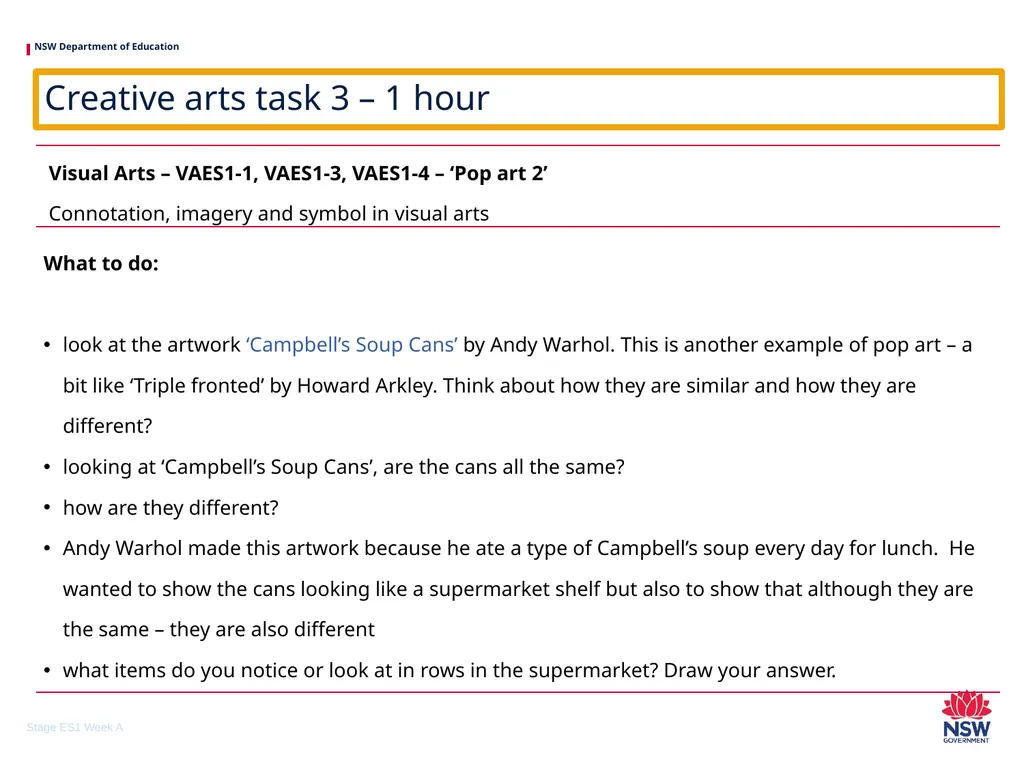
‘Pop art 2’ – Andy Warhol Stage ES1 Week A<br>
36
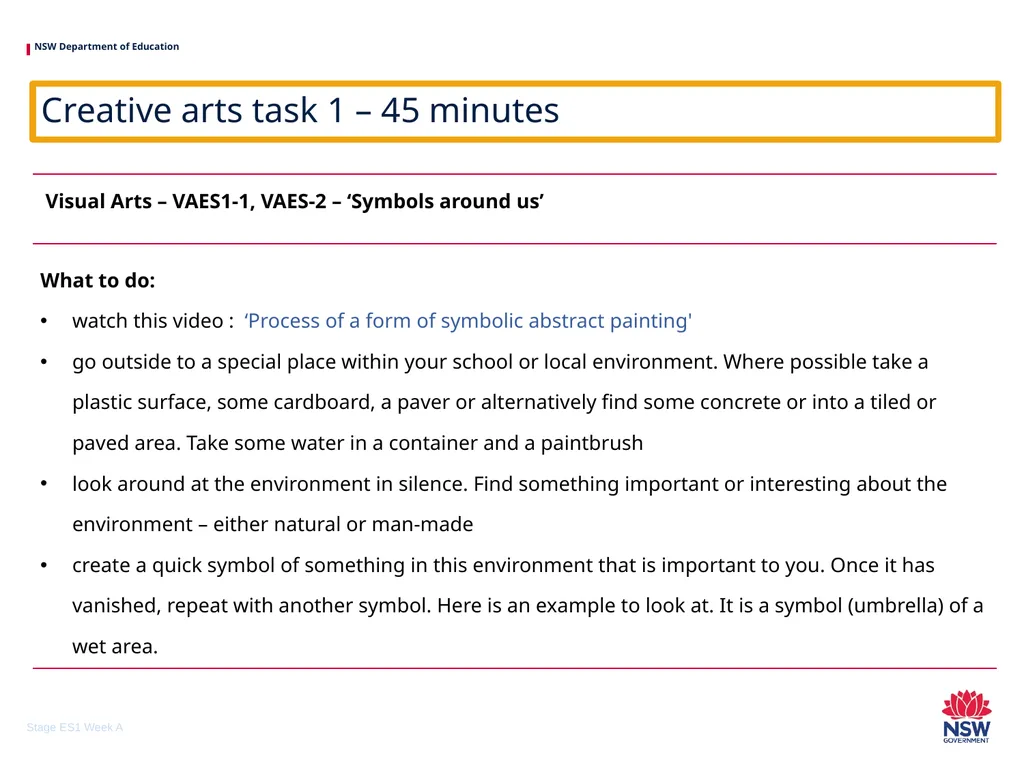
Stage ES1 Week A Creative arts task 1 – 45 minutes<br>