
Earthquakes Chapter 6 The Big Idea Earthquakes


Description: Earthquakes Chapter 6 The Big Idea Earthquakes cause seismic waves that can be devastating to humans and other organisms. Lesson 1: Earthquakes and Plate Boundaries Most earthquakes occur at plate boundaries when rocks break and move along
Related Topics
Download Presentation
"Earthquakes Chapter 6 The Big Idea Earthquakes" is the property of its rightful owner. Permission is granted to download and print the materials on this website for personal, non-commercial use only, and to display it on your personal computer provided you do not modify the materials and that you retain all copyright notices contained in the materials. By downloading content from our website, you accept the terms of this agreement.
Presentation Transcript
slide1. Earthquakes Chapter 6<br>
slide2. The Big Idea Earthquakes cause seismic waves that can be devastating to humans and other organisms.
Lesson 1: Earthquakes and Plate Boundaries
Most earthquakes occur at plate boundaries when rocks break and move along faults.
Lesson 2: Earthquakes and Seismic Waves
Earthquakes cause seismic waves that provide valuable data.
Lesson 3: Measuring Earthquakes
Data from seismic waves are recorded and interpreted to determine the location and size of an earthquake.
Lesson 4: Earthquake Hazards and Safety
Effects of an earthquake depend on its size and the types of structures and geology in a region.<br>
slide3. Lesson 1: Earthquakes and Plate Boundaries Most earthquakes occur at plate boundaries when rocks break and move along faults. What you’ll learn:
Explain what an earthquake is.
Describe how faults and earthquakes are related.
Understand that most earthquakes occur at plate boundaries. So What?! Understanding what causes earthquakes helps scientists identify where they are likely to occur in the future.<br>
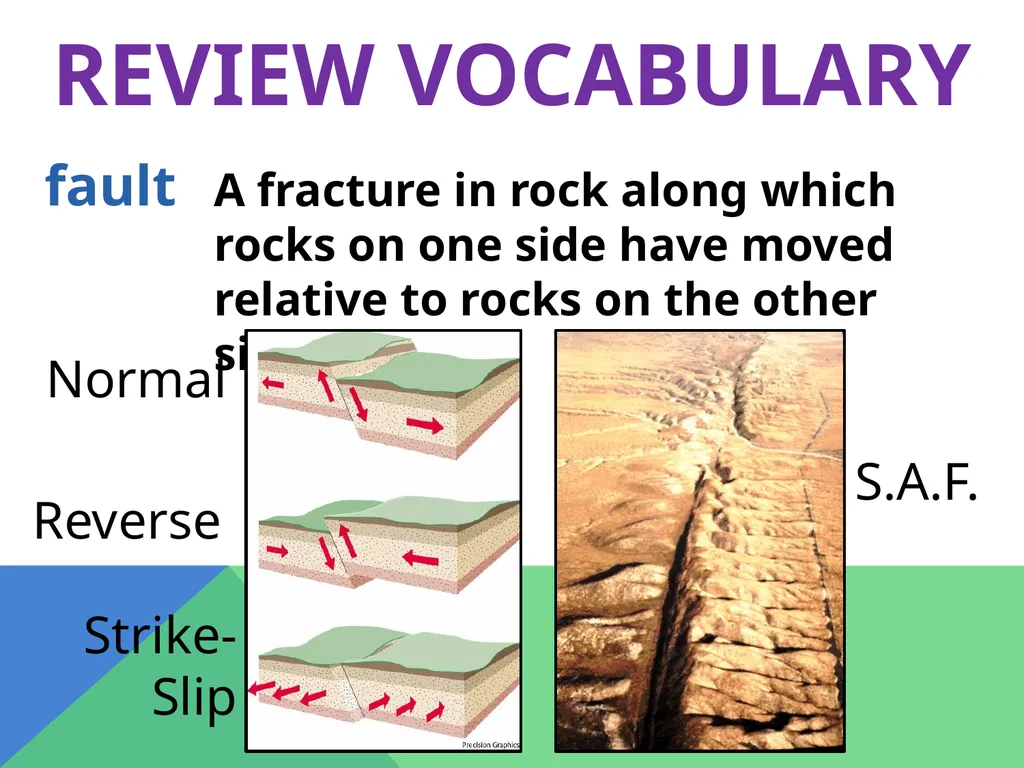
slide4. Review Vocabulary fault A fracture in rock along which rocks on one side have moved relative to rocks on the other side. S.A.F. Normal Reverse Strike-Slip<br>
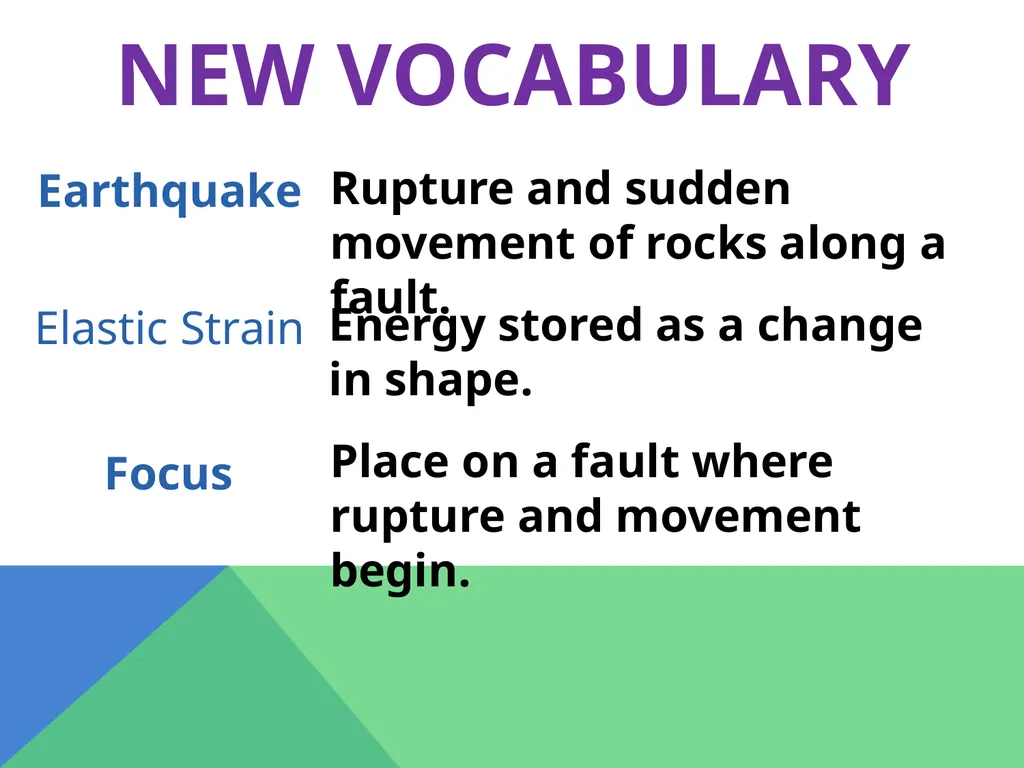
slide5. New Vocabulary Earthquake Rupture and sudden movement of rocks along a fault. Elastic Strain Energy stored as a change in shape. Place on a fault where rupture and movement begin. Focus<br>
slide6. Academic Vocabulary Interact To act on each other * Lithospheric plates interact at different boundaries and produce earthquakes.<br>
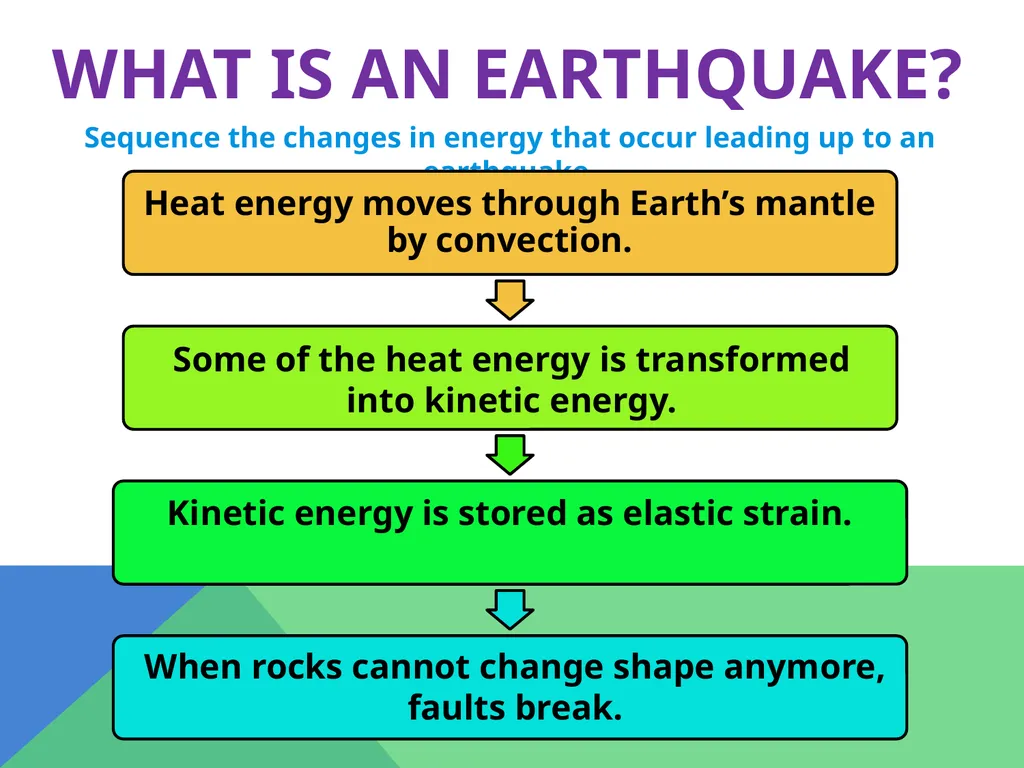
slide7. What Is an Earthquake? Sequence the changes in energy that occur leading up to an earthquake. Some of the heat energy is transformed into kinetic energy. Kinetic energy is stored as elastic strain. When rocks cannot change shape anymore, faults break.<br>
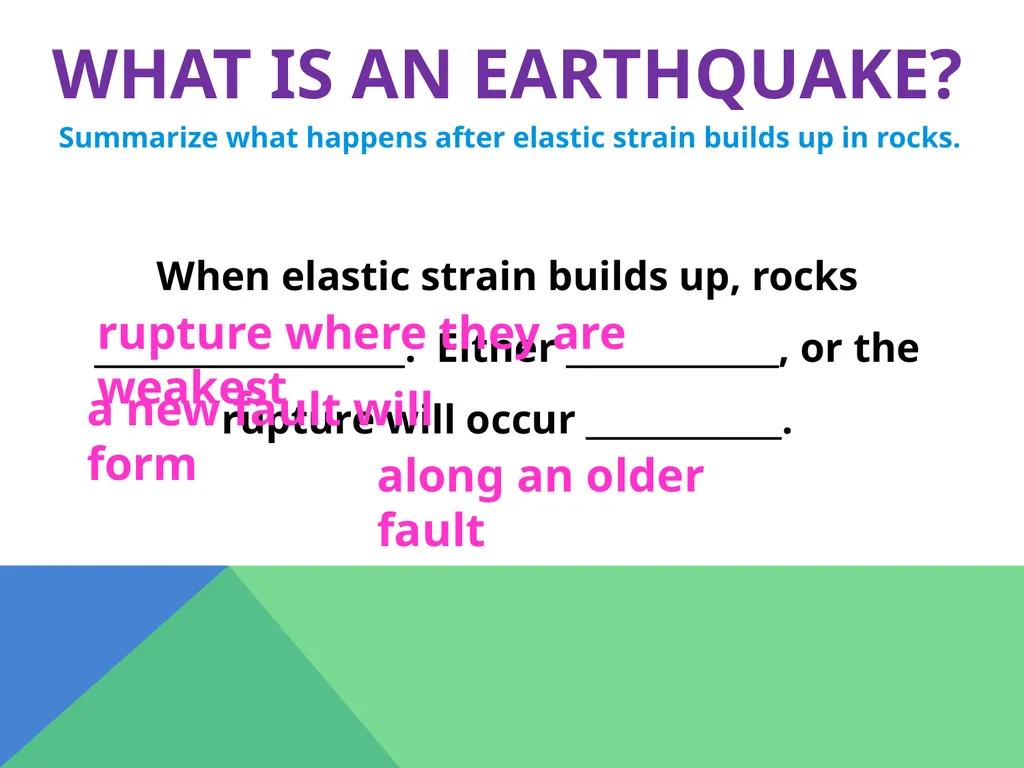
slide8. What Is an Earthquake? Summarize what happens after elastic strain builds up in rocks. When elastic strain builds up, rocks ___________________. Either _____________, or the rupture will occur ____________. a new fault will form rupture where they are weakest along an older fault<br>
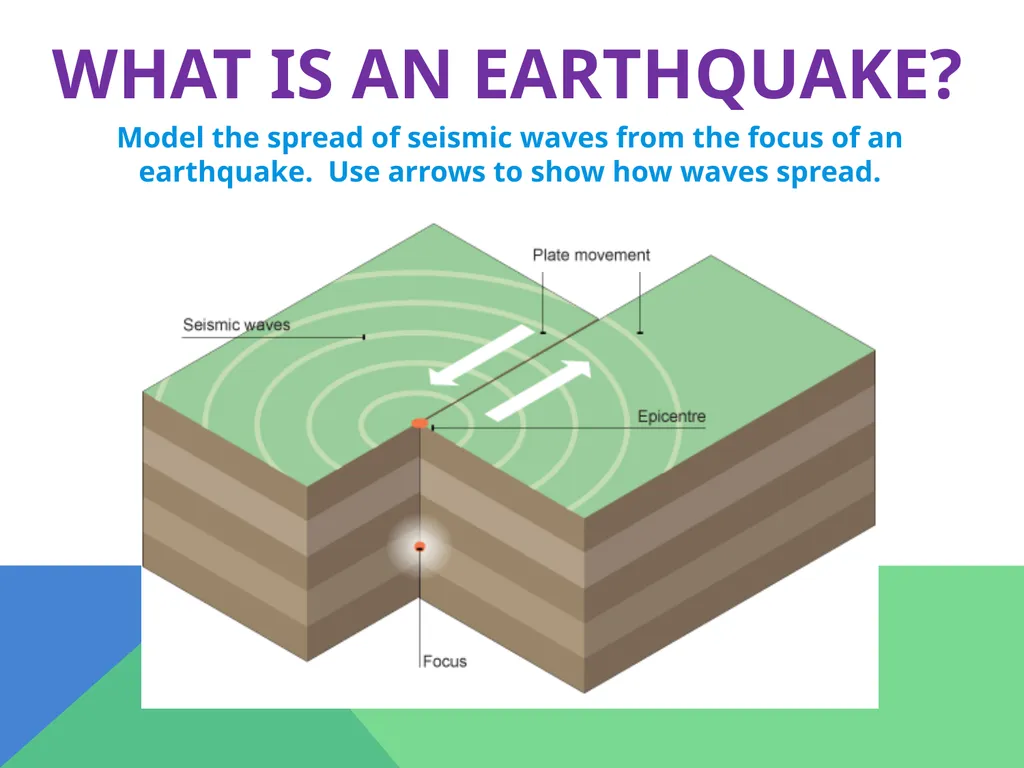
slide9. What Is an Earthquake? Model the spread of seismic waves from the focus of an earthquake. Use arrows to show how waves spread.<br>
slide10. Summarize the two main ideas of the above sections. Summarize it!<br>
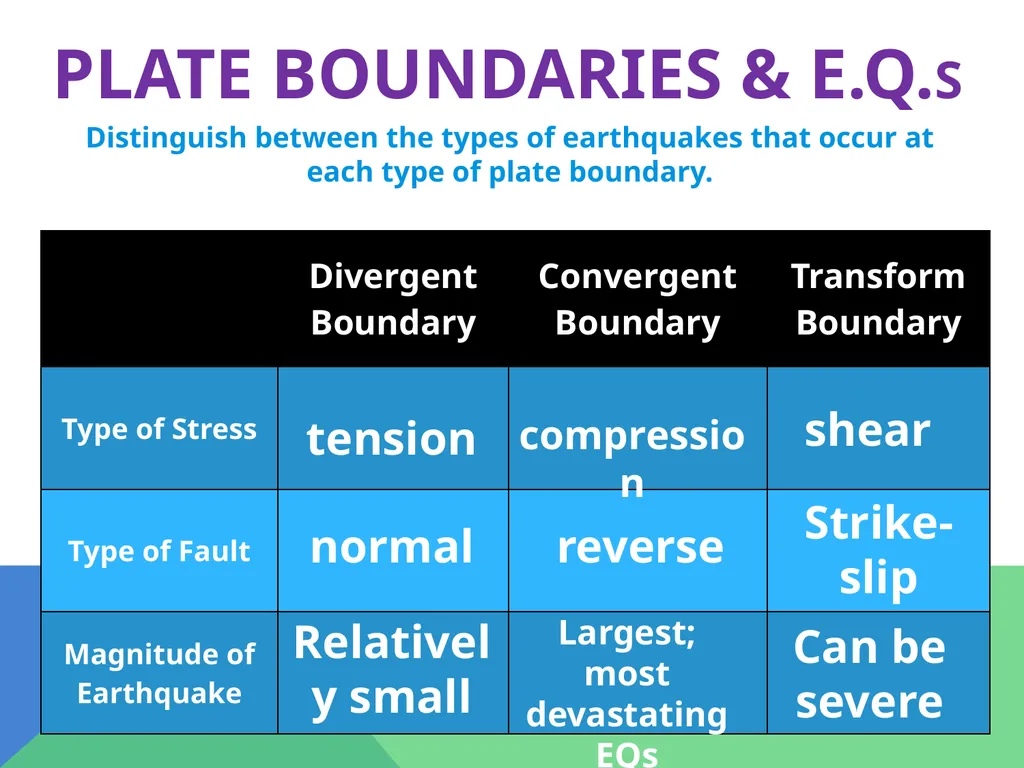
slide11. Plate boundaries & E.Q.s Distinguish between the types of earthquakes that occur at each type of plate boundary. tension normal Relatively small compression reverse Largest; most devastating EQs shear Strike-slip Can be severe<br>
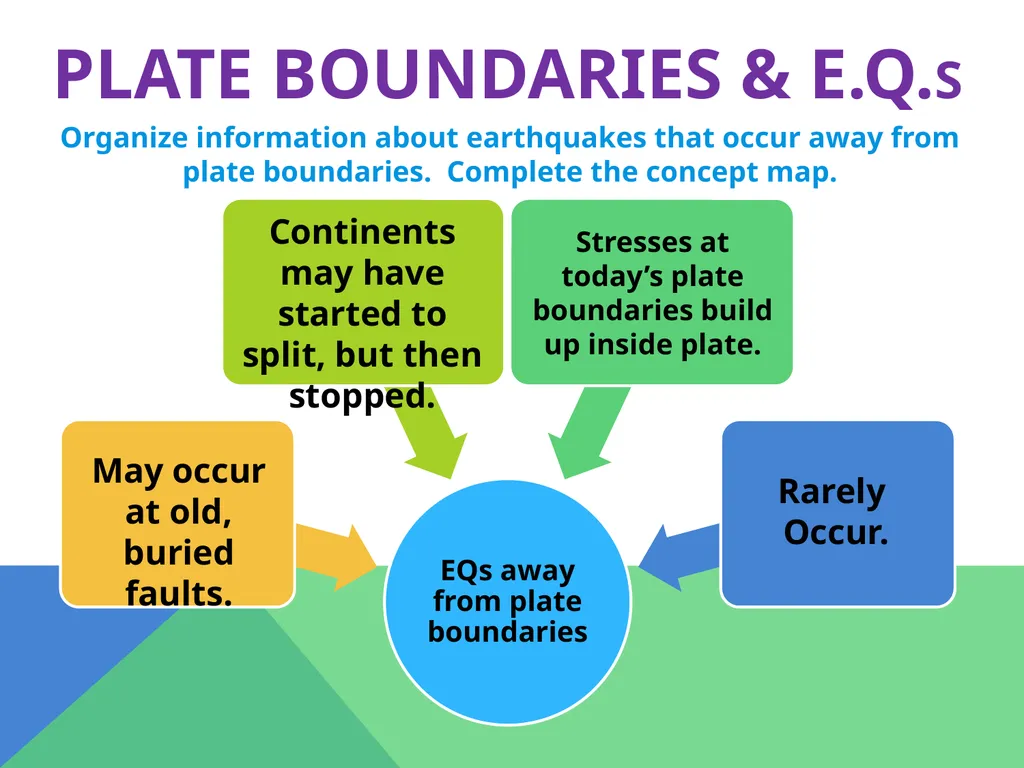
slide12. Plate boundaries & E.Q.s Organize information about earthquakes that occur away from plate boundaries. Complete the concept map. May occur at old, buried faults. Continents may have started to split, but then stopped. Stresses at today’s plate boundaries build up inside plate. Rarely
Occur.<br>
slide13. Summarize it! Summarize the main ideas of the above section with two bullet points.<br>
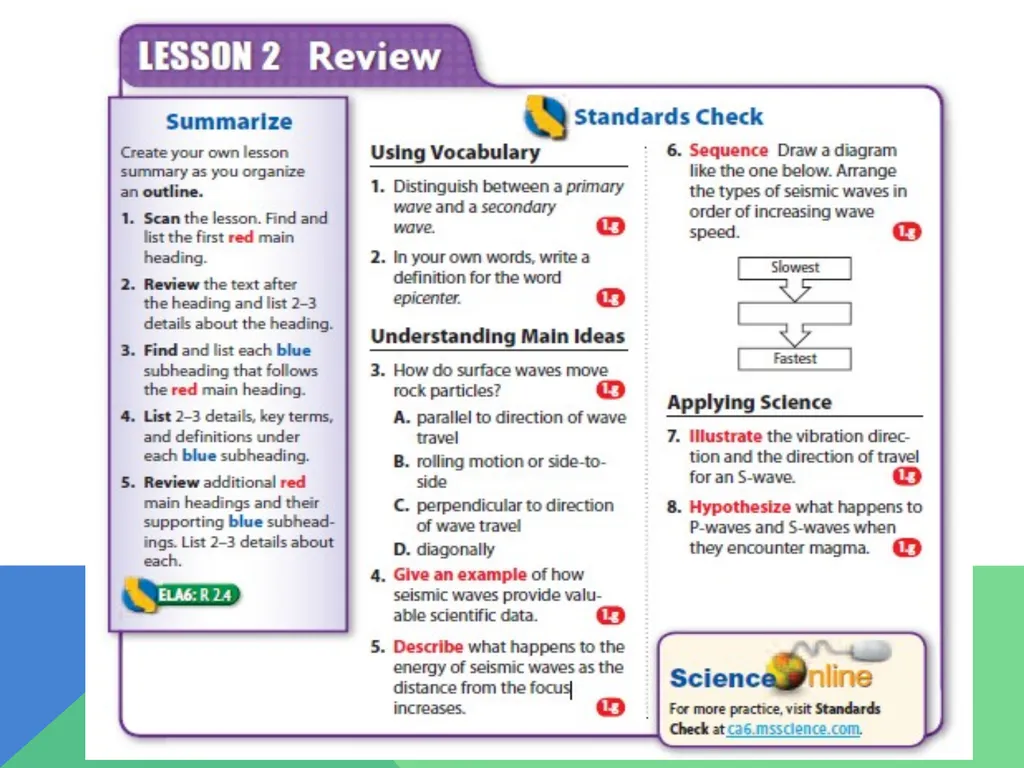
slide15. Lesson 2: Earthquakes and Seismic Waves Earthquakes cause seismic waves that provide valuable data. What you’ll learn:
Explain how energy released during earthquakes travel in seismic waves.
Distinguish among primary, secondary, and surface waves.
Describe how seismic waves are used to investigate Earth’s interior. So What?! Scientists can locate the epicenter of an earthquake by analyzing seismic waves.<br>
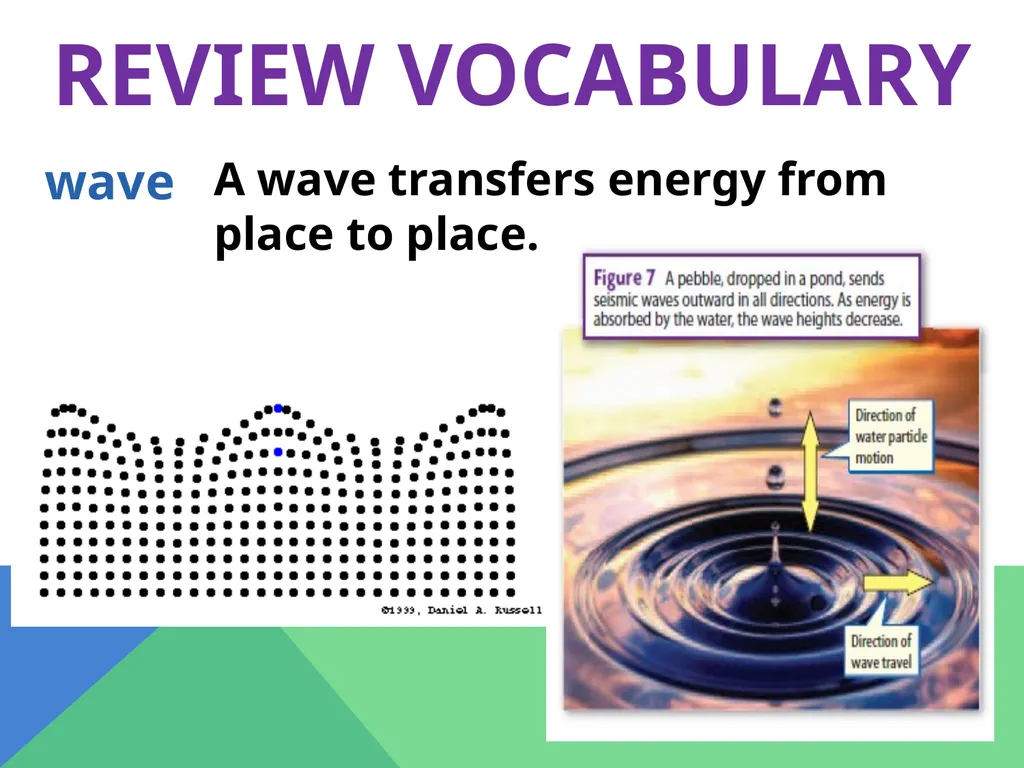
slide16. Review Vocabulary wave A wave transfers energy from place to place.<br>
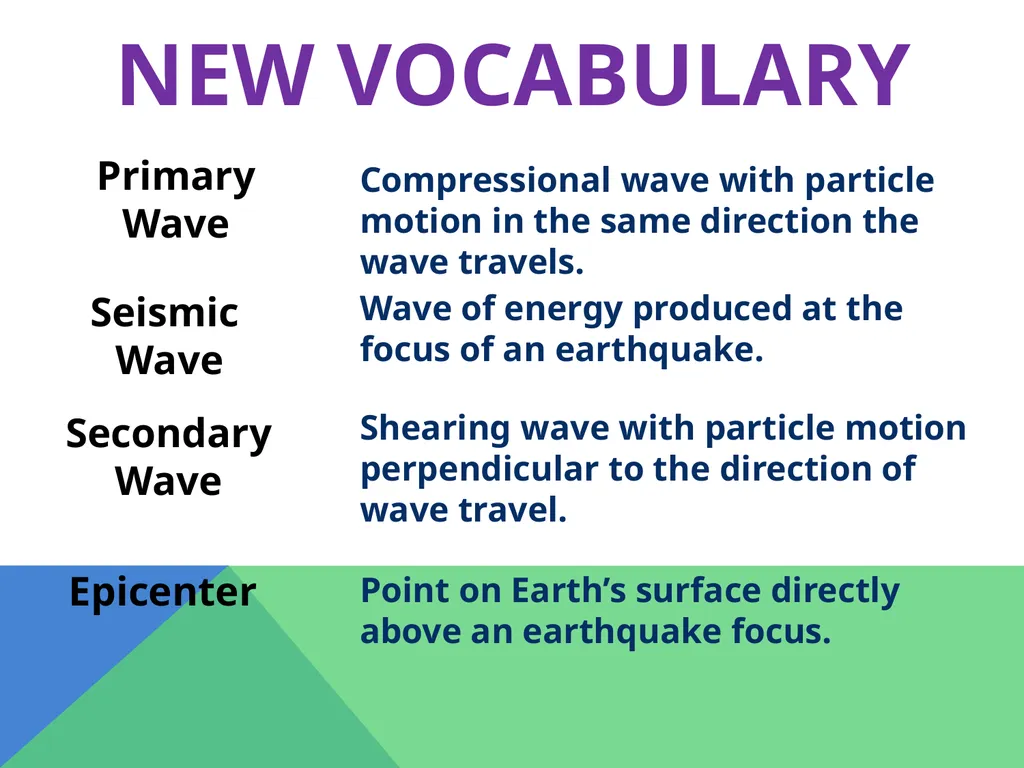
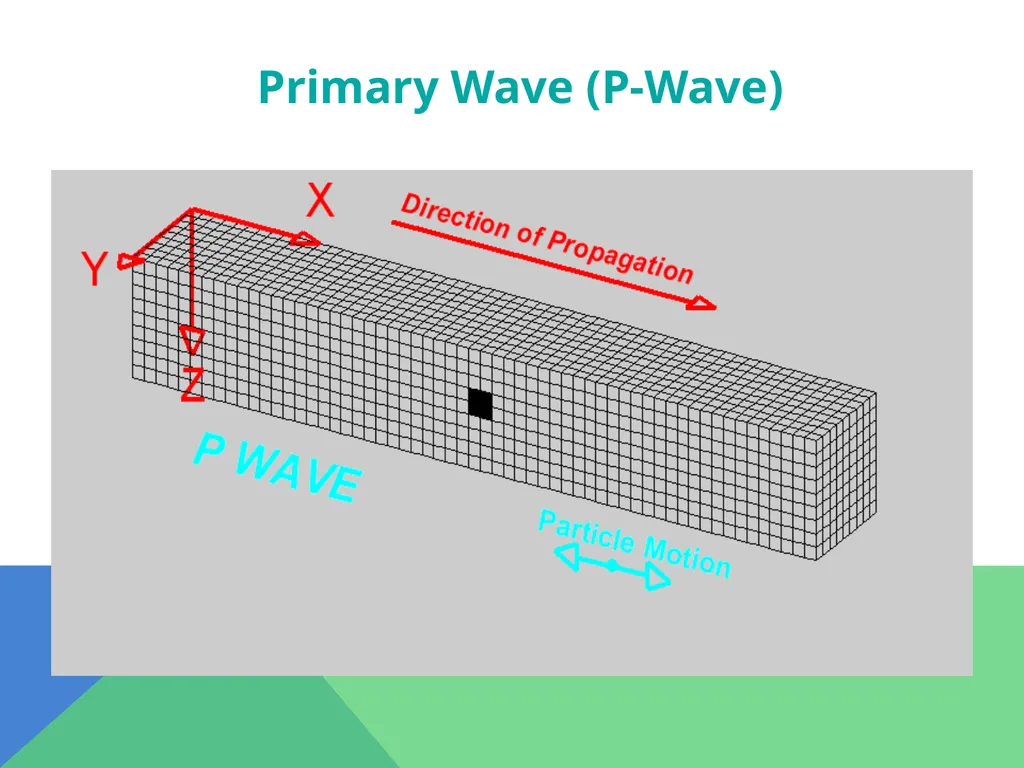
slide17. New Vocabulary Primary Wave Compressional wave with particle motion in the same direction the wave travels. Seismic
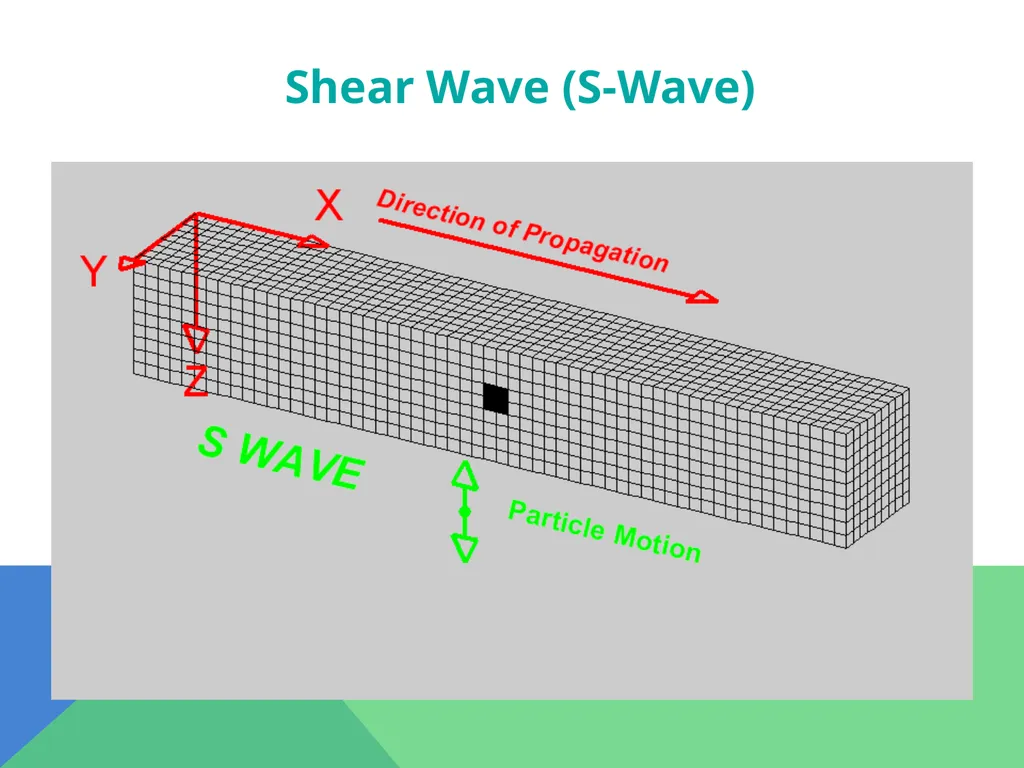
Wave Wave of energy produced at the focus of an earthquake. Shearing wave with particle motion perpendicular to the direction of wave travel. Secondary Wave Point on Earth’s surface directly above an earthquake focus. Epicenter<br>
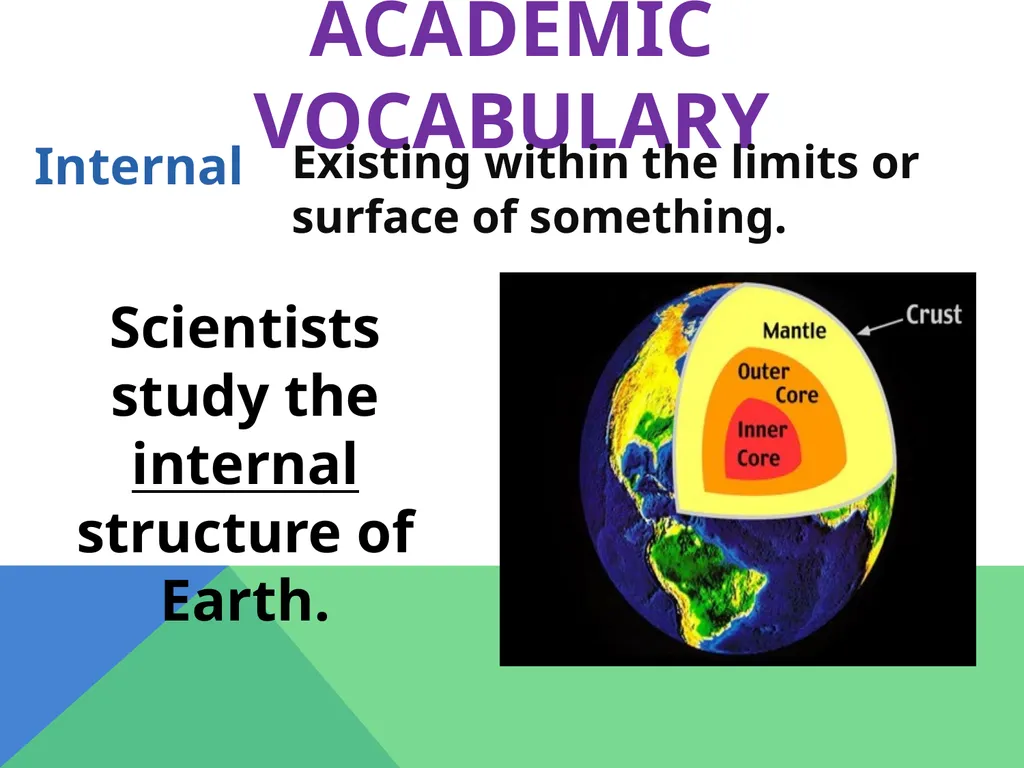
slide18. Academic Vocabulary Internal Existing within the limits or surface of something. Scientists study the internal structure of Earth.<br>
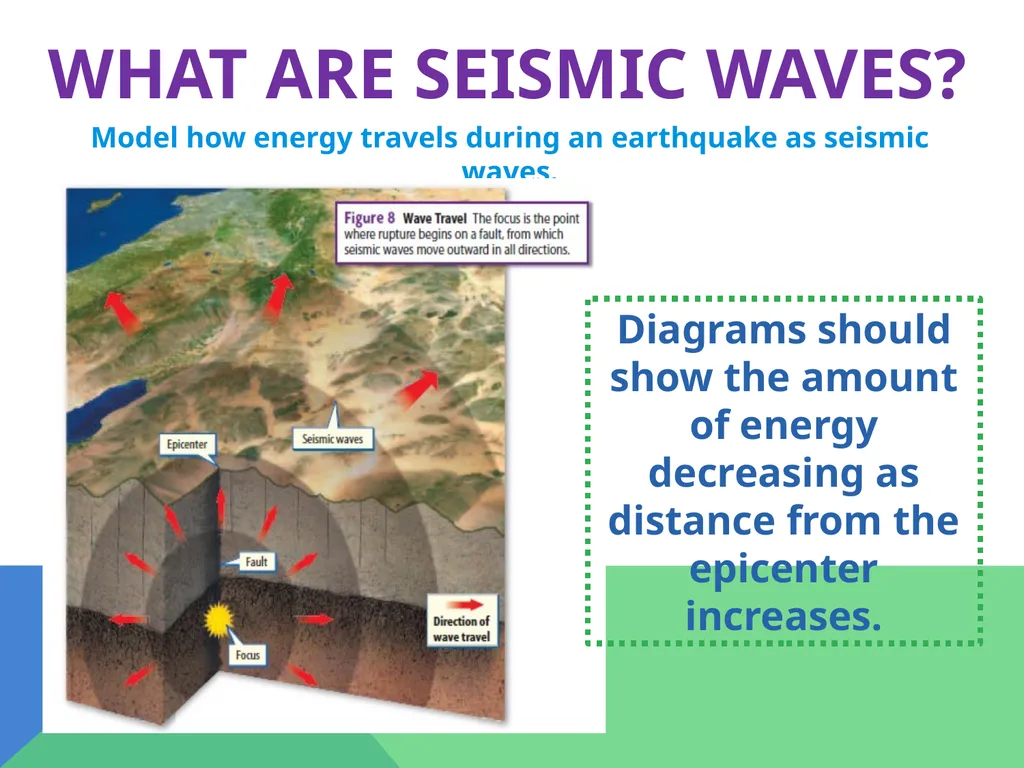
slide19. What Are Seismic Waves? Model how energy travels during an earthquake as seismic waves. Diagrams should show the amount of energy decreasing as distance from the epicenter increases.<br>
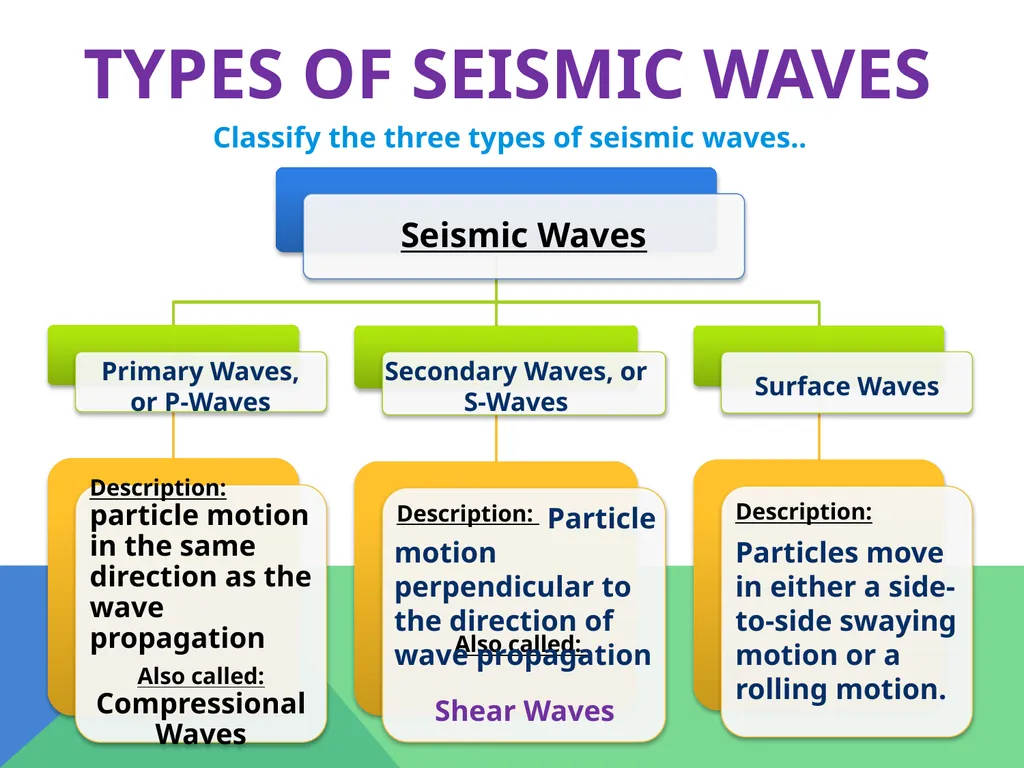
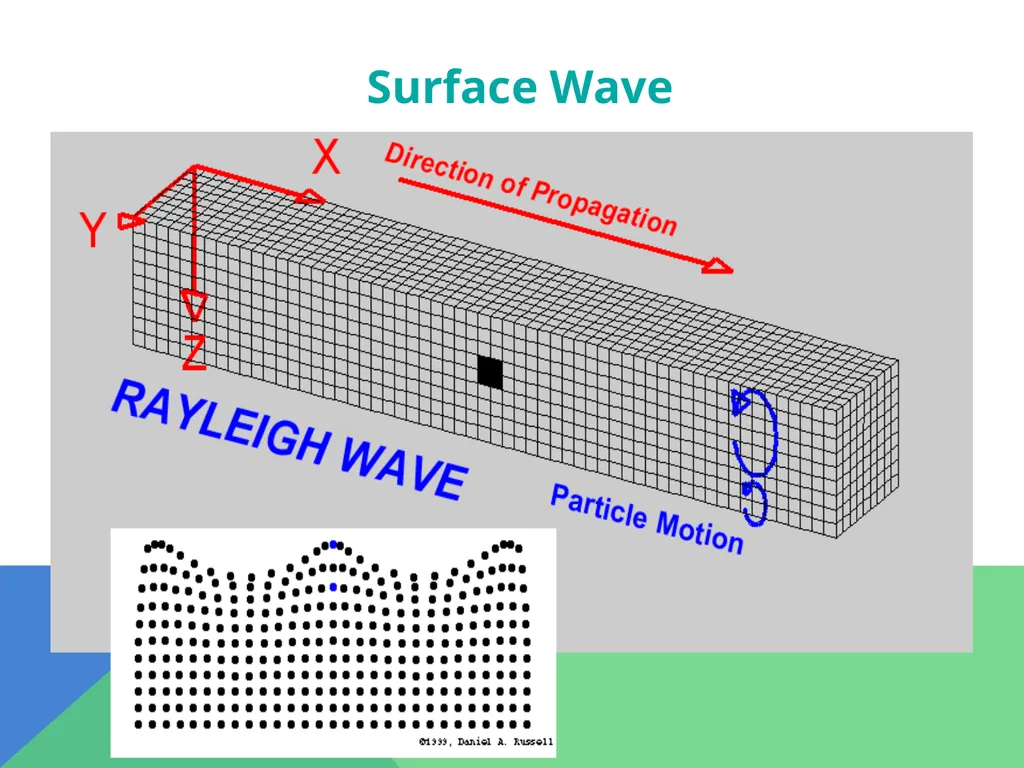
slide20. Types of Seismic Waves Classify the three types of seismic waves.. Primary Waves, or P-Waves Secondary Waves, or S-Waves Surface Waves Particle motion perpendicular to the direction of wave propagation Shear Waves Particles move in either a side-to-side swaying motion or a rolling motion.<br>
slide21. Primary Wave (P-Wave)<br>
slide22. Shear Wave (S-Wave)<br>
slide23. Surface Wave<br>
slide24. Summarize it! Rephrase the two main ideas from the above sections in your own words.<br>
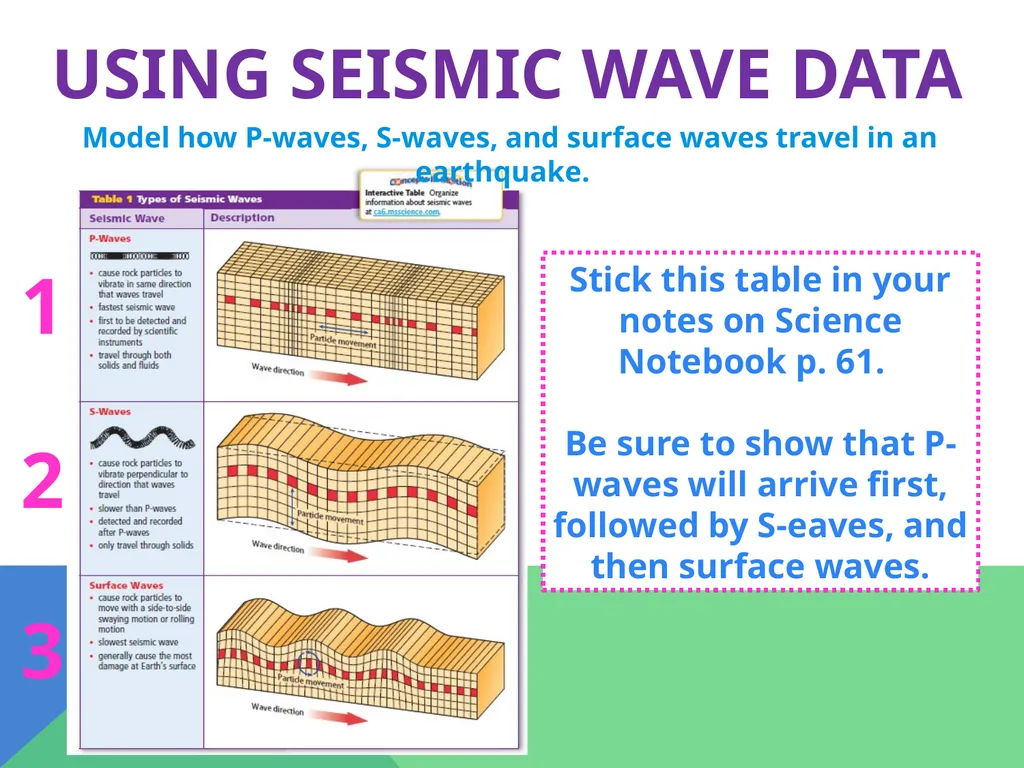
slide25. Using Seismic Wave Data Model how P-waves, S-waves, and surface waves travel in an earthquake. Stick this table in your notes on Science Notebook p. 61.
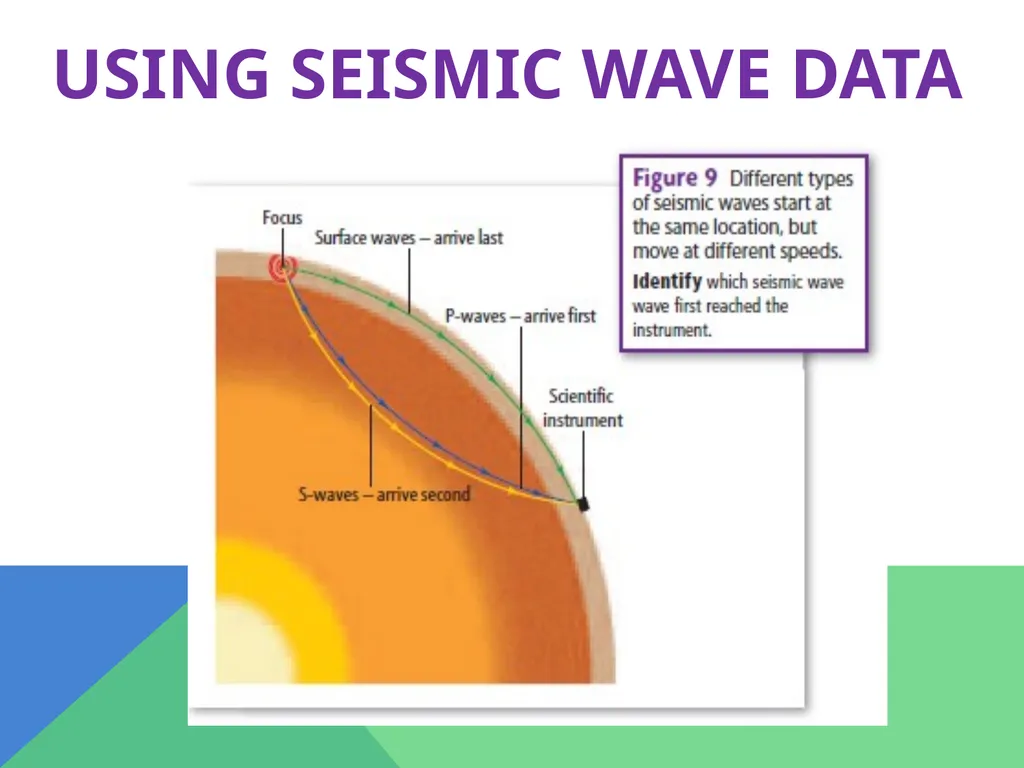
Be sure to show that P-waves will arrive first, followed by S-eaves, and then surface waves. 1 2 3<br>
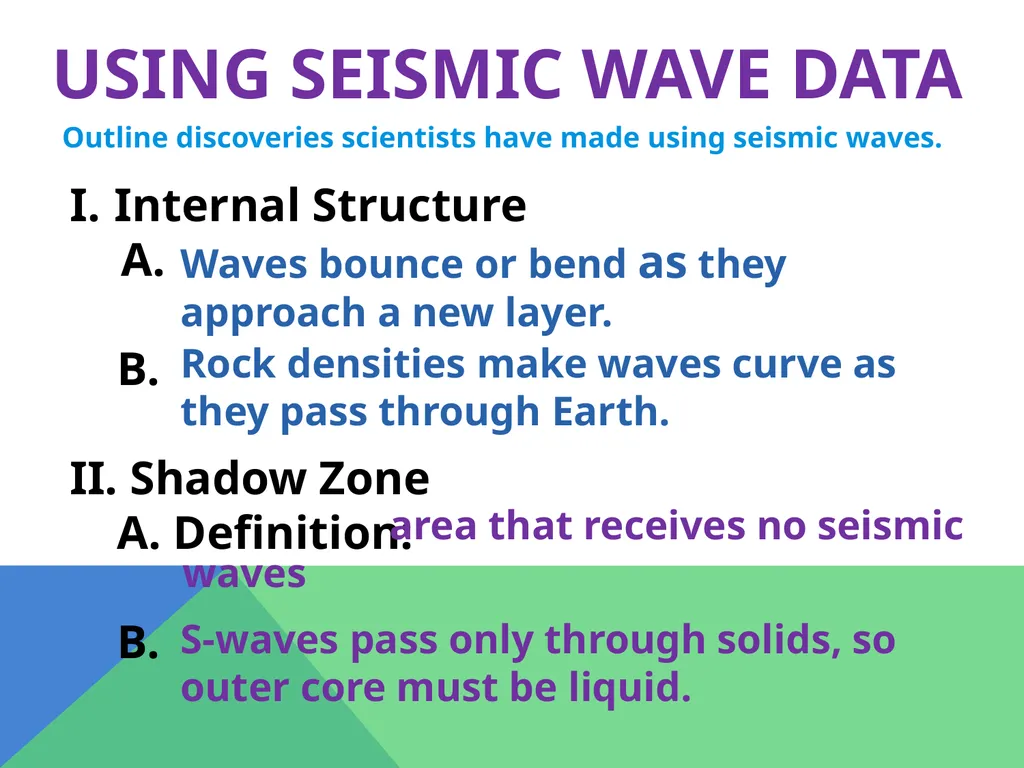
slide26. Using Seismic Wave Data Outline discoveries scientists have made using seismic waves. Internal Structure
A.
B.
II. Shadow Zone
A. Definition:
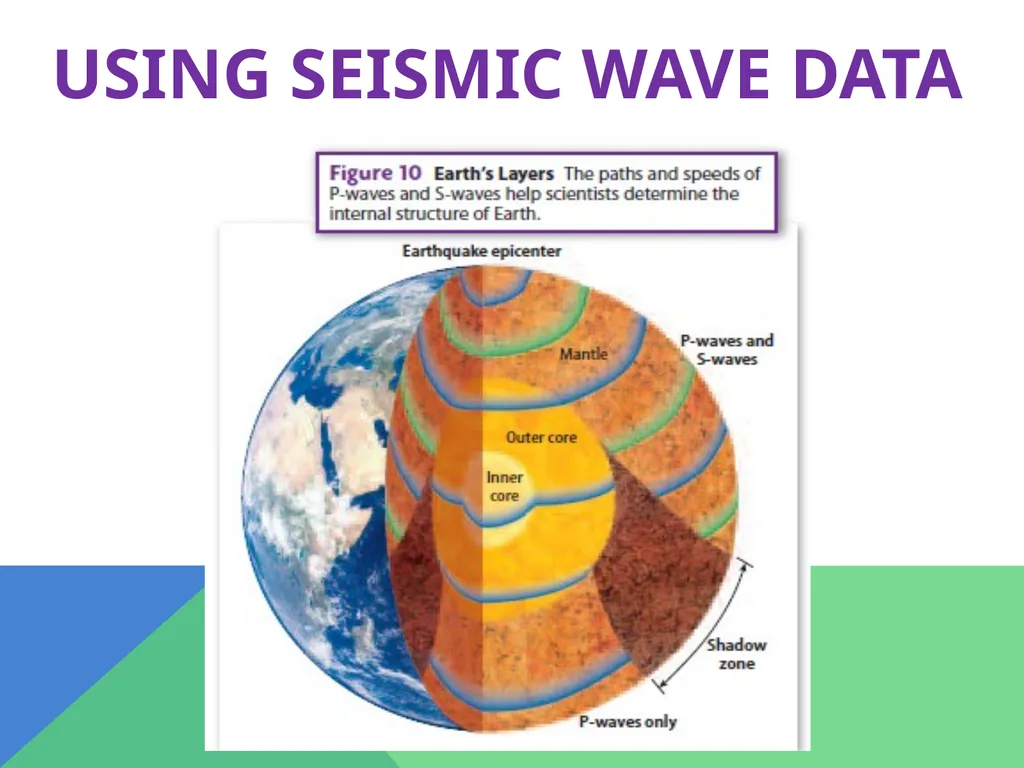
B. Waves bounce or bend as they approach a new layer. Rock densities make waves curve as they pass through Earth. area that receives no seismic waves S-waves pass only through solids, so outer core must be liquid.<br>
slide27. Using Seismic Wave Data<br>
slide28. Using Seismic Wave Data<br>
slide29. Summarize it! Summarize the main ideas of the above sections. Click on the spring for a virtual slinky lab!<br>
slide31. Lesson 3: Measuring Earthquakes Data from seismic waves are recorded and interpreted to determine the location and size of an earthquake. What you’ll learn:
Explain how a seismograph records an earthquake.
Understand how to locate an earthquake’s epicenter.
Distinguish among ways earthquakes are measured. So What?! Measuring earthquakes helps scientists understand how and where they occur.<br>
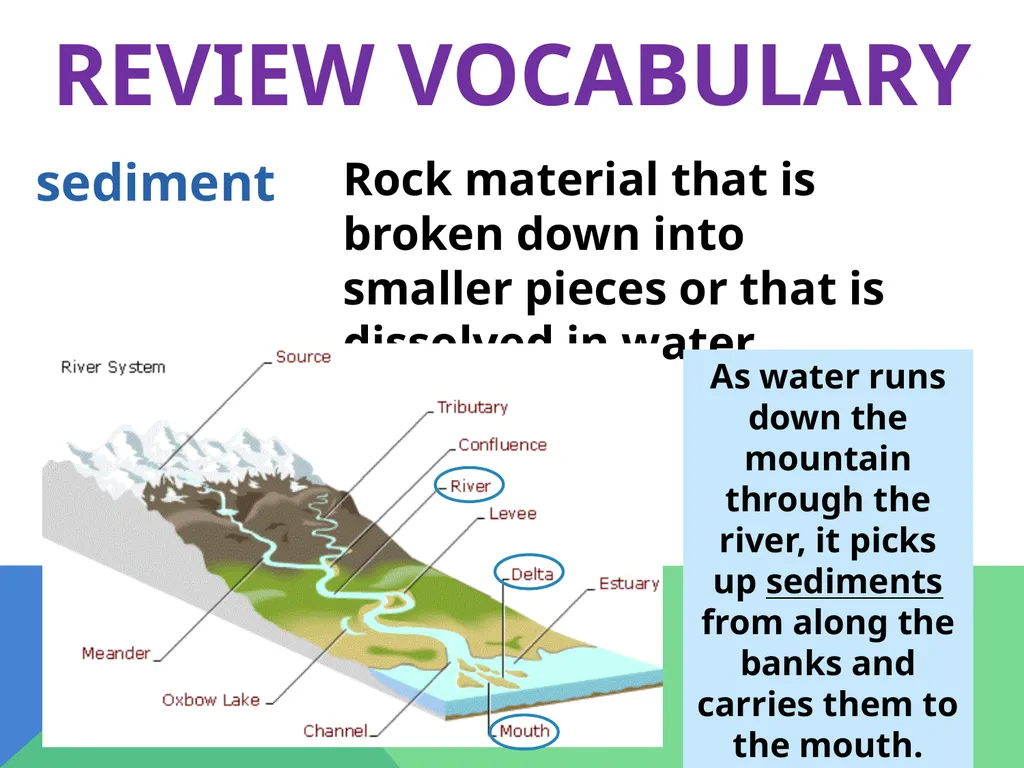
slide32. Review Vocabulary sediment Rock material that is broken down into smaller pieces or that is dissolved in water. As water runs down the mountain through the river, it picks up sediments from along the banks and carries them to the mouth.<br>
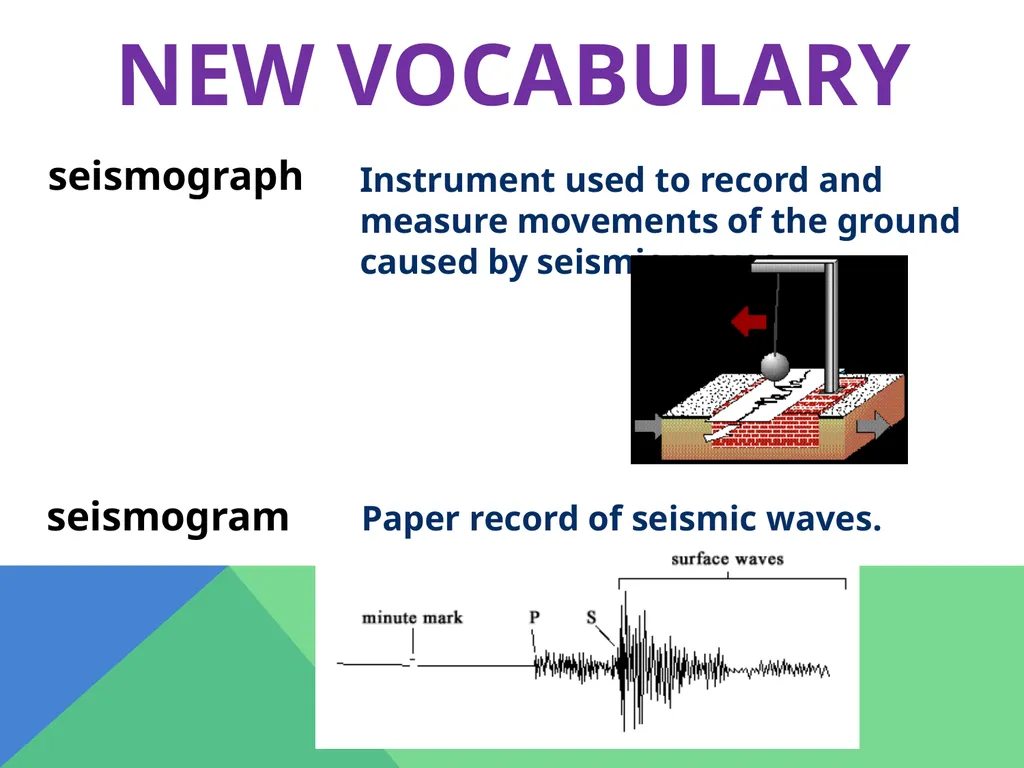
slide33. New Vocabulary seismograph Instrument used to record and measure movements of the ground caused by seismic waves. Paper record of seismic waves. seismogram<br>
slide34. Academic Vocabulary indicate To demonstrate or point out with precision. The points on the graph indicate the temperatures calculated over a period of time.<br>
slide35. How Are E.q.s Measured? Analyze how scientists determined the size of the
December 2004 Indian Ocean earthquake. Scientists measured how much the rock moved along the fault and measured the heights of the seismic waves.<br>
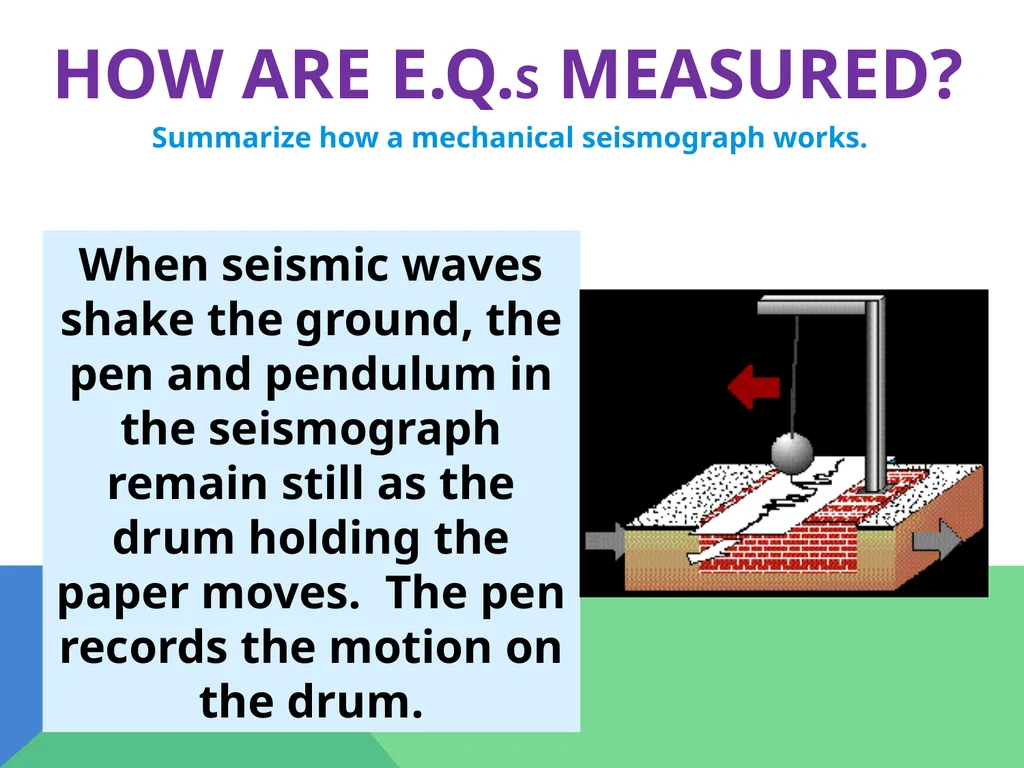
slide36. How Are E.q.s Measured? Summarize how a mechanical seismograph works. When seismic waves shake the ground, the pen and pendulum in the seismograph remain still as the drum holding the paper moves. The pen records the motion on the drum.<br>
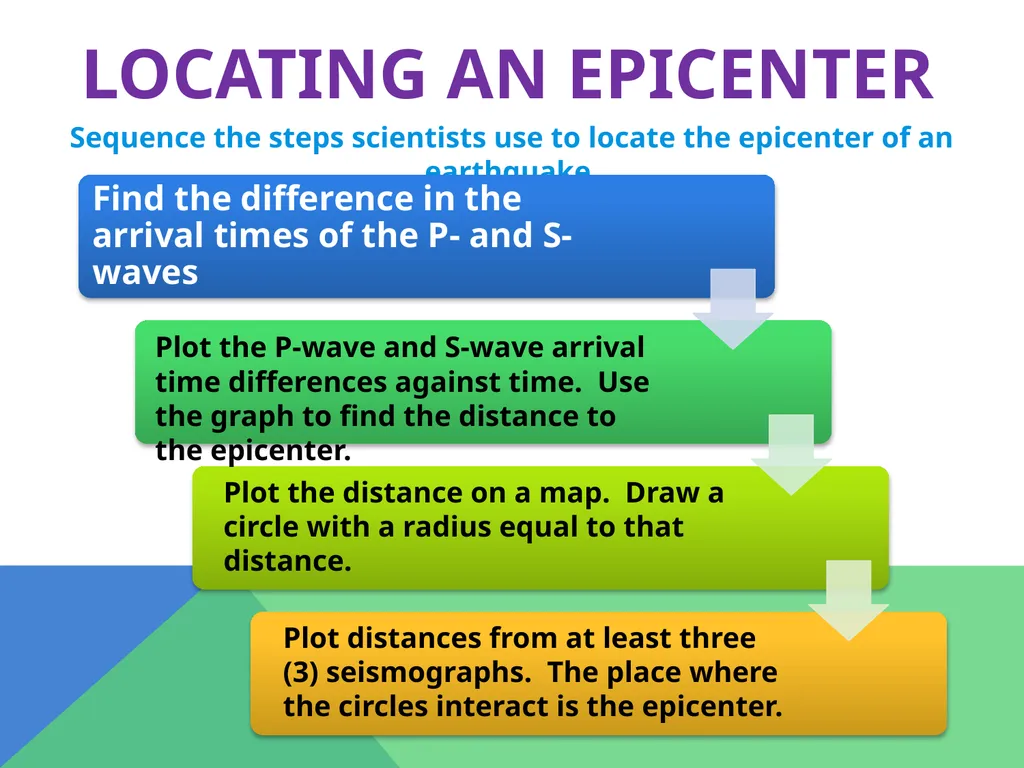
slide37. Locating an Epicenter Sequence the steps scientists use to locate the epicenter of an earthquake. Plot the P-wave and S-wave arrival time differences against time. Use the graph to find the distance to the epicenter. Plot the distance on a map. Draw a circle with a radius equal to that distance. Plot distances from at least three (3) seismographs. The place where the circles interact is the epicenter.<br>
slide38. Summarize it! Summarize one main idea from each section above.<br>
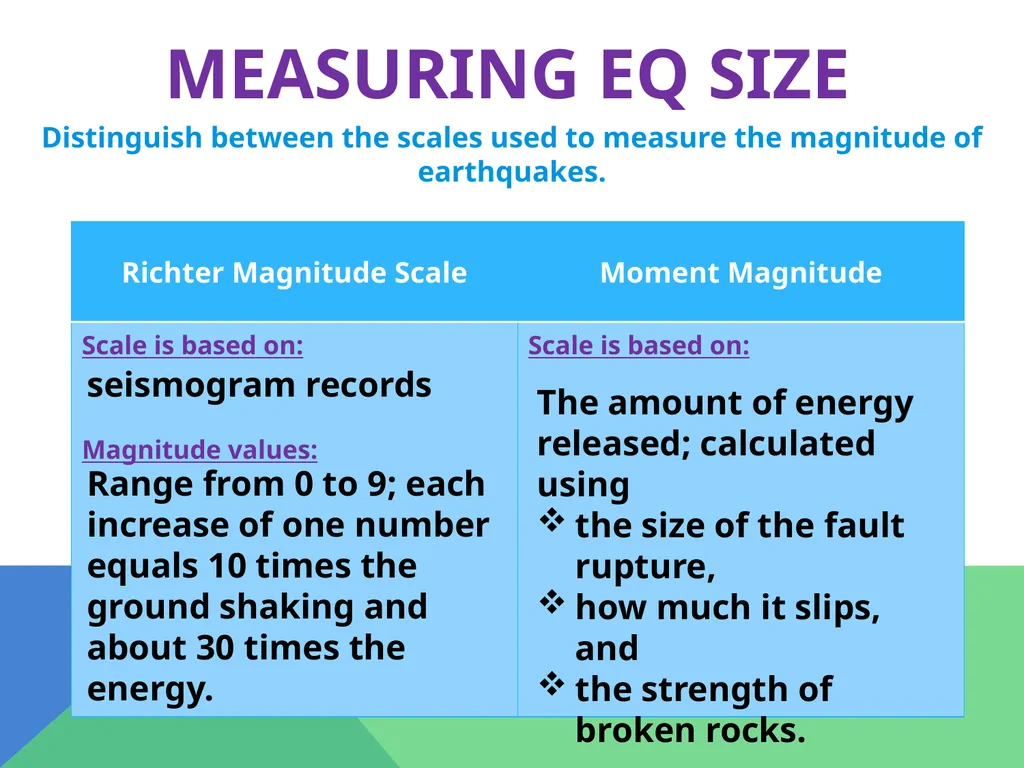
slide39. Measuring EQ Size Distinguish between the scales used to measure the magnitude of earthquakes. Range from 0 to 9; each increase of one number equals 10 times the ground shaking and about 30 times the energy. The amount of energy released; calculated using
the size of the fault rupture,
how much it slips, and
the strength of broken rocks. seismogram records<br>
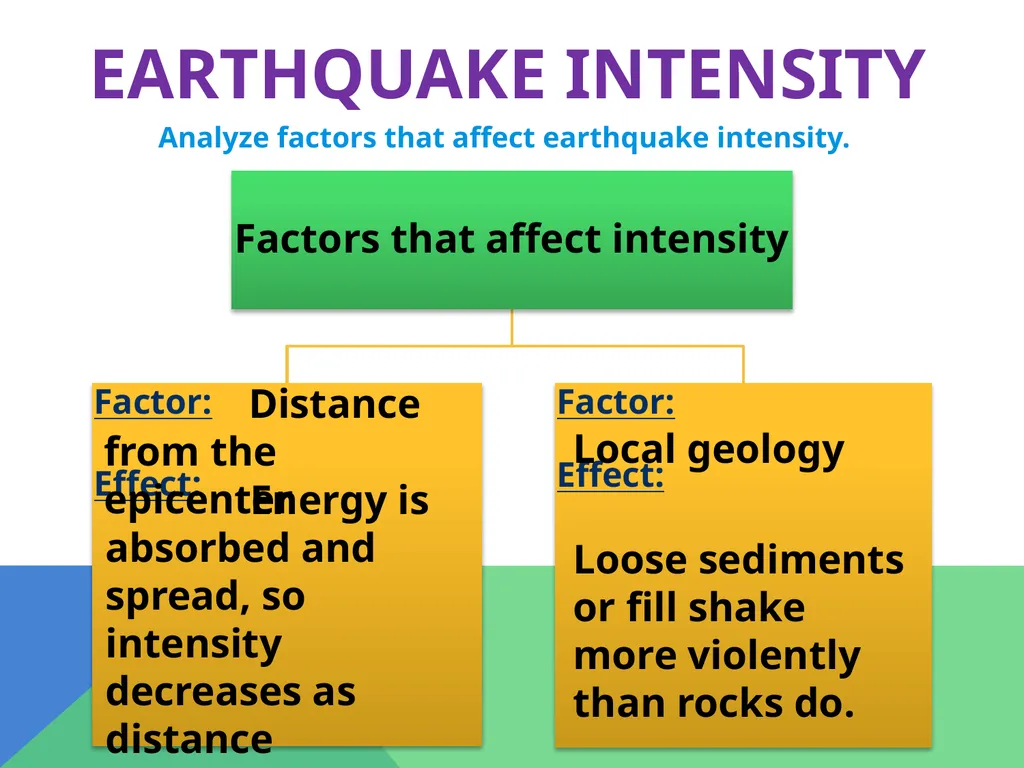
slide40. Earthquake Intensity Analyze factors that affect earthquake intensity. Distance from the epicenter Local geology Energy is absorbed and spread, so intensity decreases as distance increases. Loose sediments or fill shake more violently than rocks do.<br>
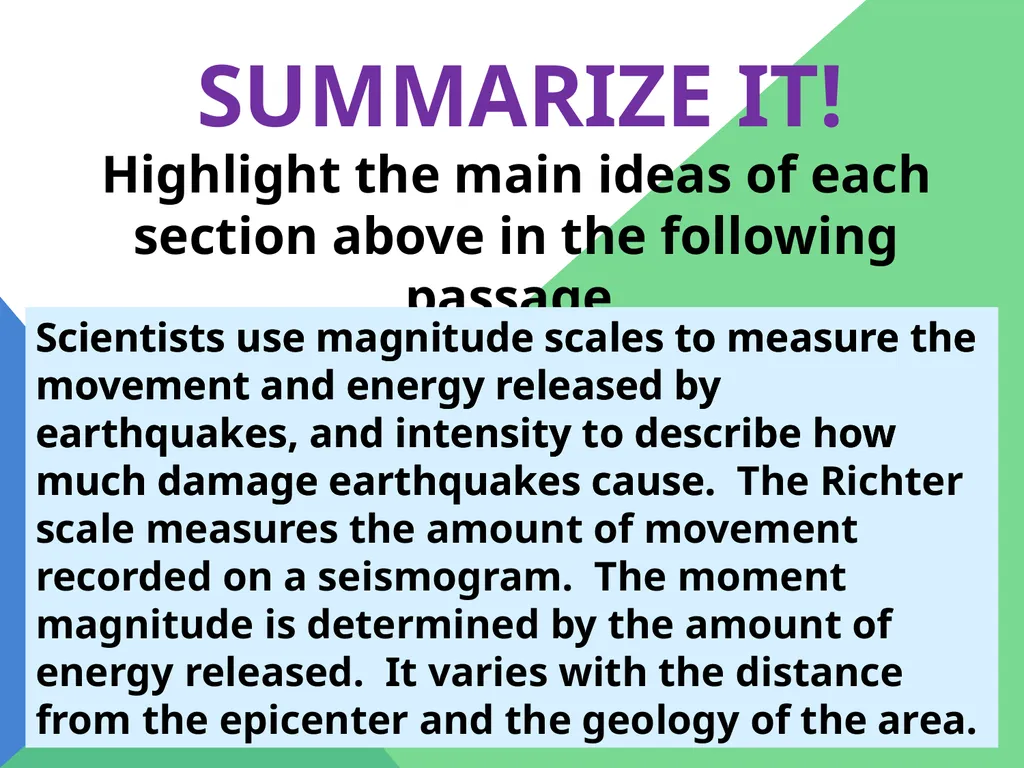
slide41. Summarize it! Highlight the main ideas of each section above in the following passage. Scientists use magnitude scales to measure the movement and energy released by earthquakes, and intensity to describe how much damage earthquakes cause. The Richter scale measures the amount of movement recorded on a seismogram. The moment magnitude is determined by the amount of energy released. It varies with the distance from the epicenter and the geology of the area. Scientists use magnitude scales to measure the movement and energy released by earthquakes, and intensity to describe how much damage earthquakes cause.<br>
slide42. Lesson 4: EQ Hazards & Safety Effects of an earthquake depend on its size and the types of structures and geology in a region. What you’ll learn:
Describe the various hazards from earthquakes.
Give examples of ways to reduce earthquake damage.
List ways to make your classroom and home more earthquake safe. So What?! Preparing for an earthquake can save lives and reduce damage to property.<br>
slide43. Review Vocabulary San Andreas Fault Fault zone that forms a transform plate boundary between the Pacific Plate and the North American Plate (p. 224)<br>
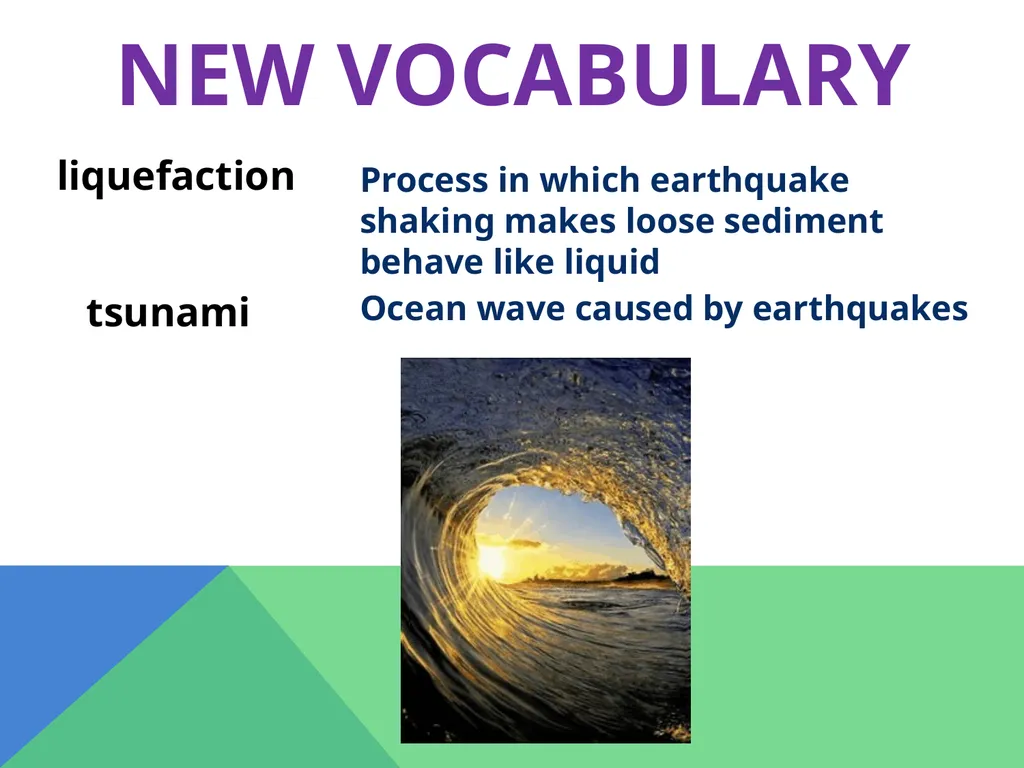
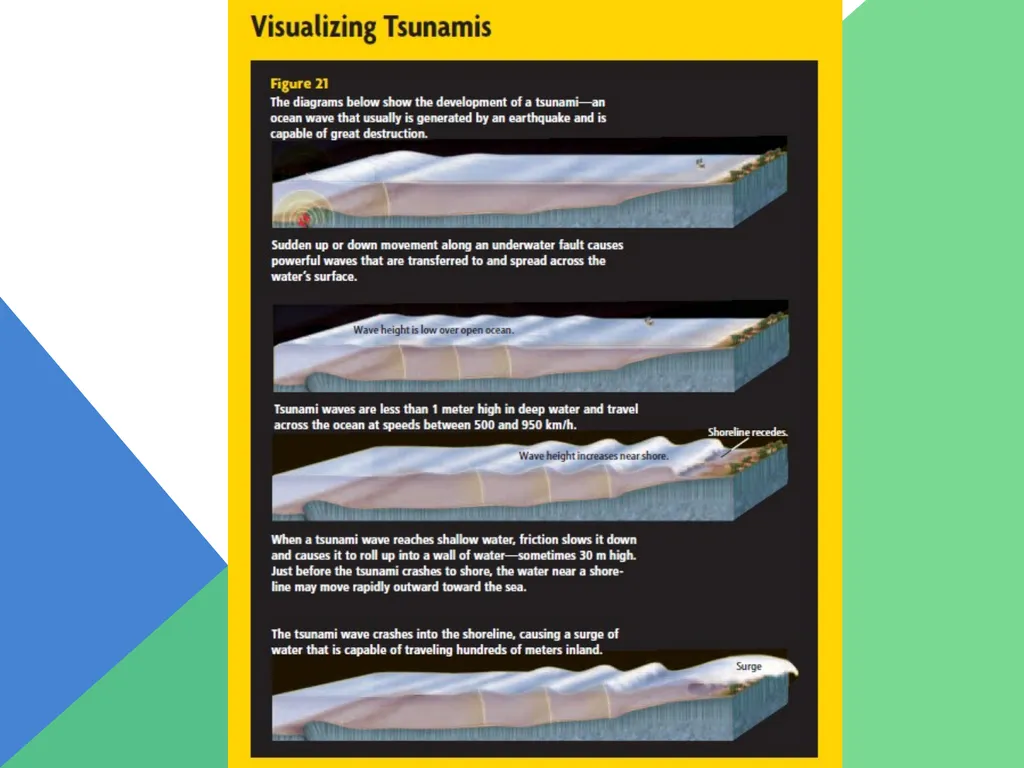
slide44. New Vocabulary liquefaction Process in which earthquake shaking makes loose sediment behave like liquid Ocean wave caused by earthquakes tsunami<br>
slide45. New Vocabulary securely Free from risk of loss. *The bank keeps its funds securely protected.<br>
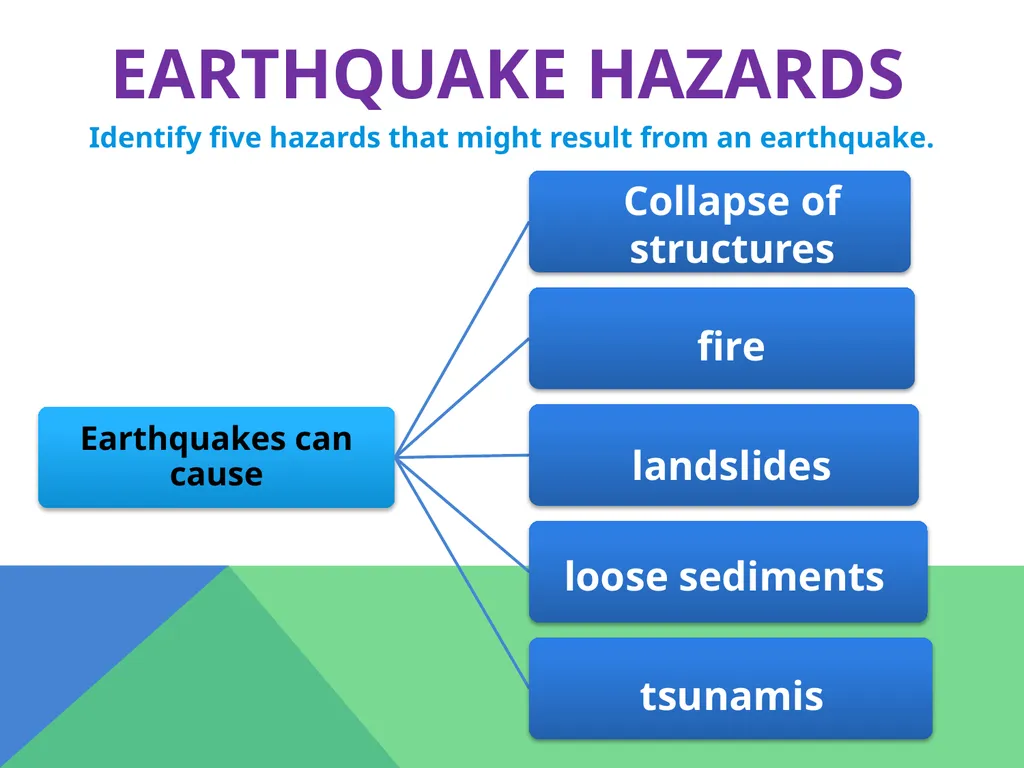
slide46. Earthquake Hazards Identify five hazards that might result from an earthquake. Collapse of structures fire landslides loose sediments tsunamis<br>
slide47. Earthquake Hazards Explain how liquefaction occurs and how it damages buildings. Liquefaction occurs when shaking from an earthquake causes wet soil to act like a liquid. When liquefaction occurs in soil under buildings, buildings sink into the soil and collapse.<br>
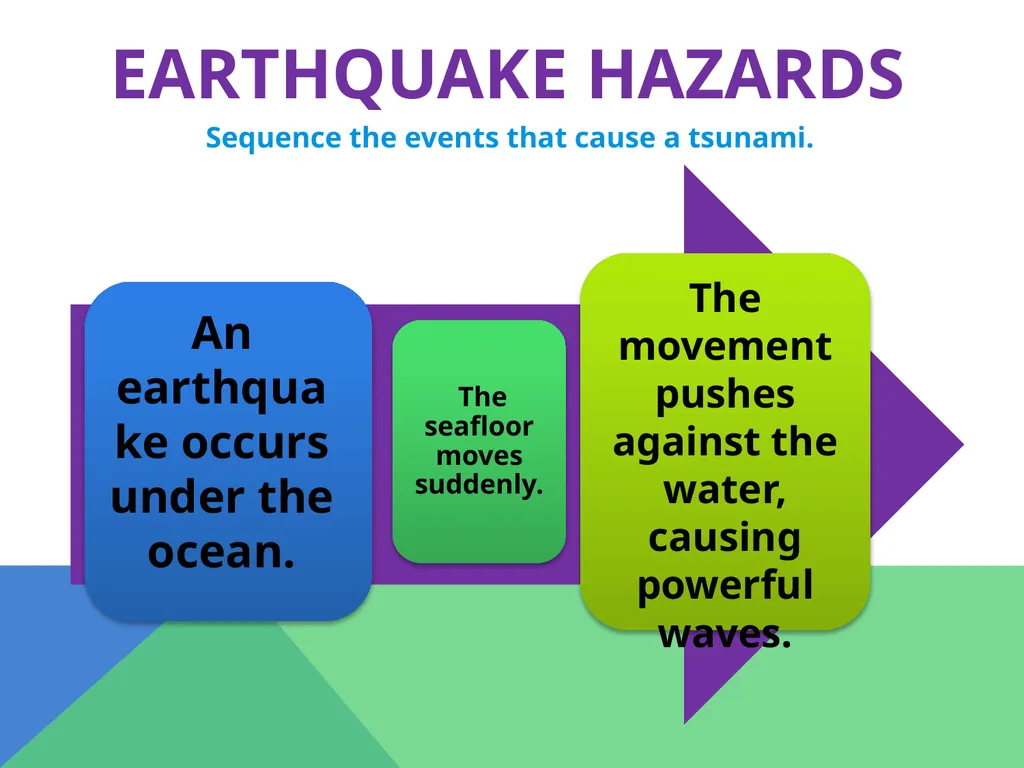
slide48. Earthquake Hazards Sequence the events that cause a tsunami. An earthquake occurs under the ocean. The movement pushes against the water, causing powerful waves.<br>
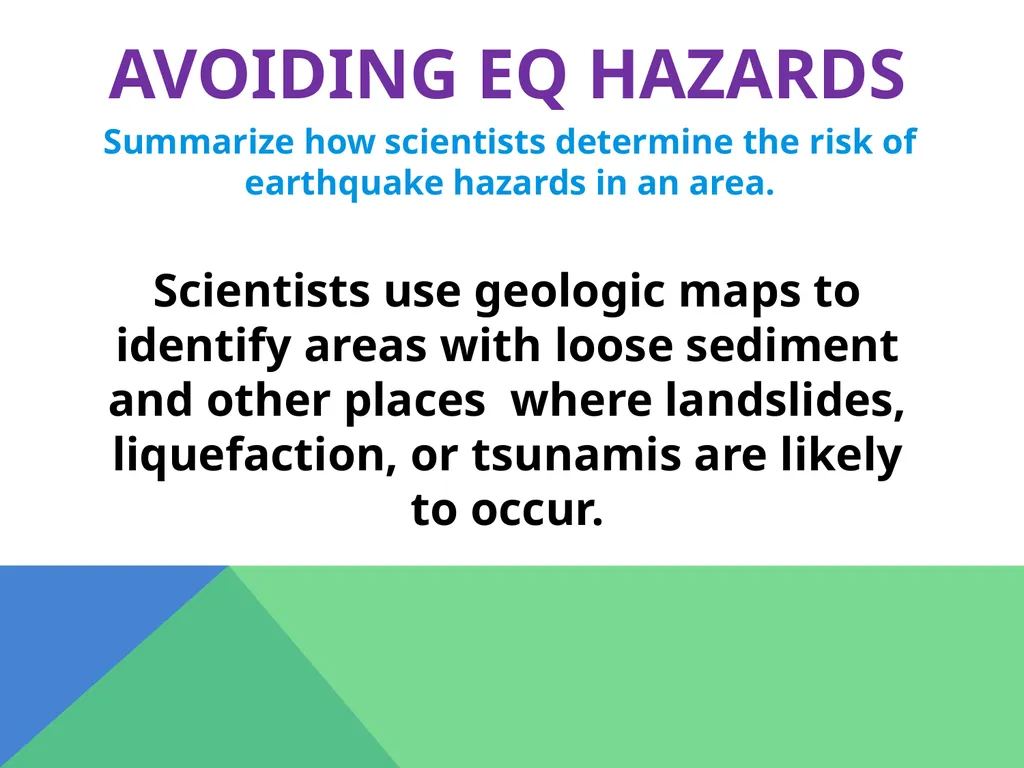
slide50. Avoiding EQ Hazards Summarize how scientists determine the risk of earthquake hazards in an area. Scientists use geologic maps to identify areas with loose sediment and other places where landslides, liquefaction, or tsunamis are likely to occur.<br>
slide51. Summarize it! Summarize the main ideas of the above sections.<br>
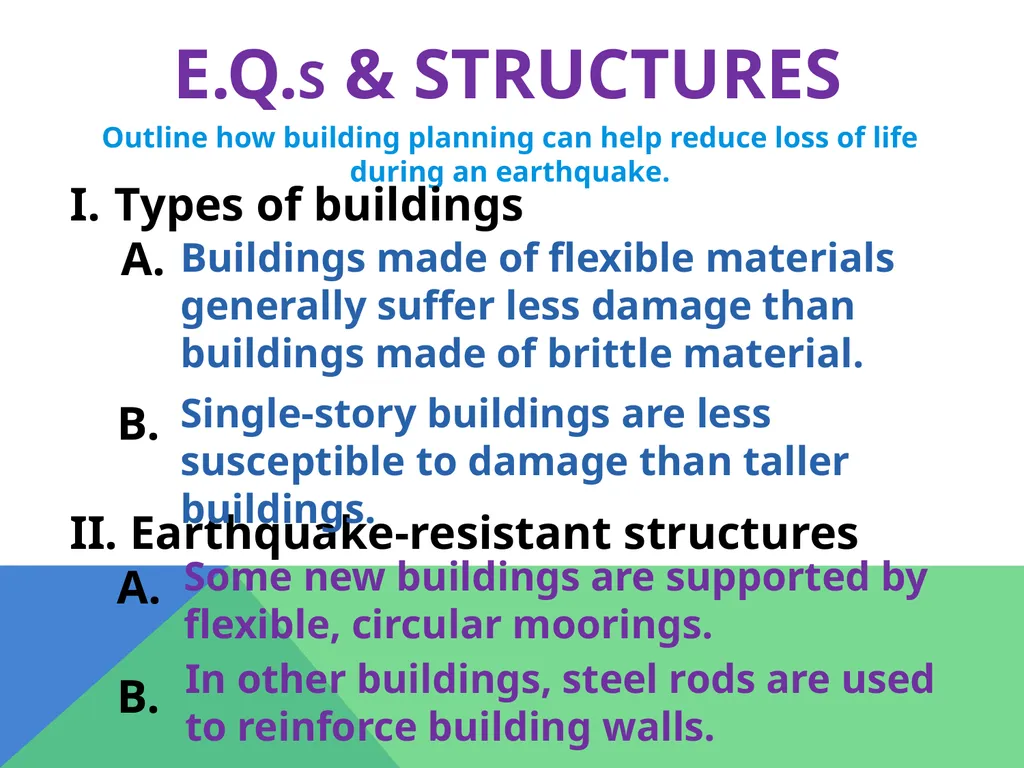
slide52. E.Q.s & Structures Outline how building planning can help reduce loss of life during an earthquake. Types of buildings
A.
B.
II. Earthquake-resistant structures
A.
B. Buildings made of flexible materials generally suffer less damage than buildings made of brittle material. Single-story buildings are less susceptible to damage than taller buildings. Some new buildings are supported by flexible, circular moorings. In other buildings, steel rods are used to reinforce building walls.<br>
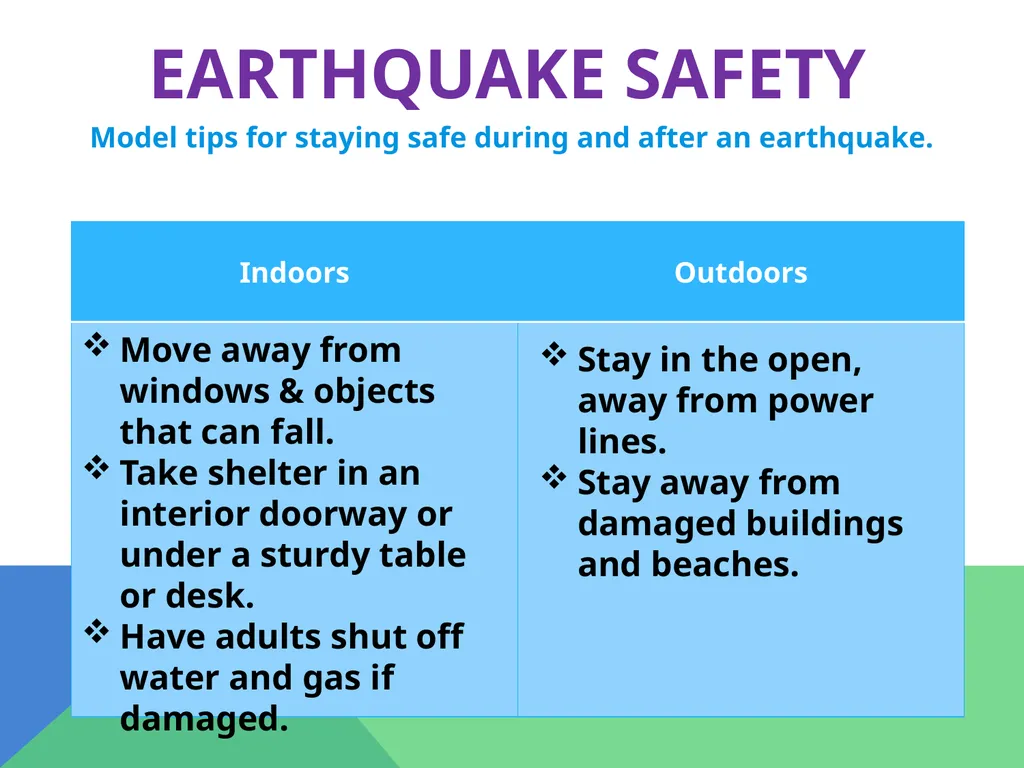
slide53. Earthquake Safety Model tips for staying safe during and after an earthquake. Move away from windows & objects that can fall.
Take shelter in an interior doorway or under a sturdy table or desk.
Have adults shut off water and gas if damaged. Stay in the open, away from power lines.
Stay away from damaged buildings and beaches.<br>
slide54. Summarize it! Summarize two main ideas of the above sections of this lesson.<br>
slide2. The Big Idea Earthquakes cause seismic waves that can be devastating to humans and other organisms.
Lesson 1: Earthquakes and Plate Boundaries
Most earthquakes occur at plate boundaries when rocks break and move along faults.
Lesson 2: Earthquakes and Seismic Waves
Earthquakes cause seismic waves that provide valuable data.
Lesson 3: Measuring Earthquakes
Data from seismic waves are recorded and interpreted to determine the location and size of an earthquake.
Lesson 4: Earthquake Hazards and Safety
Effects of an earthquake depend on its size and the types of structures and geology in a region.<br>
slide3. Lesson 1: Earthquakes and Plate Boundaries Most earthquakes occur at plate boundaries when rocks break and move along faults. What you’ll learn:
Explain what an earthquake is.
Describe how faults and earthquakes are related.
Understand that most earthquakes occur at plate boundaries. So What?! Understanding what causes earthquakes helps scientists identify where they are likely to occur in the future.<br>
slide4. Review Vocabulary fault A fracture in rock along which rocks on one side have moved relative to rocks on the other side. S.A.F. Normal Reverse Strike-Slip<br>
slide5. New Vocabulary Earthquake Rupture and sudden movement of rocks along a fault. Elastic Strain Energy stored as a change in shape. Place on a fault where rupture and movement begin. Focus<br>
slide6. Academic Vocabulary Interact To act on each other * Lithospheric plates interact at different boundaries and produce earthquakes.<br>
slide7. What Is an Earthquake? Sequence the changes in energy that occur leading up to an earthquake. Some of the heat energy is transformed into kinetic energy. Kinetic energy is stored as elastic strain. When rocks cannot change shape anymore, faults break.<br>
slide8. What Is an Earthquake? Summarize what happens after elastic strain builds up in rocks. When elastic strain builds up, rocks ___________________. Either _____________, or the rupture will occur ____________. a new fault will form rupture where they are weakest along an older fault<br>
slide9. What Is an Earthquake? Model the spread of seismic waves from the focus of an earthquake. Use arrows to show how waves spread.<br>
slide10. Summarize the two main ideas of the above sections. Summarize it!<br>
slide11. Plate boundaries & E.Q.s Distinguish between the types of earthquakes that occur at each type of plate boundary. tension normal Relatively small compression reverse Largest; most devastating EQs shear Strike-slip Can be severe<br>
slide12. Plate boundaries & E.Q.s Organize information about earthquakes that occur away from plate boundaries. Complete the concept map. May occur at old, buried faults. Continents may have started to split, but then stopped. Stresses at today’s plate boundaries build up inside plate. Rarely
Occur.<br>
slide13. Summarize it! Summarize the main ideas of the above section with two bullet points.<br>
slide15. Lesson 2: Earthquakes and Seismic Waves Earthquakes cause seismic waves that provide valuable data. What you’ll learn:
Explain how energy released during earthquakes travel in seismic waves.
Distinguish among primary, secondary, and surface waves.
Describe how seismic waves are used to investigate Earth’s interior. So What?! Scientists can locate the epicenter of an earthquake by analyzing seismic waves.<br>
slide16. Review Vocabulary wave A wave transfers energy from place to place.<br>
slide17. New Vocabulary Primary Wave Compressional wave with particle motion in the same direction the wave travels. Seismic
Wave Wave of energy produced at the focus of an earthquake. Shearing wave with particle motion perpendicular to the direction of wave travel. Secondary Wave Point on Earth’s surface directly above an earthquake focus. Epicenter<br>
slide18. Academic Vocabulary Internal Existing within the limits or surface of something. Scientists study the internal structure of Earth.<br>
slide19. What Are Seismic Waves? Model how energy travels during an earthquake as seismic waves. Diagrams should show the amount of energy decreasing as distance from the epicenter increases.<br>
slide20. Types of Seismic Waves Classify the three types of seismic waves.. Primary Waves, or P-Waves Secondary Waves, or S-Waves Surface Waves Particle motion perpendicular to the direction of wave propagation Shear Waves Particles move in either a side-to-side swaying motion or a rolling motion.<br>
slide21. Primary Wave (P-Wave)<br>
slide22. Shear Wave (S-Wave)<br>
slide23. Surface Wave<br>
slide24. Summarize it! Rephrase the two main ideas from the above sections in your own words.<br>
slide25. Using Seismic Wave Data Model how P-waves, S-waves, and surface waves travel in an earthquake. Stick this table in your notes on Science Notebook p. 61.
Be sure to show that P-waves will arrive first, followed by S-eaves, and then surface waves. 1 2 3<br>
slide26. Using Seismic Wave Data Outline discoveries scientists have made using seismic waves. Internal Structure
A.
B.
II. Shadow Zone
A. Definition:
B. Waves bounce or bend as they approach a new layer. Rock densities make waves curve as they pass through Earth. area that receives no seismic waves S-waves pass only through solids, so outer core must be liquid.<br>
slide27. Using Seismic Wave Data<br>
slide28. Using Seismic Wave Data<br>
slide29. Summarize it! Summarize the main ideas of the above sections. Click on the spring for a virtual slinky lab!<br>
slide31. Lesson 3: Measuring Earthquakes Data from seismic waves are recorded and interpreted to determine the location and size of an earthquake. What you’ll learn:
Explain how a seismograph records an earthquake.
Understand how to locate an earthquake’s epicenter.
Distinguish among ways earthquakes are measured. So What?! Measuring earthquakes helps scientists understand how and where they occur.<br>
slide32. Review Vocabulary sediment Rock material that is broken down into smaller pieces or that is dissolved in water. As water runs down the mountain through the river, it picks up sediments from along the banks and carries them to the mouth.<br>
slide33. New Vocabulary seismograph Instrument used to record and measure movements of the ground caused by seismic waves. Paper record of seismic waves. seismogram<br>
slide34. Academic Vocabulary indicate To demonstrate or point out with precision. The points on the graph indicate the temperatures calculated over a period of time.<br>
slide35. How Are E.q.s Measured? Analyze how scientists determined the size of the
December 2004 Indian Ocean earthquake. Scientists measured how much the rock moved along the fault and measured the heights of the seismic waves.<br>
slide36. How Are E.q.s Measured? Summarize how a mechanical seismograph works. When seismic waves shake the ground, the pen and pendulum in the seismograph remain still as the drum holding the paper moves. The pen records the motion on the drum.<br>
slide37. Locating an Epicenter Sequence the steps scientists use to locate the epicenter of an earthquake. Plot the P-wave and S-wave arrival time differences against time. Use the graph to find the distance to the epicenter. Plot the distance on a map. Draw a circle with a radius equal to that distance. Plot distances from at least three (3) seismographs. The place where the circles interact is the epicenter.<br>
slide38. Summarize it! Summarize one main idea from each section above.<br>
slide39. Measuring EQ Size Distinguish between the scales used to measure the magnitude of earthquakes. Range from 0 to 9; each increase of one number equals 10 times the ground shaking and about 30 times the energy. The amount of energy released; calculated using
the size of the fault rupture,
how much it slips, and
the strength of broken rocks. seismogram records<br>
slide40. Earthquake Intensity Analyze factors that affect earthquake intensity. Distance from the epicenter Local geology Energy is absorbed and spread, so intensity decreases as distance increases. Loose sediments or fill shake more violently than rocks do.<br>
slide41. Summarize it! Highlight the main ideas of each section above in the following passage. Scientists use magnitude scales to measure the movement and energy released by earthquakes, and intensity to describe how much damage earthquakes cause. The Richter scale measures the amount of movement recorded on a seismogram. The moment magnitude is determined by the amount of energy released. It varies with the distance from the epicenter and the geology of the area. Scientists use magnitude scales to measure the movement and energy released by earthquakes, and intensity to describe how much damage earthquakes cause.<br>
slide42. Lesson 4: EQ Hazards & Safety Effects of an earthquake depend on its size and the types of structures and geology in a region. What you’ll learn:
Describe the various hazards from earthquakes.
Give examples of ways to reduce earthquake damage.
List ways to make your classroom and home more earthquake safe. So What?! Preparing for an earthquake can save lives and reduce damage to property.<br>
slide43. Review Vocabulary San Andreas Fault Fault zone that forms a transform plate boundary between the Pacific Plate and the North American Plate (p. 224)<br>
slide44. New Vocabulary liquefaction Process in which earthquake shaking makes loose sediment behave like liquid Ocean wave caused by earthquakes tsunami<br>
slide45. New Vocabulary securely Free from risk of loss. *The bank keeps its funds securely protected.<br>
slide46. Earthquake Hazards Identify five hazards that might result from an earthquake. Collapse of structures fire landslides loose sediments tsunamis<br>
slide47. Earthquake Hazards Explain how liquefaction occurs and how it damages buildings. Liquefaction occurs when shaking from an earthquake causes wet soil to act like a liquid. When liquefaction occurs in soil under buildings, buildings sink into the soil and collapse.<br>
slide48. Earthquake Hazards Sequence the events that cause a tsunami. An earthquake occurs under the ocean. The movement pushes against the water, causing powerful waves.<br>
slide50. Avoiding EQ Hazards Summarize how scientists determine the risk of earthquake hazards in an area. Scientists use geologic maps to identify areas with loose sediment and other places where landslides, liquefaction, or tsunamis are likely to occur.<br>
slide51. Summarize it! Summarize the main ideas of the above sections.<br>
slide52. E.Q.s & Structures Outline how building planning can help reduce loss of life during an earthquake. Types of buildings
A.
B.
II. Earthquake-resistant structures
A.
B. Buildings made of flexible materials generally suffer less damage than buildings made of brittle material. Single-story buildings are less susceptible to damage than taller buildings. Some new buildings are supported by flexible, circular moorings. In other buildings, steel rods are used to reinforce building walls.<br>
slide53. Earthquake Safety Model tips for staying safe during and after an earthquake. Move away from windows & objects that can fall.
Take shelter in an interior doorway or under a sturdy table or desk.
Have adults shut off water and gas if damaged. Stay in the open, away from power lines.
Stay away from damaged buildings and beaches.<br>
slide54. Summarize it! Summarize two main ideas of the above sections of this lesson.<br>