05
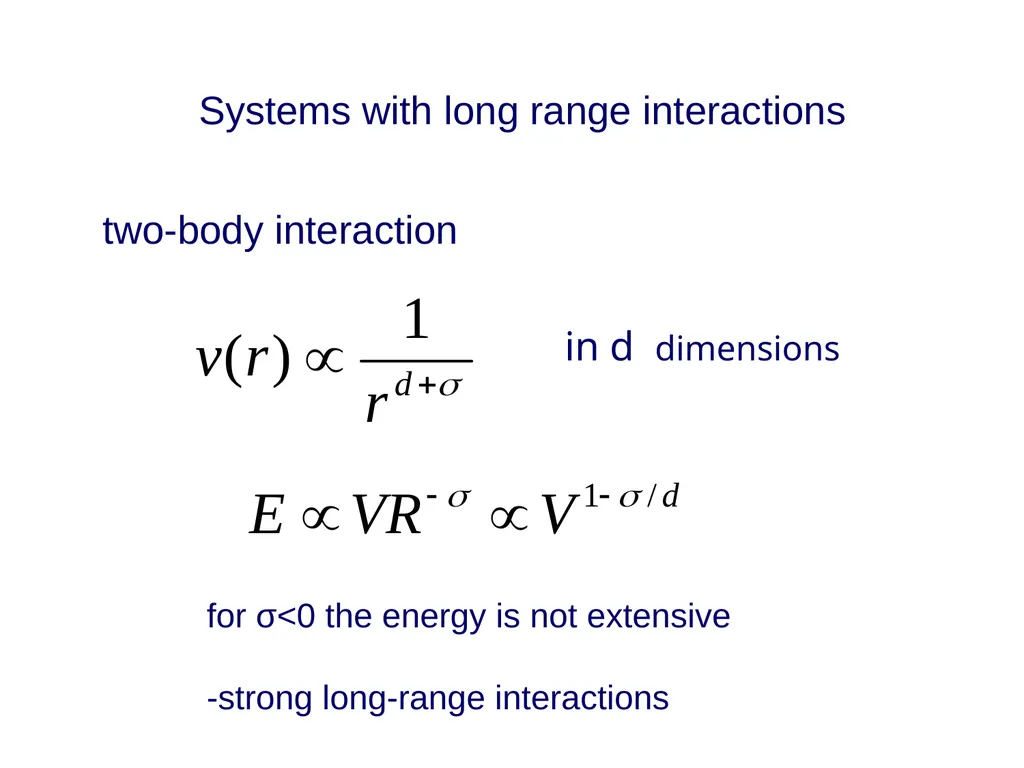
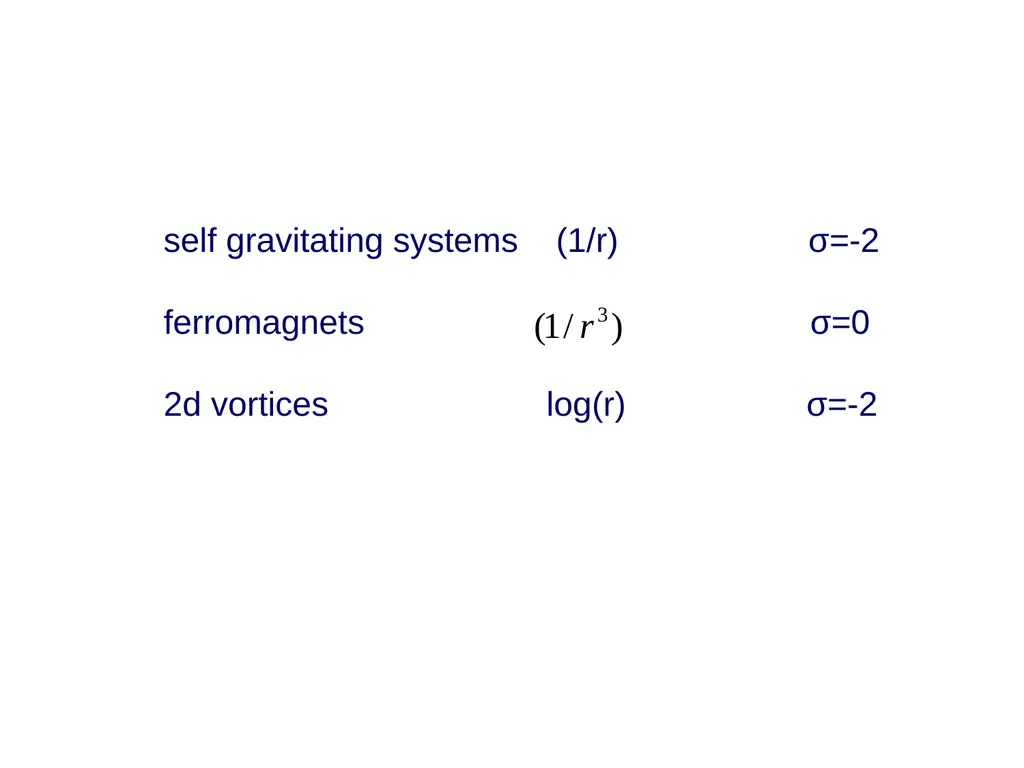
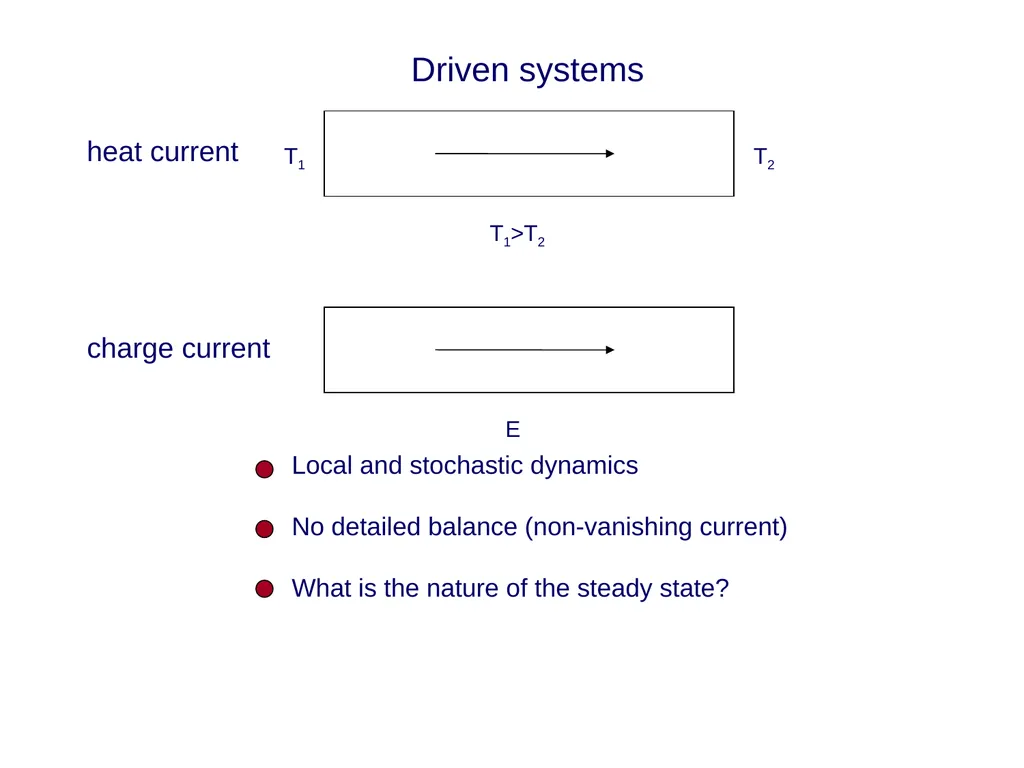
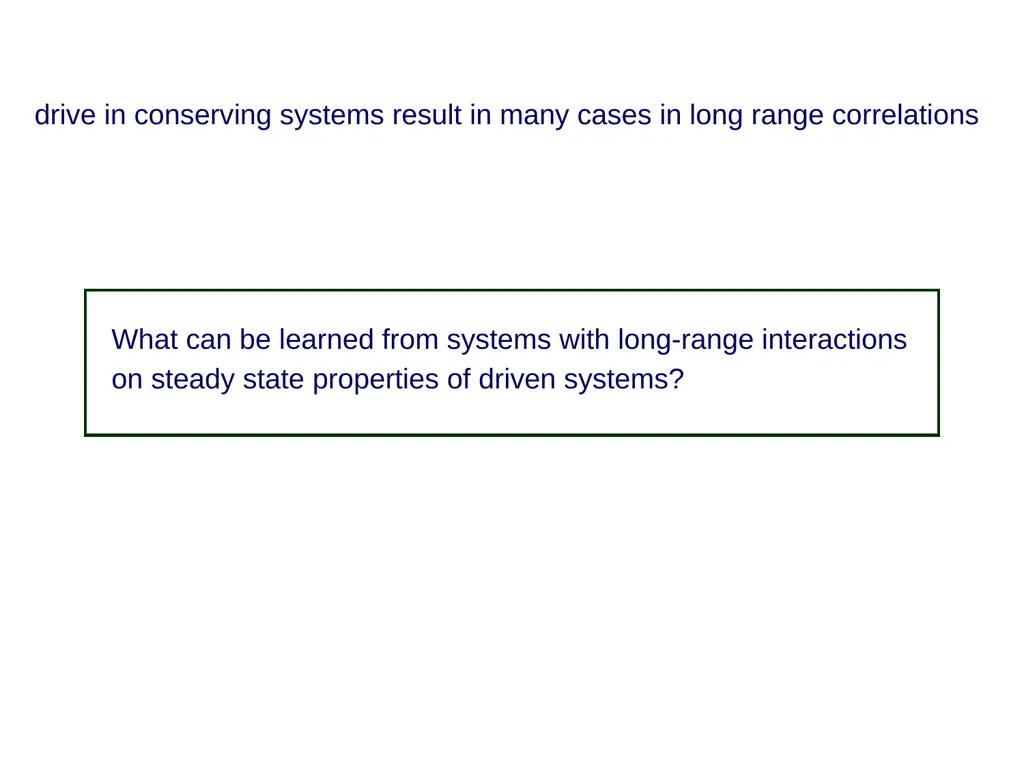
drive in conserving systems result in many cases in long range correlations What can be learned from systems with long-range interactions
on steady state properties of driven systems?<br>
06
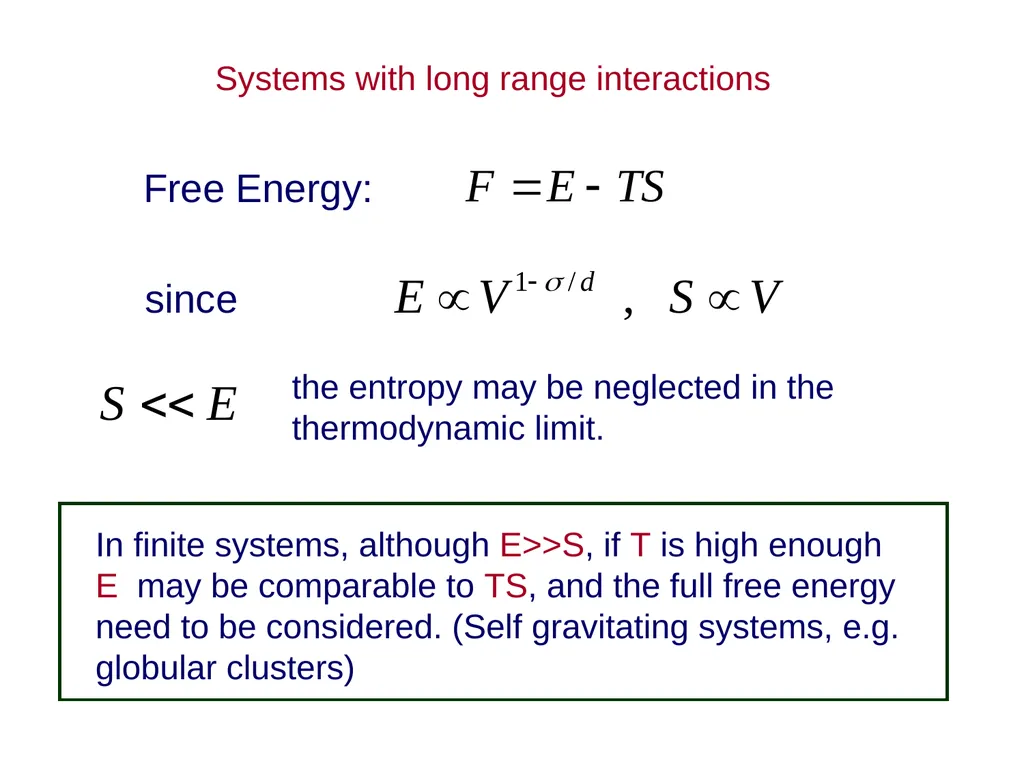
Free Energy: since Systems with long range interactions<br>
07
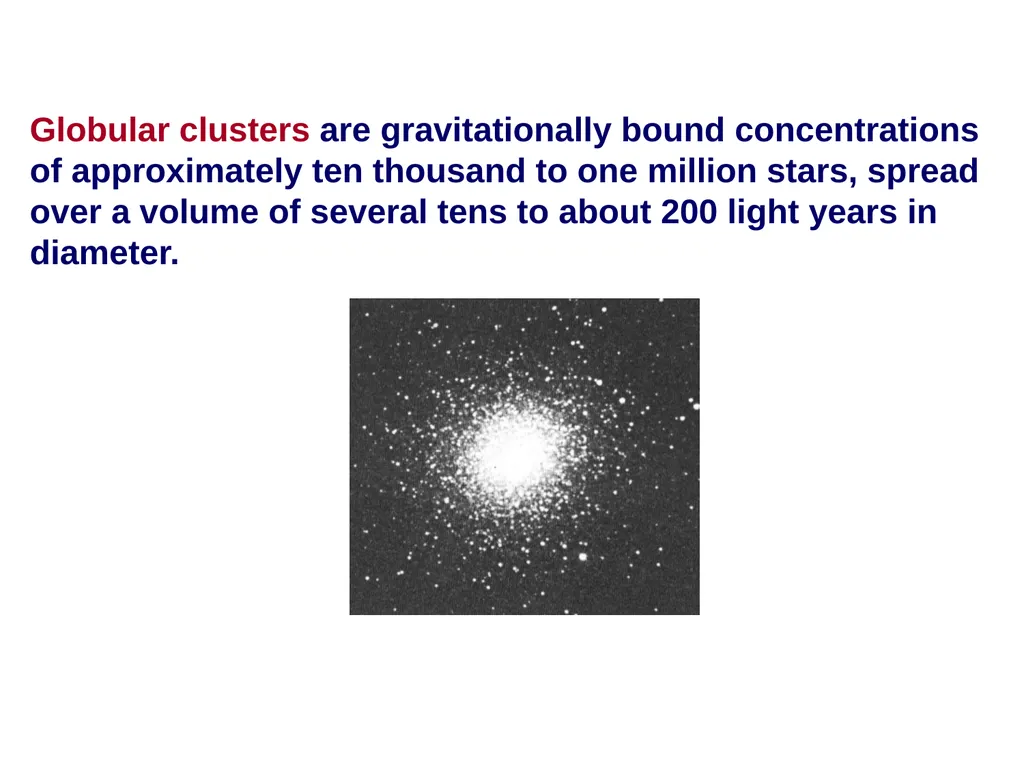
Globular clusters are gravitationally bound concentrations
of approximately ten thousand to one million stars, spread
over a volume of several tens to about 200 light years in
diameter.<br>
08
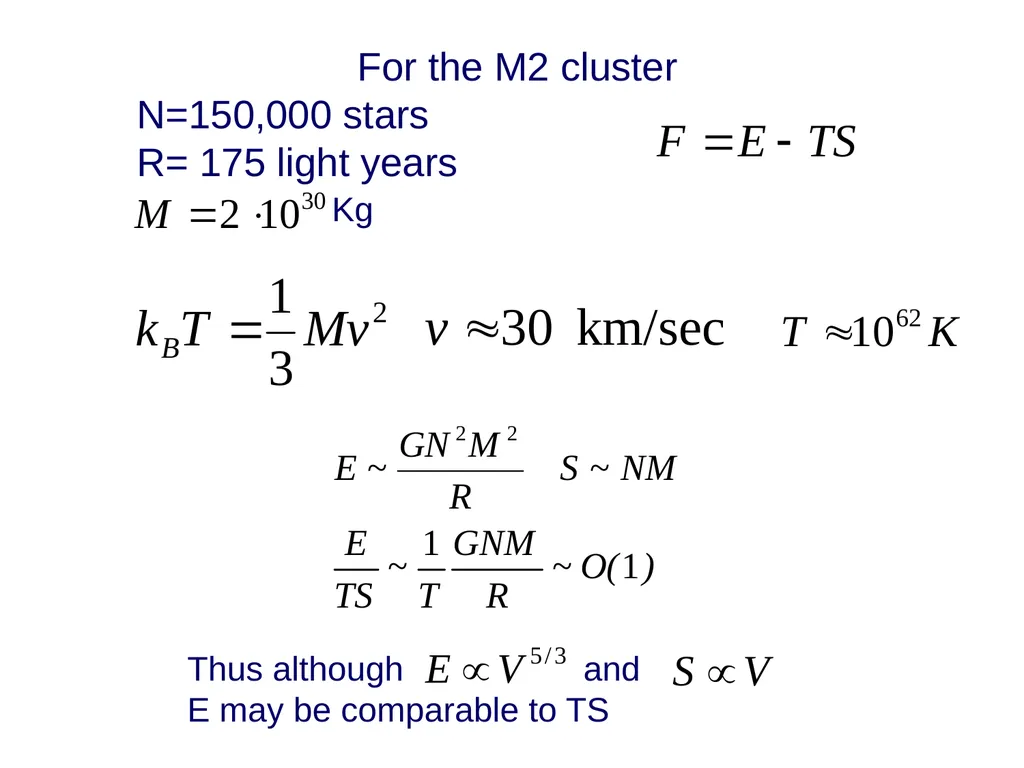
For the M2 cluster
N=150,000 stars
R= 175 light years Kg<br>
09
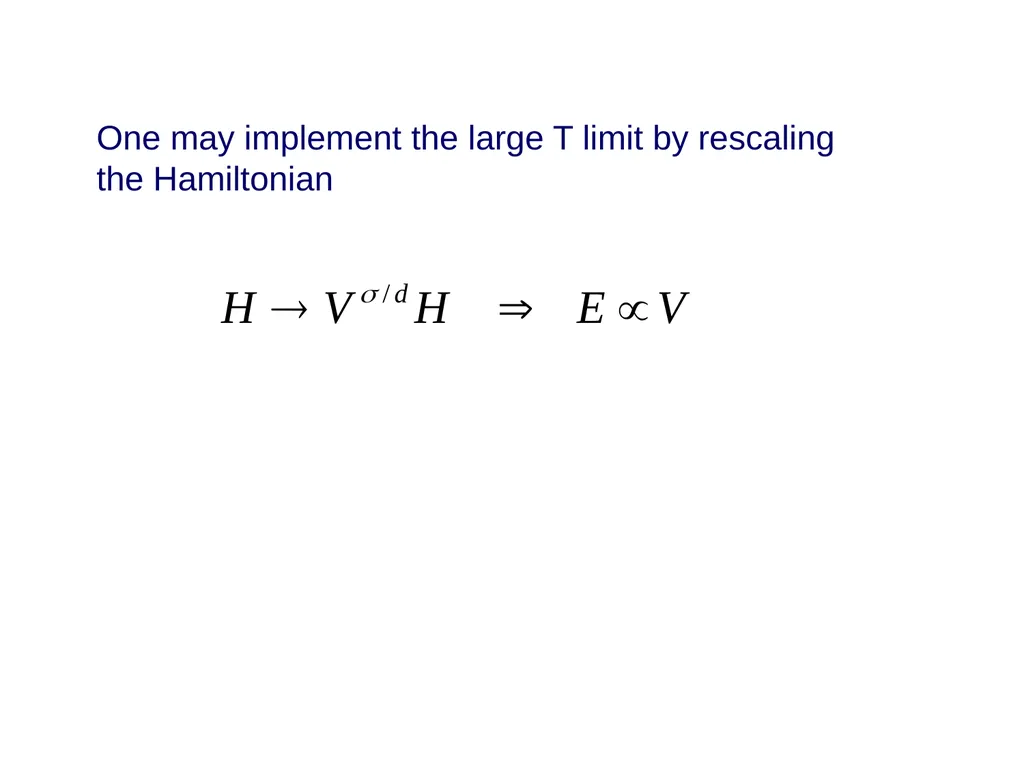
One may implement the large T limit by rescaling
the Hamiltonian<br>
10
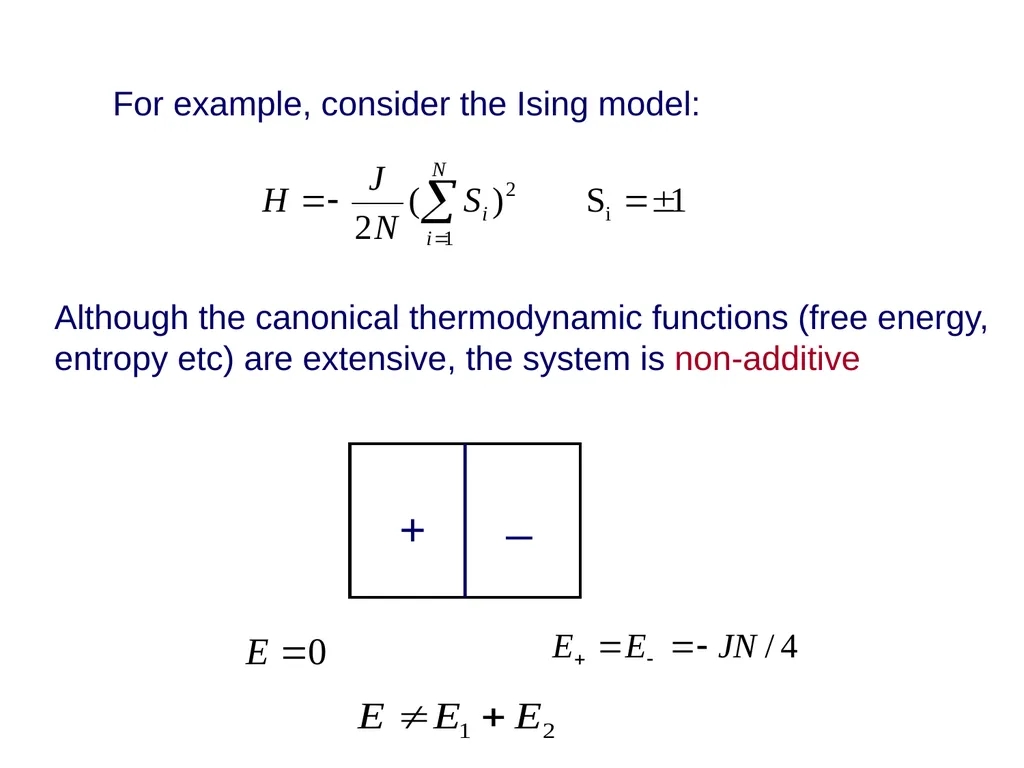
Although the canonical thermodynamic functions (free energy,
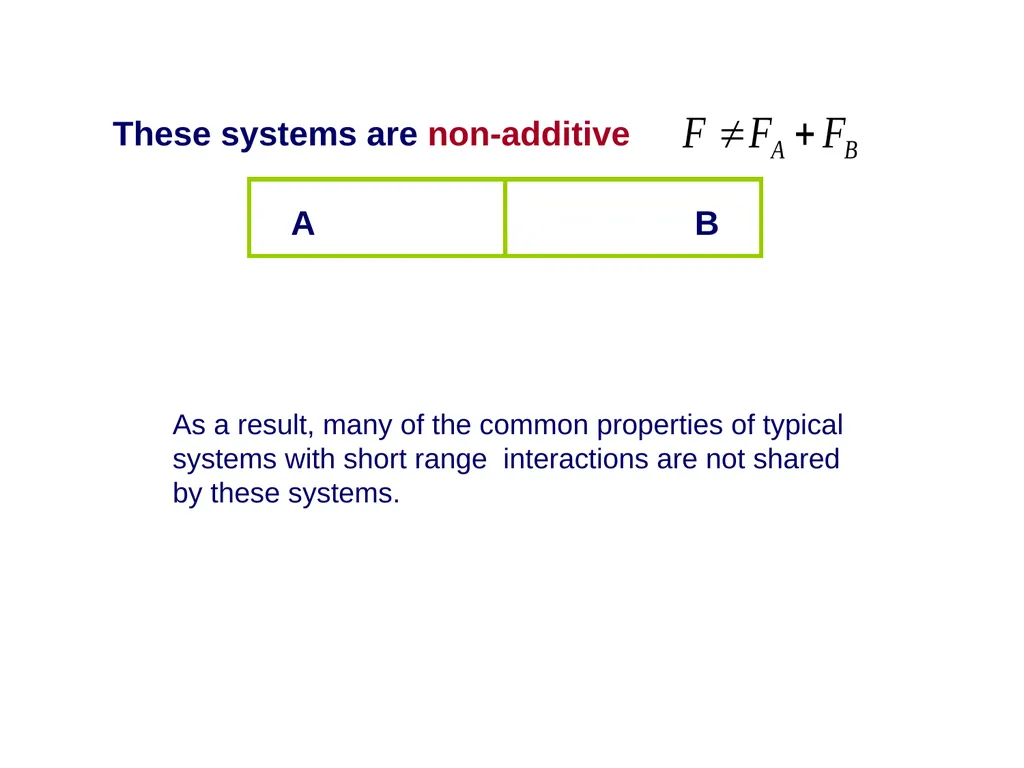
entropy etc) are extensive, the system is non-additive For example, consider the Ising model:<br>
11
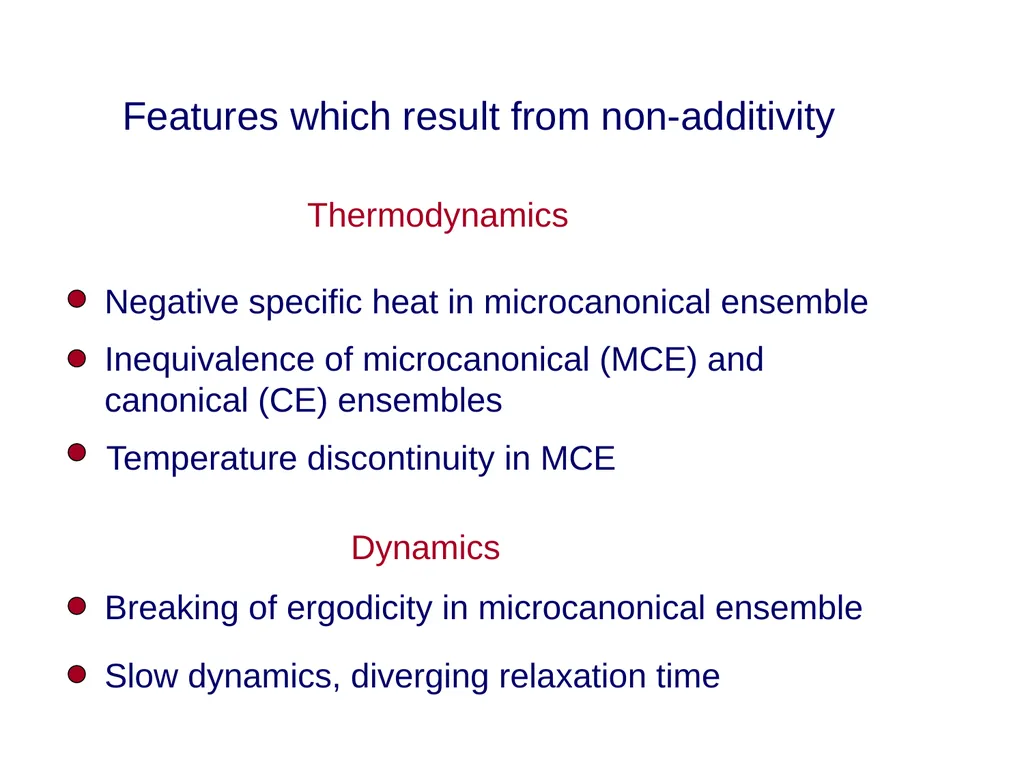
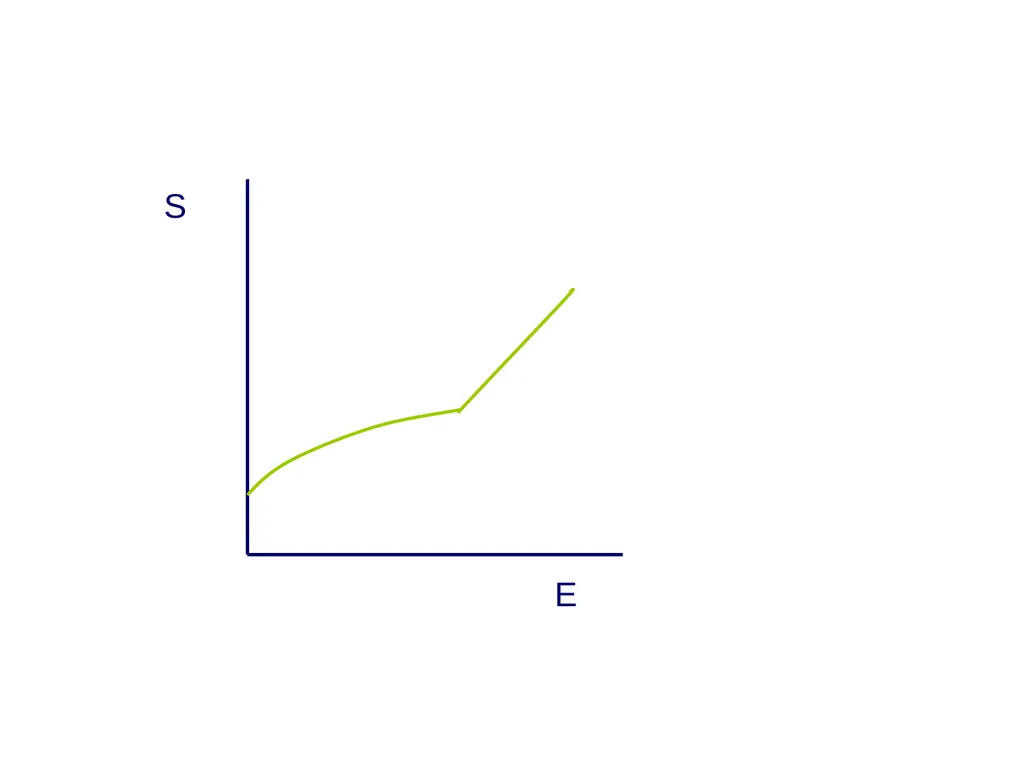
Features which result from non-additivity Negative specific heat in microcanonical ensemble Inequivalence of microcanonical (MCE) and
canonical (CE) ensembles Breaking of ergodicity in microcanonical ensemble Slow dynamics, diverging relaxation time Thermodynamics Dynamics Temperature discontinuity in MCE<br>
12
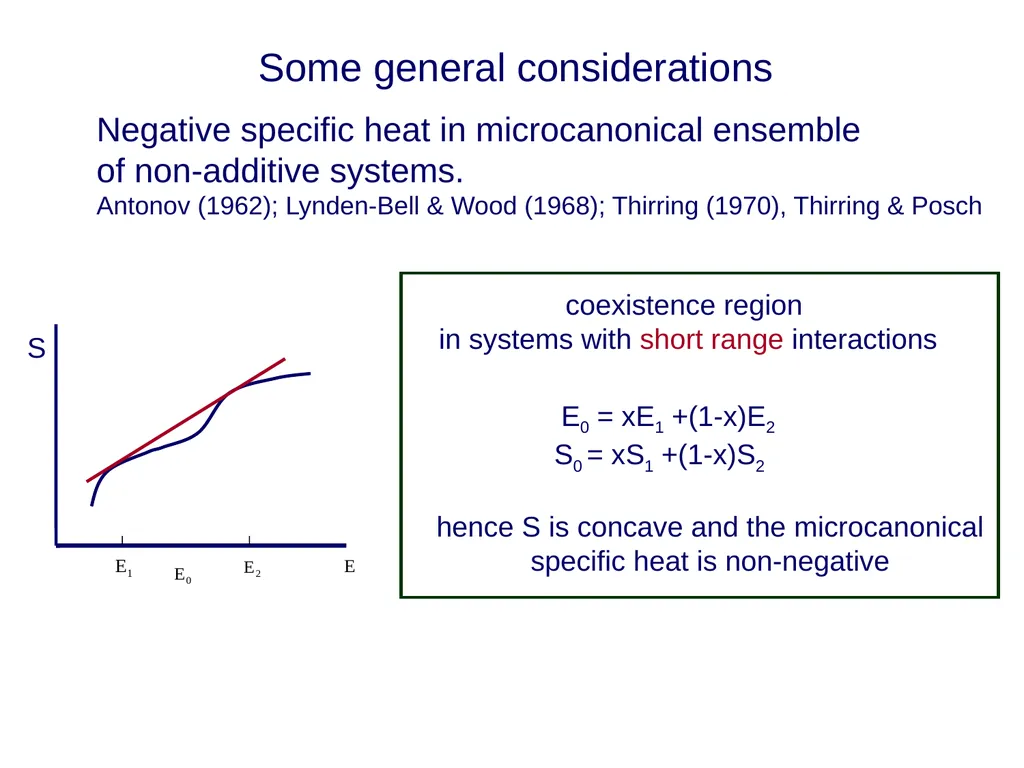
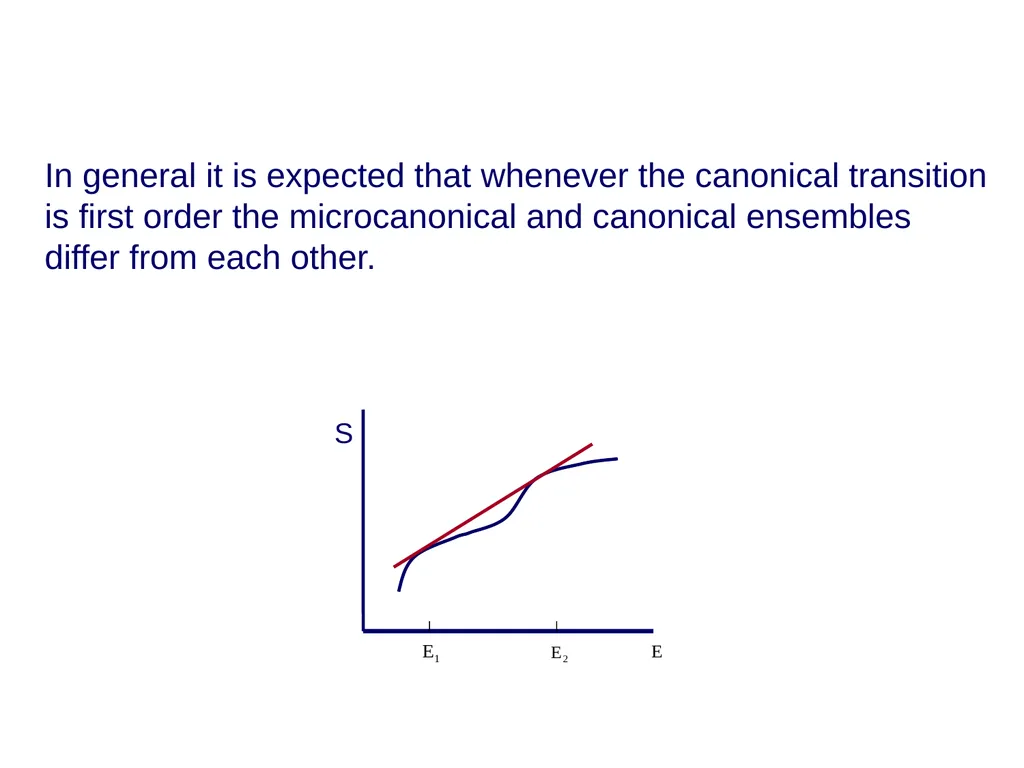
Some general considerations Negative specific heat in microcanonical ensemble
of non-additive systems.
Antonov (1962); Lynden-Bell & Wood (1968); Thirring (1970), Thirring & Posch coexistence region
in systems with short range interactions E0 = xE1 +(1-x)E2
S0 = xS1 +(1-x)S2 hence S is concave and the microcanonical
specific heat is non-negative<br>
13
On the other hand in systems with long range interactions
(non-additive), in the region E1<E<E2 S E0 = xE1 +(1-x)E2
S0 xS1 +(1-x)S2 The entropy may thus follow the homogeneous
system curve, the entropy is not concave. and
the microcanonical specific heat becomes
negative. compared with canonical ensemble where<br>
14
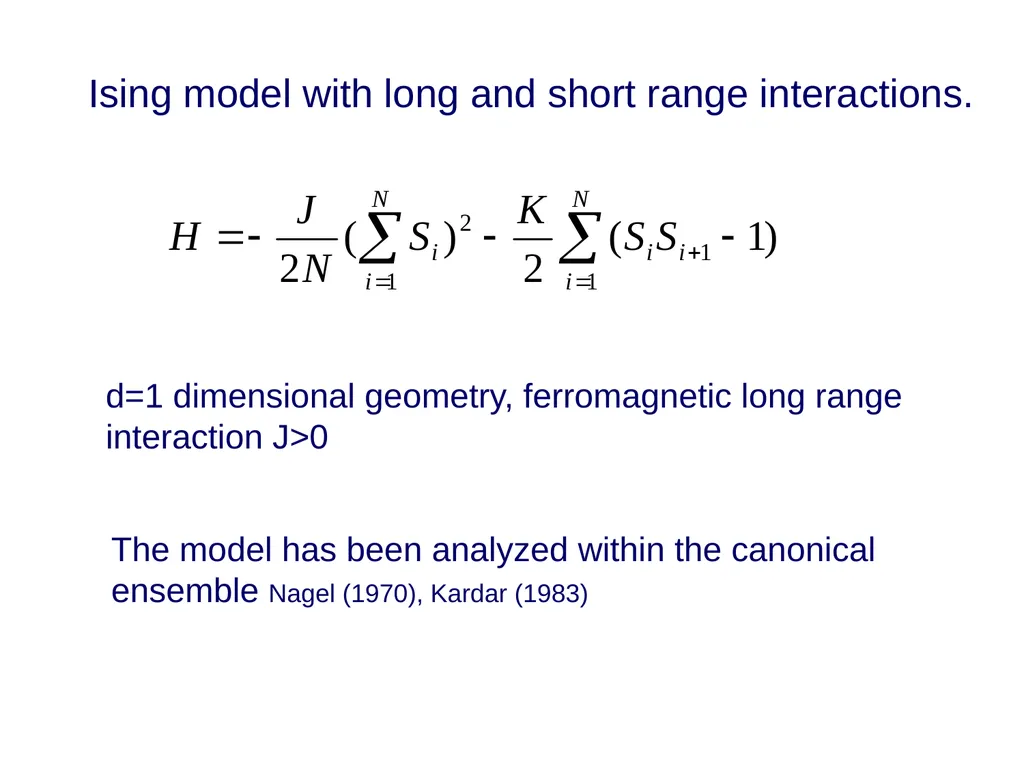
Ising model with long and short range interactions. d=1 dimensional geometry, ferromagnetic long range
interaction J>0 The model has been analyzed within the canonical
ensemble Nagel (1970), Kardar (1983)<br>
15
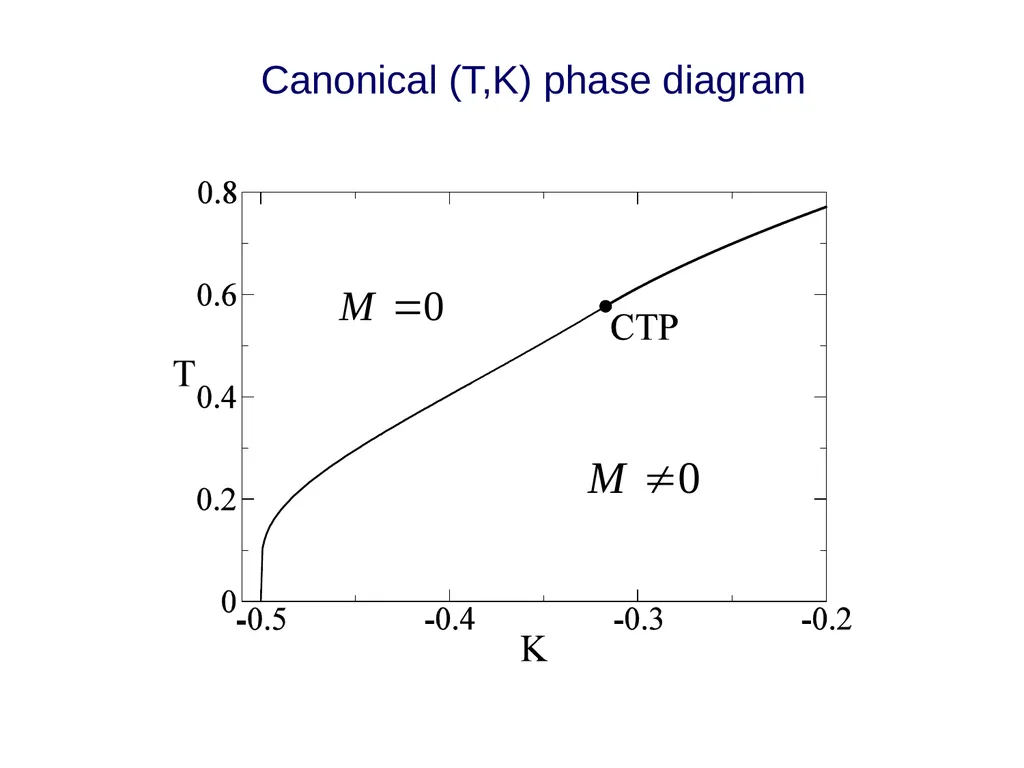
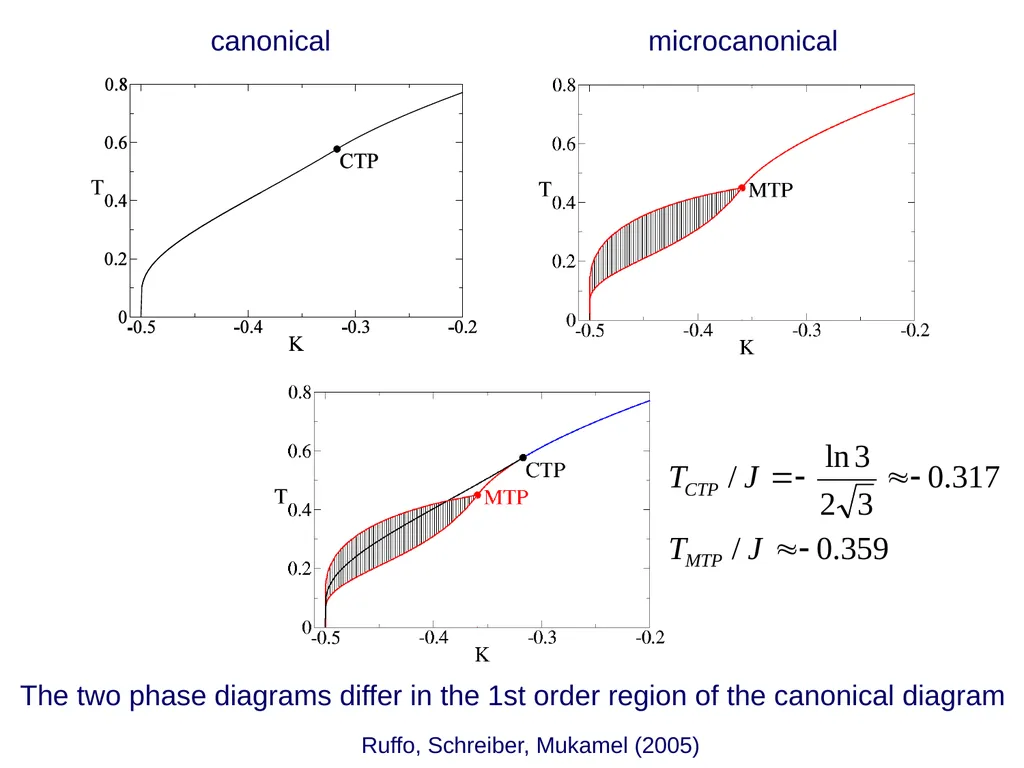
Canonical (T,K) phase diagram<br>
16
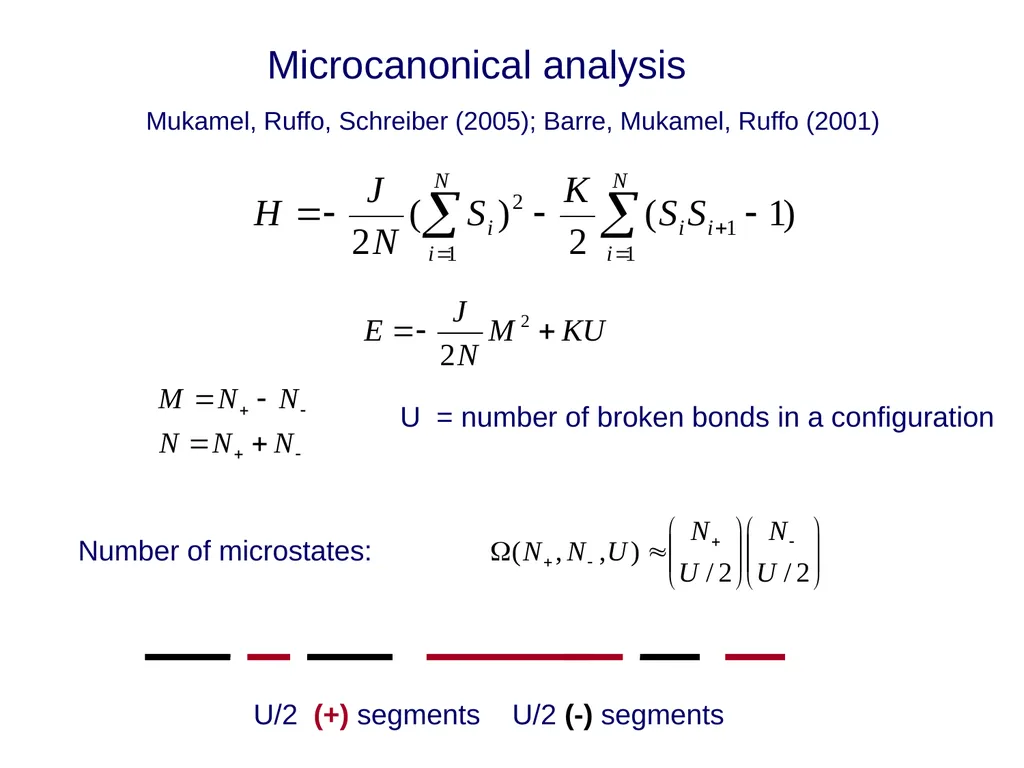
Microcanonical analysis U = number of broken bonds in a configuration Number of microstates: Mukamel, Ruffo, Schreiber (2005); Barre, Mukamel, Ruffo (2001)<br>
17
s=S/N , =E/N , m=M/N , u=U/N but<br>
18
canonical microcanonical The two phase diagrams differ in the 1st order region of the canonical diagram Ruffo, Schreiber, Mukamel (2005)<br>
19
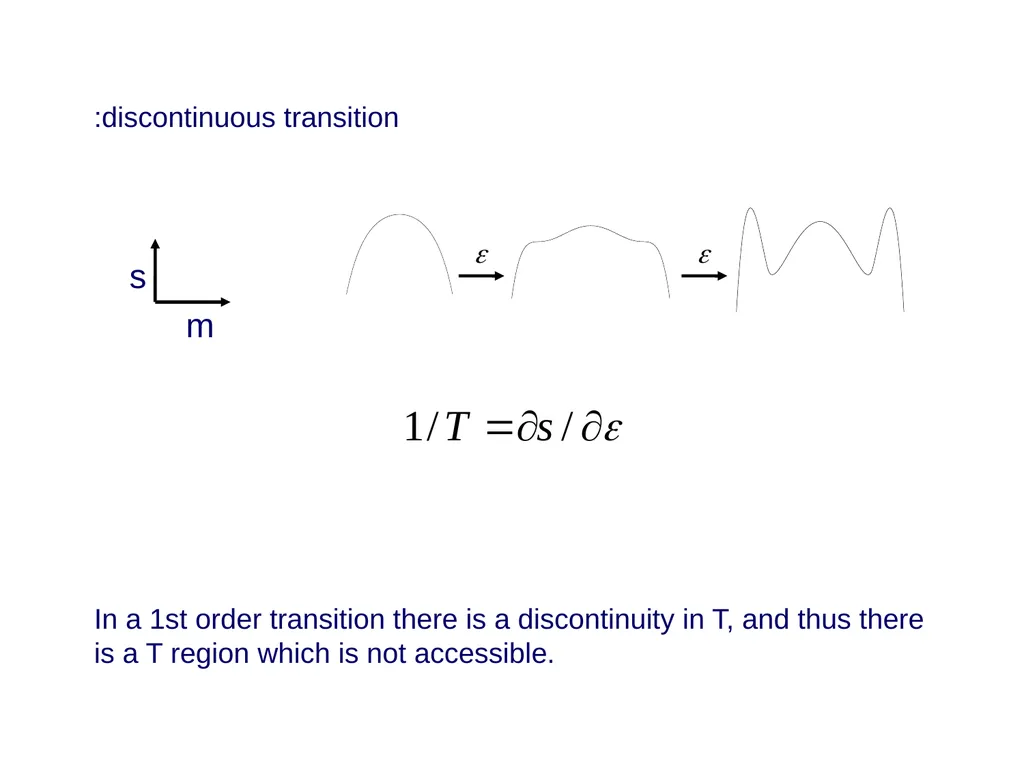
discontinuous transition: In a 1st order transition there is a discontinuity in T, and thus there
is a T region which is not accessible.<br>
21
In general it is expected that whenever the canonical transition
is first order the microcanonical and canonical ensembles
differ from each other.<br>
22
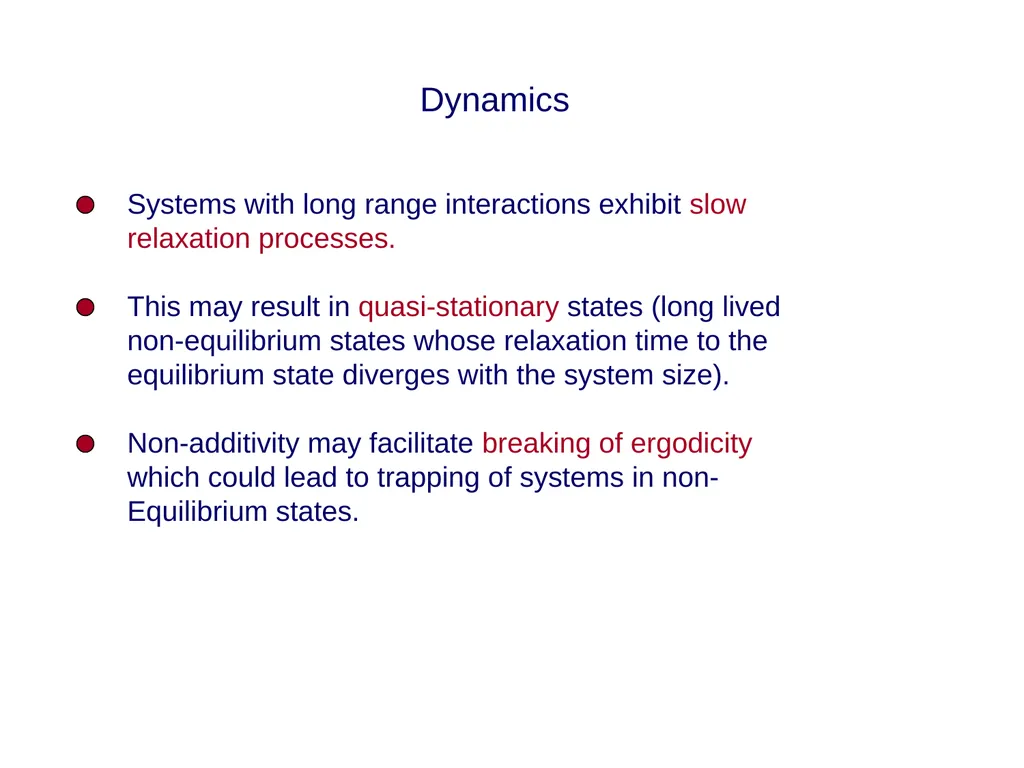
Dynamics Systems with long range interactions exhibit slow
relaxation processes.
This may result in quasi-stationary states (long lived
non-equilibrium states whose relaxation time to the
equilibrium state diverges with the system size).
Non-additivity may facilitate breaking of ergodicity
which could lead to trapping of systems in non-
Equilibrium states.<br>
24
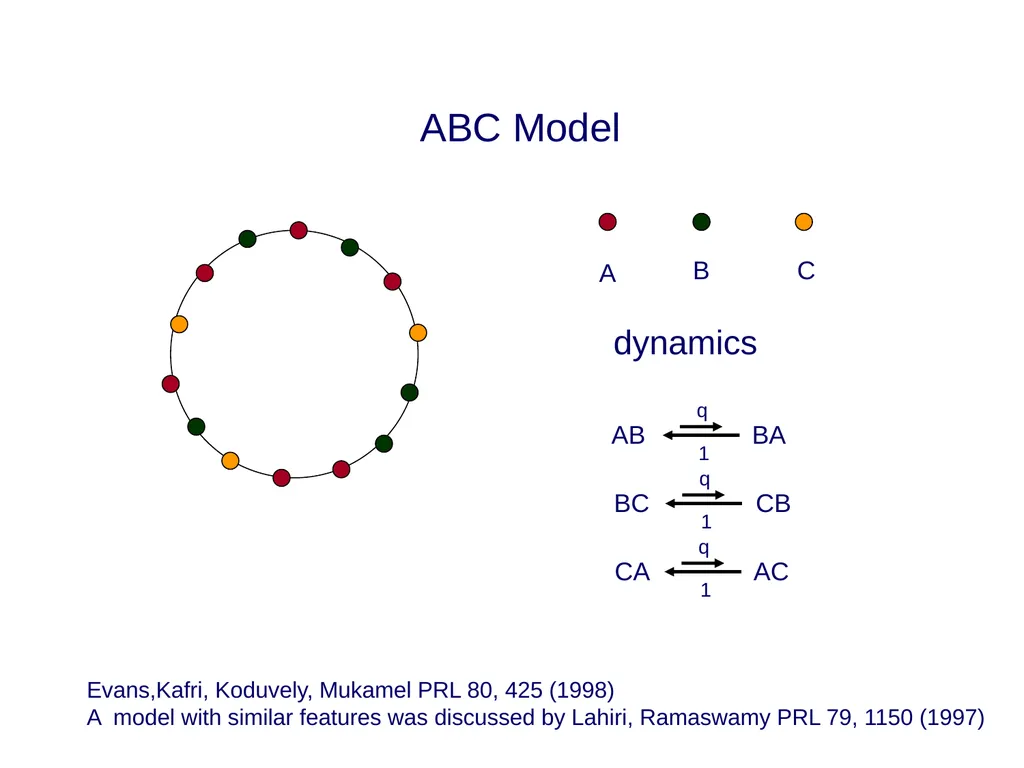
ABC model
One dimensional driven model with stochastic local dynamics
which results in phase separation (long range order) where the
steady state can be expressed as a Boltzmann distribution of an
effective energy with long-range interactions.<br>
25
ABC Model dynamics Evans,Kafri, Koduvely, Mukamel PRL 80, 425 (1998)
A model with similar features was discussed by Lahiri, Ramaswamy PRL 79, 1150 (1997)<br>
26
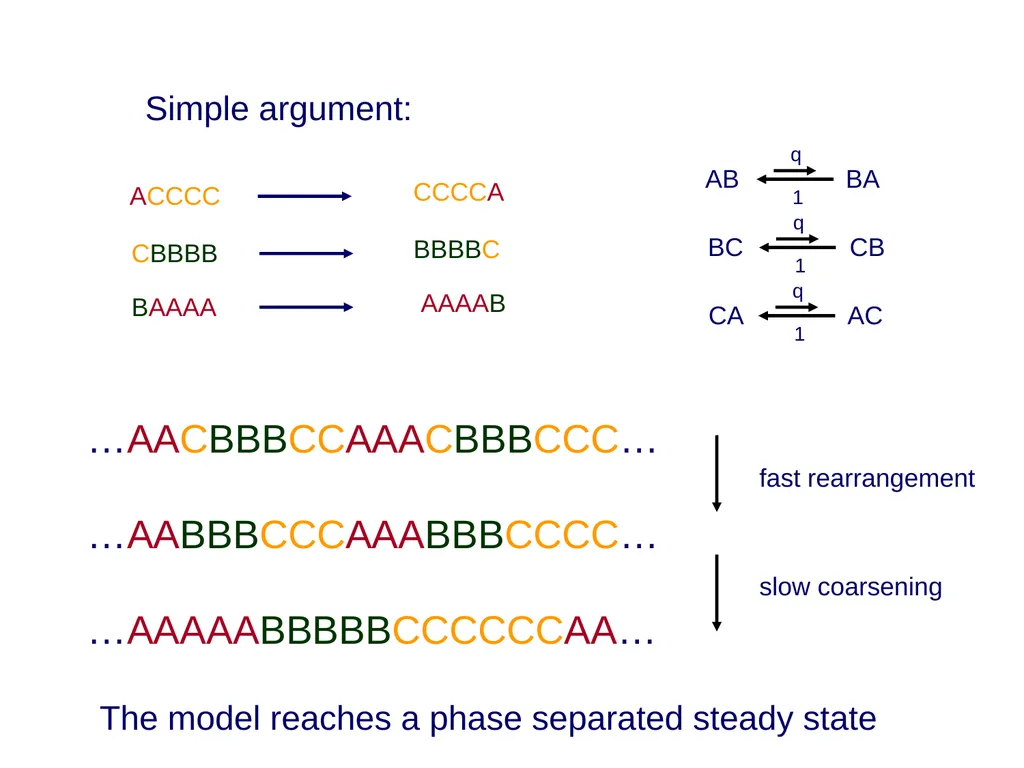
Simple argument: …AACBBBCCAAACBBBCCC…
…AABBBCCCAAABBBCCCC…
…AAAAABBBBBCCCCCCAA… fast rearrangement slow coarsening The model reaches a phase separated steady state<br>
27
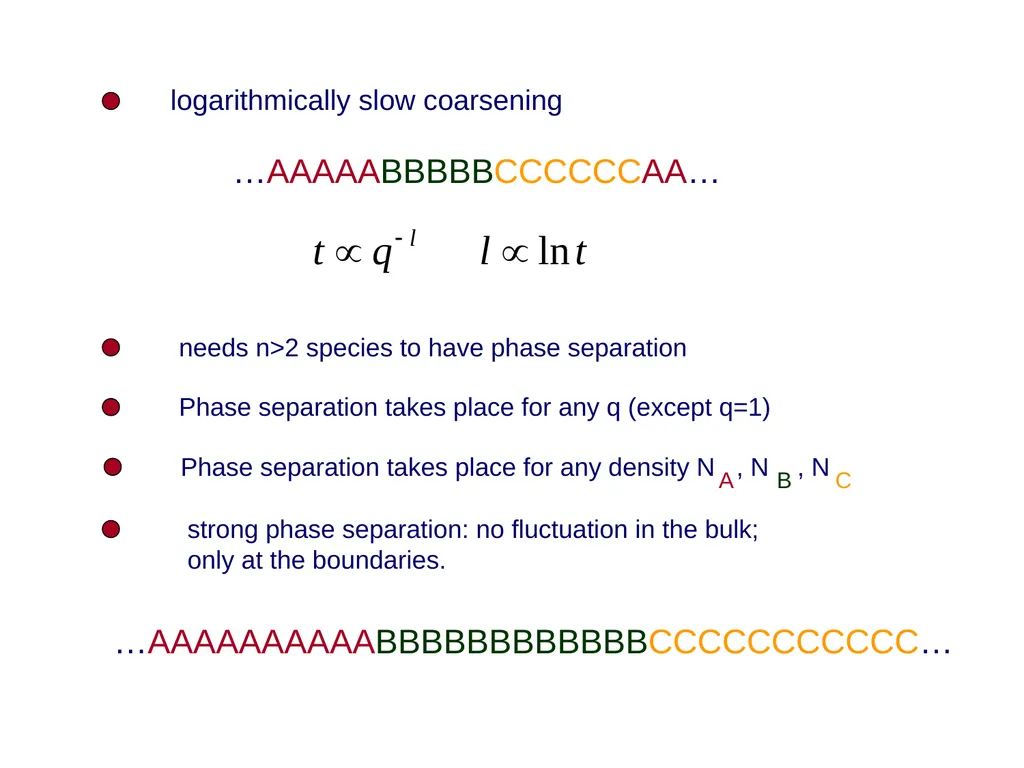
logarithmically slow coarsening …AAAAABBBBBCCCCCCAA… needs n>2 species to have phase separation strong phase separation: no fluctuation in the bulk;
only at the boundaries. …AAAAAAAAAABBBBBBBBBBBBCCCCCCCCCCC… Phase separation takes place for any q (except q=1) Phase separation takes place for any density N , N , N A B C<br>
28
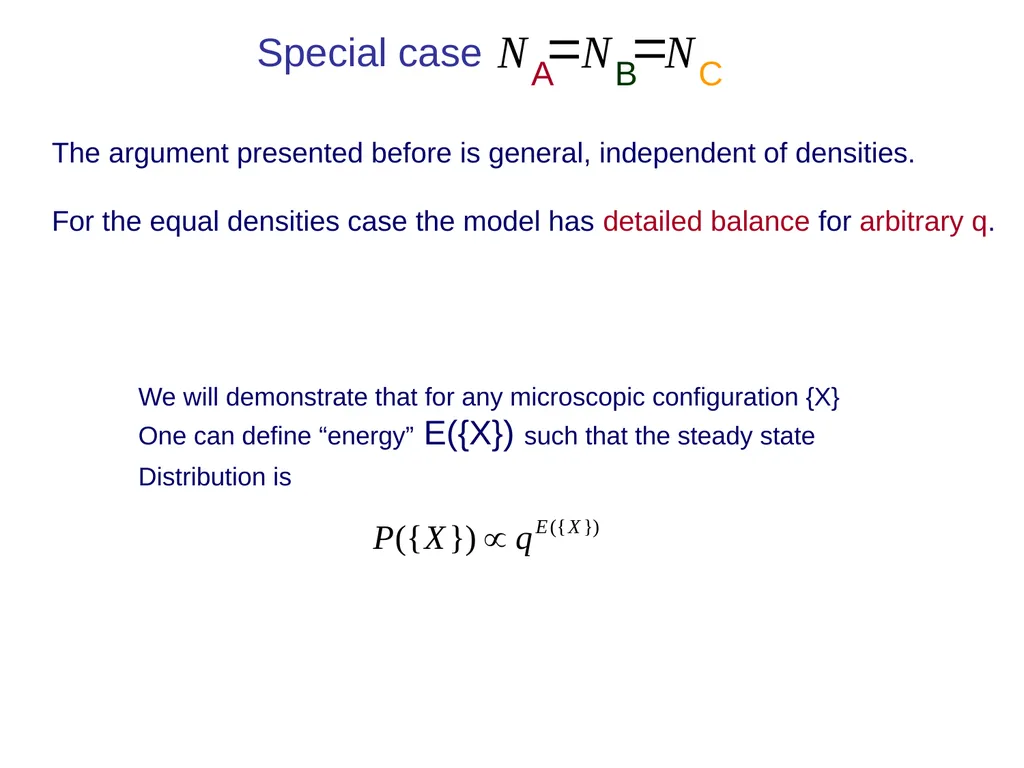
Special case The argument presented before is general, independent of densities.
For the equal densities case the model has detailed balance for arbitrary q. We will demonstrate that for any microscopic configuration {X}
One can define “energy” E({X}) such that the steady state
Distribution is<br>
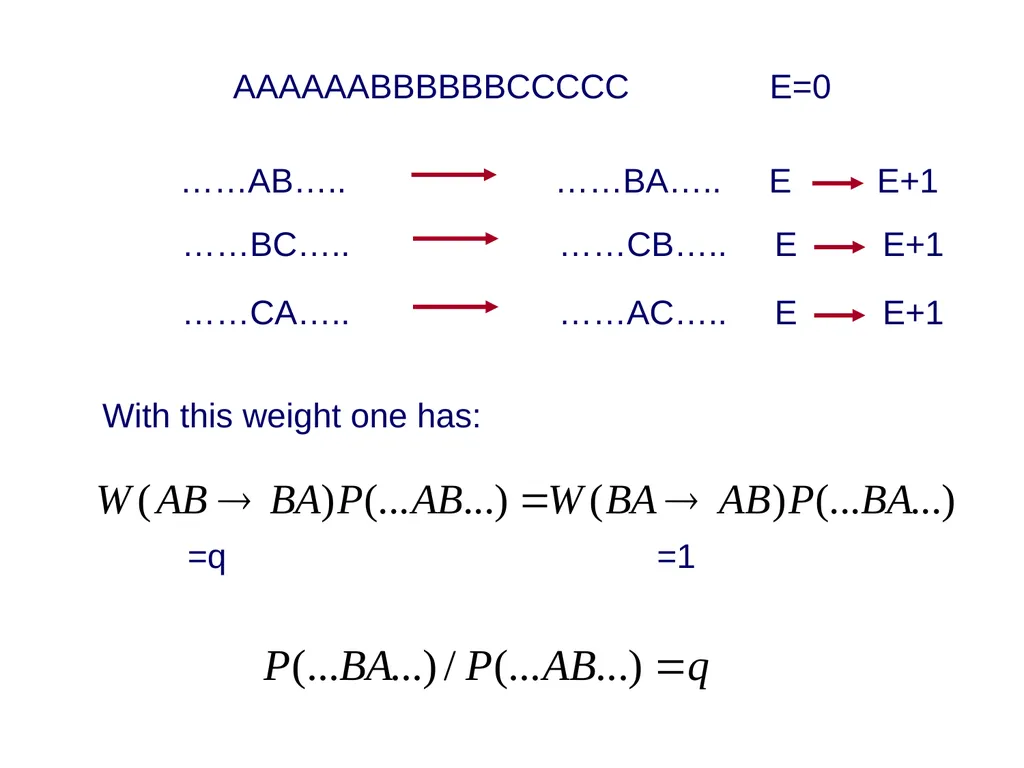
29
AAAAAABBBBBBCCCCC E=0 With this weight one has: =q =1<br>
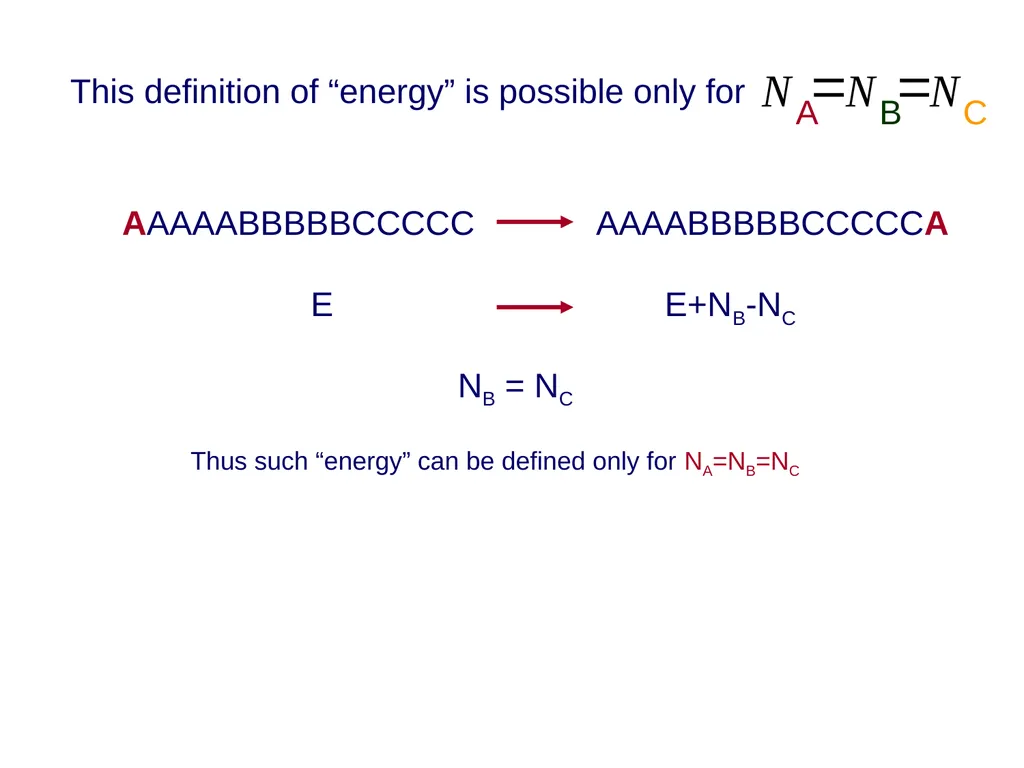
30
AAAAABBBBBCCCCC AAAABBBBBCCCCCA E E+NB-NC NB = NC Thus such “energy” can be defined only for NA=NB=NC This definition of “energy” is possible only for<br>
31
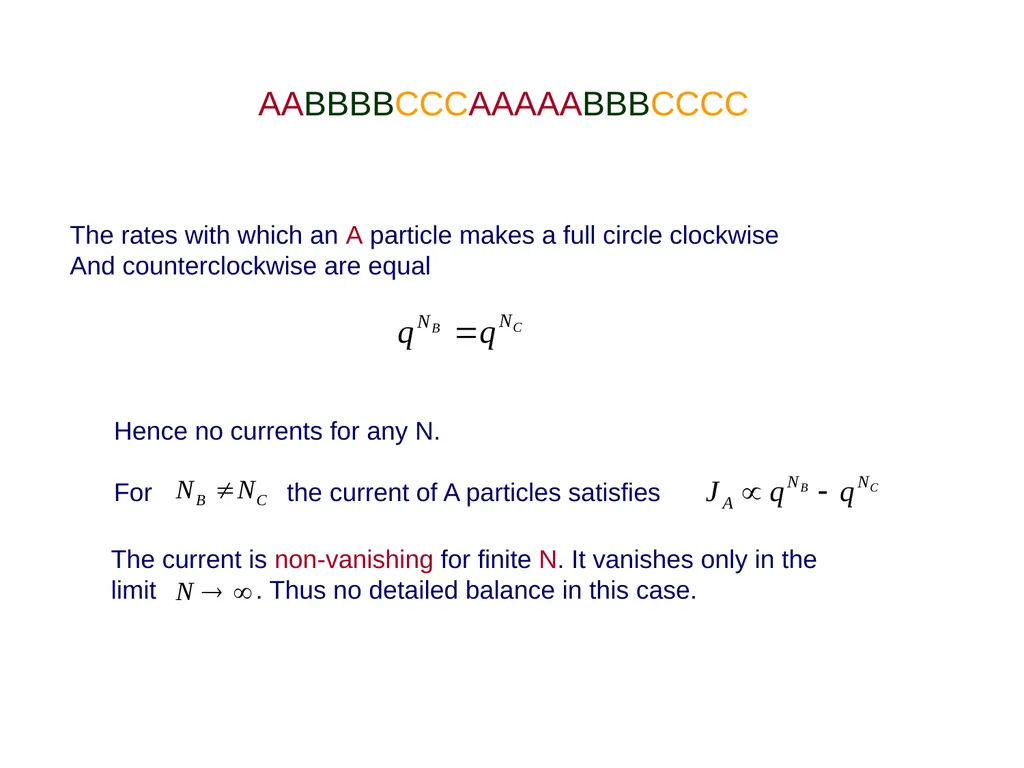
AABBBBCCCAAAAABBBCCCC The rates with which an A particle makes a full circle clockwise
And counterclockwise are equal Hence no currents for any N.
For the current of A particles satisfies<br>
32
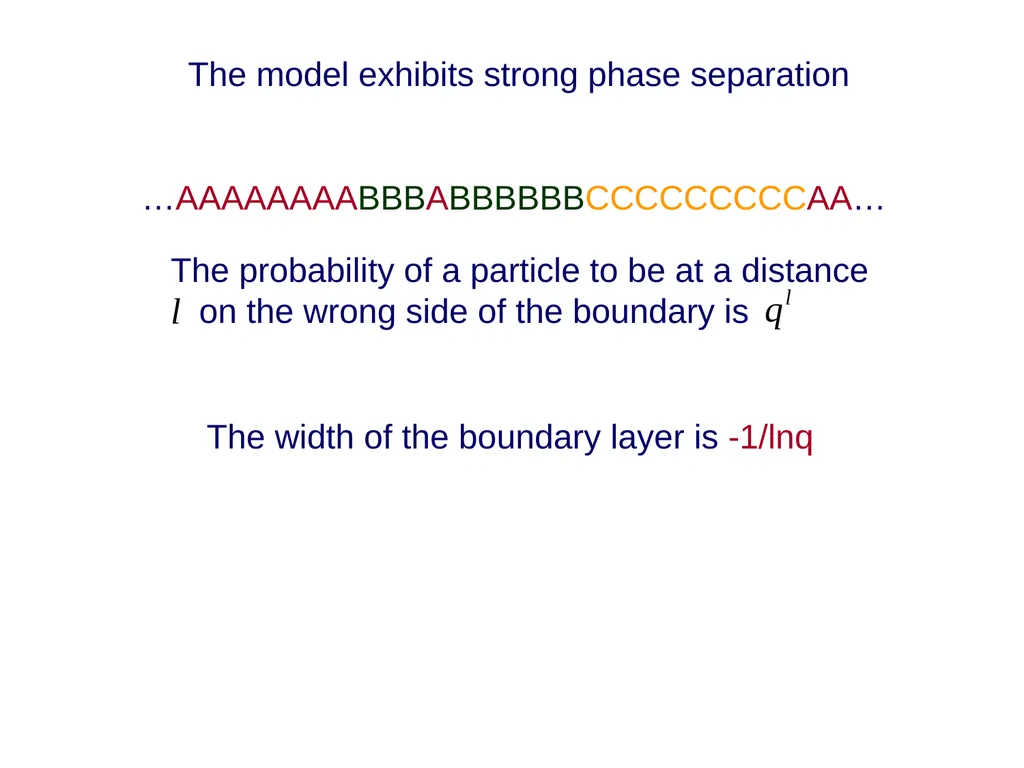
…AAAAAAAABBBABBBBBBCCCCCCCCCAA… The model exhibits strong phase separation The probability of a particle to be at a distance
on the wrong side of the boundary is The width of the boundary layer is -1/lnq<br>
33
The “energy” E may be written as Local dynamics<br>
34
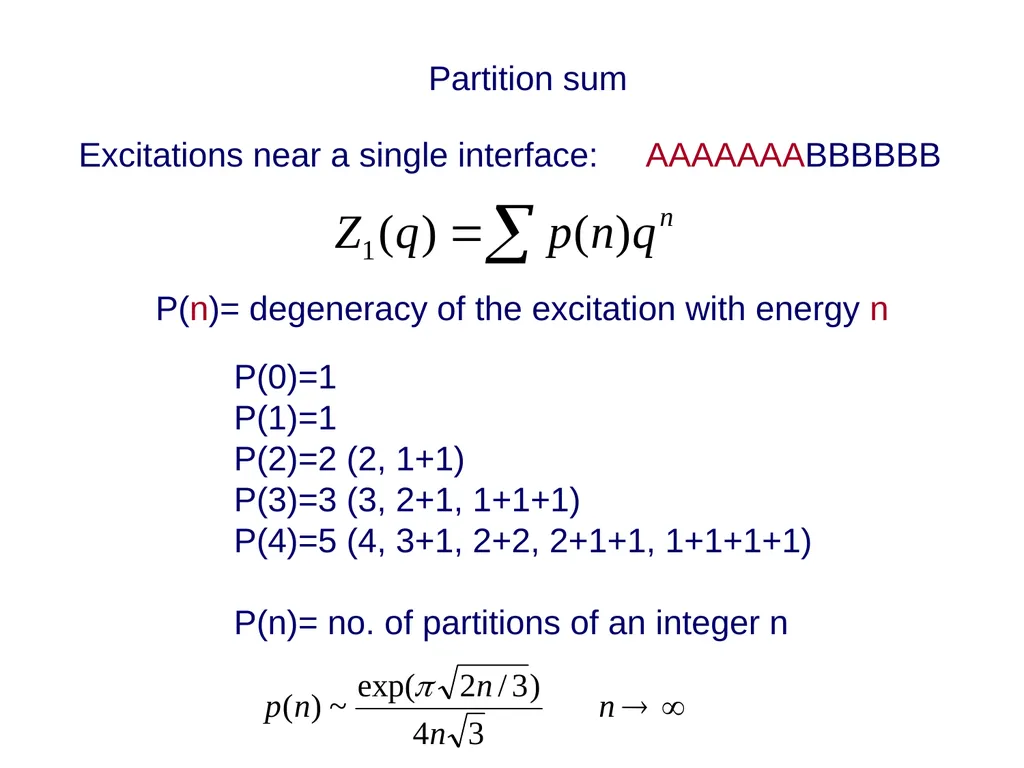
Partition sum Excitations near a single interface: AAAAAAABBBBBB P(n)= degeneracy of the excitation with energy n P(0)=1
P(1)=1
P(2)=2 (2, 1+1)
P(3)=3 (3, 2+1, 1+1+1)
P(4)=5 (4, 3+1, 2+2, 2+1+1, 1+1+1+1)
P(n)= no. of partitions of an integer n<br>
35
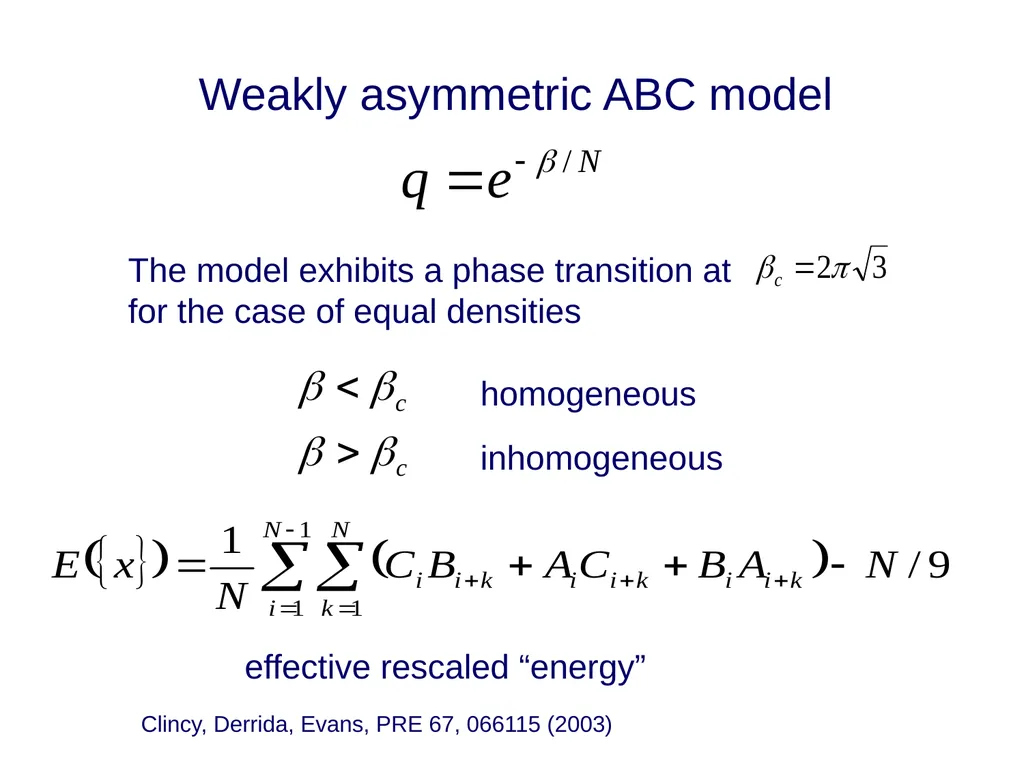
Weakly asymmetric ABC model effective rescaled “energy” Clincy, Derrida, Evans, PRE 67, 066115 (2003)<br>
36
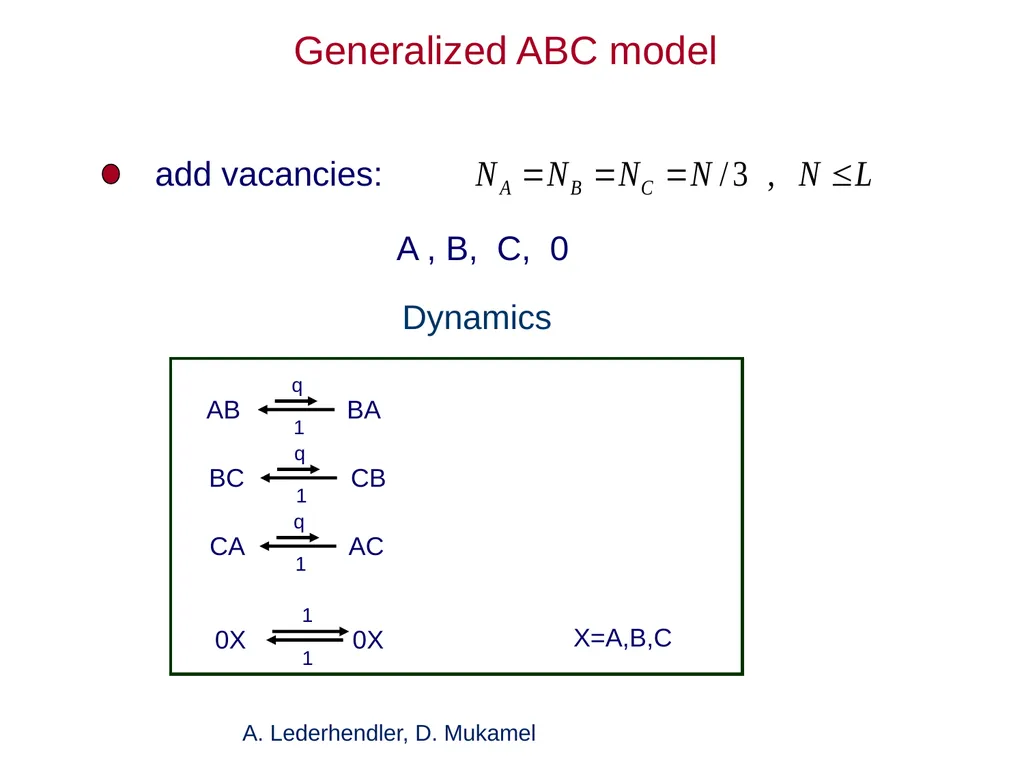
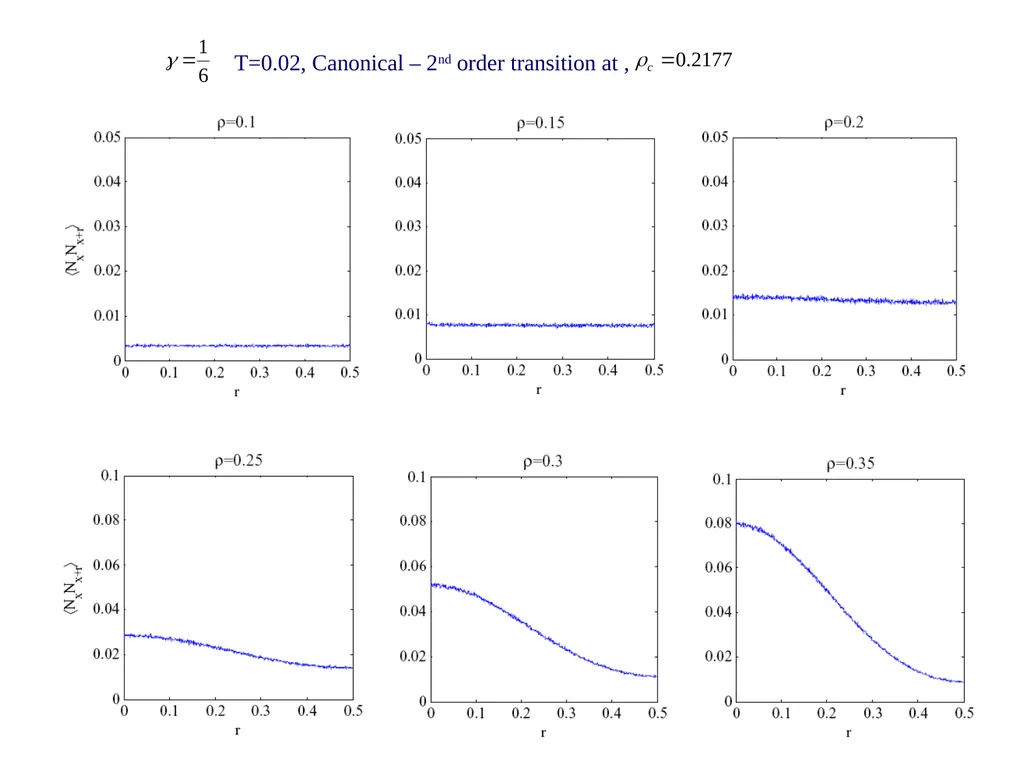
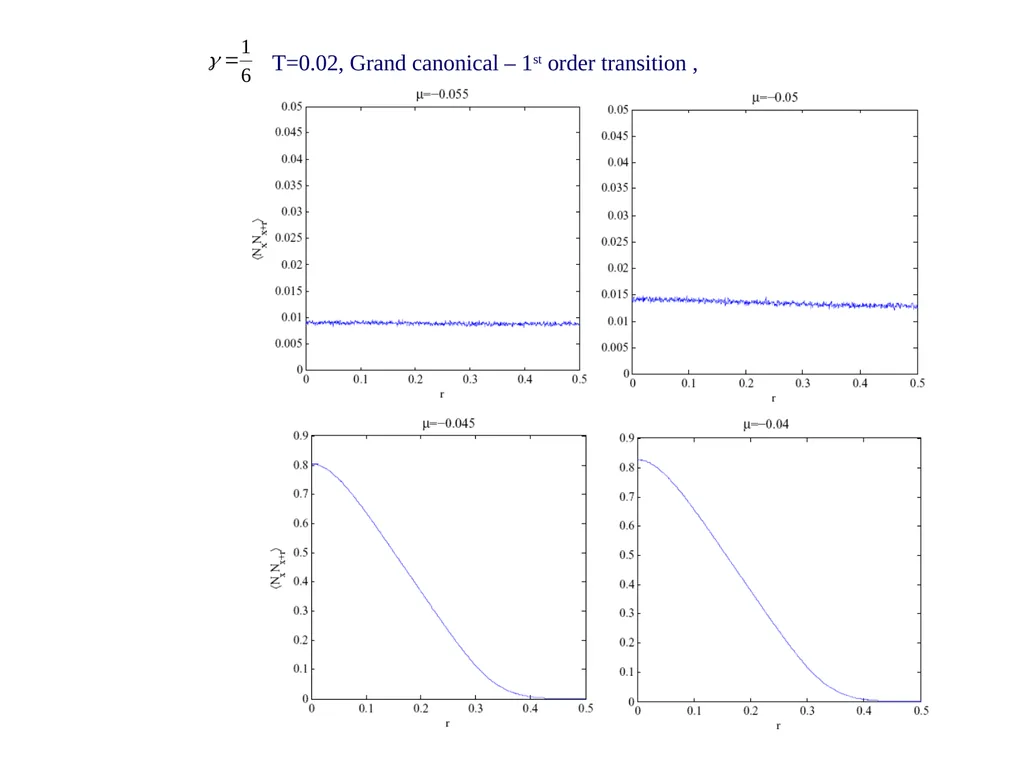
Generalized ABC model add vacancies: A , B, C, 0 Dynamics A. Lederhendler, D. Mukamel<br>
37
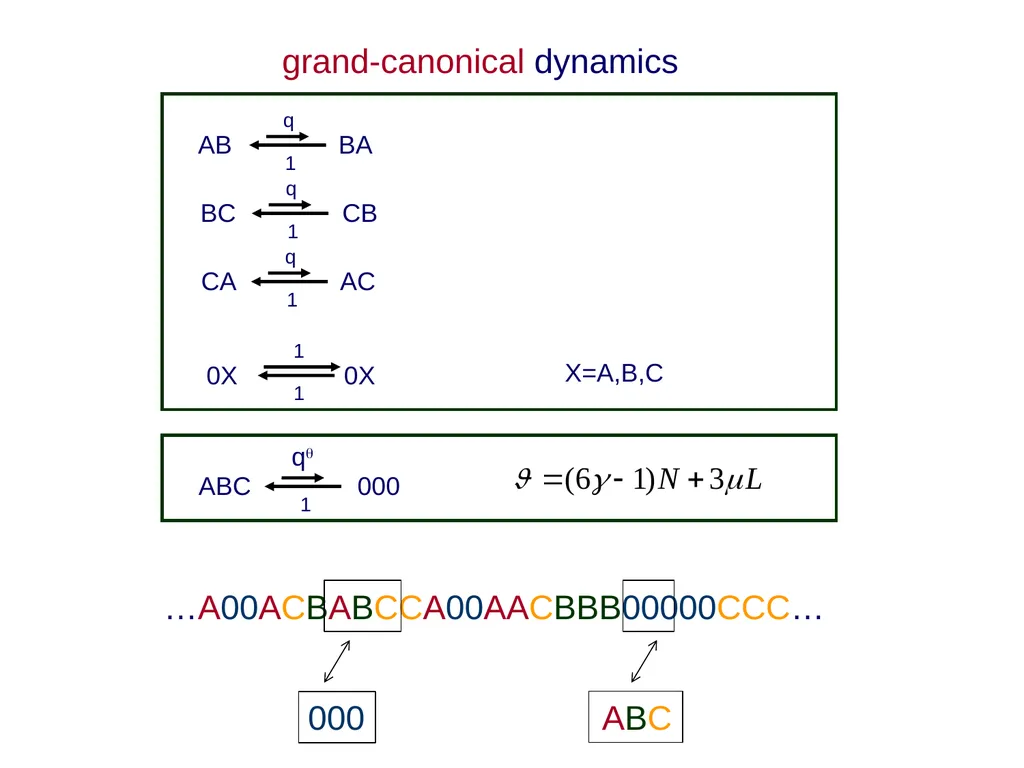
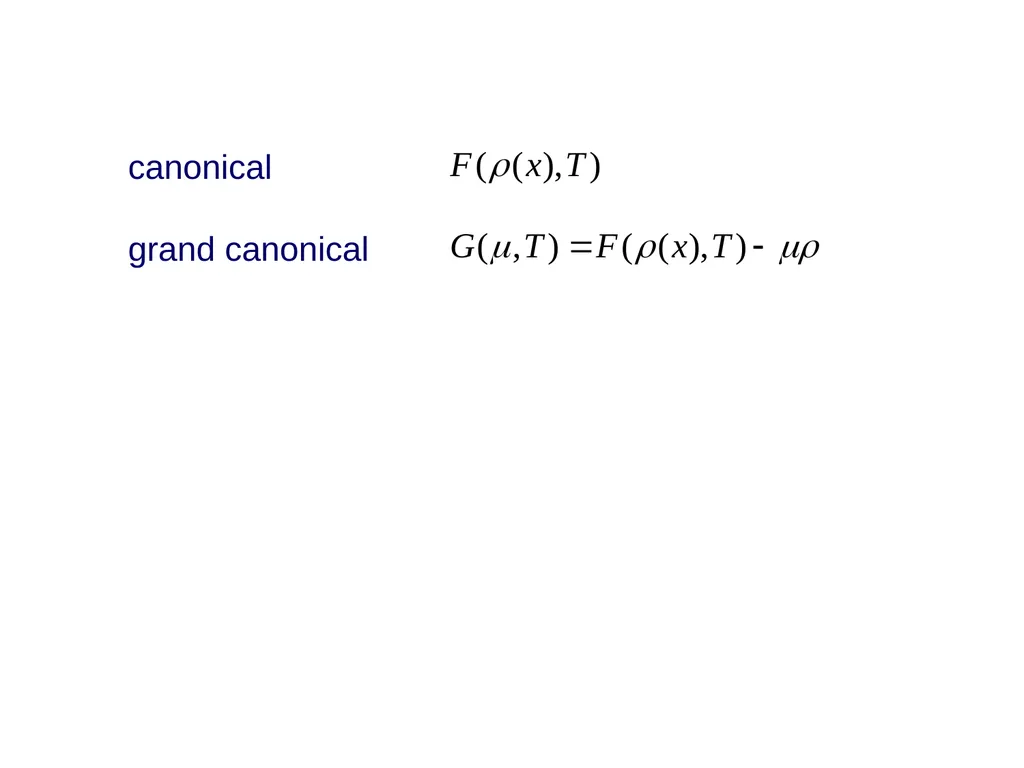
grand-canonical dynamics<br>
38
For NA=NB=NC: there is detailed balance with respect to<br>
39
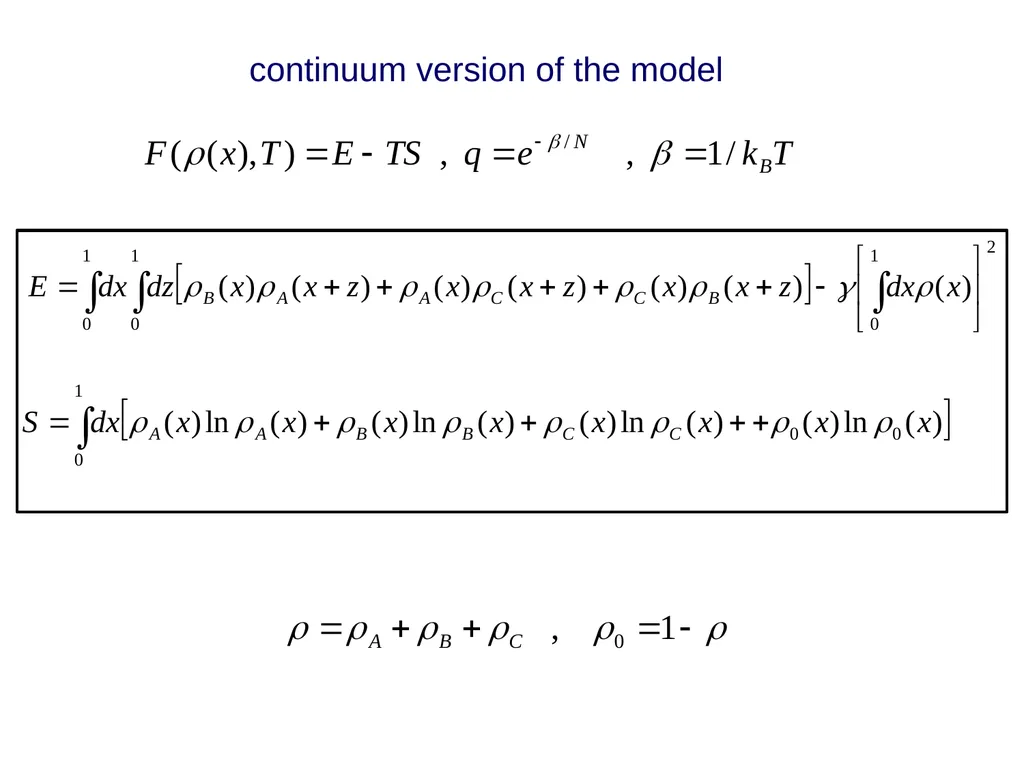
continuum version of the model<br>
40
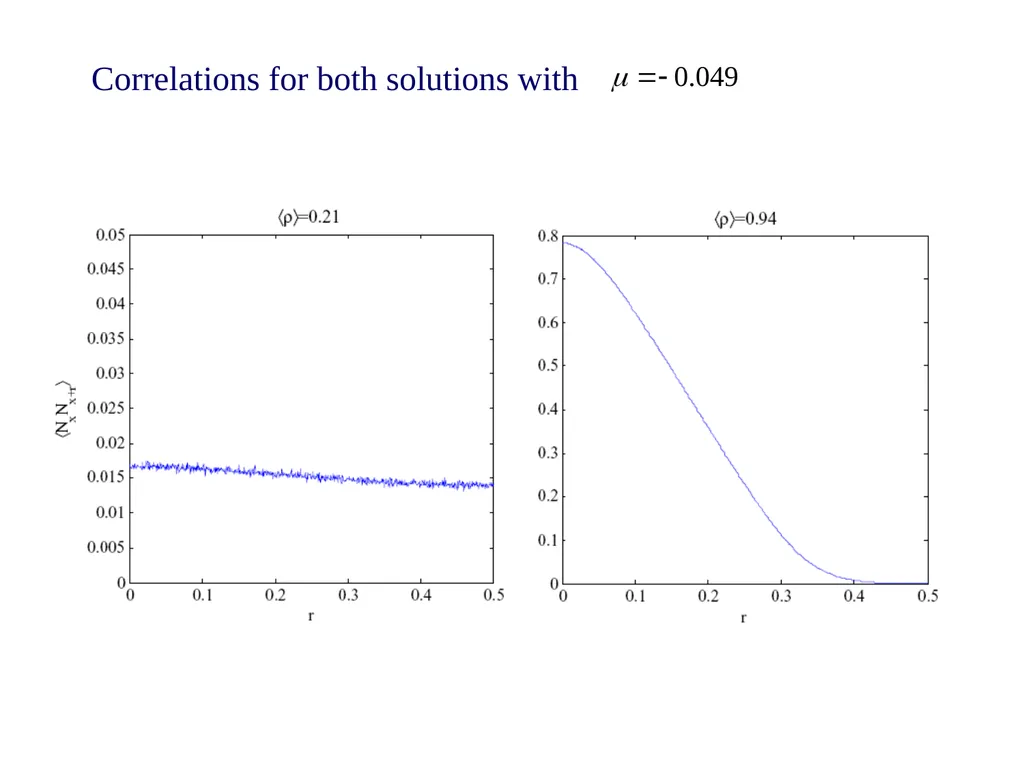
Correlations for both solutions with<br>
41
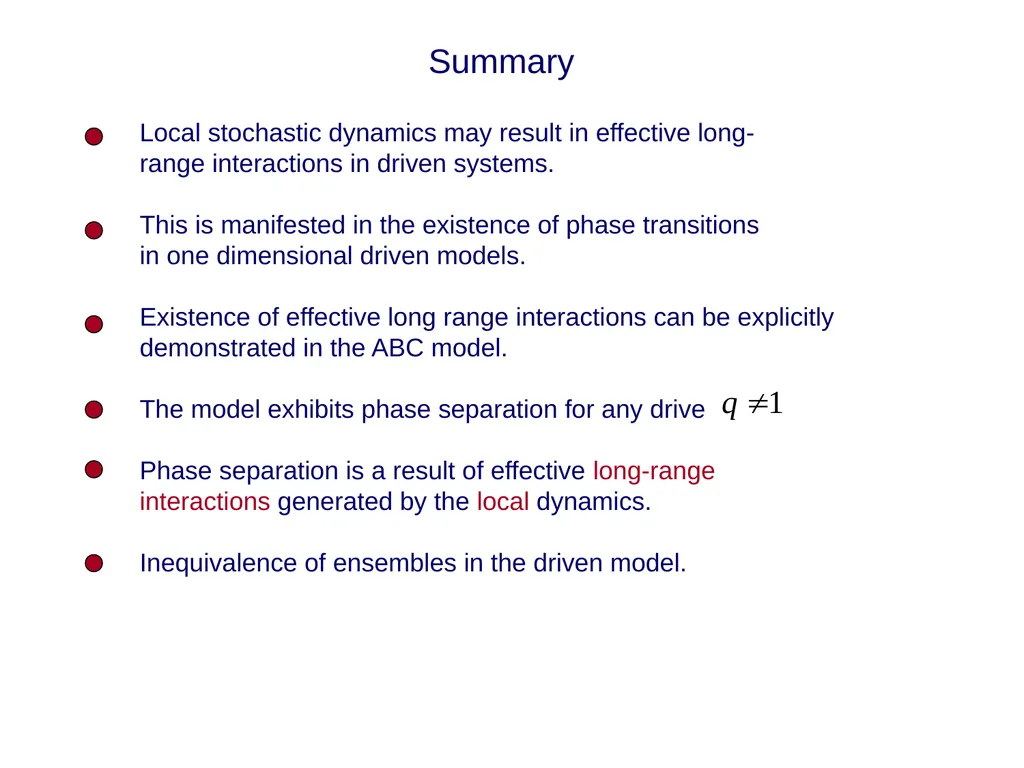
Summary Local stochastic dynamics may result in effective long-
range interactions in driven systems.
This is manifested in the existence of phase transitions
in one dimensional driven models.
Existence of effective long range interactions can be explicitly
demonstrated in the ABC model.
The model exhibits phase separation for any drive
Phase separation is a result of effective long-range
interactions generated by the local dynamics.
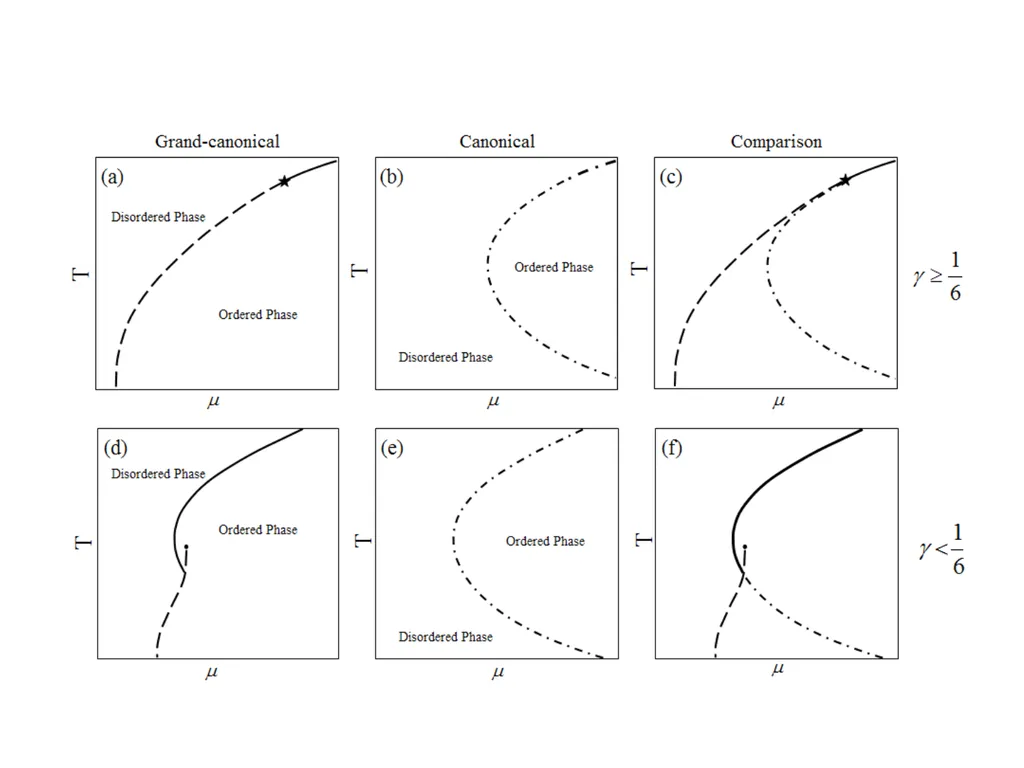
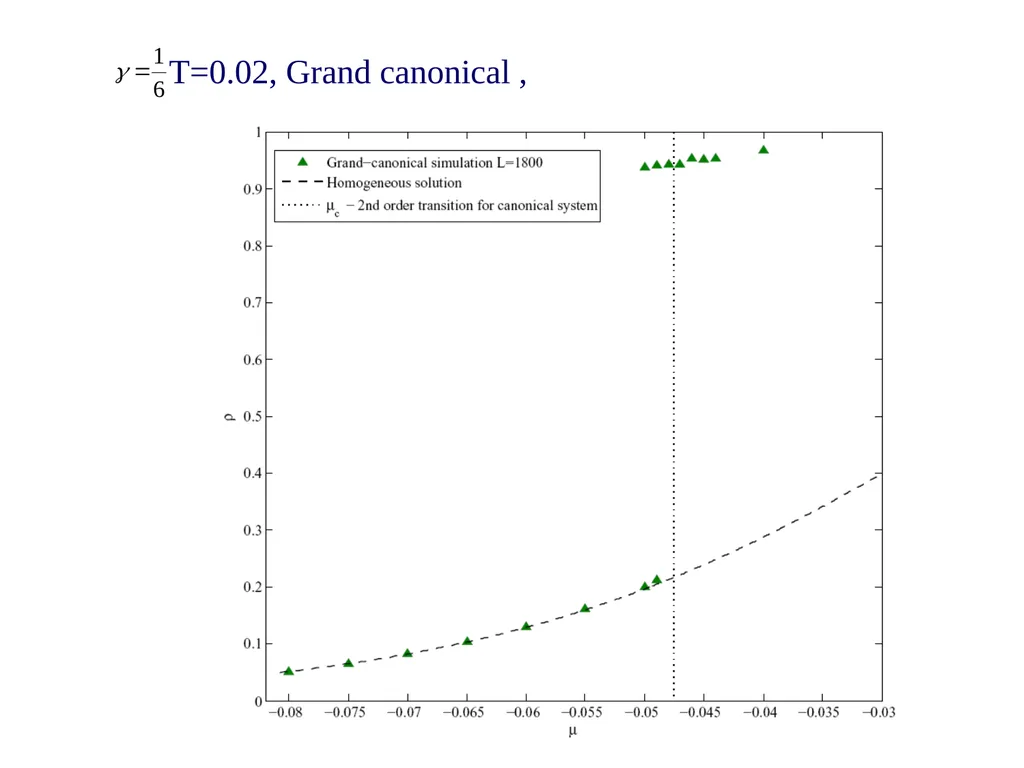
Inequivalence of ensembles in the driven model.<br>