
Endocrine and Hematologic Emergencies Patrick

Description: Endocrine and Hematologic Emergencies Patrick Sinclair, D.O., EMT-B Endocrine Impaired Glucose Diabetic Ketoacidosis (DKA) Hyperosmolar Hyperglycemic Nonketotic Syndrome (HHNS) Thyroid Storm Myxedema Coma Hematology Sickle Cell Disease
Related Topics
Download Presentation
"Endocrine and Hematologic Emergencies Patrick" is the property of its rightful owner. Permission is granted to download and print the materials on this website for personal, non-commercial use only, and to display it on your personal computer provided you do not modify the materials and that you retain all copyright notices contained in the materials. By downloading content from our website, you accept the terms of this agreement.
Presentation Transcript
slide1. Endocrine and Hematologic Emergencies Patrick Sinclair, D.O., EMT-B<br>
slide2. Endocrine Impaired Glucose
Diabetic Ketoacidosis (DKA)
Hyperosmolar Hyperglycemic Nonketotic Syndrome (HHNS)
Thyroid
Storm
Myxedema Coma Hematology
Sickle Cell Disease
Bleeding/Clotting Disorders<br>
slide3. You Are Dispatched UOA you see a 19yo pale, ill appearing man lying in bed, moaning, and clutching his abdomen
Mom is present and reports that several days ago he was complaining of “the flu”, which he described as fatigue, nausea, mild abdominal discomfort, and some urinary frequency.
The patient moans and localizes pain, but does not speak coherently. You also notice a funny odor on the patient’s breath<br>
slide4. What Do You Do?<br>
slide5. What Do You Do? 1) A…B…C…
2) A…B…C…
3) A…B…C…
4) Vital Signs
5) SAMPLE
6) Secondary Assessment<br>
slide6. Secondary Assessment Head and Neck
Lungs
Cardiac
Abdomen
Neuro
Skin
…oh ya, the accucheck reads high…<br>
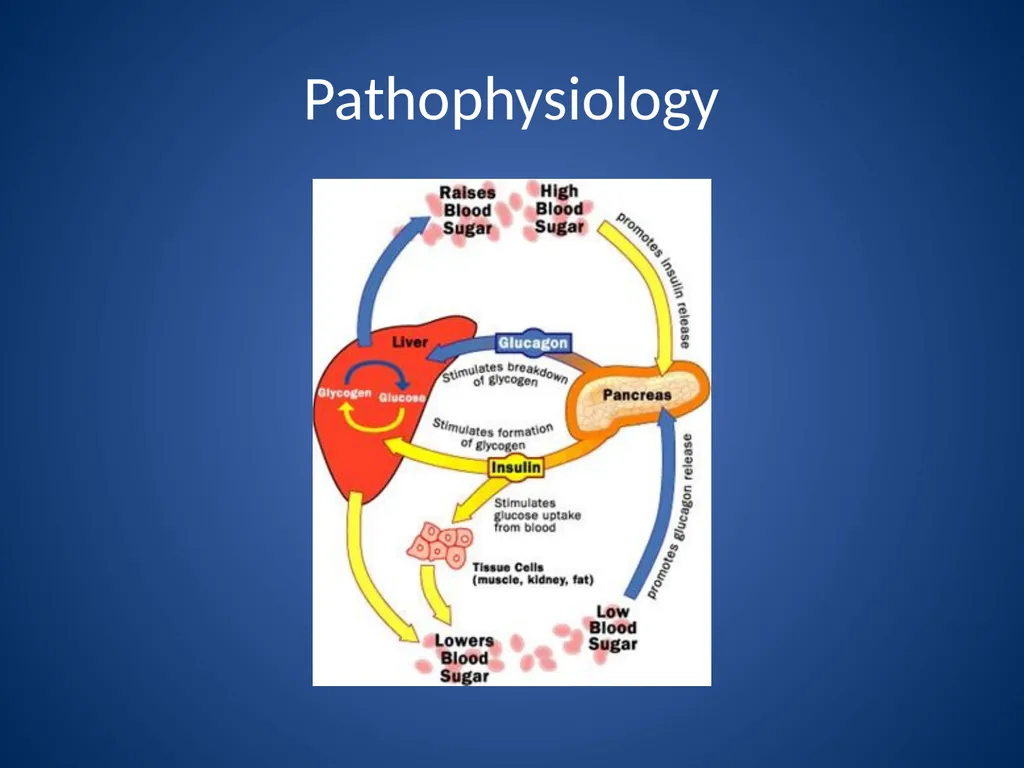
slide7. Pathophysiology<br>
slide8. Type 1 Diabetes Type 1 patients do not produce insulin.
Need daily injections of insulin
Typically develops during childhood
Patients more likely to have metabolic problems and organ damage
Considered an autoimmune problem<br>
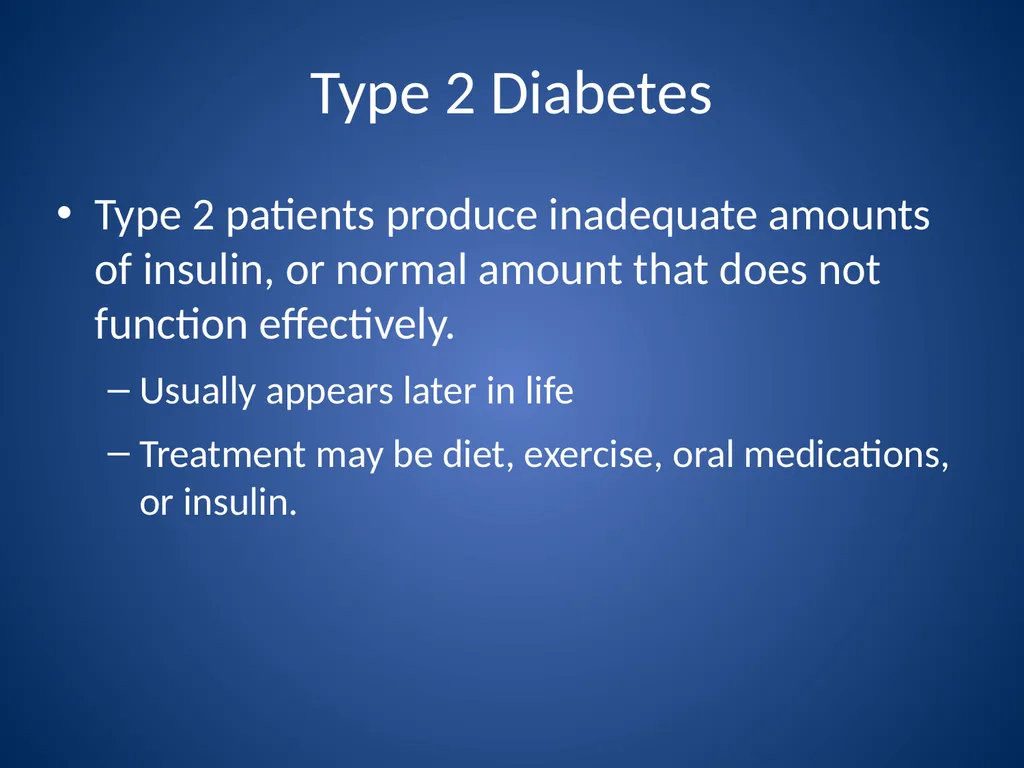
slide9. Type 2 Diabetes Type 2 patients produce inadequate amounts of insulin, or normal amount that does not function effectively.
Usually appears later in life
Treatment may be diet, exercise, oral medications, or insulin.<br>
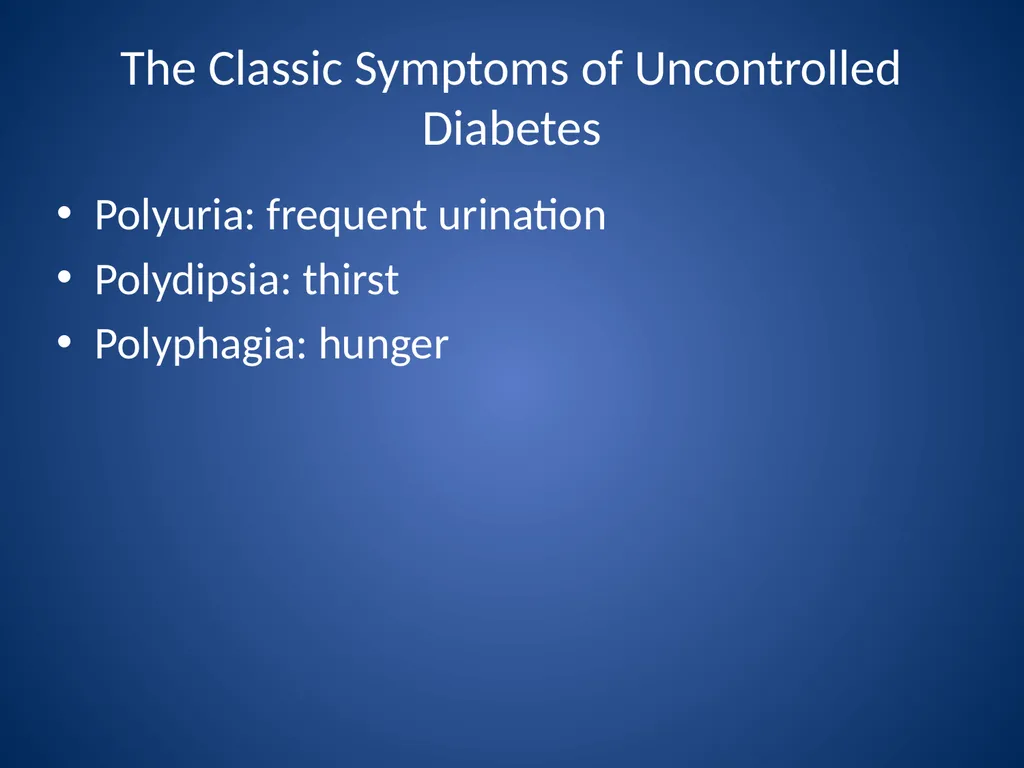
slide10. The Classic Symptoms of Uncontrolled Diabetes Polyuria: frequent urination
Polydipsia: thirst
Polyphagia: hunger<br>
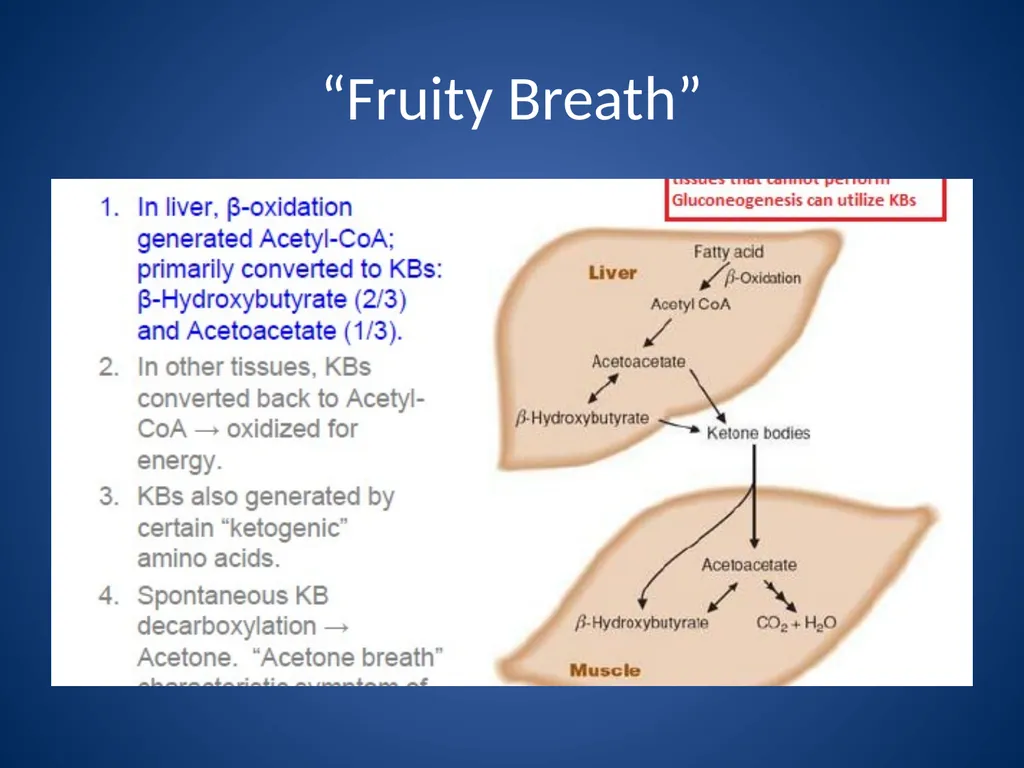
slide11. “Fruity Breath”<br>
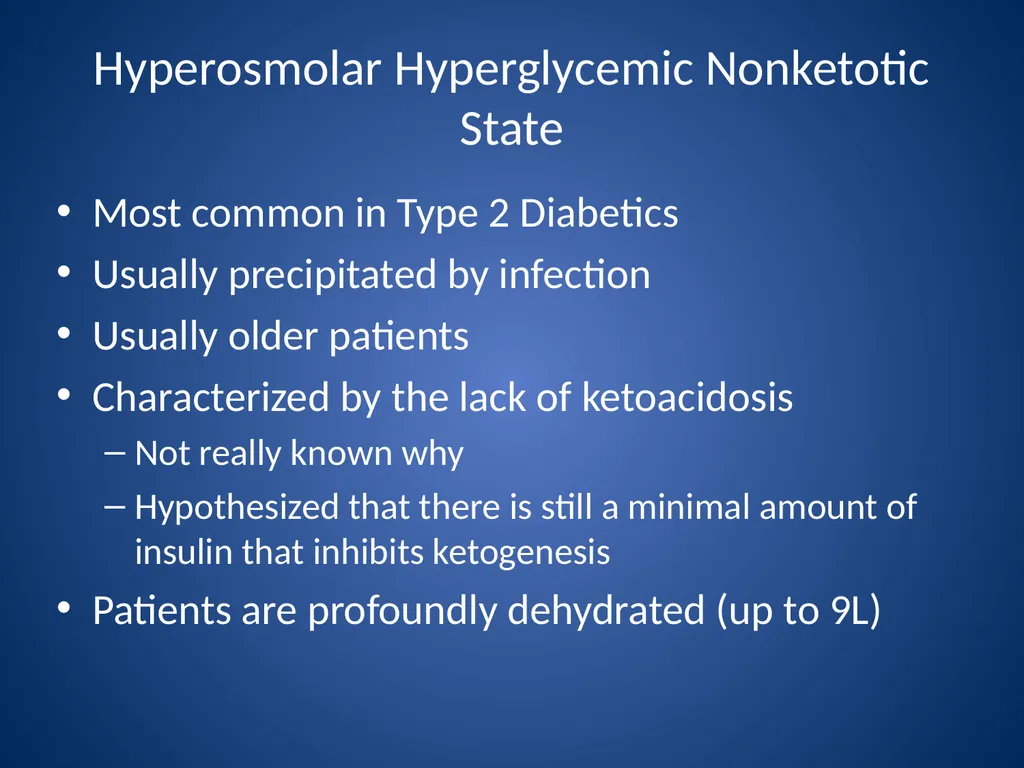
slide12. Hyperosmolar Hyperglycemic Nonketotic State Most common in Type 2 Diabetics
Usually precipitated by infection
Usually older patients
Characterized by the lack of ketoacidosis
Not really known why
Hypothesized that there is still a minimal amount of insulin that inhibits ketogenesis
Patients are profoundly dehydrated (up to 9L)<br>
slide13. Kussmaul Respirations https://www.youtube.com/watch?v=TG0vpKae3Js<br>
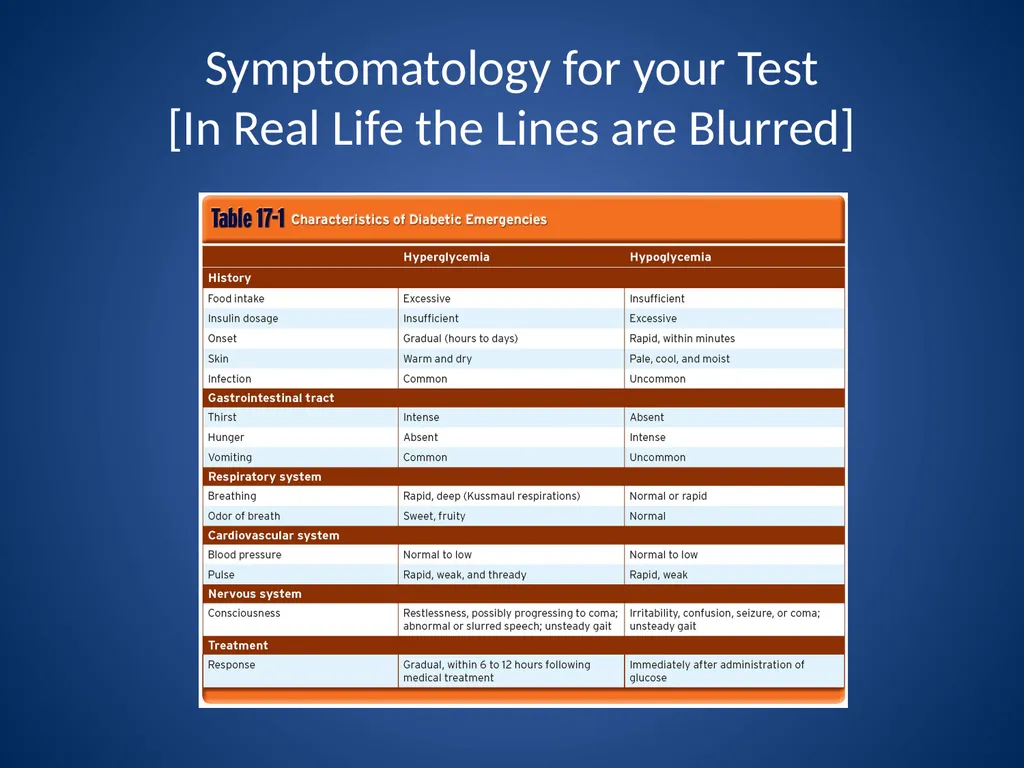
slide14. Symptomatology for your Test [In Real Life the Lines are Blurred]<br>
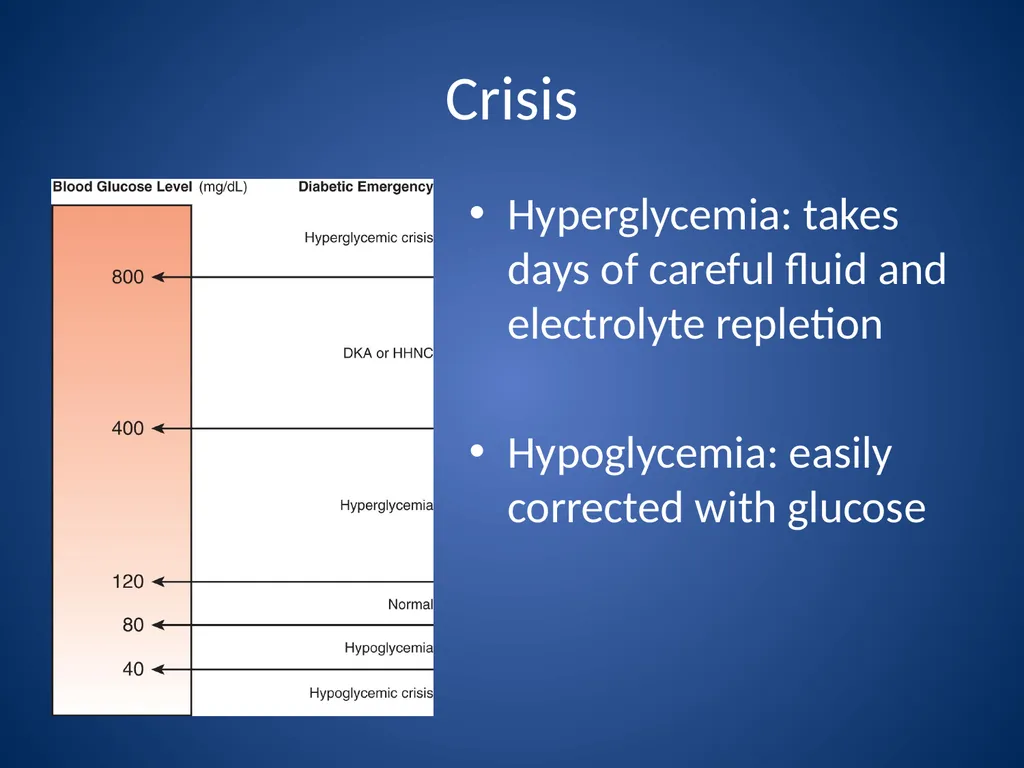
slide15. Crisis Hyperglycemia: takes days of careful fluid and electrolyte repletion
Hypoglycemia: easily corrected with glucose<br>
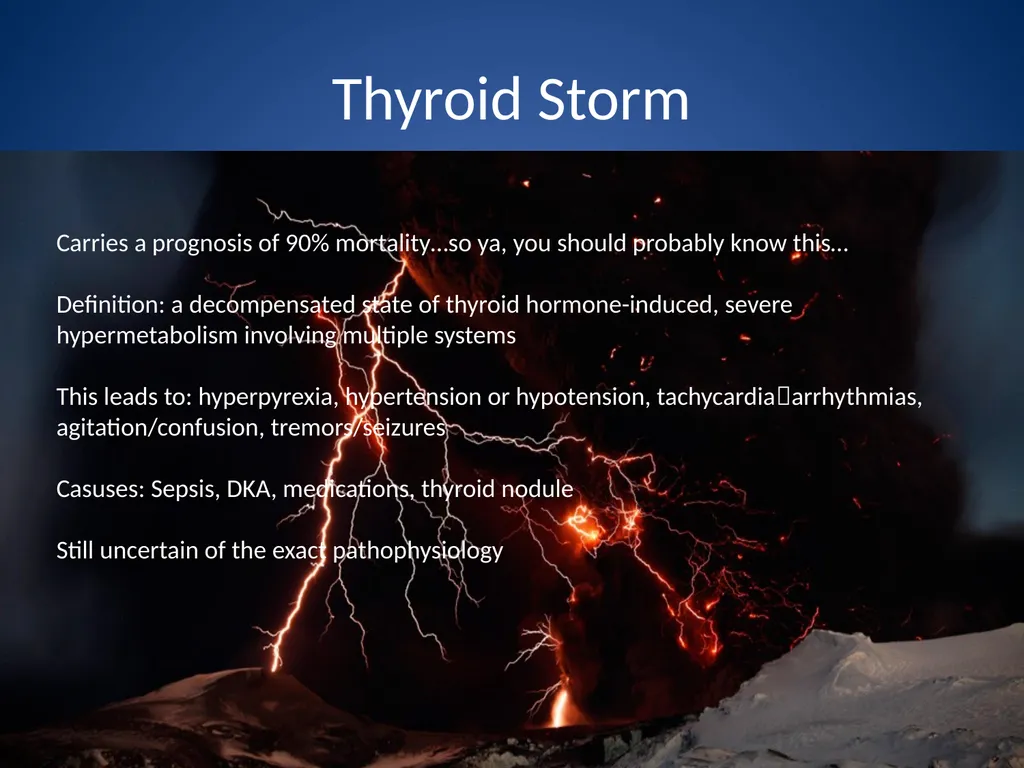
slide16. Thyroid Storm Carries a prognosis of 90% mortality…so ya, you should probably know this…
Definition: a decompensated state of thyroid hormone-induced, severe hypermetabolism involving multiple systems
This leads to: hyperpyrexia, hypertension or hypotension, tachycardiaarrhythmias, agitation/confusion, tremors/seizures
Casuses: Sepsis, DKA, medications, thyroid nodule
Still uncertain of the exact pathophysiology<br>
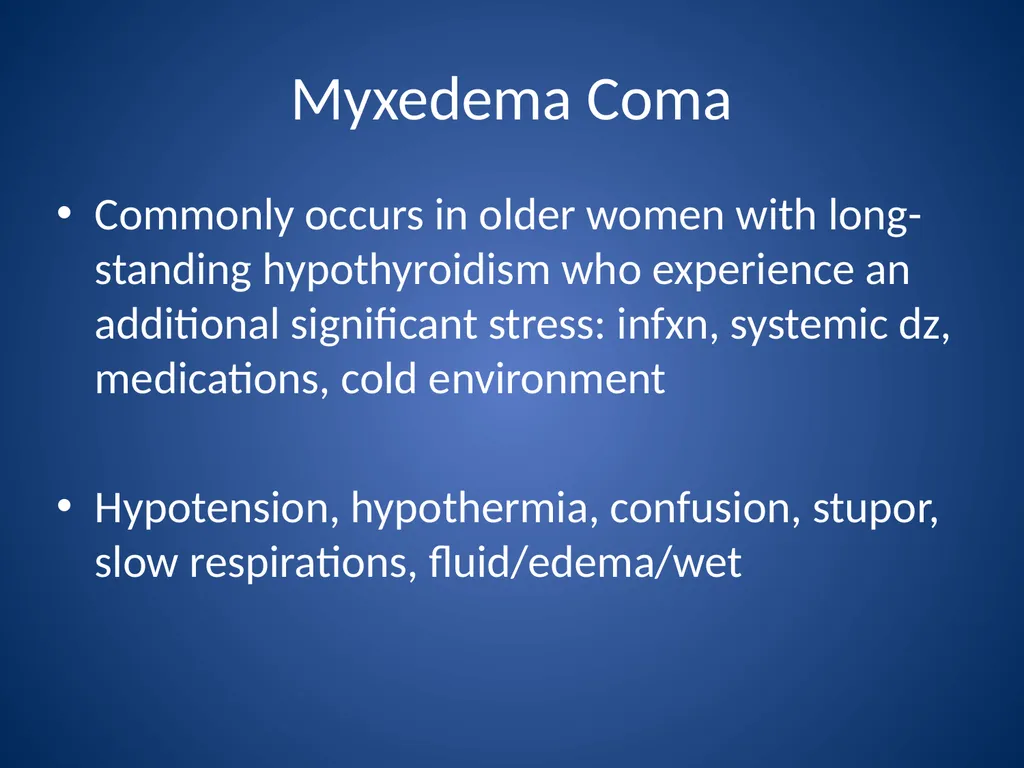
slide17. Myxedema Coma Commonly occurs in older women with long-standing hypothyroidism who experience an additional significant stress: infxn, systemic dz, medications, cold environment
Hypotension, hypothermia, confusion, stupor, slow respirations, fluid/edema/wet<br>
slide18. You Are Dispatched… 30yo female complaining of chest pain for 2 days. She feels feverish, mild shortness of breath, and productive cough.
Chest pain is right sided and worse with inspiration<br>
slide19. Acute Chest Leading cause of death for patients with Sickle Cell Disease
Caused by vaso-oclusion within the pulmonary microvasculature
Look out for infection or asthma as the precipitating factor<br>
slide20. Symptoms of Acute Chest Fever
Pleuritic chest pain
Tachypnea
Wheezing/rales (more often heard in children)
+/- cough
+/- hypoxia<br>
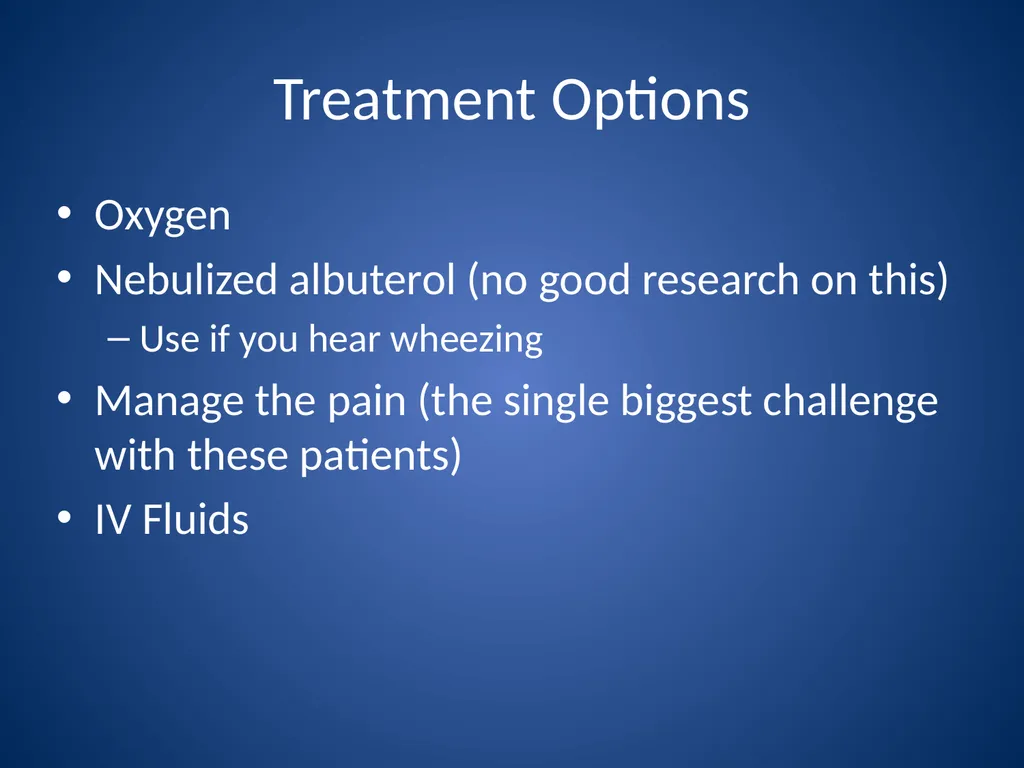
slide21. Treatment Options Oxygen
Nebulized albuterol (no good research on this)
Use if you hear wheezing
Manage the pain (the single biggest challenge with these patients)
IV Fluids<br>
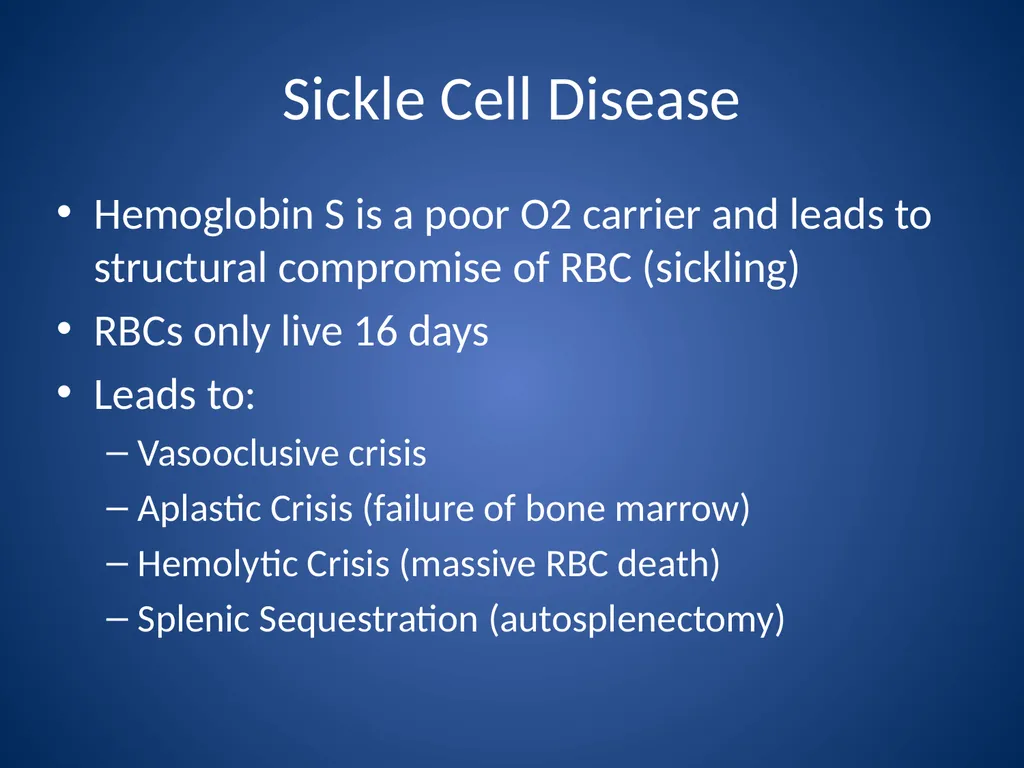
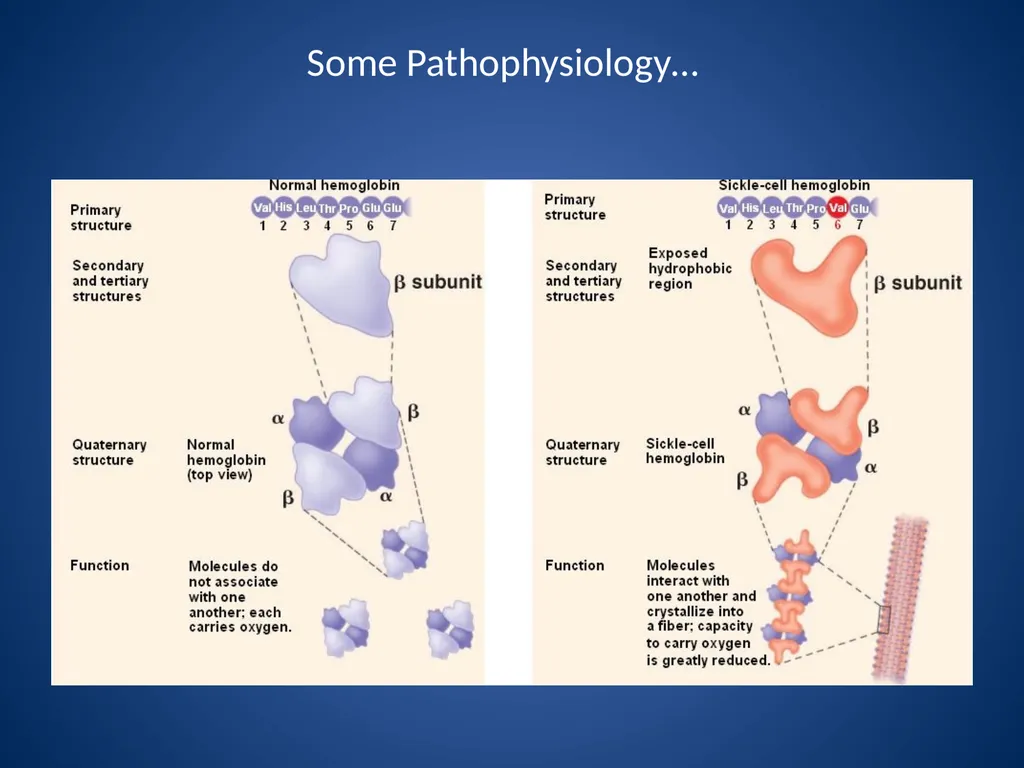
slide22. Sickle Cell Disease Hemoglobin S is a poor O2 carrier and leads to structural compromise of RBC (sickling)
RBCs only live 16 days
Leads to:
Vasooclusive crisis
Aplastic Crisis (failure of bone marrow)
Hemolytic Crisis (massive RBC death)
Splenic Sequestration (autosplenectomy)<br>
slide23. Some Pathophysiology…<br>
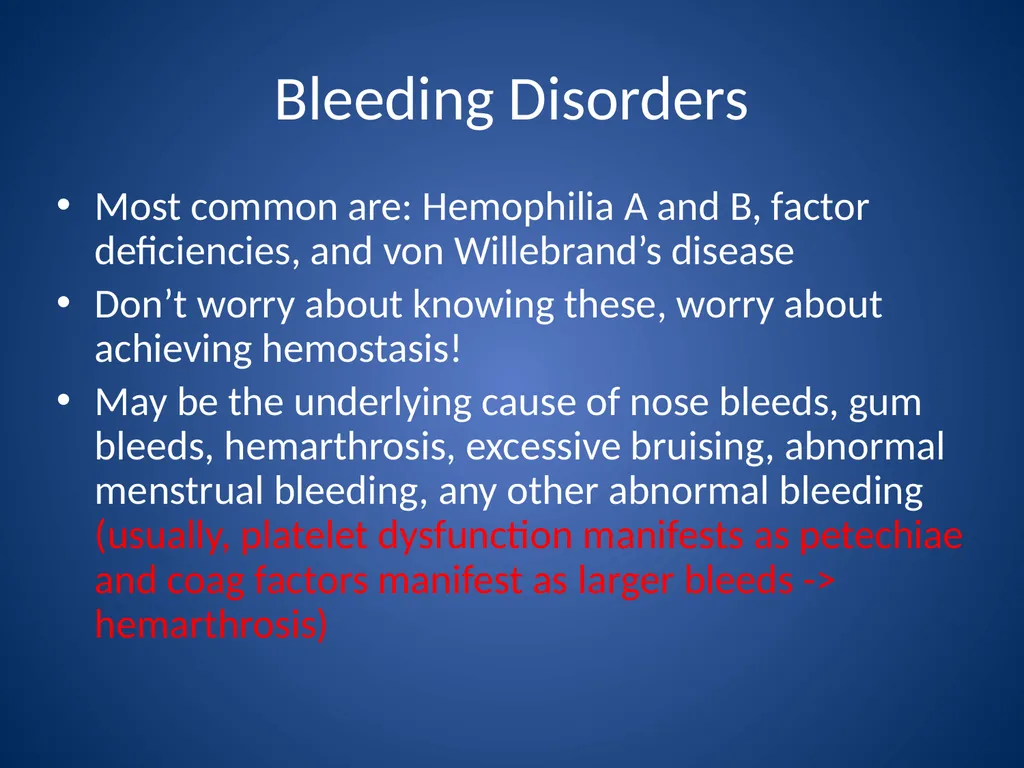
slide24. Bleeding Disorders Most common are: Hemophilia A and B, factor deficiencies, and von Willebrand’s disease
Don’t worry about knowing these, worry about achieving hemostasis!
May be the underlying cause of nose bleeds, gum bleeds, hemarthrosis, excessive bruising, abnormal menstrual bleeding, any other abnormal bleeding (usually, platelet dysfunction manifests as petechiae and coag factors manifest as larger bleeds -> hemarthrosis)<br>
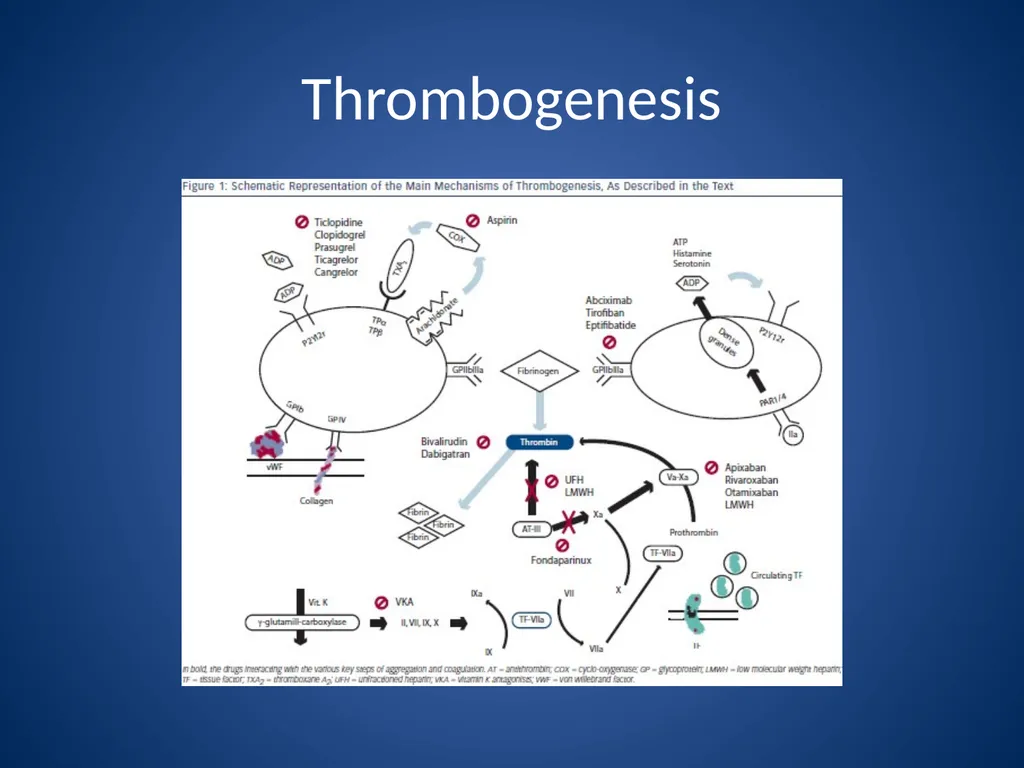
slide25. Thrombogenesis<br>
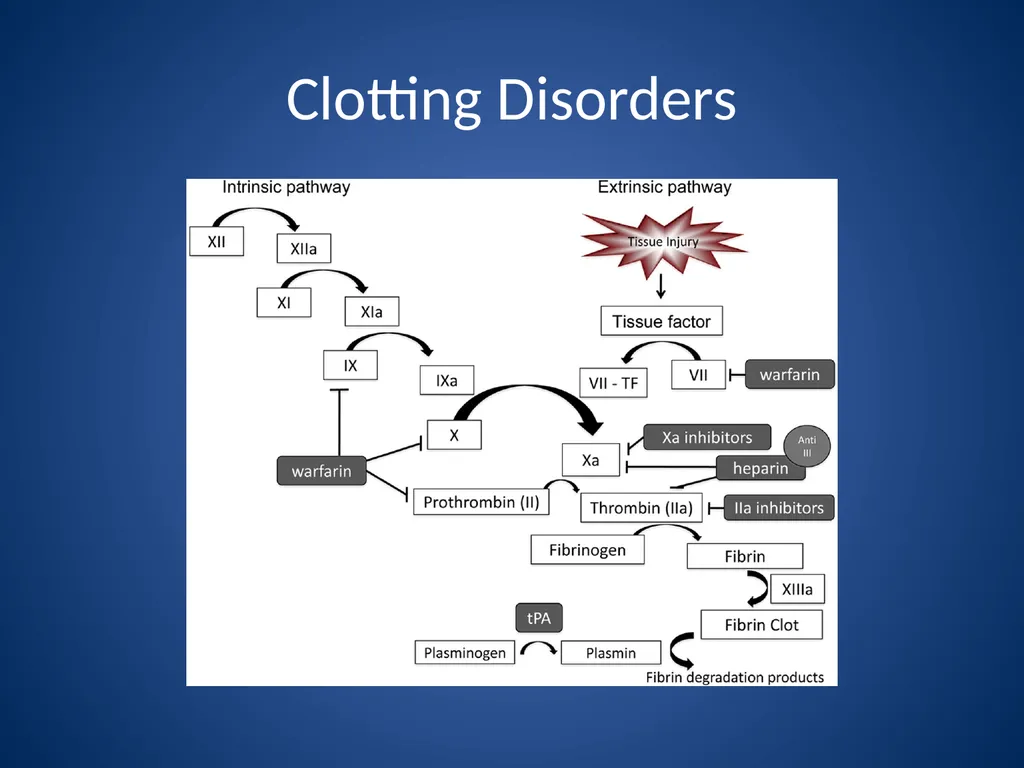
slide26. Clotting Disorders<br>
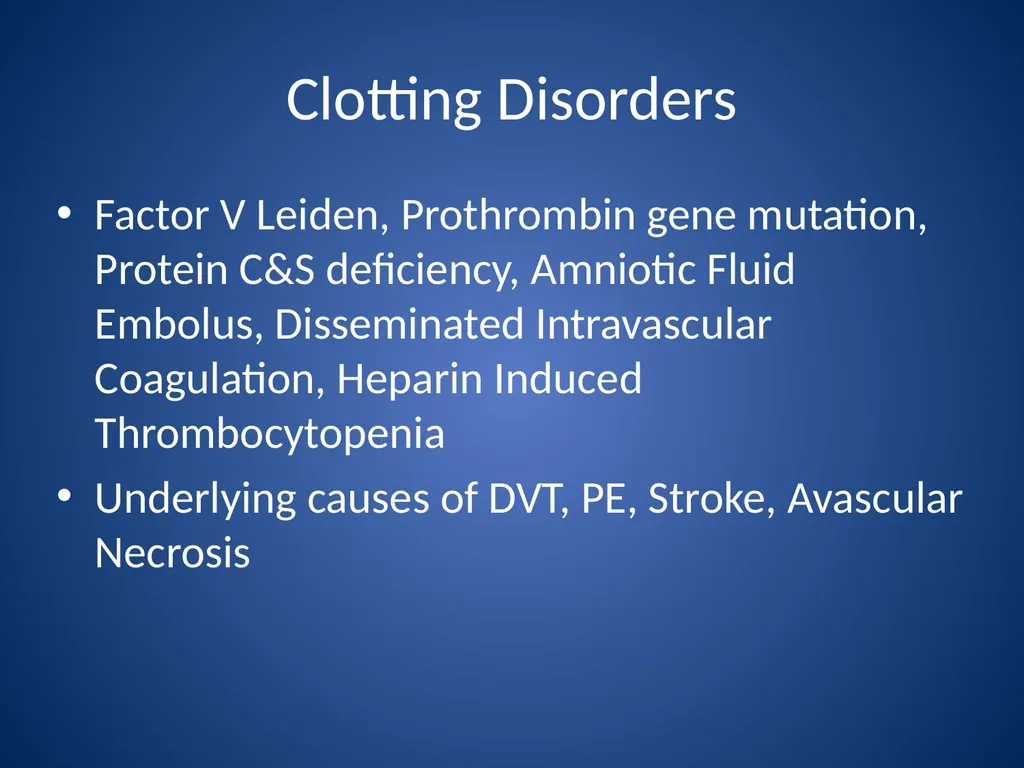
slide27. Clotting Disorders Factor V Leiden, Prothrombin gene mutation, Protein C&S deficiency, Amniotic Fluid Embolus, Disseminated Intravascular Coagulation, Heparin Induced Thrombocytopenia
Underlying causes of DVT, PE, Stroke, Avascular Necrosis<br>
slide2. Endocrine Impaired Glucose
Diabetic Ketoacidosis (DKA)
Hyperosmolar Hyperglycemic Nonketotic Syndrome (HHNS)
Thyroid
Storm
Myxedema Coma Hematology
Sickle Cell Disease
Bleeding/Clotting Disorders<br>
slide3. You Are Dispatched UOA you see a 19yo pale, ill appearing man lying in bed, moaning, and clutching his abdomen
Mom is present and reports that several days ago he was complaining of “the flu”, which he described as fatigue, nausea, mild abdominal discomfort, and some urinary frequency.
The patient moans and localizes pain, but does not speak coherently. You also notice a funny odor on the patient’s breath<br>
slide4. What Do You Do?<br>
slide5. What Do You Do? 1) A…B…C…
2) A…B…C…
3) A…B…C…
4) Vital Signs
5) SAMPLE
6) Secondary Assessment<br>
slide6. Secondary Assessment Head and Neck
Lungs
Cardiac
Abdomen
Neuro
Skin
…oh ya, the accucheck reads high…<br>
slide7. Pathophysiology<br>
slide8. Type 1 Diabetes Type 1 patients do not produce insulin.
Need daily injections of insulin
Typically develops during childhood
Patients more likely to have metabolic problems and organ damage
Considered an autoimmune problem<br>
slide9. Type 2 Diabetes Type 2 patients produce inadequate amounts of insulin, or normal amount that does not function effectively.
Usually appears later in life
Treatment may be diet, exercise, oral medications, or insulin.<br>
slide10. The Classic Symptoms of Uncontrolled Diabetes Polyuria: frequent urination
Polydipsia: thirst
Polyphagia: hunger<br>
slide11. “Fruity Breath”<br>
slide12. Hyperosmolar Hyperglycemic Nonketotic State Most common in Type 2 Diabetics
Usually precipitated by infection
Usually older patients
Characterized by the lack of ketoacidosis
Not really known why
Hypothesized that there is still a minimal amount of insulin that inhibits ketogenesis
Patients are profoundly dehydrated (up to 9L)<br>
slide13. Kussmaul Respirations https://www.youtube.com/watch?v=TG0vpKae3Js<br>
slide14. Symptomatology for your Test [In Real Life the Lines are Blurred]<br>
slide15. Crisis Hyperglycemia: takes days of careful fluid and electrolyte repletion
Hypoglycemia: easily corrected with glucose<br>
slide16. Thyroid Storm Carries a prognosis of 90% mortality…so ya, you should probably know this…
Definition: a decompensated state of thyroid hormone-induced, severe hypermetabolism involving multiple systems
This leads to: hyperpyrexia, hypertension or hypotension, tachycardiaarrhythmias, agitation/confusion, tremors/seizures
Casuses: Sepsis, DKA, medications, thyroid nodule
Still uncertain of the exact pathophysiology<br>
slide17. Myxedema Coma Commonly occurs in older women with long-standing hypothyroidism who experience an additional significant stress: infxn, systemic dz, medications, cold environment
Hypotension, hypothermia, confusion, stupor, slow respirations, fluid/edema/wet<br>
slide18. You Are Dispatched… 30yo female complaining of chest pain for 2 days. She feels feverish, mild shortness of breath, and productive cough.
Chest pain is right sided and worse with inspiration<br>
slide19. Acute Chest Leading cause of death for patients with Sickle Cell Disease
Caused by vaso-oclusion within the pulmonary microvasculature
Look out for infection or asthma as the precipitating factor<br>
slide20. Symptoms of Acute Chest Fever
Pleuritic chest pain
Tachypnea
Wheezing/rales (more often heard in children)
+/- cough
+/- hypoxia<br>
slide21. Treatment Options Oxygen
Nebulized albuterol (no good research on this)
Use if you hear wheezing
Manage the pain (the single biggest challenge with these patients)
IV Fluids<br>
slide22. Sickle Cell Disease Hemoglobin S is a poor O2 carrier and leads to structural compromise of RBC (sickling)
RBCs only live 16 days
Leads to:
Vasooclusive crisis
Aplastic Crisis (failure of bone marrow)
Hemolytic Crisis (massive RBC death)
Splenic Sequestration (autosplenectomy)<br>
slide23. Some Pathophysiology…<br>
slide24. Bleeding Disorders Most common are: Hemophilia A and B, factor deficiencies, and von Willebrand’s disease
Don’t worry about knowing these, worry about achieving hemostasis!
May be the underlying cause of nose bleeds, gum bleeds, hemarthrosis, excessive bruising, abnormal menstrual bleeding, any other abnormal bleeding (usually, platelet dysfunction manifests as petechiae and coag factors manifest as larger bleeds -> hemarthrosis)<br>
slide25. Thrombogenesis<br>
slide26. Clotting Disorders<br>
slide27. Clotting Disorders Factor V Leiden, Prothrombin gene mutation, Protein C&S deficiency, Amniotic Fluid Embolus, Disseminated Intravascular Coagulation, Heparin Induced Thrombocytopenia
Underlying causes of DVT, PE, Stroke, Avascular Necrosis<br>