Ethical concerns and suggested mitigations surrounding access to and use of SMS and social media data in sentiment analysis, for HIV prevention among young women in Western Kenya Alfred Odira Kenya Medical Research Institute Main
"Ethical concerns and suggested mitigations" is the property of its rightful owner. Permission is granted to
download and print the materials on this website for personal, non-commercial use only, and to display it
on your personal computer provided you do not modify the materials and that you retain all copyright
notices contained in the materials. By downloading content from our website, you accept the terms of this
agreement.
Presentation Transcript
01
Ethical concerns and suggested mitigations surrounding access to and use of SMS and social media data in sentiment analysis, for HIV prevention among young women in Western Kenya Alfred Odira – Kenya Medical Research Institute<br>
02
Main questions
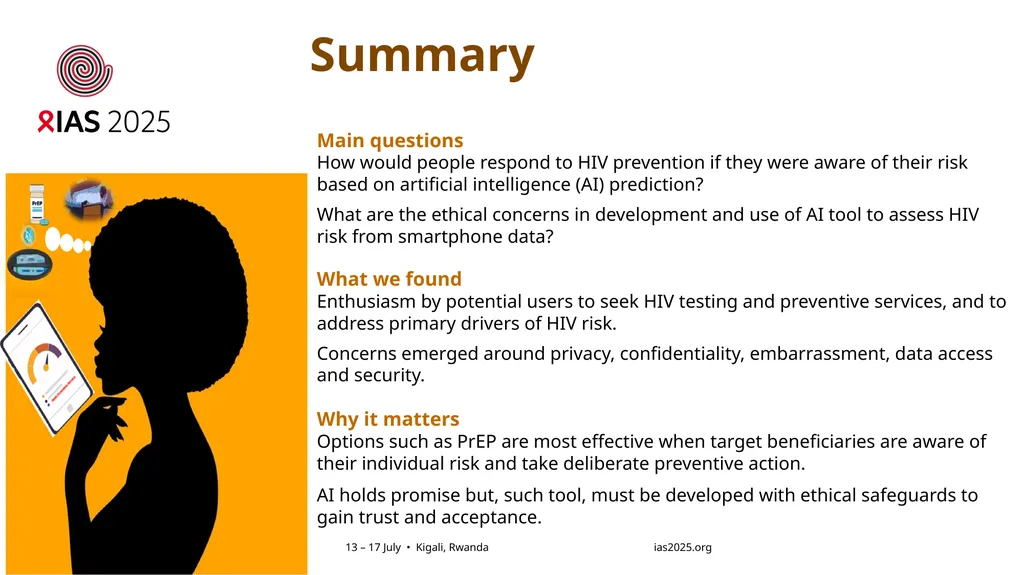
How would people respond to HIV prevention if they were aware of their risk based on artificial intelligence (AI) prediction?
What are the ethical concerns in development and use of AI tool to assess HIV risk from smartphone data?
What we found
Enthusiasm by potential users to seek HIV testing and preventive services, and to address primary drivers of HIV risk.
Concerns emerged around privacy, confidentiality, embarrassment, data access and security.
Why it matters
Options such as PrEP are most effective when target beneficiaries are aware of their individual risk and take deliberate preventive action.
AI holds promise but, such tool, must be developed with ethical safeguards to gain trust and acceptance. Summary<br>
03
AI-powered smartphone apps are increasingly popular for learning, problem-solving, and commerce.
These apps can analyze vast interpersonal data (e.g., SMS, social media) to infer users’ health risks.
Hypothesis:
If individuals know their predicted HIV risk, they may be more likely to adopt preventive measures like PrEP.
Study Focus – SMaaRT:
The Social Media as a Risk Tool (SMaaRT) Study explores how AI and sentiment analysis can identify HIV prevention needs.
It also examines ethical concerns and safeguards when accessing young women’s phone data for this purpose. Introduction AI-powered smartphone apps are increasingly popular for learning, problem-solving, and commerce.<br>
04
Main Study Aim: To develop a smartphone-based predictive algorithm for HIV prevention needs that users can easily access and use to seek appropriate services.
Our objective: Explore ethical concerns around accessing personal data on a user’s phone to aid in development and use of AI-based HIV risk predicting tool. Objectives<br>
05
The SMaaRT study follows a sequential exploratory design.
Aim 1: Ethical Considerations:
Investigate ethical concerns around accessing and analyzing SMS/social media data for tool algorithm development.
Approach:
Conducted in-depth interviews (IDI) with young women accessing sexual and reproductive health (SRH) services at four public clinics in Kisumu County, Kenya.
Held focus group discussions (FGD) with bioethicists to explore privacy, autonomy, beneficence, non-maleficence, and justice themes. Methodology<br>
06
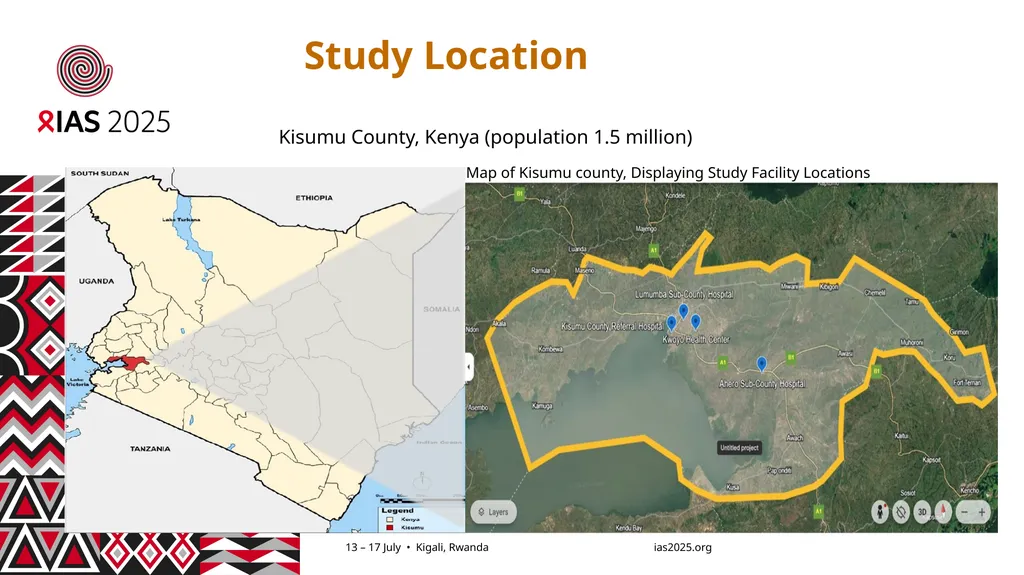
Study Location Map of Kisumu county, Displaying Study Facility Locations Kisumu County, Kenya (population 1.5 million)<br>
07
Data Collection and Analysis
Period: February–April 2024
Participants:
32 young women (ages 18–24) from Lumumba sub-county, Ahero sub-county, Kisumu county referral, and Kuoyo health center; public facilities
11 Kenyan bioethicists – 6 female, 5 male
Methods:
In-depth interviews: 16 hypothetically willing and 16 not willing to give access to their social media/SMS messages
Focus group discussions (2 FGDS – 5/6)
Analysis:
Deductive analysis based on framework approach<br>
08
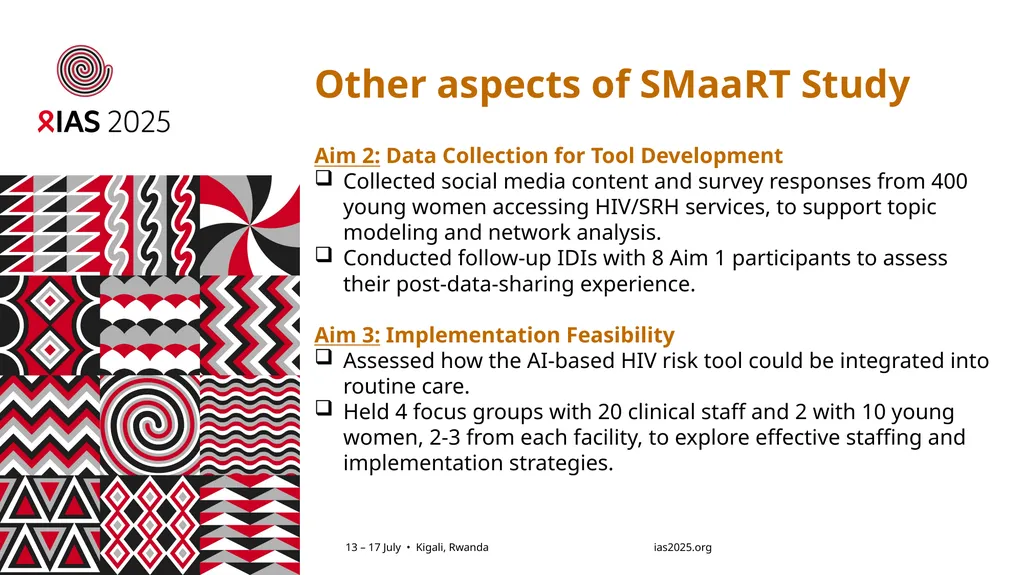
Other aspects of SMaaRT Study
Aim 2: Data Collection for Tool Development
Collected social media content and survey responses from 400 young women accessing HIV/SRH services, to support topic modeling and network analysis.
Conducted follow-up IDIs with 8 Aim 1 participants to assess their post-data-sharing experience.
Aim 3: Implementation Feasibility
Assessed how the AI-based HIV risk tool could be integrated into routine care.
Held 4 focus groups with 20 clinical staff and 2 with 10 young women, 2-3 from each facility, to explore effective staffing and implementation strategies.<br>
09
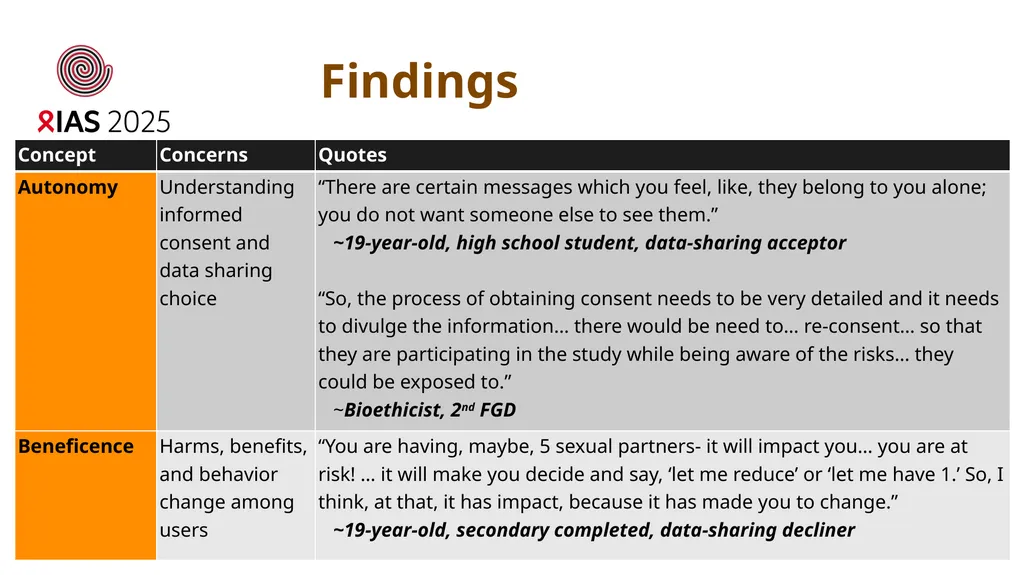
Findings<br>
10
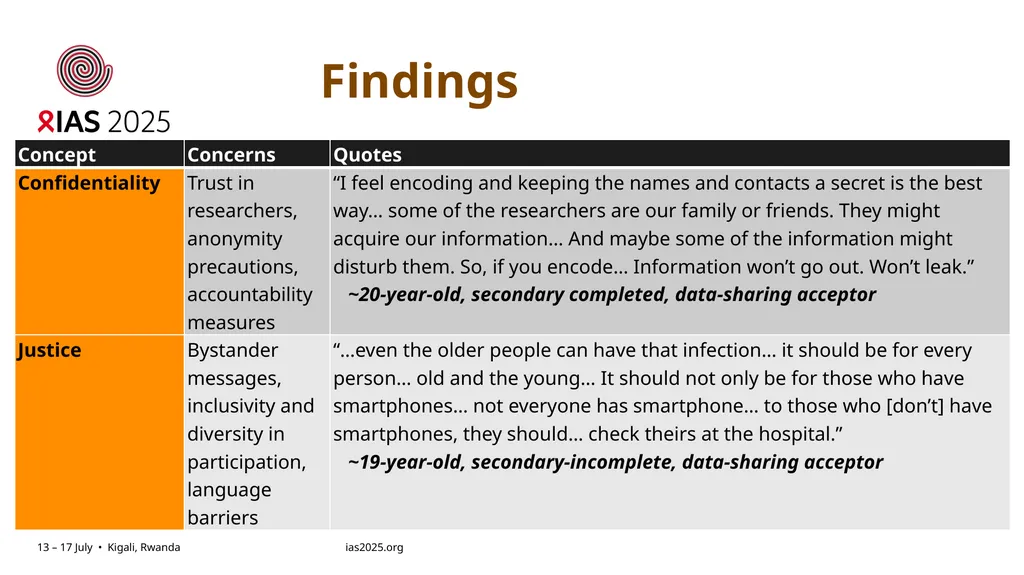
Findings<br>
11
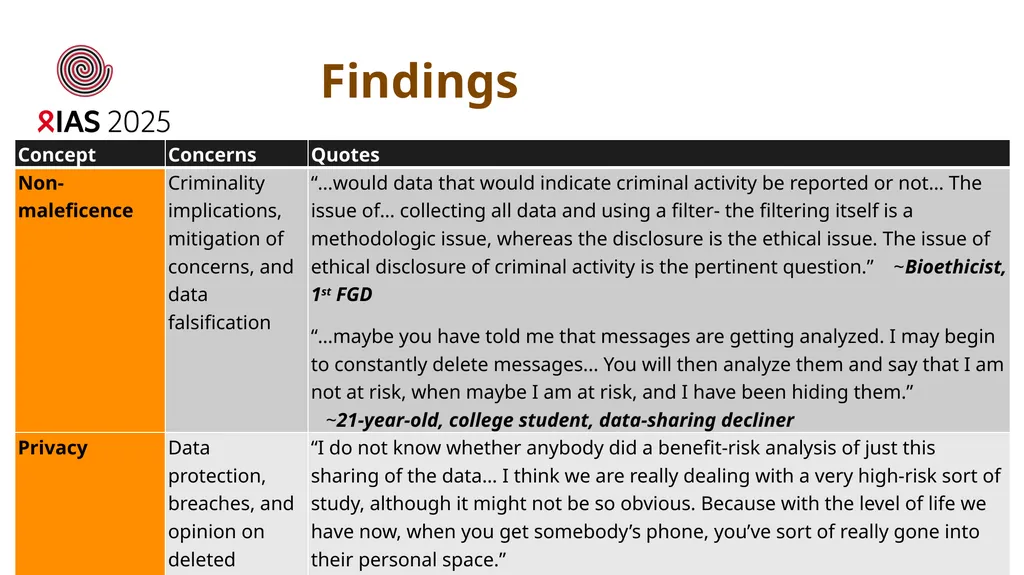
Findings<br>
12
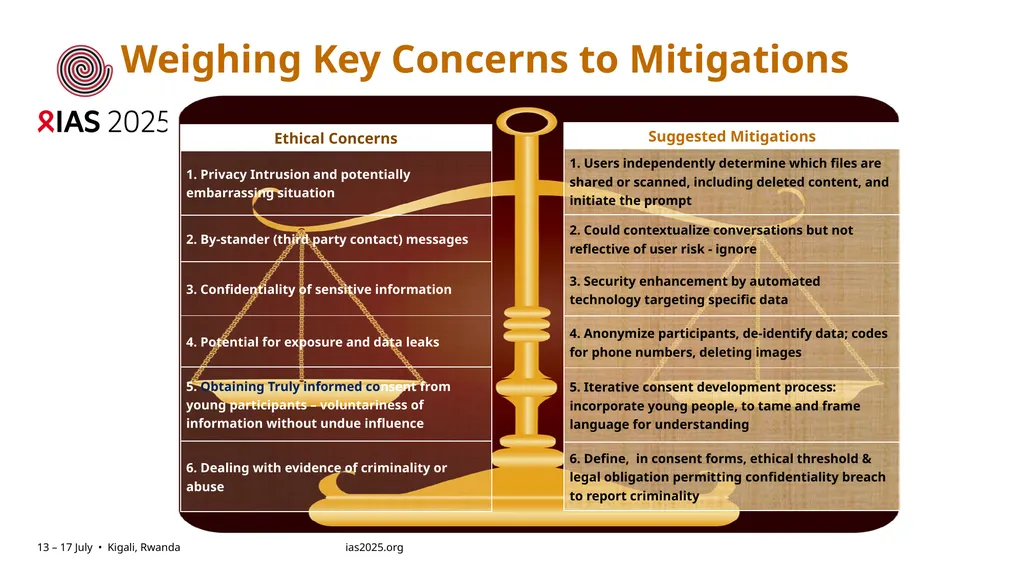
Weighing Key Concerns to Mitigations<br>
13
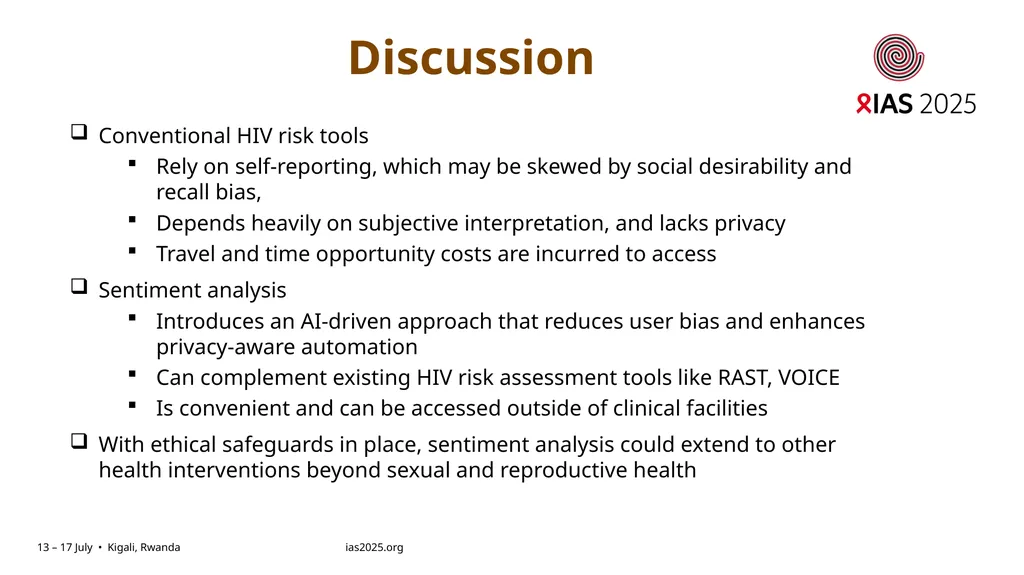
Discussion Conventional HIV risk tools
Rely on self-reporting, which may be skewed by social desirability and recall bias,
Depends heavily on subjective interpretation, and lacks privacy
Travel and time opportunity costs are incurred to access
Sentiment analysis
Introduces an AI-driven approach that reduces user bias and enhances privacy-aware automation
Can complement existing HIV risk assessment tools like RAST, VOICE
Is convenient and can be accessed outside of clinical facilities
With ethical safeguards in place, sentiment analysis could extend to other health interventions beyond sexual and reproductive health<br>
14
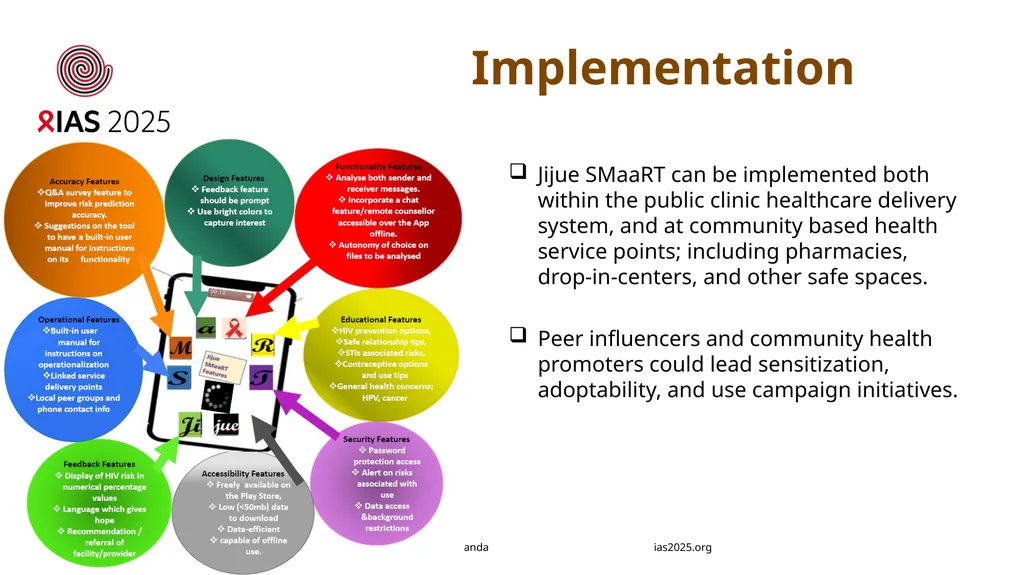
Implementation Jijue SMaaRT can be implemented both within the public clinic healthcare delivery system, and at community based health service points; including pharmacies, drop-in-centers, and other safe spaces.
Peer influencers and community health promoters could lead sensitization, adoptability, and use campaign initiatives.<br>
15
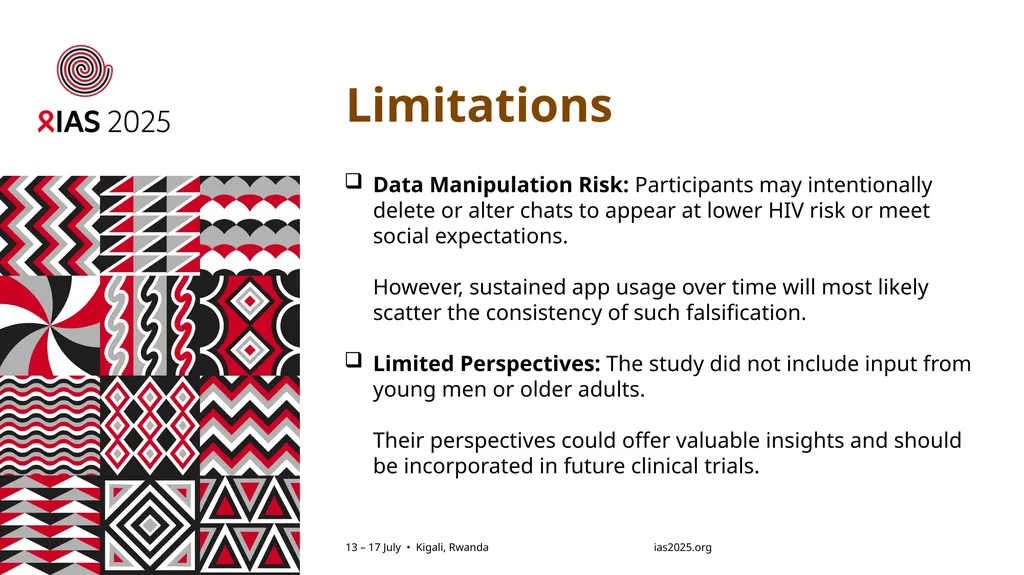
Limitations Data Manipulation Risk: Participants may intentionally delete or alter chats to appear at lower HIV risk or meet social expectations. However, sustained app usage over time will most likely scatter the consistency of such falsification.
Limited Perspectives: The study did not include input from young men or older adults. Their perspectives could offer valuable insights and should be incorporated in future clinical trials.<br>
16
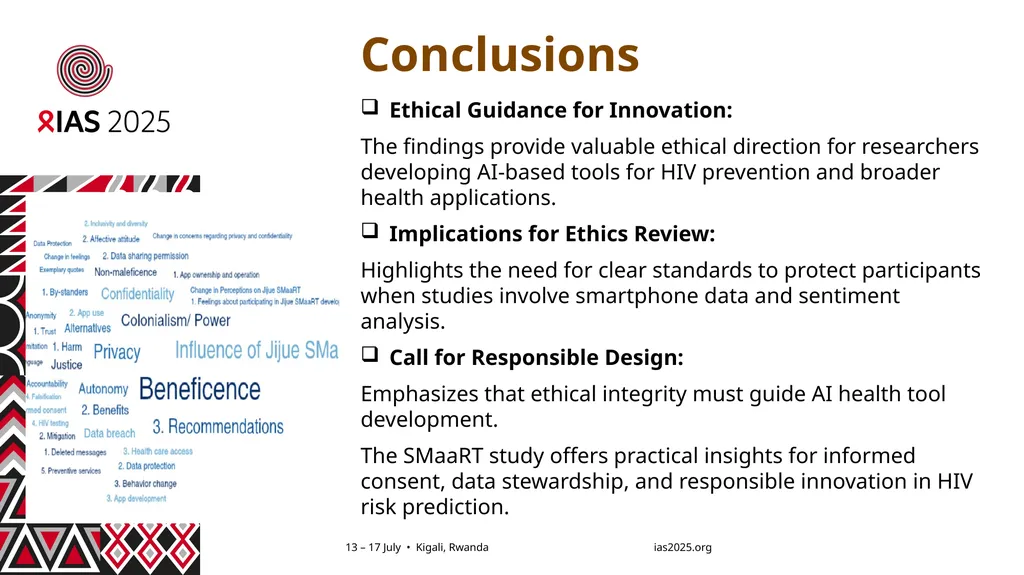
Ethical Guidance for Innovation:
The findings provide valuable ethical direction for researchers developing AI-based tools for HIV prevention and broader health applications.
Implications for Ethics Review:
Highlights the need for clear standards to protect participants when studies involve smartphone data and sentiment analysis.
Call for Responsible Design:
Emphasizes that ethical integrity must guide AI health tool development.
The SMaaRT study offers practical insights for informed consent, data stewardship, and responsible innovation in HIV risk prediction. Conclusions<br>
17
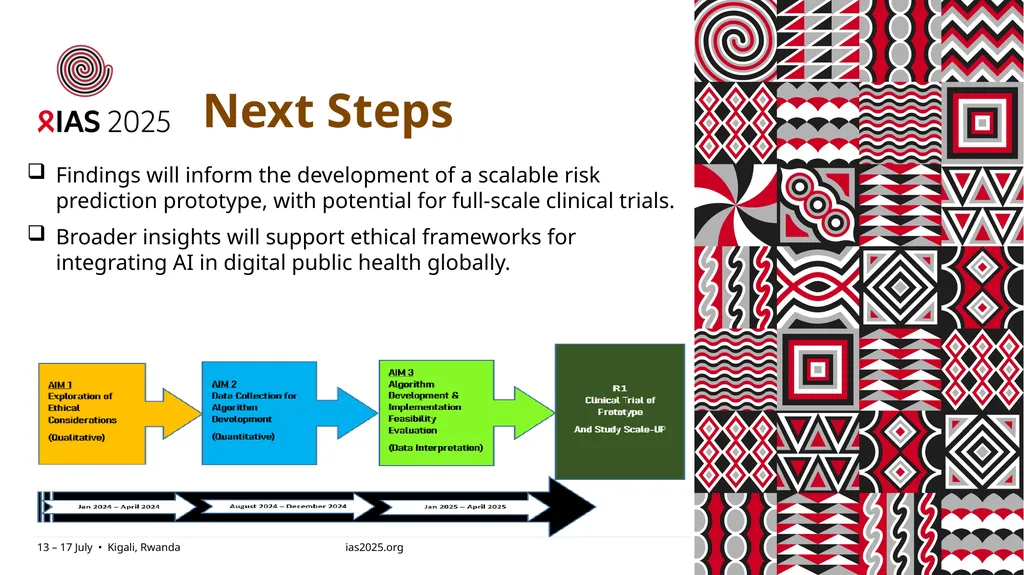
Findings will inform the development of a scalable risk prediction prototype, with potential for full-scale clinical trials.
Broader insights will support ethical frameworks for integrating AI in digital public health globally. Next Steps<br>
18
We, the author and co-authors, express sincere gratitude to all our study participants, funders, collaborators, and institutions.
Authors
Alfred Odira1, Zachary Kwena1, Kevin Oware1, Lydia Adiema1, Perez Ochwal1, Marion Hewa1, Josephine Odoyo1, Bernard Rono1, Lindsey Garrison2, Elizabeth Buk usi1, Jessica Haberer2,3 Acknowledgements Institutions
Kenya Medical Research Institute
Massachusetts General Hospital
Harvard Medical School
US National Institute of Health (NIH): R21MH132436 Contact Information
Alfred Odira Ochiel, aochiel@kemri-rctp.com; alfodira@gmail.com; +254738640649<br>
19
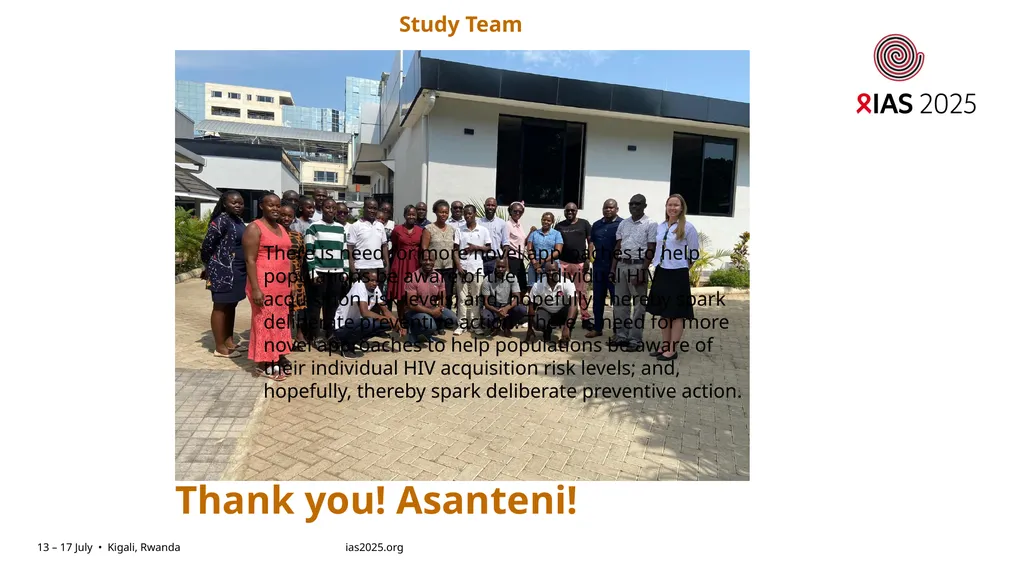
Thank you! Asanteni! Study Team There is need for more novel approaches to help populations be aware of their individual HIV acquisition risk levels; and, hopefully, thereby spark deliberate preventive action. There is need for more novel approaches to help populations be aware of their individual HIV acquisition risk levels; and, hopefully, thereby spark deliberate preventive action.<br>