Ethical Values and Decision Making Mr. Vijay Sansare Assistant Professor Differences Ethics नतकत describes a generally accepted set of moral principles. Morals describes the goodness or badness or right or wrong of actions. Values मलय
"Ethical Values and Decision Making Mr. Vijay" is the property of its rightful owner. Permission is granted to
download and print the materials on this website for personal, non-commercial use only, and to display it
on your personal computer provided you do not modify the materials and that you retain all copyright
notices contained in the materials. By downloading content from our website, you accept the terms of this
agreement.
Presentation Transcript
01
Ethical Values and Decision Making Mr. Vijay Sansare
Assistant Professor<br>
02
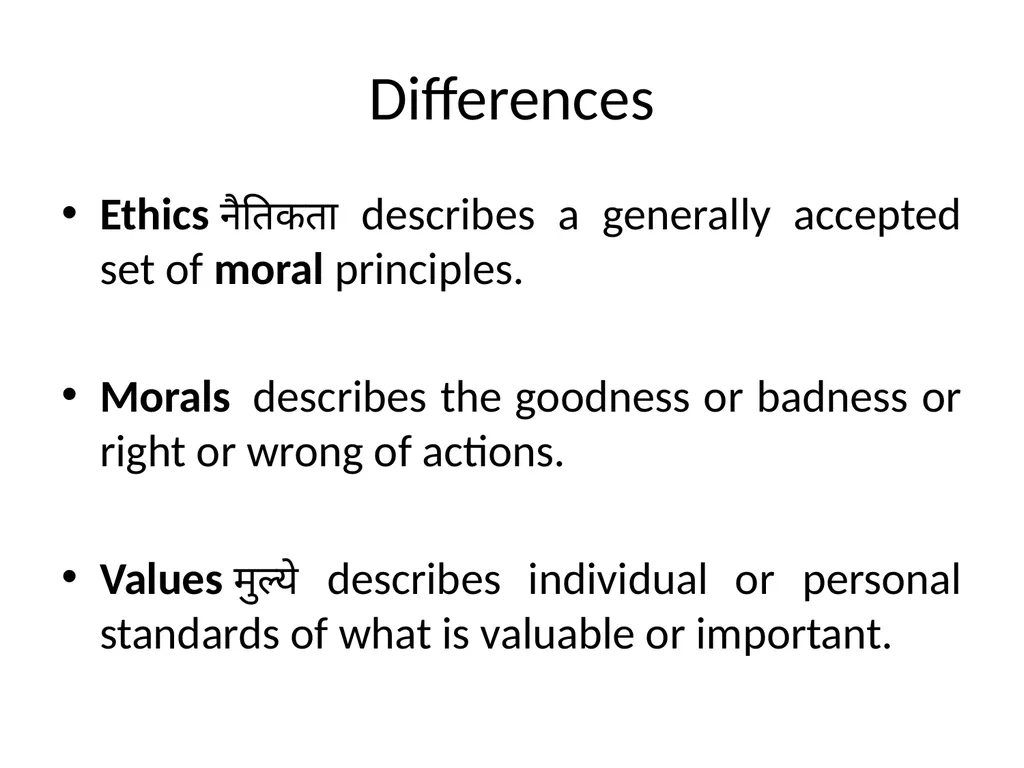
Differences Ethics नैतिकता describes a generally accepted set of moral principles.
Morals describes the goodness or badness or right or wrong of actions.
Values मुल्ये describes individual or personal standards of what is valuable or important.<br>
03
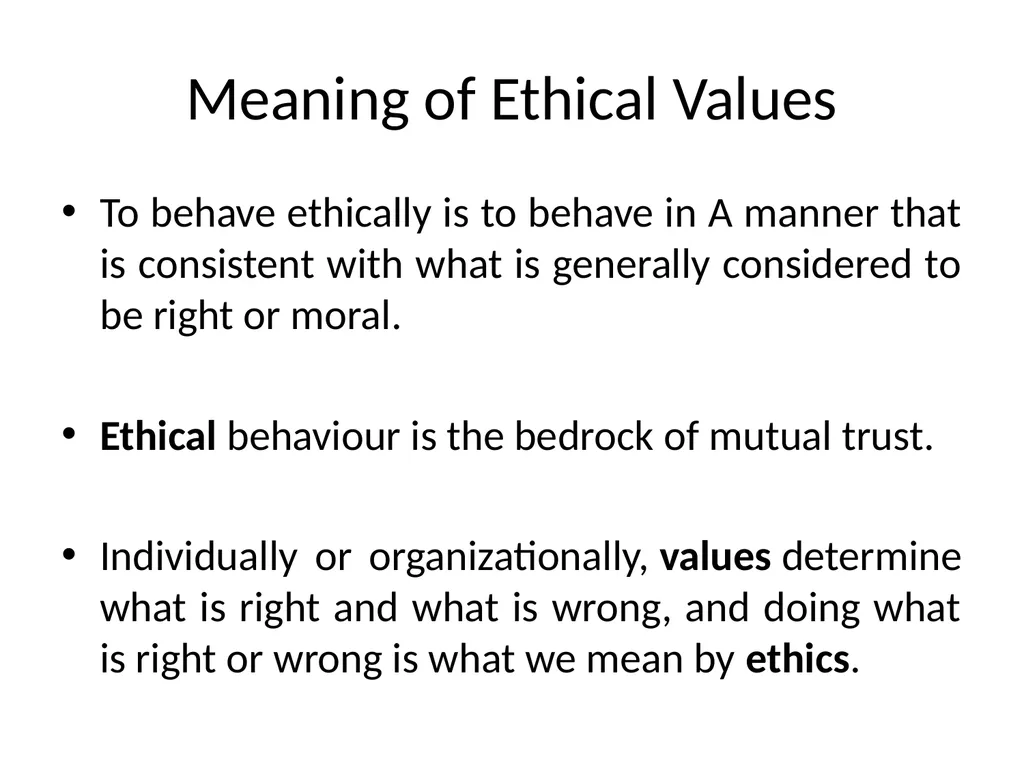
Meaning of Ethical Values To behave ethically is to behave in A manner that is consistent with what is generally considered to be right or moral.
Ethical behaviour is the bedrock of mutual trust.
Individually or organizationally, values determine what is right and what is wrong, and doing what is right or wrong is what we mean by ethics.<br>
Ethical Values Respect for others
Concern for others / service
Dignity and worth of person
Social justice
Competence<br>
06
Decision Making The thought process of selecting a logical choice from the available options.
When trying to make a good decision, a person must weight the positives and negatives of each option, and consider all the alternatives.
For effective decision making, a person must be able to forecast the outcome of each option as well, and based on all these items, determine which option is the best for that particular situation.<br>
07
Decision Making Effective decision making is defined here as the process through which alternatives are selected and then managed through implementation to achieve business objectives.
'Effective decisions result from a systematic process, with clearly defined elements, that is handled in a distinct sequence of steps.
[Drucker, 1967].<br>
08
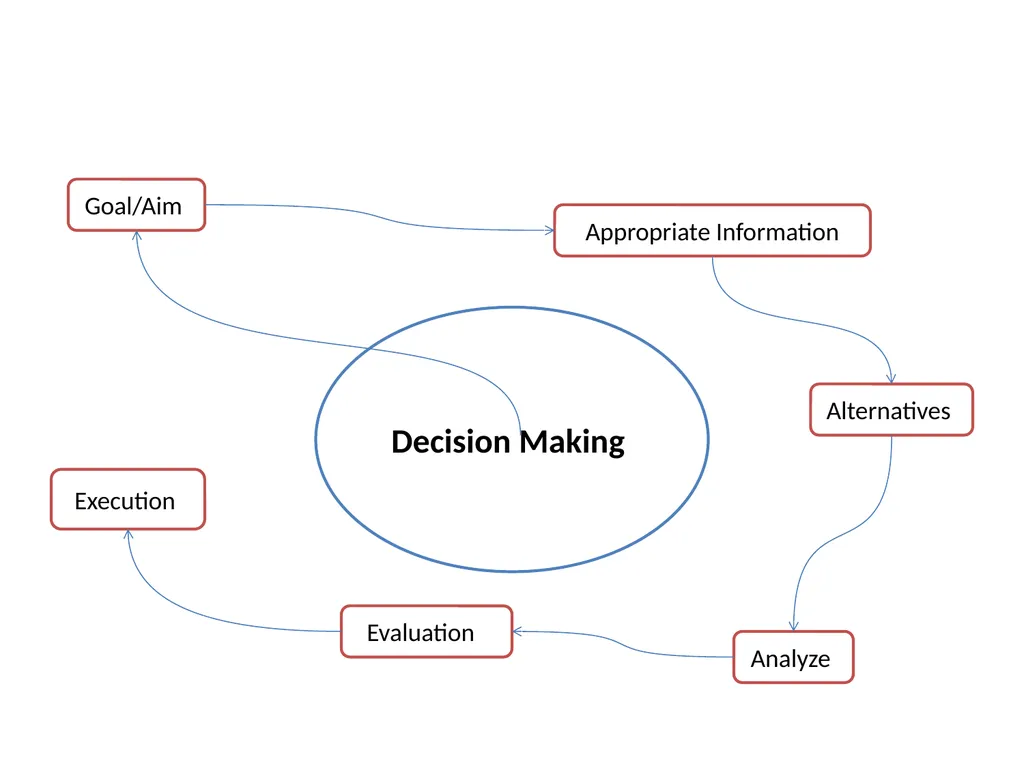
Decision Making Goal/Aim Analyze Appropriate Information Alternatives Evaluation Execution<br>
09
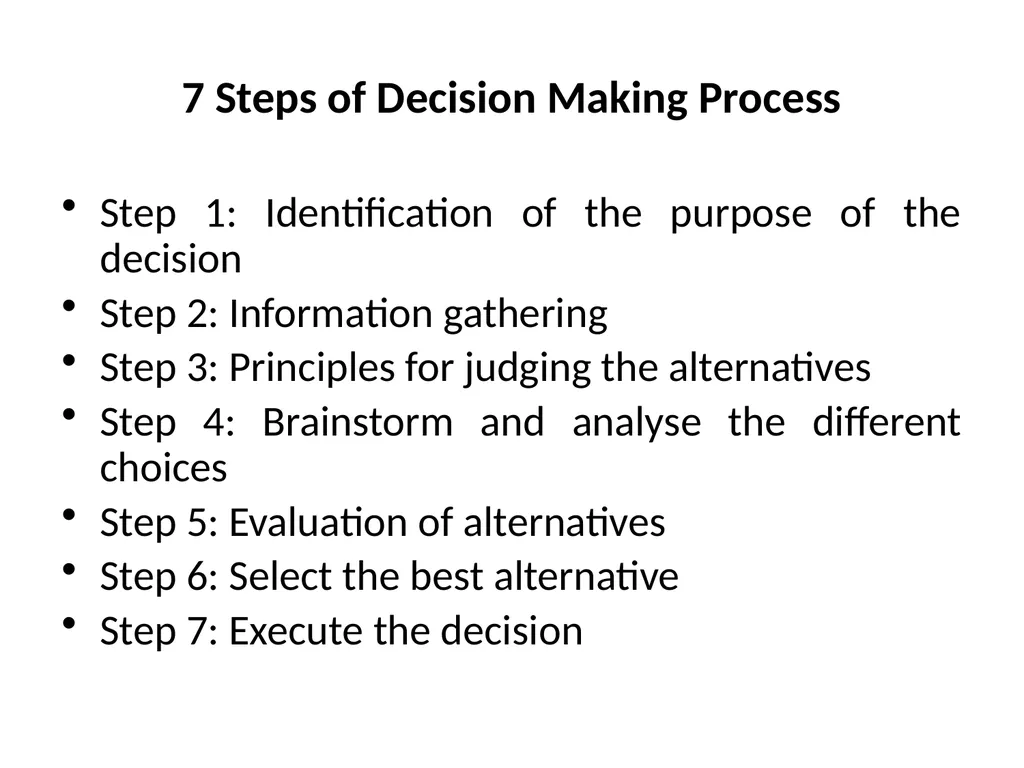
7 Steps of Decision Making Process Step 1: Identification of the purpose of the decision
Step 2: Information gathering
Step 3: Principles for judging the alternatives
Step 4: Brainstorm and analyse the different choices
Step 5: Evaluation of alternatives
Step 6: Select the best alternative
Step 7: Execute the decision<br>
10
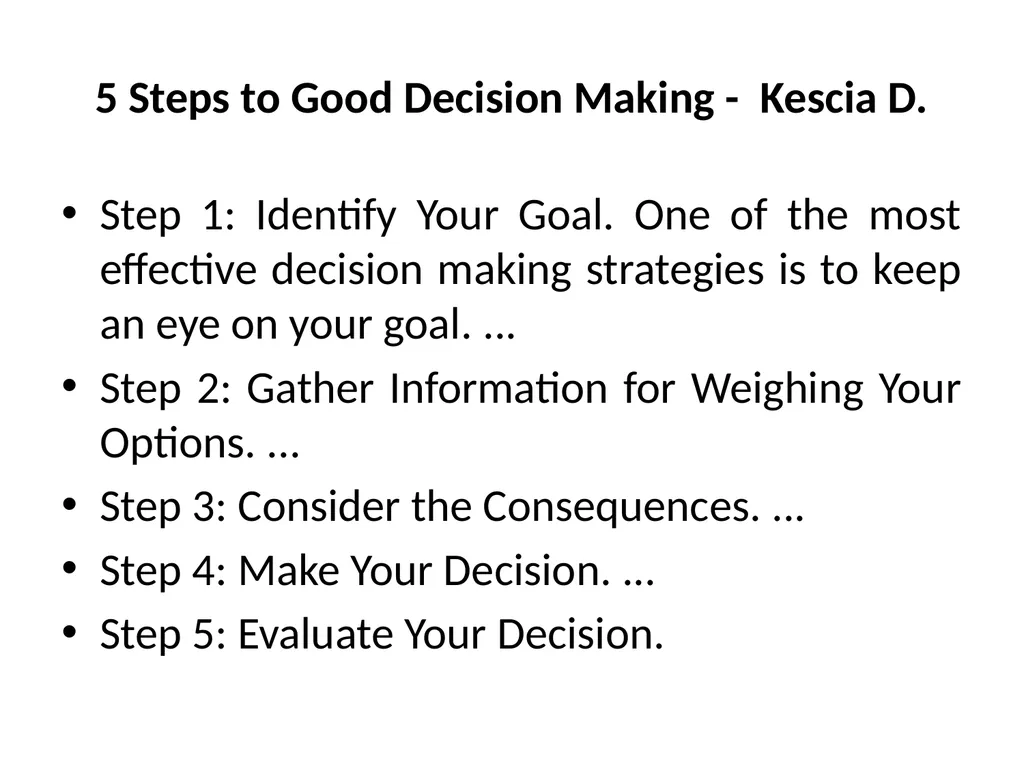
5 Steps to Good Decision Making - Kescia D. Step 1: Identify Your Goal. One of the most effective decision making strategies is to keep an eye on your goal. ...
Step 2: Gather Information for Weighing Your Options. ...
Step 3: Consider the Consequences. ...
Step 4: Make Your Decision. ...
Step 5: Evaluate Your Decision.<br>