Ethics Theory and Business Practice 3.2 Kantian Theory Part Two Identifying Duty: the Categorical Imperative aims to explain three formulas that Kant suggested we might use to identify our duty to explain why Kant thought we have a duty
"Ethics Theory and Business Practice 3.2 Kantian" is the property of its rightful owner. Permission is granted to
download and print the materials on this website for personal, non-commercial use only, and to display it
on your personal computer provided you do not modify the materials and that you retain all copyright
notices contained in the materials. By downloading content from our website, you accept the terms of this
agreement.
Presentation Transcript
01
Ethics Theory and Business Practice 3.2 Kantian Theory – Part Two
Identifying Duty: the Categorical Imperative<br>
02
aims to explain three formulas that Kant suggested we might use to identify our duty
to explain why Kant thought we have a duty to develop ethical sentiments<br>
03
how do we go about identifying our duty? the categorical imperative<br>
04
categorical imperatives an imperative: an authoritative command that tells us what we ought to do
a categorical imperative: an authoritative command that reason tells us we ought to do
and since it is what reason says we should do, we should do regardless of what sentiment may tell us to do<br>
05
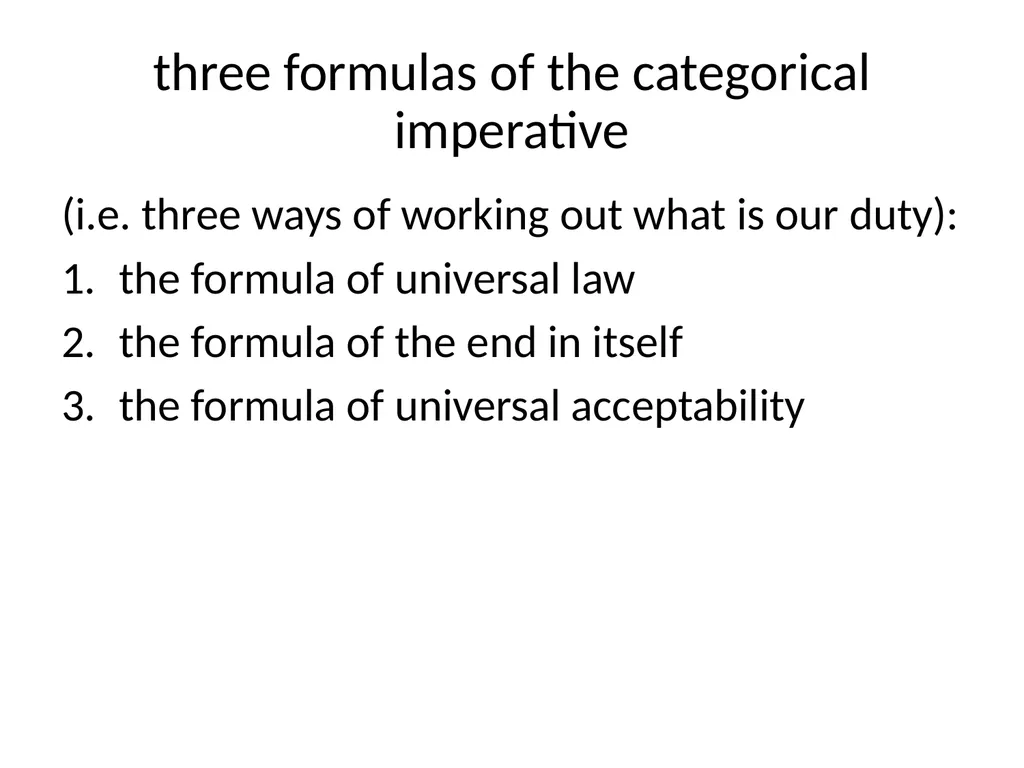
three formulas of the categorical imperative (i.e. three ways of working out what is our duty):
the formula of universal law
the formula of the end in itself
the formula of universal acceptability<br>
06
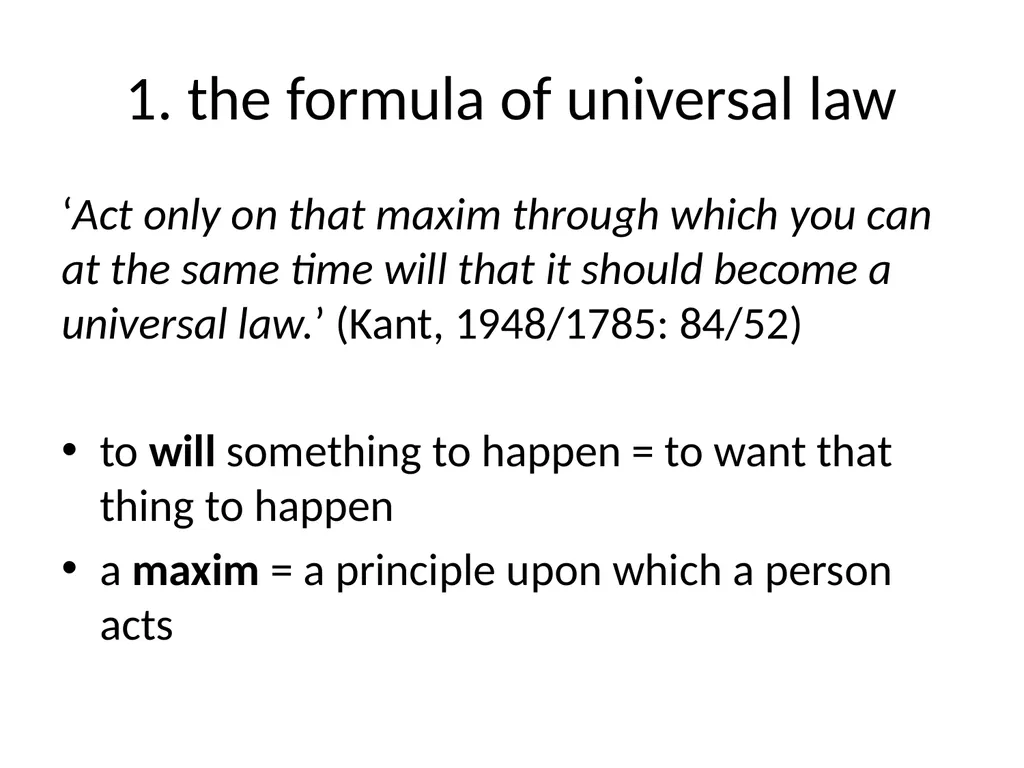
1. the formula of universal law ‘Act only on that maxim through which you can at the same time will that it should become a universal law.’ (Kant, 1948/1785: 84/52)
to will something to happen = to want that thing to happen
a maxim = a principle upon which a person acts<br>
07
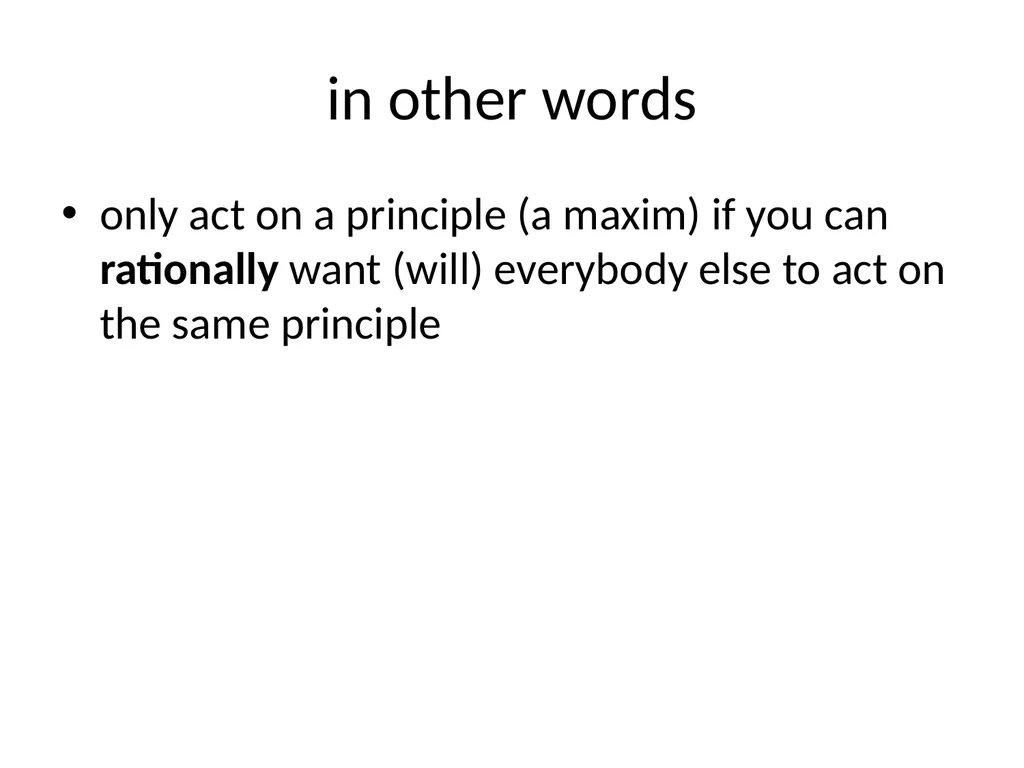
in other words only act on a principle (a maxim) if you can rationally want (will) everybody else to act on the same principle<br>
08
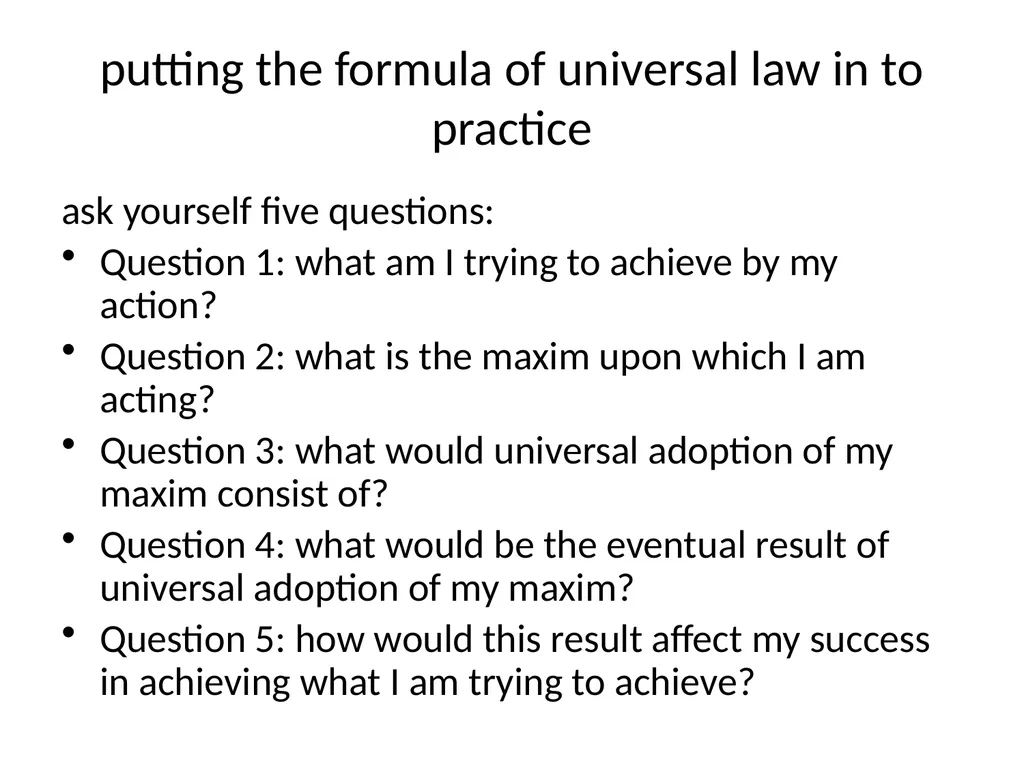
putting the formula of universal law in to practice ask yourself five questions:
Question 1: what am I trying to achieve by my action?
Question 2: what is the maxim upon which I am acting?
Question 3: what would universal adoption of my maxim consist of?
Question 4: what would be the eventual result of universal adoption of my maxim?
Question 5: how would this result affect my success in achieving what I am trying to achieve?<br>
09
theory in practice the formula of universal law and movie piracy<br>
10
2. the formula of the end in itself ‘Act in such a way that you always treat humanity, whether in your own person or in the person of any other, never simply as a means, but always at the same time as an end.’ (Kant 1948/1785: 91/66–7)<br>
11
means and ends to treat someone as a means to an end is to value that person only insofar as they help you to achieve some further end that you happen to value
i.e. to use that person
to treat someone as an end is to treat them as having value in their own right
i.e. to respect the dignity that person merits as a rational, free being<br>
12
is the formula of the end in itself realistic in business? don’t businesses ‘use’ all their stakeholders as a means to the end of making profit?
but Kant does not preclude treating people as a means to en end
only treating them simply as a means to an end
i.e. businesses can use people as long as they also treat them as an end in their own right<br>
13
theory in practice suppliers: simply a means to an end; or an end in themselves?<br>
14
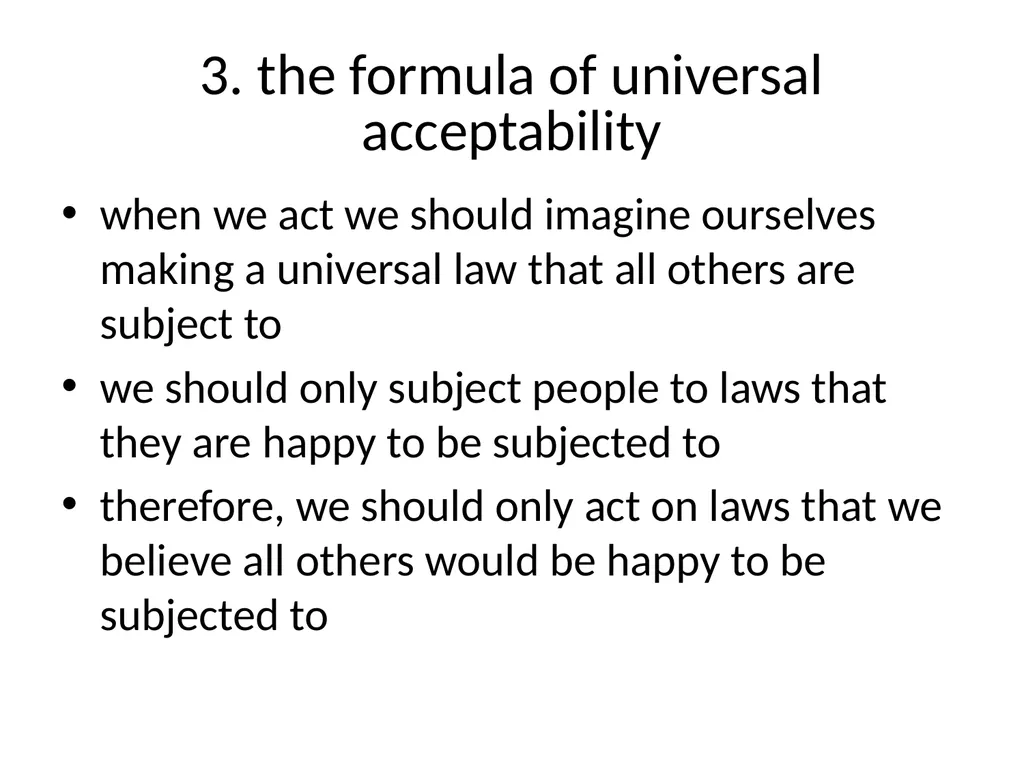
3. the formula of universal acceptability when we act we should imagine ourselves making a universal law that all others are subject to
we should only subject people to laws that they are happy to be subjected to
therefore, we should only act on laws that we believe all others would be happy to be subjected to<br>
15
→ the New York Times test ‘in general, if you don’t want to read about it in The New York Times, you shouldn’t be doing it’ (Trevino and Nelson, 2004: 99)<br>
16
theory in practice would UK water companies have wanted everyone to know what they were doing?<br>
17
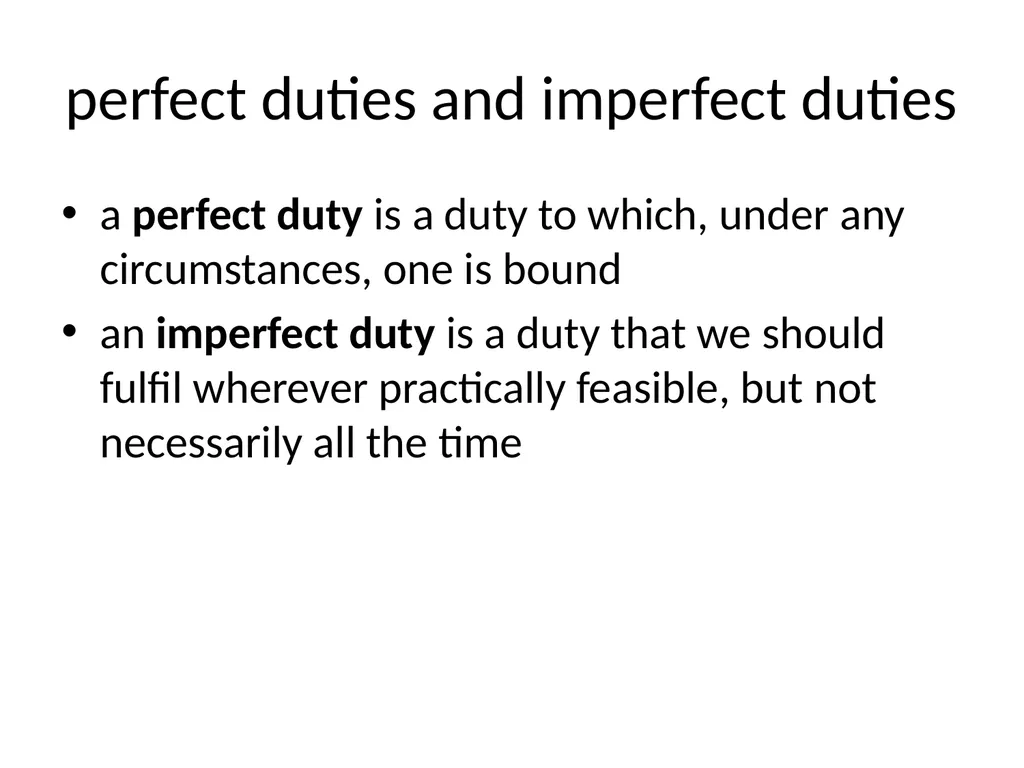
perfect duties and imperfect duties a perfect duty is a duty to which, under any circumstances, one is bound
an imperfect duty is a duty that we should fulfil wherever practically feasible, but not necessarily all the time<br>
18
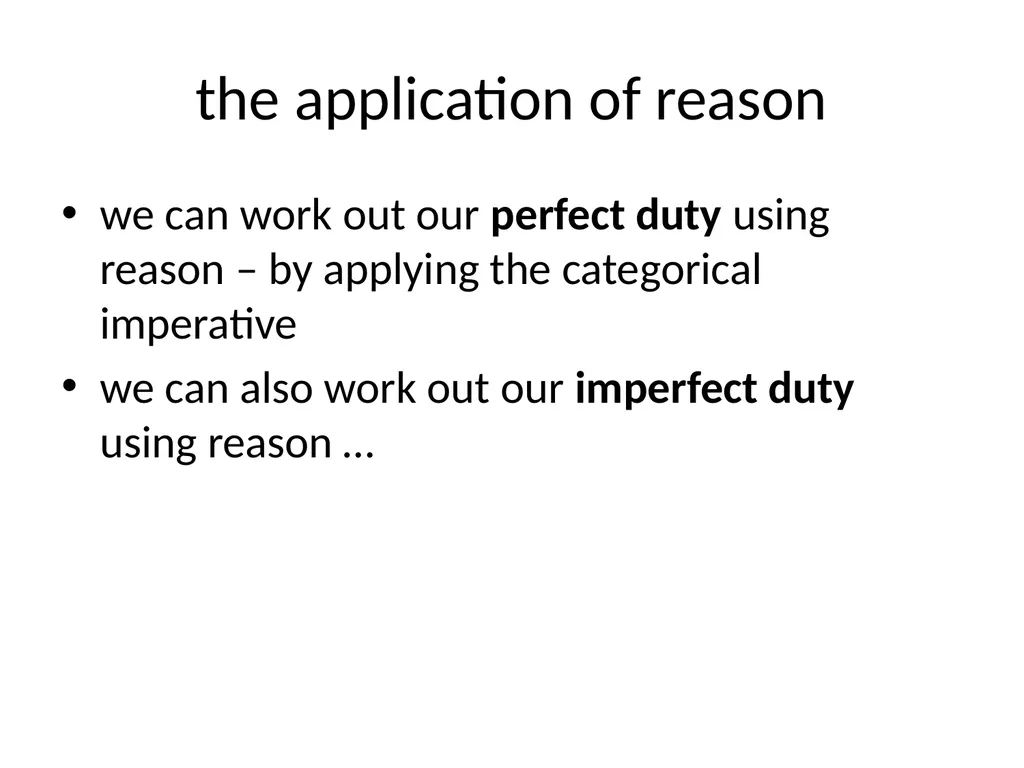
the application of reason we can work out our perfect duty using reason – by applying the categorical imperative
we can also work out our imperfect duty using reason …<br>
19
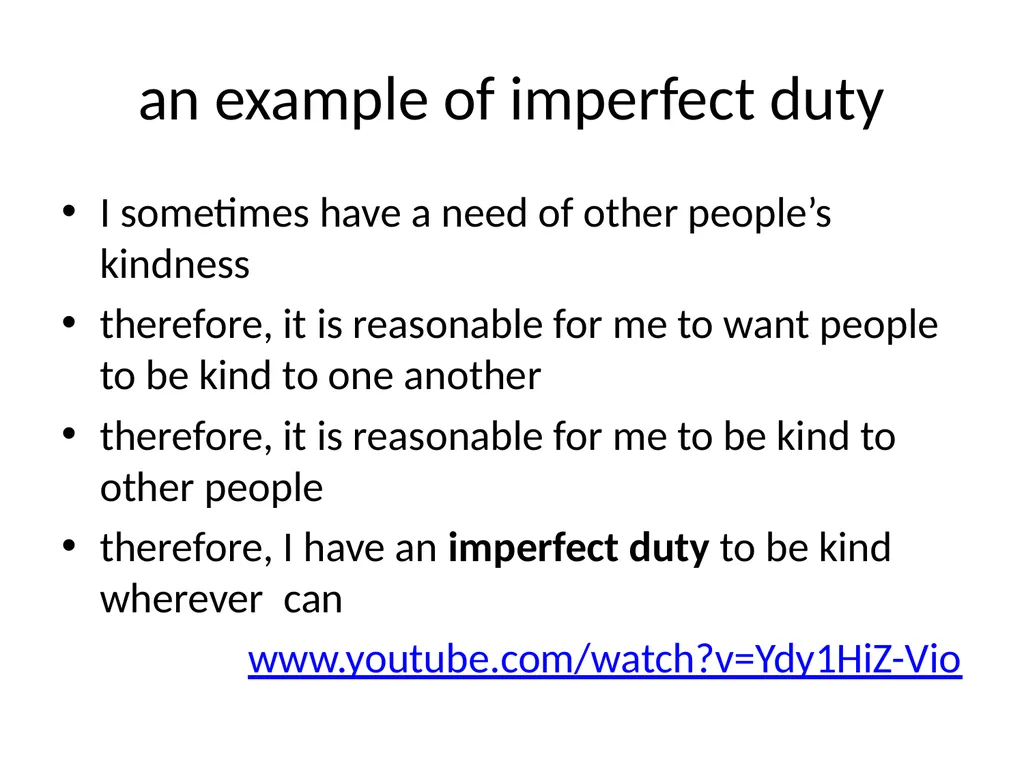
an example of imperfect duty I sometimes have a need of other people’s kindness
therefore, it is reasonable for me to want people to be kind to one another
therefore, it is reasonable for me to be kind to other people
therefore, I have an imperfect duty to be kind wherever can
www.youtube.com/watch?v=Ydy1HiZ-Vio<br>
20
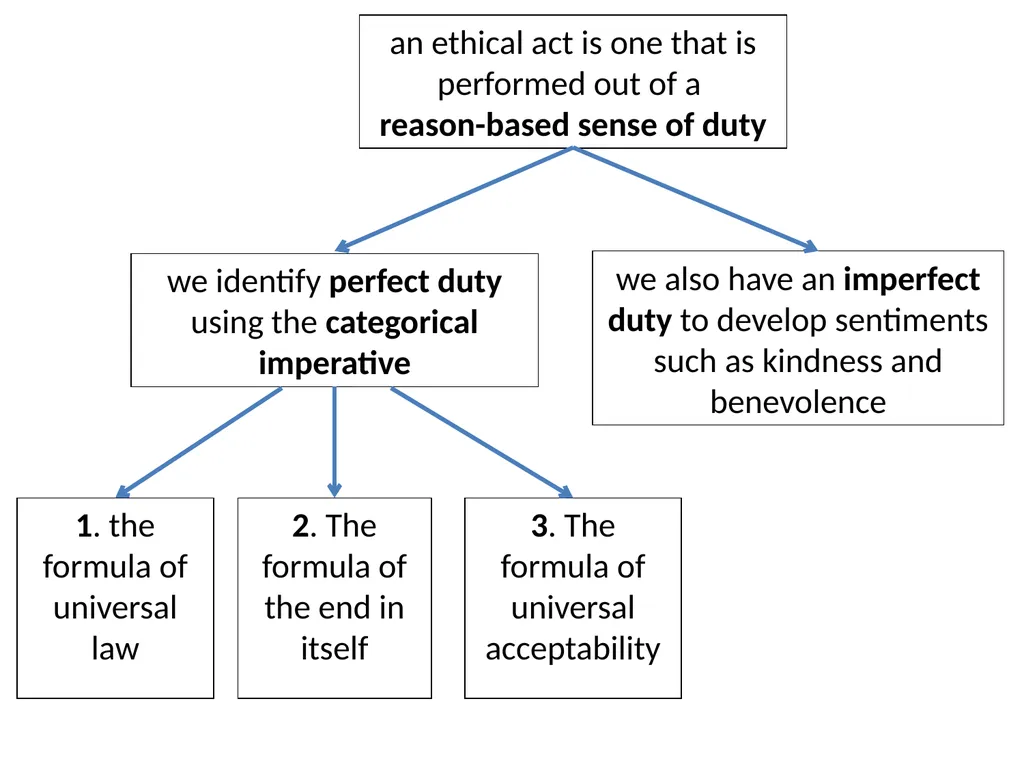
an ethical act is one that is performed out of a
reason-based sense of duty we identify perfect duty using the categorical imperative we also have an imperfect duty to develop sentiments such as kindness and benevolence 1. the formula of universal law 2. The formula of the end in itself 3. The formula of universal acceptability<br>
21
key points the three formulas of the categorical imperative can help us to work out what is our reason-based duty
we also have an imperfect duty to develop and express sentiments that we may need others to express towards us<br>
22
references Kant, I. (1948/1785) ‘Groundwork to the Metaphysic of Morals’, H. J. Paton (trans. and ed.), The Moral Law: Kant’s Groundwork to the Metaphysic of Morals. London: Hutchinson. pp. 51–123.
Trevino, L.K. and Nelson, K.A. (2004) Managing Business Ethics: Straight Talk About How To Do It Right (3rd edn). Hoboken, NJ: Wiley.<br>