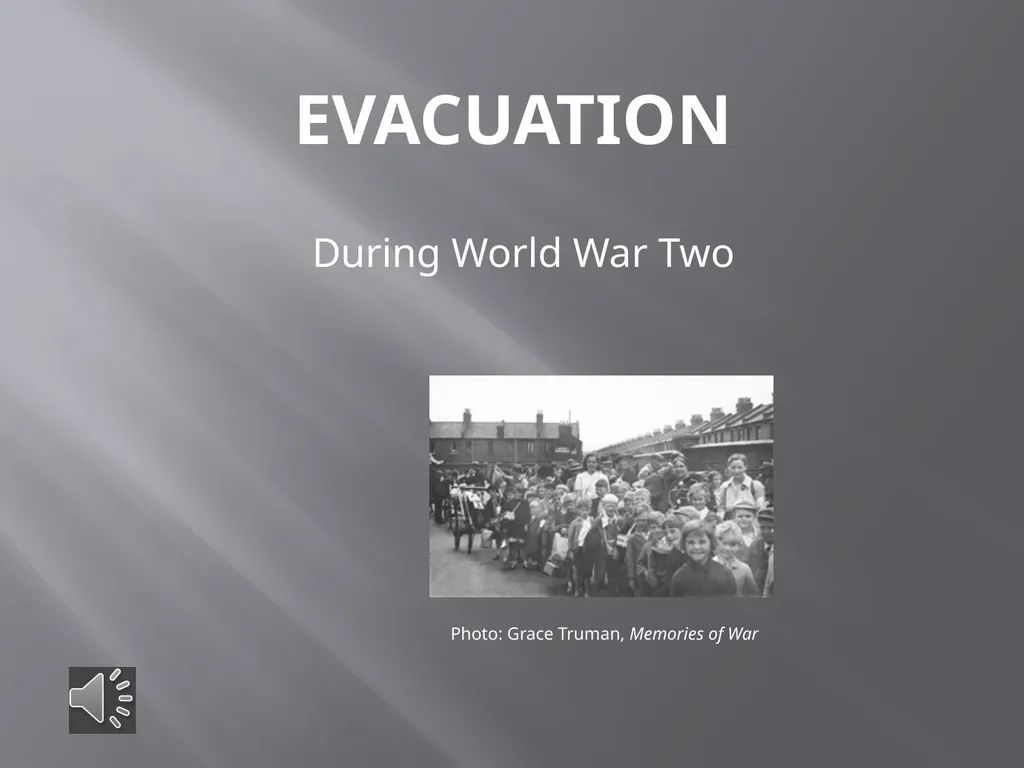
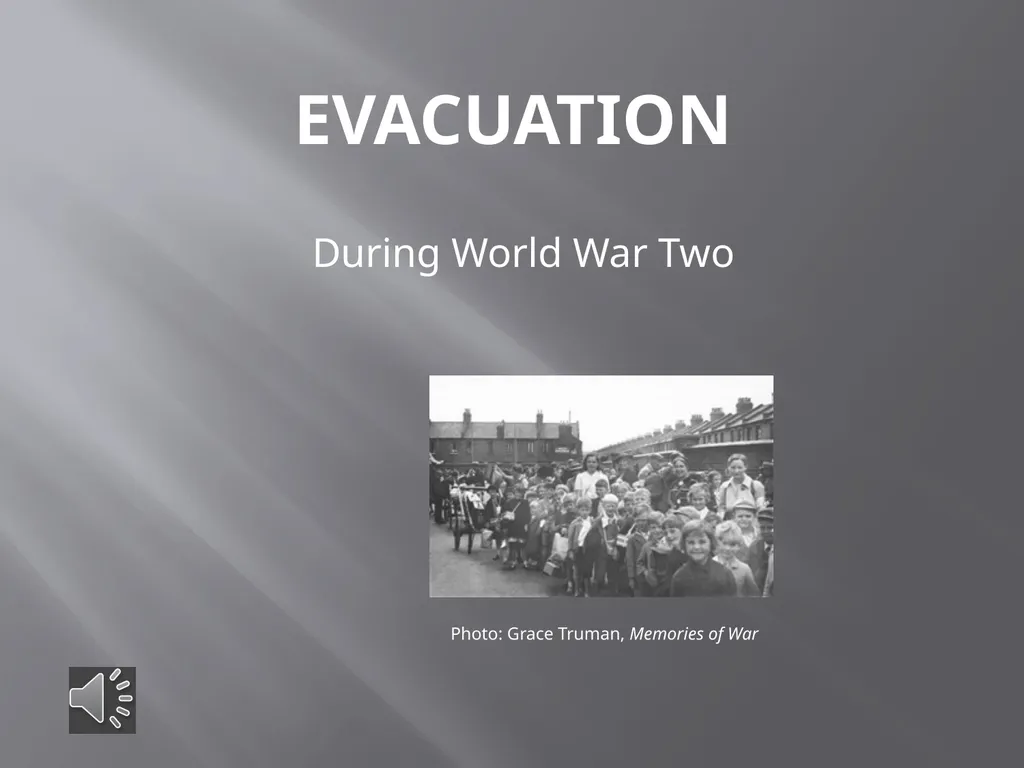
Evacuation During World War Two Photo: Grace Truman, Memories of War Air Raid Damage on London in World War One Photos: Imperial War Museum BBC Vocabulary: Air Raid an attack where bombs are dropped from an air craft onto a ground target
"Evacuation During World War Two Photo: Grace" is the property of its rightful owner. Permission is granted to
download and print the materials on this website for personal, non-commercial use only, and to display it
on your personal computer provided you do not modify the materials and that you retain all copyright
notices contained in the materials. By downloading content from our website, you accept the terms of this
agreement.
Presentation Transcript
01
Evacuation During World War Two Photo: Grace Truman, Memories of War<br>
02
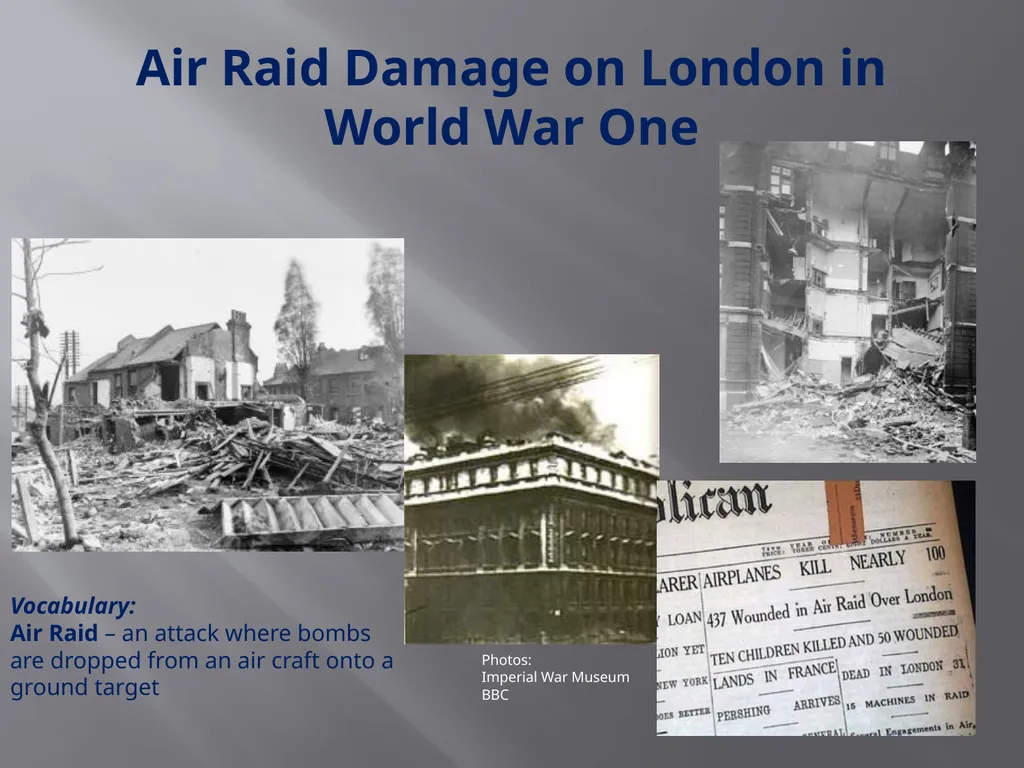
Air Raid Damage on London in World War One Photos:
Imperial War Museum
BBC Vocabulary:
Air Raid – an attack where bombs are dropped from an air craft onto a ground target<br>
03
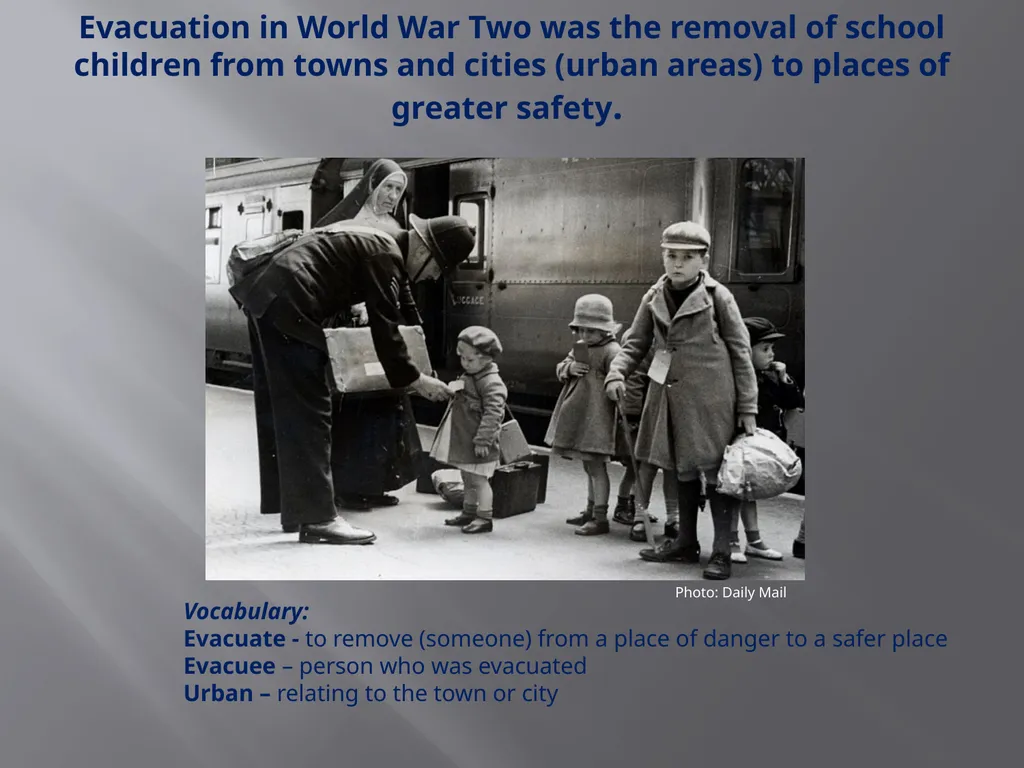
Evacuation in World War Two was the removal of school children from towns and cities (urban areas) to places of greater safety. Vocabulary:
Evacuate - to remove (someone) from a place of danger to a safer place
Evacuee – person who was evacuated
Urban – relating to the town or city Photo: Daily Mail<br>
04
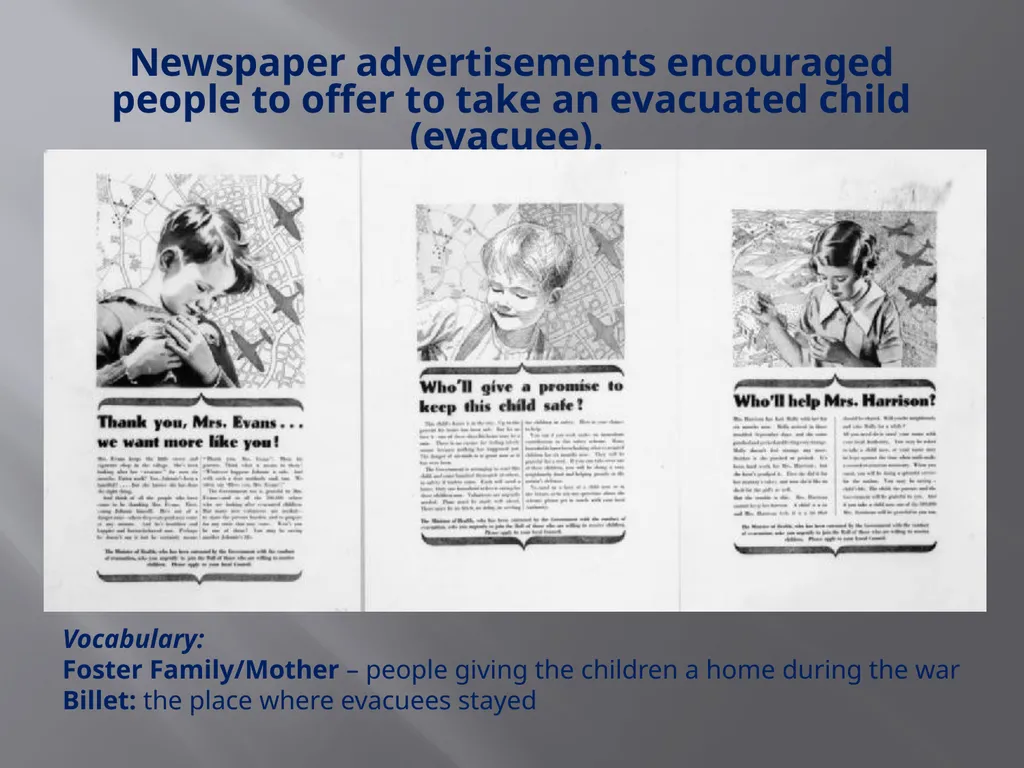
Newspaper advertisements encouraged people to offer to take an evacuated child (evacuee). Vocabulary:
Foster Family/Mother – people giving the children a home during the war
Billet: the place where evacuees stayed<br>
05
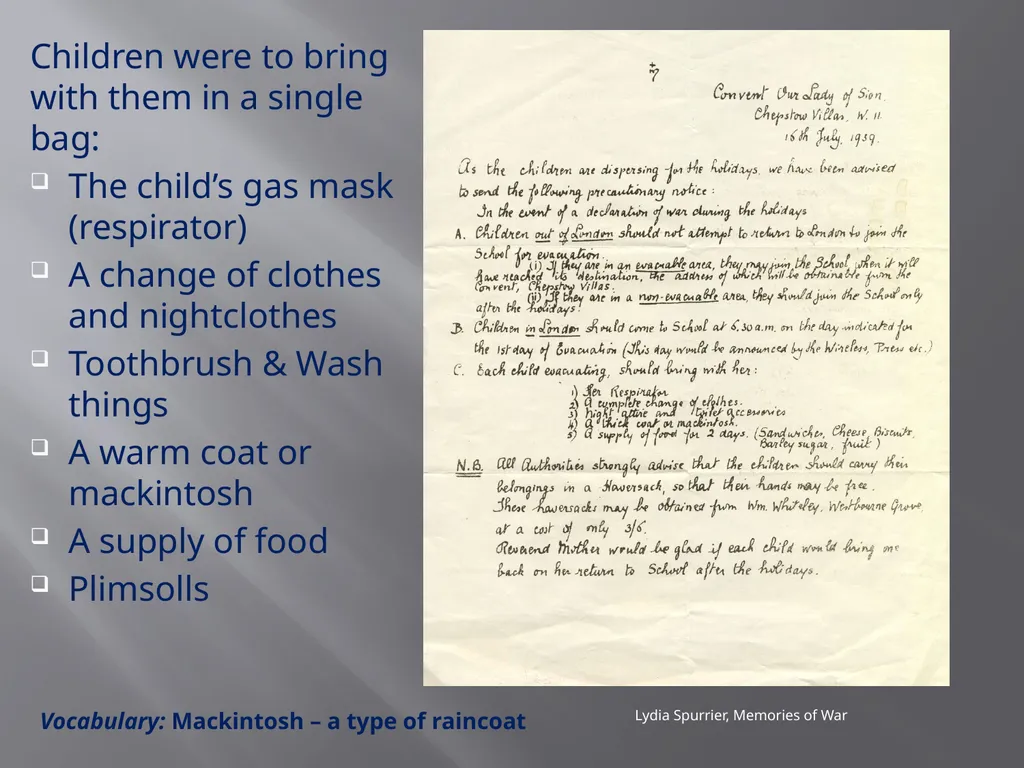
Children were to bring with them in a single bag:
The child’s gas mask (respirator)
A change of clothes and nightclothes
Toothbrush & Wash things
A warm coat or mackintosh
A supply of food
Plimsolls Vocabulary: Mackintosh – a type of raincoat Lydia Spurrier, Memories of War<br>
06
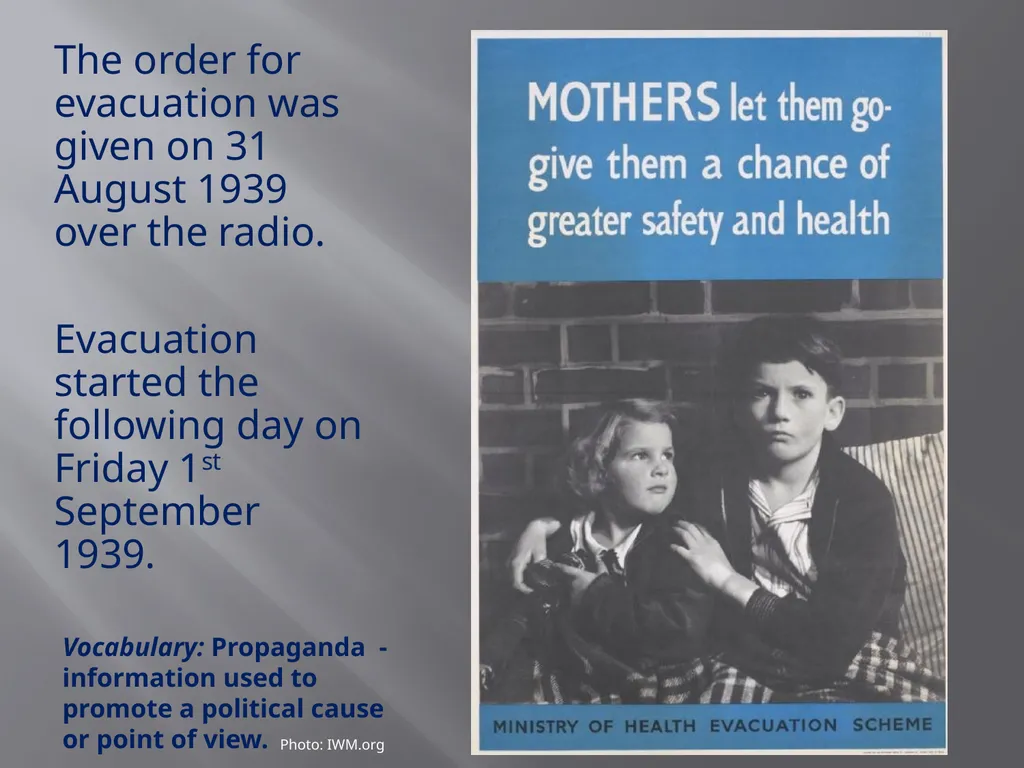
The order for evacuation was given on 31 August 1939 over the radio.
Evacuation started the following day on Friday 1st September 1939. Photo: IWM.org Vocabulary: Propaganda - information used to promote a political cause or point of view.<br>
07
Adults were to remain in cities to carry out their jobs and war work. Vocabulary:
Rural – relating to the countryside<br>
08
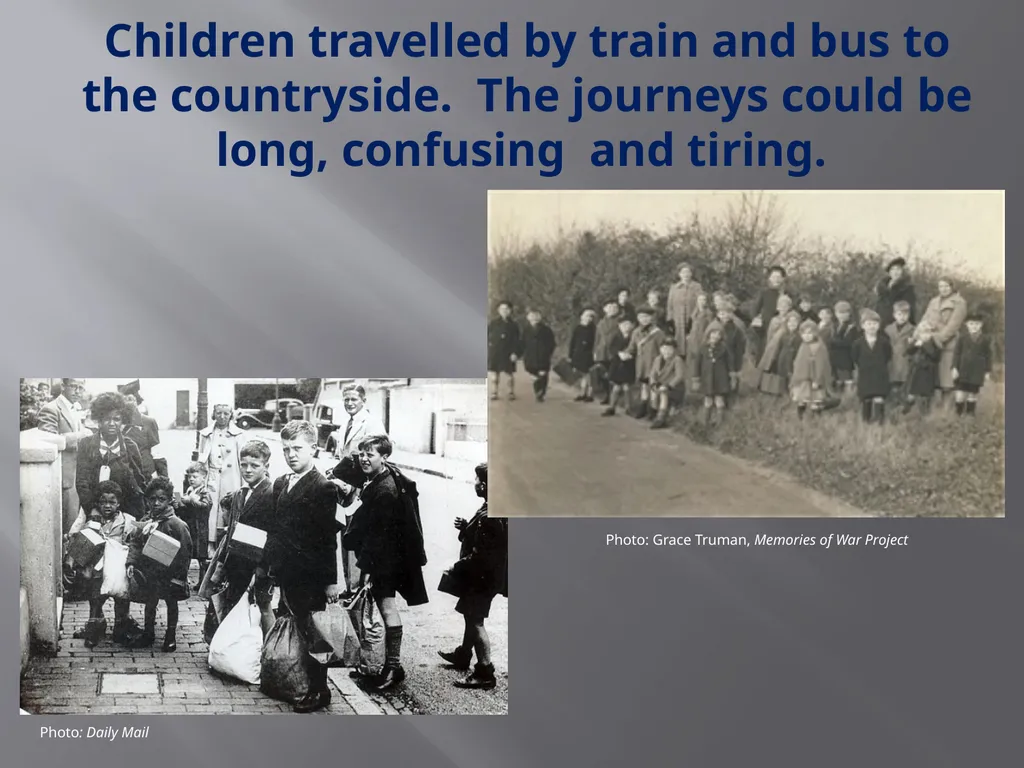
Children travelled by train and bus to the countryside. The journeys could be long, confusing and tiring. Photo: Grace Truman, Memories of War Project Photo: Daily Mail<br>
09
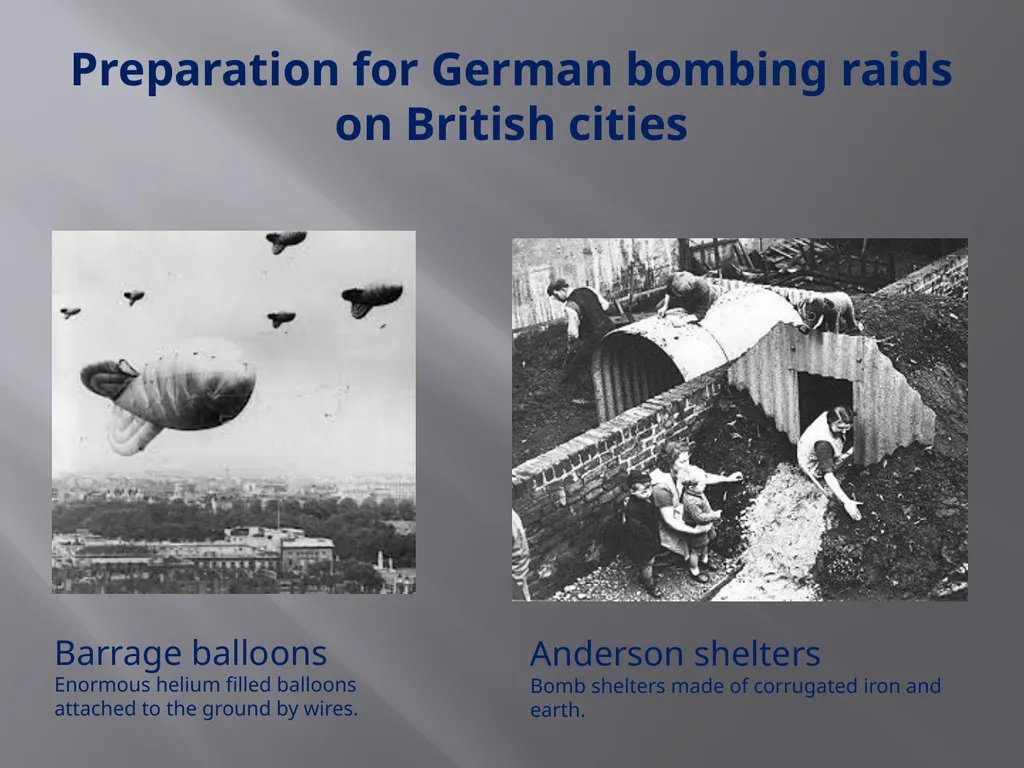
Preparation for German bombing raids on British cities Barrage balloons
Enormous helium filled balloons attached to the ground by wires. Anderson shelters
Bomb shelters made of corrugated iron and earth.<br>
10
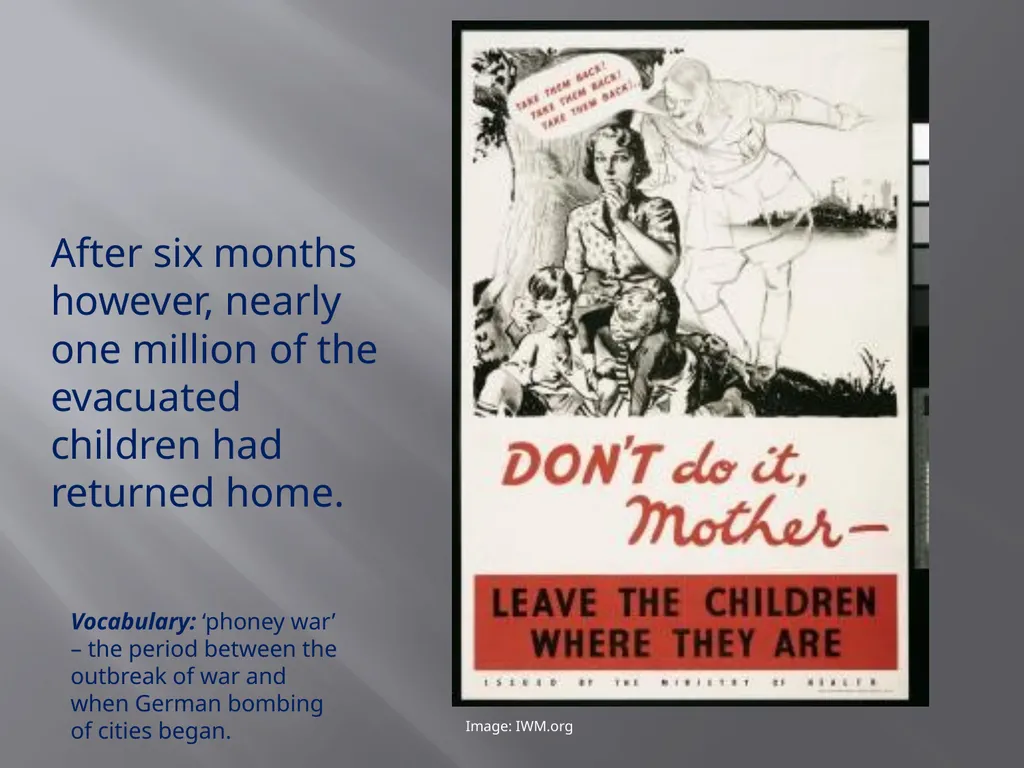
After six months however, nearly one million of the evacuated children had returned home. Image: IWM.org Vocabulary: ‘phoney war’ – the period between the outbreak of war and when German bombing of cities began.<br>
11
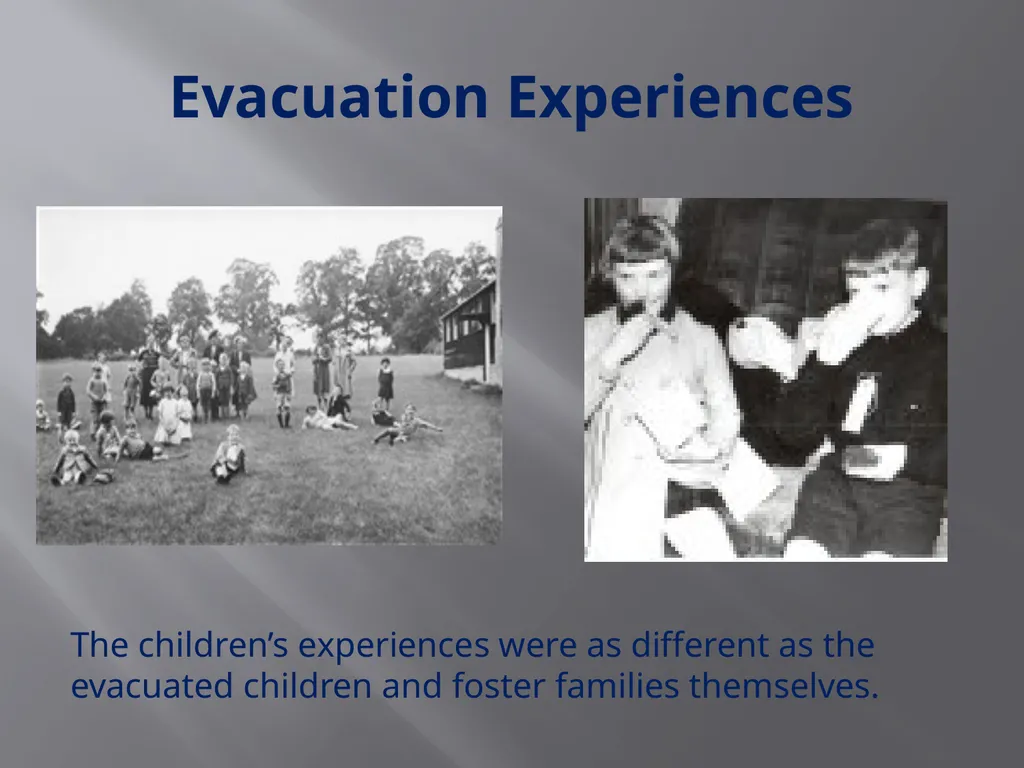
Evacuation Experiences The children’s experiences were as different as the evacuated children and foster families themselves.<br>
12
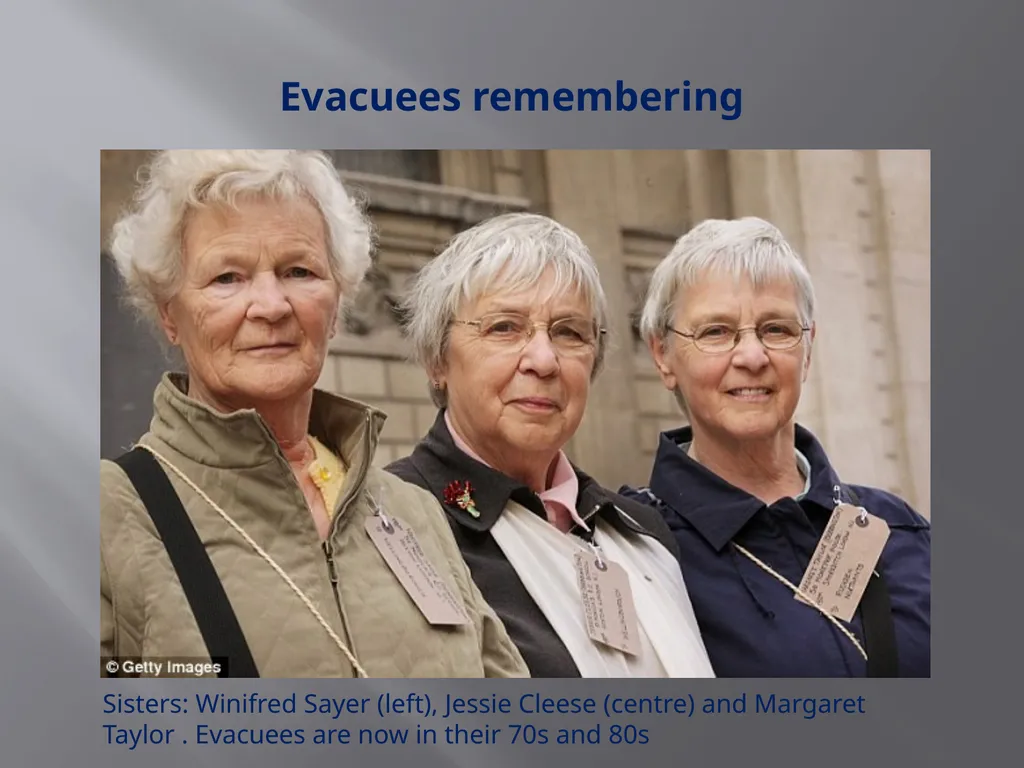
Evacuees remembering Sisters: Winifred Sayer (left), Jessie Cleese (centre) and Margaret Taylor . Evacuees are now in their 70s and 80s<br>
13
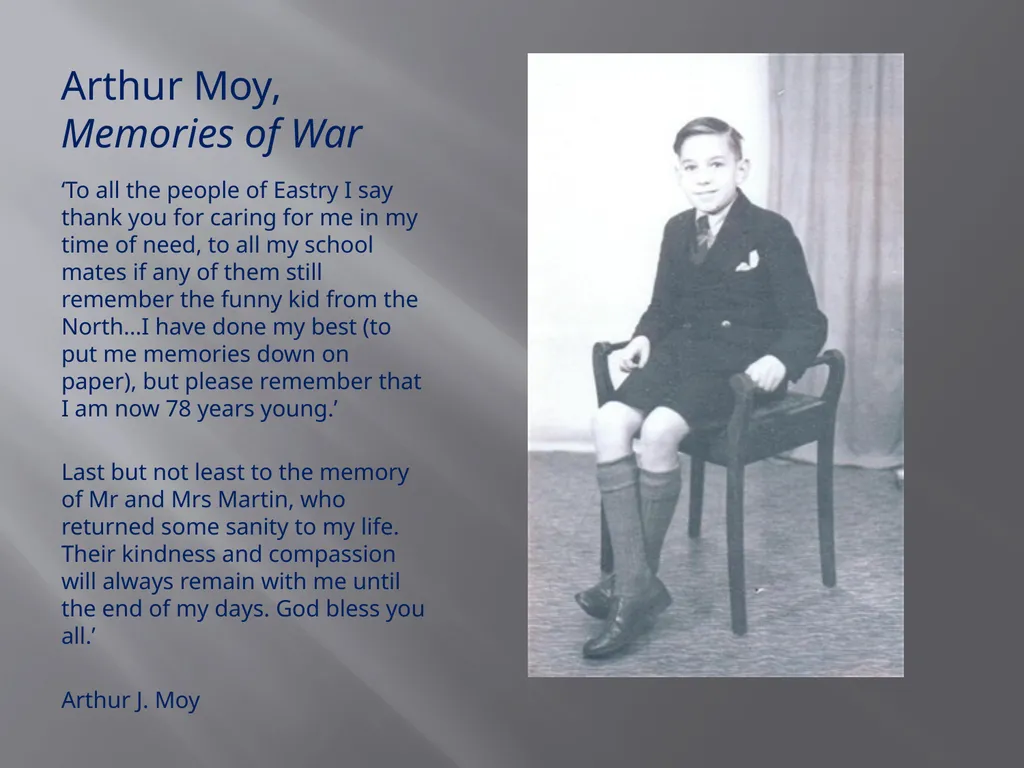
Arthur Moy, Memories of War ‘To all the people of Eastry I say thank you for caring for me in my time of need, to all my school mates if any of them still remember the funny kid from the North…I have done my best (to put me memories down on paper), but please remember that I am now 78 years young.’
Last but not least to the memory of Mr and Mrs Martin, who returned some sanity to my life. Their kindness and compassion will always remain with me until the end of my days. God bless you all.’