FACULTY OF MANAGEMENT STUDIES (MLSU) HUMAN RESOURCE, TRAINING AND DEVELOPMENT UNIT 3 TOPIC : LESSON PLANNING BY : Ms.TANUJA SINGHAL FOR : CMAT 3rd SEM Lesson Planning A lesson plan is a road map of the instructions. It helps in achieving
"FACULTY OF MANAGEMENT STUDIES (MLSU) HUMAN" is the property of its rightful owner. Permission is granted to
download and print the materials on this website for personal, non-commercial use only, and to display it
on your personal computer provided you do not modify the materials and that you retain all copyright
notices contained in the materials. By downloading content from our website, you accept the terms of this
agreement.
Presentation Transcript
01
FACULTY OF MANAGEMENT STUDIES (MLSU) HUMAN RESOURCE, TRAINING AND DEVELOPMENT UNIT = 3
TOPIC : LESSON PLANNING BY : Ms.TANUJA SINGHAL FOR : CMAT 3rd SEM<br>
02
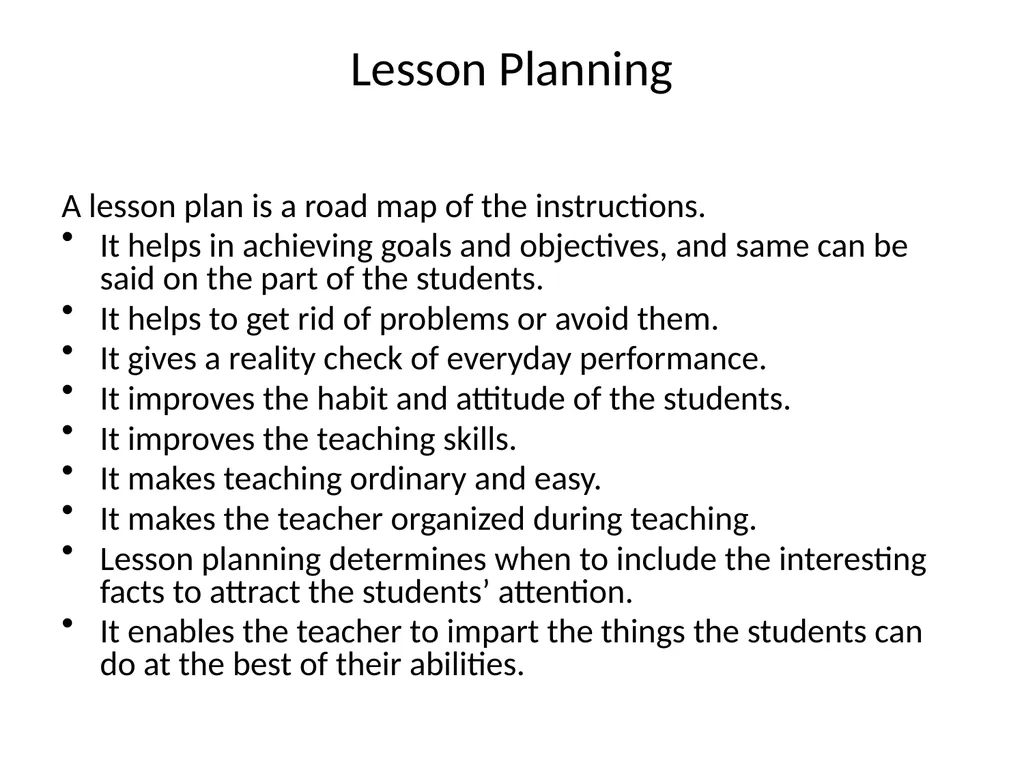
Lesson Planning A lesson plan is a road map of the instructions.
It helps in achieving goals and objectives, and same can be said on the part of the students.
It helps to get rid of problems or avoid them.
It gives a reality check of everyday performance.
It improves the habit and attitude of the students.
It improves the teaching skills.
It makes teaching ordinary and easy.
It makes the teacher organized during teaching.
Lesson planning determines when to include the interesting facts to attract the students’ attention.
It enables the teacher to impart the things the students can do at the best of their abilities.<br>
03
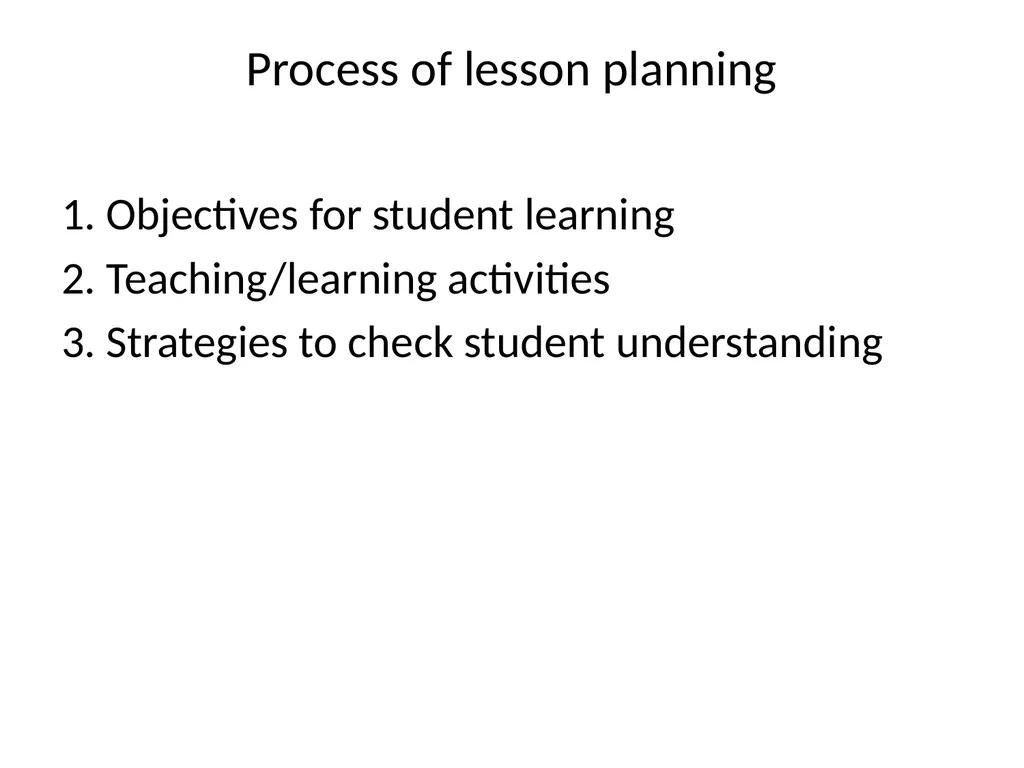
Process of lesson planning 1. Objectives for student learning
2. Teaching/learning activities
3. Strategies to check student understanding<br>
04
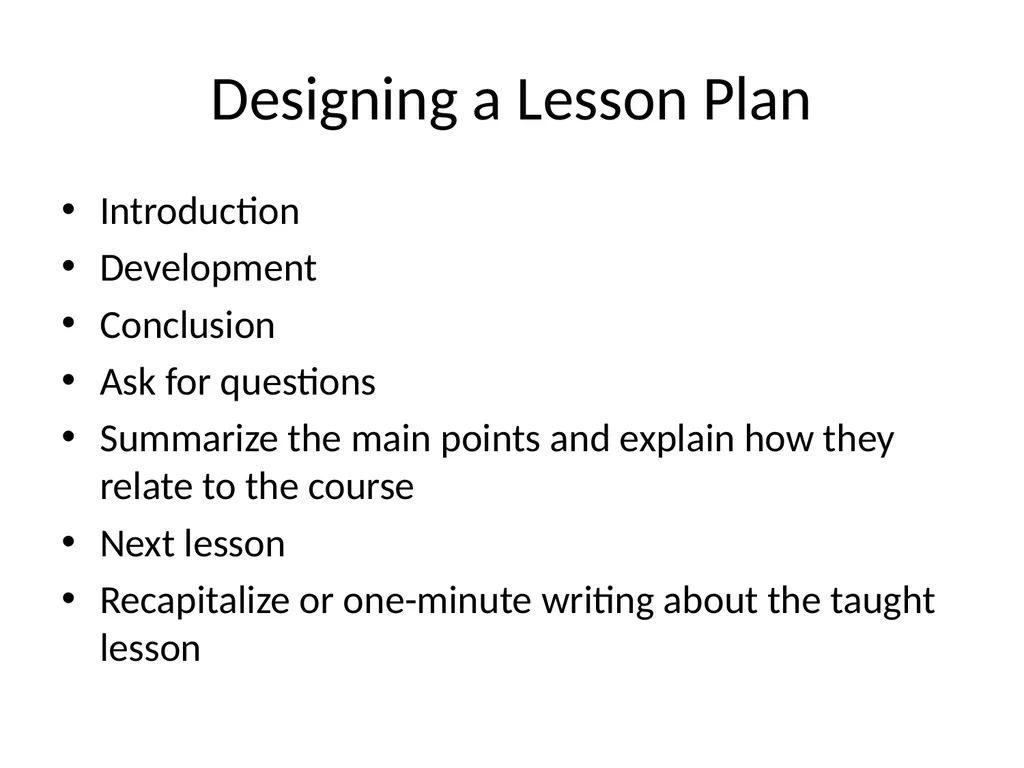
Designing a Lesson Plan Introduction
Development
Conclusion
Ask for questions
Summarize the main points and explain how they relate to the course
Next lesson
Recapitalize or one-minute writing about the taught lesson<br>
05
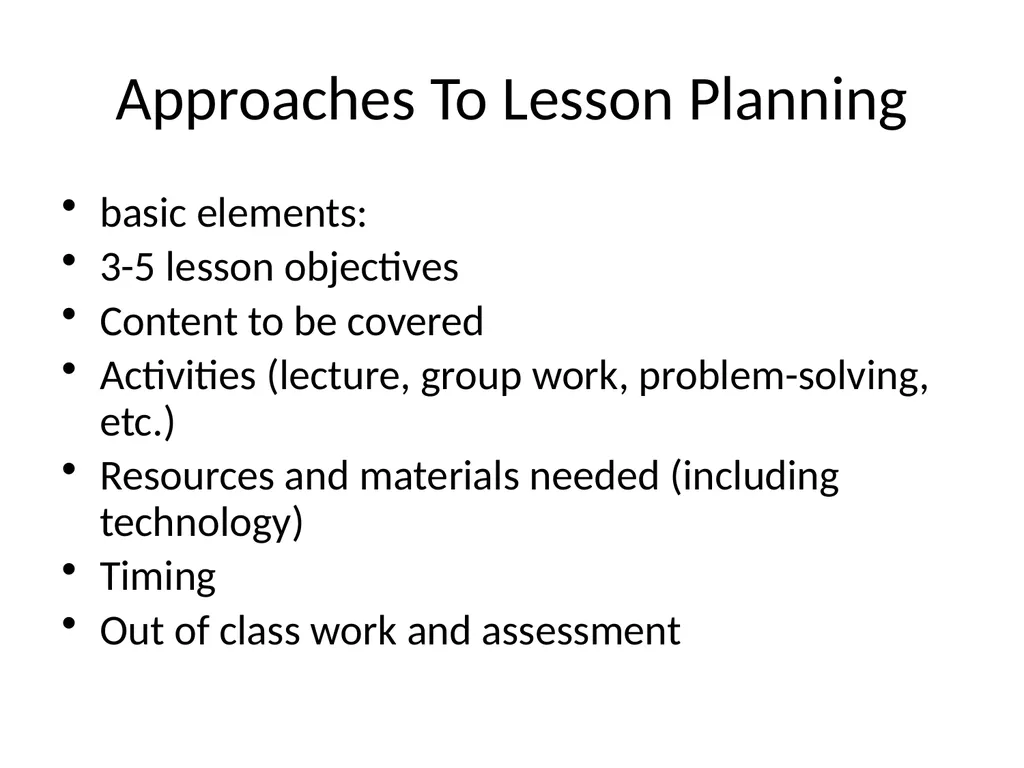
Approaches To Lesson Planning basic elements:
3-5 lesson objectives
Content to be covered
Activities (lecture, group work, problem-solving, etc.)
Resources and materials needed (including technology)
Timing
Out of class work and assessment<br>
06
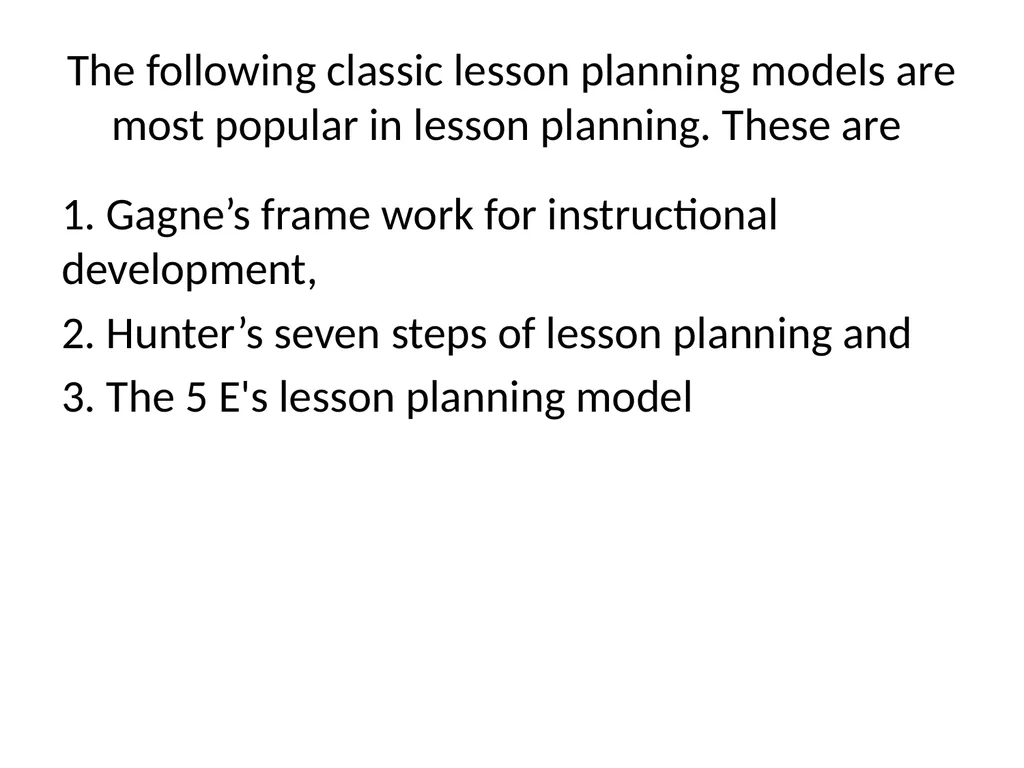
The following classic lesson planning models are most popular in lesson planning. These are 1. Gagne’s frame work for instructional development,
2. Hunter’s seven steps of lesson planning and
3. The 5 E's lesson planning model<br>
07
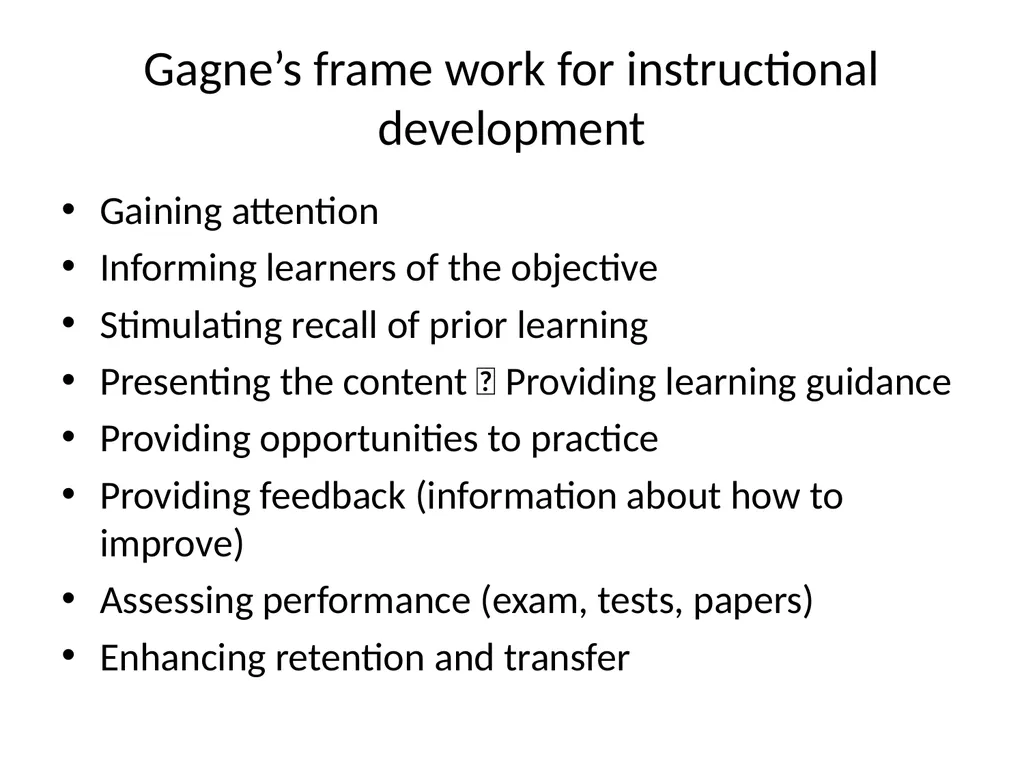
Gagne’s frame work for instructional development Gaining attention
Informing learners of the objective
Stimulating recall of prior learning
Presenting the content Providing learning guidance
Providing opportunities to practice
Providing feedback (information about how to improve)
Assessing performance (exam, tests, papers)
Enhancing retention and transfer<br>
08
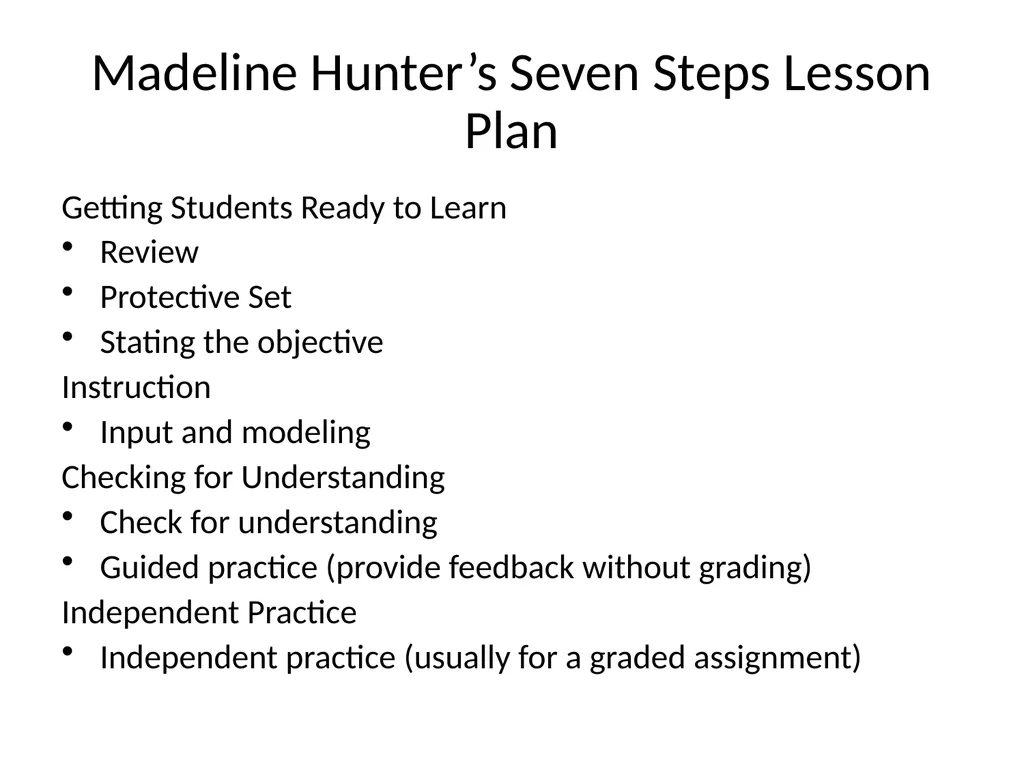
Madeline Hunter’s Seven Steps Lesson Plan Getting Students Ready to Learn
Review
Protective Set
Stating the objective
Instruction
Input and modeling
Checking for Understanding
Check for understanding
Guided practice (provide feedback without grading)
Independent Practice
Independent practice (usually for a graded assignment)<br>
09
5 E’s of Lesson Planning Engage
Explore
Explain
Elaborate
Evaluate<br>
10
Course And Unit Planning Decide a topic
Determine objectives
Identify learning outcomes- (the desirable results)
Determine assessment
Design learning experiences and organize material- the content
Develop evaluation mechanism-evaluation Information marketing-course description<br>
11
Writing up Outcomes Outcomes can be written up in the following format:
At the end of this course students should be able to:
Define...
Summarize...
Demonstrate...
Analyses...
Critique...
Integrate...
Discussion of Outcomes
Discussion of Outcomes
Check of Understanding
Assessment
Planning Content
Important Points
Evaluation
Course Descriptions<br>
12
Steps In Lesson Planning Outline learning objectives
Develop the introduction
Plan the specific learning activities (the main body of the lesson)
Plan to check for understanding
Develop a conclusion and a preview
Create a realistic timeline<br>