Faith Based Philanthropy as a Solution for Africa Khaled Khalifa - UNHCR Senior Advisor Representative to the Gulf Cooperation Council Countries Africa Facts Figures 54 countries 1.34 billion people (2020) Total GDP of 2.33 trillion
"Faith Based Philanthropy as a Solution for Africa" is the property of its rightful owner. Permission is granted to
download and print the materials on this website for personal, non-commercial use only, and to display it
on your personal computer provided you do not modify the materials and that you retain all copyright
notices contained in the materials. By downloading content from our website, you accept the terms of this
agreement.
Presentation Transcript
01
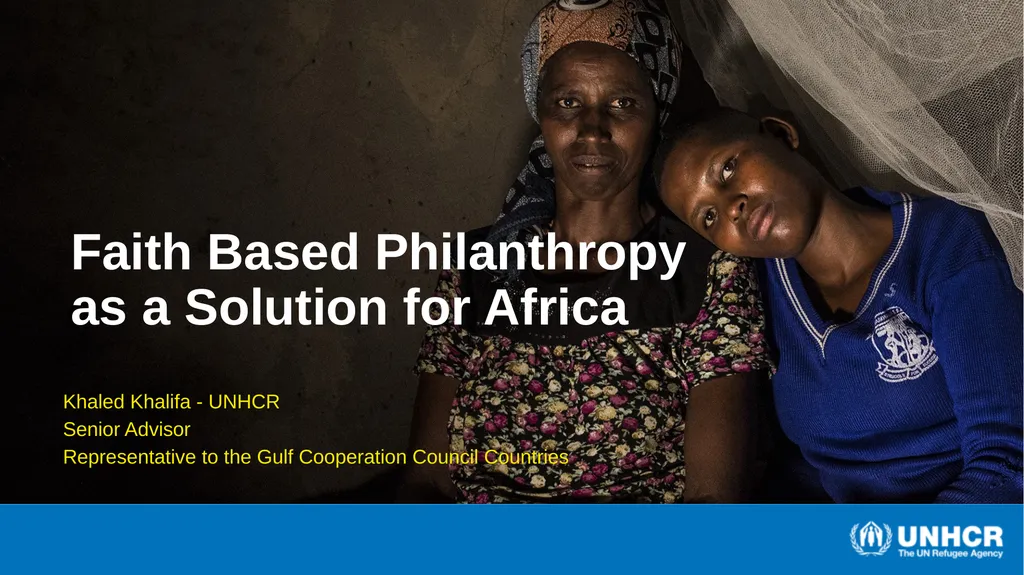
Faith Based Philanthropy as a Solution for Africa Khaled Khalifa - UNHCR
Senior Advisor
Representative to the Gulf Cooperation Council Countries<br>
02
Africa – Facts & Figures 54 countries
1.34 billion people (2020)
Total GDP of $2.33 trillion (2020)
27 African countries are OIC members (57)
40% of population is Muslim = 533 million people
African diaspora (2013-2018)
140 million people
$50 billion total savings
Zakat of diaspora: 2.5% of 40% (Muslim population) of $50 billion is: $500 million. Sub-Saharan Africa hosts more than 26 per cent of the world’s refugee population.
Over 18 million people in this region are of concern to UNHCR; number on the rise due to Covid and ongoing conflicts
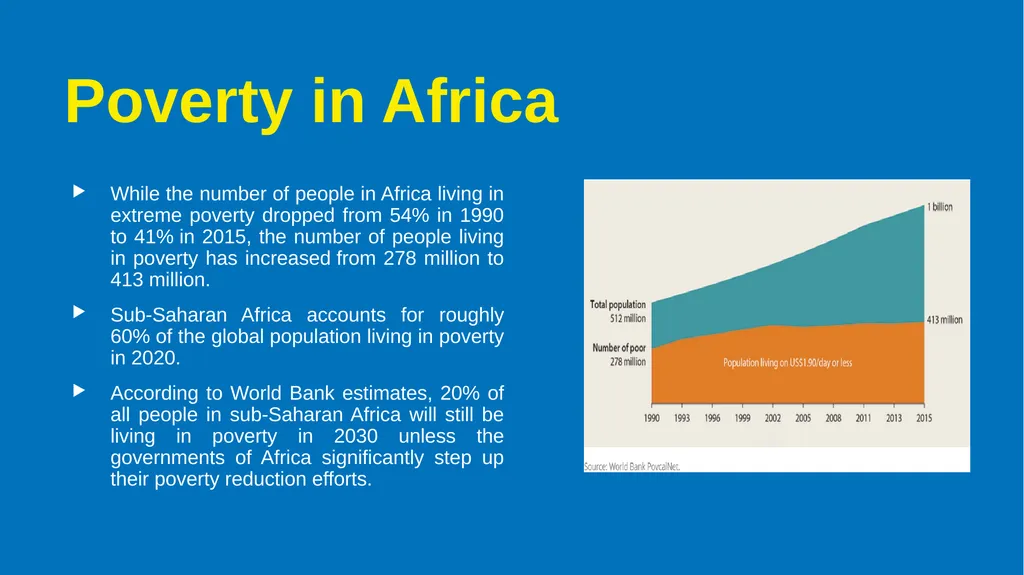
Poverty in Africa While the number of people in Africa living in extreme poverty dropped from 54% in 1990 to 41% in 2015, the number of people living in poverty has increased from 278 million to 413 million.
Sub-Saharan Africa accounts for roughly 60% of the global population living in poverty in 2020.
According to World Bank estimates, 20% of all people in sub-Saharan Africa will still be living in poverty in 2030 unless the governments of Africa significantly step up their poverty reduction efforts.<br>
04
Relevance of Islamic finance for Africa Based on Equity & Justice
Based on risk sharing – money ‘becomes actual capital only when it joins hands with other resources to undertake a productive activity’
Transactions are backed by real assets or economic activities (prohibition of creation of interest-based debt through direct lending and borrowing)
Non-Shariah/unethical activities are forbidden (gambling, weapons…)
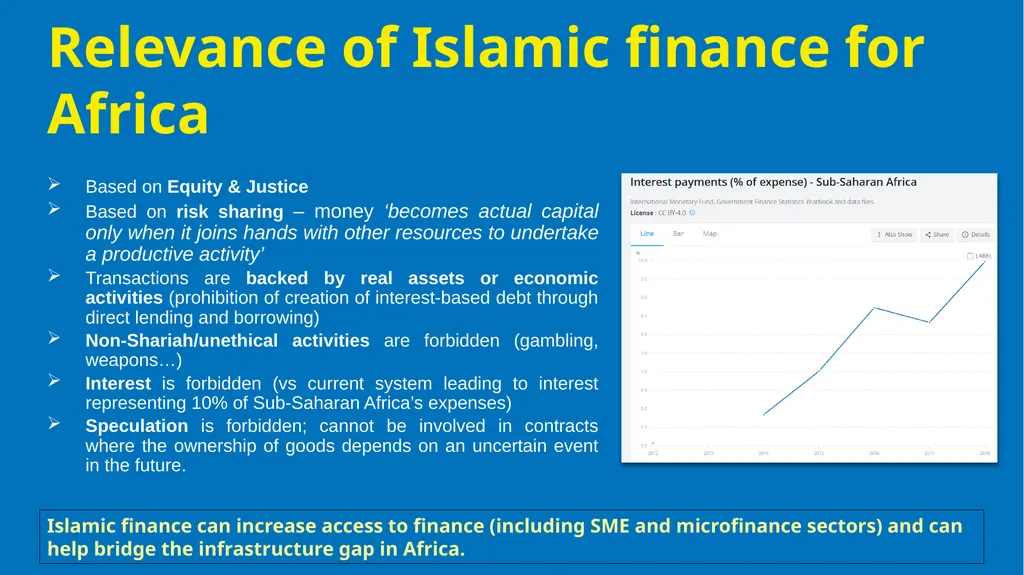
Interest is forbidden (vs current system leading to interest representing 10% of Sub-Saharan Africa’s expenses)
Speculation is forbidden; cannot be involved in contracts where the ownership of goods depends on an uncertain event in the future. Islamic finance can increase access to finance (including SME and microfinance sectors) and can help bridge the infrastructure gap in Africa. Relevance of Islamic finance for Africa<br>
05
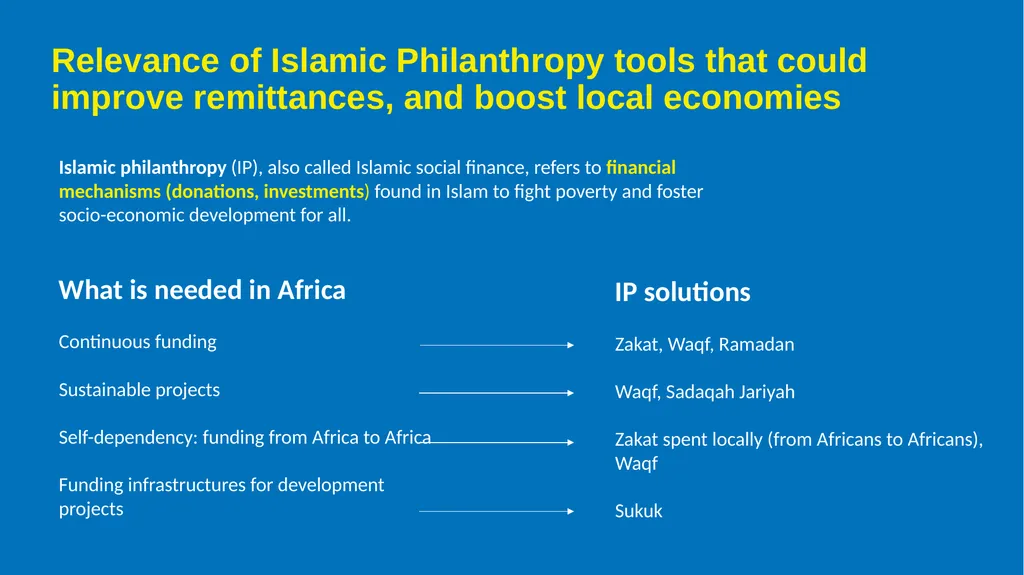
Relevance of Islamic Philanthropy tools that could improve remittances, and boost local economies What is needed in Africa
Continuous funding
Sustainable projects
Self-dependency: funding from Africa to Africa
Funding infrastructures for development projects IP solutions
Zakat, Waqf, Ramadan
Waqf, Sadaqah Jariyah
Zakat spent locally (from Africans to Africans), Waqf
Sukuk Islamic philanthropy (IP), also called Islamic social finance, refers to financial mechanisms (donations, investments) found in Islam to fight poverty and foster socio-economic development for all.<br>
06
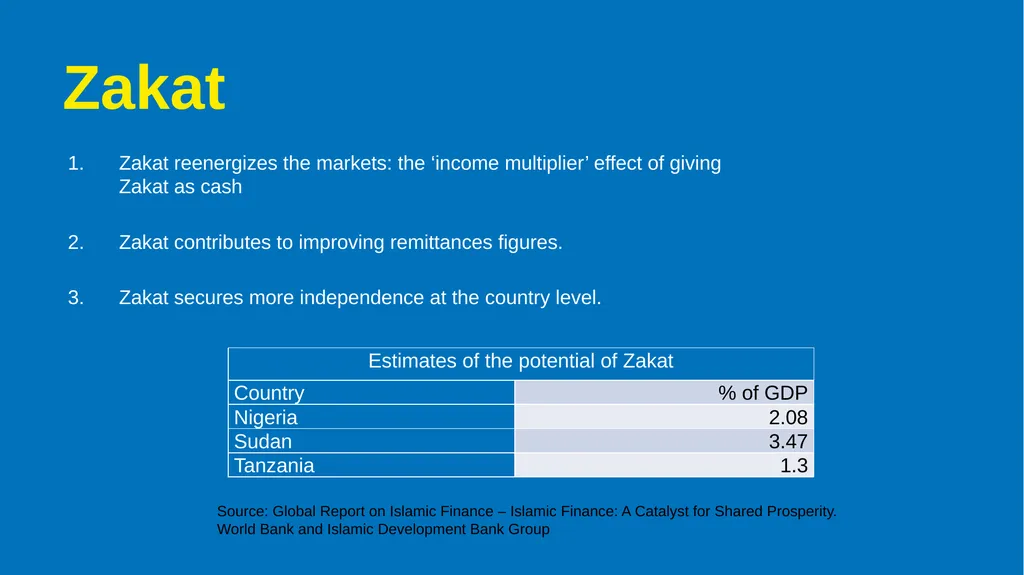
Zakat Zakat reenergizes the markets: the ‘income multiplier’ effect of giving Zakat as cash
Zakat contributes to improving remittances figures.
Zakat secures more independence at the country level. Source: Global Report on Islamic Finance – Islamic Finance: A Catalyst for Shared Prosperity. World Bank and Islamic Development Bank Group<br>
07
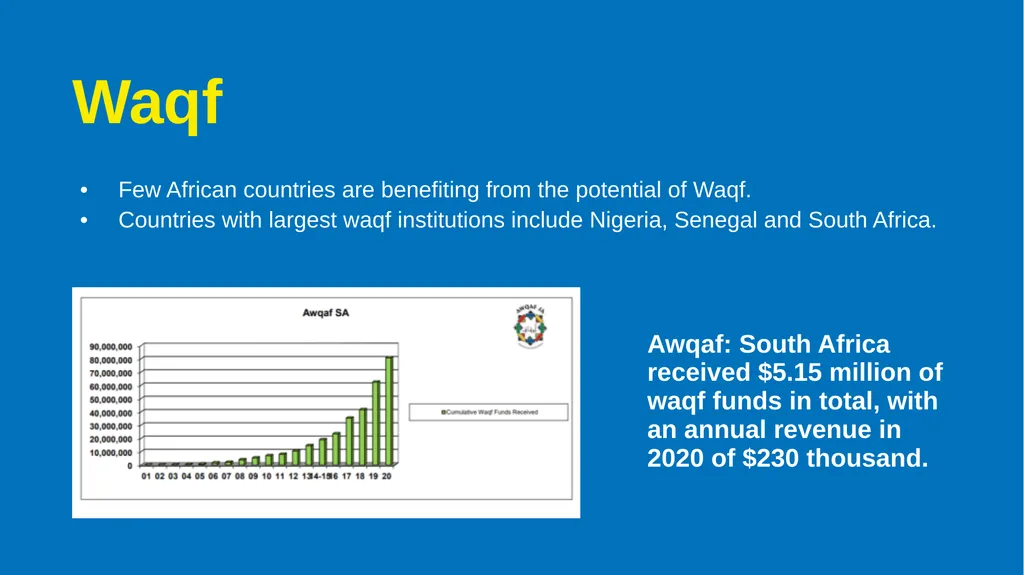
Waqf Few African countries are benefiting from the potential of Waqf.
Countries with largest waqf institutions include Nigeria, Senegal and South Africa. Awqaf: South Africa received $5.15 million of waqf funds in total, with an annual revenue in 2020 of $230 thousand.<br>
08
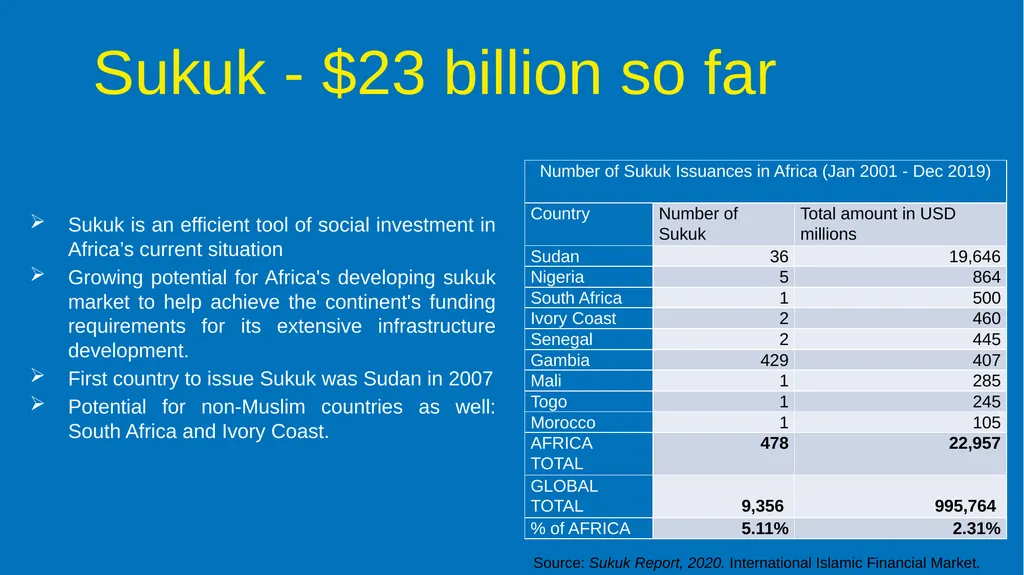
Sukuk is an efficient tool of social investment in Africa’s current situation
Growing potential for Africa's developing sukuk market to help achieve the continent's funding requirements for its extensive infrastructure development.
First country to issue Sukuk was Sudan in 2007
Potential for non-Muslim countries as well: South Africa and Ivory Coast. Sukuk - $23 billion so far Source: Sukuk Report, 2020. International Islamic Financial Market.<br>
09
Challenges and solutions: Flexibility in Zakat collection and distribution in developed countries.
Restructuring Zakat programmes in developing countries.
Develop regulatory frameworks to promote Islamic finance products in developing countries. Promote the use of faith-based philanthropy and finance tools that follow an inclusive approach.<br>