FIELD MEDICAL ASSISTANT COURSE (FMAC) MODULE 04: PRINCIPLES AND APPLICATION OF TACTICAL FIELD CARE (TFC) TACTICAL FIELD MEDICAL AID (TFMA) ROLE-BASED TRAINING SPECTRUM ROLE 1 CARE NONMEDICAL PERSONNEL Buddy First Aid Field Medical Assistant
"FIELD MEDICAL ASSISTANT COURSE (FMAC) MODULE 04:" is the property of its rightful owner. Permission is granted to
download and print the materials on this website for personal, non-commercial use only, and to display it
on your personal computer provided you do not modify the materials and that you retain all copyright
notices contained in the materials. By downloading content from our website, you accept the terms of this
agreement.
Presentation Transcript
01
FIELD MEDICAL ASSISTANT COURSE (FMAC) MODULE 04:
PRINCIPLES AND APPLICATION OF
TACTICAL FIELD CARE (TFC)<br>
02
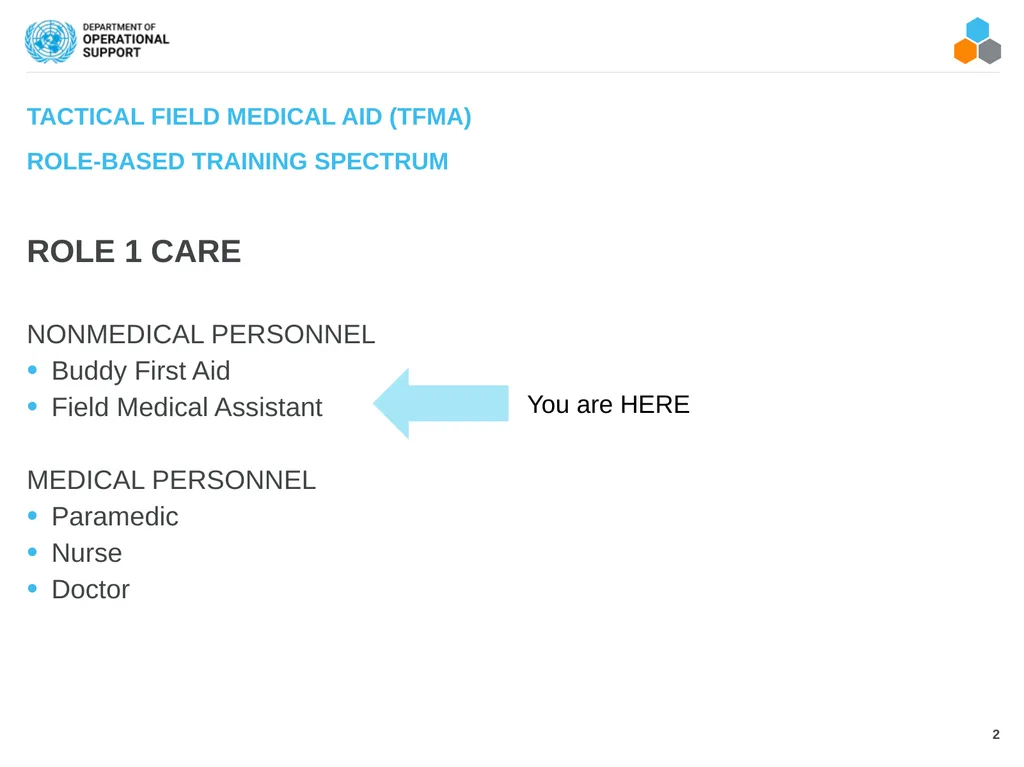
TACTICAL FIELD MEDICAL AID (TFMA) ROLE-BASED TRAINING SPECTRUM ROLE 1 CARE
NONMEDICAL PERSONNEL
Buddy First Aid
Field Medical Assistant
MEDICAL PERSONNEL
Paramedic
Nurse
Doctor You are HERE<br>
03
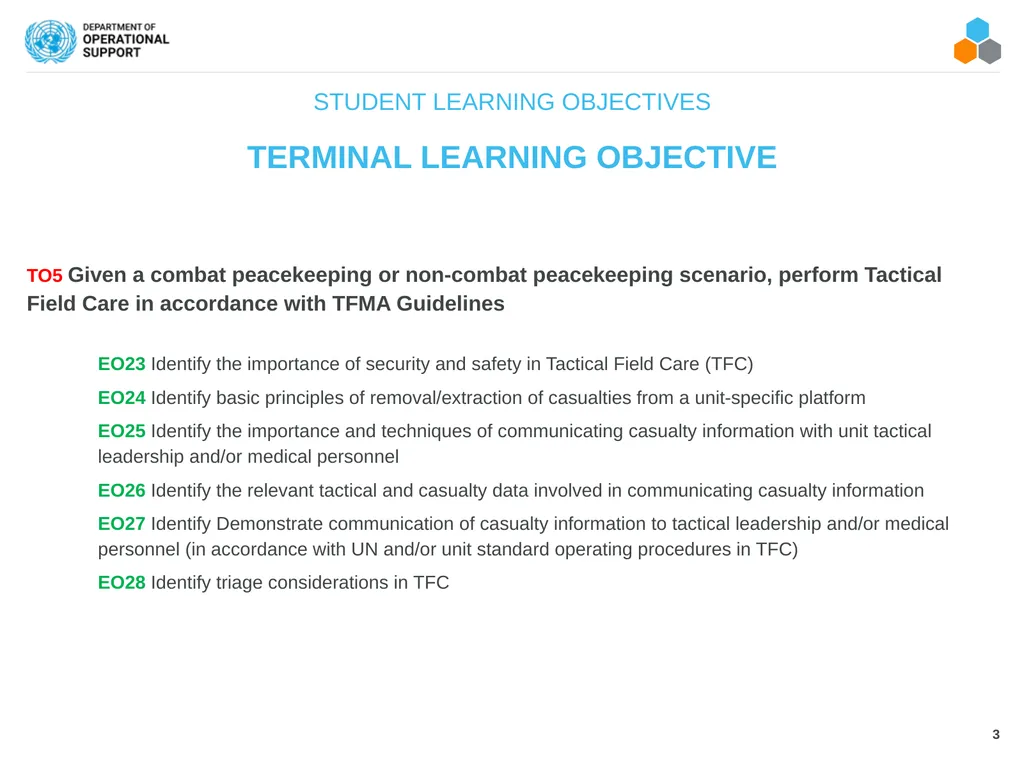
TERMINAL LEARNING OBJECTIVE TO5 Given a combat peacekeeping or non-combat peacekeeping scenario, perform Tactical Field Care in accordance with TFMA Guidelines
EO23 Identify the importance of security and safety in Tactical Field Care (TFC)
EO24 Identify basic principles of removal/extraction of casualties from a unit-specific platform
EO25 Identify the importance and techniques of communicating casualty information with unit tactical leadership and/or medical personnel
EO26 Identify the relevant tactical and casualty data involved in communicating casualty information
EO27 Identify Demonstrate communication of casualty information to tactical leadership and/or medical personnel (in accordance with UN and/or unit standard operating procedures in TFC)
EO28 Identify triage considerations in TFC STUDENT LEARNING OBJECTIVES<br>
04
1 CARE UNDER FIRE
RETURN FIRE
AND TAKE COVER
Quick decision-making:
Consider scene safety
Identify and control life-threatening bleeding
Move casualty to safety Three PHASES of TFMA 2 TACTICAL FIELD CARE
COVER AND
CONCEALMENT
Basic Management Plan:
Maintain tactical situational awareness
Triage casualties as required
MARCH PAWS assessment 3 TACTICAL EVACUATION CARE
More deliberate assessment and treatment of unrecognized life-threatening injuries:
Pre-evacuation procedures
Continuation of documentation
NOTE: This is covered in more advanced TFMA training! YOU ARE HERE<br>
05
CASUALTY AND RESPONDER NO
LONGER UNDER EFFECTIVE ENEMY
FIRE OR THREAT
ENTER INTO THE
TACTICAL FIELD CARE
(TFC) PHASE<br>
06
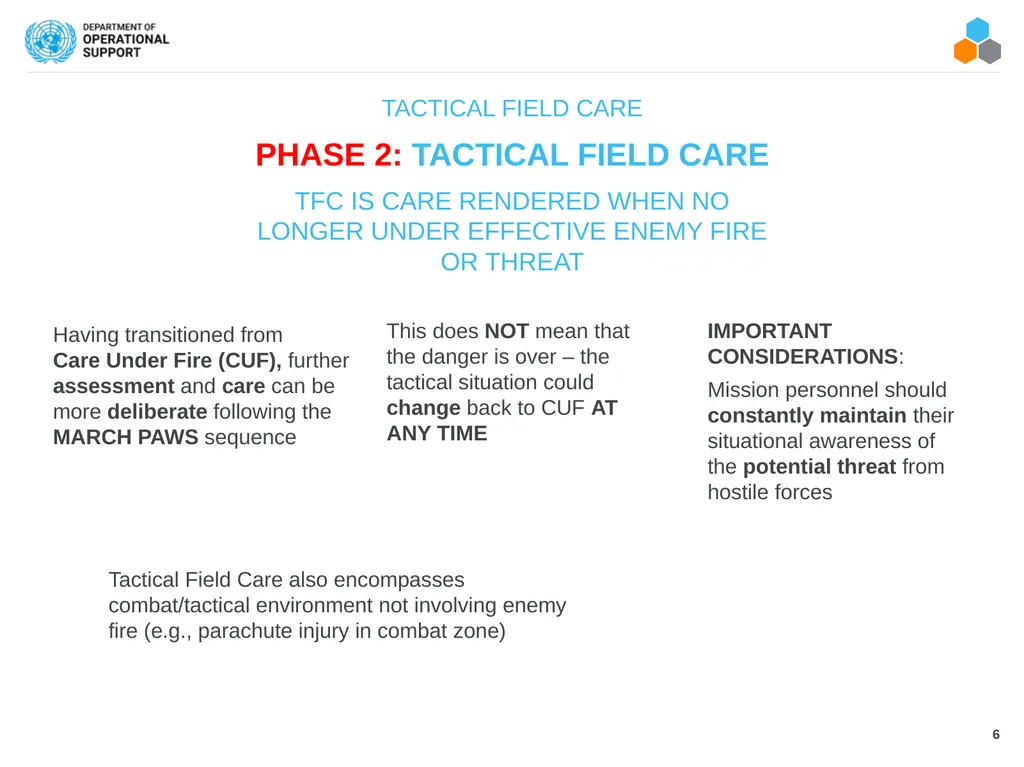
PHASE 2: TACTICAL FIELD CARE TACTICAL FIELD CARE Having transitioned from
Care Under Fire (CUF), further
assessment and care can be
more deliberate following the
MARCH PAWS sequence TFC IS CARE RENDERED WHEN NO
LONGER UNDER EFFECTIVE ENEMY FIRE
OR THREAT This does NOT mean that
the danger is over – the
tactical situation could
change back to CUF AT
ANY TIME Tactical Field Care also encompasses
combat/tactical environment not involving enemy
fire (e.g., parachute injury in combat zone) IMPORTANT
CONSIDERATIONS:
Mission personnel should
constantly maintain their
situational awareness of
the potential threat from
hostile forces<br>
07
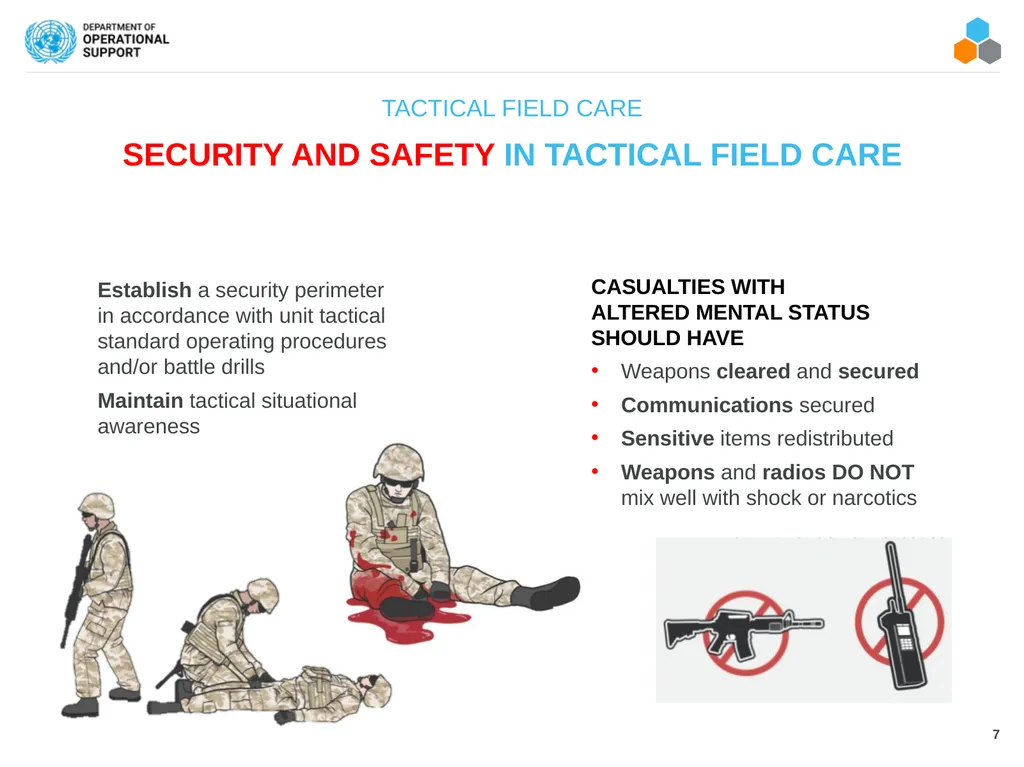
SECURITY AND SAFETY IN TACTICAL FIELD CARE TACTICAL FIELD CARE Establish a security perimeter in accordance with unit tactical standard operating procedures and/or battle drills
Maintain tactical situational awareness CASUALTIES WITH
ALTERED MENTAL STATUS
SHOULD HAVE
Weapons cleared and secured
Communications secured
Sensitive items redistributed
Weapons and radios DO NOT mix well with shock or narcotics<br>
08
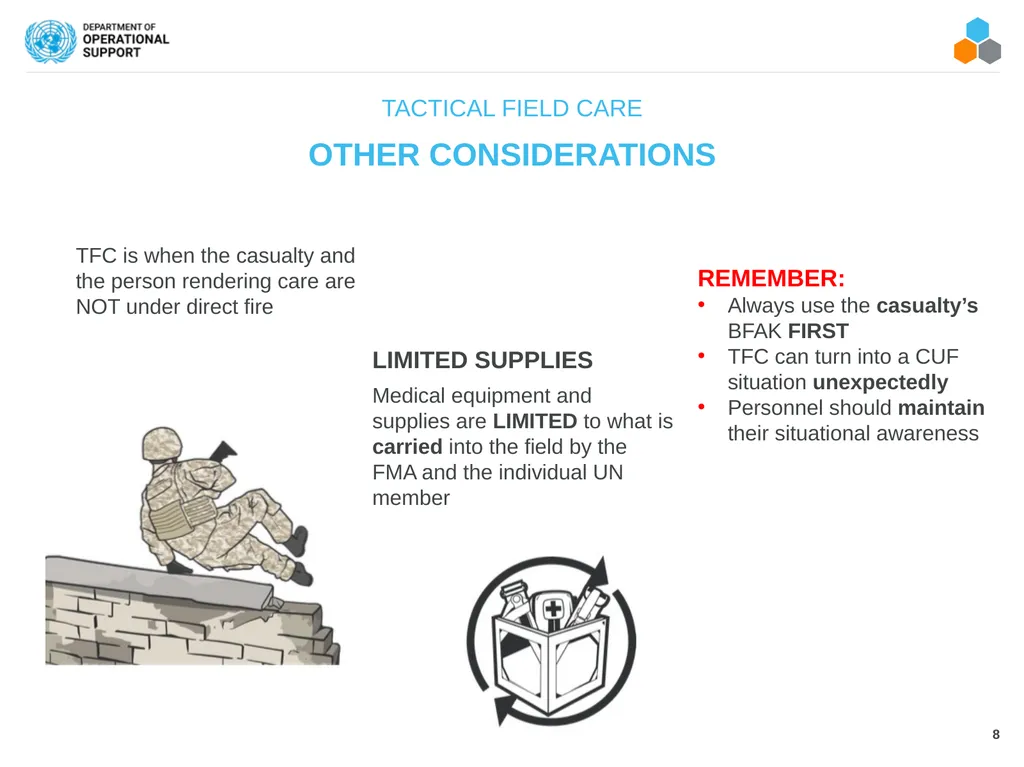
OTHER CONSIDERATIONS TACTICAL FIELD CARE TFC is when the casualty and
the person rendering care are
NOT under direct fire LIMITED SUPPLIES
Medical equipment and supplies are LIMITED to what is carried into the field by the FMA and the individual UN member REMEMBER:
Always use the casualty’s BFAK FIRST
TFC can turn into a CUF situation unexpectedly
Personnel should maintain their situational awareness<br>
09
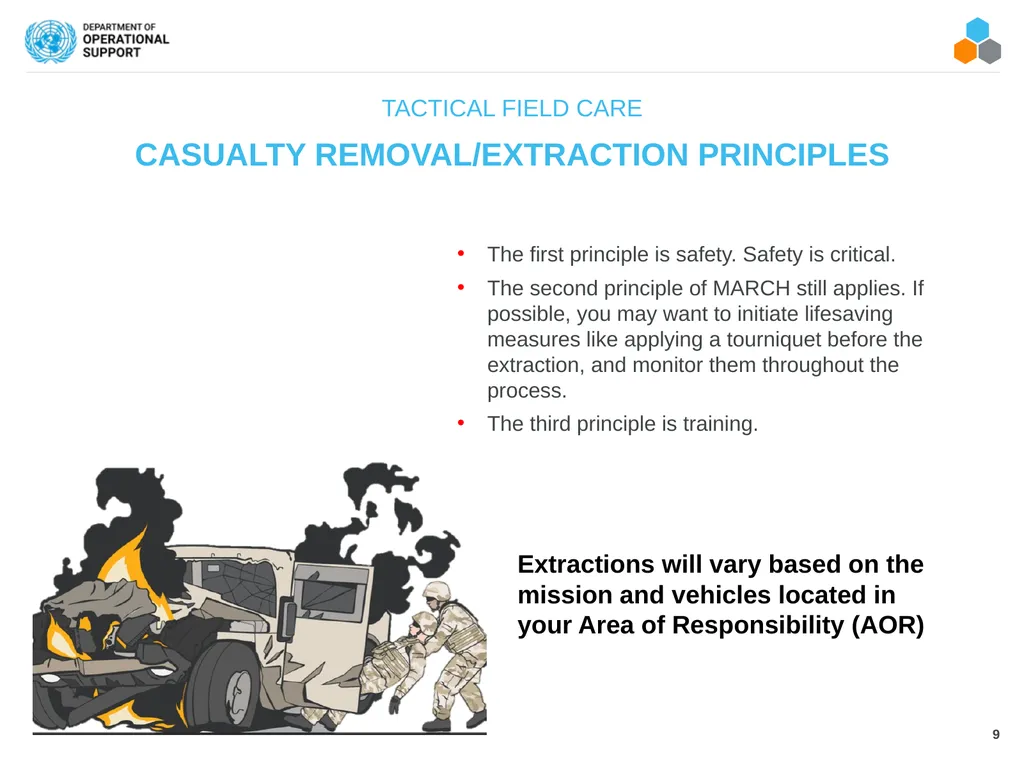
CASUALTY REMOVAL/EXTRACTION PRINCIPLES TACTICAL FIELD CARE The first principle is safety. Safety is critical.
The second principle of MARCH still applies. If possible, you may want to initiate lifesaving measures like applying a tourniquet before the extraction, and monitor them throughout the process.
The third principle is training. Extractions will vary based on the
mission and vehicles located in
your Area of Responsibility (AOR)<br>
10
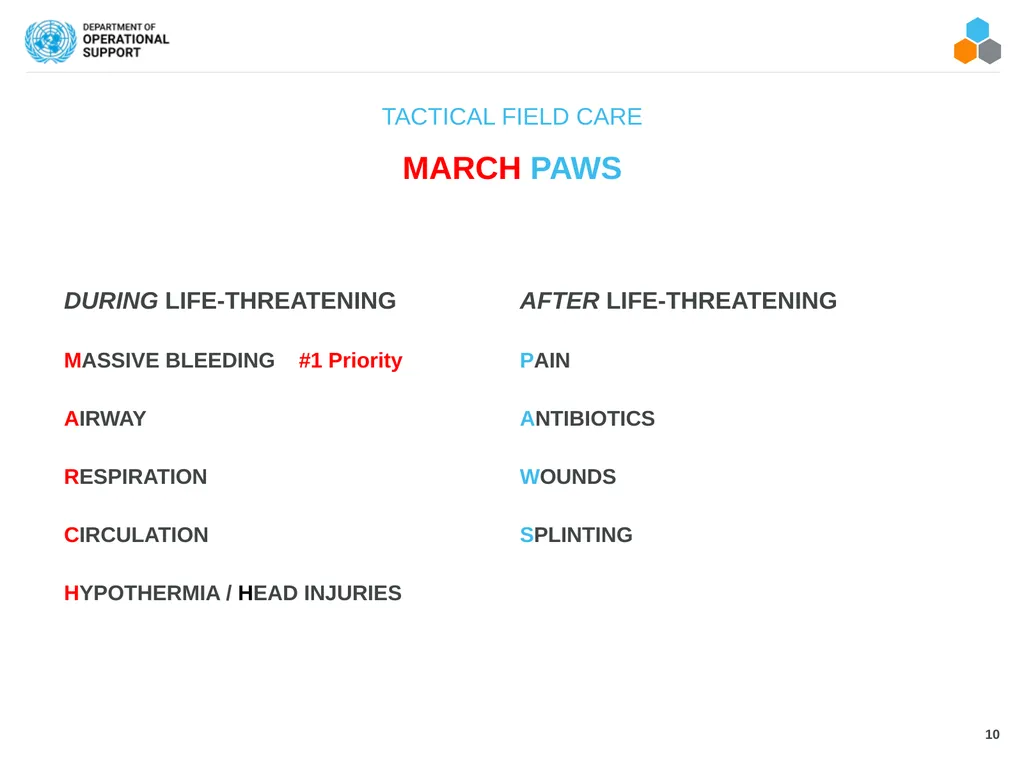
TACTICAL FIELD CARE DURING LIFE-THREATENING
MASSIVE BLEEDING #1 Priority
AIRWAY
RESPIRATION
CIRCULATION
HYPOTHERMIA / HEAD INJURIES MARCH PAWS AFTER LIFE-THREATENING
PAIN
ANTIBIOTICS
WOUNDS
SPLINTING<br>
11
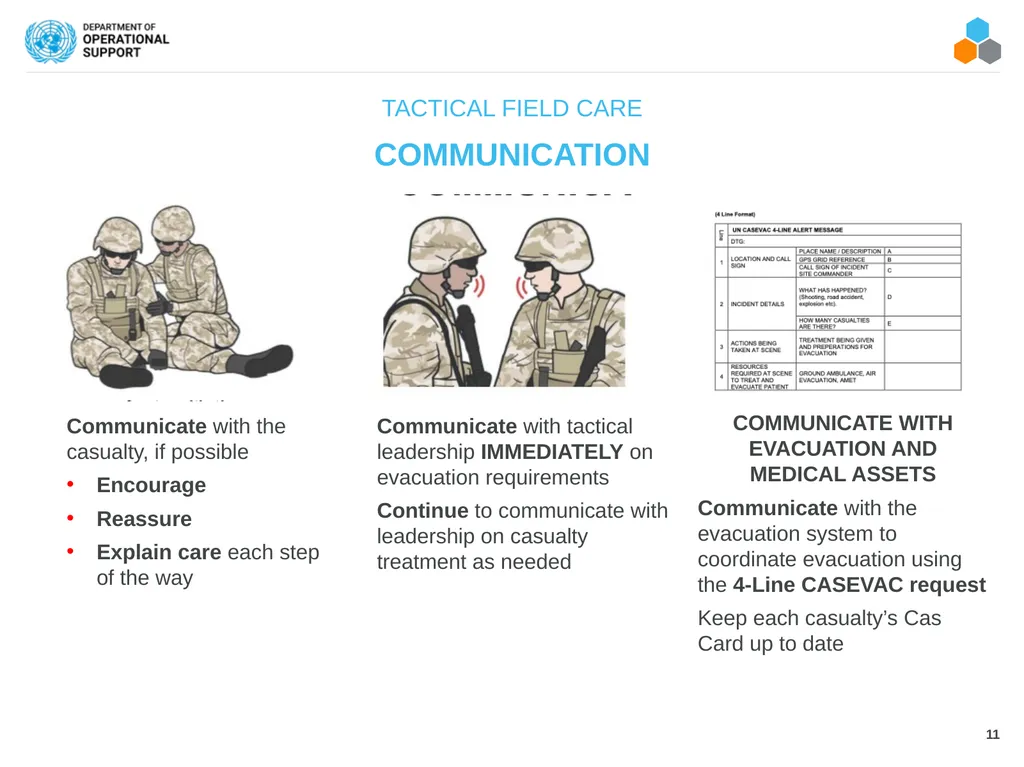
COMMUNICATION TACTICAL FIELD CARE Communicate with the
casualty, if possible
Encourage
Reassure
Explain care each step of the way Communicate with tactical leadership IMMEDIATELY on evacuation requirements
Continue to communicate with leadership on casualty treatment as needed COMMUNICATE WITH EVACUATION AND MEDICAL ASSETS
Communicate with the evacuation system to coordinate evacuation using the 4-Line CASEVAC request
Keep each casualty’s Cas Card up to date<br>
12
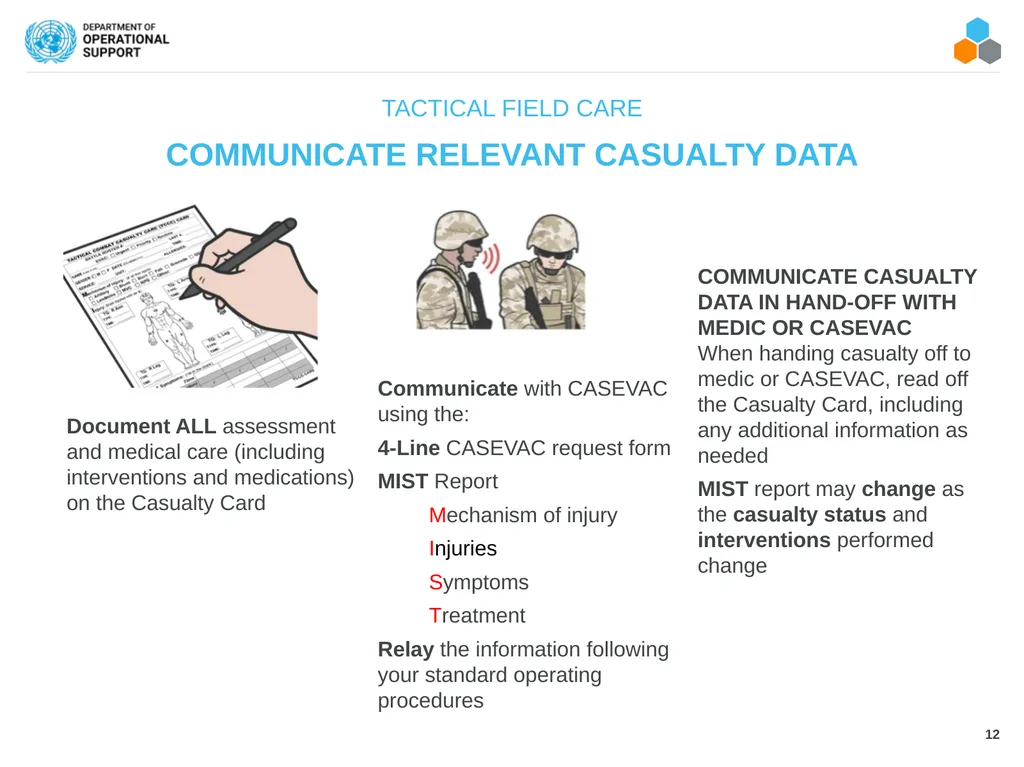
COMMUNICATE RELEVANT CASUALTY DATA TACTICAL FIELD CARE Document ALL assessment
and medical care (including
interventions and medications)
on the Casualty Card Communicate with CASEVAC using the:
4-Line CASEVAC request form
MIST Report
Mechanism of injury
Injuries
Symptoms
Treatment
Relay the information following your standard operating procedures COMMUNICATE CASUALTY
DATA IN HAND-OFF WITH
MEDIC OR CASEVAC
When handing casualty off to medic or CASEVAC, read off the Casualty Card, including any additional information as needed
MIST report may change as the casualty status and interventions performed change<br>
13
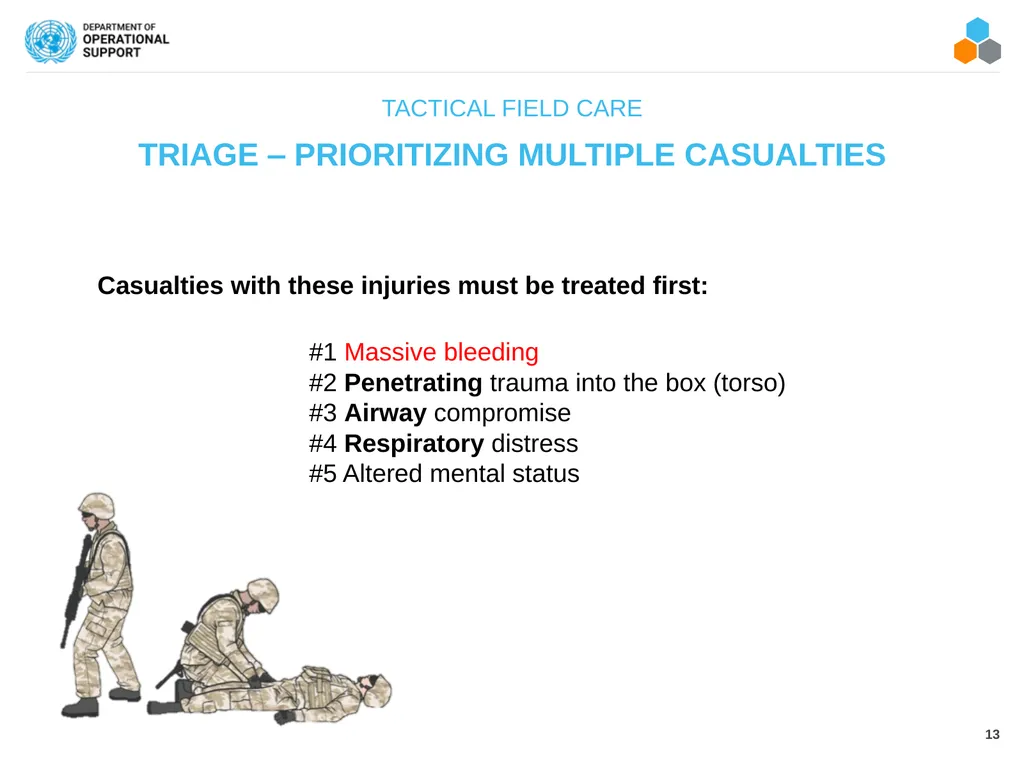
TRIAGE ‒ PRIORITIZING MULTIPLE CASUALTIES Casualties with these injuries must be treated first: TACTICAL FIELD CARE #1 Massive bleeding
#2 Penetrating trauma into the box (torso)
#3 Airway compromise
#4 Respiratory distress
#5 Altered mental status<br>
14
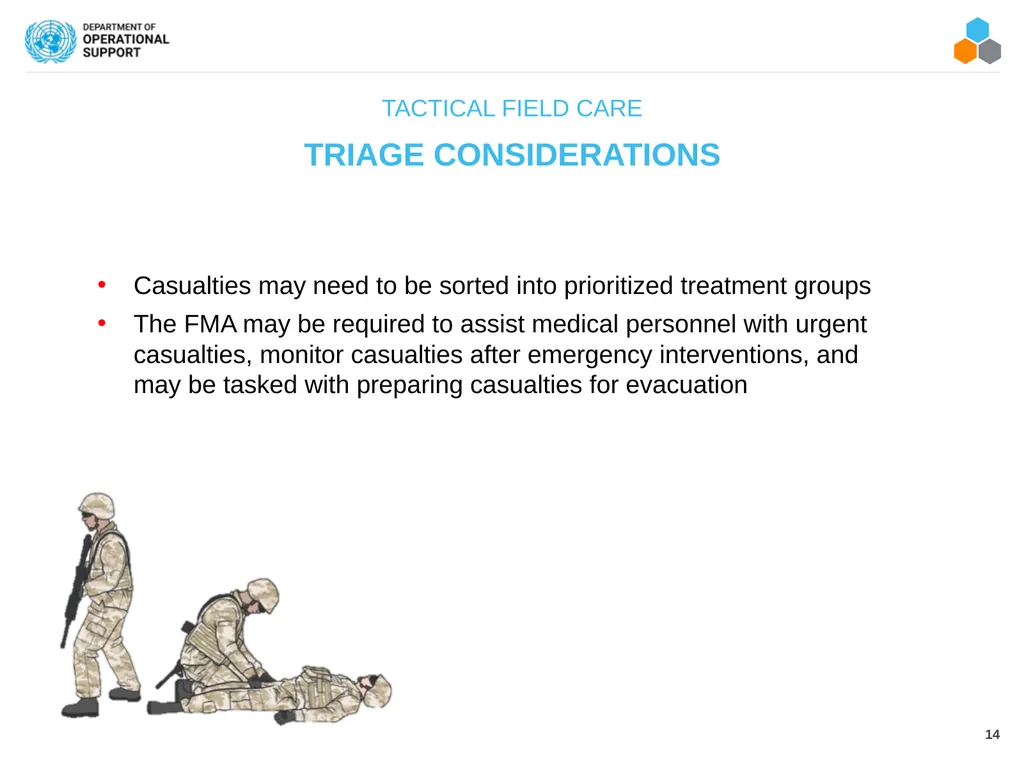
TRIAGE CONSIDERATIONS Casualties may need to be sorted into prioritized treatment groups
The FMA may be required to assist medical personnel with urgent casualties, monitor casualties after emergency interventions, and may be tasked with preparing casualties for evacuation TACTICAL FIELD CARE<br>
15
SUMMARY Ensure you are aware of all security and safety procedures for TFC
Tactical Field Care is when the casualty and the responder are both no longer under effective enemy fire or threat
Security and safety in TFC is a priority; clear and secure weapons and communications
Understand the principles of casualty extractions in accordance with unit standard operating procedures
Always follow the MARCH PAWS procedure during life-threatening and after life-threatening injuries TACTICAL FIELD CARE<br>
16
CHECK ON LEARNING What is the difference between the TFC and CUF phases?
True or False: During TFC, the tactical situation could change back to CUF again at any time.
What is MARCH PAWS?<br>