
Flexibility assessment and expectations in
Description: Flexibility assessment and expectations in European modeling and planning Energy System Modelling for Transition to a net-Zero 2050 for EU via REPowerEU Type of project: Clean Energy Transition Partnership Duration: 2023-2026 (36 months)
Related Topics
Download Presentation
"Flexibility assessment and expectations in" is the property of its rightful owner. Permission is granted to download and print the materials on this website for personal, non-commercial use only, and to display it on your personal computer provided you do not modify the materials and that you retain all copyright notices contained in the materials. By downloading content from our website, you accept the terms of this agreement.
Presentation Transcript
slide1. Flexibility assessment and expectations in European modeling and planning Energy System Modelling for Transition to a net-Zero 2050 for EU via REPowerEU<br>
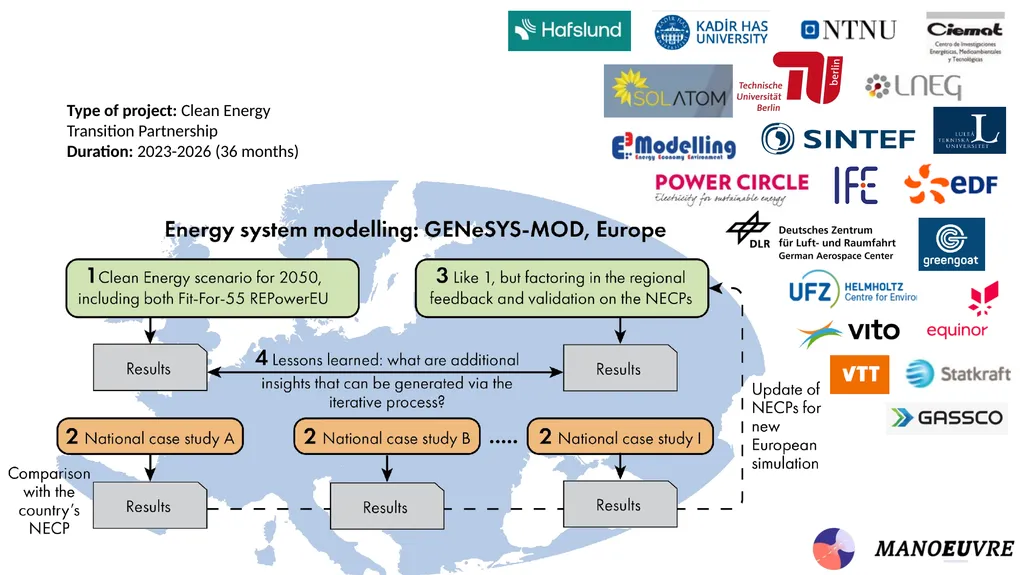
slide2. Type of project: Clean Energy Transition Partnership
Duration: 2023-2026 (36 months)<br>
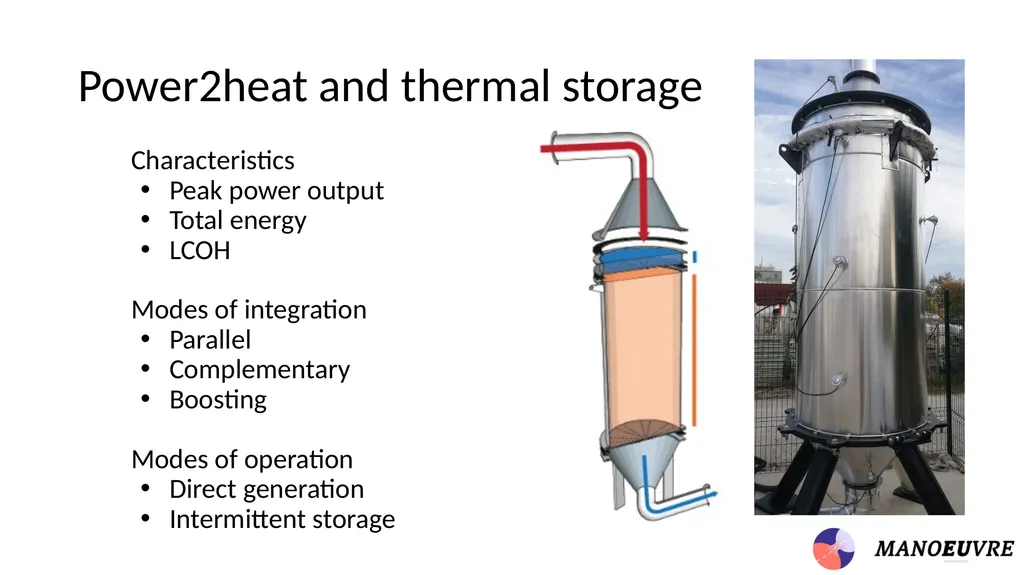
slide3. Characteristics
Peak power output
Total energy
LCOH
Modes of integration
Parallel
Complementary
Boosting
Modes of operation
Direct generation
Intermittent storage Power2heat and thermal storage<br>
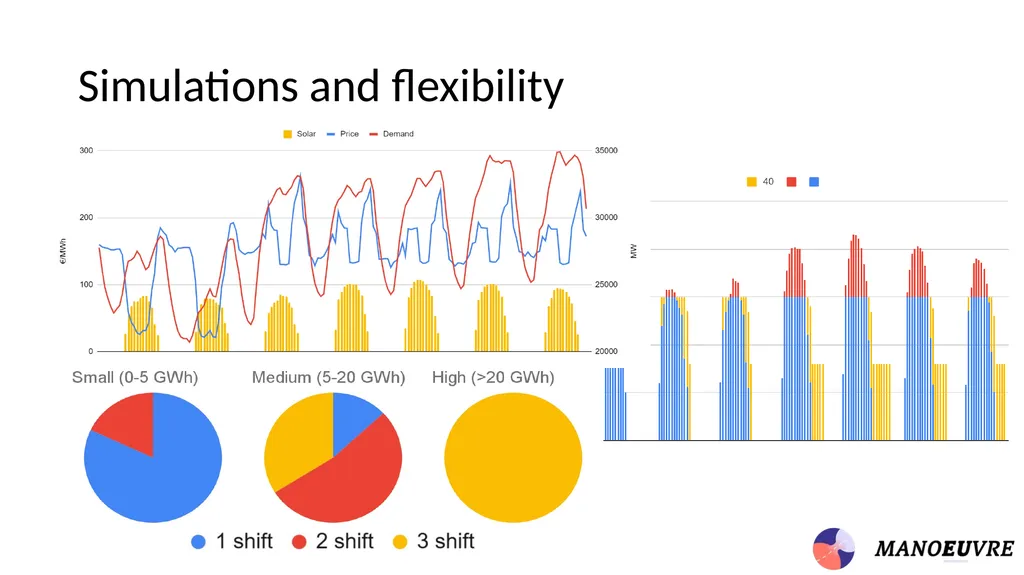
slide4. Simulations and flexibility<br>
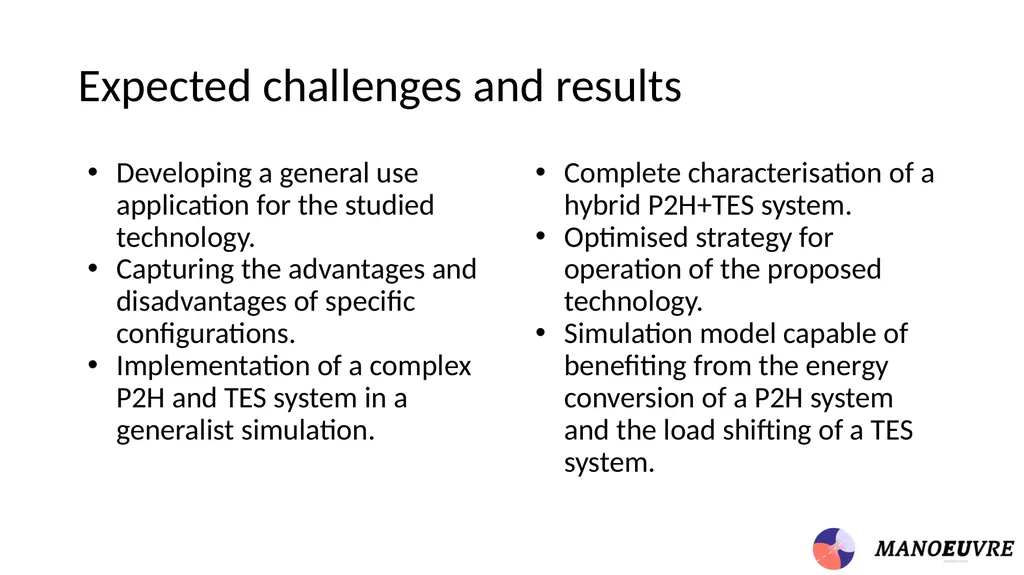
slide5. Expected challenges and results Developing a general use application for the studied technology.
Capturing the advantages and disadvantages of specific configurations.
Implementation of a complex P2H and TES system in a generalist simulation. Complete characterisation of a hybrid P2H+TES system.
Optimised strategy for operation of the proposed technology.
Simulation model capable of benefiting from the energy conversion of a P2H system and the load shifting of a TES system.<br>
slide2. Type of project: Clean Energy Transition Partnership
Duration: 2023-2026 (36 months)<br>
slide3. Characteristics
Peak power output
Total energy
LCOH
Modes of integration
Parallel
Complementary
Boosting
Modes of operation
Direct generation
Intermittent storage Power2heat and thermal storage<br>
slide4. Simulations and flexibility<br>
slide5. Expected challenges and results Developing a general use application for the studied technology.
Capturing the advantages and disadvantages of specific configurations.
Implementation of a complex P2H and TES system in a generalist simulation. Complete characterisation of a hybrid P2H+TES system.
Optimised strategy for operation of the proposed technology.
Simulation model capable of benefiting from the energy conversion of a P2H system and the load shifting of a TES system.<br>