
Forecasting- Best Practice Hints and Tips
PC
Published · 31 slides · 0 views
1 / 1



Description
Forecasting- Best Practice Hints and Tips Budgeting and Forecasting- whats the difference? And why do it? Budgeting and forecasting help us to allocate resources effectively and improves decision making Reduces impact of surprises in the
Related Topics
Share
Embed code
Download this presentation From Below
"Forecasting- Best Practice Hints and Tips" is the property of its rightful owner. Permission is granted to download and print the materials on this website for personal, non-commercial use only, and to display it on your personal computer provided you do not modify the materials and that you retain all copyright notices contained in the materials. By downloading content from our website, you accept the terms of this agreement.
Presentation Transcript
01
Forecasting- Best Practice
Hints and Tips<br>
02
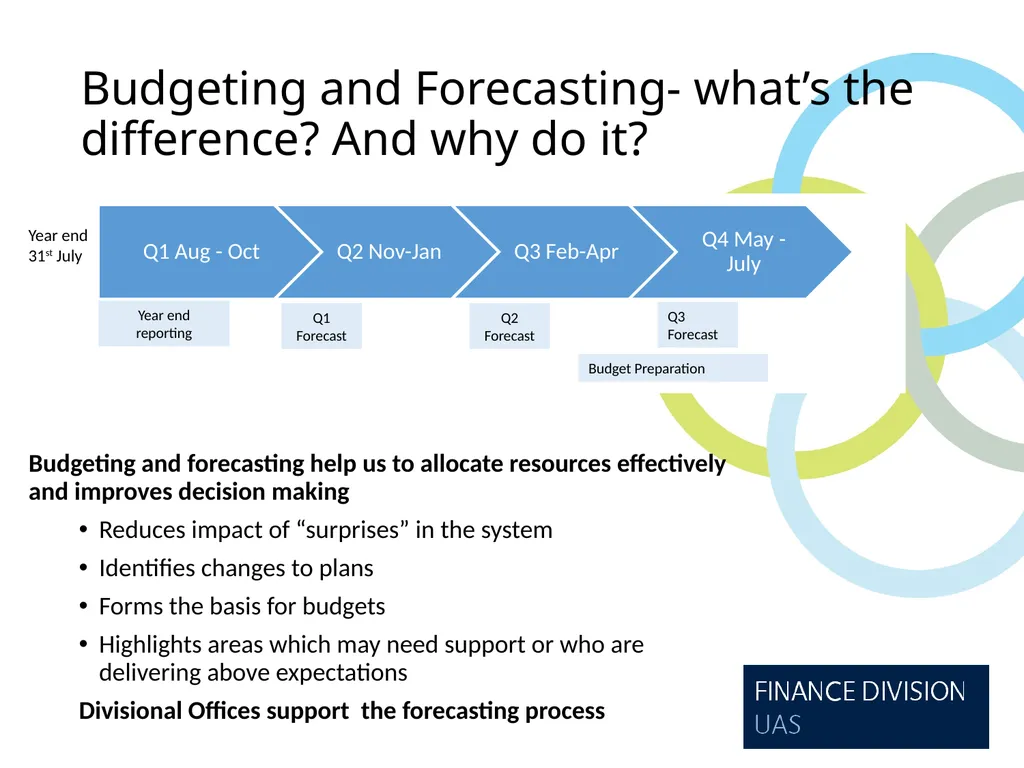
Budgeting and Forecasting- what’s the difference? And why do it? Budgeting and forecasting help us to allocate resources effectively and improves decision making
Reduces impact of “surprises” in the system
Identifies changes to plans
Forms the basis for budgets
Highlights areas which may need support or who are delivering above expectations
Divisional Offices support the forecasting process<br>
Reduces impact of “surprises” in the system
Identifies changes to plans
Forms the basis for budgets
Highlights areas which may need support or who are delivering above expectations
Divisional Offices support the forecasting process<br>
03
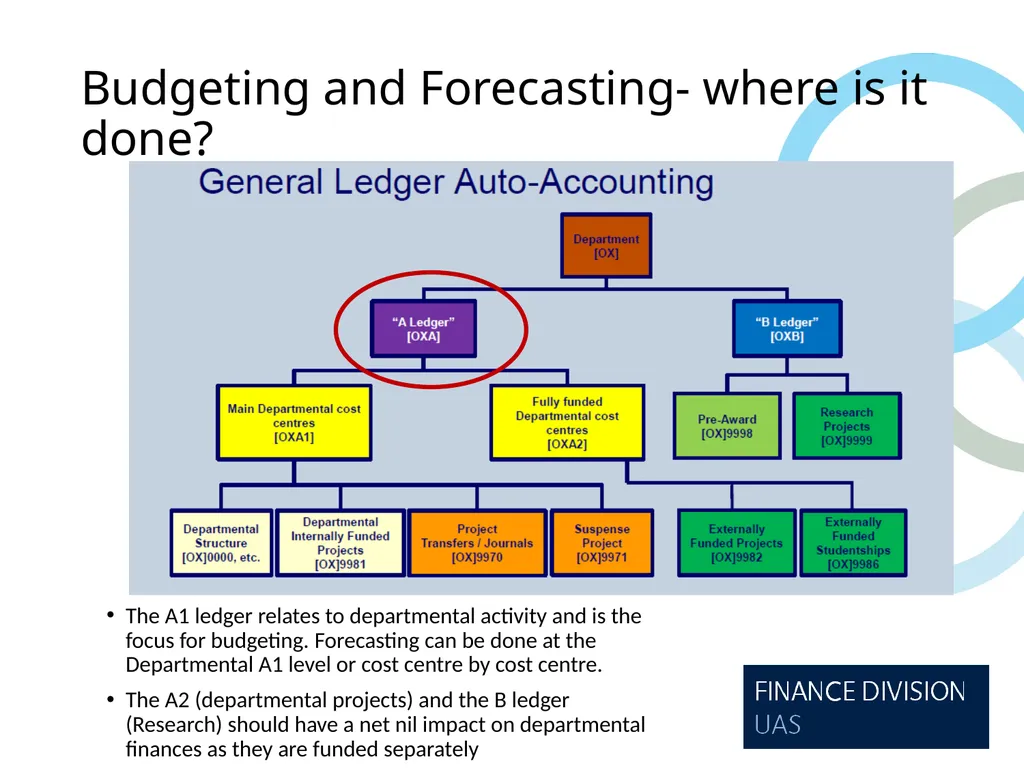
Budgeting and Forecasting- where is it done? The A1 ledger relates to departmental activity and is the focus for budgeting. Forecasting can be done at the Departmental A1 level or cost centre by cost centre.
The A2 (departmental projects) and the B ledger (Research) should have a net nil impact on departmental finances as they are funded separately<br>
The A2 (departmental projects) and the B ledger (Research) should have a net nil impact on departmental finances as they are funded separately<br>
04
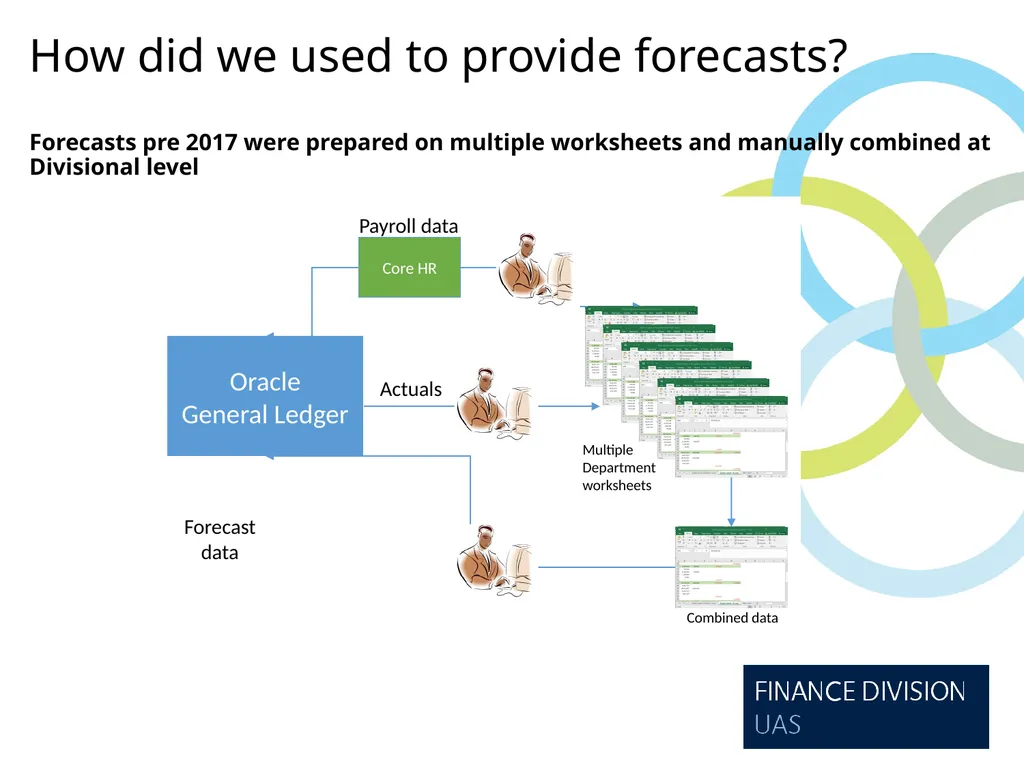
How did we used to provide forecasts?
Forecasts pre 2017 were prepared on multiple worksheets and manually combined at Divisional level<br>
Forecasts pre 2017 were prepared on multiple worksheets and manually combined at Divisional level<br>
05
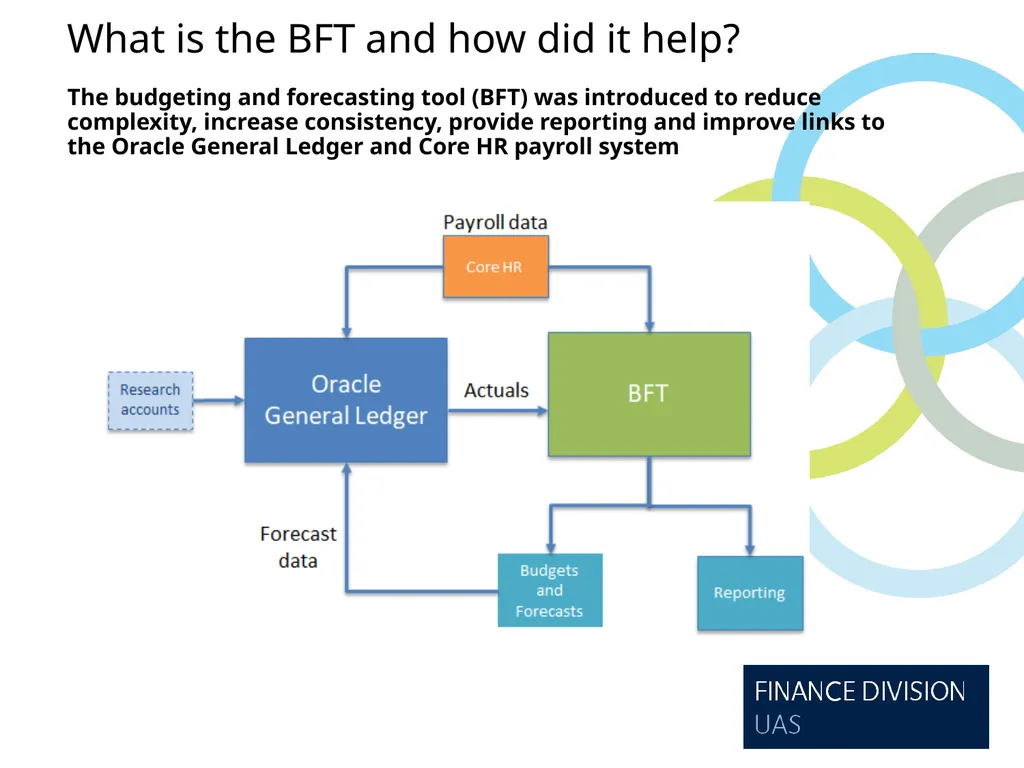
What is the BFT and how did it help?
The budgeting and forecasting tool (BFT) was introduced to reduce complexity, increase consistency, provide reporting and improve links to the Oracle General Ledger and Core HR payroll system<br>
06
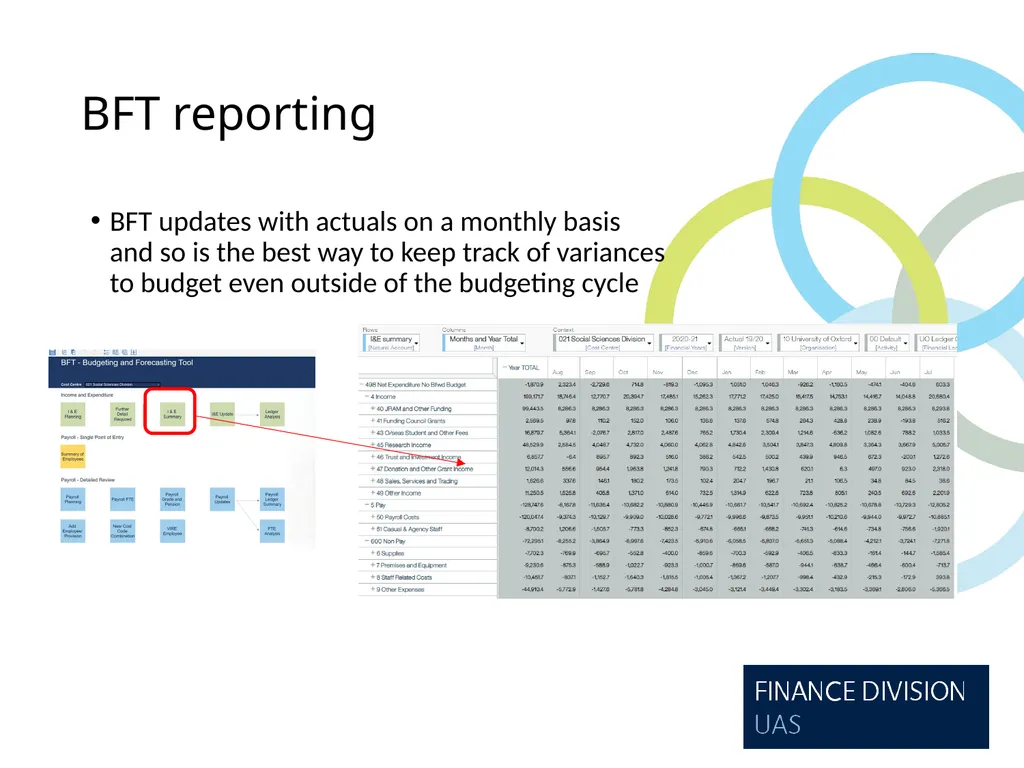
BFT reporting BFT updates with actuals on a monthly basis and so is the best way to keep track of variances to budget even outside of the budgeting cycle<br>
07
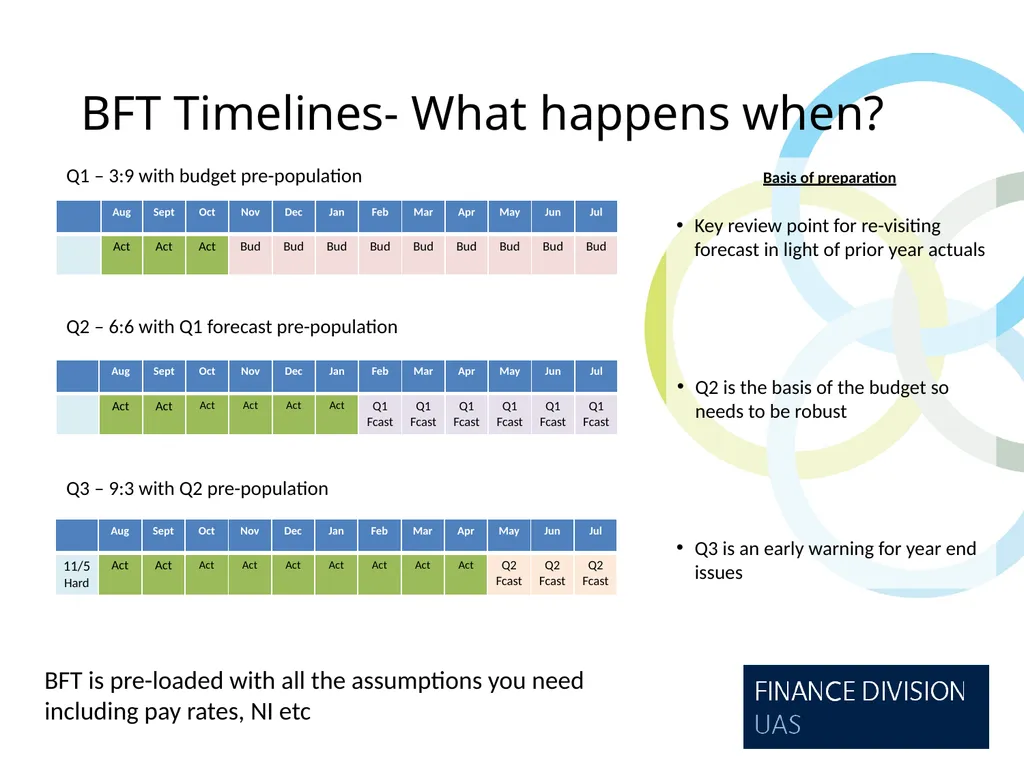
BFT Timelines- What happens when? Q1 – 3:9 with budget pre-population Q2 – 6:6 with Q1 forecast pre-population Q3 – 9:3 with Q2 pre-population Basis of preparation Key review point for re-visiting forecast in light of prior year actuals Q2 is the basis of the budget so needs to be robust Q3 is an early warning for year end issues BFT is pre-loaded with all the assumptions you need including pay rates, NI etc<br>
08
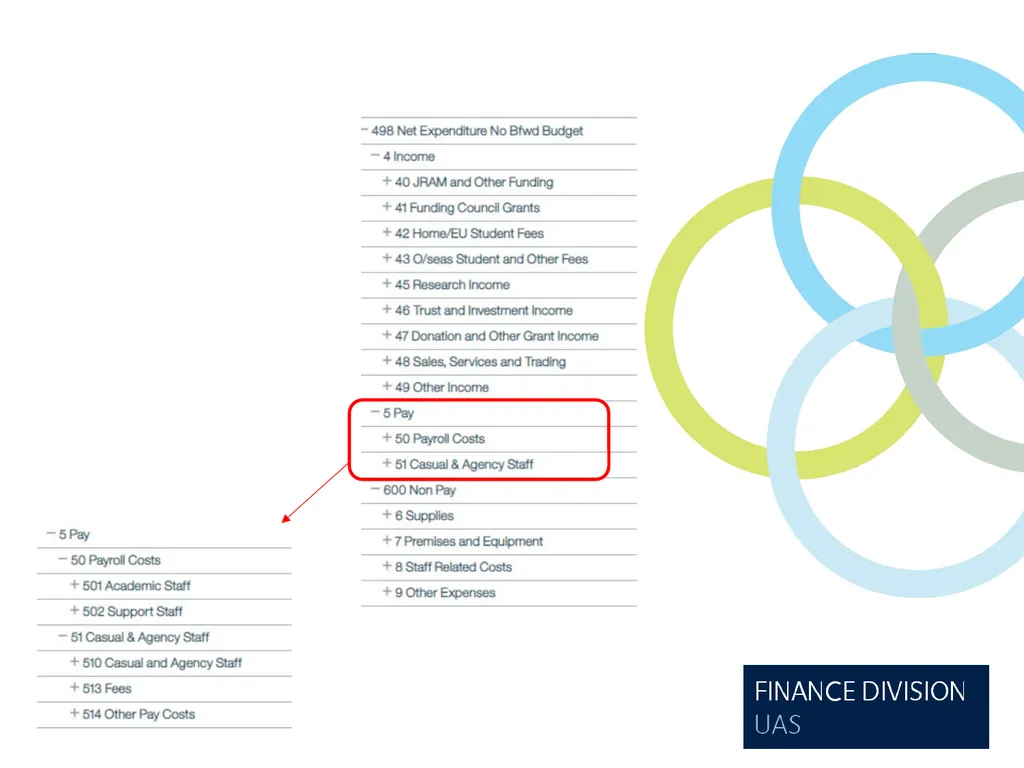
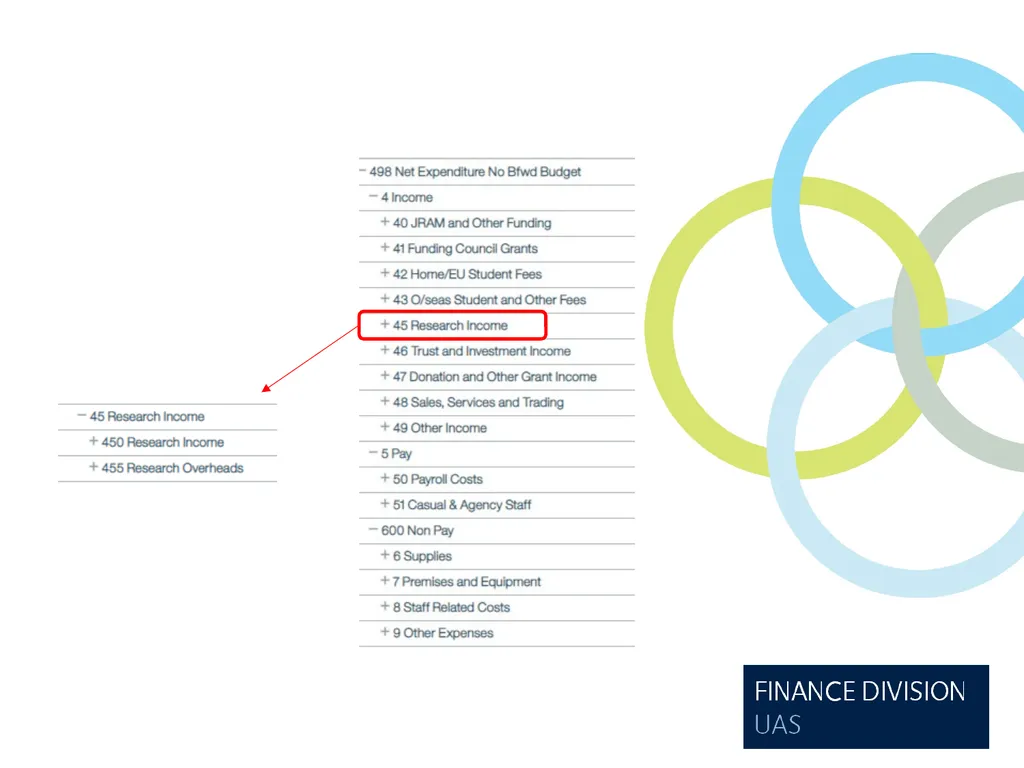
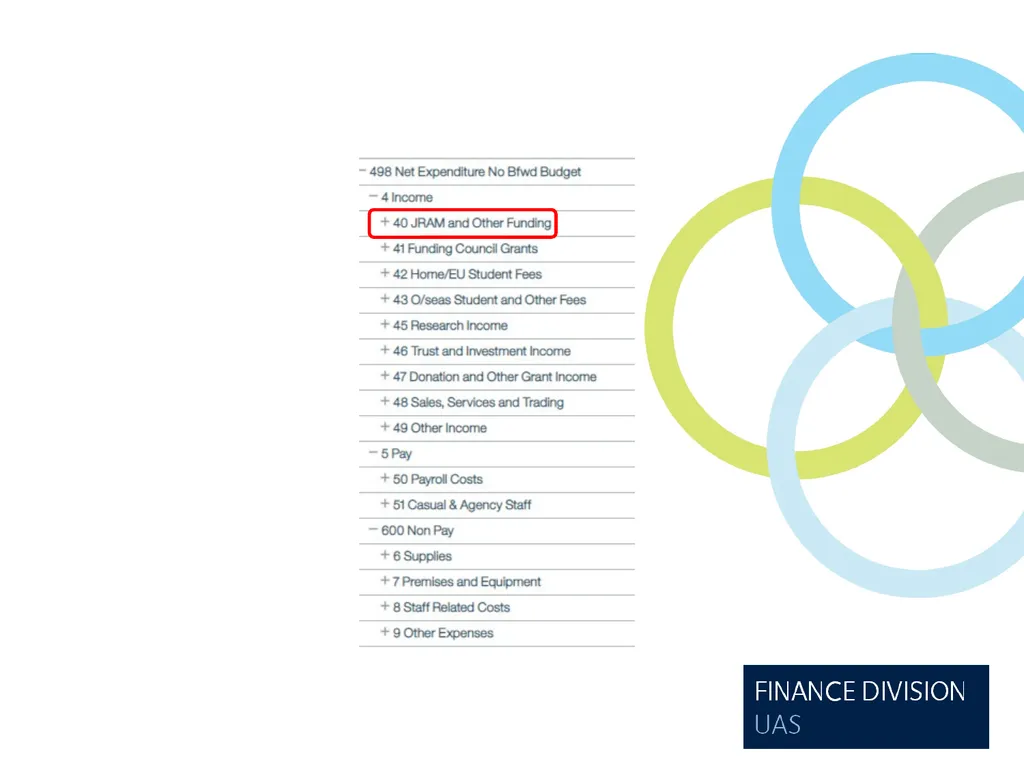
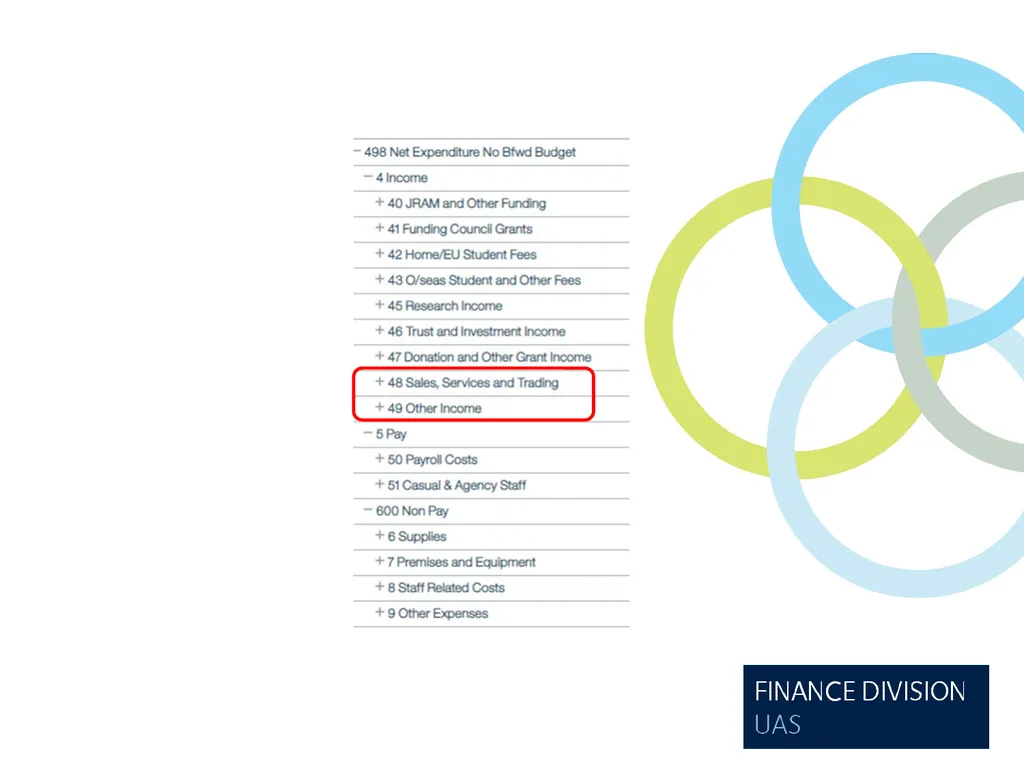
What’s included in the I+E?<br>
09
Where is best to start? The approach to starting a Budget or a forecast is similar. Forecasting will be easier as you can use your Budget as a guide.
The finance team within a Department would usually coordinate with other key members of staff to gain the level of insight needed to complete the forecast. This could be HAFs, HODs, PIs, building managers etc.
Approach your forecast on a line by line basis and use the timetable given by your Division to determine which areas to focus on first.<br>
The finance team within a Department would usually coordinate with other key members of staff to gain the level of insight needed to complete the forecast. This could be HAFs, HODs, PIs, building managers etc.
Approach your forecast on a line by line basis and use the timetable given by your Division to determine which areas to focus on first.<br>
10
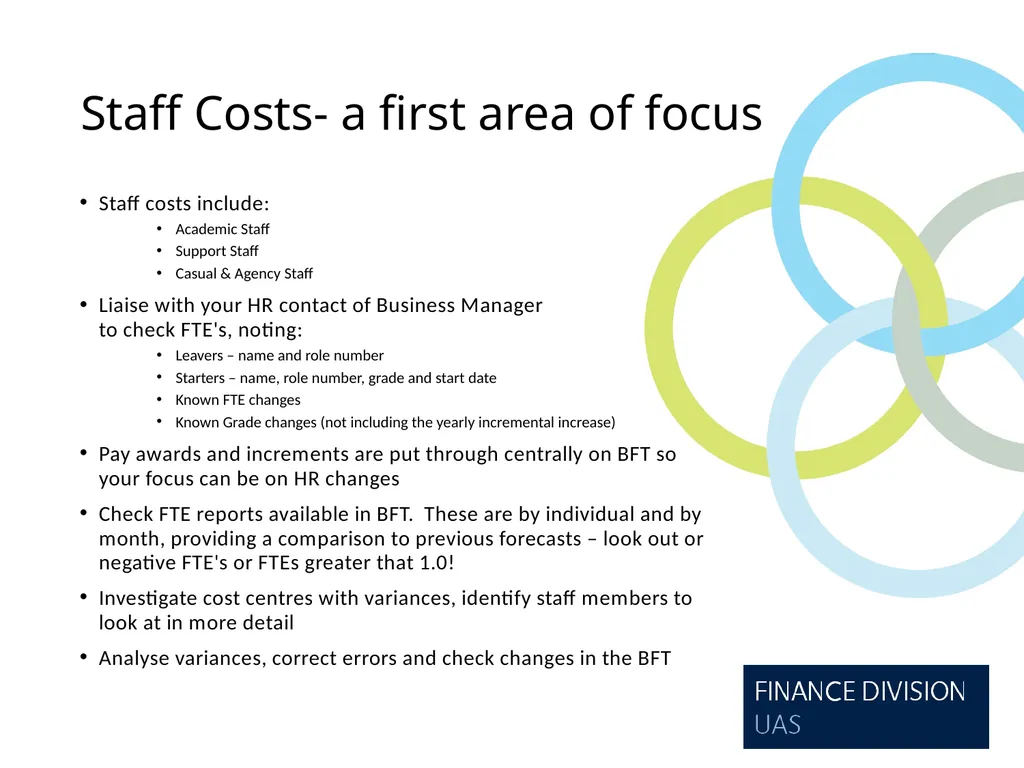
Staff Costs- a first area of focus Staff costs include:
Academic Staff
Support Staff
Casual & Agency Staff
Liaise with your HR contact of Business Manager to check FTE's, noting:
Leavers – name and role number
Starters – name, role number, grade and start date
Known FTE changes
Known Grade changes (not including the yearly incremental increase)
Pay awards and increments are put through centrally on BFT so your focus can be on HR changes
Check FTE reports available in BFT. These are by individual and by month, providing a comparison to previous forecasts – look out or negative FTE's or FTEs greater that 1.0!
Investigate cost centres with variances, identify staff members to look at in more detail
Analyse variances, correct errors and check changes in the BFT<br>
Academic Staff
Support Staff
Casual & Agency Staff
Liaise with your HR contact of Business Manager to check FTE's, noting:
Leavers – name and role number
Starters – name, role number, grade and start date
Known FTE changes
Known Grade changes (not including the yearly incremental increase)
Pay awards and increments are put through centrally on BFT so your focus can be on HR changes
Check FTE reports available in BFT. These are by individual and by month, providing a comparison to previous forecasts – look out or negative FTE's or FTEs greater that 1.0!
Investigate cost centres with variances, identify staff members to look at in more detail
Analyse variances, correct errors and check changes in the BFT<br>
11
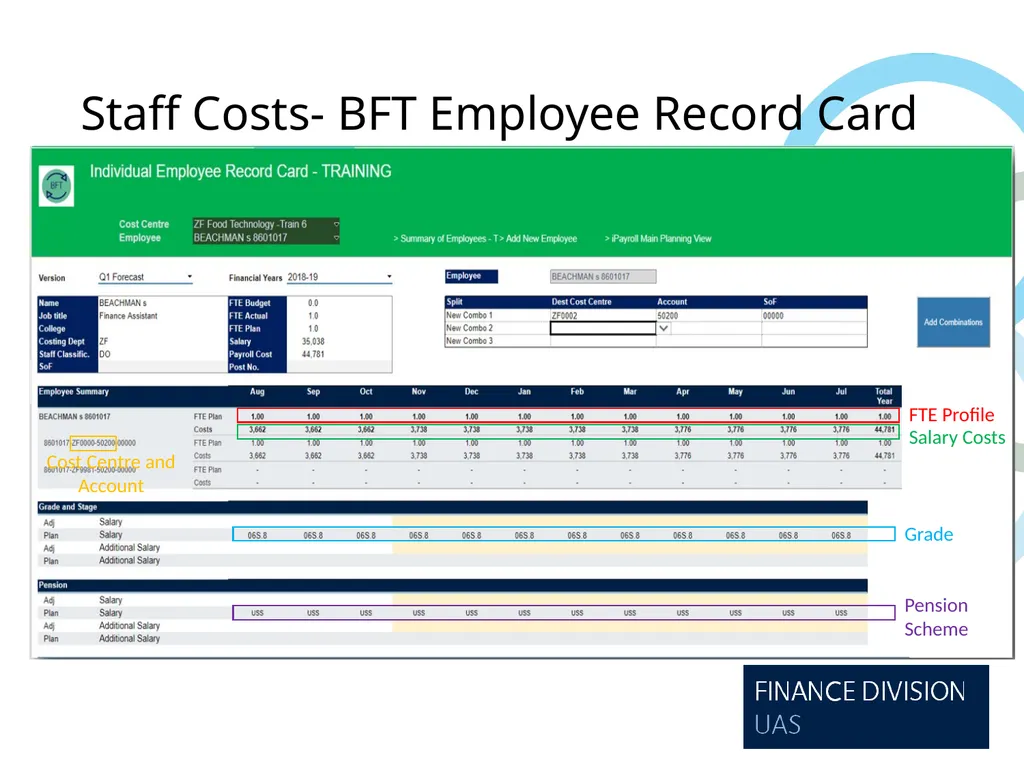
Staff Costs- BFT Employee Record Card FTE Profile Salary Costs Grade Pension Scheme Cost Centre and Account<br>
12
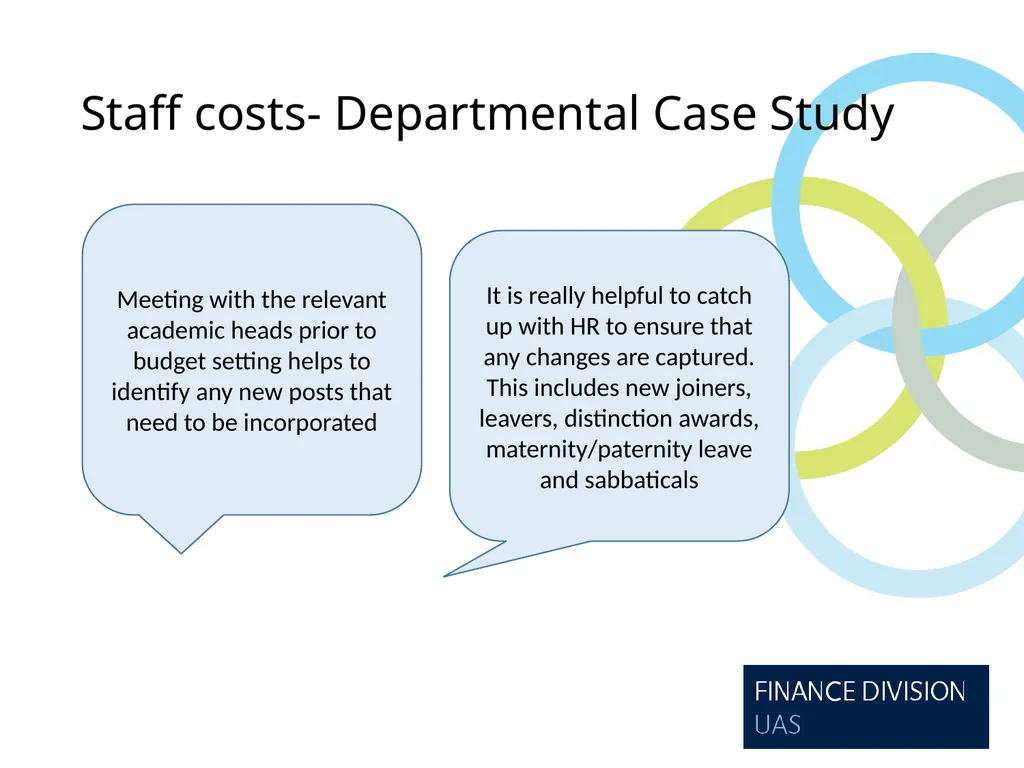
Staff costs- Departmental Case Study Meeting with the relevant academic heads prior to budget setting helps to identify any new posts that need to be incorporated It is really helpful to catch up with HR to ensure that any changes are captured. This includes new joiners, leavers, distinction awards, maternity/paternity leave and sabbaticals<br>
13
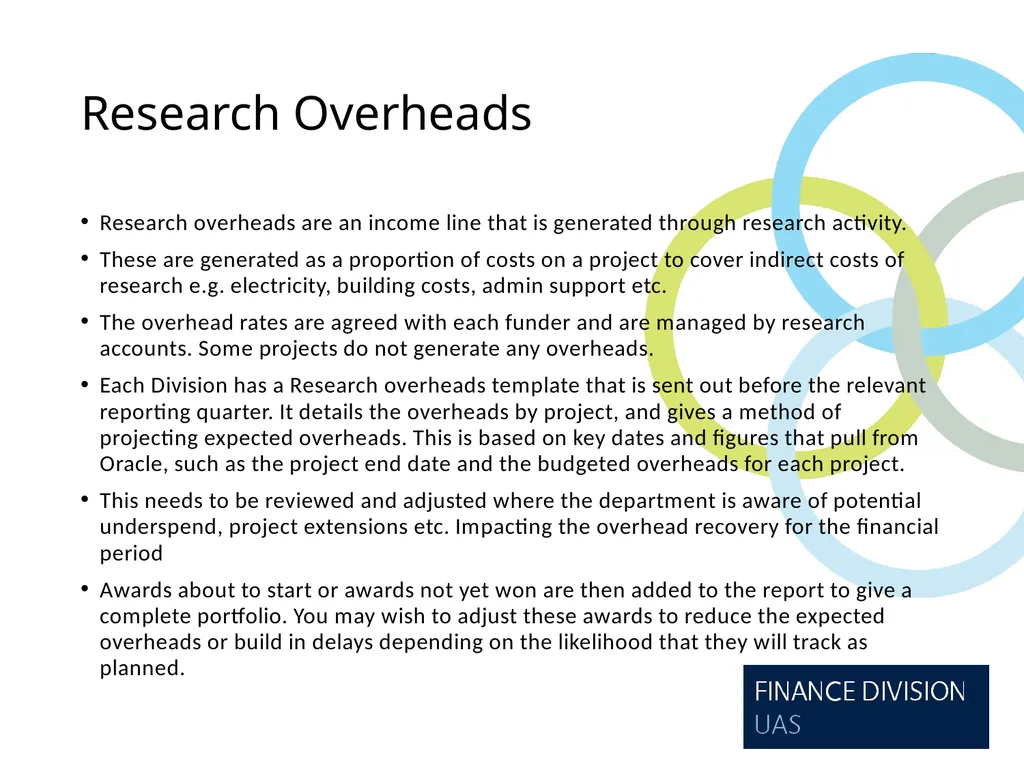
Research Overheads Research overheads are an income line that is generated through research activity.
These are generated as a proportion of costs on a project to cover indirect costs of research e.g. electricity, building costs, admin support etc.
The overhead rates are agreed with each funder and are managed by research accounts. Some projects do not generate any overheads.
Each Division has a Research overheads template that is sent out before the relevant reporting quarter. It details the overheads by project, and gives a method of projecting expected overheads. This is based on key dates and figures that pull from Oracle, such as the project end date and the budgeted overheads for each project.
This needs to be reviewed and adjusted where the department is aware of potential underspend, project extensions etc. Impacting the overhead recovery for the financial period
Awards about to start or awards not yet won are then added to the report to give a complete portfolio. You may wish to adjust these awards to reduce the expected overheads or build in delays depending on the likelihood that they will track as planned.<br>
These are generated as a proportion of costs on a project to cover indirect costs of research e.g. electricity, building costs, admin support etc.
The overhead rates are agreed with each funder and are managed by research accounts. Some projects do not generate any overheads.
Each Division has a Research overheads template that is sent out before the relevant reporting quarter. It details the overheads by project, and gives a method of projecting expected overheads. This is based on key dates and figures that pull from Oracle, such as the project end date and the budgeted overheads for each project.
This needs to be reviewed and adjusted where the department is aware of potential underspend, project extensions etc. Impacting the overhead recovery for the financial period
Awards about to start or awards not yet won are then added to the report to give a complete portfolio. You may wish to adjust these awards to reduce the expected overheads or build in delays depending on the likelihood that they will track as planned.<br>
14
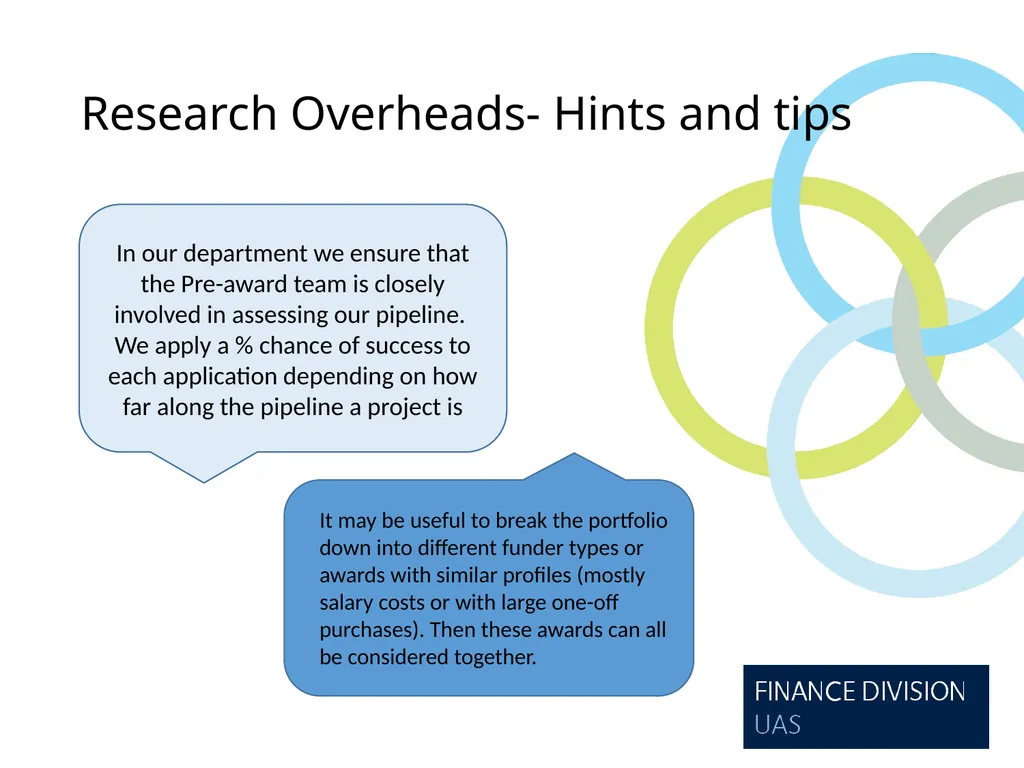
Research Overheads- Hints and tips In our department we ensure that the Pre-award team is closely involved in assessing our pipeline. We apply a % chance of success to each application depending on how far along the pipeline a project is It may be useful to break the portfolio down into different funder types or awards with similar profiles (mostly salary costs or with large one-off purchases). Then these awards can all be considered together.<br>
15
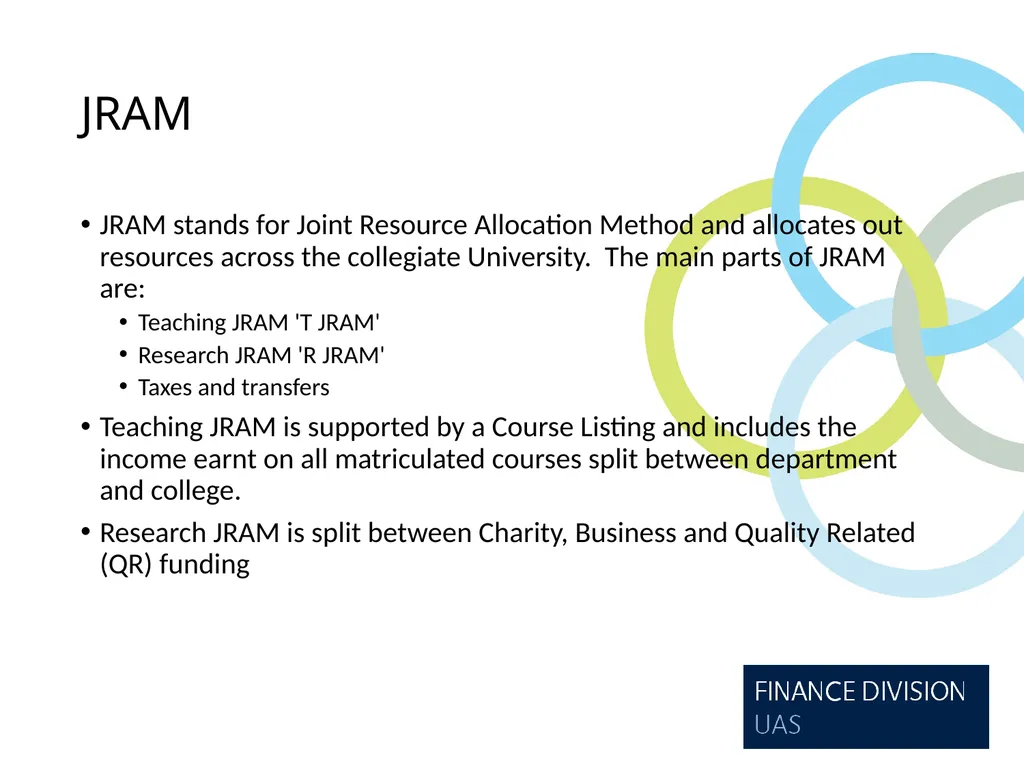
JRAM JRAM stands for Joint Resource Allocation Method and allocates out resources across the collegiate University. The main parts of JRAM are:
Teaching JRAM 'T JRAM'
Research JRAM 'R JRAM'
Taxes and transfers
Teaching JRAM is supported by a Course Listing and includes the income earnt on all matriculated courses split between department and college.
Research JRAM is split between Charity, Business and Quality Related (QR) funding<br>
Teaching JRAM 'T JRAM'
Research JRAM 'R JRAM'
Taxes and transfers
Teaching JRAM is supported by a Course Listing and includes the income earnt on all matriculated courses split between department and college.
Research JRAM is split between Charity, Business and Quality Related (QR) funding<br>
16
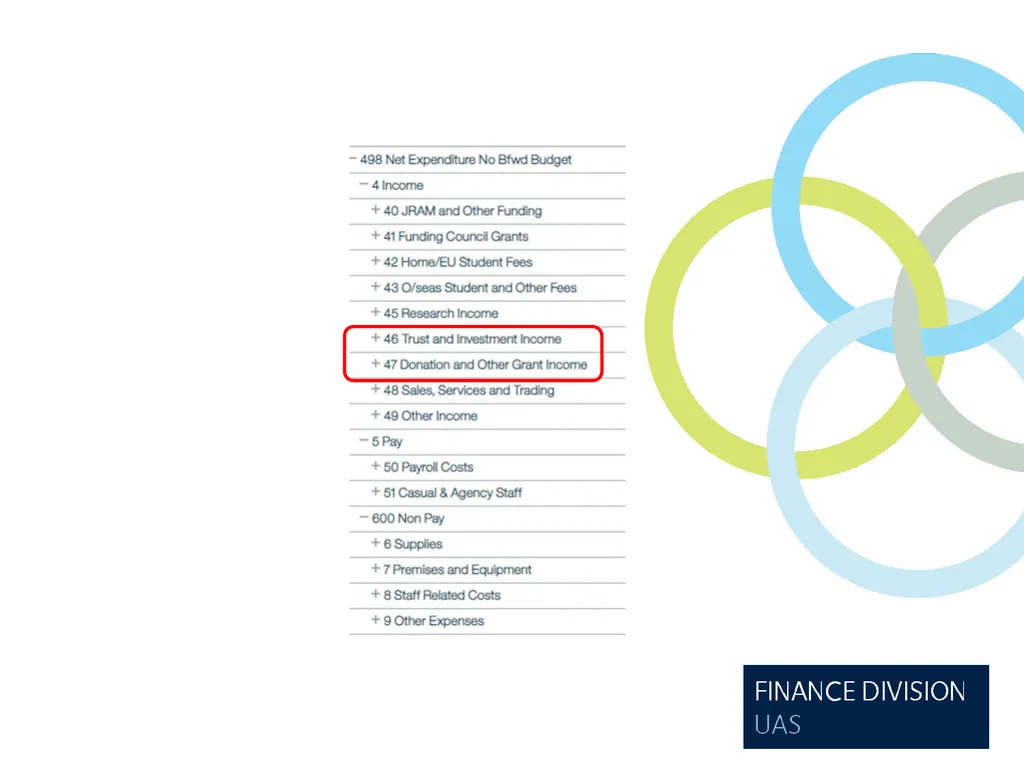
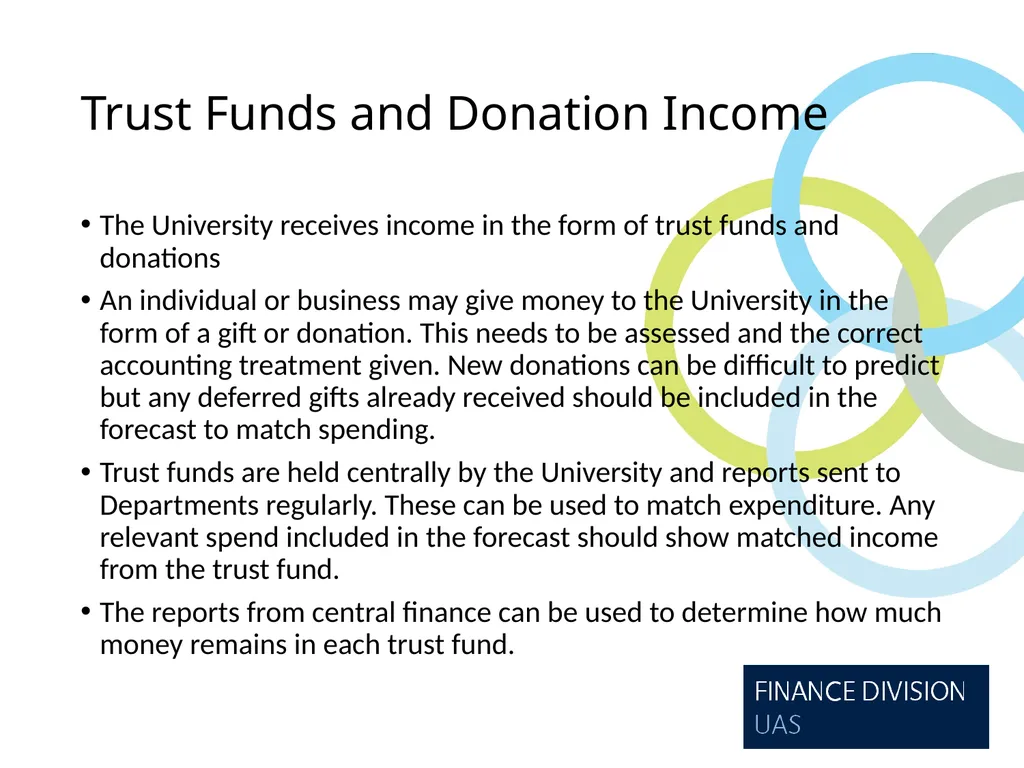
Trust Funds and Donation Income The University receives income in the form of trust funds and donations
An individual or business may give money to the University in the form of a gift or donation. This needs to be assessed and the correct accounting treatment given. New donations can be difficult to predict but any deferred gifts already received should be included in the forecast to match spending.
Trust funds are held centrally by the University and reports sent to Departments regularly. These can be used to match expenditure. Any relevant spend included in the forecast should show matched income from the trust fund.
The reports from central finance can be used to determine how much money remains in each trust fund.<br>
An individual or business may give money to the University in the form of a gift or donation. This needs to be assessed and the correct accounting treatment given. New donations can be difficult to predict but any deferred gifts already received should be included in the forecast to match spending.
Trust funds are held centrally by the University and reports sent to Departments regularly. These can be used to match expenditure. Any relevant spend included in the forecast should show matched income from the trust fund.
The reports from central finance can be used to determine how much money remains in each trust fund.<br>
17
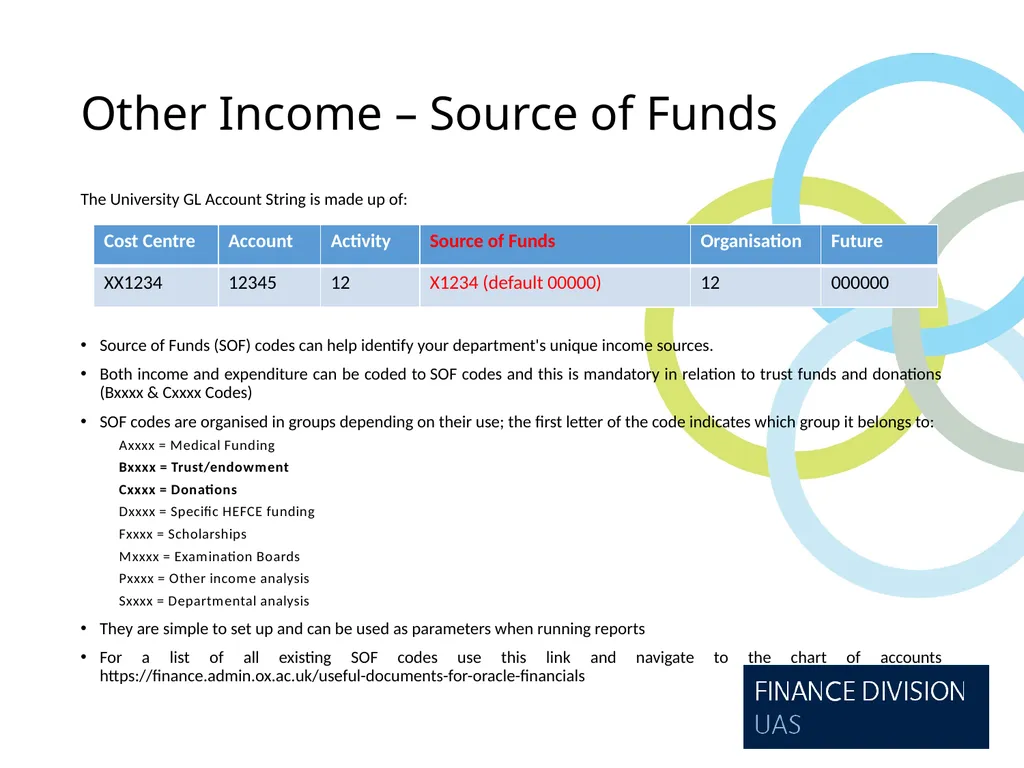
Other Income – Source of Funds The University GL Account String is made up of:
Source of Funds (SOF) codes can help identify your department's unique income sources.
Both income and expenditure can be coded to SOF codes and this is mandatory in relation to trust funds and donations (Bxxxx & Cxxxx Codes)
SOF codes are organised in groups depending on their use; the first letter of the code indicates which group it belongs to:
Axxxx = Medical Funding
Bxxxx = Trust/endowment
Cxxxx = Donations
Dxxxx = Specific HEFCE funding
Fxxxx = Scholarships
Mxxxx = Examination Boards
Pxxxx = Other income analysis
Sxxxx = Departmental analysis
They are simple to set up and can be used as parameters when running reports
For a list of all existing SOF codes use this link and navigate to the chart of accounts https://finance.admin.ox.ac.uk/useful-documents-for-oracle-financials<br>
Source of Funds (SOF) codes can help identify your department's unique income sources.
Both income and expenditure can be coded to SOF codes and this is mandatory in relation to trust funds and donations (Bxxxx & Cxxxx Codes)
SOF codes are organised in groups depending on their use; the first letter of the code indicates which group it belongs to:
Axxxx = Medical Funding
Bxxxx = Trust/endowment
Cxxxx = Donations
Dxxxx = Specific HEFCE funding
Fxxxx = Scholarships
Mxxxx = Examination Boards
Pxxxx = Other income analysis
Sxxxx = Departmental analysis
They are simple to set up and can be used as parameters when running reports
For a list of all existing SOF codes use this link and navigate to the chart of accounts https://finance.admin.ox.ac.uk/useful-documents-for-oracle-financials<br>
18
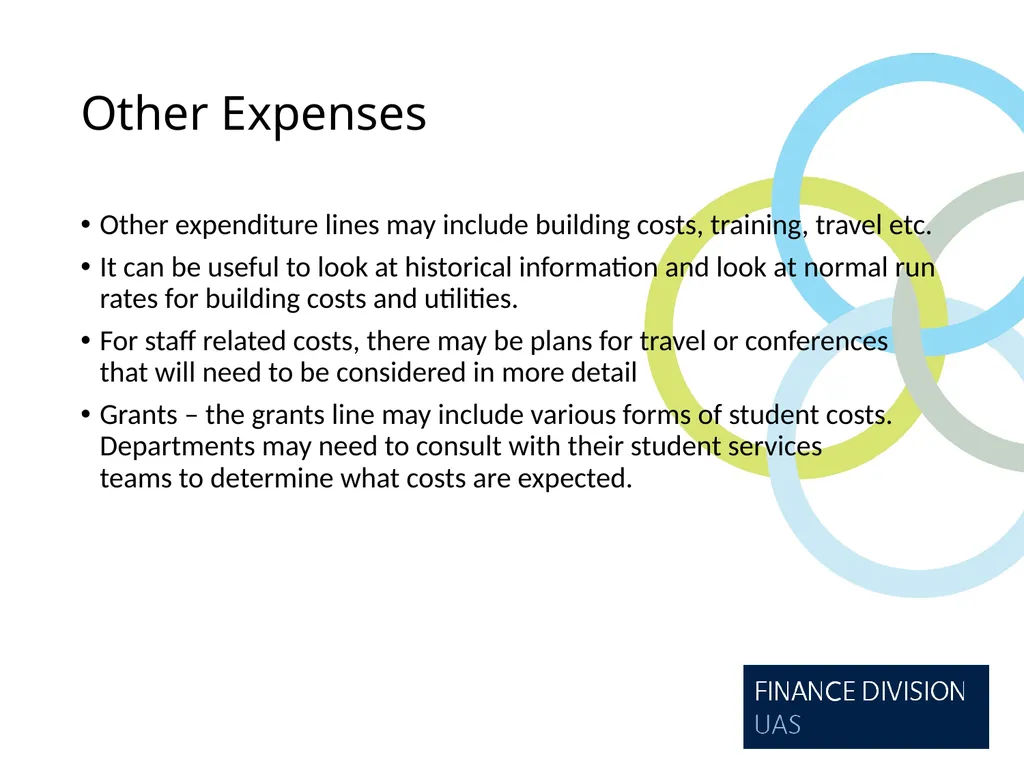
Other Expenses Other expenditure lines may include building costs, training, travel etc.
It can be useful to look at historical information and look at normal run rates for building costs and utilities.
For staff related costs, there may be plans for travel or conferences that will need to be considered in more detail
Grants – the grants line may include various forms of student costs. Departments may need to consult with their student services teams to determine what costs are expected.<br>
It can be useful to look at historical information and look at normal run rates for building costs and utilities.
For staff related costs, there may be plans for travel or conferences that will need to be considered in more detail
Grants – the grants line may include various forms of student costs. Departments may need to consult with their student services teams to determine what costs are expected.<br>
19
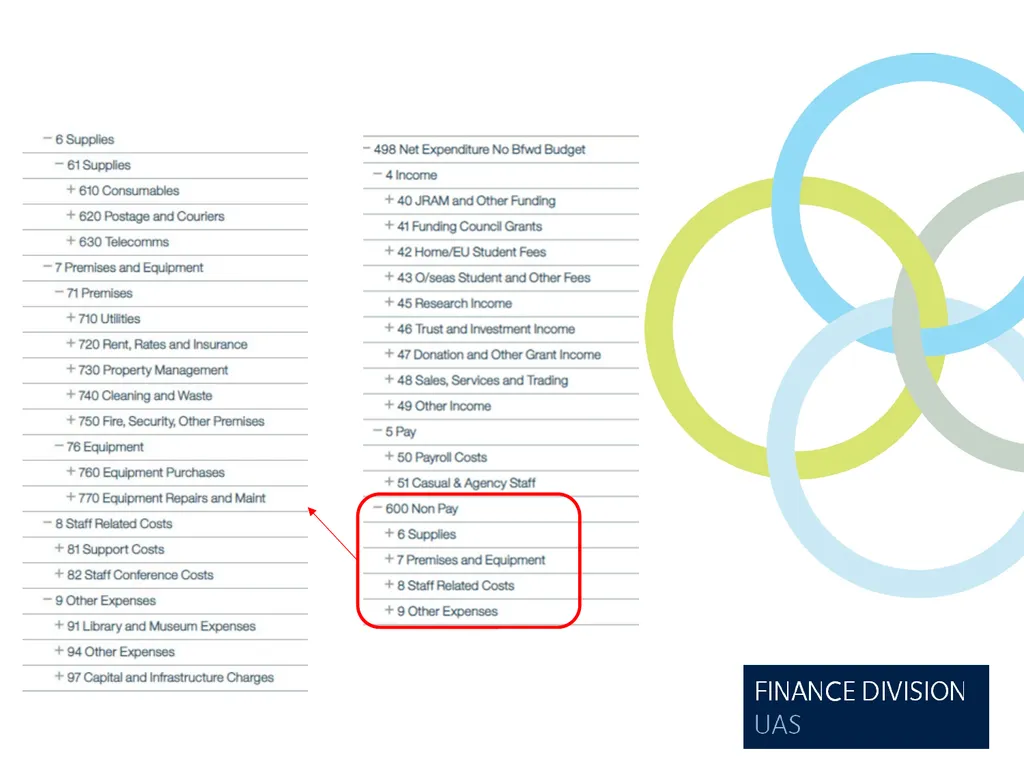
Supplies and Equipment<br>
20
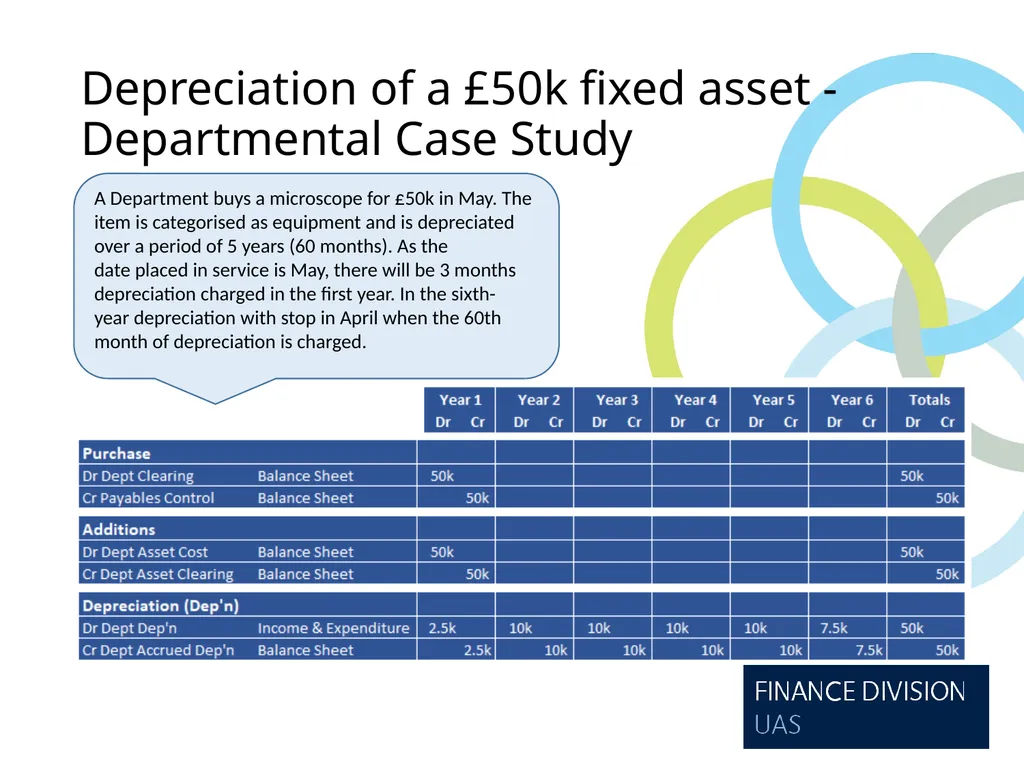
Depreciation of a £50k fixed asset - Departmental Case Study A Department buys a microscope for £50k in May. The item is categorised as equipment and is depreciated over a period of 5 years (60 months). As the date placed in service is May, there will be 3 months depreciation charged in the first year. In the sixth-year depreciation with stop in April when the 60th month of depreciation is charged.<br>
21
Supplies and Equipment Department Responsibilities
Make sure you code equipment purchases correctly
Liaise with the central Fixed Asset Team to ensure internally funded asset details are correct
Check asset capitalisation information (DEL) provided by the Fixed Asset Team
Budget and forecast for existing assests in BFT for depreciation of capitalised assets using the (DEL) and for planned assets contact your divisional finance team
Fixed Asset Team Process
Fixed Asset Team picks up asset details on a monthly basis after the Accounts Payable and Projects module close (close of WD2)
Fixed Asset Team journals capital adjustments by WD6
The first month of depreciation is charged to the GL in that month and every month for the remaining life of the asset
Departments are sent a report showing Oracle accounting entries for the capitalisation adjustments made
The DEL is issued quarterly, listing all department assets (regardless of capital treatment or funding)<br>
Make sure you code equipment purchases correctly
Liaise with the central Fixed Asset Team to ensure internally funded asset details are correct
Check asset capitalisation information (DEL) provided by the Fixed Asset Team
Budget and forecast for existing assests in BFT for depreciation of capitalised assets using the (DEL) and for planned assets contact your divisional finance team
Fixed Asset Team Process
Fixed Asset Team picks up asset details on a monthly basis after the Accounts Payable and Projects module close (close of WD2)
Fixed Asset Team journals capital adjustments by WD6
The first month of depreciation is charged to the GL in that month and every month for the remaining life of the asset
Departments are sent a report showing Oracle accounting entries for the capitalisation adjustments made
The DEL is issued quarterly, listing all department assets (regardless of capital treatment or funding)<br>
22
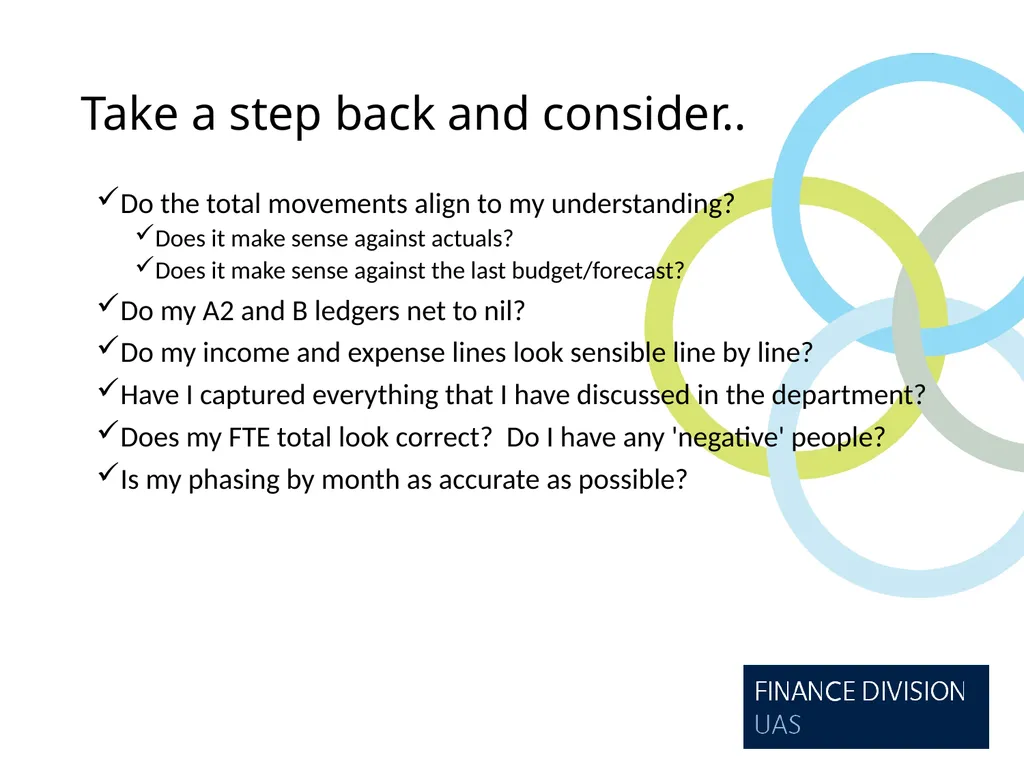
Take a step back and consider.. Do the total movements align to my understanding?
Does it make sense against actuals?
Does it make sense against the last budget/forecast?
Do my A2 and B ledgers net to nil?
Do my income and expense lines look sensible line by line?
Have I captured everything that I have discussed in the department?
Does my FTE total look correct? Do I have any 'negative' people?
Is my phasing by month as accurate as possible?<br>
Does it make sense against actuals?
Does it make sense against the last budget/forecast?
Do my A2 and B ledgers net to nil?
Do my income and expense lines look sensible line by line?
Have I captured everything that I have discussed in the department?
Does my FTE total look correct? Do I have any 'negative' people?
Is my phasing by month as accurate as possible?<br>
23
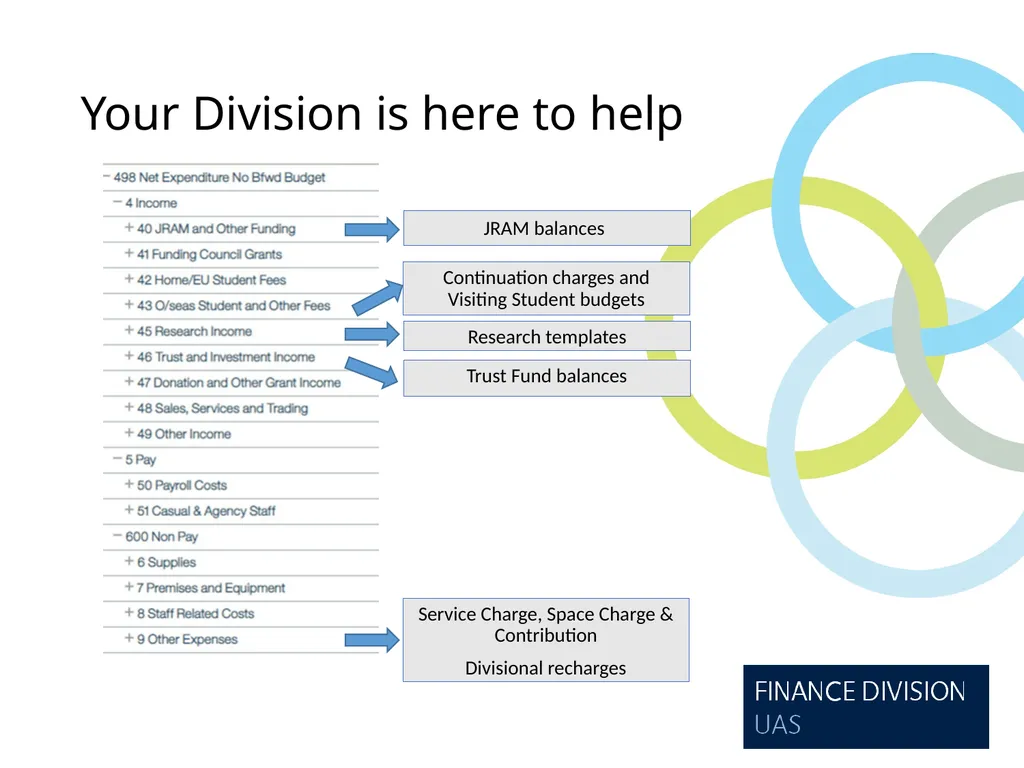
Your Division is here to help JRAM balances Service Charge, Space Charge & Contribution
Divisional recharges Research templates Continuation charges and Visiting Student budgets Trust Fund balances<br>
Divisional recharges Research templates Continuation charges and Visiting Student budgets Trust Fund balances<br>
24
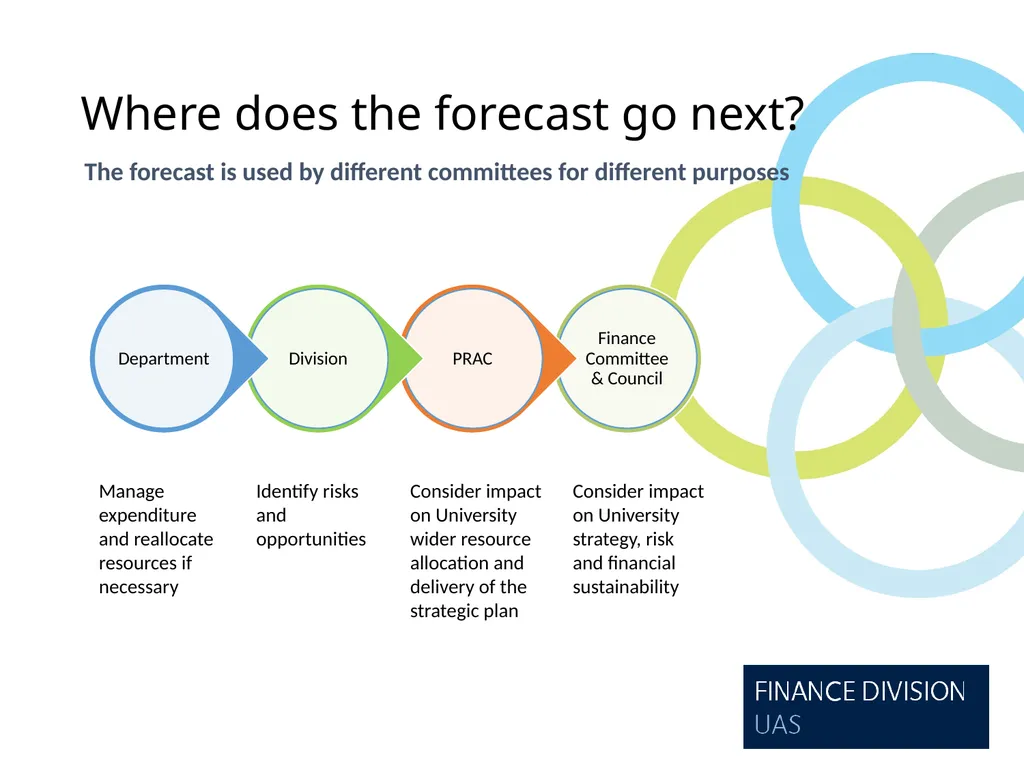
Where does the forecast go next? Identify risks and opportunities Consider impact on University wider resource allocation and delivery of the strategic plan Consider impact on University strategy, risk and financial sustainability Manage expenditure and reallocate resources if necessary The forecast is used by different committees for different purposes<br>
25
Useful links and who can help BFT:
IBM Cognos TM1 Web (ox.ac.uk)
BFT 'How To' training clips:
BFT Training "How To's" | Finance Division (ox.ac.uk)
BFT Training map:
BFT Training | Finance Division (ox.ac.uk)
Budget guidance notes are refreshed annually and include key budget assumptions:
https://finance.admin.ox.ac.uk/files/2023-24budgetassumptionsguidancedocx
Your Divisional Team are a great starting point- if they don't know they will know who to ask
BFT support is available here (BFTSupport@admin.ox.ac.uk) but liaise with your Divisional Team first.<br>
IBM Cognos TM1 Web (ox.ac.uk)
BFT 'How To' training clips:
BFT Training "How To's" | Finance Division (ox.ac.uk)
BFT Training map:
BFT Training | Finance Division (ox.ac.uk)
Budget guidance notes are refreshed annually and include key budget assumptions:
https://finance.admin.ox.ac.uk/files/2023-24budgetassumptionsguidancedocx
Your Divisional Team are a great starting point- if they don't know they will know who to ask
BFT support is available here (BFTSupport@admin.ox.ac.uk) but liaise with your Divisional Team first.<br>