GCSE Latin Component 1 (Latin Language) January
Description: GCSE Latin Component 1 (Latin Language) January 2017 Aims and Objectives To increase familiarisation with content and assessment of Component 1 To map back from the exam to our classrooms To consider approaches to teaching and learning of
Related Topics
Download Presentation
"GCSE Latin Component 1 (Latin Language) January" is the property of its rightful owner. Permission is granted to download and print the materials on this website for personal, non-commercial use only, and to display it on your personal computer provided you do not modify the materials and that you retain all copyright notices contained in the materials. By downloading content from our website, you accept the terms of this agreement.
Presentation Transcript
slide1. GCSE Latin
Component 1 (Latin Language) January 2017<br>
slide2. Aims and Objectives To increase familiarisation with content and assessment of Component 1
To “map back” from the exam to our classrooms
To consider approaches to teaching and learning of Latin Language<br>
slide3. Latin Language Paper Compulsory
Worth 50% of the marks for the whole GCSE
Single-tier paper
1 hour 30 minutes
Total marks available : 100
AO1
5 questions in total
Candidates answer 4 questions
Candidates must answer Questions 1, 2, and 3, and either Question 4 or Question 5.<br>
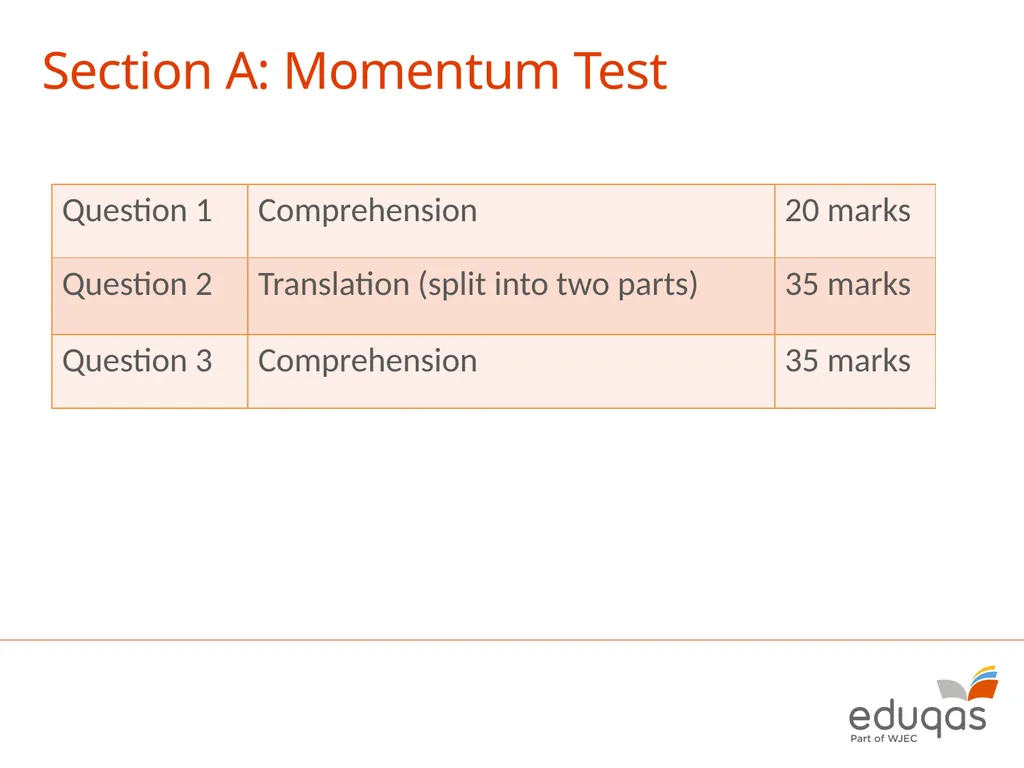
slide4. Section A: Momentum Test Momentum Test
Divided into 3 questions
Questions 1, 2 and 3 are compulsory<br>
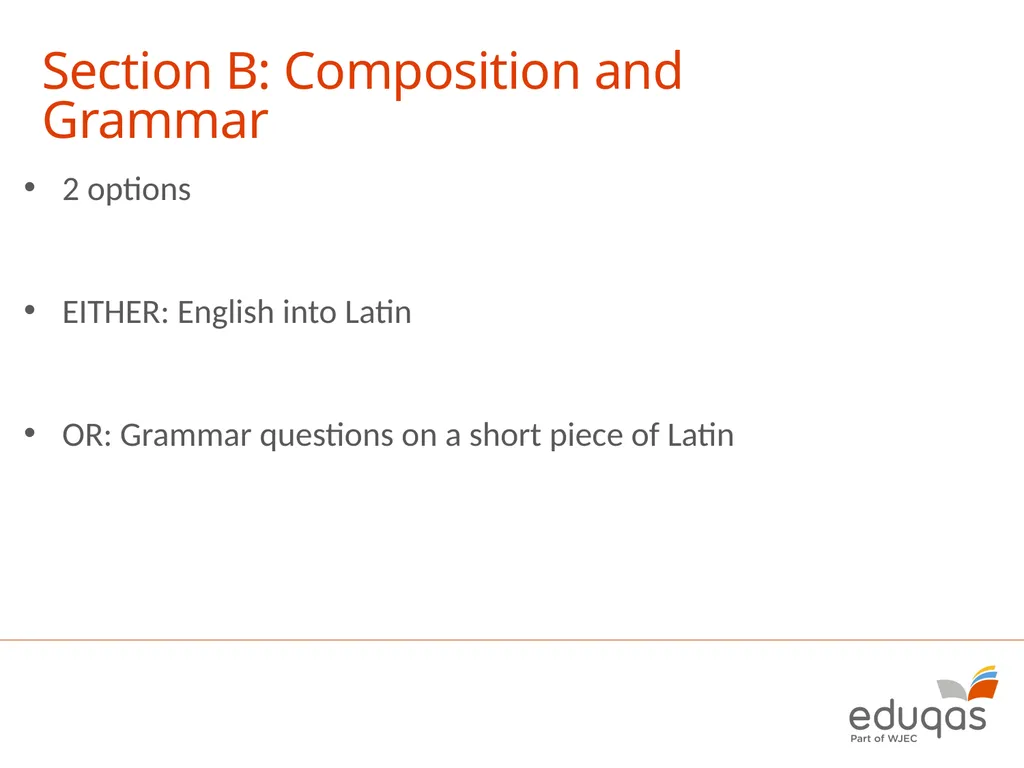
slide5. Section B: Composition and Grammar 2 options
EITHER: English into Latin
OR: Grammar questions on a short piece of Latin<br>
slide6. Section A: Momentum Test<br>
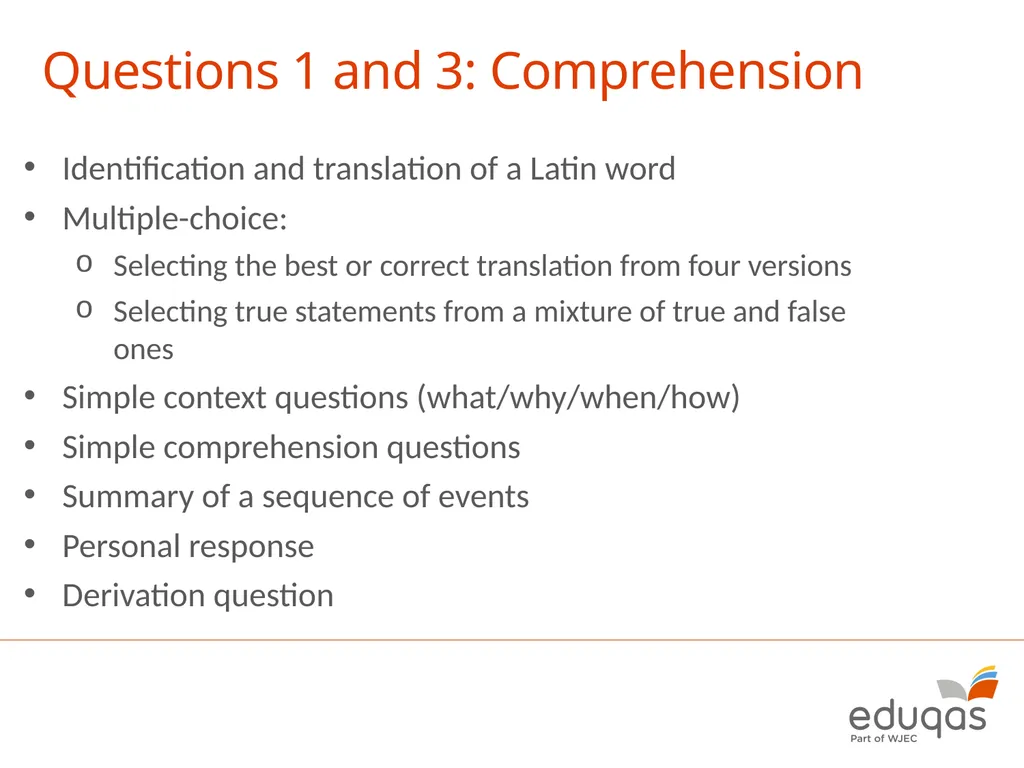
slide7. Questions 1 and 3: Comprehension Identification and translation of a Latin word
Multiple-choice:
Selecting the best or correct translation from four versions
Selecting true statements from a mixture of true and false ones
Simple context questions (what/why/when/how)
Simple comprehension questions
Summary of a sequence of events
Personal response
Derivation question<br>
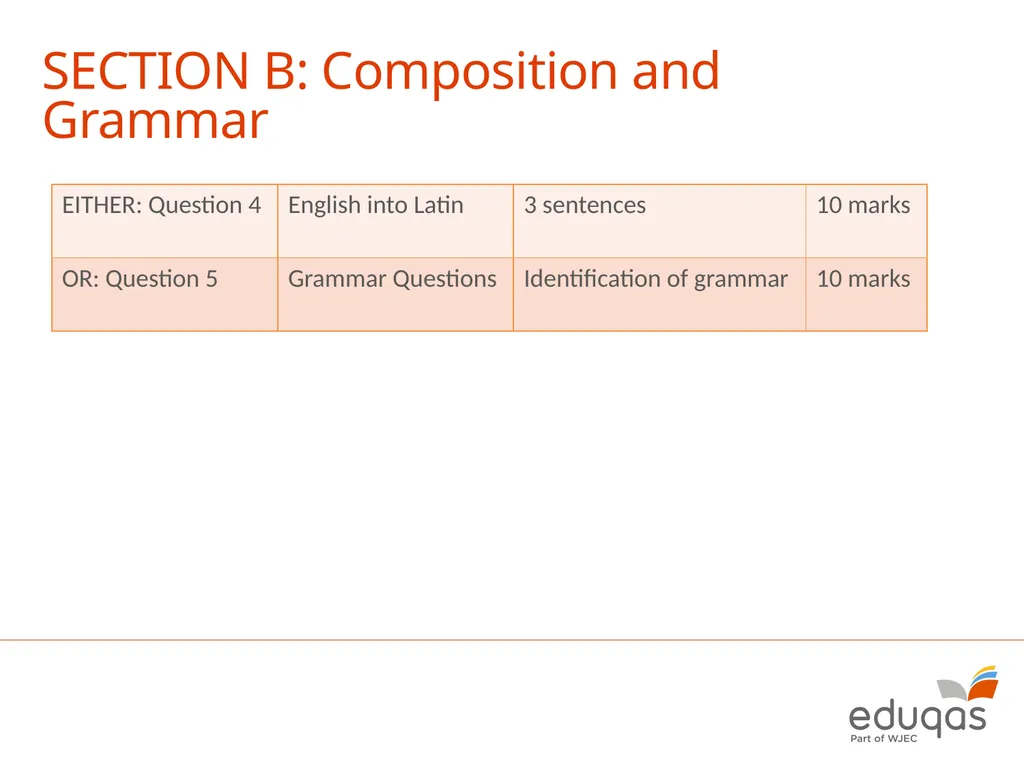
slide8. SECTION B: Composition and Grammar<br>
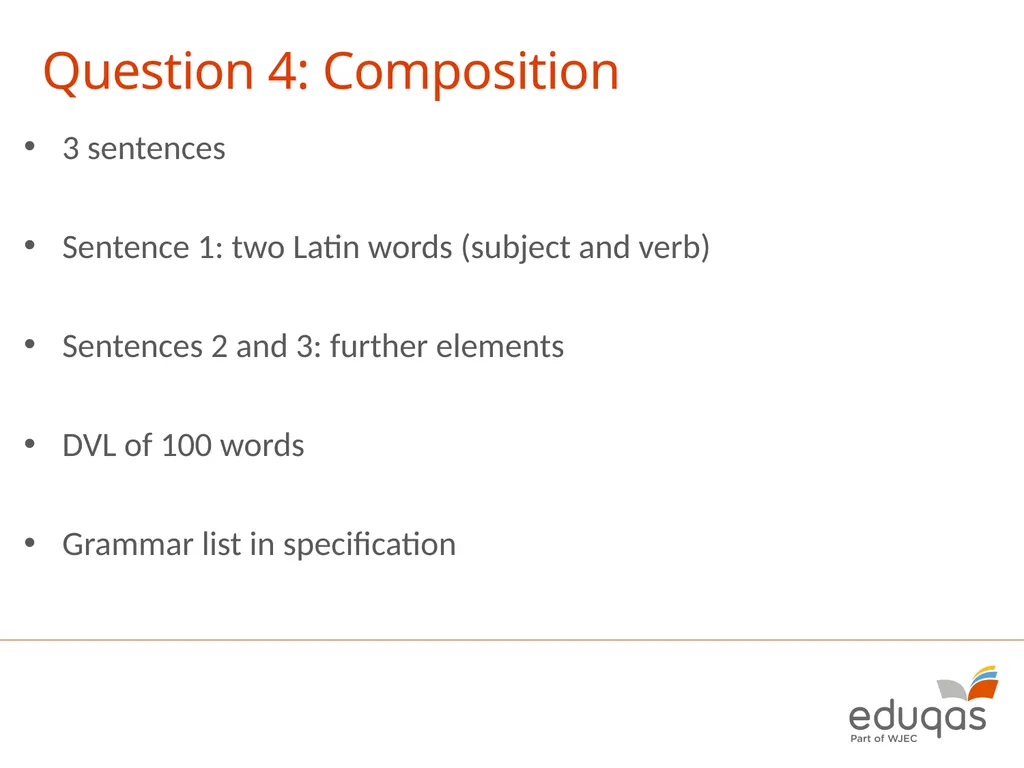
slide9. Question 4: Composition 3 sentences
Sentence 1: two Latin words (subject and verb)
Sentences 2 and 3: further elements
DVL of 100 words
Grammar list in specification<br>
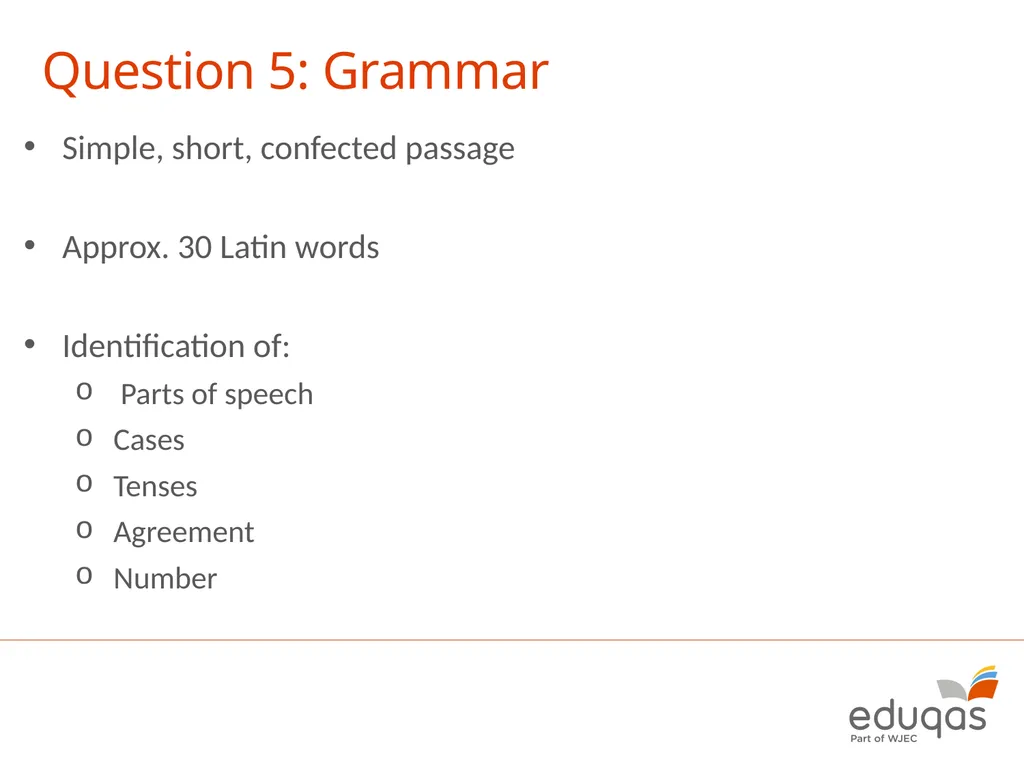
slide10. Question 5: Grammar Simple, short, confected passage
Approx. 30 Latin words
Identification of:
Parts of speech
Cases
Tenses
Agreement
Number<br>
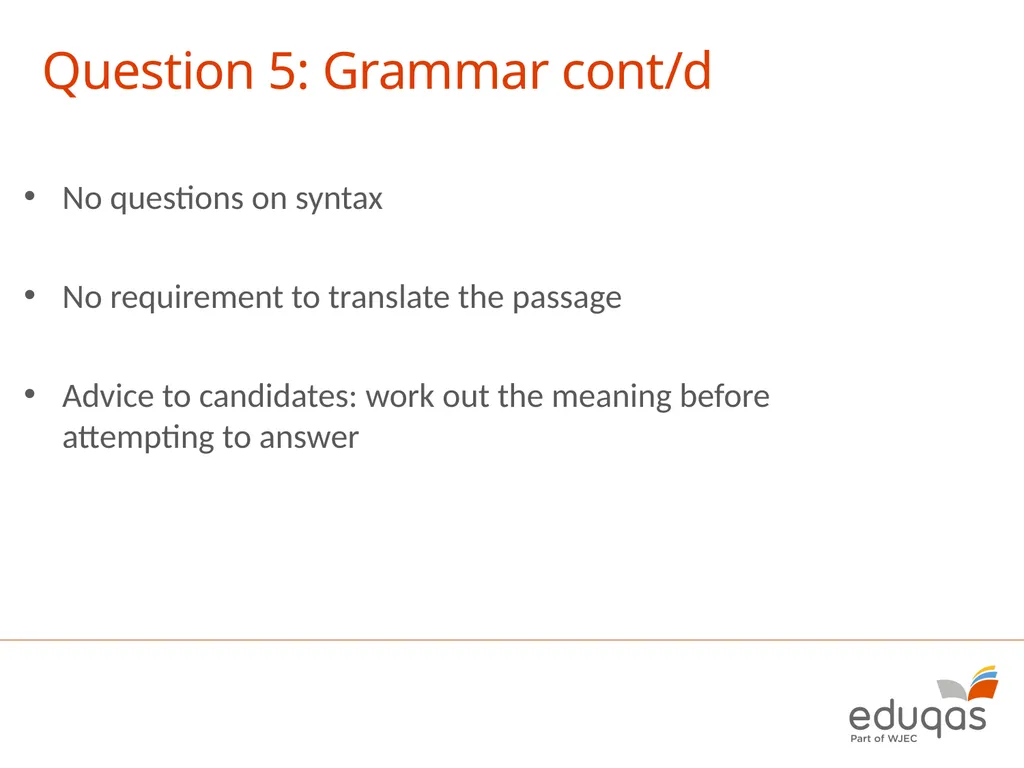
slide11. Question 5: Grammar cont/d No questions on syntax
No requirement to translate the passage
Advice to candidates: work out the meaning before attempting to answer<br>
slide12. Question 4 or Question 5? Will you prepare your students for Q4 or Q5?
What influenced your decision?
What do you anticipate being the difficulties of your chosen question?<br>
slide13. Teaching and Learning Latin Language Anticipation of errors
Vocabulary acquisition
Accidence and syntax<br>
slide14. Anticipation of Errors Use the Examiners’ Report to pinpoint common errors:
Lack of vocabulary knowledge
Spelling errors which were harmful (e.g. woman/ women, lead/led)
Lack of attention to norms of word order
Ignorance of case endings
Inability to identify tenses
Derivation questions
Failure to use information provided on the paper (e.g. Pallas/ Pallanteum)
See sheet Latin Language: Common Vocabulary Errors (2016)<br>
slide15. Vocabulary acquisition How frequent?
Latin to English or English to Latin or both?
Who marks vocabulary tests?
Which resources?
Quizlet
CSCP online vocabulary tester
Downloadable lists (Excel/Word/PDF)<br>
slide16. Accidence and Syntax Examiners’ Report (2016) (www.wjec.co.uk/latin)
Indirect command
Indirect questions
Comparatives and Superlatives
Which Latin course?
Student-created grammar resources<br>
slide17. Final thoughts… Timing of the paper
Creation of resources
Marking practice<br>
slide18. Alan Clague (Subject Officer)
alan.clague@eduqas.co.uk
Matt Oatley (Subject Support Officer)
matthew.oatley@eduqas.co.uk
029 2026 5054 Any Questions?<br>

Component 1 (Latin Language) January 2017<br>
slide2. Aims and Objectives To increase familiarisation with content and assessment of Component 1
To “map back” from the exam to our classrooms
To consider approaches to teaching and learning of Latin Language<br>
slide3. Latin Language Paper Compulsory
Worth 50% of the marks for the whole GCSE
Single-tier paper
1 hour 30 minutes
Total marks available : 100
AO1
5 questions in total
Candidates answer 4 questions
Candidates must answer Questions 1, 2, and 3, and either Question 4 or Question 5.<br>
slide4. Section A: Momentum Test Momentum Test
Divided into 3 questions
Questions 1, 2 and 3 are compulsory<br>
slide5. Section B: Composition and Grammar 2 options
EITHER: English into Latin
OR: Grammar questions on a short piece of Latin<br>
slide6. Section A: Momentum Test<br>
slide7. Questions 1 and 3: Comprehension Identification and translation of a Latin word
Multiple-choice:
Selecting the best or correct translation from four versions
Selecting true statements from a mixture of true and false ones
Simple context questions (what/why/when/how)
Simple comprehension questions
Summary of a sequence of events
Personal response
Derivation question<br>
slide8. SECTION B: Composition and Grammar<br>
slide9. Question 4: Composition 3 sentences
Sentence 1: two Latin words (subject and verb)
Sentences 2 and 3: further elements
DVL of 100 words
Grammar list in specification<br>
slide10. Question 5: Grammar Simple, short, confected passage
Approx. 30 Latin words
Identification of:
Parts of speech
Cases
Tenses
Agreement
Number<br>
slide11. Question 5: Grammar cont/d No questions on syntax
No requirement to translate the passage
Advice to candidates: work out the meaning before attempting to answer<br>
slide12. Question 4 or Question 5? Will you prepare your students for Q4 or Q5?
What influenced your decision?
What do you anticipate being the difficulties of your chosen question?<br>
slide13. Teaching and Learning Latin Language Anticipation of errors
Vocabulary acquisition
Accidence and syntax<br>
slide14. Anticipation of Errors Use the Examiners’ Report to pinpoint common errors:
Lack of vocabulary knowledge
Spelling errors which were harmful (e.g. woman/ women, lead/led)
Lack of attention to norms of word order
Ignorance of case endings
Inability to identify tenses
Derivation questions
Failure to use information provided on the paper (e.g. Pallas/ Pallanteum)
See sheet Latin Language: Common Vocabulary Errors (2016)<br>
slide15. Vocabulary acquisition How frequent?
Latin to English or English to Latin or both?
Who marks vocabulary tests?
Which resources?
Quizlet
CSCP online vocabulary tester
Downloadable lists (Excel/Word/PDF)<br>
slide16. Accidence and Syntax Examiners’ Report (2016) (www.wjec.co.uk/latin)
Indirect command
Indirect questions
Comparatives and Superlatives
Which Latin course?
Student-created grammar resources<br>
slide17. Final thoughts… Timing of the paper
Creation of resources
Marking practice<br>
slide18. Alan Clague (Subject Officer)
alan.clague@eduqas.co.uk
Matt Oatley (Subject Support Officer)
matthew.oatley@eduqas.co.uk
029 2026 5054 Any Questions?<br>