04
Key Terms Unit 1 Relationships
adultery
divorce
cohabitation
commitment
contraception
gender equality
responsibilities
roles<br>
05
Relationships
xxxx beliefs, attitudes and teachings about the nature and purpose of relationships in the twenty first century:
families, roles of women and men, cohabitation,
marriage outside the religious tradition,
The nature and purpose of marriage
xxxx attitudes towards adultery, divorce and annulment and separation and re-marriage
Sexual Relationships
xxxx teachings about the nature and purpose of sex and the use of contraception
Xxxx towards same sex relationships
Issues of equality: gender prejudice and discrimination
xxxxx attitudes within regarding the roles of women and men in worship and authority<br>
06
Key Terms Unit 2.
Issues of Life and Death
afterlife
environmental sustainability
euthanasia
evolution
abortion
quality of life
sanctity of life
soul<br>
07
Content Matters Unit Two The world
xxxx beliefs, teachings and attitudes about the accounts of the origin of the universe
The relationship between religious views and non-religious views of creation and the extent to which they conflict
xxxx beliefs, teachings and attitudes about dominion, stewardship, environmental responsibility, sustainability, and global citizenship
The origin and value of human life
xxxx beliefs, teachings and attitudes toward the origin and sanctity of human life:
Xxxx attitudes towards abortion and euthanasia
Non-religious views about the origin and value of human life, including attitudes toward abortion and euthanasia
Beliefs about death and the afterlife
xxxx beliefs and teachings about life after death,
How religious and non-religious funerals reflect beliefs about the after-life<br>
08
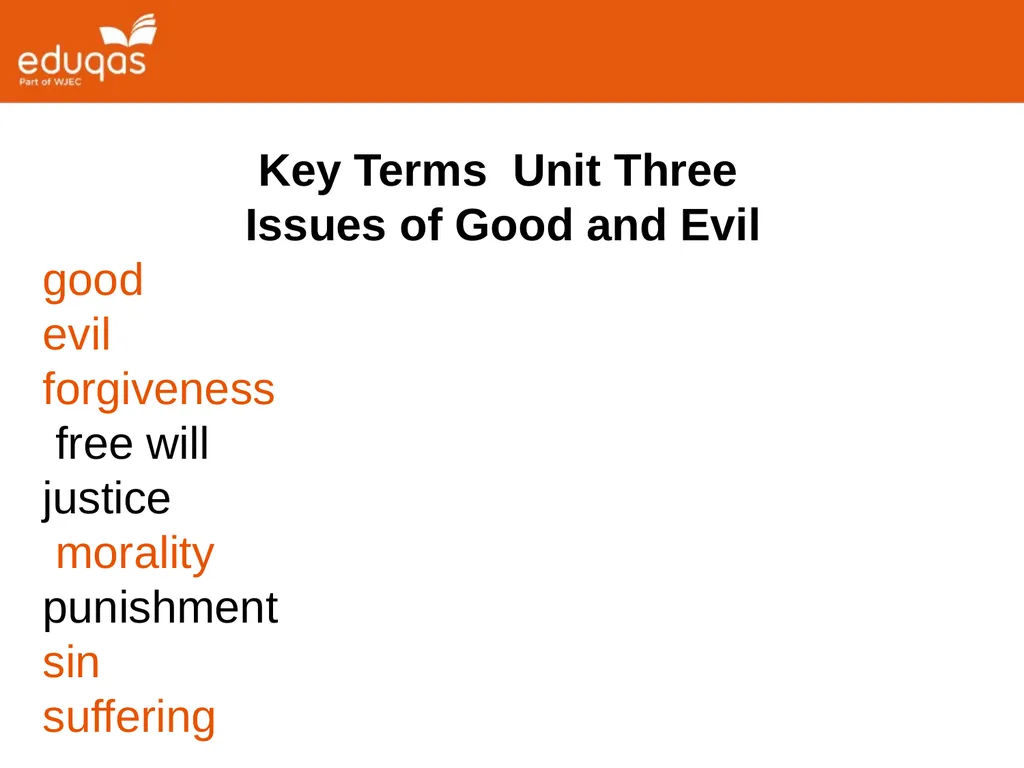
Key Terms Unit Three
Issues of Good and Evil
good
evil
forgiveness
free will
justice
morality
punishment
sin
suffering<br>
09
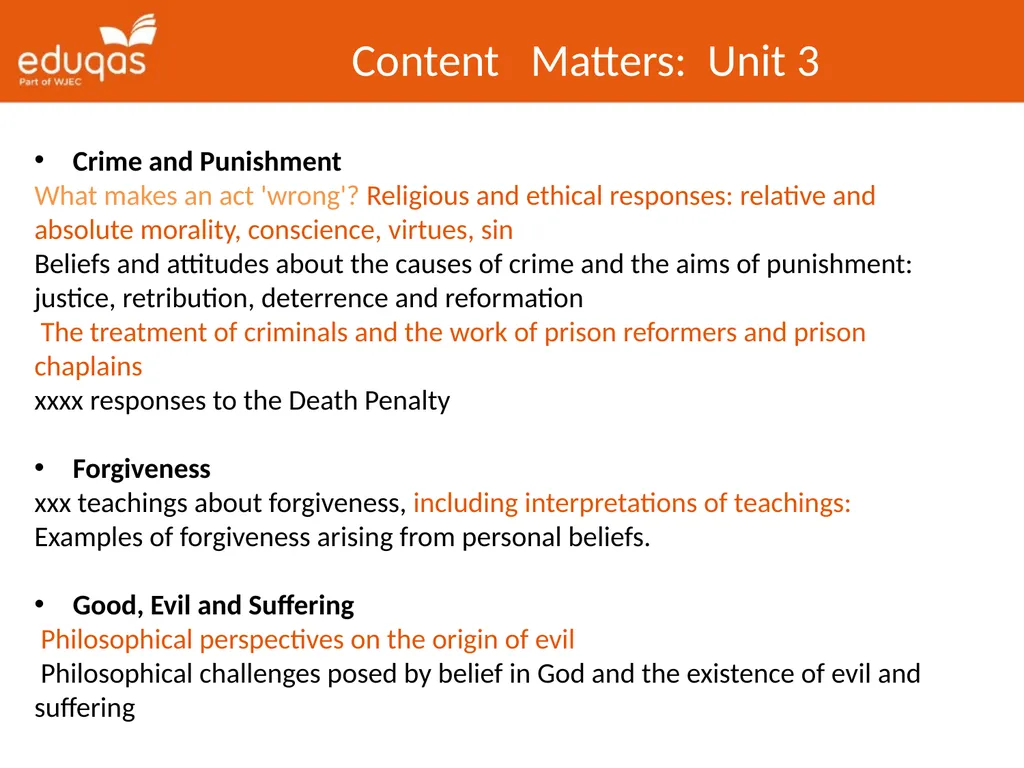
Crime and Punishment
What makes an act 'wrong'? Religious and ethical responses: relative and absolute morality, conscience, virtues, sin
Beliefs and attitudes about the causes of crime and the aims of punishment: justice, retribution, deterrence and reformation
The treatment of criminals and the work of prison reformers and prison chaplains
xxxx responses to the Death Penalty
Forgiveness
xxx teachings about forgiveness, including interpretations of teachings: Examples of forgiveness arising from personal beliefs.
Good, Evil and Suffering
Philosophical perspectives on the origin of evil
Philosophical challenges posed by belief in God and the existence of evil and suffering Content Matters: Unit 3<br>
10
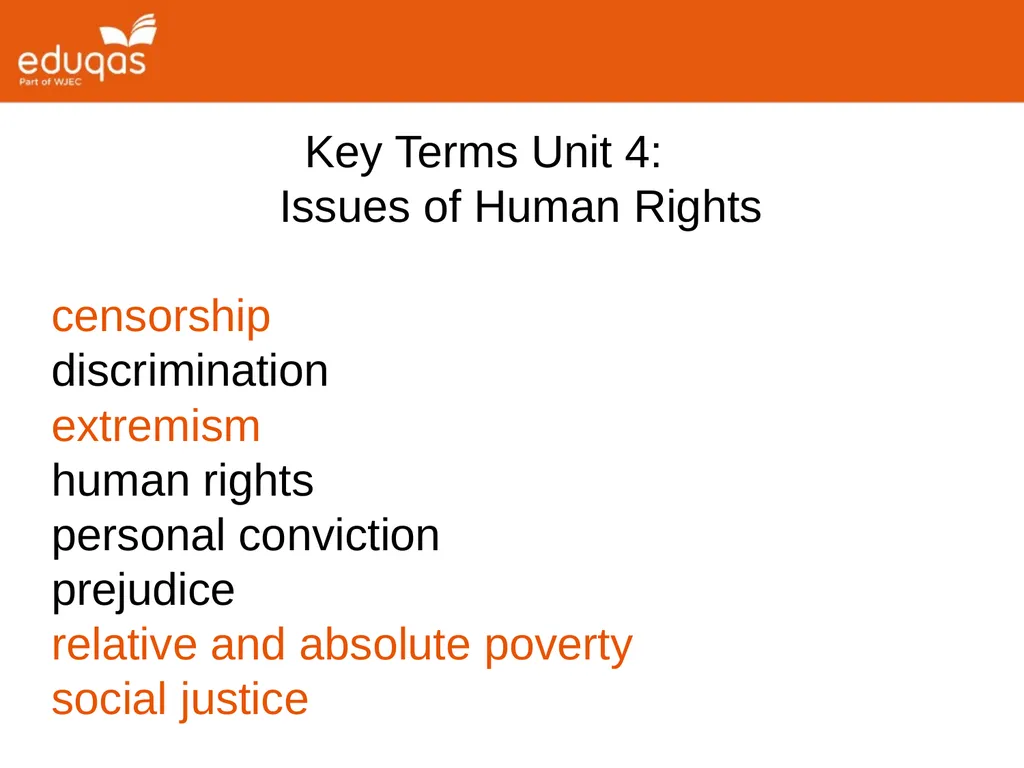
Key Terms Unit 4:
Issues of Human Rights
censorship
discrimination
extremism
human rights
personal conviction
prejudice
relative and absolute poverty
social justice<br>
11
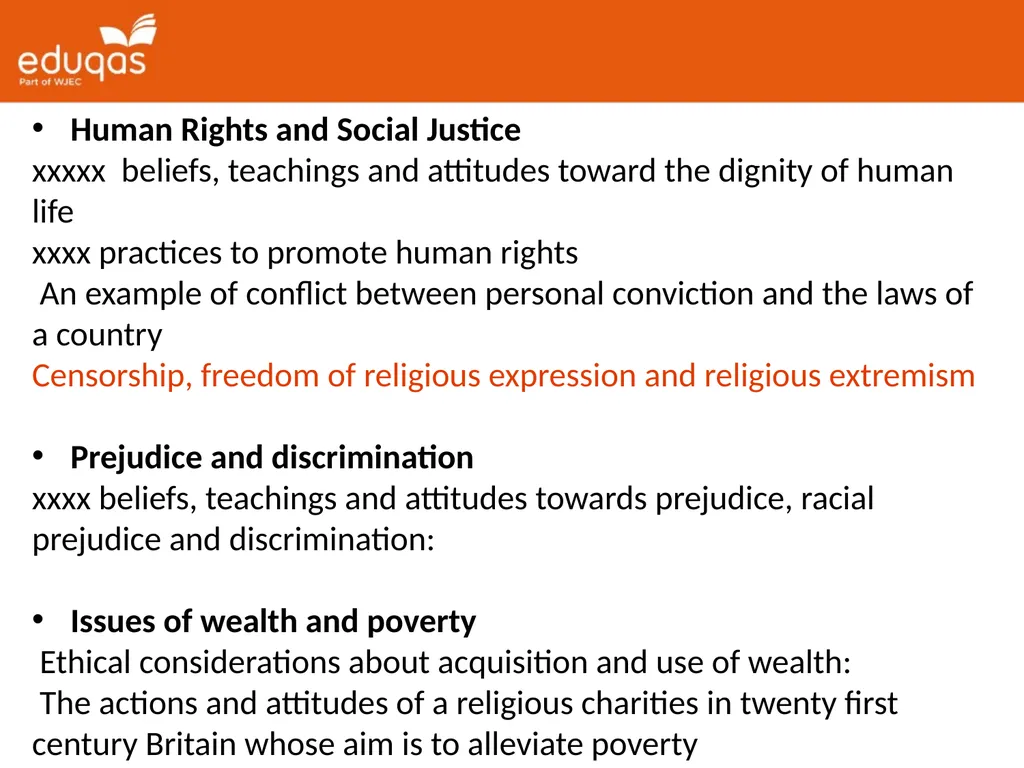
Human Rights and Social Justice
xxxxx beliefs, teachings and attitudes toward the dignity of human life
xxxx practices to promote human rights
An example of conflict between personal conviction and the laws of a country
Censorship, freedom of religious expression and religious extremism
Prejudice and discrimination
xxxx beliefs, teachings and attitudes towards prejudice, racial prejudice and discrimination:
Issues of wealth and poverty
Ethical considerations about acquisition and use of wealth:
The actions and attitudes of a religious charities in twenty first century Britain whose aim is to alleviate poverty<br>
12
Key Terms
Question 1(Learners should be able to explain and apply these concepts in relation to the theme).
Can be used within specific questions
Credit for use within answers<br>
13
Sacred Texts
No specific questions on a text BUT
Used to support arguments
Used to include in questions asking for religious teachings
Recognition of different interpretations
(Not exclusive to the references in content).<br>
14
AO1
Demonstrate knowledge and understanding of religion and belief*, including:
belief, practices and sources of authority
influence on individuals, communities and societies
similarities and differences within and/or between religions and belief<br>
15
AO1 Types of questions
a- What is meant by 'sanctity of life'? (2)
b- Describe ways in which families are important in a faith community. (5)
c- From two different religions or two religious traditions, explain attitudes to same sex relationships. (8)<br>
16
IMPORTANCE OF LANGUAGE AND TEXTS
A01 and A02
Level 1/Level 2
Uses religious/specialist language and terms and sources of wisdom and authority in a limited way.
Level 2/Level 4
Uses religious/specialist language and terms and sources of wisdom and authority generally accurately.
Level 3/Level 5
Uses a range of appropriate religious/specialist language and terms and sources of wisdom and authority extensively and accurately<br>
17
AO1 Demonstrate knowledge and understanding of religion and belief*, including:
belief, practices and sources of authority
influence on individuals, communities and societies
similarities and differences within and/or between religions and belief
From two different religions or two religious traditions, explain attitudes<br>
18
AO2
Analyse and evaluate aspects of religion and belief*, including their significance and influence
* The term ‘belief’ includes religious and non-religious beliefs as appropriate to the subject content requirements “Sex outside marriage is always wrong.” [15 + 6]
Discuss this statement showing that you have considered more than one point of view.
(You must refer to religion and belief in your answer.)<br>
19
Which 2 religions/religious traditions?
Which unit to start with?
How to connect with component 2/3 ?
(systematic study of religious traditions)<br>
20
Year 7-9 SKILLS
Key Terms
A02 strategies
Interrogation of texts
Using religious language
Connecting learning (remember, reflect, reform)<br>
21
Year 7-9 Content
Work of religious charities
Examples of forgiveness
Examples of personal conviction
Practical examples of sustainability, global citizenship etc.<br>
22
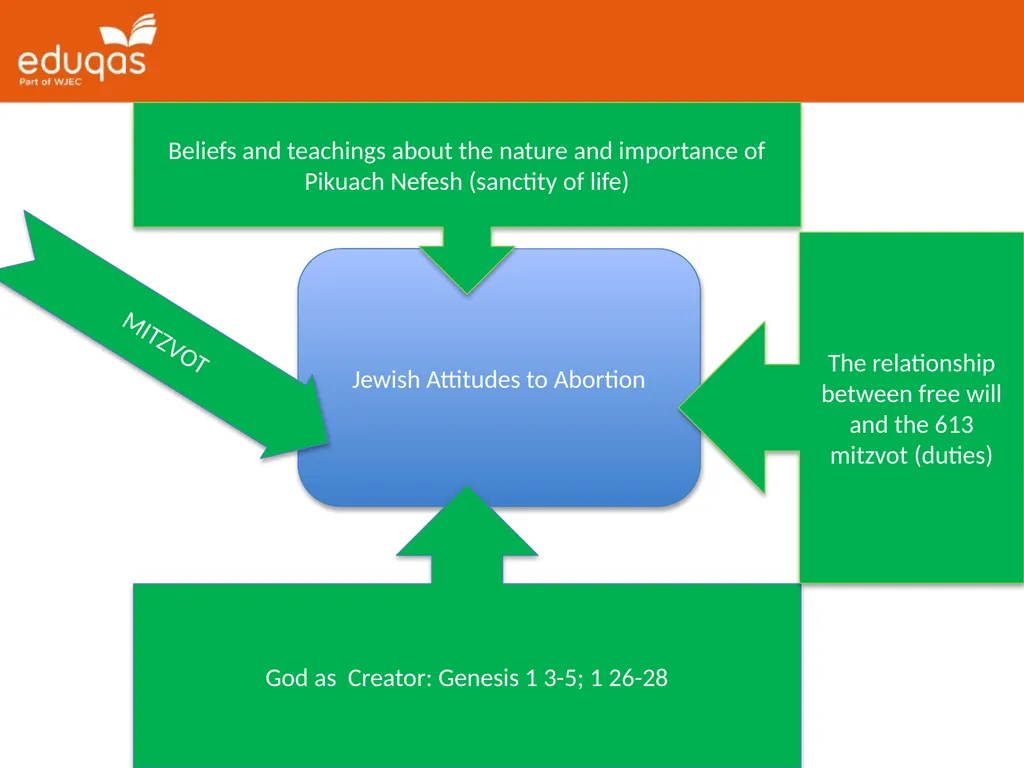
Jewish Attitudes to Abortion MITZVOT God as Creator: Genesis 1 3-5; 1 26-28 Beliefs and teachings about the nature and importance of Pikuach Nefesh (sanctity of life) The relationship between free will and the 613 mitzvot (duties)<br>
23
Which 2 religions/religious traditions?
Which unit to start with?
How to connect with component 2/3 ?
(systematic study of religious traditions)
Resources; re-cycling and
up-cycling?<br>
24
Any Questions ? GCSE Subject Officer
Lynda Maddock�029 2026 5122�lynda.maddock@eduqas.co.uk
GCSE Subject Support Officer
Christopher Barfoot
029 2026 5094
christopher.barfoot@eduqas.co.uk<br>