
Geotechnical Engineering Unit – 1 Origin and
Description: Geotechnical Engineering Unit 1 Origin and classification of soil - Naveen Tiwari Geotechnical Engineering Geotechnical engineering is an area of civil engineering that focuses on the engineering behaviour of earth materials. Origin of
Related Topics
Download Presentation
"Geotechnical Engineering Unit – 1 Origin and" is the property of its rightful owner. Permission is granted to download and print the materials on this website for personal, non-commercial use only, and to display it on your personal computer provided you do not modify the materials and that you retain all copyright notices contained in the materials. By downloading content from our website, you accept the terms of this agreement.
Presentation Transcript
slide1. Geotechnical Engineering Unit – 1
Origin and classification of soil
- Naveen Tiwari<br>
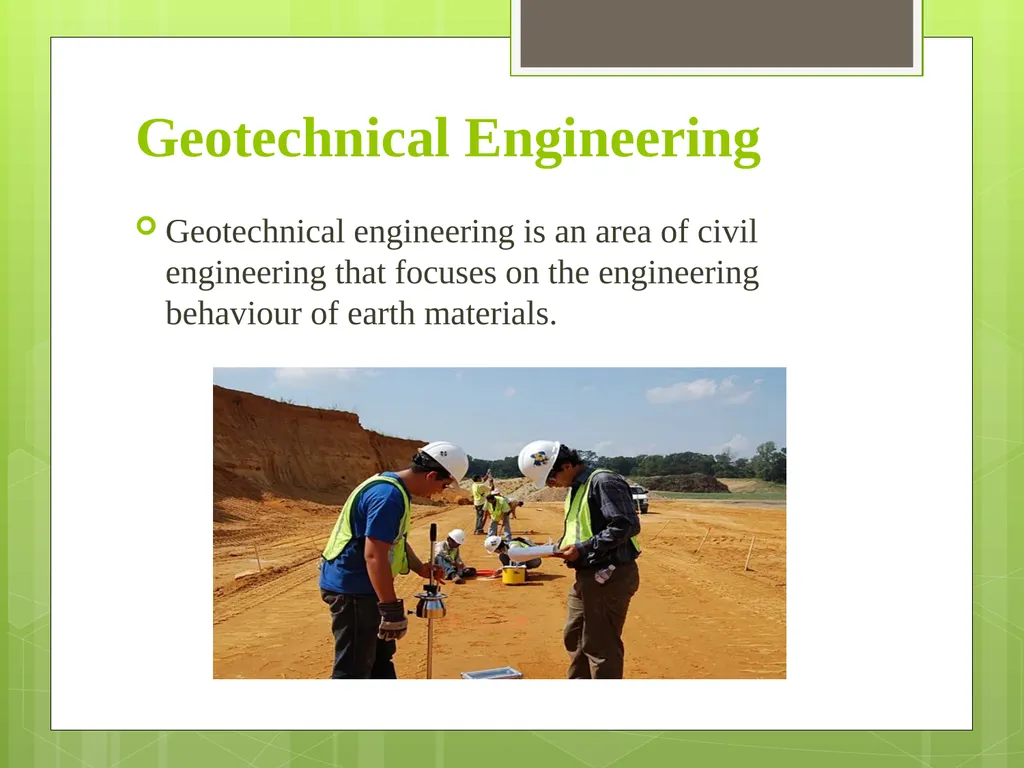
slide2. Geotechnical Engineering Geotechnical engineering is an area of civil engineering that focuses on the engineering behaviour of earth materials.<br>
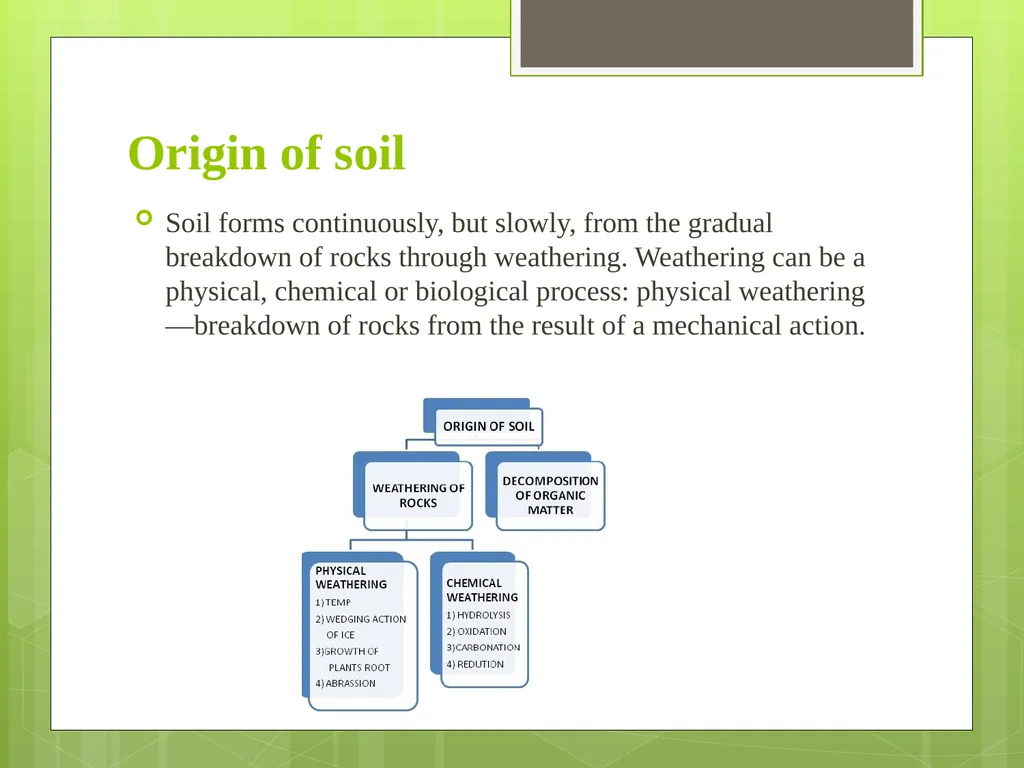
slide3. Origin of soil Soil forms continuously, but slowly, from the gradual breakdown of rocks through weathering. Weathering can be a physical, chemical or biological process: physical weathering—breakdown of rocks from the result of a mechanical action.<br>
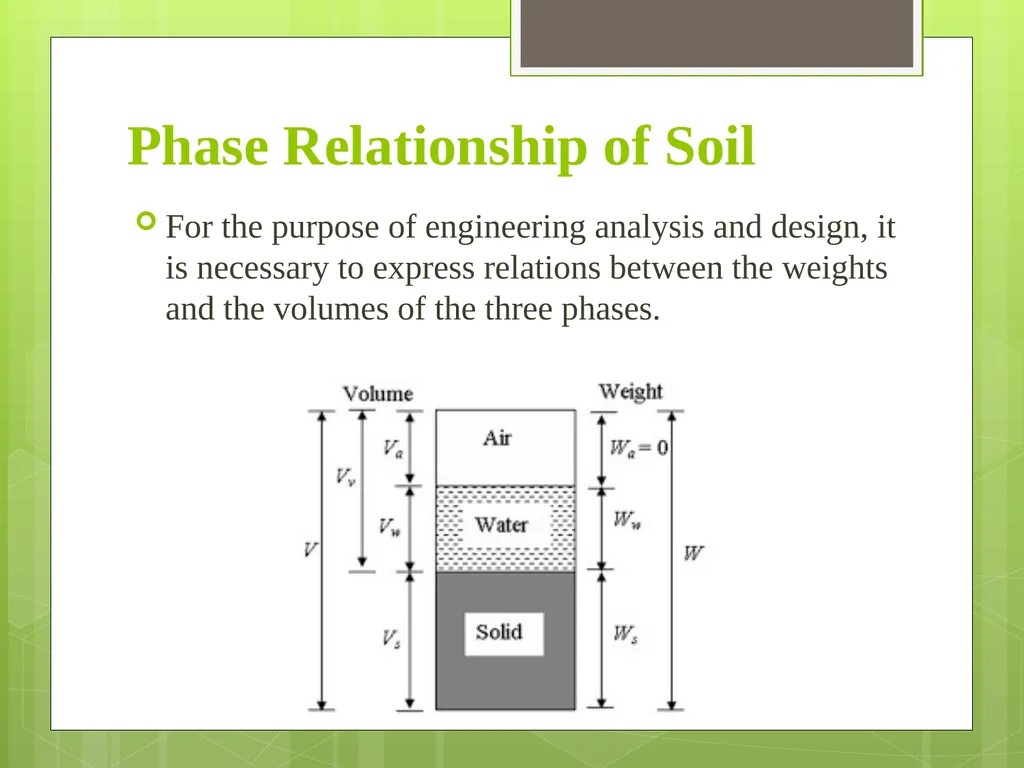
slide4. Phase Relationship of Soil For the purpose of engineering analysis and design, it is necessary to express relations between the weights and the volumes of the three phases.<br>
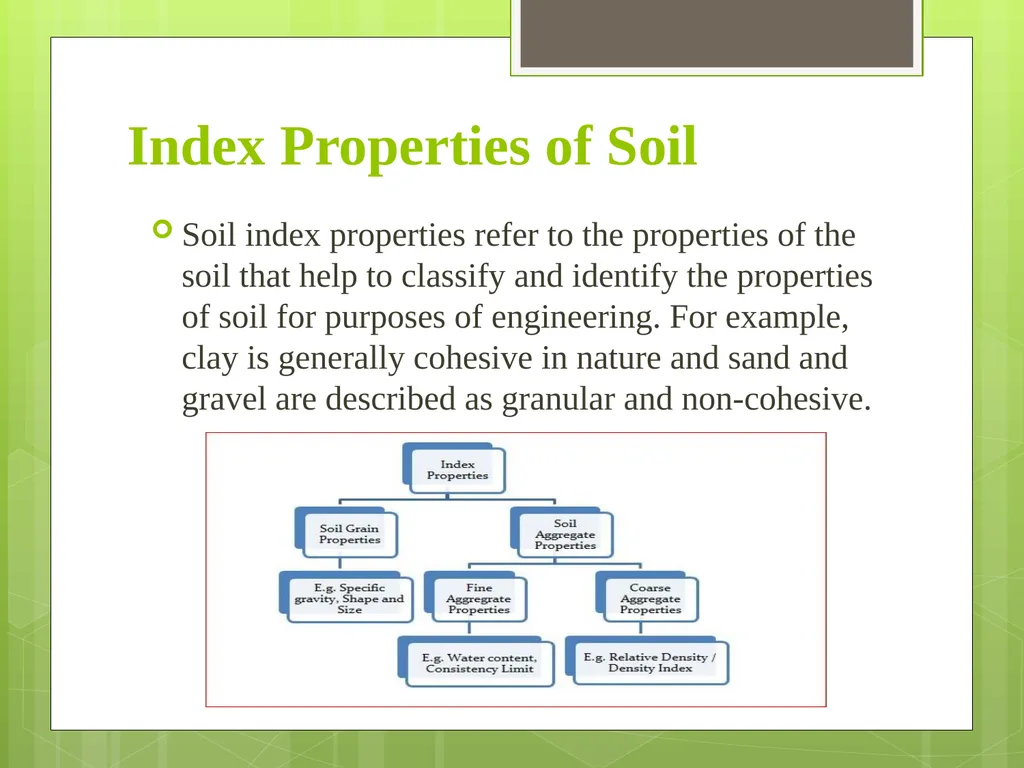
slide5. Index Properties of Soil Soil index properties refer to the properties of the soil that help to classify and identify the properties of soil for purposes of engineering. For example, clay is generally cohesive in nature and sand and gravel are described as granular and non-cohesive.<br>
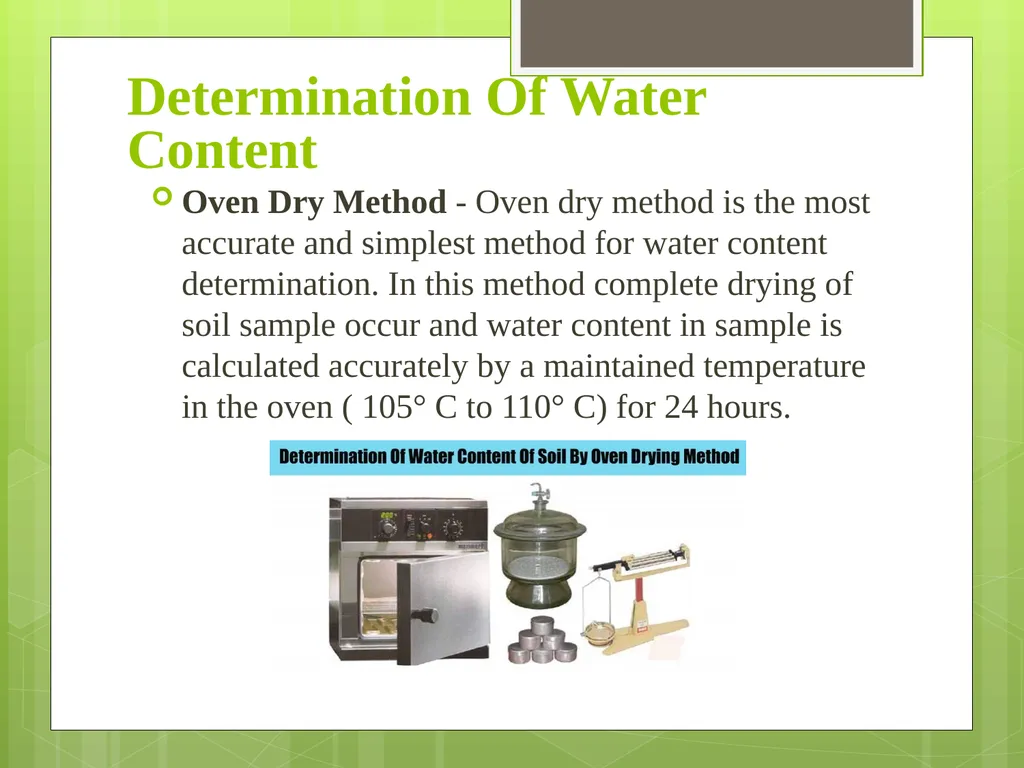
slide6. Determination Of Water Content Oven Dry Method - Oven dry method is the most accurate and simplest method for water content determination. In this method complete drying of soil sample occur and water content in sample is calculated accurately by a maintained temperature in the oven ( 105° C to 110° C) for 24 hours.<br>
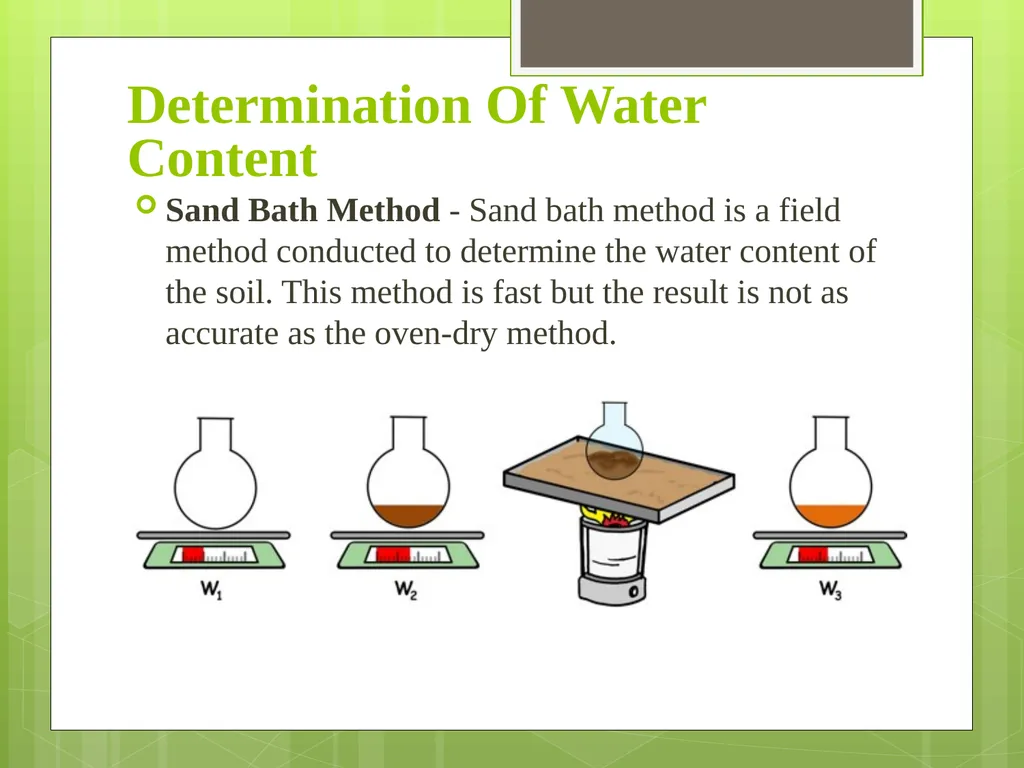
slide7. Determination Of Water Content Sand Bath Method - Sand bath method is a field method conducted to determine the water content of the soil. This method is fast but the result is not as accurate as the oven-dry method.<br>
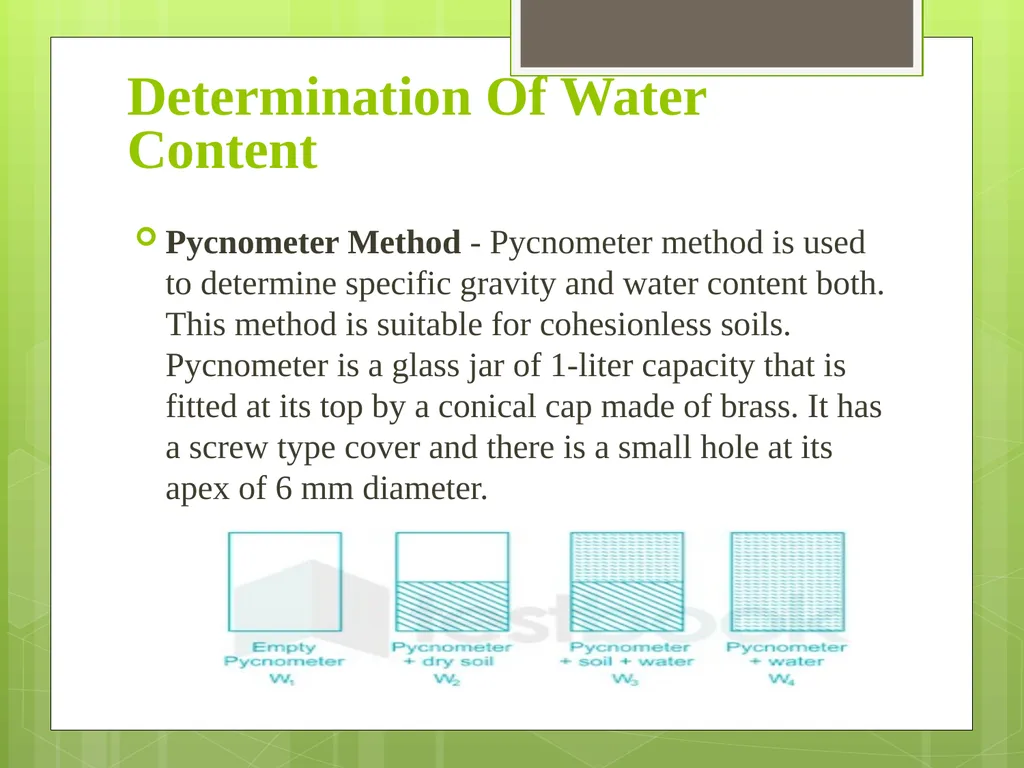
slide8. Determination Of Water Content Pycnometer Method - Pycnometer method is used to determine specific gravity and water content both. This method is suitable for cohesionless soils. Pycnometer is a glass jar of 1-liter capacity that is fitted at its top by a conical cap made of brass. It has a screw type cover and there is a small hole at its apex of 6 mm diameter.<br>
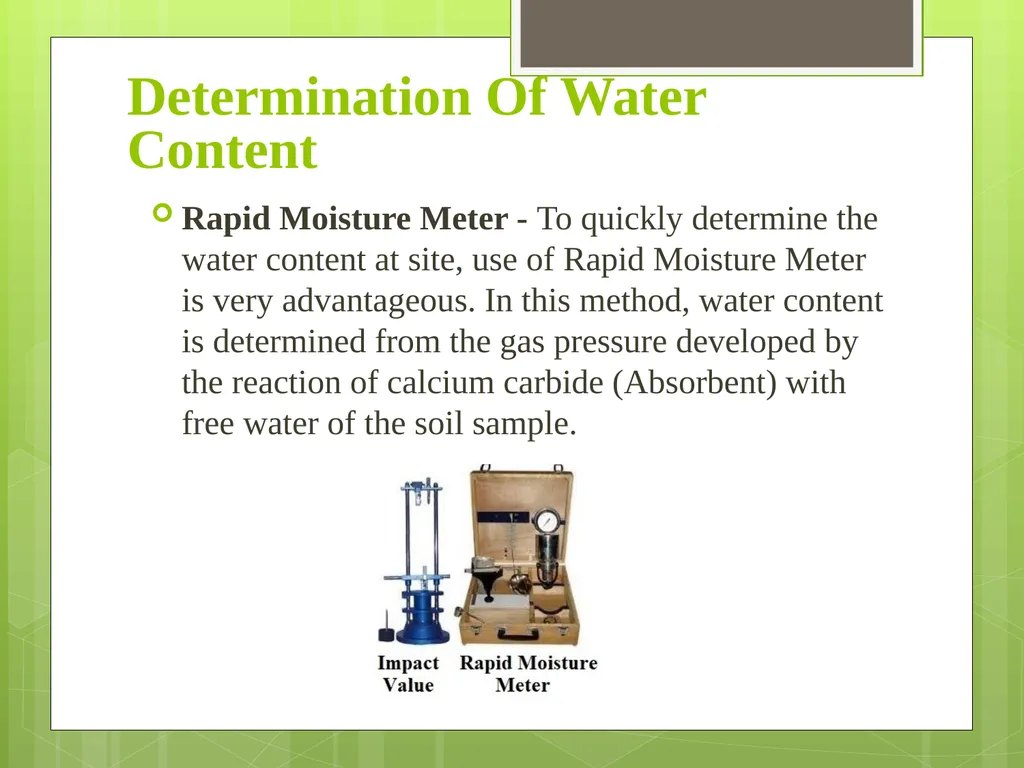
slide9. Determination Of Water Content Rapid Moisture Meter - To quickly determine the water content at site, use of Rapid Moisture Meter is very advantageous. In this method, water content is determined from the gas pressure developed by the reaction of calcium carbide (Absorbent) with free water of the soil sample.<br>
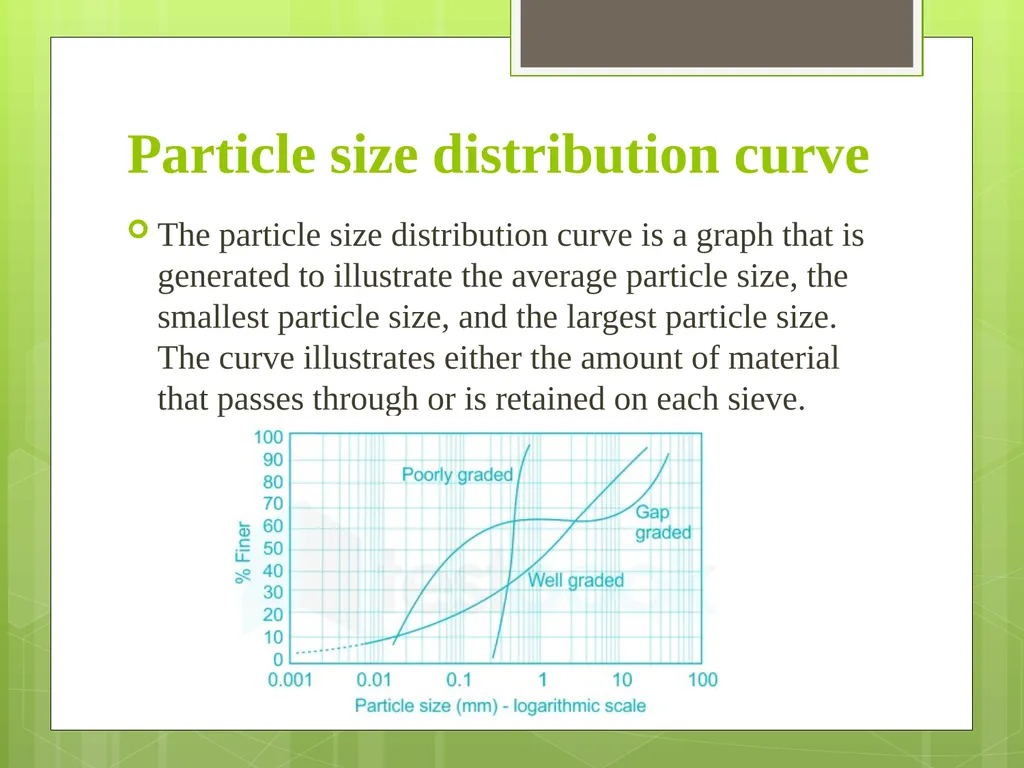
slide10. Particle size distribution curve The particle size distribution curve is a graph that is generated to illustrate the average particle size, the smallest particle size, and the largest particle size. The curve illustrates either the amount of material that passes through or is retained on each sieve.<br>
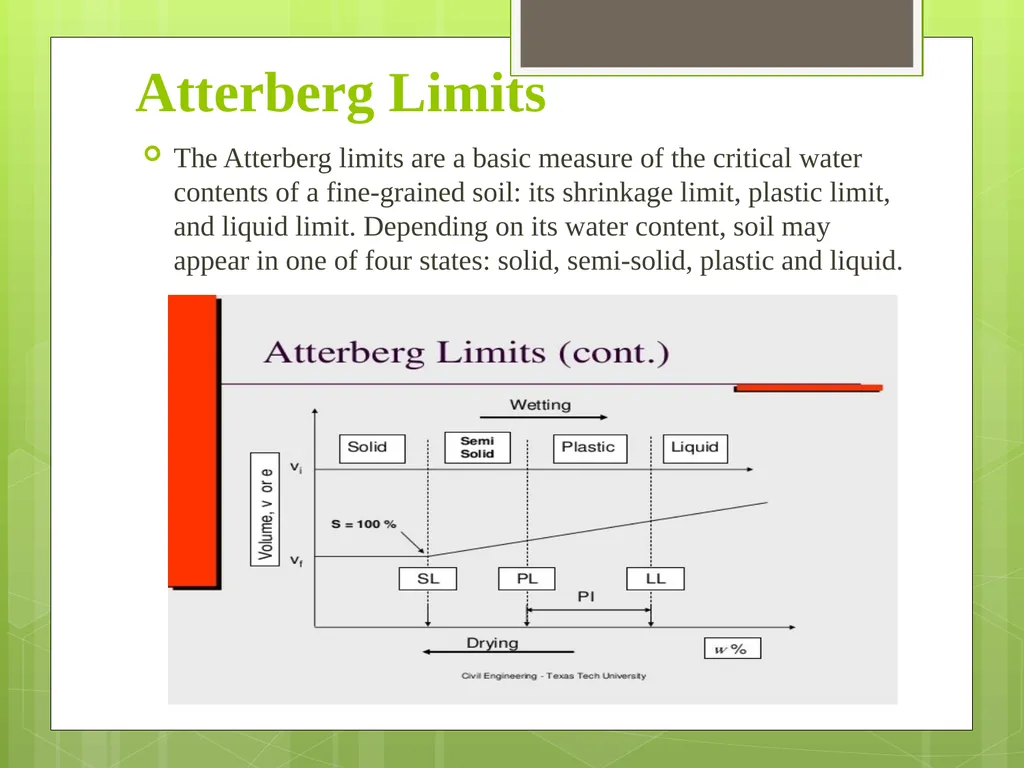
slide11. Atterberg Limits The Atterberg limits are a basic measure of the critical water contents of a fine-grained soil: its shrinkage limit, plastic limit, and liquid limit. Depending on its water content, soil may appear in one of four states: solid, semi-solid, plastic and liquid.<br>
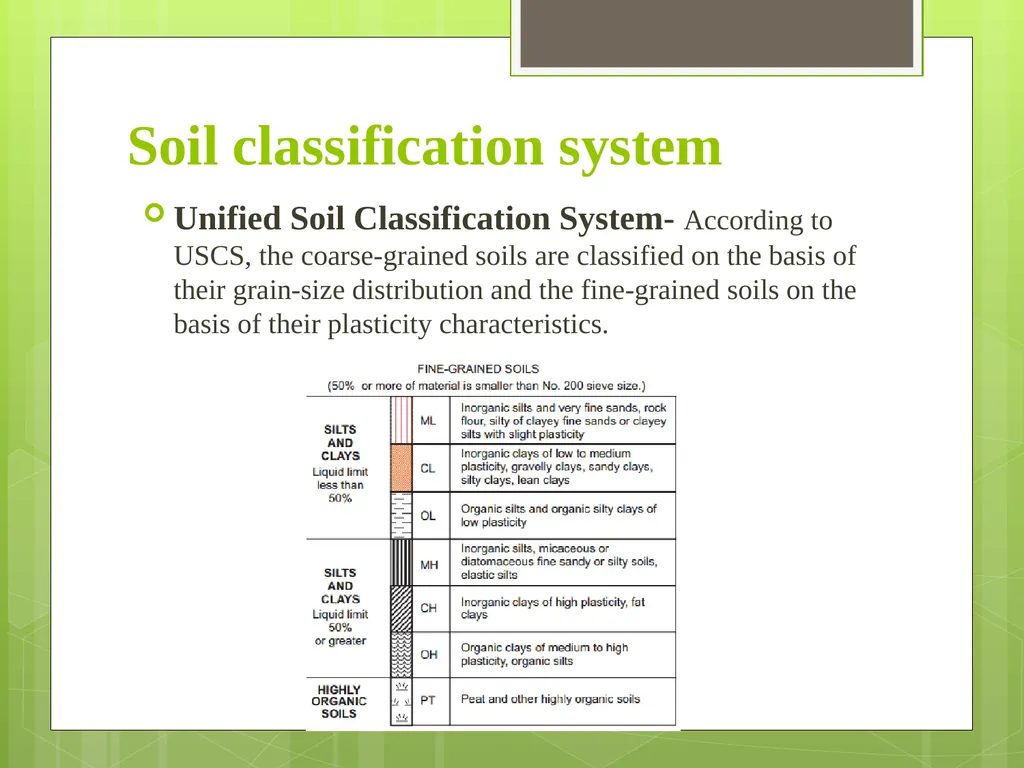
slide12. Soil classification system Unified Soil Classification System- According to USCS, the coarse-grained soils are classified on the basis of their grain-size distribution and the fine-grained soils on the basis of their plasticity characteristics.<br>
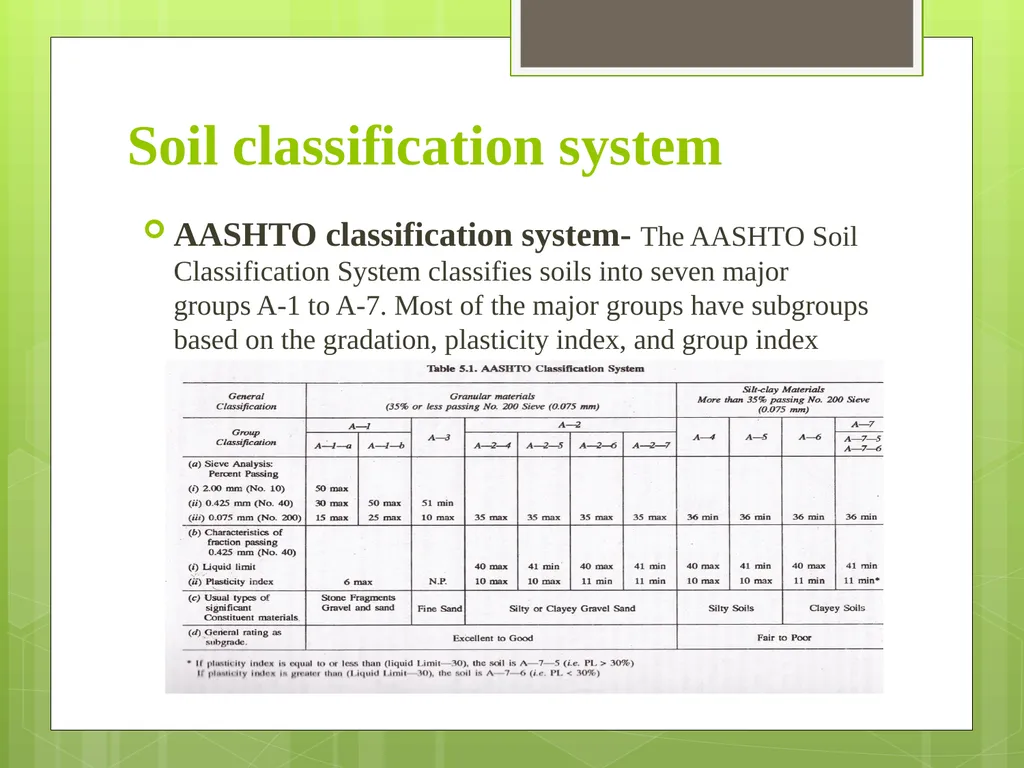
slide13. Soil classification system AASHTO classification system- The AASHTO Soil Classification System classifies soils into seven major groups A-1 to A-7. Most of the major groups have subgroups based on the gradation, plasticity index, and group index<br>
slide14. Soil classification system Indian Standard Soil Classification System (ISSCS) - In the Indian Standard Soil Classification System (ISSCS), soils are classified into groups according to size, and the groups are further divided into coarse, medium and fine sub-groups. The grain-size range is used as the basis for grouping soil particles into boulder, cobble, gravel, sand, silt or clay.<br>
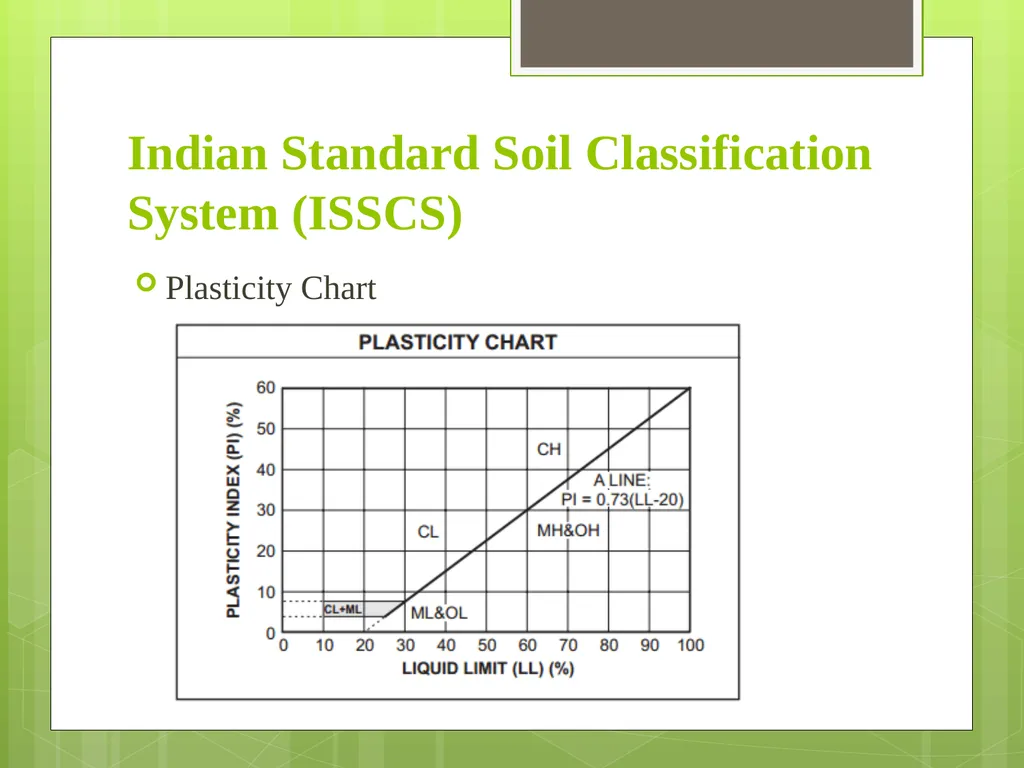
slide15. Indian Standard Soil Classification System (ISSCS) Plasticity Chart<br>
Origin and classification of soil
- Naveen Tiwari<br>
slide2. Geotechnical Engineering Geotechnical engineering is an area of civil engineering that focuses on the engineering behaviour of earth materials.<br>
slide3. Origin of soil Soil forms continuously, but slowly, from the gradual breakdown of rocks through weathering. Weathering can be a physical, chemical or biological process: physical weathering—breakdown of rocks from the result of a mechanical action.<br>
slide4. Phase Relationship of Soil For the purpose of engineering analysis and design, it is necessary to express relations between the weights and the volumes of the three phases.<br>
slide5. Index Properties of Soil Soil index properties refer to the properties of the soil that help to classify and identify the properties of soil for purposes of engineering. For example, clay is generally cohesive in nature and sand and gravel are described as granular and non-cohesive.<br>
slide6. Determination Of Water Content Oven Dry Method - Oven dry method is the most accurate and simplest method for water content determination. In this method complete drying of soil sample occur and water content in sample is calculated accurately by a maintained temperature in the oven ( 105° C to 110° C) for 24 hours.<br>
slide7. Determination Of Water Content Sand Bath Method - Sand bath method is a field method conducted to determine the water content of the soil. This method is fast but the result is not as accurate as the oven-dry method.<br>
slide8. Determination Of Water Content Pycnometer Method - Pycnometer method is used to determine specific gravity and water content both. This method is suitable for cohesionless soils. Pycnometer is a glass jar of 1-liter capacity that is fitted at its top by a conical cap made of brass. It has a screw type cover and there is a small hole at its apex of 6 mm diameter.<br>
slide9. Determination Of Water Content Rapid Moisture Meter - To quickly determine the water content at site, use of Rapid Moisture Meter is very advantageous. In this method, water content is determined from the gas pressure developed by the reaction of calcium carbide (Absorbent) with free water of the soil sample.<br>
slide10. Particle size distribution curve The particle size distribution curve is a graph that is generated to illustrate the average particle size, the smallest particle size, and the largest particle size. The curve illustrates either the amount of material that passes through or is retained on each sieve.<br>
slide11. Atterberg Limits The Atterberg limits are a basic measure of the critical water contents of a fine-grained soil: its shrinkage limit, plastic limit, and liquid limit. Depending on its water content, soil may appear in one of four states: solid, semi-solid, plastic and liquid.<br>
slide12. Soil classification system Unified Soil Classification System- According to USCS, the coarse-grained soils are classified on the basis of their grain-size distribution and the fine-grained soils on the basis of their plasticity characteristics.<br>
slide13. Soil classification system AASHTO classification system- The AASHTO Soil Classification System classifies soils into seven major groups A-1 to A-7. Most of the major groups have subgroups based on the gradation, plasticity index, and group index<br>
slide14. Soil classification system Indian Standard Soil Classification System (ISSCS) - In the Indian Standard Soil Classification System (ISSCS), soils are classified into groups according to size, and the groups are further divided into coarse, medium and fine sub-groups. The grain-size range is used as the basis for grouping soil particles into boulder, cobble, gravel, sand, silt or clay.<br>
slide15. Indian Standard Soil Classification System (ISSCS) Plasticity Chart<br>