Grant proposals writing: Lessons learned Prof. Jennifer Mahony School of Microbiology APC Microbiome Ireland My funding journey 2003: IRC PhD funding 2013: SFI TIDA 100k 20156: Bill Melinda Gates Foundation 90k 2016: SFI SIRG
"Grant proposals writing: Lessons learned… Prof." is the property of its rightful owner. Permission is granted to
download and print the materials on this website for personal, non-commercial use only, and to display it
on your personal computer provided you do not modify the materials and that you retain all copyright
notices contained in the materials. By downloading content from our website, you accept the terms of this
agreement.
Share
Embed code
Presentation Transcript
01
Grant proposals writing: Lessons learned… Prof. Jennifer Mahony
School of Microbiology & APC Microbiome Ireland<br>
02
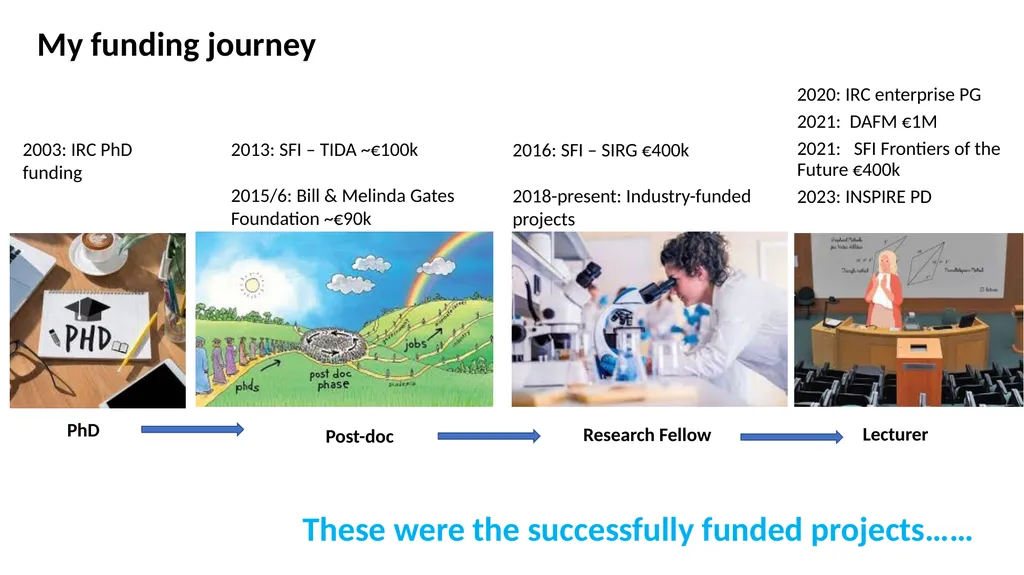
My funding journey 2003: IRC PhD funding 2013: SFI – TIDA ~€100k
2015/6: Bill & Melinda Gates Foundation ~€90k 2016: SFI – SIRG €400k
2018-present: Industry-funded projects These were the successfully funded projects…… 2020: IRC enterprise PG
2021: DAFM €1M
2021: SFI Frontiers of the Future €400k
2023: INSPIRE PD PhD Post-doc Research Fellow Lecturer<br>
03
This is what we want to do but first…….<br>
04
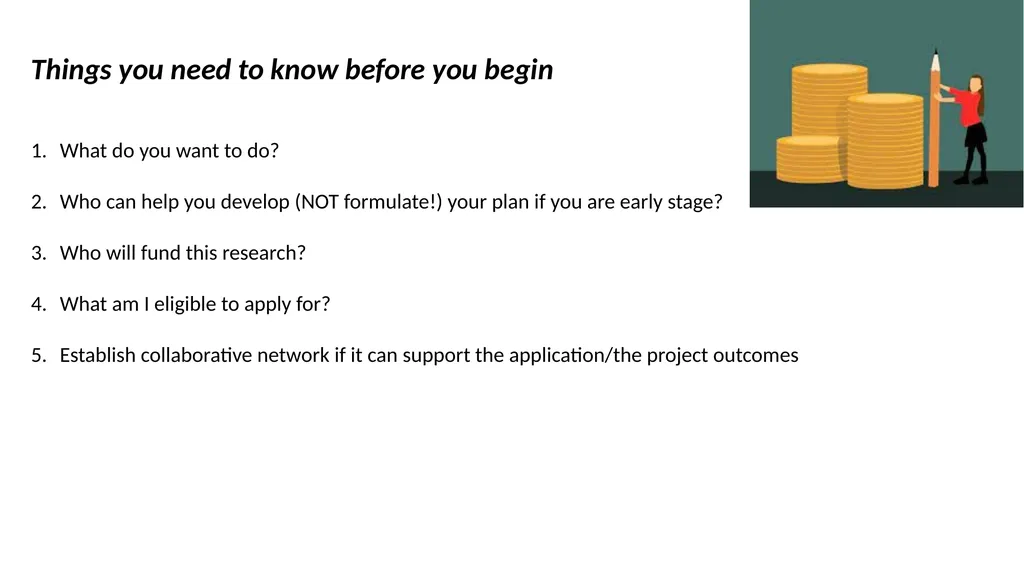
Things you need to know before you begin
What do you want to do?
Who can help you develop (NOT formulate!) your plan if you are early stage?
Who will fund this research?
What am I eligible to apply for?
Establish collaborative network if it can support the application/the project outcomes<br>
05
Collaborations:
Collaborators may receive no financial reward from your proposal but you are asking them to support you- give them time to prepare support letters/CVs
DORA compliant CVs may not be standard in all countries so this may take time to prepare
Identify your collaborative network- possibility of interdisciplinary/complementary approaches?
Funding landscape:
What funding programmes are you eligible to apply to? (National, EU, Philanthropic)
Who in the Research Office can support you?
Reach out to the Research Office<br>
06
Advice for early career researchers
Choose your mentor carefully
Communicate well with your mentor & learn from them
Don’t be afraid of critique- it will make your proposals stronger
You must be an all-rounder: a scientific leader, a project manager, administrator and a financial whizz!
YOU are the leader- don’t be afraid to shine<br>
07
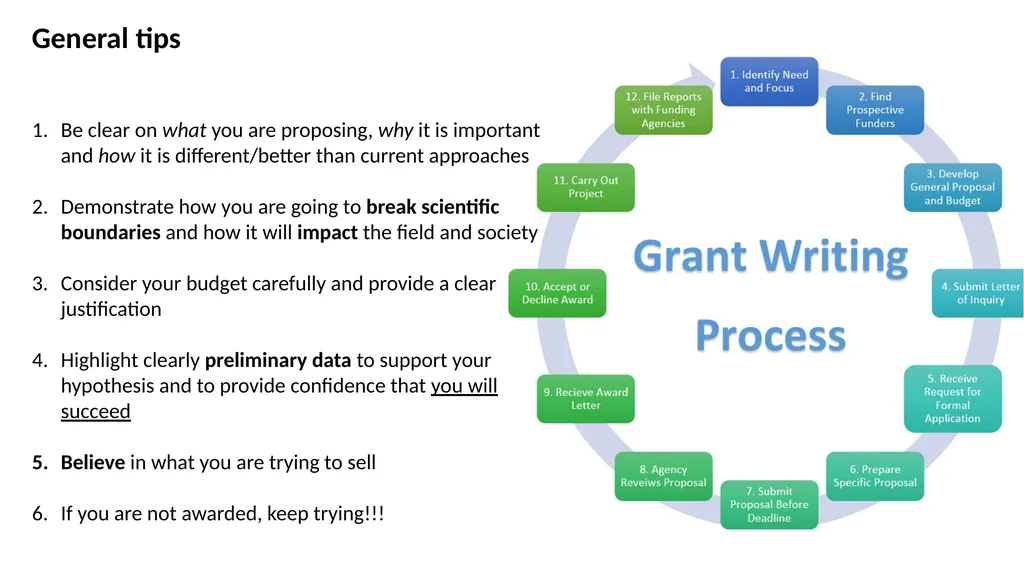
General tips
Be clear on what you are proposing, why it is important and how it is different/better than current approaches
Demonstrate how you are going to break scientific boundaries and how it will impact the field and society
Consider your budget carefully and provide a clear justification
Highlight clearly preliminary data to support your hypothesis and to provide confidence that you will succeed
Believe in what you are trying to sell
If you are not awarded, keep trying!!!<br>
08
General tips……
Break up text with appropriate figures
Clearly identify and highlight your objectives- maybe a text box to highlight this
Present deliverables clearly
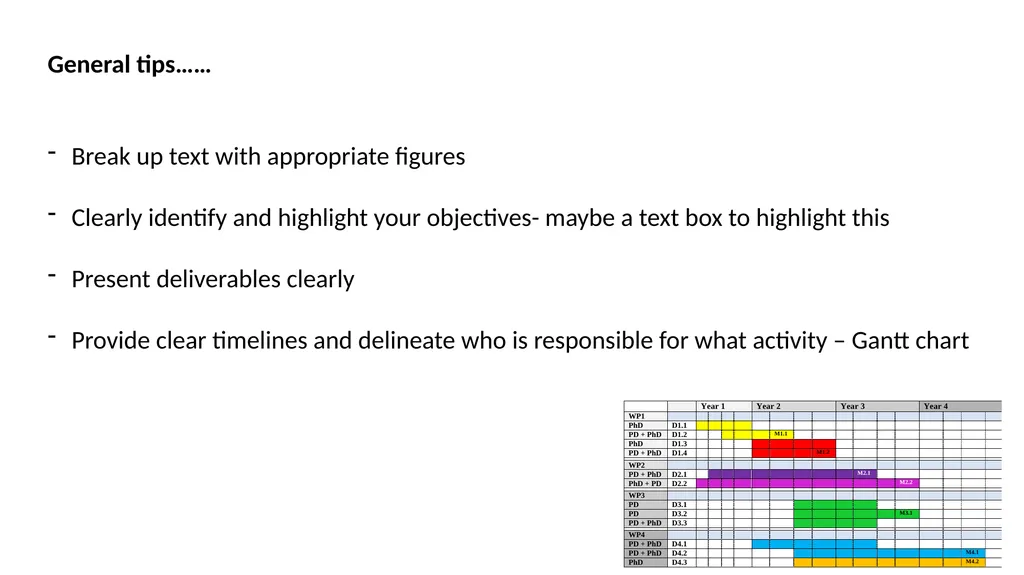
Provide clear timelines and delineate who is responsible for what activity – Gantt chart<br>
09
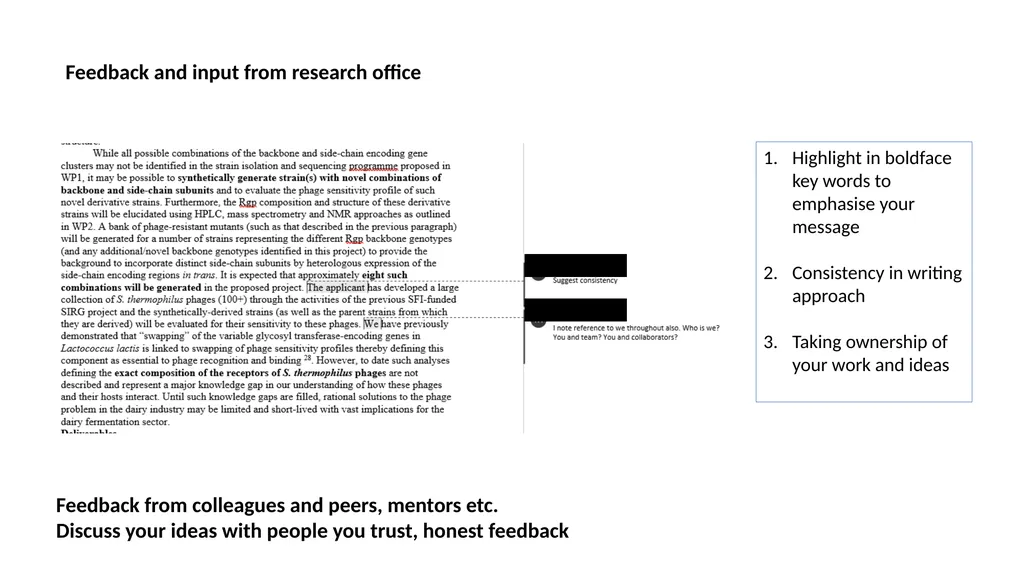
Feedback and input from research office Highlight in boldface key words to emphasise your message
Consistency in writing approach
Taking ownership of your work and ideas Feedback from colleagues and peers, mentors etc.
Discuss your ideas with people you trust, honest feedback<br>
10
Summary
Planning is 90% of the application – informing all stakeholders, scientific plan, knowing the requirements