Ground Test Sub-Tasks Current 27 June 2017 BWXT –
Description: Ground Test Sub-Tasks Current 27 June 2017 BWXT NTP at SSC (current) Licensing General Support Licensing Environmental Report Gap Assessment Subscale Test Component Selection Subscale Test Scaling Analysis Subscale Test IC Approach A3
Related Topics
Download Presentation
"Ground Test Sub-Tasks Current 27 June 2017 BWXT –" is the property of its rightful owner. Permission is granted to download and print the materials on this website for personal, non-commercial use only, and to display it on your personal computer provided you do not modify the materials and that you retain all copyright notices contained in the materials. By downloading content from our website, you accept the terms of this agreement.
Presentation Transcript
slide1. Ground Test Sub-Tasks Current 27 June 2017<br>
slide2. BWXT – NTP at SSC (current) Licensing General Support
Licensing Environmental Report Gap Assessment
Subscale Test Component Selection
Subscale Test Scaling Analysis
Subscale Test I&C Approach
A3 Full Scale Test ROM Estimate Assessment<br>
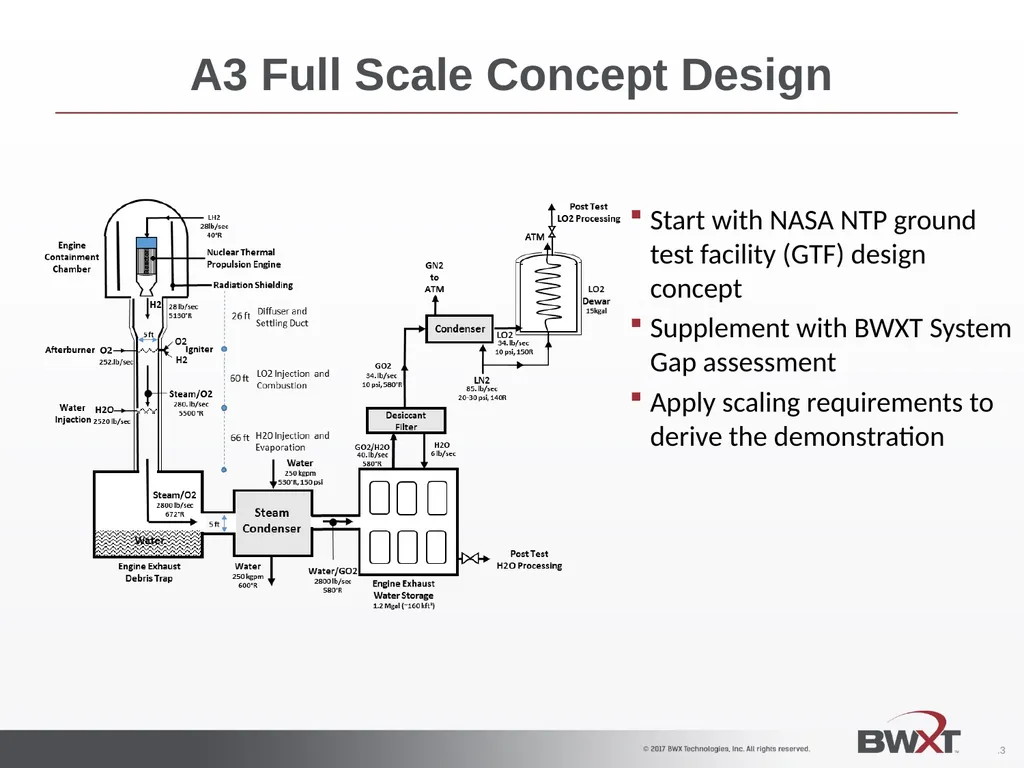
slide3. A3 Full Scale Concept Design Start with NASA NTP ground test facility (GTF) design concept
Supplement with BWXT System Gap assessment
Apply scaling requirements to derive the demonstration<br>
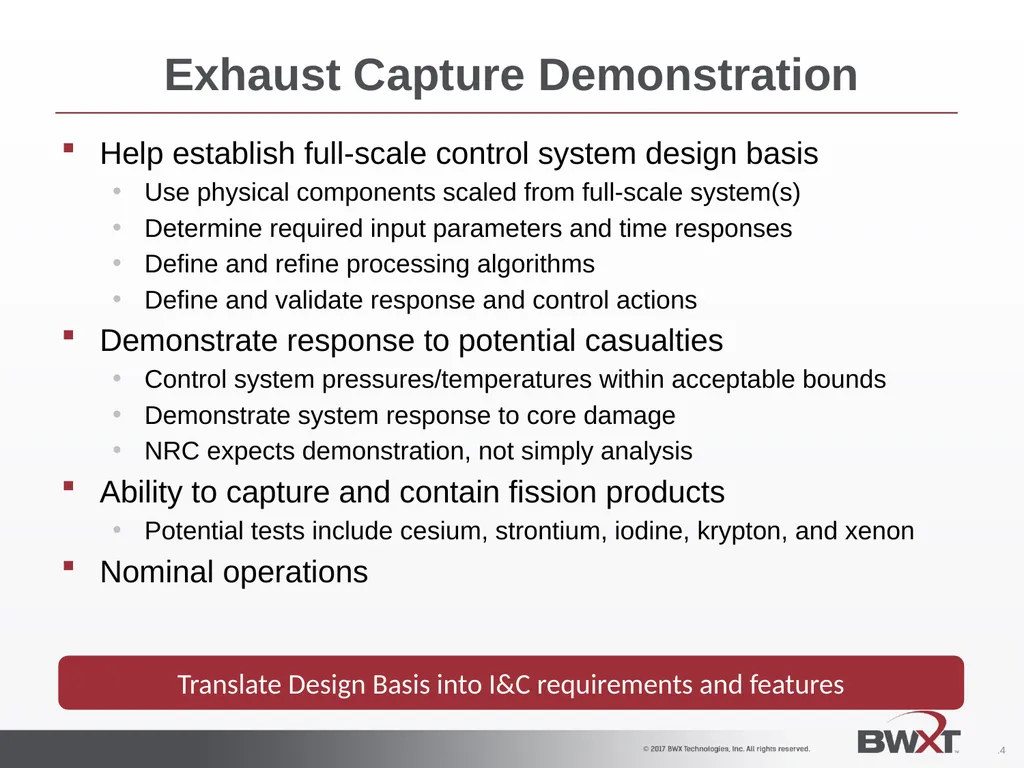
slide4. Exhaust Capture Demonstration Help establish full-scale control system design basis
Use physical components scaled from full-scale system(s)
Determine required input parameters and time responses
Define and refine processing algorithms
Define and validate response and control actions
Demonstrate response to potential casualties
Control system pressures/temperatures within acceptable bounds
Demonstrate system response to core damage
NRC expects demonstration, not simply analysis
Ability to capture and contain fission products
Potential tests include cesium, strontium, iodine, krypton, and xenon
Nominal operations Translate Design Basis into I&C requirements and features<br>
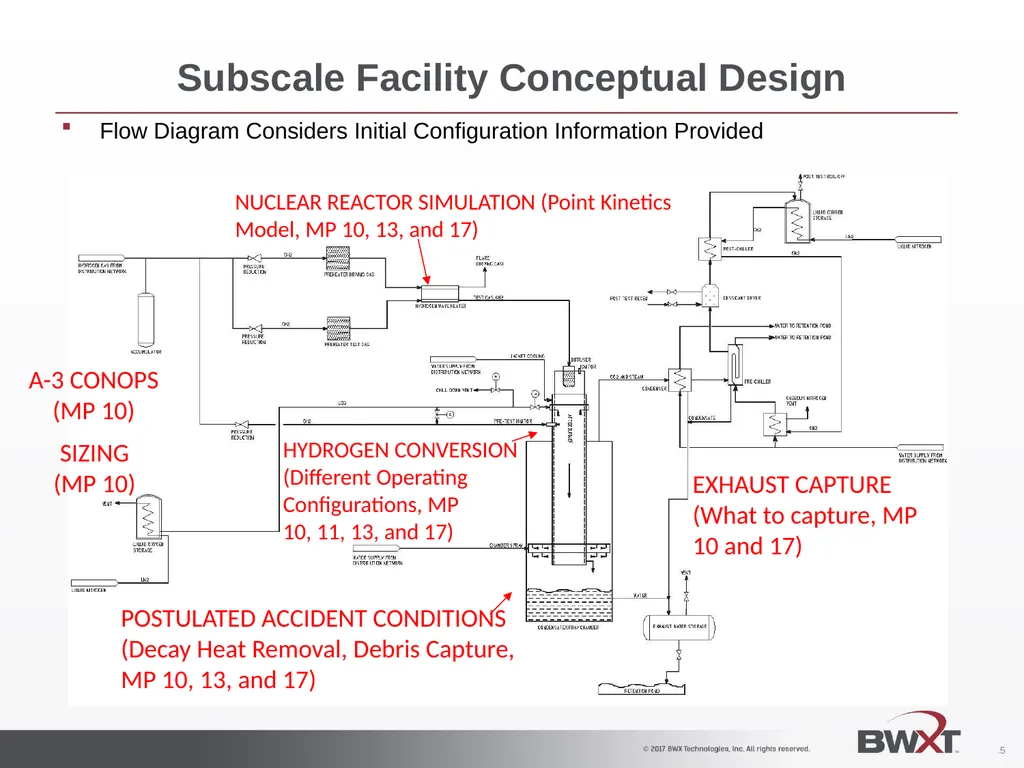
slide5. Flow Diagram Considers Initial Configuration Information Provided Subscale Facility Conceptual Design EXHAUST CAPTURE
(What to capture, MP 10 and 17) NUCLEAR REACTOR SIMULATION (Point Kinetics Model, MP 10, 13, and 17) POSTULATED ACCIDENT CONDITIONS (Decay Heat Removal, Debris Capture, MP 10, 13, and 17) HYDROGEN CONVERSION (Different Operating Configurations, MP
10, 11, 13, and 17) A-3 CONOPS
(MP 10) SIZING
(MP 10)<br>
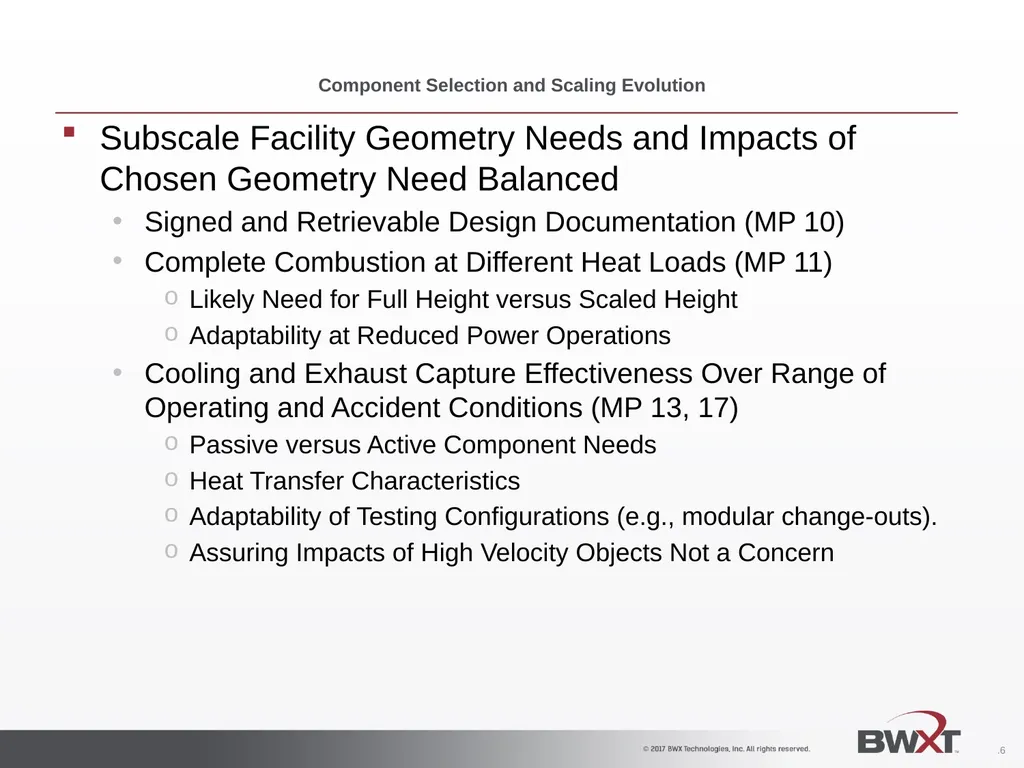
slide6. Subscale Facility Geometry Needs and Impacts of Chosen Geometry Need Balanced
Signed and Retrievable Design Documentation (MP 10)
Complete Combustion at Different Heat Loads (MP 11)
Likely Need for Full Height versus Scaled Height
Adaptability at Reduced Power Operations
Cooling and Exhaust Capture Effectiveness Over Range of Operating and Accident Conditions (MP 13, 17)
Passive versus Active Component Needs
Heat Transfer Characteristics
Adaptability of Testing Configurations (e.g., modular change-outs).
Assuring Impacts of High Velocity Objects Not a Concern Component Selection and Scaling Evolution<br>
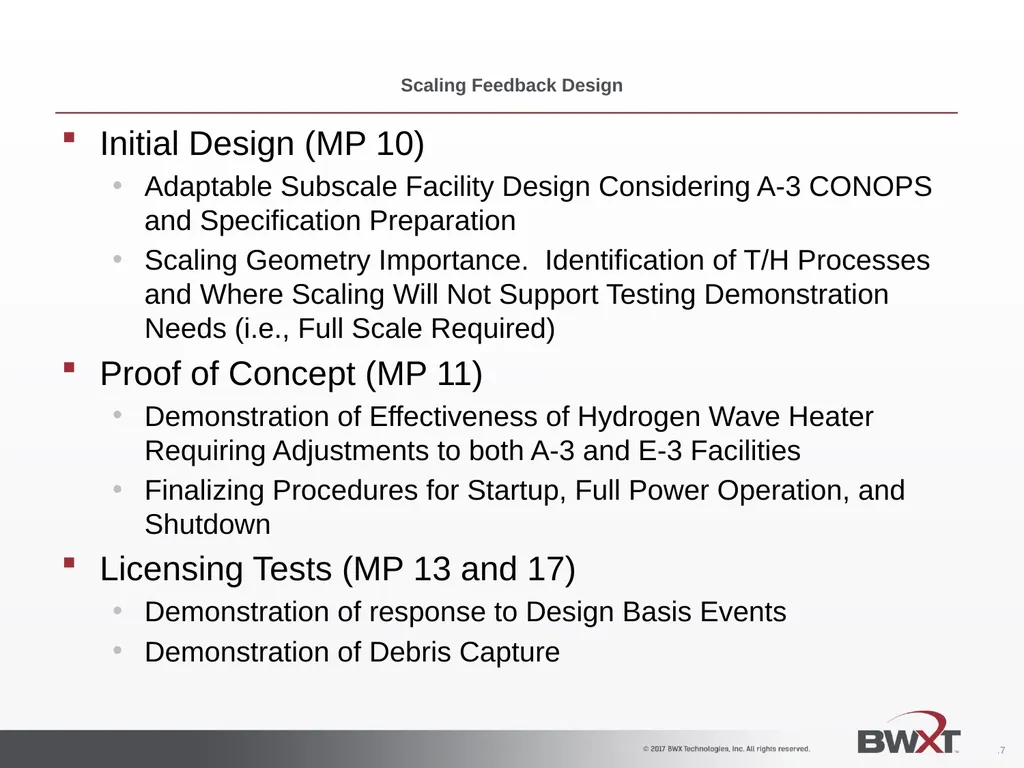
slide7. Initial Design (MP 10)
Adaptable Subscale Facility Design Considering A-3 CONOPS and Specification Preparation
Scaling Geometry Importance. Identification of T/H Processes and Where Scaling Will Not Support Testing Demonstration Needs (i.e., Full Scale Required)
Proof of Concept (MP 11)
Demonstration of Effectiveness of Hydrogen Wave Heater Requiring Adjustments to both A-3 and E-3 Facilities
Finalizing Procedures for Startup, Full Power Operation, and Shutdown
Licensing Tests (MP 13 and 17)
Demonstration of response to Design Basis Events
Demonstration of Debris Capture Scaling Feedback Design<br>

slide2. BWXT – NTP at SSC (current) Licensing General Support
Licensing Environmental Report Gap Assessment
Subscale Test Component Selection
Subscale Test Scaling Analysis
Subscale Test I&C Approach
A3 Full Scale Test ROM Estimate Assessment<br>
slide3. A3 Full Scale Concept Design Start with NASA NTP ground test facility (GTF) design concept
Supplement with BWXT System Gap assessment
Apply scaling requirements to derive the demonstration<br>
slide4. Exhaust Capture Demonstration Help establish full-scale control system design basis
Use physical components scaled from full-scale system(s)
Determine required input parameters and time responses
Define and refine processing algorithms
Define and validate response and control actions
Demonstrate response to potential casualties
Control system pressures/temperatures within acceptable bounds
Demonstrate system response to core damage
NRC expects demonstration, not simply analysis
Ability to capture and contain fission products
Potential tests include cesium, strontium, iodine, krypton, and xenon
Nominal operations Translate Design Basis into I&C requirements and features<br>
slide5. Flow Diagram Considers Initial Configuration Information Provided Subscale Facility Conceptual Design EXHAUST CAPTURE
(What to capture, MP 10 and 17) NUCLEAR REACTOR SIMULATION (Point Kinetics Model, MP 10, 13, and 17) POSTULATED ACCIDENT CONDITIONS (Decay Heat Removal, Debris Capture, MP 10, 13, and 17) HYDROGEN CONVERSION (Different Operating Configurations, MP
10, 11, 13, and 17) A-3 CONOPS
(MP 10) SIZING
(MP 10)<br>
slide6. Subscale Facility Geometry Needs and Impacts of Chosen Geometry Need Balanced
Signed and Retrievable Design Documentation (MP 10)
Complete Combustion at Different Heat Loads (MP 11)
Likely Need for Full Height versus Scaled Height
Adaptability at Reduced Power Operations
Cooling and Exhaust Capture Effectiveness Over Range of Operating and Accident Conditions (MP 13, 17)
Passive versus Active Component Needs
Heat Transfer Characteristics
Adaptability of Testing Configurations (e.g., modular change-outs).
Assuring Impacts of High Velocity Objects Not a Concern Component Selection and Scaling Evolution<br>
slide7. Initial Design (MP 10)
Adaptable Subscale Facility Design Considering A-3 CONOPS and Specification Preparation
Scaling Geometry Importance. Identification of T/H Processes and Where Scaling Will Not Support Testing Demonstration Needs (i.e., Full Scale Required)
Proof of Concept (MP 11)
Demonstration of Effectiveness of Hydrogen Wave Heater Requiring Adjustments to both A-3 and E-3 Facilities
Finalizing Procedures for Startup, Full Power Operation, and Shutdown
Licensing Tests (MP 13 and 17)
Demonstration of response to Design Basis Events
Demonstration of Debris Capture Scaling Feedback Design<br>