Habit 2 Begin with the End in Mind Based on the work Stephen Covey Dont let failure get in your way of success Begin with the end in Mind Imagining the end Do you think people would talk about your resume? How much money you have made?
"Habit #2 Begin with the End in Mind Based on" is the property of its rightful owner. Permission is granted to
download and print the materials on this website for personal, non-commercial use only, and to display it
on your personal computer provided you do not modify the materials and that you retain all copyright
notices contained in the materials. By downloading content from our website, you accept the terms of this
agreement.
Presentation Transcript
01
Habit #2 Begin with the End in Mind Based on the work Stephen Covey<br>
02
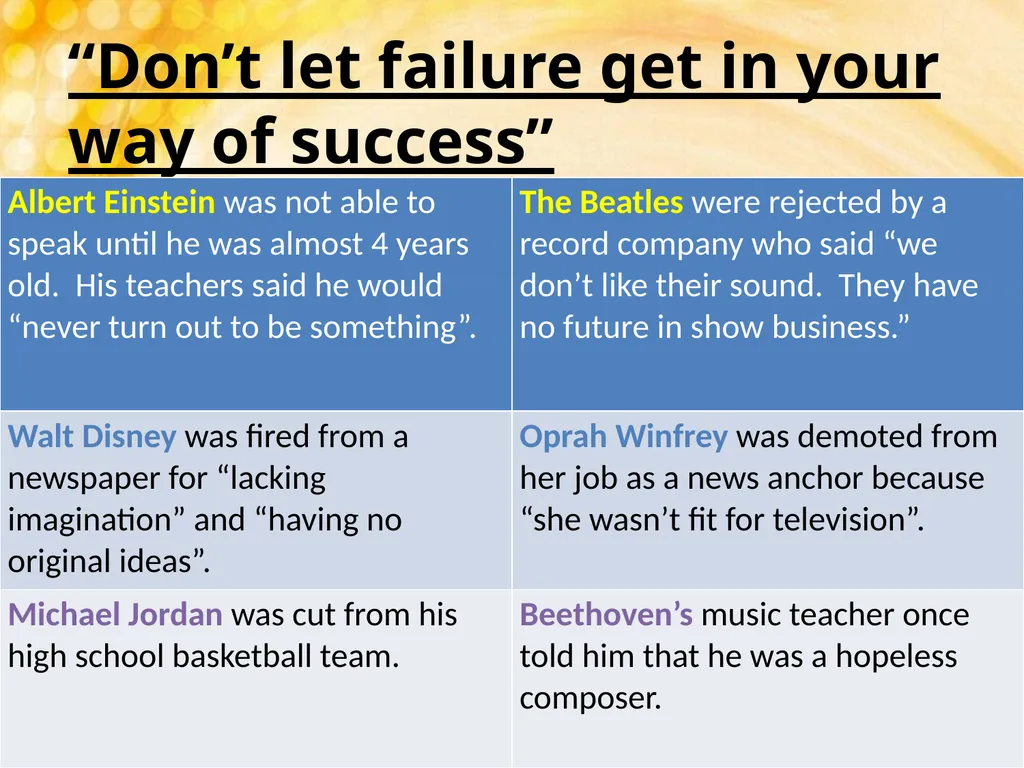
“Don’t let failure get in your way of success”<br>
03
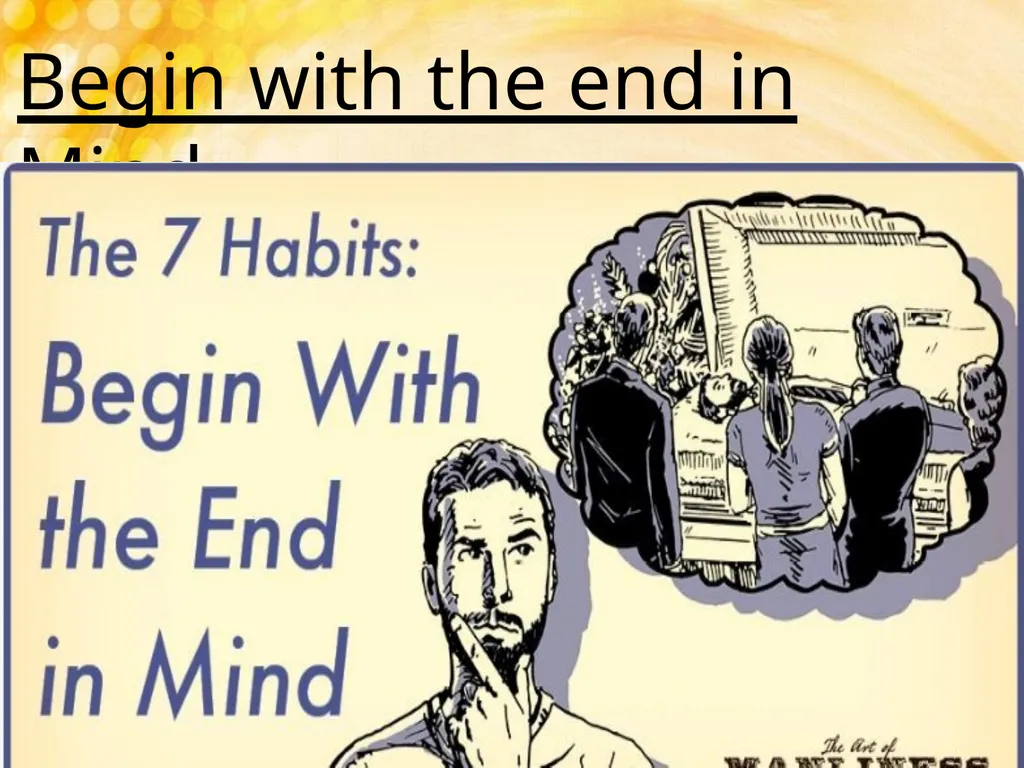
Begin with the end in Mind<br>
04
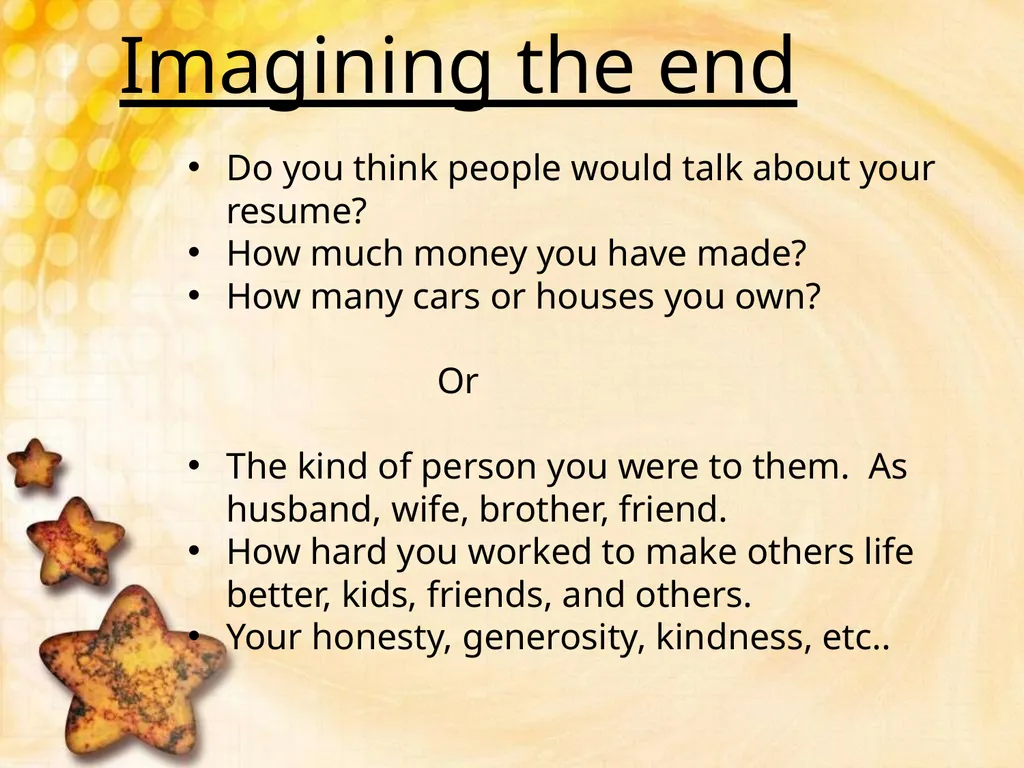
Imagining the end Do you think people would talk about your resume?
How much money you have made?
How many cars or houses you own?
Or
The kind of person you were to them. As husband, wife, brother, friend.
How hard you worked to make others life better, kids, friends, and others.
Your honesty, generosity, kindness, etc..<br>
05
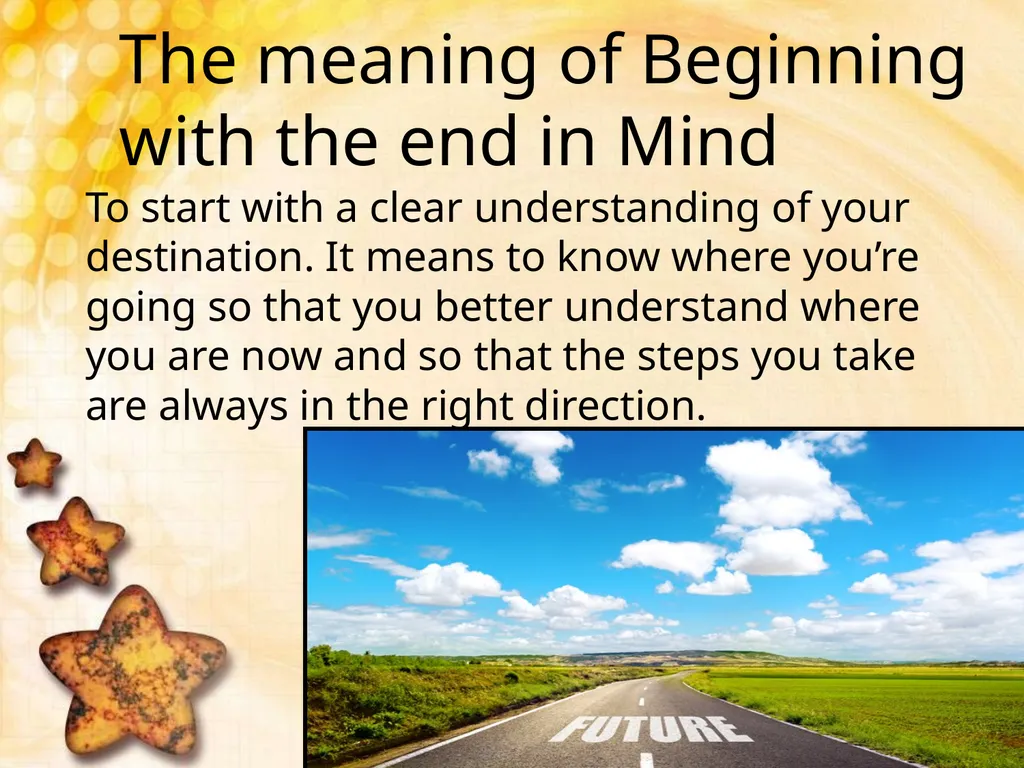
The meaning of Beginning with the end in Mind To start with a clear understanding of your destination. It means to know where you’re going so that you better understand where you are now and so that the steps you take are always in the right direction.<br>
06
The end for you Discussion What is “the end” for you?
What do you hope to be doing ten years from now?
Twenty? Make a list of things you want to do in your life.
(Handouts)<br>
07
Developing a Personal Mission Statement A framework for defining what you want out of life and it works as a guidance for your habits, and decisions.
How you want to contribute to the society.<br>
08
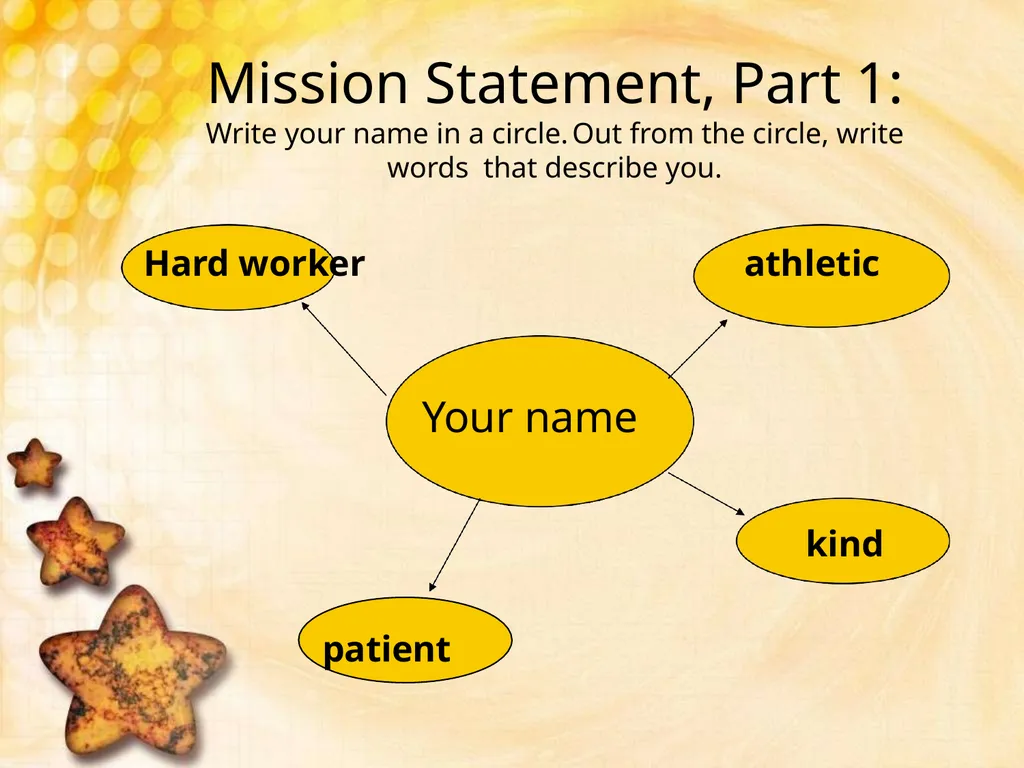
Mission Statement, Part 1:
Write your name in a circle. Out from the circle, write words that describe you. Hard worker athletic
Your name
kind
patient<br>
09
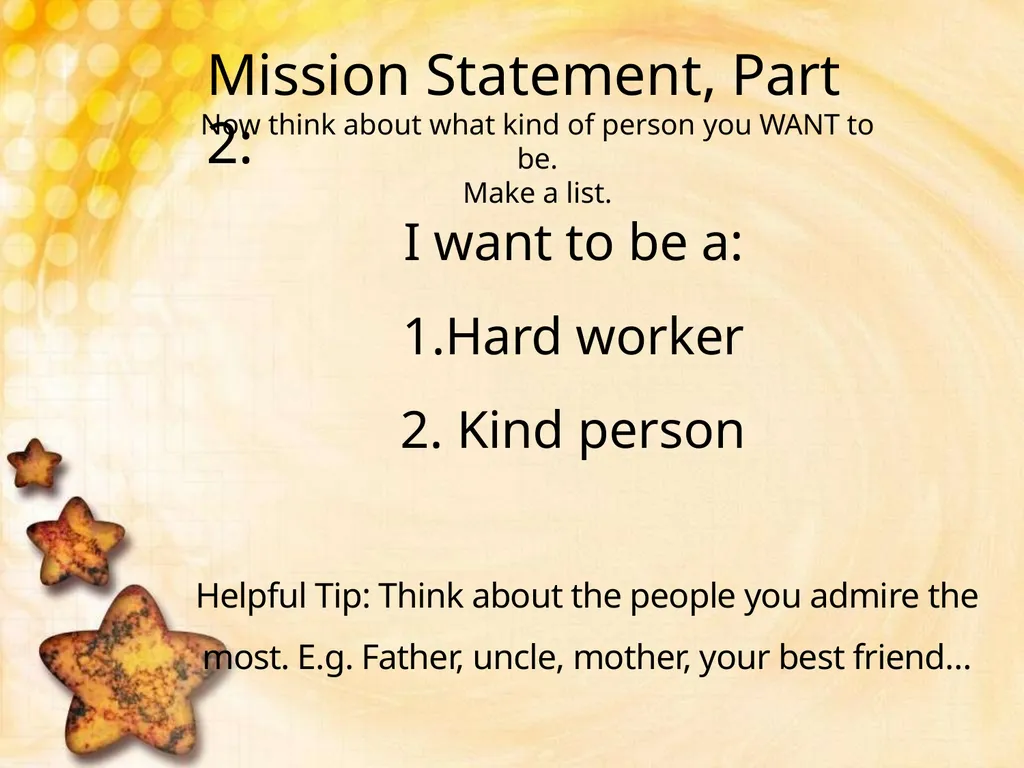
Mission Statement, Part 2: Now think about what kind of person you WANT to be.
Make a list. I want to be a:
1.Hard worker
2. Kind person
Helpful Tip: Think about the people you admire the most. E.g. Father, uncle, mother, your best friend…<br>
10
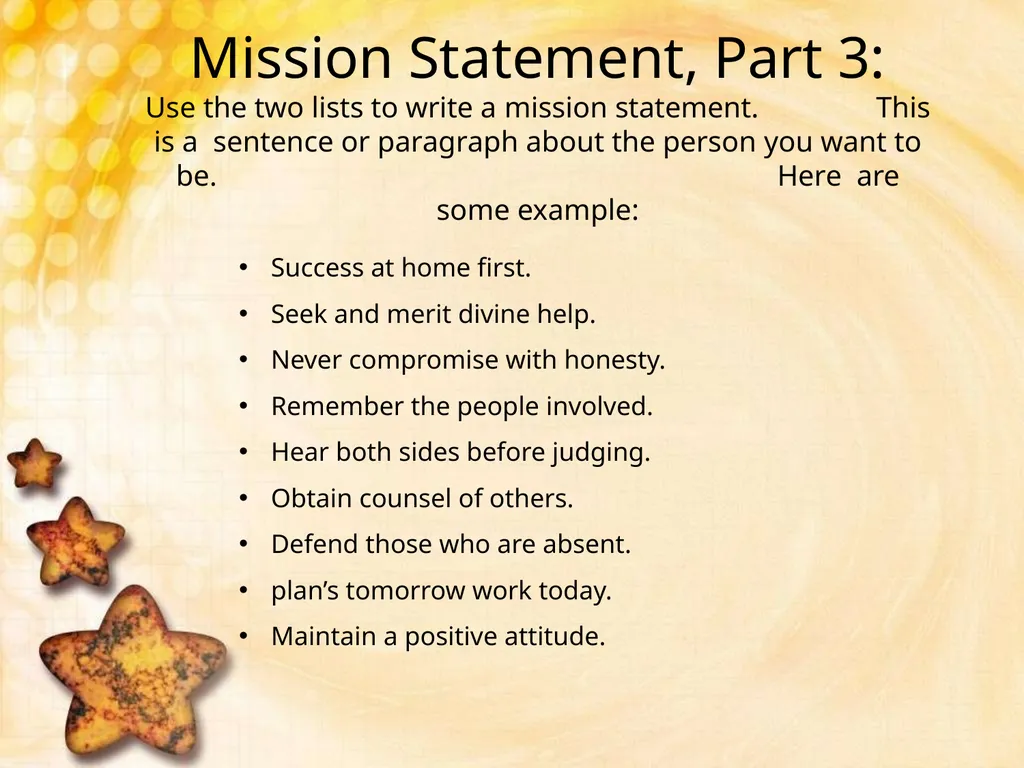
Mission Statement, Part 3:
Use the two lists to write a mission statement. This is a sentence or paragraph about the person you want to be. Here are some example: Success at home first.
Seek and merit divine help.
Never compromise with honesty.
Remember the people involved.
Hear both sides before judging.
Obtain counsel of others.
Defend those who are absent.
plan’s tomorrow work today.
Maintain a positive attitude.<br>
11
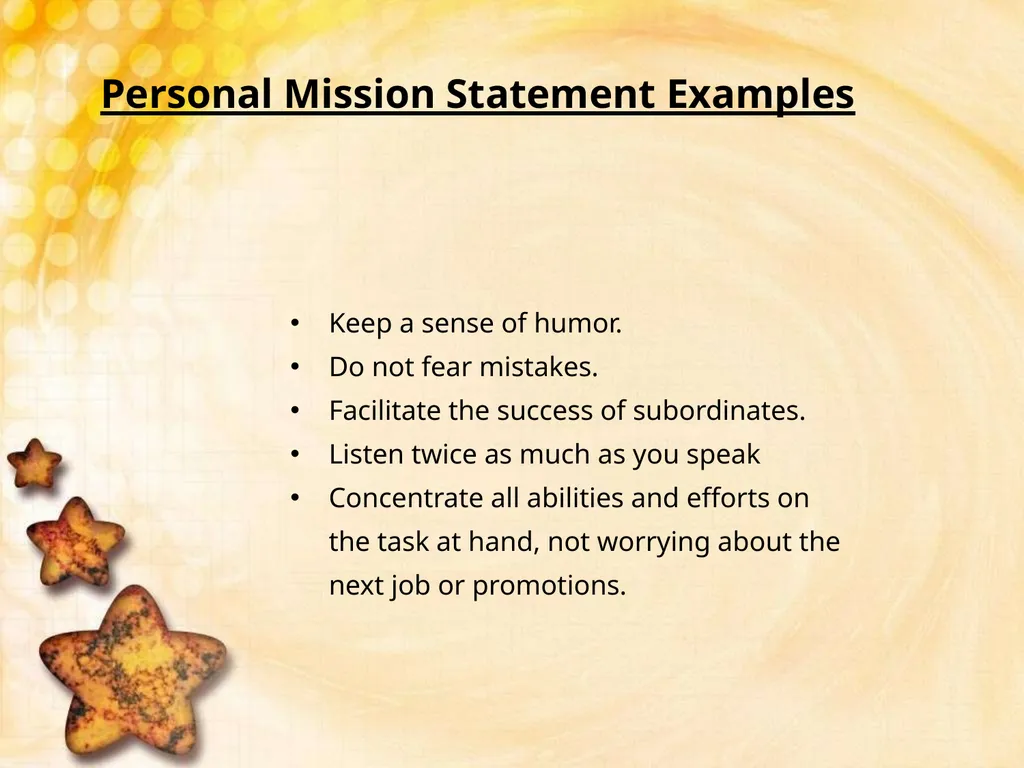
Personal Mission Statement Examples Keep a sense of humor.
Do not fear mistakes.
Facilitate the success of subordinates.
Listen twice as much as you speak
Concentrate all abilities and efforts on the task at hand, not worrying about the next job or promotions.<br>
12
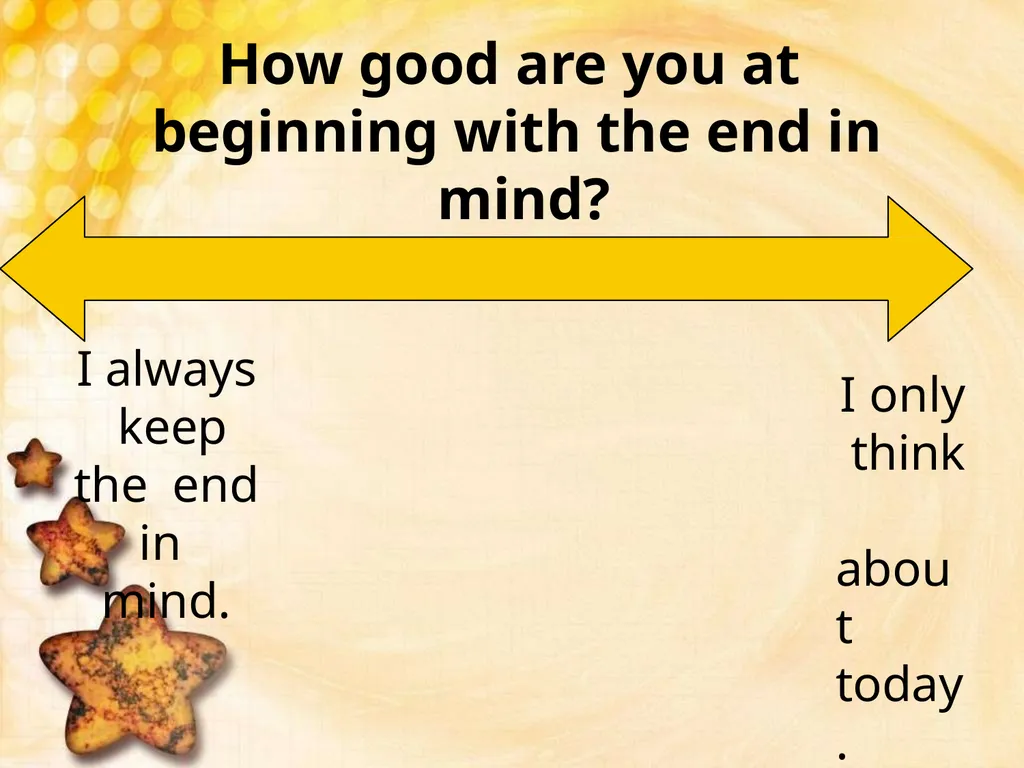
How good are you at beginning with the end in mind? I always keep the end in mind. I only think about today.
Why did you rate
yourself this way?<br>
13
Saying “No” How does saying “no” sometimes help you with “beginning with the end in mind”? What things do you have to say no to?<br>
14
Personal Mission Statement Examples Keep a sense of humor.
Do not fear mistakes.
Facilitate the success of subordinates.
Listen twice as much as you speak
Concentrate all abilities and efforts on the task at hand, not worrying about the next job or promotions.<br>
15
Centered Life What have you centered your life on?
Spouse, work, money, social functions, self, family, pleasure, friend-enemy, religion etc.<br>
16
Credits: This slide show was created by Rebecca Radicchi
using the following resources.
The Seven Habits for Highly Effective People by Stephen Covey
The Seven Habits for Highly Effective Kids by Sean Covey
The Seven Habits for Highly Effective Teens by Sean Covey<br>