HARD TO SHARE DATA: SENSITIVE QUALITATIVE INTERVIEWS Rebecca Campbell, Ph.D. University Distinguished Professor Department of Psychology, Michigan State University About Me Community psychologist Community-based field research Participatory
"HARD TO SHARE DATA: SENSITIVE QUALITATIVE" is the property of its rightful owner. Permission is granted to
download and print the materials on this website for personal, non-commercial use only, and to display it
on your personal computer provided you do not modify the materials and that you retain all copyright
notices contained in the materials. By downloading content from our website, you accept the terms of this
agreement.
Presentation Transcript
01
HARD TO SHARE DATA: SENSITIVE QUALITATIVE INTERVIEWS Rebecca Campbell, Ph.D.
University Distinguished Professor
Department of Psychology, Michigan State University<br>
02
About Me Community psychologist
Community-based field research
Participatory action research
Mixed methods designs
Qualitative data collection
Focal population sexual assault survivors<br>
03
About Me I am open-minded about open science
I believe in transparency as a value & practice
I have shared data in data archives
But I felt no immediacy, urgency . . .<br>
04
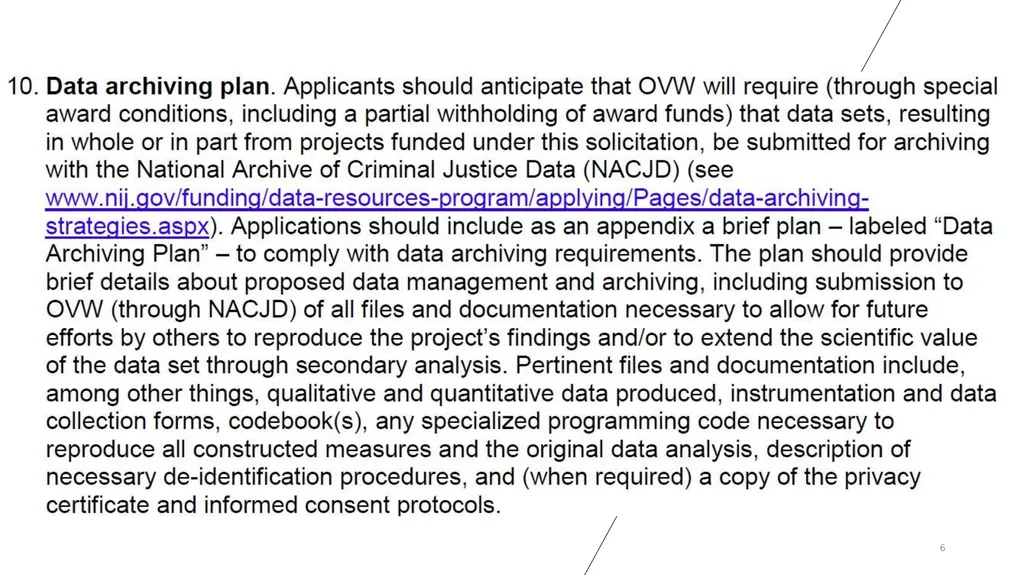
UNTIL … 4<br>
05
6<br>
06
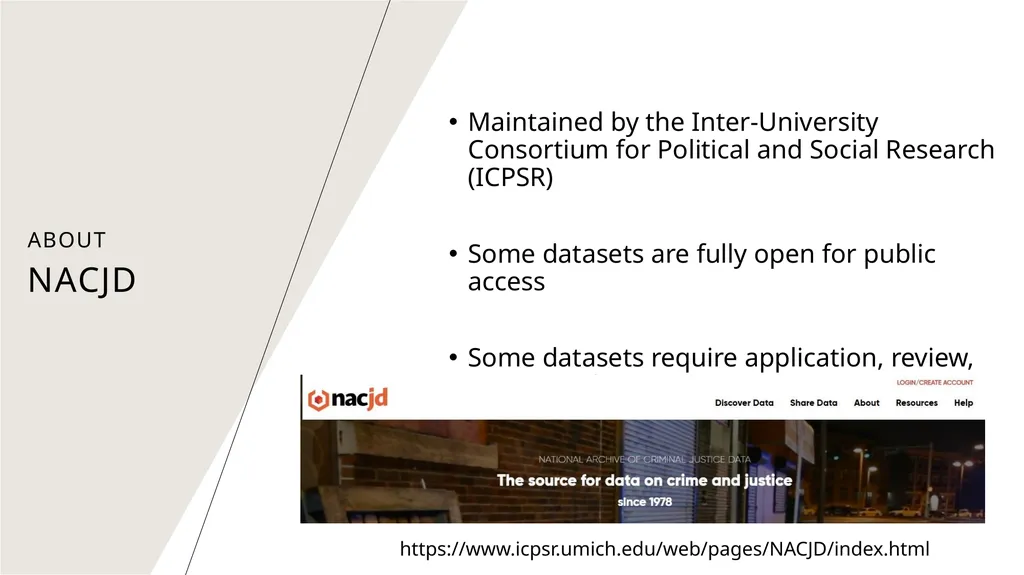
Maintained by the Inter-University Consortium for Political and Social Research (ICPSR)
Some datasets are fully open for public access
Some datasets require application, review, vetting before data are released ABOUT
REMEDIATION CODING FORMED A TEAM Those with and without deep knowledge of interviews<br>
19
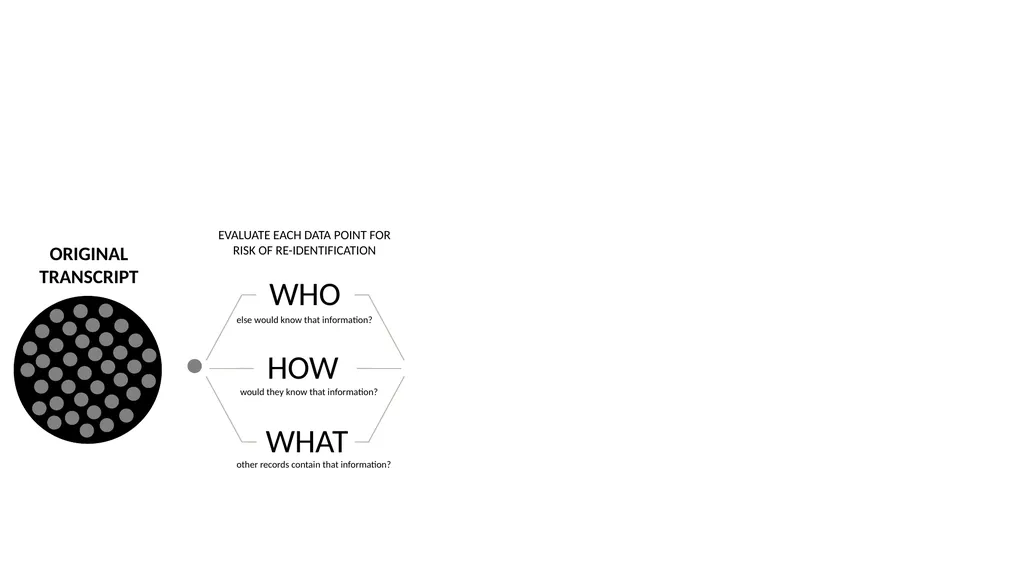
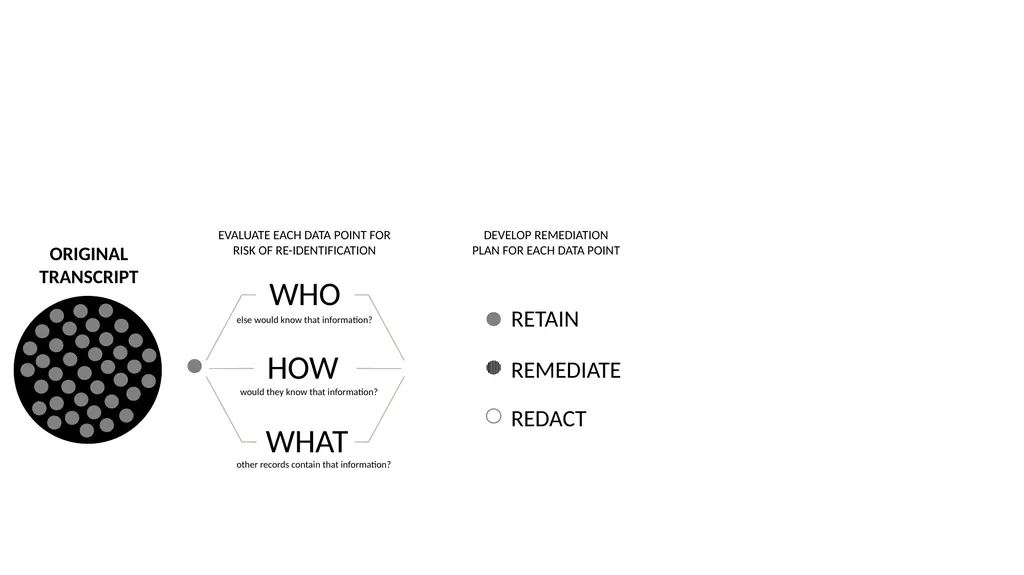
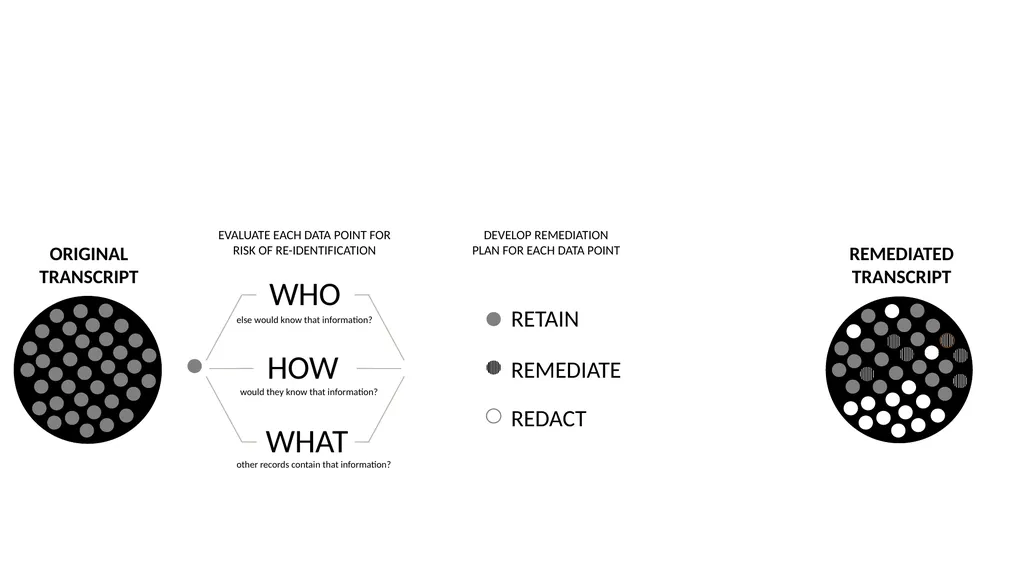
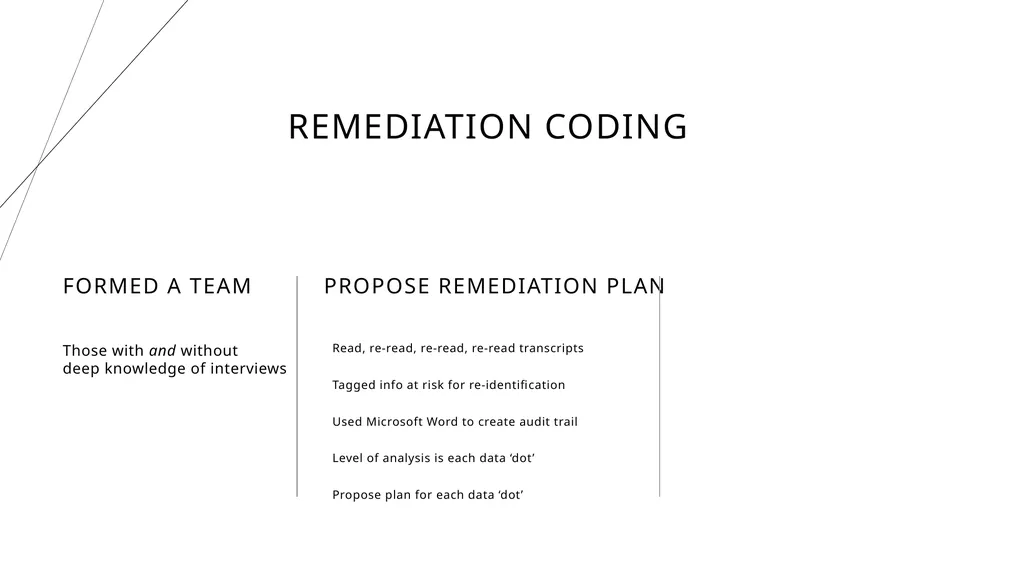
REMEDIATION CODING FORMED A TEAM Those with and without deep knowledge of interviews PROPOSE REMEDIATION PLAN Read, re-read, re-read, re-read transcripts
Tagged info at risk for re-identification
Used Microsoft Word to create audit trail
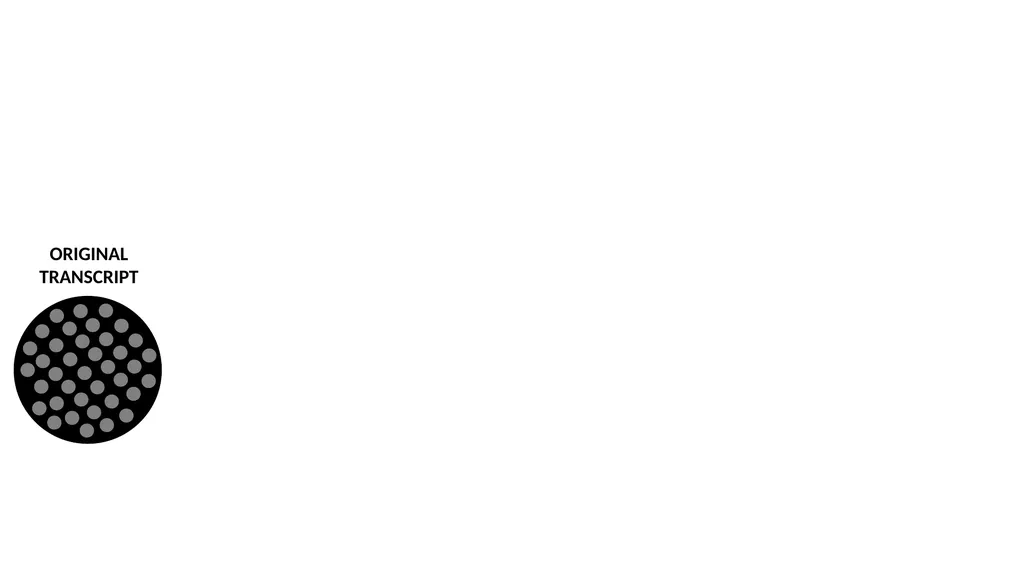
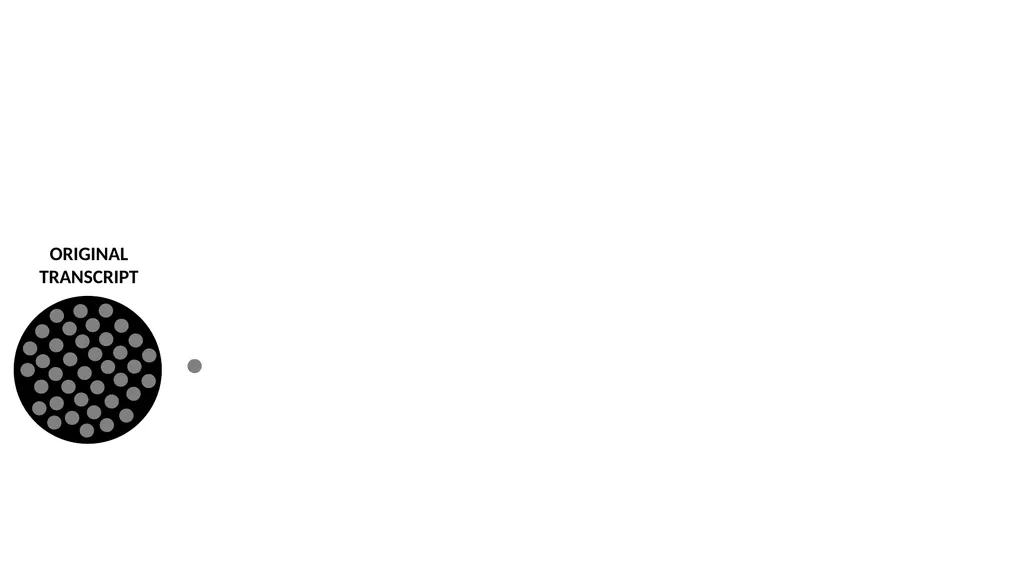
Level of analysis is each data ‘dot’
Propose plan for each data ‘dot’<br>
20
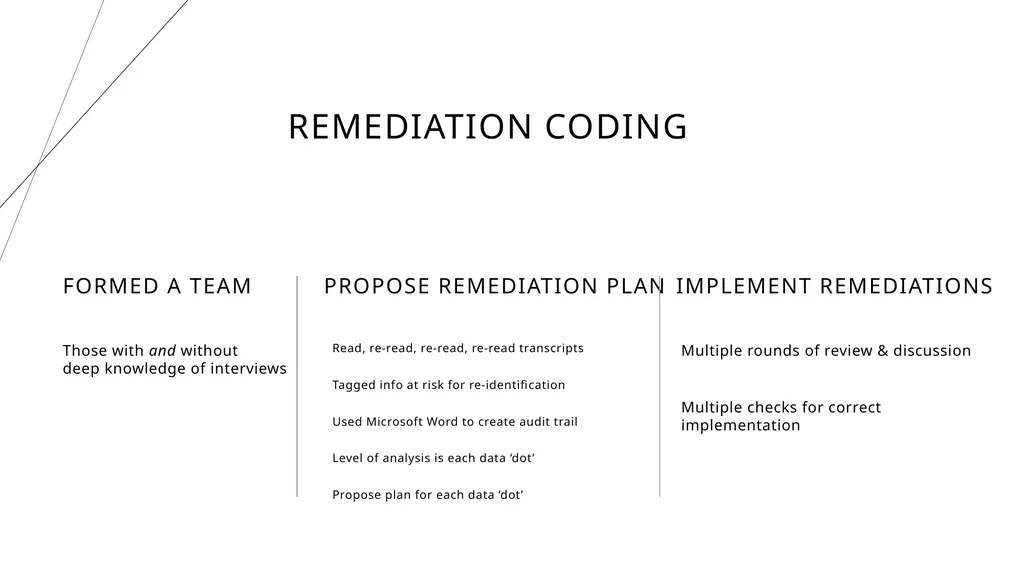
REMEDIATION CODING FORMED A TEAM Those with and without deep knowledge of interviews PROPOSE REMEDIATION PLAN Read, re-read, re-read, re-read transcripts
Tagged info at risk for re-identification
Used Microsoft Word to create audit trail
Level of analysis is each data ‘dot’
Propose plan for each data ‘dot’ IMPLEMENT REMEDIATIONS Multiple rounds of review & discussion
Multiple checks for correct implementation<br>
21
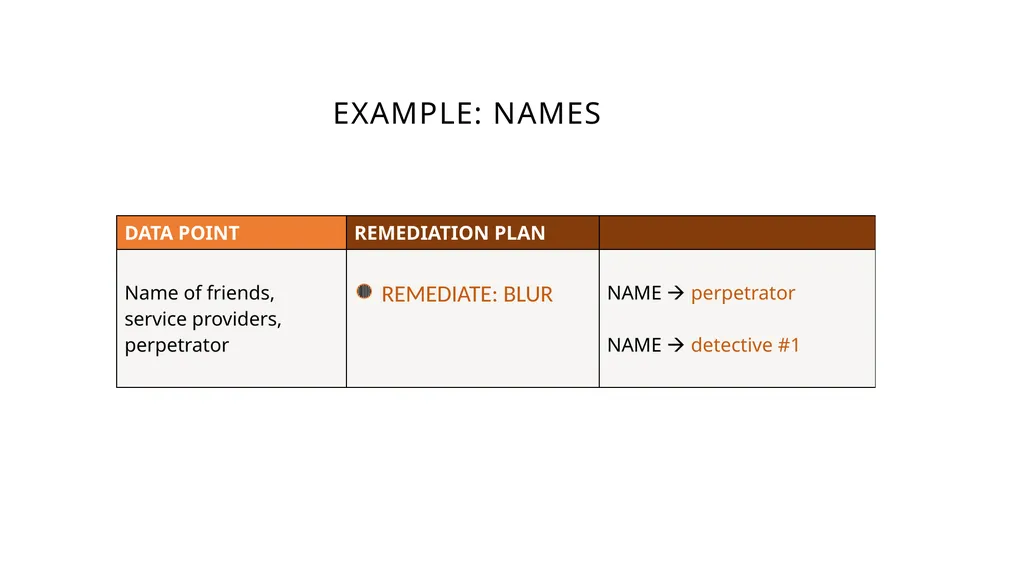
EXAMPLE: NAMES REMEDIATE: BLUR<br>
22
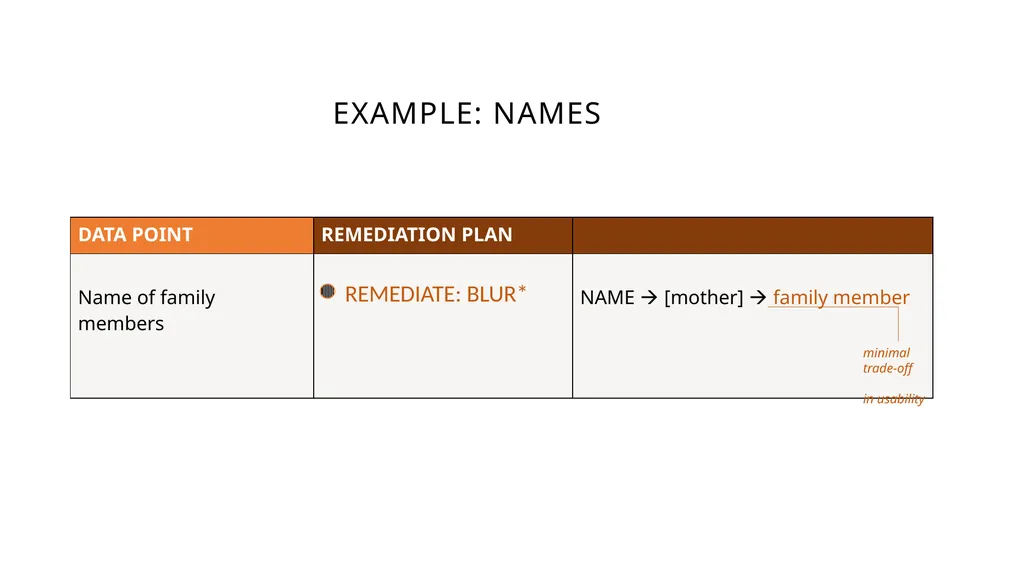
REMEDIATE: BLUR* minimal
trade-off
in usability EXAMPLE: NAMES<br>
23
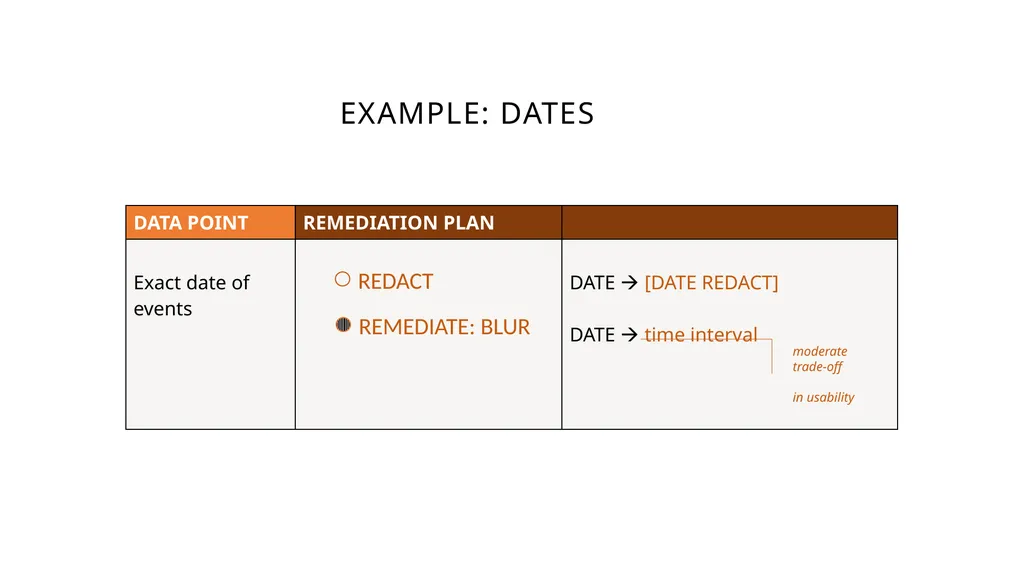
REMEDIATE: BLUR REDACT moderate
trade-off
in usability EXAMPLE: DATES<br>
24
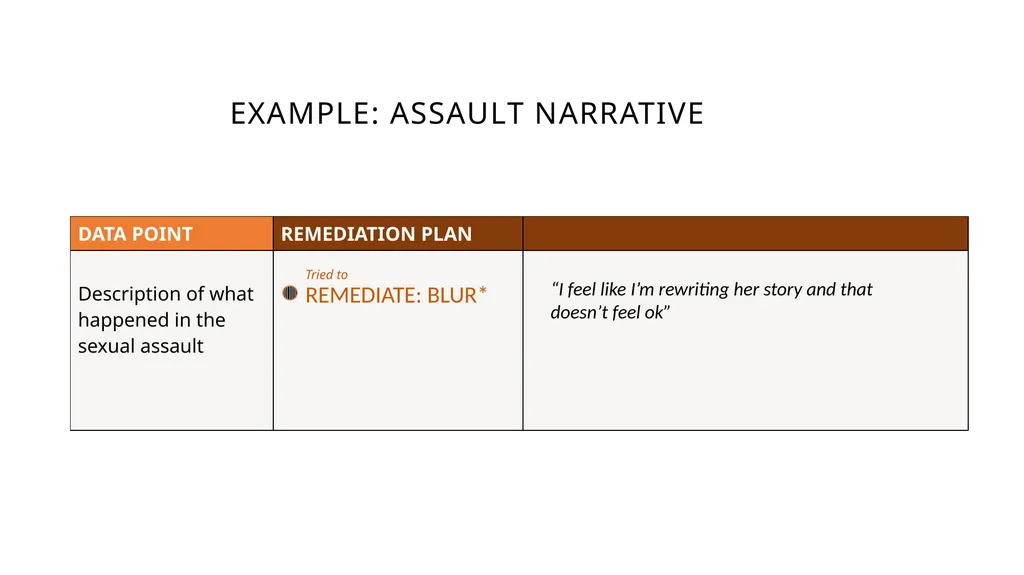
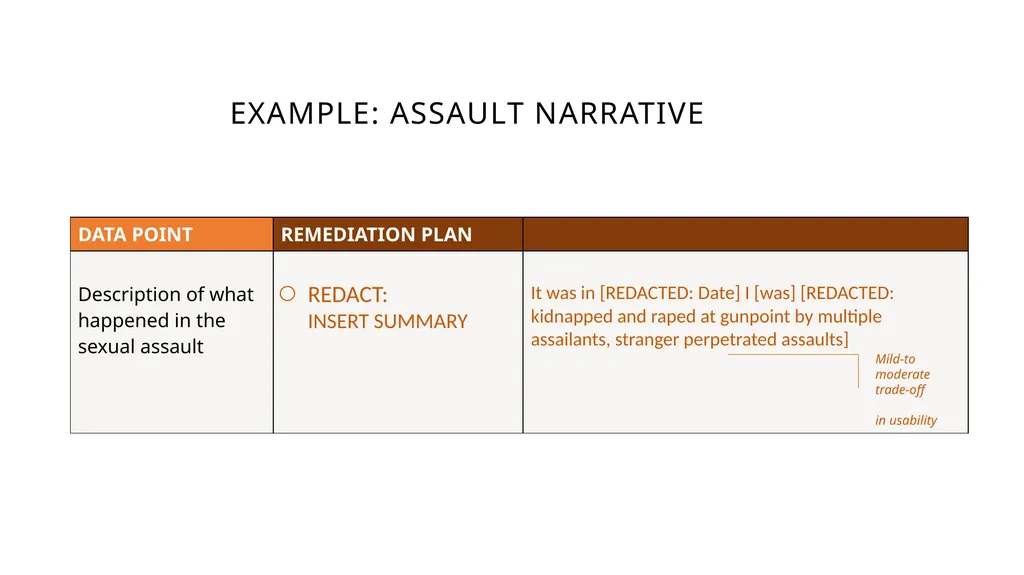
EXAMPLE: assault narrative REMEDIATE: BLUR* Tried to “I feel like I’m rewriting her story and that
doesn’t feel ok”<br>
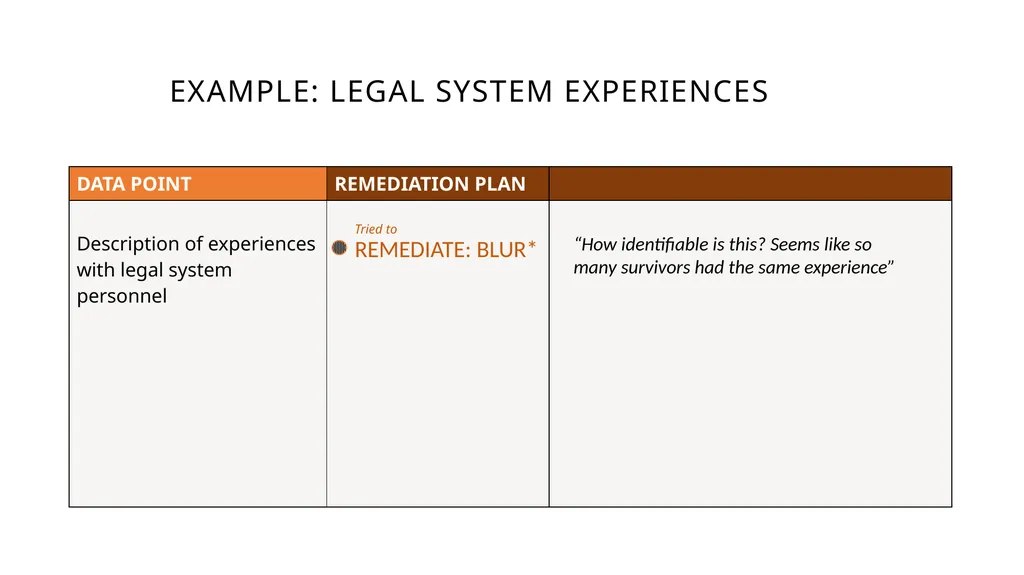
EXAMPLE: LEGAL SYSTEM EXPERIENCES REMEDIATE: BLUR* Tried to “How identifiable is this? Seems like so many survivors had the same experience”<br>
27
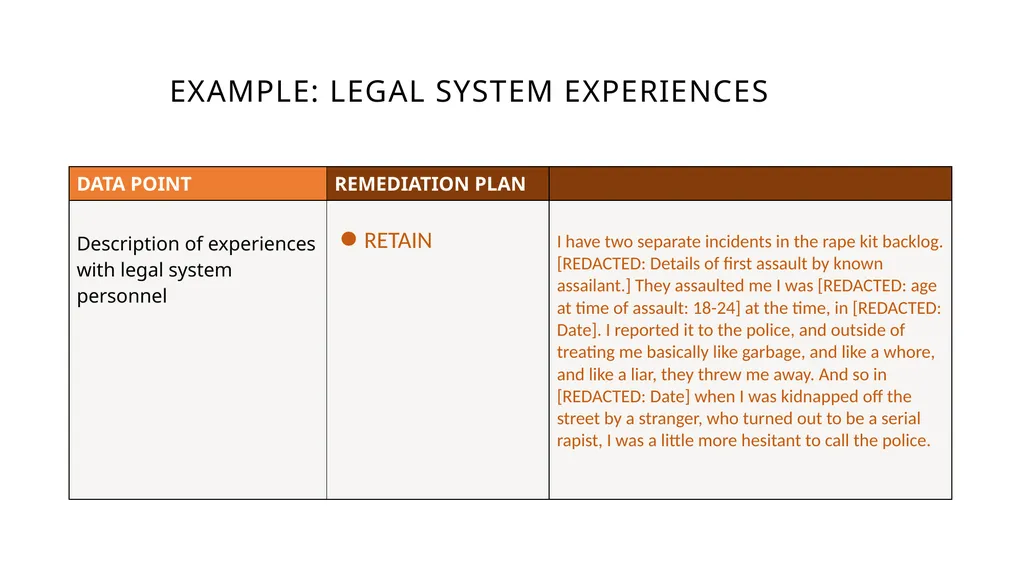
RETAIN EXAMPLE: LEGAL SYSTEM EXPERIENCES<br>
28
PHASE 3 ASSESSING VALIDITY OF THE DE-IDENTIFICATION ANALYSES 33<br>
29
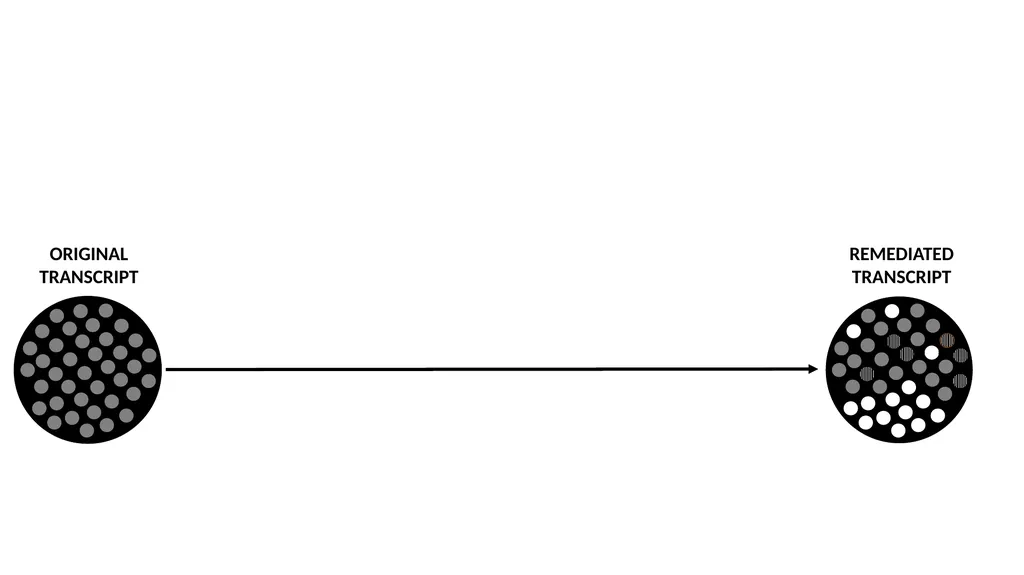
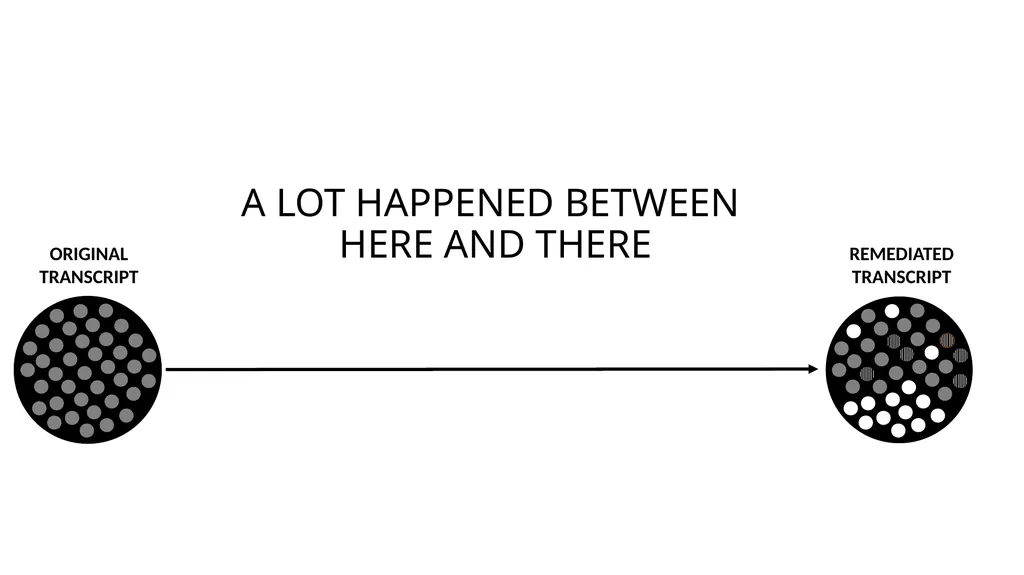
A lot Happened between
here and There<br>
30
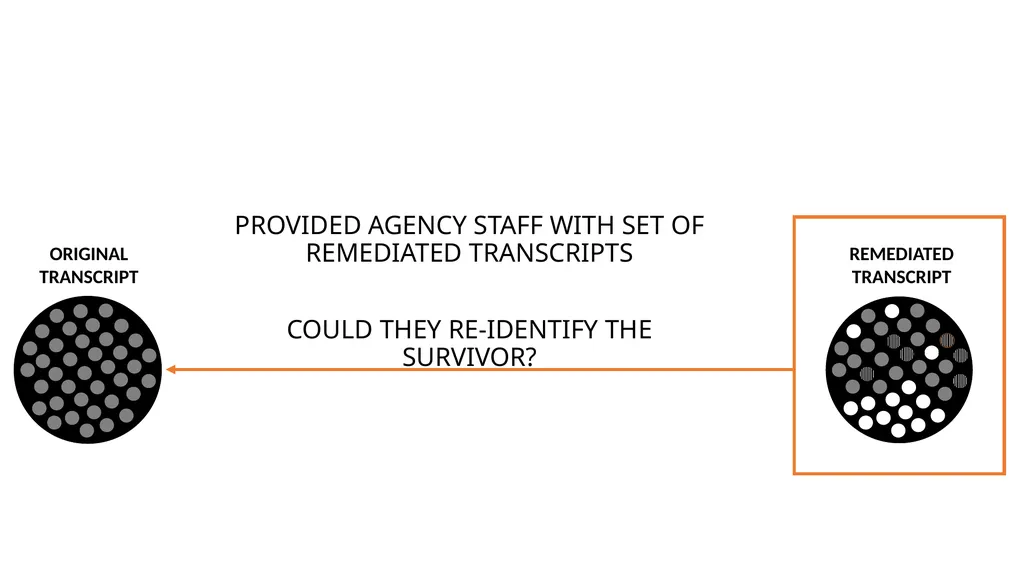
PROVIDED AGENCY STAFF WITH SET OF REMEDIATED TRANSCRIPTS
COULD THEY RE-IDENTIFY THE SURVIVOR?<br>
31
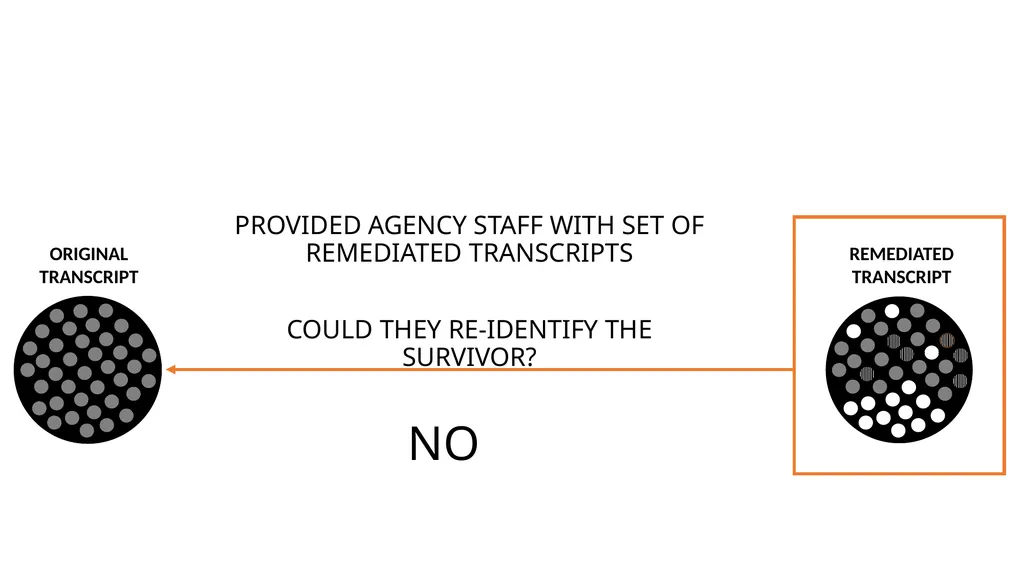
PROVIDED AGENCY STAFF WITH SET OF REMEDIATED TRANSCRIPTS
COULD THEY RE-IDENTIFY THE SURVIVOR? No<br>
32
REFLECTIONS 38<br>
33
REFLECTIONS Risks are relative we need tailored & contextualized approaches for the type of research and population
What can be automated? What must be reviewed by people?
How can community stakeholders & participants be involved (if they want to be)?<br>
34
THANK YOU!! rmc@msu.edu<br>
35
THANK YOU!! McKenzie Javorka, Ph.D. University of Montana Jasmine Engleton, MA Michigan State University Kathryn Fishwick, MA Wichita State University Katie Gregory, Ph.D. Michigan State University Rachael Goodman-Williams, Ph.D. Wichita State University<br>