Heat Stress Indices HOTHAPS December 2011 Why does
Description: Heat Stress Indices HOTHAPS December 2011 Why does everyone use Ta? In the ICB most speakers used Ta (air temperature) in discussing heat stress. A few used WBGT, AT, UTCI Why? Why are heat stress indicies not used? Unfamiliar People
Related Topics
Download Presentation
"Heat Stress Indices HOTHAPS December 2011 Why does" is the property of its rightful owner. Permission is granted to download and print the materials on this website for personal, non-commercial use only, and to display it on your personal computer provided you do not modify the materials and that you retain all copyright notices contained in the materials. By downloading content from our website, you accept the terms of this agreement.
Presentation Transcript
slide1. Heat Stress Indices HOTHAPS December 2011<br>
slide2. Why does “everyone” use Ta? In the ICB most speakers used Ta (air temperature) in discussing heat stress.
A few used WBGT, AT, UTCI
Why?<br>
slide3. Why are heat stress indicies not used? Unfamiliar
People understand temperature but not heat
Too complex
No one index suits all purposes
We argue
Some have a bad history
Eurocentric and USA-centric<br>
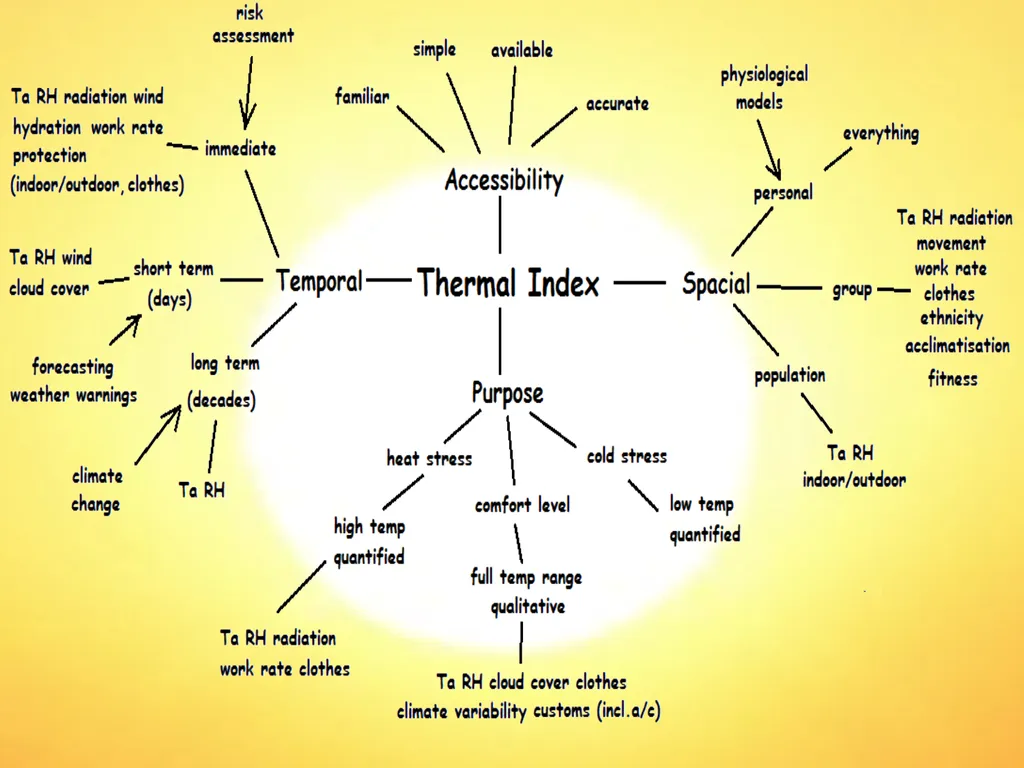
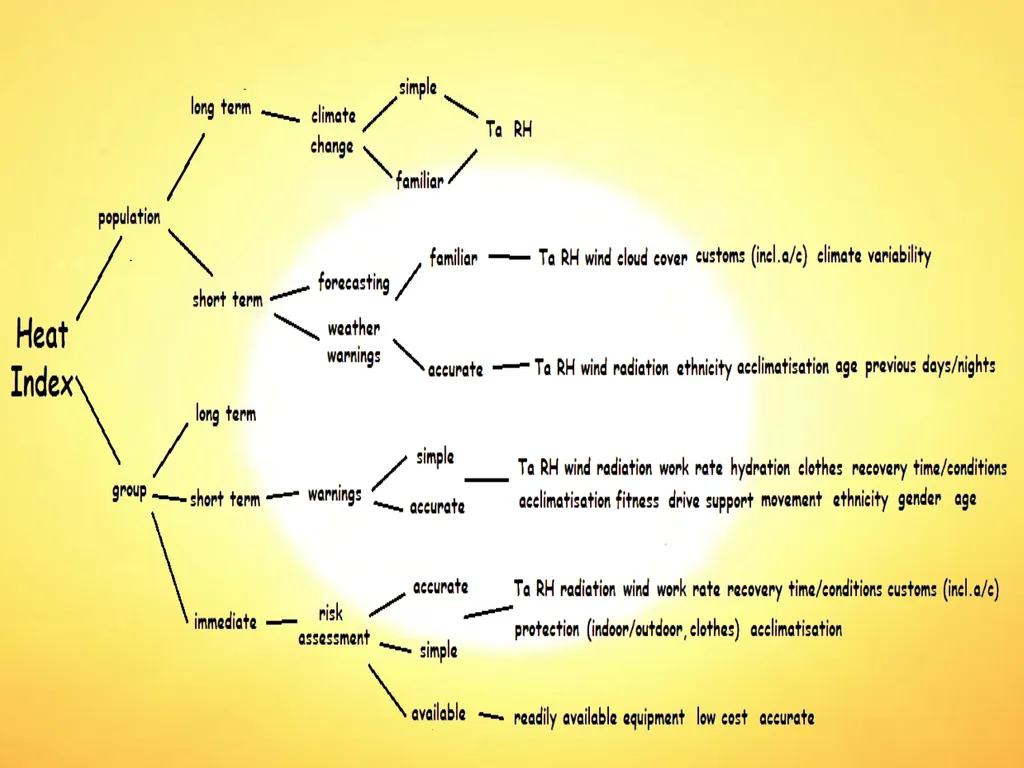
slide4. Outline What does a good heat index look like?
What are the alternatives:
Choose a current index
Modify WBGT
Modify UTCI
Use an alternative (AT)
Use all current indexes
Invent a new index<br>
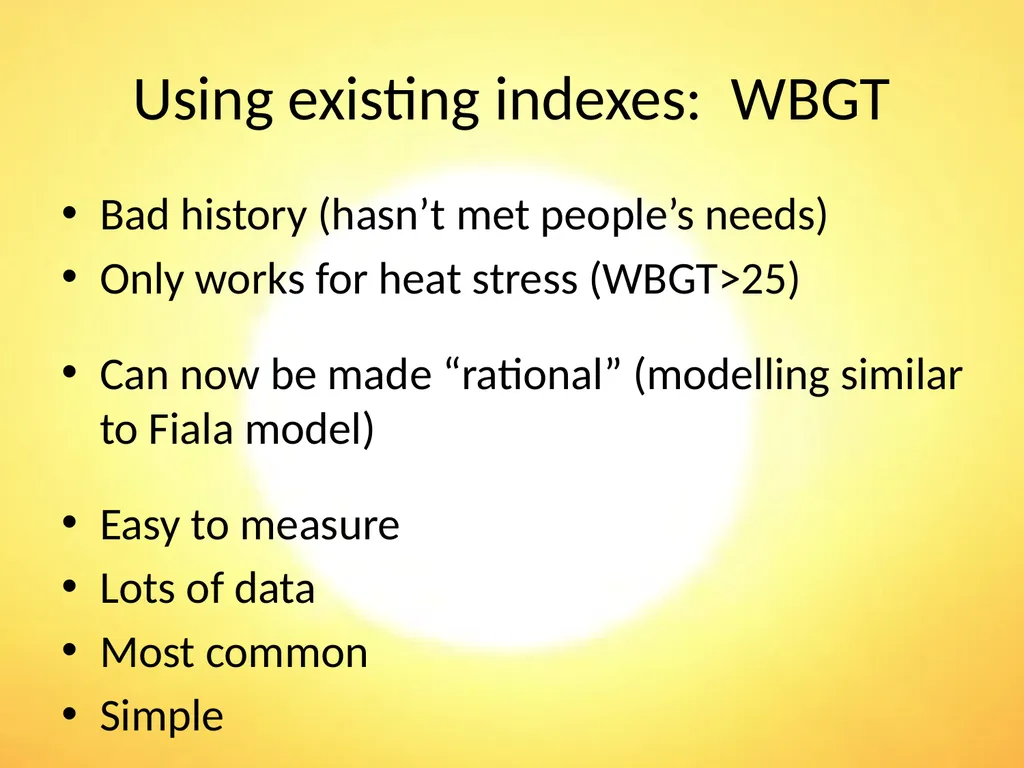
slide7. Using existing indexes: WBGT Bad history (hasn’t met people’s needs)
Only works for heat stress (WBGT>25)
Can now be made “rational” (modelling similar to Fiala model)
Easy to measure
Lots of data
Most common
Simple<br>
slide8. You can make any heat index rational Same process as used by Fiala for people but its less complicated with objects.<br>
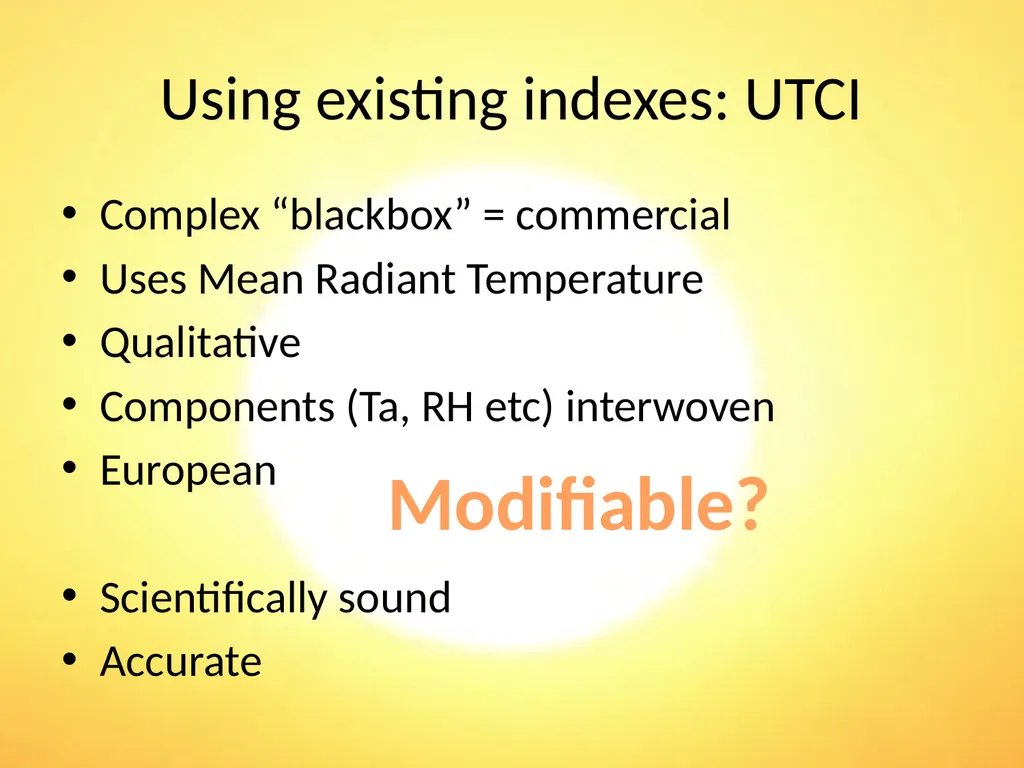
slide9. Using existing indexes: UTCI Complex “blackbox” = commercial
Uses Mean Radiant Temperature
Qualitative
Components (Ta, RH etc) interwoven
European
Scientifically sound
Accurate Modifiable?<br>
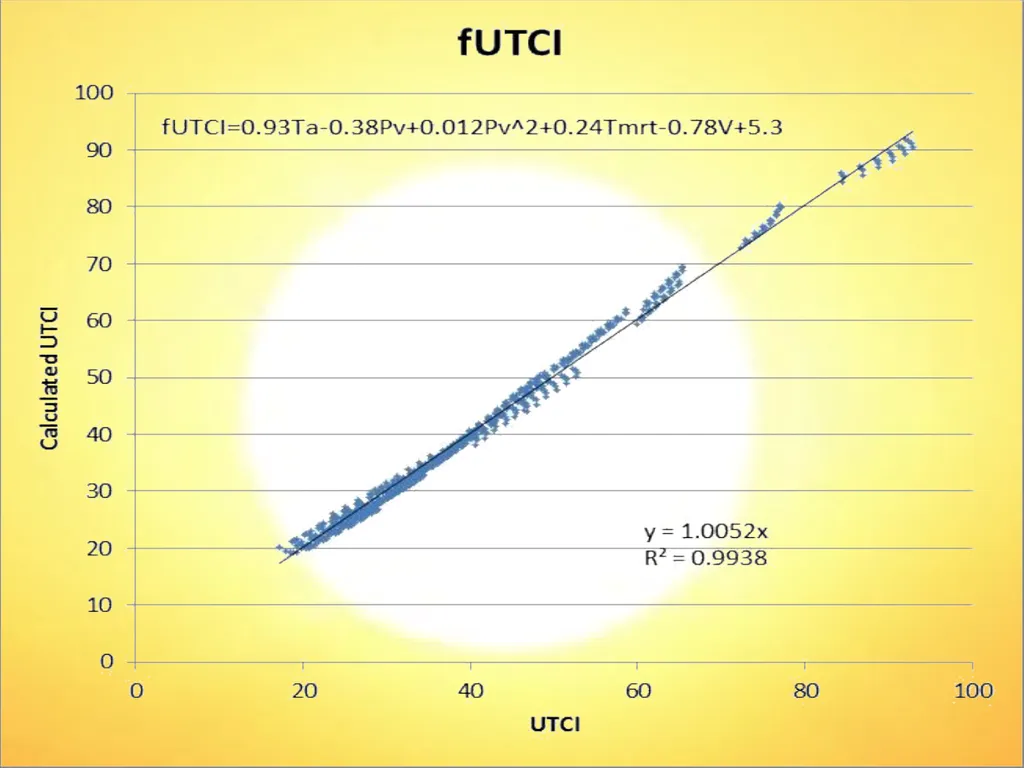
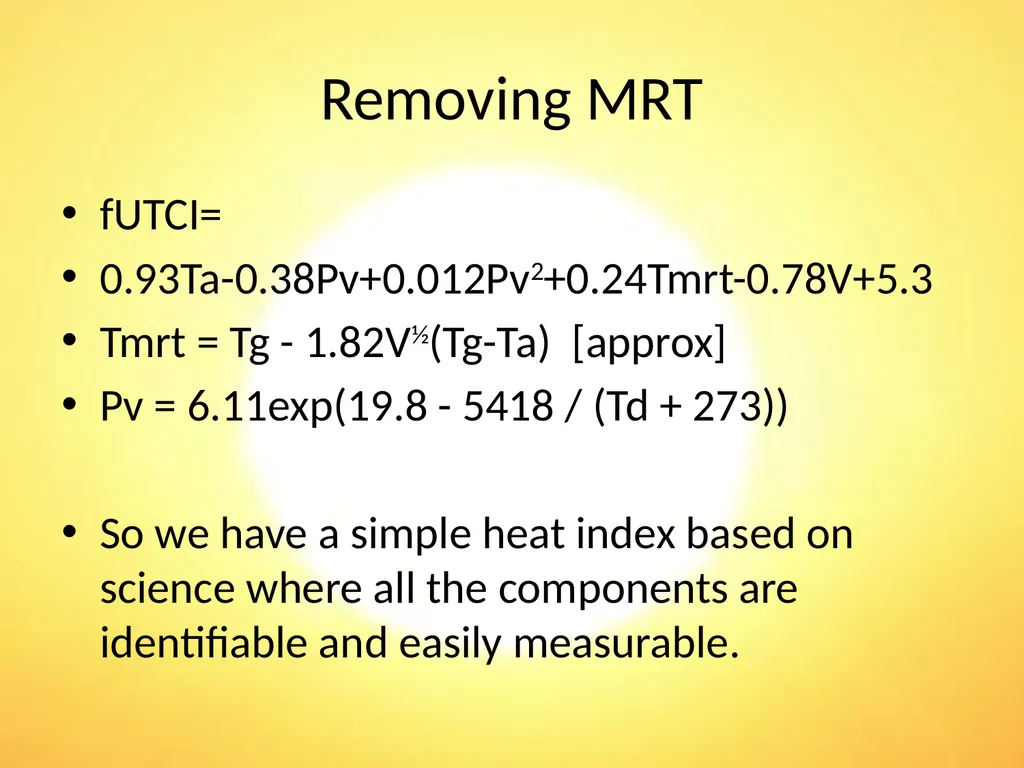
slide11. Removing MRT fUTCI=
0.93Ta-0.38Pv+0.012Pv2+0.24Tmrt-0.78V+5.3
Tmrt = Tg - 1.82V½(Tg-Ta) [approx]
Pv = 6.11exp(19.8 - 5418 / (Td + 273))
So we have a simple heat index based on science where all the components are identifiable and easily measurable.<br>
slide12. Can we use all heat indexes? Can reduce every heat index to its components
except if it isn’t sensitive to one or the other.
We need to supply readily accessible conversions
We probably still need “one” main one.<br>
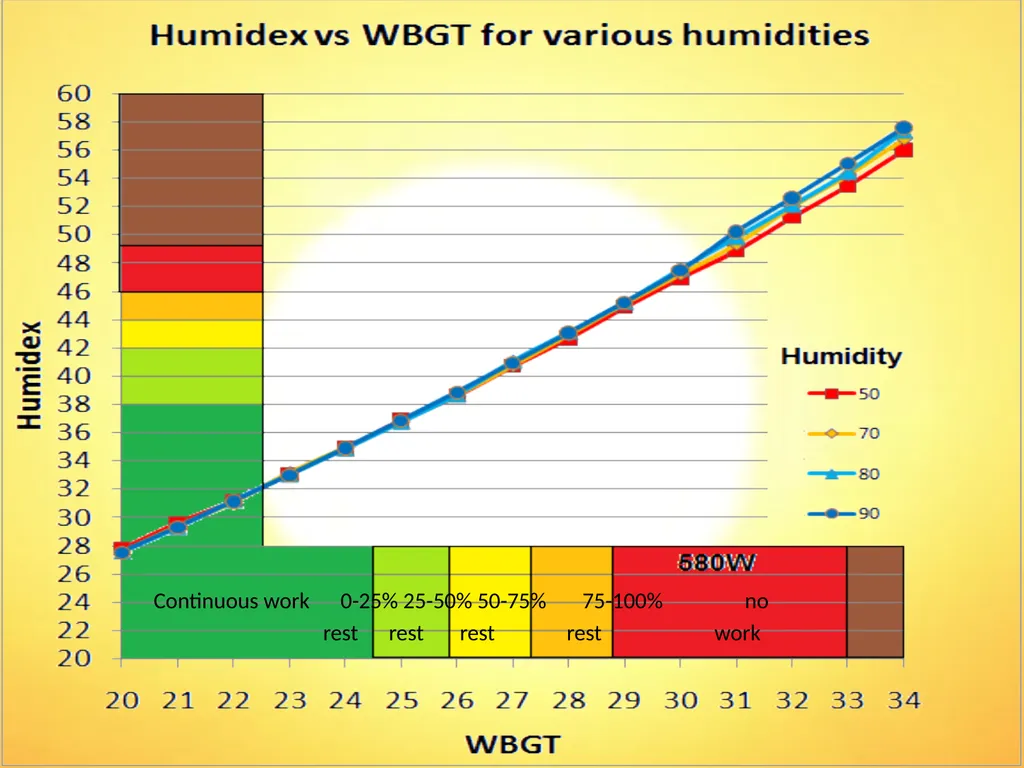
slide14. Continuous work 0-25% 25-50% 50-75% 75-100% no
rest rest rest rest work<br>
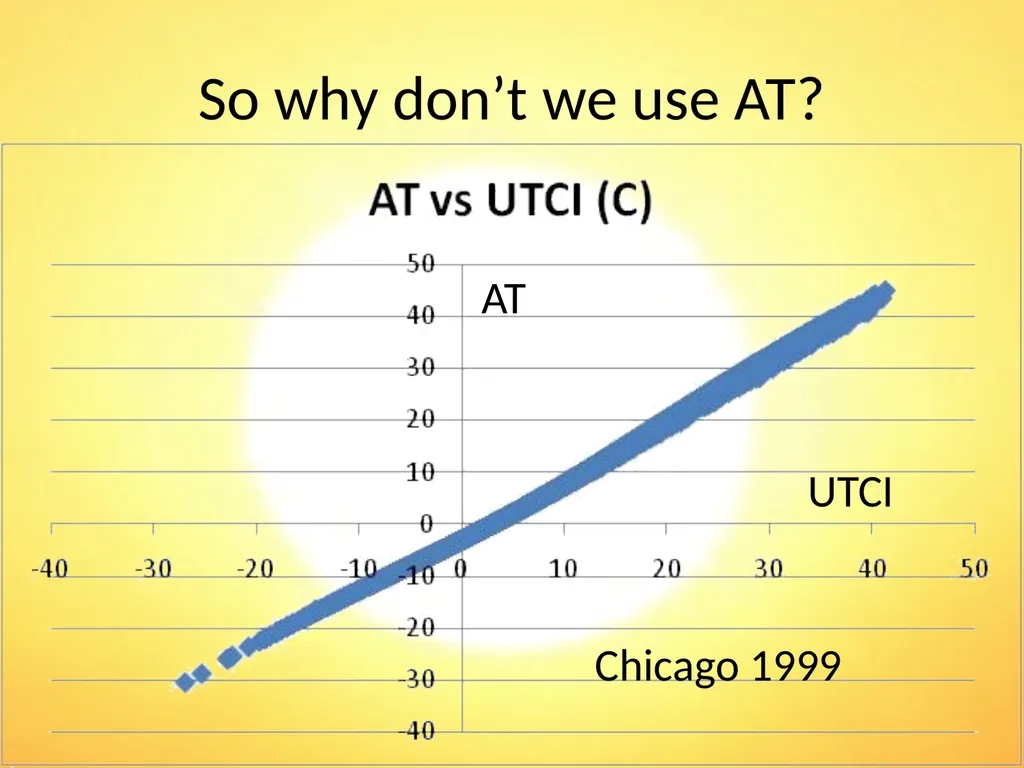
slide15. So why don’t we use AT? AT UTCI Chicago 1999<br>
slide2. Why does “everyone” use Ta? In the ICB most speakers used Ta (air temperature) in discussing heat stress.
A few used WBGT, AT, UTCI
Why?<br>
slide3. Why are heat stress indicies not used? Unfamiliar
People understand temperature but not heat
Too complex
No one index suits all purposes
We argue
Some have a bad history
Eurocentric and USA-centric<br>
slide4. Outline What does a good heat index look like?
What are the alternatives:
Choose a current index
Modify WBGT
Modify UTCI
Use an alternative (AT)
Use all current indexes
Invent a new index<br>
slide7. Using existing indexes: WBGT Bad history (hasn’t met people’s needs)
Only works for heat stress (WBGT>25)
Can now be made “rational” (modelling similar to Fiala model)
Easy to measure
Lots of data
Most common
Simple<br>
slide8. You can make any heat index rational Same process as used by Fiala for people but its less complicated with objects.<br>
slide9. Using existing indexes: UTCI Complex “blackbox” = commercial
Uses Mean Radiant Temperature
Qualitative
Components (Ta, RH etc) interwoven
European
Scientifically sound
Accurate Modifiable?<br>
slide11. Removing MRT fUTCI=
0.93Ta-0.38Pv+0.012Pv2+0.24Tmrt-0.78V+5.3
Tmrt = Tg - 1.82V½(Tg-Ta) [approx]
Pv = 6.11exp(19.8 - 5418 / (Td + 273))
So we have a simple heat index based on science where all the components are identifiable and easily measurable.<br>
slide12. Can we use all heat indexes? Can reduce every heat index to its components
except if it isn’t sensitive to one or the other.
We need to supply readily accessible conversions
We probably still need “one” main one.<br>
slide14. Continuous work 0-25% 25-50% 50-75% 75-100% no
rest rest rest rest work<br>
slide15. So why don’t we use AT? AT UTCI Chicago 1999<br>