Heavy Equipment Safety Awareness Safety Training Presentations Institute of Occupational Safety and Health FY-12 OSHA Susan Harwood Grant Program This material was produced under grant number SH22297-SH1 from OSHA. It does not necessarily
"Heavy Equipment Safety Awareness Safety Training" is the property of its rightful owner. Permission is granted to
download and print the materials on this website for personal, non-commercial use only, and to display it
on your personal computer provided you do not modify the materials and that you retain all copyright
notices contained in the materials. By downloading content from our website, you accept the terms of this
agreement.
Presentation Transcript
01
Heavy Equipment Safety Awareness Safety Training Presentations Institute of Occupational Safety and Health<br>
02
FY-12 OSHA Susan Harwood Grant Program This material was produced under grant number SH22297-SH1 from OSHA. It does not necessarily reflect the views or policies of the U.S. Department of Labor, nor does mention of trade names, commercial products, or organizations imply endorsement by the U.S. Government.<br>
03
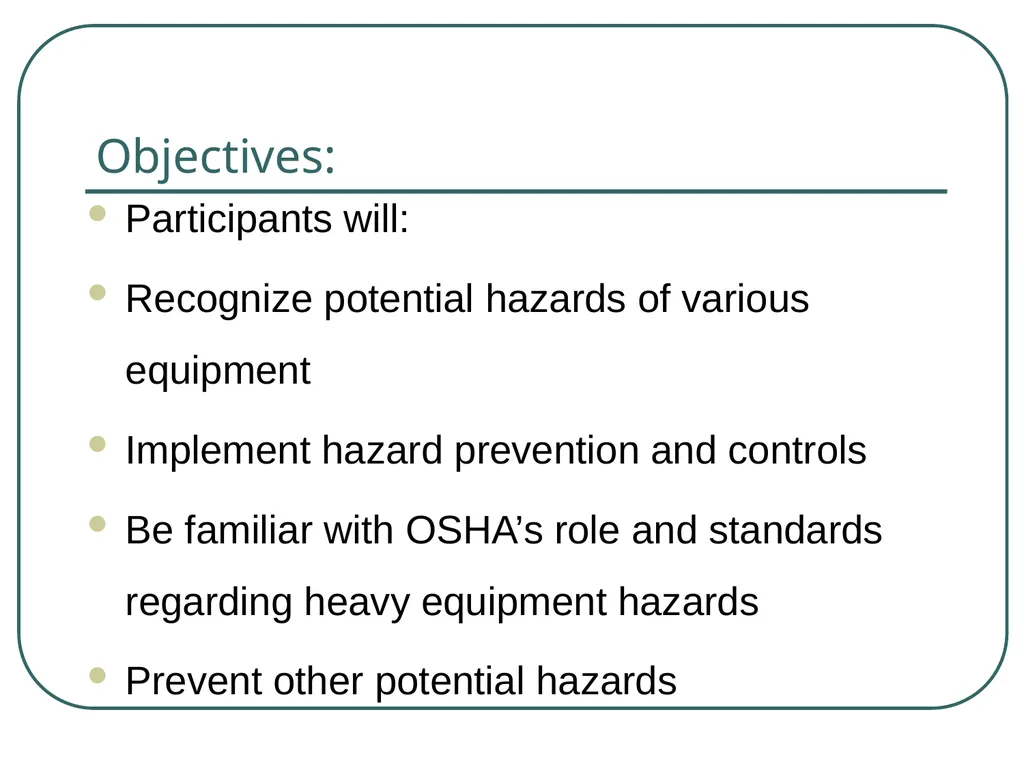
Objectives: Participants will:
Recognize potential hazards of various equipment
Implement hazard prevention and controls
Be familiar with OSHA’s role and standards regarding heavy equipment hazards
Prevent other potential hazards<br>
04
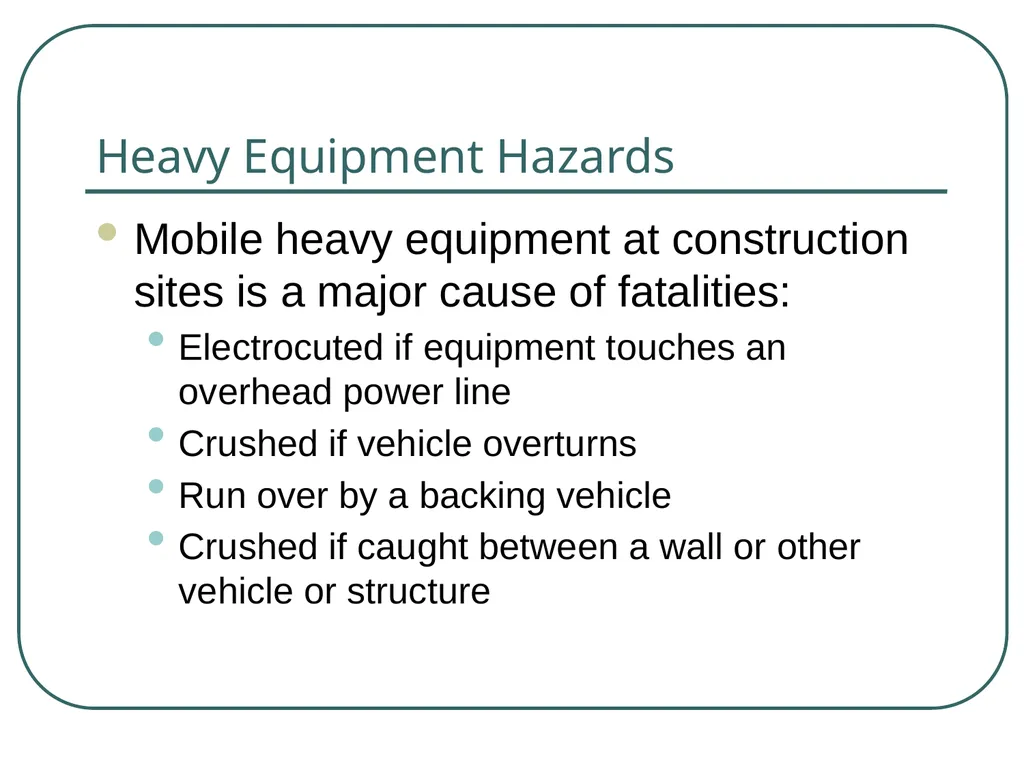
Heavy Equipment Hazards Mobile heavy equipment at construction sites is a major cause of fatalities:
Electrocuted if equipment touches an overhead power line
Crushed if vehicle overturns
Run over by a backing vehicle
Crushed if caught between a wall or other vehicle or structure<br>
05
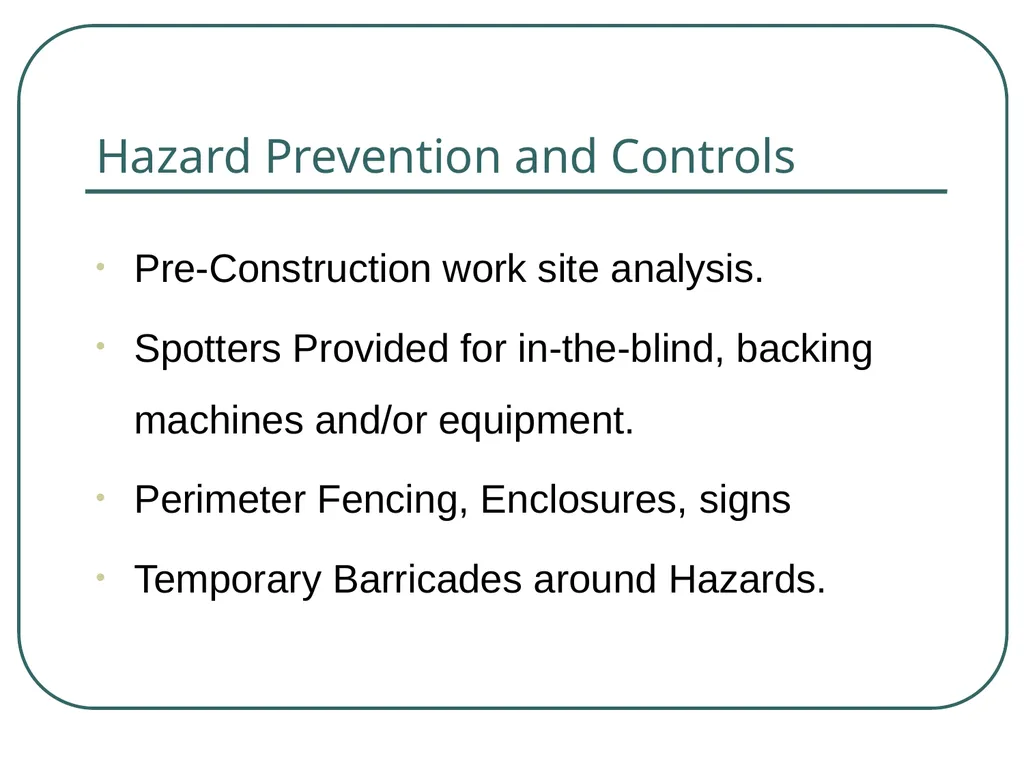
Hazard Prevention and Controls Pre-Construction work site analysis.
Spotters Provided for in-the-blind, backing machines and/or equipment.
Perimeter Fencing, Enclosures, signs
Temporary Barricades around Hazards.<br>
06
Hazard Prevention and Controls Pre-Construction site analysis Identify Potential Known Hazards.
Employee Training?
Job Conditions: Haul Roads, Access Points, Proper light if working at night
Location of Storage Areas, office buildings.
Tool, Storage and Change Trailers.<br>
07
Hazard Prevention and Controls Spotters Necessary around vehicles or equipment when:
A driver or operator does not have a full view of the intended path of travel
Backing with limited visibility or space
Backing or maneuvering trailers
Maneuvering with limited space<br>
08
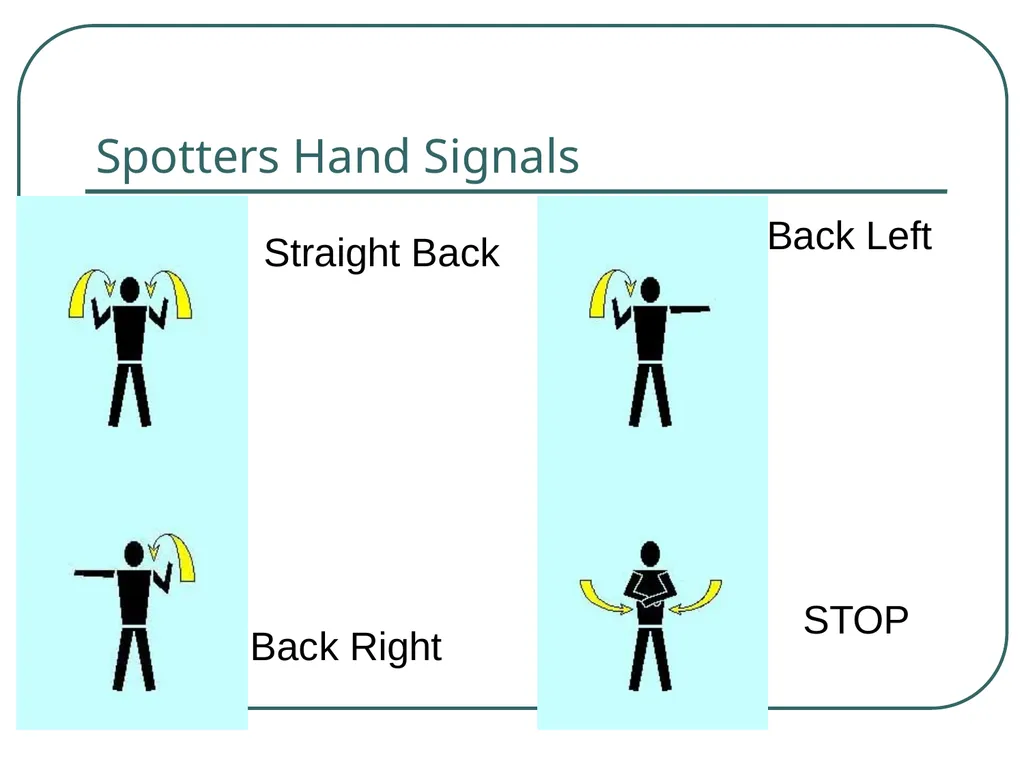
Spotters Hand Signals Straight Back Back Right Back Left STOP<br>
09
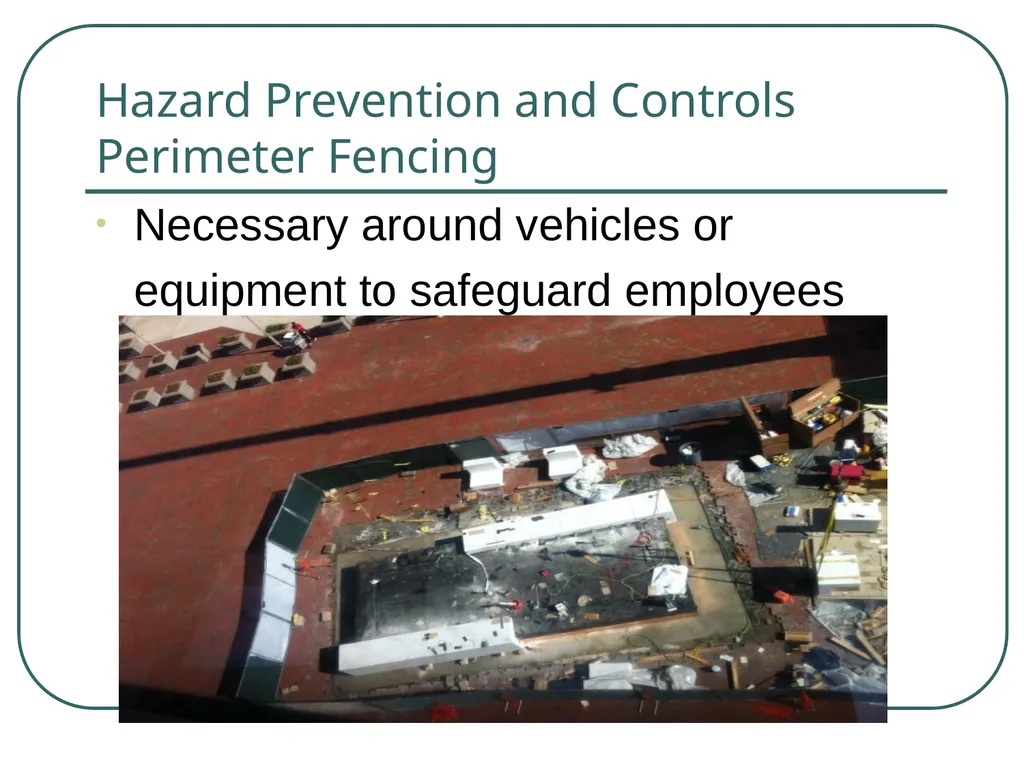
Hazard Prevention and Controls Perimeter Fencing Necessary around vehicles or equipment to safeguard employees<br>
10
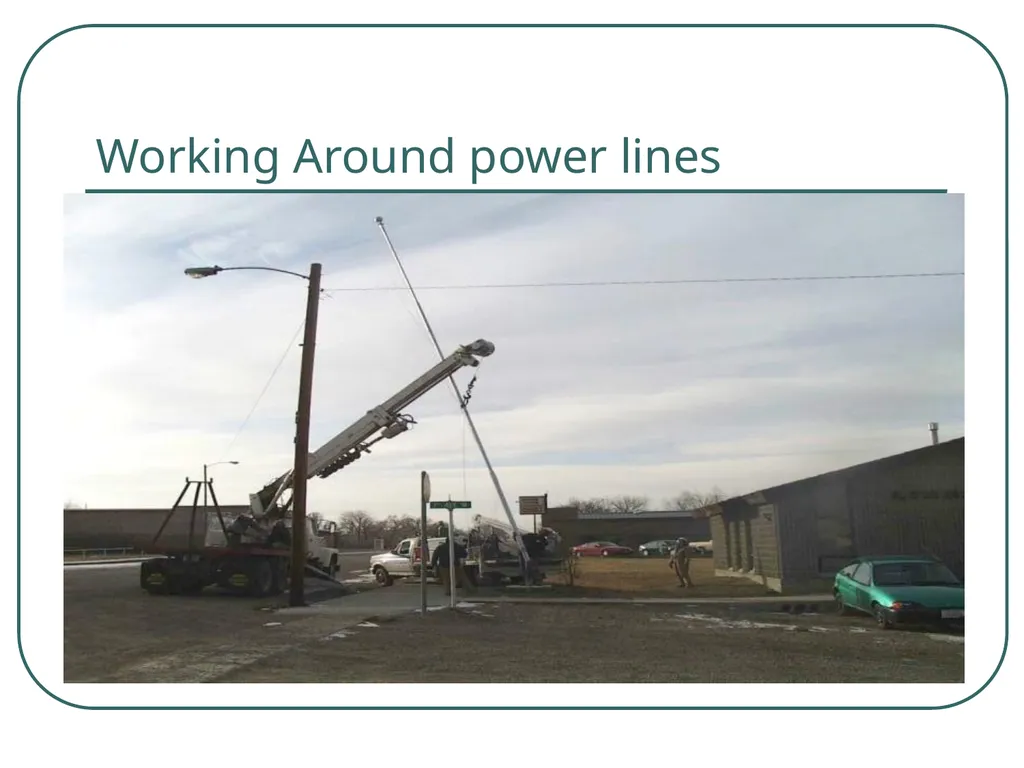
Working Around power lines<br>
11
Working Near Power Lines A spotter must be present
Must have a clear view of the power line and the equipment operator, and be able to immediately inform the operator of any danger.
A dedicated power line spotter may be required to watch distance to power lines.<br>
12
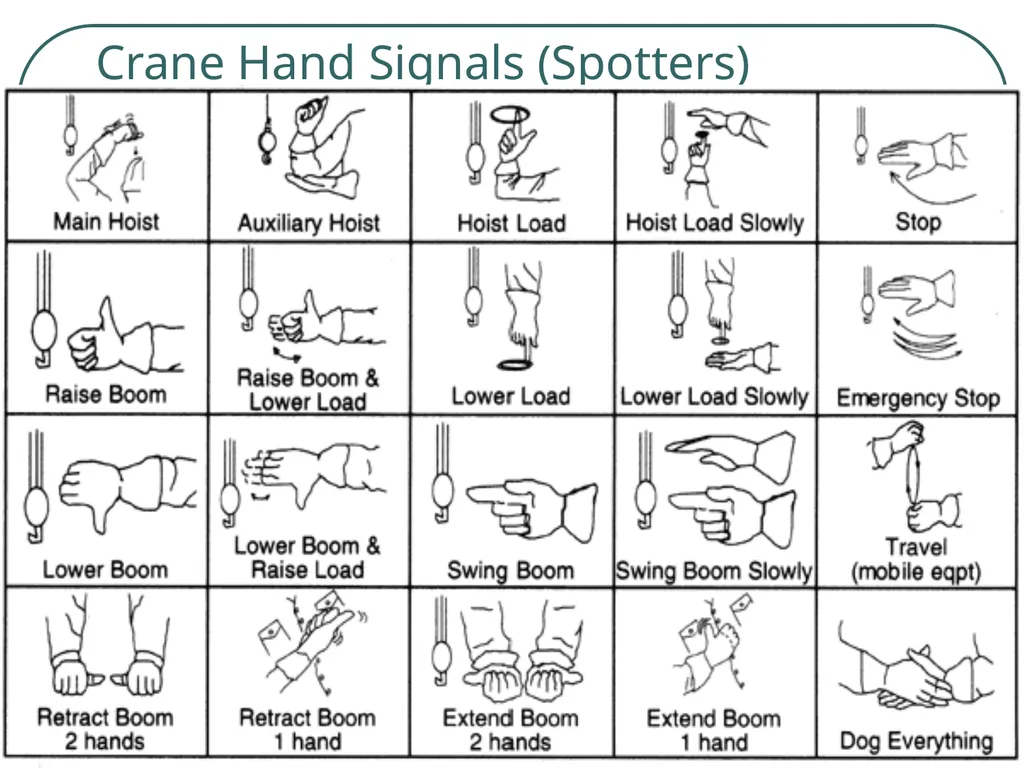
Crane Hand Signals (Spotters)<br>
13
OSHA Prevention Videos (V-Tool) Struck by accidents – Vehicle Back up<br>
Prevention Videos Heavy Equipment and Crane Accidents
www.heavyconstructionacademy.com/certfications/<br>
16
Summary Be aware of your surroundings
Always use a spotter when backing up Heavy Equipment
The use of spotters can save lives
Safeguard working area by establishing a safety perimeter<br>
17
Helpful OSHA Resources OSHA has many helpful programs, including assistance about safety and health programs, state plans, workplace consultations, voluntary protection programs, strategic partnerships, training and education, and more
OSHA Heavy Equipment E-Tool: http://www.osha.gov/SLTC/etools/hurricane/heavy-equip.html<br>
18
OSHA Contact Numbers To report Unsafe Working Conditions, Safety and Health Violations Contact OSHA @:
1-800-321-OSHA (6742) / TTY1-877-889-5627
To File a Complaint Form:
To file an OSHA-7 report online, see how to file a complaint with OSHA (www.osha.gov)
For more information regarding your rights, see Worker Rights<br>
19
References 29 CFR 1926 Subpart O, Motor vehicles, mechanized equipment, and marine operations. OSHA.
29 CFR 1926.251, Rigging equipment for material handling. OSHA Standard.
29 CFR 1910.178, Powered industrial trucks. OSHA Standard.
29 CFR 1926,
29 CFR 1926.61 Retention of DOT Markings<br>