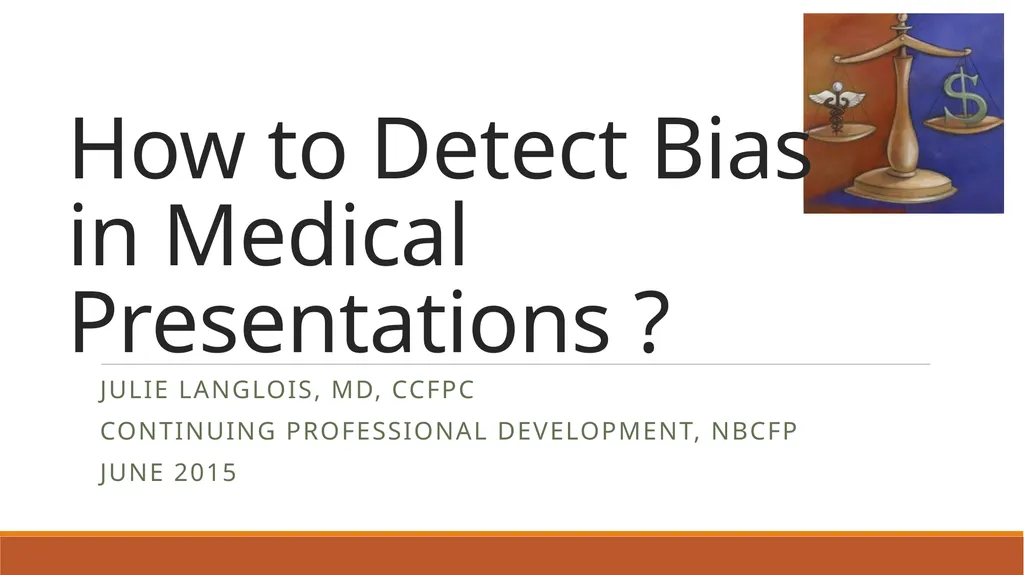
How to Detect Bias in Medical Presentations ? Julie Langlois, MD, CCFPC Continuing Professional Development, NBCFP June 2015 Disclosure of Potential Conflicts of Interests Relationships with commercial interests: GrantsResearch Support:
"How to Detect Bias in Medical Presentations ?" is the property of its rightful owner. Permission is granted to
download and print the materials on this website for personal, non-commercial use only, and to display it
on your personal computer provided you do not modify the materials and that you retain all copyright
notices contained in the materials. By downloading content from our website, you accept the terms of this
agreement.
Presentation Transcript
01
How to Detect Bias in Medical Presentations ? Julie Langlois, MD, CCFPC
Continuing Professional Development, NBCFP
June 2015<br>
02
Disclosure of Potential Conflicts of Interests Relationships with commercial interests:
Grants/Research Support: None
Speakers Bureau/Honoraria: None
Consulting Fees: None
Other:
Member of theNBCFP Board of Directors (Education)
Member of the National Committee on Continuing Professional Development of the CCFP
In lieu of honoraria, my registration to the NBCFP FMC has been made free<br>
03
Mitigating Potential Bias Not applicable<br>
04
Learning Objectives Given examples or scenarios, the participant will be able to identify key elements to look for in a presentation to determine if it is biased such as:
use of branding
program focus
balance of data
The participant will also learn about the importance of conflict of interest disclosure.
Finally, participants will get familiar with the role of a Mainpro reviewer.<br>
05
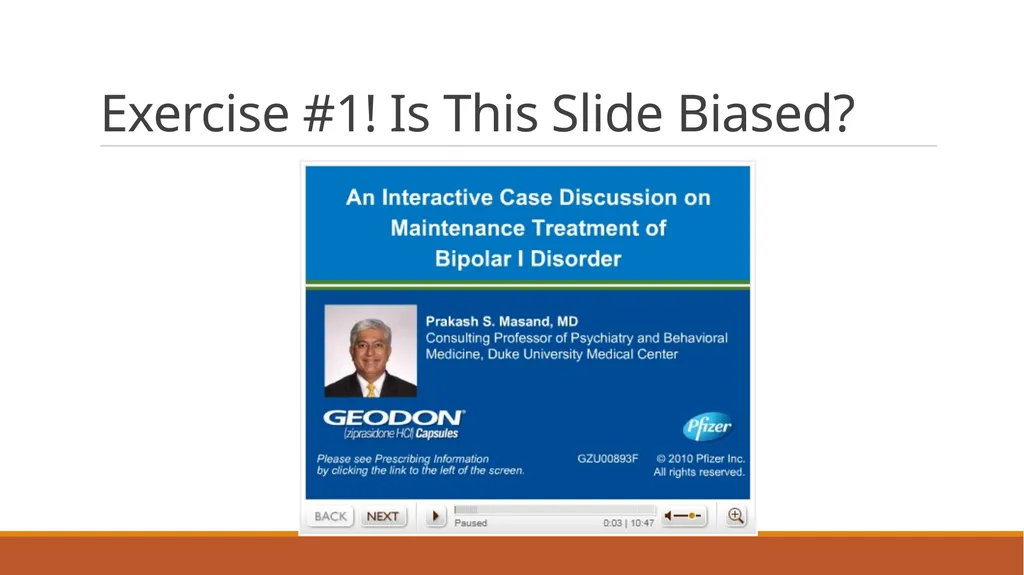
Exercise #1! Is This Slide Biased?<br>
06
Wait a Minute! Are Physicians so Gullible?<br>
07
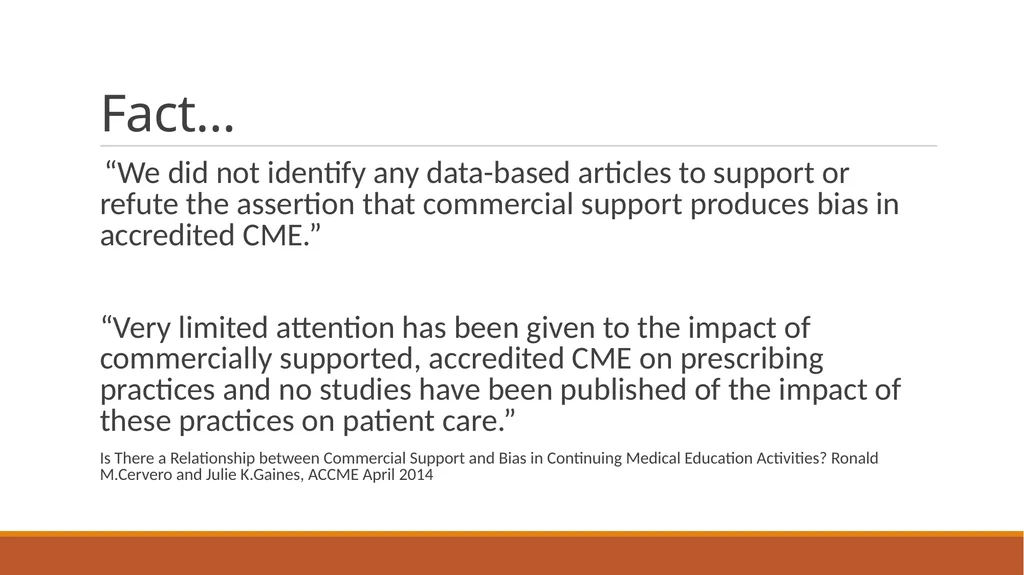
Fact… “We did not identify any data-based articles to support or refute the assertion that commercial support produces bias in accredited CME.”
“Very limited attention has been given to the impact of commercially supported, accredited CME on prescribing practices and no studies have been published of the impact of these practices on patient care.”
Is There a Relationship between Commercial Support and Bias in Continuing Medical Education Activities? Ronald M.Cervero and Julie K.Gaines, ACCME April 2014<br>
08
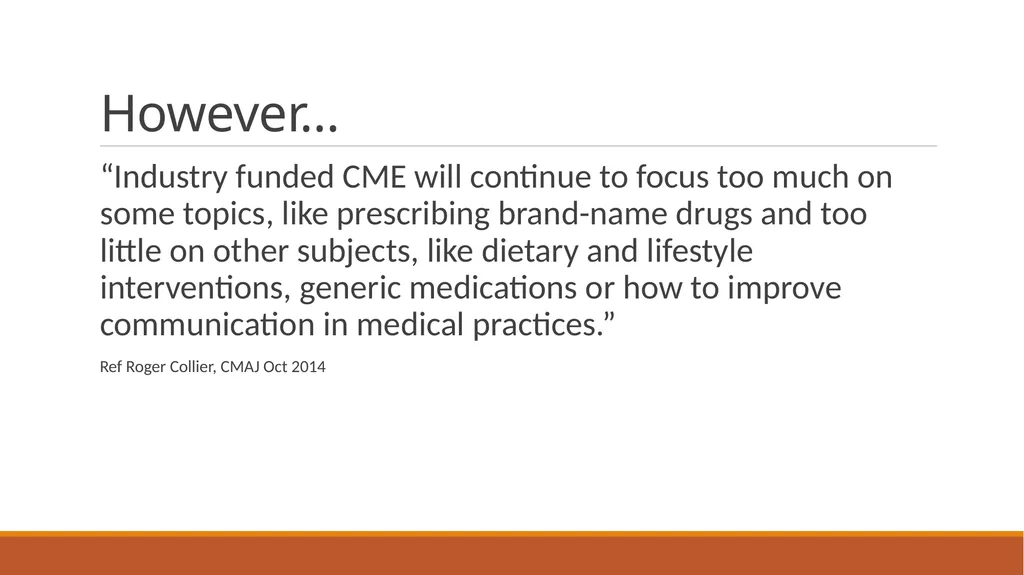
However… “Industry funded CME will continue to focus too much on some topics, like prescribing brand-name drugs and too little on other subjects, like dietary and lifestyle interventions, generic medications or how to improve communication in medical practices.”
Ref Roger Collier, CMAJ Oct 2014<br>
09
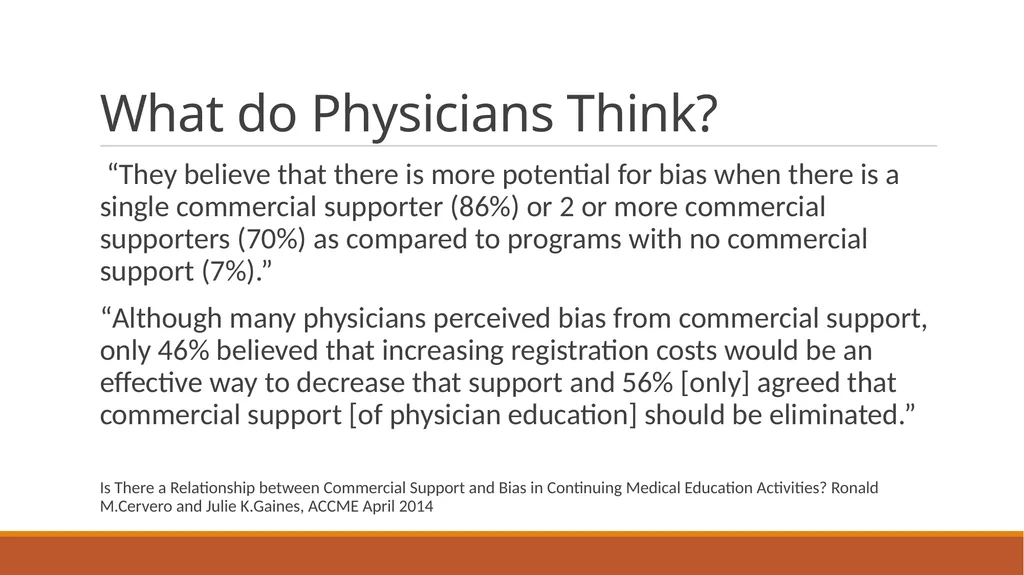
What do Physicians Think? “They believe that there is more potential for bias when there is a single commercial supporter (86%) or 2 or more commercial supporters (70%) as compared to programs with no commercial support (7%).”
“Although many physicians perceived bias from commercial support, only 46% believed that increasing registration costs would be an effective way to decrease that support and 56% [only] agreed that commercial support [of physician education] should be eliminated.”
Is There a Relationship between Commercial Support and Bias in Continuing Medical Education Activities? Ronald M.Cervero and Julie K.Gaines, ACCME April 2014<br>
10
How Then Do We Identify and Mitigate Bias in CPD Activities?<br>
11
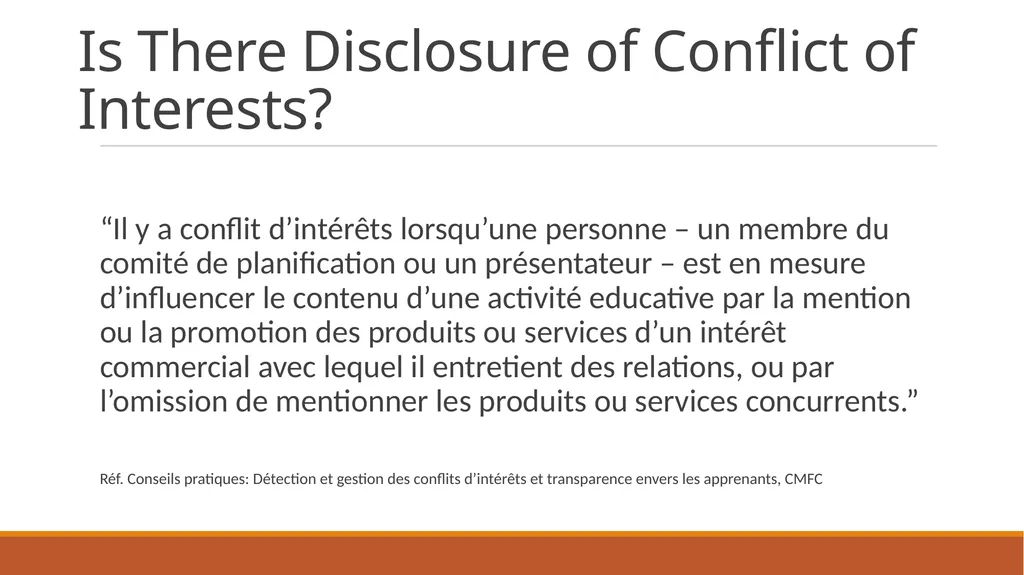
Is There Disclosure of Conflict of Interests? “Il y a conflit d’intérêts lorsqu’une personne – un membre du comité de planification ou un présentateur – est en mesure d’influencer le contenu d’une activité educative par la mention ou la promotion des produits ou services d’un intérêt commercial avec lequel il entretient des relations, ou par l’omission de mentionner les produits ou services concurrents.”
Réf. Conseils pratiques: Détection et gestion des conflits d’intérêts et transparence envers les apprenants, CMFC<br>
12
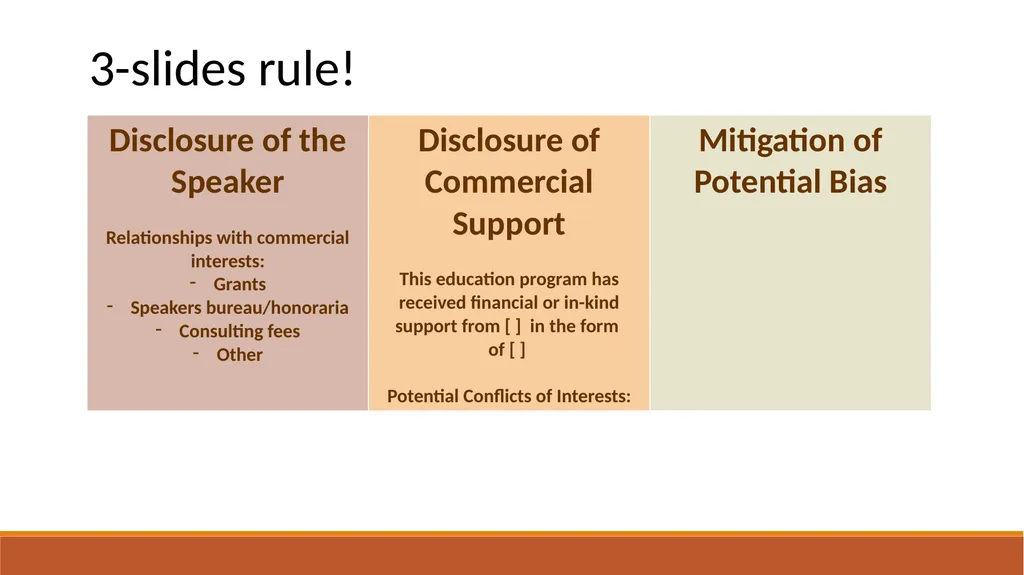
3-slides rule!<br>
13
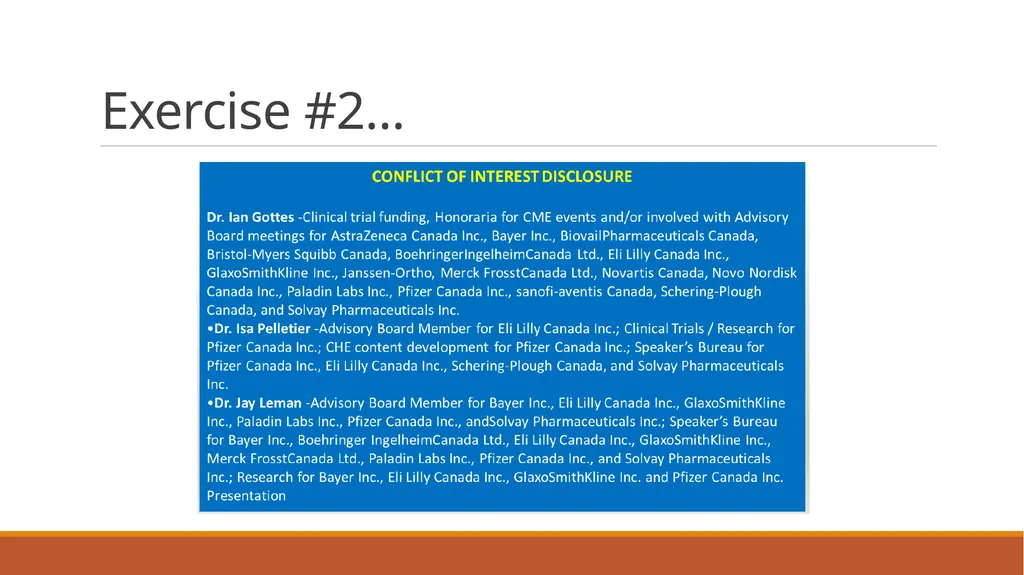
Exercise #2…<br>
14
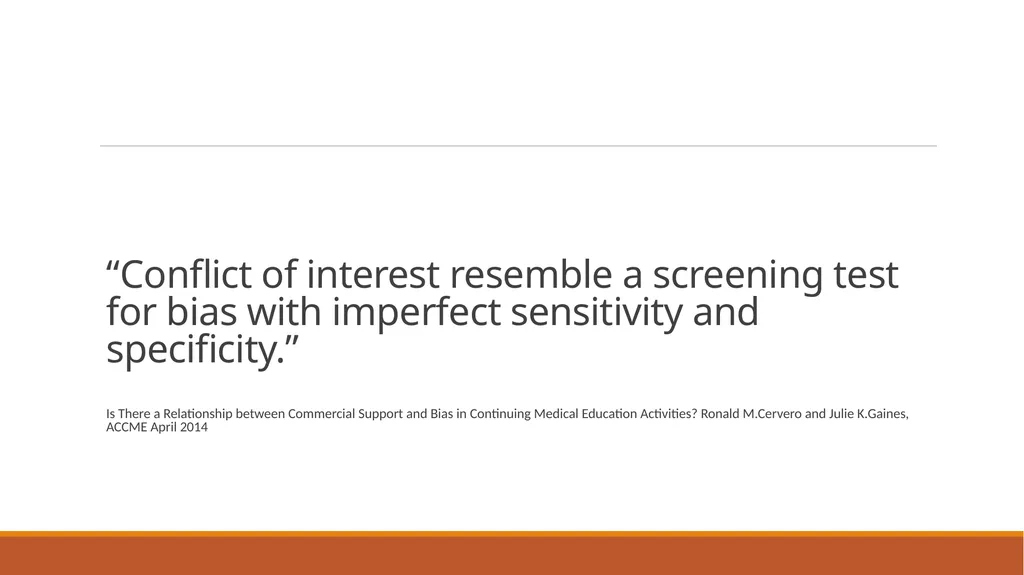
“Conflict of interest resemble a screening test for bias with imperfect sensitivity and specificity.” Is There a Relationship between Commercial Support and Bias in Continuing Medical Education Activities? Ronald M.Cervero and Julie K.Gaines, ACCME April 2014<br>
15
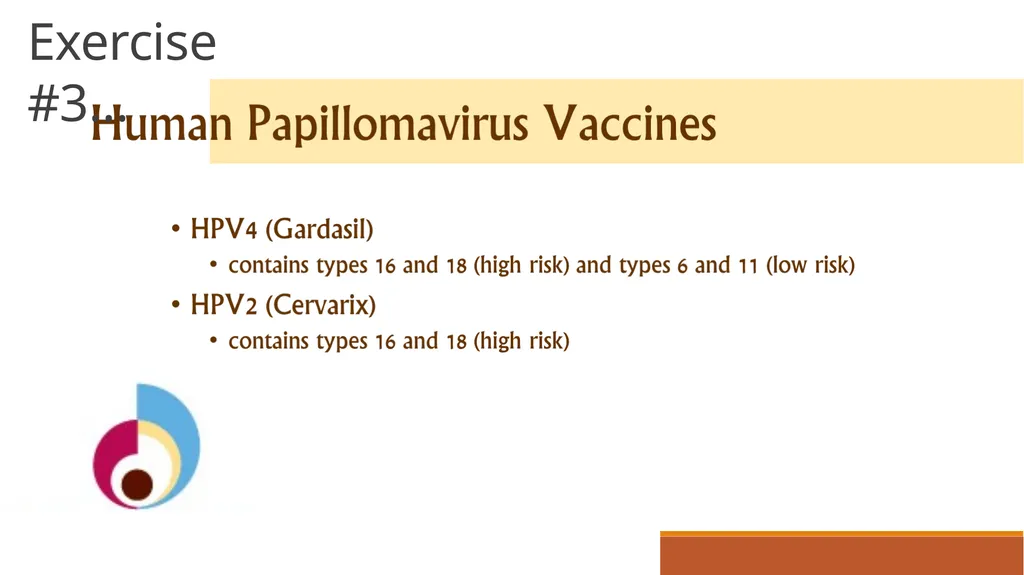
Exercise #3…<br>
16
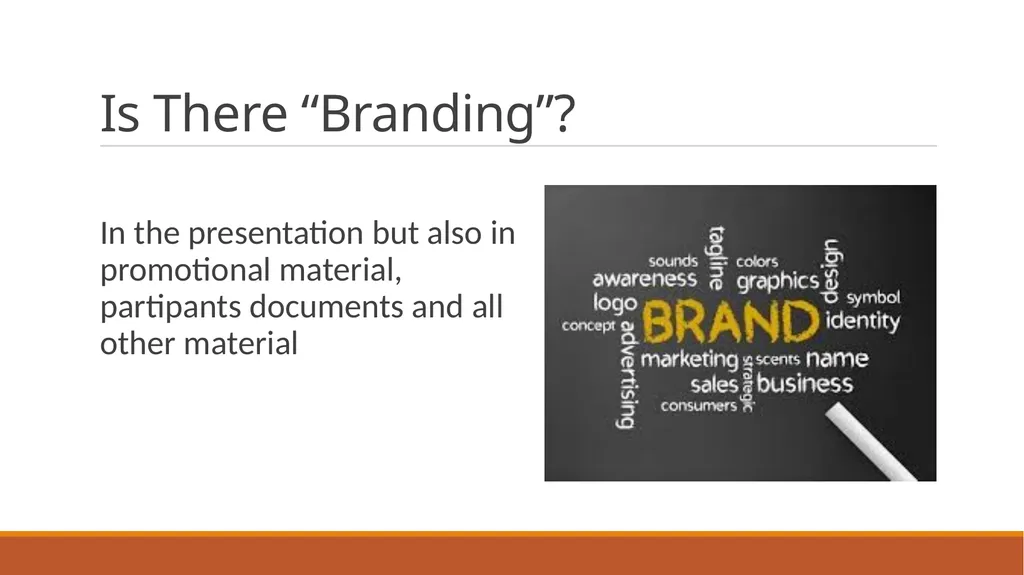
Is There “Branding”? In the presentation but also in promotional material, partipants documents and all other material<br>
17
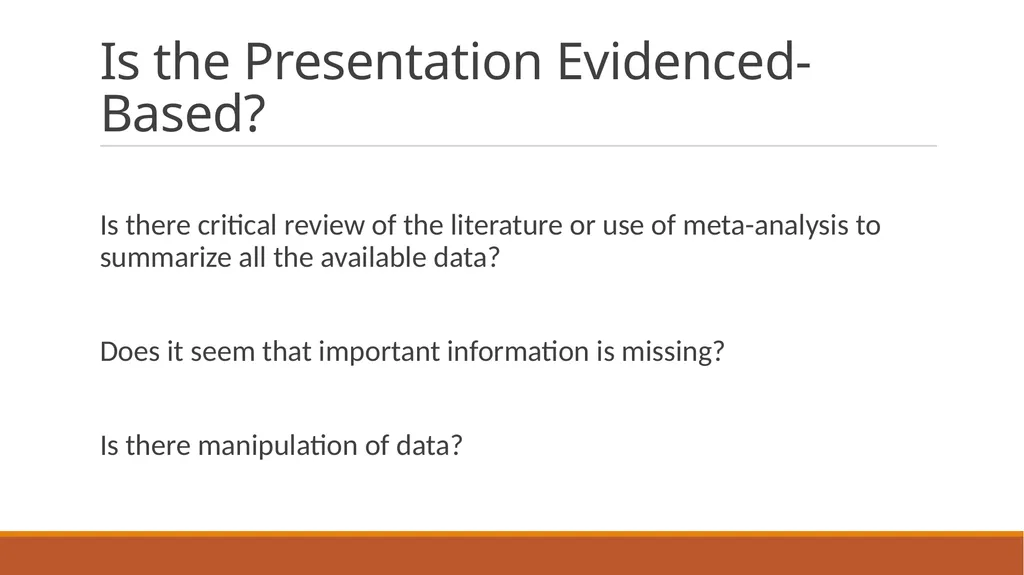
Is the Presentation Evidenced-Based? Is there critical review of the literature or use of meta-analysis to summarize all the available data?
Does it seem that important information is missing?
Is there manipulation of data?<br>
18
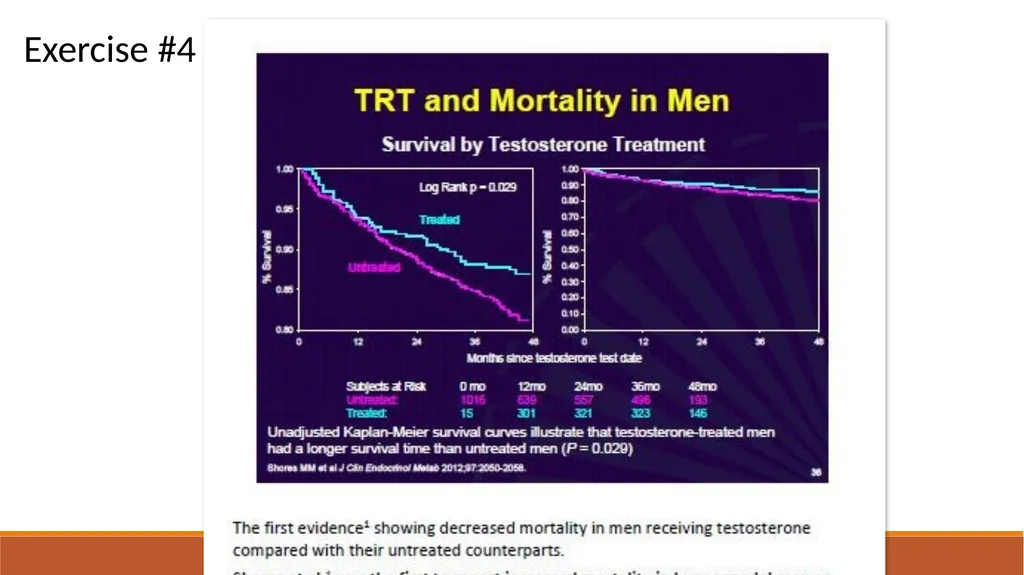
Exercise #4<br>
19
Is There Consideration for Translation of Information Into Practice and Applicability to our Patiens Life?<br>
20
Is There a Balanced Presentation of Information? Are all treatment options equally presented, including non-pharmacological measures and generic treatments when available?<br>
21
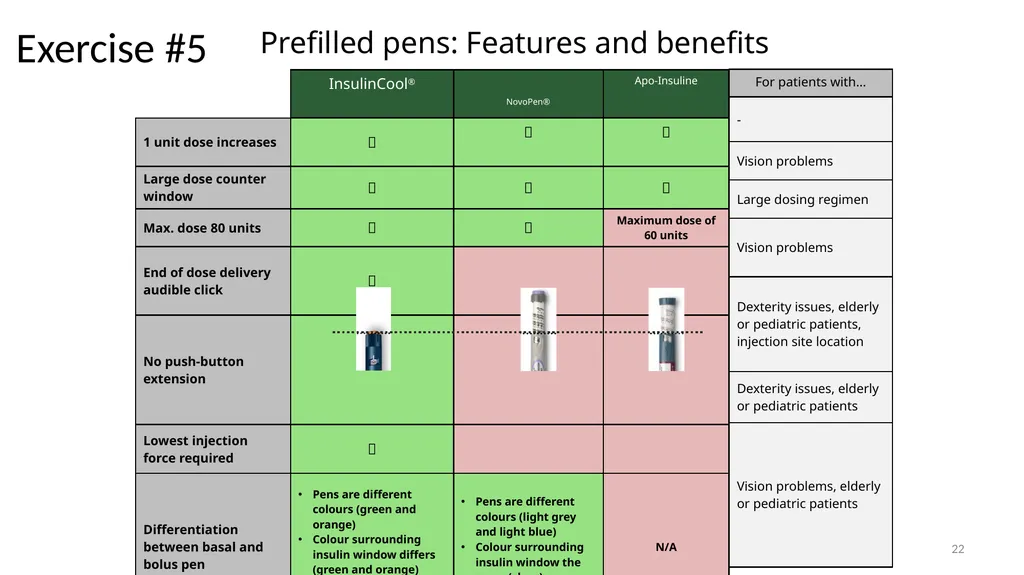
Prefilled pens: Features and benefits 22 Exercise #5<br>
22
Is There Consistency in Naming the Products? Are products generic names used equally and consistenly everywhere?
Are the products listed randomly or in alphabetical order?<br>
23
What is the Program Emphasis? Is the program aimed at improving medical competency and better quality of care for our patients?
Or its objective is it to promote a product or a service? Promotion = Education<br>
24
Certification of programs Make sure that the programs meet the criteria established by medical education certification agencies Reviewers<br>
25
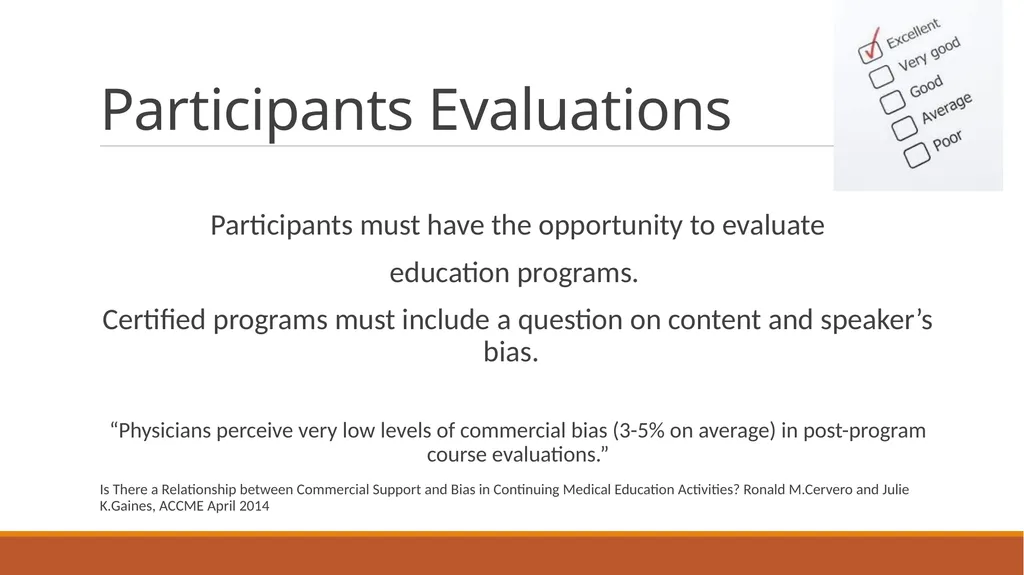
Participants Evaluations Participants must have the opportunity to evaluate
education programs.
Certified programs must include a question on content and speaker’s bias.
“Physicians perceive very low levels of commercial bias (3-5% on average) in post-program course evaluations.”
Is There a Relationship between Commercial Support and Bias in Continuing Medical Education Activities? Ronald M.Cervero and Julie K.Gaines, ACCME April 2014<br>
26
Exercise #6<br>
27
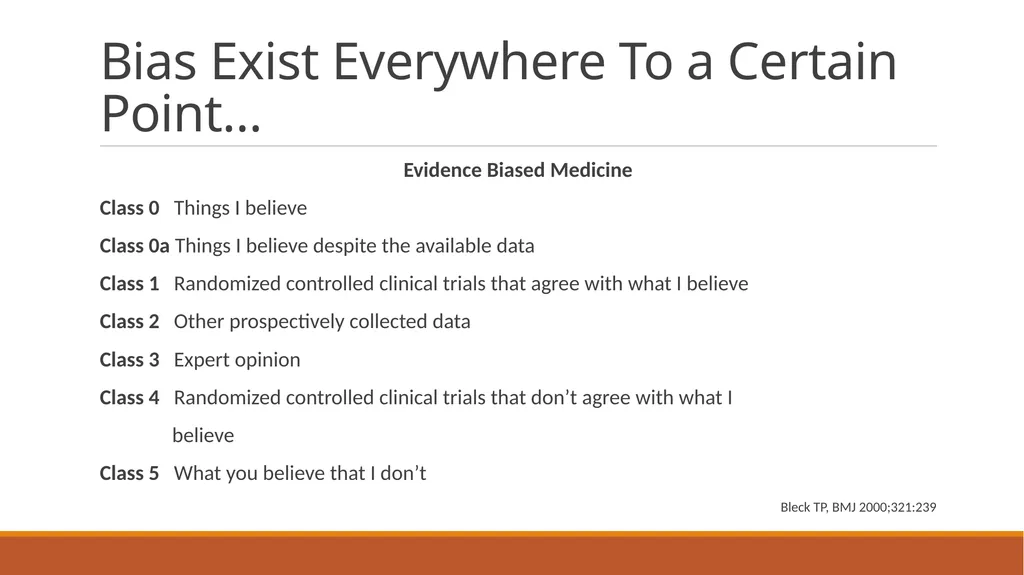
Bias Exist Everywhere To a Certain Point… Evidence Biased Medicine
Class 0 Things I believe
Class 0a Things I believe despite the available data
Class 1 Randomized controlled clinical trials that agree with what I believe
Class 2 Other prospectively collected data
Class 3 Expert opinion
Class 4 Randomized controlled clinical trials that don’t agree with what I
believe
Class 5 What you believe that I don’t
Bleck TP, BMJ 2000;321:239<br>
28
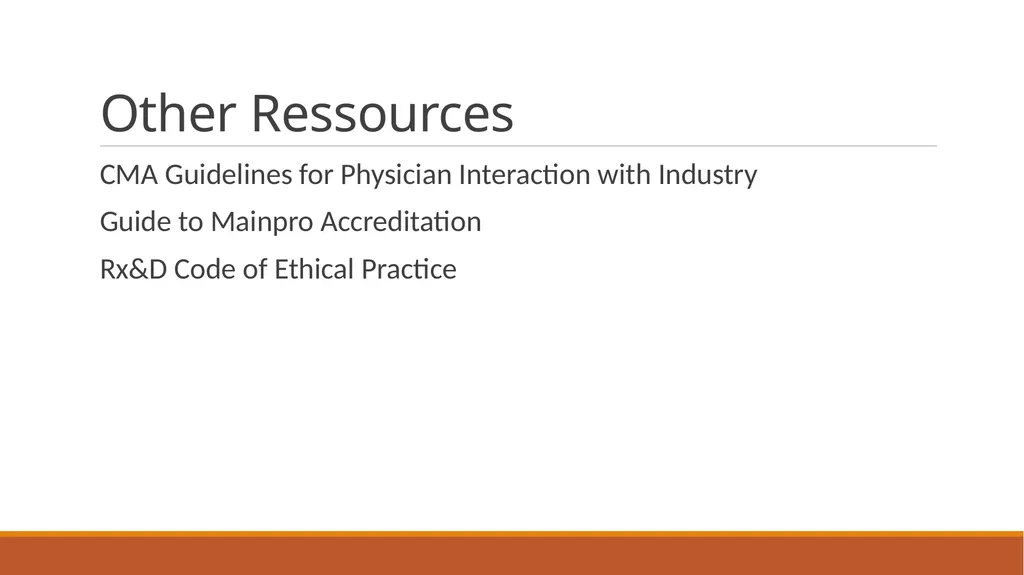
Other Ressources CMA Guidelines for Physician Interaction with Industry
Guide to Mainpro Accreditation
Rx&D Code of Ethical Practice<br>
29
Thank You Dr. Ian Goldstine, Past Chair of the CFPC National Committee on Continuing Professional Development
Amy Outschoorn, Director CPD, CCFP
Jessica Black, Accreditation Manager CPD,CCFP<br>
30
References Mainpro® Reviewer Guide
Mainpro® CPD-Program Auditing Tool
Is There a Relationship between Commercial Support and Bias in Continuing Medical Education Activities? Ronald M.Cervero and Julie K.Gaines, ACCME (Accreditation Council for Continuing Medical Education) April 2014<br>