HR Cultural Transformation Overview An interactive session focused on defining the cultural traits, desired behaviors and strategies for HR transformation within and across DC Government agencies. An overview of the HR Effectiveness
"HR Cultural Transformation Overview An interactive" is the property of its rightful owner. Permission is granted to
download and print the materials on this website for personal, non-commercial use only, and to display it
on your personal computer provided you do not modify the materials and that you retain all copyright
notices contained in the materials. By downloading content from our website, you accept the terms of this
agreement.
Presentation Transcript
01
HR Cultural Transformation<br>
02
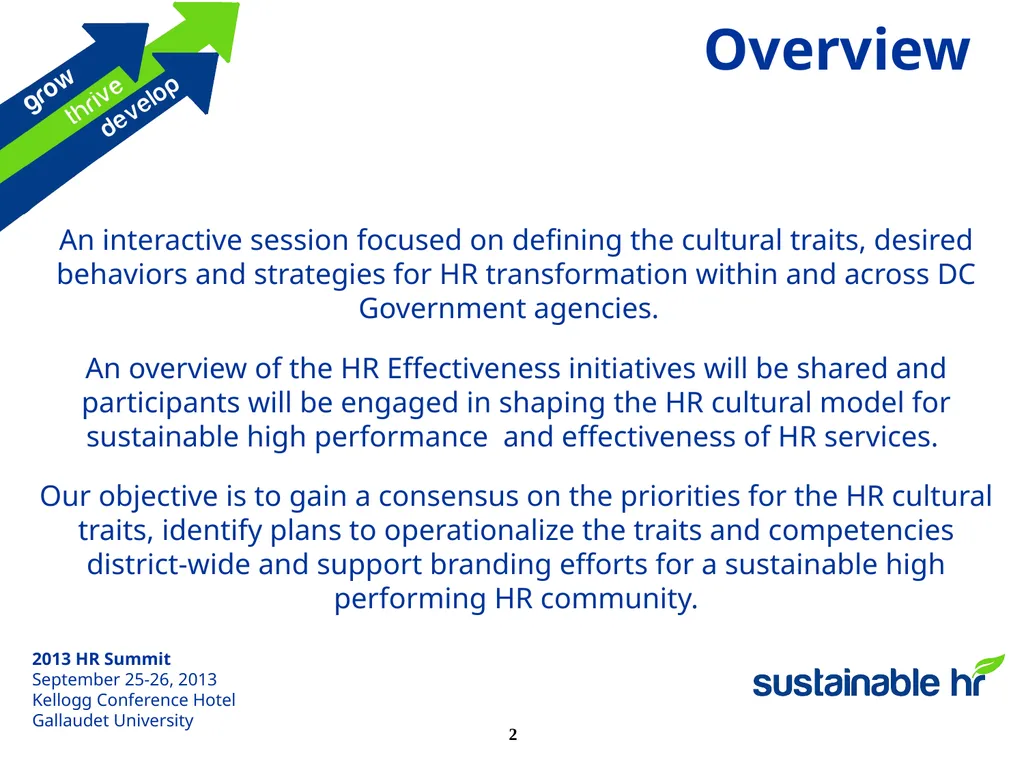
Overview An interactive session focused on defining the cultural traits, desired behaviors and strategies for HR transformation within and across DC Government agencies.
An overview of the HR Effectiveness initiatives will be shared and participants will be engaged in shaping the HR cultural model for sustainable high performance and effectiveness of HR services.
Our objective is to gain a consensus on the priorities for the HR cultural traits, identify plans to operationalize the traits and competencies district-wide and support branding efforts for a sustainable high performing HR community. 2<br>
03
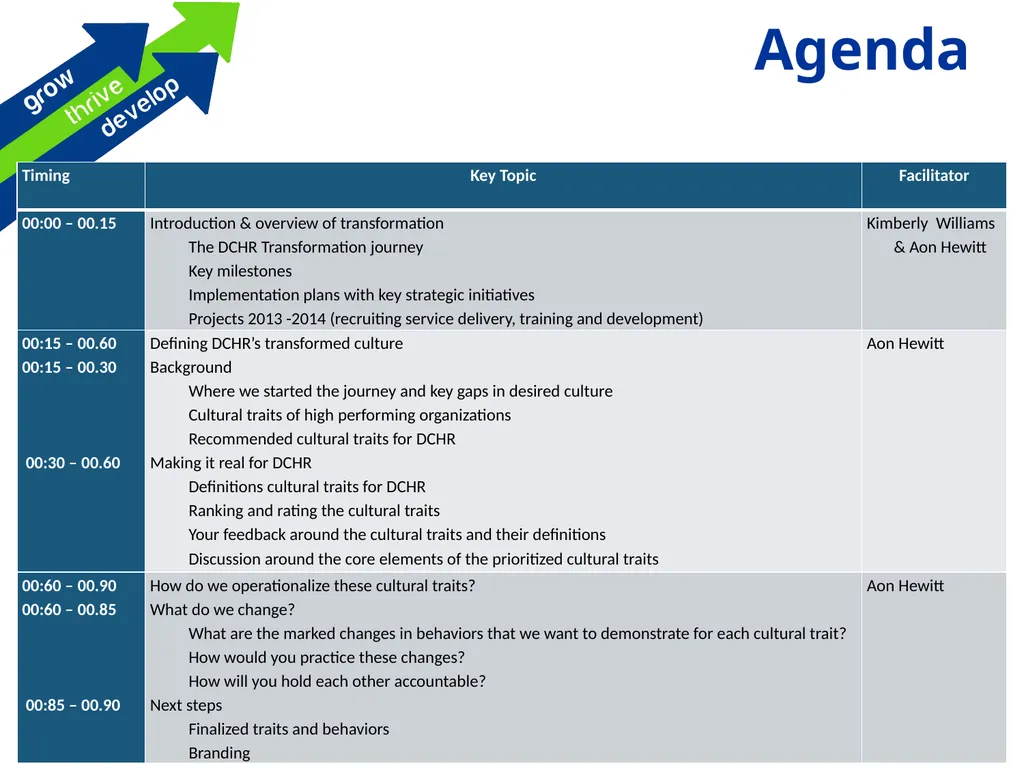
Agenda 3<br>
04
4 DCHR
Transformation<br>
05
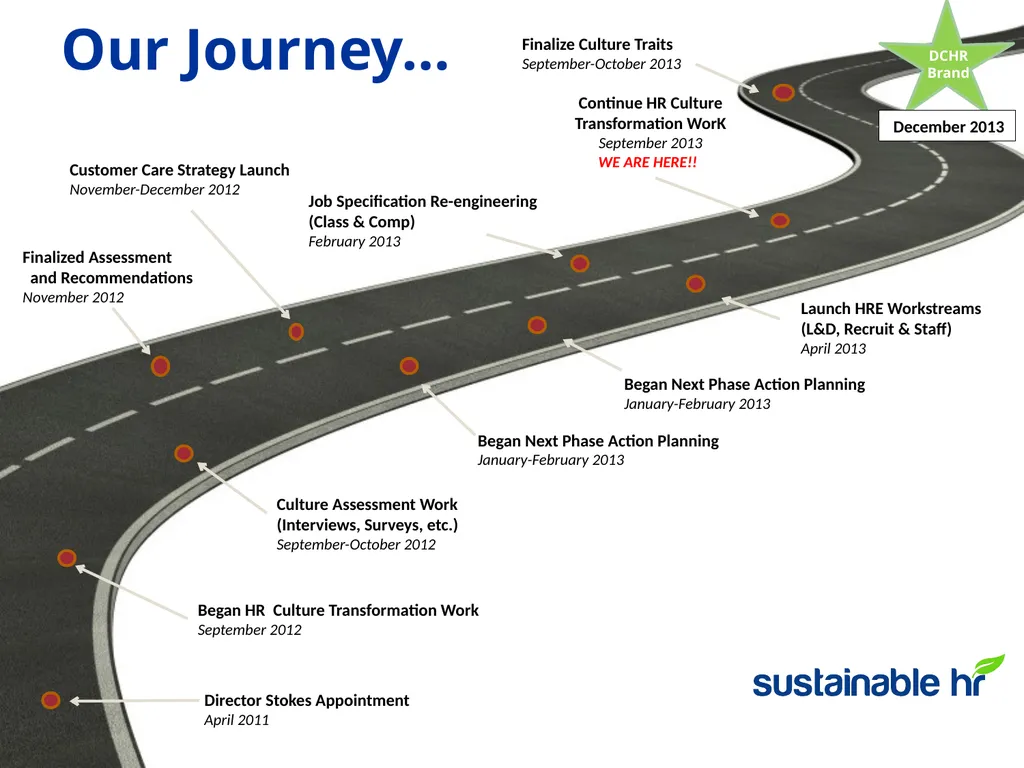
2012: Our journey Our Journey… December 2013<br>
06
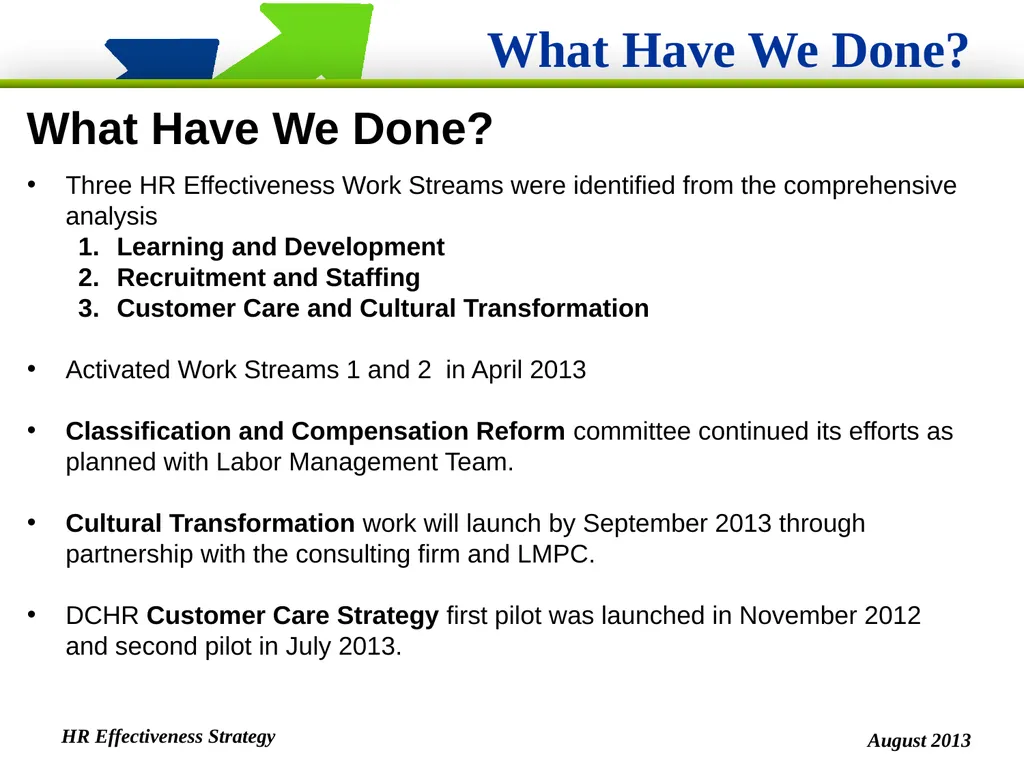
What Have We Done? What Have We Done?
Three HR Effectiveness Work Streams were identified from the comprehensive analysis
Learning and Development
Recruitment and Staffing
Customer Care and Cultural Transformation
Activated Work Streams 1 and 2 in April 2013
Classification and Compensation Reform committee continued its efforts as planned with Labor Management Team.
Cultural Transformation work will launch by September 2013 through partnership with the consulting firm and LMPC.
DCHR Customer Care Strategy first pilot was launched in November 2012 and second pilot in July 2013.<br>
07
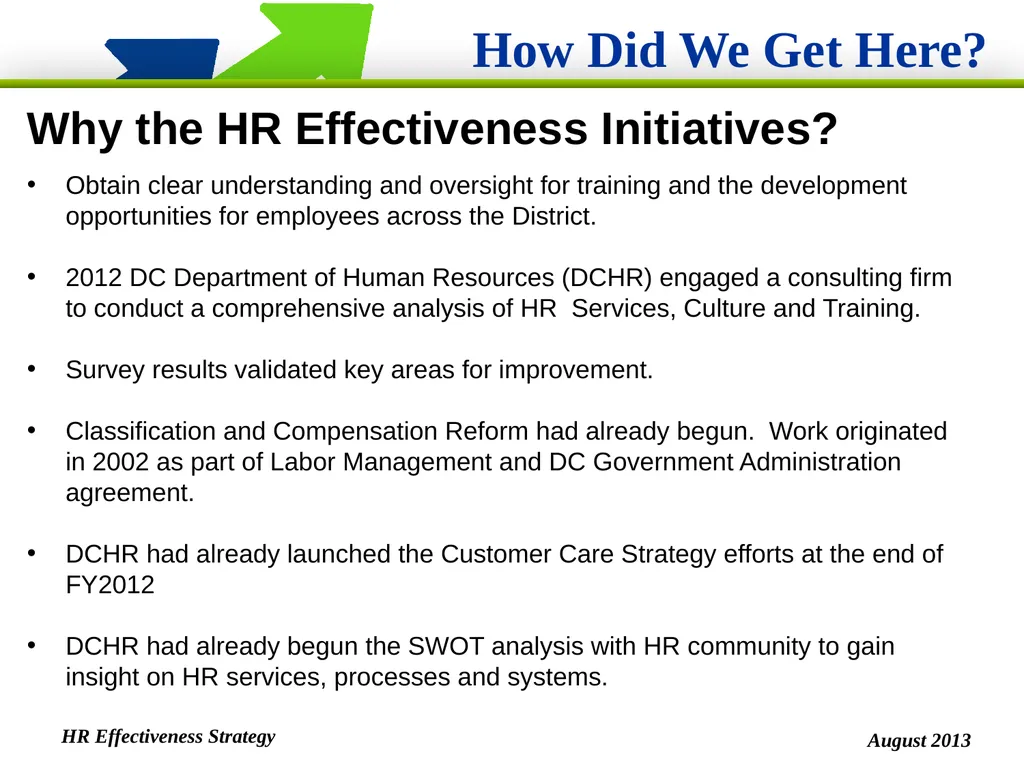
How Did We Get Here? Why the HR Effectiveness Initiatives?
Obtain clear understanding and oversight for training and the development opportunities for employees across the District.
2012 DC Department of Human Resources (DCHR) engaged a consulting firm to conduct a comprehensive analysis of HR Services, Culture and Training.
Survey results validated key areas for improvement.
Classification and Compensation Reform had already begun. Work originated in 2002 as part of Labor Management and DC Government Administration agreement.
DCHR had already launched the Customer Care Strategy efforts at the end of FY2012
DCHR had already begun the SWOT analysis with HR community to gain insight on HR services, processes and systems.<br>
08
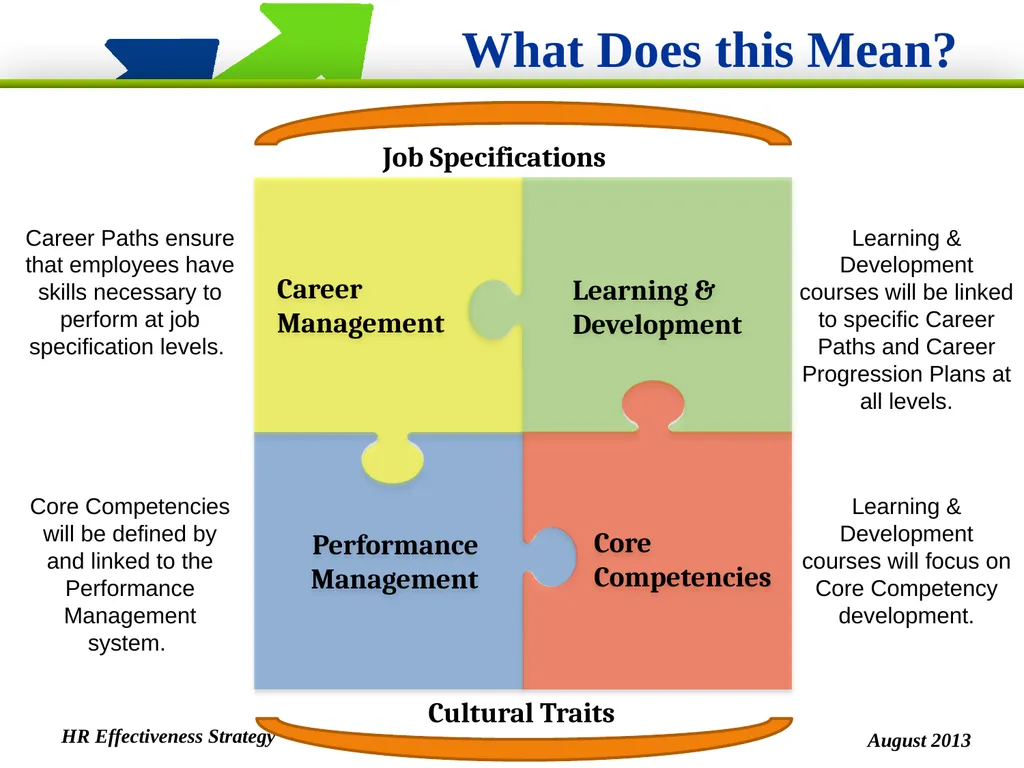
What Does this Mean? Job Specifications Career Management Performance
Management Learning & Development Core Competencies Career Paths ensure that employees have skills necessary to perform at job specification levels. Learning & Development courses will be linked to specific Career Paths and Career Progression Plans at all levels. Learning & Development courses will focus on Core Competency development. Core Competencies will be defined by and linked to the Performance Management system. Cultural Traits<br>
09
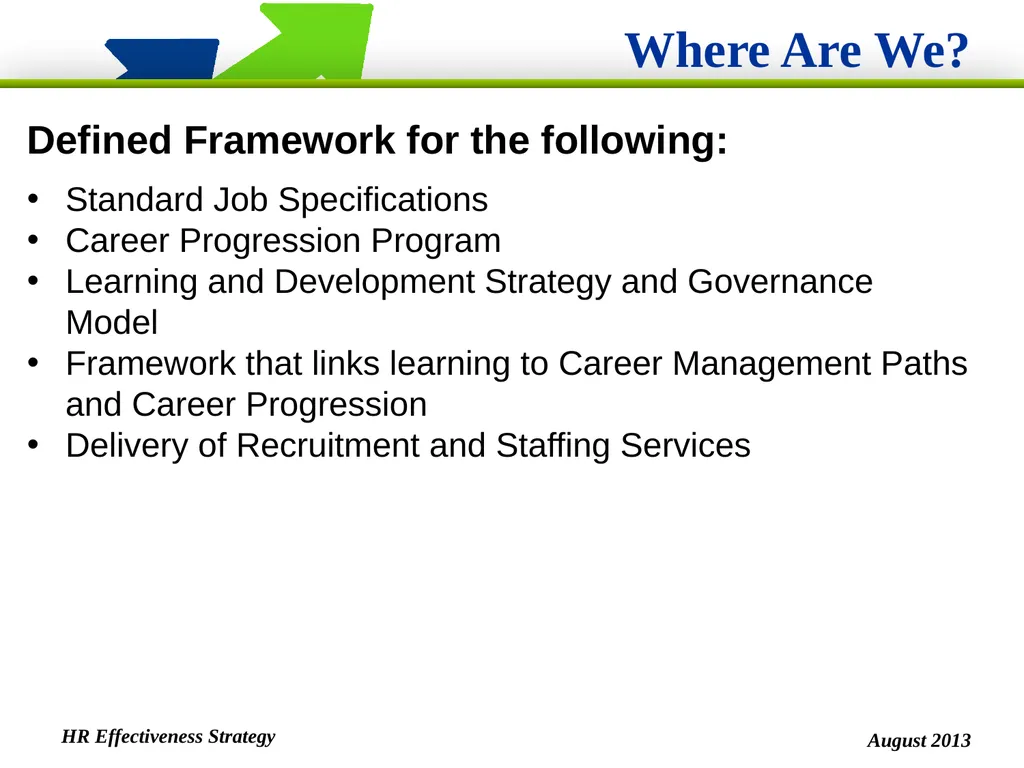
Defined Framework for the following:
Standard Job Specifications
Career Progression Program
Learning and Development Strategy and Governance Model
Framework that links learning to Career Management Paths and Career Progression
Delivery of Recruitment and Staffing Services Where Are We?<br>
10
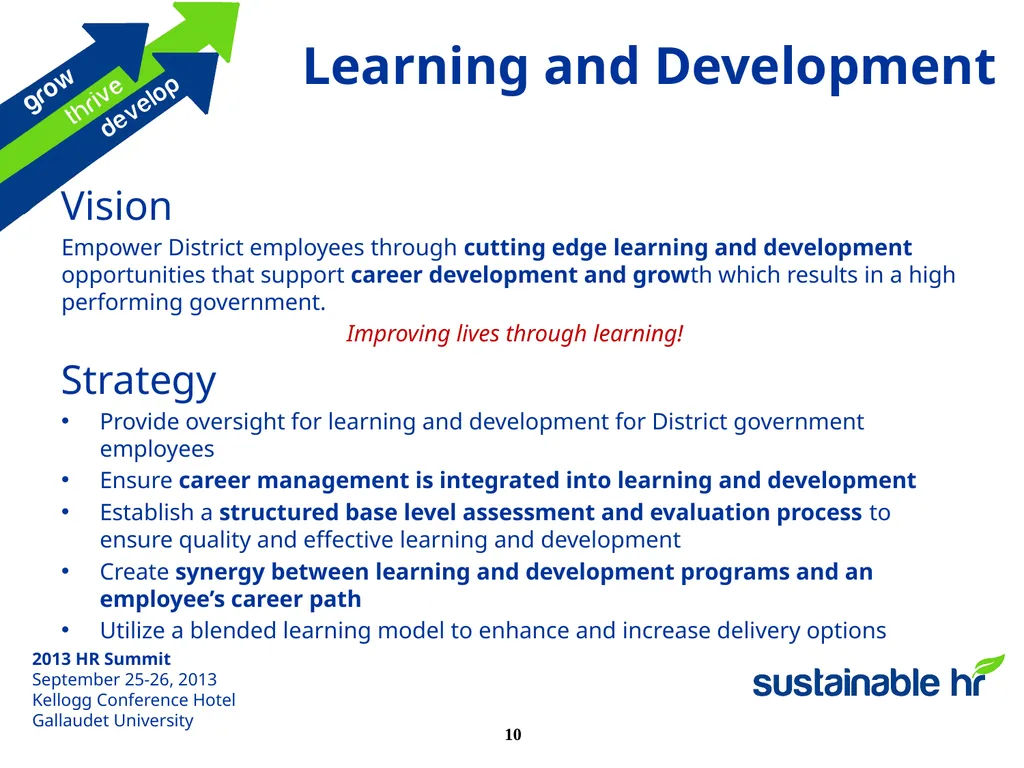
10 Learning and Development Vision
Empower District employees through cutting edge learning and development opportunities that support career development and growth which results in a high performing government.
Improving lives through learning!
Strategy
Provide oversight for learning and development for District government employees
Ensure career management is integrated into learning and development
Establish a structured base level assessment and evaluation process to ensure quality and effective learning and development
Create synergy between learning and development programs and an employee’s career path
Utilize a blended learning model to enhance and increase delivery options<br>
11
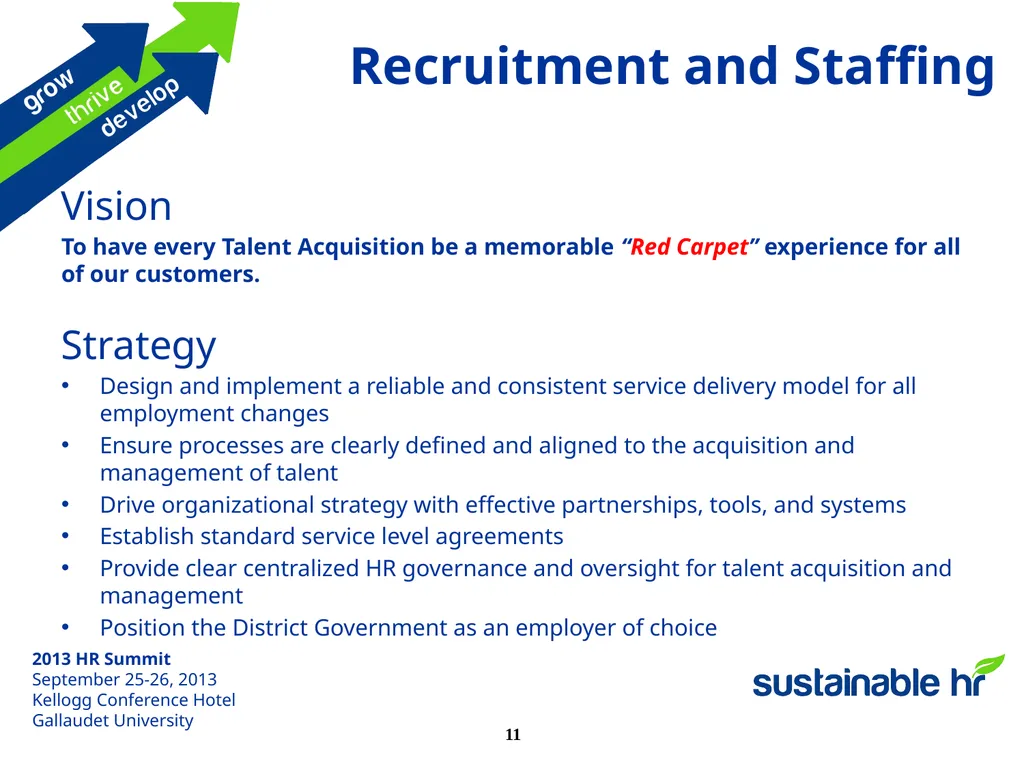
11 Recruitment and Staffing Vision
To have every Talent Acquisition be a memorable “Red Carpet” experience for all of our customers.
Strategy
Design and implement a reliable and consistent service delivery model for all employment changes
Ensure processes are clearly defined and aligned to the acquisition and management of talent
Drive organizational strategy with effective partnerships, tools, and systems
Establish standard service level agreements
Provide clear centralized HR governance and oversight for talent acquisition and management
Position the District Government as an employer of choice<br>
12
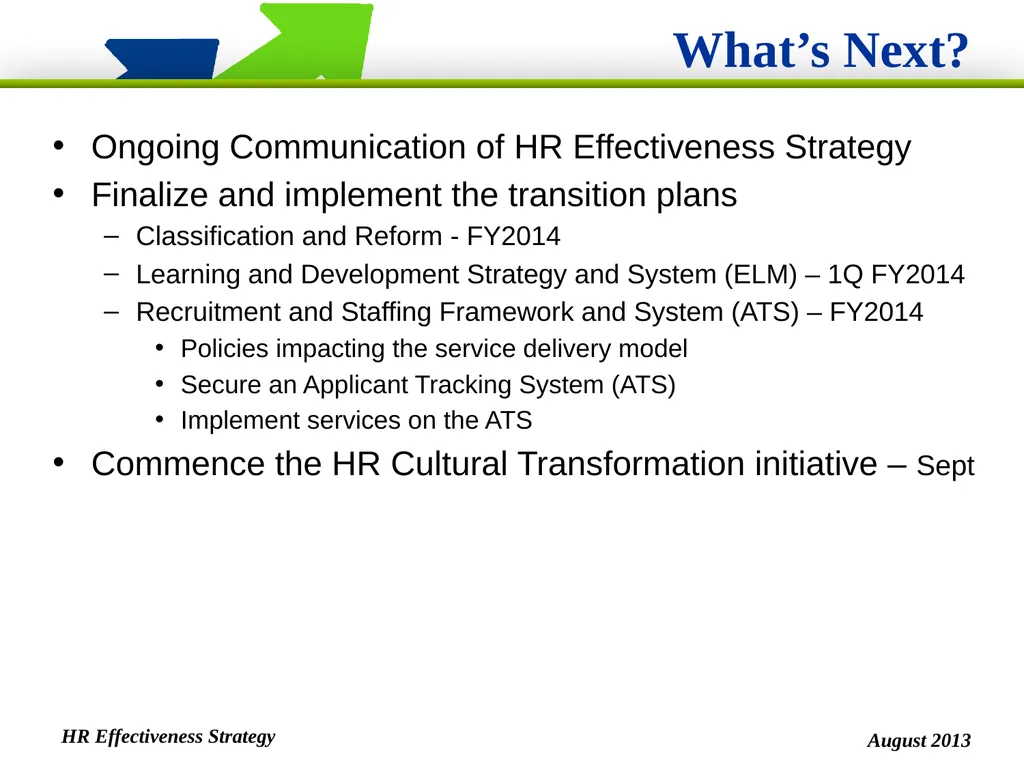
What’s Next? Ongoing Communication of HR Effectiveness Strategy
Finalize and implement the transition plans
Classification and Reform - FY2014
Learning and Development Strategy and System (ELM) – 1Q FY2014
Recruitment and Staffing Framework and System (ATS) – FY2014
Policies impacting the service delivery model
Secure an Applicant Tracking System (ATS)
Implement services on the ATS
Commence the HR Cultural Transformation initiative – Sept<br>
13
13 DCHR
Culture<br>
14
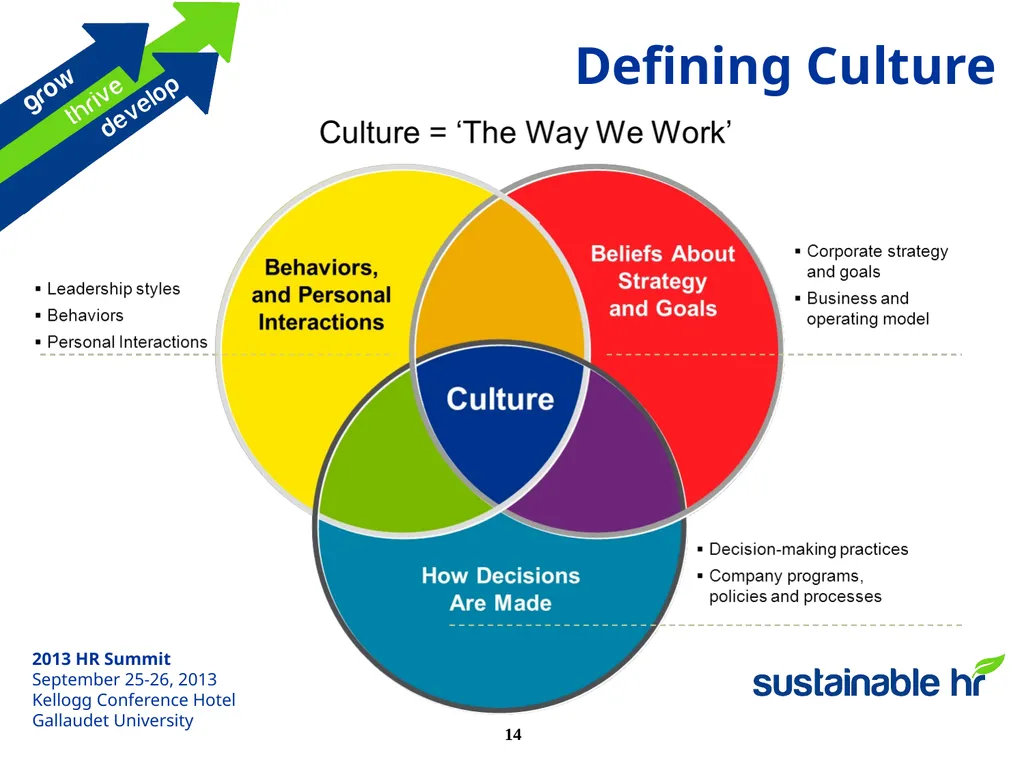
14 Defining Culture<br>
15
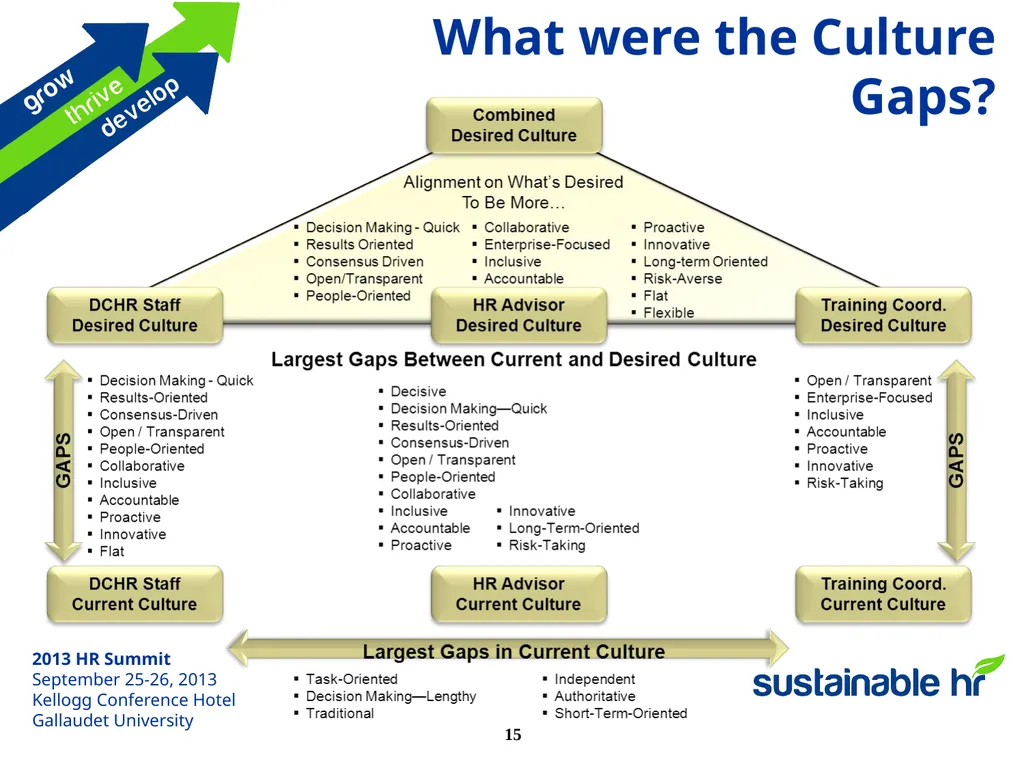
15 What were the Culture Gaps?<br>
16
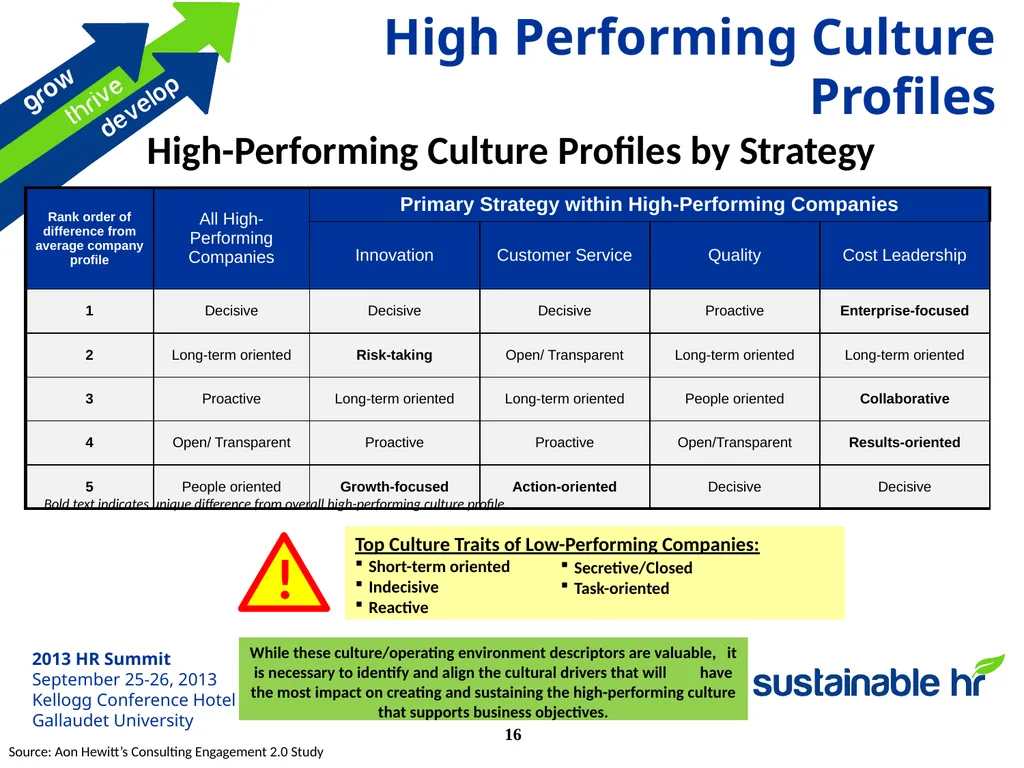
16 High Performing Culture Profiles High-Performing Culture Profiles by Strategy Bold text indicates unique difference from overall high-performing culture profile. While these culture/operating environment descriptors are valuable, it is necessary to identify and align the cultural drivers that will have the most impact on creating and sustaining the high-performing culture that supports business objectives. Source: Aon Hewitt’s Consulting Engagement 2.0 Study Top Culture Traits of Low-Performing Companies:
Short-term oriented
Indecisive
Reactive ! Secretive/Closed
Task-oriented<br>
17
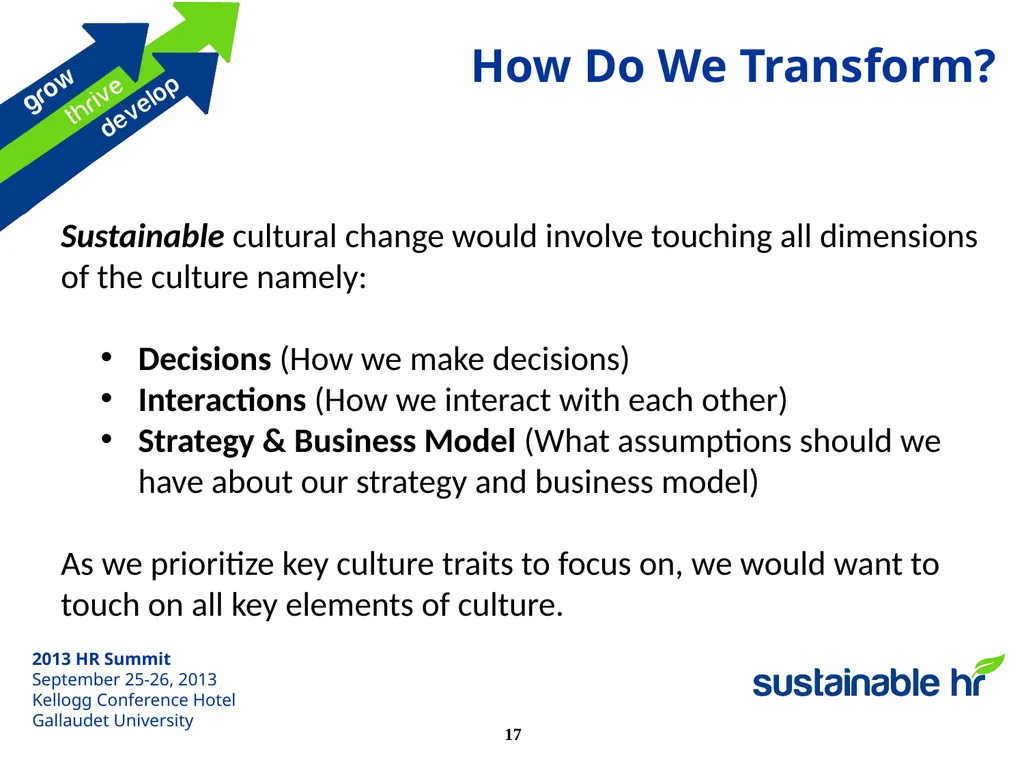
17 How Do We Transform? Sustainable cultural change would involve touching all dimensions of the culture namely:
Decisions (How we make decisions)
Interactions (How we interact with each other)
Strategy & Business Model (What assumptions should we have about our strategy and business model)
As we prioritize key culture traits to focus on, we would want to touch on all key elements of culture.<br>
18
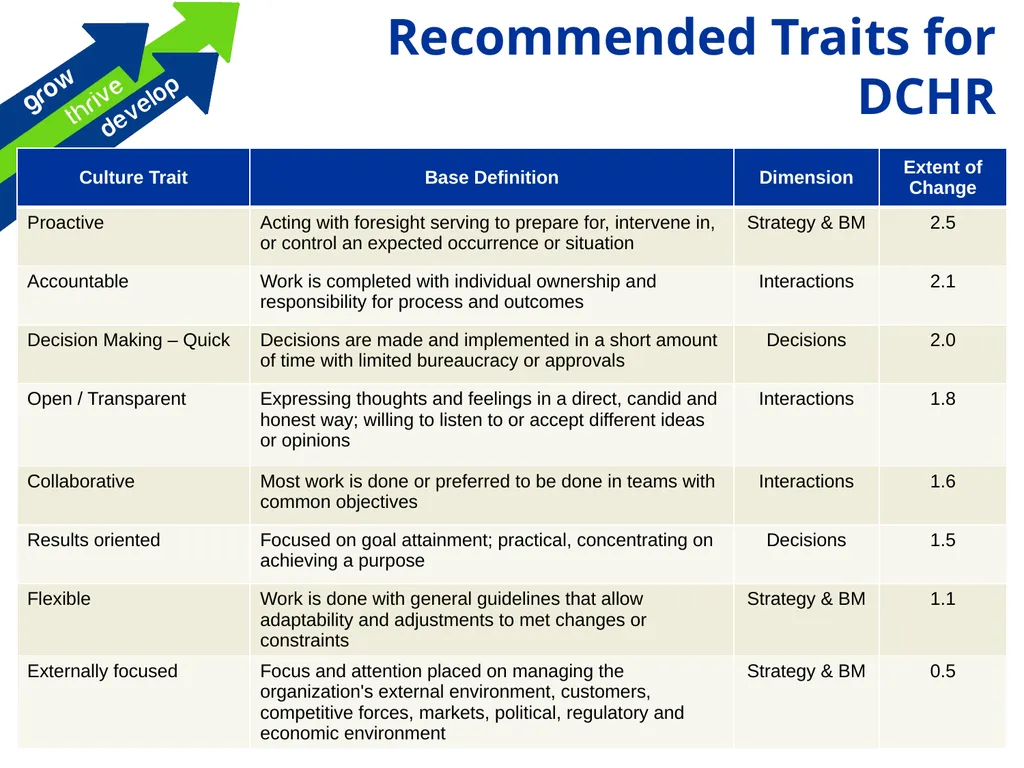
18 Recommended Traits for DCHR<br>
19
19 Making The Desired Culture Real (Part 1)<br>
20
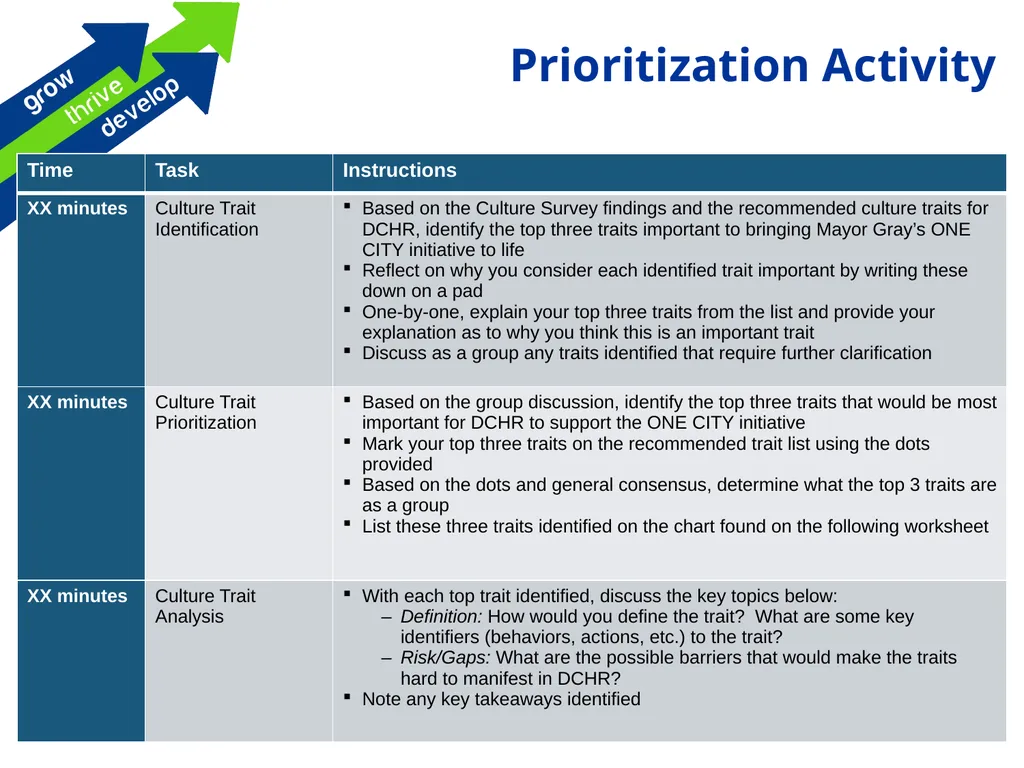
20 Prioritization Activity<br>
21
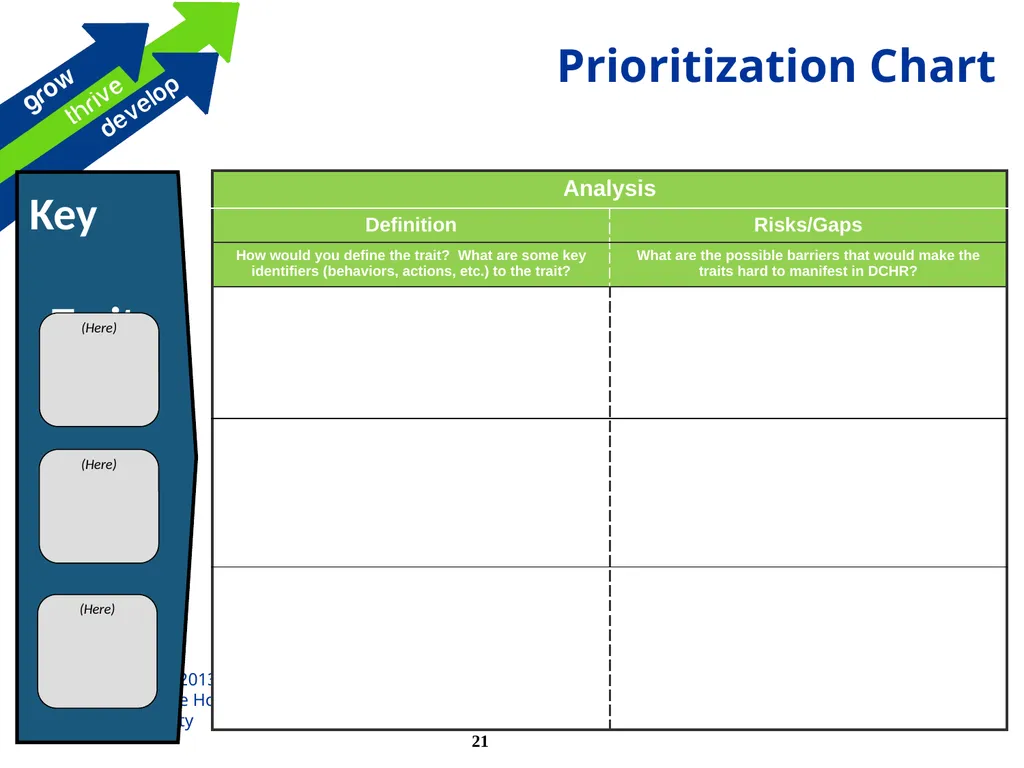
21 Prioritization Chart Key Trait Focus Areas (Here) (Here) (Here)<br>
22
22 Making The Desired Culture Real (Part 2)<br>
23
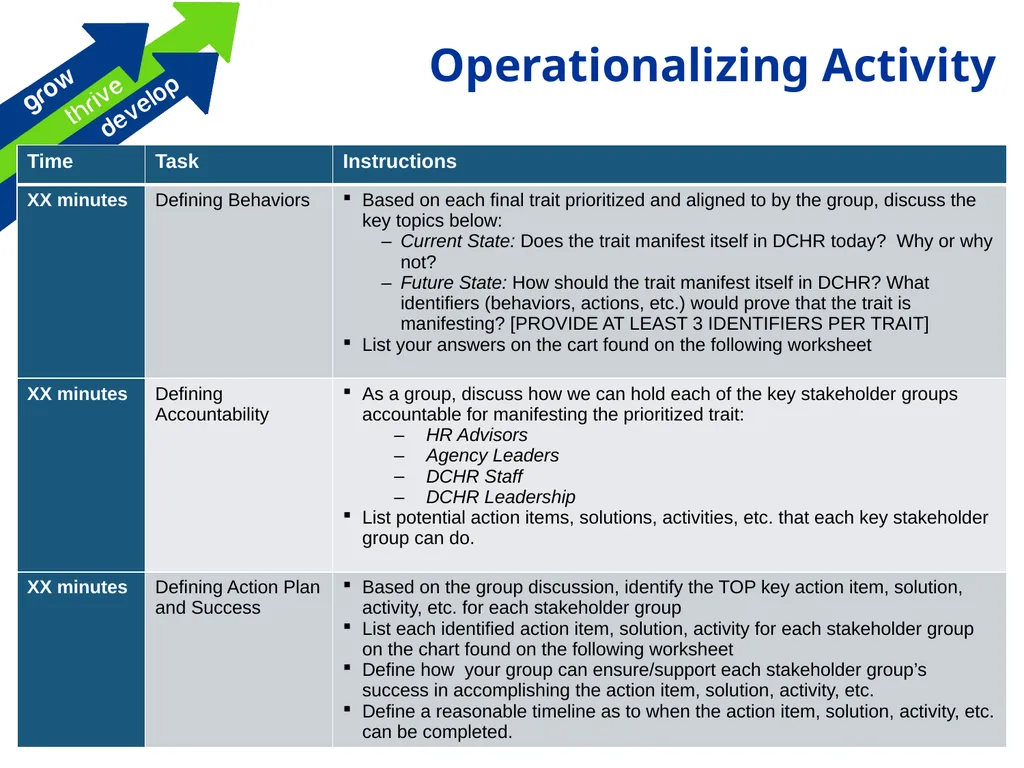
23 Operationalizing Activity<br>
24
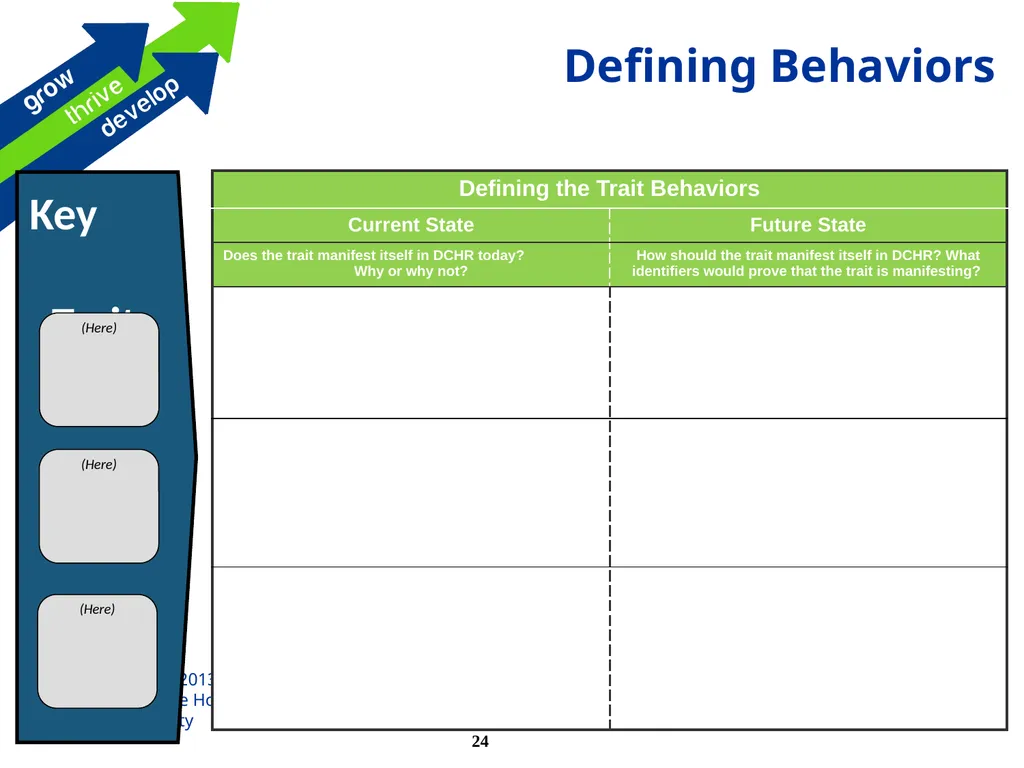
24 Defining Behaviors Key Trait Focus Areas (Here) (Here) (Here)<br>